
This post is an exclusive for members of the BGS Bandwagon

Subscribe to get unlimited access to bonus content, merch gifts, access to exclusive giveaways, festival pre-sales, and more.
Already a member? Log in here
This post is an exclusive for members of the BGS Bandwagon
Subscribe to get unlimited access to bonus content, merch gifts, access to exclusive giveaways, festival pre-sales, and more.
Already a member? Log in here
Lindsay Lou’s Bluegrass Women arrived in August 2026 as a true gift to the genre.
Nascent for over a decade, this project took root back in 2015 when Lou started a list containing two titles — “I Only Exist” and “All I Ever Loved Was You.” Though primarily associated with the men who popularized them, both bluegrass standards were written or co-written by women. Thus marked the start of an impassioned cataloguing as Lou realized, “If these two songs have surfaced for me, then there have got to be so many more. I would keep this list somewhere I could see it in my office, wherever I lived,” she relayed recently in an interview with Live for Live Music.
Ten years later, ten traditional songs had made their way to the forefront of her list, all of which were written, co-written, or first performed by women. While forging her own career in this male-dominated sphere, she found encouragement in her continuous unearthing of women among the forebears.
Women have always been essential to the architecture of the bluegrass, however quieted their contributions may have been. With more women in the spotlight than ever before, Lindsay Lou felt inspired to weave a throughline between contemporary “bluegrass women” and their ancestors. In March 2025, she partnered with co-producer Shani Gandhi to round up an intergenerational cast of twenty women defining the genre today. A Tetris of tour schedules, this star-studded cast managed to complete the compilation in only four days of recording, with Lou masterminding ensembles and arrangements.
Together, this collection of women celebrates their musical predecessors, shedding new light upon many of the women woven throughout bluegrass history. Join us as we explore, in no particular order, the tremendous trove of talent responsible for the masterpiece that is Bluegrass Women.
Truly a singular talent, Laurie Lewis remains an unwavering pillar of the bluegrass scene and beyond. A hero to every participant on Bluegrass Women, Lewis’s singing, songwriting, and fiddling continue to inspire across generations.
Among her inordinate accolades includes co-founding The Good Ol’ Persons in the ‘70s, one of the first prominent all-women bluegrass groups. Her musings traverse across genres, slinging folk, Americana, and country influences to boot. She is heralded in the music scene as an avid collaborator, producer, teacher, and mentor, in addition to actively tending to her own projects. Her most recent record, O California! arrived in January 2026, released by her band, Laurie Lewis and the Right Hands.
The inaugural notes of Bluegrass Women are played by Laurie Lewis and Tatiana Hargreaves in a glorious twin fiddle kick on the opening track “All I Ever Loved Was You” (though recorded and popularized Ricky Skaggs and Keith Whitley, its lyrics were penned by Skagg’s mother, Dorothy). Hargreaves has said of her fiddling counterpart, “I wouldn’t be playing the music I play if it weren’t for Laurie Lewis,” a sentiment that echoes the interconnectedness of musicianship at the project’s core.
Of her fiddling counterpart, Laurie Lewis boasts, “Tatiana Hargreaves is a versatile, powerful, and deep musician. Not just a damn good fiddler.” Having recorded her debut album at age 14 and winning first prize at the Clifftop Appalachian Fiddle Contest the same year, Tatiana Hargreaves has truly packed a punch in the decade and a half (and change) since. With a range of styles under her belt, Hargreaves’ fluency in both bluegrass and old-time grants her a dextrous dynamism. At present, she teaches improvisation and bluegrass fiddle at the University of North Carolina at Chapel Hill, and primarily records and performs in a duo with prolific banjo player Allison de Groot (also featured on Bluegrass Women), and with her four-piece old time band, Hard Drive.
On Bluegrass Women, Hargreaves lends her fearsome fiddling to three tracks — “All I Ever Loved Was You,” “Jubilee,” and “Won’t You Come and Sing for Me.”
A clawhammer banjo player from Winnipeg, Canada, Allison de Groot became familiar with the scene by way of The Duhks, a renowned Canadian folk-fusion band likewise out of Winnipeg. As she traced the lineage of the clawhammer banjo, she became enamored with its prominence in the American South and became a teacher and performer. Between lessons and many trips to the southeastern United States, a love affair with old-time took root. Her duo with Tatiana Hargreaves continues the centuries-long conversation between fiddle and banjo; their creative alchemy doulas the dialogue to new depths.
De Groot lends her banjo playing to the tracks “I’ve Endured” and “High on a Mountain” on Bluegrass Women.
While primarily known for her virtuosic mandolin playing, Maddie Witler began her musical journey at age 9 on the fiddle. If those skills weren’t enough, in the time since, Witler has made her acquaintance with most stringed instruments, adeptly fluent in each language. After growing up in the greater LA area and moving to Boston to attend Berklee College of Music, she became a founding member of the illustrious Lonely Heartstring Band. In 2019, Witler joined Della Mae, one of the most prominent all-women groups of the contemporary bluegrass landscape, parting ways with them in 2022. In 2021, Witler released her first solo album, Astronaut, debuting her skills as a songwriter, singer, and arranger.
On Bluegrass Women, Witler edifies the tracks “All I Ever Loved Was You,” “Jubilee,” and “Won’t You Come and Sing for Me” with her apt mandolin contributions.
Alison Brown, too, is a widely influential instrumentalist whose work has permeated across generations. She reunited with her love of bluegrass banjo playing when, after receiving an MBA from UCLA, she quit her job on Wall Street to tour with Alison Krauss & Union Station. She also toured with Michelle Shocked before forming her own group in 1993, The Alison Brown Quartet. With 12 solo albums, a Grammy, and multiple Grammy nominations under her belt, Brown is largely regarded as one of the most accomplished banjo players of our time.
Of recording with Alison Brown and Laurie Lewis for Bluegrass Women, Lindsay Lou speaks to the experience’s profoundness in her four-part YouTube series documenting the album’s recording.
She reflects, “We’ve seen mentorship and cross-generational connection and collaboration happen on stage with men plenty, but you haven’t seen it as much with women historically. To be a part of a session with Laurie and Alison, who have been doing this for so many more years than anybody else on the session, you instantly have this reverence.”
Alison Brown lends her banjo playing to the tracks “All I Ever Loved Was You,” “Jubilee,” and “Won’t You Come and Sing for Me.”
Hasee Ciaccio is a musician and educator residing in North Carolina. Her upright bass playing has earned high praise in the bluegrass circuit, with Ciaccio having recorded and toured among the likes of Laurie Lewis, Alice Gerrard, and bluegrass powerhouse group Sister Sadie. Ciaccio is also on the board of Bluegrass Pride, an organization working to uplift LGBTQ+ bluegrass musicians of all levels.
Ciaccio’s bass playing lays the foundation for much of Bluegrass Women. She’s featured on seven of the ten tracks — “All I Ever Loved Was You,” “Like a River,” “I Only Exist,” “Jubilee,” ”Won’t You Come and Sing for Me,” “Freight Train,” “Your Lone Journey,” and “CC Rider.”
A champion flat-picker, Courtney Hartman grew up in Colorado with nine siblings, four of whom she played music with. Because they needed one to play guitar, and inspired by her mother taking lessons, Hartman gravitated to the instrument following stints with piano, fiddle, and violin.
After attending Berklee College of Music, Hartman spent seven years recording and touring with Della Mae. Her newest solo album, With You, began during an isolated, heavy moment. Shortly after discovering that she was pregnant, a string of tumultuous events (her husband falling off a ladder and rendered immobile for months, a totaled car, being dropped from her booking agency) ravaged her life in quick succession. Following the birth of her daughter, Hartman forged her own list of women to draw inspiration from — ones who had continued their creative practice in the midst of becoming mothers. Their navigation of caregiving and musicianship imbued faith that she, too, could straddle both. With You features many of the mothers that inspired Hartman, both as co-writers and musical guests.
In a full-circle moment, Hartman joined Lindsay Lou’s project, the entirety of which was recorded while Lou was pregnant with her first child. Hartman is credited on the tracks “I Only Exist,” “Like a River,” and “Freight Train.”
Gena Britt, a connoisseur of both bluegrass banjo and bass, is no stranger to a project like Bluegrass Women. In 2001, Britt co-founded Daughters of Bluegrass, a collective of over 40 women in bluegrass who have recorded four albums to date. In addition to being a highly sought-after studio vocalist and instrumentalist, with solo projects also under her belt, Gena is currently a member of the dynamic Sister Sadie.
Gena is featured on six tracks on Bluegrass Women — “Your Lone Journey,” “Freight Train,” “Like a River,” “High on a Mountain,” “I Only Exist,” and “CC Rider.”
A prominent presence in today’s bluegrass scene, AJ Lee is lauded for her acute mandolin skills, unparalleled vocals, and sharp songwriting. Hailing from the Bay Area, at age 7 she was asked to join The Tuttles, a family band consisting of bluegrass educator Jack Tuttle and his two children, (you guessed it) Molly and Sully. Around the time she graduated high school in 2015, AJ sewed the seeds culminating in her own band, AJ Lee and Blue Summit. The group just released their fourth full-length album, Cover to Cover, earlier this month.
On Bluegrass Women, AJ’s artistry can be found on the tracks “Freight Train,” “Like a River,” and “I Only Exist.”
Wila Frank is a singer, songwriter, multi-instrumentalist and producer based out of Nashville. One half of the emergent folk duo Paper Wings, and fiddler/electric guitarist for Lindsay Lou, Frank also champions her own stirring solo repertoire. Her debut album, Black Cloud (2023), received critical acclaim, and a 2026 single release, “Emergency Contact,” hints towards more in the works (we hope!).
Frank appears on half of Bluegrass Woman, credited on the tracks “Like a River,” “High on a Mountain,” “I Only Exist,” “CC Rider,” and “Your Lone Journey.”
Widely regarded as one of the most prolific fiddlers of her generation, Brittany Haas is an absolute flurry of talent. Her playing is sensitive, inspired, and expansive. Her current projects include her duo with her cellist sister (Natalie Haas), the innovative instrumental project, Hawktail, and as the newest member of the Grammy-winning Punch Brothers. A teacher and performer, Haas’s playing is infectiously inspiring to all who listen.
Haas joins Bluegrass Women on the tracks “High on a Mountain” and “I’ve Endured.”
Another former member of the Good Ol’ Persons alongside Laurie Lewis, Sally Van Meter is a musical giant in her own right. Though primarily recognized for her dobro playing, Van Meter is dextrous on an assortment of string instruments. With a professional music career that began in 1976, Sally Van Meter’s past five decades have been an impressive spread of performance, teaching, touring, and recording.
Van Meter plays on “CC Rider,” a traditional 12-bar blues song first written and recorded by Ma Rainey, the “Mother of Blues.” The song was later covered by a vast assortment of artists, at one point becoming a mainstay opening number for Elvis Presely.
Legendary mandolinist, multi-instrumentalist, singer, and songwriter Sierra Hull could fill a dictionary with the accomplishments of her career, despite being just 34 years old. A six-time Grammy nominee and the first woman to receive the IBMA Mandolin Player of the Year honor (having now won seven times), Sierra Hull is a groundbreaking artist in the bluegrass scene. She released her fifth studio album, A Tip Toe High Wire, last year.
Hull’s talent enriches two tracks on Bluegrass Women — “High on a Mountain” and “I’ve Endured.” Of the songs, Sierra remarks, “These are songs that seep into your DNA. When you can step out of your own original lane for a minute and go back to what feels like the source, there’s something really powerful about that. It takes me back to who I am in a really grounding kind of way.”
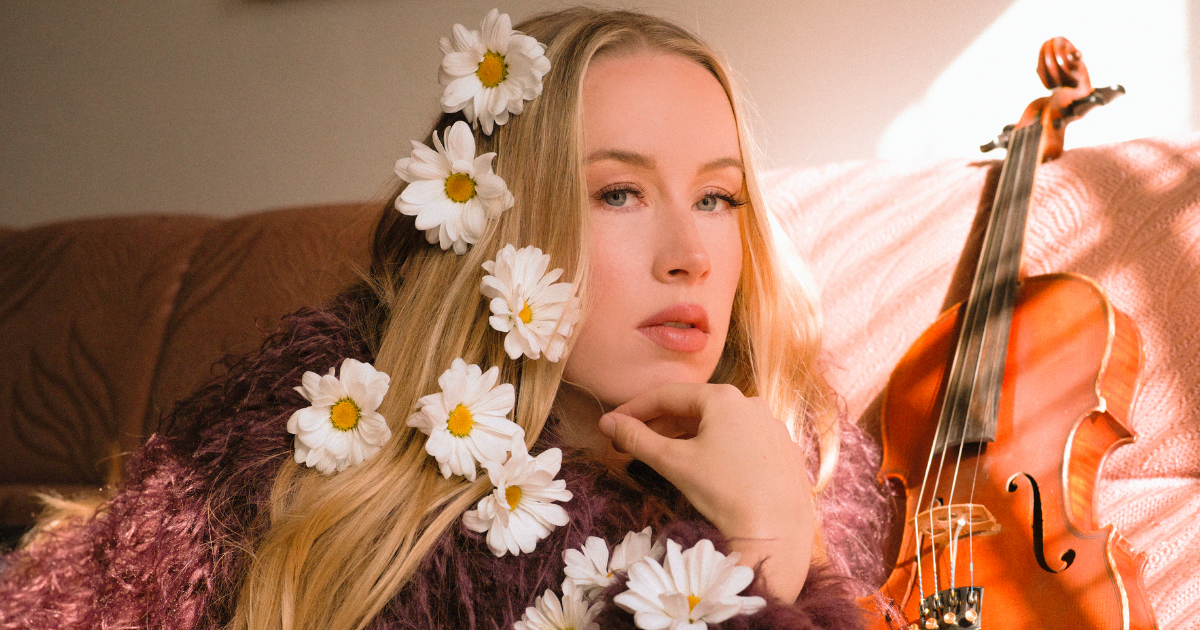
As anyone who’s heard a Molly Tuttle & Golden Highway record knows, Bronwyn Keith-Hynes is an astonishing fiddler, with brilliance and fire emanating through her every performance. Recently, though, she’s exposed even more of her talents to the world — she’s begun a solo project as simply Bronwyn, playing, singing, recording, and touring original material. Her third album, Rattlin’ Bones, was released on the same day as Bluegrass Women.
The amicable dissolution of Golden Highway allowed for Bronwyn to open up the floodgates of self-discovery; in fact, she cites bandmates Molly Tuttle and Shelby Means as chief proponents of Bronwyn exploring her voice. She says, “There was a large part of my life where I didn’t sing and was only interested in playing the fiddle, but being on tour with Golden Highway and around Molly and Shelby, these great female bluegrass vocalists, it shifted everything.”
Bronwyn’s fiddling appears on the tracks “Freight Train,” “Like a River” and “I Only Exist” on Bluegrass Women.
Molly Tuttle herself, too, joins the record — yet another nod to the interweavings present among this group of women. Tuttle’s reputation precedes her, as the first woman to win IBMA’s Guitar Player of the Year (an award she earned two years in a row). Likewise, her albums Crooked Tree (2022) and City of Gold (2023) with her band, Golden Highway, each took home the Grammy for Best Bluegrass Album. For her new solo album, So Long Little Miss Sunshine (2025), Tuttle shifts into new stretches and shapes, tackling elements of pop, rock, flat-picking, and country in one fell swoop.
Tuttle joins for the song “Freight Train,” penned by the superlative Elizabeth Cotten, a self-taught, left-handed guitarist who wrote the song around the age of 11 in the early 20th century.
Yet another multi-hyphenate talent, Emma Rose is a groundbreaking singer-songwriter, multi-instrumentalist, and sought-after upright bass player. She was a founding member of the juggernaut all-women outfit, Big Richard, and she currently tours with Lindsay Lou, while also nurturing a solo project, under the names Emma Rose or Sounds of Honey.
Emma Rose lends bass playing to Bluegrass Women on “I Only Exist,” “High on a Mountain” and “I’ve Endured.”
Sarah Jarosz’s sublime vocals, instrumental prowess, and narrative-driven songwriting render her an unsurpassed talent. With seven full-length solo albums to her name, three albums with supergroup I’m With Her (alongside Aoife O’Donovan and Sara Watkins), and a sprawling inventory of collaborations, Jarosz’s contributions to the roots scene have been nothing short of magnificent.
Jarosz is featured on the track “I’ve Endured,” written by the brilliant Appalachian singer, songwriter, and banjo player Ola Belle Read.
A fiddler of dynamic abundance, Phoebe Hunt has explored for decades the multiplicity of sound her instrument can produce. She’s spent years touring for various projects and for her own solo work, all the while founding a non-profit called Fuel Our Fire, garnering transformational songwriting experiences for at-risk communities. She’s also a gifted educator, and she began an initiative to help parents teach their children how to play the ukulele during the pandemic. Her most recent album, Nothing Else Matters (2023) features only the voice and fiddle, a peeled back honoring of her musicality in its most vulnerable form.
Hunt joins on Bluegrass Women for an awe-inspiring rendition of Hazel Dickens’s “Won’t You Come and Sing For Me.”
Jenni Lyn Gardner is a robust singer, songwriter, producer, and mandolinist. She rose to prominence in the bluegrass scene when she joined Della Mae in 2010, and remained in the band for nearly a decade-long stretch. She’s also fronted her own solo project, and has served as a producer on countless albums and tracks across the roots music landscape.
Jenni Lyn Gardner joins Bluegrass Women for two tracks — “CC Rider” and “Your Lone Journey,” a song co-written by Doc Watson and his wife, Rosa Lee.
One of the most treasured voices in bluegrass, Aoife O’Donovan is a Grammy-winning singer, songwriter, and guitar player. She’s widely known for her lead vocals as a founding member of the unparalleled Crooked Still (which fellow Bluegrass Women musician Brittany Haas later joined) and for her role as one-third of I’m With Her. O’Donovan has a penchant for evocative lyrics, textured storytelling, and hypnotic vocals. In addition to her many collaborations and features, O’Donovan has released four critically acclaimed albums of solo work.
On Bluegrass Women, Aoife is featured on the track “Your Lone Journey.”
Find out more about Lindsay Lou’s project with an episode of her mini-doc on BGS.
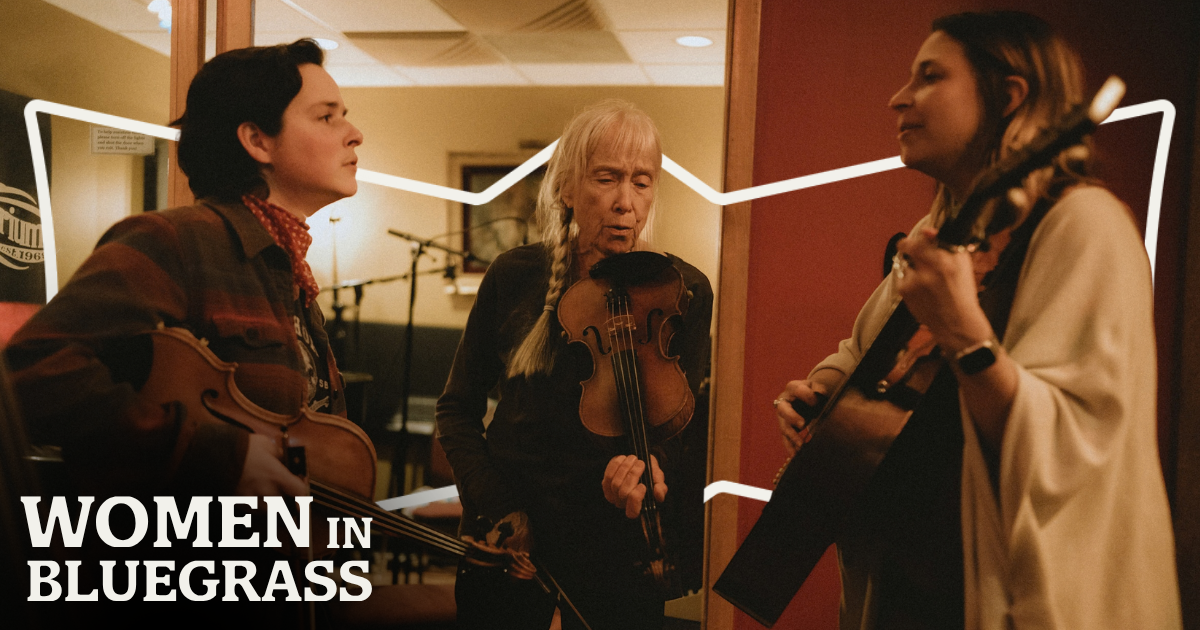
Lead image: Tatiana Hargreaves, Laurie Lewis, and Lindsay Lou by Sawyer Gieseke
Playing the fiddle has been part of Bronwyn Keith-Hynes’ life since discovering the instrument when she was 3 years old. By age 10, she had become serious about music. She attended fiddle camps, joined her first band at 13, and took lessons, but always gravitated toward ear training.
This approach changed when she attended Berklee and enrolled in their American Roots Music program, where she met, studied, lived with and jammed with a collective of musicians, many of whom would later settle in Nashville as part of a new bluegrass generation. Those personal connections from Berklee led to her becoming an integral part of the bluegrass group Molly Tuttle & Golden Highway until the ensemble parted ways last year. (Read our BGS interview with her Golden Highway bandmates Molly Tuttle, Kyle Tuttle and Shelby Means.)
Now professionally just known as Bronwyn, the two-time IBMA Award-winning fiddle player has stepped out on her own as a full-time solo artist, front and center as a musician, vocalist, and bandleader. While her two prior albums established her first as a virtuoso player and then also as a talented vocalist, her new album Rattlin’ Bones takes her to the next level. Co-produced with Brent Truitt, the collection explores the musical territory within bluegrass while incorporating flavors from her Celtic and jazz roots.
On a July afternoon in Nashville, Bronwyn – our BGS Artist of the Month for September – discussed her dedication to practicing, the throughline between jazz and bluegrass jams, and who’s most likely behind the wheel of her tour van.
BGS: With Rattlin’ Bones ready for release, are you feeling a sense of relief that it’s done? Anticipation for the world to hear it? Satisfaction of goals accomplished? All of the above?
Everything. I’ve been playing some of these songs live [since the spring], I’ve been teasing some of them at some shows, and so I’m excited for people to hear the whole thing. I feel like I’ve been hanging on to this for a little while now.
Was the album complete when you began performing the songs?
No, it was still getting mixed. It all got recorded last year, and I feel like I’ve been building the plane as it’s taking off. Last year was my transition year. Golden Highway was wrapping up, and I was starting to do my own shows in the second half of the year. I was writing as much as I could for this record and recording as I wrote it. As soon as I wrote a couple songs I liked, I would go into the studio, record them, and then try them out after I recorded them or I came up with an arrangement. So it’s been this process over the last year.
Does playing them live sometimes change the arrangements?
Yes. Playing them in the studio is one thing, but as soon as you play it live, you’re like, “It has to be faster when we do it live,” or “This section should be longer,” or whatever. It’s a different experience when you’re listening to an album versus at a live show. So I think they’re all right for the studio, but then there are some moments … and that was part of the intention of coming up with these arrangements. I wanted places that could stretch and contract, based on the night and the audience. I wanted to deliberately have places that could breathe and we could do different things, because different things will feel good on different nights.
You mentioned stretching and changing the songs and the improvisational moments. Talk about that a little bit — working those out within the structure of the studio and keeping that balance of instrumental breaks and vocals.
That was definitely a consideration. We want the songs to be first and foremost. I feel like everything serves the song. If there needs to be a big solo to make the song feel complete, then that’s what should happen on the record. But it also comes down to who you have in the studio.
I was able to get some of the best musicians out there, and when you’ve got people like that, they all intuitively are able to create magic. We all know when it’s right, when the arrangement is right, and when the take is right. Brent is definitely the overarching ears, but oftentimes the whole band is going to come to a consensus on what the best take was. It’s a feeling. When you’ve got people like that in the studio, they just make the magic.
Your early love was ear training, rather than theory, but your formal education at Berklee was, in fact, theory. Did that require any undoing of what we’ll call “bad habits”?
It was a real challenge. I’ve always been an ear learner. That’s always been easy for me, and visually has always been harder. In the Berklee environment, there were ear-training classes, of course, but the majority of stuff was eye-based and that was really tough. I had to work extra hard to develop that at all, but learning theory does really help make stuff make sense and makes me able to make faster connections. Once you actually learn how those sound, then you have the complete picture, and so I was able to put together a lot of the pieces while I was at school, and connect some dots that I hadn’t really understood before.
Now I’m back to being an ear person. I never read music. I’ll look at a chart if I need to, but as soon as I can get it in my head, I’m able to play better than if I’m staring at the chart. In the studio you do have the charts, but it feels like everybody uses the charts as a very rough guide just to make sure they’re on track. But they’ve got it in their minds more intuitively, and so they are really playing by ear after the second take.
True or false: When you went to Berklee, you were on track to study jazz.
True. That was my idea — I thought I was going to be a Celtic jazz fiddler. I was going to blend the two somehow together. I got to Berklee and jazz was really hard. There was this whole American Roots Music program that had just started, and they’d brought all these great bluegrass players there that year. I met them all and was at jams with them and I got really inspired to play bluegrass.
Do you see a throughline in those two genres, which on the surface may seem completely different, but at the core are about improvisation and jamming?
Oh, totally. And they’re both authentic American forms of music, which is super cool. I think what made bluegrass easier to get into, rather than jazz, is because I’m coming from a fiddle background. I had this fiddle vocabulary. I had to learn the bluegrass idiom to some degree, but it all was a lot closer to what I was used to than learning a whole jazz language, so it felt like an easier way to express myself and be able to improvise in a genre that was closer to home.
Do you still feel some of that jazz influence in your playing?
I’m always going to be inspired by it. Honestly, the further I get with bluegrass, and the more comfortable I get with bluegrass, I feel like I can stretch out and try for some extended notes or weird-sounding stuff or some more jazz vocabulary. I feel like you never stop learning, and hopefully you never stop growing, as a musician, so that does feel like something I would love to get more and more into.
You are the outlier who loves to practice. What does your practice consist of? How do you keep it enjoyable as opposed to becoming a chore?
Oh, man. I wish I had more time to practice. I don’t have enough time these days and it’s a bummer, actually. There are times when it’s a chore, but that’s when there’s a certain thing I have to do, something I have to learn. Usually what makes it fun is visualizing where it’s going, visualizing that I’m going to play this onstage, and so I’m going to come up with all these cool ideas. Thinking about playing for a crowd or playing for somebody makes it fun. I love learning new stuff. The challenge of learning somebody’s solo or learning a new tune or song is fun.
A learning experience versus scales or finger exercises.
Definitely. But I go through periods of time recognizing some technique issue that needs to be resolved and trying to work on that in particular, and that is very satisfying too. It’s almost like going to the gym and working on abs, or arm day, and the satisfaction when you’re in it or when you’ve done it. You’re like, “I did something for myself today.”
Keeping with the gym analogy, how much of the live performance is muscle memory?
That’s what you’re relying on. That’s the thing that, first of all, helps you out in a high-pressure situation. Anytime I’m on a television show or something, I’ve made sure I’ve played that song so many times that if I’m going to have to play it one more time, hopefully there’s almost no way I can mess it up.
It also gives you this bedrock for improvisation and trying new things, because you have this thing that you can fall back on. You have this comfort with the song or with a certain solo, and then you’re like, “I know how this goes, so I can step away from it and always feel like I have something to come back to.”
What makes you a good bandleader? What did you learn as a band member that you apply to now being in charge?
I feel a lot of responsibility to the band on so many levels. I want to make sure there’s enough shows for them to make enough money, I want to make sure the travel is good, their accommodations are comfortable, that the schedule is clear, that they have enough time to have breakfast, all these little things. I think a good bandleader genuinely cares about their band and puts their band first in terms of comfort.
I do all the driving, and I try to make everybody’s life as comfortable as possible, because it’s a big sacrifice on their end. They’re going out for a whole year, or however long, to play my music, and it’s a real honor that such great musicians would do that, so I try to put them first as much as I can.
You do all the driving?
When we’re in a van, I do. Sometimes they help. They’re always offering to help, but there’s a stubborn part of me that feels like that’s not their job and they shouldn’t have to do that. It’s my burden to bear. Hopefully, at some point, I’ll be able to hire a tour manager to do that, but for now I try to do it. It’s just the five of us on the road, no extra help, so it’s all hands on deck and they are all super helpful. It really feels like a team effort, which is awesome.
Do you still teach?
I do occasionally. I’ve got a couple students, one kid and a couple adults, over Zoom, and occasionally I do group classes over Zoom, which has been really fun and a nice way to reach more people. I love teaching. I used to do a lot of it, and I feel like I have a lot to share and a lot of insight. I didn’t grow up playing bluegrass. I came to it when I was a late teenager and in college, so I feel like I had to analyze it more to make it make sense to me, and maybe some of the ways I approached it at that time have helped a lot of my students.
What do students want to learn and what do they need to learn?
Sometimes they want to learn flashy licks, and what they need is better timing and fundamentals. I think that’s the classic teacher-student push and pull — the student wants to learn something fun, and the teacher sees fundamental issues that are going to prevent them from moving forward until they deal with them. So it’s trying to balance that as a teacher and make sure the lesson is fun, but that they can still improve these fundamental things.
What do you hope people take from Rattlin’ Bones, and what do you hope to bring to the stage as a group when you perform this music?
I hope it’s a fun album for people to listen to. I hope it’s one they want to come back to. I hope it’s one they want to turn up loud and blast on a road trip. I wanted to make a fun album, and I wanted to make an album of songs that would be fun to play live. So I hope that translates into the show.
We have been playing some of these songs live, but I’m so excited for people to have heard the record and then recognize the songs when we play them. It’s always a rush when you’ve heard a song on the record and the band is playing the song you’ve been listening to live. I’m excited to have those moments.
Editor’s Note: Our interview with Bronwyn included many more lovely excerpts and conversations than could be included in this one article. We’ve gathered a few excerpts from our interview about inspiration, songwriting, and the stories behind a few of the brand new songs, in an exclusive for BGS Bandwagon members.
Photo Credit: Alexa King Stone
Old Crow Medicine Show’s Ketch Secor once cited Walt Whitman to me during an interview to explain how he is “a container of multitudes.” While that can be said about everyone to an extent, the one artist that’s come to mind for me the most when thinking on it lately has been the fiery fiddler Bronwyn.
After mostly performing Celtic fiddle tunes early in her career, Bronwyn began immersing herself in bluegrass music more after enrolling at the Berklee College of Music in Boston in the late aughts. While there she also met the likes of Molly and Kyle Tuttle, who she’d eventually go on to perform with a decade later in the Grammy Award-winning group Golden Highway. Alongside those future nods from The Recording Academy came a pair of Fiddle Player of the Year awards from the International Bluegrass Music Association (IBMA) in 2021 and 2022 that cemented her picking prowess even more.
According to Molly Tuttle, Bronwyn’s proficiency and exceptional work ethic was evident from the moment they first met.
“It felt like she was evolving right before my eyes,” exclaims Molly. “Every time I heard her play she was getting better and better, then within a couple years she was named Fiddle Player of the Year by the IBMA. It was one of the most rapid growth spurts I’ve ever seen.”
“When it came to putting Golden Highway together I was looking for people who had a unique voice on their instrument that would really stand out in a band. By that point she already had such a strong stage presence that made me feel like we could really grow together.”
After a handful of years of finding success with groups like Golden Highway and Mile Twelve, Bronwyn’s persistent approach musically is now paying off with her solo endeavors as well. Following a 2020 album of fiddle tunes and the feature-heavy Trip Around The Sun from 2024 (the latter of which earned a Grammy nomination), she’s making another leap forward on her new album Rattlin’ Bones by penning two tracks (“The Wishing Well”, “Virginia Gal”) on her own and co-writing the other 11 for the first time in her career.
Per Kyle Tuttle, he witnessed Bronwyn’s staggering transformation not only during their shared time in Golden Highway, but also through observing her throw down with Nashville’s best at honky tonks throughout the city.
“She’s so driven. That’s what sticks out to me the most,” asserts Kyle, referencing a weekly residency she once hosted in Nashville at Dee’s Country Cocktail Lounge while also playing in Golden Highway. “For at least the last year of the band she was doing that gig every week, no matter what. There were many times where we’d land at the Nashville airport after a weekend run with Golden Highway at 11 a.m. on a Monday and she’d still be there at 6 p.m. with her band. I was always so impressed by that.”
All that experience on stage contributed to Rattlin’ Bones feeling more like Bronwyn’s live show than any of her previous work. The mix of hard-driving bluegrass and Music City twang leaves ample room for interpretation and ensures that, much like her, these tunes are constantly evolving.
That self-assurance is something that’s always stood out to her Golden Highway bandmate, Shelby Means, who says that Bronwyn’s grand vision for her career inspired her to launch her own independent journey after Golden Highway disbanded in 2025.
“While together in Golden Highway I really noticed Bronwyn coming into her power as a performer,” explains Means. “Her confidence really shines when she steps into a solo, and I only see that continuing to grow as she spearheads her own band. Seeing her dream big has also pushed me to do the same as a new solo artist — it’s so inspiring.”
As if her past credentials weren’t convincing enough, Rattlin’ Bones also boasts appearances from Darrell Scott, Jerry Douglas, Lindsay Lou, Harry Clark (East Nash Grass), Brent Truitt (The Steeldrivers), Miles Miller (Sturgill Simpson/Johnny Blue Skies), Pat McLaughlin, Melody Walker, and Golden Highway bandmate Dominick Leslie, giving Bronwyn a band of world-class pickers to match her otherworldly talent. It all leads to this album poised to make her bluegrass music’s next big power player, something that people who’ve worked with her like Molly Tuttle are adamant is recognition that’s long overdue.
“She’s so ambitious, so it comes as no surprise that she’s getting out there and leading her own band,” says Molly. “It’s a daring step for her to get into songwriting too. I’m just really impressed and proud of her for taking that step on this record and thinking about what she wants to say, not just musically, but with her lyrics too.”
To commemorate Bronwyn’s third solo record, we’ve named her our BGS Artist of the Month for September. Over the next 30 days we’ll reflect on the fiddler by digging through our archives for all things Bronwyn. Meanwhile, revisit our Winter Wondergrass session in the round with Bronwyn and enjoy The Essential Bronwyn playlist below.
Photo Credit: Alexa King Stone
This morning, July 15, 2026, the International Bluegrass Music Association announced the nominees and recipients for the 37th Annual IBMA Bluegrass Music Awards at a special unveiling ceremony at the SiriusXM offices and studios in downtown Nashville, Tennessee. The event was co-hosted by Bluegrass Junction on-air host Joey Black with Alison Brown and Stephen Mougin, and was broadcast live over SiriusXM Bluegrass Junction and the IBMA Facebook page. Artists Mason Via and Bronwyn gave special live performances and each received nominations, too – Via for New Artist of the Year and Bronwyn for Fiddle Player of the Year.
Nominated for Entertainer of the Year, arguably the highest honor each year at the IBMA Awards, are Billy Strings, Alison Krauss & Union Station, Sister Sadie, East Nash Grass, and the Del McCoury Band. Meanwhile, the projects nominated for Album of the Year are Can’t Outrun the Blues (Trey Hensley), All Will Be Well (Sister Sadie), All God’s Children (East Nash Grass), Della Jane’s Heart (Appalachian Road Show), and Songs That Sing Me (Becky Buller).
Bryan Sutton is nominated in a handful of categories: Guitar Player of the Year, Instrumental Recording of the Year (“Grandfather’s Clock” with Sierra Hull), and twice for his hilarious and excellent music video for “The Devil Went Down to Deep Gap,” which gained nominations for Music Video of the Year and Collaborative Recording of the Year. Along with his nomination for Entertainer of the Year, Billy Strings is also included in Sutton’s nominations for “The Devil Went Down to Deep Gap,” on which he’s featured, as well as receiving nominations for Instrumental Group of the Year, Collaborative Recording of the Year (with Tony Trischka on “Gentle on my Mind”), and Guitar Player of the Year.
Steve Martin and Alison Brown’s collaborative album, Safe, Sensible And Sane, garnered a handful of nominations for its tracks as well, including Song of the Year, Instrumental Recording of the Year, Collaborative Recording of the Year, and Music Video of the Year. Sister Sadie earned nominations in quite a few categories, as a group and its individual members as well; along with their Entertainer of the Year and Album of the Year noms they’ve landed in Vocal Group of the Year, Collaborative Recording of the Year, and Music Video of the Year. Meanwhile, Dolly Parton is nominated with the Grascals for their collaborative track, “Broken Angels,” in Song of the Year, Collaborative Recording of the Year, and Music Video of the Year.
Representing the up-and-coming artists keeping the music alive and well, the ballot for New Artist of the Year for 2026 includes Jaelee Roberts, Mason Via, Carson Peters & Iron Mountain, Vickie Vaughn, and Daniel Grindstaff & the Uptown Troubadours. Plus, this year’s class of inductees into the Bluegrass Music Hall of Fame include Byron Berline, Nashville Bluegrass Band, Barry Poss, and the Lost & Found.
Find the full list of nominees, inductees, and Distinguished Achievement Awards recipients below. And make your plans now to be there for the “biggest night in bluegrass.” The IBMA Bluegrass Music Awards will be held in the fall in Chattanooga, Tennessee, during the organization’s annual business conference, World of Bluegrass, on Thursday, October 22. Conference passes and awards show and festival tickets are on sale now.
ENTERTAINER OF THE YEAR
Billy Strings
Alison Krauss & Union Station
Sister Sadie
East Nash Grass
The Del McCoury Band
VOCAL GROUP OF THE YEAR
Alison Krauss & Union Station
Authentic Unlimited
Sister Sadie
Blue Highway
Red Camel Collective
INSTRUMENTAL GROUP OF THE YEAR
Michael Cleveland & Flamekeeper
Billy Strings
The Travelin’ McCourys
East Nash Grass
Appalachian Road Show
SONG OF THE YEAR
“Broken Angels”
Artist: The Grascals and Dolly Parton
Songwriters: Dolly Parton/Jamie Johnson
Producer: Kent Wells
Label: Billy Blue Records
“Can’t Outrun the Blues”
Artist: Trey Hensley
Songwriters: Trey Hensley/Bobby Starnes
Producer: Brent Maher
Label: Pinecastle Records
“New Cluck Old Hen”
Artist: Steve Martin and Alison Brown (Feat. Della Mae)
Arrangement: Steve Martin/Alison Brown
Producers: Alison Brown/Garry West
Label: Compass Records
“Cost of Living”
Artist: Authentic Unlimited
Songwriter: Jerry Cole
Producer: Authentic Unlimited
Label: Edisonic Records
“Finding Your Way Home”
Artist: Red Camel Collective
Songwriters: Heather Berry Mabe/Joseph Scott Patrick
Producer: Red Camel Collective/Stephen Burwell
Label: Pinecastle Records
ALBUM OF THE YEAR
Can’t Outrun the Blues
Artist: Trey Hensley
Producer: Brent Maher
Label: Pinecastle Records
All Will Be Well
Artist: Sister Sadie
Producer: Deanie Richardson
Label: Mountain Home Music Company
All God’s Children
Artist: East Nash Grass
Producers: Jake Stargel/East Nash Grass
Label: Mountain Fever Records
Della Jane’s Heart
Artist: Appalachian Road Show
Producer: Appalachian Road Show
Label: Billy Blue Records
Songs That Sing Me
Artist: Becky Buller
Producer: Stephen Mougin
Label: Dark Shadow Recording
GOSPEL RECORDING OF THE YEAR
“I Will Someday”
Artist: NewFound Road
Songwriters: Ronnie Bowman/Garnet Bowman/Chris Stapleton/Morgane Stapleton
Producer: Tim Shelton
Label: Billy Blue Records
“Where the Soul Never Dies”
Artist: Bobby Osborne & C.J. Lewandowski
Songwriter: William M. Golden
Producer: C.J. Lewandowski
Label: Turnberry Records
“Some Day”
Artist: Blue Highway
Songwriters: Olive Stockton/Tim Stafford
Producer: Blue Highway/Dan Boner
Label: Rounder Records
“You Don’t Knock”
Artist: Darin & Brooke Aldridge with John Cowan
Songwriters: Cedar Walton/Wesley Westbrooks
Producer: Mark Fain/Darin Aldridge
Label: Billy Blue Records
“Two Old Church Pews”
Artist: Danny Paisley
Songwriters: Mark “Brink” Brinkman/Daryl Mosley
Producer: Greg Cole
Label: Pinecastle Records
INSTRUMENTAL RECORDING OF THE YEAR
“Grandfather’s Clock”
Artist: Bryan Sutton and Sierra Hull
Songwriter: Henry Clay Work arr. Bryan Sutton/Sierra Hull
Producer: Bryan Sutton
Label: Mountain Home Music Company
“Big Daddy Rabbit”
Artist: Michael Cleveland & Flamekeeper (Feat. Nathan Livers)
Songwriter: Nathan Livers
Producer: Michael Cleveland
Label: Yeah, Man Records
“Cacklin’ Hen”
Artist: Deanie Richardson and Kimber Ludiker
Songwriter: Traditional
Producer: Deanie Richardson
Label: Mountain Home Music Company
“Let’s Get Out of Here”
Artist: Steve Martin and Alison Brown
Songwriters: Alison Brown/Steve Martin
Producers: Alison Brown/Garry West
Label: Compass Records
“Tom & Jerry”
Artist: Andy Leftwich
Songwriter: Traditional
Producer: Andy Leftwich
Label: Mountain Home Music Company
NEW ARTIST OF THE YEAR
Jaelee Roberts
Mason Via
Carson Peters & Iron Mountain
Vickie Vaughn
Daniel Grindstaff & the Uptown Troubadours
COLLABORATIVE RECORDING OF THE YEAR
“Broken Angels”
Artist: The Grascals and Dolly Parton
Songwriters: Dolly Parton/Jamie Johnson
Producer: Kent Wells
Label: Billy Blue Records
“Gentle on My Mind”
Artist: Tony Trischka and Billy Strings
Songwriter: John Hartford
Producer: Tony Trischka/Lawson White
Label: Down the Road Records
“New Cluck Old Hen”
Artist: Steve Martin and Alison Brown (Feat. Della Mae)
Songwriters: Arr. Steve Martin/Alison Brown
Producers: Alison Brown/Garry West
Label: Compass Records
“The Devil Went Down to Deep Gap”
Artist: Bryan Sutton with Billy Strings
Songwriters: Tom Crain/Charlie Daniels/Taz DiGregorio/Fred Edwards/Charlie Hayward/James W. Marshall adapted by Bryan Sutton/Billy Strings
Producer: Bryan Sutton
Label: Mountain Home Music Company
“Just a Holler Over”
Artist: Sister Sadie and The Po’ Ramblin’ Boys
Songwriters: Robin Macy/Deanie Richardson
Producer: Sister Sadie/C.J. Lewandowski
Label: Mountain Home Music Company
MALE VOCALIST OF THE YEAR
Dan Tyminski
Russell Moore
Greg Blake
Del McCoury
Trey Hensley
FEMALE VOCALIST OF THE YEAR
Alison Krauss
Jaelee Roberts
Heather Berry Mabe
Sierra Hull
AJ Lee
BANJO PLAYER OF THE YEAR
Kristin Scott Benson
Gena Britt
Ron Block
Alison Brown
Tony Trischka
BASS PLAYER OF THE YEAR
Mike Bub
Vickie Vaughn
Missy Raines
Barry Bales
Alan Bartram
FIDDLE PLAYER OF THE YEAR
Michael Cleveland
Jason Carter
Bronwyn Keith-Hynes
Deanie Richardson
Andy Leftwich
RESOPHONIC GUITAR PLAYER OF THE YEAR
Justin Moses
Jerry Douglas
Rob Ickes
Andy Hall
Matt Leadbetter
GUITAR PLAYER OF THE YEAR
Trey Hensley
Billy Strings
Bryan Sutton
Cody Kilby
Molly Tuttle
MANDOLIN PLAYER OF THE YEAR
Sierra Hull
Ronnie McCoury
Jesse Brock
Sam Bush
Alan Bibey
MUSIC VIDEO OF THE YEAR
“Broken Angels”
Artist: The Grascals and Dolly Parton
Videographer: Natalie Simmons
Producer: Olly Rowland
“The Devil Went Down to Deep Gap”
Artist: Bryan Sutton with Billy Strings
Animator: Pat Bradley, SpringShoe Animation
Producer: Josh Serrato
“Ralph’s Banjo Special”
Artist: Kristin Scott Benson, Gena Britt, & Alison Brown
Videographer: Joseph Spence
Producer: Alison Brown
“New Cluck Old Hen”
Artist: Steve Martin, Alison Brown (Feat. Della Mae)
Videographer: Drew Levin
Producer: Alison Rose Gregory/Scott Roberts
“Let the Circle Be Broken”
Artist: Sister Sadie
Videographer: David Rossow
Producer: Joshua Britt/Neilson Hubbard
BLUEGRASS MUSIC HALL OF FAME INDUCTEES
Byron Berline
Nashville Bluegrass Band
Barry Poss
The Lost & Found
DISTINGUISHED ACHIEVEMENT AWARD RECIPIENTS
Gallagher Guitars
Matt Glaser
Derek Halsey
Marshall Family
Gary Reid
Photo Credit: Steve Martin and Alison Brown by Beth Herzhaft; Bryan Sutton courtesy of the artist; Jamie Johnson and Dolly Parton via Billy Blue Records.