You Gotta Hear This: New Music From Courtney Hartman, Dee White, and More

It’s another week where popcorn may be necessary to fully enjoy our weekly new music round-up, with all of the new music videos included below! You Gotta Hear This…

Our first screening is some cosmic California country from Mac Cornish, who’s sharing a music video for the title track of her upcoming album, Wayfaring Woman. The full LP will launch in September, so enjoy this early taste of the project, a song about finding, re-finding, and returning to oneself despite time, geography, and all that comes between.

We have a couple of fun and funny videos you’ll enjoy as well. Nashville-based husband-and-wife roots duo Zaggie (Zach & Maggie White) have a new single and video for “Parking Lot Vacation.” Sometimes a need to unplug, unwind, and relax can be satiated with a good ol’ fashioned sit in a parking lot. The video is witty and hilarious to match the flowing, island-getaway sonics of the song. Plus, Essence & Gold Country have a gut-busting video to tribute Mother’s Day and every “Good Mom” out there. As frontwoman Essence Goldman puts it, it’s all about “the beautiful chaos of motherhood and the truth that we don’t have to lose ourselves to be a good mom.” It’s bluegrassy country that will get your toe tapping while bringing a smile to your face.

Also just in time for Mother’s Day, our old friend Courtney Hartman shares an intimate and tender peformance video for “Honey, Honey,” a song she wrote dripping with love for her young daughter, describing the perfection of her child through her own eyes and building her up for a life built on love, confidence, and strength. It’s gut-wrenching and comforting at the same time, a deft balance that Hartman is well known for in her songwriting and guitar picking. It’s a lovely video for the occasion – and beyond – and announces her upcoming album, With You: From The Garden Shed, set for release June 12.

From bluegrass, Jaelee Roberts has a new single that was written by bluegrass radio personality and songwriter Terry Herd. “I’m Putting You Out of My Misery” pulls inspiration from traditional hard-driving bluegrass and contemporary sounds equally and boasts a stacked roster of pickers rounding out the band behind Jaelee’s gorgeous, crystalline vocals.

Country and Americana powerhouse Dee White has a new song as well, “Green River Rye,” which dropped earlier this week. Check it out below, it’s a pretty stripped-down recording made with just a simple acoustic trio – with Brian Murray and Jimmy Law – that lands somewhere between classic folk, country & western, and bluegrass, aesthetically. With whiskey as its centerpiece, it’s a lonesome and longing song that feels truly timeless – like you could sing along intuitively immediately, even on first listen. And don’t miss singer-songwriter Zach Seabaugh’s “Owes You Nothing,” a song about navigating Nashville, Music Row, and the music industry without losing your sense of self – or comparing yourself to everyone else you meet along the way. It’s a lovely track built on sensitive and brooding modern country sounds.

Celebrate your Mother’s Day weekend by calling your mama (who is definitely a good mom), sipping some Green River Rye, and taking a parking lot vacation – you’ve earned it. And, You Gotta Hear This!

Mac Cornish, “Wayfaring Woman”

Artist: Mac Cornish
Hometown: Raised Bay Area, California, based in Nashville, Tennessee
Song: “Wayfaring Woman”
Album: Wayfaring Woman
Release Date: May 8, 2026 (single); September 25, 2026 (album)

In Their Words: “‘Wayfaring Woman’ is a song about a girl who stays moving so her past won’t catch up to her – and so she won’t have to face herself. By the time I finished writing it I realized it was about myself. It was my way of telling myself, ‘It’s alright to cry, but it’s time to remember who you are and stop this cycle.’ So when I sing, ‘Even in yours lows, you can always go home,’ I mean the place and the state of mind.

“Making my way back to myself has always felt connected to the California home of my youth. Those canyon roads and golden hills remind me of who I am and who I always dreamed of being. I might not be able to access those places physically anymore, but the sense of self that I found there is within me and this song is a reminder to myself that I can always go back, I can always go home to myself. ‘Wayfaring Woman’ is the title track and first single off my second record, set to come out in September 25. It’s steeped in cosmic California twang, and I don’t think I’ve ever sounded more like myself.” – Mac Cornish

Track Credits:
Mac Cornish – Vocals, acoustic guitar, songwriter
Hillary Fretland – Harmony vocals
Charlie Fuertsch – Electric guitar
Cooper Dickerson – Steel guitar
Jack Lawrence – Bass
Dave Racine – Drums

Video Credit: Directed and filmed by Janaya Pardo.


Essence & Gold Country, “Good Mom”

Artist: Essence & Gold Country
Hometown: San Francisco, California
Song: “Good Mom”
Album: Father’s Daughter
Release Date: May 8, 2026 (video); September 26, 2025 (album)
Label: Blue Elan

In Their Words: “This ‘Good Mom’ video is about the beautiful chaos of motherhood and the truth that we don’t have to lose ourselves to be a good mom. It holds that tension between giving everything to our children and still claiming space for our own soul, and taking care of ourselves so we have more to give.

“This song gets the best reaction when I perform it live. I just watch the mothers start laughing and shaking their heads in agreement. It is hard for me not to laugh when I sing it. Any mom out there can relate. We thought it was fun to release this music video as as a gift to all the moms on Mother’s Day. Though in my opinion, every day should be Mother’s Day!” – Essence Goldman

Video Credits:
Laura Kudritzki – Director, cinematographer
Essence Goldman – Producer
Austin Grose – Executive producer
Craig Morton – Assistant producer
Margaret Bolton Grace – Stylist
Angela Shippen – Hair, makeup
Andres Campos – Hair, makeup
Elise Bigley – Hair, makeup
Keldon Duane-McGlashan – Editor


Courtney Hartman, “Honey, Honey”

Artist: Courtney Hartman
Hometown: Eau Claire, Wisconsin
Song: “Honey, Honey”
Album: With You: From The Garden Shed
Release Date: May 8, 2026 (single); June 12, 2026 (album)

In Their Words: “‘Honey, Honey’ is a love song to my daughter – a collage of daily imagery and truths I want her to hold onto. She has taught me about delight and even as I am the one cradling her and giving her comfort, it is often my own heart being mended by her.

“In the final verse I list a few things I want her to remember when I am not there to hold her, ‘quiet waters, soothe and sway, sunlight and kindness, the cradle of a day. You’re brave as an iris, a bright display, a trumpeter swan lifting up and away.’ Tift Merritt co-wrote this song with me, helping me clear away the debris and uncover within my own days the scenes I most wanted to sing.” – Courtney Hartman

Video Credits: Filmed by Kyle Lehman.
Edited by Erik Elstran.


Jaelee Roberts, “I’m Putting You Out of My Misery”

Artist: Jaelee Roberts
Hometown: Nashville, Tennessee
Song: “I’m Putting You Out of My Misery”
Label: Mountain Home Music Company
Release Date: May 8, 2026

In Their Words: “‘I’m Putting You Out of My Misery’ is one of those songs that stopped me in my tracks the first time I heard it. Terry Herd wrote an incredible song and I fell in love with it right away. To me, it strikes the perfect balance between that hard-driving traditional sound and a touch of contemporary bluegrass. I absolutely love how everything came together in the studio. I’ve always enjoyed a song with a little bit of attitude and this one definitely delivers.

“I was also fortunate to have some amazing musicians join me on the recording. Alan Bartram on bass, Ron Stewart on banjo, Tony Wray on guitar, Michael Cleveland on fiddle, Justin Moses on mandolin and Dobro, and Zack Arnold adding harmony vocals. Getting to collaborate with such talented players made this project especially meaningful to me. I’m truly proud of how the track turned out, and I’m so thankful to each of them for being part of it. I hope you all enjoy listening to it as much as I enjoyed recording it.” – Jaelee Roberts

Track Credits:
Jaelee Roberts – Lead vocal
Alan Bartram – Bass
Ron Stewart – Banjo
Tony Wray – Guitar
Michael Cleveland – Fiddle
Justin Moses – Mandolin, resonator guitar
Zack Arnold – Harmony vocal


Zach Seabaugh, “Owes You Nothing”

Artist: Zach Seabaugh
Hometown: Marietta, Georgia & Nashville, Tennessee
Song: “Owes You Nothing”
Release Date: May 8, 2026 (single)
Label: Cloverdale Records

In Their Words: “This song came at a time when I needed to check myself – on where I was in life – and on the people in my life I didn’t want to take for granted. I wrote it with Park Chisolm and Reid Haughton on Music Row. I was talking to them about how hard it is sometimes to show up in Nashville, to be creative for a living. You can fall into the comparison trap when so much of the industry around you is trying to set out for the same thing. But I don’t like feeling sorry for myself. I’m super grateful for what I have and who I get to live life with and at the end of the day, I guess this world owes you nothing. So you gotta make the most with what you got—that’s when you realize you got all you need.” – Zach Seabaugh


Dee White, “Green River Rye”

Artist: Dee White
Hometown: Slapout, Alabama
Song: “Green River Rye”
Release Date: May 6, 2026

In Their Words: “I first discovered Green River Rye Whiskey during a hunting trip to Kentucky. The bottle instantly caught my eye – it was the same one I remembered from an antique lithograph that hung in my childhood home. At the time, my girlfriend had just left me, and the chorus melody had already popped into my head. Later that night, I was hanging out with my buddies Jimmy and Brian and we finalized the music and lyrics. The very next evening, we went into the studio and recorded it as an acoustic trio in Nashville.” – Dee White


Zaggie, “Parking Lot Vacation”

Artist: Zaggie
Hometown: Nashville, Tennessee
Song: “Parking Lot Vacation”
Album: Turpentine Mind
Release Date: May 6, 2026 (single); August 26, 2026 (album)
Label: Zaggie Records

In Their Words: “‘Parking Lot Vacation’ came from the exact mental-headspace-shift the song is about. I was supposed to be writing. Instead, I was staring at a blank page for long enough that it started staring back. Eventually I just… leaned back, let myself off the hook for a bit, and the song showed up. Turns out vacations are less about where you are and more about the moment you stop letting petty anxieties run the show. A good car seat, a warm breeze, a window cracked just right is sometimes all I need. We’ve seen a lot of beautiful places in the world and a parking lot on the right day is genuinely in the conversation.” – Zach White

Track Credits:
Zach White – Vocals, guitar, songwriter
Maggie White – Mandolin
Dan Needham – Drums
Byron House – Bass
Chris Walters – Piano

Video Credits:
Cast: Annabelle Fox-Tieman, Douglas Waterbury-Tieman, Ollie Fox-Tieman, Huck Fox-Tieman, Emily Rogers, Josée Klein.
Directed and edited by Zach White.
Location Videography by BAMM Productions.


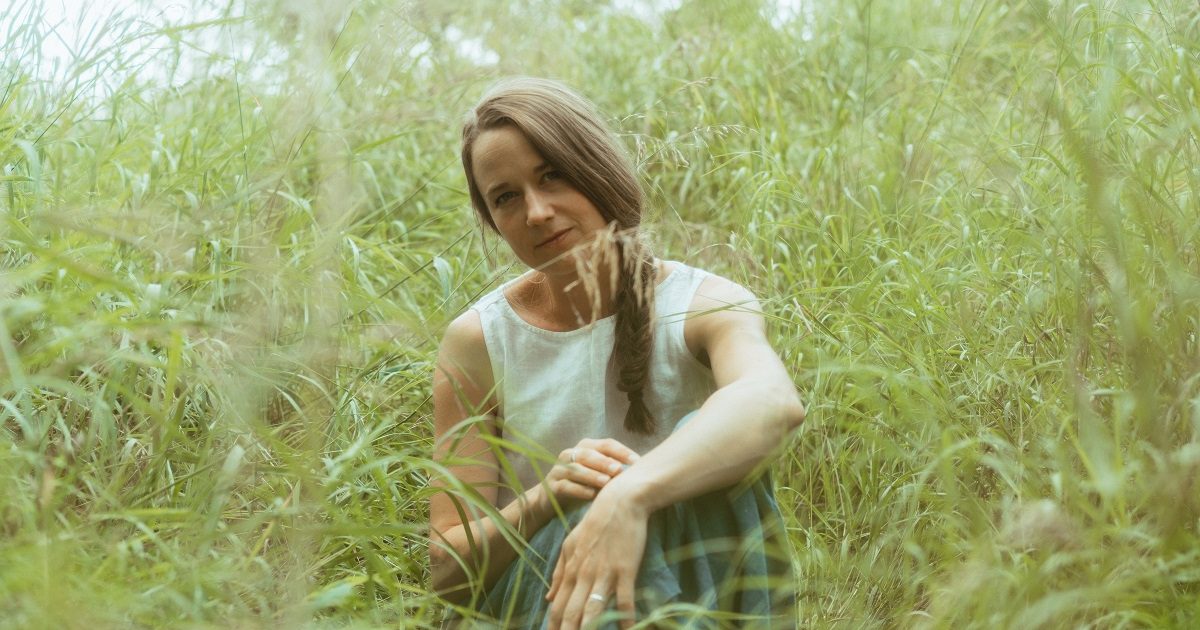
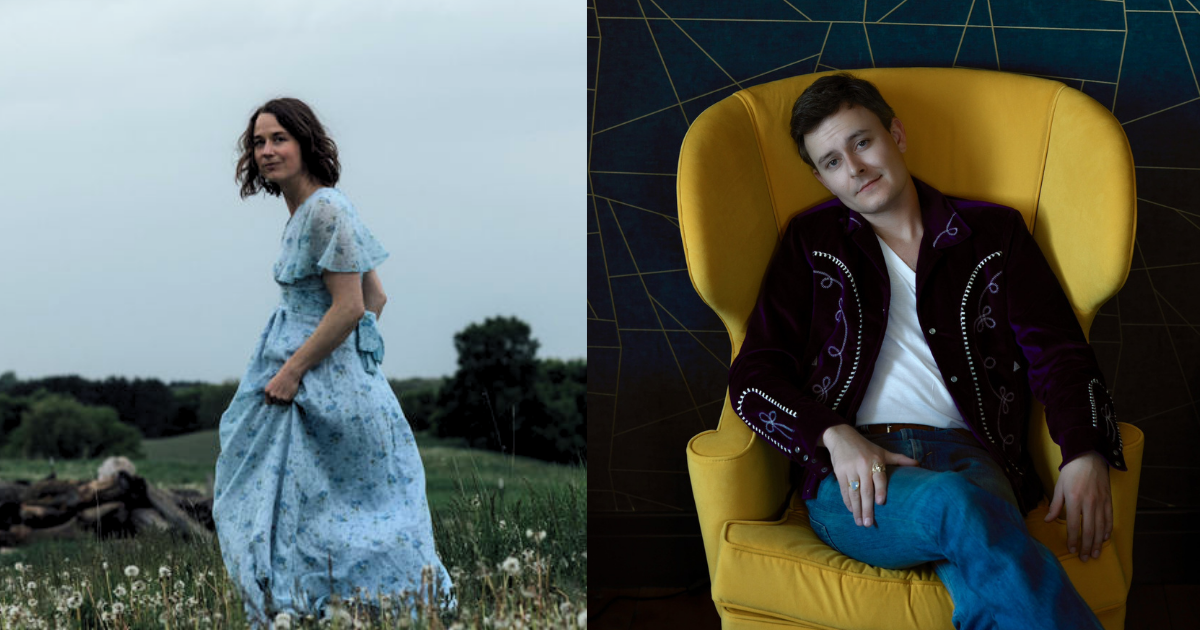
Photo Credit: Courtney Hartman by Michelle Bennett; Dee White by John Peets.
How Courtney Hartman
Made With You

In the late summer of 2022, Courtney Hartman realized that the songs she had written for a new album were not the songs she needed to release. “I had found out I was pregnant a few months earlier, [and already] had a batch of material I was working on for a new record. I felt this quiet urging to set all of that aside and give my attention to what was happening in our life and in my body,” she says.

She discarded everything and began writing her third album, With You, a personal journey through motherhood set to music.

“What was happening in our life” refers to a tumultuous string of events that saw Hartman and her husband, John, through the best and worst of times. Best because the couple were expecting their first child, rebuilding their house in Eau Claire, Wisconsin, and Hartman was on tour; worst because her husband fell off a ladder, could not work for months, lost two jobs, she was dropped by her booking agent, and they totaled their car.

The cumulative effect left the couple in need emotionally, physically, and financially. They soon found themselves uplifted by their community – their immediate one and her music community at large. The experience left Hartman deeply grateful and dedicated to giving back even more than she received.

In September of that year, Hartman began writing “in earnest” the songs that became With You. She and her husband welcomed their daughter in February 2023 – more best of times followed by worst of times as Hartman struggled with postpartum depression.

“At the end of [2023] I had all this material and realized I wanted to invite in other voices and stories and perspectives, specifically those of other mothers,” she says.

Once again, she drew on her community, calling on a fellowship of songwriter mothers – Sarah Siskind, Dawn Landes, Ana Egge, Tift Merritt, Kristin Andreassen, and Emily Frantz Marlin of Watchhouse – to help take her deeply personal new songs to an even higher level.

“I spent another few months, December [2023] to February [2024], writing mostly over Zoom, finishing the material with those other writers,” she says. With You was recorded in June and July 2024, at The Hive studio in Eau Claire, with Hartman producing and Brian Joseph as co-producer and engineer.

As one might expect from Hartman, there are plenty of guitars on the album – her Lawrence Smart Archtop, Bourgeois Parlor,
PreWar (modeled after a Gibson J-45), Bischoff Dreadnought, Martin 00,
and a Telecaster – but if you’re looking for the lightning flatpicking work that makes her a bluegrass force to reckon with, you’ll be best served on YouTube. With You tells a story that calls for understated guitars as a palette for its songs.

“Things weren’t all bright and shiny in that season,” she says, “but the impetus to write and pay attention helped me pay attention to some of those lighter moments. Not all the songs on With You are about everything being light, because that’s just not how it is. But there was this extra attention to some of those details that do help buoy your spirit when things are a little more challenging.”

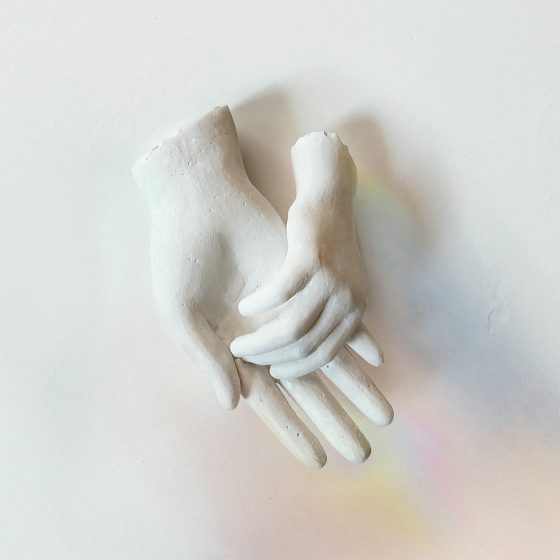
Courtney Hartman’s ‘With You’ album cover art, created by Claire Lindwall.

Completing the journey is With You’s striking cover art. The work of Hartman’s close friend Claire Lindwall captures the music’s delicate intimacy. “Claire is primarily a watercolor artist and illustrator,” says Hartman. “A special part of creating an album, for me, is giving the music to someone who then translates it into a visual piece of art. Every time, it’s surprising and expansive in a new way.”

Lindwall cast her own hand and that of her daughter’s, and positioned the casts so that one holds the other. “We experimented with drawings around it, then having just a splash of watercolor behind the piece,” says Hartman. “That’s all it needed.”

With this album now making its full debut, how do you feel about sharing so much vulnerability?

Courtney Hartman: The processing has happened in phases. I think it started just by saying yes to writing the material. There was an accepting of, “I’m writing about this thing that feels more vulnerable and more naked than anything I’ve written about before.” Bringing those songs to other writers, to collaborators, there was another level of vulnerability there.

A year ago I brought all of this material to my greater community and asked for support, because at that point I needed help putting the album out. Now, to give it to the rest of my community and listeners in the world, there’s a level of vulnerability, but I feel mostly excited. It feels like, “We made it.”

You’ve explained in other interviews that you had to use funding meant for the songs that came before these in order to get back on your feet. Needing financial assistance is also a vulnerable place and one that often brings publicly imposed shame and guilt. How did you process it?

You’re bringing up something that my husband and I have been talking about a lot, just with the news cycle and trying to get an understanding of what we can do for folks in our community. And having had small tastes of that in our life, because I know what we’ve experienced is so small compared to what so many people live through and are currently living through.

An important [word] that you touched on is shame – the shame of needing help; of not feeling like you can do it on your own or you can stand on your own two feet; of needing help for basic things like groceries. I think maybe accepting help and accepting care expands our capacity to feel compassion and to be able to then care for others.

In a podcast for Acoustic Guitar, you used the phrase “the intimacy of sound.” Could you talk more about what that means in the songwriting and guitar playing?

What I hear when you reflect that phrase back to me is the sound of the skin of your finger on the guitar string, or the sound of hands against a percussive instrument. When we went into the studio, I told the friends that were with me there on the first day, “Just as a guiding directive, whenever we imagine a sound that we want to create, let’s see if we can find something natural to create it with.”

Everyone took it in their own way, some on their instruments. Sean Carey was heavily involved on the record and he took that more literally in a lot of the percussion work. He found a nest outside when he was wandering around and that became the percussion on a track. Or even just the sound of skin on skin being a sound that we used as well; bringing in and magnifying some of these quieter sounds and allowing that to be a part of the soundscape [was part of the intimacy of sound].

Did you select the guitars around the songs or did some of the songs develop around your guitars?

Sometimes you think you know what a song wants before going into the studio and then you sit behind a mic and you’re like, “This isn’t serving it quite right.” And sometimes that experimentation takes a little longer than you think it will. Or sometimes you sit down with a first instinct and it’s totally right. That’s part of the reason it’s fun to have a good array of instruments in the studio.

Is the guitar as much a part of expressing your feelings as the lyrics?

It is. I think part of that comes from how long it’s been an instrument that feels like a voice to me. Songwriting came around the same time. I was about 12 when I started writing songs. Singing feels like something I still have so much exploration and learning to do.

How did working with other mothers, and their lived experiences, bring understanding to what you were going through?

What I was given [was the] shared experience and the acknowledgement of, “This is really hard. It’s really beautiful, but it’s also really challenging.”

So much of the caregiving that happens [as a mother], especially in that first year … so much of it is invisible. Maybe an aspect of that applies to all sorts of giving care – that it’s invisible other than to the one giving the care and the one receiving the care. When you feel invisible, it can also make you feel isolated and that can really feed into some of the struggles. A lot of folks have postpartum [depression] and societally we’re not set up to honor and support that season very well at all. It’s something I care a lot about, both from experiences with my family, but also as I’ve delved into work as a birth doula.

When you say, “Societally we’re not set up to honor and support that season very well at all,” what do we need to do?

We need to honor and uphold the importance of rest and nutrition and preparation. Parents are prepared for “Here’s what birth might look like,” but after that six-week checkup [traditional care usually ends]. Postpartum extends far longer than that.

A lot of [postpartum] mental health struggles won’t show up until maybe nine months or a year after a child is born. Better supporting [people postpartum] that would be the first thing I can think of. We live pretty isolated lives, as families in our insular homes, and so we’re not set up to receive support very well.

Or ask for it.

Yes, totally, [we need to be] preparing [people] to know that this is a time to accept and receive care. Preparing your heart for that is such a big piece of it, to know that we, as your village and your community, want to care for you in this time.

You’ve spoken openly about postpartum depression. What was that period of time like for you?

Moments of real happiness, but also moments of hitting my head against the wall … when I was struggling. [It was] hard to admit to myself and then to speak that [struggle] out loud to anybody. It wasn’t until afterwards that I could say, “That was hard.”

All depression is misunderstood and will often make people in your circle run away.

Let’s go back to your community, and the community of mothers, and how they lifted you.

I felt so cared for by our community in a way that was deeply humbling and in a way that somehow prepared me to do some of the caregiving that was going to be required of me. I was receiving so much love and support and meals and folks showing up. That kind of care is life-changing. It changes the way we see the world and our community around us.

My daughter was about nine months old or so when I started reaching out to other mothers, asking if they would collaborate on some songwriting. Having some tether creatively helped pull me through that season. It helped weave together the woman I was prior to having a child with the woman I was in that new space. … Sometimes it feels like … you almost can’t remember who you were before.

I was really afraid of [losing parts of myself]. I was afraid I wouldn’t create music again. There’s all these fears, irrational or not, that show up. Creating and being able to have these conversations that normalize what you’re experiencing. Having women who are [a] few years ahead of me be like, “It might be extra-challenging now, but it doesn’t stay that way forever.”

It’s almost 2026 and society still misunderstands and stigmatizes mental health, certainly PPD, and even some aspects of pre- and postpartum healthcare. Why are we uncomfortable talking about things that are so natural and important to discuss? Are we making progress or going backward?

I hope we’re making progress. It was a lot easier for me to ask, “Why don’t we talk about these things?” when I wasn’t part of the “we.” As soon as it was also part of my story to talk about and share, [I had to come] to terms with my own hesitancy. Why do I not want to talk about something as normal as pregnancy and motherhood in my songs? Why do I feel like if I put this music out, it will be discredited and potentially ignored, even though it may speak to so much of the population? …

I still don’t have an answer. Maybe it’s because there’s so many generations of women having to hide those things for fear of losing wages, or jobs, or discrimination, whatever it might be. For everybody’s sake, there’s so much we have to learn from mothers’ voices, and I hope we’re beginning to really listen.

On a podcast, The Other 22 Hours, you reflected on the period after Della Mae and the realization, at the time, that “Music was not a healing thing.” What role does music now play in your healing and mental health?

It has become healing again. Years ago, I was dealing with physical pain in my hands. That was magnified by touring all the time, being on the road so much, and the strain on my body. So I was speaking about it in a physical way. [Music] has become a lot more than just physically healing [for me]. I think this album exemplifies that.

You have worked with so many people. Who is your wish-list artist or artists?

Oh my gosh. The first person that came to mind – and maybe it’s because I’ve been listening to her record all week – I would love to play music in the same room as Brandi Carlile. She gives all of herself and it’s so good.

We had a listening party [for With You] and as I was listening to the album for the first time with a whole group of friends and collaborators, what I hear on it is my friends and heroes, which is such a joy. There are so many folks on this album that I look up to so much and who have been dream collaborators. So, in that way, a lot of it has been a dream list fulfilled.


Photo Credit: Michelle Bennett

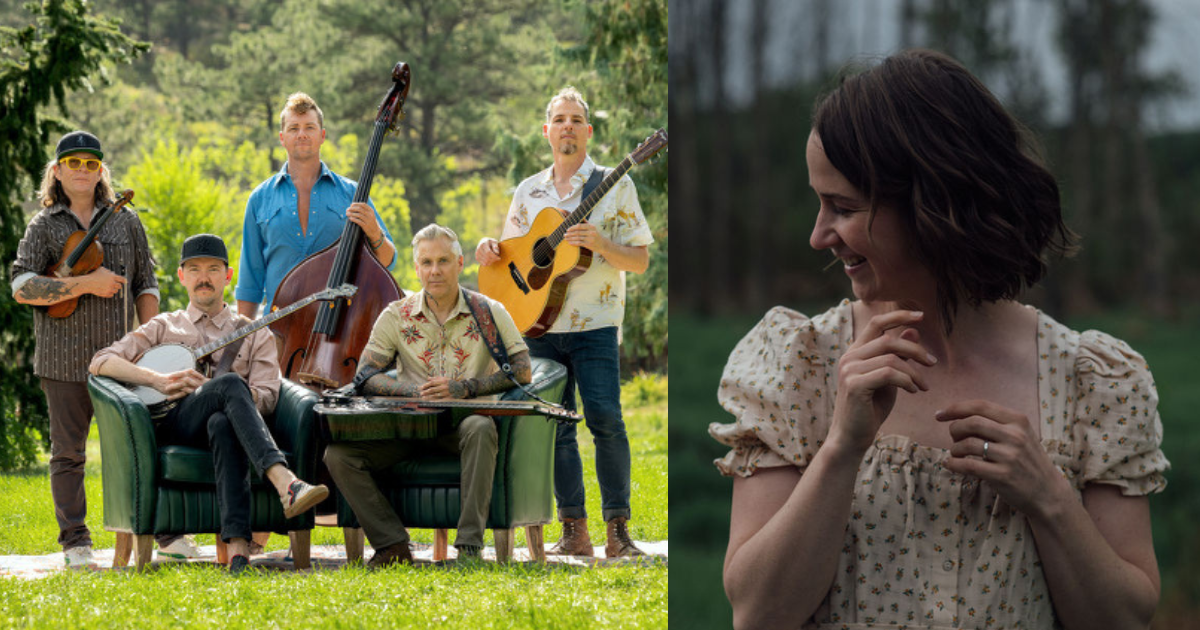
You Gotta Hear This: The Infamous Stringdusters, Courtney Hartman, and More

Happy Friday! There’s plenty of new music to enjoy this week in our latest edition of You Gotta Hear This, our regular roundup of upcoming and just-released tracks and videos.

Kicking us off, innovative banjoist Wes Corbett (who currently tours with Sam Bush) shares the second single from his upcoming album, Drift. “Eagle Harbor” was inspired by the vibe and structure of Jackson Browne’s music and the picturesque ferry ride to Bainbridge Island in Washington state, where Corbett grew up. Guitarist, poet, and singer-songwriter Courtney Hartman is returning with new music as well; this time it’s a lush and whimsical neo-folk song co-written with Ana Egge about how being a mother and raising a child transformed the way she saw everything around her. It’s set to an intimate and cozy new music video you’ll love to watch.

New Mexico-based artist and songwriter Michael Rudd will release a new track, “Not Today,” next week and below you can find a preview of the number. It contemplates war, history, loss and their legacies; Rudd was spurred to write “Not Today” by the many wars ongoing today, especially in Gaza, and by his recent travel to Germany, Poland, and to visit monuments of the Holocaust.

Lauren Morse is ready to get you dancing with her new track and music video. “Let that Fiddler Fiddle” is a message we can certainly get behind. Inspired by Nashville’s ever-popular Honky Tonk Tuesday, it’s a two-stepping song sonically found where country and bluegrass meet – and perfect for toe-tapping or hip-swaying (or both). Trey Hedrick brings us a very enjoyable bluegrass track as well; “Passing Through” began to come together while Hedrick was out west and longing for the hills of home. With a talented roster of pickers and musicians on the song, Hedrick says it’s “a self reminder to go, to try, and to not leave the important things undone.”

Rounding us out, a group we’ve loved and collaborated with for a very long time, The Infamous Stringdusters, have a brand new single and a video to go with it. “Dead Man Walking” was written by Jeremy Garrett and Larry Keel. Don’t be fooled by the title, this is a song of uplift and positivity, set to the grooving and gritty style of bluegrass we all know and love from the Dusters.

It’s another stellar collection this week, if we do say so ourselves, and You Gotta Hear This!

Wes Corbett, “Eagle Harbor”

Artist: Wes Corbett
Hometown: Nashville, Tennessee
Song: “Eagle Harbor”
Album: Drift
Release Date: September 15, 2025 (single); October 3, 2025 (album)
Label: Adhyâropa Records

In Their Words: “As a kid, Jackson Browne was playing around the house a lot so that music has always filled me with a sense of warm nostalgia. As an adult I’ve realized how gorgeous his music is and how profound of an impact I think it’s had on me as a musician. ‘Eagle Harbor’ is a reflection of this both in vibe and in structure – wide warm sounds, open space, and what I hope is a strong melody. It’s named after the main harbor on Bainbridge Island where I grew up, which looks particularly beautiful during golden hour as you approach on the ferry with the Olympic Mountains as the backdrop. This group of musicians is an absolute dream to make music with! With so much emotional depth and their masterful touches as a bedrock it has become one of my favorites on Drift. I feel so lucky and honored to have the chance to cut this track with them.” – Wes Corbett


Courtney Hartman, “Bright Eye”

Artist: Courtney Hartman
Hometown: Eau Claire, Wisconsin
Song: “Bright Eye”
Album: With You
Release Date: September 17, 2025 (video); August 27, 2025 (single); November 14, 2025 (album)

In Their Words: “I began writing ‘Bright Eye’ the first summer after my daughter was born. Loving her transformed the way I saw everything around me and I found myself surprised by the joy of seeing our life through her eyes. I believe that this is what love does: love of any kind changes how and what we see. It lets the light in.

“Ana Egge is a favorite songwriter of mine, she has a wonderful way of articulating melodies. I sent her an early version of the song and we finished it together. ‘Bright Eye’ also features harmonies from my dear friend and fellow Eau Claire artist and mother, Sarah Elstran (The Nunnery).

“I wanted the video for the song to give a real sense of the spirit behind With You – the community, the care, and the laughter. The album came about during a season of heaviness, but the women who co-wrote the songs with me, along with the friends who recorded them, truly helped to carry me through.” – Courtney Hartman

Track Credits:
Courtney Hartman – Voice, guitars, songwriter
Ana Egge – songwriter
The Nunnery – Harmony vocals
Ben Lester – Synth, pedal steel
S. Carey – Drums, piano, synth
Shane Leonard – Percussion
Zoe Guigueno – Electric bass

Video Credits: Filmed by Kyle Lehman, edited by Erik Elstran.


Trey Hedrick, “Passing Through”

Artist: Trey Hedrick
Hometown: Wilkesville, Ohio
Song: “Passing Through”
Album: Sing, Appalachia
Release Date: September 19, 2025

In Their Words: “‘Passing Through’ started with my time living out West. I went out there looking for adventure, and I found it – mountains, open skies, and a pace to life that felt more open. But even then there was always a pull toward home, toward the hills. The song is about moving through places and seasons, chasing what you need to see while you can. It’s also about how all of us are just passing through in life, and how easy it is to get stuck only talking about the things we want to do. I’ve never wanted to live that way. That’s where the line ‘I ain’t afraid of dying, just the things I never did’ comes from. It’s a self reminder to go, to try, and to not leave the important things undone.” – Trey Hedrick

Track Credits:
Trey Hedrick – Lead vocal, acoustic guitar, songwriter
John Mailander – Fiddle
Ethan Ballinger – Mandolin
Frank Evans – Banjo
Phillipe Bronchtein – Piano
Jamie Dick – Drums
Rhees Williams – Bass
Maya De Vitry – Harmony vocals


The Infamous Stringdusters, “Dead Man Walking”

Artist: The Infamous Stringdusters
Hometown: Nashville, Tennessee and Colorado
Song: “Dead Man Walking”
Album: 20/20
Release Date: September 19, 2025 (single); January 2026 (album)
Label: Americana Vibes

In Their Words: “I had this idea about a pitiful character that needed to snap out of their life and take a bigger view of everything before it was too late. I kept having Larry Keel’s voice in my mind as I worked through the melody of the song a bit, so I sent him a verse or two and he sent me back some. His lyrics were awesome, uplifting, and on the positive side. In a few sessions, we came up with what feels like a powerful chorus and a cool hook. It felt so natural for Dusters to make this one as country as we could and I just hope it resonates with everyone who listens, as it did with Larry and me as the songwriters.” – Jeremy Garrett

Video Credits: Directed and edited by Jack Gould at Ninja Video Production.
Craig Babineau – Second camera


Lauren Morse, “Let That Fiddler Fiddle”

Artist: Lauren Morse
Hometown: Jackson, Michigan
Song: “Let that Fiddler Fiddle”
Album: The Sweetest Sound (EP)
Release Date: September 12, 2025 (video/single); January 2026 (EP)

In Their Words: “I wrote this song after a Nashville Honky Tonk Tuesday. I was being spun around by a man old enough to be my grandpa at the American Legion and I thought, ‘This is so much more fun than my date was the previous night.’ I immediately wanted to write a song folks could two-step to and that’s what I set out to do. Playing it out around Music City, I was always getting compliments on how it felt like nostalgic country music. It is the best feeling in the world to see the intention for the song to be played out in a music video with the same people who inspired it! I think it’s a real special song people get excited about and can’t help but clap or dance along.” – Lauren Morse

Video Credits: Directed by William Gawley.
Produced by Michelle Robertson, Charlotte Avenue Pictures.
Director of Photography – Wayne Taylor with Giovanni Gotay
Drone pilot – Wayne Taylor
Edited/color – Color Synch Visuals


Michael Rudd, “Not Today”

Artist: Michael Rudd
Hometown: Albuquerque, New Mexico
Song: “Not Today”
Album: Ways of the World
Release Date: September 26, 2025 (single), February 27, 2026 (album)
Label: Invisible Road Records

In Their Words: “‘Not Today’ is about the legacy of war, both for the vanquished and the ‘victor.’ In a time when wars seem to be everywhere, the song considers not just the impact on those fighting now, but also on generations to come. ‘Not Today’ is from the perspective of a man who has lost everything – his family, his home, his land – but not the knowledge of who he is. It was most directly inspired by the war in Gaza and settler violence in the West Bank, as well as my visit last year to Berlin, Warsaw, Krakow, and Auschwitz. As an American Jew who grew up with the cornerstones of Israel, Jewish ethics, a knowledge of historical antisemitism, and the specter of the Holocaust, I wonder how future generations will process the current war and the influence it may have on how they see themselves and the world.” – Michael Rudd

Track Credits:
Michael Rudd – Vocals, electric guitar
Pat Malone – Electric guitar
Mark Clark – Drums
Brant Leeper – Hammond organ
Asher Barreras – Electric bass
Kelly Kuhn – Backing vocals


Photo Credit: The Infamous Stringdusters by Daniel Milchev; Courtney Hartman by Michelle Bennett.

Ed’s Picks: A Breath of Fresh Air

(Editor’s note: Each issue of Good Country, our co-founder Ed Helms will share a handful of good country artists, albums, and songs direct from his own earphones in Ed’s Picks. 

Sign up here to receive Good Country issues when they launch, direct to your email inbox via Substack.)

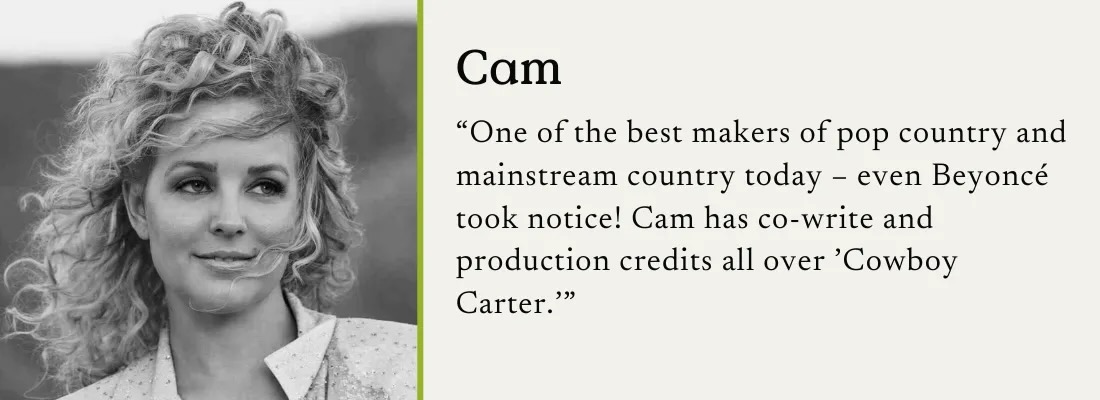
Cam

A photo of Cam with the quote: "One of the best makers of pop country and mainstream country today – even Beyoncé took notice! Cam has co-write and production credits all over 'Cowboy Carter.'"

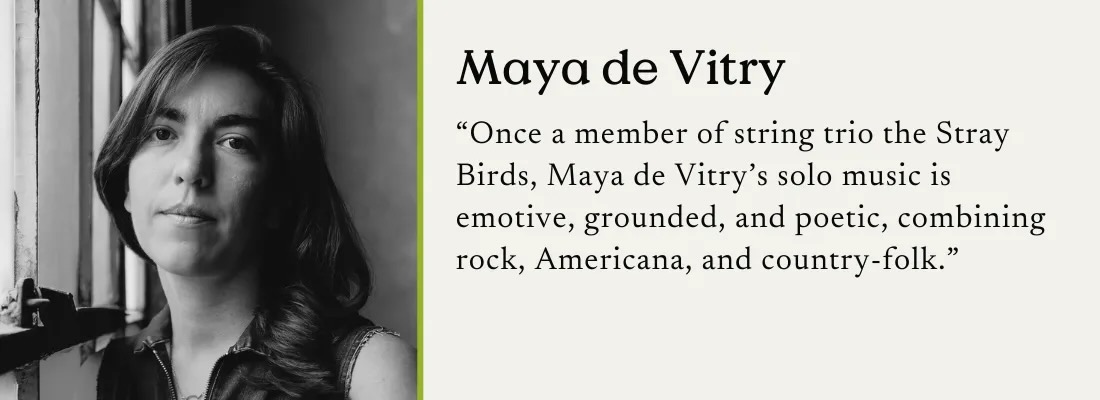
Maya de Vitry

A black and white photo of Maya de Vitry with a text quote: "Once a member of string trio the Stray Birds, Maya de Vitry's solo music is emotive, grounded, and poetic, combining rock, Americana, and country-folk."

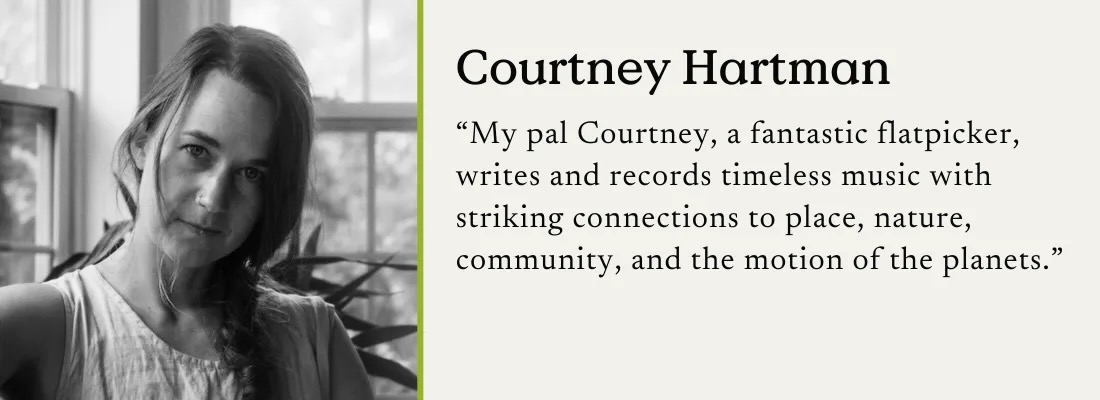
Courtney Hartman

A black and white photo of Courtney Hartman with a text quote: "My pal Courtney, a fantastic flatpicker, writes and records timeless music with striking connections to place, nature, community, and the motion of the planets."

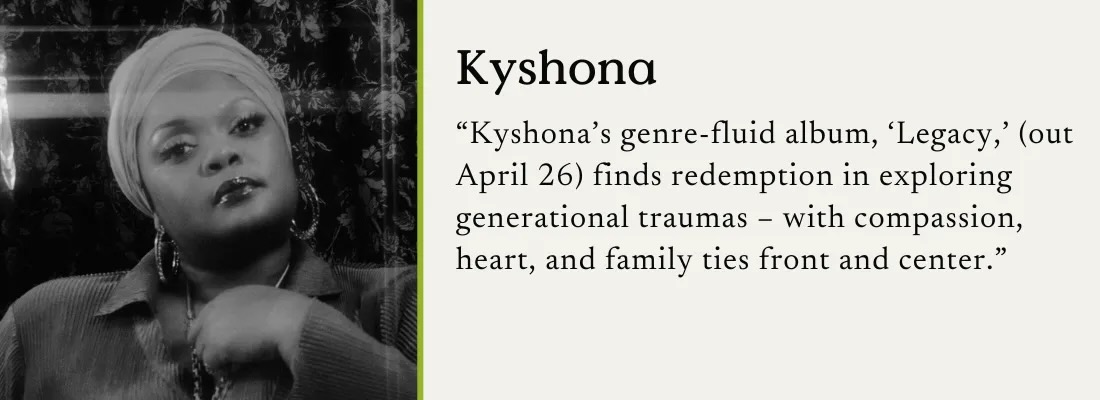
Kyshona

A black and white photo of Kyshona with a text quote: "Kyshona's genre-fluid album, 'Legacy,' (out April 26) finds redemption in exploring generational traumas - with compassion, heart, and family ties front and center."

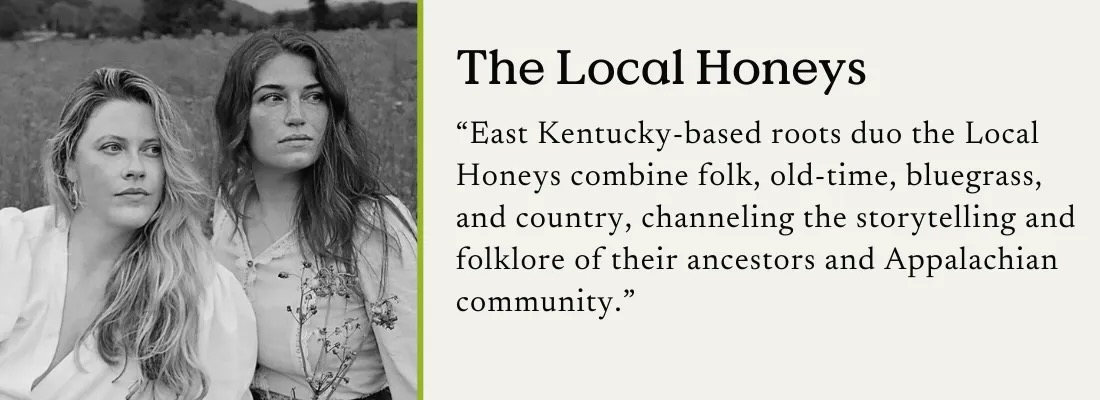
The Local Honeys

A photo of roots duo the Local Honeys in black and white with an accompanying text quote: "East Kentucky-based roots duo the Local Honeys combine folk, old-time, bluegrass, and country, channeling the storytelling and folklore of their ancestors and Appalachian community."

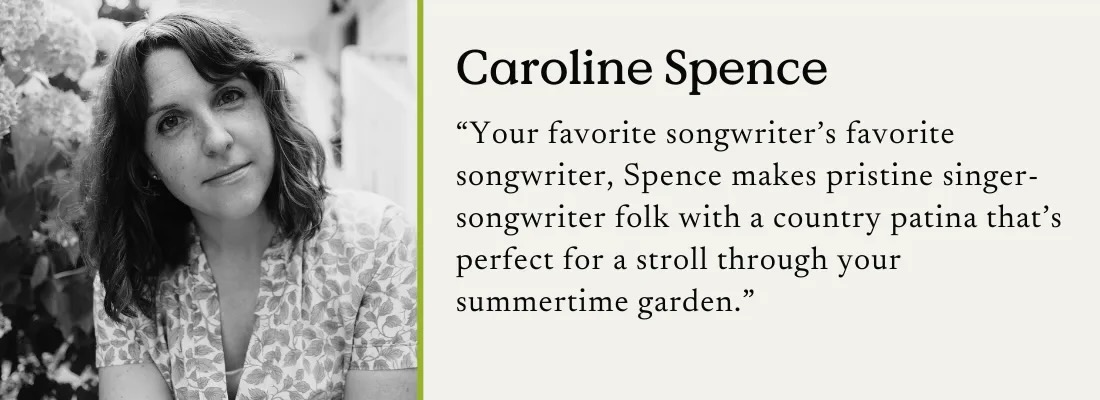
Caroline Spence

A black and white photo of Caroline Spence with a text quote: "Your favorite songwriter's favorite songwriter, Spence makes pristine singer-songwriter folk with a country patina that's perfect for a stroll through your summertime garden."


Photo Credits: Cam by Dennis Leupold; Maya de Vitry by Kaitlyn Raitz; Courtney Hartman by Jo Babb; Kyshona by Anna Haas; The Local Honeys by Erica Chambers; Caroline Spence by Kaitlyn Raitz.

MIXTAPE: The Women in Roots Music Who Inspired Justin Hiltner’s ‘1992’

For the past eight or so years I’ve been making this joke that we (the music industry) should “Give women Americana.” As in, if we gave the entire genre — and bluegrass and country and old-time and folk, for that matter — to women and femmes and non-men, I wouldn’t so much miss the men and the music would certainly be well cared for and well set up for the future. 

My point, as I continue to make this joke year after year to many puzzled reactions, is that women and femme roots musicians have and will always be my favorite artists, creators, songwriters, and pickers. As I crafted my debut solo album, 1992 – often with incredibly talented women like producers and engineers (and pickers) Cathy Fink & Marcy Marxer, mastering engineer Anna Frick, photographer Laura E. Partain – the music that inspired, informed, and challenged me most through this release was all made by women. (Ask me sometime about my monthly Spotify playlist, Don’t Need No Man.)

When BGS approached me to make a Mixtape to celebrate 1992, I knew I had to share some of the women who helped me realize, musically, artistically, socially, emotionally, that there could be a home for me in bluegrass, largely because they had created such a home exactly for me. Here are a few of my bluegrass, old-time, and country inspirations, all of whom have filtered into this album in one way or another. – Justin Hiltner

Ola Belle Reed – “High On the Mountain”

1992 was tracked in Ashe County, North Carolina, in a little town called Lansing nestled into the Blue Ridge Mountains, right where Tennessee, Virginia, and North Carolina meet. I love it out there on the mountain, in the wind, in the clouds, on the rocky little road cuts and switchbacks through the hills. Lansing also happens to be the hometown of a legendary Appalachian musician and bluegrass forebear, Ola Belle Reed. A banjo she once owned and had signed hung on the wall beside me while I tracked every song. I definitely see my album as stemming from the lineage of Ola Belle, humbly and gratefully.

Cathy Fink & Marcy Marxer – “Hold Each Other Up”

I’ve been so lucky to collaborate with folk icons, Grammy winners, and children’s music legends Cathy & Marcy in so many different contexts and scenarios, every single one delightful and fulfilling. They’re amazing mentors and encouragers and while we recorded 1992 we had to take the chance to channel their amazing attitudes and worldviews into a COVID-inspired (or -instigated) track, “Hold Each Other Up.” I love getting to pick and sing with these two, and their engineering, production, wisdom, and guidance all made this record possible.

Laurie Lewis – “I’m Gonna Be the Wind”

Long before I ever got the chance to tour and perform with Laurie Lewis she was a hero of mine, someone I looked up to and knew would be a bluegrass legend and stalwart who could or would accept me for who I am. Turns out, often in bluegrass, it is okay to meet your heroes, because when we met and I got to work for her, it turned out I was absolutely right. Her writing style, her artistic ethos, and the way she infuses pure bluegrass energy and her personality into everything she does reminds me I can be who I am, play the music I play, and write the way I write. This song picks me up whenever I’m down and gives me self-confidence and optimism when I need it most.

Alice Gerrard & Hazel Dickens – “Mama’s Gonna Stay”

I never had the honor of meeting Hazel before she passed in 2011, but Alice Gerrard and I have become friends over the past six years and honestly, if 17-year-old Justin knew he’d become friends with this Bluegrass Hall of Famer, he’d die. We happen to share a birthday, too. Alice is a gem, a trailblazer, an unassuming and unrelenting activist and organizer and community builder. She inspires me in all of the above, but especially in her willingness, across her entire career, to write music about things no one else was writing about. This song, which Laurie Lewis turned me onto (she performs it as well), is a perfect example.


View this post on Instagram


A post shared by Justin Hiltner (@hiltnerj)


Elizabeth Cotten – “Wilson Rag”

Playing shows and recording totally solo is often terrifying. Especially as a bluegrass banjo player used to playing in five-piece lineups. It took many years and lots and lots of practice time and experimental shows to figure out how exactly I wanted to arrange songs, build shows, create and ride a storytelling arc during my shows, guide an audience, and do all of that confidently with just a voice and banjo. Artists and pickers like Elizabeth Cotten gave me frames of reference for what I was doing that felt solidly bluegrass, but still building a show and sound that feels fully realized and not lacking for being minimal.

Missy Raines – “Where You Found Me”

Missy Raines is another hero of mine that I feel so lucky to now call a friend. Despite coming from different generations and very different circumstances we have so much in common. It just sometimes astounds me that we can have seemingly endless conversations around if bluegrass (or country or roots music) are accepting and open; meanwhile one of the winningest pickers in the history of bluegrass and the IBMA – that is, Missy Raines – has always been both accepting and open. Who needs the sexist, homophobic, womanizing, problematic elements of bluegrass when you have absolute badass legends like Missy!? I once covered this song for a “Cover Your Friends” show and it continues to devastate me to this day.

Caroline Spence – “Scale These Walls”

When I first moved to town, Caroline Spence was one of maybe four or five people I knew in all of Nashville. We spent a lot of time together in those early years, back in 2011 and 2012, and pretty soon after that we wrote a song together, “Pieces.” We both loved it a lot, performed it here and there with different lineups and bands, but it never landed on a record ‘til now. “Scale These Walls,” from Caroline’s most recent album, is constantly stuck in my head. I love how it showcases her jaw-dropping skill for writing dead-on hooks that feel so organic and never corny. I love this song.

Molly Tuttle – “Crooked Tree”

Molly Tuttle and I wrote “Benson Street,” a track off my new album, together about five or six years ago. It’s a cute little number about longing told through the lens of an idyllic Southern summer. I love every chance I get to make music or write music with Molly. She’s a constant source of inspiration for me and proof positive that you can be a proverbial crooked tree in bluegrass and still carve a pathway to success. Plus, she’s another great example of a picker who can command an entire audience totally solo. Trying to steal tricks from Molly Tuttle? Couldn’t be me.

Rhiannon Giddens – “Following the North Star”

Rhiannon Giddens is the blueprint. When I think about my artistic future and the way I want to be able to glide between media, between contexts, between areas of expertise and subject matter, between pop and roots and so many other musical communities, I think of Rhiannon. The way she has built her career around her artistic and political perspective, so that no matter what she does it feels grounded in her personality and selfhood is exactly how I want to be as an artist and creator. Plus, I always want to be as big of a music nerd and as big of an old-time nerd as her. 

Maya de Vitry – “How Bad I Wanna Live”

Maya is one of those writers and musicians who just makes me feel seen and heard and understood, and I know I’m only one in a huge host of people who would say the same. The vulnerability and transparency in her writing and the emotional and spiritual availability within it are astounding. Plus, she’s almost always, constantly challenging herself to consider the ways she creates and makes music outside of consumerism and art as a commodity. I moved to Nashville to be challenged, musically and artistically, by those around me and I feel so lucky to have Maya around me and a member of my community.

Courtney Hartman – “Moontalk”

Courtney Hartman’s “Moontalk” makes me feel like every single song I’ve ever written about the moon is good and right and allowable. (We both have quite a few songs about the moon, actually.) “Moontalk” feels like Mary Oliver incarnate in bluegrass-informed picking and singing. It feels meditative and contemplative, but not timid or insular – something I’m always trying to accomplish in solo contexts. I’m constantly inspired by Courtney and the way she centers community building in her music and life. She’s another one who, though she thrives performing and making music solo, you know that music came from a multitude of folks pouring through her.

Dale Ann Bradley – “He’s the Last Thing On My Mind”

I thank a few artists who have inspired and influenced me in a huge way in 1992’s liner notes and Dale Ann Bradley is one of them. I feel like I am constantly ripping off and (poorly) mimicking her vocal runs, phrasing, licks, and delivery. I think she might have the best bluegrass voice of all time, or at least it’s very very high up on the list. When I first moved to town I worked as an intern at Compass Records and just getting to be a small part of the team that worked a handful of her records meant so much to me.

Lee Ann Womack – “Last Call”

Lee Ann Womack is another who I thank in the album’s liner notes, another who I emulate vocally as much as I can get away with. I used to wear out this track and this album, Call Me Crazy, listening on repeat over and over. When I found out this song was co-written by an openly gay songwriter, it rocked my world. I already heard so much queerness in LAW’s catalog, and this confirmation came at a time when I needed to feel like I was given permission to exist in bluegrass, country, and Nashville. I know now that no one needs that permission, but it was critical then.

Linda Ronstadt – “Adios”

During the 1992 recording session I recorded a solo banjo rendition of this song, one I’ve been performing for years at shows. It means so much to me and Linda’s performance is stunning in its power and tenderness, a combination I’m often striving for. I hope to release it some time soon as a single, then again on a deluxe vinyl edition of 1992. It will not be the last time I pay tribute to Linda and her incredible career and catalog – plus, she is a huge bluegrass fan! It just makes sense to me.

Dolly Parton, Emmylou Harris, Linda Ronstadt – “Wildflowers”

When I had the pleasure of being a guest on the hit podcast Dolly Parton’s America, I sang this song and “Silver Dagger” among a few other from Dolly’s catalog that I felt had queer under/overtones. The response to my on-air picking was enormous, and there were immediate demands to release my versions of the songs. Cathy, Marcy and I recorded “Wildflowers” together during the 1992 sessions and it’s one of my favorite tracks that resulted from that week on the mountain. It’s gotten quite a lot of play, which I’m so grateful for, and always gives me an opportunity to talk about Trio and Dolly and how the story in “Wildflowers” parallels many a queer journey. It’s the perfect track to round out this Mixtape and I thank you for reading and listening along.


Photo credit: Laura E. Partain

Returning to the Family Farm, Courtney Hartman Prepared a Space for ‘Glade’

Folk artist Courtney Hartman is bringing it all back home in Glade, an introspective new album that’s named for the street that runs by the eight-acre farm where she grew up in Loveland, Colorado. As a former member of the roots band Della Mae and a duet partner of Robert Ellis and Taylor Ashton, Hartman is often a willing collaborator. Yet Glade found her working primarily in isolation, living in a trailer and later a barn to rediscover the spark of songwriting.

Now married and residing in Wisconsin, Hartman tells BGS about the process of crafting these new songs, her childhood immersion in bluegrass and the experience of recharging her creativity.

BGS: When I was listening to “Bright at My Back,” the first track on Glade, I noticed the recurring phrase of “I will be returning.” That seems like a good place to start in talking about this album. Can you describe what was going on in your life as this album was starting to take shape?

Hartman: Right around that time, I was in a season just after deciding to leave New York. I had been on the East Coast for about 10 years and felt a real draw to clean the slate and make some space for new things. I didn’t know what that was yet, but I knew that I needed to take some steps and make some clearing, so I left New York and the band that I’d been in for about seven years. I moved back to Colorado to live on the property where I grew up. I still had a couple of siblings there and my dad was there. I’d been away for about 10 years.

I needed to also do a bit of a reset, musically. I needed to find some new joy or new healing in what I was playing or creating. It felt like I had lost some of that over some time. I was at a point where I was willing to let it go if it couldn’t be those things, because it didn’t feel right to keep making music or performing if it wasn’t healing in some way. In creating work, in some way, we are putting it out there and asking to be heard, right? If we didn’t put it out, we wouldn’t be asking that question. So, when I started writing this one, that was right at the cusp of that changing and slowly beginning to write again.

When you went back to Colorado, were you living in the house you grew up in?

When I first went out, my sister had spent a summer rebuilding a camper and she was going to live in it and play music. Through some unexpected circumstances, she ended up with three beautiful foster children. So, she didn’t live in the camper. I ended up moving into the camper in the yard on the property and was present for those early months with those kids. I lived in that camper for a year or so, until it got too cold, and then eventually moved into one of the barns on the property. That was a living space, but it needed a lot of work, so I worked on that for a year and a half. I was there for about three years.

What did that work entail?

Some gutting of the downstairs, and with the help of some friends, moving some beams to open up space. Pretty basic building things, but to me they were very complex because I’ve never done them. (laughs) They were very complex and slow. I think in a similar way, when I knew I needed to return to Colorado and open up some space, I didn’t know why. Similarly, with the barn, I didn’t exactly know why I was preparing that space. I just knew I needed to do that. So, I did it.

I was listening to “Bright at My Back” and “Moontalk” back-to-back, and they both have that nocturnal imagery. Were you inspired by the nighttime?

Yeah. I haven’t drawn that parallel before, but I’m remembering right when I moved back that I was outside at night a lot. I remember being so comforted by seeing the sky, because being in the city, you didn’t have that. So, that felt like a comfort of home, being able to look up and experience the stars and the moon changing. And I wasn’t traveling, so there was something about being in one place and watching slow changes happen that also felt grounding.

“Wandering,” to me, feels like a love song. What was on your mind as you were writing it?

It felt like… Oh God, this is going to sound dorky, it felt like an all-encompassing love song. I felt like I was able to accept love from my family at that point for who I was, even though I was at a low place and a very humbling place. And maybe accept love from myself. But alongside that — looking back I can see now — I had met my now-husband just weeks prior. Just a very brief meeting at a festival and we had been talking. So that certainly played in, but it wasn’t a thing at that point. It was more like a just a broader internal opening, I think.

What were some of the formative albums or artists that guided you to this point?

There was a Rounder Records compilation with Alison Krauss on the cover. I think she was probably 8 years old or so. My parents got that CD for me and a Yanni CD for me. I was 6 and I think I lost the Yanni CD pretty quickly, but I wore that other album out. It was pretty bluegrass, which was my background. Alison Krauss and Laurie Lewis were both on that. They were very influential. And as I got into that world, I think the singing of Tony Rice was a huge influence, besides his guitar playing obviously.

Did you get interested in bluegrass at some point, or was it just always there?

That was woven into me. My parents somehow got into it and I think they were really drawn into the familial piece of that community. They saw other families that were playing music together and I don’t know if they saw something there that they didn’t have in their childhood. I had grandparents who played music. My grandma played piano in the church, my other grandpa was a classical violinist. But they didn’t play much in their later years.

You know, the bluegrass festival is very friendly to the family unit, as far as places to go and places for kids to run around. My dad was just so patient. I wanted to run around and play in jams until one or two in the morning as a 12-year-old. And he would tag along with me. He was so kind and diligent in taking us to lessons. That was a lot to give. And it was something we could do together and not be off at soccer practice, or this or that, and be separate. … I grew up with nine siblings so there was a sort of limiting factor. We had to do things that we could do together, or at least the majority could do together.

As I was reading these liner notes, I saw that you are playing a lot of instruments on this record – guitar, bass, violin, and so on. Does that versatility come naturally to you?

Again, that was something that was woven in. I started on violin as my first instrument. My older sisters started playing when they were 12 and I was about 3 at the time. So, I started playing when I was 3, doing Suzuki. I played violin for a lot of years and that morphed into fiddle, then mandolin and guitar. My mom had a guitar. It wasn’t a forbidden instrument, but it wasn’t the instrument I was told to practice, so I inevitably got really into it.

There was a piano at the house, and all these strange instruments Dad would find on eBay. He loved buying instruments at auctions. One of the instruments he had around the house was a waterphone, which ended up on the record a good bit because it’s still at the house. And part of the playing a lot of things on this album is just the necessity of wanting a sound and being the only one working on it, so I had to figure out how to do it. I’m not a bass player by any means.

Did you just know the basics of the bass?

Enough. (laughs) I know when I play something, and it doesn’t work. And then it’s just finding something that does. It’s close enough to guitar, but with every new thing I was doing, it made me appreciate and value the people who do it really well. I value that in a different way now.

When you do listen to this record all the way through now, what goes through your mind?

I listened to the test pressing of the vinyl, which was last time I listened all the way through it. When I listen to it, in some ways it’s like depiction of a very specific time and season, and I’m so grateful for that. And of a place that’s very dear to me. Also, as much as it is that, I can hear all the learning that I have left to do. So, I’m content with it. I’m excited, too. It felt like carrying this thing for however many years, then setting it down. My arms are open again for whatever’s next, whatever that may be.


Photo Credit: Jo Babb

With Life Turned Upside Down, John Smith Enlists Friends for Eloquent New Album

John Smith is resilient. You have to be, when you’ve spent your 15-year musical career — by choice — unsigned to a record label. When you’ve arranged every gig, every tour, every album release yourself. When you’ve invested your own money in everything you’ve done. As Smith himself puts it he’s been “planning for the worst” his entire professional life.

So when catastrophe hit a year ago, he was ready, in his words, to roll with the punches. The pandemic had already necessitated the painstaking and anxiety-inducing cancellation of all his gigs and tours. His mother was diagnosed with cancer at a time he couldn’t visit her. His wife lost a pregnancy. “It was devastating,” says Smith, from his home in North Wales. “But all you can do is try and make sense of it and the way I do that is write songs.”

The result is The Fray, an album of searing honesty and lithe beauty whose songs amplify the emotions and experiences of so many of us this year — the reassessed relationships, the self-reflection, and the ultimate search for hope. It is, perhaps, something of a change of pace for the British singer-songwriter, who describes it as his most honest album yet.

“In the past I’ve been drawn towards mythic perspective and character-based songs and more fantastical references,” he nods. “This one I just wrote about me and what I was feeling.” In doing so, he has created a work of extraordinary emotional nuance. As he puts it: “There’s lots of color and dark and light in everyday life. ‘How do I get to bed tonight without cracking up?’”

The songs are deeply tender — “She’s Doing Fine” and “One Day at a Time” are poignant responses to the grief of losing a baby — but they’re not as spare as Smith’s 2019 folk record, Hummingbird. This one is a cashmere blend of guitar, piano and horns, with eloquent contributions from friends in the US and elsewhere. Sarah Jarosz and Courtney Hartman lend their ethereal voices to “Deserving” and “Eye to Eye,” respectively. Milk Carton Kids contribute, alongside Smith’s longtime collaborator Lisa Hannigan, to the rousing title track “The Fray,” which tips the hat to the West Coast stylings of Jackson Browne’s Late for the Sky, one of Smith’s favorite records.

For Smith, it was a delight to be able to sing and play with his friends, even if they couldn’t be in the same space. “I normally see Lisa, for instance, very often, and I haven’t seen her for a year. So in the absence of being backstage at the same festivals, drinking and laughing, I thought let’s all get on the same track, then it’s like we’ve all seen each other.”

It had been six months since he had played with anyone else at all. When the pandemic first began to spread, Smith was touring in Australia, about to play the Blue Mountain Festival near Sydney. “I woke up in my hotel room to a text saying that the festival had been cancelled,” says Smith. “I looked at local news reports and it was obvious everything was going to get pulled and they were shutting down the borders between Australian states — it was just time to get out of there.”

Having got himself home from literally the other side of the world, Smith undertook the soul-crushing work of cancelling all his gigs, including what would have been his first-ever headline tour in the US. “It had taken years to get to that point,” he adds, ruefully. But managing his own brand has made Smith resourceful and he quickly worked together an album of unreleased recordings (Live in Chester) and took them on a “virtual world tour,” playing dates in different time zones.

“That all went really well and after the last of those gigs, that evening, my wife started feeling really bad and we had to get her to hospital and she spent a week there. And within a few weeks of that I’d found out my mum had cancer. So suddenly everything in my life was upside down.”

New songs simply fell out of him, he says. Some came from ideas he’d worked up with others, such as the opening track, “Friends.” The chorus had been written with fellow singer-songwriter Paul Usher, before the UK went into lockdown; four months later, it found a new meaning. “When I sat down and listened back to the voice memo on my phone I started singing it and wrote all the verses in one go.”

Other songs were inspired by particular instruments. He bought a classical guitar and quickly wrote “She’s Doing Fine” on it. A ‘57 Telecaster replica he acquired — “just a piece of swamp ash with a neck on it really” — inspired a riff which stayed under his fingers for five weeks before it was followed with any words. The finished product was “Hold On.”

Britain’s strict lockdown laws, which have included stay-at-home orders with only an hour a day allowed for exercise, were partially lifted in the late summer and fall, giving Smith the opportunity to get inside a studio. He and Hummingbird producer Sam Lakeman both isolated ahead of the session, and so were able to work together freely and without masks. The other musicians, too, self-quarantined before they arrived: “We didn’t have anyone involved we didn’t trust completely,” he says.

Smith laid down his own tracks in the first couple of days — the bare bones of guitar and vocals — so that the sound could build organically with each additional contribution. “Since recording all together live logistically wasn’t possible, I had to take a slightly different route,” he says. “We went with a lot of first takes and kept a few mistakes in there and tried to allow it to breathe spontaneously and didn’t overthink it… I’ve been guilty of that in the past.”

There’s a lovely moment at the end of “Friends,” as the song finishes and is punctuated with a little applause. It feels, for just a brief moment, like you’re in the room with the band. Smith laughs and explains its origins: “I’d put down the vocal take and it sounded so good in the headphones I just started clapping. And Sam shot me a look as if to say: ‘You know we’re going to have to do that again now.’” But it was such a joyful and spontaneous sound, they decided instead to ask the other musicians to clap at the end of their takes, too.

The other contributions — from Hannigan, Jarosz, et al. — were recorded at their homes and sent in digitally (“You can catch a lot of horrible stuff over email,” smiles Smith, “but not COVID”). They include electric guitar from Bill Frisell, one of Smith’s heroes, whom he approached via their mutual friend, Joe Henry. It is clear, from Smith’s tone, that having Frisell play on “Best of Me” is one of the best things to have happened to him in a very long time.

The future remains as uncertain as ever. “I’ve just moved some gigs for the third time,” says Smith. “It’s going to be a while before I’m going out and physically playing these songs.” It’s typical, he says, with good humour — he’d lined up some great venues to play in, and with the social distancing requirements significantly reducing their capacity, he would even have been able to say he had sold them out.

But Smith is not one to dwell on what-might-have-beens. Instead, he’ll be launching The Fray with a collection of livestreamed gigs, knowing that they have proved successful for him before. He has been reading a lot, recently, into business and economics and financial strategies – as he very sensibly observes, “it’s important for any musician to understand how money works because there’s going to be less of it going around.”

Smith has always been one to live the simple life, and with full lockdown resumed in Britain since the start of 2021, there has been ample opportunity to do so. There is no doubt that The Fray’s themes of getting by in the day-to-day will resonate broadly. After all, never before have so many humans experienced such similar circumstances all at the same time. “Extraordinary, isn’t it?” says Smith.


Photos by: Elly Lucas

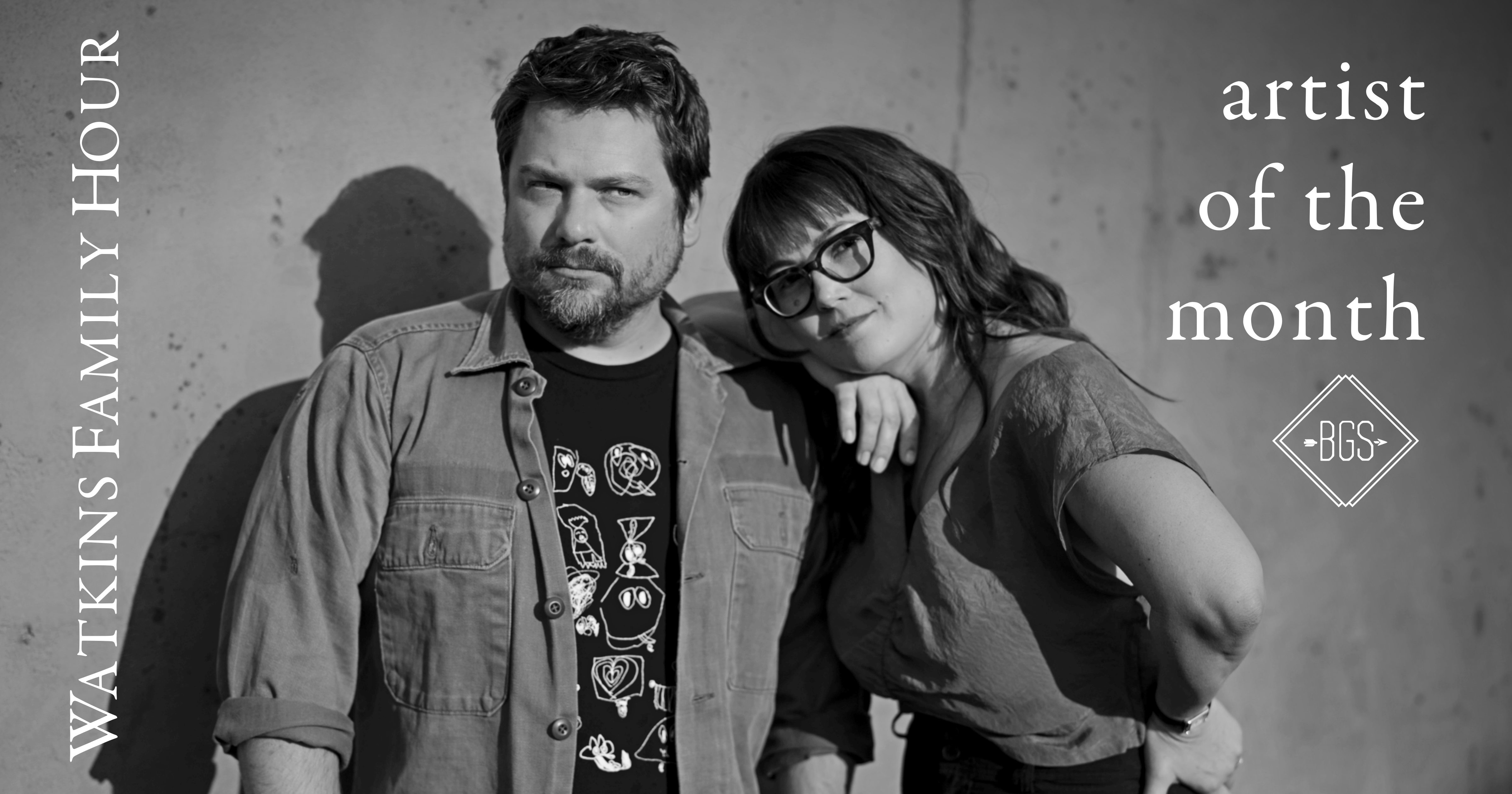
Sara Watkins Wants Us to Ride Along on Watkins Family Hour’s ‘brother sister’

Sara Watkins is up to something — or at least, there’s a pretty good chance she’s up to something. The singer/songwriter and fiddler first found international recognition with Nickel Creek, but these days she stays busy with a rotating lineup of other creative outlets, from her solo work (three albums and counting) to her harmony-singing supergroup, I’m With Her. Oh, and then there’s the raucous Watkins Family Hour, an act with her brother, Sean, that holds regular residencies at LA’s Largo with a delightfully irregular cast of collaborators liable to join them.

This time, though, they wanted to focus on the core of the group. Their new album, brother sister, marks the first time that the siblings have sat down to write together. “We were both in a place where we wanted to focus on the potential of the Family Hour in a different way, a totally new approach than what we’d done before,” says Sara. “Apart from a few shows every year, we had never really focused on just us — particularly in writing.”

BGS caught up with Sean and Sara individually to hear more about how brother sister came together. Read the interview with Sara below, and take a look at Sean’s interview from earlier this week.

BGS: This is your first album as Watkins Family Hour in five years. What made you decide to prioritize this particular project again?

Sara Watkins: The first record that we did was sort of an accident. We made it when our friend offered us some free studio time, just to document what we’d been doing for a while. That record was very natural arrangements to songs that we’d been playing for a long time, cover songs. It was about a year and a half ago when we started talking about doing this record. We were catching up on what we’d each been up to, and as we were talking — I don’t remember who suggested it first — it became clear that we were both really interested in digging into the potential of the Family Hour, but focusing on the core element that’s always been there, which is my brother and me. This record is the first example of our collaboration as co-writers outside of a band format. Maybe as a reaction to the first Family Hour album, but also as a reaction to being in the projects that we’ve been a part of, we wanted to really focus on the potential of this combination.

Is there something specific about writing with a sibling that is either a positive that can’t be replicated, or an obstacle you don’t face with other people?

I think that any time you can be completely honest or you communicate well, it plays to your advantage. I don’t know if it’s sibling-related. For the first twenty-seven years of my life, which was the first twenty years of my musical existence, we shared our musical experience pretty closely. Sean and I have the advantage of a shared foundation — a shared musical foundation, a shared personal foundation — but I think at this point in our lives, what made writing together intriguing is actually how much time we’ve spent apart.

Instrumental tracks are rarely the ones held up as singles or played on the radio, but they’re a huge part of the bluegrass tradition — and something you and Sean do really well. In the writing and recording process, where do you begin in expressing a feeling without lyrics?

Playing instrumentals scratches a specific itch for me. It’s less guaranteed [with an instrumental song] that someone’s gonna get the gist of what you’re saying, but I don’t know that that matters. Even with lyrics, Sean and I have found that we get different things out of the same song — more cynical for him and more optimistic for me, or vice versa. People might hear a lyric completely differently, and that doesn’t make it a failure of expression. Maybe that’s a success.

When I listen to instrumentals, I really enjoy things that I can grab hold of. I enjoy a melody or a hook that comes back around. And I enjoy feeling like I’m along for the ride as a listener: that the person who’s playing is taking me with them. Sometimes you can sense, when someone’s soloing, that they’re also along for the ride — that maybe they don’t know where it’s going. I think a lot of us get that from like a Dave Rawlings solo. That’s really exciting.

So I think that’s the goal, for me: to take the listener, give them enough to hold onto, and invite them along for the ride. When we’re writing an instrumental, we want to try and take somebody’s hand and bring them with us. Otherwise, they’re just listening to a flurry of notes.

The melody and cadence on “Fake Badge, Real Gun” could be just as at home in a pop song. What were you going for when you sat down to record?

Sean has a real knack for melodies that have a pop sensibility. He has a really great way of blending and marrying that with the foundation and the scope of his bluegrass background. I think he’s uniquely good at that. This song is really hard to sing. [Laughs] It’s probably the most challenging song that I sing. Because of where the melody goes in my register, I’m always just singing it with my fingers crossed.

We were consciously trying to satisfy what the song wanted, which was percussion and some low end, but we wanted to give that to the song in a way that didn’t make it feel detached from the record. We kept the drums tight and to one side, and gave it bass that wasn’t too percussive. Then, when we recorded some of the other songs on the record that are much quieter — like the Warren Zevon song, “Accidentally Like a Martyr” — we recorded to tape, and Clay [Blair], who was our mix engineer, hit the take really hard. That means there’s some distortion on the tape, but it gives it a presence that I think matches the intensity of the songs that have a bigger instrumentation.

“Neighborhood Name,” a song about gentrification by Courtney Hartman and Taylor Ashton, is a newer number that you decided to cover on this album. What drew you to it?

It speaks to what a lot of people are aware of and sensitive to right now, as the world is changing and neighborhoods are changing. Some of us don’t know what our place is in that and others are being pretty directly affected. It’s also something that has happened for generations. This song doesn’t put an ethical stamp on it, to my ear, as much as it just speaks to the relatability of the sadness of being displaced. In addition to that, it speaks to the question of wondering if anybody’s gonna remember you — if you made a mark at all. And that’s something that’s always relatable, to everyone.

The song I’ve listened to the most is “The Cure.” What does that song mean to you, specifically the phrase “I avoided the cure, but it found me anyway”? Does it have any special meaning?

Life has a way of being persistent in the lessons that you need to learn. We might procrastinate on things that we know are going to be valuable for us or to start things that might be beneficial. Life pokes and prods in a way that often will bring you to those places, whether you like it or not. It’s a funny thing that a lot of us are so reluctant to do the thing that we know is going to bring us the outcome we’re looking for. It’s a strange but calming phenomenon that I think a lot of us can relate to.

Absolutely. It’s kind of a hopeful message. What’s one thing that has made you feel hopeful recently?

That’s a hard question, not because I’m devoid of hope, but because you could be so pessimistic in so many ways: The resilience of nature gives me hope, but we’re also being so mean to nature, and maybe it’s not going to be resilient forever. One thing that I have been enjoying is a lot of family time lately. I think digging into relationships and feeling the invaluable place that relationships should have in our lives, remembering that, feeling attached to that in a new way has made me hopeful. I feel that there are a lot of people realizing that again, and I think that’s really good for the world.

(Read our interview with Sean Watkins here.)


Photo credit: Jacob Boll

The String – Chuck Mead

The decade-plus since the conclusion of his era-shifting band BR549 have been a case study in creative evolution for Chuck Mead.


LISTEN: APPLE MUSIC

He’s still a stalwart of classic country music and an original songwriter, but he’s found new ways to express his expertise. Most significantly has been supervising the music for the Tony Award-winning musical The Million Dollar Quartet and the CMT series Sun Records. Those deep dives into Memphis music culture led to his most recent album Close To Home, which was made at Sam Phillips Recording. Also in the hour, the fresh new direction of songwriter/guitarist Courtney Hartman. Her life after string band Della Mae has been introspective and exploratory, culminating in a 500-mile pilgrimage in Spain and a solo debut album, Ready Reckoner.

MIXTAPE: The Steel Wheels’ Music for Your Community Gathering

Building community is part of what music, and all good art, does. It brings us together. Music is a common rhythm, a poetic notion, an underlying common language for us all. A good mixtape grabs hold of that commonality and builds on it, with a few surprises along the way. As a band, The Steel Wheels curate a music festival each year, and a mixtape, or playlist, is kind of the digital version of that venture. So, let’s stop talking about it, and start building community with a PERFECT mix. – Trent Wagler, The Steel Wheels

Fruit Bats* – “Humbug Mountain Song”

Let’s start with a groove anyone can get behind. It’s accessible for the pop music lovers who wandered into this gathering — they didn’t know they liked the banjo at all until the second half of this intro kicks in. But now they’re engaged. And why can’t the piano, banjo, and drums live together in harmony? Stop closing your mind.

Kristin Andreassen* – “Get Together”

A good mixtape needs to establish that everyone is included. Loading things up with all your favorite new and rare songs isn’t always inviting. A cover song is common language at the very best. A little freshening up of a classic song will get us all swaying together in time. And what better theme than coming together? Now we’ve got everyone in the room in tune and we can introduce more variance in the mix.

The Wood Brothers* – “Sing About It”

The foundation of community is the strength we have together. Nothing better exemplifies this than the tight grooves and sweet harmonies of the Wood Brothers. And their message here is spot on. No matter where we are in our journey of pain, loss, trouble, or fear, singing a song just might help it pass.

Kaia Kater* – “New Colossus”

Now that we’re all in this, let’s tie the knots tighter. This song is like a sweet honey that helps stick us tightly. The way the melody veers and twists through literary verses encourages your conversations to dig a little deeper.

Jerry Garcia & David Grisman – “Russian Lullaby”

I think it’s more than nostalgia that brings me back to these late Garcia recordings, when he teamed up with longtime friend and musical pioneer David Grisman. The loose nature of these recordings makes you want to sit crisscross applesauce and share most embarrassing moments with a new acquaintance. If the ice wasn’t broken earlier, Jerry will rockabye you, baby. Collaborations are community building at their core.

River Whyless* – “All of My Friends”

Now that we’re all floating together in a musical high, don’t pull away. Leave the phones in your pocket. Let’s be here together fully. River Whyless is a band that simultaneously indicts and playfully dances with the information-overwhelmed age we live in.

Cedric Burnside* – “Hard To Stay Cool”

What is more true blue than these dyed in the wool Burnside family blues. Cedric Burnside’s whole album is full of these tasty grooves. It’s not hard for him to stay cool.

Tim O’Brien* & Darrell Scott – “With a Memory Like Mine”

Here’s another one of my favorite collaborations. The album Real Time by Tim and Darrell has had such a musical impact on me. To hear two great songwriters, who sing and play any instrument they pick up with such mastery, is humbling and inspiring.

Bahamas – “No Wrong”

I’m obsessed with Bahamas’ music right now. The guitar, the groove, and the vocals. The presence of this recording is also so immediate and direct. When you’re among your people, it feels like you can do no wrong.

The Steel Wheels* – “Road Never Ends”

I couldn’t help but include one from our new record. The love and joy of the road is bittersweet. This song puts words to the difficulties of transience while acknowledging the beauty of the strange kind of mobile community it creates.

Ana Egge – “Rock Me (Divine Mother)”

There are few songwriters who tap into deep spiritual depths without cliché like Ana Egge. She’s a treasure. And this song has slayed me every single time I’ve ever heard it.

Tinariwen – “Imidiwan Win Sahara” (feat. Tunde Adebimpe)

All music conjures up a sense of place. Tinariwen was introduced to me by our drummer, Kevin Garcia, and I’ve regularly wanted to go to where their sound takes me. As a songwriter and specifically a lyricist, it’s helpful to reset your listening ear and turn off the language centers of your brain by listening to music with lyrical content in a language you do not speak.

Dr. Dog – “Listening In”

A good mixtape has some curveballs. Dr. Dog has been a sonic companion for me since I first saw them live 10 years ago at Bristol Rhythm and Roots. The lyrical tapestry is so full and always connects through some kind of thought-lightning striking through your brain. I love the line, “I can hear the fear in me…talking.”

David Wax Museum – “Time Will Not Track Us Down”

We’re getting towards the end of our little mixtape. Like the Sunday afternoon lazy picnic, we are starting to wind it all down. David Wax is known for his high energy original Latin-inspired masterpieces, but this simple paired down guitar/vocal really calms my spirit and prepares us to part.

Robert Ellis & Courtney Hartman* – “Up On The Hill Where They Do The Boogie”

One more cover song for good measure. Let’s celebrate the most wacky and wonderful souls among us, and let’s boogie like John Hartford.

Josh Ritter – “Homecoming”

Remember that curating music for your gathering is a privilege. You are setting the sonic table for everyone in your presence. It’s also a responsibility. Everyone wants to feel at home at the end of the day. Everyone wants be at their best and be reminded that they are capable of their best. Music replenishes the various ways daily life drags us down. A mixtape is a good refuge and stand-in for when music festival season is slow.


Photo credit: Josh Saul

*2019 Red Wing performers. Red Wing Roots Music Festival takes place in Mt. Solon, Virginia, on July 12-14, and is hosted by The Steel Wheels