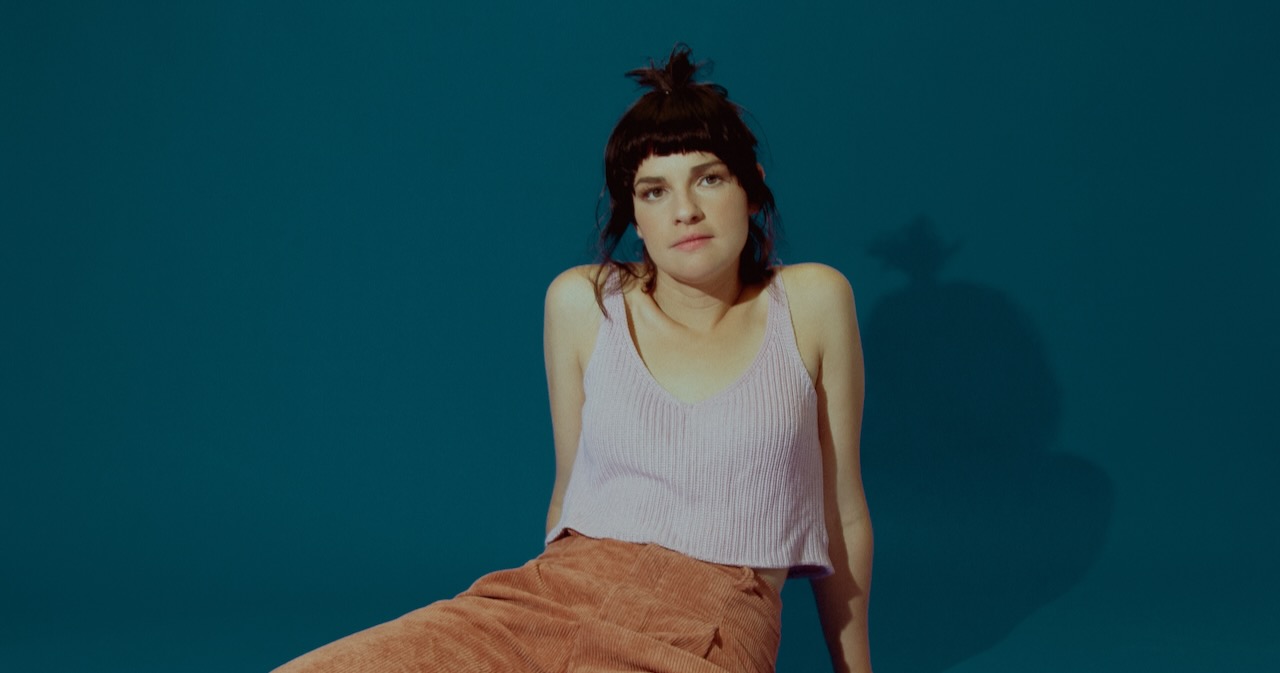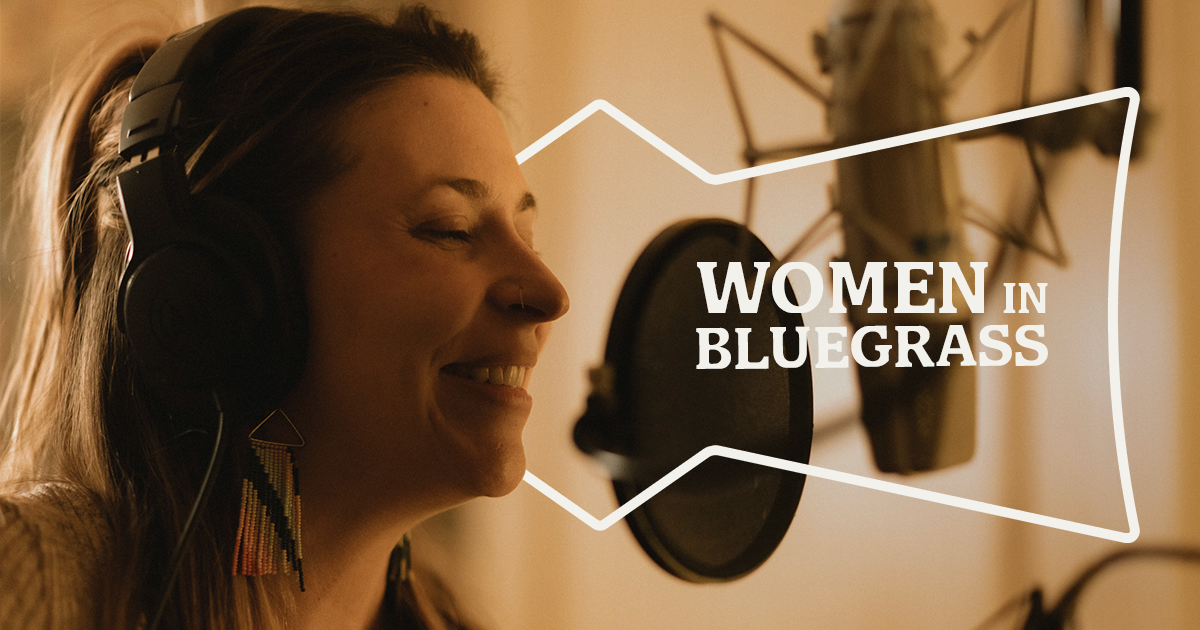
Lindsay Lou, Shani Ghandi and Sierra Hull Empower Bluegrass Women

When Lindsay Lou moved to Nashville in 2015, the singer-songwriter and instrumentalist unknowingly planted seeds that would bear fruit over a decade later. Upon learning that women wrote two of her favorite bluegrass songs—“I Only Exist,” made popular by Ralph Stanley and the Clinch Mountain Boys, and “All I Ever Loved Was You” performed by Ricky Skaggs—she began compiling a list of other songs in the genre written by women.

Eventually, that list of songs began to look like an album. Energized by the prospect of impending motherhood, Lou sketched out what would become Bluegrass Women, a 10-song collection and accompanying documentary that came out in August. The LP faithfully but creatively celebrates these women-penned tunes, and is undoubtedly one of the year’s best releases in the genre.

Lou tapped a best of the best roster of women artists for the project, with contributions from Alison Brown, Molly Tuttle, Sierra Hull, Brittany Haas, Sarah Jarosz, Aoife O’Donovan, Gena Britt and many others. To produce Bluegrass Women, she called upon celebrated producer/engineer/mixer Shani Gandhi, whose knack for stepping back and letting the magic happen made her essential to capturing the intimate camaraderie you hear on the recorded songs.

“All of us have had our own experience of being the only woman in the room, whether it be on a session or in a jam, or at a show,” Lou tells BGS. “So, when you get together and all of us have some shared experiences that are unique and special, but shared, it just creates this vibe that’s really, really cool.”

Below, BGS chats with Lou, Gandhi and Hull about Bluegrass Women.

BGS: This is such an ambitious project, both in its concept and just the sheer fact that you were able to pull together so many musicians to make it happen. How did the idea for the album initially come to you?

Lindsay Lou: Not long after I moved to Nashville in 2015, so a little over 10 years ago, my partner at the time and I were renting a room in our friend’s house. I was in the living room area with my computer set up, trying to get some work done, and I remember writing on a piece of paper, “‘I Only Exist,’ Jimmie Stanley” and “‘All I Ever Loved Was You,’ Dorothy Skaggs.” I remember writing those two things on a piece of paper.

I don’t know if it was in a jam or something but I had found out those two songs were written by them, and it just surprised me. It felt like a delight. It felt like a little unexpected bit of encouragement to hear that women’s voices had made it into these songs in ways that you didn’t even realize it. I thought there had to be so many more like this and I created the intention of keeping my ear to the ground.

Over the last 10 years the list got bigger. Then I got to the point last year where it had been brewing and brewing and brewing. Then all of the sudden with government websites being scrubbed of the word “women” and I’m six months pregnant doing this very womanly thing of creating new life, all of the elements came together where it felt like now is the time.

So, I started more seriously making the list. It felt like the perfect thing to do while I was preparing myself to have my world turned upside down, just to have this be the last thing I do before everything changes. So, I just sent a text message out to everybody, like, “Here’s what I’m doing. Do you want to be a part of it? When are you available?” Then I created this big, crazy Excel sheet with everybody’s availability, and was able to put together four bands. Pretty much everybody I reached out to was down.

Listening to the record, I could feel that sense of camaraderie that I would assume you felt working together. Shani and Sierra, I’d love to hear from each of you about what drew you to working on the album.

Shani Gandhi: I had so many thoughts, because my initial reaction was like, “Oh my God, Lindsay Lou,” and, “Oh, what a cool project!” She immediately listed off all the people she’d already asked, and I’m like, “I’m so in.” Then part of me—and I’m sure these girls can relate—we can also get a little prickly at things like, “Oh, let’s do this thing for the sake of being women.” Then I was like, “No, this doesn’t feel like that.” I’ve been a part of and said no to a couple of things that felt that way, and this just didn’t feel like that. It wasn’t scraping the bottom of the barrel for some women who do these things. It was literally the best of the best of the best, with these amazing songs that I only knew half of…

I was just immediately in, and I didn’t even ask her, “How are you doing this, and what are your plans for this?” I was like, “Oh yeah, I’m all around in.” I couldn’t believe she was able to not only get these incredible people, like pretty much everyone on her wish list minus maybe two people. Not only that, you were able to actually get them into the studio. So often with these records, you have to be like, “Okay, so-and-so’s in Maine, so-and-so’s here, so-and-so’s there. We’re gonna have to have to send it out.” You lose that magic of everyone being there, which is so essential to bluegrass, particularly. And it wasn’t like that. Everyone showed up. It was really amazing.

Sierra Hull: Lindsay and I just being friends, it really could have been any project and I would have said yes. I love Lindsay and I’m a fan. She came and sang on my record. So, that’s part of what’s fun about having talented friends. You can call upon each other. You can pull from people that you not only love their talent, but you love them as people, and you want to bring them in to spread their good vibes on your record. I was just honored to be thought of and included as part of it.

And a lot of these songs are songs I grew up with, like “I Only Exist” and “I’ve Endured” and “All I Ever Loved Was You.” I did grow up sitting in the jam circle, and nine times out of 10, I was the only female sitting in the jam circle with these guys singing and playing these songs. And I fell in love with those songs. But then to be able to celebrate the fact that they are written by women and get to be in a room with so many ladies that I love and have been friends with for a long time—we don’t always get the opportunity to work together like that, like Shani said, having everybody in the same space.

There are a lot of projects you get to be a part of, and you are kind of farming stuff out here and there because we’re all moving at 100 miles an hour, trying to meet somewhere in the middle and trying to make music and collaborate. The fact that we were able to come together and actually record this music as a group was super fun. And I’m just on a little bit of it, but the fact that you guys were able to do that with the whole thing, I imagine that was really special.

Lindsay, a moment ago you mentioned creating a spreadsheet to figure out how to get everyone in the room together. Once you cleared those logistical hurdles, what was your time in the studio together actually like?

LL: I decided to do it in four days, so I picked four days where I could create four bands with all of the people, and decided on two or sometimes three songs a day because that felt like a good pace. The reason that we love bluegrass, and I’m pretty sure everybody I know feels the same way, is that experience of playing it together in a room, hearing the harmonies form and change the air in the middle of a jam, and just breathing together.

It’s acoustic music, so it’s such a special thing that shines the brightest when it’s informal and in almost like a living room jam setting. I wanted it to feel like that, so I told everybody, “We’re gonna circle up. We’re gonna play these songs just like we’ve played them hundreds of times, and the arrangement, I’m sure, will present itself.” All of us are listening and just wanting to serve the song, and on the same page.

So many of us are leaders in our own world, and it just felt like a really nice fluid [process]. I’m kind of there holding the space and curating the thing, but then there’s space for people to be like, “Oh, I think this sounds like that goes there. This sounds like the thing that we do here.” So, everybody gets to lead in their own way or in the space that makes sense.

Shani, how does that compare to your experience being on the other side of the room?

SG: It was everything Lindsay said, then just to add on to it, we started every song with everyone on the floor—no microphones, just huddled around in a circle. Every single song started like that. What she was saying about everyone being their own artist, literally everyone you hire is also a solo artist in their own respect, so it really felt like a true collaboration. It wasn’t like Lindsay saying, “Now you do this. Now you do this.” It was people pitching in as if it was a band. It felt so organic like that.

Then we’d send people off to their little stations to do their thing. But we harnessed that magic and created what we needed to on the floor. Then it was just about, like, let’s make sure we don’t lose that magic when we get to the mics, which is where the true professional came in. That was really fun for me to watch.

Then, singing harmonies together, like in all my years, I’ve literally never recorded two harmonies at once. I’m like, “Let’s just do them one at a time.” And Lindsay was like, “No, we’re doing them at the same time.” And it was so fun. It was great. We ran out of rooms, so we had to put two twin fiddles in the same room. I was like, “This is gonna be horrible.” And it was great. It was amazing. Every part of it felt so organic and so raw and exactly what it needed to be right there in the moment.

Same question to you, Sierra. How did your time in the studio on this album compare to other experiences you’ve had?

SH: I was just a little sliver of the big project. It’s fun to hear them talk about it. When she was talking about people having their own bands or leading their own bands and then coming into this situation to become a band—I think there’s something about that when you’ve been the leader in a session before. Everybody has a little bit of experience that they’re bringing to the table.

Sometimes it’s the opposite of what you would think. There’s a tendency to almost step back and not have that [attitude of], “Well, I’ve got to take the reins.” Nobody’s trying to be the big dog in the room. Everybody’s just kind of going, “Cool, let’s hear each other. Let’s communicate well about what this needs to be.” Egos get checked at the door in a different kind of way when you’ve got people that have a lot of experience, if that makes sense.

And maybe being female does play into that a little bit, I don’t know. But there’s something really fun about that because it feels like you’re just there to make good music. Nobody’s trying to prove anything in some kind of crazy way. If I need to play three notes to make this song sound good, that’s what I’m going to do. If I need to contribute more here, I can. If I need to step back a little here, then I can do that. Everybody just has really good ears and can listen and respond in that way.

It was really fun just to be in the studio with that group of ladies. Having known Lindsay for so long and then also having worked with Shani so much on some of my own projects, when you have people like that, who you know are going to deliver something special, I think there is an ease about the room when people have trust with one another. I think you guys did a good job of kind of curating that.

SG: That was all Lindsay. To have that enormous list of players, and then to be like, “This person is going to go with this person, and they’re going to do these songs”—I just felt like you absolutely nailed that. That blew my mind, because everyone just worked together so well.

SH: That is bluegrass. When you’re pulling from your world, it’s like you’re just bringing in your friends, bringing in your community. So that inevitable, spider-web kind of thing that we were talking about earlier just naturally does its thing.

LL: Bluegrass, it’s like infinite possibilities within a box… There’s a thing that makes sense that we’re all listening for, and we can all hear it, you know? Sometimes you’ve got to try a couple things, but it’s like the music knows what it wants, and we’re just there.

SH: Especially these kinds of songs, too. It’s different if you come into a record and Lindsay’s like, “Hey, here’s 10 songs I wrote that are mine,” and the possibilities are endless. Not that you couldn’t make these songs with endless possibilities, either, but I never got the impression that that’s the point of this. It’s to honor these songs, to do them justice with this group of people, but not to, like, rewrite the script, because the songs are so strong on their own. Really, you just need to show up and play the part the song needs and what the particular group together is asking for. Like Lindsay just said, it’s like you almost immediately recognize what that needs to be, because these are songs we’ve all been listening to for our entire lives.

SG: And everyone knew when it was the take. Everyone knew when we needed to do three more takes, and everyone knew when we had done the take. It makes my job really easy because, especially with players like this, I pretty much put a microphone in front of them and back away slowly and they know exactly [what to do]. It’s a really fun experience.

It sounds like an experience where intuition—both shared and individual—was really allowed to be a guiding force, both for the players and for you, Shani, behind the board.

SH: Just to brag on Shani real quick, since she’s being so modest, but there’s something to be said about when you know you’ve got somebody on the other side of the microphone that’s making what you’re hearing sound really good, too. It takes the pressure away from worrying about that part. When you hear good and you feel good, you can play good. You can just relax and be at ease. Shani is so good at making these instruments sound the way we want them to sound.

LL: Yeah, Shani would show up with these epic lists of exactly what she needed—and everything that needs to get done… It’s really easy to take for granted how big of a thing that is that all of us can just walk into the room, play in a circle, and then sit down and record the song. She could get sounds really quick and fluidly and communicate with us really seamlessly. All of the things that she had to do in order to lay that groundwork, so that we could show up and just easily do what we do—so much thought and detail and preparation and time went into that.

SG: We’re all just bragging on each other but this is what we do. But not only did you curate the best of the best of the best, who just happened to be females, you also chose really good people. Everyone is just good humans all around. There were no bad vibes, and that’s probably my favorite part about this. … So much of playing music, especially in the studio, is the hang and the collaboration, especially when you’re on microphone and talkback. There’s a lot of patience that has to be there for everyone and for yourself, and for the technology, and it was a really dreamy situation because the vibes were just really good.

You’ve each repeatedly alluded to this egolessness that allowed the project to blossom in the way it did, and I’d assume that has at least some connection, conscious or otherwise, to the meaning of the project itself: celebrating women in the genre, celebrating pioneering artists who came before you, trying to continue to blaze the trail for those who come after you.

To close our conversation, I imagine each of you has experiences—perhaps some are good, likely some are not—with feeling like an outlier in a male-dominated genre, and I’m wondering how those perspectives showed up, or didn’t show up, in the room with you.

LL: I’ve been on my own journey of diving into the concept of femininity and being a woman in this world, on a sort of philosophical level outside of bluegrass and music and the work that I do. I’ve read a couple books that had a big impact on me and one was called The Confidence Code. It talked about how women, for example, won’t apply for a promotion unless they think that they’re 100 percent qualified. But a man will apply if he thinks that he’s at least 60 percent qualified. Women don’t score as high on an exam if they have to check something about their gender, that they are a female, before they take the test.

It’s like there’s this blanket thing on a societal level that we’ve internalized, I think, about feeling like we need to prove how great we are, that we’re perfect because we’re women. I think it’s a really internalized thing that I’ve experienced, and that it seems like a shared experience… Whenever I’ve been in a jam, I don’t feel like, “Oh, I can’t step in to sing a harmony because I’m a girl,” or, “I can’t do this.” I just want to be in there, and I want to feel the music, and I want to feel those harmonies ringing to each other.

So, I just step in there and I do it. Nobody has ever given me a look like, “Hey, you’re not supposed to be here,” because what I sang was in tune. Nobody’s gonna see Sierra come into a jam and play the way she plays, and be like, “Get out of here, little girl.” You know what I mean? It’s just good. You can tell that she not only loves the music but has spent so much time honing in on it and putting love into it as her craft.

SH: I don’t think any of us are trying to do anything just to be like, “Oh, let me be the woman that’s celebrated.” Everyone that’s on this record just loves the music, as Lindsay said, and wants to feel like we have a seat at the table. We’ve all worked really hard to put the time into the art and craft. And like Lindsay said, she steps into a jam, she’s going to sing in tune. She’s going to sound great. So people are going to want that. Like, why not?…

But when you can actually take a step and look at where we’re at right now, I mean, so much of the music that I personally have been inspired by over the last five or 10 years, a lot of it has been made by women. That’s exciting, because when I was growing up all of my mandolin heroes, especially, were men. They just were. Darn near every one of them I could point to. But I had people like Sam Bush, when I’m nine years old, taking time to jam with me. Chris Thile, when I’m like 10 years old, taking time. My heroes, despite the fact that I was a female, they knew I loved this music.

SG: I had the gift of being completely naive to all of this. I didn’t pick my career knowing that it was so male-dominated. I literally had no idea until the first day of college when I showed up and looked around the room and met my fellow classmates, and I was the only woman. I was the first woman to graduate from my degree. I didn’t know this going in, so I can’t even say I was like, “Oh, I’m gonna kick some doors down.” It kept being like that. I was like, “Oh, maybe Nashville will be different,” and it wasn’t.

What has been so special to me has been when I do work with the younger generation—I teach a little bit for NYU and I do as many panels as I can—these young women come up to me and say it’s important to see myself represented by you. I didn’t realize how important that was, having not had it myself but being too naive to have missed it, if that makes sense. Now it’s become really important and it’s something that I think about a lot. How can I do this better for the next generation? Because that’s usually all anyone needs.


Photo Credit: Sawyer Gieseke
Lindsay Lou’s Bluegrass Women Features These Twenty Talents

Lindsay Lou’s Bluegrass Women arrived in August 2026 as a true gift to the genre.

Nascent for over a decade, this project took root back in 2015 when Lou started a list containing two titles — “I Only Exist” and “All I Ever Loved Was You.” Though primarily associated with the men who popularized them, both bluegrass standards were written or co-written by women. Thus marked the start of an impassioned cataloguing as Lou realized, “If these two songs have surfaced for me, then there have got to be so many more. I would keep this list somewhere I could see it in my office, wherever I lived,” she relayed recently in an interview with Live for Live Music.

Ten years later, ten traditional songs had made their way to the forefront of her list, all of which were written, co-written, or first performed by women. While forging her own career in this male-dominated sphere, she found encouragement in her continuous unearthing of women among the forebears.

Women have always been essential to the architecture of the bluegrass, however quieted their contributions may have been. With more women in the spotlight than ever before, Lindsay Lou felt inspired to weave a throughline between contemporary “bluegrass women” and their ancestors. In March 2025, she partnered with co-producer Shani Gandhi to round up an intergenerational cast of twenty women defining the genre today. A Tetris of tour schedules, this star-studded cast managed to complete the compilation in only four days of recording, with Lou masterminding ensembles and arrangements.

Together, this collection of women celebrates their musical predecessors, shedding new light upon many of the women woven throughout bluegrass history. Join us as we explore, in no particular order, the tremendous trove of talent responsible for the masterpiece that is Bluegrass Women.

Laurie Lewis

Truly a singular talent, Laurie Lewis remains an unwavering pillar of the bluegrass scene and beyond. A hero to every participant on Bluegrass Women, Lewis’s singing, songwriting, and fiddling continue to inspire across generations.

Among her inordinate accolades includes co-founding The Good Ol’ Persons in the ‘70s, one of the first prominent all-women bluegrass groups. Her musings traverse across genres, slinging folk, Americana, and country influences to boot. She is heralded in the music scene as an avid collaborator, producer, teacher, and mentor, in addition to actively tending to her own projects. Her most recent record, O California! arrived in January 2026, released by her band, Laurie Lewis and the Right Hands.

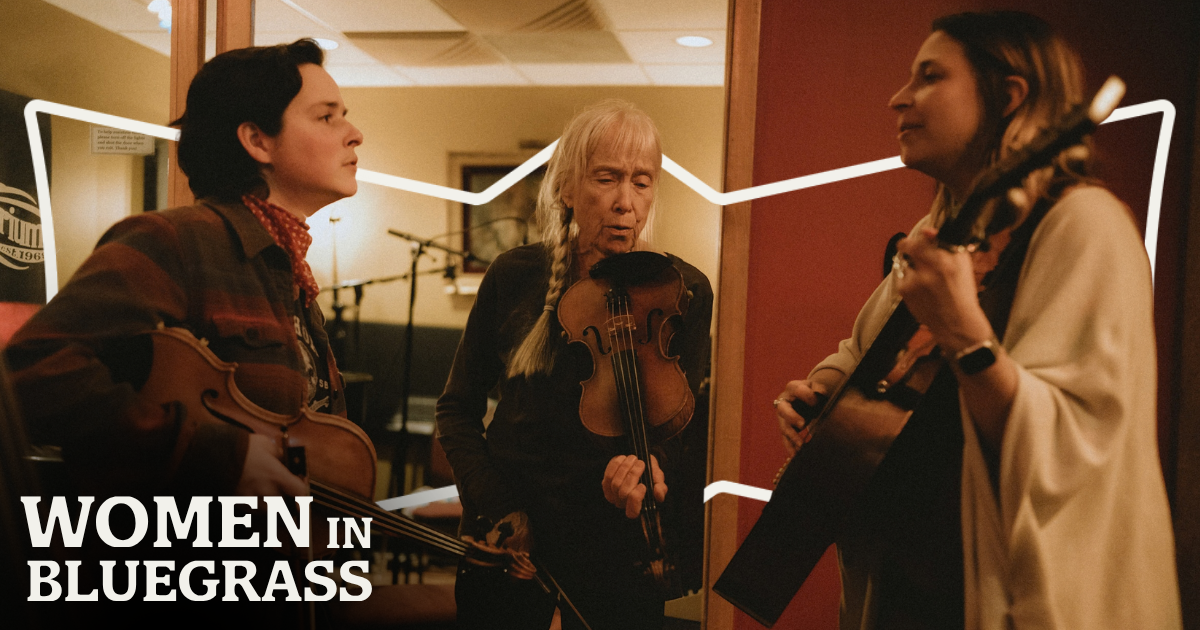
The inaugural notes of Bluegrass Women are played by Laurie Lewis and Tatiana Hargreaves in a glorious twin fiddle kick on the opening track “All I Ever Loved Was You” (though recorded and popularized Ricky Skaggs and Keith Whitley, its lyrics were penned by Skagg’s mother, Dorothy). Hargreaves has said of her fiddling counterpart, “I wouldn’t be playing the music I play if it weren’t for Laurie Lewis,” a sentiment that echoes the interconnectedness of musicianship at the project’s core.


Tatiana Hargreaves

Of her fiddling counterpart, Laurie Lewis boasts, “Tatiana Hargreaves is a versatile, powerful, and deep musician. Not just a damn good fiddler.” Having recorded her debut album at age 14 and winning first prize at the Clifftop Appalachian Fiddle Contest the same year, Tatiana Hargreaves has truly packed a punch in the decade and a half (and change) since. With a range of styles under her belt, Hargreaves’ fluency in both bluegrass and old-time grants her a dextrous dynamism. At present, she teaches improvisation and bluegrass fiddle at the University of North Carolina at Chapel Hill, and primarily records and performs in a duo with prolific banjo player Allison de Groot (also featured on Bluegrass Women), and with her four-piece old time band, Hard Drive.

On Bluegrass Women, Hargreaves lends her fearsome fiddling to three tracks — “All I Ever Loved Was You,” “Jubilee,” and “Won’t You Come and Sing for Me.”


Allison de Groot

A clawhammer banjo player from Winnipeg, Canada, Allison de Groot became familiar with the scene by way of The Duhks, a renowned Canadian folk-fusion band likewise out of Winnipeg. As she traced the lineage of the clawhammer banjo, she became enamored with its prominence in the American South and became a teacher and performer. Between lessons and many trips to the southeastern United States, a love affair with old-time took root. Her duo with Tatiana Hargreaves continues the centuries-long conversation between fiddle and banjo; their creative alchemy doulas the dialogue to new depths.

De Groot lends her banjo playing to the tracks “I’ve Endured” and “High on a Mountain” on Bluegrass Women.


Maddie Witler

While primarily known for her virtuosic mandolin playing, Maddie Witler began her musical journey at age 9 on the fiddle. If those skills weren’t enough, in the time since, Witler has made her acquaintance with most stringed instruments, adeptly fluent in each language. After growing up in the greater LA area and moving to Boston to attend Berklee College of Music, she became a founding member of the illustrious Lonely Heartstring Band. In 2019, Witler joined Della Mae, one of the most prominent all-women groups of the contemporary bluegrass landscape, parting ways with them in 2022. In 2021, Witler released her first solo album, Astronaut, debuting her skills as a songwriter, singer, and arranger.

On Bluegrass Women, Witler edifies the tracks “All I Ever Loved Was You,” “Jubilee,” and “Won’t You Come and Sing for Me” with her apt mandolin contributions.


Alison Brown

Alison Brown, too, is a widely influential instrumentalist whose work has permeated across generations. She reunited with her love of bluegrass banjo playing when, after receiving an MBA from UCLA, she quit her job on Wall Street to tour with Alison Krauss & Union Station. She also toured with Michelle Shocked before forming her own group in 1993, The Alison Brown Quartet. With 12 solo albums, a Grammy, and multiple Grammy nominations under her belt, Brown is largely regarded as one of the most accomplished banjo players of our time.

Of recording with Alison Brown and Laurie Lewis for Bluegrass Women, Lindsay Lou speaks to the experience’s profoundness in her four-part YouTube series documenting the album’s recording.

She reflects, “We’ve seen mentorship and cross-generational connection and collaboration happen on stage with men plenty, but you haven’t seen it as much with women historically. To be a part of a session with Laurie and Alison, who have been doing this for so many more years than anybody else on the session, you instantly have this reverence.”

Alison Brown lends her banjo playing to the tracks “All I Ever Loved Was You,” “Jubilee,” and “Won’t You Come and Sing for Me.”


Hasee Ciaccio

Hasee Ciaccio is a musician and educator residing in North Carolina. Her upright bass playing has earned high praise in the bluegrass circuit, with Ciaccio having recorded and toured among the likes of Laurie Lewis, Alice Gerrard, and bluegrass powerhouse group Sister Sadie. Ciaccio is also on the board of Bluegrass Pride, an organization working to uplift LGBTQ+ bluegrass musicians of all levels.

Ciaccio’s bass playing lays the foundation for much of Bluegrass Women. She’s featured on seven of the ten tracks — “All I Ever Loved Was You,” “Like a River,” “I Only Exist,” “Jubilee,” ”Won’t You Come and Sing for Me,” “Freight Train,” “Your Lone Journey,” and “CC Rider.”


Courtney Hartman

A champion flat-picker, Courtney Hartman grew up in Colorado with nine siblings, four of whom she played music with. Because they needed one to play guitar, and inspired by her mother taking lessons, Hartman gravitated to the instrument following stints with piano, fiddle, and violin.

After attending Berklee College of Music, Hartman spent seven years recording and touring with Della Mae. Her newest solo album, With You, began during an isolated, heavy moment. Shortly after discovering that she was pregnant, a string of tumultuous events (her husband falling off a ladder and rendered immobile for months, a totaled car, being dropped from her booking agency) ravaged her life in quick succession. Following the birth of her daughter, Hartman forged her own list of women to draw inspiration from — ones who had continued their creative practice in the midst of becoming mothers. Their navigation of caregiving and musicianship imbued faith that she, too, could straddle both. With You features many of the mothers that inspired Hartman, both as co-writers and musical guests.

In a full-circle moment, Hartman joined Lindsay Lou’s project, the entirety of which was recorded while Lou was pregnant with her first child. Hartman is credited on the tracks “I Only Exist,” “Like a River,” and “Freight Train.”


Gena Britt

Gena Britt, a connoisseur of both bluegrass banjo and bass, is no stranger to a project like Bluegrass Women. In 2001, Britt co-founded Daughters of Bluegrass, a collective of over 40 women in bluegrass who have recorded four albums to date. In addition to being a highly sought-after studio vocalist and instrumentalist, with solo projects also under her belt, Gena is currently a member of the dynamic Sister Sadie.

Gena is featured on six tracks on Bluegrass Women — “Your Lone Journey,” “Freight Train,” “Like a River,” “High on a Mountain,” “I Only Exist,” and “CC Rider.”


AJ Lee

A prominent presence in today’s bluegrass scene, AJ Lee is lauded for her acute mandolin skills, unparalleled vocals, and sharp songwriting. Hailing from the Bay Area, at age 7 she was asked to join The Tuttles, a family band consisting of bluegrass educator Jack Tuttle and his two children, (you guessed it) Molly and Sully. Around the time she graduated high school in 2015, AJ sewed the seeds culminating in her own band, AJ Lee and Blue Summit. The group just released their fourth full-length album, Cover to Cover, earlier this month.

On Bluegrass Women, AJ’s artistry can be found on the tracks “Freight Train,” “Like a River,” and “I Only Exist.”


Wila Frank

Wila Frank is a singer, songwriter, multi-instrumentalist and producer based out of Nashville. One half of the emergent folk duo Paper Wings, and fiddler/electric guitarist for Lindsay Lou, Frank also champions her own stirring solo repertoire. Her debut album, Black Cloud (2023), received critical acclaim, and a 2026 single release, “Emergency Contact,” hints towards more in the works (we hope!).

Frank appears on half of Bluegrass Woman, credited on the tracks “Like a River,” “High on a Mountain,” “I Only Exist,” “CC Rider,” and “Your Lone Journey.”


Brittany Haas

Widely regarded as one of the most prolific fiddlers of her generation, Brittany Haas is an absolute flurry of talent. Her playing is sensitive, inspired, and expansive. Her current projects include her duo with her cellist sister (Natalie Haas), the innovative instrumental project, Hawktail, and as the newest member of the Grammy-winning Punch Brothers. A teacher and performer, Haas’s playing is infectiously inspiring to all who listen.

Haas joins Bluegrass Women on the tracks “High on a Mountain” and “I’ve Endured.”


Sally Van Meter

Another former member of the Good Ol’ Persons alongside Laurie Lewis, Sally Van Meter is a musical giant in her own right. Though primarily recognized for her dobro playing, Van Meter is dextrous on an assortment of string instruments. With a professional music career that began in 1976, Sally Van Meter’s past five decades have been an impressive spread of performance, teaching, touring, and recording.

Van Meter plays on “CC Rider,” a traditional 12-bar blues song first written and recorded by Ma Rainey, the “Mother of Blues.” The song was later covered by a vast assortment of artists, at one point becoming a mainstay opening number for Elvis Presely.


Sierra Hull

Legendary mandolinist, multi-instrumentalist, singer, and songwriter Sierra Hull could fill a dictionary with the accomplishments of her career, despite being just 34 years old. A six-time Grammy nominee and the first woman to receive the IBMA Mandolin Player of the Year honor (having now won seven times), Sierra Hull is a groundbreaking artist in the bluegrass scene. She released her fifth studio album, A Tip Toe High Wire, last year.

Hull’s talent enriches two tracks on Bluegrass Women — “High on a Mountain” and “I’ve Endured.” Of the songs, Sierra remarks, “These are songs that seep into your DNA. When you can step out of your own original lane for a minute and go back to what feels like the source, there’s something really powerful about that. It takes me back to who I am in a really grounding kind of way.”


Bronwyn

As anyone who’s heard a Molly Tuttle & Golden Highway record knows, Bronwyn Keith-Hynes is an astonishing fiddler, with brilliance and fire emanating through her every performance. Recently, though, she’s exposed even more of her talents to the world — she’s begun a solo project as simply Bronwyn, playing, singing, recording, and touring original material. Her third album, Rattlin’ Bones, was released on the same day as Bluegrass Women.

The amicable dissolution of Golden Highway allowed for Bronwyn to open up the floodgates of self-discovery; in fact, she cites bandmates Molly Tuttle and Shelby Means as chief proponents of Bronwyn exploring her voice. She says, “There was a large part of my life where I didn’t sing and was only interested in playing the fiddle, but being on tour with Golden Highway and around Molly and Shelby, these great female bluegrass vocalists, it shifted everything.”

Bronwyn’s fiddling appears on the tracks “Freight Train,” “Like a River” and “I Only Exist” on Bluegrass Women.


Molly Tuttle

Molly Tuttle herself, too, joins the record — yet another nod to the interweavings present among this group of women. Tuttle’s reputation precedes her, as the first woman to win IBMA’s Guitar Player of the Year (an award she earned two years in a row). Likewise, her albums Crooked Tree (2022) and City of Gold (2023) with her band, Golden Highway, each took home the Grammy for Best Bluegrass Album. For her new solo album, So Long Little Miss Sunshine (2025), Tuttle shifts into new stretches and shapes, tackling elements of pop, rock, flat-picking, and country in one fell swoop.

Tuttle joins for the song “Freight Train,” penned by the superlative Elizabeth Cotten, a self-taught, left-handed guitarist who wrote the song around the age of 11 in the early 20th century.


Emma Rose

Yet another multi-hyphenate talent, Emma Rose is a groundbreaking singer-songwriter, multi-instrumentalist, and sought-after upright bass player. She was a founding member of the juggernaut all-women outfit, Big Richard, and she currently tours with Lindsay Lou, while also nurturing a solo project, under the names Emma Rose or Sounds of Honey.

Emma Rose lends bass playing to Bluegrass Women on “I Only Exist,” “High on a Mountain” and “I’ve Endured.”


Sarah Jarosz

Sarah Jarosz’s sublime vocals, instrumental prowess, and narrative-driven songwriting render her an unsurpassed talent. With seven full-length solo albums to her name, three albums with supergroup I’m With Her (alongside Aoife O’Donovan and Sara Watkins), and a sprawling inventory of collaborations, Jarosz’s contributions to the roots scene have been nothing short of magnificent.

Jarosz is featured on the track “I’ve Endured,” written by the brilliant Appalachian singer, songwriter, and banjo player Ola Belle Read.


Phoebe Hunt

A fiddler of dynamic abundance, Phoebe Hunt has explored for decades the multiplicity of sound her instrument can produce. She’s spent years touring for various projects and for her own solo work, all the while founding a non-profit called Fuel Our Fire, garnering transformational songwriting experiences for at-risk communities. She’s also a gifted educator, and she began an initiative to help parents teach their children how to play the ukulele during the pandemic. Her most recent album, Nothing Else Matters (2023) features only the voice and fiddle, a peeled back honoring of her musicality in its most vulnerable form.

Hunt joins on Bluegrass Women for an awe-inspiring rendition of Hazel Dickens’s “Won’t You Come and Sing For Me.”


Jenni Lyn Gardner

Jenni Lyn Gardner is a robust singer, songwriter, producer, and mandolinist. She rose to prominence in the bluegrass scene when she joined Della Mae in 2010, and remained in the band for nearly a decade-long stretch. She’s also fronted her own solo project, and has served as a producer on countless albums and tracks across the roots music landscape.

Jenni Lyn Gardner joins Bluegrass Women for two tracks — “CC Rider” and “Your Lone Journey,” a song co-written by Doc Watson and his wife, Rosa Lee.


Aoife O’Donovan

One of the most treasured voices in bluegrass, Aoife O’Donovan is a Grammy-winning singer, songwriter, and guitar player. She’s widely known for her lead vocals as a founding member of the unparalleled Crooked Still (which fellow Bluegrass Women musician Brittany Haas later joined) and for her role as one-third of I’m With Her. O’Donovan has a penchant for evocative lyrics, textured storytelling, and hypnotic vocals. In addition to her many collaborations and features, O’Donovan has released four critically acclaimed albums of solo work.

On Bluegrass Women, Aoife is featured on the track “Your Lone Journey.”

Find out more about Lindsay Lou’s project with an episode of her mini-doc on BGS.

Lead image: Tatiana Hargreaves, Laurie Lewis, and Lindsay Lou by Sawyer Gieseke

Rachel Baiman On the Importance of Women in Studio Control Rooms

(Editor’s Note: BGS contributor, picker, and singer-songwriter Rachel Baiman brings us into the production process for her new album, Common Nation of Sorrow — her first recording on which she’s credited as sole producer — for this op-ed feature.)

Take a look at the credits for your favorite records by artists of any gender, and you may notice that there are very few women listed. Maybe there’s a female singer, photographer, or graphic designer – possibly a violinist in a string section, but it probably stops there.  

While great strides have been made in the last decade with more women on festival bills, in radio programming, and even as instrumentalists in live bands, when you look behind the scenes, you rarely see women involved in making records, unless they are the featured artist or part of the featured band. That’s because the studio is invisible to the audience. 

Societal pressure is driving folks to do better when they are working in public lineups, but in recording studios, there’s nobody watching, and no face on the sounds that come out of the box. The audience sees a diverse band playing a live show, yet none of those musicians are featured on the record.

For example, I was thrilled to see Sarah Jones absolutely slaying the drums for Harry Styles live, but when I looked at the record credits, they had a male drummer listed. Why? It’s as if the industry is saying “We love to have you on stage, but when it comes to the real work, let the men get down to business.”

To Harry’s credit, there are a couple of female instrumentalists (violin and keys, and a conga player) and assistant engineers (“Move that microphone for me please!”) featured on his albums (which is huge progress, believe it or not), but I would have loved to see Jones included as a true backbone of the sound, especially when she’s such a fundamental part of the live show, and clearly more than capable. That kind of record credit is a career maker – not that Jones needs it, she’s doing great anyway – but why couldn’t she have that?

I’ve had a dream for a few years now of being a producer. Over the last decade of working in the studio in various roles, I’ve fallen in love with the production process: Starting with the songs, honing and editing until you’re left with only the meat, selecting the perfect musical voices to bring the song to life, and working with amazing engineers to get the sonic pallet perfect. I can’t get enough of it, and I want to do more.

According to a 2018 study by the University of Southern California, and reported on by GRAMMY.com, only 2% of music producers and 3% of engineers/mixers in popular music are women. These are roles that require real trust, as they are roles of power. There’s no turning down, editing, tuning, or washing out a producer or lead engineer. The project is in their hands.

Typically, male artists (as opposed to engineers, another role that leads to producing jobs) are asked to be producers when other musicians like the records that they’ve made or been a part of. It’s a role of mentorship and guidance, as well as artistic influence.  I started to realize, though, that because I am a woman, nobody was going to naturally think of me for that role, even if they liked my music. People fit people into the molds that we’ve been shown, and people trust people who others trust. Everyone wants to make the right decisions, and it’s hard to be the first one to believe in somebody – I know this trap because I’m guilty of it myself! If I wanted to be thought of as a potential producer, I was going to have to build my own platform and show people that I could do it. 

When it came time to make Common Nation of Sorrow, I saw it as an opportunity to take a bet on myself. Although it’s terrifying to produce one’s own music (you have to be both the speaker and the listener at the same time), I knew that if I could produce something great under my own name, perhaps others would start to see me in that role outside of my own music. After all, if you can’t trust yourself with your own work, how can you ask others to trust you with theirs? 

With the support of my awesome label, Signature Sounds, I was able to record this project exactly the way I wanted to. I had a variety of musicians in mind for the rhythm section, both male and female. I hypothesized that when considering the sessions, I needed to make sure that there was a feeling of social balance in the room, for my own sake as well as for my fellow musicians’ sake. Something that was interesting to me about this theory is the stark difference between “including” women on a project because you feel that you should, and believing that empowering women and asking for their contributions will actually result in the best art.  

When I get called for sessions to play fiddle or banjo, I am usually the only woman in the room. I walk in feeling like I have to be better than good in order to counteract the assumption that I will be sub-par, that I don’t know what I’m doing, that I won’t know how to read a chart, that I can’t solo, that I won’t know anything about sound or gear. Working from a position of insecurity, or “trying to prove something,” is a terrible way to make music. I might overplay, or underplay, or try to play the way I think men want me to play, not in my own voice. I might be trying to tamp down rage at a comment that somebody has just made about their wife being retired from music because, “She’s a mom now.”  

Contrastingly, when you’re suddenly the producer, the only one you have to impress is yourself. Everyone in the room has been hired by you, and therefore, it’s in their best interest to support your vision. Nobody has incentive to diminish your work. Suddenly, I’m able to work from a place of confidence and artistic integrity. In a position of power, it’s not as likely that I’ll overplay, or change my sound based on others, or second guess my abilities. I’ve taken the bet, and now I have to come through for myself. That’s the difference between token inclusion and empowerment. You’re going to be able to hear it in the album made this way, too. 

Recently, I was asked by a male musician who I love and admire to produce his next record. It was completely unexpected, and it took a minute for me to realize that my bet on myself was actually paying off. I’m starting to believe now that this could be a real career path for me. I think most people want to believe in, and support each other, but we, as women, have to have the courage to take those first steps and put ourselves out there for consideration. From my standpoint, it can work. 

I’m thrilled to see so many incredible women working as producers and engineers these days in Nashville. Mary Bragg, Rachael Moore, Clare Reynolds, Shani Ghandi, and of course Alison Brown at Compass Records, who has been leading the charge for years. I look forward to one day having the opportunity to work in a studio environment inhabited by only women, completely by chance. The more we can show each other what’s possible, the more likely that will become. 

(Editor’s Note: Rachel Baiman’s latest album, Common Nation of Sorrow, is available now wherever you stream or purchase music.)


Photo Credit: Natia Cinco