Lindsay Lou’s Bluegrass Women Features These Twenty Talents

Lindsay Lou’s Bluegrass Women arrived in August 2026 as a true gift to the genre.

Nascent for over a decade, this project took root back in 2015 when Lou started a list containing two titles — “I Only Exist” and “All I Ever Loved Was You.” Though primarily associated with the men who popularized them, both bluegrass standards were written or co-written by women. Thus marked the start of an impassioned cataloguing as Lou realized, “If these two songs have surfaced for me, then there have got to be so many more. I would keep this list somewhere I could see it in my office, wherever I lived,” she relayed recently in an interview with Live for Live Music.

Ten years later, ten traditional songs had made their way to the forefront of her list, all of which were written, co-written, or first performed by women. While forging her own career in this male-dominated sphere, she found encouragement in her continuous unearthing of women among the forebears.

Women have always been essential to the architecture of the bluegrass, however quieted their contributions may have been. With more women in the spotlight than ever before, Lindsay Lou felt inspired to weave a throughline between contemporary “bluegrass women” and their ancestors. In March 2025, she partnered with co-producer Shani Gandhi to round up an intergenerational cast of twenty women defining the genre today. A Tetris of tour schedules, this star-studded cast managed to complete the compilation in only four days of recording, with Lou masterminding ensembles and arrangements.

Together, this collection of women celebrates their musical predecessors, shedding new light upon many of the women woven throughout bluegrass history. Join us as we explore, in no particular order, the tremendous trove of talent responsible for the masterpiece that is Bluegrass Women.

Laurie Lewis

Truly a singular talent, Laurie Lewis remains an unwavering pillar of the bluegrass scene and beyond. A hero to every participant on Bluegrass Women, Lewis’s singing, songwriting, and fiddling continue to inspire across generations.

Among her inordinate accolades includes co-founding The Good Ol’ Persons in the ‘70s, one of the first prominent all-women bluegrass groups. Her musings traverse across genres, slinging folk, Americana, and country influences to boot. She is heralded in the music scene as an avid collaborator, producer, teacher, and mentor, in addition to actively tending to her own projects. Her most recent record, O California! arrived in January 2026, released by her band, Laurie Lewis and the Right Hands.

The inaugural notes of Bluegrass Women are played by Laurie Lewis and Tatiana Hargreaves in a glorious twin fiddle kick on the opening track “All I Ever Loved Was You” (though recorded and popularized Ricky Skaggs and Keith Whitley, its lyrics were penned by Skagg’s mother, Dorothy). Hargreaves has said of her fiddling counterpart, “I wouldn’t be playing the music I play if it weren’t for Laurie Lewis,” a sentiment that echoes the interconnectedness of musicianship at the project’s core.


Tatiana Hargreaves

Of her fiddling counterpart, Laurie Lewis boasts, “Tatiana Hargreaves is a versatile, powerful, and deep musician. Not just a damn good fiddler.” Having recorded her debut album at age 14 and winning first prize at the Clifftop Appalachian Fiddle Contest the same year, Tatiana Hargreaves has truly packed a punch in the decade and a half (and change) since. With a range of styles under her belt, Hargreaves’ fluency in both bluegrass and old-time grants her a dextrous dynamism. At present, she teaches improvisation and bluegrass fiddle at the University of North Carolina at Chapel Hill, and primarily records and performs in a duo with prolific banjo player Allison de Groot (also featured on Bluegrass Women), and with her four-piece old time band, Hard Drive.

On Bluegrass Women, Hargreaves lends her fearsome fiddling to three tracks — “All I Ever Loved Was You,” “Jubilee,” and “Won’t You Come and Sing for Me.”


Allison de Groot

A clawhammer banjo player from Winnipeg, Canada, Allison de Groot became familiar with the scene by way of The Duhks, a renowned Canadian folk-fusion band likewise out of Winnipeg. As she traced the lineage of the clawhammer banjo, she became enamored with its prominence in the American South and became a teacher and performer. Between lessons and many trips to the southeastern United States, a love affair with old-time took root. Her duo with Tatiana Hargreaves continues the centuries-long conversation between fiddle and banjo; their creative alchemy doulas the dialogue to new depths.

De Groot lends her banjo playing to the tracks “I’ve Endured” and “High on a Mountain” on Bluegrass Women.


Maddie Witler

While primarily known for her virtuosic mandolin playing, Maddie Witler began her musical journey at age 9 on the fiddle. If those skills weren’t enough, in the time since, Witler has made her acquaintance with most stringed instruments, adeptly fluent in each language. After growing up in the greater LA area and moving to Boston to attend Berklee College of Music, she became a founding member of the illustrious Lonely Heartstring Band. In 2019, Witler joined Della Mae, one of the most prominent all-women groups of the contemporary bluegrass landscape, parting ways with them in 2022. In 2021, Witler released her first solo album, Astronaut, debuting her skills as a songwriter, singer, and arranger.

On Bluegrass Women, Witler edifies the tracks “All I Ever Loved Was You,” “Jubilee,” and “Won’t You Come and Sing for Me” with her apt mandolin contributions.


Alison Brown

Alison Brown, too, is a widely influential instrumentalist whose work has permeated across generations. She reunited with her love of bluegrass banjo playing when, after receiving an MBA from UCLA, she quit her job on Wall Street to tour with Alison Krauss & Union Station. She also toured with Michelle Shocked before forming her own group in 1993, The Alison Brown Quartet. With 12 solo albums, a Grammy, and multiple Grammy nominations under her belt, Brown is largely regarded as one of the most accomplished banjo players of our time.

Of recording with Alison Brown and Laurie Lewis for Bluegrass Women, Lindsay Lou speaks to the experience’s profoundness in her four-part YouTube series documenting the album’s recording.

She reflects, “We’ve seen mentorship and cross-generational connection and collaboration happen on stage with men plenty, but you haven’t seen it as much with women historically. To be a part of a session with Laurie and Alison, who have been doing this for so many more years than anybody else on the session, you instantly have this reverence.”

Alison Brown lends her banjo playing to the tracks “All I Ever Loved Was You,” “Jubilee,” and “Won’t You Come and Sing for Me.”


Hasee Ciaccio

Hasee Ciaccio is a musician and educator residing in North Carolina. Her upright bass playing has earned high praise in the bluegrass circuit, with Ciaccio having recorded and toured among the likes of Laurie Lewis, Alice Gerrard, and bluegrass powerhouse group Sister Sadie. Ciaccio is also on the board of Bluegrass Pride, an organization working to uplift LGBTQ+ bluegrass musicians of all levels.

Ciaccio’s bass playing lays the foundation for much of Bluegrass Women. She’s featured on seven of the ten tracks — “All I Ever Loved Was You,” “Like a River,” “I Only Exist,” “Jubilee,” ”Won’t You Come and Sing for Me,” “Freight Train,” “Your Lone Journey,” and “CC Rider.”


Courtney Hartman

A champion flat-picker, Courtney Hartman grew up in Colorado with nine siblings, four of whom she played music with. Because they needed one to play guitar, and inspired by her mother taking lessons, Hartman gravitated to the instrument following stints with piano, fiddle, and violin.

After attending Berklee College of Music, Hartman spent seven years recording and touring with Della Mae. Her newest solo album, With You, began during an isolated, heavy moment. Shortly after discovering that she was pregnant, a string of tumultuous events (her husband falling off a ladder and rendered immobile for months, a totaled car, being dropped from her booking agency) ravaged her life in quick succession. Following the birth of her daughter, Hartman forged her own list of women to draw inspiration from — ones who had continued their creative practice in the midst of becoming mothers. Their navigation of caregiving and musicianship imbued faith that she, too, could straddle both. With You features many of the mothers that inspired Hartman, both as co-writers and musical guests.

In a full-circle moment, Hartman joined Lindsay Lou’s project, the entirety of which was recorded while Lou was pregnant with her first child. Hartman is credited on the tracks “I Only Exist,” “Like a River,” and “Freight Train.”


Gena Britt

Gena Britt, a connoisseur of both bluegrass banjo and bass, is no stranger to a project like Bluegrass Women. In 2001, Britt co-founded Daughters of Bluegrass, a collective of over 40 women in bluegrass who have recorded four albums to date. In addition to being a highly sought-after studio vocalist and instrumentalist, with solo projects also under her belt, Gena is currently a member of the dynamic Sister Sadie.

Gena is featured on six tracks on Bluegrass Women — “Your Lone Journey,” “Freight Train,” “Like a River,” “High on a Mountain,” “I Only Exist,” and “CC Rider.”


AJ Lee

A prominent presence in today’s bluegrass scene, AJ Lee is lauded for her acute mandolin skills, unparalleled vocals, and sharp songwriting. Hailing from the Bay Area, at age 7 she was asked to join The Tuttles, a family band consisting of bluegrass educator Jack Tuttle and his two children, (you guessed it) Molly and Sully. Around the time she graduated high school in 2015, AJ sewed the seeds culminating in her own band, AJ Lee and Blue Summit. The group just released their fourth full-length album, Cover to Cover, earlier this month.

On Bluegrass Women, AJ’s artistry can be found on the tracks “Freight Train,” “Like a River,” and “I Only Exist.”


Wila Frank

Wila Frank is a singer, songwriter, multi-instrumentalist and producer based out of Nashville. One half of the emergent folk duo Paper Wings, and fiddler/electric guitarist for Lindsay Lou, Frank also champions her own stirring solo repertoire. Her debut album, Black Cloud (2023), received critical acclaim, and a 2026 single release, “Emergency Contact,” hints towards more in the works (we hope!).

Frank appears on half of Bluegrass Woman, credited on the tracks “Like a River,” “High on a Mountain,” “I Only Exist,” “CC Rider,” and “Your Lone Journey.”


Brittany Haas

Widely regarded as one of the most prolific fiddlers of her generation, Brittany Haas is an absolute flurry of talent. Her playing is sensitive, inspired, and expansive. Her current projects include her duo with her cellist sister (Natalie Haas), the innovative instrumental project, Hawktail, and as the newest member of the Grammy-winning Punch Brothers. A teacher and performer, Haas’s playing is infectiously inspiring to all who listen.

Haas joins Bluegrass Women on the tracks “High on a Mountain” and “I’ve Endured.”


Sally Van Meter

Another former member of the Good Ol’ Persons alongside Laurie Lewis, Sally Van Meter is a musical giant in her own right. Though primarily recognized for her dobro playing, Van Meter is dextrous on an assortment of string instruments. With a professional music career that began in 1976, Sally Van Meter’s past five decades have been an impressive spread of performance, teaching, touring, and recording.

Van Meter plays on “CC Rider,” a traditional 12-bar blues song first written and recorded by Ma Rainey, the “Mother of Blues.” The song was later covered by a vast assortment of artists, at one point becoming a mainstay opening number for Elvis Presely.


Sierra Hull

Legendary mandolinist, multi-instrumentalist, singer, and songwriter Sierra Hull could fill a dictionary with the accomplishments of her career, despite being just 34 years old. A six-time Grammy nominee and the first woman to receive the IBMA Mandolin Player of the Year honor (having now won seven times), Sierra Hull is a groundbreaking artist in the bluegrass scene. She released her fifth studio album, A Tip Toe High Wire, last year.

Hull’s talent enriches two tracks on Bluegrass Women — “High on a Mountain” and “I’ve Endured.” Of the songs, Sierra remarks, “These are songs that seep into your DNA. When you can step out of your own original lane for a minute and go back to what feels like the source, there’s something really powerful about that. It takes me back to who I am in a really grounding kind of way.”


Bronwyn

As anyone who’s heard a Molly Tuttle & Golden Highway record knows, Bronwyn Keith-Hynes is an astonishing fiddler, with brilliance and fire emanating through her every performance. Recently, though, she’s exposed even more of her talents to the world — she’s begun a solo project as simply Bronwyn, playing, singing, recording, and touring original material. Her third album, Rattlin’ Bones, was released on the same day as Bluegrass Women.

The amicable dissolution of Golden Highway allowed for Bronwyn to open up the floodgates of self-discovery; in fact, she cites bandmates Molly Tuttle and Shelby Means as chief proponents of Bronwyn exploring her voice. She says, “There was a large part of my life where I didn’t sing and was only interested in playing the fiddle, but being on tour with Golden Highway and around Molly and Shelby, these great female bluegrass vocalists, it shifted everything.”

Bronwyn’s fiddling appears on the tracks “Freight Train,” “Like a River” and “I Only Exist” on Bluegrass Women.


Molly Tuttle

Molly Tuttle herself, too, joins the record — yet another nod to the interweavings present among this group of women. Tuttle’s reputation precedes her, as the first woman to win IBMA’s Guitar Player of the Year (an award she earned two years in a row). Likewise, her albums Crooked Tree (2022) and City of Gold (2023) with her band, Golden Highway, each took home the Grammy for Best Bluegrass Album. For her new solo album, So Long Little Miss Sunshine (2025), Tuttle shifts into new stretches and shapes, tackling elements of pop, rock, flat-picking, and country in one fell swoop.

Tuttle joins for the song “Freight Train,” penned by the superlative Elizabeth Cotten, a self-taught, left-handed guitarist who wrote the song around the age of 11 in the early 20th century.


Emma Rose

Yet another multi-hyphenate talent, Emma Rose is a groundbreaking singer-songwriter, multi-instrumentalist, and sought-after upright bass player. She was a founding member of the juggernaut all-women outfit, Big Richard, and she currently tours with Lindsay Lou, while also nurturing a solo project, under the names Emma Rose or Sounds of Honey.

Emma Rose lends bass playing to Bluegrass Women on “I Only Exist,” “High on a Mountain” and “I’ve Endured.”


Sarah Jarosz

Sarah Jarosz’s sublime vocals, instrumental prowess, and narrative-driven songwriting render her an unsurpassed talent. With seven full-length solo albums to her name, three albums with supergroup I’m With Her (alongside Aoife O’Donovan and Sara Watkins), and a sprawling inventory of collaborations, Jarosz’s contributions to the roots scene have been nothing short of magnificent.

Jarosz is featured on the track “I’ve Endured,” written by the brilliant Appalachian singer, songwriter, and banjo player Ola Belle Read.


Phoebe Hunt

A fiddler of dynamic abundance, Phoebe Hunt has explored for decades the multiplicity of sound her instrument can produce. She’s spent years touring for various projects and for her own solo work, all the while founding a non-profit called Fuel Our Fire, garnering transformational songwriting experiences for at-risk communities. She’s also a gifted educator, and she began an initiative to help parents teach their children how to play the ukulele during the pandemic. Her most recent album, Nothing Else Matters (2023) features only the voice and fiddle, a peeled back honoring of her musicality in its most vulnerable form.

Hunt joins on Bluegrass Women for an awe-inspiring rendition of Hazel Dickens’s “Won’t You Come and Sing For Me.”


Jenni Lyn Gardner

Jenni Lyn Gardner is a robust singer, songwriter, producer, and mandolinist. She rose to prominence in the bluegrass scene when she joined Della Mae in 2010, and remained in the band for nearly a decade-long stretch. She’s also fronted her own solo project, and has served as a producer on countless albums and tracks across the roots music landscape.

Jenni Lyn Gardner joins Bluegrass Women for two tracks — “CC Rider” and “Your Lone Journey,” a song co-written by Doc Watson and his wife, Rosa Lee.


Aoife O’Donovan

One of the most treasured voices in bluegrass, Aoife O’Donovan is a Grammy-winning singer, songwriter, and guitar player. She’s widely known for her lead vocals as a founding member of the unparalleled Crooked Still (which fellow Bluegrass Women musician Brittany Haas later joined) and for her role as one-third of I’m With Her. O’Donovan has a penchant for evocative lyrics, textured storytelling, and hypnotic vocals. In addition to her many collaborations and features, O’Donovan has released four critically acclaimed albums of solo work.

On Bluegrass Women, Aoife is featured on the track “Your Lone Journey.”

Find out more about Lindsay Lou’s project with an episode of her mini-doc on BGS.

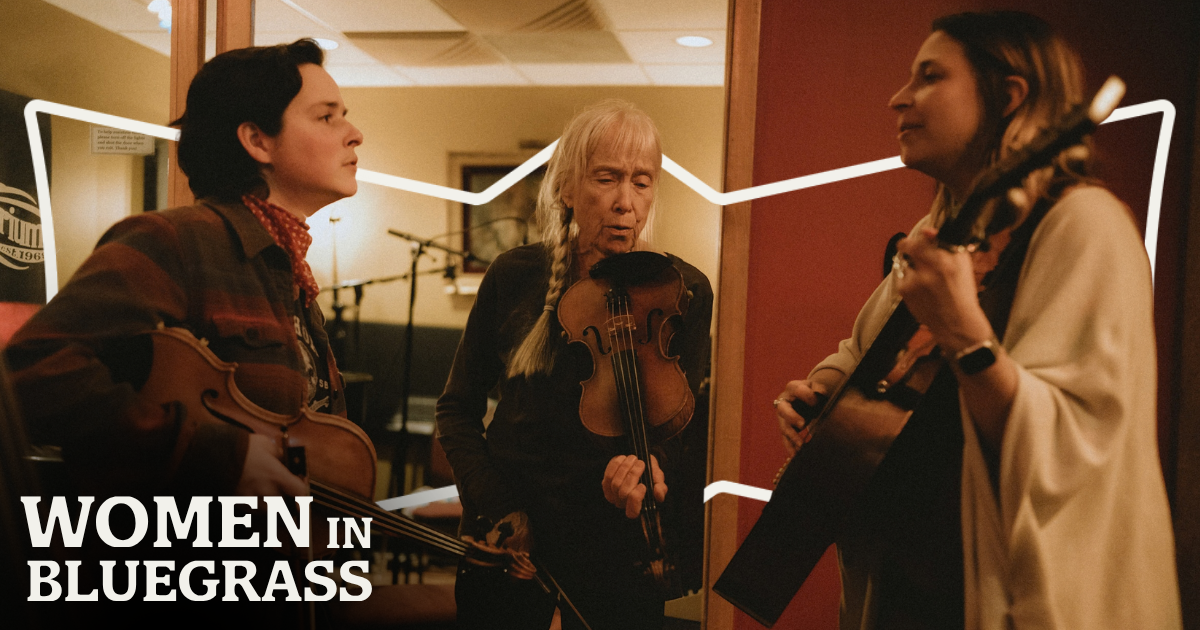
Lead image: Tatiana Hargreaves, Laurie Lewis, and Lindsay Lou by Sawyer Gieseke
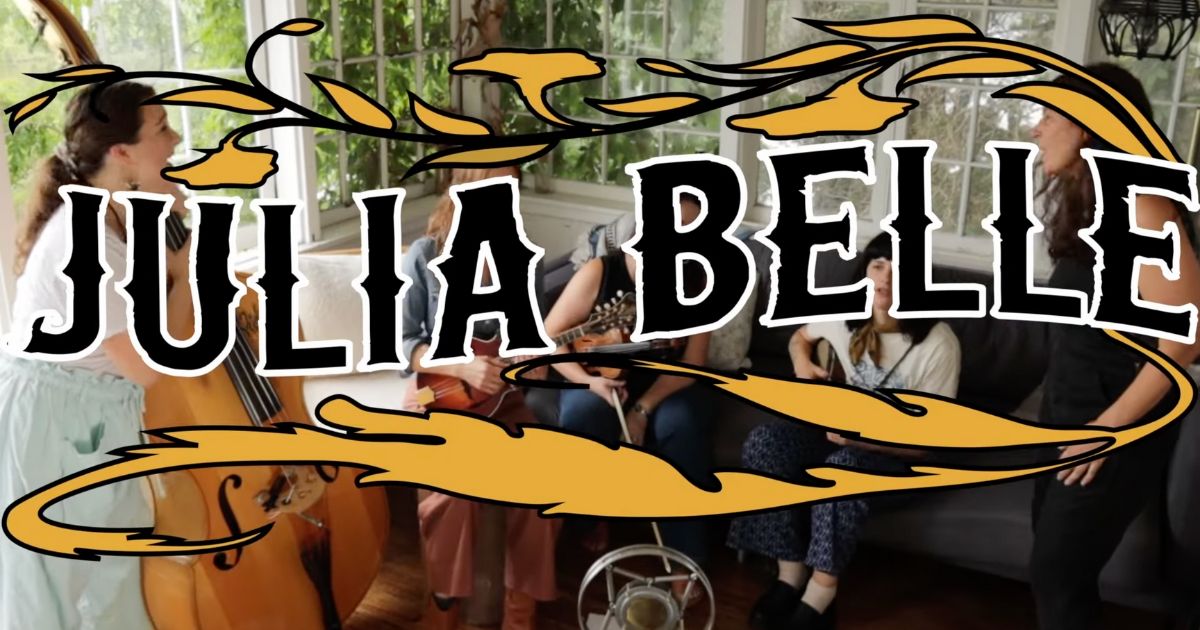
A Women’s Lib Boat: John Hartford Fiddle Tune Project’s ‘Julia Belle’ Embarks

A quarter century removed from his passing, John Hartford’s music and overarching legacy may have a stronger hold on bluegrass and American roots music than ever before.

From modern-day stars like Billy Strings and Sam Bush playing his songs in front of thousands each night, to popping up in books, old-time jams, workshops, films, and other functions, Hartford’s songs are officially a part of the Americana zeitgeist.

This trend continues on Julia Belle: The John Hartford Fiddle Tune Project Volume 2. Released February 28, the follow-up to 2020’s inaugural installment of the Fiddle Tune Project features another 17 songs from the always grinnin’, GRAMMY award-winning, steamboat-loving singer – this time performed entirely by women. Nearly 50 artists, musicians, and singers feature throughout, ranging from Rachel Baiman, Phoebe Hunt, Ginger Boatwright, Brittany Haas, and Deanie Richardson, to Allison de Groot, Della Mae, The Price Sisters, Uncle Earl, Kathy Mattea, Alison Brown, and Sierra Hull.

According to Julia Belle co-producer Megan Lynch Chowning (who was joined in that role by Sharon Gilchrist and Katie Harford Hogue, John’s daughter), once the decision was made to move forward with an all-women cast it came time to narrow down who to include on it–something that was as much of a dilemma as it was “an incredibly cool revelation.”

“We decided about halfway through to just make it a reality rather than a selling point,” she jokes. “It’s in the same spirit of whenever you open up a record from the Bluegrass Album Band, nobody says, ‘Wow, what a great all-male band that is!'”

Ahead of Julia Belle‘s release, Harford Hogue, Lynch Chowning, and Gilchrist spoke with BGS about their involvement in the project, preserving John Hartford’s legacy, and favorite moments from recording.

(Editor’s Note: The following are three separate conversations combined into one and edited for brevity.)

Nearly 50 artists are involved in Julia Belle. How did you go about deciding who to include on the project and which songs they’d play on?

Sharon Gilchrist: It was really important for us to have a multi-generational presence on this record. One of Katie’s personal wishes for the album was that every artist on the record have some personal connection to Hartford. With it being an all-female record, I was also curious to find women who had actually worked with or had some kind of rapport with him. For example, Laurie Lewis, Kathy Kallick, and Suzy Thompson are all on “Champagne Blues” and were all peers of Hartford’s back in the day. Ginger Boatwright actually inspired the song that John wrote which she sings on, “Learning to Smile All Over Again.”

In addition to the sheer number of people involved, I love how you also really allowed them to lean into their own creative tendencies while at the same time staying true to the style and spirit of John Hartford.

Katie Harford Hogue: Since Volume I the whole premise of this album series has been to choose artists that play this vein of music or consider my dad a mentor or someone they look up to. We hand them the book [John Hartford’s Mammoth Collection of Fiddle Tunes] and tell them to choose the tunes that speak to you, then come to the studio and put them through your filter.

For me to tell an artist how to do art – why would I do that? The whole point of being an artist is that you’re putting yourself into it and are using your own expressions, your own metaphors, and your own way of relating to the music. So we wanted their expression in it and the really cool thing is that Dad comes through no matter what we do. His DNA is in these tunes and there’s no way to get them out, not that we would ever want to. Having people come in and just go for it was risky, but an incredibly fun way to make an album.

Megan Lynch Chowning: A lot of the tones, audio, and overall vibe check comes from Sharon, who has been a John Hartford fan her entire musical life and is somebody who is so incredibly in tune with the sounds and feel that comes from his songs. She worked tirelessly listening to everybody’s work before they came in to record to get an idea of what’s going to help each person be the best possible version of themselves while they’re here.

Then there’s the issue of none of these songs – at least the fiddle tunes – having any chords assigned to them. When John wrote them there were no chord progressions, so every artist had to write their own. That in itself was a big part of people getting to take each song in their own directions. It was amazing to watch over and over again, and Sharon handled it all like an absolute rock star.

While some people’s legacy fades over time, it seems like John Hartford’s only grows stronger. What are your thoughts on that and how this project aims to further propel that legacy forward?

KHH: I’ve heard it said before that the way he communicated wasn’t limited to a particular generation. I don’t know if it was the way he thought about things or if some of the ways he did things were more universal. … You can go back to the masters of music and art – da Vinci, Bach – and their methods of creativity are still very valid now, they simply don’t go out of style.

When you hone into the foundation of it the relevancy goes with it, because everyone’s just going back to what’s real, which is what I think my dad also did. He was very true to the way he made music and the way he thought. A lot of people trying to make a career might stop and think, “What does the public want?” or “What do the masses want and how can I provide for them?” There’s nothing wrong with that, but there is another way to do it, making the music you want to make and not worrying whether or not it’s commercially viable.

That being said, “Gentle On My Mind” [Hartford’s most successful song, written in 1966] was very helpful in allowing him to do that full-time. Most everyone else has to get a full-time job and do the music on the side to stay true to themselves, but he got the best of both worlds in that way. He was able to take the success of that song and then go do his art with his heart and soul in it. I mean, who else writes about steamboats? Who else would write about the things that he wrote about and try the things he did on stage or just go out on a limb? And it all worked! In a way, everything aligned for him. That’s why I think he continues to be so relevant – he took a big risk and it paid off.

MLC: In the very first meeting the three of us had to discuss Volume II, preserving and carrying on the Hartford legacy was the focus of what we were trying to accomplish. On any given day you’ve got Billy Strings and Sam Bush playing John Hartford songs in their live shows. The biggest takeaway I have from this whole thing is John Hartford’s unceasing dedication to learning. He started transcribing and learned to write standard notation after he was diagnosed with cancer and instead of saying, “Oh no, I’m sick and this is going to slow me down,” he took it as a sign to move forward and learn a bunch of new things. That’s what led to him becoming obsessed with the fiddle, traditional styles and all that. That to me is the whole message behind these albums, that there’s so much more to do and so much more to write, play and learn. That’s been the most inspiring thing about being a part of this project.

SG: He was both a student and innovator of traditional music who forged his way forward by not sounding anything like anybody else. John is one of the largest beacons shining the way forward on how you do that.

What were your favorite moments from recording these songs? I personally can’t get enough of “Spirit of the South.”

KHH: What was so fun for me about these sessions was that even in rehearsals everyone was shredding. Upon walking in the room you’re hit with this energy and you just want to jump in. It was so exciting talking with everyone and feeling their joy around each song. Then there were the stories from Ginger Boatwright and Kathy Chiavola – both good friends of my dad – and Alison Brown telling me about his influence over her on the banjo.

Not being a musician, that all fed me, because that was a part of my dad’s life that I wasn’t necessarily connected with very much when he was alive. But now I can hear his music and I can see what he was doing and it just has a whole different impact on me. I’ve now had my own kids, raised them, done some things, and can relate more to what he was doing, so every time someone comes back to the studio and records a song, tells a story or talks about his influence, it feel like there’s a drawing of Dad and everyone’s going in and adding details that I hadn’t known about before or that just flesh out the picture that little bit more.

MLC: One favorite was getting Katie’s mom and John’s first wife, Betty, to sing on “No End of Love,” which is a song that John wrote for her. She is an incredible musician who first met John when they were both up for a radio show slot in the St. Louis area. After they got married Betty put her singing career on hold to manage the family, so being able to get her in the studio to sing that song with Katie and her granddaughter Natalie [Hogue] on guitar and hearing her voice – which has been on hold for a long time as she lives other aspects of her life – gave me chills. To me, stuff like that is the essence of folk music and why we do what we do in terms of keeping these songs and traditions alive.

Megan, didn’t you play John’s Tambovsky & Krutz violin on “No End 0f Love”? What was that experience like?

MLC: I actually have John’s fiddle here at my house and play it in the John Hartford Fiddle Tune Project live show, so I’ve been handling it for a while now. Talk about chills – it’s the fiddle he used the last five or so years of his life. It was his main fiddle for the “Down From the Mountain” shows and The Speed of the Old Long Bow record. It’s actually the fiddle on the cover of that album. Katie called me last year out of the blue and said she was moving houses and had taken the fiddle from one closet to another before questioning why it was there in the first place and not in my hands being played at these shows.

To play it on [“No End of Love”] was funny, because it sounds a lot different than my fiddle even though both were set up by the same person. It always felt comfortable to play, but the first few months I had it it was kind of dead from sitting in a closet for two decades. Since I’ve been playing it regularly it’s really come to life. Just the metaphorical part of this fiddle coming to life at the same moment these tunes are being brought into the world is special. It’s how I believe everybody who has the opportunity to be involved in traditional music should be thinking about it. We should constantly be honoring the stuff that came before us while also bringing it into new spaces.

Katie, you mentioned not being too connected to your father’s music when he was still alive, but what do you remember most about those times?

KHH: People saw his stage persona when he was out, but even when he was home he was still playing. He didn’t go home and just say, “Oh, I’m tired of that.” He played some more. “Obsessive” is not too strong a word to use when it came to the way his brain worked about music or art. It would be Thanksgiving or Christmas and he’d be working out melodies in the living room with Benny Martin simply because they enjoyed it.

Later on, my wedding reception was held at my dad’s house and we had originally set up music on a sound system so as not to burden him, but he, my brother, and my uncle ended up all grabbing their instruments and playing as a trio for it. He wasn’t a musician because he was trying to be famous; he was a musician because he couldn’t not be one. As much as his right hand was a part of him, his fiddle and his banjo were a part of him too.

What has working on The John Hartford Fiddle Tune Project taught you about yourself?

MLC: These experiences have taught me that I’m capable at parts of this job that I previously shied away from. I grew up as a contest fiddler; that was my background. Because of that I was very good at learning specific arrangements of things and then executing them with precision. While that’s all great and fine – one: it’s not a very good living, and two: it’s not all that great for having a very broad musical vision or sense of yourself. That’s why I started playing bluegrass and working for country artists. My skills and musicianship both expanded, but working on these albums – both as a player on Volume I and as a producer/player on Volume II – I’ve learned much more about my internal ability to hear things I didn’t know that I could hear and to make decisions I didn’t know I could make.

It reminds me of this exercise that John Hartford used to do with people at his jams or in his band – called the “window exercise” – where everybody who’s playing has to do something different than everybody else and then has to change that thing every eight bars. If you’ve got five or six people sitting around in a circle, one person can be chopping, one person can be playing longbows, melody, harmony, shuffle pattern… but only for eight bars. It requires you to not only come up with new things, but also be aware of what everyone else is doing simultaneously.

It was a musical brain exercise he invented that we teach at our workshops and sometimes even at the live show. To me, working on these albums has been like a real-life window exercise. It feels like even from beyond the grave John Hartford is challenging me to go bigger, be more creative, and more aware all the time. He’s just expanded who I am as a musician and what I now know that I’m capable of that I didn’t know I was capable of before. It’s weird to be grateful to someone who’s been dead for 25 years, but that’s how I feel because I’m a different person and a different player than I was before I started this.

SG: It showed me the importance of being hands-off with other people’s musicianship and to give them every opportunity to bring as much of themselves to any project as possible. That’s when you’re going to get the best music out of somebody. This project was a lesson in learning to do that, but also knowing when to jump in and direct or provide guidance when necessary.

Katie did a great job of that as well. This whole project is her brainchild and was a huge undertaking and the coolest part is the way she’s doing it. She’s doing it just like her dad. He would be so honored and pleased to see her fostering that in his own tunes and giving others the opportunity to share in and carry on that tradition.

KHH: I was a stay-at-home mom when my kids were born and poured a lot into them growing up, but once my youngest got to high school I began backing off and looking to do some of the things I’d been putting off. Coincidentally, the fiddle tune project was coming to fruition around the same time.

It was like walking out on a limb – especially as an older woman – to go out and start on some of these things not having been in the industry or corporate world in quite a while, but I did it. I have learned so much about not just the music industry, but things like how to use computer software like Photoshop and Illustrator and doing video for social media. It’s a lot of fun and something I’m very proud to be able to say that I did. I want to encourage other women to do the same. Don’t worry about what other people are saying, what you’ve done before, how old you are or what stage of life you’re in – don’t let anyone devalue your experience. If you’ve got an idea, go do it!


The Travis Book Happy Hour: Phoebe Hunt

As much a mystic as a musician, Phoebe Hunt makes music that speaks to the yearning we all have to connect with something larger than ourselves. A deep commitment to making music with meaning is her compass and she’s an example of what it means to be in loving relationship with music. We need more musicians like Phoebe Hunt in this world.

LISTEN: APPLE • SPOTIFY • STITCHER • AMAZON • MP3

This episode was recorded live at 185 King Street in Brevard, North Carolina on April 23rd, 2024.

Timestamps:

0:08 – Soundbyte
0:22 – Introduction
1:22 – Bill K’s introduction
2:03 – “Rise Sun”
6:06 – on “Lint Head Girl”
7:15 – “Lint Head Girl”
10:40 – “Take Me Home”
14:30 – Interview 1
28:22 – “Galloping”
31:20 – on “Pink and Blue”
34:51 – “Pink and Blue”
38:16 – “I couldn’t”
39:02 – Interview 2
53:20 – “Nothing Else Matters”
56:30 – “Good Blood”
1:00:20 – Outro


Editor’s Note: The Travis Book Happy Hour is hosted by Travis Book of the GRAMMY Award-winning band, The Infamous Stringdusters. The show’s focus is musical collaboration and conversation around matters of being. The podcast includes highlights from Travis’s interviews and music from each live show recorded in Brevard, North Carolina.

The Travis Book Happy Hour is brought to you by Thompson Guitars and is presented by Americana Vibes and The Bluegrass Situation as part of the BGS Podcast Network. You can find the Travis Book Happy Hour on Instagram and Facebook and online at thetravisbookhappyhour.com.

Photo Credit: Tim Jackson

You Gotta Hear This: New Music From Darren Nicholson, Maya de Vitry, and More

To welcome you to the end of the week, we’ve got a slate of superlative premieres from across the roots music landscape.

Below, find new tracks from singer-songwriters – Maya de Vitry, who sings a song from her upcoming co-written with Caitlin Canty, as well as Lucy Isabel bringing “A Hero’s Welcome.” We’ve also got a few Western North Carolinians in our round-up, including bluegrass mandolinist Darren Nicholson playing a song about a true mountain man, John Colter, and Amanda Anne Platt & the Honeycutters offering “Big Year.”

Plus, guitarist Jacob Johnson is joined by Willie Nelson & Family harmonica player Mickey Raphael on an acoustic Allman Brothers cover and Tommy Emmanuel pays tribute to Chet Atkins’ 100th birthday with a video BGS premiered earlier this week.

It’s all right here on BGS – and You Gotta Hear This!

Maya de Vitry, “Odds of Getting Even”

Artist: Maya de Vitry
Hometown: Lancaster, Pennsylvania
Song: “Odds of Getting Even”
Album: The Only Moment
Release Date: July 12th, 2024
Label: Mad Maker Studio

In Their Words: “I wrote ‘Odds of Getting Even’ with my dear friend Caitlin Canty at a kitchen table in Nashville, several years ago. I was borrowing a friend’s snare drum at the time and having so much fun just grooving on that drum and singing. We were really moved by an article laying on my table, it was about the late Sharon Jones. Her story is powerful – her devotion to music in spite of so many years of rejection and really outright dismissal by the music industry – and then her battle with cancer, and performing in the midst of treatment… Against so many odds, she persisted in making her music. And singing was the only thing that could take her pain away.

“The band Della Mae made the first recording of this song on their 2020 Headlight album. It’s a real honor and thrill to hear another band bring your song to life. Then, Caitlin recorded her own version on Quiet Flame, which came out last summer. One of the things I love most about making records is making a collection of songs that feel like they magnetically want to live alongside each other, like companion plants or something – and this one just absolutely belongs in the song garden of The Only Moment. And to hear Phoebe Hunt on harmony vocals… well I just think Phoebe is an absolute legend. I’m so lucky to get to sing with her.” – Maya de Vitry

Track Credits:
Maya de Vitry – Vocals, acoustic guitar, synth
Phoebe Hunt – Harmony vocals
Anthony da Costa – Electric guitar
Ethan Jodziewicz – Bowed upright bass
Dominic Billett – Drums


Lucy Isabel, “A Hero’s Welcome”

Artist: Lucy Isabel
Hometown: Nashville, Tennessee
Song: “A Hero’s Welcome”
Album: All The Light
Release Date: June 28, 2024 (single); October 11, 2024 (album)

In Their Words: “‘A Hero’s Welcome’ is the only song on the album that wasn’t written specifically for the album. I taught myself to play guitar in college and started writing music pretty much right away. ‘A Hero’s Welcome’ was the first song that I ever felt proud of writing; I felt like I had found my voice. While I was in the process of writing the bulk of this album, I hung out with a college friend who reminded me of ‘A Hero’s Welcome.’ I suddenly realized that it was a perfect fit for All The Light and I added it to the track list. It’s been really fun to revisit this song that I wrote as a 21-year-old and hear how it’s transformed through the production process.” – Lucy Isabel

Track Credits: Written by Lucy Isabel Fortune-Cabrera.
Produced/mixed by Jared Anderson.
Mastered by Preston Cochran.
Lucy Isabel – Vocals, BGVs
Jared Anderson – Guitar, bass, pianos, percussion
Andy Ellison – Pedal Steel


Jacob Johnson, “Jessica” featuring Mickey Raphael

Artist: Jacob Johnson
Hometown: Greenville, SC
Song: “Jessica” feat. Mickey Raphael
Release Date: June 21, 2024

In Their Words: “It’s an unwritten rule for musicians that if your darlin’ (that’s how we say “significant other” or “partner” in the South) is named after a famous song, you must learn the song and you must use it to serenade them. Unfortunately, my wife was named after a 7-minute Allman Brothers jam. Eventually, I got serious and put together a solo/acoustic version of ‘Jessica’ that I later played as she danced with her dad at our wedding reception on May 31, 2019. It’s been knocking around in my head since then and earlier this year I decided it was time to flesh out the arrangement with some collaborators.

“Jack Ryan and Stephen Campbell from the dangerously hot Marcus King Band laid down a groovy, breathing foundation on drums and bass respectively, and Aaron Bowen supplied tasty keyboard lines throughout. In addition to the main melody, I played the second solo on my trusty Takamine acoustic guitar, but I knew I wanted to feature another special guest for the first solo section. I was completely blown away when my first choice, Mickey Raphael, legendary harmonica player for Willie Nelson and Family, agreed to participate. Mickey has played on some of my favorite albums of all time, and his lyrical, melodic style was just what the track was asking for. Having part of his magic on one of my tracks has been on my musical bucket list for many years.

“Of course, this entire project was created with lots of love and respect for its composer, the great Dickey Betts, who we lost not long after production was completed. If you know Southern music, you know he was one of the greats. Though I never had the opportunity to meet the man, I hope that my arrangement and attention to the details of this composition can honor his legacy in some small way.” – Jacob Johnson

Track Credits:
Jacob Johnson – Guitars
Mickey Raphael – Harmonica
Jack Ryan – Drums
Stephen Campbell – Bass
Aaron Bowen – Keyboards
Produced by Jacob Johnson.
Recorded by Shane Nelson at Asaph Studios & Mike McCarthy in Jack Ryan’s Garage.
Mixed by Shane Nelson at Asaph Studios, Greenville, South Carolina.
Mastered by Anna Frick at Ally Sound.


Darren Nicholson, “Big Sky”

Artist: Darren Nicholson
Hometown: Canton, North Carolina
Song: “Big Sky”
Release Date: June 21, 2024
Label: Mountain Home Music Company

In Their Words: “This is one of my favorite cuts of my entire recording career. I feel there’s a special spirit in the song and the way it turned out. It’s based on the true story of early American explorer, John Colter. He was a member of the Lewis and Clark Expedition and became the first known person of European descent to enter the region which became Yellowstone National Park. There’s several fascinating periods of his life and career. I became aware of him through a fabulous book about his survival and harrowing adventures called Colter’s Run. He was one of the first true mountain men. This was the inspiration for the song when Charles Humphrey and myself set out to write it. I also think it would make a great film. I feel the musicians knocked it out of the park in regard to capturing the mood and old-time essence. Hope you enjoy!” – Darren Nicholson

Track Credits:
Darren Nicholson – Mandolin, octave mandolin, lead vocal, harmony vocal
Tony Creasman – Drums
Kristin Scott Benson – Banjo
Zach Smith – Upright bass;
Colby Laney – Acoustic guitar
Deanie Richardson – Fiddle
David Johnson – Dobro
Kevin Sluder – Harmony vocal
Jennifer Nicholson – Harmony vocal


Amanda Anne Platt & the Honeycutters, “Big Year”

Artist: Amanda Anne Platt & The Honeycutters
Hometown: Asheville, North Carolina
Song: “Big Year”
Album: The Ones That Stay
Release Date: August 9, 2024
Label: Mule Kick Records

In Their Words:“I wrote the first line of this song in 2018, after what felt like a really big year. I would revisit it from time to time, trying to find the rest of the words. And while I was doing that, the years just kept getting bigger and bigger. Good stuff, bad stuff, life just gets overwhelming at times. And of course there was a global pandemic. I’m still waiting on a smaller year, but maybe I’m also learning how to ride the wave a little better.” – Amanda Anne Platt

Track Credits:
Amanda Anne Platt – Acoustic guitar, lead vocal
Matt Smith – Dobro
Rick Cooper – Electric guitar, vocal harmony
Kevin Williams – Piano, vocal harmony
Evan Martin – Bass, drums, percussion, vocal harmony

Produced by Scott McMicken and Greg Cartwright, FrogHouse Productions, and Amanda Anne Platt.


Tommy Emmanuel, “Mr. Guitar (Live)” 

Artist: Tommy Emmanuel
Hometown: Nashville, Tennessee
Song: “Mr. Guitar (Live)”
Album: Endless Road: 20th Anniversary Edition
Release Date: May 28, 2024
Label: CGP Sounds

In Their Words: “The one and only Chet Atkins would be celebrating his 100th year if he were still here in body. We miss him. We love his playing, we remember all the great lessons and wisdom he handed out freely to us.  We always use his example as the one written in stone. My fellow CGPs, John Knowles and Steve Wariner, have their own experiences and memories to share, and they have lived a different life to me. Yet, because of our love for Chet’s music, we are forever joined, like family…” – Tommy Emmanuel

More here.


Photo Credit: Maya de Vitry by Kaitlyn Raitz; Darren Nicholson by Jeff Smith.

WATCH: Phoebe Hunt, “Nothing Else Matters”

Artist: Phoebe Hunt
Hometown: Austin, Texas
Song: “Nothing Else Matters”
Album: Nothing Else Matters
Release Date: July 28, 2023
Label: Thirty Tigers

In Their Words: “This song originally came from a title that Maya DeVitry came up with on a co-writing session at my house. We were sharing a cup of tea and I was lamenting the feeling of not being able to call up the guys in my band just to jam. We all used to live in Brooklyn together, but now we’ve all moved to different places in the country. I was sharing with her that I hadn’t realized that a part of me was grieving for that. Maya took those emotions and filtered them into the first verse of the song. When she played me that first verse, I started crying. Zooming out, it feels like it’s a ‘coming of age’ song.

“These songs [on Nothing Else Matters] have never even been played with a full band. It was really a different process to work from the inside out instead of from the outside in. I just realized that there is this tiny little world inside of me, my own little reality. In the past few years, I have gotten to really spend time there, and this album is my way of sharing that tiny little world with others.

“I came to see that my voice and fiddle are enough, that I am enough. And that was our rule: no bells, no whistles, no overdubs, no frills. I believed that standing on my own two feet, with the instrument I’ve given thirty years of my life to, singing the songs that come from my heart can be enough. And I hope this record can give that kind of permission to the listener, allowing them to find their truest expression, no matter what their limitations or circumstances look like.” — Phoebe Hunt


Photo Credit: Nicola Gell

WATCH: Phoebe Hunt, “Goin’ Gone” (Tribute to Nanci Griffith)

Artist: Phoebe Hunt featuring Tabitha Meeks and Makena Hartlin (the Pitch Pipes)
Hometown: Nashville, Tennessee
Song: “Goin’ Gone”

In Their Words: “I was introduced to the Pitch Meeting in Nashville by my dear friend Makena Hartlin. She kept telling me to come out to Sonny’s on a Tuesday here in Nashville. I had been reluctant to go anywhere during the pandemic, but this August, I felt like it was time and the Pitch Meeting graciously featured me as their guest artist. It was really special to see what can happen when a group of supremely talented individuals come together to support one another. I felt heard, held, supported and lifted up. I hadn’t played in a live setting with a full band in a really long time and it really lifted my spirits. The next week, Makena and Tabitha Meeks invited me to be a featured guest in their Pitch Pipes female songwriter showcase. Again, I was blown away by the support from these beautiful women.

“Nanci Griffith passed the day before I met up with the Pitch Pipes. My husband and I had her album, The Last of the True Believers, on repeat in our home and I felt deeply connected to her voice, her writing and the covers she chose to sing. You can hear genuine tenderness in her voice. You can feel her spirit. So, I brought ‘Goin’ Gone’ to Makena and Tabitha and asked if they would be open to learning it and paying tribute to Nanci with me. It feels sacred to sing the songs she sang in her wake. As if we can keep the music and her memory alive simply by playing the songs she held close. We’ve lost many beautiful souls lately and it feels important to sing the songs of those who pass and keep their spirit alive through the music they left behind.” — Phoebe Hunt


Photo credit: Nate Luebbe

BGS WRAPS: Phoebe Hunt & The Gatherers, “December Again”

Artist: Phoebe Hunt & The Gatherers
Song: “December Again” (single)

In Their Words: “When we made the video for ‘December Again’, all I wanted to do was send it out the very next day. It’s so odd to know a piece of art exists and to not be able to share it. Alas, it was already almost January at that point and I figured it would come around again.

“To be completely honest, I never even thought this song would leave my journal. I love writing and have tons of nameless songs that just pop out and then never see the light of day. But, then something happens that sparks enough creative spirit to write out a chord chart and teach it to the band… Sometimes that part is the hardest because it takes a lot of vulnerability to open up your diary and share it.

“Felt like if we were gonna add to the shuffle of what is played in the airwaves at this time of year, it was important to include everyone, but still honor the profound spiritual connection that is brought out this time of year. Music is that thread. It’s what holds us all together.” — Phoebe Hunt

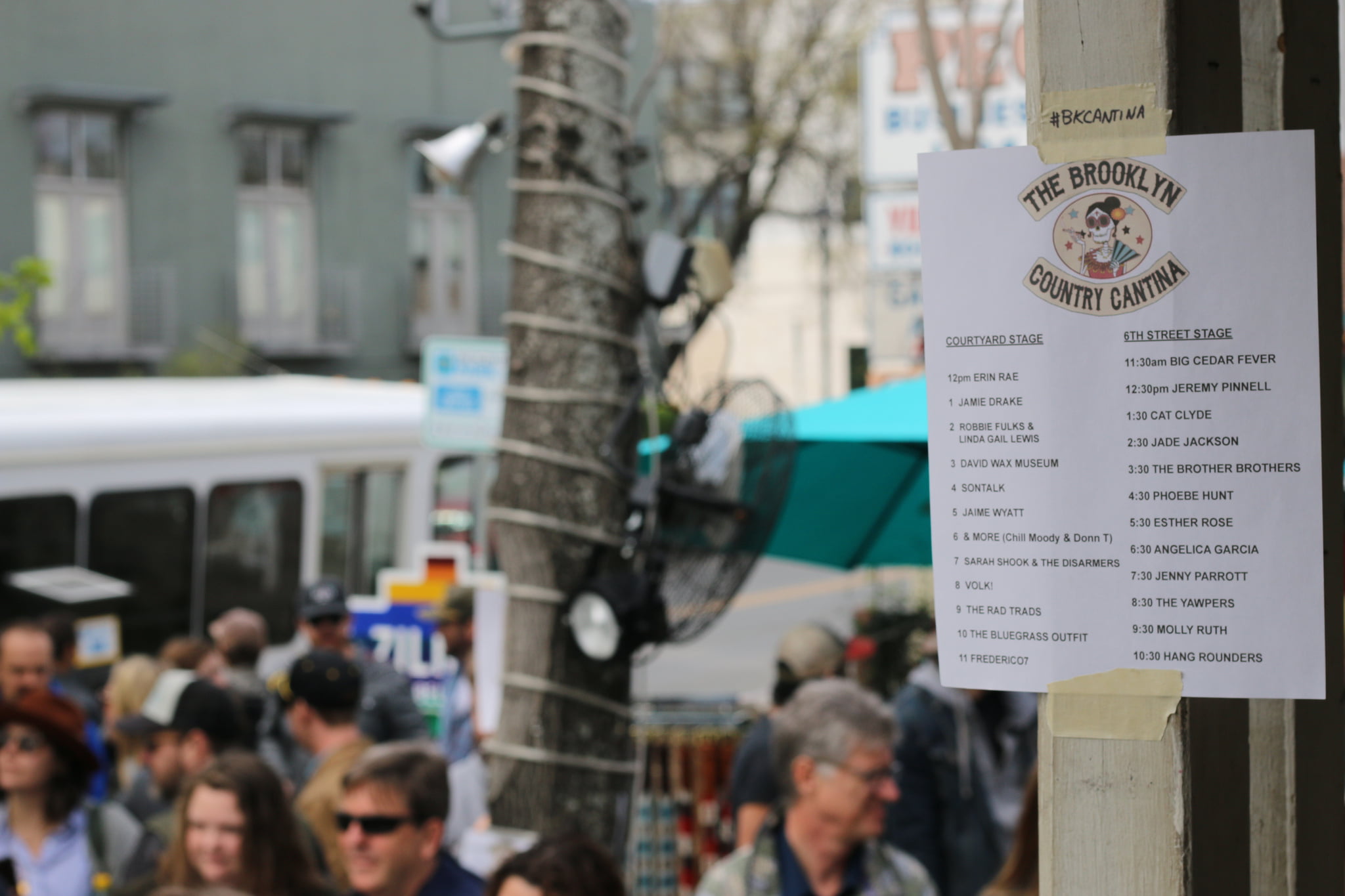
Brooklyn Country Cantina 2019 in Photographs

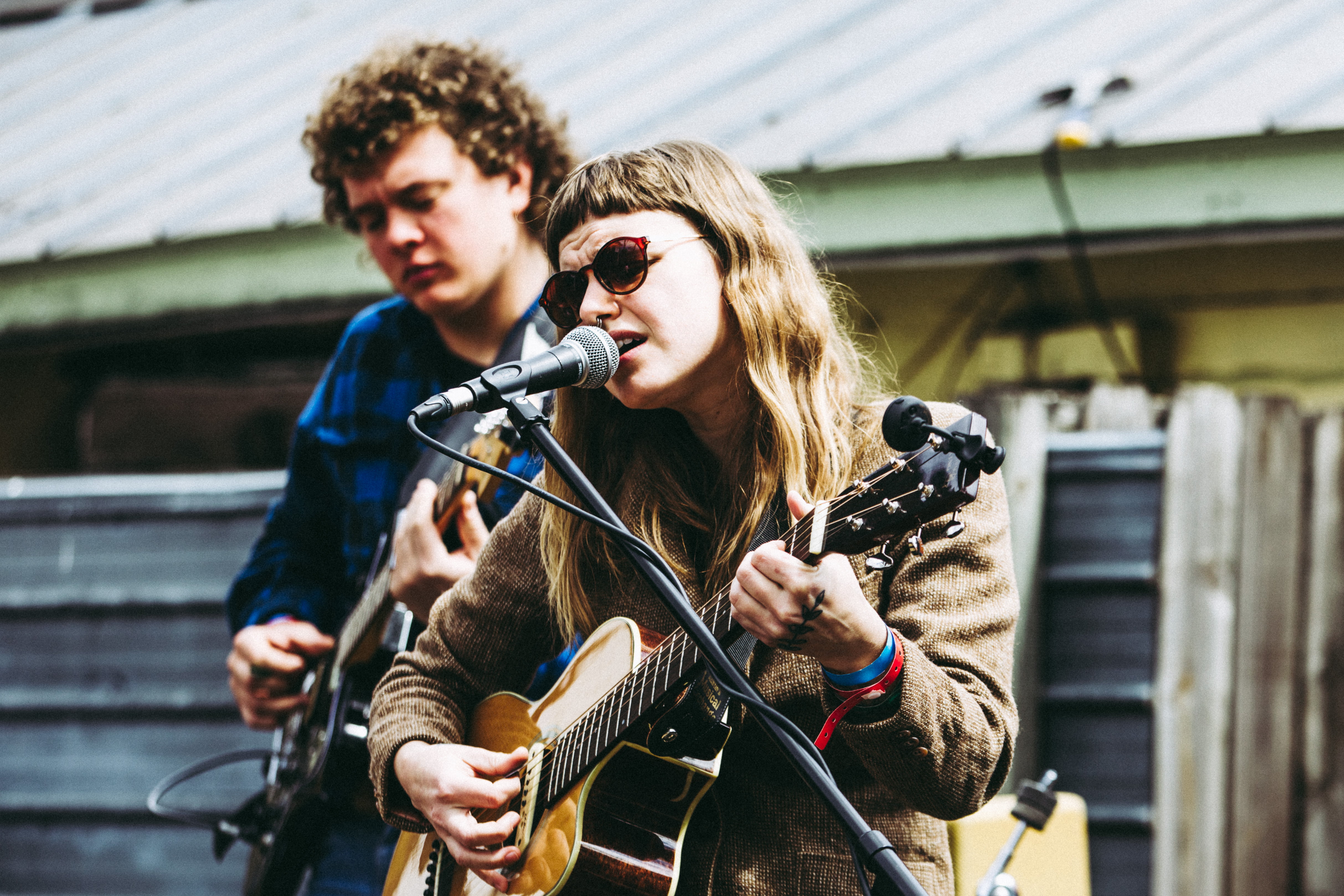
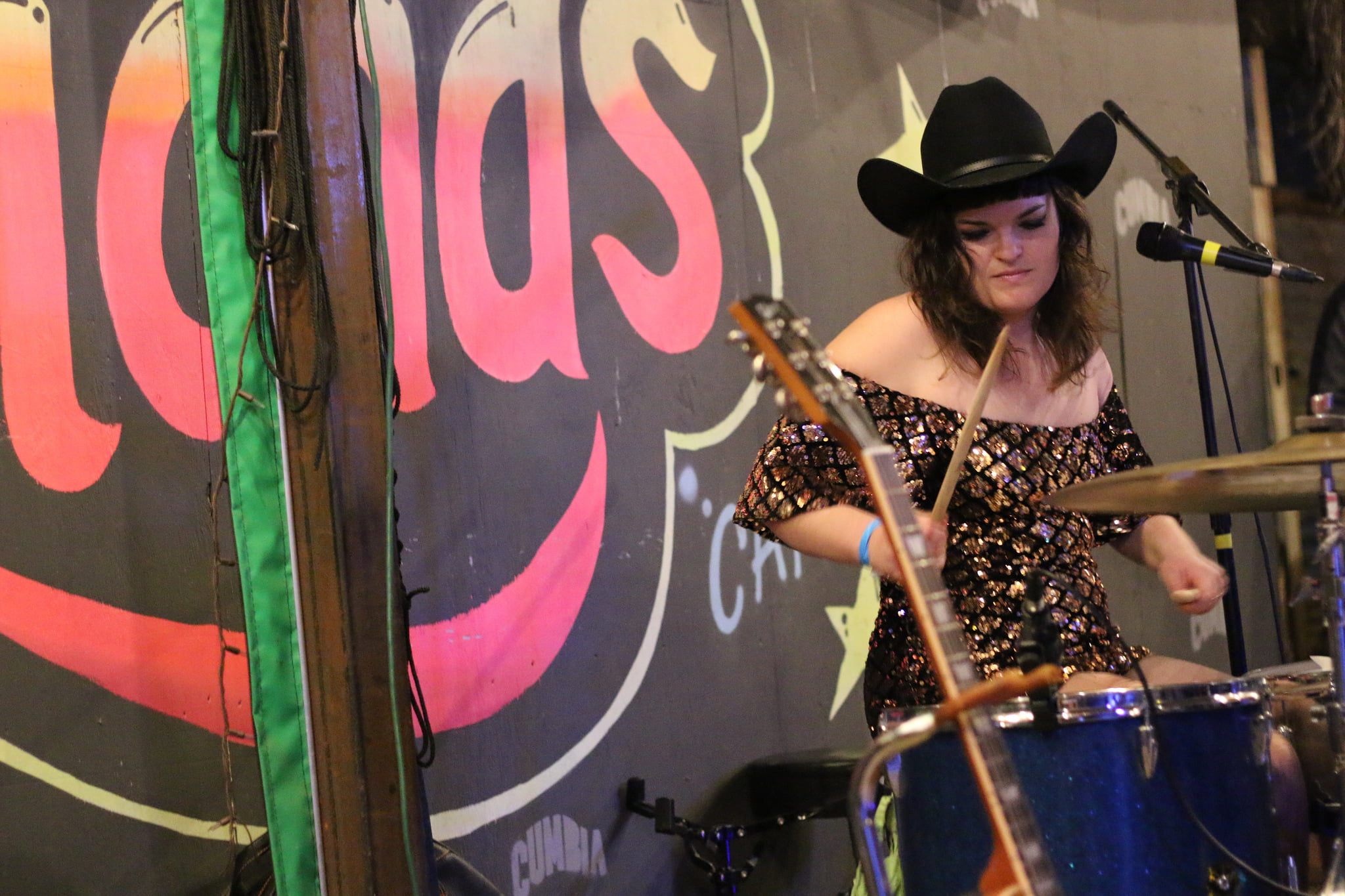
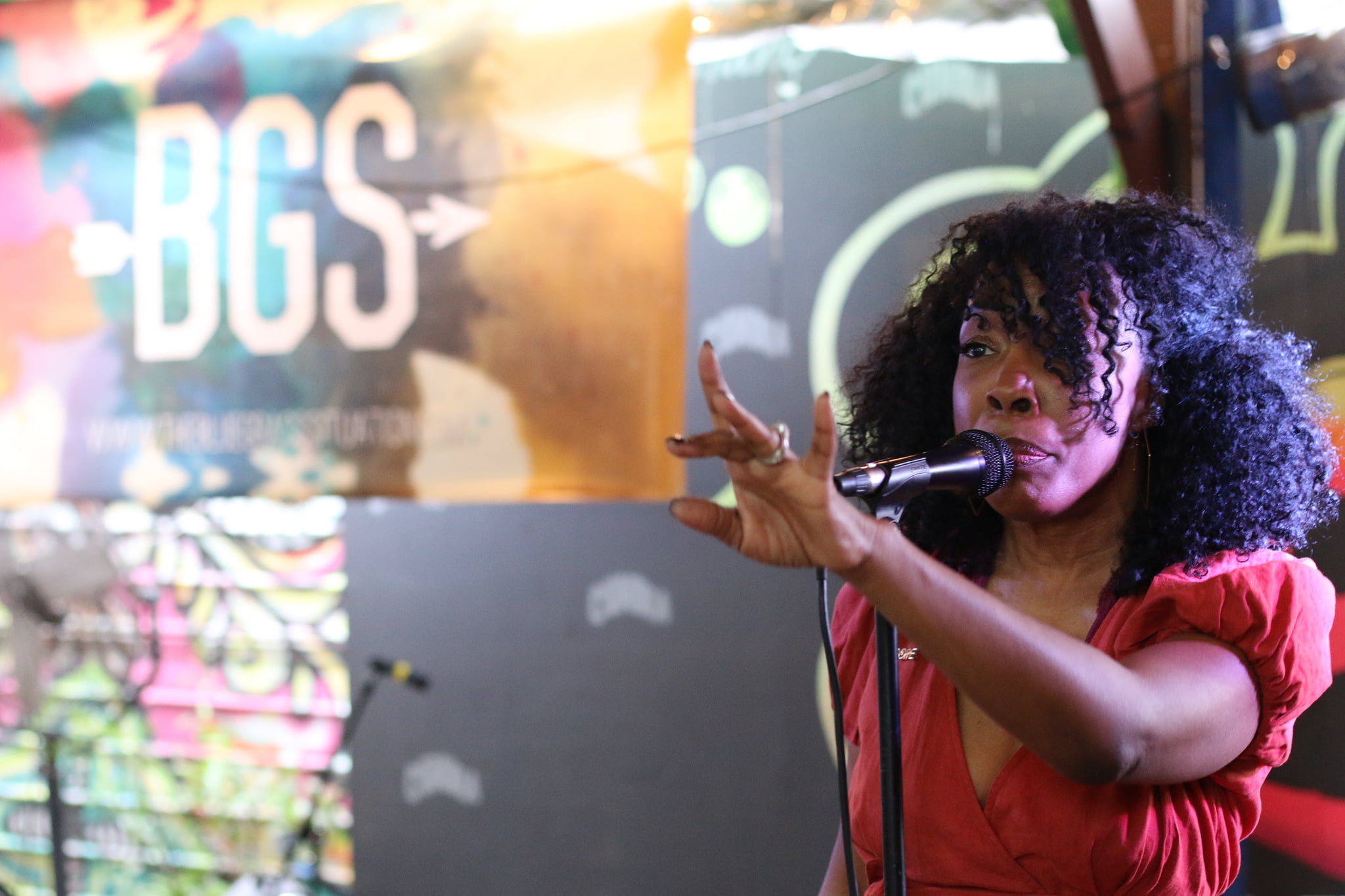
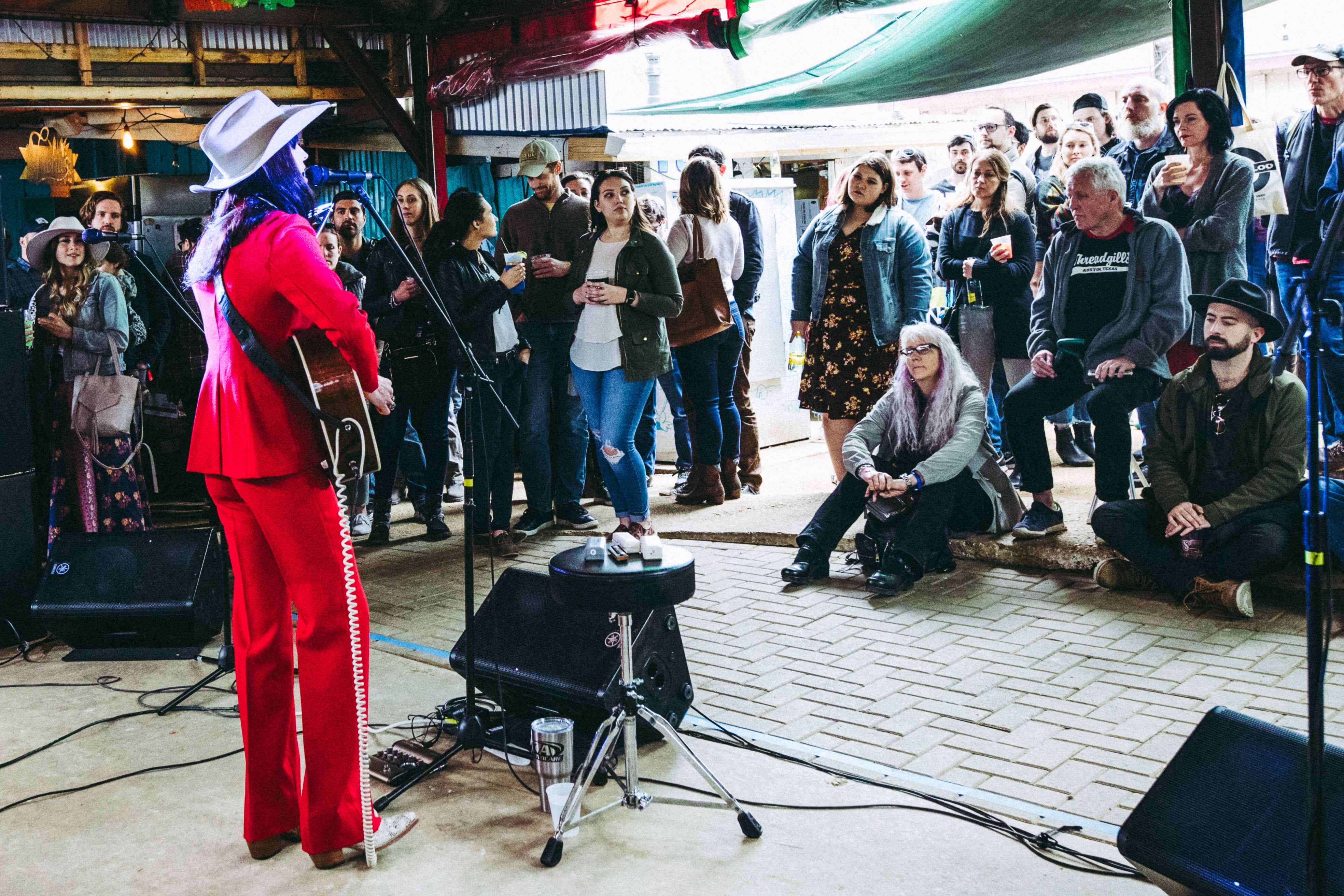
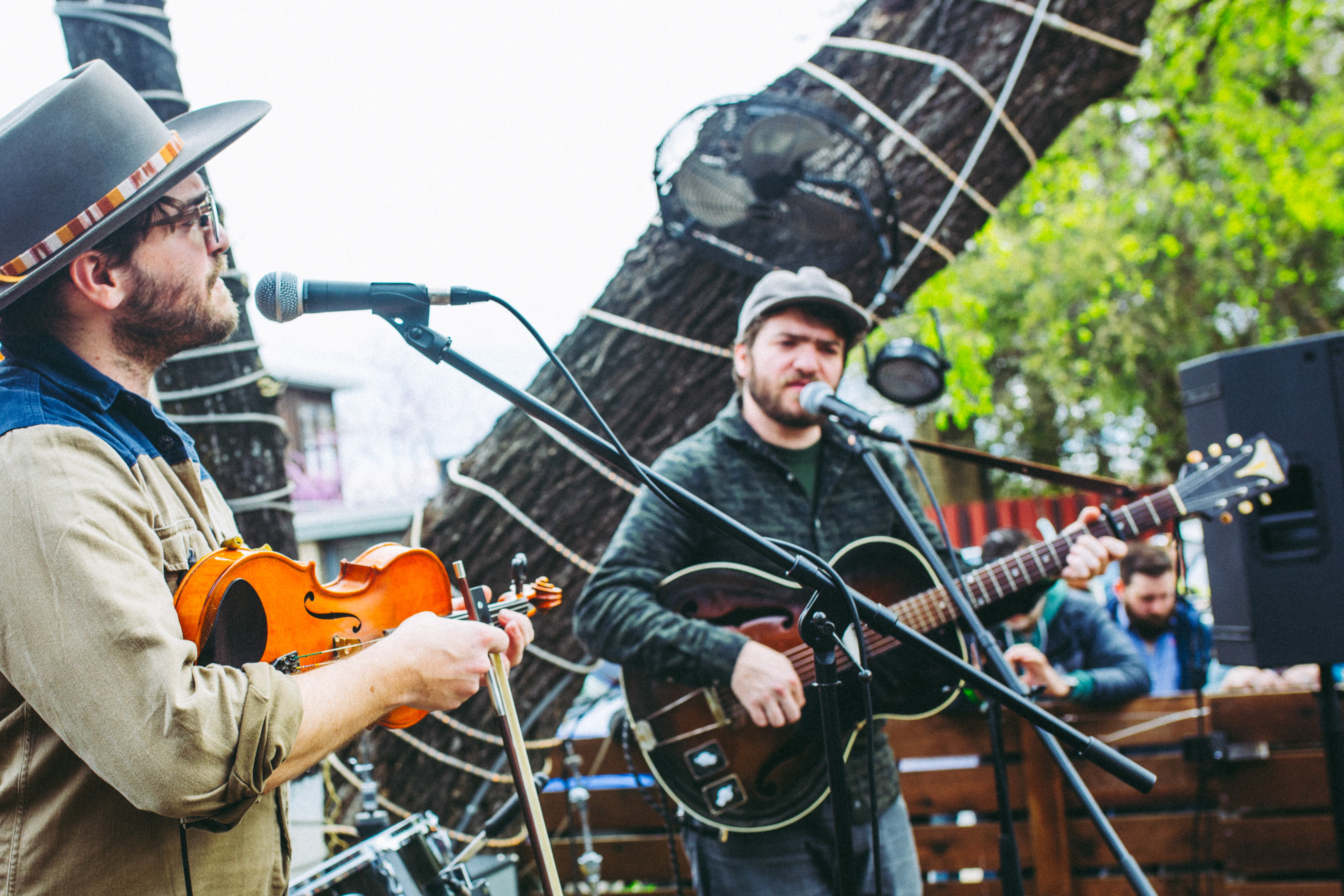
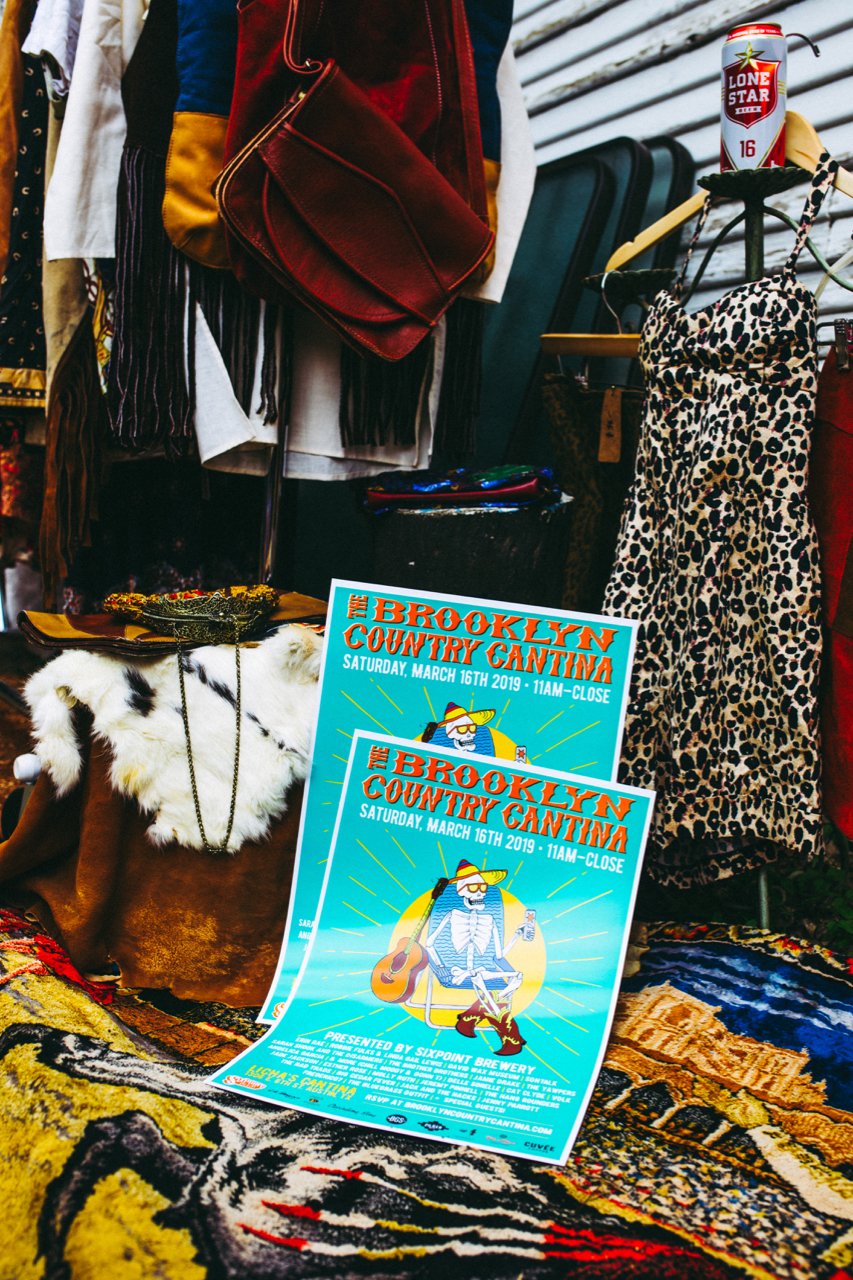
The crowds turned out all day and all night for last Saturday’s Brooklyn Country Cantina at SXSW in Austin, Texas. Amazing music, delicious food, relaxing hangs, beautiful belts, and adorable puppies all came together to make the day a smashing success. Relive BGS’ third year co-presenting the Country Cantina with these FOMO-preventing photographs.


Lede photo by Jaki Levi

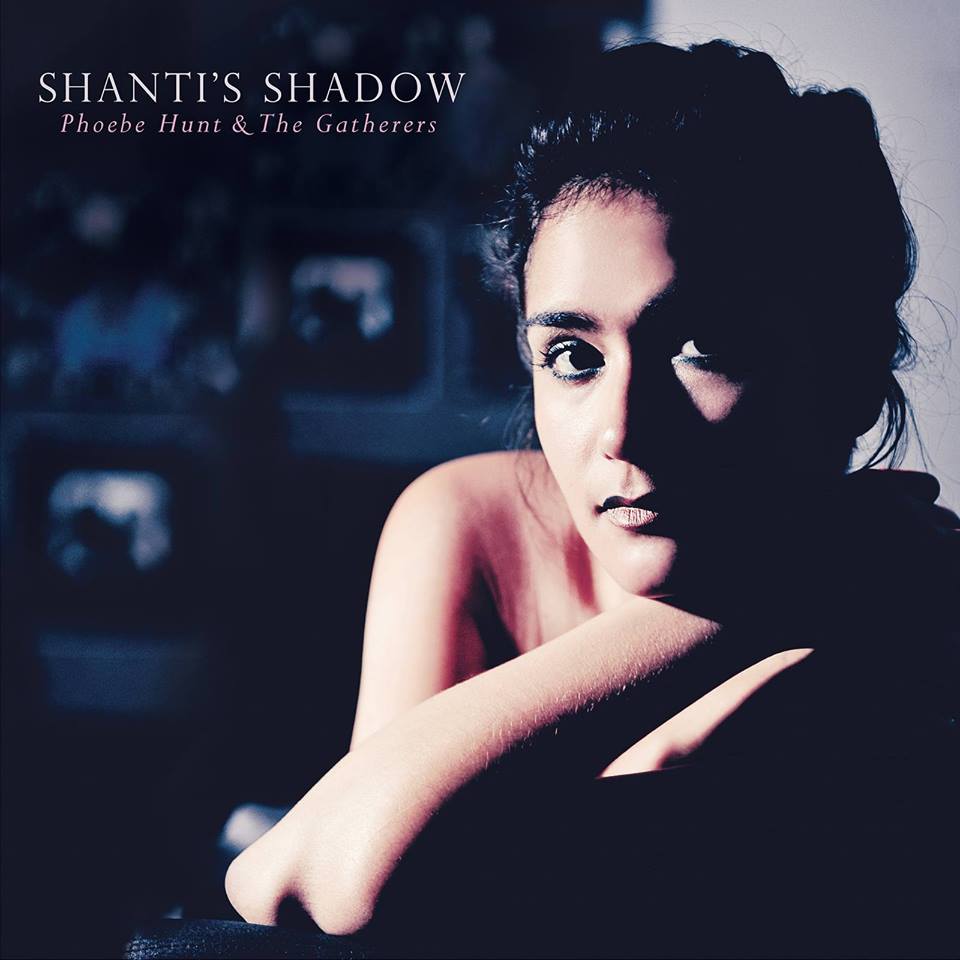
STREAM: Phoebe Hunt & the Gatherers, ‘Shanti’s Shadow’

Artist: Phoebe Hunt & the Gatherers
Hometown: Brooklyn, NY
Album: Shanti’s Shadow
Release Date: June 2, 2017
Label: Popped Corn Records

In Their Words: “For me, Shanti’s Shadow feels like my coming of age story. I’ve had to face every one of my fears throughout the process of creating this album. From being intensely vulnerable and honest with myself in the songs, to stretching beyond what feels comfortable financially to bring the album to life, I have had to break through many barriers in my mind to come to a place where I truly believe it is possible to create art that doesn’t compromise artistic integrity.

Honestly, it was when I found this group of guys to play music with, who feel like my brothers, that I knew the music would be so deeply honored. I feel like they are wizards who could elevate any artist they support. When I am making music with this crew, I feel that we can do no wrong. Around our house, whenever we are in a music setting, we always joke around, pumping one another up, saying, ‘You can’t sink this ship.’ Once I felt that feeling, I knew I was willing to do whatever it would take to nurture it and bring it to the world.” — Phoebe Hunt