You Gotta Hear This: New Music From Gena Britt, Sammy Brue, and More

Happy first Friday of November! Let’s kick off a month of new music roundups with our first edition of our usual weekly collection for November.

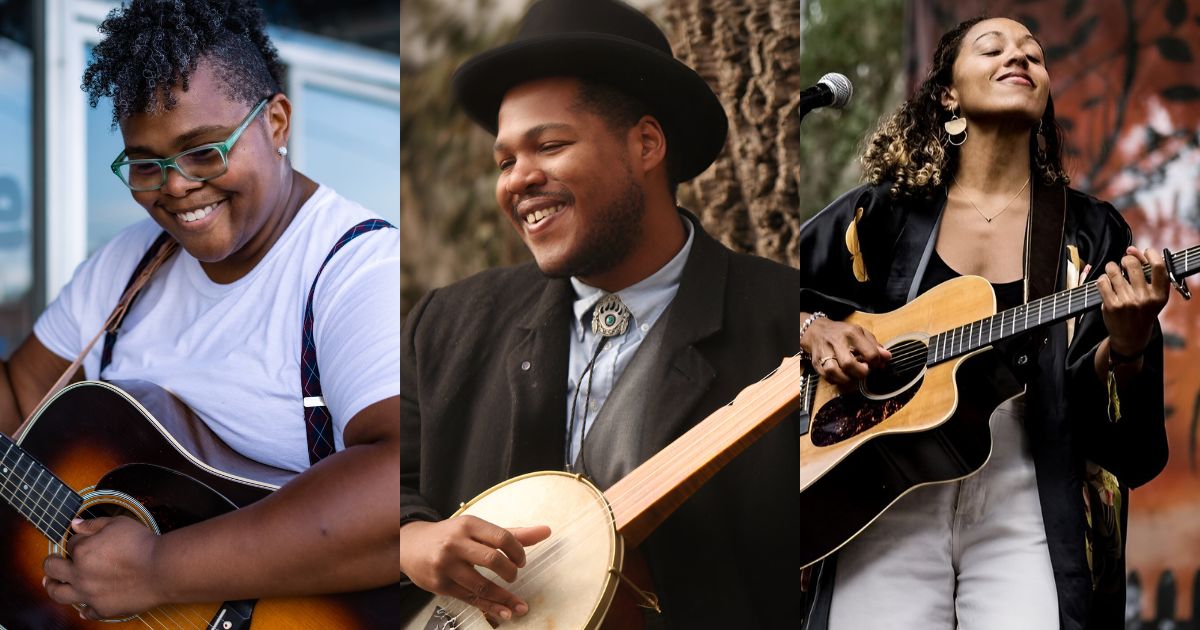
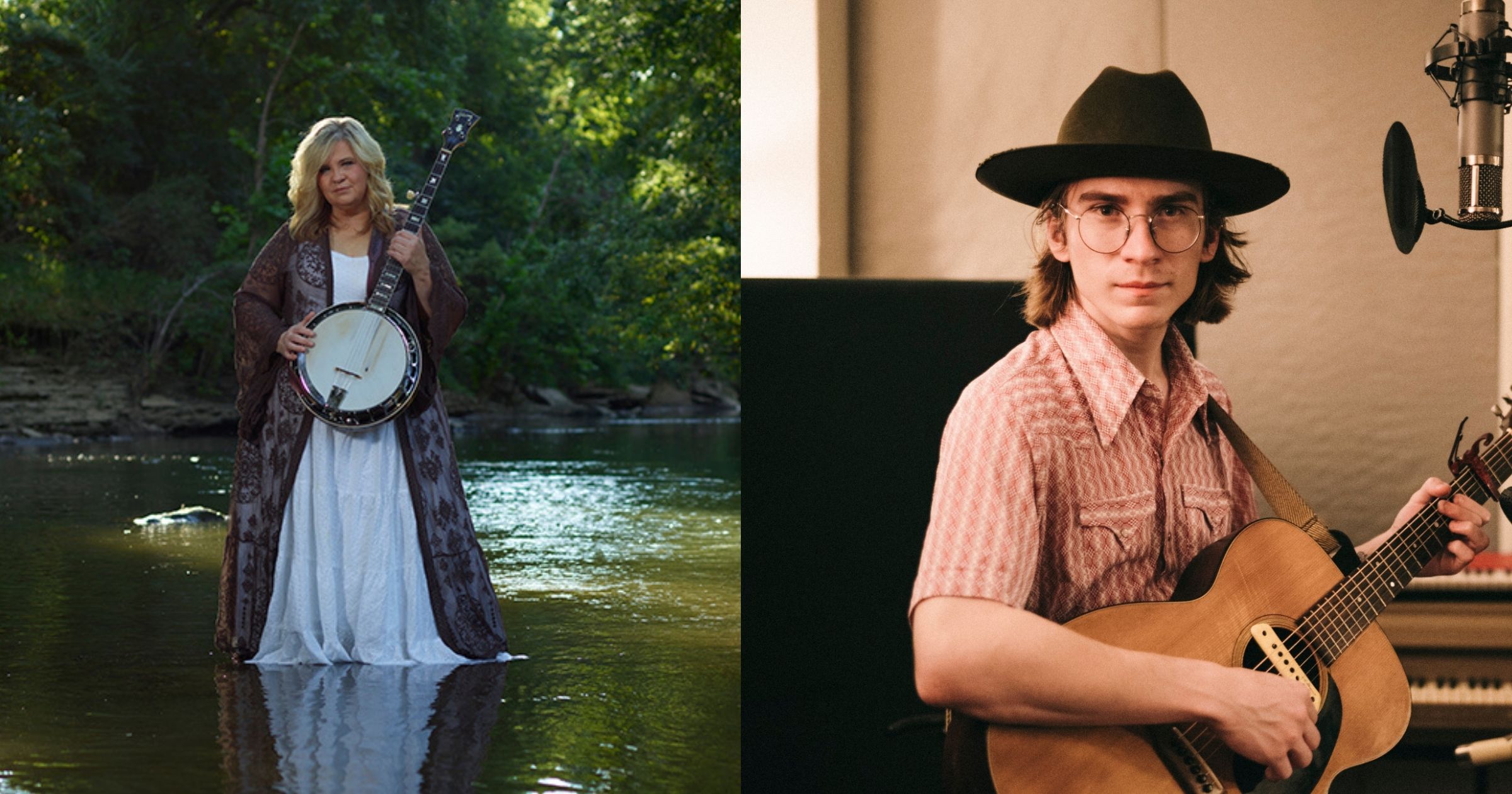
To begin, banjoist Gena Britt – whom you may know from Sister Sadie – releases her brand new solo album, Streets, Rivers, Dreams & Heartaches today. We’re sharing “What Kind of Memory Will You Be” off the new project to celebrate its launch. It’s one of Britt’s favorite tracks from the album. Her Sister Sadie bandmate, fiddler Deanie Richardson, is also included in our roundup today, joining fellow fiddler Kimber Ludiker (of Della Mae) on a twin fiddle rendition of a rip-roaring original instrumental, “No-See-Um Stomp.” It’ll have you dancing and smacking the hell out of some sandflies, too.

Singer-songwriter and guitarist Sammy Brue previews his upcoming album that pays tribute to one of his creative heroes, Justin Townes Earle, by crafting songs from inhabiting and being inspired by Earle’s journals. Brue wrote “Lonely Mornings” based on snippets of unrecorded lyrics in Earle’s journals, before Earle’s own recording of “Lonely Mornings” was released on ALL IN last year. The tunes stem from the same source, and feel connected, but show the intricate ways a single origin point can grow into two distinct songs. Watch the video for Brue’s “Lonely Mornings” below.

Our Missouri bluegrass pals the HillBenders bring us a brand new music video for their most recent single, a rock and roll and disco-infused string band version of Ola Belle Reed’s classic, “I’ve Endured.” The band leans into their genre-blending tendencies and highlight a couple of new members in the new studio music video, too. Plus, Americana-folk singer-songwriter Brendan Walter launches his new album, Disappearing Days, today and we’re sharing a new music video for his song “Pipe Dream.” Contemplating the realities and trials of building a career in the music industry, “Pipe Dream” and the album together demonstrate Walter’s goals in music are anything but far-fetched.

Make sure to check out a new single from guitarist-writer-archivist Cameron Knowler, as well, who covers Elizabeth Cotten’s “Wilson Rag” in a simple, pared-down arrangement featuring acoustic guitar, pedal steel, and kick drum. Knowler tweaks Cotten’s original arrangement slightly, continuing the age-old tradition of musical transfer and cross-pollination in bluegrass, old-time, and beyond.

It’s quite a nice roundup to get the month rolling, isn’t it? Check it out for yourself below, ’cause You Gotta Hear This.

Gena Britt, “What Kind of Memory Will You Be”

Artist: Gena Britt
Hometown: Star, North Carolina
Song: “What Kind of Memory Will You Be”
Album: Streets, Rivers, Dreams & Heartaches
Release Date: November 7, 2025
Label: Mountain Home Music Company

In Their Words: “This song was penned by one of my Sister Sadie bandmates Dani Flowers and co-written by Paul Sikes. She had actually sent it to us several years before she ever joined the band. I remembered it and pulled it back out when I was starting to gather songs for this recording. I asked her if she would mind if I recorded it one weekend that we were on the road and she graciously agreed. We had so much fun working this up and recording it in the studio. It ended up being one of my favorite tunes on the album. And, that Dobro ride at the end of the song by Jeff Partin is out of this world good! I hope everyone enjoys listening as much as we did recording it!” – Gena Britt

Track Credits:
Gena Britt – Banjo, lead vocal
John Meador – Guitar, harmony vocal
Alan Bartram – Acoustic bass, harmony vocal
Jason Carter – Fiddle
Jonathan Dillon – Mandolin
Jeff Partin – Resonator guitar
Tony Creasman – Drums, percussion


Sammy Brue, “Lonely Mornings”

Artist: Sammy Brue
Hometown: Ogden, Utah
Song: “Lonely Mornings”
Album: The Journals
Release Date: November 12, 2025 (video); January 23, 2026 (album)
Label: Bloodshot Records

In Their Words: “The song ‘Lonely Mornings’ was written in collaboration with Justin Townes Earle’s journals. After I wrote this song, New West Records released a new album of Justin’s called ALL IN which contained unreleased recordings and songs of his. I was ecstatic to find a song called ‘Lonely Mornings’; it was like a sign. Even though our songs didn’t sound similar, they are connected through a couple lines at the end of his last verse and a similar cadence on the tag line. I found the early rendition of his lyrics and they seemed to be almost a decade old, which goes to show how long Justin really carved a song like it was made of marble. I found inspiration and a whole song in just one verse of his true version of ‘Lonely Mornings’ before I even knew it existed. To me, this song holds the mundane scenes that go with living the artist lifestyle. It also holds a sentiment that we both share, which is the love of spending a morning alone… a writer’s heaven.” – Sammy Brue


The HillBenders, “Tradical Volume 1: I’ve Endured”

Artist: The HillBenders
Hometown: Springfield, Missouri
Song: “Tradical Volume 1: I’ve Endured”
Release Date: August 19, 2025 (single); November 7, 2025 (video)

In Their Words: “We’ve always leaned into ‘bluegrass meets rock ’n’ roll,’ a tag our late manager Louis Myers, co-founder of SXSW, gave us early on. So when we started talking about a new recording project, we didn’t feel the need to change course. Like I tell people, we blame our love for traditional roots music and classic rock on our parents’ vinyl collections. There are so many great legacies to pull from in that wax.

“Instead of putting out a standard album or EP, we decided to start a new series called Tradical, where we let those two loves live together. The first release is Tradical Volume 1: I’ve Endured. For the traditional side we went to Appalachian songwriter Ola Belle Reed’s classic ‘I’ve Endured’ and gave it a rock almost disco groove.

“This track also lets you hear our newest bandmates and singer-songwriters, Andrew Morris (banjo/mandolin) and Jody Bilyeu (keys/mandolin). Jody takes the lead vocal on this first Tradical release. This song is our nod to the rocky road that is show business and to the people who keep going against the odds simply because they love music and performing.” – Jimmy Rea

Track Credits:
Jim Rea – Guitar, harmony vocal
Gary Rea – Bass, harmony vocal
Jody Bilyeu – Mandolin, lead vocal
Andrew Morris – Banjo
John Anderson – Drums


Cameron Knowler, “Wilson Rag” 

Artist: Cameron Knowler
Hometown: Yuma, Arizona
Song: “Wilson Rag”
Album: East of the Gilas (Lagniappe Session)
Release Date: November 14, 2025 (EP)
Label: Castle Dome Records

In Their Words: “As far as anyone knows, Elizabeth Cotten composed ‘Wilson Rag’ and recorded it a few times on various projects. Though her performances often include a third part which changes slightly from take to take, I decided to focus on the first two parts, adding a bit of reharmonization to make the tune sing with my buddy Will Ellis’ pedal steel playing. Ellis also engineered this track at his home studio in East Nashville, where varied bird songs quietly spilled through a large window. I’m the one playing the ratty Lyon & Healy kick drum from the nineteen teens or twenties, which was performed live with an early-1900s Antonio Grauso acoustic guitar, tuned quite low. I’m also using one of Guy Clark’s old thumbpicks. This tune sure feels great under the fingers and is one that I’ve played for quite some time.” – Cameron Knowler

Track Credits:
Cameron Knowler – Acoustic guitar, kick drum
Will Ellis – Pedal steel, engineer


Deanie Richardson & Kimber Ludiker, “No-See-Um Stomp”

Artist: Deanie Richardson & Kimber Ludiker
Song: “No-See-Um Stomp”
Release Date: November 7, 2025
Label: Mountain Home Music Company

In Their Words: “I wrote ‘No-See-Um Stomp’ after meeting a flock of no-see-ums for the first time on the East Coast. As a PNW girl, I was mortified by their existence and the one billion bites I suffered. This tune came out of me very quickly. The first part is the swarm and the second part… human agony. I recorded it once with my band Della Mae and, although there’s an amazing ‘twin guitar’ moment with Avril Smith and Molly Tuttle, I always heard this tune as a twin fiddle tune. As you know, you never encounter just one of these bugs, so I’m very excited to have a twin fiddle version of this with Deanie Richardson. We took a mild ‘controlled chaos’ approach to this, which fits the tune perfectly. Instead of linear twin fiddle parts, we depart here and there, swarming around each other just like the little critters this tune was written for.” – Kimber Ludiker

Track Credits:
Deanie Richardson – Fiddle
Kimber Ludiker – Fiddle
Cody Kilby – Acoustic guitar
Hasee Ciaccio – Upright bass
Tristan Scroggins – Mandolin
Kristin Scott Benson – Banjo


Brendan Walter, “Pipe Dream”

Artist: Brendan Walter
Hometown: Dallas, Texas
Album: Disappearing Days
Song: “Pipe Dream”
Release Date: November 7, 2025
Label: RECORDS/Sony Music Nashville

In Their Words: “I started writing this song while I was still in college, when I was figuring out if I wanted to pursue my majors or follow my lifelong dream of being a musician. At first, music felt like a pipe dream due to the fact that I knew nothing about the industry or how to get started. During college and for about a year after graduating, I bartended full-time to survive while nurturing this dream to make music my full-time gig. Those long nights definitely lit a fire under me to fully pursue music. I had no idea how I was going to accomplish my dreams in this wildly new world, but I knew I wanted it more than anything else and I wasn’t going to stop until I could make it a reality.

“Now, having a couple years in the industry under my belt, I still feel like I’m the new kid on the block, but I know a lot of other artists have felt that way so I thought it was fitting to show a glimpse of my struggles and aspirations along the way. I also worked in a strum pattern inspired by Mumford & Sons, because their music got me into playing guitar and writing songs. I had the opportunity to play with session musicians for the first time when making my debut album and, on this song specifically, I got to play with the very talented Kurt Ozan. Hope everyone enjoys this one!” – Brendan Walter


Photo Credit: Gena Britt by Tom Turk; Sammy Brue by Joshua Black Wilkins.
Celebrating Black History Month: Big Al Downing, Yola, Elizabeth Cotten, and More

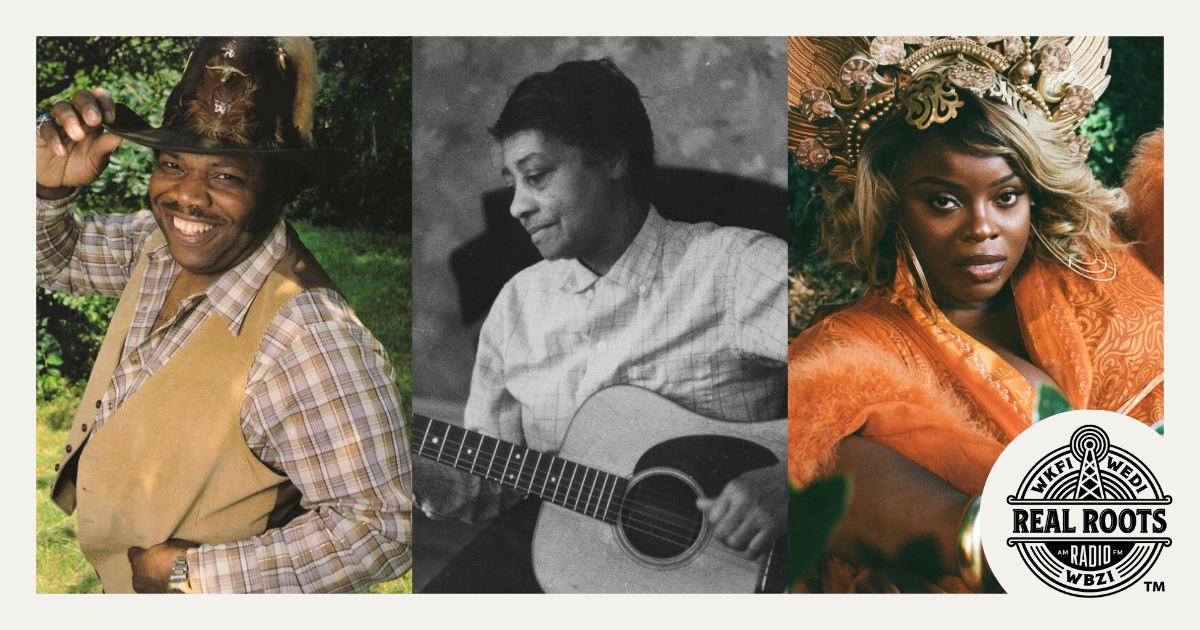
To celebrate Black History Month – and the vital contributions of Black, Afro-, and African American artists and musicians to American roots music – BGS, Good Country, and our friends at Real Roots Radio in southwestern Ohio have partnered once again. This time, we’ll be bringing you weekly collections of a variety of Black roots musicians who have been featured on Real Roots Radio’s airwaves. You can listen to Real Roots Radio online 24/7 or via their FREE app for smartphones or tablets. If you’re based in Ohio, tune in via 100.3 (Xenia, Dayton, Springfield), 106.7 (Wilmington), or 105.5 (Eaton).

American roots music – in any of its many forms – wouldn’t exist today without the culture, stories, skills, and experiences of Black folks. Each week throughout February, we’ll spotlight this simple yet profound fact by diving into the catalogs and careers of some of the most important figures in our genres. To kick us off, RRR host Daniel Mullins shares songs and stories of Big Al Downing, Yola, Cleve Francis, Charley Crockett, Elizabeth Cotten, Dom Flemons, and Lead Belly.

We’ll return each Friday through the end of the month to bring you even more music celebrating Black History and the songs and sounds we all hold dear. Plus, you can find a full playlist with more than 100 songs below from dozens and dozens of seminal artists, performers, songwriters, and instrumentalists from every corner of folk, country, bluegrass, old-time, blues, and beyond.

Black history is American roots music history; the two are inseparable. As we celebrate Black History Month and its legacy, we hope you’ll join us in holding up and appreciating the artists who make country, bluegrass, blues, folk, and Americana the incredible and impactful genres that they are today.

Big Al Downing (1940 – 2005)

Big Al Downing was an engaging entertainer whose winding career included forays into many genres, including country music. An Oklahoma boy, Downing played piano on Wanda Jackson’s signature rockabilly hit, “Let’s Have A Party,” before pursuing a solo career, finding some mainstream success, dabbling in R&B, and even scoring a Number 1 disco hit, “I’ll Be Holding On.”

However, Downing made history in country as one of the earliest Black artists to find success in the genre. Beginning in the late ’70s, he would have a string of fifteen singles hit the Billboard country charts over the next decade, three of which reached the Top 20. He was nominated by the Academy of Country Music for their Top New Male Vocalist award in 1980. Big Al would be a frequent guest on the Grand Ole Opry, Hee Haw, Nashville Now, and more.

Downing’s soulful singing on hardcore country songs like “Bring It On Home” and “Touch Me (I’ll Be Your Fool Once More)” endeared him to fans, while his story song “Mr. Jones” has remained beloved by country enthusiasts. His career spanned five different decades of country, rockabilly, and more, remaining active in the country music world until shortly before his passing in 2005 after a brief battle with leukemia. Downing is a member of the Oklahoma Music Hall of Fame and Rockabilly Music Hall of Fame, and his legacy is still remembered by longtime fans of country music.

Suggested Listening:
Mister Jones
Touch Me (I’ll Be Your Fool Once More)

Yola (b. 1983)

Yola is a soul, country, and roots powerhouse! Born in the United Kingdom, Yola’s voice is a force of nature – rich, soulful, and packed with emotion. She started as a songwriter and backing vocalist before stepping into the spotlight with her 2019 debut album, the GRAMMY-nominated Walk Through Fire! Featuring contributions from Vince Gill, Molly Tuttle, Charlie McCoy, Ronnie McCoury, and more, the project was produced by Dan Auerbach of The Black Keys, and quickly endeared her to roots music lovers everywhere. She even appeared as a guest vocalist with all-star group The Highwomen.

With her unique blend of country, rock, and soul, Yola shatters boundaries. In 2021, she dropped Stand for Myself, an album full of bold, genre-blending anthems that brought her more GRAMMY noms. She has even dabbled in acting as of late, appearing on Broadway in Hadestown and playing Sister Rosetta Tharpe in the hit blockbuster Elvis. Do yourself a favor and check out this bon a fide star in roots music.

Suggested Listening:
Whatever You Want
Hold On” (featuring Sheryl Crow, Brandi Carlile, & Natalie Hemby)

Cleve Francis (b. 1945)

Do you remember Cleve Francis? He grew up listening to Hank Williams in Louisiana as a child before making his first guitar out of window screen wire and a King Edwards Cigar Box on his way to becoming an inspiring country artist. Cleve isn’t just a singer – but he’s a songwriter, a dreamer, and a doctor? That’s right, before he hit the stage, Cleve was saving lives.

Dr. Cleve Francis was a practicing cardiologist before he pursued his passion for country music full-time in the late ’80s. Cleve brought a fresh voice to the genre in the 1990s with his smooth voice and heartfelt lyrics that resonated with country fans, resulting in four singles on the Billboard country charts. Cleve’s style of country earned him appearances on major stages like the Grand Ole Opry, The Today Show, and more.

Though he eventually returned to medicine, Francis left an enduring legacy, inspiring many Black country artists who have followed in his wake. He was instrumental in the curation of the Country Music Hall of Fame & Museum’s “From Where I Stand: The Black Experience in Country Music” exhibit while also helping found the Black Country Music Association in the mid ’90s.

In 2021, he was recognized with a Black Opry Icon Award, and his album Walkin’ is on display at the National Museum of African American History & Culture in Washington D.C., where he could still been seen frequently performing at the legendary Birchmere music club until his retirement in 2021.

Suggested Listening:
Love Light
You Do My Heart Good

Charley Crockett (b. 1984)

One of the most authentic voices in modern American roots music, Charley Crockett has a story that sounds borderline mythical. A descendant of Davy Crockett who grew up in Texas, Crockett spent his early years busking on street corners from New Orleans to Dallas to New York, learning the art of storytelling from life itself. His travels took him to California, Paris, Spain, and Morocco before returning to Texas and releasing his debut album in 2015. Crockett’s recording output has been impressive, frequently releasing multiple albums a year and balancing his records with heartfelt originals and a deep catalog traditional songs from the likes of Tom T. Hall, Hank Williams, Willie Nelson, George Jones, Johnny Paycheck and more.

The common denominator is Charley – his voice carries a raw, timeless quality that cuts straight to the heart. Now performing at the Ryman Auditorium and on Jimmy Kimmel Live!, Charley’s rise hasn’t gone unnoticed. He’s earned critical acclaim and has racked up accolades from the American Music Association and a GRAMMY nomination. With black, Cajun, Creole and Jewish heritage, Crockett’s unique take on country and American roots music is sure to speak to music lovers everywhere for years to come.

Suggested Listening:
Jukebox Charley
$10 Cowboy

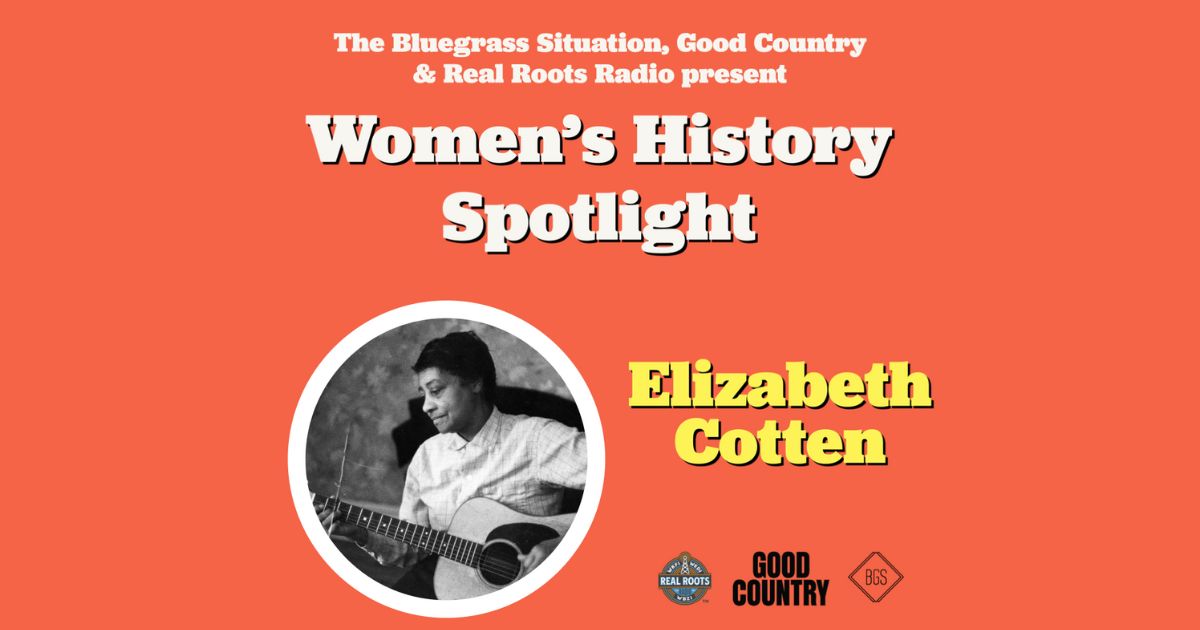
Elizabeth Cotten (1893 – 1987)

An underappreciated hero of American folk and blues, Elizabeth Cotten was born in 1893 in Chapel Hill, North Carolina. Growing up in a musical family, by the time she was 7 Elizabeth taught herself to play guitar left-handed. She flipped the guitar upside down, creating her own unique picking style, now known as “Cotten picking,” which featured alternating bass notes played with her fingers while her thumb played the melody.

Elizabeth wrote her iconic song, “Freight Train,” when she was just 12 years old. This classic has been recorded by Bob Dylan, Joan Baez, Tommy Emmanuel, Doc Watson, and dozens more artists across multiple genres. But her music remained largely unheard for decades as she spent much of her life working as a domestic housekeeper. It wasn’t until she reached her 60s, while working for the Seeger family – yes, that Seeger family – that her incredible talent received a proper platform. Working for a family that loved and appreciated music inspired Elizabeth to resume playing. With the Seegers’ encouragement, Elizabeth recorded her first album, Folksongs and Instrumentals with Guitar, in 1958, recorded at home by Mike Seeger, a member of the Bluegrass Music Hall of Fame.

Cotten went on to perform at major festivals thanks to the folk revival, w0n a GRAMMY at age 90, and inspired countless musicians before passing away in Syracuse, New York at the age of 94. Elizabeth Cotten was posthumously inducted into the Rock & Roll Hall of Fame in 2022.

Suggested Listening:
Shake Sugaree” [Live]
Oh Babe, It Ain’t No Lie

Dom Flemons (b. 1982)

Let’s shine a spotlight on a modern-day troubadour, the Grammy-winning musician, historian, and storyteller Dom Flemons, The American Songster. An avid folk music fan, Flemons was a busker in his home state of Arizona before moving cross country to North Carolina to help found the Carolina Chocolate Drops, a band that revived the nearly forgotten legacy of Black string band music.

Flemons has been a successful solo artist for the last decade-plus. He is a master of multiple instruments – banjo, bones, guitar, harmonica – you name it! His music blends old-time, folk, blues, jazz, and country, tracing the deep roots of African American contributions to American music. From the Grand Ole Opry to Carnegie Hall, Flemons brings history to life with every note.

His 2018 album, Black Cowboys, uncovered the often overlooked stories of African American pioneers in the West, earning critical acclaim and a GRAMMY nomination. Today, whether performing solo or collaborating with legends like Taj Mahal, Sam Bush, and Rhiannon Giddens, Flemons keeps the rich traditions of American roots music alive. In addition to educating audiences about the origins of roots music, Flemons creates great original music as well, truly embodying his moniker.

As The Boston Globe said, “most folk artists go by ‘singer-songwriter’ or simply ‘musician.’ But ‘American Songster’ speaks to a greater truth about the work Flemons, a multi-instrumentalist, has accomplished.” We couldn’t agree more.

Suggested Listening:
Steel Pony Blues
Nobody Wrote It Down

Lead Belly (1888 – 1949)

He was a man of legend, his voice as powerful as the chains that once bound him. Born Huddie Ledbetter in 1888, the world knows him as Lead Belly. Imprisoned and pardoned multiple times, Lead Belly carried his music from the prison yards of Louisiana to the streets of New York City.

Legend has it that his musical gift led to his release. His background makes his prison, chain gang, and work songs even more haunting, including “Midnight Special.” His original song, “Goodnight Irene,” has been recorded more than two hundred times, including versions by Ernest Tubb & Red Foley, Moon Mullican, Frank Sinatra, Jerry Reed, and Johnny Cash. It is viewed as a verified country standard.

“Duncan and Brady,” “In the Pines,” “Cotton Fields” – his songs told stories of hardship, freedom, and the American experience. Lead Belly’s music shaped folk, blues, rock, and country inspiring legends like Creedence Clearwater Revival, Bob Dylan, Robert Plant & Alison Krauss, Pete Seeger, Johnny Cash, The Johnson Mountain Boys, and Nirvana.

Lead Belly died in 1949, but his music lives on. His voice still echoes in every blues riff and folk song today. Lead Belly was posthumously inducted into the Rock & Roll Hall of Fame in 1988.

Suggested Listening:
Black Girl (In The Pines)
Irene (Goodnight Irene)


Want more Good Country? Sign up on Substack for our monthly email newsletter full of everything country.

Listen to Real Roots Radio online 24/7 or via their FREE app for smartphones or tablets.

Photo Credit: Big Al Downing via Team Entertainment Records; Elizabeth Cotten via Smithsonian Folkways Recordings; Yola by Valeria Rios.

Artist of the Month: Yasmin Williams

No one on earth plays the guitar like Yasmin Williams. When the BGS team was first introduced to her music – back a few years now, in 2017 or 2018, during our annual programming for our Shout & Shine diversity showcase – it was an objectively jaw-dropping discovery. We’ve covered many singular musicians, instrumentalists, and guitarists over the years on our site, but here was something completely and totally brand new. Then, in 2021, she wowed our BGS audience with her Shout & Shine livestream performance. From our staff to our followers, we were all hooked.

Immediately upon hearing Williams’ ethereal, otherworldly, and effortlessly charming guitar-centered compositions, it’s natural, reflexive even, to imagine how listeners may have first reacted to encountering Sister Rosetta Tharpe’s earth-stopping rock and roll, or Elizabeth Cotten’s unassuming backwards-and-upside-down guitar genius, or Jimi Hendrix’s showy shredding behind his head. There’s a jolt of electricity, a child-like wonder, and proper awe that each result from even the slightest encounter with Williams’ talents.

But, like those legends before her, this is not merely toxically masculine, performative, over-the-top “guitar culture” music. You can tell, from the first breath of tone from her instruments, that Williams is not now nor has ever been the guitarist trying to impress or outdo all of the AC/DC or Led Zeppelin rehearsers plucking through “Stairway to Heaven” at the local Guitar Center.

No, Williams’ approach to the instrument is totally brand new, too – and a remarkable breath of fresh air in a scene that is often derivative, competitive, exclusive, and rife with “Um, actually…” Instead of focusing her ambitions or goals entirely on the insular, inward-facing guitar world, Williams has demonstrated over two impeccable, critically-acclaimed albums – 2021’s Urban Driftwood and her first Nonesuch project, Acadia (out October 4) – that her community is far broader, richer, and truly incandescent.

Acadia builds on the rich and resplendent universe Williams built for Urban Driftwood – and has been cultivating for years, since her full length debut in 2018, Unwind. With a foundation centered on fingerstyle acoustic guitar with plenty of blues, bluegrass, flatpicking, and Americana infusions, Williams approaches the instrument as if a just-invented, novel machine; pedagogy, tradition, and technique are all present, but only ever in service of the melodies themselves – never as exercises in “correctness” or propriety. She’ll play with the guitar in her lap, tapping with both hands on the surface of the strings and fretboard. She’ll affix a kalimba to the face of the instrument and play both simultaneously. She quite literally turns her six-string (and her harp guitars, banjos, and more) on their ears, throwing all expectations and convention out the window.

There’s showmanship evident herein, of course, and a tinge of acrobatics, but these are merely knock-on effects and not the entire point. Instead, it seems Williams’ intention is to follow each and every tendril and tributary of her musical ideas to their natural conclusions, raising no barriers to herself in the process. Not even the barrier of the guitar itself. What even is a guitar, if you approach it from a unique perspective or through a fresh lens each time you pick it up? Williams shows us this common, everyday, century-spanning instrument can always find new sounds and styles.

Again, in contrast with “norms” in the guitar scene, Acadia is a testament to Williams’ community, as well. Her albums as yet never feel like guitar vanity projects, as the picker decidedly brings in so many facets of her musical and creative community to her music making. In just the first three singles from Acadia she taps an impressive array of featured artists, from Aoife O’Donovan to Darlingside to Allison de Groot & Tatiana Hargreaves. On prior releases, she’s recorded with the legendary Tommy Emmanuel, Taryn Wood, Dobrotto, and many more. Her approach to the instrument is singular, but it’s never solitary. Where other guitarists might prefer to leverage the instrument and their virtuosity to center themselves, Williams seems determined to do the opposite. The results are, as always, stunning.

Fingerstyle acoustic guitar is engaging and lovely music to begin with, but given her particular touch, her compositional voice, and her community collaborations, Yasmin Williams is showing roots music fans everywhere that even our most familiar instruments can be wellsprings of originality, inspiration, and joy. Acadia is a masterwork, and a perfect album to spotlight as we name Yasmin Williams our Artist of the Month. Enjoy our Essentials Playlist below to kick off the month and read our exclusive interview feature here. And, read an excellent op-ed on Williams written by buzzworthy viral guitarist and improviser Jackie Venson here. Plus, we’ll be dipping back into the BGS archives for all things Yasmin throughout October.


Photo Credit: Ebru Yildiz

These Berklee Students Helped Create Ensembles for Women and Non-Binary Folks

“Bluegrass music is a truly American artform. It reflects the culture and the time in which it’s created, and as with many traditional artforms, a preservationist stance is held on a pedestal. Bluegrass music’s history is very gendered, and when this happens, the music can’t reach its full potential.”

My teacher Laura Orshaw told me this.

There has been no shortage of amazing women bluegrass musicians to come out of the roots department at Berklee College of Music. Gillian Welch, Sierra Hull, Molly Tuttle, Bronwyn Keith-Hynes, and on and on. I’m going into my senior year at Berklee this fall as a mandolin principle, and one of the reasons I went to Berklee was how inspired I was by these women and their music.

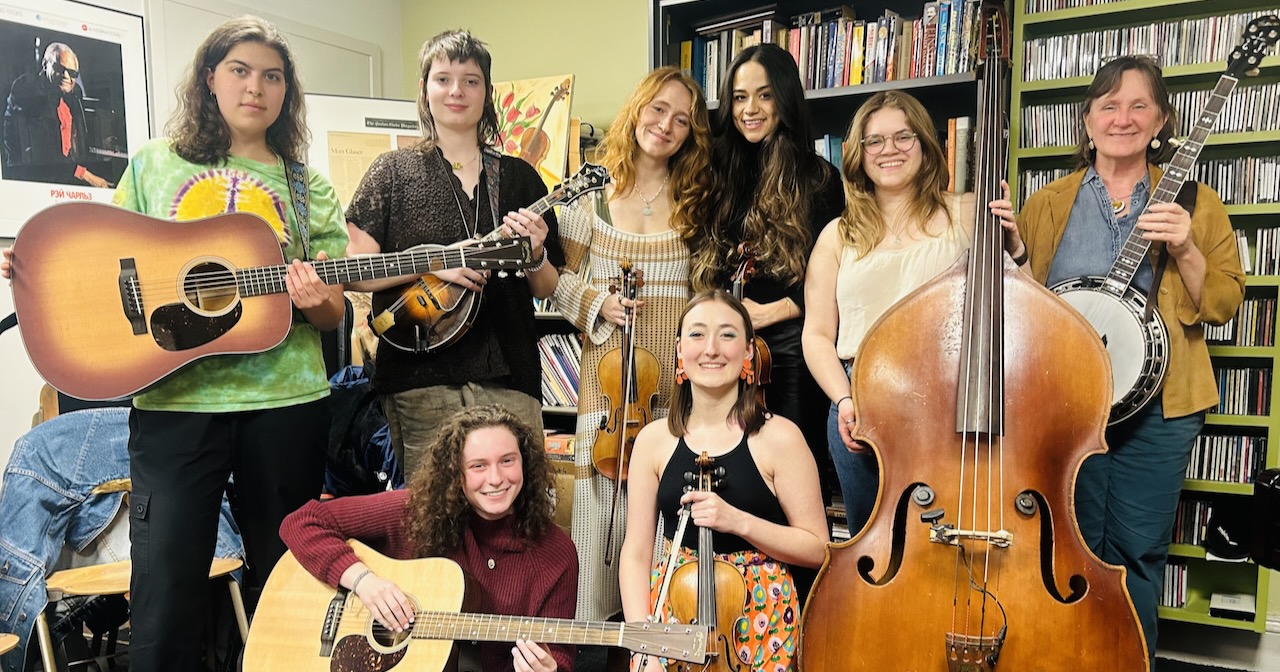
Towards the end of my sophomore year, my friend Katelynn Casper – a brilliant bluegrass fiddler – came up with an idea. She wanted to start a bluegrass ensemble of all women and non-binary folks. Katelynn approached Matt Glaser, the artistic director of the American Roots Music Program, about helping us create a class in which we would study and perform in a group. Excited by the prospect, he brought in Laura Orshaw (the Po’ Ramblin’ Boys) to be our mentor. In the past few years, there had been a strong influx of women who came to Berklee and wanted to play roots music, so it didn’t take us long to find people who wanted to join the project.

The ensemble started in October of 2023 with about 12 members, enough for us to break into two ensembles. I got to be in both groups, in one as mandolinist and the other as bassist. Our focus between both groups was to play music mostly written by women who we looked up to and were maybe overlooked.

Through the course of our year together, we moved through a catalog of songs and tunes written by our heroes and then delved into original material. We wrote songs and tunes together and on our own and fleshed them out as a band. It was an empowering experience to be a part of and it was beautiful to watch my friends explore a new kind of confidence in their music.

This past April, the American Roots Music Program sent all of us down to Washington, D.C. In June of 2022, the Smithsonian Center for Folklife and Cultural Heritage opened up an exhibit entitled Music HerStory: Women and Music of Social Change. Laura had caught wind of the exhibit and wanted us to visit, so we could witness its content and impact. The exhibit explored many women who were significantly overlooked in music, but yet the world would have been drastically different had their music not been a part of it.

We heard and read stories of when Loretta Lynn put out “The Pill” and how much of an uproar it caused; stories of how Elizabeth Cotten had to put her music on hold to raise her children and didn’t come back to it until she was in her 60s, putting out “Freight Train” and “Oh Babe It Ain’t No Lie” and still was not given much credit.

Walking through the exhibit, I couldn’t help but think about all the different musical influences I have and how so many of those influences were inspired by these women, but how that was never really talked about.

On the same trip, we also got the privilege of going to Smithsonian Folkways Recordings and learning about some of the history of their record label and how it came to be. When we were checking it out, both ensemble bands did a little recording in the archives to commemorate the trip. Playing our originals and covers written by powerful women was an incredible experience. We were surrounded by original recordings and records that made bluegrass and old-time what it is now and some of the music that brought each of us to the genres to begin with.

While we were down in D.C., we also got the chance to hang out with Kimber Ludiker (fiddle) and Avril Smith (guitar), two members of Della Mae. In both groups, the inspiration from Della Mae was so apparent – we all learned many of their songs. Getting to stand up and play their songs with them was a mind-blowing experience.

Taking part in this project has been such an inspiring experience. As a kid who grew up in the bluegrass and old-time world, there weren’t always a lot of women to play music with, so to get the opportunity to dedicate time each week to just sit down with a group of deeply passionate women and non-binary folks who are also such remarkable roots musicians was an indescribably moving experience.

A common conversation amongst us during that time was how freeing and comfortable it felt to play music in a setting like this. Whether or not you think about it, music as a whole is an intensely male dominated world – and bluegrass isn’t any different.

“Here’s a question that crossed our minds every week,” Laura said. “‘What would bluegrass be like without patriarchy or bias?’ The answer comes through music, not essays, and this project certainly chipped away at our goal.”

Being in this ensemble, I learned a lot about myself. Being surrounded by a community of women and non-binary folks playing music taught me a lot about my confidence as both a person and a musician. Being in that environment gave me an amazing place to explore.

“When Matt [Glaser] asked me to be the curator of this project, I couldn’t have guessed how impactful and enlightening it would be for me. Working in an all-women and non-binary band filled a void for all of us – creatively, academically, and socially,” Laura continued. “Students shared experiences of the not-so-glamorous parts of working in a male-dominated field. They studied the music and songs of their heroes, who sometimes got overlooked in other classes and ensembles. They wrote songs, arranged music, and tried on different leadership roles in the band.

“But most of all, they encouraged and inspired each other to be better musicians. The mutual dedication and enthusiasm were palpable in every rehearsal.”

It’s been an experience of a lifetime to learn the music I love with a group of women who want to push the boundaries of the genre. To sit with a group of people who understand the intricacies of being a woman or gender non-confirming person playing bluegrass – or even music in general – was a very comforting experience. We all grew so much as people and musicians.


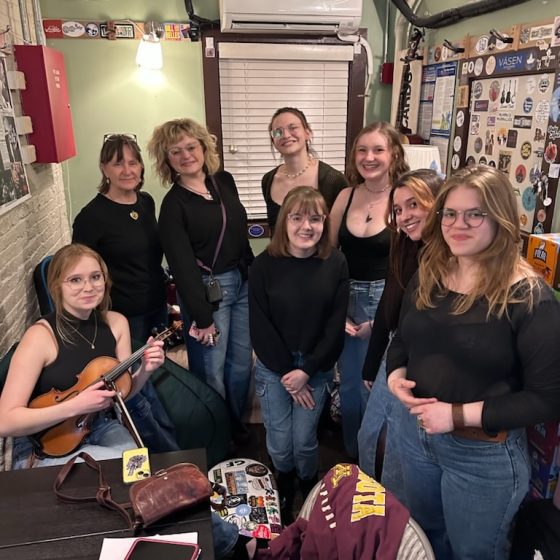
Photos courtesy of Emma Turoff. Lead image: Ensemble, No Man’s Land. Inset image: Ensemble, Ain’t That Just Like A Man.

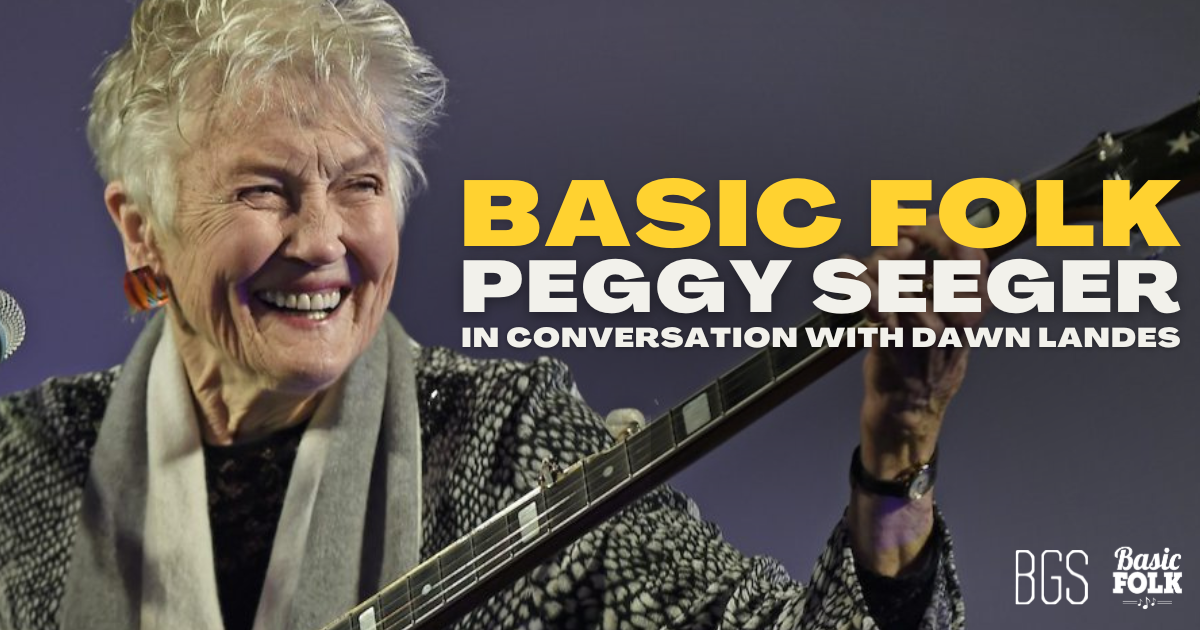
Basic Folk: Peggy Seeger in Conversation with Dawn Landes

(Editor’s note: For this episode, we invited our friend Dawn Landes to interview Peggy Seeger, the perfect choice to interview this feminist folk icon. Landes also recently joined us on a special episode with Aoife O’Donovan to discuss their new feminist-themed albums. We’re thrilled to welcome Dawn back as guest host!)

I can’t believe it took me 40 years to come across Peggy Seeger’s music. I’m a little mad about this honestly, and have been trying to make up for lost time by diving deep into her songs and her story. I’ve been a fan of her older brother, Pete Seeger, since I was a kid, but didn’t realize the depth of talent and reach in the Seeger family. They are truly folk royalty! Peggy Seeger is the daughter of a celebrated modernist composer and a musicologist who grew up with people like Alan Lomax and Elizabeth Cotten hanging out in her family home. At 89 years old, she’s released 24 solo recordings and been a part of over 100 more. She’s built her career on wit, incredible musicianship, and unflappable activism.

LISTEN: APPLE • SPOTIFY • AMAZON • MP3

On this episode of Basic Folk, I am honored to talk with Seeger about her beginnings in feminism, her decades-long partnership with Scottish singer Ewan MacColl, the creation of the BBC Radio Ballads, the importance of hope, and her dream tattoos! She even sang us a song from memory that I doubt she had sung in many years. Peggy is a repository of traditional songs and continues to tour and play music with her family, as she’s done throughout her whole life. Although she claims that she doesn’t write anthems, Seeger’s songs have become synonymous with women’s rights and environmental activism. Coming from a woman who once sang her defense in a courtroom, we should all take Peggy’s advice: “Something wrong? Make a song!” – Dawn Landes


Photo Credit: Laura Page

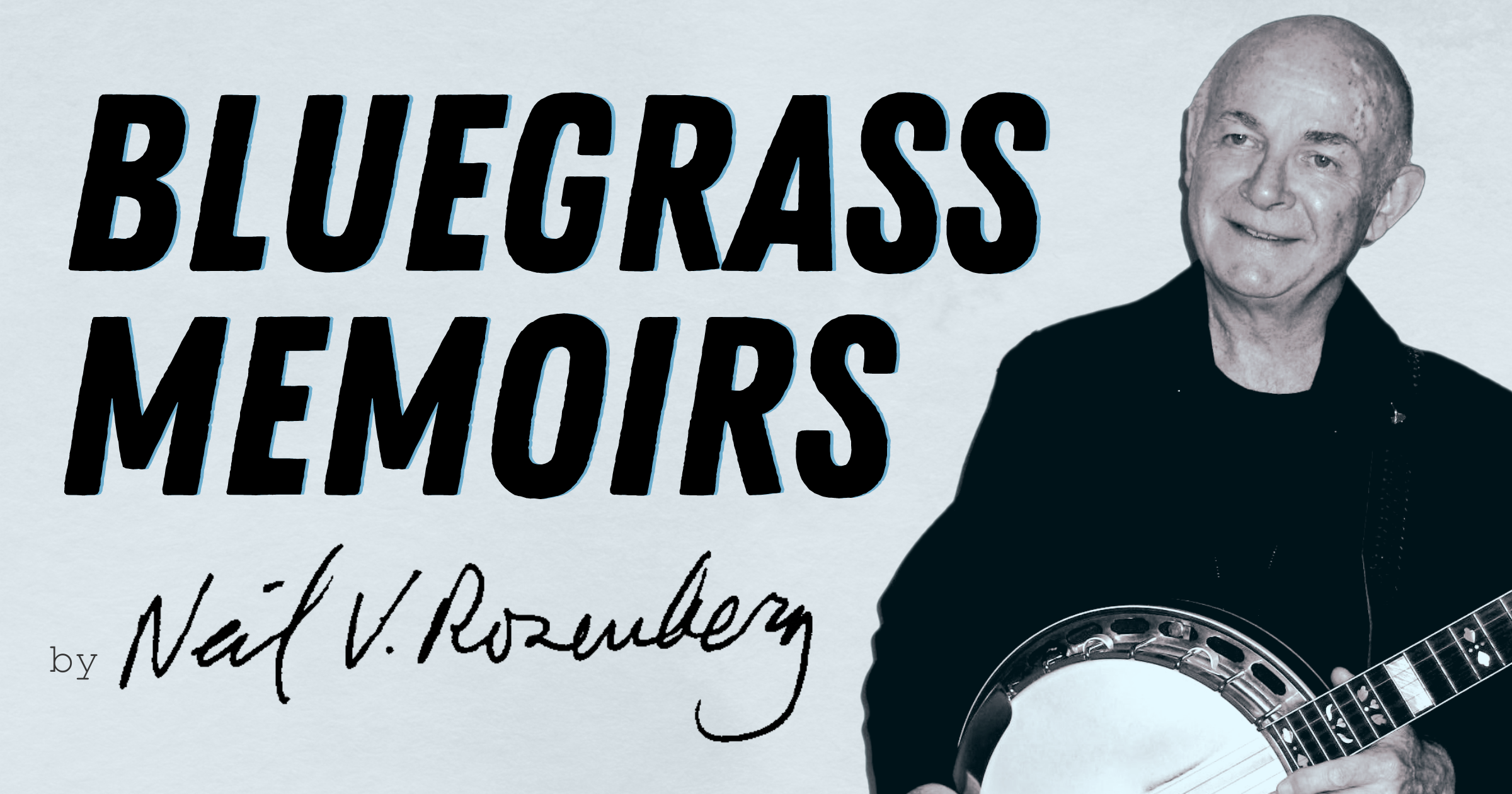
Bluegrass Memoirs: The Earl Scruggs Revue in 1975

Soon after Earl Scruggs and Lester Flatt ended their partnership and their band The Foggy Mountain Boys in 1969, Earl created The Earl Scruggs Revue with his sons. They recorded for a major label, Columbia, and toured regularly until 1980, disbanding in 1982. This is the story of how I came to see, hear and take extensive notes about their 1975 concert at the University of Maine.

In 1969 I was living in St. John’s, Newfoundland, working at Memorial University’s folklore department where I taught a yearly course, Introduction to Folk Song. I knew that bluegrass drew from folk traditions in the U.S. Southeast, for I had been playing bluegrass and writing about it for a decade. But I could tell my students little about the Canadian milieu. So, in the early ‘70s I began research in Canada’s Maritime provinces of Nova Scotia, Prince Edward Island, and New Brunswick

In August 1974, I moved to New Brunswick for a year’s sabbatical. My research project was a study of regional and local relationships between country music and folk music traditions. I did extensive fieldwork – interviews and documenting events, collecting music.

That fall, I met a singer-collector of country records and song folios, a perfect example of the kind of folk-country connection I was studying. I recorded several hours of his songs and began contemplating publishing them in an album.

I thought at once of Rounder, a new record company that had been publishing innovative roots albums. I’d met the Rounders – Ken Irwin, Bill Nowlin and Marian Leighton, a music collective – at an American Folklore Society meeting. They knew me as a writer about and collector of bluegrass.

Early in the new year I arranged to visit them. In February 1975, I set out in the family pickup with my ten-year-old daughter Lisa from our farmhouse in Pleasant Villa, New Brunswick to Brooksville, Maine, where we visited relatives. Lisa stayed with them while I drove further south to Somerville, Massachusetts, to visit the Rounders.

David Menconi, in his new book, Oh, Didn’t They Ramble (U of NC Press), describes well the scene at the Rounder collective’s big old Somerville house, with their newly flourishing roots music record company. We discussed projects, they took me down to the basement to see their mail order records inventory, and I came back to Brooksville with a load of LPs and lots of news about the contemporary bluegrass world.

Brooksville is a little over an hour away from Orono, site of the University of Maine, where my friend, Edward D. “Sandy” Ives, lived. Sandy was a great writer, a folklorist who’d studied and published books about 19th century singer-songmakers in Maine and the Maritimes. I was looking forward to discussing my ongoing research with him. After I returned from visiting the Rounders, we drove up to Orono to see Sandy and his wife, Bobby.

When we got to Orono, a young friend and former student of mine at Memorial, Lisa Feldman, was staying with the Ives. It was she who alerted us about the Earl Scruggs Revue concert and went along with us to it.

In St. John’s, I regularly bought new bluegrass albums by mail order from County Sales. I don’t recall paying much attention to the Revue then. County didn’t carry their albums.

Revue albums were not easy to find in Newfoundland. Working on a Flatt & Scruggs discography and, admiring Scruggs’ banjo artistry, I wanted to hear his contemporary work. I bought all the Revue albums I could find. By the fall of 1974, when I moved to New Brunswick for the sabbatical, I’d gotten seven.

Those records were in storage back in Newfoundland for the year, but I’d brought my stereo set along and by December I’d found a new Revue album, Rocking Across the Country (Columbia KC 32943). There was nice Dobro on it by Josh Graves and one great instrumental composed by Earl, “Silver Eagle” – named, presumably, for the band’s bus.

During that year I was doing field research at music events and venues – bars, jamborees, concerts, jams – and had developed a system of documenting them. I carried a 3″ by 5″ notebook (spiral binding, ruled pages) and took notes. This was with me all the time and so it just seemed like an easy thing to take notes as usual at this concert.

What follows are my notes from that February 7, 1975, concert, written up from my notebook when I returned to Pleasant Villa the following week.

Friday, February 7, 1975
Orono, Maine
Report on Earl Scruggs Revue Concert at the University of Maine, Orono.

Tickets were $3.50. I went with Sandy Ives, and we were joined at the concert by Lisa Feldman and by [Sandy’s wife] Bobby and [their daughter] Sarah Ives and [my daughter] Lisa R., who had all gone to see a Robin Hood movie. The concert was sponsored by the student union and represented a slight departure from previous concerts of this type in that instead of bringing high-powered “name” outfits on which a lot of money had been lost, they were now trying slightly less expensive acts. The concert committee was dominated by frat boys who didn’t know about music, according to Lisa [F.].

Site of the event was the basketball gym. Folding chairs were placed on the court, and wooden bleachers were placed around the side (these might have been permanent, but seemed moveable… small point). There were balcony seats on both sides and at one end, the end over the doors through which we entered. At the other end a stage was set up. Dominated by big columns and horns on either side – your typical rock concert setup. Sandy and I took seats on the left side of the bleachers (as you face the stage), about three rows up and we were about 2/3 to 3/4 of the way back from the stage toward the entry doors. Directly ahead of us in the middle of the floor was a raised platform on which the controls for the sound were set, along with a chair or two for the operator(s?). Behind this, higher and close to the back, was another platform with the lights. During the concert the colors were constantly being changed and moved about from tune to tune by a light man who must have known something about the Scruggs show in advance.

The audience consisted of college students almost exclusively. I didn’t see any old-time Martha White fans or country music types. Dress was Levi’s and hippie mufti – knit caps, ragged but interesting coats, vests, long dresses, patches, etc. There was a lot of smoking going on and some drinking. Before the show a long-haired young man who represented the powers that be got up and told the audience that there was no smoking and no drinking and that if they were caught, they would be ejected from the show by the campus police. In addition he said that, if you must smoke, then don’t get caught. But also, he said, please don’t put out your butts on the floor of the basketball court – a lot were last time, and the University is threatening to not let them have concerts if this continues. Burden of the speech: Here are the ground rules, don’t get caught, play it cool.

The campus police were cruising up and down the aisles dressed in dark blue uniforms with dark blue shirts and black ties with dark blue Stetsons. Something like Civil War Union Army officers in movies. And they were looking very serious and hawk-like.

The warm-up act was introduced, as a group from Boston, “Beckett.” The group consisted of Phil B. (missed his last name, [Buller]), who came on playing a D28 guitar and a harmonica, Steve Delaney, playing an electric bass, and Jaime Michaels, who played a D18 Martin guitar and did the emcee and lead singing in the first few numbers. Later they all switched around, with each doing some lead singing and some emceeing. I took notes in the darkened auditorium with a fancy movie critic’s pen that [then wife] Ann had given me — lights up in the dark, illuminating one’s pad. As it were.

The first song was “CLEAR BLUE SKY.” There were a few catcalls from the balcony and a rather tentative feeling from the audience. A whiff of authentic marijuana smoke drifted my way during this (and subsequent songs), and I could see people lighting up in various places. Later, the folks next to me surreptitiously passed a bottle (beer, I think) around. At the end of the first song, the Beckett emcee made a sly crack about “Maine Mounties” and from there the show built — they had the audience with them.

Next song was “SOMETHING NEW.” As all this was going on, the cops were cruising up and down the aisles, occasionally throwing people out, but generally arriving on the scene after the cigarette had been extinguished. They were on the lookout for tell-tale lights, and one time one went by us while I was jotting down a note with my fancy pen. He gave me a hard look and some of the people around me had a good giggle about that.

Next song, [“WE ARE FREE”]. These guys weren’t musically bad, but I could not really get into their music. The harmony singing was kind of Crosby/Stills/Nash and actually a bit weak; the instrumental aspect of it was bland. A note here says “harelip,” but when you wait ten days before writing up your notes you forget the jokes, I guess. Next one of the boys took up an Ovation guitar – this was Phil B., and the song was “LAST TUESDAY MORNING.” Then Jaimie mentioned that they were from Virginia and that they considered it an honor to be appearing with the Earl Scruggs Revue. Then they did “TENNESSEE.” Next, “I’LL TRY IF YOU’LL TRY.” Most of their songs were their own compositions, I guess. I didn’t recognize any of the above; the names in brackets are ones they didn’t announce that I guessed at from the words. Now Phil took up the Ovation again Steve took an electric guitar and they did a song they had written while in Pittsburgh, [“STOLE AWAY”]. Using the same instrumentation, which, incidentally, sounded better than the acoustics – that is, the electric came over with much more tone – they did “PERFECT HONEY.”

Now another instrument switch with Phil taking up an old Gibson J50 guitar and Steve going back to the bass. The song was introduced as a “folk song” for reasons which eluded me at the time. It was “SEARCHING,” but not the Coasters’ smash hit. With the same instrumentation, they then launched into a song written either by or about some friends in Boston, “COUNTY LINE.” Then, as their final tune, a song they introduced as being by Joni Mitchell and needing no introduction (?). It was well received by the audience, and they got an encore.

They came on and did a song which they introduced as a real old one by that old bluesman Eric Von Schmidt (time flies – I remember Rolf Cahn telling me in 1959 that he’d been picking with a really good kid in Boston who even did some slide guitar, a kid named Rick Von Schmidt). Song was “AIN’T NOBODY’S BUSINESS BUT YOU OWN,” and they did it well. Kids in the front of the audience got up and started waving their hands in the air, literally surrendering to the music. For the second encore, it was another Von Schmidt tune, “GRIZZLY BEAR (SOLID GONE).”

Another intermission, punctuated by further entreaties by the same fellow. By this point, the cops were less in evidence although during the second half they did eject several people sitting around me.

Enter the Earl Scruggs Revue, who plug in and pick away at once on “NASHVILLE SKYLINE RAG.” Across the front of the stage are three microphones; at my left stands Stevie Scruggs, who plays rhythm guitar (a Gallagher) most of the evening, except for one banjo tune. Next to him is Randy, who is bent over his Gallagher guitar, doing the lead work. Characteristically I guess you never see his face when he’s picking, he’s looking at the fingers and anyhow is surrounded by hair. Later, in various numbers which I didn’t note, he plays a bright red Gibson electric with twin cutouts and a thin (hollow?) body, which has a very mellow tone.

Next to him, in stage center, is Earl. Earl’s Mastertone is electrified with some sort of pickup inside, a Barkus-Berry or FRAP of some kind I guess. This surprised me, as did the fact that he was wearing the instrument much lower than when he played with Flatt. He was not bopping around as much as the boys (who, in turn, were not bopping around as much as many or most rock groups), but he was looking very relaxed, had the old smile of yore, and did move when he played more than I remember from the Martha White days. On the right and, rather standing back was poker-faced Gary, who played bass and did the lead singing. When there was any part singing done, Earl and Randy took the center mic, Steve the left-hand one, and, behind them Jody Maphis took his vocal parts on a separate mike over the drums. To my right behind and to the right of Gary, was a piano where Jack Lee the pianist sat. This is the same guy on the cover of the Rockin’ Across the Country album. [This is not correct. The guy on the cover of Rockin’ is Shane Keister, who is listed on the album cover as “keyboard instruments.”]

My first impression was one of tightness, in the sense that the band was really together and tight. And although I can’t say I like Earl’s banjo sound as well with the volts surging through it, it was sounding like a banjo and Earl did get quite a few tonal nuances from it without the visible aid of a tone control. Randy was as good as the recordings led me to expect, however, he frequently seemed to be “grandstanding” it, by playing freak-out type rock licks way up the neck which were spectacular and, effective in terms of inciting the audience, but which were as far as I was concerned not as nice musically as the well thought out stuff he did or does on record. So I was a bit disappointed in Randy.

My reaction to Earl was just the opposite. He has sounded a bit stiff and mechanical on the records I have heard (and I got ‘em all, Jack), but tonight he was nicely in the groove and seemed to have some very interesting new ideas, especially rhythmic variations, which I hadn’t heard before. He really seemed to be enjoying himself, too. After this tune, the members were introduced and they went right into “I SHALL BE RELEASED,” following which, Earl introduced the next song as an old “shouting type number,” “PAUL AND SILAS.”

Gary’s singing is o.k., it fits the music and sells the songs to the rock programmed audience. Doesn’t bother me, doesn’t excite me; seems to be better in person than on record, and better on recent record than on older records. Earl next says this is an old number he used to play at square dances back when they only had one instrument, and he says, “We’ll show you what it was like to do it alone and then we’ll show you why I was so glad when someone else came by with their instruments to help me out.” He doesn’t announce it, but it’s “SALLY GOODIN.” Intro and arrangement are as on the Kansas State album. They really get rolling (and rocking) on this one, with Earl and Randy engaging in some nice banjo-guitar call-response stuff. The audience responds here as it does again and again later on to the faster tunes, by standing up and waving their hands, shouting, etc. Following this, Earl mentions the Kansas State album by saying that the next tune is on it, an old Jimmie Rodgers tune, “T FOR TEXAS.” Next, Randy is to pick a fiddle tune on the guitar, and it turns out to be “BLACK MOUNTAIN BLUES.”

The next tune, an instrumental, was a [Blues in F] and then, coming without an announcement was “MOST LIKELY YOU GO YOUR WAY (AND I’LL GO MINE),” which has a nice arrangement with some good banjo work by Earl. The next song is introduced by Gary as one which dad wrote about the place in North Carolina where he grew up, “FLINT HILL SPECIAL.” Gary takes a harmonica break on this one.

Then, a novelty item — Randy and Jody play a tune written by Elizabeth Cotten (Earl is talking – I was gassed that he gave the tune proper credit, this really shows the kind of considerate and thoughtful person I like to think he is), on one guitar! Here Jody gets up front, from behind his drums, and he & Randy stand near the center of the stage and Randy does the right hand (the guitar, a Gallagher is hung from around his neck) and Jody does the left. Then, while Jody does the simple left hand, Randy does some fancy up the neck left hand stuff too, making it into a very interesting and rather complex piece of music. They also gag it up a bit, swinging the guitar back and forth at the end, in time to a leg-swinging rock dance step thing. Nice job, boys. “FREIGHT TRAIN” was the tune, of course.

Now one of the boys (Gary?) introduces Earl doing an old Carter Family tune on the guitar. This is “YOU ARE MY FLOWER,” which Gary sings and my impression was that the sound not as nice and delicate as on the recordings of that that Earl did a few years back. Next it’s Stevie’s turn – he does “EARL’S BREAKDOWN” on Earl’s banjo and it’s very hard to hear, giving me the impression that he hasn’t mastered the tune that well or that in any case hasn’t worked out tone production and control on the electrified instrument the way his father has. The next tune I noted only as [“FATHER TOLD ME”] and I’m at a loss to identify it from their recordings. Then, of course, the song which “Daddy wrote for a television series,” “THE BALLAD OF JED CLAMPETT” done as an instrumental. Followed by Randy’s guitar version of “ORANGE BLOSSOM SPECIAL,” which is a crowd rouser/etc.

Next comes Gary’s interesting song “EVERYBODY WANTS TO GO TO HEAVEN (NOBODY WANTS TO DIE),” which features in this performance a slide banjo sequence by Earl, in which he’s picking along, then takes his left hand off the fingerboard, reaching into his pocket (I think, what?!) and pulling out a slide and doing a couple bars of that kinda stuff. Grandstanding, but fun, and the audience can’t miss it. “STEP IT UP AND GO” is next and then “one that Dad wrote in 1949 and in 1968 they used it for the theme to a movie called Bonnie and Clyde,” “FOGGY MOUNTAIN BREAKDOWN,”
which is the final number and leaves ‘em screaming for more so they do: “CAROLINA BOOGIE,” which has some nice call-response parts and leads to a second encore in which they do “BUGLE CALL RAG,” “LITTLE MAGGIE” (bless her soul).

The audience wants more but the lights are turned on.

(Editor’s Note: Neil Rosenberg’s Bluegrass Memoirs on the Earl Scruggs Revue will be continued.)


Author’s Note: For a contrasting review see Hub Nitchie, “Pull the Plug, Earl” in Banjo Newsletter II:6 (April 1975), p. 13.

Neil V. Rosenberg is an author, scholar, historian, banjo player, Bluegrass Music Hall of Fame inductee, and co-chair of the IBMA Foundation’s Arnold Shultz Fund.

Photo of Rosenberg by Terri Thomson Rosenberg. 

Edited by Justin Hiltner.

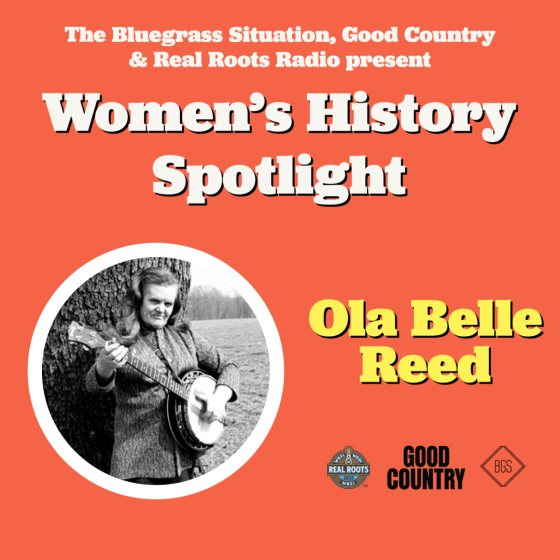
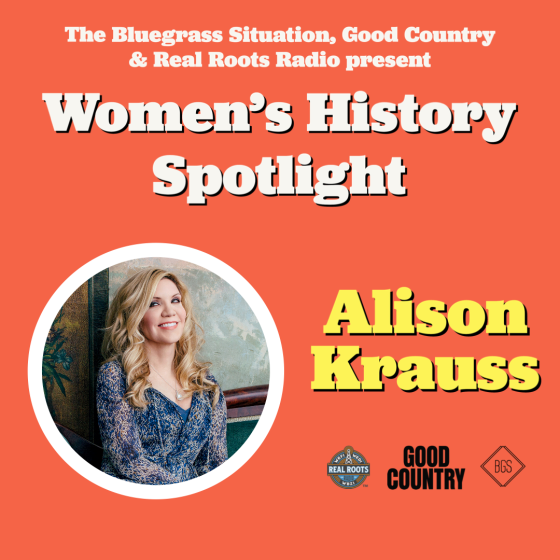
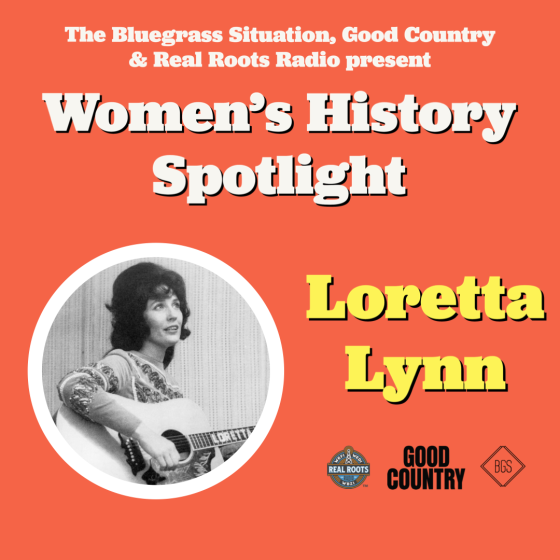
Women’s History Spotlight: Ola Belle Reed, Loretta Lynn, and More

Each year, March is Women’s History Month, and BGS, Good Country, and Real Roots Radio partnered all last month to highlight a variety of our favorite women in country, bluegrass, and roots music with our Women’s History Spotlight.

Each weekday in March at 11AM Eastern (8AM Pacific) on Real Roots Radio, host Daniel Mullins has been celebrating a powerful woman in roots music during the Women’s History Spotlight segment of The Daniel Mullins Midday Music Spectacular. You can listen to Real Roots Radio online 24/7 or via their FREE app for smartphones or tablets.

Then, each Friday we’ve hosted a recap here on BGS featuring the artists highlighted throughout the previous week. No list is comprehensive, but we hope to feature some familiar favorites as well as some trailblazers whose music and impact might not be as familiar to you.

Let’s look back at March and the vibrant history of women in roots music with our final edition of our Women’s History Spotlight, featuring Elizabeth Cotten, Patty Loveless, Ola Belle Reed, Alison Krauss, and Loretta Lynn.

Elizabeth Cotten

Born in 1893, this North Carolina native had a profound impact on American roots music. While she learned how to play the guitar as a child, and even then began writing songs, she shelved her musical dreams and became a domestic worker, but fate had other plans for Elizabeth Cotten. Decades later (in her sixties), she became a housekeeper for the Seeger family following a chance encounter at a department store. The Seegers, of course, are known through roots music circles for the family’s reputation as talented musicians and respected musicologists, featuring Mike Seeger of the Bluegrass Music Hall of Fame, Peggy Seeger, their half-brother Pete Seeger, and more. With the family’s love for music, Elizabeth dusted off her guitar, which she hadn’t touched in decades.

The Seeger family was blown away by Elizabeth’s talent. She had a unique approach to the instrument, due to her being left-handed she would play the instrument upside-down, resulting in the strings being inverted, and allowing her to play the melody with her thumb and the bass lines with her fingers. Additionally, her signature style including some unique alternating bass lines, a technique which is now referred to as “Cotten-style.” Mike Seeger would record Elizabeth for Smithsonian Folkways, introducing her music to the world, including her original composition, “Freight Train,” which has been covered countless times, including by Bob Dylan, Joan Baez, Mac Wiseman, Jim & Jesse, Doc Watson, and more! Other hits of Elizabeth’s include “Shake Suagree” and “Oh Babe It Ain’t No Lie,” which have been recorded numerous times throughout roots music. With the popularity of the Folk Revival, Elizabeth would perform with acts such as Muddy Waters and Mississippi John Hurt, and would eventually win a Grammy in 1984, before passing away at the age of 94 in 1987.


Patty Loveless

The pride of Elkhorn City, Kentucky and a 2023 inductee into the Country Music Hall of Fame, Patty Loveless was a leader of country music’s new traditionalist movement of the ’80s and ’90s, which also saw many successes for fellow Kentuckians Ricky Skaggs, Dwight Yoakam, The Judds, and Keith Whitley. The daughter of a coal miner, Patty’s neo-traditional sound was mixed with rock and roll attitude and plenty of mountain soul. Over 40 of her singles reached the Billboard Country Singles charts, including “On Down The Line,” “Timber, I’m Falling In Love,” “I’m That Kind of Girl,” “Blame It On Your Heart,” “Here I Am,” and dozens of others.

Like many country artists (especially women), Patty’s commercial success declined at a time when the artistic quality of her music did not. Her stunning rendition of Shawn Camp’s “The Grandpa That I Know” from On Your Way Home moved my father to tears for years, and I know that he was not alone in that. For many, her pair of Mountain Soul albums are still essential listening. On these projects, she celebrates her Kentucky roots with bluegrass-flavored albums littered with special guests including Earl Scruggs, Del McCoury, Travis Tritt, Ricky Skaggs, and more. Patty’s six minute-plus interpretation of the Darrell Scott-penned hit, “You’ll Never Leave Harlan Alive,” has haunted listeners for over 20 years. Even if it never tickled the Billboard Country Singles chart, there’s a reason Chris Stapleton recruited Loveless to perform the anthem with him during the 2022 CMA Awards — because it still showcases her mountain soul at its finest.


Ola Belle Reed

Picking up the clawhammer banjo as a youngster, Ola Belle Reed brought the music she heard growing up in Grassy Creek, North Carolina with her when her family migrated to the Maryland-Delaware-Pennsylvania area. Ola Belle Reed would entertain Appalachian migrants in the region with various bands, winning them over with her powerful mountain music. (She even turned down an offer to join Roy Acuff’s Smoky Mountain Boys!) The region’s Appalachian population supported Ola Belle, founding a few of the region’s more popular music parks over the ensuing decades, including New River Ranch in Rising Sun, Maryland and Sunset Park in West Grove, Pennsylvania.

Ola Belle Reed would find a new audience on Wheeling, West Virginia’s WWVA in the 1960s. In addition to presenting Appalachian music to new audiences, her legacy includes many original songs that sound as old as the hills. Songs like “High On A Mountain,” “I’ve Endured,” and “You Led Me To The Wrong” have been recorded by Del McCoury, Marty Stuart, Tim O’Brien, Robert Plant & Alison Krauss, Jason Carter, and more! Ola Belle Reed suffered a stroke in 1987. The following year, she became the first woman to be recognized with a Distinguished Achievement Award by the International Bluegrass Music Association. She passed away in 2002.


Alison Krauss

One of the most Grammy-awarded artists of all time (27 trophies and counting), Alison Krauss’s angelic voice has taken bluegrass to new heights, while she has become one of the most transcendent vocalists of her generation, branching into country, Americana, adult contemporary, rock, and more. A member of the Grand Ole Opry (the historic radio program’s youngest cast member at the time of her membership) and the Bluegrass Music Hall of Fame (currently the youngest Hall of Famer), Alison was a bit of a violin prodigy as a youngster, becoming enamored with bluegrass when she was exposed to bands like J.D. Crowe & The New South and The Bluegrass Album Band under the tutelage of John Pennell.

She recorded her debut album for Rounder Records when she was just a teenager and by the time she reached adulthood, she blossomed into a full-blown roots music star. The success of her solo albums and records with Union Station returned bluegrass to mainstream country circles at a time when it was desperately needed, providing a shot in the arm for the genre and introducing legions of new fans to the music. Krauss joins names like Flatt & Scruggs and The Osborne Brothers as some of the handful of artists to take bluegrass into the mainstream consciousness. Her ethereal voice has also resulted in highly touted collaborations with Robert Plant, James Taylor, Kenny Rogers, Brad Paisley, Shenandoah, Don Williams, and more.


Loretta Lynn

Country music’s most awarded woman artist, Loretta Lynn completely broke the mold. Nashville had had “girl singers” before, and there had even been female artists singing songs about women’s issues, but often they had been written by men (a la “It Wasn’t God Who Made Honky Tonk Angels.”) To have a woman artist singing songs about women’s issues written by a woman was absolutely groundbreaking, and frankly, it intimidated many men in the industry. While now beloved country standards, Loretta sang controversial songs about a wife’s right to say “no” (“Don’t Come Home A Drinkin’ (With Lovin’ On Your Mind)”), birth control (“The Pill”), the stigma attached to divorced women (“Rated X”), beating the tar out of women chasing after her husband (“Fist City”), and more. Coincidentally, all of the songs I just mentioned hit number one even though they were banned by some country radios stations – except “The Pill” which peaked at number five.

In addition to songs that connected to women, her heartfelt numbers about growing up in poverty in Butcher Hollow, Kentucky endeared her to fans as well and instilled a sense of pride in folks with similar backgrounds — “They Don’t Make ‘Em Like My Daddy Anymore,” “You’re Looking At Country,” and the autobiographical “Coal Miner’s Daughter.” Her vulnerability in not only openly dealing with issues in her own marriage, but unpacking her own mental health on the big screen with the Coal Miner’s Daughter biopic opened the country music industry’s eyes to so many issues that women were wrestling with behind closed doors until Loretta Lynn. Loretta continued making fabulous music late in life (check out “Miss Being Mrs,” where she sings about being a widow), until her passing at the age of 90 in 2022. For these reasons and more – and with all due respect to Kitty Wells – there’s a reason that many country music enthusiasts view the late Loretta Lynn as the Queen of Country Music (myself included).

For our final bonus video as we conclude this fun series, here is the story behind Loretta writing “You Ain’t Woman Enough.” Loretta was as real as it gets!


MIXTAPE: Paper Wings’ Folk Rebels Playlist

While we could easily be mistaken for “a pair of demure young ladies playing in a mid-19th century parlor” as thoughtfully observed by Bluegrass Today some years ago, we are in fact drawn to folk music not for its wholesomeness, but for its realness and its capacity to have you at the edge, staring down the rocky cliffs of life into the depths of your humanity. The songs that endure and have been carried into the future often tend to have a lot of darkness balanced with beauty (reverence and irreverence), because that’s what resonates with folks. It’s what we’re made of. And anyone who dares to sing complex truths and carry stories around in their heads can be a folk rebel.

On our new album, Listen to the World Spin, we stopped worrying about how traditional we sound or “should” sound and just made the music we wanted to make. These songs tend to have themes of the contrast between connection, solitude, our personal struggles, and how we relate to the greater world around us. We ask a lot of questions on this album, the answers to which could be complicated, but ultimately are simple because there is no answer. Sometimes the best thing one can do in life is just listen.

This playlist of songs features friends, heroes, and legends; inspiratoria from our pasts and present. As we refuse to put ourselves into a musical box, so too do the artists on this playlist. Best enjoyed on a long walk or drive, preferably alone or with someone who gives you company without robbing you of your sense of solitude. Much love, – W & E, Paper Wings

“Same Old Man” – Karen Dalton

I love this combination of rough old-time banjo and electric guitar. What a voice. – EM

“Nine Hundred Miles” – Barbara Dane

I remember hearing this track for the first time on Democracy Now and it hit me as being so so cool… a feeling I only really get from punk music and raw, gritty folk. If you haven’t heard of Barbara Dane, you must look her up. She was a very involved activist during the civil rights movement and also wrote some very sharp political songs. – WF

“Sunlight” – Rushad Eggleston

I am a huge fan of the cello goblin’s love song era. – EM

“I don’t love nobody” – Elizabeth Cotten

Nobody plays guitar this good. Elizabeth Cotten is a legend, not much else to say. – WF

“I’ll Wash Your Love From My Heart” – Hazel Dickens & Alice Gerrard

Hazel & Alice are such heroes of ours! Independent, fierce, deeply committed humanists and musicians who have shone light on the path of living a life that is true to those values. – EM

“What Will We Do?” – Foghorn Stringband

Reeb Willms and Nadine Landry are true modern badasses. This track features them singing a capella on this foghorn record, and somehow it’s just as energetic and captivating as when the whole band is playing. They are incredible instrumentalists, but they don’t even need their instruments to make really good music. – WF

“No Reason” – Sunny War

I first heard Sunny play this song live in Nashville and the guitar part instantly stuck in my head. It’s so satisfying, my brain craves it. – EM

“Bad Repetation” – Woody Guthrie

From the spelling of the title, to the pronunciation of “window,” to the fact that the timing changes on every refrain and I still haven’t worked it out, Woody is the epitome of bad-boy-American-folk-singer-fun-rebel-friend. – WF

“Say Darlin’ Say” – Laura Veirs

It was bold to do this song this way with electric guitar. The hook at the end gets stuck in my head from time to time. There are so many poorly reimagined/re-harmonized trad songs, and to me, this one works because it is sparse, it is catchy, and it isn’t perfect. – WF

“Lopin’ Along Through the Cosmos” – Judee Sill

Our friend John Mailander turned me onto Judee Sill in 2019 and I listened to nothing but her for months, absolutely obsessed. The words to this song mean so much to me, “However we are is ok.” Nobody writes a melody like Judee. – EM

“Cumberland Gap” – Spencer & Rains

I remember hearing Howard and Tricia practicing this version of “Cumberland Gap” at Clifftop as they were camped next to me and being totally obsessed. I don’t know where they dug up this version, but it’s so fun and a good reminder that even when you think you know the coolest version of a song, there is probably a cooler one still out there. Also, this whole album is fun and you can even hear Emily play bowed bass on it, watch out. – WF

“Chewing Gum” – The Carter Family

I dare you to jump rope with your best friend to this song and try not to laugh when you sing the words, “I wouldn’t have a doctor, I’ll tell you the reason why/ He rides all over the country and makes the people die.” – WF

“Left Hand Lane” – Paper Wings

We wrote this song on a night drive home to Berkeley, talking about doing our taxes and being afraid of accidentally doing them wrong. We had borrowed a car from our friend Vynce. I somehow managed to live in the San Francisco Bay Area for 7 years and never had a Fastrak beeper (the toll taking company for bridges, express lanes, IYKYK) but we got to live that Fastrak life on this particular trip and it made it into the song. Thanks Vynce!! – EM

“Pretty Bird” – Laurie Lewis & Linda Ronstadt

I listened to Laurie’s albums growing up and long before I even played music. I am lucky now to call her a dear friend. I love her writing and her taste in covers. To some this might be a song about a little bird but it takes next to no imagination to hear it cautioning a young woman “he would only clip your wings.” – EM


Photo Credit: Kale Chesney

Meet the Lineup of This Year’s Edition of Fort Worth’s FWAAMFest

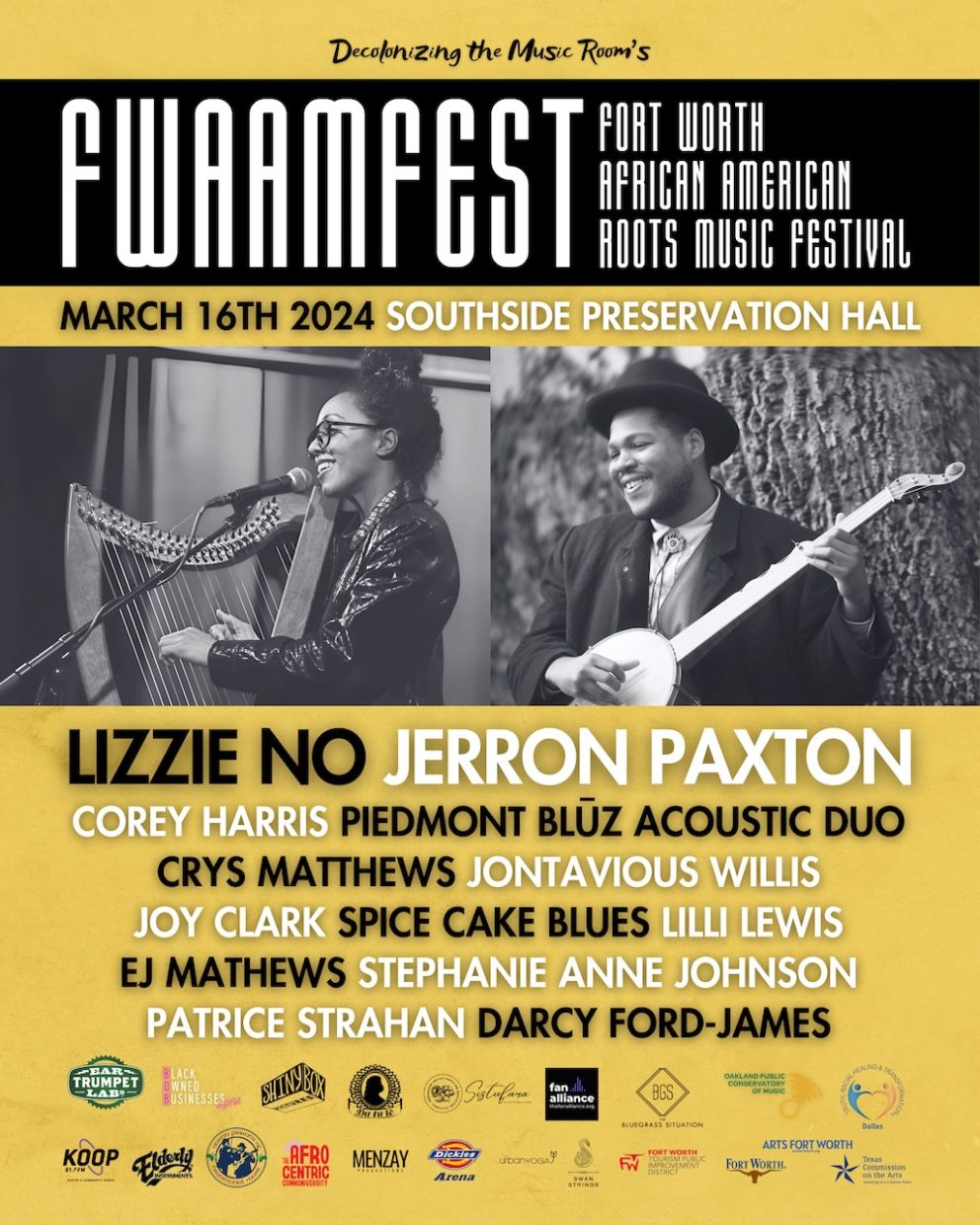
The fourth annual edition of the Fort Worth African American Roots Music Festival (AKA FWAAMFest) will take place this weekend, on Saturday, March 16, at Southside Preservation Hall in Fort Worth, Texas. BGS has been proud to support and sponsor this quickly up-and-coming event over the past few years and 2024’s edition of the all-day festival will be the biggest FWAAMFest yet.

The festival has a mission of centering the vital and transformative contributions of Black and African-American folks to American roots music. Though their purview at first glance may seem “niche,” this is a concept that is as broad and expansive as it is pointed and specific. Festival organizer, Decolonizing the Music Room founding director Brandi Waller-Pace – a regular contributor to and collaborator of BGS – goes out of her way each year to demonstrate Black music, Black artists, and Black stories are not monoliths. Each year’s lineup is carefully curated to show FWAAMFest audience members the depth and breadth of Black musical traditions, not only in Fort Worth but around the country.

Tickets for the event are competitively priced ($50 general admission, $30 for students, with discounts for educators and children) and are truly an excellent value. Where else under one roof can you enjoy workshops, partake in Oakland Public Conservatory of Music’s Black Banjo & Fiddle Fellowship, dine on excellent barbeque and soul food, and hear sets from Jerron Paxton, Lizzie No, Crys Matthews, Joy Clark, Jontavious Willis, Corey Harris, Piedmont Bluz Acoustic Duo, Spice Cake Blues, Lilli Lewis, EJ Mathews, Stephanie Anne Johnson, Patrice Strahan, and Darcy Ford-James?

Below, take some time to familiarize yourself with this year’s FWAAMFest lineup while you make your plans to join Fort Worth at Southside Preservation hall this Saturday for an incomparable day filled with music, history, fellowship, and community building.

Jerron Paxton

Well known to BGS, Jerron Paxton – who you may know as “Blind Boy” Paxton – is a blues, old-time, and ragtime musician adept on many instruments, from piano to banjo to harmonica and beyond. Paxton was on BGS’s Shout & Shine Online lineup in 2020, a virtual showcase also curated by Brandi Waller-Pace. We’ve spoken to Paxton a few times about his incredible, timeless sound – and how he doesn’t view his music as coming from the past, but being rooted in the present. With his material and storytelling, he demonstrates how all of these American roots genres are so closely intertwined.

Lizzie No

Lizzie No’s new album, Halfsies, is certainly one of the best releases of the year. An Americana and country singer-songwriter and multi-instrumentalist, No has a perspective that’s effortlessly modern while steeped in country traditions of the ’80s, ’90s, and 2000s. There’s introspective indie touches, pop infusions, and an end result that’s truly singular. Her music has plenty to sink your teeth into, and we go back to it time and time again.

Check out a recent GOOD COUNTRY feature about feminine country that highlights No and Halfsies and take some time to discover why our co-founder, Ed Helms, highly recommends her music via Ed’s Picks. Oh, and did we mention No co-hosts a BGS podcast, Basic Folk, too? An entire multi-hyphenate, right here!

Corey Harris

Corey Harris is a blues musician who has busked the streets of New Orleans, lived in Cameroon and West Africa, collaborated with Taj Mahal, and garnered millions of streams. His is an old-fashioned sound, but without essentialism or facing backwards. The lead single and title track from his upcoming album, Chicken Man, is out now – watch for the full record later this month. Based in Charlottesville, Virginia, don’t miss your opportunity to see this world-traveling blues picker and singer in Fort Worth.

Piedmont Bluz Acoustic Duo

Valerie and Benedict Turner are Piedmont Bluz Acoustic Duo, inductees of the New York Blues Hall of Fame. They’re committed to bringing “awareness to these unique aspects of African-American culture,” especially Piedmont style fingerpicking, washboard, and what they (rightly) call “country blues.” They’ve traveled all around the world playing Piedmont blues and they’re especially adept at preserving songs and sounds from artists like Mississippi John Hurt, Etta Baker, and Libba Cotten while showing how important their music is in modern contexts – in the present moment.

Crys Matthews

Singer-songwriter-picker Crys Matthews is another FWAAMFest 2024 artist that’s a well known name to BGS readers. An activist in songwriter form, Matthews writes pointed, sharp, and compassionate protest music that’s never saccharine or blinders-on, a rare feat in folk music. She also has a guitar playing style all her own – playing left handed, with the guitar upside down, she also reminds of musicians like Elizabeth Cotten. But still, what listeners take away from her joyful and encouraging sets, filled to bursting with solidarity, is an understanding that what Matthews does with her music is an art form all her own. Check out a BGS fan favorite from 2023, Matthews’ collaboration with Heather Mae and Melody Walker on a rousing community-minded number, “Room.”

Jontavious Willis

Grammy nominee Jontavious Willis was born and raised in rural Georgia and his childhood was filled with gospel music and connections to deep cultural traditions. As a teenager, he discovered Muddy Waters and the blues; it wasn’t long ’til he was sharing stages with Taj Mahal, Keb’ Mo’, and so many of his heroes and forebears. (Mahal called him “Wonderboy,” a certainly fitting and worthy title!) Willis makes music with a huge scope and limitless lifespan, but in that same DIY, hard-scrabble, down to earth way so highly valued in the blues. In 2018, he won the Blues Foundation’s International Blues Challenge Award for Best Self-Produced CD, and his 2019 follow up, Spectacular Class, garnered his Grammy nomination and millions of streams on digital platforms.

Joy Clark

Guitarist Joy Clark is rapidly on the rise – and deservedly so! She tours and performs with the Black Opry Revue, with Allison Russell’s Rainbow Coalition, and as an incredibly accomplished solo picker-singer-songwriter. Just last month, she wowed the Folk Alliance International audience at the International Folk Music Awards with her tribute to Tracy Chapman, showing the intuitive and intentional connections between Clark and queer, Black guitarists, musicians, and songwriters who came before her. The most remarkable thing about Clark’s music, though, is not that it reminds of other musicians and artists – even when it does. Instead, it’s impossible to deny that Clark has a voice on the guitar that is all her own and she’s on a steady march to bring that voice to the world. Thank goodness!

Spice Cake Blues

FWAAMFest has it all, from internationally known artists to insider favorites to gem-like discoveries, like duo Spice Cake Blues. A new introduction to BGS and our readers, Spice Cake features Miles Spicer and Jael Patterson and they are based out of Maryland. Spicer is a co-founder of the Archie Edwards Blues Heritage Foundation and an accomplished Piedmont (and multi-style) guitar picker. Jael, who also goes by Yaya, is a powerful and soulful singer. Spicer also performs with Jackie Merritt and Resa Gibbs in the M.S.G. Acoustic Blues Trio. (M.S.G. = Merritt, Spicer, Gibbs.)

Lilli Lewis

You may know her as “Folk Rock Diva,” Lilli Lewis is a powerhouse vocalist, pianist, songwriter, former record label runner, and forever community builder. Her shows are entrancing, like a combination of Wednesday-night church and a New Orleans Saturday night. Lewis is prolific and critically-acclaimed, and something of a genre and context shapeshifter, unifying the many sounds and styles she inhabits with her heartfelt stories and encouraging words of insight. Her latest album, All is Forgiven, was released in December 2023. Don’t miss her cover of Radiohead’s “Creep,” though, too – there’s a reason it’s so often requested at her concerts!

EJ Mathews

EJ Mathews was born and raised in Atlanta… Texas. A small town near the Arkansas border, Mathews grew up listening to the music of his grandpa – an even mix of country and blues. As such, his sound infuses as much modern blues as country, southern rock, and gospel, with infinite feel and groove. His 2020 single, “Smokin’ & Drankin'” shows so many of the styles he effortlessly combines. Now living in Dallas, Mathews will make the relatively short hike over to Fort Worth for FWAAMFest to bring his unique, melting-pot sound to Southside Preservation Hall.

Stephanie Anne Johnson

Stephanie Anne Johnson is a singer-songwriter and radio host based in the Pacific Northwest. Born and raised in Tacoma, they were already becoming a common sight in folk and Americana circles when they seemingly burst onto the national scene appearing on season five of NBC’s The Voice. Johnson is another FWAAMFest artist who was featured on the Shout & Shine Online lineup in 2020 curated by Waller-Pace. Criminally underrated in national folk, Americana, and indie circles, Johnson creates powerful music that brings love, mental health, togetherness, and redemption all under a compassionate lens – and with a remarkably grounded sensibility. Whether solo or with their band, the HiDogs, Stephanie Anne Johnson is an entrancing musician and songwriter. Don’t miss their 2023 album, Jewels.

You can see all these artists and so much more this weekend at FWAAMFest in Fort Worth! Get your tickets now.


Photos courtesy of FWAAMFest. L to R: Crys Matthews; Jerron Paxton; Lizzie No. 

Acoustic America: Musical Instrument Museum’s Exhibit Gathers Iconic Instruments

In early November, the Musical Instrument Museum in Phoenix, Arizona unveiled a brand new exhibition, Acoustic America, which celebrates iconic instruments of many heroes of folk, blues, bluegrass, and more. The exhibit is presented in partnership with our Dawg in December Artist of the Month, David Grisman and his record label Acoustic Disc, and showcases a remarkable collection of instruments that the museum states, “Have redefined music not only in the United States, but around the world.” This includes more than thirty instruments on loan from the Dawg himself.

“MIM is honored for this opportunity to collaborate with David Grisman and feature so many prized instruments from his collection,” says MIM senior curator Rich Walter, via email. “And after many years of loving his music, it has been a joy on a personal level for me, too. His influence as a mandolinist, composer, and bandleader is huge, and he absolutely changed the course of acoustic music as we know it today.”

The Acoustic America Gallery at the Musical Instrument Museum in Phoenix, AZ.

Guests of the museum will be able to view storied and legendary instruments formerly owned and played by such luminaries as Earl Scruggs, Elizabeth Cotten, Mississippi John Hurt, John Hartford, Lloyd Loar, and many more. “Beyond the legacies of the individual artists and the beauty of these historic instruments,” Walter continues, “Seeing this collection together in one space is really striking because it reflects a broader American narrative. Exceptional individuals from diverse backgrounds crossed paths and connected their talents in ways that gave us distinctive new traditions that continue to inspire people around the world.”

To celebrate the new exhibition and Dawg in December, we’ve partnered with MIM to bring you these photos of select instruments from Acoustic America. Make plans to visit the Musical Instrument Museum in Arizona now! Tickets are available at MIM.org.

(Editor’s Note: Instrument information provided from the Acoustic America catalog.)

1910 Gibson F-4 Mandolin: Owned and played by David Grisman. Loan courtesy of David Grisman.

The F-4 model was Gibson’s premier mandolin until late 1922, when the F-5 was introduced. In addition to the characteristic oval sound hole and carved scroll, this early example features a three-point body style (note the points protruding from the body), elaborate torch and wire peghead inlay pattern, and special Handel tuning buttons with colorful inlays. David Grisman featured this mandolin on the cover of his first solo album, The David Grisman Rounder Album, and has recorded with it on other projects, including Tone Poems with Tony Rice and Not for Kids Only with Jerry Garcia.

1954 Gibson F-5 Mandolin: Owned and played by Ralph Rinzler. Loan courtesy of David Grisman.

Manager, talented musician, and legendary folklorist Ralph Rinzler (1934–1994) was one of David Grisman’s earliest and most influential mentors. Sharing a hometown of Passaic, New Jersey, Rinzler introduced Grisman to important recordings of folk music and inspired him to play the mandolin. Rinzler played this F-5 mandolin with the Greenbriar Boys, who were the first non-Southern bluegrass band to win at the Union Grove Old Time Fiddler’s Convention in North Carolina. He also managed the careers of Doc Watson and Bill Monroe and was instrumental in creating the first dedicated bluegrass festival in Fincastle, Virginia, in 1965. Two years later, Rinzler founded the Smithsonian Folklife Festival to celebrate and support living cultural heritage from around the world.

1947 Martin 2-15 Mandolin: Owned and played by Ira Louvin. MIM Collection.

Few brother duet acts in country music were as influential as the Louvin Brothers. Ira and Charlie Louvin were born in Alabama in the 1920s, and their high harmony singing and Ira’s tasteful mandolin playing helped them define a sound popularized through radio broadcasts, commercial recordings, and appearances on the Grand Ole Opry – where they debuted in 1955. Ira customized this one-of-a-kind mandolin in the flashy style of professional country artists and played it extensively, including on the Grand Ole Opry stage. This special piece of mandolin history was also owned by David Grisman for many years.

1924 Gibson F-5 Mandolin: Lloyd Loar’s personal F-5 mandolin. MIM collection.

This mandolin — serial number 75315; label dated February 18, 1924 — was the personal instrument of famed Gibson acoustic engineer Lloyd Loar. Loar was impressively inventive and patented designs for keyboard actions and electric instruments, among many others, but the F-5 Master Model mandolin is arguably his most iconic and enduring success. The interior of this mandolin is fitted with an original Virzi Tone Producer. F-5 mandolins with Loar’s signature on the label are the most valuable and sought-after in the world, and Loar F-5s from the batch signed on this date are known to be among the best-sounding. Perhaps it is not surprising that Loar kept this remarkable mandolin for himself!

1928 Martin 00-40H Guitar: Played by the New Lost City Ramblers. Loan courtesy of Darrell Scott.

This guitar was played extensively by the New Lost City Ramblers, who were pivotal to the national revival of Southern folk music in the 1950s and 1960s. Founding members John Cohen, Tom Paley, and Mike Seeger were dedicated to authentically reproducing folk traditions for new audiences. The group recorded several albums for Smithsonian Folkways and helped discover, document, and showcase talented artists such as Elizabeth Cotten, Dock Boggs, and Snuffy Jenkins. Prewar pearl-trimmed Martin guitars are among the most desirable acoustic instruments in the world.

1929 Dobro Model 125 Resophonic Guitar: Owned and played by LeRoy Mack. Loan courtesy of LeRoy McNees.

In 1961, the Kentucky Colonels, led by brothers Clarence and Roland White, performed on The Andy Griffith Show, under the alias “the Country Boys.” The Kentucky Colonels were one of the most exciting and influential bluegrass bands of their era, and their national television appearance would have been much of the United States’ first memorable exposure to bluegrass. Dobro player LeRoy McNees (AKA LeRoy Mack) played this Model 125 resophonic guitar during the show and for many years afterward. After the guitar was damaged at an airport, McNees restored and outfitted it with gold-plated metal hardware.

1975 Stelling Staghorn Banjo: Owned and played by Alison Brown. Loan courtesy of Alison Brown.

A young Alison Brown spent her entire savings on this then-new banjo built by Geoff Stelling, hoping to emulate the crisp, solid tone of Alan Munde, an influential older banjoist who played a similar Staghorn model. Brown played this banjo on her first album, 1981’s Pre-Sequel, and she later played it with Alison Krauss’s successful band Union Station. One of the most gifted banjoists in the world, Brown was the first woman voted Banjo Player of the Year by the International Bluegrass Music Association (in 1991). She has also won multiple Grammy awards, founded her own record label, Compass Records, and was inducted into the Banjo Hall of Fame in 2019.

1913 Knutsen harp guitar: Owned and played by Michael Hedges. Loan courtesy of Taproot, LLC.

Guitarist and composer Michael Hedges (1953–1997) used a range of innovative and unconventional playing techniques — such as alternate tunings and percussive tapping on the strings and soundboard — to expand the possibilities of what a solo artist could do. In rediscovering the sound of vintage harp guitars with dedicated sub-bass strings, Hedges reimagined the guitar as a full-spectrum compositional tool. His 1984 album Aerial Boundaries illustrated his astonishing talent and helped define the contemporary new age acoustic music of Windham Hill Records. Hedges nicknamed this favored harp guitar “Darth Vader,” and his use of harp guitars revived interest in these long-obscure instruments.


All photos courtesy of the Musical Instrument Museum, Phoenix, Arizona.