Old Crow Medicine Show, ‘Flicker and Shine’

As fiddles and banjos have become increasingly commonplace in mainstream music, the spirit of a string band — one that’s predicated on a kind of pure, punk-rock joy — has often taken a back seat to a more earnest, precious treatment. But in Appalachia, that traditionalism was about skill, about a kinetic energy, about falling and rising together through the sounds of a washtub bass or some wailing vocals that are no more or less important than the instruments, themselves. It wasn’t always so morose. Life was hard enough as it is.

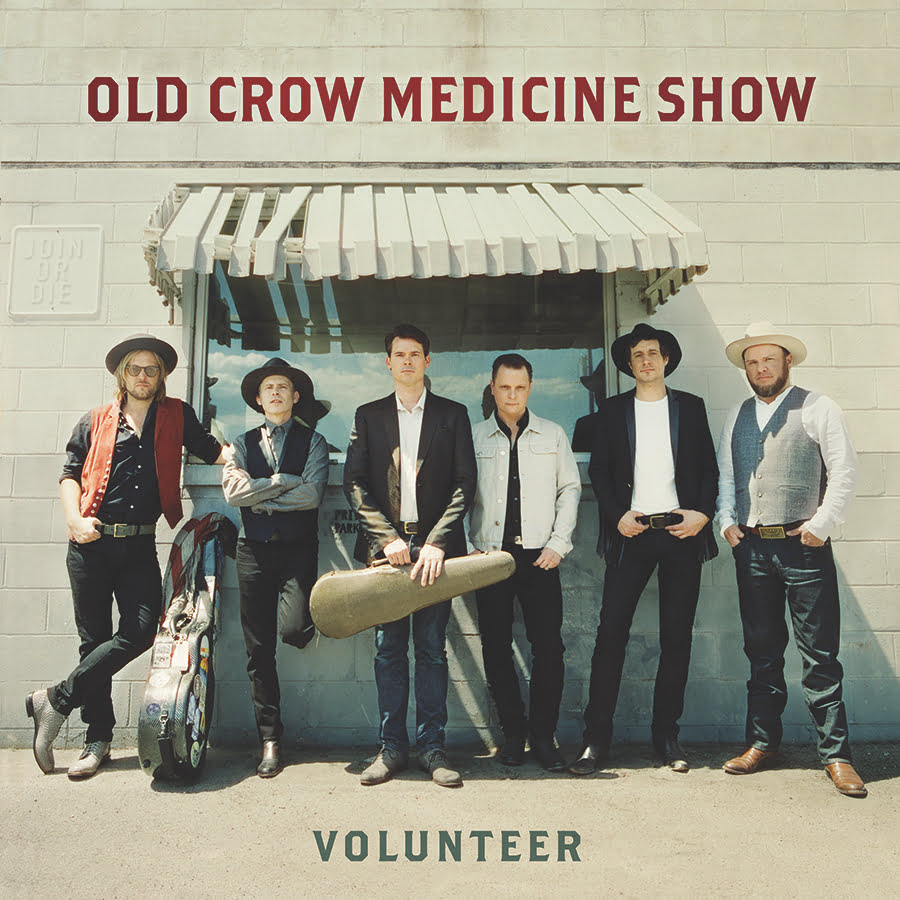
Old Crow Medicine Show, however, has always been connected to this raucous side; and their new song, “Flicker and Shine,” from their forthcoming LP, Volunteer, is no exception. It’s even about falling and rising, together. Though not a political song, per se, it slides perfectly into the zeitgeist of the moment and the need to rise as one to beat on as we’re intended. That’s what every life does naturally, anyway, as Old Crow sings: “All together. We fall together. We ride together. We wild together. Yes, all together. We fall together. Every little light will flicker and shine.” No one gets out of this world alive, and no one knows exactly how long our flames might burn. But Old Crow is right: We all burn together and, if we ride together, we might just shine a bit brighter. And we might have more fun along the way, too.

MIXTAPE: Janiva Magness’s Folk Is a Four-Letter Word

I have long known that I am, at times, a highly emotional creature. I’m good with that and ever grateful I have the music to help sooth me through it. Folk music has always been a part of that balm and always had a quiet place in me. Although, over time, the definition of what folk music is has changed, depending in part on its popularity. For me, this is a beginning of some of my always and all-time favorite folk music. These tunes contain both comfort and melancholy — for me, two of the “absolute musts” to great folk songs by great artists. — Janiva Magness

Bob Dylan — “If You See Her, Say Hello”

How is it possible to not love this track? Besides, there is no one who can turn a phrase like Mr. Zimmerman. No one!

Blackie and the Rodeo Kings — “Brave”

Steven Fearing of B.A.R.K. has such a soulful voice and tone, then add Holly Cole’s vocal with him, and I find it a haunting tale of deep and abiding love born of infidelity. It is both comforting and stunning.

Joni Mitchell — “Both Sides Now”

An epic song written by a then very fresh Joni Mitchell with so much wisdom, it seemed impossible to come from such a young woman.

Joan Baez — “Diamonds and Rust”

This classic — and at the time controversial — track about Joan and one other very famous folk singer and their love affair remembered.

Gillian Welch — “Look at Miss Ohio”

Just love this song and, though it’s not one of Gillian’s most played tracks, I have worn this out at home, in the car, and everywhere. I love it because it’s about a beauty queen being herself behind the scenes, and doing wrong — grinnin’ all the while.

Taj Mahal — “Corinna”

I have loved this track since first laying my ears on it in the ’70s. Simple folk blues. It don’t get any better than Taj.

Ry Cooder — “That’s the Way Love Turned Out for Me”

A haunting song originally recorded by James Carr, I believe, and then adapted by Ry Cooder. I just love this version because of its fractured vulnerability.

Bonnie Raitt — “Love Has No Pride”

A song penned by Libby Titus and portrayed by Bonnie. Her early ’70s material is incomparable for me really. This tune is a heart broken in two and laying on the floor right in front of you.

Zachary Richard — “No French, No More”

A haunting and, as I understand it, true tale written by Zachary Richard about his upbringing as a young Acadian boy in the swamps and woods of Louisiana, where his native language was French but, once placed in public school, the children were forced to abandon their language and culture for English.

Bobbie Gentry — “Ode to Billie Joe”

A captivating tale of love gone wrong with two teenagers in the rural South. Bobbie Gentry’s painful and almost detached vocal track make it all the more mysterious

Jackson Browne — “My Opening Farewell”

One of the most beautiful and lonesome songs of all time to me. Love and grief. Nuff said.

LISTEN: Kieran Kane & Rayna Gellert, ‘Where’s My Baby’ 

Artist: Kieran Kane & Rayna Gellert
Hometown: Nashville, TN
Song: “Where’s My Baby”
Album: The Ledges
Release Date: February 16, 2018
Label: Dead Reckoning Records

In Their Words: “We went to the cabin in New York for the summer to finish writing and then record what became The Ledges album. We had a few songs finished, and a few bits and pieces that we wanted to see if we could push further down the road. ‘Where’s My Baby’ was one of the unfinished bits. It was so much fun to play, we just couldn’t let it go. It was, in fact, the first song that we recorded where we felt ‘that’s the keeper version’ … so we kept it.” — Kieran Kane


Photo credit: Molly Secours

Sam Reider, ‘Valley of the Giants’

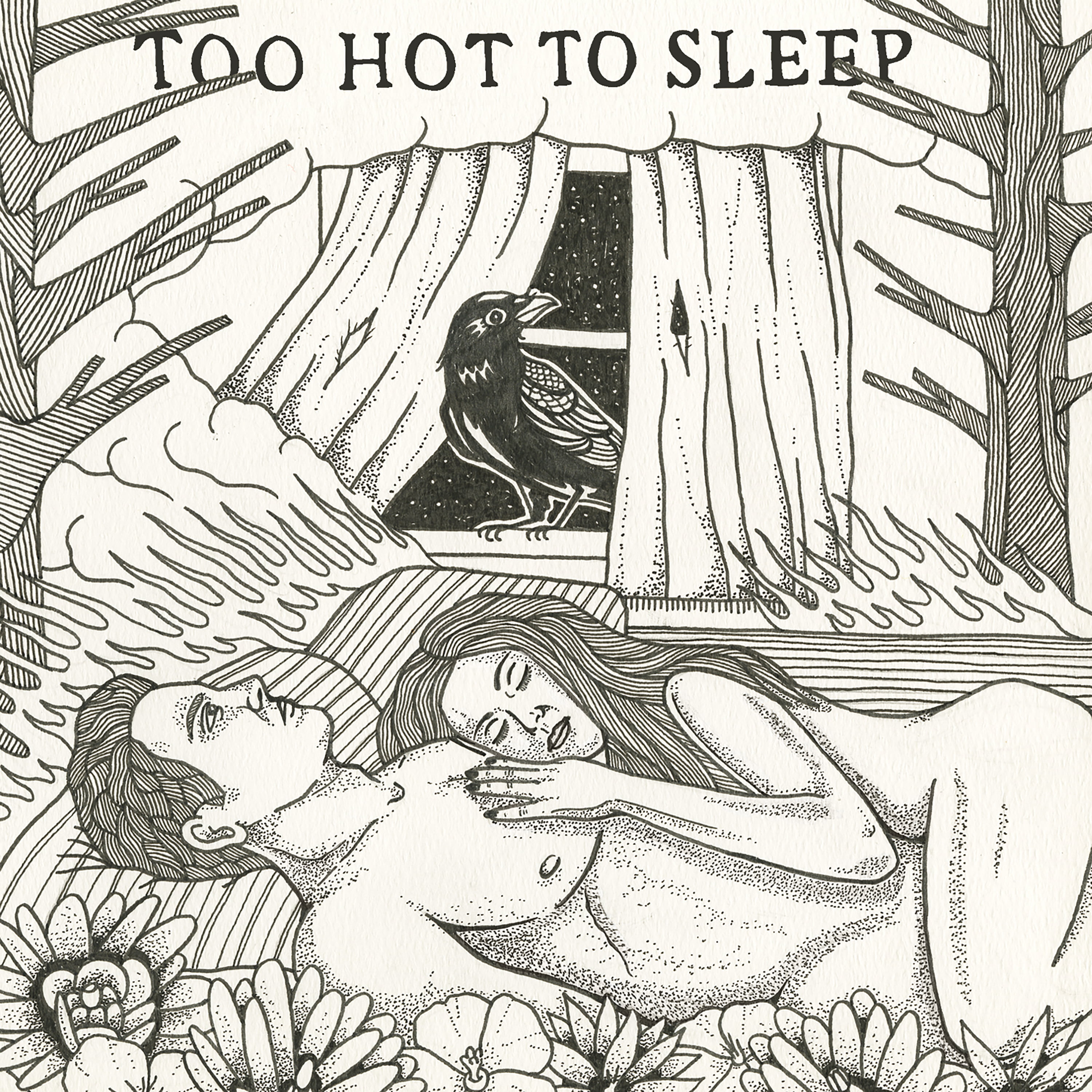
Accordionist, pianist, and composer Sam Reider was inspired by wandering through the surreal landscape of Valle de los Gigantes in Baja California, Mexico. The park is named for the gargantuan cardón cactus, a species that resembles saguaros of the U.S., but grows larger and taller and can live longer than 300 years. It might seem that the Sonoran desert — dotted by enormous, otherworldly plants — would evoke meditative, minimal, dreamy sounds — a musical reflection of desolation and austere beauty — but “Valley of the Giants,” off Reider’s debut album, Too Hot to Sleep, is anything but.

It’s rollicking and frenetic, lilting and energetic — more like the Wild West, replete with stampedes and tumbleweeds, than a silent, spiritual desert. The album’s roster of savvy pickers (Dominick Leslie on mandolin; Alex Hargreaves on fiddle; Roy Williams and Grant Gordy on guitars; David Speranza on bass; and Eddie Barbash on saxophone) pull from their overarching bluegrass expertise to drive the tune forward at a pace just shy of breakneck, galloping-horse-chase soundtrack speeds. Dashes of folk influences from around the world are sprinkled into its string band aesthetic like melodic Easter eggs. Reider’s accordion is the unyielding anchor, giving a dose of soulful, raw timelessness, but with a modern crispness and confidence. Somehow, it simultaneously conjures arid Baja and transatlantic scenes in an Irish pub or the countryside in France. It’s like a mini-vacation, wrapped up tidily within an instrumental.

Mary Gauthier: Finding Each Other in Song

When singer/songwriter Mary Gauthier plays the Grand Ole Opry, she knows the crowd can sense that she doesn’t quite fit the mold. “I can tell that the audience can tell that I don’t look like Carrie Underwood,” she laughs. “I’ve got a gay look. I don’t mean to have a gay look, but I’m gay!” The stage where country music was born wouldn’t be the first place to come to mind when considering where an LGBTQ+ person might belong, but the Opry house’s response to Gauthier isn’t cold or forbidding; in fact, it’s the opposite. “I’m going to stand up there. [My queerness is] going to be obvious. Some people will accept it, but some people will struggle with it. I’m going to talk to them as if they’ve already accepted it, and I’m going to send love out to them. My fear of rejection will not supersede my intentional effort to connect and be loving.”

Connection and loving are core values, a strong and sturdy backbone, through Gauthier’s music and life. She’s faced abandonment, addiction, and otherness, but through the struggles of her own life, she realized that loving others, seeing others, listening to others, and putting empathy out into the world are surefire ways to find healing within. Her new album, Rifles & Rosary Beads, is a perfect continuation of these practices. Gauthier has co-written an album of absolutely poignant, heart-wrenching songs with veterans of the armed forces, all the while focusing on not just loving, seeing, and listening, but propagating these skills, as well. The record is a sorely needed standard for how to traverse the divides and chasms that seem to criss-cross our country, society, and globe. Whether they exist between gay and straight, civilian and military, or left and right, the only bridge we need is empathy.

There’s this cliché or this stereotype that LGBTQ+ people and the military are diametrically opposed, whether this comes from issues such as the trans military ban or Don’t Ask, Don’t Tell, so it might surprise people that you took on this project. It must challenge the assumptions of some people who might not expect a progressive, LGBTQ+ person to collaborate with veterans.

I think the idea of the straight white guy soldier is a dated stereotype. That’s really not who our military is any more. In my experience working with members of the military over the last five years, the soldiers I’ve worked with look like people you’d see walking down the street in Manhattan. Our military is very diverse. It’s made up of all segments of society, including gay, lesbian, and trans people, people of color, Hispanic folks, and a whole lot of women. So we need to update our visuals around what we think a veteran is.

Today’s military scans 55 percent Democrat. People don’t know that. It’s a younger military. The conflicts in Afghanistan and Iraq are being fought by a group of people that are much younger than what you would think. We have to match our visuals to the reality of who’s wearing those boots on the ground.

I’d like to speak to the unsuccessful and failed trans military ban. The reason that it probably became an issue is because there are quite a few transgender people in the military. I don’t know the numbers, but it’s in the thousands. These are people who are volunteering to serve and are serving well. Our justice system has done the right thing in upholding their right to serve. Judgment about whether or not someone is worthy of service has not a thing to do with sexuality or gender.

Yes! Absolutely.

It’s irrelevant. It’s parallel. It has nothing to do with any of the requirements around the ability to serve. The justice system and the judges are upholding the current law because it’s the right thing to do.

When I listen to the album, I wonder how those veterans’ feelings — of loneliness, of facing a forbidding world that can’t really understand, of walking through life and not seeing oneself or one’s experiences reflected back by society, of coming home to a place that they don’t recognize anymore, to people who don’t recognize them anymore — these feel like they relate pretty easily to the queer experience.

I never thought of that. I don’t know. I’d hate to generalize. [Pause] What I do know is that an awful lot of our veterans are experiencing trauma — traumatic brain injuries and PTSD. The trauma that they carry becomes a life and death issue for them. It doesn’t heal itself. It doesn’t get better over time. It holds its own. We’re dealing with somewhere in the neighborhood of 22 suicides a day by military members.

There may be a parallel between that and the trauma a gay kid feels, being beat up. It’s a different trauma, but trauma is trauma. There’s been, as we well know, a huge problem with suicide in our gay kids. Now in our trans kids. The way that we’ve dealt with it, the way that works to help ease people’s burdens, is to tell them that we love them. We see them. They’re valuable. They matter.

I feel that message when I hear you singing these songs. I feel that emotion. I feel you, yourself, living through each of these co-writes with each of these veterans. I love that this is a testament to the fact that the “divisiveness” we hear about every single day is not actually a barrier between all of us.

Here’s what I know for sure: We’re in an empathy crisis.

Yes!

And this empathy crisis, from what I can see, has created a divide. The divide, politically, is between the left and the right, but we’re also in a civilian-military divide. Civilians don’t understand or even know people who have served in our military, particularly in the wars in Afghanistan and Iraq. But this divide started in Vietnam, after our soldiers came back really rejected and treated so poorly.

I think the divide can be bridged through empathy. The way I know how to create empathy is through song — not preachy songs, not songs that tell people what to think, but songs that tell the story of what people are going through, so that we can see inside and know how they feel. This is the job of the artist and the job of art — to generate connection and empathy. That’s my belief.

So [when writing for Rifles & Rosary Beads] we stayed away from ideology. We stayed away from policy. We stayed away from lecturing. All politics is off-limits. These are songs that tell important stories. If you want to come up with policy after you empathize, that’s whole different discussion. In my years of writing with soldiers, I have never gone to politics ever, because it’s not going to get us a good song! It’s just going to be a rabbit-hole, and we’re not going to get where we need to go to get to a good song, which is connecting and feeling each other, knowing each other’s heart. Whether or not we agree with the politics that got us into the war — wars — is one thing, but I think we can agree that those who served, who are hurting, who are struggling, who are in pain, who need our hand, we can reach out to them.

That makes me think about roots music’s transportive quality. These genres came out of very downtrodden, forgotten places as a vehicle to take people out of the harsh realities of their everyday lives. I’m convinced that that quality of roots music really is available to everyone, whether we’re talking about someone who’s LGBTQ+ or these veterans.

There’s a couple of big thoughts in there. One is, roots music is the best place for story songs. The best music always comes from the worst pain, from the soul howling in pain. “Does anybody see me?” “Am I alone here in my sorrow?” The response to that call is, “No, you are not! We see you! We feel you!” This is why singing the blues together makes you feel better. There’s an alchemy that happens when you’re able to sing your sorrows inside a group, singing not alone.

At the end of the day, the important thing about writing with people who are dealing with trauma, particularly veterans, is giving voice to something that is very, very hard to talk about. It may even be ineffable. There may be no way to talk about it, but we can sing it. We know it, when we sing it. We feel it. That is, I think, one of the most important uses of songs — to reach the ineffable. Melody helps move meaning into people’s hearts.

On the song “Brothers,” I felt the Venn diagram between the LGBTQ+ experience and the military experience overlap the most. The line, “Don’t that make me your brother, too?” Coming from the perspective of a female soldier, it is such a distillate of what we’re trying to accomplish with empathy, reaching out to people who have opposing views. Where did “Brothers” come from?

It came from these two women’s experiences. They lived it. My co-writers lived it. They were of the first generation of females in our military sent to combat. At the time, all of the language was male. They served with valor and courage in a situation that was really, really hard for them. What the females went through is a whole lot like what people of color went through when the military was integrated. It was very difficult.

There was a moment, after [one of the women] got home, when one of their friends raised the flag on Facebook on Veterans’ Day for “all the men who served.” She was shot at. She was in combat. She would’ve died for her brothers. She felt very excluded by the sexist language. The statement [in the song], “Say it for me. Say it for your youth. Your sisters are your brothers, too,” is a howl. “Don’t you see me? What do I have to do to be seen?” Of course, every marginalized community has had that howl. “What do I have to do to get your respect? I’ve done everything within my power, and I’m still invisible. I am hurt and I want to be respected.”

Honestly, in the five years I’ve been doing this, the language has been changing. Now people in the military, when they speak of the kinship, I’m hearing more and more “brothers and sisters.” It’s expanding. The first generation of female combat veterans had it hard, but it’s changing because people like them are brave enough to stand up and say that it hurts. It’s not “servicemen,” it’s “service members.” It has to be updated. They’re going to get there, but it takes time and people get caught up in a culture that doesn’t see them.

I want to ask you about that. You were recently on Sarah Silverman’s Hulu show, I Love You, America, and the overarching message through the show, which is somewhat radical these days, is seeing people — seeing people for who they are, accepting people for who they are. You being a guest felt so natural, because this is kind of the backbone of what you do as an artist, as well. Like you said, empathy first, empathy through song. How do we spread this idea? How do we translate and illustrate this intensely personal and individual reality of being on the fringes of society to help others understand the importance of empathy, of choosing to see people?

It’s a big question. No easy answer. What we can do, for example, is what I’m doing. To come out, to be seen in the truth of who we are, and to challenge people’s prejudices through loving, through kindness and tenderness and love. I’m working with veterans because I love them. Because I love them, it would be very difficult for them to reject me because I’m gay. They’re in a place, most of them, where they’re so grateful to be seen and loved that they open their arms and bring me into their family. I couldn’t have imagined five years ago, starting this, that it would lead me here. There’s a place for going in the streets and protesting, but there’s also a place for what Sarah [Silverman] is doing, what I’m trying to do, what Brené Brown is talking about, what Father Gregory Boyle over in Los Angeles is tackling with the gangs. What we’re talking about is sitting down and listening.

We may not agree on a single thing, politically, so let’s not talk about politics. Tell me how you feel. Tell me how it was for you, coming back from the Middle East. Tell me what it’s like now. Where does it hurt? I’m listening. I’m not in judgement. I think that empathy and listening is a big damn deal. What maybe happens when we’re young — I’m older now, you know? — when we’re young, we want to be heard. I wanted to be listened to. I felt as though what needed to happen was people needed to hear me. I’m older now, maybe it’s emotional maturity, but I realized what might be even more transformative, instead of me demanding that I be heard, is that I sit down and listen to other people. To give them the empathy that heals me. This is cliché sounding, but what I get from this work far, far surpasses what I give.

I love that. It’s one of my favorite things about these conversations. If we’re open and vulnerable and real with each other, we will constantly be surprised by each other in the best way.

Yep. And we find each other.


Photo credit: Laura E. Partain

LISTEN: Sunny War, ‘The Change You Make’

Artist: Sunny War
Hometown: Nashville, TN
Song: “The Change You Make”
Album: With the Sun
Release Date: February 2, 2018
Label: Hen House Studios

In Their Words: “This song is kind of an imaginary warning to my younger self and all kids who think life sucks. It’s pretty much saying, ‘Yeah, life does suck. But you can try to avoid the sucky parts, create your own space if you want, and it will continue to suck, but you’ll get stronger.’

I played the guitar track over 100 times because it was very tough to play with the metronome while recording. I got pretty frustrated, but when it was finally executed, it was my favorite song on the album. It is one of the few tracks we thought sounded fine with just guitar and bass.” — Sunny War


Photo credit: Florencia P. Marano

Crowd-Fun-Ding: January

One of the universal commonalities between people is that it is hard to ask for help. If money is involved, the task is all the greater. That’s why crowdfunding an album is such a brave and beautiful thing for artists to do. And it’s why we’ve decided to lend our support each month to roots music campaigns that could use a boost.

Dr. Ysaÿe Barnwell

We’re big fans of Sweet Honey in the Rock and all of their off-shoots. So, as a former member, Ysaÿe inherits that support for whatever she wants to do. In this case, what she wants to do is bring a variety of artists together to create ethnographic recordings of the “The Star-Spangled Banner” to go along with her own reclaimed version of it. That’s not just revelatory and necessary; it’s also COOL.

Hush Kids

We’re big fans of both Jill Andrews and Peter Groenwald, and we were lucky enough to see one of their first — if not the first — gig they played together. As charming as they are individually, the combination is utterly enchanting. Get in on the ground floor with this one!

Jamie Lin Wilson

A former member of the Sidehill Gougers and the Trishas, Texas singer/songwriter Jamie Lin Wilson has been up to various creations over the past few years, but is back in business with her second solo record. It will, no doubt, feature some stellar players working through some solid tunes.

David Robert King

Singer/songwriter David Robert King is diving into the darkness on his new album, Idaho. If you appreciate the likes of Leonard Cohen and Tom Waits, you might well enjoy what he’s up to. But, act fast! His campaign only has about a week left!

Justin Hiltner & Jon Weisberger

Our own Justin Hiltner has quite the bluegrass situation on his hands as he raises funds to make a record with our good friend Jon Weisberger. These two gents have an awful lot of talent between them … plus a whole bevy of bonafide bluegrass besties all lined up, including Molly Tuttle, Casey Campbell, Tristan Scroggins, Kimber Ludiker, and Amanda Fields. No chance it’s not gonna be great!

WATCH: Joshua Hyslop, ‘Home’

Artist: Joshua Hyslop
Hometown: Abbotsford, BC
Song: “Home”
Album: Echos
Release Date: February 23, 2018
Label: Nettwerk

In Their Words: “This song is about finding hope in a very dark place. I’m often inspired by little moments of light in times that may otherwise seem dark.” — Joshua Hyslop


Photo credit: Jesse Milns

Being Your Own Gravel Road: A Conversation with H.C. McEntire

Singer/songwriter H.C. McEntire has been making music for many years now — formerly with the punk band Bellafea and more recently with the indie country outfit Mount Moriah. But last year, she paused that trajectory to tour with Angel Olsen. Speaking from her home in North Carolina, she explains, “There are not many voices I’d put my own career on hold for.” The opportunity was an exciting one, but McEntire’s not prone to multi-tasking, so she found it hard to stay connected to her own creative direction while touring someone else’s.

Enter: Bikini Kill’s Kathleen Hanna. A chance encounter between the two women developed into a professional acquaintance, which eventually became a strong friendship. Upon request, McEntire sent Hanna her entire hard drive of demos, hoping Hanna could forge a path through the disparate songs she’d written outside of Mount Moriah’s catalogue. “A lot of it was weird, abstract punk stuff that didn’t fit in to other things I was making, and some of it was real sweet pop, kind of twee,” she says. “It was all over the place.” Rather than cull together the raucous material, Hanna saw something in McEntire’s folk-driven country tunes, so the pair worked closely to refine the ideas that’d been bubbling on the margins for years. Sometimes, in order to find your voice, you need someone to guide you back to it.

McEntire’s resulting debut solo album, LIONHEART, sets about reclaiming country music from the bros, belles, and other tropes that fail to leave room for new stories because they’re proscribed as “the norm.” Growing up a queer woman in the South, she’s familiar with such labels and how they’re used as an exclusionary tactic.

McEntire was raised in a Southern Baptist family; she learned about the communal inclusivity church can offer only to experience its steely opposite when she came out. The hymnal ballad “When You Come For Me” finds her questioning her place in the land that birthed her against woozy pedal steel and a quavering rhythm. “Mama, I dreamed that I had no hand to hold. And the land I cut my teeth on wouldn’t let me call it home,” she sings, her voice forthright.

She’s struggled with her faith, her family, and even herself over the years and, with Hanna’s guidance, has channeled the result of those trials and the subsequent peace she’s found into LIONHEART. On “Quartz in the Valley,” the conventional images that have long embodied the South shed their sheen: Mascara-caked lashes smear after a long, passionate night, bouffant hair wilts with the sunrise. McEntire repurposes the region in her image, making a space for herself rather than waiting for a space to be made. There’s no metaphor more assertive than when she sings “this gravel road don’t need paving.”

What does Americana mean to you, and how have you found yourself defining it in your own terms?

It’s situational for me. I think a lot of us end up using it, and we don’t totally know why or, at least, I don’t know where it all started.

It’s a more recent definition for a lot of different styles, like an umbrella term.

That’s how I feel, too. Not that it doesn’t have value, but I think it’s kind of … I’m sure there’s a fancy word for it, but just like a term that gets used so much you forget what it means.

And yet somehow manages to be exclusive.

Right, because people think Americana isn’t country, like there’s a hard line there. So I guess my answer is I don’t know.

You’ve played other musical styles in the past, your musical career, but the traditions you cull on LIONHEART harken back to your upbringing. Why was it important to use that music to make this statement?

I think as I’ve gotten older — and maybe it’s something that you do, you know, reflecting on your childhood and what you cut your teeth on — it just kinda happened. I started remembering what music I loved and it was a natural thing. Maybe it’s like a language that I stepped away from and lost a little bit, and I’ve been slowly trying to relearn and reconstruct in this way that fits my life.

There’s something powerful about co-opting the language that can be used against you and making it your own, so I could see musical styles serving that same idea. What did you grow up listening to?

All my family lives on one road. There’s a communal farm in the middle, and that was the hub, that was the homestead. My uncle ran a mechanic shop there, and there was always country music playing from the radio — ’80s country, pretty much — which is a lot of the country I love. Also, I was privy to all the old-time and the bluegrass that trickled in from community get-togethers, like church. Lots of hymns. That’s a big pillar for me. That’s what I remember listening to, up until I started getting some cassettes, like Bruce Springsteen and the Beach Boys. Those were supplemental, but the foundation was whatever was circulating through the radio dial or the church.

You said you’ve strengthened your connection to your faith in recent years?

It’s definitely a process that I’m still refining. I grew up in a Southern Baptist family, and the church was really close to our house; my great-great-great-whatever grandfather founded it back in the 1700s. That’s just what you did. I never really thought about it. I had moments where I connected with it on a deep level, and I had a lot of moments and years where I was sort of robotic. As a teenager and later in my teens, I realized, as I started forming my own beliefs, that a lot of those were incongruent to what I was hearing on Sunday mornings, and it was really confusing. I struggled with that for a very long time. When I went off to college, I shut the door on organized religion. I felt kind of betrayed by it. It was painful; I didn’t think I had a place in it. I was bitter and, for many years, I could not talk about religion.

I can see how you’d want to stop trying to connect.

Exactly. All the while, I really felt a void. I was hungry for those moments when I was younger, when I was sitting on the pew, and I felt this profound power in the form of a congregation. Those moments where I did feel love, and I did feel faith, I was hungry for those again, but I wanted them on my own terms. They needed to make me feel valid and whole. Over the last 10 years, I lowered my guard — a lot of this is in this record, I did that. I had to be really vulnerable.

On “Quartz in the Valley,” you’ve got one of the finest metaphors I’ve heard in some time: “This gravel road, it don’t need paving.” How did you set about clearing a space for yourself in a home that hasn’t always been accepting?

That’s a cool line.

It’s a great line!

I hadn’t thought about it that way.

I thought it was such a great declaration, and I don’t even know if you meant it like that.

I definitely think I was alluding to something. All I can say is, it’s taken a long time, and a lot of stops and starts, and a lot of being vulnerable and really being active about researching certain spiritualities that I’m interested in, or experimenting with different churches in the area. It was really hard walking through the door of the first church that I went back to, but once that happened, it’s been so liberating and I realized that it’s not a formula. Re-discovering that and reconnecting with [my spirituality], I feel more whole. I feel whole in a way that I’ve never felt. I’m allowing my spiritual journey just to be whatever it is. I don’t really adhere to labels or anything, so I just want to grow.

I feel like any time you add a descriptor to an experience like that, people tend to characterize it in terms of exclusion.

Exactly. That word “exclusion,” to me, that is really confusing when you talk about spirituality because it’s the opposite of exclusion. But there’s so much of that, especially in the South. Certain groups find power and they quell their own anxieties and fears by excluding other people.

It’s the opposite of the message.

Exactly.

Your relationship with the land comes across powerfully in “When You Come for Me.” Where does it stand now?

When I wrote that, I was imagining the land I grew up on — the road I’m talking about with my family — and I think it also was inspired a little bit by … several years ago, I learned that my parents had bought my brother and me this plot in the church cemetery. That is actually a normal thing to do, just buy up a whole thing so your family can be together, but it made me think what that actually meant. I’ve carried a lot of pain with me over the years. I grew up in a very tight-knit family, and I love the land I grew up on. It’s in the foothills of the mountains in western North Carolina; it’s a small town. I’ve been in a lot of pain with how to relate to that particular area, socially, culturally.

Right. If they’re not making a space for you, then how do you see yourself as part of the community?

I think it’s actually more of a question to my family. It’s something I’ve been grappling with. My self-identity and yearning for that land and that inclusion, but I’ve never totally been accepted by my family. I’m still coming out to them over and over again.

Do you feel like you’ve reached a shift from proving yourself to making a statement?

There’s some peace in it. I feel I’ve reached this point where I don’t want to say I’ve stopped trying, but I’ve stopped forcing it. A lot of LIONHEART has been me reckoning with all this we’re talking about, so there must be some sort of peace that I’m at least able to write about it in a poetic way. That’s a challenge I liked: How can I connect with these communities and with different layers of myself and do it in a poetic narrative instead of a punk song or a hit-you-over-the-head anthem? I’m interested in finding that medium place where I can relate to all sides.

Kathleen Hanna isn’t exactly an artist I would place under the umbrella of Americana, but I love that you two connected and she kept wanting to talk about your music. Can you delve into that collaboration?

I’m sometimes still surprised.

It feels like kismet!

Yeah, it was a real gift that the universe gave me. I’ve looked up to her for a long time. We peripherally had been friends, but just through the music scene — the punk scene. She provided this mentorship that — I’m going to get emotional — it came to me at a time when I needed some direction. I was pretty lost creatively: I wasn’t sure where Mount Moriah was going, I’d just taken this job singing in Angel Olsen’s band that I knew was going to physically and creatively take me away from certain things.

This record would not be … it just tears me up. She didn’t have to do all that. She didn’t have to be this editor and mentor and fan of what I was doing, but it just shows what kind of person she is. She asked me to send her demos. None of us knew exactly what her role was going to be, whether it would be her producing or me and her co-writing things, and it kind of became all of the above. I sent her everything I had on my hard drive, like six or seven years. I anticipated her to be drawn to the more rocking, cathartic music that I knew she had made, but everything she picked were all the country songs. I think that’s when I knew that it was real. I needed to trust her and step back a little bit and let somebody have the first shovel dig.

Especially if you’re going through creative doubts, to have someone step in and build you up is worth more than gold.

Oh, totally. It’s been one of the most powerful things in my life. I needed someone to believe in me. I’d lost sight of that. I loved singing with Angel; I loved my role in that band, but it psyched me out too because I’m not very good at multi-tasking. There are not many voices I’d put my own career on hold for, but in the middle of all that, I got lost and Kathleen … like you said, it’s one of those things that even further connects me to the spiritual world, quite frankly.

It almost, in its own way, feels like amends for what you’ve been through.

Damn, dog. Yeah! That is a really amazing way to think about that.

Just having her listen through your entire hard drive of music … that alone … not many people would spend that kind of time.

It was symbiotic in a lot of ways. I think she got a lot out of switching gears and trying on a different hat. We were both new at all angles of it.

Are you ready to loose it on the world?

I’m ready to see what this year has in store. I’m trying not to have expectations, because this record could get panned a lot of different ways, and I could get pigeonholed a lot of different ways. It really got me out of a dark place, so I’m grateful to it, no matter what happens.


Photo credit: Heather Evans Smith

Eschewing Authenticity: A Conversation with Willie Watson

When Willie Watson steps out alone on stage in Allston, Massachusetts, he looks every bit as though he’s wandered out of another time. His wide-brimmed hat, plain button-down shirt, and twangy banter all pin him to a different era. Beginning to play the banjo, Watson overlays his preferred clawhammer style with warbling vibrato, all of which add to the picture — as if he’d been among the musicians who traipsed to Bristol, Tennessee, to participate in Ralph Peer’s recording sessions in 1927. Comments about authenticity have long dogged him, but Watson prefers to avoid such talk. He’s not attempting to recreate so much as create, and he just so happens to be using the past for inspiration.

The former Old Crow Medicine Show member is touring behind his sophomore solo album, Folksinger Vol. 2, which culls an array of folk songs — for example “Gallows Pole,” “The Cuckoo Bird,” and “John Henry.” To gain his footing, Watson looked to Lead Belly, Reverend Gary Davis, and more as models. For him, they’re players who created such magic through their respective voices and instruments that he jealously sought ways to participate in that feeling many decades later. He recorded Folksinger Vol. 2 with David Rawlings on analog tape, nodding to a sepia-colored sound. But for those who consider what he does in purist terms, Watson eschews such notions. This isn’t about a musician chasing the past or attempting to preserve it; the latest batch of songs on his new album are his attempt to get closer to a style of music he loves and hopes others might happen to enjoy.

Do you ever get the feeling you should’ve been born in a different time period?

No, not at all. I think there’s a time and place for all this kind of music. If it were a different time, then I wouldn’t have all these other influences that inform what I do and the way that I do it. I think I’m in just the right time. Sometimes this modern world can wear me down a little bit, but for the most part, it’s all good.

Your catalogue seems like a tip of the hat to the array of music Harry Smith once collected for the Anthology of American Folk Music. Why was it important for you to draw on so many different styles?

I didn’t really think of it as important; it’s just the stuff that I love. I don’t know that any of this is important. A lot of people seem to focus on that, like, “Oh, this is so historic and it’s preserving history.” The songs that I put on there, they’re just because I love all this old music and I want to do it all. I listen to a Neil Young record with Crazy Horse and I’m thinking, “These guys are having a really, really good time.” That sounds like something I wanna do. I really don’t wanna go out and play football with the neighbors, and I really don’t wanna go to track practice, and I certainly don’t want to study math, but I really want to be on that stage with Neil Young. It’s the same with this old music. You listen to Lead Belly singing with the Golden Gate Quartet and you think, “That’s some fun stuff.” It changes over the years, as you grow and you mature; your influences and things change. But I don’t know if it’s important. If it’s important to somebody else, then great. It’s important to me … hey, I don’t even know why it’s important to me.

Well something clicks. It’s a spark.

Yeah.

You’ve mentioned that you’re not trying to be a purist. To some extent, that mindset has run through and still runs through bluegrass and other folk traditions. Why is it important for you to avoid that restriction?

Just because it is a restriction, and I don’t like any of those restrictions. I can only do things in the way I know how. I never really liked bluegrass music; I never listened to bluegrass. It was okay, but it’s certainly not what captured my attention. What got my attention was old-time string band music and people like Lead Belly. Bluegrass, to me, seemed uptight. It seemed like those guys were wearing suits, and they all sounded exactly the same. It’s this very formal and very standardized thing that never attracted me at all. I couldn’t have cared less about banjo until I discovered what clawhammer banjo was, and what old-time string music sounded like. Since then, I’ve learned to appreciate bluegrass, and I’ve learned to love bluegrass, and I’ve learned the differences between certain people and certain players, but that came over time.

Interesting that you mention the formality of bluegrass because I know, in the ‘60s, listeners saw a more commercialized version of folk with the Kingston Trio and others.

Yeah, again that ‘60s scene, too, is sort of the same story as bluegrass.

It wasn’t what you were looking for.

No, definitely not. I was listening to some radio show, and this guy played something on the station … this guy was singing a song about all that, about how Lead Belly could kick the Kingston Trio’s ass, and how they were not the real thing. I’m going to recognize if something’s not the real thing pretty quick. I look for it. You’re not going to fool me. Kingston Trio, again, I was never into those guys. It was white bread and way too stale. Those guys didn’t have any soul.

“Authentic” can be such a loaded term, when you’re talking about preserving past traditions. What does it mean to you?

Just being honest. I mean authenticity isn’t necessarily … I don’t consider it being historically accurate. You take a mountain man, and he’s lived on the mountain his whole life — his parents did and he’s barely ever left — and he’s an authentic mountain man. That’s one side of it. I come from central New York state, but I’m honest. I love what I do and I love this music and I don’t have to live that life or live that culture just to play the music. No, I’m not a mountain man, and I didn’t grow up in North Carolina, but that’s not necessary to be able to feel it and genuinely be able to … I don’t want to say “interpret,” but yeah interpret it in your own way.

It is, right? Because these songs have been passed down and reimagined, they almost belong more to the interpreters than the originators.

Well, my versions belong to me, so far as I don’t feel I have ownership or possess them, but they’re my versions. I sing “Samson and Delilah” enough, and I sing “Keep It Clean” out on the road, and I put my sound on it. I feel like that’s my song. I don’t consider myself among the ranks of Reverend Gary Davis or anything, but I’m definitely one of the guys.

When I was watching your show last week, it reminded me of a tent revival, which was interesting to see in 2017 in Boston, that you’re able to reproduce that kind of community in a big metropolis.

That seems to be a big part of each night. It’s not like I set out in the beginning to do that. When I set out to do the solo stuff, I just set out to go back to work, really. I used to play in Old Crow and, all of a sudden, I didn’t, and I found myself with my hands up in the air saying, “What the fuck do I do now?” I can’t just sit around, I’ve gotta get out there and keep my name out there, and at least let people know that I’m here. Little did I know that nobody really knew who the fuck I was anyway.

Really?

The hardcore Old Crow fans and the earlier fans [did]. It just happened that my music seemed to really be affecting some people. I think the song choices we put on the first record — which were good choices and they really spoke to people — they reached people the same way that they do me and so, all of a sudden, I find that every night, just about every night, me and the audience have this real connection. That’s a real powerful thing.

It is. I had a ball doing the call and response for “Stewball” during your show. Speaking of that song, it has a similar strumming pattern to “Cuckoo Bird.” Really, so much of the old-time music was more rhythmic than melodic, so how are you trying to distinguish that for modern day audiences?

So many songs are the same song. The list is endless.

Right, and the variations on those songs.

“Cuckoo” and “Stewball” are definitely related. They’re practically the same tune. “Cuckoo” has a modal banjo tuning, so it makes it sound darker and mean sounding. “Stewball” is a major scale. “Cuckoo” has these few little notes that make it in the minor world, as opposed to major. I just do these songs in the way that I can. I’m not the guitar player that Reverend Gary Davis is, so I’ve gotta figure out my own way. It’s really just as simple as that.

Sometimes I’ll think I really want to do this Blind Willie Johnson song, but he’s playing some complicated slide guitar parts and, if I want to do that, I’m going to have to sit and get really good at playing slide guitar and that’s going to take me years. So how do I do it? Well, maybe I can play a Blind Willie Johnson song on the banjo … that’s no different than Bob Dylan taking a song he wrote 30 years ago and completely changing the tempo and putting a band behind it, and changing the song around completely. There’s nothing really new in that. It’s just basically the definition of interpretation.


Photo credit: Meredith Munn