Joan Baez: Turning the Glass Upside Down

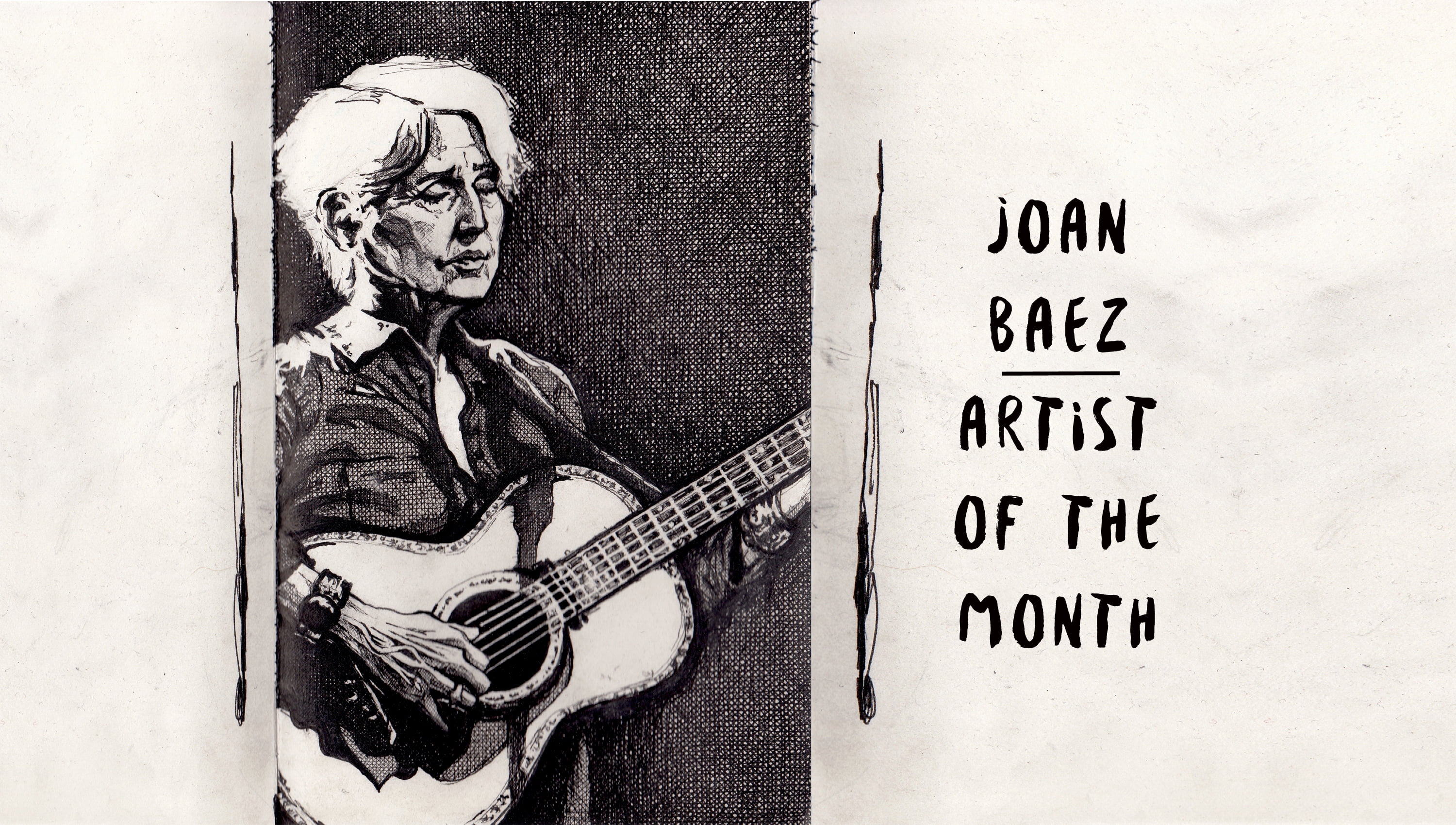
Joan Baez admits there’s a gaffe in “Civil War,” a harrowing song of uprisings, both personal and public, on her new album, Whistle Down the Wind. “There are a couple of words that come out funny,” she says, “and there’s one where I sound like I have a big lisp.” It’s hard to catch that particular mispronunciation, especially as the lyrics are littered with sibilant S’s (“… this civil war”) that might blur her words together, and those mistakes may not be apparent to a casual listener or even an obsessive fan. But Baez hears them every time.

Partly, those blemishes are the byproduct of the recording process, which was loose, casual, and largely unrehearsed. Baez made the trip from her home in the Bay Area down to producer Joe Henry’s studio in Los Angeles, where she worked with a band of session musicians who have become regulars on the albums he has helmed for Solomon Burke, Lizz Wright, Bettye LaVette, and Over the Rhine. She would play a song a few times for them, enough to give them a sense of the piece and the ideas she wanted to convey. “I didn’t stop to say, ‘Listen, we’re going to hold this note for this long and do this thing here,’” says Baez. “I just didn’t know any of that. We just pieced everything together.” As a result, “We’ve got mistakes all over the place, and we didn’t bother to fix them, because the feeling was right. We didn’t want to sacrifice that feeling in the song for some technicality.”

Henry agrees, arguing that a mistake isn’t a mistake, if it actually strengthens the song: “To me, it’s only a mistake if it breaks the story and takes you out of the trance. I don’t hear that happening anywhere on the album, because people are playing together. They’re in a real-time conversation, musically speaking. They’re in a moment of discovery together, in real time. Nobody is playing anything by rote.”

Least of all Baez. Sixty years into a storied career, she is still searching, still discovering. Whistle Down the Wind is her first album in 10 years, and she has intimated that it may be her last. If so, it will be a remarkable swan song: a collection that gauges the tenor of 2018 just as intuitively and authoritatively as her self-titled debut did in 1960 or Diamonds & Rust did in 1975.

Baez speaks through the songs of other writers, bending them to the present moment or finding new implications buried in the lyrics and melodies. There are two Tom Waits character studies, odes to personal stubbornness, whose melodies and sentiments fit so well with Baez’s delivery that you’d think he wrote them specifically for her. She covers Zoe Mulford’s “The President Sang ‘Amazing Grace,’” about President Obama’s impromptu performance of an old Sacred Harp hymn at the funeral of Rev. Clementa Pinckney. Josh Ritter’s “Silver Blade” sounds like a response to the traditional ballad “Silver Dagger,” which has haunted Baez’s set lists for half-a-century.

Whistle Down the Wind is not interested in replaying old glories or indulging any nostalgia for the heyday of folk music. And that’s why those technical mistakes matter so much. Even if you don’t hear them, they nevertheless act on your subconscious. They increase the intimacy of the recording, making these songs sound more direct, more forthright, more urgent. Moreover, they speak to the messiness of what has become Baez’s truest subject: the times. Certain ideas and issues — whether it’s civil rights in the 1960s or gun control in the 2010s — are much more complicated and unwieldy than the means by which we choose to address them. It is less the fault of the song than the singer. As well intentioned and as righteous as an artist may be, the implication is that she or he remains an imperfect vessel for the song and the ideas contained within. Leaving that lisp in “Civil War” is Baez’s way of acknowledging that fact.

The miracle of her long career is that she still believes mightily that such songs are still worth singing, that they can speak to their historical moment, that music still has a function in the everyday life of a community or a nation or a planet. “It’s community building,” Baez says. “It’s empathy building.”

In the 1960s, that belief placed her at the epicenter of the folk revival, when she played demonstrations as routinely as she booked concerts. Like Woody Guthrie and Pete Seeger, she was armed with a guitar, an encyclopedic history of folk music, and a strident sense of mission. Unlike those two influences, she had a high-flying voice, one that swooped playfully around her upper register. In recent years, age has robbed her voice of its former agility, but on Whistle Down the Wind, it has grown deeper, taking on a slightly rougher texture, yet retaining its original authority and compassion.

Her peers might have taken determined steps away from the responsibilities of protest music, but Baez simply expanded her scope and subject matter. Especially in the 1970s, she found new ways to mix the personal and the political. Never a confessional singer/songwriter — at least not in the way the West Coast folkies were — she still put a lot of herself in her songs, whether they were about her own personal relationships or those between communities. “I don’t know how I would have done that stuff back then without the music,” she says. “That was such a big part of it.”

Few folk musicians of her generation managed to keep the audience rooted in the foreground of her music. Her songs speak to “you,” but in most cases that “you” is plural. On her cover of “Another World,” by Anohni, who previously performed as Antony & the Johnsons, Baez bangs softly on the frets of her guitar, creating a gently frenzied pulse for lyrics about leaving this world and finding a new one. Her version is an ecological warning, a life-size take on a planet-size woe.

“I’m gonna miss the snow,” Baez sings. “I’m gonna miss the bees.” As the song continues, that guitar thrum becomes a timer counting down the end of a life or possibly the end of all life. “The song is as dark as it is beautiful and as beautiful as it is dark,” says Baez. “It’s spellbinding. [Anohni] turns the glass upside down. It’s not half-full or half-empty, but upside down.”

Baez changes the song in one crucial way. In her original, Anohni sings, “I’m gonna miss you all.” Baez adds a new word: “I’m gonna miss you all, everyone.” It’s a small change that doesn’t disrupt that melody or change the song in any dramatic way, but it does give an idea of the audience Baez (and Anohni) imagines for herself. She is addressing that “everyone.” “Joan understands very well that music is about community,” says Henry. “It’s about gathering people in real time to a pointed moment. It’s always and only about community for her.”

That idea is ingrained in her vast catalog, although it grows more poignant now that her career appears to be winding down. “When I go tootling around the world, I’m seeing so many different audiences,” Baez says. “I’ve played a lot of festivals in Germany and adopted France as a second country. I do five songs in French for them. I have a song for each country, or sometimes it’s just a line. It means so much to people, if you sing something to them in their own language. It’s hard work, but it’s a way to thank people for showing up.”

It’s also a way of speaking to them more clearly. In 2009, she recorded a simple YouTube clip of herself, presumably seated in her kitchen, singing a version of the old spiritual “We Shall Overcome.” It’s a song she’d sung countless times, but this version was both in English and Farsi, and she dedicated it to the people of Iran, who were protesting the contested election of President Mahmoud Ahmadinejad. “The lyrics were written out phonetically. I couldn’t possibly remember them. And they don’t have the same scales, which meant I couldn’t get the notes right. They just didn’t exist in my vocabulary of notes.”

For Baez, music not only speaks to these communities; it binds them together and can, in some ways, define them. Every movement demands a soundtrack, and Baez is under no illusion she can provide one for March for Our Lives or Black Lives Matter or #MeToo. “We need a brilliant anthem so people have something to sing, so they don’t have to shout so much. I wish I could write that kind of thing. But it’s so hard. Still, I think it will come.”


Illustration by Zachary Johnson

Blind Boy Paxton: A Culture Between Each Other

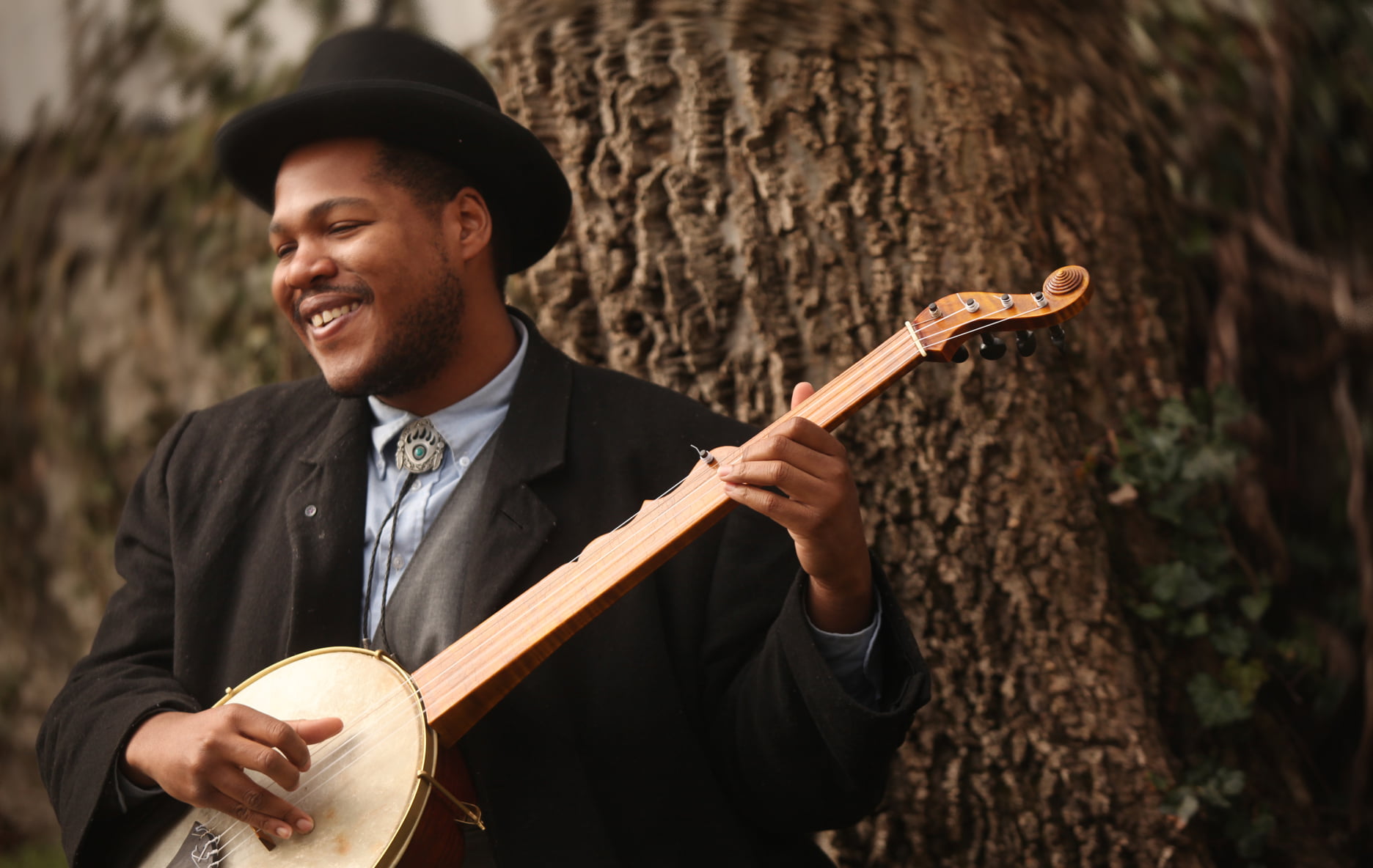
At first glance, everything about Jerron Paxton looks and feels like a journey back in time to the early days of roots music, blues, and American folk. His effortless juggling of instruments — from harmonica to fretless banjo, to guitar, to fiddle — his humorous banter, his rustic stage wear, even his on-stage moniker, “Blind Boy” Paxton, all conjure past musical eras. The songs and stories Paxton presents don’t come from dusty songbooks, obscure recordings, or forgotten archives, though. They were each a part of the soundtrack of his childhood growing up in South Central Los Angeles. In an area most famous for hip hop and R&B, a vibrant musical tradition flourished, starting from the deep southern U.S. and traveling along Interstate-10 all the way to L.A.

Paxton’s connection to these songs — to these nuggets of American, African-American, and working-class cultures — shines through his performances and recordings. He is not merely a preservationist mining bygone decades for esoteric material or works that fit a certain aesthetic or brand. He simply takes music that is significant to his identity, his culture, and his experience and showcases it for a broader audience. Its value does not reside solely in its history or in the authentic replication of that history, but also exists in its present, its relevance to modern times, and its future, as well.

The music you make and perform seems like such a time capsule — a distillate of past eras, past times, and past places. How did you come to appreciate, love, and make music like that, growing up in Los Angeles?

That, right there, sort of brings up my perspective, my reality in the sort of music I play. The reason I play that type of music is because I am from Los Angeles. South Los Angeles is home to the largest Creole and Cajun population outside of Louisiana. It also has around 20,000 Choctaw Indians. Most of the Black people from the areas I grew up in, around South Central, were all from the deep South — usually Louisiana, Mississippi, Arkansas, Texas, and Alabama. For us, that’s the music we listened to at the house. That’s just what we called “down home blues.” You couldn’t have a party without down home blues being played. That’s how I was raised.

Most of my friends that play music similar to mine got into it from Bob Dylan or the Anthology of American Folk Music and all that. I didn’t need those things. This music was culturally relevant to me back then, as it is now. I’m starting to realize, as I get older, that I spent most of my youth making friends with older people. Most of them were on their way out. Most of my friends were born between 1916 and 1945. There weren’t any kids on my block, so by the time the first little kid was around, I already had a personality when I was 7 or 8 years old and I already had a type of music I liked, which is what I present to people now. For me, it’s not some cachet in time; it’s the music of my youth, and the music of my present.

People don’t often think of Los Angeles as a place where blues would originate. Why do you think that is?

Well, Los Angeles is way out in the west, for one thing. Most of the nation’s culture is east of the Mississippi, a lot of the time. I think people expect Californians to be a bunch of surfers. We’re a diverse group of people out there. Where I was born, I was closer to Las Vegas and Arizona than San Francisco, so the culture up there was totally new to me. I had never seen such a thing as San Francisco. I grew up thinking there was not much above the 10 freeway. [Laughs]

That’s the road that brought the family from Louisiana to Los Angeles. It made Los Angeles the last stop on the Chitlin Circuit. The furthest west and south you can go on the Chitlin Circuit. There were great artists out there to support it. T-Bone Walker was out there. Lucille Bogan lived for a period out there and was buried out there, same for Johnny St. Cyr. Jelly Roll Morton spent a good deal of the ‘20s out there. We could keep going on and on about great musicians from Los Angeles. It’s a big, diverse place. South Central had some of the best blues and jazz bands in the world. Now we get known for nothing else but hip hop.

Where do you find these songs, besides having grown up with them? Do you ever struggle with finding the right way to care for and curate them in a modern context?

Whew. That’s a big question. [Laughs] I always try to play songs that fit with modern times. My grandmother grew up in the bad ol’ days and very much did not want me to play songs about the bad ol’ days. All of these songs about agriculture and cotton and shit like that, she wanted no part of. She liked all the good country songs. In her generation, songs like “She’ll Be Comin’ ‘Round the Mountain” were big hits.

Me, personally, I take her part in that, and I play the songs that are relevant nowadays — about love, about the world, about nature and the beautiful things. Sometimes music doesn’t always have to be so serious. A lot of music is tunes and ditties and things that just put you in a certain place. The blues is a bit serious, which is why sometimes I shy away from playing and singing them for an audience who have no idea what I’m singing about, usually from a cultural basis. I find myself, when I play for a different audience, having to explain things about older songs. Rather than do that, I’d just play some music that they can understand straight off the bat.

That makes a lot of sense. You are going to have those cultural barriers crop up, from time to time.

I don’t have my audience’s perspective. I can’t really imagine what it’s like growing up any other way than how I did. I can’t put myself, culturally, in their shoes. I’m used to the audiences from where I grew up that just dug straight-up music. That’s how I present it to people. I think that’s why I get a reasonable reaction from the crowd — because I treat them and the music as what it is. It’s good entertainment. They paid to see me do my thing. That’s what I’m gonna do. I’m not gonna change it up too much just because they ain’t part of my culture. If they start doing things, like clapping on the same beat that they stomp on, I tell ‘em, “That’s against the rules.” [Laughs] “You’re a stereotype, and you should stop that.”

You don’t feel that you get pigeonholed as a novelty?

The only pigeonhole I feel, sometimes, is when it comes to the subject of the blues. I love playing the blues. I grew up playing the blues, but I also play a lot of other kinds of music. Just like the people who get called “blues musicians.” They played every kind of music. I’m more modeled after some of them than some people would think.

People would come to see me sometimes and expect to hear a concert of nothing but down home, Muddy Waters, and this-that-and-the-other. They’d say, “Why do you have a banjo? Why do you have a fiddle and harmonica and things like that? Why do you play 18th- and 19th-century pop songs on those instruments?” And I say, “Cause that’s what everybody did!” They played every kind of music. Back then, in the community, they’d never allow themselves to be pigeonholed as “blues musicians.” They were musicians. They could play any type of dance, any type of function necessary. I try to be the same way. That’s what I’m after. I get invited to blues festivals, and I’ll put on a majority-blues show, but I’ll keep it diverse. I’ll play blues on all my instruments and play it in a way you don’t expect.

Where do you see a place for this kind of music, then? So many genres and formats, whether intentionally or unintentionally, tend to exclude more foundational, vernacular forms of music. It’s so primordial. It gave rise to so many other genres. People kind of gloss over it. And, also, through revisionism, so much of it gets left behind. Especially when it comes to Black identities. The music is appropriated and the history gets left behind. Where do you want to see this music go?

I want to see it get to everyone. And I want to see everybody enjoy it. It would be very nice if people from its culture, like myself, would take it up again. There are very few of us. The ones that do, I find, do well. I feel so happy that Kingfish is out there, and my buddy Jontavious Willis is out there. They destroy the blues. They kill those guitars, and they sing beautifully. I think most of that is from understanding. It comes from a certain place. I come from a maternal culture, and it comes from hearing your grandmother sing things, then your parents respond in certain ways, so you understand it on a very personal, very spiritual level. That’s most of the identity in Black culture, these little things. Most of our culture is between each other. A lot of the best parts of it won’t be televised. A lot of the worst parts of it tend to get exploited, because people want to make money off of it.

I’d love to see [the music] go back into the community and see people of the community value their own folk music. I’ve noticed Black culture is one of the few cultures that hasn’t had its folk music presented in a beautiful and proper way. Go to Ireland, Scotland, and even Appalachia, and watch how they treat their music. It’s everywhere. It’s on the radio. It’s in your face. And people are educated about the instruments — everyone has one — and they’re easy to get. But there were no music stores where I grew up where you could get guitars or harmonicas. There was just one or two, and they’ve since gone. A lot of those other places get government help for their arts, to push the arts forward. That’s why you can still have fiddle competitions all over those parts of the country. But there hasn’t been a fiddle contest in South Central for a hundred years. It’s a doozy. And I know the audience also won’t understand it from a cultural level because, to most in the audience, it’s considered throwback music. I think that’s one of the biggest barriers getting it to cross over — that the popular audience, the white Anglo-Saxon Protestants, consider it throwback music that doesn’t really exist as a living, breathing thing anymore.

One thing you touched upon earlier — how did you put it? It’s a funny thing. I hope I don’t upset people [saying this], but it’s a funny thing being one of the exploited peoples in American culture. It’s this crazy paradox in that the real Black music, the music of protest that’s yours and you think of as apart from American culture is so much a part of American Culture that when America uses its mighty power to reach the ends of the earth with its influence, you’re wrapped up in it! Your little folk pride and joy, one of the many cultural musics you’ve put into the world — blues — has gone global. That’s funny enough. It’s a paradox having music that is so foundational to all of American music, that influences people as far as the eye can see — made by a very small, oppressed group of people.

You’re based in New York City now. You’re playing the 10th Annual Brooklyn Folk Festival coming up. How does the New York scene connect with the community that you had in L.A.?

I didn’t have much of a career in Los Angeles. I left Los Angeles, when I finished high school. My career has been in New York City. I moved to New York to play stride piano. It was my favorite kind of music. I’d play stride piano and six-string banjo in a lot of orchestras around here. Hot jazz, ‘20s jazz, is a big thing in New York — still is — and I play it every chance I get. Then my solo career took off, and now I get to present to people the music from when I was a little kid — the down home music I learned at home, sitting on the back porch. I take it all over the place in New York.

I didn’t have a lot of faith that people wanted to hear the music like this. Some wonderful places have opened their doors to me saying, “Oh, no, we dig what you do.” I get a kick out of playing for New Yorkers — they’re very ethnic. They have an accent. They have a culture all their own. They’re their own sort of people. I get a good kick out of playing the blues for them. They have no damn idea what I’m doing, half the time, but they dig it, because they’re people. That’s the thing about what they call “ethnic people.” Ethnic people get to be real people — that’s why they’re ethnic. That’s why Cajuns and Creoles are like that, Appalachian people are like that. Down home Black people and Chicanos, they’re all like that. They can accept the music. That’s what I like best about all branches of folk music. They get it.


Photo credit: Bill Steber

The Giving of Voice: A Conversation with Moira Smiley

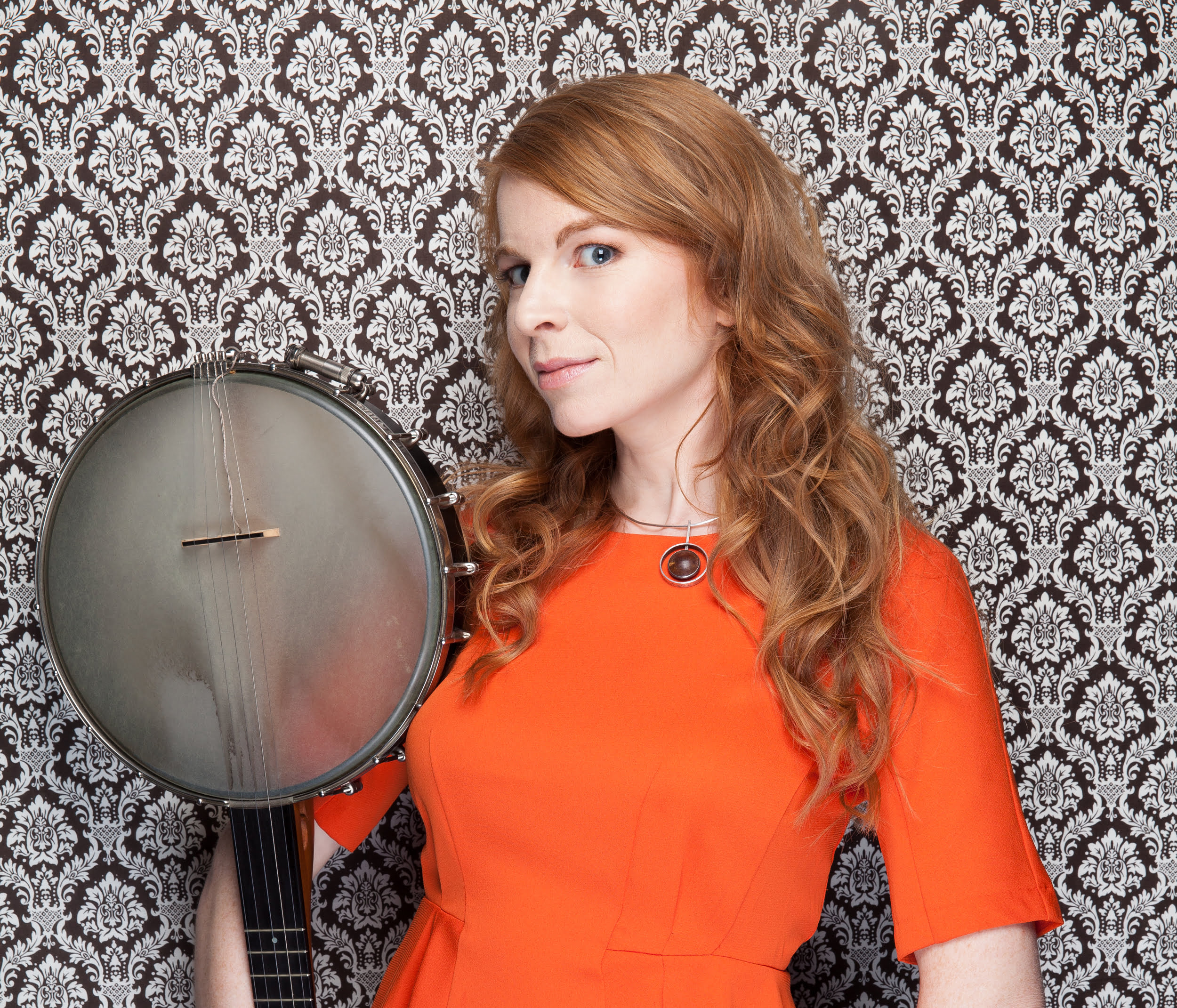
There’s a video on YouTube of Moira Smiley leading a gathering of more than a thousand high schoolers in her voice-and-body-percussion arrangement of blues great Lead Belly’s “Bring Me Little Water, Silvy.” “Sing with our outside voices!” she exhorts them. No matter where she is, she’s all about singing out, using her voice, encouraging others to use their voices, to sing out loud.

Smiley definitely uses her outside voice, and a few other voices, on her new album, Unzip the Horizon. It’s a bracingly wide-ranging set of original songs drawing on everything from her experience in chorale work to explorations of Eastern European folk music to her time as a touring singer and percussionist with boisterous pop experimentalists Tune-Yards. Tying it all together are with two traditional American songs from the repertoire of blues singer Sidney Hemphill Carter, as recorded in 1959 by folklorist Alan Lomax.

She also enlisted an impressive roster of other voices for Unzip: Leah and Chloe Smith from Rising Appalachia, English neo-traditionalist Sam Lee, folk-and-more duo Anna & Elizabeth, Seamus Egan of the Irish-American band Solas, banjo innovator Jayme Stone, and participants from the Calais Sessions — a recording project with international musicians working with refugees, many of them unaccompanied children, living in hardship of the Calais “jungle,” a makeshift encampment in France.

And then there’s Tune-Yards’ life-force, Merrill Garbus, partnering on the rhythm-forward “Bellow,” which serves somewhat as the album’s mission statement: Please don’t give up. Please don’t hide your voice. So many people did not have that choice.

Smiley has lived by those words, taking seemingly every opportunity to explore musical and cultural avenues. In addition to her work with Tune-Yards, Solas, Stone, and the Los Angeles Master Chorale, she’s been featured on jazz pianist Billy Childs’ acclaimed tribute to Laura Nyro; studied and sung music ranging from the compositions of 12th-century abbess Hildegard Von Bingen to 20th-century sonic revolutionary Karlheinz Stockhausen; and sought and shared songs and sounds in such spots as a rural Ireland, rural Appalachia, and refugee camps in Europe, where she has volunteered with the humanitarian organization Expressive Arts Refuge.

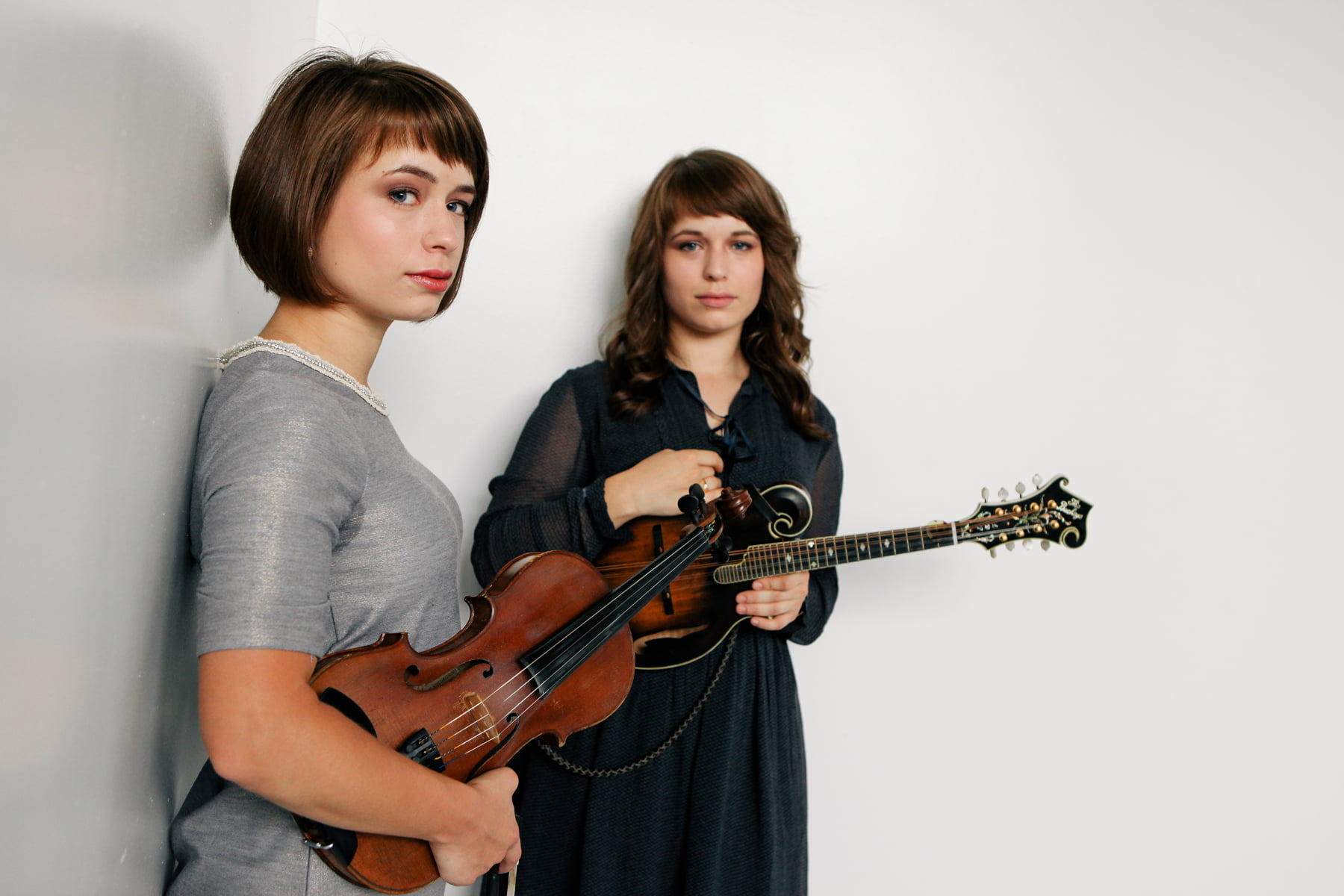
And for more than a decade, women’s ensemble Moira Smiley & VOCO has mixed scintillating vocal harmonies with innovative use of various acoustic instruments and body percussion, their 2014 album, Laughter Out of Tears, diving into songs from Scandinavia, the Balkans, and Appalachia, along with originals inspired by those traditions, a Robert Johnson tune, and a moving version of Woody Guthrie’s ever-poignant “Deportees.”

All of that is artfully integrated into Unzip the Horizon, the work of a significant talent finding new possibilities in her voice, literally and literarily. Or as she and Garbus sing on “Bellow”: You ask me why I sing softer now. Did the world beat me down? This is the way we call the unknown, lift the veil to the other side.

There’s a word that’s in the lyrics of at least four songs on this album: broken. Do you see singing, music as a way to repair breaks in the world?

First of all, I love the word “broken.” And I love the idea of it because, from decay and brokenness, always come the new things. But also it’s that reminding ourselves to look around and see all the ways we’re broken. We’re often pushing forward, trying to ignore what’s broken. I’m interested in the compassion of noticing the broken and, yeah, trying to heal it — and realizing that some of it we can never heal.

And music has a role in that?

I think so. Sometimes I think music is just child’s play and has no power. But when I look out at a group of kids that are moving together, singing, as I do with all this chorale stuff, and feel that pride and joy, that’s palpable. Music does have a way of lifting us up together. That’s obvious, right? I don’t know if it changes the world. I feel super-cynical about it, but also hopeful that I’m making a difference.

It’s about giving voice to people’s stories.

It’s true. There’s a lot of evidence in the traditional songs that you make a difference with the singing. Some of the Balkan songs, a lot of Bulgarian songs are about lamenting the role of a woman — that she’s powerless to say where she goes and who she loves. The songs express the powerlessness and, at the same time, acknowledge the roles of the woman and also empower her.

And music has been a force for overcoming oppression — the “Singing Revolution” in Estonia, the role the rediscovery of folk music helped restore national identity in Hungary and elsewhere as they broke from Soviet domination.

As a force against colonialism, it can be very powerful, and that’s across the board. I was just reading Maria Popova. She does Brain Pickings, every week sends out a collection, writes articles with tons of literary references, everything from Zadie Smith to Camus. She’s incredible. She was talking about how Zadie Smith speaks of “othering,” and the relationship of the “other” to us.

I just wrote another song that talks about anger and fear being in the same room and the polarization we see in our country — anger in the other side because you fear the other side because you don’t understand the other side, which creates a cycle.

What did Merrill Garbus draw from you in your Tune-Yards stint?

She drew on the whole spectrum of my voice and also my physicality, which I loved. I was dancing every night! The percussive aspect of her music got into my bones. The interest I had in body percussion, got to play around for a couple years with her and using the fullest voice was such a pleasure. We were singing at the top of our lungs and dancing, percussively, behind her.

Did you write songs on the album thinking about who would sing and play with you, or did you write first and invite guests after? For example, “Wise Man” sounds tailor-made for Sam Lee.

In that case, the song came first, but I really wanted Sam to sing with me on the album. The song came a while ago and when I was thinking of it — a love story, really — I wanted it as a duo with a man’s voice and thought he would be perfect. I adore Sam.

And “Dressed in Yellow” with Anna & Elizabeth?

I always knew I wanted to have them. I wrote “Dressed in Yellow” on the tour bus with Tune-Yards and always heard Anna & Elizabeth singing those responses. It was really shortly after the creation of the song that they came to mind.

The song sounds like a mix of American “shape note” singing and the playfulness of the kind of things June Tabor and Maddy Prior did with English folk songs in their Silly Sisters duets.

Oh, yeah, totally. It’s in the shape of a child ballad [from England], like “The Devil’s Nine Questions.” [She sings some of it] It’s kind of that ballad form, with the statements and responses, and I threw in a little bridge at the end.

And then Leah and Chloe Smith for Rising Appalachia along with the Calais Sessions performers on “Refugee?”

When I was singing “Refugee,” I forget how the time-line went, but [Leah and Chloe and I] were in touch. We’ve stayed in touch over the years, but were talking about getting together to do something, and that made me realize they’d be perfect, with their social consciousness right out front.

The other parts, with the Calais Sessions, they were doing really powerful, well-regarded work in the Calais Jungle, respected musicians. I had [Anglo-Nigerian percussionist] Sola Akingbola in a friend’s living room with a Kurdish percussionist, Rekan Ibrahimi. Sola is from the band Jamiroquai, and went to Calais to work with the Calais Sessions. That’s a really cool bunch of musicians and they released a beautiful album, too. Everything from Eritrean church songs to Kurdish folk.

You have worked with refugees, yourself, so the inspiration for the song is personal.

I’ve been for the last couple of years going with a group of Americans to teach music, bring medical supplies, volunteer at refugee camps in Europe. It’s called Expressive Arts Refuge. I was invited by Betsy Blakeslee, who has spearheaded this throughout the world. She also worked in the Bosnian war in the ‘90s. She’s interested in using the arts to help others.

When we were in the Calais Jungle, and then were in Athens last summer, there were a lot of Arabic-speaking people there. They also speak their own languages, but Arabic is spoken across cultures, and I came to realize what a vast and ancient music culture that is — and how modern it is. I recorded a lot of young Arab rappers, fully fledged hip-hop artists, but they were also playing ouds and sazzes and all mixed together. That was an eye-opener back into some of the early music work that I’ve done, music from Spain in the 1400s and what happened after that [the expulsion of the Arabic, Moorish and Jewish people]. So here we are again, in a different, but related era of diaspora. What can we learn from the past? How can we be compassionate to each other as these big forces are hurting us and our brothers and sisters?

Do you see yourself as a musicologist or folklorist?

Roughly. I have long worshipped that role, the ethnomusicologist, song collector, for sure. I’ve done it, but I wouldn’t call myself anything official.

But you’ve made a point of seeking out singers and songs all over the world, so you are doing that.

Sitting in a field with the Ethiopian musician Seleshe Damessae, that was one of the earliest mind-blowing experiences for me. Literally, sat in a field in the shade of this tree and he just said, “Okay, I’ll give you some songs.” That was years ago … could have been 18 years ago. Those experiences — in kitchens, at the end of a concert, at a party — that’s where the business is. That’s where the magic happens.

You have the two songs on this album that come from the Alan Lomax archives — “Worried Now,” which is a fairly well-known song, and “Leather Britches,” which is probably less familiar. You play around with both of them in your own distinctive ways.

That comes partially because of this long-time project with Jayme Stone, searching around the Alan Lomax collection. The global jukebox is what Alan named it, and you can look it up at culturalequity.org. Enormous resources. Those two songs are from stumbling around on there. She [Sidney Hemphill Carter] sang whatever she could remember, some blues. And Alan said, “Do you have any songs from when you were a kid?” That’s what came out.

There’s a fiddle tune called “Leather Britches.” When I first brought this song out, I performed it with body percussion and singing for a long time in concerts. It was kind of an outlier for this album, but it’s me playing around — prepared piano and putting weird stoppers on the banjo, more fun and experimental.


Photo credit: DeFurio Photography
Putting Words First: A Conversation with Sunny War

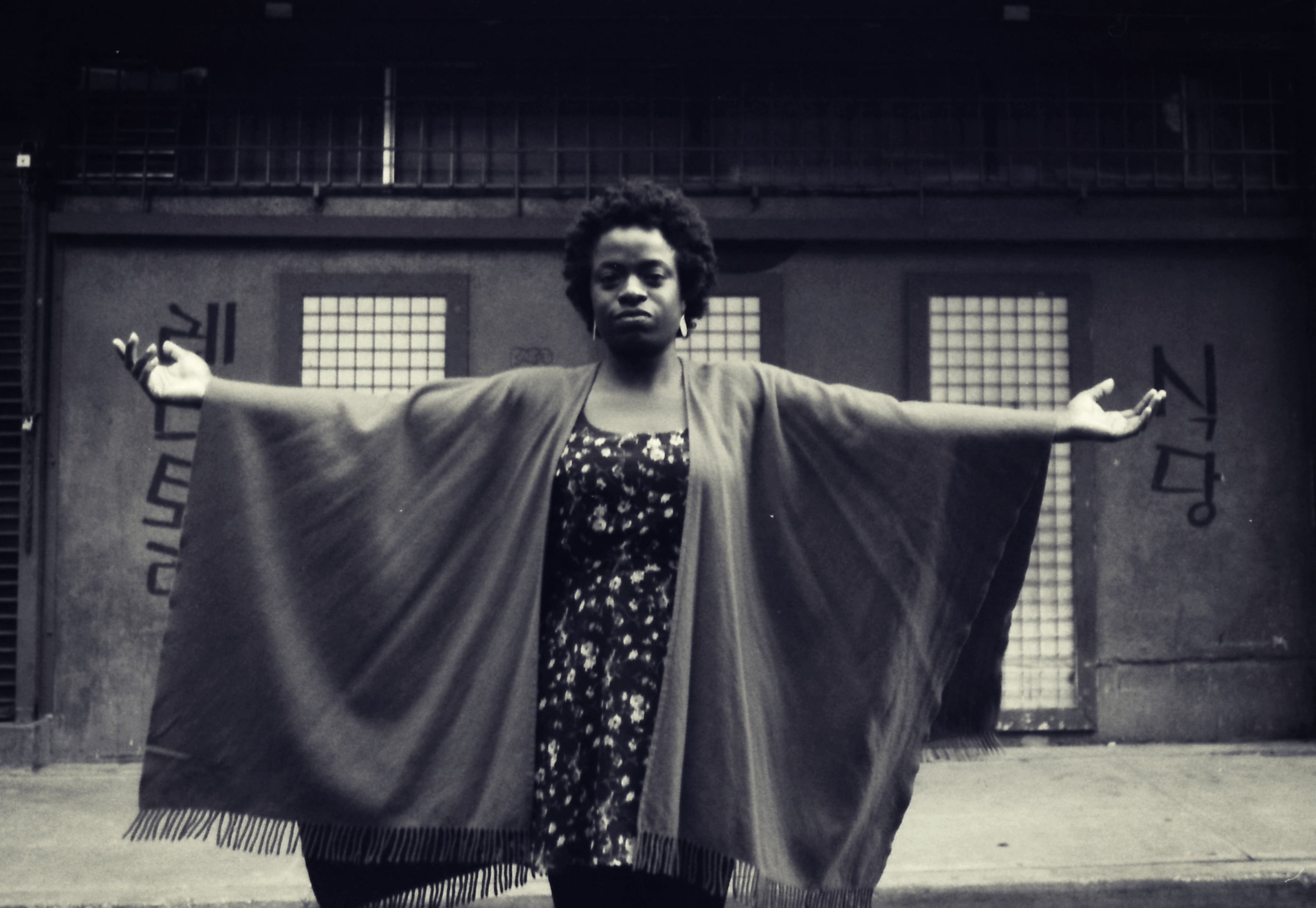
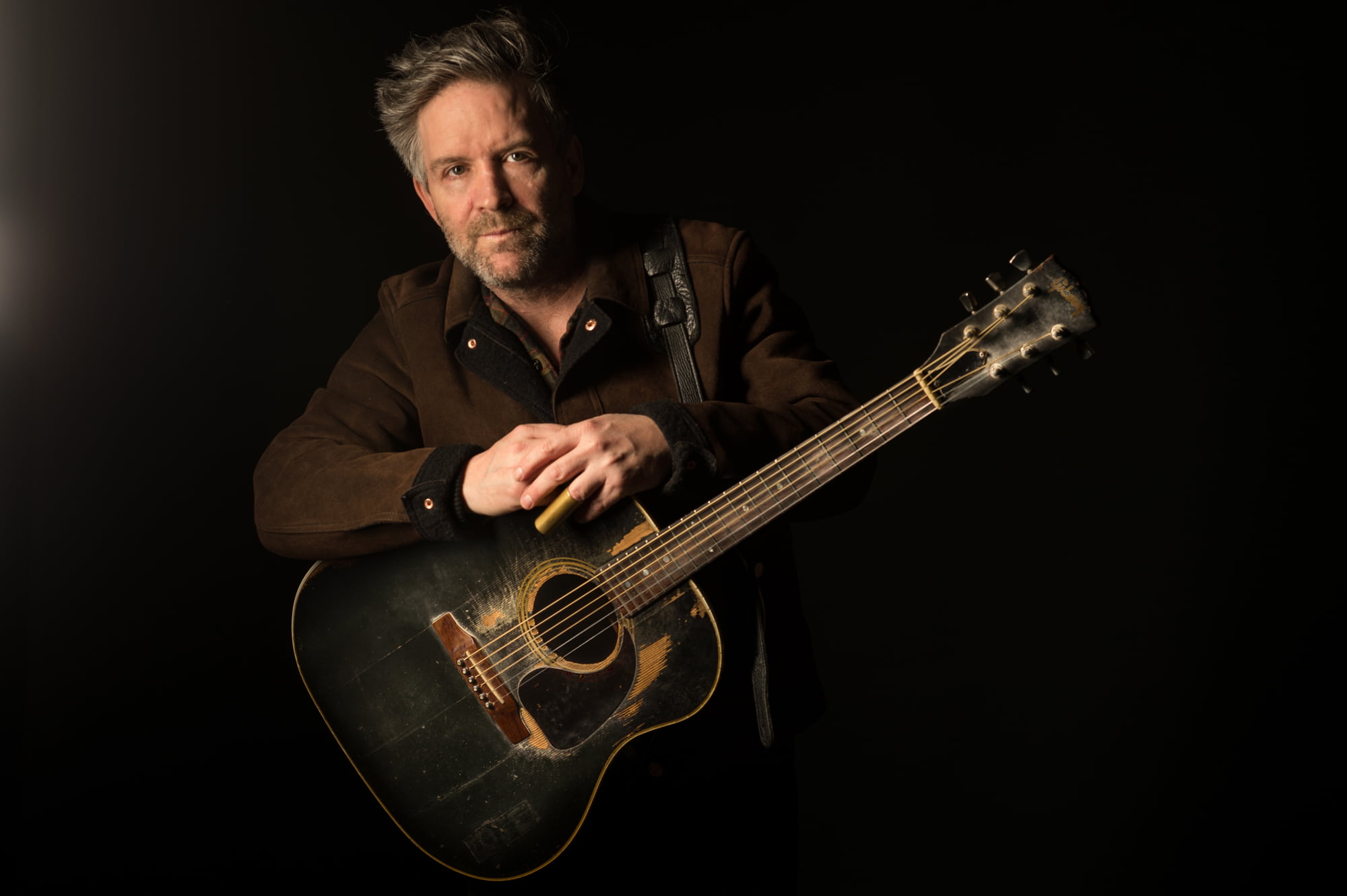
Sunny War (born Sydney Lyndelia Ward) stuns listeners to silence with her guitar playing. For some, it’s the way she plays — her finger’s dexterous ability to reach seemingly impossible places, playing a clawhammer style of guitar most associated with banjo and formerly with acoustic blues musicians. For others, it’s the melodic trance she creates as a result of that skill. Either way, she coaxes strange and hypnotic sounds from her instrument.

The nomadic Sunny was born in Tennessee, but spent her life following her single mother, as the pair moved from city to city and state to state, before she finally settled in Venice Beach, California. There, she picked up busking, a task that situated her at a crossroads involving performance and practice, and in turn helped her hone the guitar-playing skills that continue drawing such attention.

With her 2016 album, Red, White and Blue, Sunny employed a more traditional folk sound, but her new album, With the Sun, extends like an elastic to rope in folk-punk and a touch of Malian guitar work. Long drawn to brutally honest songwriting, Sunny challenged herself this time around to work from the lyrics first before building melodies around her words. The result is a set of candid songs touching on alcoholism, police brutality, self-loathing, toxic relationships, and more. If being a confessional songwriter means couching some of that confession, in order not to maintain a certain image, Sunny has no problem laying bare her truth. After all, she’s “Gotta Live It,” as she sings on that track. Her husky voice warbles for effect against her soft, melodically laced guitar, reminding listeners that the human experience is messy, and all the more beautiful for its imperfections.

Red, White and Blue colored within the lines of folk, so to speak, but With the Sun pushes in messier stylistic directions, and the results are extraordinary. What was the biggest change, in your opinion, between these two projects?

Red, White, and Blue, we had only three days to record the whole thing. I was younger, also. I guess that makes a difference, too, but I didn’t have that much time to even listen to it, and decide if I didn’t like something. With With the Sun, I was able to do stuff over. A lot of the songs on the album had a bunch more instruments on them, and then we would listen to stuff, and we’d write back and forth, and I was like, “Nah, that’s too much.” So now it’s very minimal. But if we only had three days …

It might not have been.

Yeah, I don’t even know. I’m a couple years older, and we spent almost a year working on it and not rushing on anything.

Your story struck a note with me because I also grew up moving from city to city. Within that nomadic existence, then, where has your sense of rootedness come from?

I think everywhere I lived, I felt like I was from Tennessee. If I went to a new school, people would say something about how I’d talk. I never had a Southern accent, but it was always a different accent than wherever I was living. When I went to Michigan, they thought I sounded weird. People were always asking me where I was from. I’m from Nashville, so I think I was always trying to hang onto that somehow.

You’ve mentioned approaching With the Sun lyrics first, as opposed to melody. Why set that challenge for yourself?

I feel like I’ve never really had good lyrics, so I just wanted to focus on that. Usually, I just play and I try to think of words that go with whatever I’m playing. I feel like I get trapped in a thing where it’s like I can only fit so many syllables in this space, if I want to use this riff, so I’m putting the guitar before … I may have more to say on whatever the song is about, but because I like a riff so much, I’m like, “No, it doesn’t work. I can’t play this, if I’m singing this.” I thought it’d be better to write poems, and then build around the poems. If you’re that obsessed with guitar, then you should just do an instrumental album or something. It wasn’t balanced.

There are some fascinating juxtapositions in the subjects you cover: “I’m a drunk and a dreamer” (“Gotta Live It”). Why was it important for you to portray this kind of complex humanity?

I don’t know. See, that just blew my mind. A drunk is a dreamer. It’s like you’re trying to stay in a dream state in a weird way.

True, I suppose I was reading it from an escapist point of view.

Yeah, but I feel like you’re only escaping because you’re … not dreaming, but you’re not really satisfied with reality. I feel like I know everything about alcoholics from AA. I’m like, “Man, these are some passionate, good people.” If I try to write — this is a challenge, too, because I have a lot of stuff that I don’t use because I don’t think it makes sense, so all the lyrics that I chose, it’s like there’s a lot of stuff where I was trying to write about a certain subject or something, and I can’t get into it because it was forced.

There’s this band, the Dicks. They’re an ‘80s Texas punk band, and the lead singer is this gay guy from Texas and his dad was a cop, and all his songs are so fucked up. He has a song where he’s like, “Come on and shit on me,” but basically, the whole song, he’s describing how nothing anyone does to him can be any worse than all the shit that’s happened to him. That’s the kind of lyrics I’ve always liked. I like feeling like I’m talking to the actual person because I can imagine he has a personality. A lot of writers might actually be saying something like that, but they’re like, “That’s too graphic.” They try to make it clean. I’m a raunchy songwriter who’s crazy and just says whatever they feel like.

And that’s the thing: Maybe those artists are playing into an image because of the commercial factor.

Yeah! Okay, like now they’re dead inside. They have all these hopes and expectations, that’s the problem. I’ve been trying to be a musician so long, that now I’m just trying to make songs that I like because I’m just like, “Fuck it.” I don’t even know what people like. I feel detached! I felt like I was trying to think commercially, also, but even if you study it — like what is a hit or what is successful musically — it doesn’t even make sense. Even if you’re a logical musician who studied jazz or whatever, it doesn’t even make sense at all. In the ‘90s, I think you might have felt like, “Man, all the music is garbage,” but now it’s like, “Damn, that was really good compared to now.” I feel like there are cool scenes you could try and fit into and still feel respectable about your own … I don’t know. I can find a lot of independent music that I love, but I don’t even know what it means to be a commercially successful musician that I like.

You said you included a surdo drum to imitate a heartbeat on “If I Wasn’t Broken,” and that you hoped the result felt soothing to listeners who were hurting. Sound healing is an interesting practice involving vibrations and rhythm — were you aware of that at all when creating the song?

Dang, that’s heavy. Well, I don’t know a lot, but I used to work for ayahuasca ceremonies.

Right, so you’d have to be soothing and calm.

When I did the ceremonies, I would only play instrumental music, and it would kind of be trance. There was a shaman, and then the shaman had an apprentice or something. They would come up to me, and be like — it would be depending on the chord, if there were too many minor chords — ”That’s too intense. You’re going to really freak someone out.” It was really serious.

One time, there was a lady, she had to move away from me because it was just too much. It’s like they were in a different state, but it made me learn about how … like I feel like every note and chord has a personality and some kind of way it can affect someone and give someone a mood, but you could really study it, I guess. And even the rhythm! If the rhythm would change a certain way, it might be too aggressive and freak people out, even if everything you’re playing is … it’s crazy. I learned a lot about what actual soothing is.

Maybe you didn’t study it, per se, but it sounds like you’ve absorbed something because especially on “The Change You Make” and “With the Sun,” there’s a melodic trance happening there.

Yeah, I think after doing the ceremonies I got more into playing softer music. I did it for four years. I met these people on the boardwalk and they invited me, and then I met the shaman. They did two a month. I thought it was creepy. The first day I went, I was like, “This is a cult,” because everyone was wearing white. It was weird to me. It was really hardcore hippie shit I’d never been exposed to before.

Especially if you have to be in the background not reacting.

I was just there trying to make some money and I was like, “Dude, what are you doing?” I was freaked out.

That would be intense.

But then I got used to it. I found out a lot of the people that were going to the ceremonies had PTSD from crazy stuff that happened to them, and they’d been trying to get help. It was pretty heavy and serious. It helped me not feel weird anymore about it because at first I was like, “These people are getting high in a really weird way,” but then I was like, “This is medicine.”


Photo credit: Florencia P. Marano

LISTEN: Peter Rowan, ‘Carter Stanley’s Eyes’

Artist: Peter Rowan
Hometown: Boston / Northern California
Song: “Carter Stanley’s Eyes”
Album: Carter Stanley’s Eyes
Release Date: April 20, 2018
Label: Rebel Records

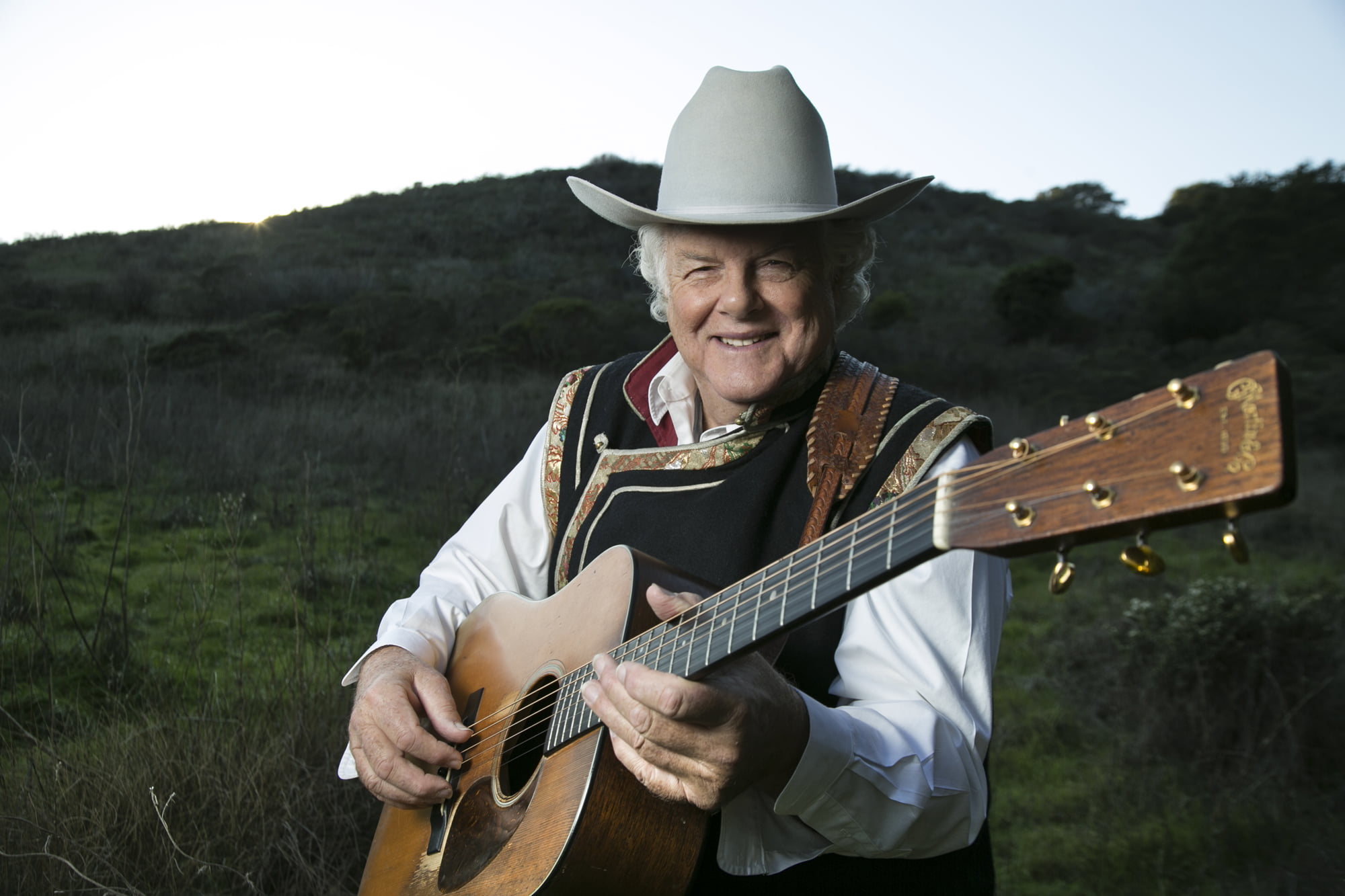
In Their Words: “We were playing over on the Tennessee-Virginia border, and Bill Monroe asked me to drive him up to the Clinch Mountains to have a meeting with Carter Stanley. I think, now, that Carter had received bad news about his health, and Bill wanted to lend his support. We drove up there, and I knew nothing as far as Carter’s health, but he didn’t look well. It was emotional, and I made it a song, after all.” –Peter Rowan

Jess Williamson, ‘I See the White’

Most of us can remember the first time mortality became more than just something we read about in books and saw in movies. Usually, it comes in the form of a grandparent dying, or a classmate gone way before their time. For me, it was the drowning of a friend in a river in Vermont the summer before my senior year of high school. Death went from completely intangible to heart-wrenchingly real. Those dreaded moments are a torturous reality of life, and they’ll appear often, and with increasing frequency, as we age. One day, it will happen to us, too. But sometimes, it’s something more subtle that reminds us how fast time is actually slipping through our hands: a stray gray on the head of someone we love, a knee that hurts a bit more than usual, an earlier bedtime that comes despite our better efforts.

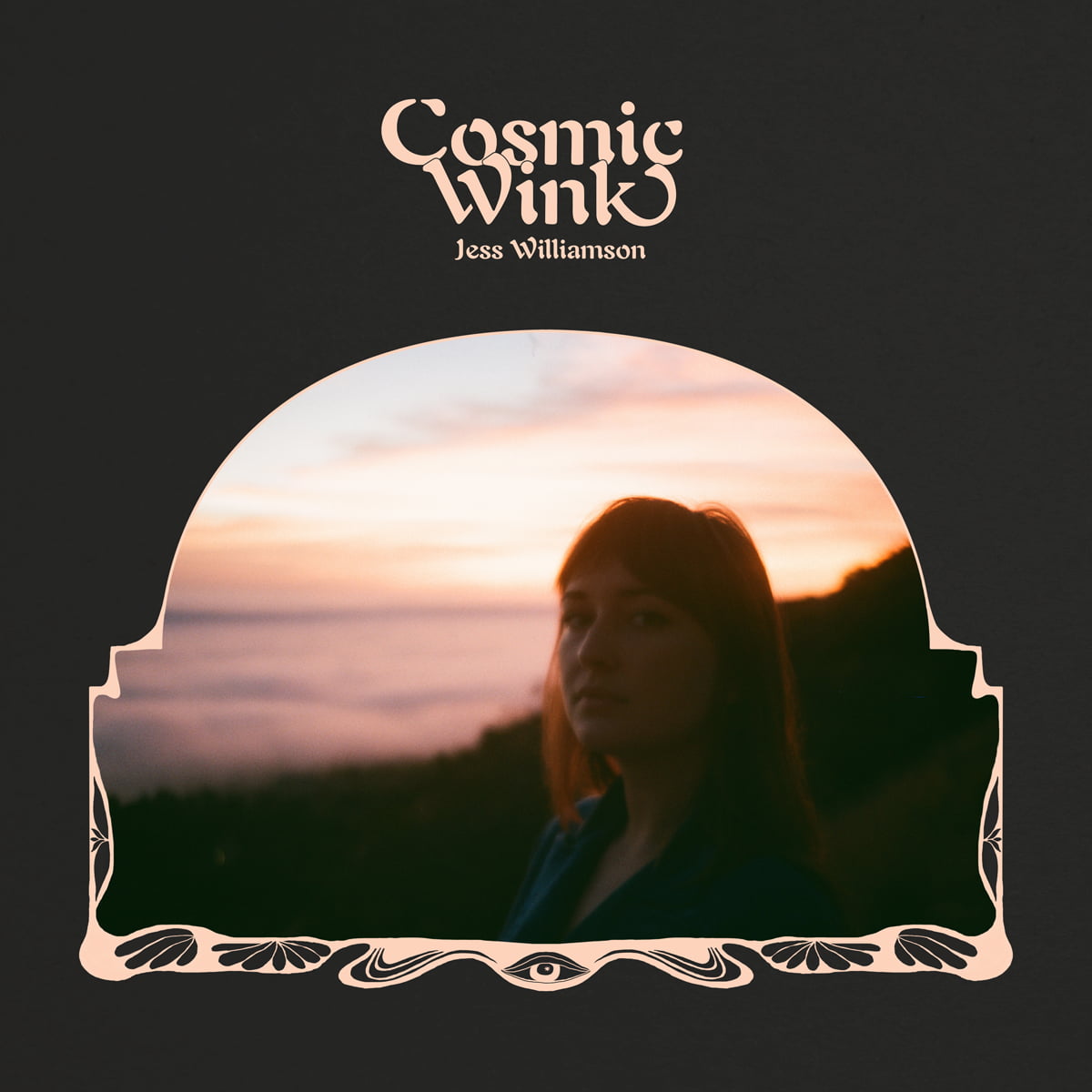
For Jess Williamson, that sighting is the “white” in her new song, “I See the White.” From her upcoming LP, Cosmic Wink, it’s a psychedelic folk mediation on the ever-rushing wave of time, and the exhausting, enraging concept of ephemeral existence. “We don’t make time; we take time,” Williamson sings, her vocals striking, ethereal, and commanding, evoking the legendary howl of Grace Slick. Pondering the limited nature of human life is never an enjoyable process, but Williamson makes a case for why it shouldn’t be shunned in favor of a more comfortable pastime — when the hourglass can shatter at any moment, we better live like there’s rushing water in there, not sand. Nothing will slow down the white that Williamson sings about, but “I See the White” is an important reminder that there’s some blessing within that mortal curse.

LISTEN: The Price Sisters, ‘Love Me or Leave Me Alone’

Artist: The Price Sisters
Hometown: Sardis, OH
Song: “Love Me or Leave Me Alone”
Album: A Heart Never Knows
Release Date: March 23, 2018
Label: Rebel Records

In Their Words: “We like songs that show real life, and that tug at raw emotions. Sometimes you have to take the good with the bad, and this song tells it like it is.” — Lauren Price


Photo credit: Amy Richmond

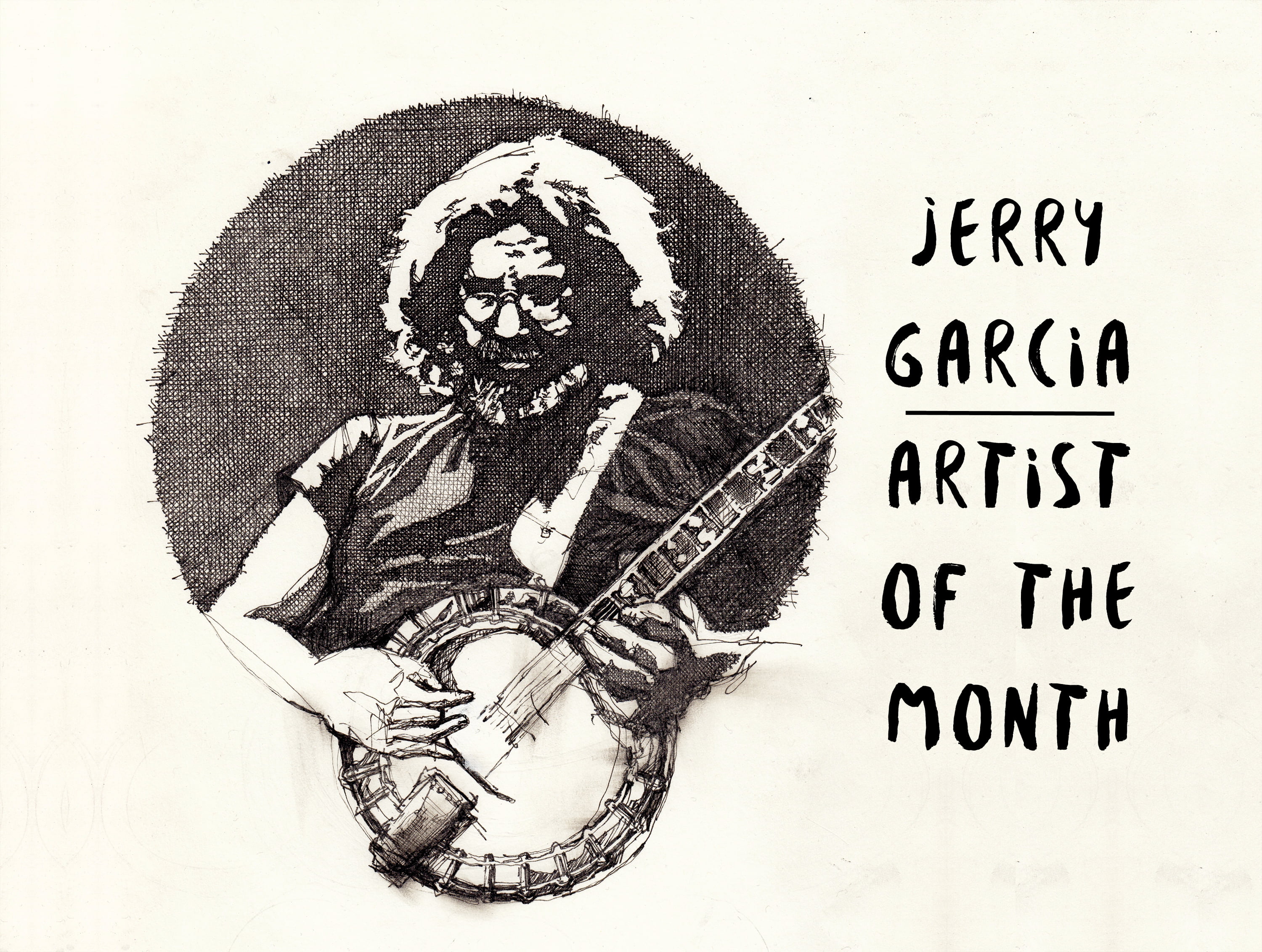
Jerry Garcia: Expanding the Musical Consciousness

Before becoming the psychedelic guitar-playing icon of the Grateful Dead, Jerry Garcia was already living a life completely dedicated to music. Heavily immersed in the folk idioms that coalesced with the beat poet scene in San Francisco — and in the peninsula towns of Menlo Park and Palo Alto — in the beginning of the 1960s, Garcia’s concentration, determination, and passion for musical collaboration planted the seeds for a force that would not only influence the world in song, but that would let loose a seamless tie to multiple genres through multiple generations. What’s now viewed as Americana, Garcia was creating with the Dead right from the outset. His impact looms far and wide, perhaps even greater as the years since his passing roll on. From the bluegrass world of the McCourys to esteemed guitarists like Mike Campbell of Tom Petty and the Heartbreakers, David Hidalgo of Los Lobos, and David Rawlings, to jam bands like Leftover Salmon, and the current generation of musicians like the National, Jenny Lewis, and Ryan Adams, Garcia’s ethos is being deeply felt and utilized.

Garcia had a mind hungry for knowledge and interested in art, comics, and horror films, even as music ran through his family. After initially getting an accordion for his 15th birthday and successfully trading that in for a guitar, the quest for constant improvement was born as he devoured the styles of Chuck Berry, Jimmy Reed, Buddy Holly, and Bo Diddley. As the ‘60s approached and the initial rock boom faded, Garcia and his friend (and soon to be Grateful Dead lyricist) Robert Hunter found themselves in the middle of a very fertile Bay Area folk scene. Being steeped in Harry Smith’s Anthology of American Folk Music led to a fascination with the Carter Family and then Flatt & Scruggs.

It was at this time, in 1962, that Garcia began his complete immersion into the banjo and the bluegrass style of Earl Scruggs. He formed the Hart Valley Drifters with Hunter and David Nelson (later of New Riders of the Purple Sage and the Jerry Garcia Acoustic Band), and the scene grew to encompass the likes of Eric Thompson, Jody Stecher, Sandy Rothman, Rodney Albin, Janis Joplin, Jorma Kaukonen, David Crosby, Paul Kantner, and Herb Pedersen. The Hart Valley Drifters performed at the Monterey Folk Festival in 1963 in the amateur division and won Best Group, and Garcia took the Best Banjo Player award, which strikes with irony as, throughout his career, Garcia would never consider music to be a competition of any kind. He was more into turning people on.

While absorbing as much music as possible and focusing on his craft with diligence, Garcia came into cahoots with people like Ron “Pigpen” McKernan and John “Marmaduke” Dawson through a string of continuous collaborations and a rotating cast of characters at joints like the Boar’s Head, Keppler’s Bookstore, and the Tangent. McKernan was the blues aficionado with the biker looks and heart of gold who would lead Garcia into the electric blues band the Warlocks, which then became the Grateful Dead, while Dawson would be the one who had the canon of songs for Garcia to base his pedal steel guitar learning around to form the New Riders of the Purple Sage.

But it was on a cross country road trip with Rothman in 1964 that Garcia met David Grisman, the young mandolin player to whom Thompson had tipped him off. It was at Sunset Park in West Grove, Pennsylvania, where acts like Bill Monroe and the Osborne Brothers were featured, where Garcia and Grisman first did some pickin’ together, and a friendship was born that would lead to musical ventures that would have more than a lasting impact.

Both Garcia and Grisman were imparted with some crucial advice from Monroe, which was to start your own style of music. Garcia, no doubt, led the Dead (as much as he refused to admit to any leadership role) to their unique musical domain, while Grisman created his own “Dawg” style of music that was the precursor of “New Grass” in the ‘70s. According to Grisman, “Jerry was always the true renaissance music man.”

While each had gone on to create their own paths, it was 1973 when they started hanging out together at Stinson Beach, picking and having fun, when Peter Rowan (a former Bill Monroe Bluegrass Boy member) joined in along with legendary fiddler Vassar Clements, and, needing a bass player, John Kahn was brought in. Old & In the Way was born. In typical Garcia nature, the musical fun led to some local gigs which, thankfully, were recorded by Owsley “Bear” Stanley. With the guitar and the Dead being Garcia’s main drive, getting back to the banjo and picking with his pals in Old & In the Way was not only stress free, but fun and a piece of his musical puzzle that really exemplified how the muse consumed him. It wouldn’t be out of the norm, at the time, to find him in the span of a week or two playing gigs with the Dead, Old & In the Way, and one of his other musical soulmates, Merl Saunders.

The release of Old & In the Way, taken from Bear’s recordings at the Boarding House in San Francisco in October of 1973, hit the world in 1975 on the Dead’s Round Records label. It was through the Dead Heads fan club mailing of a 7-inch, 33 rpm sampler that many fans got their first dose of Old & In the Way. Many of that generation — and a few that followed — were exposed to bluegrass thanks to that release. The album continued to turn on the masses and was widely respected as one of the best-selling bluegrass albums of all time.

While fame was never of interest to Garcia, the expansion of musical consciousness was, perhaps, the most beneficial and unintended consequence of his popularity. Just like the Dead were doing with their music — turning kids onto Merle Haggard, Buck Owens, and Johnny Cash songs — here, Garcia and Old & In the Way were turning rock and rollers onto bluegrass and the songs of Peter Rowan, the Stanley Brothers, and Jim and Jesse McReynolds. The aspect of turning people on to music was certainly not limited to bluegrass, where Garcia was concerned. The Jerry Garcia Band was his outlet for a good 20+ years, wherein he’d groove to just about any and everything. Motown, Louis Armstrong, Los Lobos, Allen Toussaint, Irving Berlin, Bob Dylan, Bob Marley, Van Morrison … the stream of tremendous musical taste was just about endless. And, of course, adding his own flair, passionate vocals, and one-of-a-kind guitar to it all made for hundreds of satisfying shows and numerous albums.

Jerry Garcia made music that was loaded with adventure. Improvisation was his nature, always seeking out what was around the bend, never wanting to play the same thing the same way twice. That adventure is what drew so many to him and his music. That adventure lives on, not only eternally in his music, but also through the lives, songs, and good deeds of those he inspires.


Illustration by Zachary Johnson

Canon Fodder: Tracy Chapman, ‘Tracy Chapman’

For the week of August 27, 1988, the number one song in America was George Michael’s “Monkey,” a crackling dance-pop tune off his multi-platinum Faith. Rounding out the top 10: Elton John’s “I Don’t Wanna Go On with You Like That” and Chicago’s “I Don’t Want to Live Without Your Love,” along with “Simply Irresistible” by Robert Palmer and “Sweet Child o’ Mine” by a new band out of L.A. called Guns n Roses. Lodged at number six — as high as the song would climb, but still remarkable — was “Fast Car,” by a young singer/songwriter named Tracy Chapman, who just a year earlier was busking in coffee shops around Boston and Cambridge. She had released her self-titled debut in the spring, and “Fast Car” had become a radio hit. She was a curious presence on the singles chart, as she was not a pop artist nor does she play power ballads: “Fast Car” is an acoustic ballad about poverty, hardship, and the kind of dreams that prove more burdensome than freeing.

She was never going to give George Michael a run for his money, but Chapman’s success in 1988 is remarkable for a newcomer making her debut, especially one who chronicles the lives of people who can’t afford to buy albums or cassingles. In “Fast Car,” a pair of lovers determine to escape their hardships together. “We gotta make a decision,” she sings, “leave tonight or live and die this way.” They move to the city, look for jobs, live in a homeless shelter, have kids, continue to struggle as much as they ever did. The end of the song is ambiguous, as the narrator tells her lover to leave: “I got no plans. I ain’t goin’ nowhere, so take your fast car and keep on driving.” Is she giving the driver their freedom? Or has her lover become extraneous, one more anchor weighing her down? Is it an act of love or of its opposite?

Bruce Springsteen is the obvious touchstone, in particular songs from Darkness on the Edge of Town and The River — his grimmest albums with his most desperate characters, many of whom drive fast cars and nurse dashed dreams. In other words, Chapman was not as much of an anomaly on the charts as she might have initially appeared. Just a year before, Suzanne Vega notched a number three hit with “Luka,” about child abuse and our responsibilities to the people around us. And even before that, there was a song that shares a story with “Fast Car,” albeit definitely not a sound: Bon Jovi’s “Livin’ on a Prayer.” As the Reagan era died down in the late 1980s, pop music was reflecting the woes of the country back to itself, and Tracy Chapman appeared in 1988 as the culmination of pop’s newfound social engagement.

Chapman grew up in working-class Cleveland, raised by her single mother who saved money to buy her daughter musical instruments. She began writing songs as a child and, after winning a scholarship to a progressive private school in Connecticut, Chapman began performing at the school coffeeshop. An anthropology major at Tufts, she developed a reputation, locally, as a protest singer, which brought her to the attention of a fellow student named Brian Koppelman, whose father co-owned a major publishing company. Soon, she had a record contract with Elektra and a new manager (who also managed Bob Dylan and Neil Young). Making her debut, however, was much more difficult, because most producers declined to work on a folk album. Eventually, David Kershenbaum, who had previously helmed hits for Duran Duran and Supertramp, accepted the job and promised to keep the music austere and subtle.

The focus is on Chapman’s expressive singing and surprisingly dexterous acoustic guitar playing, which naturally led fans and critics to connect her with the ‘60s folk revival. They’re not wrong, but the comparison is more limiting than revealing. Yes, Chapman sings about revolution and peace and poverty and the military-industrial complex just like Dylan and Baez, but her musical palette is broad. “She’s Got Her Ticket” rides a percolating reggae beat without sounding like a musical tourist. “Baby Can I Hold You” is a domestic drama staged as chamber pop. “For My Lover” is a thumping blues number, with Chapman boasting about spending “two weeks in a Virginia jail … for my lover, for my lover.” (Given the persistent and unseemly speculation about Chapman’s sexual orientation, it’s tempting to hear that song as a gay blues, which would place the song in the tradition of Bessie Smith and Ma Rainey.)

Perhaps the most startling moment on Tracy Chapman is “Behind the Wall,” which she sings a cappella. It’s a story about domestic abuse, the narrator describing the violent arguments she hears coming from the apartment next door, and the lack of any accompaniment contrasts the noise that keeps her up and eventually draws the police. Chapman pauses between the lines of the verses, letting that silence scream loudly, yet the song is as much about how society ignores or disregards the dangers faced by women, in particular black women: “It won’t do no good to call the police, always come late, if they come at all.”

Not everything is quite so powerful. Some of Kershenbaum’s flourishes anchor the music to 1988, in particular the sitar on “Baby Can I Hold You.” And, occasionally, Chapman skirts actual outrage for naïveté, especially on “Why?” “Why are the missiles called peacekeepers, when they’re aimed to kill? Why is a woman still not safe, when she’s in her home?” Her desire for safety and community are sound and all sadly relevant today, but the rhetorical structure of the song does them little justice. Answering rather than simply asking those questions would make a more substantial song. Chapman had been working on many of these songs for nearly a decade, back when she was at that private school in Connecticut. There is a youthful idealism animating many of them, which is at odds with the harsh realism that animates others. That tension gives the album an electric jolt, even 30 years later. Tracy Chapman is the sound of a young artist clinging to her optimism, even in the face of so much cynicism.

Tracy Chapman peaked at number one on the album chart and earned three Grammy nominations, including Album of the Year. She lost to George Michael, but did pick up a trophy for Best New Artist. Also in 1988, she appeared on the Amnesty International Human Rights Now! Tour, on which she shared a stage with Springsteen, Sting, Peter Gabriel, and Youssou N’Dour. Was it all too much too soon? Chapman’s follow-up, Crossroads, released a year later, was arguably better than her debut, but sold fewer copies. She enjoyed a massive hit in 1995 with a 12-bar blues called “Give Me One Reason,” but it seemed like a fluke. Gradually, Chapman’s musical protests grew more general: Songs like “The Rape of the World” and “America” are as broad as their titles, less rooted in story and character, no longer enlivened by the well-observed detail or the thorny insights. As of this writing, it’s been a full decade since she released an album of new material, and yet, Tracy Chapman sounds as sadly relevant as ever.

LISTEN: Vivian Leva, ‘No Forever’

Artist: Vivian Leva
Hometown: Lexington, VA
Song: “No Forever”
Album: Time Is Everything
Release Date: March 2, 2018
Label: Free Dirt Records

In Their Words: “I wrote ‘No Forever’ this past summer while I was teaching out at a camp in Big Sur, California. I hadn’t written in a while, but I wanted to take some time to try while I was in such a gorgeous place. Sitting outside, the incredible mountains, ocean, and wind all around me inspired me, within minutes, to write this song. It’s about someone who is in love, but who is distrustful about how long even the best relationship can last. They know that they want it to last forever, but they don’t believe it’s possible.” — Vivian Leva