Hangin’ and Sangin’: Birds of Chicago

From the Bluegrass Situation and WMOT Roots Radio, it’s Hangin’ & Sangin’ with your host, BGS editor Kelly McCartney. Every week Hangin’ & Sangin’ offers up casual conversation and acoustic performances by some of your favorite roots artists. From bluegrass to folk, country, blues, and Americana, we stand at the intersection of modern roots music and old time traditions bringing you roots culture — redefined.

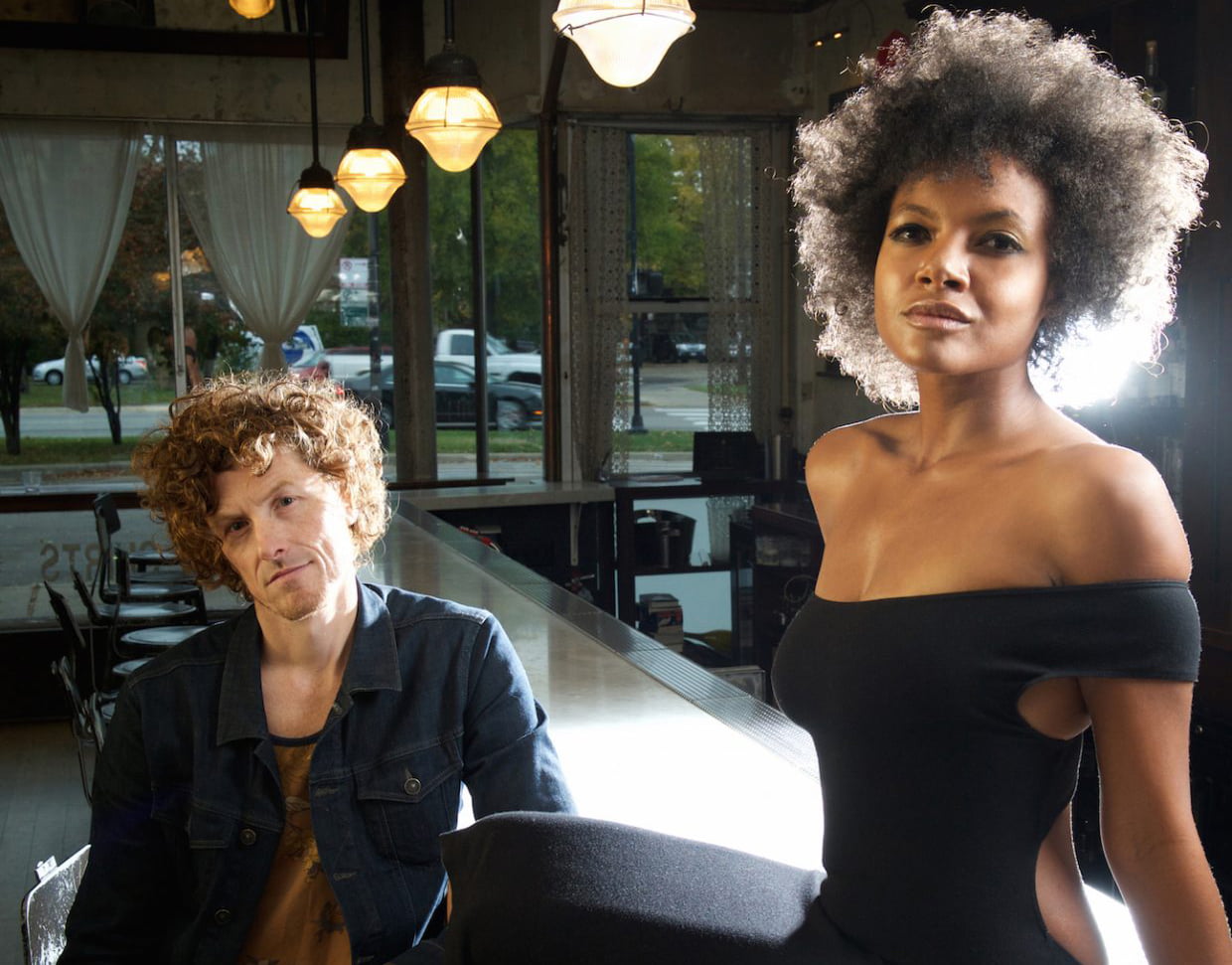
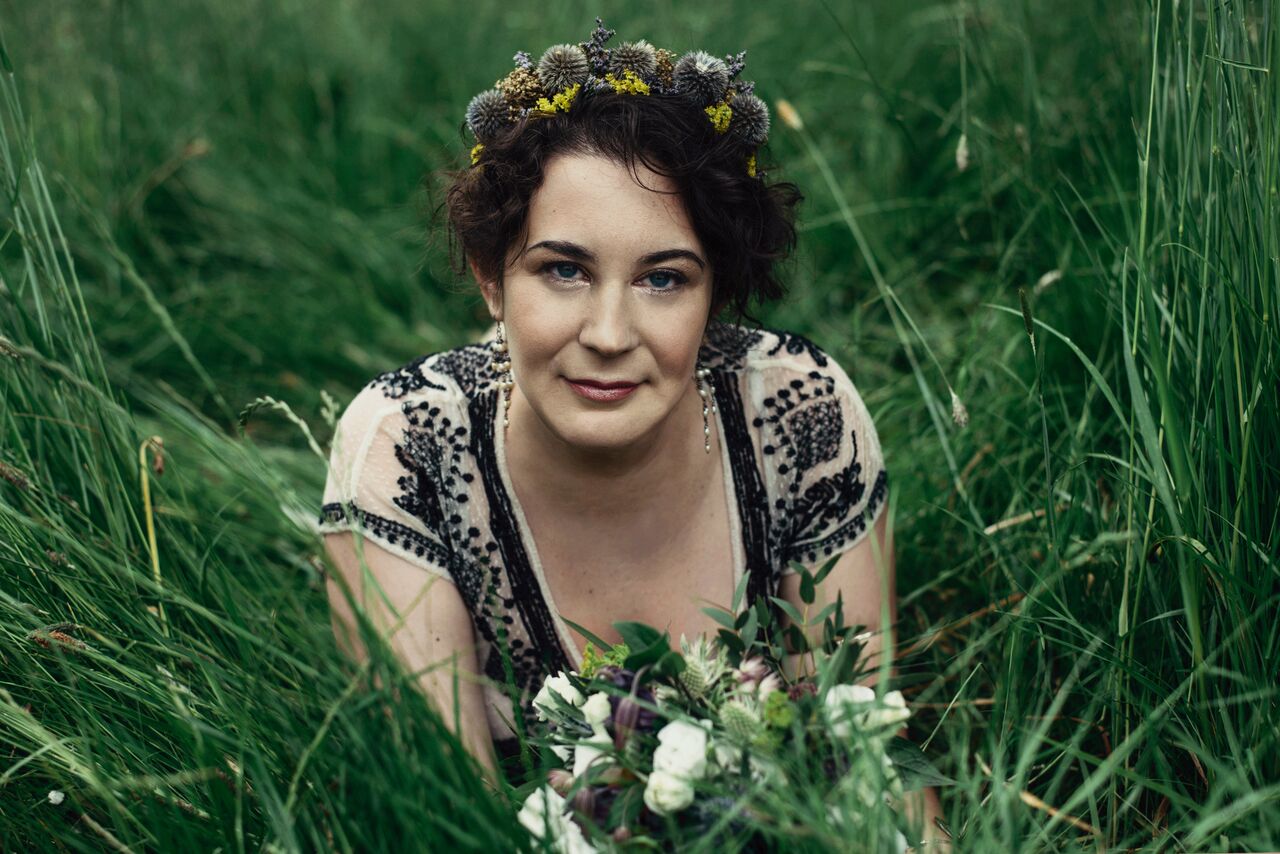
With me today at Hillbilly Central, Birds of Chicago — Allison Russell, JT Nero, with Steve Dawson back in the corner. Welcome, you guys!

Allison Russell: Thank you! Thank you for having us.

You know how happy I am that you’re here!

AR: Well, we are equally, if not happier, to be here.

I love mutual admiration societies. That’s the best kind. Okay, there’s so much going on with you guys. The new American Flowers EP. It’s mostly acoustic, but not strictly acoustic.

AR: Mostly.

And you just moved to Nashville. And then you have the full record coming out in May, Love in Wartime, produced with Luther Dickinson and you [JT Nero], as co-producer.

JT Nero: That’s right.

. . .

On the EP, the anchor of it, I’m gonna say, is the song “American Flowers,” right? Like that’s sort of the heart of it.

AR: Yeah, for sure.

To me, what’s going on in that is, it’s a reminder of the inherent goodness in all of us. But that’s a challenge. It’s a really hard thing. When folks are walking around wearing swastikas or carrying assault rifles, that’s a really tough thing to hold onto. But it has to be an absolute, doesn’t it? Compassion and kindness.

JN: It does. And I think, I mean, a couple of things: People have always been walking around with assault rifles. Our ability in this age to be aware of everything that is going wrong at a given moment is intensified in a way that it never has been before, and it’s very easy to slip into kind of doomsday mentality. Now, having said that, there are some things going on in this country that have never gone on before.

Certainly not in our lifetimes.

JN: Well, I guess I mean administratively. The “American Flowers” thing … it was important to me to not write a song of kind of obvious angel after obvious angel. The vignettes are about different people who are, perhaps, not obviously heroic.

They’re flawed. They’re humans.

JN: But you know, it’s about common humanity, and just letting these little windows emerge from different points of resonance. For me, I lived in San Francisco for a year …

Chicago boy.

JN: Yeah, I’m a Chicago boy. Just letting those voices emerge. And I think sometimes, particularly when we live in an age where — and, again, some of this is good — we are, from both sides, kind of political fire-branding all the time, and we are literally driving home messages all the time. If you can find a way to let people’s humanity emerge in a less heavy-handed way, sometimes that can be, for me, a little bit more … you just feel it more.

Yeah, yeah. And I think as well … the other thing that has to be absolute is our integrity. Whichever side you’re on. No matter how low the other side goes, we have to stay high, because even if that means losing something in the short term, if we lose that, we lose everything in the long term. And I think that kindness and compassion, that’s our everything.

AR: It is.

We can’t let go of that.

AR: This summer, we did some festivals in Canada and, at one of them, Billy Bragg and Joe Henry were doing their duo together and Billy, at one point, said to the audience, “You know what we do? We’re musicians, but really, empathy is our currency. That’s our job, our job is to remind ourselves and each other of our shared human experience.” And I think he said, “Cynicism is the enemy and empathy is our currency.” That just really resonated for me, that idea. Empathy is not easy, either. As you said, it’s really not easy sometimes. It’s really hard sometimes. You wanna have this knee-jerk “No!”

It is tough, but there are so many little, sort of everyday activisms — “love is resistance” type of stuff. A song, a smile, a hug. That’s when I knew you were my people is the first time we hugged, I was like “Oh, yeah, we’re gonna be okay!”

AR: [Laughs] Friends!

But yeah, and I think all of those things — being joyful, coming together, sharing in an experience of music — that’s all resistance, when what you’re sort of staring down together is so dark and full of hate.

JT: We’re lucky to do what we do. It’s easy to sound … I mean it’s kind of a cliché, like “music is the common language” … but it is! [Laughs] I’ve never seen anything kind of like disarm or get people to put aside [that] first level of armor or defense, when they’re in a room. I’ve never seen that get done away with more effectively than with music. And that’s what I come back to it for, when I’m not performing, when I’m just listening to it.

AR: More than that, because we’re traveling so much with our music, we’re on the road 180-200 days of the year at this point. And we’re going all over this country from red state to blue state, to Canada, to parts of Europe, and we’ve received so much kindness from strangers everywhere, everywhere we go. When you are just at home and [aren’t] meeting people every day and seeing these cycles of awful things that get replayed and replayed and replayed, you can start to have a very skewed perception that that’s the majority of the world, and it’s not! It’s just not. The majority of the world, the majority of people, are kind. Like what we were talking about, the vast majority. We received so much kindness from strangers, from all backgrounds and walks of life and belief systems and all the rest of it. So it’s really a reminder to us, literally daily, when we’re out in the wind, out in this country and all over the place, the kind of kindness we receive, it reminds us that this is also true.

Watch all the episodes on YouTube, or download and subscribe to the Hangin’ & Sangin’ podcast and other BGS programs every week via iTunes, Podbean, or your favorite podcast platform.

LISTEN: Kyle Carey, ‘The Art of Forgetting’

Artist: Kyle Carey
Hometown: Brooklyn, NY
Song: “The Art of Forgetting”
Album: The Art of Forgetting
Release Date: January 26, 2018
Label: World Music Network’s Riverboat Records

In Their Words: “‘The Art of Forgetting’ is a seasonal love song I wrote with influences of Edna St. Vincent Millay’s ‘Sonnet XLII’ and Elizabeth Bishop’s ‘One Art.’ My producer, Dirk Powell, and I began the track with an LP-style introduction — to highlight the sensuality of the influences in the song. We also wanted this to allude to a sense of time travel, which is encapsulated in the different eras and influences touched upon throughout the album.” — Kyle Carey


Photo Credit: The Wild Air Photo

Cary Morin Picks His Piece

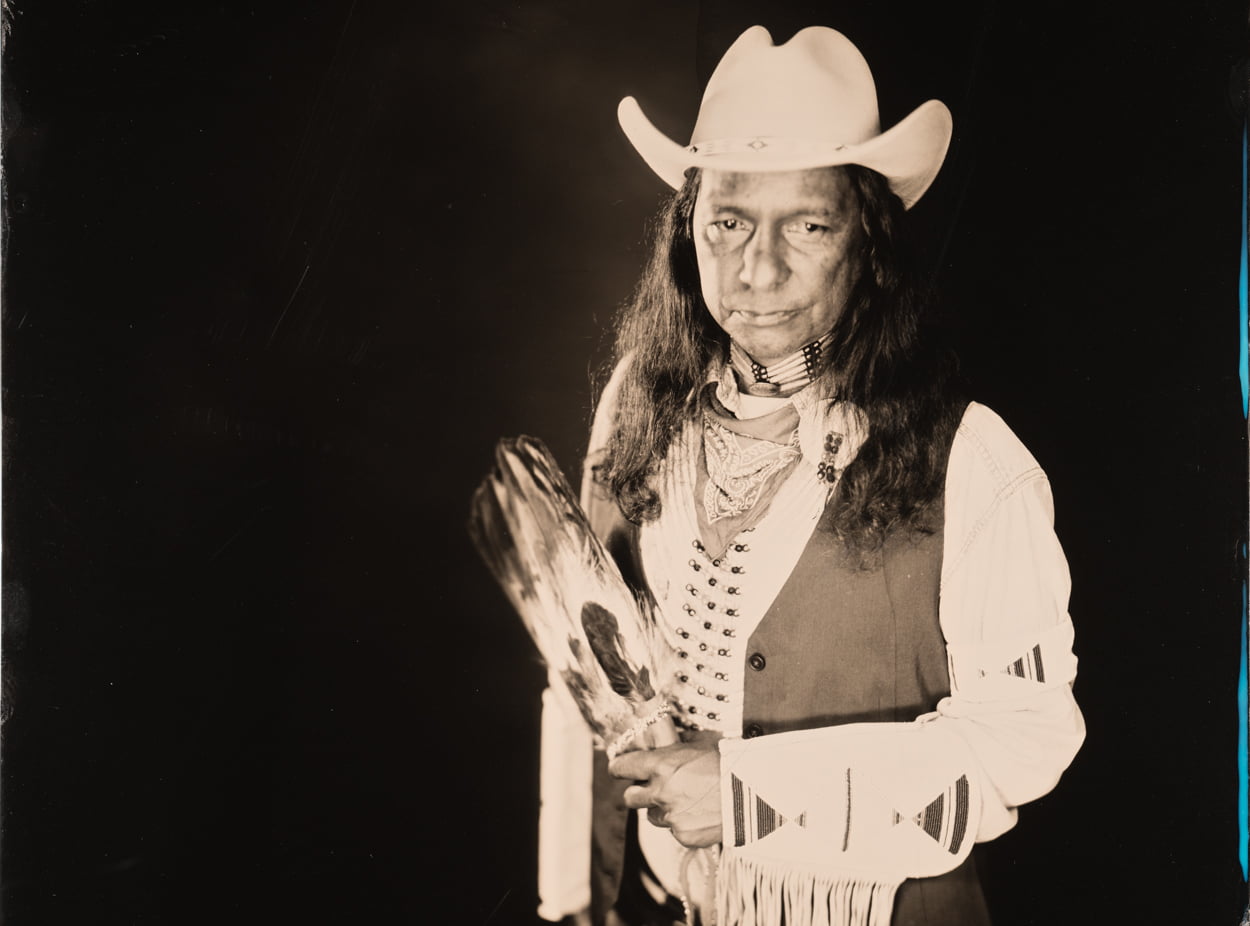
“Let there be no question of who’s wrong and who’s right. There should be no compromise. We all stand up and fight in the dawn’s early light,” Cary Morin sings on “Dawn’s Early Light,” written in support of the Standing Rock Sioux Tribe during last year’s protest of the Dakota Access Pipeline.

“A friend of mine was doing a show [at Standing Rock with the Indigo Girls] and she had asked me, just in passing, if I would write a song for the Standing Rock movement,” Morin explains. “I felt like there were a lot of people writing songs about that, at that time, and I wanted this one to be a little different and stand out a little bit, so it was really more concentrated on the activism, in general, and not so much Standing Rock, but just the whole idea of people coming together to promote clean water.”

“Dawn’s Early Light” is one of the poignant original songs featured on Morin’s latest album, Cradle to the Grave. In order to lend his perspective, Morin tapped into his experience growing up as a Crow tribal member near the Missouri River in Montana.

“When you think about roots music in America, it’s a culmination of so many things. It’s all the stuff blended together, much like the culture in this country is people from all over the world that end up here and create a unique situation,” Morin explains. “With my Native heritage, I could say that I’m really the only finger-style Crow guy on the entire planet. That’s unique. But we all can say that, to some degree. We all have unique things that make us who we are, and I’m really thankful to have grown up in the area that I did, surrounded by the people that I did.”

Morin came to the guitar by way of the piano, which he first began playing around the age of 10. When he picked up a guitar a couple years later, he was enamored. He played by ear, emulating the sounds he loved from his parents’ and brother’s record collection: Chet Atkins, James Taylor, Cat Stevens and Neil Young.

“I grew up in the ‘70s so, at that time, [there was] no Internet, there was very little TV, mostly radio. And the local music scene was really pretty folky and a lot of bluegrass, so I really grew up in the pursuit of flat-picking and [was influenced by] popular bluegrass bands at the time — David Bromberg, Norman Blake, Tony Rice,” says Morin. “I had really fantastic examples of what the music should be, but then I kind of mashed everything up into a combination of bluegrass and finger-style stuff, mostly from Leo Kottke, which turned into this thing that I do now.”

Morin moved to Colorado just out of high school and formed the Atoll, a world-beat band that he toured with for more than 20 years. “I played electric guitar [in the band], but I continued to mess around with the acoustic guitar,” he says. “Once I stopped doing [the band], my focus was really just acoustic guitar and a lot of practicing — just hours and hours of sitting around and playing. To this day, I try to play quite a lot. I’ve been introduced to open-D tuning by a friend of mine, and it took me about a year to get it going and figure out just the basics of it. But then, once I got it going, I just found it to be really fascinating, and I continue to learn new stuff all the time with that tuning. I just love the way it sounds. There’s a fullness and richness to it that I can’t seem to get out of standard tuning.”

Morin’s reconnection with the acoustic guitar led to the release of his most recent string of solo acoustic albums. Cradle to the Grave is the fourth in the series showcasing his adept fingerpicking style and warm, inviting vocals. An amalgamation of bluegrass, country, rock ’n’ roll, and blues, the album features eight original tunes and three cover songs: Willie Brown’s “Mississippi Blues” and, perhaps more surprisingly, Prince’s “Nothing Compares 2 U” and Phish’s “Back on the Train.”

“Phish is one of my favorite bands … I think that Trey’s playing has just really been inspiring and just the whole feel of the band and the approach they take. There’s so much freedom in what they do, and I used that as an example with my band, when I was rolling around playing clubs and festivals,” Morin explains. “A lot of times we’d play five songs without stopping. We’d just roll from tune to tune, and the whole point of that band was really dance music, just to provide an outlet for people to go out and have fun and dance.”

Morin uses the same ethos in his current performances touring behind his solo efforts.

“As a solo player, I can do whatever I want. I can play in whatever key. I can speed things up or slow it down, or just kind of make things up as I go along. And I really dig that freedom to just do whatever I want on stage,” he says. “Sometimes I’ll try stuff and sometimes it works, sometimes it doesn’t. But when it does, it’s a great feeling, and then it’s gone forever.”

While solo spontaneity on stage leads to such ephemeral moments, Morin has a solidified team off-stage that serves as his backbone — and they’re not going anywhere. From recording to promotion, it’s an organic, family affair.

“What I like about these four records [is that] the recordings are all done live in the studio with no headphones. I’ll sit and play these songs, and just play and play and play them, and a friend of mine has recorded all these albums,” Morin explains. “We’ve gotten together, I think, a pretty successful team with Maple Street Music and [my wife] promoting the live shows and the recordings, and Rich [Werdes] recording them, and we have the same person that’s been mastering and mixing the CDs, too. It’s just like the perfect combination of people and I like to think that I promote one guy, one guitar. People still are interested in such a thing … I just really enjoy being able to stand on stage by myself being able to do what I do.”


Photo credit: Timothy Duffy

WATCH: Befangled Night Bird, ‘Booth Shot Lincoln’

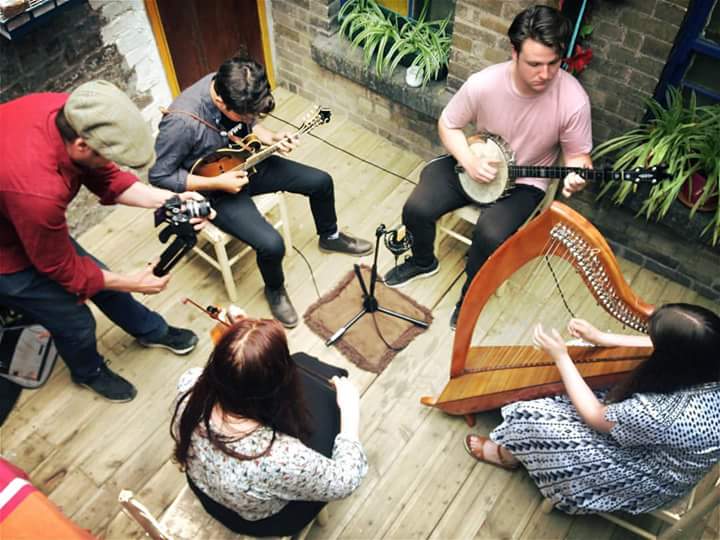
Artist: Tristan Scroggins, Ellie Hakanson, Allanah Thornburgh, and Ryan McAuley (aka Befangled Night Bird)
Hometown: Maynooth, County Kildare, Ireland
Song: “Booth Shot Lincoln”

In Their Words: “My favorite thing about touring in Ireland is getting to visit and play music with Alannah and Ryan and a collection of other incredible, young Irish musicians who we inexplicably met through Lauren Varian, the director of this video. It was really special to get to capture this kind of behind-the-scenes, cross-genre interaction, especially at a place like the Back Loft with a videographer as talented as Myles O’Reiley.” — Tristan Scroggins


Photo credit: Lauren Varian

LISTEN: Bartees & the Strange Fruit, ‘Going Going’

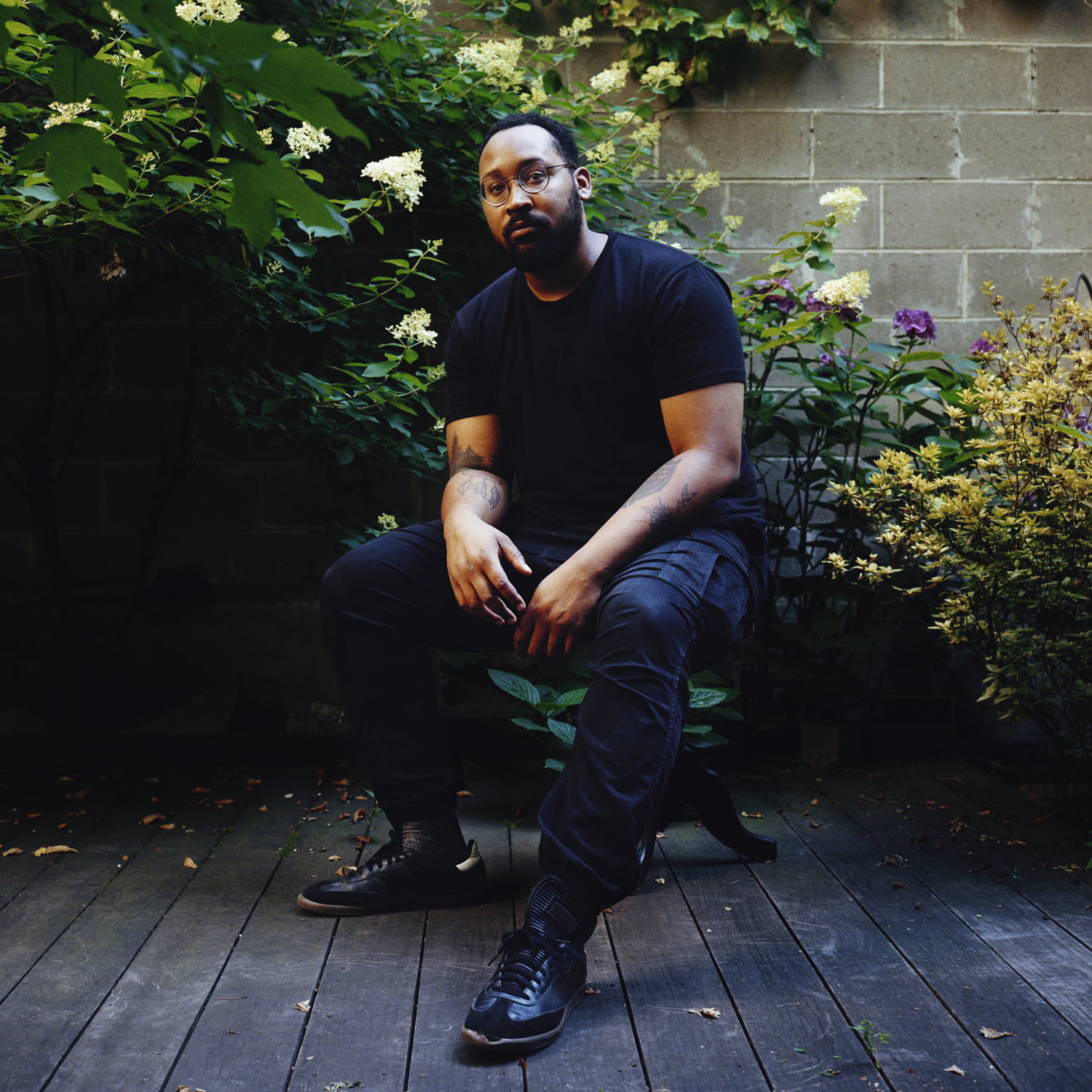
Artist: Bartees & the Strange Fruit
Hometown: Brooklyn, NY
Song: “Going Going”
Album: Magic Boy
Release Date: December 8, 2017

In Their Words: “This song is about growing up in and eventually leaving Oklahoma, and looking back on people in the Black community who taught me key lessons on resilience and faith, and to not be afraid of who might be knocking on the door. The opening verse highlights some of those competing feelings of fear, hopelessness, and defiance, feelings Black people in the South understand very well.

I eventually left Oklahoma and struggled over the years, as I tried to forget about that place. It’s only now that I’m realizing that the lessons I learned there are what make me different. A lot of people who leave home to try new things probably feel this way, too. This song is for them.” — Bartees Cox


Photo credit: Joshua Priestly

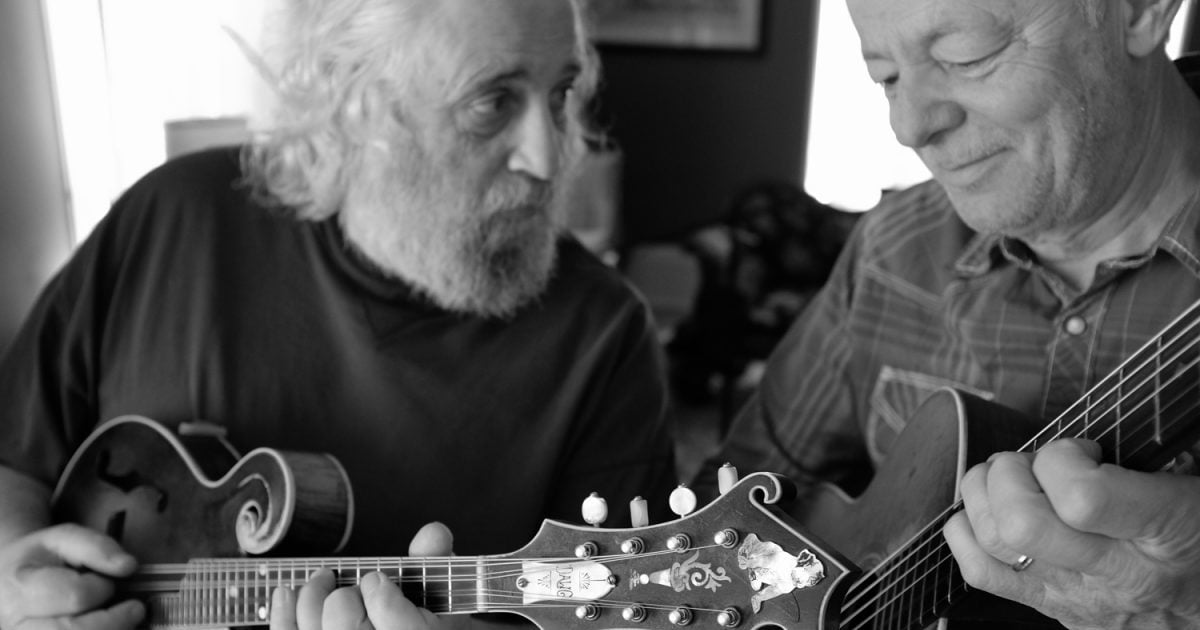
WATCH: Tommy Emmanuel and David Grisman, “Cinderella’s Fella”

Artist: Tommy Emmanuel and David Grisman
Hometown: Nashville, TN
Song: “Cinderella’s Fella”
Album: PICKIN’
Release Date: November 3, 2017
Label: Acoustic Disc

In Their Words: “‘Cinderella’s Fella’ was written after sampling a fine strain of weed grown by my late friend Jerome Schwartz in Petaluma. He called it ‘Cinderella’ and thus I became her ‘fella’ after inspiration took hold in the form of this airy dawg/jazz waltz. It was a gas playing and recording with the one and only Tommy Emmanuel in my living room, and I’m really looking forward to our first tour together.” — David Grisman


Photo credit: Clara Emmanuel

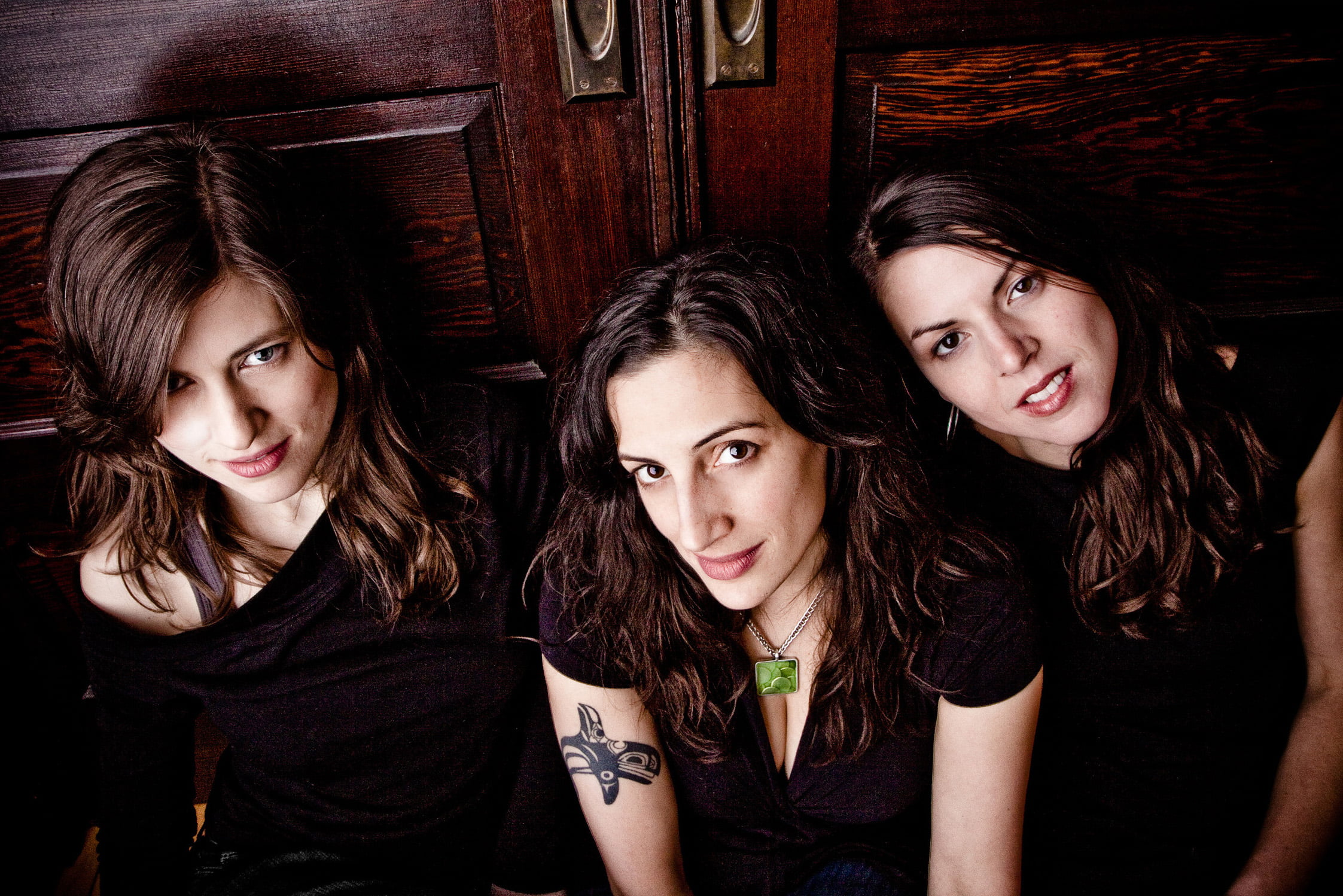
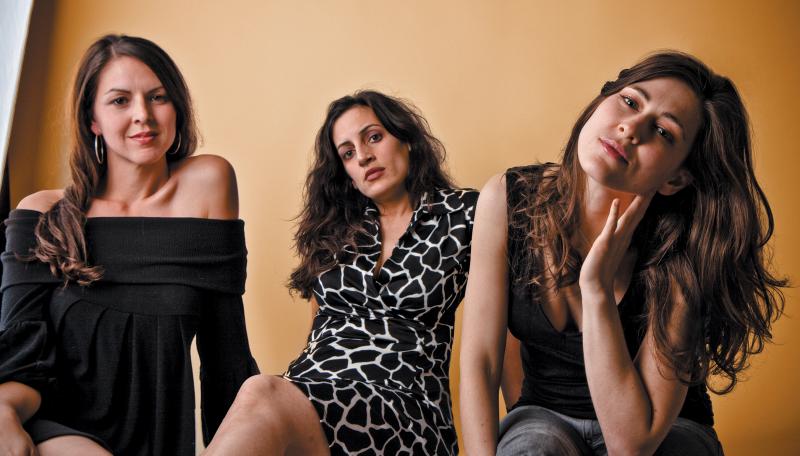
Covering Milestones: A Conversation with the Wailin’ Jennys

When the Wailin’ Jennys got back in the studio to record their new album, Fifteen, which celebrates the group’s anniversary together, Nicky Mehta, Ruth Moody, and Heather Masse didn’t have much time. Five days, to be exact. Between the fact that all three women are mothers now and live in different cities, planning and preparation have given over to spontaneity and trust. But their approach on this latest LP — a set of covers — doesn’t sacrifice any of the considerate care that has always infused their siren-song harmonies. If anything, they’ve used the studio to capture the magic they radiate during their live shows.

There’s a confidence brimming from every song, whether it’s their reverent, respectful, or resplendent
takes on Dolly Parton’s “Light of a Clear Blue Morning,” Emmylou Harris’s “Boulder to Birmingham,” and Tom Petty’s “Wildflower,” respectively. The trio seems poised and ready to create original music at some point — schedules permitting — but in the meantime, they’ve jumped back into the waters, and are enjoying the stirring act of raising their voices at a time when the messages they’ve come to deliver need sharing more than ever.

What it is about this creative relationship that keeps bringing you all back together?

Nicky Mehta: It’s sort of never been discussed that we would ever take a break and not keep working together. I think it’s always been assumed that we would continue on as long as it felt satisfying to all of us. I think this is a type of project that none of us have access to outside of what we’re doing, so it’s a unique thing for all of us to be doing. That’s what keeps us coming back. We also have such an amazing audience that are really faithful and have seen us through a lot of hiatuses, and I think we want to come back to them, as well.

Heather Masse: I think people have been as receptive. I feel like the live shows, people are there with you and fully present and still really excited about it.

Ruth Moody: I agree. I think we’ve been so lucky with our fanbase. We have taken three hiatuses. Each time it was for each of us to have babies, procreate. [Laughs] And each time our agent was like, “It’s too long to be off the road,” and every time we came back, our audiences have been there and continued to grow over the last 10 years — 15, but specifically 10 since Heather joined the band. Who knows why, but we have been lucky in that way.

As you ebb and flow from this project, how do you see yourself fitting within the growing number of female trios in North America? There are many more names on that list now, beyond folk even.

NM: I think that’s something that I’ve observed, as well. It’s crazy how many trios are out there now, which is great, and everybody’s doing something different. What they focus on, in terms of style of music, is different. We’ve always made decisions about breaks in the road from a place that’s really necessary for each of us, personally. I don’t think we’ve ever worried too much about that because there are things we have to do and so we’ll see what happens after. Once you’ve taken one break and things successfully resume, there’s less trepidation about that. It sort of feels as though there are a lot of trios out there, but it hasn’t felt like there’s some huge competition.

Your harmonies have a touch of the familial about them, and yet you’re not related by blood. How do you explain that magic?

RM: We’ve been really lucky with our blend. We all grew up singing and singing harmonies, and so it’s something we do instinctively — blending with other voices — so that helps to have the ability to listen and blend. But even then it’s not always a slam dunk, so I think we’ve been really lucky that our voices do blend and the ranges are compatible. We switch around depending on who’s singing lead, but we’ve been lucky that that’s been the natural fit.

HM: When I first met the ladies, they were playing in Philadelphia at World Café, and I was sort of auditioning, and the only place that we could sing was in a handicapped women’s bathroom that we found. I was astonished when we all started singing together that it felt like I was singing with my sisters. We just got lucky. It is like we’re sisters, so it’s nice.

I can’t even imagine what the echo would’ve sounded like in that bathroom!

HM: It was really special. I think it was a particularly flattering echo.

You covered Dolly Parton’s “Light of a Clear Blue Morning” for the Canadian film The Year Dolly Parton Was My Mom some years back. Her version has a praise and worship style about it, but yours feels more hymnal. How did you strike upon that interpretation?

RM: That was a good example of being pushed a little bit to do something. The director of the film really wanted us to do that song because the whole soundtrack is Dolly Parton. She wanted us to do it and she wanted it to be a cappella. Who knows if we would’ve gravitated in that direction, but that was cool that we got those instructions, and it really set our focus in that way. I think the best way of making something effective — if you’re going to do a cover — is to approach it in a different way. Especially in the beginning, before it gets into the groove, it does have a more plaintive, hymnal feeling. I think that did make it different from the original.

You triple the vocals on the line “Everything’s gonna be alright,” before going back into harmonies. To me, as a female listener, it feels so necessary to hear that from other women, especially with everything going on these days. What kind of message do you hope to be offering still?

NM: I think we all share the wish to heal and comfort people with what we do, and I think that we all do our own thing, in terms of staying on top of what’s going on in the world and addressing it in different ways. But in terms of what the band does is to reach out to people and support and have the music give people relief and hope and the feeling like, eventually, things will be okay. A lot of our audience, they work in fields where they’re addressing a lot of these issues all the time, and I think it’s nice for them to be able to come to a concert and feel that there’s understanding and there’s still love out there and there’s still hope.

The Tom Petty cover feels apt, although I realize you recorded before his passing. Why “Wildflowers,” in particular, besides the fact that it’s a great song?

HM: I think there’s a way in which, when we hear a song or we bring a song to the band, we sort of know if it’s going to be a Jennys song or not, if it’ll work with our configuration and the way we arrange things. I can’t remember if I brought it up — it felt like something that was on all of our lists of songs to cover — I know that, in my mind, I always thought of it as being a great Jennys cover. It’s hard to describe what the qualifications would be for a Jennys song, but it has a lot of openness and the message is really beautiful, and the melody is very beautiful.

RM: A lot of tenderness, too. It leads itself so well to harmony, which is always a factor for us.

True, you wouldn’t want to pursue a song that doesn’t give you that space.

RM: Yeah, exactly.

It’s a beautiful rendition. So I know recording this album happened quickly because of your differing schedules, but oddly enough, it feels like one of your most grounded albums. What contributed to that sense of confidence?

HM: We only had five days, but we have years of being together and working together that kind of went into it. Even though we knew it would be a bit frantic with a lot of challenges, we knew that we had the foundation. This album was, essentially, for the fans, because they have waited so long for a new record, and so, in spite of not having a lot of time and being mothers, we wanted to make this happen. We thought an appropriate way to approach the album would be to do it live off the floor, and to do a more pared-down recording that mirrors our live performances. That probably helped us feel comfortable and confident in the studio because we’re doing what we, essentially, do on stage.

RM: I think becoming a mother, also, you just have such a different perspective on everything. We didn’t have a lot of time, and normally I feel we can get a little up tight and be perfectionists about stuff. And we were able to let some of that go a little. It’s the perfect album for feeling more grounded and more natural, because we didn’t have time to go back and redo things or try new things out. We just kinda did it and had to be okay with whatever happened, because we didn’t have the time to do anything else. Sometimes there’s a real magic to that.


Photo credit: Art Turner

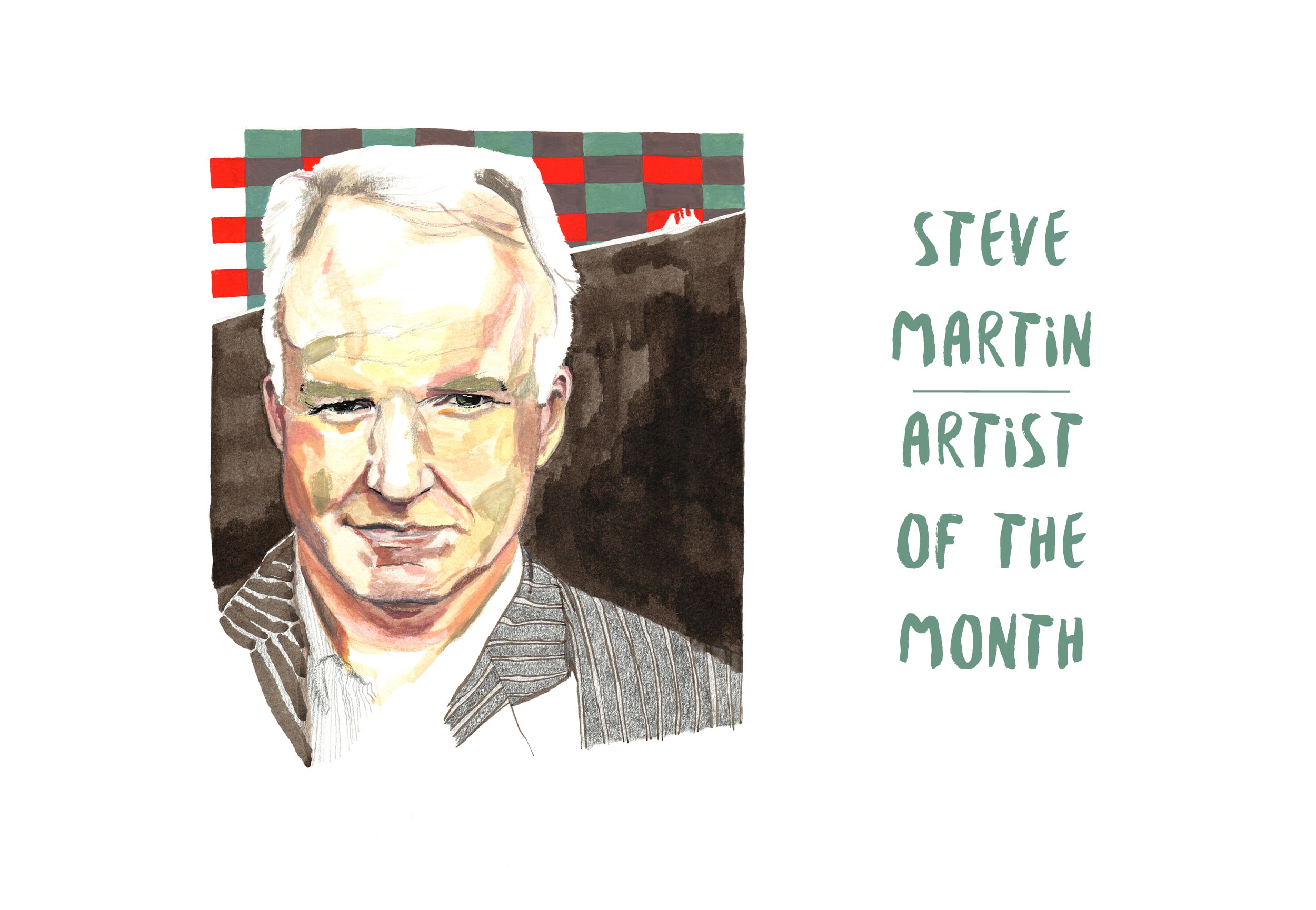
Steve Martin: Making the Same Sound Different

The sound of a five-string banjo has a cosmic pull. When Earl Scruggs first took to the Grand Ole Opry stage with Bill Monroe and his Blue Grass Boys in 1945, his rapid-fire, three-finger picking style shocked and stunned the Ryman Auditorium audience and radio listeners across the country. The standing ovation he received shook the entire building to its rafters with hands clapping, boots stomping, and hootin’ and hollerin’. It was the Big Bang of bluegrass banjo.

Almost every banjo player could tell you the first time they heard the instrument, the first time they encountered its cosmic pull — a personal, introspective banjo Big Bang unique to each person who is struck by its irresistible, joyful, magnetic sound. Steve Martin describes the first time he heard a banjo as his “What’s that!?” moment. “I kind of pin it on the Kingston Trio,” he remembers. “But I know there were earlier things. I fell in love with the four-string banjo, too. When I was 11, I would go to Disneyland to see the Golden Horseshoe Revue, and there was a four-string banjo player. When I worked at Knott’s Berry Farm, there was a four-string banjo player there, too.” His voice shifts to a whisper, as he adds, “But, we all know that five is better.”

He continues, “I do believe it was kind of the Kingston Trio or folk music, in general, that really made the sound like, ‘Wow, what a happy, wonderful sound!’”

He picked up the banjo as a teenager, taking on three-finger, Scruggs-style picking with the help and influence of his friend John McEuen. But, unlike most banjo pickers, who choose one style — Scruggs’ namesake method, or jazz and ragtime on tenor and plectrum banjos, or any of several types of frailing — Martin also had a “What’s that!?” moment with the old-time form, clawhammer: “It was a record called 5-String Banjo Greats and another record called the Old-Time Banjo Project. They were both compilations. So I don’t know who introduced me to clawhammer. When I was learning three-finger and I was into it about three years, I started to really notice clawhammer, and I go, ‘Oh, no. I have to learn that, too.’”

He is a master of both three-finger and clawhammer to this day and, on his brand new record, The Long-Awaited Album, he shifts effortlessly between the two — sometimes within one song.

Through his career as a comedian and actor, the banjo was ever at Martin’s side. It was a part of his stand-up act, it was peppered into his comedy albums, and it made cameos on his TV appearances. It would be cliché to assume that the banjo and bluegrass were a byproduct of Martin’s comedy career, but the instrument was never an afterthought, an addendum, or a prop. In fact, bluegrass and folk music showed him from his early show biz days working at theme parks that humor was an integral part of these musical traditions.

“When I first started hearing live music, like the Dillards or folk music of some kind, they all did jokes,” he says. “They all did funny intros to songs. They did riffs. They did bits. And then they did their music. That’s essentially what we’re doing now.” The silly, whimsical, comedic elements of the music Martin makes with his collaborators, friends, and backing band — the Steep Canyon Rangers — are just as much a testament to Martin’s history with bluegrass as they are a testament to his extraordinary comedy career.

During the seven years that elapsed between their last bluegrass album, Rare Bird Alert, and The Long-Awaited Album, Martin and the Rangers wrote, developed, and arranged the project’s material during soundchecks, band rehearsals, and downtime on the bus. Barn-burning, Scruggs-style tunes and contemplative, frailing instrumentals are sprinkled amidst love songs and story songs, silly and earnest, all steeped in quirky, humorous inventiveness. The album is centered on a solidly bluegrass aesthetic — but bluegrass is not a default setting.

Musical and production choices for each song were pointed and deliberate, with producer Peter Asher, Martin, and the Rangers keeping each song central and building out the sound around any given track’s core idea. “I love the sound of the five, six instruments that are traditionally bluegrass,” Martin clarifies. “That’s all we need. The Rangers, they say bluegrass is five musicians playing all the time. Other music is five musicians not playing all the time. In bluegrass, they have breaks, but there’s always the backup going. There’s always everybody chopping. So I thought, ‘What if we left out some of the instruments? What if we were not playing all the time?’ It really made a different sound.”

By leaving out an instrument here or there, adding in a cello or, in the case of the lead track, “Santa Fe,” an entire Mariachi band, the album’s sound registers immediately as bluegrass, but refuses to be lazily or automatically categorized as such. First and foremost, it sounds like Steve Martin and the Steep Canyon Rangers. “I’ve always loved the idea of the sound of the banjo against the cello, or viola, or violin, because you have the staccato notes against the long notes. The cello or viola contribute to the melancholy and mood of the banjo. But mostly, it’s just us, the seven musicians, including myself. We can reproduce it on stage … except for the mariachi. But the song called for a mariachi band, you know?” He laughs and adds, “There’s almost no way to avoid it.”

Where many bluegrass and folk writers eschew modern vernacular, places, and topics, Martin leans in, embracing contemporary scenarios and themes that don’t necessarily fit the stereotypes of train-hopping, moonshine-running, field-plowing folk music. The Olive Garden, nights in a biology laboratory, a gate at an airport, “Angeline the Barista” … the timelessness of roots and folk music isn’t lost in these themes and settings; it’s enhanced, it’s relatable, and it’s damn funny.

“I’ve written a song about a train, and I’ve written a song about Paul Revere. I think it’s got to be specific for people. They’ve got to go, ‘I know that!’ If I’m writing about a train, I know that 99 percent of people that the song will be heard by won’t really have that experience. But if I write about the Olive Garden and a girl busting up with you, I think a lot of people can relate to that, even if they don’t have that exact experience.”

The relatability and visibility of Martin’s music have brought bluegrass — and the banjo — to countless ears that may have never heard it otherwise. In 2015, the International Bluegrass Music Association awarded Martin a Distinguished Achievement Award with this visibility and outreach in mind. With The Long-Awaited Album; the Steve Martin Prize for Excellence in Banjo and Bluegrass that he awards annually; a national tour of his banjo-forward, Tony-nominated Broadway musical, Bright Star; and a heavy touring schedule criss-crossing the country with the Steep Canyon Rangers and his longtime comedy partner, Martin Short, Martin is poised to continue bringing the banjo to many first-time listeners.

But when faced with the idea that he, himself, could very well be the “What’s that?!” moment for an entire generation of brand new banjo players, he is unfalteringly modest. “What I try to express with the banjo is the sound of the banjo. When I first heard Earl Scruggs, I loved his skill, his timing, and his musicianship. I regard myself as someone who’s expressing the sound of the banjo rather than being a superior, technical player like Béla Fleck. So, if anyone picks up the banjo from hearing me, it’s because they fell in love with the sound of the banjo. What I do is get the sound of the banjo out there to a broader world, I guess.”


Lede illustration by Cat Ferraz.

Hardened & Tempered: From the Inside Out

Shout & Shine conversations revolve around expectations: expectations about roots music and its constituent genres and to whom they belong; expectations about what artists and fans want and need; expectations about representation, visibility, community, tradition, history, politics, and so on.

One of the aspects of these interviews that is most compelling is how, even among just the artists of marginalized and underrepresented identities, a relatively small group of people in roots music, the variety of expectations — and perspectives and approaches — is astounding. Each interview has the potential to remind us that we all bring our own presuppositions, biases, and expectations into every conversation we have, even when we are doing our best to be cognizant of them.

Kristin Davidson and Carolyn Phillips, the folk/country duo Hardened & Tempered, most certainly illuminated the baggage of expectations brought to the table, but it also put a spotlight on how all human beings would benefit from stopping to appraise our assumptions from time to time. We could all stand to loosen our grips on our beliefs and dogmas, on the stereotypes we feel are valid, on the narratives we cling to — whether consciously or subconsciously. After all, the strongest steel isn’t rigid, unwavering, and hard. It’s flexible, it’s malleable, it’s giving. That kind of softness makes it stronger. It can make us stronger, too.

Your name, itself — Hardened & Tempered — and the first line of your bio, “Hard enough to hold an edge, soft enough not to break,” sounds like the LGBTQ+ experience distilled. How much of your identities went into the name?

Kristin Davidson: There are a couple of different meanings that went into the name. One is, quite literally, the reference to steel. Because I play the pedal steel, one of my favorite pastimes has been rebuilding old motorcycles, and I also know how to weld. So there’s literally a steel reference in that. But we also liked it as …

Carolyn Phillips: … a metaphor.

KD: Yeah, a kind of metaphor for the balance that we always try to aspire to. We’re both pretty intense individuals, and we do intense things, but certainly, learning how to soften up over the years has taught us to be a little stronger, too.

CP: We were actually talking to one of our close friends in Sante Fe, as we were trying to figure out our name, and he mentioned how he thought of us in this way (hardened and tempered) as individuals, but also as a couple. “Soft,” tempered steel is actually stronger than the hard stuff. That softness makes us stronger. I think that it’s a life lesson from growing up, in general. I think, in every aspect of my life, that rigidity hasn’t been a strong point. When I can meet others with kindness, I actually get that back.

What did your individual journeys to roots music look like?

KD: My deep dive into music, especially lyrically based music, started as far back as I can remember. As I grew up playing the guitar, I always had guitar teachers pointing me in the direction of blues. I definitely gravitated towards folk as a genre. I probably became most aware of it in my early 20s. Lucinda Williams was a culmination of that journey — she was a gateway for me, in a lot of ways. That sophisticated simplicity in her writing, with the blues and the roots influences, led me to explore the different sub-genres that supported her in a more detailed way.

CP: I was more of a late bloomer to all of it. I grew up in a small town in rural Nebraska and graduated with a class of 19 people. My music exposure at that time was pretty limited. I didn’t start getting into roots music until I met Kristin, which was in my 20s, as well.

The first song on your album, The Trailer Sessions, is “My Wildest Ride” and, in the first verse, we hear a woman singing female pronouns, “… The prettiest girl I’d seen.” What’s the story behind that?

KD: I like to step into the shoes of whoever the character is, regardless of gender. “My Wildest Ride” is a song I wrote for a friend and his wife, so they’re actually male and female characters in the song, because I wanted to write a song that honored them. What I think is fun is my voice giving voice to both characters.

In my experience in bluegrass, women will sing classic songs without changing the pronouns, and no one bats an eye at it. But if a man happens to sing a song from a female perspective, they’re almost always changing the pronouns. I like that you’re keeping the song central there.

KD: That’s one of my pet peeves! When I hear a male song covered by a female artist, it always irritates me if she were to change the pronouns. Occasionally, you run across artists who don’t. There’s something more magical that happens when the pronouns don’t change. I don’t know — it’s more fun and it’s transcendent, in a way.

Do you feel like queerness makes you more likely to appreciate that or to do that in your own music?

CP: I think so.

KD: Yeah, sure!

CP: We never want to be boxed into anything. That’s how we both live our lives. We just let “us” be who we are. Because we’ve had to explore that all of our lives, we’ve gained this freedom to live this way.

So the songs on your record range from being total story songs to totally personal.

KD: Oh, definitely. The first song, like we said, is about friends of ours. But then, going into track two, with “Heartbreak Transit Line,” that is a character and a set of circumstances I imagined, versus “Centerville,” which is very much written from my experience. I think, even when I have a movie-like image that develops in my brain, when I’m invested in developing a certain character, I always ask myself, “What about this character is something that I can relate to personally?” That’s a great exercise, because usually I create these characters in circumstances that I have not lived myself. I guess it’s an exercise in empathy.

Where does “Family Secrets” fall on the story song to personal song scale? I hear that line in there, “I can’t fall in love without reminding you of your regrets.” It makes me think of my family — and the families of so many LGBTQ+ people out there — who will never be fully supportive of queer love and the happiness we gain from it.

CP: [Laughs] That’s a loaded question!

KD: [Laughs]

CP: This came from, quite literally, a family secret that we’re not sure we should tell, because it involves a still-living family member. [Laughs]

KD: But yes, you’re absolutely right. Those couple of lines and down through the hook, “You can’t deny what you won’t confess about the family secrets …”

See, that sounds like the closet to me.

KD: And part of it is. That factored into it. But I had been reading a lot about epigenetics and considering my own family secrets. My mom found this old newspaper article about some great-great-great grandfather of ours that committed a triple murder/suicide type of situation, and it made national news in like, 1906. You could probably mine I don’t know how many country songs from it. That was one of the things that I grew up knowing, because my dad didn’t consider it something to keep secret from me, but then I’m not sure my cousins knew.

Then, of course, our own experiences falling in love factored in — that’s an intense enough thing on its own, to be falling in love without adding in the external dynamics and reactions. You don’t always know where that external influence is coming from or why. It could have something totally different driving it. Like a family secret. There was a whole bunch of information bouncing around in my head [while writing “Family Secrets”]. But I have to say, that chorus was one of those things that just popped out, and I’m not sure how.

I think the important thing here is representation. LGBTQ+ people who listen to your music see themselves reflected in it — where they don’t normally see themselves in Americana or country at all. For instance, I keep finding these bits and pieces of your songs that I can relate to as a gay man, that may or may not be coming from a LGBTQ+ starting point at all, but your visibility allows listeners to connect those dots, if they so wish. Do you consider that while you write and perform?

KD: I don’t think I think about it overtly, but I take what you just said as a tremendously high compliment. It’s such an inside-out process, to start with the seed of creation and then watch it launch into something that can exist on its own. When I first started writing, I didn’t sing, so I was used to writing words that were brought to life by someone else’s voice. I’m more grounded with the songs now, but it’s still such an inside-out experience for me. I just hope people listen and like the songs. I’m always so complimented by the fact that people relate to them.

What is the dynamic in Austin, Texas, and in the music scene and in your communities? How does it feel playing regionally, going from the progressive echelon of Austin to the deep red areas surrounding it?

KD: We haven’t been in Austin that long, so it’s hard to provide any sort of global context to it, but Austin has been very good to us. I’d say it’s a very relaxed and open community.

CP: It feels pretty fluid to me. That’s been our experience even on tour.

KD: In, like, rural Nebraska.

CP. Yeah. Again, I take it back to, you know, how I have survived in this world is by just being myself and being kind, and that’s usually what I’m met with, fortunately. Being out there, being in different rural communities, playing music, and being gay gives [our audiences] exposure to different types of people that they maybe otherwise wouldn’t have had. I hope by us being out there, being who we are, and being good people, we can continue to help represent and show who our community is. There are fewer barriers in place than we hear about sometimes.

Dori Freeman, ‘Just Say It Now’

There’s nothing quite like a sad song that isn’t actually sad at all, or a happy song that’s anything but. It feels good to condition the emotions and not let things get too caught up in the predictable, the status quo. We’re programmed to think that minor keys and slow acoustics always mean that lyrics just as somber are to come; and we’re equally used to hearing sprightly tales alongside fast beats and carefree picking. But when music really gets interesting, is when this formula is dismissed completely: Often a tool of bluegrass, the instruments can walk a much different line than the brain, painting a more complex picture of the human experience. It’s rare that anything is cut and dry, anyway, and, like some mournful words paired with a dancing fiddle, there are usually two sides to everything … at least.

Dori Freeman, on Letters Never Read, knows this well. Many of her songs play with the ability to be many things at one time and unveil their true vulnerability once they have captured us within their inherent melodies. “Just Say It Now” is an ode to just getting the band aid ripped off before the pain is too intense, and it sounds delicate and light — a go-lucky sing-along with a gauzy, Lauren Canyon chug. “Just say it now before the silence makes me cry,” she sings. “From the beginning, I knew you would say goodbye.” Her voice is sharp and ethereal, pastoral and crisp, able to carry the task of complexity easily within a two-and-a-half-minute frame. Maybe the best sad songs are the ones that make us smile, too.