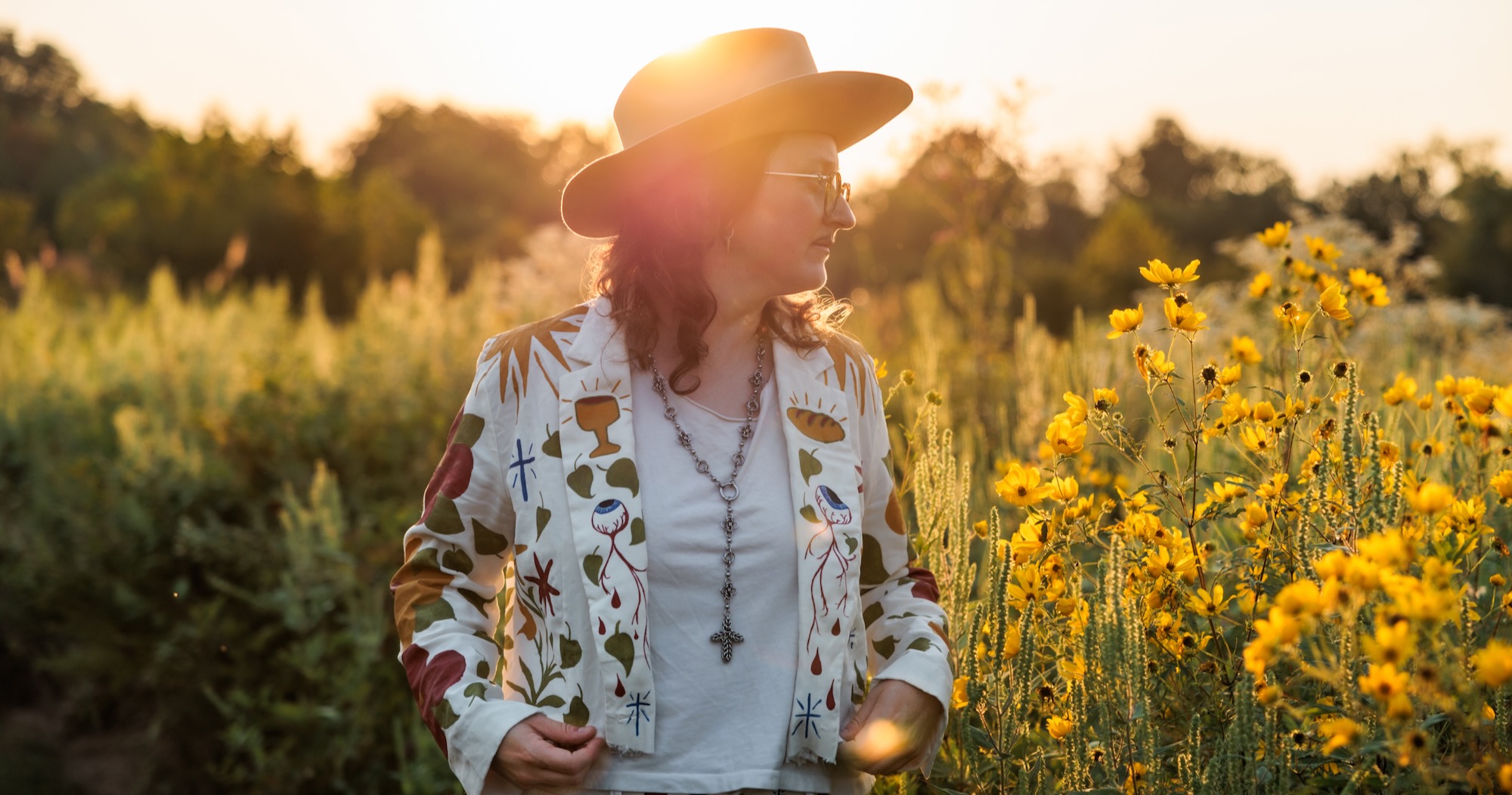
BGS 5+5: Creekbed Carter Hogan

Artist: Creekbed Carter Hogan
Hometown: I live in Saint Paul, Minnesota, but before that I spent most of my life living in Austin, Texas. I wasn’t born and raised in either, but they are the places that have shaped me the most and I think that counts for something.
Latest Album: PEASANTS REVOLT! (out July 24 2026)
Personal Nicknames (or rejected band names): Creekbed, Creeky, Peepaw Creekbed

Which artist has influenced you the most – and how?

Like a Catholic cliché, my life has been changed forever by two women named Mary.

The first artist is Mary Chapin Carpenter. Watching your mom sing along to “He Thinks He’ll Keep Her” with her eyes closed while she presses folded laundry to her chest, both wistful and hopeless… that does something to a person. In a family so Catholic, so conservative, so isolated – not just because of rurality, but also because of my difficult, isolationist father – Mary Chapin Carpenter was one of the few non-Christian rock-related musicians that scored my childhood, and her ferocious form of empathic songwriting has never left me.

The second Mary is Mary Gauthier. I remember the intersection I was stopped at in Austin, late at night, my now-girlfriend putting her on the aux. The first lines of “Slip of the Tongue” hit me like a gut punch: “Honey sit down, I got something to say/ Last night I drowned. I got carried away.” I remember gripping my girlfriend’s hand, crying and laughing and brimming with new, terrifying love as I listened for the first time to one of the few publicly queer Americana artists to really break through. Mary Gauthier made my life as a trans country artist possible. Nobody can see through to the soul of something like she can. It was an honor to release my cover of “Slip of the Tongue” this year, and it’ll be an honor for the rest of my life to know that my songs are in a lineage that includes her.

What other art forms – literature, film, dance, painting, etc. – inform your music?

Man, I just really love art a lot. I’ll watch anything, read anything, listen to anything. I don’t think you need any special schooling or whatever to look at something bold and wrestle with how it makes you feel – you just need a lot of curiosity.

I’m putting out a new record in July called PEASANTS REVOLT! and in my liner notes I credit two books as inspirations: Fernando A. Flores’s Texan magical realist novel Brother Brontë and Julius S. Scott’s The Common Wind, a beautifully rendered examination of how word-of-mouth led to the Haitian Revolution, the most successful slave revolt in all of human history. Those two books gave as much to my new album as Hazel Dickens, Bobbie Gentry, Tracy Chapman, and ANOHNI did.

So did a whole library! The East Side Freedom Library in Saint Paul, which makes formerly private collections of union organizers, activists, thinkers, and artists available to the public. The Twin Cities United Performers, a musicians’ power org I’m a member of, helps me explore the art of organizing with fellow musicians for better conditions. Picket lines are an art form, and I remain inspired every day by the people who hold them. And my songs would probably sound completely different if I weren’t spending so much of my time watching movies like John Sayles’s Matewan and Cheryl Dunye’s Watermelon Woman and Abbas Kiarostami’s Close-Up.

Before I could leave my small rural community, art was a way of exploring the world. Now that I can live on my own terms, art is a way of understanding the world. As an artist, why wouldn’t I try as many forms of understanding as possible?

What’s your favorite memory from being on stage?

This is a long answer, but it’s a story worth telling:

This past winter, as ICE invaded the Twin Cities and abducted and killed our neighbors in our streets, I received a grant from the Cedar Cultural Center in Minneapolis to write new labor and union songs. It was a jarring juxtaposition: how could I justify research and writing songs in my room when I needed to be out on the streets with a whistle in my hand, standing my ground with my neighbors against the federal government? But the truth is, I’d already cashed half the money and it had been a lean winter, so I had to make something to show for it. I went to the East Side Freedom Library, did a boatload of research, and then I wrote songs about regular Minnesotans who’d fought the government for dignity for all. From the 1910s miners of the Mesabi Iron Range to the Indigenous founders of the American Indian Movement in the ’70s to the Willmar 8 who held a two-year picket line every single day in every single kind of weather to an Appalachian-styled ballad that tied in the history of labor resistance to what we were all doing now to protect one another, as our own mayor and governor left us in the ice and the snow to fend for ourselves.

On February 20, I took the stage at the Cedar Cultural Center in Minneapolis with a four-piece bluegrass band and presented my grant work to 250 Minnesotans. I was terrified that what I’d written hadn’t done enough justice to this incredible place that had taken me in, given me lifesaving healthcare, and taught me new things about what it means to show up for your community – and even more worried that my performance wouldn’t be good enough to raise rent money for my neighbors who were trapped in their apartments, hiding from ICE. But when I started playing these songs, the reception filled me with awe. All 250 of these people sang with me, clapped with me, cried with me, felt pain and joy and despair and hope together, out loud, with me. After the set, we got a standing ovation – and then at the merch table, the line went out the door as neighbor after neighbor came up to me to tell me about the picket lines they were holding or had held, the Minnesotans they’d recognized in my lyrics, the pain they felt and the hope that sat right beside that pain that they could now feel because of what we’d just sung together.

I’ve played a lot of incredible shows to incredible audiences, many of them much bigger and “much bigger deals.” But that show on February 20 this year was the single most important performance of my life. It meant everything to me. And it taught me, again, why I’m still here, writing songs, doing something every single day to take my place in a lineage of resistance and make a new, better world for all of us.

If you didn’t work in music, what would you do instead?

Way before I wanted to be a musician, I wanted to be a nun. The nuns I’ve known work really hard for the liberation of all people, even from within the confines of a restrictive, colonialist, organized religion. The Sisters of the Holy Names were the ones who first taught me about protesting at the School of the Americas, for example, and the Catholic Workers movement introduced liberation theology to me,and taught me about fighting for a dignified life for every living thing. I’m not a Catholic anymore – Catholicism remains closed to me as a trans person – but then again, secular convents existed in medieval Europe for people who didn’t want to convert to Catholicism, but still wanted to live in community. So maybe being a secular, liberationalist nun is still an option?

What would a perfect day as an artist and a creator look like to you?

I would wake up and every single person in the United States would have universal basic income, healthcare that serves all of our needs, and the knowledge that our taxes are funding public services instead of wars and genocides and detention centers. I’d get up to eat vegetables from our garden and groceries I could afford, in a house I share with my friends that isn’t owned by a landlord or a bank, in a neighborhood where everyone has the housing they need. I’d pick up my guitar and head out the door to a park or a third space where other people would be playing music, sharing skills, and enjoying rest for free without fear of the cops or some arbitrary law that regulates who gets to rest where. And we’d all get to that space on free public transportation that runs well and doesn’t contribute to climate change.

We’d sing and play in the heart of a food forest and then we’d take a break to swim in water that’s clean in a park we all care for. I’d go to the library and read a book about moss or something, just because it sounds interesting, while people around me use public resources to sew quilts or study or listen to CDs, our phones nowhere in sight. In the evening, I’d go to a show with my girlfriend at a venue that receives funding from the government so they don’t have to rely on alcohol sales to make their business work, and I’d happily pay money that I know goes entirely to the bands playing that night. I’d dance and dance and dance, surrounded by all kinds of people who all have the basic things they need to thrive in the bodies they have, whose bodies are no longer regulated or targeted for state violence or kept out because of a disregard for accessibility. The bands would be shit hot, because they’d know they were making a living wage and that no one was gonna come into the venue to gun us all down.

And when I’d leave the venue with my girlfriend to get on our bikes and go home to sleep, the night air would feel clean. There’d be no wildfire smoke in the air. The stars would be out, and I’d be able to see them all. I’d pass neighbor after neighbor, grinning, happy to go home to a safe place, knowing that Palestine was free and Cuba was free and Puerto Rico was free and that “Land Back” had supplanted capitalism as our guiding principle and that every worker was treated fairly. And while nothing would be perfect, because there’s always work to be done, things would feel possible. Hope would feel tenable. Every living creature would feel valued. That would be one hell of a day, I think.


Photo Credit: Emily April Allen
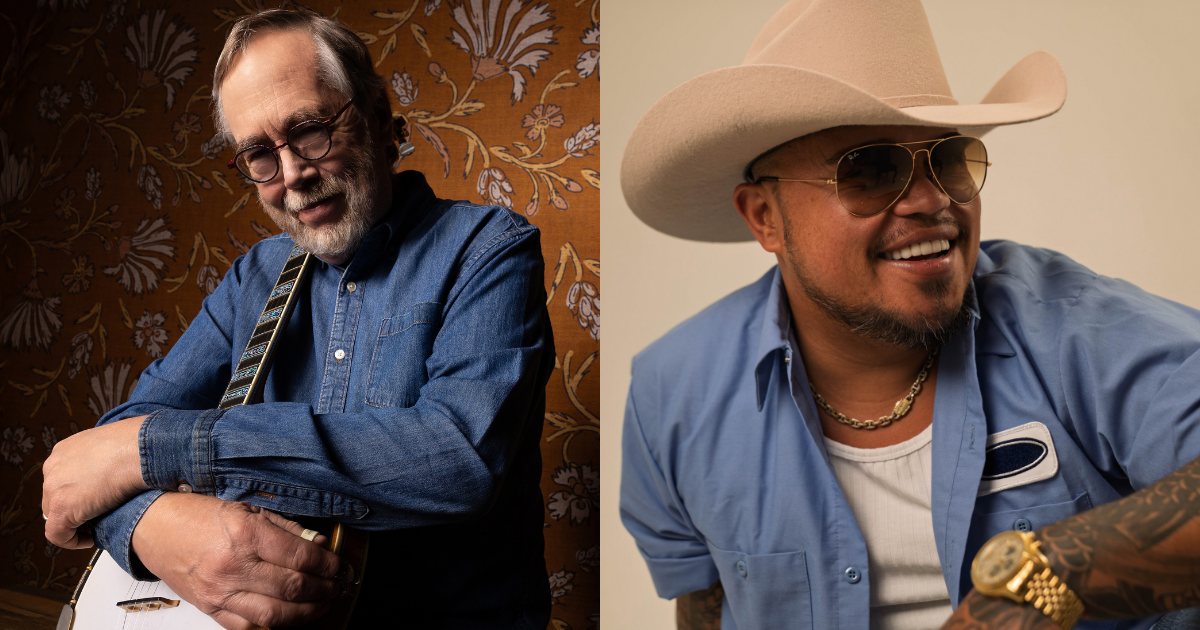
You Gotta Hear This: New Music From Tony Trischka, Maoli, and More

So much new roots music to enjoy this week! From bluegrass to the Pacific Islands and back again.

Starting us off, artist and songwriter Ryan Dart debuts a new song, “Dirt Road Woman,” combining folk, country, and troubadour styles in a musical tribute to strong, empowered women. Below, Dart explains how the song arrived quickly, “like it downloaded straight from the muse.” For a more tropical, seaside country flair, Maoli – who was born and raised in Hawaii – offers a brand new single today, too. “Some Are Just Better” is a track we’ll be returning to plenty this spring and summer, as it celebrates those good, dreamy days that are almost too perfect to believe.

In bluegrass, Lonesome River Band lean into their moniker with a new track, “There Where the River Rolls Around,” written by their longtime friend and songwriting collaborator Billy Smith. Mild and old-timey with lush low-tuned banjo and a laid-back groove, it’s a song about home, homesickness, and place – all perfect topics for ‘grassy explorations. Banjo great Tony Trischka is on his way to a new album, Earl Jam 2, so he’s dropping off a new music video released earlier this week. “Red River Valley” features Molly Tuttle on lead vocal and guitar with Bronwyn Keith-Hynes, Sam Bush, and Mark Schatz filling out the band. We can’t wait for more from the second round of Earl Jam. And young mandolinist phenom Wyatt Ellis launched a new video this week featuring a bunch of all stars, too. “West Dakota Rose” is a cinematic instrumental tune centered on Ellis’s virtuosic playing and featuring Christopher Henry joining on guitar. In the official music video, Ellis strolls around a cabin porch while picking through the tune with an excellent slate of pickers – and a tasty twin fiddle break.

Meanwhile, the Montvales offer an old-timey track of their own, “Carolina,” out today in anticipation of their upcoming March album, Path of Totality. While it certainly sounds old-timey, this is a song rooted in the present, heels dug in against late stage capitalism and the rampant woes of our current day-to-day. Also, singer-songwriter Jack McKeon gives us a sneak listen at his new song, “Kid Like Me,” a sort of sonic bridge from his last album, Talking to Strangers, to his next – which is set for release in July. Written with Theo MacMillan and inspired partially by Tim O’Brien, the track began much more bluegrassy than it ended up after reaching the studio.

Finally, Minneapolis, Minnesota’s Roe Family Singers speak truth to power and bring each of us into their communities and neighborhoods with a chilling new folk song, “Blacked-Out Ford.” Living in Minneapolis in 2025 and 2026 means living on the frontlines of fascism, kidnappings, and government overreach, with the Roes and their friends watching chilling federal SUVs surveil their streets and neighborhoods, tearing families apart and violating human rights. The Roe Family Singers highlight ICE’s murders and unlawful actions in song, calling us all to join them in action and solidarity.

We always love sharing new music with you all every Friday, but this one is especially high quality. Enjoy! ‘Cause You Gotta Hear This…

Ryan Dart, “Dirt Road Woman”

Artist: Ryan Dart
Hometown: Boulder, Colorado
Song: “Dirt Road Woman”
Album: If Love Don’t Break You
Release Date: February 20, 2026 (single); May 1, 2026 (album)

In Their Words: “I wrote this song about falling in love with a powerful woman and the ‘love bubble’ phase of a relationship – how the outside world just fades away. I know some men may not be comfortable with powerful women, but I think there are plenty of us who are attracted to an empowered, strong woman who also embodies the sacred feminine. It’s incredibly compelling and I wouldn’t want anything else.

“You’ve got to ride the bad horses before you recognize the good ones. I set out to write a love song that felt like a cousin to Jason Isbell’s ‘Cover Me Up’ – something that balances raw, real emotion without ever feeling cheesy. This one came fast, like it downloaded straight from the muse, born of pure feeling. I hope it resonates with listeners the way it does with me.” – Ryan Dart


Wyatt Ellis, “West Dakota Rose”

Artist: Wyatt Ellis
Hometown: Maryville, Tennessee
Song: “West Dakota Rose”
Release Date: February 6, 2026 (single); February 19, 2026 (video)
Label: Knee High Records

In Their Words: “Getting to shoot the music video for ‘West Dakota Rose’ was just one of those days you don’t really forget. The tune already feels like it tells a story without words, so being able to stand in a place that matched that feeling made it even more real. Joseph Cash has directed and filmed all of my music videos so far, and he always makes it an adventure. It’s like showing up not totally sure what kind of wild idea he’s going to have, but somehow it always comes together even better than I could’ve imagined.” – Wyatt Ellis

Performer Credits:
Wyatt Ellis – Mandolin
Christopher Henry – Guitar
Julia Claire Eversole – Bass
Kyle Tuttle – Banjo
Noah Goebel – Fiddle
Christian Ward – Fiddle

Video Credits: Joseph Cash, director, director of photography, editor. Kitt Fresa, gaffer. 


Lonesome River Band, “There Where the River Rolls Around”

Artist: Lonesome River Band
Hometown: Floyd, Virginia
Song: “There Where The River Rolls Around”
Release Date: February 20, 2026
Label: Mountain Home Music Company

In Their Words: “We got this song for our long time songwriting friend Billy Smith (‘Hobo Blues,’ ‘Tears In My Tracks,’ ‘Crazy Heart,’ among others). As we listened to the song one late night going down the road in the bus, the arrangement just fell into place and we began working on it. A haunting song about leaving home searching for more and longing to be back. Thanks, Billy!” – Sammy Shelor

“The River [in the song] is Haw River in Rockingham County, North Carolina. I always believed that I would make it big playing music and writing songs in Nashville and go back there. I moved here with my brother Terry (the Grascals) and cousin Alan O’Byrant of the Nashville Bluegrass Band. 52 years later, I’m still here, with three kids from two marriages. But I always wanted to return ‘There Where The River Rolls Around’ and it always touches my heart when I hear it sung. Bless Sammy Shelor and the Lonesome River Band for recording that one and 8 other of my songs, including ‘Crazy Heart’ and ‘Hobo Blues.'” – Billy Smith, songwriter

Track Credits:
Sammy Shelor – Banjo
Jesse Smathers – Acoustic guitar, harmony vocal
Mike Hartgrove – Fiddle
Adam Miller – Mandolin, lead vocal
Kameron Keller – Upright bass
Rod Riley – Electric guitar


Maoli, “Some Are Just Better”

Artist: Maoli
Hometown: Haiku, Maui, Hawaii
Song: “Some Are Just Better”
Album: Maoli Music Overload – MMO 3
Release Date: February 20, 2026 (single)
Label: ONErpm

In Their Words: “I’ve been waiting to release this since the day we wrote it. It was my first time writing in Nashville and I was so excited to collaborate with Mikey Reeves and Rob Snyder. I love the horns, the feel, and the lyrics – I’m so proud of how it all came to life.

“We all have days that stand out – not just good days, but the kind where everything falls into place and just feels right. The kind of day you know you’ll look back on and smile about for years. It’s about capturing that feeling. You can’t relive a day once it’s gone, but music has a way of taking you back – even if it’s just for a few minutes.” – Maoli


Jack McKeon, “Kid Like Me”

Artist: Jack McKeon
Hometown: Chatham, New York
Song: “Kid Like Me”
Album: Every Once in a While
Release Date: February 27, 2026 (single); July 3, 2026 (album)

In Their Words: “‘Kid Like Me’ began its life as the ‘most bluegrass’ sounding song in the bunch before I went into the studio. Written with Theo MacMillan, we talked a lot about parenting, being an older sibling, and trying to make sense of a world that’s always in flux. Theo’s son was about to be born and I was reflecting on watching my younger sister begin to reach adulthood and face real and more challenging problems. Musically, we spent most of the writing session talking about Tim O’Brien and wrote ‘Kid Like Me’ at a faster tempo that we thought would fit with Tim’s Odd Man In era. Once we were in the studio, it was Casey Campbell and Seth Taylor who turned the recording in a more ambient direction, hinging on Casey’s extended mandolin intro that sets the tone for the rest of the song. I wanted to lead my new project off with ‘Kid Like Me’ as it is reminiscent of the sounds and themes of my debut album Talking to Strangers, but breaks new ground for my production as it features Mellotron, drums, and electric guitar as well.” – Jack McKeon

Track Credits:
Jack McKeon – Acoustic guitar, vocal, songwriter, producer
Seth Taylor – Acoustic guitar, electric guitar
Casey Campbell – Mandolin
Vickie Vaughn – Bass
Josh Hunt – Drums
Phillippe Bronchtein – Keys
Melissa Erin – BGVs


The Montvales, “Carolina”

Artist: The Montvales
Hometown: Cincinnati, Ohio
Song: “Carolina”
Album: Path of Totality
Release Date: February 18, 2026 (single); March 20, 2026 (album)
Label: Free Dirt Records

In Their Words: “‘Carolina’ is an old timey song that is firmly situated in late stage capitalism. I called upon the steadfast, rooted sounds of home when I was writing this one. It brings those old sounds forth into this uncertain era and makes a vow: even when there seems to be no path forward, we’ll find a way.” – Sally Buice


Roe Family Singers, “Blacked-Out Ford”

Artist: Roe Family Singers
Hometown: Minneapolis, Minnesota
Song: “Blacked-Out Ford”
Album: Light & Hope & Roses
Release Date: February 2, 2026 (single)

In Their Words: “We wrote ‘Blacked-Out Ford’ about two weeks after Renee Good was murdered by ICE in our Minneapolis streets. Good’s murder, combined with the discovery that ICE is housed about six blocks from our house and has been seen circling our neighborhood, looking for people to abduct… that’s where this song came from. Our area has a large Muslim population, neighbors primarily from India and Pakistan, also Somalia and Ethiopia, so pretty soon every blacked-out SUV started to look like ICE sharks circling, and every parked truck looked like a prelude to a kidnapping. We debuted the song live at a mutual-aid benefit, and the benefit raised a ton of money; the next morning we woke up feeling proud of ourselves and empowered by the fact that we felt like we were using our art to fight the fascists. Then we got the news that Alex Pretti had just been murdered by ICE in our Minneapolis streets.” – Quillan Roe

Track Credits:
Kim Roe – Washboard, vocals
Quillan Roe – Guitar, vocals


Tony Trischka, “Red River Valley” Featuring Molly Tuttle

Artist: Tony Trischka
Hometown: Fair Lawn, New Jersey
Song: “Red River Valley” featuring Molly Tuttle
Album: Earl Jam 2
Release Date: February 18, 2026 (video); March 13, 2026 (album)
Label: Down The Road Records

In Their Words: “I grew up listening to ‘Red River Valley’ and once I found Earl Scruggs and John Hartford playing it in one of their jams, I knew I had to put it on Earl Jam 2. Who better to sing it than Molly Tuttle? I’ve known Molly since she was a teen (when I thought she was just a solid Scruggs-style banjo player) and it’s been a joy seeing her career take off. She has the perfect voice for this tune and with the estimable talents of Bronwyn Keith-Hynes on fiddle, Sam Bush on mandolin, and Mark Schatz on bass, I knew we had something special. When we’d finished recording and I went back to listen to it the next day, I felt it needed just a little bit more of something. So I got in touch with Bronwyn (talk about careers taking off!) and she added beautiful harmony vocals. The very last vocal chorus melts my heart!” – Tony Trischka

Track Credits:
Tony Trischka – Banjo
Molly Tuttle – Guitar, vocals
Bronwyn Keith-Hynes – Fiddle, harmony vocals
Sam Bush – Mandolin
Mark Schatz – Bass


Photo Credit: Tony Trischka by Ali Hasbach; Maoli by Sean McGee.