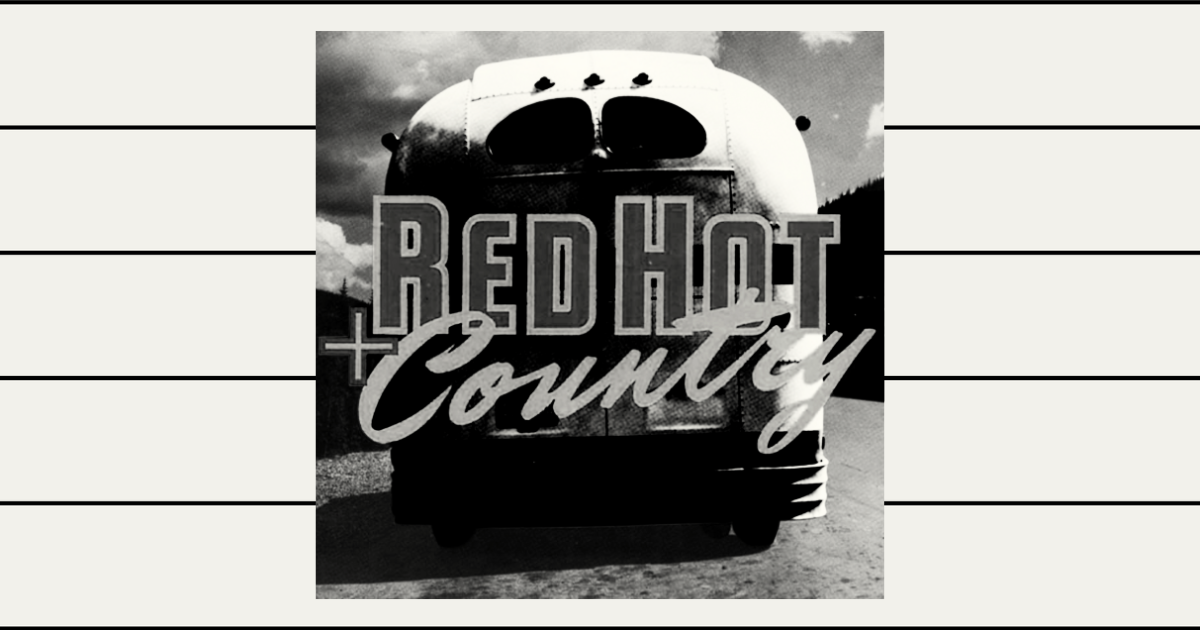
1994 AIDS Benefit Album Red Hot + Country Was Ahead of Its Time

During the 1992 CMA Awards, Kathy Mattea had a decision to make. The singer-songwriter and 1989 and 1990 CMA Female Vocalist of the Year had opted to wear four red AIDS awareness ribbons, which had become prominent at award shows such as the Tonys, the GRAMMYs, and the Oscars. In ‘92, the Country Music Association decided to hand out green ribbons to promote environmental protection. According to a Billboard article, reports of the CMA’s decision sparked controversy and the organization reacted by offering to distribute red ribbons to artists backstage.

But there was no plan to publicly address the disease on the broadcast. After a local columnist wrote that country fans may not know what the red ribbons symbolize, calling for Mattea to publicly speak out on AIDS – which had become the number one cause of death for all Americans ages 25 to 44 – Mattea realized simply wearing the ribbon was not enough.

“We went to the CMA and said, look, we’ve been called out and I don’t wanna grandstand and I don’t want to go against you guys, but can you help me?” Mattea says. “We basically got no response. So the night of the show I had to decide what I was going to do. I didn’t want to be sanctimonious… How do you stand up in a moment when you feel called to do something bigger? I just went backstage during the commercial before and searched my heart.”

When Mattea took the stage to present, she spoke the names of three of her friends who had died from AIDS. One of those names belonged to her dear friend Michael, who had died without ever telling Mattea he had the disease.

“The problem was he couldn’t tell me,” she says. “You didn’t know who you could talk to and who you couldn’t back then. It’s hard to fathom now, but that’s the way it was.

“Something in me just kind snapped and I thought, I’d like to do something to help. I had a long talk with my manager and I was like, these people in New York who are working on this, they don’t even know that I’m down here in Nashville and we’re dealing with it, too.”

Mattea got in touch with the Red Hot organization, which was founded by Leigh Blake and John Carlin in 1989 to raise awareness and financial support around the AIDS epidemic. Carlin, who got his start in the New York art world, where he curated shows at the Whitney Museum of American Art and befriended artists such as Keith Haring and David Wojnarowicz, had already experienced immense loss among his friend group.

“Being in New York in the 1980s was at the start this kind of paradise liberation. There was all this creativity. If you think of the late ‘70s and early ‘80s in New York, it’s when hip-hop, punk art, music, the East Village arts scene, graffiti, all these things were really being born culturally,” Carlin says.

“Then by the mid ‘80s, the specter of HIV and AIDS turned what felt like a paradise into an inferno. All of a sudden people that you would see at parties or at openings – you’d go, ‘Where’s Nicholas?’ and people get that kind of quiet look and say, ‘Oh, he’s sick. He’s in St. Vincent’s.’”

Carlin, who had since left his job as an art curator to work as an entertainment lawyer, began working on Red Hot’s first project, 1990’s Red Hot + Blue, a compilation album featuring pop and rock artists such as Sinead O’Connor, Debbie Harry, Iggy Pop, U2, David Byrne, and more covering the songs of Cole Porter. The album was a smash hit, raising money for AIDS organizations, including ACT UP, a grassroots protest movement which successfully pushed the government and pharmaceutical companies to release drugs that now allow people to live with HIV.

Despite its success, Carlin had no initial plans to release more Red Hot compilations. He left the law firm where he was employed after the partners gave him an ultimatum. (“My reward for [organizing the project] was basically the partners of the law firm said, ‘stop doing that or leave,’” Carlin says.) Then he received a phone call that would change everything.

“I got a call from George Michael’s manager saying George was a big Red Hot fan. He wants to contribute a song to your next album,” Carlin says. “At the time, we didn’t have a next album. But, in 1991, if George Michael says he wants to give you a track, we were like, ‘Well, we better get an album together.’”

In 1992, the organization released Red Hot + Dance, featuring Michael, Madonna, Sly & the Family Stone, Lisa Stansfield, and more. The album cover featured artwork by Keith Haring. No Alternative, featuring Nirvana, Soul Asylum, Pavement, Patti Smith, and more, followed – and even spawned an MTV special with live performances. AIDS awareness was becoming a key issue among the MTV generation, but the country music industry was still mostly silent.

“I don’t think the seriousness of the problem has hit home yet with the country audience,” Mark Chesnutt, who co-chaired the Country Music AIDS Awareness Campaign alongside Mary Chapin Carpenter, told Billboard in 1992. “Most of the people who speak about AIDS and participate in the awareness programs have been in the pop business, movie stars and rock stars.”

Starting the Conversation

If Nashville’s music industry was slower to respond to the AIDS epidemic, it certainly wasn’t because the community hadn’t been impacted.

“If people found out you were HIV positive, there were landlords who threw people out on the street,” Mattea says. “There were medical facilities that would not take them in. I had a friend who worked on my crew for a while who was legendary in Nashville for taking people in during the AIDS crisis. If you had nowhere to go, you went to his house and he had an army of volunteers. There were lots of stories like that. But there was also a lot of rejection and a lot of stigma.”

After Mattea’s statement at the 1992 CMA Awards, she was quietly approached by people who had been impacted by AIDS. At an event the morning after the award show, Mattea was approached by a man named Bubba who worked at a large radio station in the Deep South who had lost his high school best friend to AIDS. Later, a man who worked for The Nashville Network’s hit talk show Nashville Now told Mattea his son was diagnosed with HIV. Another, a Nashville radio DJ, told Mattea that he had AIDS, but didn’t feel comfortable telling anyone else in his workplace.

“There were all these people in our community who couldn’t talk to each other about it,” Mattea says. “That’s what I was wanting – some compassion and support and for people to be able to speak up about what they were struggling with and hear each other.”

In 1992, Nashville mayor Phil Bredesen and Jo Walker-Meador, former executive director of the CMA, co-chaired the city’s first AIDS Walk. Mattea and Chesnutt performed at the event. With Red Hot + Country, Mattea set out to help expand country music’s AIDS outreach beyond Music City, leaving nerve-wracked answering machine messages for anyone she thought might be interested in taking part in the project.

“Kathy was very brave. I think it’s almost like a heroic gesture for her to take a stand at that moment,” John Carlin says. “Let’s just say [there was] a lot of homophobia in the South and country music in general, and AIDS-phobia. It was not a topic people wanted to talk about. It was really difficult. I think she made it her business so that people couldn’t ignore it.”

Hunter Kelly, a country journalist who hosted Apple Music Country’s Proud Radio from 2020 to 2024, says, as a gay kid growing up in Alabama, artists who championed LGBTQ+ causes felt like a safe place. He remembers Mattea’s speech at the 1992 CMA Awards and attending Reba McEntire’s 1996 tour and seeing her bring a replica of the famous AIDS Memorial Quilt, an ongoing community project to honor the lives lost to HIV/ AIDS.

“I definitely knew on some level I was gay, but I was also in a Southern Baptist church, so I was drawn to those things,” Kelly says. “I was drawn to that mainstream representation that was more open to queer people.”

“Teach Your Children Well”

Carlin says the original idea for the Red Hot + Country album was to have country artists cover John Lennon songs. He even met with Yoko Ono, who granted the organization permission to use Lennon’s songs for the project. But when that idea didn’t come to fruition, the theme shifted to the Laurel Canyon folk-rock scene of the ‘60s and ‘70s and the songs of Jackson Browne, James Taylor, and Bob Dylan. The album would be produced by Randy Scruggs, a GRAMMY-winning musician and songwriter whose own father, Earl Scruggs, had played a significant role in the cross-generational Nitty Gritty Dirt Band album Will the Circle Be Unbroken two decades earlier.

“Randy kind of wanted to recreate that spirit of bringing generations together and, obviously, because of his dad, he had access on a level that I never could get,” Carlin says.

Alongside renditions of Crosby, Stills, Nash & Young’s “Teach Your Children Well” and Jackson Browne’s “Rock Me on the Water,” the album featured covers of country classics, such as the Carter Family’s “Keep On the Sunny Side” that had inspired California folkies of the ‘60s.

The album also features the first recording by the band Wilco, which was formed by Jeff Tweedy in 1994 after the breakup of his former band, Uncle Tupelo. The group teamed up with singer-songwriter Syd Straw to perform “The T.B. is Whipping Me,” an Ernest Tubb song inspired by his hero Jimmie Rodgers, who died of tuberculosis in 1933.

Carlin says he wanted to highlight that Rodgers, known as the father of country, had also died from a disease that weakened the immune system.

“What is the difference between tuberculosis and HIV? Really nothing other than homophobia,” Carlin says. “It’s a disease; it doesn’t choose people.”

Other standouts include Nanci Griffith and Jimmy Webb’s “If These Old Walls Could Speak,” Patty Loveless’ “When I Reach the Place I’m Going,” and Marty Stuart and Jerry & Tammy Sullivan’s cover of the traditional gospel tune, “Up Above My Head/ Blind Bartimus.”

Perhaps the most stirring song on the album is Mary Chapin Carpenter’s “Willie Short,” which was written by Carpenter’s producer and guitarist John Jennings after seeing a Newsweek feature called “The Faces of AIDS.” There, he spotted the photo of a Houston dishwasher named Willie Short.

“I was looking at the pictures, and under the picture of Willie Short, there was a very affecting caption and it just got to me: ‘Don’t forget me. From time to time, mention my name’,” Jennings told The Washington Post in 1994.

Red Hot also produced a Red Hot + Country television special, which aired on CMT. The program featured Mattea, Griffith, Earl Scruggs, Carl Perkins, Waylon Jennings, Vassar Clements, and more performing at the Ryman as well as interviews with rural and Southern folks impacted by the AIDS epidemic.

“Three Chords and the Truth”

In many ways, the early ‘90s seemed to usher in a new era in country, where queer issues were concerned. Kelly points to Garth Brooks’ song “We Shall Be Free,” which includes the line “when we’re free to love anyone we choose.”

“You also had Bill Clinton, who was a Southerner, but also a Democrat, in office,” Kelly says. “Culturally, in ‘94, there was a lot going on that dovetailed – I really see the Red Hot + Country album as country music being a part of the mainstream at that time.”

None of that translated to radio play, however. Despite the Red Hot + Country’s wealth of talent, Carlin says the album was “dead on arrival,” a huge contrast to the compilation album Common Thread: The Songs of the Eagles which was released the year prior and was certified Platinum three times by the RIAA. Red Hot + Country peaked at No. 30 on the U.S. Billboard Top Country Albums chart.

“Sadly, it was pretty clear it was homophobia in country radio,” Carlin says. “At that time, if you didn’t get played on radio, you couldn’t get arrested.”

Though Red Hot + Country didn’t gain the listenership of previous Red Hot releases, Carlin and Mattea both remain extremely proud of the project.

“It’s a beautiful cross section of musicians and music. Many of these people I know and love, and I feel proud of my community for stepping in and stepping up and doing something to try to contribute in this situation that just felt so impossible back then,” Mattea says. “I’m more of a ‘fraidy cat than it might appear, and I’m happy with my younger self that I could listen to my heart and step in.”

In the years since Red Hot + Country, LGBTQ+ representation in country music has grown tremendously. Queer artists such as Chely Wright, Brandi Carlile, Brandy Clark, Orville Peck, T.J. Osborne, and the Kentucky Gentlemen have opened doors within the genre. But Kelly says when he launched Proud Radio in 2020, he faced many of the same roadblocks Red Hot + Country faced 25 years earlier.

“There were artists whose publicists would be like ‘We don’t want to make [being gay] the main focus or we don’t want to belabor it,” Kelly says. “With the anti-DEI [diversity, equity and inclusion] thing [from the] Trump administration coming in, we might as well be in 1994, as far as the mainstream country space.”

Kelly champions LGBTQ+ country artists Adam Mac and Chris Housman’s recently released “The Outside” as an anthem for queer country artists who’ve never felt embraced by the industry.

“I keep going and keep hoping for progress, but it’s disheartening,” Kelly says. “But also I look to artists like Chris and Adam who keep making great music and purposefully [making music] in the mainstream.”

Earlier this year, singer-songwriter David Michael Hawkins, an openly gay and openly HIV-positive country artist, released his song “Sin,” which addresses the stigma around HIV.

“When I started to look back on the emotion surrounding primarily the stigma attached to the diagnosis, that’s where the emotional well ran really deep,” Hawkins says. “Stigma is rampant in a lot of LGBTQIA identities. For me, the HIV diagnosis was a big part of it, which was also surrounded by poverty, which was surrounded by substance abuse. They were all in this weird cycle of feeding each other. The healthier I got physically, mentally, and emotionally, the more I was able to put words to that deep well of emotion.”

Hawkins says he wants to expand the conversation around HIV/AIDS by helping more artists feel comfortable with sharing their personal connection to the disease.

Sin is not the first country song written about HIV. There are probably hundreds or thousands, but up until very recently and maybe up until my song, there’s no one that’s been transparent about that being the root of why the song was written,” Hawkins says.

“I think if the industry is doing our job, which is to offer a safe space for artists to come up with inspiration from anyone or anything, then the artists should feel comfortable saying, ‘Yes, this is about HIV, or this is about drug use, or this is about domestic violence,’ and however closely it’s attached to them as an individual. I think we could probably do a little bit better about letting artists know that no matter the subject matter or the inspiration, if it’s a good song and if it helps people – if it’s three chords and the truth – then we’ve done our job as country musicians.”
 

Palmyra Shakes Off Anxieties With Oh Boy Records Debut, ‘Restless’

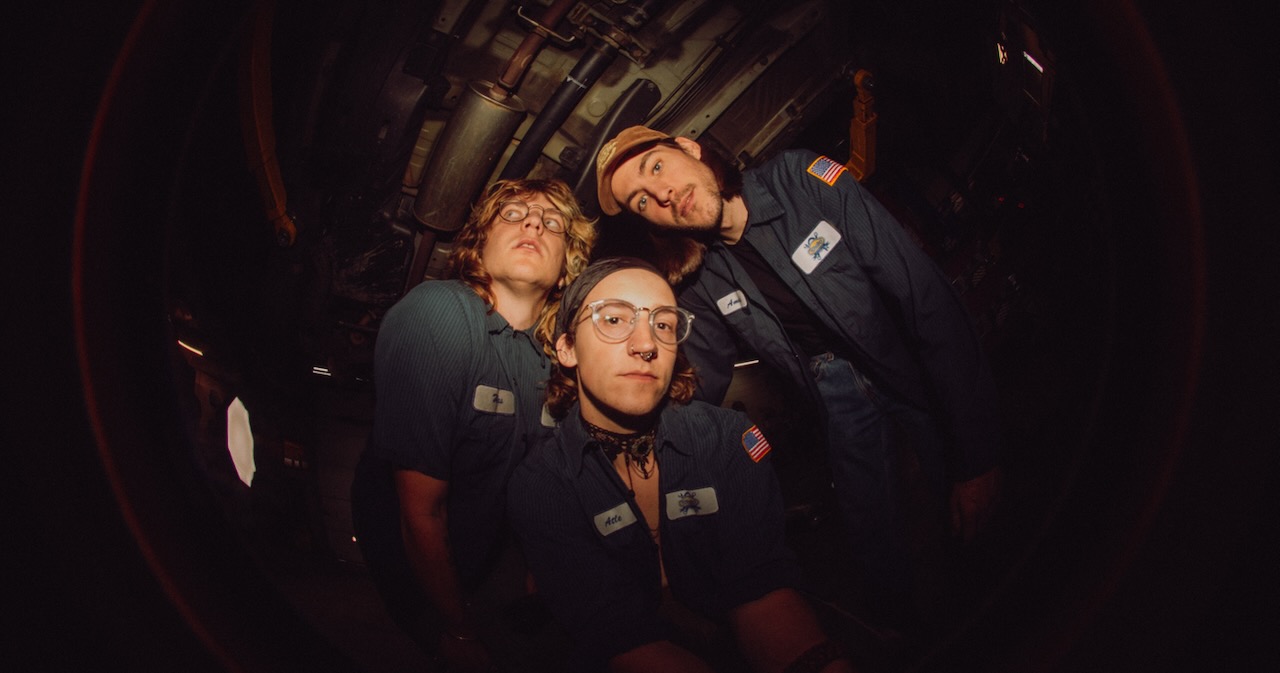
Palmyra is a bit restless. Their emotions knot into a mangled ball, almost suffocating them.

“Early hours in the morning, tossing and turning/ Everyone else in this house is asleep,” Sasha Landon pours into the microphone. “Palm Readers” emerges integral to the band’s new musical chapter. Aptly titled Restless, this album marks their debut with Oh Boy Records. It’s like reintroducing themselves to the world.

The trio – rounded out with Teddy Chipouras and Mānoa Bell – pounces from the get-go. Similar to The Lone Bellow’s tightly wound vocal work, their harmonies exude a vintage richness throughout as they do on the title track and opener. It’s quite evident that they take their work seriously, down to the lilt of their voices as they glide through the air. Palmyra makes you believe they’ve been singing together for decades, their harmonies are so electric and full of life.

“We definitely put a lot of effort into our harmonies. It’s something that always feels super important when we’re arranging a song,” shares Landon. “The three of us weren’t people who sang with others a lot before this band. When we formed, we learned a lot from old recordings of other bands and all sorts of stuff. We did a lot of transcribing harmony early on in the lockdown. The record needed to start with our voices and we wanted that to set the tone for the album.”

Perfectly performed harmonies underpin the album’s emotional currents. The trio builds guilt, frustration, and hope into the project’s backbone to create a coming-of-age story. “There was a moment when we understood what the album was about. There were separate songs that we found homes together through playing them live,” says Chipouras. “‘Palm Readers’ feels great right after ‘Restless.’ And those songs then became a pair. Their energies matched. The coming-of-age narrative emerged from the time period that the songs were written.”

Restless sprouts from the cracks between each song. Where “No Receipt” meanders through sun-caked uncertainty, the cheeky “Dishes” sees the band accepting domestication and finding peace. Along the way, they agonize over being present while time yanks them this way and that – the pressure that comes from being a working musician crushes their shoulders. The album, based on a “period of leaving college, going out on our own, starting a band, going out on the road, and just trying to figure out what the life of a musician looks like,” captures brutal truths of living, loving, and losing time.

Hopping on a Zoom call, Palmyra spoke to BGS about feeling restless, reenergized creativity, and mortality.

What is it about the title track that made sense to be the opener?

Sasha Landon: It made a lot of sense for us to have this song that starts with the three of our voices kicking off the record. Also, it is a song that has a through line to the record from the jump. The emotional center for this record is pretty heavy. And that’s not to say that there’s not a lot of light in the record. I think there’s a lot of fun on it, as well. But the overall emotional center is pretty heavy and restless, felt like a good way to jump into that.

In “No Receipt,” you lament that there just isn’t enough time. As you’ve gotten older, what’s your relationship with time been like?

Mānoa Bell: That’s the central theme of, not only the record, but questions we’re always asking ourselves. Specifically, the last line there about finding those quieter moments has proven to be such a challenge, to put it all to the side. Being an artist is such a consuming experience. Every moment of your day is a part of that journey and it can be hard to have separation from it, which is a really beautiful thing, but frustrating at times as well. You can’t get away from it.

“Can’t Slow Down” deals with a similar thematic thread. How did this one come together?

Teddy Chipouras: This one was a song that I wrote after a couple of years of not writing songs. I don’t think I wrote hardly any songs during COVID. This tune kind of came out all at once after being fed up with not writing anything for a while, and I think we had just gotten off the road. It was kind of like just throwing words at the page of how I was feeling at the time, just feeling exhausted.

That one’s funny, because it was a really big moment for me and I felt very accomplished that I had written something and finished something. I remember being nervous to send it to the band and then really not thinking anything would come from it. I did not think we would be playing that song every night. It’s one of those tunes that has changed meaning, or it means more to me now than it did when I wrote it.

“Buffalo” roots itself in a phone call during a show in Buffalo after one of your friends had taken their own life. Was this song a necessary cathartic exercise?

MB: There are songs that you try to write and then there are songs that you just have to write. I remember very clearly writing the beginning of it and immediately feeling better. It was a very therapeutic experience, not feeling good but feeling better. It’s a song that’s still hard to play. I feel a responsibility to try to connect emotionally with it every time we play it and not just phone it in. Sometimes, when you’re on stage, you’ve done something so many times, there’s a muscle memory aspect to it. But that song never really feels like muscle memory.

When someone dies, you begin questioning your mortality. Did that happen to you?

MB: I think suicide, specifically, when it’s someone who you see yourself in, and someone who you grew up with, makes you wonder what life would be like without them. It’s not just suicide. It’s just about loss and grief. There was never a point where I was like at such a level of grief that I didn’t want to continue living. But it definitely makes you wonder what life will be like moving forward.

The closing track, “Carolina Wren,” feels like a big sigh to let all the things on the record go. Why does it appear as primarily the demo you recorded?

SL: [Producer] Jake Cochran did such a great job of trying to make sure that the songs sonically matched their emotional core and that the version of the song that we were putting out felt really authentic to the lyrics and our live performance of it. This was a tune that I hadn’t played for anyone in the band yet. I wrote it right before we went to the lakehouse [to record] and played it on a whim. I think Teddy was out getting groceries or something and Jake pressed record. Mānoa is holding the bass and I think plays one note on it, and I am playing guitar and singing. We just felt, after hearing it, there was a consensus that that’s how the song is supposed to exist. It’s how it’s supposed to sound.

And Jake helped us get there, too. With some songs, like “Shape I’m In,” for example, we had to be mindful of how many performances we gave it before we exhausted it and weren’t going to get any more. When you have a song that takes a lot emotionally to perform, you can only do it so many times before it loses its meaning, or becomes muscle memory, or just wears you out from overuse. We had one take that felt earnest. It speaks to the song. It honors the song in a good way and it belongs as it is. Then we decided that it made sense as the last tune on the record. It is a nice little breath at the end.

What have been the biggest realizations you’ve had of being working musicians?

MB: I think maybe for me, I’ve learned that there’s kind of an endless amount of resilience needed. You’re constantly faced with just things you need to get through, to solve. I don’t even know if I would call that a music thing, though. I think that’s just like a growing-up thing.

TC: One thing for me is I didn’t realize how hard it would be to find creative time when you’re a full-time creative. We are full-time musicians, we’re on tour a lot of the time, and then we get home and there’s a lot of work to do. It’s almost harder to schedule the creative time than it is to schedule the work. I never thought it would be hard to find that balance.

Did this album change you in any way?

MB: This record showed all three of us that there was another level to get to and that there are endless places of growth that we will find. I think we dug deep as a band and it has continued to be rewarding for those reasons. The further we dig, the better it is. It does just keep getting better.

With the release, the songs no longer belong to you, but the world. What’s that experience?

TC: It will be interesting to see how this one feels, because this one feels bigger than our previous projects. We talk about this a lot with our songs going through different phases of us letting them go. I think the biggest one for me of letting songs go is starting to play them live. We’ve played all of these songs live before for a while. That moment, for me, is the biggest in terms of feeling like releasing full control of it, and it becoming the world’s and not ours anymore.

MB: We haven’t released something at this level before, so I don’t know. I’m excited to see how it feels releasing the whole project. Last year’s release was an EP. I think that if I’m defining what feels different about an EP versus an album, it’s like Teddy saying that this feels bigger than anything before; it’s the amount of energy we put into creating the music – the amount of energy we’ve put into getting it out to people. It’s just like we’re putting so much behind it.

SL: I’m so excited to see, to know that a listener’s first experience of Palmyra could be Restless, that the first thing that they hear is something that of all of the music we’ve put out, we have been proud of, and has been a really good snapshot of where we are at the present time.


Photo Credit: Rett Rogers

One to Watch: Boston-Based Alt Folk Duo Sweet Petunia

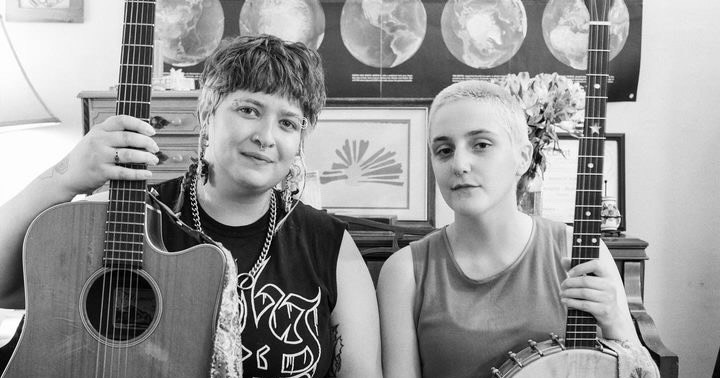
From the crosshairs of the Boston folk community and punk/DIY scene emerges Sweet Petunia, an innovative duo consisting of multi-instrumentalist songwriters Maddy Simpson and Mairead Guy. A synthesis of banjos, queerness, emotive lyricism, and life-affirming harmonies, the pair’s music explores the fluidity of futurity, even when anchored in centuries of tradition.

With two EPs and several singles under their belt, Sweet Petunia graces the ears of multitudes with an active touring schedule and their vigorous participation in the Boston music scene. The queer alt folk duo’s commitment to community and uplifting overlooked histories only deepen the resounding impact that their music inspires.

So, to start things off, how did the two of you first meet?

Maddy Simpson: We both went to Berklee College of Music and we got placed into the same ensemble, 21st Century String Band, taught by Greg Liszt, who is an incredible banjo player. One day we were supposed to have an additional rehearsal with another guy that was in the ensemble, but he stood us up (shoutout Rob with your Legends of Zelda beanie with a brim!) The two of us showed up for the rehearsal and he never came. So we just had 45 minutes to talk to each other. We ended up talking about our goals, the music we liked, and found out that we had a lot of similar likes and plans for the future. So we decided to get together and play some music. When we did, immediately we were like, “Okay, let’s be in a band.”

What does your musical chemistry with one another feel like?

MS: Well, we always joke that we’re related. I mean, we do sound very similar when we sing together. So it kind of feels like we’re like a family band even though we’re not related.

Mairead Guy: Yeah, I mean it just works – really well. Obviously we put in a lot of work into what we do. But a lot of it feels very easy when we’re playing and arranging together. We have similar intuitions about the way things should go, and that makes it really fun and special to play together.

What is your process like when you songwrite and arrange together? And what’s it like arranging with two banjos?

MG: Most of the time we come to each other with an almost-completed song. Sometimes we write together, but usually we come together once the song is pretty much finished and arrange it from there. And that’s just a lot of playing it over and over and over and over, trying different things and seeing what sticks and what pops out.

That works! How did each of you come to the genre and/or the banjo?

MS: I came to folk music through the folk revival of the ’60s. I listened to a lot of Simon & Garfunkel growing up and then when I was a little bit older, I got into the folk revival revival, so like Mumford & Sons, The Head and the Heart, The Lumineers, and that kind of stuff. I had no idea that was just the tip of a really big iceberg – I didn’t really discover true traditional music until college, when I got really into old-time music and ’50s country blues and that kind of thing.

The reason I started playing banjo is that obviously it was pretty present in the music that I was listening to like all throughout high school and my childhood, but when I got to college I had a dorm-mate who played banjo. He was a banjo principal and he would play banjo in the lounge and the laundry room – just everywhere. One day I told him that I was interested and he said, “If you buy a banjo, I’ll give you lessons.” So over Thanksgiving break I went home, bought a banjo, came back, and started taking lessons with him. And then I started taking lessons with other people at Berklee and that was it for me – it became my primary instrument.

MG: So, I grew up in Virginia. There’s a lot of traditional, old-time bluegrass around in that area and a lot of my family is pretty musical – my uncle and aunt and my great uncle and his longtime partner. We’re are all professional musicians and my great uncle was a phenomenal clawhammer banjo player. My brother plays the banjo and I’d always wanted to play it, because it’s such a beautiful instrument. When Maddy and I first started playing together, we had a lot of songs where we would trade our instruments around. When she switched to banjo I thought it was the perfect time to finally sink my teeth in and do it. Similarly to her, once I picked one up I was like, “Oh my God, why haven’t I been doing this the whole time?” Yeah, it’s an addictive instrument to play.

I noticed that the stylization of a lot of your lyrics is super unique and you have several songs with strong narratives. Can you talk a bit about the song “Quilt Too Big to Fold”? I’ve had it on repeat for weeks.

MS: Thank you. Yeah, I wrote that song for a class. We were given this assignment to write a story song. And I was thinking a lot and sort of had this refrain in my head, “All you do is sit all day and sew.” So I did some journaling about all of the things that you can sit and sew. Fiber arts are really important to me and at the time of writing that song I was really into embroidery and I was getting really into visible mending – dabbling in this world of fiber arts.

I started thinking about all of the different fiber mediums you can have. And I started to think about quotes. And then, obviously, I’m also gay. I had already seen the AIDS Memorial Quilt, so I began to look into it more deeply. The quilt was started by a lesbian and was just one of the many forms of activism that came out of the AIDS crisis. The song sort of formed around that pretty quickly. It was easy to write given the fact that I’m queer and then just creating this work of fiction where I did a lot of thinking about what it would be like to go through that, taking my own passions and interests in sort of like translating them into a historical lens. And it was really an interesting process.

Really, really amazing stuff. I also saw that you both played an integral part in Club Passim’s inaugural Pride show? Can you talk a little bit about that and what that was like?

MG: Oh it was all Maddie! Well, we played it together, but it was all Maddie.

MS: Mairead kept me sane – I was freaking out the whole time. I was given the opportunity to curate Club Passim’s first ever truly Pride-themed show. We’ve done Pride open mics and once we had a queer festival, but that was during COVID, so it was all online. So we’ve had some queer-centered events before, but this was the first ever show specifically dedicated to Pride Month.

I was given this opportunity through The Folk Collective, which is an initiative that Passim is spearheading right now. Basically, it’s a cohort of 12 artists and cultural thought leaders that live in and around Boston. Passim has invited them into the club to synthesize what the future of folk music could be like, since folk music has, in the cultural narrative, been seen as a really white-washed and male-centric genre. So it’s 12 people of varying marginalized identities and people of all ages and races and gender identities and sexual identities coming together to talk about what the future of folk music could look like.

I was given an opportunity through the Folk Collective to bring together six queer acts who are making music either directly inspired by or within the traditional genre. We had several performers who played super traditional instruments – I mean, we both played banjo and we had somebody who plays the mountain dulcimer, which was really cool. We had somebody else who did country blues and talked about gender non-conforming people in the genre. And we also had some incredible singer-songwriters as well. It ended up being a crazy night of celebrating queer identities and also celebrating the traditional music that everybody at Club Passim loves so much. It was very, very awesome.

MG: Hell yeah. Beautiful night – Maddie put so much time and effort and care into curating all of these artists and making this happen in such an important and cognitive way, and it was just such an incredible thing to ride along the coattails of.

Hopefully there are many more! In general, what does the community feel like in Boston, within the folk scene, and how do you see Sweet Petunia fitting into it?

MG: I think that Maddie and I have a particular perspective on it just because we work at Club Passim, so we see all the musicians that pass through. But I mean, as is evidenced by the event that we just had, there is a pretty wide community of queer and trans folk musicians who are drawing inspiration from traditional roots music. And even beyond tradition, things like the pedal or lap steel are becoming super popular in different genres of music. Even the banjo people are using electric banjo to get a super sick like electric guitar tone and that sort of thing.

MS: Yeah, I was just gonna say that we sit in a really weird intersection, because we’re not quite in the traditional folk scene. We’re also really established within the DIY scene as well, which is primarily indie rock and hardcore music in Boston. But because we exist in both circles we get the best of both worlds. Sometimes we get asked to play punk shows, but we also can play listening room venues like Passim.

Outside of the folk and Americana scene, what are your biggest influences right now?

MS: I love slowcore and also the huge bootgaze thing that’s happening right now. I feel like I exist in the perfect time to be 25 and into DIY music, because most of the music being made around here at this point has some bootgaze element.

Could you define bootgaze?

MS: It’s like shoegaze-inspired country music. Or country-inspired shoegaze music. Some blur into indie rock, some are just shoegaze bands that use country instrumentation or come from a place where country music is the main genre. The band Wednesday is probably the biggest right now. They sort of pioneered the genre. MJ Lenderman, Florry – there’s lots to explore if you look up bootgaze or countrygaze.

What about you, Mariead?

MG: I mean, definitely same. I’ve also really been loving a lot of hyperpop and pop music recently. Just like the energy in songs like that is so interesting. I’ve been thinking a lot about the banjo as a similar percussion to a drum machine in a super fast hyperpop song. I’ve been trying to think about ways to incorporate that because most of the songs that I write make you feel kind of bad, but I think it’d be kind of fun to write songs that made you feel kinda good.

I think you’re onto something! Do you two have any fun projects coming up?

MG: We’re working on a Dolly Parton cover EP. Every year for Halloween since 2019 (except for 2020 because of COVID) we have done a Dolly Parton cover set. And so this will be our fifth year of Dolly Parton cover sets. So we wanted to do a little something to commemorate it.

MS: Yeah, it’s gonna be really fun. That’s coming in October. There will be a bill for a cover show. So if people are local to Boston, they can come to that.

That is so exciting! So you’re our One to Watch, but who are you watching? Are there any artists, creatives, musicians, etc. that you’re appreciating especially right now?

MS: I think that my one to watch is Roman Barten-Sherman, the person from Passim’s Pride show who does traditional country blues. She’s incredible. She’s so good. She is so smart. And so well-read and knowledgeable about early American country blues. During her shows she’ll introduce every song with so much knowledge about the genre and people who play it. She knows so much about gender-nonconforming and trans individuals and Black women who have contributed to the genre. She knows everything – it’s crazy. And then she’ll play the song and it’s the best fucking thing you’ve ever heard. She’s just so good. I think she’s going to take over the world. She’s my one to watch.

MD: I definitely second that – she’s one of the people I was thinking of. I would also say Jarsch. Just absolutely incredible, visceral songwriting. Beautiful lyricism relating to both the pain and joy of queerness and gender and life itself – religious trauma, all sorts of things. Everytime I see her play I literally just cry and cry. It’s so beautiful. She’s the only person I’ve seen able to yield a guitjo in an appropriate manner, and she just has so much love for what she’s doing and the community she’s in. I feel very lucky to know her. Definitely a one to watch.


Photo Credit: Barry Schneier

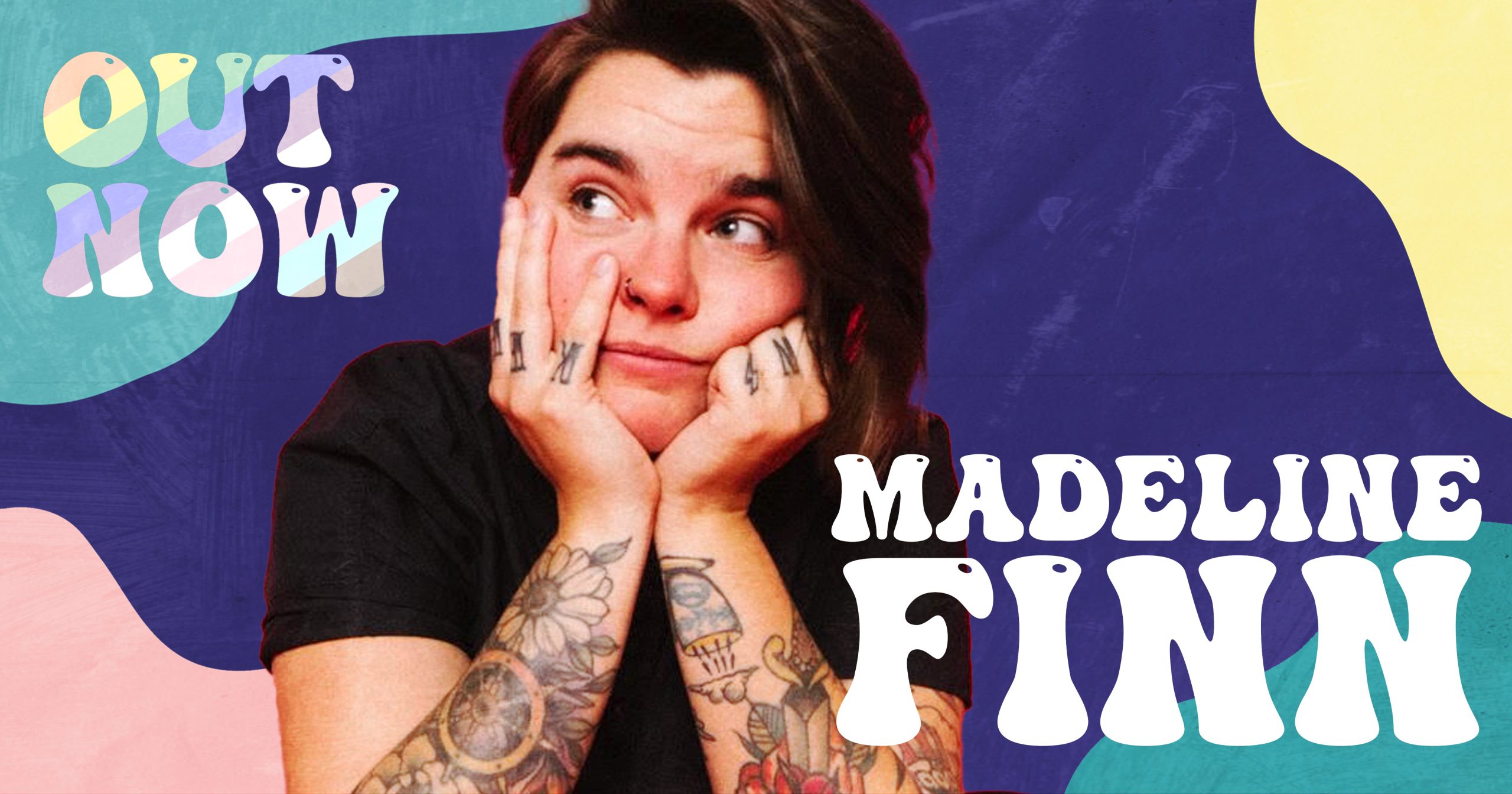
Out Now: Madeline Finn

Madeline Finn is a thoughtful writer and dynamic artist. Madeline transcends the boundaries of genre, crafting pieces that pull elements from folk, rock, and indie. Their songs are honest, relatable, and catchy.

Madeline feels that her role as an LGBTQ+ musician is bigger than herself and she values uplifting her community. She hopes to embody the queer representation that she longed for as a kid. In our Out Now interview, Madeline shares their vision for the future, their upcoming projects, and their journey into self-producing music.

We are thrilled to be featuring Madeline Finn at our next Queerfest show in Nashville at Vinyl Tap on Wednesday, August 7. The show runs from 7-9 pm and features four local LGBTQ+ artists. There’s a ticket suggestion of $10 that goes directly to supporting the artists. Don’t miss out on the chance to hear Madeline Finn live!

Why do you create music? What’s more satisfying to you, the process or the outcome?

Madeline Finn: I used to be more amped up on the outcome, but these days I have really fallen in love with the process. Mostly since I have started self-producing. It’s so much fun and I could do it literally all day.

You create within a wide range of musical genres including folk, rock, and indie. How do you navigate your identity as an artist who works across several genres?

Honestly, I have no idea. I’ve been trying to just let go and make music that’s fun and meaningful to me. Whatever the genre might end up being doesn’t matter that much to me.

What does it mean to you to be an LGBTQ+ musician?

Being a queer musician is a special thing. Especially because it’s becoming less and less special, if you know what I mean. I am one of many LGBTQ+ artists who make up a whole force of nature. I see my role as a part of the whole, a part of something way bigger than me. The more we uplift our community with art that speaks directly to the queer experience, I think the more healing can be done. The more healing that can be done within each individual, the more we heal the human experience as a whole.

I’m so jazzed on the queer music community and wish I would have had more folks like that growing up to listen to. Honored to be what I needed when I was a kid, now.

For anyone reading this who might not be out of the closet, were there any specific people, musicians, or resources that helped you find yourself as a queer individual?

Specifically, I found a lot of help as a kiddo from The Trevor Project. I also was able to find a safe adult/family member to talk to about it before I came out to my immediate circle. For those who are in adulthood I would highly recommend THERAPY!

You’ve been on the team at Wild Heart Meditation Center for a few years. What has that experience been like for you? Do you find that your meditation practice influences your music?

Wild Heart Meditation Center has been the single most important part of my personal growth and healing over the past five to six years. I came to the center interested in meditation and since then have fallen deeply in love with the practice and the teachings of the Buddha. It’s been so rewarding to be offered an opportunity to share that with the community and others as a facilitator. My practice influences every single part of my life, music included. It’s helped me let go of the craving that often surrounds a career like this, I have gained a deep freedom from contentment within my musical career. I honestly think you can hear it in the music. The shows are more fun for me, I am not afraid of what others think, not sitting around waiting for someone to give me my golden ticket. Instead, I know that I can rest in the reality of this moment and have a deep, non-attached appreciation for all the beautiful parts I encounter.

What has it been like for you to work with other LGBTQ+ artists in the music industry?

The LGBTQ+ music scene here in Nashville has been amazing. It’s this collaborative, joyful machine that just runs all on its own. Getting to hear music direct from artists like Autumn Nicholas and to play for so many other queer folks just gets me so pumped.

It’s like “Y’ALL WE ARE DOING IT!!!” I’d like to believe it’s deeply healing for my inner child.

What’s your ideal vision for your future?

My ideal vision for my future is to have chickens, mainly. If I can have a little space in the world with chickens, my wife, and my dog I am all set. Beyond that, I try not to set too many expectations for the future. Instead, I am really practicing following my intuition towards the next most meaningful step. One day at a time.

What are your release and touring plans for the next year?

I have been hard at work on my own record based on the IFS (internal family systems) model of therapy, it’s my first venture into self-production and I’m hoping to have it ready to start sharing singles by the end of the year.

My pop-rock project ENVOI just released a brand new album in May, so there is a chance we may be doing some live shows to support that. In addition, I’m working on a project with Liv Lombardi here in Nashville that is going to totally slay.

As far as touring goes, I’ll be around playing bass, guitar, and singing for a TON of artists throughout the rest of the year and there have been talks about an East Coast run for my solo material in the fall.


Photo courtesy of the artist.

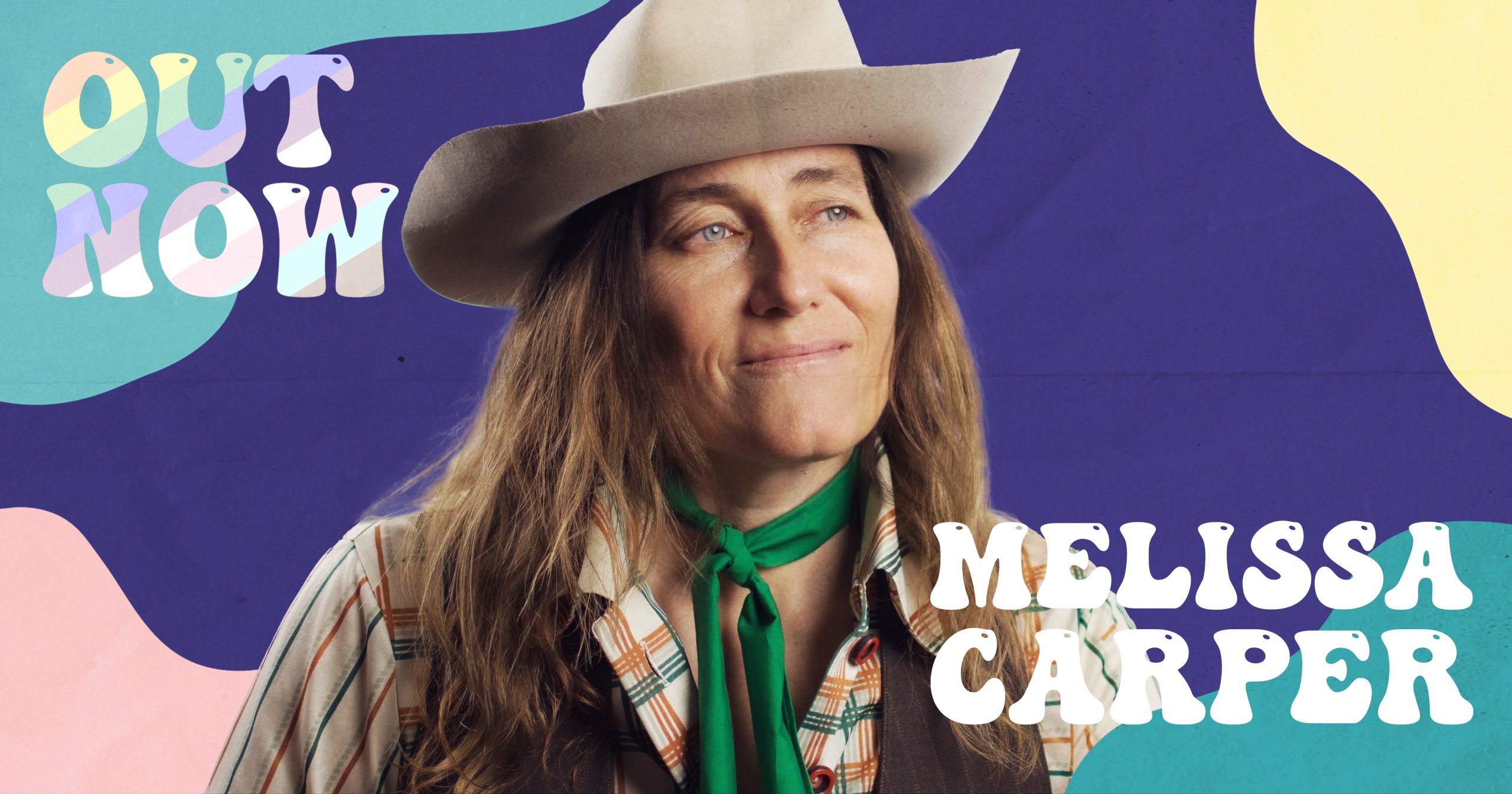
Out Now: Melissa Carper

Melissa Carper’s new album, Borned In Ya, was released today. The album travels through stories and experiences that explore journeys of self-actualization. The songs gather many proficient and accomplished musicians – Dennis Crouch, Chris Scruggs, Jeff Taylor, Billy Contreras, Rory Hoffman, Sierra Ferrell, and more – to create a collection of sounds that are carefully shaped into a captivating work of art.

Carper stitches innovation with tradition, creating something that is new and exciting while also feeling familiar and warm. Her storytelling and authentic style shine, making her music both personal and relatable. In this interview, we dive into her new album, why she creates music, and her release and touring plans for the next year. We’re so excited to highlight this incredible artist and her new album, Borned In Ya.

What excites you most about this new album?

Melissa Carper: This is my favorite album I have made so far; the material is fresh and demonstrates an evolution in my writing and singing. I feel more confident and relaxed and many of these songs allow me to “croon.” I am excited for people to hear it and to see how they respond and how they like it. I can’t wait to take these new songs out on the road and play them for people.

How do you cultivate a balance between traditional and innovative sounds?

The traditional is easy for me, because I’ve mostly listened to older music, so those are my influences. I don’t “try” to be innovative, but I feel like having a really good grasp on roots music these days is almost innovative, in a sense. A lot of people have lost touch with that music. My goal is to bring the roots back, but perhaps with some new lyrical ideas, a unique and personal expression of pain and growth (that I hope is relatable), and combining styles that I love together. Together with the producers and musicians that I have been working with on my albums, I think we’ve taken innovative approaches to the songs as well as maintained traditional feels and sounds.

What was your experience collaborating with such an incredible team of highly skilled and accomplished musicians?

I feel so lucky to get to work with everyone you mentioned. They bring my songs to life in a way I could have never imagined. Chris [Scruggs] plays straight or console steel, rather than pedal. The straight steel is the older instrument and is perfect for most of the songs I write. Chris also played guitar, rhythm and lead, on my albums. Rory Hoffman played guitar on about half of the songs on Borned In Ya. They both did such an incredible job. I’m really in awe of all of these musicians.

Dennis Crouch is the best I’ve heard on upright bass and as an upright player, I listen to his bass parts and try to learn them. In the process of doing that I realize what a genius he is. Jeff Taylor, on piano, often sets the tone of a song and always has brilliant ideas. Billy Contreras blows my mind (and everyone else’s) with the fiddle parts and layers he comes up with. On “Lucky Five,” he really outdid himself on the fiddle solo section. Also, I had Doug Corcoran on horns for this album. He played trumpet and saxophone on five songs. Having horns on my songs is new for me, and I think that sets this album apart from the previous ones.

Rebecca Patek wrote an absolutely gorgeous string arrangement for my song, “There’ll Be Another One.” It is my favorite part of the album, when the strings come in on this song. Jenn Miori Hodges, an old bandmate of mine from The Carper Family, sings stellar harmony on several songs. It felt great to have her on this album, we have such a long history of playing together and she plays with me now quite a bit, whenever she is available. And Sierra Ferrell sings an amazing harmony on my cover of a jazz tune from the ’30s called “That’s My Desire.” Sierra actually recorded that harmony back when we were recording the Ramblin’ Soul album. I had too many songs to fit on that album, so I saved it for Borned In Ya. It is really a dream to work with all these folks and I hope I get to continue to do so. I feel like I lucked into a good thing, a formula that really works for me.

The title track, “Borned in Ya,” focuses on being shaped by life experiences. What are your thoughts on how nature (genes) versus nurture (environment) shape musical ability?

I believe, in most cases, it’s probably a lot of hard work and obsession with something you love that makes someone good at something. I definitely have musical genes in my family, but I had the advantage of my parents having me sing and play from an early age. I had a great bass teacher in junior high and high school and got to study music in college with great teachers, then I kept on learning from each band I was in. I was obsessed with old-time music – country, blues, jazz. I listened in an obsessive way until it became a part of me. I feel my learning process has been a steady, slow one, but the great thing is, I continue to grow.

This album is a compilation of stories and experiences written in song. What was it like to craft one collective album that travels through desire, love, heartbreak, life on the road, and growth?

I had a lot of fun writing the songs on this album. Three of them are co-writes with Brennen Leigh, and we always have a good time writing together. I think I’m having more fun than ever with writing and I hope people can feel that in the songs. I love having a combination of heartbreak and also some fresh romance in this album. Not everything is autobiographical of course, and I’m getting better with that – writing from imagination, pulling from some old experiences and emotions to make it real, or imagining someone else’s situation.

I would call a couple of these songs “spirituals” that go a little deeper with life philosophy. It feels good to write about something besides romantic love and to speak of spiritual growth. Hopefully people who listen find the album inspiring. I feel like Borned In Ya is an expression of some of my past and some of the present, but with a wiser and more experienced soul – more has been “borned in me.”

What’s your ideal vision for your future?

I’d love to have a great balance between performing/touring and getting to spend time at home and in nature. To me, that would be the ultimate, to feel like I’m successful enough financially so that touring doesn’t turn into a grind. I don’t mind touring, but when I’m away from home too much it makes me feel disconnected from life in general, being exhausted, not getting enough alone time to be still and to be in nature. I am in a phase currently where I need to take the opportunities offered to me, even if at times it feels like I have too much on my plate. I’d also love more time to focus on creating a nonprofit to help those who are experiencing homelessness and struggling with mental illness. I dream of creating a center with a working organic farm, providing homes and a healing atmosphere.

Why do you create music?

I get melodic and lyrical ideas in my head and they just start developing, it’s one of the most fun and rewarding things that I do in my life. Once I know I’m onto something good, I’m quite obsessive about finishing it – usually within the day if the flow is there. If it is a song that I am forcing a little, or maybe the song has something good and promising in it but isn’t ready to be fully realized yet, I’m pretty good at coming back to it, sometimes even a few years later, and finishing it when the time is right. The process is the most fun, but I also love getting to present the song to an audience. It’s rewarding in a completely different way. Being able to record the song with great musicians and producers to see what it can sound like in its ultimate form, is an especially rewarding part of the process.

What is your greatest fear?

Even the idea of holding onto fear is fearful; my goal is to keep growing and confronting any fears I have that keep me from being the best possible version of myself. I guess that would be my biggest fear, that I allow myself to be too distracted to actually work on myself and confront any fears that I have.

Why do you think LGBTQ+ representation and community are important – in roots music and beyond?

When I came out, there were very few ‘out’ people in our culture. Seeing k.d. lang and Ellen DeGeneres coming out for me was just an affirmation that there were lesbians that existed in the world besides myself. It was really helpful for me to move to a community where it was normal and acceptable, which was the small and diverse town of Eureka Springs, Arkansas. If you are feeling uncomfortable with yourself, being in a community of folks that are accepting of who you are is a great thing. What I loved about Eureka Springs is that there were a couple of gay bars, but the gay people just hung out in all the bars and it didn’t feel like an isolated thing. It just felt normal and accepted to be part of the LGBTQ+ community there for the most part – except for maybe at the Walmart. [Laughs]

What are your release and touring plans for the next year?

Borned In Ya is out July 19th, 2024! I am doing a whole lot of touring around it – Montana, Colorado, Wyoming, Oregon, Washington, then venturing into Missouri, Arkansas, Illinois, Minnesota, Michigan, Wisconsin, Kentucky, and lots of Texas before making my way to Nashville for AmericanaFest. And, I just got back from performing in Europe! It’s a busy year, birthing Borned In Ya!


Photo Credit: Aisha Golliher

Out Now: Madeleine Kelson

Madeleine Kelson blends traditional folk, country, and Americana. She played Queerfest and took part in AmericanaFest this year, has been featured multiple times on NPR, and was a finalist in the Kerrville Folk Festival’s New Folk Competition. 

Madeleine is from Chicago and based in Nashville, where she lives with her partner. Her single, “The Way I Do,” displays her relationship with her partner through a lens that shows how ordinary queer relationships can be: Drinking coffee every morning, coming home for dinner, and falling asleep beside each other every night. The hook declares, “God has never loved a woman the way I do.” It’s an iconic LGBTQ+ anthem, and in my opinion, it’s one of the most compelling songs about queer love and pride.

We’re proud to promote this dedicated and creative up-and-coming coming artist. Our Out Now interview discusses why Madeleine creates music, her favorite LGBTQ+ artists, her release and touring plans for 2024, and more.

Why do you create music? What’s more satisfying to you, the process or the outcome?

Making music has been a part of my life for as long as I can remember. When I started playing and singing as a kid, it was a way for me to connect to the people around me – at first by singing around the house with my mom and my sister and then by playing music with my friends. That’s still a big part of it now, but starting around my teenage years music became a way for me to process big emotions and give them somewhere to live outside of my mind.

As far as the process versus the outcome, I don’t tend to think of making music as having an outcome. A song gets written, and maybe that’s the outcome of songwriting, but then it might get arranged, or performed, or recorded. Even after I stop playing a song at shows, people still listen to it and it grows and changes with them. I’d say the most satisfying part is the impact, whether that be for me or for someone else.

What’s the best advice you’ve ever gotten?

I love this question! I couldn’t pick just one piece of advice, so here are a few:

One from my mom: “No is a complete sentence.”

Some from my grandpa: “Shoot for the moon. You might surprise yourself and get it.” “Follow your passion. If you love what you do that’s what you will do best.“ And “Treat others with respect. The way up can be a hard slow journey but the fall can be very fast and you meet the same people on the way down as you did on the way up.”

I’ll throw in a good Yiddish saying too: “When you have a lot to do, go to sleep.”

Who are your favorite LGBTQ+ artists and bands?

Oh man! Here’s a big long list, because it’s so hard to choose!

Brandi Carlile (I will always look up to her), Freddie Mercury (I listened to a lot of Queen in high school), Indigo Girls, Linda Perry, Allison Russell, Brandy Clark, Aaron Lee Tasjan, Katie Pruitt, Amythyst Kiah, Celisse, Boygenius…

Also want to shout out some amazing local artists that I love: Purser, Autumn Nicholas, Jobi Riccio, Becca Mancari, Denitia, Jaimee Harris, Liv Greene, and Julia Cannon.

For anyone reading this who might not be out of the closet, were there any specific people, musicians, or resources that helped you find yourself as a queer individual?

I was really lucky to grow up in a very liberal city in a very liberal family. When I came out, I knew the people around me would be supportive. Any apprehension I felt had to do with the people outside of my circle and my life beyond Chicago. That being said, I still didn’t really know I was gay until high school. I think the things that helped me find myself were the people around me – having friends who were out, seeing queer couples, going to pride parades, watching shows with queer characters, going to concerts or other events that I knew lots of queer people would attend.

Seeing what that part of my life could look like in other people helped me make sense of who I could be. Coming out is something you don’t do just once, but constantly for the rest of your life. At some point it changed from something I dreaded doing to something that has brought me comfort, joy, and community.

What are your release and touring plans for the next year?

I’m currently releasing singles off of a four-song EP that will be out mid-February. I’ll be on tour with Alaina Stacey supporting that EP, through the Midwest and Northeast starting February 16th in Chicago. Touring is one of my favorite things, and I can’t wait to see everyone at these shows! Seriously, show up. I want to see you!

You’ve done a lot this year, from touring to playing several festivals, including Queerfest, AmericanaFest, and Perseids Music Festival. What’s that been like for you?

It has been so much fun! There are few things that bring me more joy, or make me feel more like myself, than being on stage. It’s such a rush and so emotionally gratifying, even to play sad songs and feel things so deeply with other people. There’s really nothing like it. It’s been a busy year, and one in which I have definitely overcommitted myself, but I’m grateful for every part of it.

In 2022, you released your debut album, While I Was Away, on Olivia Records. Can you share some of the key inspirations and themes behind the album?

While I Was Away was actually my college thesis project! The idea was to write and produce an album that musically pulled from the different building block genres of Americana (folk, rock, country, etc.), and lyrically spoke to the years since I moved away from home. It’s a real time capsule of my life from 18-22. It’s about leaving home, being gay in the South (oy), growing up, watching the kids I babysit grow up, my dog, so many things!

You were also a finalist in the Kerrville New Folk Competition. Could you tell us about that experience?

Kerville Folk Festival was incredible. I had no idea what to expect going into it. I applied on a whim and when I heard that I got in, I could never have imagined what it would be like. If you haven’t been to a festival like that, it can be hard to imagine, but essentially there’s a big piece of land in the middle of Texas and for three weeks every year it turns into a city of stages, tents, RVs, and so much good music. It’s home to the most respectful and outstanding song circles that carry on through the night, and quite possibly do not ever end. Playing and competing was an honor, but the real privilege was to be around so many phenomenal songwriters whom I’m happy to now call my friends.

Could you share the creative process, inspirations, and the significance behind your song ‘The Way I Do’?

“The Way I Do” started as a line that floated around in the back of my mind, honestly probably for months before I knew what to do with it. The line was, “If I don’t get to heaven for loving her true, God has never loved a woman the way I do,” which ultimately became the hook of the chorus.

Growing up, I was very aware of homophobia, but it wasn’t something I experienced personally in any significant way. That really changed when I moved to Tennessee. And I say that not to generalize or condemn the South – there are a lot of amazing people here who are deeply involved in fighting inequality. In my experience, it’s a more tangible and pervasive issue here, and if anyone is going to make a difference, it’s the people here who are fighting that fight every day. I think growing up with the experience of feeling entitled to confidence and comfort in my sexuality made me that much more pissed off when I was faced with intolerance. Especially the virulent brand of “Christian” homophobia that the South is so well known for. That, I really didn’t and still don’t understand.

The thought behind the song is kind of a sarcastic, “If your god knew how great it is to love a woman, he/she/it definitely wouldn’t hate me for it.” It’s definitely a “fuck you,” but it’s also an honest reflection on how easy and natural it is to love someone who happens to share your gender.


Photo courtesy of the artist.

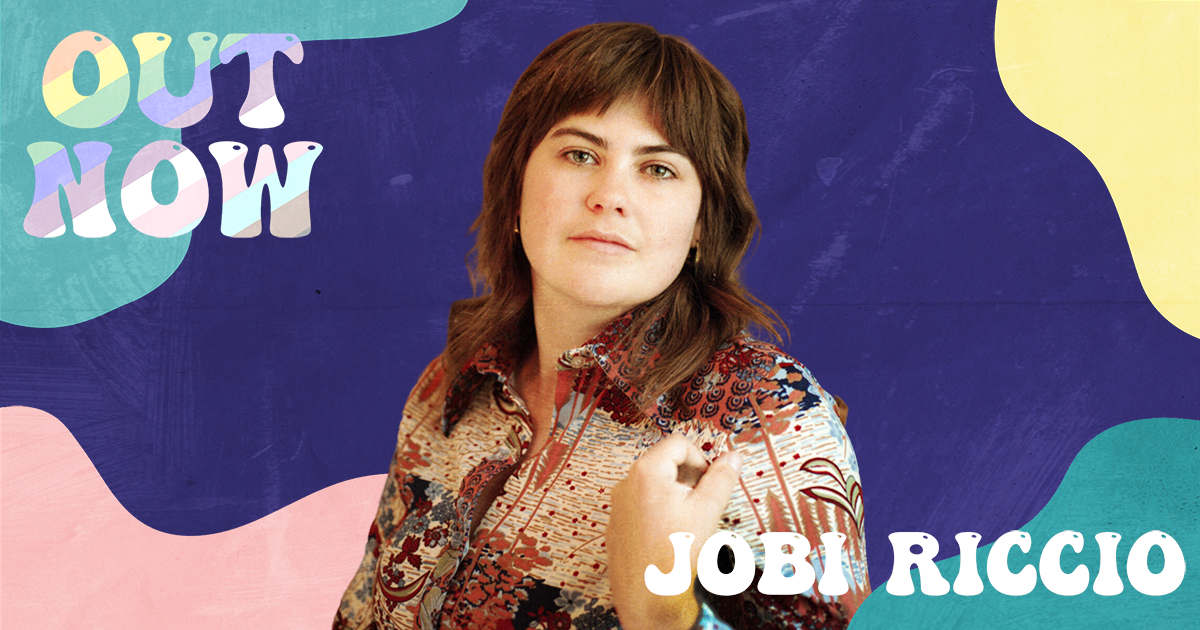
Out Now: Queerfest & BGS Announce New Column with Guest Jobi Riccio

Welcome to OUT NOW! We are so excited to bring you the latest LGBTQ+ folk, roots, bluegrass, country, Americana, and indie songwriters, artists, and musicians. Who am I to guide you through the queer music industry? My name is Sara Gougeon. I founded and run Queerfest, which supports LGBTQ+ music by hosting monthly showcases and an annual festival in Nashville, promoting queer-identifying artists and creating spaces for our community. In 2022 Queerfest was named “Best New Music Festival” by The Nashville Scene.

This column is designed to amplify the voices of queer songwriters, musicians, and industry leaders. I am so excited to share just how talented, creative, and supportive the queer music industry is. We are delighted that the release of this column aligns with Pride Month, but we are even more excited to support LGBTQ+ music consistently year-round, beyond just the month of June. 

Our first artist is one that I am proud to have known for years, and I can write with undeniable confidence that their music is at the start of a career filled with national tours, stunning releases, and larger followings sure to come. 

I met the amazing Jobi Riccio in college when we were students at Berklee College of Music in Boston. They’ve come a long way since then: a record deal with Yep Roc, touring, and the move to Nashville. But I knew from day one that their music was exceptional. It is always a complete honor to promote incredible queer music. 

Jobi’s carefully crafted lyrics turn songs into movies. Melodies blend with smooth vocals, and mournful fiddle solos lift between lines. It’s the kind of music I catch myself playing for hours before noticing that I’ve fallen so deeply for a few songs that I could listen to them on repeat forever. 

And with that, I am deeply proud to present OUT NOW: Jobi Riccio.

BGS: What would a “perfect day” look like for you?

Jobi Riccio: A day spent primarily outside in the sun with those I love that ends playing songs in a living room or around a fire is really hard to beat. I also love being alone exploring nature and any day I spend hiking, biking, kayaking or doing any outdoor activity completely alone is always perfect and healing. 

Why do you create music? What’s more satisfying to you, the process or the outcome?

It depends on the day. I love performing just as much as I love songwriting and I view both as a very gratifying way to connect with myself and other people.

Do you create music primarily for yourself or for others?

I honestly don’t know. I create music when I’m feeling something big and feel I need to or have the ability to express it.  I’m not sure if it’s completely honest to say I write entirely for myself because sometimes those big feelings I’m experiencing stem from a desire to connect with others. 

Who are your favorite LGBTQ+ artists and bands?

Rufus Wainwright, Aaron Lee Tasjan, and Caroline Rose all come to mind as LGBTQ+ artists I’ve had in heavy rotation, but also those I’m lucky enough to consider friends: Liv Greene, Erin Rae, Brennan Wedl, Brittany Ann Tranbaugh, Palmyra, and Olivia Barton are all queer artists/bands I’m very inspired by. 

Is “Green Flash ” based on real feelings/experiences?

I started “Green Flash” during late spring of 2020, when I moved back home with my mom in Colorado. Lots of these existential crisis-y type thoughts were swirling in my head throughout my senior year of college, and the onset of the pandemic just sent them into overdrive. Most musicians have a fantasy of quitting music at some point and leading a “simple life” and I was caught up in that idea as I had nowhere to play and no hope of touring in the future.  Sometimes I find my songs function similar to journal entries — questions I ask myself or little prayers out into the universe — and I think “Green Flash ” functions that way.

One of the main lines in Green Flash is “I’m still learning how to trust a heart.” How do you find a balance between being open to love/vulnerability/life and not getting your heart hurt?

I love this question, I ask myself it almost everyday. More and more I’ve learned to push myself to be vulnerable and honest even when it’s scary because I might be hurt, because it’s the key to real connection with others and is where the true beauty in life lies. Learning how to be authentically myself has a lot to do with learning to trust my heart and myself, and it’s very much a daily practice. All and all, I’d rather be hurt than live in fear of being hurt. 

What are your release and touring plans for the next year? 

I am releasing my debut record, Whiplash, on September 8 and I’m extremely excited to get this body of work into the world. I’ll be touring around the record this year and next! 


Photo of Jobi Riccio: Monica Murray