Intersectionality is the keystone of activism and action. Banding together across whatever barriers our identities present strengthens and energizes the mission, stripping away the isolation that all marginalized folks feel on the day-to-day. In bluegrass and old-time, many, many activist-minded artists, creators, and songwriters have carried the banner for inclusion and an action-forward, open community since the very beginning of these genres.
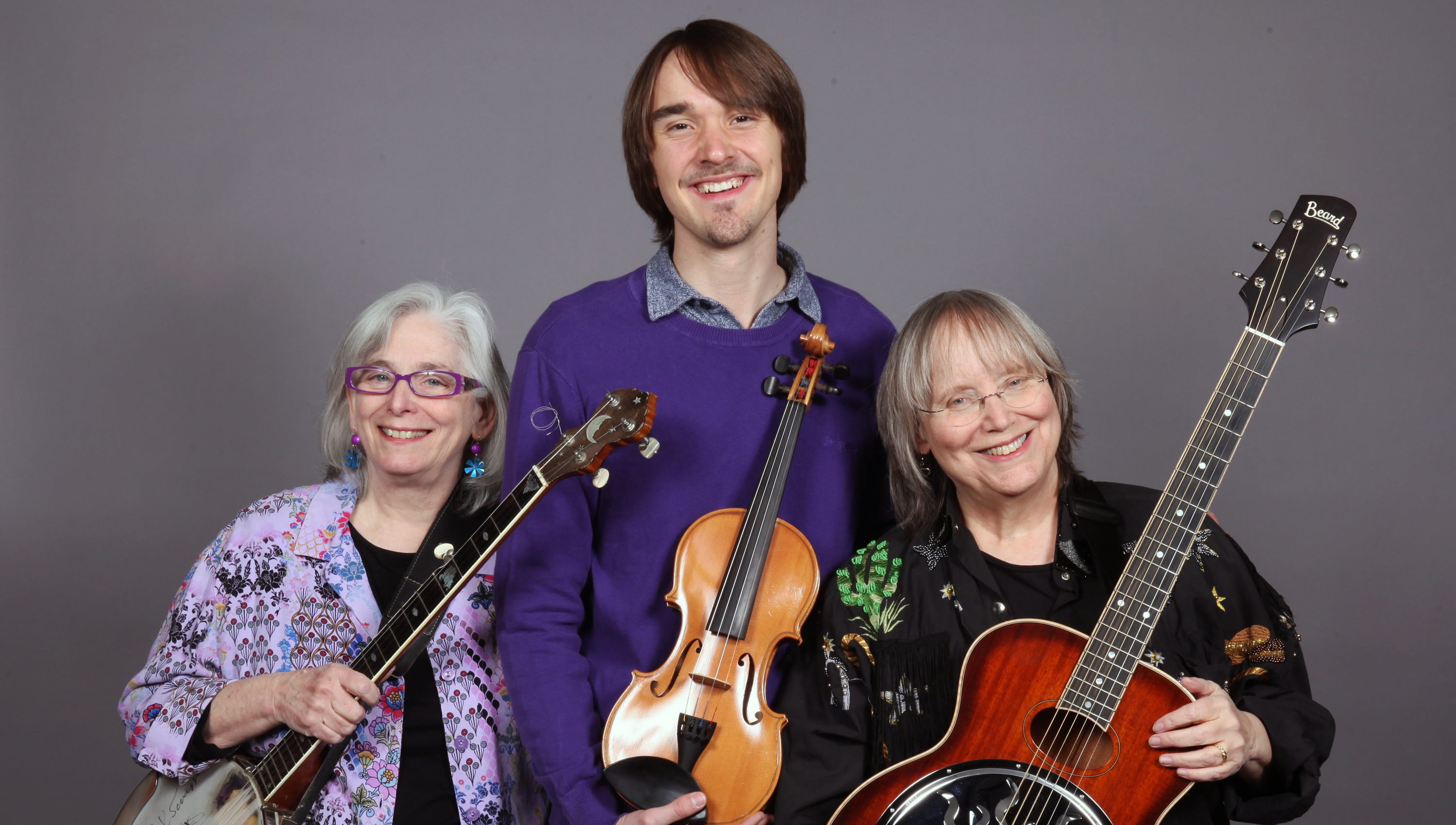
Cathy Fink & Marcy Marxer are a prime example of those forebears, having fought for the inclusion of queer identities and women in folk music and bluegrass for decades. Shout & Shine, their new collaboration with youngster-yet-old-soul Sam Gleaves, is a perfect illustration of cross-generational mind melds — and musical melds. Messages of social justice, feminism, working class empowerment, and activism through music are so viscerally powerful because the trio shows that anyone can connect with each other across the rifts and barriers that many would assume were insurmountable. In this case, age and experiences are most strikingly disparate, but the core concept should apply to gender, religion, orientation, cultural background, or banjo right hand playing styles, too.
BGS is proud to be a place where these intersections are encouraged and celebrated, whether editorially or, for instance, on stage at our Shout & Shine: A Celebration of Diversity in Bluegrass showcase, held in Raleigh, NC during the International Bluegrass Music Association’s business conference for the past two years. Fink, Marxer & Gleaves — before they officially donned that moniker — performed for the showcase in 2017. The theme song they penned for the event is indeed the perfect ethos for their band, their album, the showcase itself, and the types of connections we’re all trying to foster as we press ever forward.
Some folks might not know that the Bluegrass Situation is already connected to this album and its title track!
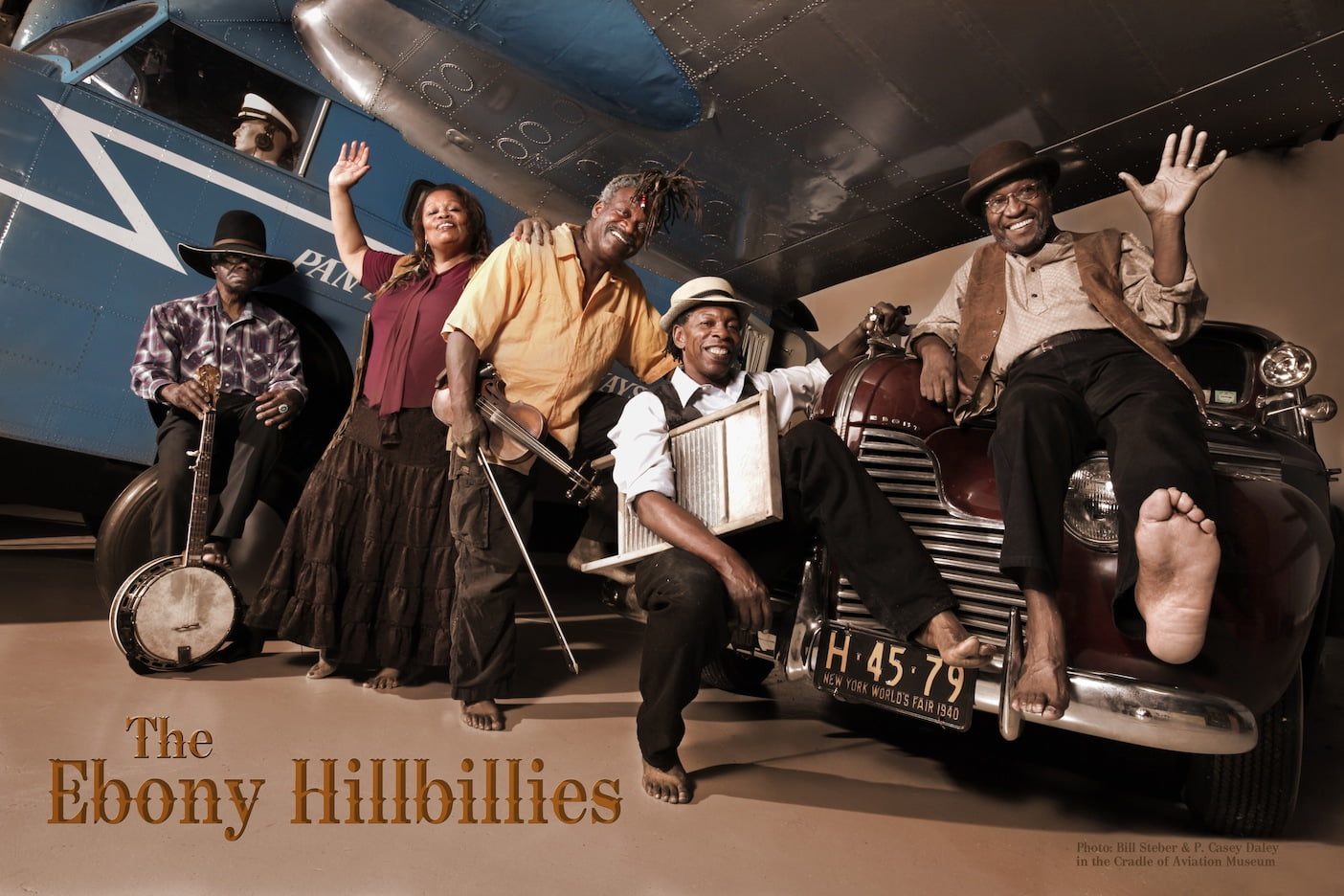
Cathy Fink: I think it’s a pretty simple connection — I would even say that the Bluegrass Situation and the Shout & Shine showcase at IBMA were the reasons that brought Cathy & Marcy back to IBMA. [It gave us] a big feeling that the door was opening wider for more inclusion in every direction at the conference. Needless to say, once I found out about the showcase I made the connection with you about having us involved. And I made some suggestions for other artists [you] could have, which turned out well. We had worked with the Ebony Hillbillies and they came.
So I was just sitting on the back porch one day and I thought, “You know, this event needs a theme song!” Sometimes you think about a song for years and sometimes it takes a couple minutes and there it is. This happened to be one of those songs. It really popped out. There were several lines that I kept working on after that time, but that’s really what happened. In all serendipity, it fit our trio perfectly, in terms of what we stand for: loving traditional music, loving contemporary music that is formed on top of traditional music, and what we want to accomplish as a trio, playing bluegrass-related music that has a deeper meaning than, “I lost my girlfriend.” [Chuckles]
It often feels like this is a newer, growing movement for inclusion and diversity in bluegrass — it’s happening across roots music genres right now — but I wonder what it looks like to you, Cathy and Marcy, since you have been on the frontlines of this fight, this battle, this dialogue, for your entire lives? It’s often difficult for younger folks to appreciate how long and hard-fought these issues have been, and you two can bring this perspective, so I wonder, too, how this influences your mentorship?
CF: I want to start by saying the mentorship of Sam is a two-way street. We learn as much from him as he learns from us. Sam is an incredible inspiration to us, because he walks the walk, not just talks the talk — in terms of the songs that he’s written, the songs that he chooses, and frankly, how he treats people. These things are all interconnected.
Historically, for us, Marcy and I started to play out in the ‘70s, in days when women didn’t really play bluegrass music. I know that there are other women who had similar experiences, even though there were amazing women in country music on the radio beginning in the 1930s. One of our friends and mentors, Patsy Montana, was the first woman in country music to sell a million records. She was really the first woman in country music to start writing songs from the female perspective. Marcy and I spent ten years performing with and working with her, but we also played a lot of bluegrass festivals where people would come up to Marcy and say, “Wow! You’re a girl and you’re playing lead guitar!” They’d come up to me and say, “Wow! You’re a girl and you’re playing bluegrass banjo.” While we’d say, “Yeah, we’re people and we each have ten fingers that work!”
Marcy helped me with a release on Rounder Records in the late ‘80s called, The Leading Role. We did a lot of songs that people didn’t know had been recorded by these amazing women, like Ola Belle Reed, the DeZurik Sisters, Lily May Ledford, the Coon Creek Girls, and the Girls of the Golden West — there was an amazing heyday of women in country. Patsy made sure that they were getting the respect that they deserved. Then, later in the ‘80s, we did the Blue Rose album. Marcy and I put that together out of a desire to highlight some of the great women who we felt had been making amazing music but not getting any recognition. That included Sally Van Meter, Laurie Lewis, and Molly Mason.
Moving forward now, after thirty years, the cool thing is that we have the Justin Hiltner’s, and the Sam Gleaves’s, and the Jake Blount’s, and the Amythyst Kiah’s and a long list of people who are the next generation. They’re going to bring up the generation after them in a more inclusive world.
Marcy Marxer: My view is that in the early days of country music, the music better reflected who was actually out there playing. Then, when the record business got serious — not just 78s, but smaller, independent record companies started popping up and recording people — they might have recorded, say, just one or two fiddlers in an area, and because they were the two who got the record contract, that’s what people thought was happening over that whole area, when there could have been fifty other fiddlers within a mile. One of the reasons why it went to all-male was that that’s who was getting the record contracts. It wasn’t that women weren’t playing anymore, it’s that there were companies who were successful, then other companies wanted to copy that success, and it grew into being a male-dominated field.
This issue keeps coming up as I do these interviews. The reason we’ve ended up where we are today, with these ideas of who “owns” roots music, is largely because of revisionism and erasure. What I appreciate about what you three do, and what this record stands for — at least in my eyes — is that we’re avoiding that sort of erasure as we move forward, because you two are collaborating with Sam, who is almost four decades your junior, so we aren’t losing these stories and this institutional knowledge. I see this as the most important message of this record. Do you agree?
MM: I do agree. Absolutely. I think that, additionally, the bonding of the friendships is the best part of this record and the joy that we feel from this music is an extension of [that]. What Sam brings to this project — and music in general — is that he’s done such extensive research and background. Often we’ll meet younger players and they don’t have that background at all. Sam knows all of the greats and has gone to see everybody that he can. Not that one is better than the other, because you have to start somewhere, but with Sam, we feel like we bonded immediately artistically, musically, and emotionally.
Sam Gleaves: No! My nature is to listen and I’m just very honored to work with Cathy and Marcy because they really are my She-roes. It’s the truth. I’ve always admired their work promoting diversity in roots music, with their presence in the community and their advocacy.
One difficult aspect of making roots music in this day and age is that so many listeners just write it off as nostalgic and they don’t see it as something that’s present and in the here-and-now. There are so many folks primed to hear this kind of protest music or counter-cultural music right now, but they write off these genres as being for someone else. As you formed this series of songs, how consciously did you work to make this music relatable in a modern era?
SG: I think it’s very organic for us. We love playing music together and we know what sort of material is fun and exciting for us to play and what kind of messages we want to promote. We recorded a song that Maybelle Carter wrote, “Buddy’s in the Saddle”; we recorded a song from Jean Ritchie’s repertoire and Elizabeth Cotten’s repertoire. There’s a theme of matriarchs in these songs, which always feels powerful to share. I was honored to get to record three songs that I wrote, one about moonshine, one about a hot pink house trailer — which is super fun and zany — and a song called “Welcome Table,” which uses lyrics from African American spirituals. Cathy’s “Shout & Shine” is kind of the [album’s] ethos, it brings the theme all together. All of the material seems to have a balance of the joy of playing music together and messages of social justice and lifting up voices from the traditional music community.
Let me put the same question to you, Cathy.
CF: It did organically happen, but what organically happens between the three of us musically leans in the direction of wanting to make good music and speak social justice without having a hammer over people’s heads. We didn’t sit down and say, “Hey, we need to do a bluegrass album about social justice.” We sat down and said, “What are the songs we enjoy singing the most?” There was this list. There were some surprise songs, but they fit in beautifully. We knew that “Shout & Shine” was first and foremost, but the title of the album took on additional meaning when one night, after recording, I said, “Look Sam, I know you’re holding out on us, I know you have more songs and you haven’t shared them.” Sam in his usual, humble way played “Moonshine.” We said, “Bingo! Let’s figure that one out right now!” It made Shout & Shine more than just the agenda, but also just looks at real life for a lot of people and the fun — we all enjoy a little hit of ‘shine now and then! I think it shows Sam’s versatility as a songwriter. This song is just a great piece of Southern storytelling. One of the things we also did on this album is that we connected a bunch of stories that we felt drawn to. To a large extent, their about people that we know or knew.
Connecting stories is what keeps music that is focused on social justice from being bogged down by the weight of those topics.
CF: Exactly! I think you just nailed it. We try to do this in a celebratory way as opposed to a bogged down sort of way.
How do we take a message like this and connect it to people who maybe couldn’t automatically relate to a record, band, or collection of songs like this?
MM: For years I’ve felt like an icebreaker and I know that Cathy has, too, because we’re an openly gay couple and my being a woman in guitar and flatpicking, I found that by relaxing, being myself, and putting the best I have out there, people gain a glimpse of understanding and they don’t see stereotypes quite as much as they might have otherwise. One of the things that’s been on my mind is that I’ve been a cancer patient now for over three years and how that has really, totally changed my life and perspective. There’s one song called “Closer to the Light,” the last song on the record, that I really adopted. I did not write the song, but when I heard it I knew it spoke directly to me. That’s the beauty of a song. It doesn’t say “cancer.” It says, “I’m going through this dark time and I don’t mind as long as I keep moving toward the light.” That applies to everything. It applies to social justice; it reminds me of the days of the civil rights movement, when music would keep us going. There are so many individual songs that mean so much to individual people. It’s great to have open, gentle songs that just encourage us to keep going.
Photo credit: Michael G. Stewart