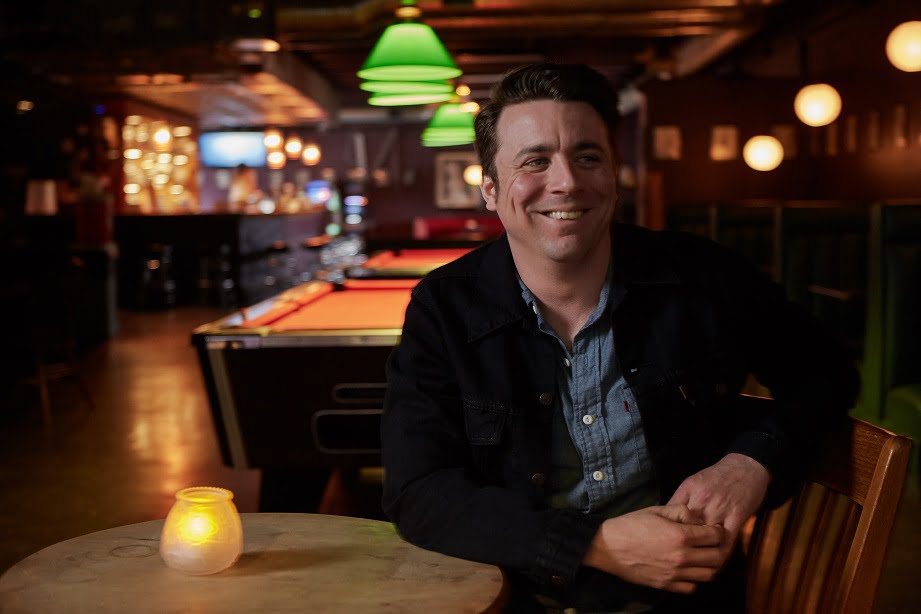
The Working Songwriter: Hayes Carll

Welcome to The Working Songwriter, the show where today’s best songwriters come to talk shop. Each episode we host a distinguished guest and we ask them to go deep on their inspiration, their process, and the general ups and downs of making a life in music. Whether you’re a grizzled veteran picking out custom chrome trim for your tour bus or a scrappy upstart, trying to determine whether your Toyota Tercel can make it through a three thousand mile tour, this is your show. Because, ultimately, it is what every writer seeks most. An ironclad excuse to put off actually writing.

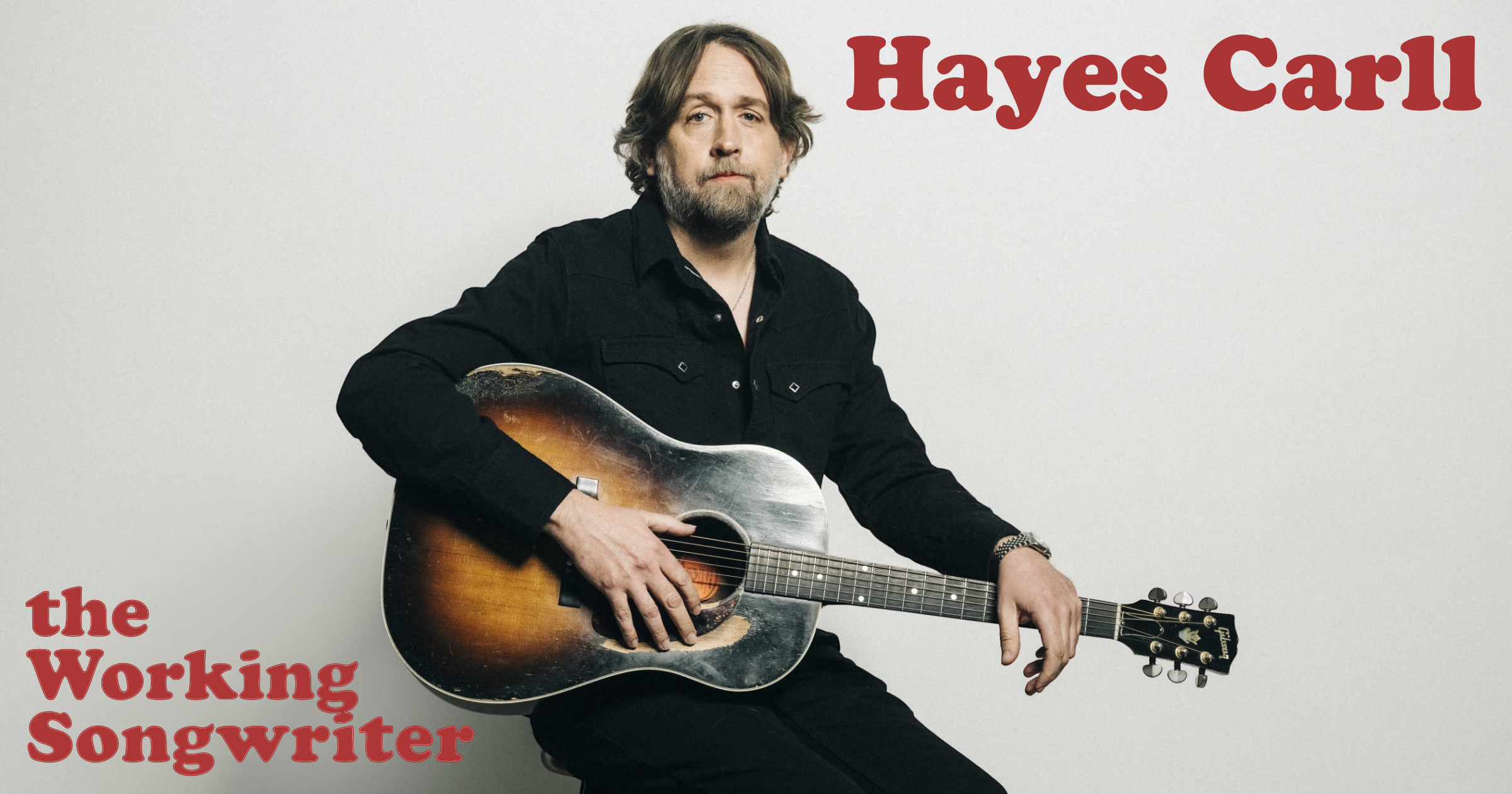
Our guest this week on The Working Songwriter hails from The Woodlands, Texas. Hayes Carll is a singer, songwriter, and storyteller whose sharp wit and plainspoken poetry first broke through with his 2002 debut, Flowers & Liquor. That was followed by 2008’s Trouble in Mind, which delivered the hit “She Left Me for Jesus” and cemented his place among the genre’s most distinctive voices.

LISTEN: APPLE • SPOTIFY • LIBSYN • MP3

Carll has toured with artists like Old Crow Medicine Show, Todd Snider, and Alison Krauss and his songs have been covered by Miranda Lambert, Lee Ann Womack, and Kenny Chesney. He’s recorded for Lost Highway, Dualtone, and Thirty Tigers and he’s performed on stages from Newport Folk Festival to Austin City Limits and the Grand Ole Opry.

Rolling Stone praises his work for its “razor-sharp wit and lived-in warmth,” while NPR notes his “keen eye for the human condition wrapped in disarming charm.” American Songwriter calls him “one of Americana’s most reliable truth-tellers.”


Photo courtesy of the artist.

The Working Songwriter: Evan Bartels

Welcome to The Working Songwriter, the show where today’s best songwriters come to talk shop. Each episode we host a distinguished guest and we ask them to go deep on their inspiration, their process, and the general ups and downs of making a life in music. Whether you’re a grizzled veteran picking out custom chrome trim for your tour bus or a scrappy upstart, trying to determine whether your Toyota Tercel can make it through a three thousand mile tour, this is your show. Because, ultimately, it is what every writer seeks most. An ironclad excuse to put off actually writing.

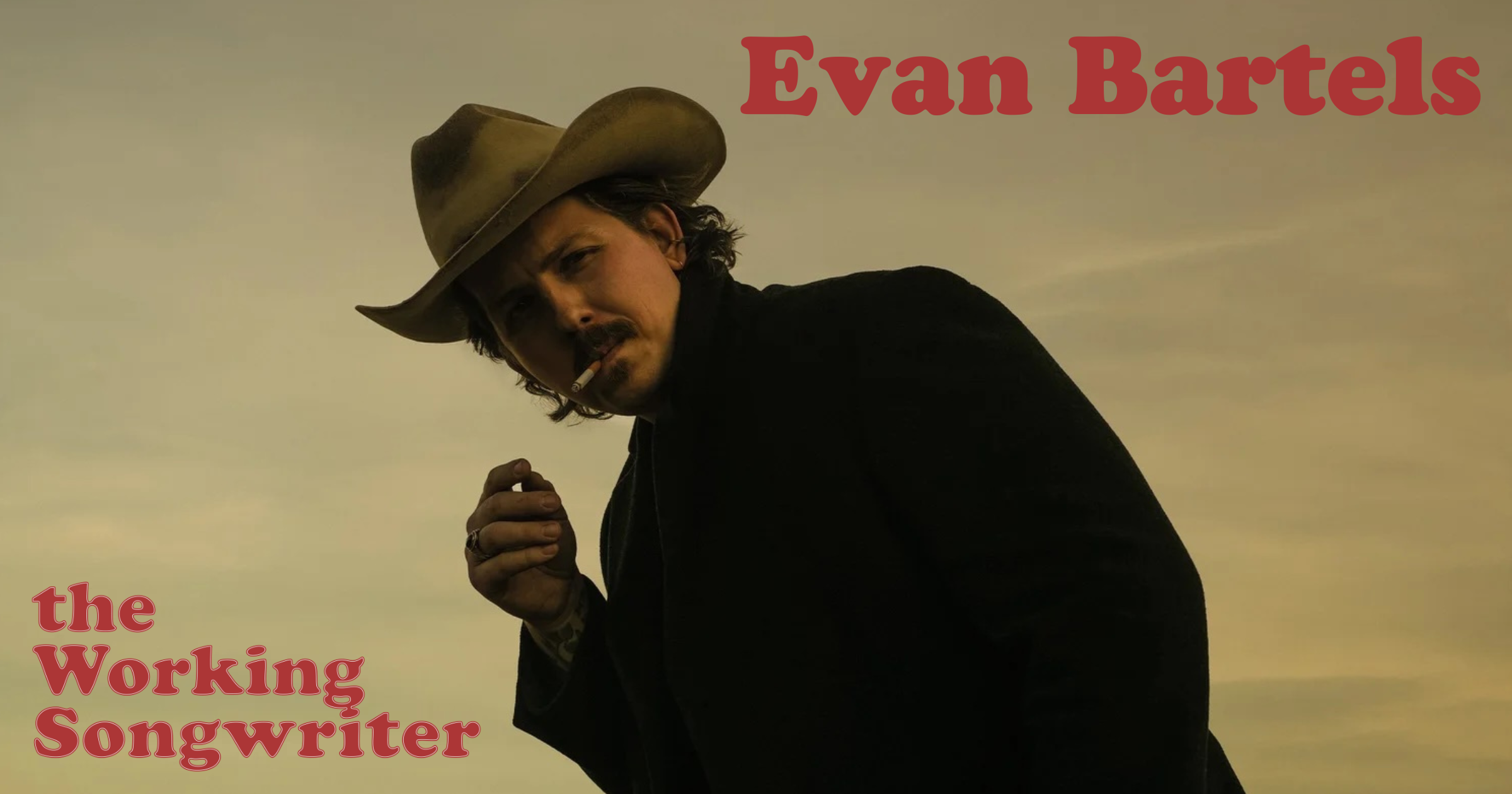
Our guest this week on The Working Songwriter hails from Tobias, Nebraska, a town of about 100 people. Evan Bartels is a singer-songwriter who with his 2017 debut, The Devil, God & Me, burst onto the national scene. More recently, Bartels has expanded his audience with the release of his EP, To Make You Cry, recorded after relocating to Nashville and reflecting on a period of personal upheaval and renewal.

LISTEN: APPLE • SPOTIFYLIBSYNMP3

Bartels has toured with American Aquarium, The White Buffalo, and John Moreland; he records for MCA/Universal; and he’s performed at Mile of Music, Americanafest, and the C2C Festival. No Depression calls him “a haunting new presence in Americana,” while Americana Highways praises his “unvarnished, soul-bearing songwriting.” Glide Magazine notes his “ability to turn bruised experience into stark, resonant beauty.”

I caught up with Evan Bartels a few months ago for The Working Songwriter to hear about his musical journey so far.


Joe Pug’s The Working Songwriter Joins BGS Podcast Network

The BGS Podcast Network is proud to announce our first addition of a new (to us) show in 2026, bringing artist and singer-songwriter Joe Pug‘s hit podcast, The Working Songwriter, on board. Beginning January 9, the Working Songwriter will be distributed exclusively through BGS and available wherever you stream podcasts.

“After ten years and over three hundred episode of doing this podcast independently, we’ve decided to go pro!” Pug says. “[BGS] is the perfect home for our show. They focus on American roots music, but ultimately they celebrate any kind of songwriting as long as it’s of a very high quality. I think that’s pretty similar to the ethos of The Working Songwriter.”

SUBSCRIBE: APPLE • SPOTIFYLIBSYN

Over a decade of work and hundreds of episodes, Pug has explored songwriting, music-making, artfulness, and creative practices with some of the most thoughtful and entrancing voices in Americana, country, roots music, and songwriting as a whole. Over the years, guests have included such luminaries as Jerry Douglas, Charlie Peacock, John Hiatt, ERNEST, Chuck Prophet, Kim Richey, Bonny Light Horseman, Hunter Hayes, Iris Dement, Del McCoury, Keb’ Mo’, Darrell Scott, and countless others. Alongside these songcraft heavy-hitters are just as many fresh discoveries, newcomers, and essential-yet-underrated voices in the space, too.

The overlap between our rootsy BGS purview and Pug’s roster of guests is vast and varied, illustrating how perfect a fit the show will be for the BGS Podcast Network. “With their network,” Pug continues, “we’re gonna be able to get guests that we’ve never had before. We’re gonna be able to produce more content and we’re gonna be able to lean into video quite a bit more. I’d like to thank Cindy Howes and Amy Reitnouer Jacobs for believing in our show and helping to shepherd it to the next level.”

“The Working Songwriter has set the standard for long-form interviews with our favorite songwriters in the roots music world and beyond,” responded Cindy Howes, director of the BGS Podcast Network. “Joe’s ability to open up his guests in relaxing conversations on the craft of writing is endlessly impressive. The fact that a podcast of this caliber that legitimizes the best working songwriters is joining our roster is an honor. We are beyond excited to work with Joe and his team on this wonderful show.”

The latest season of the Working Songwriter will premiere this Friday, January 9, with guest Evan Bartels. Bartels, a singer-songwriter, burst onto the national scene with his 2017 debut, The Devil, God & Me. He has toured with American Aquarium, The White Buffalo, and John Moreland; he records for MCA/Universal; and he’s performed at Mile of Music, Americanafest, and the C2C Festival. We’re looking forward to beginning this new era for The Working Songwriter with Joe Pug, Evan Bartels, and all of you, right here on BGS.

To celebrate the announcement and the upcoming season premiere, listeners can subscribe to the Working Songwriter wherever they listen to podcasts. While you do, revisit and enjoy all past episodes of The Working Songwriter – including these five of our favorite selections below, chosen from over 10 years of superlative work.

Remembering Todd Snider (March 2020, rereleased November 2025)

Joe originally sat down with The Bard of East Nashville back in March of 2020, but after his untimely passing in November 2025 at the age of 59, TWS reissued this beautiful episode in his honor.


Jerry Douglas (June 2025)

An artist who needs little introduction to BGS audiences, GRAMMY-award winner Jerry Douglas is considered the contemporary master of the Dobro. Joe talks to Jerry about his long and storied career, playing alongside everyone from Ray Charles to Billy Strings.


Ashe (September 2024)

TWS covers songwriters of all backgrounds and genres, as demonstrated in this 2024 episode with Ashe.  The Berklee College of Music grad discusses her years writing songs for other artists such as Demi Lovato, only to find her own distinct voice (and a legion of obsessive fans, including the late Diane Keaton) in the last five years.


The Swell Season (October 2025)

The Oscar-winning and decades-spanning musical partnership of Glen Hansard and Marketa Irglová has captivated worldwide audiences, but this conversation with Joe from 2025 celebrated their first album together since 2009 (Forward), and showed their connection and chemistry was as deep as ever.


Bonny Light Horseman (February 2023)

Each member of the folk supergroup trio of Anaïs Mitchell (Hadestown), Eric D. Johnson (Fruit Bats), and Josh Kaufman (The National, Bob Weir, Josh Ritter) could easily deserve their own deep-dive episodes, but put together it’s clear that they are greater than the sum of their parts. Joe digs in with the three GRAMMY nominees to peek behind their magical music-making curtain.


Lead image courtesy of New Frontier Touring.

Joe Pug: From Family Roots to ‘The Flood in Color’

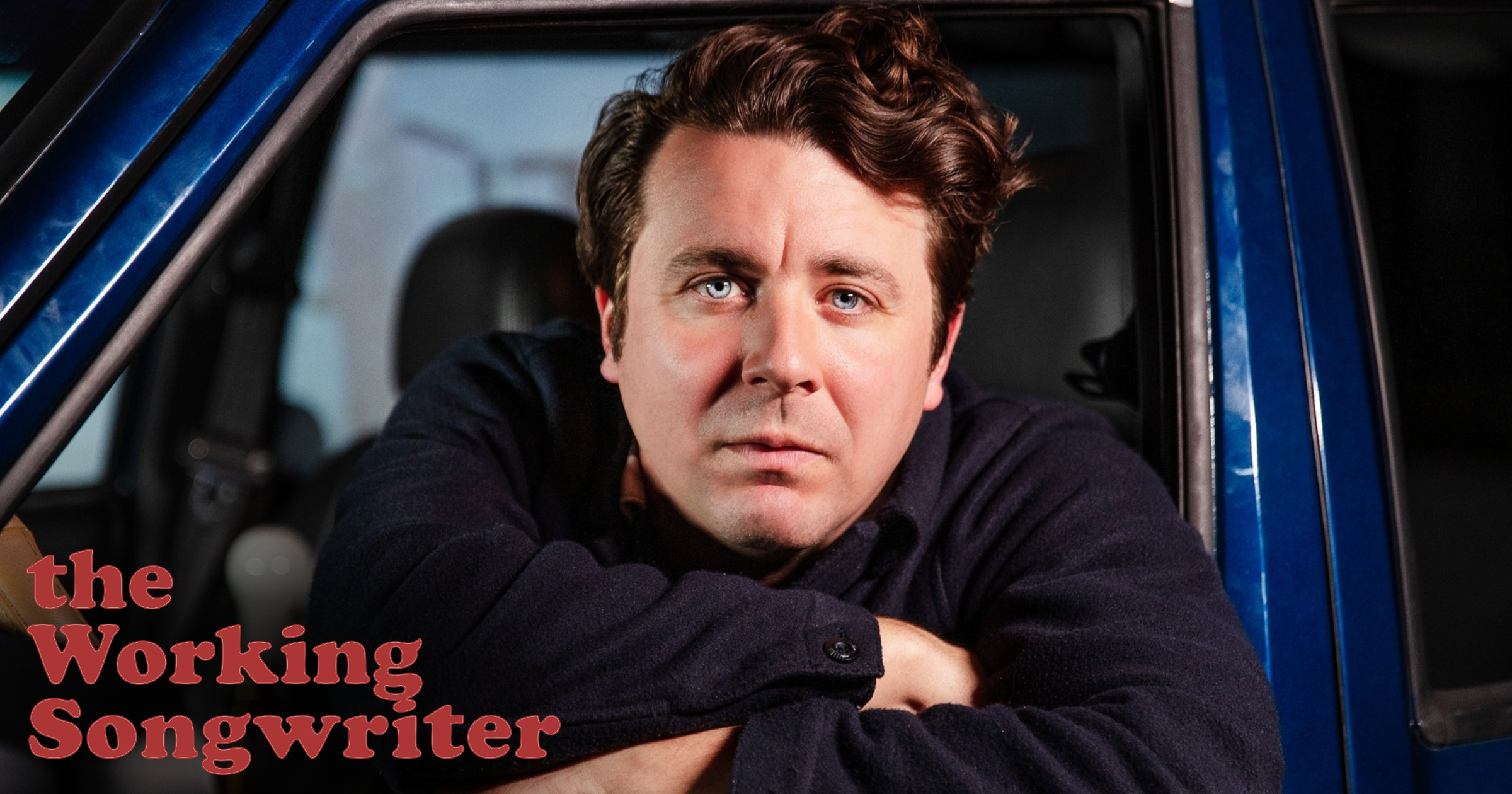
Joe Pug rises to the occasion on The Flood in Color, his first new album in four years. Recorded in Nashville with lightly textured production from Kenneth Pattengale of the Milk Carton Kids, the quiet collection conveys a man willing to look back on his life. Meanwhile, Pug relocated from Austin, Texas, back to his home turf in Maryland, and started a family. The Flood in Color is not filled with songs about domesticity, however. Instead, there’s a folk flair – and occasionally a topical perspective – that Pug’s longtime fans will immediately embrace. So will listeners of his podcast, “The Working Songwriter.”

Corresponding by email, Joe Pug answered these questions for The Bluegrass Situation.

BGS: This album feels like a body of work that’s intended to be taken as a whole. Do you see it that way as well?

Pug: Yes. There’s been a decade of talk about how the album is dead, about how everyone is going to switch to putting out singles willy-nilly, about how the format for an album was just a consequence of a vinyl record’s physical limitations. And fair enough. Maybe when my kids come of age and Spotify is the only thing they’ve ever known, that will be the case.

But for the time being, you have a whole generation of artists who grew up with that format and who still conceive their creative works within its boundaries. More importantly, you have a generation of listeners who are expecting and desiring to hear songs in that format. So I did intend for these songs to be heard together, and heard in the order that they’ve been sequenced.

In the song “Exit,” there’s a reference to a highway west of Davenport and Kansas – that’s an interesting choice for a lyric. What sort of imagery does that line bring to you?

There was a period of time in my early 20s when I was living in Chicago and working 9 to 5 during the week as a carpenter. At night, I would play open mics in the city. And on the weekend, I would self-book these mini tours across the Midwest. They’d go through Sioux Falls, Des Moines, Eau Claire, and Maumee, Illinois. The imagery in this song comes from that time when I was young, on the road in America, completely alone, close to broke.

It was a completely insane idea. It was like going over the entirety of our huge country with a magnifying glass. In fact, when I’d get pulled over by cops for speeding and they’d ask why I was in their small town at 2 in the morning, they would never believe that I had left Chicago to play some hole-in-the-wall in their town. To their credit, they were right, it made no sense.

Why did The Flood in Color fit well as an album title for this particular project?

Very rarely, an idea will come to me in my sleep. Or to put it more specifically, in the very last moment before I drift off to sleep. It’s a cruel joke. I will have been working on some damned terrible song for hours one day and going to bed empty-handed. And then some completely unrelated idea — a phrase, a lyric, a melody — will suddenly appear in my head as I’m lying prone and waiting for sleep. I have to drag myself out from under the covers and write it down.

“The Flood in Color,” that phrase came to me one night like that. And I knew it was the album title. Right before we went into the studio, I took a swing at writing it as a song. It came out to our liking, so it became the title and the title track.

This record feels intimate and meaningful, especially with the spare production. When you had the final mixes back, who was the first person you played them for? What was the reaction?

I played them for my father. And he really liked them. I know that because I’ve always played him my rough mixes early on, for every album. He never gives me in-depth critiques, but if he doesn’t like something he just keeps his mouth shut. These were the first songs in quite a while where he didn’t keep his mouth shut. I could tell it really moved him.

What is that experience like for you to bring a complete, new song into the world?

My process takes a really long time. From the initial writing, to the editing, to the recording, mixing, mastering, and finally the release. So some of these songs are two years old. I’ve spent countless hours with all of these. So by the time they come out, I feel a strange distance from them. They feel like someone else’s songs to me. And I can finally appreciate them or critique them on their own merits rather than songs I have an intimate connection to.

I understand that you are living in Maryland now. Why is that?

My wife and I started a family three years ago. We’re both from Prince George’s County, Maryland, which is a very special place right outside of DC. We wanted to be around family. Plus if I had spent another two years living outside of Maryland, then I would have spent more years of my life living elsewhere. There was always an internal clock in my head that was ticking towards moving back home. I wanted to go out and see the world, I wanted to do my own small version of Campbell’s hero’s journey. But I also wanted to end up around my family and I wanted my kids to grow up around family.

To me, “The Stranger I’ve Been” feels like a lost treasure of country music. Who are some of the country artists who have shaped your work?

Oh, a ton, but not necessarily anything obscure or surprising: George Jones, Harlan Howard, Gillian Welch, Tom T. Hall, Gram Parsons, Emmylou Harris, The Louvin Brothers.

Are you a vinyl collector? If so, what kind of records do you always keep an eye out for?

I am not. Only a vinyl seller. Haha.

On another topic, what are some of the most impactful books you’ve read lately?

Oh man, I’ve got two kids under 3 years old, I’ve taken a pause from my reading regimen. I’ve been using podcasts and audiobooks to fill the gap. Because I can listen to them with what you might call “found time”… driving the car, doing the dishes, mowing the grass, exercising. My favorite podcasts to spend time with are “Hardcore History with Dan Carlin,” “Duncan Trussell Family Hour,” “Henry and Heidi” (with Henry Rollins), and “The Lowe Post” (for basketball).

You have a podcast dedicated to songwriters. What has surprised you the most about that project?

How often songwriters, especially very successful songwriters, think that they’re finished, that they’ll never work again, that they’ll never find another inspiring tune. It’s inspiring on one hand to think that these people I admire have to go through the same tribulations. It’s frightening on the other hand to learn conclusively that there is no final creative plateau that you can reach and just build your house on. You can’t ever stop moving forward because you’ll turn to stone. You have to keep moving forward creatively or time will pass you by. And that is a positively exhausting lesson to learn.

Has there been a common thread among your guests so far?

The show began as only people who were in my phonebook, people that I could get a hold of directly. Now as the show has grown and we’ve had a history of good guests, we’re starting to branch out and pitch the show to bigger artists that I don’t have a personal relationship with.

This is your first album in four years – and it’s a record to be proud of. What are you now looking forward to the most?

For people to hear this damned thing! I don’t know if people will like it or not, but this took everything I had creatively for three years. So I’m at peace with however they feel about it. I happen to really like it, so at this point I’m looking at everything else as gravy.


Photo credit: Dave Creaney