See the Full Winners List from the 2023 IBMA Bluegrass Music Awards

The unofficial theme of the “Biggest Night in Bluegrass” – the 34th Annual IBMA Bluegrass Music Awards, held tonight at the Martin Marietta Center for the Performing Arts in Raleigh, North Carolina – was “Bluegrass Prom,” the colloquial and affectionate nickname given to the awards ceremony by its attendees, honorees, and nominees.

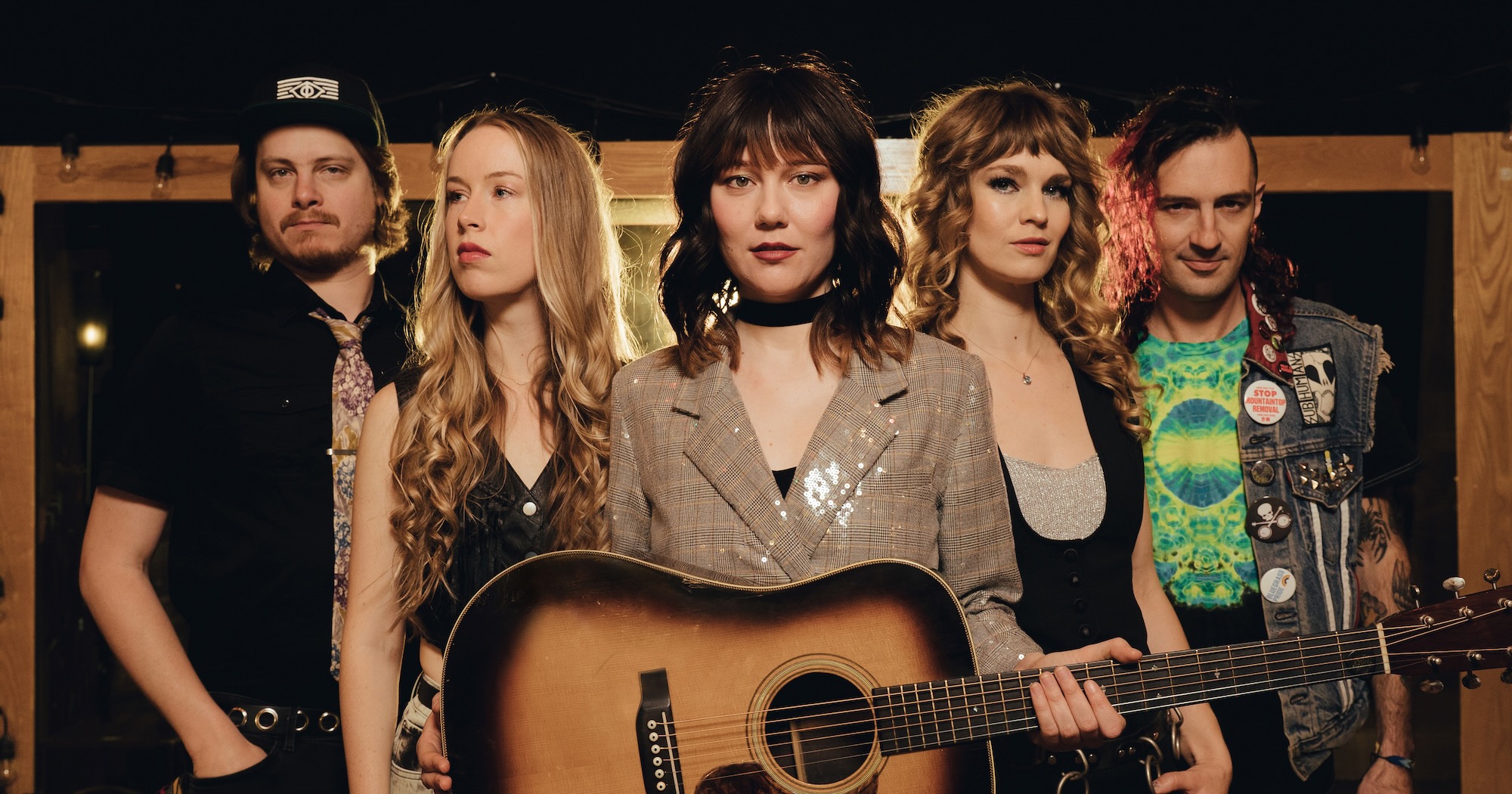
Hosted by Molly Tuttle, who took home three trophies, and Ketch Secor of Old Crow Medicine Show, the three-hour production featured a performance by Bluegrass Music Hall of Fame inductee Sam Bush, songs from each of the night’s Entertainer of the Year nominees – including Sister Sadie paying tribute to Wilma Lee Cooper, another Hall of Fame inductee – touching remembrances of bluegrass forebears Bobby Osborne and Jesse McReynolds, and culminated with Secor, Tuttle and her band Golden Highway, Del McCoury Band, and more leading the crowd in a rousing rendition of “Wagon Wheel.”

In the instrumentalist categories, there were notable first-time wins in two categories, Trey Hensley taking home Guitar Player of the Year – in a field that included both Molly Tuttle and Billy Strings – and Vickie Vaughn, of Della Mae, High Fidelity, and more, receiving the Bass Player of the Year trophy. Kristin Scott Benson took home her sixth Banjo Player of the Year Award, Greg Blake of Special Consensus won his first IBMA award for Male Vocalist of the Year, and the night’s final and most prestigious recognition, Entertainer of the Year, went to Billy Strings, a well-deserved third consecutive win in the category.

See the full list of winners (in bold) from tonight’s IBMA Bluegrass Music Awards, presented by our friends at Yamaha, below:

ENTERTAINER OF THE YEAR:

Appalachian Road Show
Billy Strings
Del McCoury Band
Molly Tuttle & Golden Highway
The Po’ Ramblin’ Boys

VOCAL GROUP OF THE YEAR:

Authentic Unlimited
Balsam Range
Blue Highway
Del McCoury Band
Sister Sadie

INSTRUMENTAL GROUP OF THE YEAR:

Billy Strings
Michael Cleveland & Flamekeeper
The Infamous Stringdusters
Molly Tuttle & Golden Highway
The Travelin’ McCourys

SONG OF THE YEAR:

“Blue Ridge Mountain Baby”

Artist: Appalachian Road Show
Songwriters: Barry Abernathy/Jim VanCleve
Label: Billy Blue Records
Producer: Appalachian Road Show

“Crooked Tree”
Artist: Molly Tuttle & Golden Highway
Songwriters: Molly Tuttle/Melody Walker
Label: Nonesuch Records
Producers: Jerry Douglas and Molly Tuttle

“Diane”
Artist: Sister Sadie
Songwriters: Jeffrey Nath Bhasker/Samuel Tyler Johnson/Cameron Marvel Ochs
Label: Mountain Home
Producer: Sister Sadie

“Heyday”
Artist: Lonesome River Band
Songwriters: Barry Huchens/Will Huchens
Label: Mountain Home Music Company
Producer: Lonesome River Band

“Power of Love”
Artist: Rick Faris
Songwriters: Johnny Colla/Huey Lewis/Christopher Hayes
Label: Dark Shadow Recording
Producer: Stephen Mougin

ALBUM OF THE YEAR:

Crooked Tree
Artist: Molly Tuttle & Golden Highway
Label: Nonesuch Records
Producer: Jerry Douglas and Molly Tuttle

Lovin’ of the Game
Artist: Michael Cleveland
Label: Compass Records
Producers: Jeff White, Michael Cleveland, and Sean Sullivan

Lowdown Hoedown
Artist: Jason Carter
Label: Fiddle Man Records
Producers: Jason Carter and Brent Truitt

Me/And/Dad
Artist: Billy Strings and Terry Barber
Label: Rounder Records
Producers: Billy Strings and Gary Paczosa

Radio John: The Songs of John Hartford
Artist: Sam Bush
Label: Smithsonian Folkways
Producer: Sam Bush

GOSPEL RECORDING OF THE YEAR:

“The Glory Road”

Artist: Joe Mullins & The Radio Ramblers
Songwriters: Paul Martin/Harry Stinson/Marty Stuart
Label: Billy Blue Records
Producers: Joe Mullins and Adam McIntosh

“Jordan”
Artist: Darin & Brooke Aldridge with Ricky Skaggs, Mo Pitney and Mark Fain
Songwriter: Fred Rich
Label: Billy Blue Records
Producer: Darin Aldridge and Mark Fain

“The Scarlet Red Lines”
Artist: Larry Sparks
Songwriter: Daniel Crabtree
Label: Rebel Records
Producer: Larry Sparks

“Take a Little Time for Jesus”
Artist: Junior Sisk
Songwriter: David Marshall
Label: Mountain Fever Records
Producers: Junior Sisk and Aaron Ramsey

“Tell Me the Story of Jesus”
Artist: Becky Buller with Vince Gill and Ricky Skaggs
Songwriter: Fanny Crosby, arrangement by Becky Buller
Label: Dark Shadow Recording
Producer: Stephen Mougin

INSTRUMENTAL RECORDING OF THE YEAR:

“Contact”
Artist: Michael Cleveland with Cody Kilby, Barry Bales, and Béla Fleck
Songwriter: Michael Cleveland
Label: Compass Records
Producer: Jeff White, Michael Cleveland, and Sean Sullivan

“Foggy Morning Breaking”
Artist: Alison Brown with Steve Martin
Songwriters: Alison Brown/Steve Martin
Label: Compass Records
Producers: Alison Brown and Garry West

“Gold Rush”
Artist: Scott Vestal’s Bluegrass 2022
Songwriter: Bill Monroe
Label: Pinecastle Records
Producer: Scott Vestal

“Kissimmee Kid”
Artist: Jason Carter
Songwriter: Vassar Clements
Label: Fiddle Man Records
Producers: Jason Carter and Brent Truitt

“Scorchin’ the Gravy”
Artist: Frank Solivan & Dirty Kitchen
Songwriter: Frank Solivan
Label: Compass Records
Producer: Frank Solivan

NEW ARTIST OF THE YEAR:

Authentic Unlimited
East Nash Grass
Henhouse Prowlers
The Tennessee Bluegrass Band
Tray Wellington

COLLABORATIVE RECORDING OF THE YEAR:

“Alberta Bound”
Artist: Special Consensus with Ray Legere, John Reischman, Tisha Gagnon, Claire Lynch, Pharis & Jason Romero, Patrick Sauber
Songwriter: Gordon Lightfoot
Label: Compass Records
Producer: Alison Brown

“Big Mon”
Artist: Andy Leftwich with Sierra Hull
Songwriter: Bill Monroe
Label: Mountain Home Music Company
Producer: Andy Leftwich

“Foggy Morning Breaking”
Artist: Alison Brown with Steve Martin
Songwriter: Alison Brown/Steve Martin
Label: Compass Records
Producer: Alison Brown and Garry West

“For Your Love”
Artist: Michael Cleveland with Billy Strings and Jeff White
Songwriter: Joe Ely
Label: Compass Records
Producer: Jeff White, Michael Cleveland, and Sean Sullivan

“From My Mountain (Calling You)”
Artist: Peter Rowan with Molly Tuttle and Lindsay Lou
Songwriter: Peter Rowan
Label: Rebel Records
Producer: Peter Rowan

MALE VOCALIST OF THE YEAR:

Greg Blake
Del McCoury
Danny Paisley
Larry Sparks
Dan Tyminski

FEMALE VOCALIST OF THE YEAR:

Brooke Aldridge
Dale Ann Bradley
Jaelee Roberts
Molly Tuttle
Rhonda Vincent

BANJO PLAYER OF THE YEAR:

Kristin Scott Benson
Alison Brown
Béla Fleck
Ned Luberecki
Scott Vestal

BASS PLAYER OF THE YEAR:

Mike Bub
Todd Phillips
Missy Raines
Mark Schatz
Vickie Vaughn

FIDDLE PLAYER OF THE YEAR:

Jason Carter
Michael Cleveland
Stuart Duncan
Bronwyn Keith-Hynes
Deanie Richardson

RESOPHONIC GUITAR PLAYER OF THE YEAR:

Jerry Douglas
Andy Hall
Rob Ickes
Matt Leadbetter
Justin Moses

GUITAR PLAYER OF THE YEAR:

Chris Eldridge
Trey Hensley
Billy Strings
Bryan Sutton
Molly Tuttle

MANDOLIN PLAYER OF THE YEAR:

Alan Bibey
Jesse Brock
Sam Bush
Sierra Hull
Ronnie McCoury


Photo Credit: Molly Tuttle & Golden Highway by Chelsea Rochelle
BGS 5+5: Della Mae

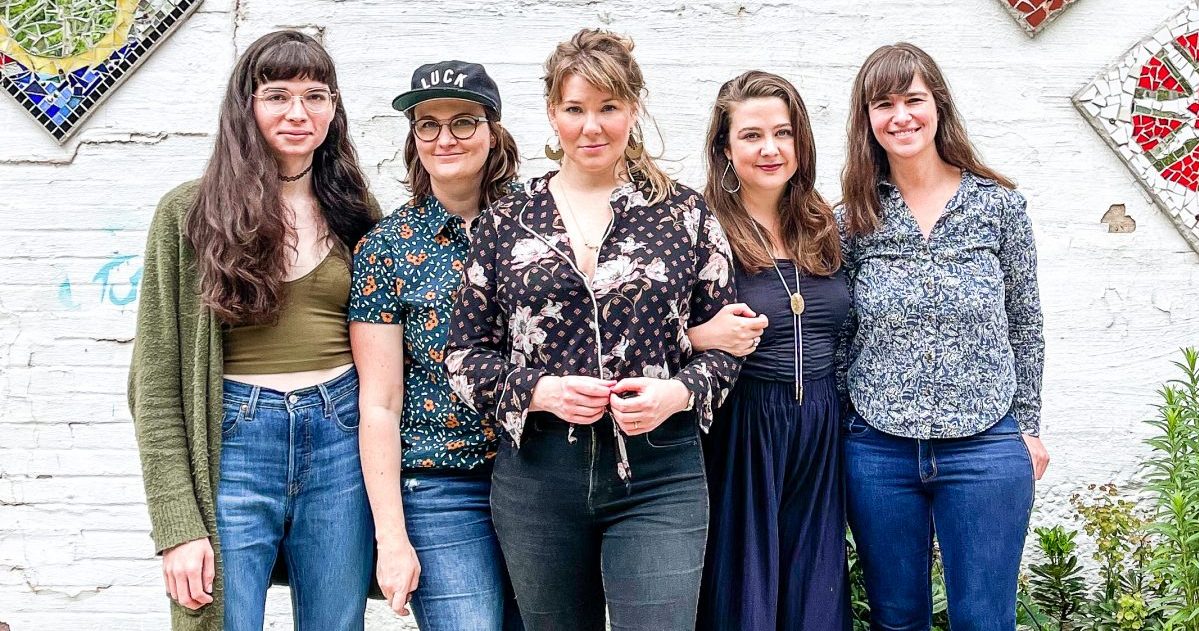
Artist: Della Mae
Hometown: The United States
Latest Album: Family Reunion
Nicknames: Celia = Squawkbox; Kimber= Fiddler, Kimby, Auntie, Nimmers (Grammy only); Vickie = VV, Double V, Wickie
Rejected Band Names: Big Spike Hammer

What’s your favorite memory from being on stage?

Thanks to my good friend and mentor Rickie Simpkins, I played a show on electric guitar with Emmylou Harris a few years ago. My favorite memory from the gig was actually the soundcheck and rehearsal. It was a really special thing to get to experience how an artist I deeply admire prepares for a performance and then get to be part of how it all came together. — Avril Smith

In 2012, we had the opportunity to go on a six-week tour of South and Central Asia with the State Department. The first show we played was in Islamabad, Pakistan at a women’s college. It was the most incredible energy we’ve ever felt in a room. They’d never heard bluegrass before and erupted in cheers and Beatles-worthy shrieks when we hit the first three-part harmony chorus. — Kimber Ludiker

What’s the toughest time you ever had writing a song?

“The Way It Was Before” took Mark Erelli and I six hours to write (three Zoom sessions). Half of that time was spent talking, looking up stories, getting really emotional about the state of the world. We wanted to make sure that every word counted, so we took our time and tried to honor each of the characters (who are actual people). The pandemic isn’t even behind us, and yet I keep hearing people say that they can’t wait to get back to “the old days.” There’s so much about “the old days” that needs changing. After everything we’ve been through in the last 18 months, I found that writing a song like this felt impossibly huge. I may not have finished it if it hadn’t been for Mark. — Celia Woodsmith

Which artist has influenced you the most…and how?

Missy Raines has influenced me the most. For obvious reasons, but let me explain: I was 14 years old watching Don Rigsby and Josh Williams play at my hometown venue, the Kentucky Opry. I saw her up on stage playing upright with them, so cool and beautiful and a master of her instrument. She was hanging with the boys and giving them all a run for their money. Then and there I decided that I wanted to do that for the rest of my days. When it comes to harmony singing, however? One hundred percent Diamond Rio. — Vickie Vaughn

If you had to write a mission statement for your career, what would it be?

We actually do have a mission statement as a band — to showcase top female musicians, and to improve opportunities for women and girls through advocacy, mentorship, programming, and performance. Our hope is that our music inspires more women and girls to pick up an instrument and use their voices to create art and work together to affect the kind of change they want to see in our world. — Avril Smith

What was the first moment that you knew you wanted to be a musician?

FROM BIRTH. 😉 I’m a fifth-generation fiddler. I could play my first tunes at age 3. My earliest memories are playing fiddle tunes with my grandpa and brother. However, it wasn’t until my last year of college that I decided to make it my life. I saw how people struggled as musicians, and honestly, my brother was a bit of a child prodigy and I didn’t think I was good enough for a long time. I began to realize that everyone has their individual skills and talents, and I had something to contribute. — Kimber Ludiker


Photo credit: Kimber Ludiker

High Fidelity: A Natural Feel for Traditional Bluegrass

It must be closing in on ten years since I first met Corrina Rose Logston Stephens, when she and I were both recruited into Retro & Smiling, a band devoted to the musical legacy of first generation Bluegrass Hall of Famers Don Reno and Red Smiley and their Tennessee Cut-Ups. Soon after that, the southwest Illinois native entered the music business program at Nashville’s Belmont University and began to establish herself as a formidable talent in the city’s bluegrass community.

In 2014, while working with a variety of bluegrass acts, including pioneering mandolinist (and Hall of Fame member) Jesse McReynolds, she and a couple of favorite colleagues—multi-instrumentalists Jeremy Stephens (whom she married that April) and Kurt Stephenson—did a little recruiting of their own in order to enter the long-running band competition at the Society for the Preservation of Blue Grass Music in America’s annual confab. With the addition of yet another multi-instrumentalist, Daniel Amick, and bassist Vickie Vaughn, High Fidelity won the contest, and a self-released album followed in 2016. The next year, the quintet signed with Rebel Records, and has now released their label debut.

Hills And Home is a stunning collection that, perhaps more than any other self-described traditional project, reveals the breadth of bluegrass music’s early years; it even features twin banjos, a rarity last featured a decade ago on Tony Trischka’s award-winning Double Banjo Bluegrass Spectacular, but once favored by artists like the Osborne Brothers and Eddie Adcock & Don Reno. And while there are a few familiar numbers, much of the album consists of relatively obscure works, like the Lilly Brothers & Don Stover’s “I Would Not Be Denied,” all rendered with an exquisite attention to detail that amplifies, rather than stifles, the fresh and compelling energy of High Fidelity’s approach.

As an enthusiastic fan of Corrina’s playing, I was curious to know whether she was wholly devoted to older styles of bluegrass, or whether the originality that was at the center of her senior thesis recording was still on her mind—and that’s where our conversation began.

You made an album of your own while you were at Belmont called Wind Caught My Bike, that was mostly originals written and played in a contemporary vein. And your album after that, Bluegrass Fiddler, was traditional. So are you still writing in a less traditional, more contemporary vein?

I am, I definitely am. But being a stylist in the sense of being able to separate styles and articulate those styles accurately has always been important to me, and something that I’ve admired. The person who I’d say is my biggest mentor, Jim Buchanan, he’s excellent at doing that; he can play like Jascha Heifetz, and then play Stéphane Grappelli, and then play some hoedown—and it all sounds different. Seeing that, being around people like him and Jeremy and Kurt made me want to do that. I wanted everything I did to be authentic, and only when I wanted to blend them, then I wanted that to happen; I didn’t want to be some mish-mash of things just because of my carelessness. But when I write, it’s just an outflow of [who] I am—a combination of all those influences. And there are no limitations on it, unless I want there to be.

Many of the musicians featured on the Bluegrass Situation are very eclectic, and it feels natural for these musicians to take elements from different kinds of music and put them together. And what I hear you saying is that you’re oriented more toward feeling that you want to be respectful of the integrity of a style; that’s what I hear you saying when you talk about being authentic. It’s a way of putting yourself into, rather than drawing from, that style. What’s attractive about that for you?

I am extremely detail-oriented. Everybody has to reign me in! So I think, why does this sound like this era of bluegrass and this person playing it, and why does that not necessarily. And if I want to convey a sound, then I have to abide by its specifics. I feel there’s a lot of power in being able to understand and articulate those things. You have people like Chris Thile, who understand those things and choose to put them together—as I do, in different situations—but I was always attracted to the first generation stuff, just probably because of how I grew up. And as I became closer friends with Kurt and Jeremy—I was 14 when I started playing in 2004, and I met Kurt in 2007 and Jeremy in 2009, and we were friends before we got serious dating—I saw them being able to segment that stuff, and that was always appealing to me.

High Fidelity is doing all old songs, but they’re by artists who sounded different from each other. Where do you locate yourselves between reinterpreting the song, which could be anything, and recreating the record?

I think the biggest thing is that there’s no formula, it’s all a feel thing. Somebody said—it could have been Chris Thile—that if you want to copy somebody, you should try it and see what happens, because you’re not going to end up sounding exactly like them. I, and I’m sure Kurt and Jeremy, have been in that place where you’re thinking, “I’m going to sound exactly like them.” Which is way harder than just saying, “Oh, this sounds like that to me.” So in High Fidelity, when we do “I Would Not Be Denied,” I’m not trying to sound exactly like the Lilly Brothers, or sing exactly like them, but I listen to what they’re doing, and I pull the highlights out of it.

High Fidelity’s sort of the convergence of that with many other added things, because Daniel and Vickie come from totally different places. Kurt and Jeremy and I grew up listening to it, and then Daniel and Vickie grew up listening to and playing music, too, but not the dyed-in-the-wool traditional bluegrass. And so they pull things out of different places. I think it’s a natural process, where you take in those influences, but you don’t obsess over sounding exactly like them, but you allow them to inform what you’re doing—and with your own constraints imposed of what you believe traditional bluegrass from that era sounds like, then something comes out that’s really interesting.

I feel blessed that High Fidelity has found this in a really natural way. I’ve never tried to sound like a man when I’m singing, but I listen to the timbre of the tenor singers’ voices, and I see that I need to push more with High Fidelity—much more than I do when I do my own thing. When I do my own thing, it’s just a natural outflow. So what ends up happening is that I don’t sound like I’m trying to sound like a man, but I’m trying to tap into the essence of bluegrass tenor singing. And then people are like “whoa, this is a girl singing this,”—and there are lots of things in High Fidelity that are interesting elements. Like when you look at a picture of us and then you listen to the music, there are some mind things that happen!

You’re strong in your faith, and in your musical preferences, and yet you guys are very much a part of a bigger musical and social community that’s built around bluegrass and the like.

Musically, that doesn’t ever seem like it’s an issue, because we each have a very diverse palette of what we like. Kurt plays with his wife, Andrea, and they do much more contemporary music—and of course, the things that I do are off the spectrum of insanity! Jeremy is also really rooted in old-time music, and he’s done a lot of commercial stuff with Ray Stevens, and things like that. I think there’s a stigma of, if you’re a traditional band, you don’t like any of that other stuff. But that’s not us at all. We went and played ROMP last year, and that was awesome; we didn’t feel weird there. We were proud and honored to be ambassadors for traditional music that day. So I don’t think we feel awkward about that; we love all these things.

And as far as our faith is concerned, the fact that we are all Christian people was just a coincidence that happened in putting the band together, and it was really cool. Because we were, wow, we can all approach these songs of the same mind. Which, other than Jeremy working with the Chuck Wagon Gang, is something that we had never really experienced in bluegrass band situations.

So the fact that we’re all Christians, and our example is Jesus…Jesus was out there doing stuff with everyone. There was nobody that was off-limits to him. And he said to go out there in the world and do stuff; be an example. That is a motivator for us, because we see ourselves as being a young traditional band, that are Christian, that are out there doing what we feel we’re called to be doing—being out there in the world. That’s what we feel the Bible says we’re supposed to do. So none of that ever really feels awkward as far as being part of the greater music community.

What do you guys hope that releasing this record will do for you?

The cool thing is that we started off doing what High Fidelity does because we just wanted to do it. We didn’t care what anyone thought. We thought it would be a sideline, cool, fun project, a recreational thing to supplement our musical endeavors. We never thought we were going to have a second record. And then people responded to it, and Rebel Records approached us, and we were like, wow, maybe we should do this.

Believe it or not, we had an existential crisis before this record. We felt like we’d pulled all the stops for the first one. Jeremy had had his little keepsake pile of songs forever, and he was like, “I’ve used all the gems, what are we going to do?” So we got to digging through stuff, and we amassed a bunch of stuff and sorted through it.

I say all that to say, we’ve really come with no expectations but to do what we wanted to do. And we’re satisfying ourselves musically in that way. One thing we never really focused on was putting ourselves out there. That’s always the burden of the musician, to have to do the business things. I love independently releasing things, and that’s very satisfying, but I know there’s a lot of things that come with having a record company behind you. Rebel has been amazing and I’ll never look at any of this the same way again. So I hope that the record gets us out there for people to know who we are, and I hope High Fidelity continues being a thing that grows. Before, it was a sideline thing, but it never stayed there. It just went like a rocket ship, and I hope the trajectory continues.


Photo credit (lead image): Warren Swann
Photo credit (within story): Russ Carson