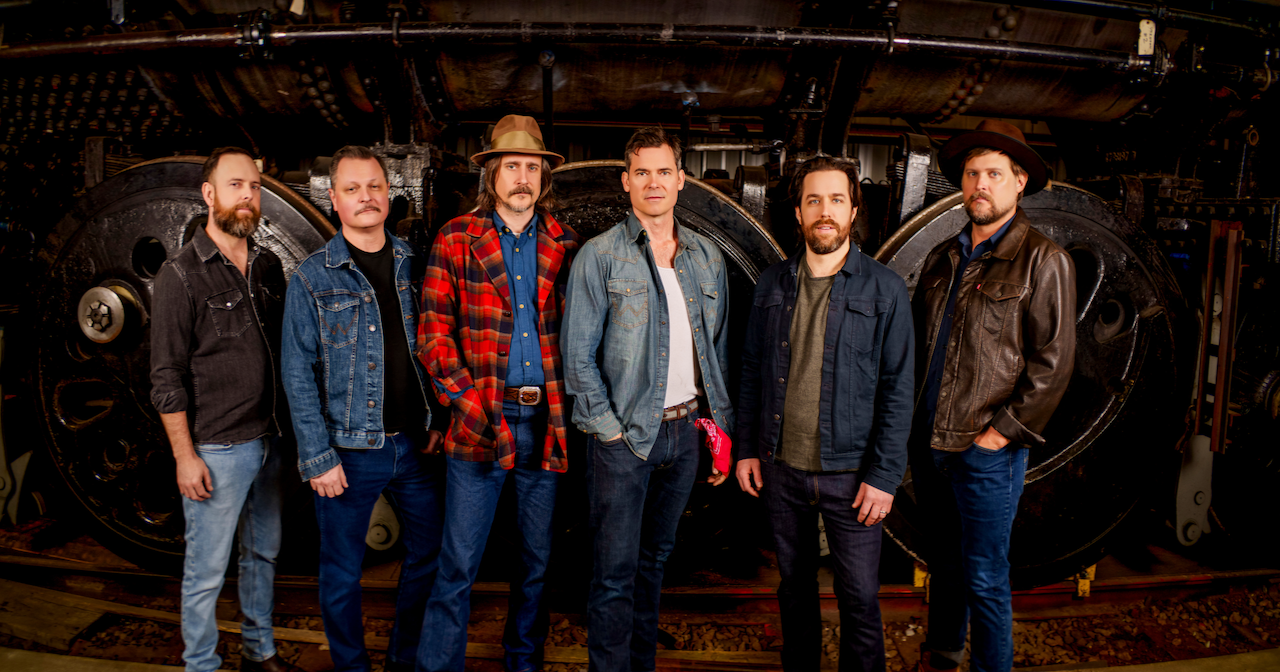
Old Crow Medicine Show’s Americana Commonwealth Canon

More than any of the world’s music, the songs of America are a reflection of a national identity and character. We are our songs.

Distilled into a few memorable minutes go the nation’s hopes and aspirations, the glories and tragedies of her past, and the promises of her future. This American canon is as diverse and vast as the country itself – our blues, breakdowns, or corridos are as different as prairies are from coastlines, as the Appalachians are from the Rockies. And yet, somehow, still our sound is a commonwealth, a singular voice rising from the chorus of many just like our national motto purports: “E Pluribus Unum.”

250 years is not a long time in the global scheme, and neither is 28 years of Old Crow Medicine Show‘s reign as an Americana string band. But somehow it is the vigorous and youthful American voice/song/songwriter/band (and not our transoceanic elders) that can best capture the world’s heart and soul in just a few minutes.

In this Mixtape, I’m proud to share some examples of this powerful artistry. You might already know every word to some of these songs while others you may have never heard, yet each is stitched together with a cloth of commonwealth that can only be found of uncommon ancestry. Though the singers may be perfect strangers, the songs that bubble up from our national cauldron are enough to nourish each and all. – Ketch SecorOld Crow Medicine Show

“Howdy Do America” – Old Crow Medicine Show, Jesse Welles

Jesse Welles came whirling into the studio the other day and helped put a spit shine on this love song about the 50 states. I wondered if he was gonna get excited when he sang “Arkansas” and brother, he did not disappoint. Love this cat. He’s a brother, and I expect we’ll all be singing his tunes for years to come.

“Golden Rocket” – Jim & Jesse

I had the privilege of knowing Jesse McReynolds, even traveling and performing with him, and buddy there’s no wonder why Jerry Garcia thought he was the best of the bluegrassers.

“Field of Opportunity” – Neil Young

I was raised on Neil Young’s unique brand of tall prairie country rock. This track features the great Cajun fiddler Rufus Thibodeaux.

“Heaven Help Us All” – Joan Baez

Joan’s a real hero of mine. She’s like that tree planted by the water we all sing about, unmovable. Of all the singers on this playlist, I can say without a doubt if more people could be like Joan Baez, then this world would be a better place.

“I Wanna Go Country” – Otis Williams & the Midnight Cowboys

I love this Motown singer turned country crooner, and the world would have too, if Nashville hadn’t been so narrow-minded.

“Beautiful Land” – Old Crow Medicine Show, Maggie Rose, Lee Oskar

I wrote this one with a Baháʼí faith elder named Eric Dozier just down the street from the Tennessee State Capitol building. Sometimes politics feel like a fortress. But music has a way of wandering through the keyhole of even the most impenetrable door.

“There’s a Star Spangled Banner Waving Somewhere” – Elton Britt

I played this one for my kids on Memorial Day. They sat through it start to finish, and you should, too. It’s easy to get complacent about the sacrifice our grandparents and great-grandparents made in the 1940’s for each of us. Don’t do it.

“Oasis” – Molly Tuttle

Molly’s my favorite American singer. Here’s one of our travelogue-style songs. I had it stuck in my head all last week at the Tico Time Bluegrass Festival in Aztec, New Mexico.

“The Green Rolling Hills of West Virginia” – Hazel Dickens & Alice Gerrard

These girls rip. Back at MerleFest in the year 2000, I filled out Old Crow’s first ever W-2 form and gave it, with a shaky hand, to the great Alice Gerrard.

“How’s About You” – Dave Rawlings Machine

The Great Depression gave the world some of its most powerful songs. And even generations later, the events of the 1930s remained powerful enough to inspire music like this.

“Rock of Chickamauga” – Jimmie Driftwood

Songs about the Civil War are some of my favorites in the national cannon. Jimmie Driftwood is one of my favorite songsmiths. He’s an absolute master of the historical ballad.

“Across The Great Divide” – Kate Wolf

I am awestruck by the landscape of the West, and few songwriters can take you there better than the amazing Kate Wolf.

“What Did You Learn in School Today?” – Tom Paxton

I’ve been singing this one since I was a youngin. When I was 12, I discovered my uncle’s weathered copy of Vanguard’s album Newport Broadside: Topical Songs at the Newport Folk Festival 1963, and that was my introduction to Tom.

“The Tramp on the Street” – Molly O’Day

Born in Pike County, Kentucky, she’s one of my favorite bluegrass singers. She first heard this song from Hank Williams on a Birmingham radio station, and it became her signature song. American music has a way of championing the underdog better than most.

“Shenandoah” – Bob Dylan

I think I was 15 when I first heard Bob singing this gem, hidden in the ruffles of one of his more questionable ’80s albums. I thought, “Damn, Bob knows where I’m from.”

“Corrido de John F. Kennedy” – Los Reyes del Corrido

My band has been dabbling in conjunto for two decades now. We got to learn this one for next time we play the big D (Dallas).

“Which Side Are You On” – The Weavers

No collection of American songs is complete without a protest piece from the labor movement, the first dark corner where the full power of American music was unleashed.

“The City of New Orleans” – Arlo Guthrie

When we play Chicago, I always talk about Steve Goodman, who wrote this song. I sure would have liked to have known the guy. Thankfully his music will last forever.

“Cowboy National Anthem” – O.B. McClinton

O.B. left this world before he was fully known by the country music fanbase that would soon send black country singers consistently to the top of the charts. He was a man before his time, but the music he made reminds us that, just like Ray Charles said, “Country music is black music.”

“Deportee (Plane Wreck at Los Gatos)” – Old Crow Medicine Show

We love Woody Guthrie, and this is one of the numerous songs of his we’ve recorded through the years. In a nation of immigrants (I’m a French Huguenot), it’s hard to imagine how we could exist without a steady flow of new members to our American family.

“Big Backyard” – Molly Tuttle

When Molly and I wrote this, it was on account of having a massive vacant lot behind the house we were composing in. Now that same lot is full of little yellow flags and “coming soon” signs. Yet still we sing, louder this time.

“For What It’s Worth” – Buffalo Springfield

A few years back, I had the distinct pleasure of sharing an elevator with Stephen Stills, author of this earthquaking song which Buffalo Springfield recorded in 1966 – and we covered this year on our new album, Union Made. I wanted to tell him thanks, gush, and get my picture made. Instead, I stood quietly until he rasped, “I heard your soundcheck. Great band you got there. Keep ‘em together if ya can.” Thanks, I will Stephen.

“Louder Than Guns” – Old Crow Medicine Show

This summer, PBS stations across the country are broadcasting the film we spent three years making in a half-dozen tour stops along our travels. It’s a movie about bringing together the disparate ends of the 2nd Amendment debate during an era in which guns kill innocent Americans at shocking rates. It’s a tall order, coming together to flatten the curve, seeing past our silos and personal politics, but in town after town I watched people listening across the divide. As easy as it is to be hopeless, the film has made me hopeful we’ll get beyond this impasse and prioritize the safety of our communities. This song is the theme of this film.

“American Tune” – Allen Toussaint

I’m glad you made it through to the end. Old Crow opened up for the great Allen Toussaint in the Berkshires back around 2011. The record featuring this song had just come out and when he launched into it, I was nearly knocked off my feet. So powerful. So simple. Says it all.


Photo Credit: Ed Rode
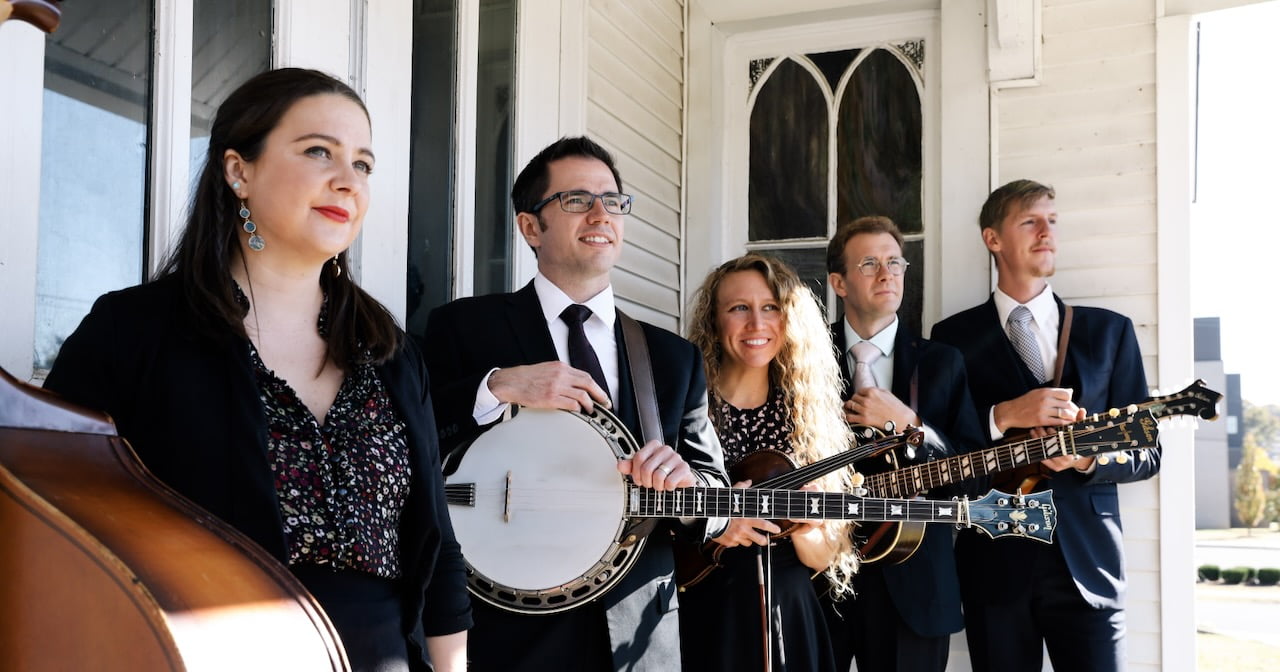
WATCH: High Fidelity, “Are You Lost in Sin?”

Artist: High Fidelity
Hometown: Nashville, Tennessee
Song: “Are You Lost in Sin?”
Album: Music In My Soul
Release Date: September 15, 2023
Label: Rebel Records

In Their Words: “‘Are You Lost in Sin?’ is one that Kurt Stephenson brought to the table. Collectively, we have a special affinity for the early Jim & Jesse Capitol recordings, and High Fidelity has recorded several selections from that era over the years. Here, Jeremy and Kurt even emulate Jesse’s mandolin breaks on the guitar and banjo respectively!

“Incorporating material and stylistic choices from Jim & Jesse has always been a core part of what we do in High Fidelity, and every time we have recorded one of their songs, Jeremy and I couldn’t wait to share it with Jesse McReynolds. Jesse was so supportive of us, and through the years that Jeremy and I were blessed to work with him in the Virginia Boys, he even featured us singing the Jim & Jesse songs we’d recorded on the Opry and beyond!

“This song holds extra special meaning to us as the last Jim & Jesse song we recorded while Jesse was still with us on Earth. We hope this video serves to bring to remembrance Jesse and his amazing legacy while bringing to focus the striking message behind this beautiful Jim & Jesse composition.” – Corrina Rose Logston Stephens

Track Credits: Written by Jim & Jesse McReynolds

Jeremy Stephens – Guitar and Lead Vocal
Corrina Rose Logston Stephens – Fiddle and Harmony Vocal
Kurt Stephenson – Banjo and Harmony Vocal
Daniel Amick – Mandolin
Vickie Vaughn – Bass


Photo Credit: Amy Richmond
Video Credit: Produced and filmed by Warren Swann

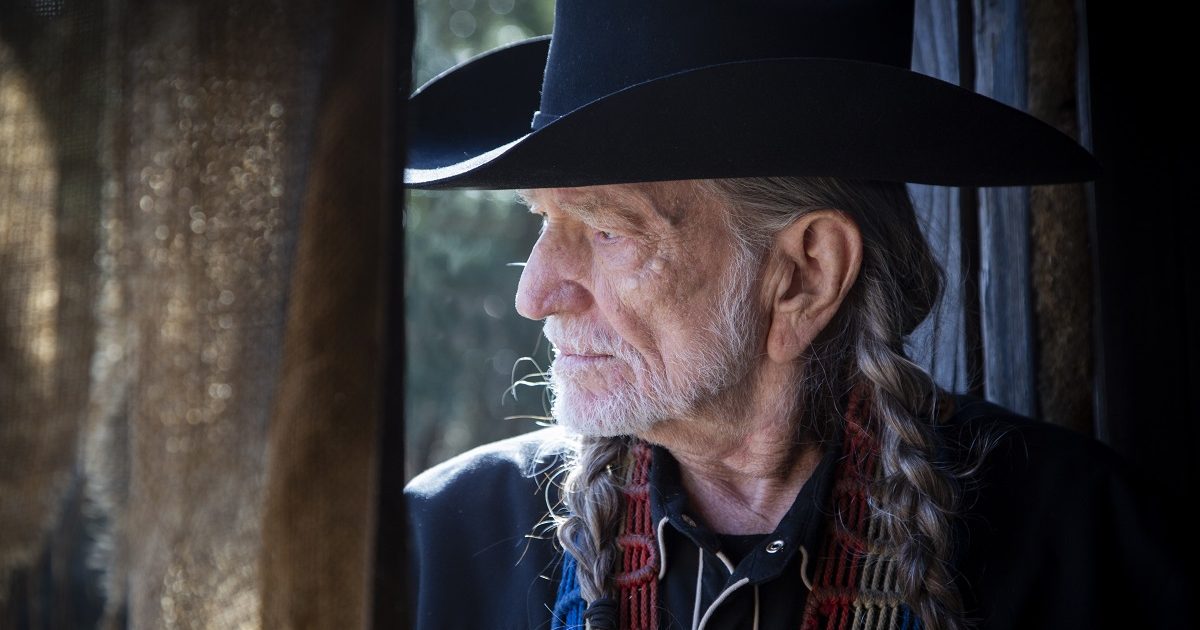
Willie Nelson’s ‘Bluegrass’ Underlines His Lifelong Relationship with the Genre

“He was exceedingly cool and easy,” long-time Bill Monroe bassist Mark Hembree remembers about Willie Nelson’s presence at a 1983 recording session where Nelson sang and played with Monroe. “I never had a say in Bill’s mixes, but they had Willie’s guitar way up and as we listened to playback he mentioned it, then turned and asked what I thought,” Hembree wrote in a recent exchange of messages. “I agreed, a little surprised he would ask me.”

People who hear about Willie Nelson’s latest album, Bluegrass, before hearing the music might ask, “Wait, what? What does Willie Nelson have to do with bluegrass music?”

Upon listening, at least two answers come to mind: 1) Much more than you might think. 2) Don’t worry so much.

With tunes by Nelson, one of the best American songwriters, played by notable pickers, the record contains strong music that should sound welcome to fans of Nelson, of bluegrass, and of the field with the loose label, “Americana.”

It’s a given that in more than 60 years of major-label recording, Nelson, 90, has been better known for presenting his own songs, enduring tunes such as “Crazy,” “Hello Walls,” and “On the Road Again,” the last of which is heard here in a new version. But he’s also made his name with notable covers – like “Blue Eyes Crying in the Rain,” “Seven Spanish Angels,” “Blue Skies,” and others – in a welter of styles, including blues, pop standards, and even reggae. Nelson’s core music enfolds ‘40s and ‘50s country, traditional fiddle tunes, four-square gospel, ragtime, some swing flavorings, and definitely a heap of blues. The mix also includes more contemporary pop. Subtract some of that last bit of material, throw in some lonesome mountain banjo and ballads, and you’ll find, in different proportions, foundational bluegrass as designed by chief architects like Bill Monroe and Earl Scruggs.

Legacy Records, the Sony division putting out Nelson’s Bluegrass disc, says the style “was given a name by Kentucky songwriter/performer/recording artist Bill Monroe and the Blue Grass Boys, whose post-war recordings profoundly influenced Willie’s songwriting sensibilities and the direction of American country music in general.” They go on to say, “Willie chose songs combining the kind of strong melodies, memorable storylines and tight ensemble-interplay found in traditional bluegrass interpretations of the roots (from European melodies to African rhythms) of American folk songs.”

And it’s pretty much on target. But what else speaks to Nelson’s involvement with bluegrass?

Let’s return to the early ‘70s, when he famously abandoned a Nashville scene where he had achieved songwriting fame and a recording career. But Music Row had flagged in creativity and opportunity, he and others thought. And yes, at the end of 1969, his house had burned down. By 1972, Nelson’s persona was changing as his new approach revisited his Texas roots. The year saw new-breed stars like Kris Kristofferson showing up at the first Dripping Springs Reunion, a Texas country music festival. The show, which was to morph int0 a string of outdoor throwdowns known as Willie’s Fourth of July Picnic, presented a bluegrass contingent led by Monroe, with foundational figures Earl Scruggs and Lester Flatt leading their post-breakup bands, as
well as additional notables including Jimmy Martin.

Jo Walker, executive director of the Country Music Association, told the Austin-American Statesman that the trade group was delighted to hear about the Dripping Springs Reunion. “So many of the rock festivals and similar events have reflected so unfavorably on the music industry that we are particularly happy that your reunion will be a Country Music show.” But with Nelson embracing a new, youth-driven fan base and a long-haired, bandana-ed look, what did country music even mean?

There was a growing correlation, it seemed, between the increased popularity of bluegrass and the emergent outlaw (read: long hair, free-thinking, whiskey-drinking, dope smoking, etc.) movement in country music, led by Nelson and Waylon Jennings. Its bluegrass surge was sparked in part by the Earl Scruggs Revue’s broad acceptance in non-traditional venues like college campuses and hot sales for the Nitty Gritty Dirt Band’s Will the Circle Be Unbroken. Back in Nashville, in 1973, wider acceptance of bluegrass also meant that Monroe, his former Blue Grass Boy Flatt, the brilliant wildman Jimmy Martin, and the great brother team of Jim & Jesse McReynolds would join Nelson amid the crowd of stars at CMA’s second annual Fan Fair celebration.

In 1974, both Scruggs and Monroe, as well as Grand Ole Opry stars Ernest Tubb, Jeanne Pruitt, and Roy Acuff appeared on stage singing with another wildman, country-blues rocker Leon Russell. That’s documented in a photograph of this period, likely from a Willie’s Picnic. Quite a lineup.

A version of the picture found on the web says the shot is from A Poem is a Naked Person, a documentary on Russell by esteemed filmmaker Les Blank shot between 1972 and 1974, but not released until 2015. Nelson appears in the movie to sing “Good Hearted Woman” – also on this new album – playing guitar bass runs that would work fine in bluegrass. He also backs up fiddler Mary Egan, of the Austin “progressive-country” band Greezy Wheels, on an energetic version of the bluegrass-country perennial “Orange Blossom Special.”

In 1974, Nelson went to work in the soul-music capital of Muscle Shoal, Alabama, to record a milestone disc on his road to making records his own way. The album, Phases and Stages, which won over both fans and critics, contains prominent five-string played Scruggs-style on the hit “Bloody Mary Morning,” which also returns on Bluegrass.

The 1983 Bill Monroe session referenced above came after a last minute February 22 phone call from Nelson to let Monroe know he was available to appear on the in-progress Bill Monroe and Friends album for MCA Records. That’s according to a passage in the indispensable book, The Music of Bill Monroe, by bluegrass scholars Neil Rosenberg and Charles Wolfe.

“[Engineer, Vic) Gabany recalls that on February, 22, 1983, Monroe called the studio and asked if it was free that afternoon,” Rosenberg and Wolfe write. “Willie Nelson was in town, and he wanted to rush in and cut the duet with him. Fortunately, it was. Moreover, the Blue Grass Boys were all available, and Haynes was able to round up studio musicians Charlie Collins and Buddy Spicher.”

Monroe’s original tune with Nelson, “The Sunset Trail,” shows the impact of another style, cowboy music, that both men favored. Nelson reaches into his upper range to sing below Monroe, who’s going way up there, as was his wont. “It’s a thrill of my life to be here with you,” Monroe says as he and Nelson exchange praise in the track’s introduction.

In 1990, Monroe accepted Nelson’s invitation to perform at the April 7 Farm Aid IV concert in Indianapolis. “We’re glad to be here with Willie Nelson!” he said to kick off a set marked by powerful singing, crisp mandolin picking, and a little crowd-pleasing buck dancing. The show placed Monroe, 79, in a lineup that included stars such as Elton John and Lou Reid. The Indianapolis Star estimated the crowd at 45,000.

During Monroe’s last years — he died in 1996 — he often spoke to Nelson on the phone, according to a person who didn’t want to be identified, but often spent time at Monroe’s home on the farm outside Nashville during that period. “He valued their friendship immensely,” the person said.

Bluegrass‘s 12 songs contain several Nelson compositions that became standards of his repertoire, along with less familiar tunes that also fit in the recording approach overseen by Music Row’s Buddy Cannon. A songwriter and producer, Cannon is known for delivering big songs, like “Set ‘Em Up Joe” for Vern Gosdin, and chart hits for more recent mainstream acts such as Kenny Chesney, John Michael Montgomery, and Reba McEntire. A frequent Nelson collaborator, Cannon assembled a list of Nashville co-conspirators: Union Station members Barry Bales, on bass, and Ron Block, on banjo; former Union Station member and current rising star Dan Tyminski on mandolin; fiddler Aubrey Haynie; Dobro man Rob Ickes; Seth Taylor also on mandolin; as well as harmonica player Mickey Raphael, who’s worked for decades in Nelson’s band.

The music mostly doesn’t come off as hard-core bluegrass in the mode of, say, the Stanley Brothers. But it leans on the elements that Nelson has in common with the style — lonesome melodies, classic country, swing and blues.

The mournful “You Left Me a Long, Long Time Ago,” from 1964, reflects the straight-country songwriting to which Nelson and others brought a terse, modern beauty in the late ‘50s and early ‘60s. It was a time when bluegrass enjoyed a closer co-existence with mainstream country, as opposed to straining against the tight format borders that limit today’s music business. Among the many artists who crossed back and forth freely were guitarist-songwriter, Carl Butler, fiddler Tommy Jackson, and Cajun star Doug Kershaw. They all worked with Monroe.

A new version of “Sad Songs and Waltzes” mourns in tones not too different from Monroe favorites ranging from “Kentucky Waltz” to “Sitting Alone in the Moonlight.” The song also recalls the 3/4 time Lone Star tunes that Nelson might have heard at the Texas Fiddlers Contest and Reunion.

That show got going in 1934 in Athens, Texas, just one year before Nelson arrived on the scene in Abbott, less than 90 miles away.

The fiddle contests that influenced so much of Texas music beginning in the 19th century, had parallels in the 18th century Southeast, where contests featured both the fiddle and the banjo, with its African roots. This music went around, and it still comes around.

The sock-rhythm backing of “Ain’t No Love Around” recalls early Blue Grass Boys recordings such as “Heavy Traffic Ahead,” recorded September 16, 1946, and featuring Earl Scruggs’ first recorded banjo solo. Elsewhere, the laidback favorite, “On the Road Again,” gets a more intense reading from Nelson, with some vocal and instrumental improvisation to spice it up. The mystical “Still is Still Moving to Me” leaves plenty of room for pickers to range far and wide on banjo, mandolin, fiddle and Dobro.

“You give the appearance of one widely traveled,” Nelson sings in “Yesterday’s Wine.” He’s singing from a faraway spot in time, in myth, in history. It’s a stance that’s earned a place on bluegrass playlists for more recent songwriters such as Guy Clark, David Olney, and Gillian Welch.

“Bloody Mary Morning,” from Phases and Stages gets the most recent of several revivals from Nelson, who led a jam-grassy version in the 1980 film Honeysuckle Rose and later sang it in a duet with Wynonna Judd. The song’s forthright tale of fighting the blues by having a highball on a plane seems somehow classier than the constant tales of beer and pickups that populate country radio.

In the end it seems clear that for decades, both Willie Nelson and bluegrass music have served, in different ways, as a conscience of country music. Just as the Solemn Old Judge, WSM radio announcer George D. Hay, commanded, they “Keep her close to the ground, boys,” although their paths have diverged, at times.

In any case, this new collection brings Nelson together with bluegrass pickers for music that might even work to serve that same worthy purpose.


Photo Credit: Pamela Springsteen