You Gotta Hear This: New Music From Full Cord, the Arcadian Wild, and More

It’s another excellent lineup for our weekly collection of premieres and just-released music! You Gotta Hear This…

Earlier this week, the Arcadian Wild announced their upcoming album, Make It Out Alive (set for release in August), with a brand new single “Cool To Know You.” Poppy and lush, its deep and vibey production style brings in varied roots influences reminding of Nickel Creek and indie-pop all at the same time, held together with a bluegrassy mandolin chop. Plus, watch a video from geologist-musician-songwriter Benny Bleu, who’s shared “March of the Mollusk” with us today. Old-time with plenty of modern twists, it’s an entrancing instrumental number inspired by the ceaseless march of time, the steady drip of existence spending or being spent. The melody – and rhythms – have that delicious “neverending song” feel, where each subsequent section of the tune has you craving to return back to the start and do it again.

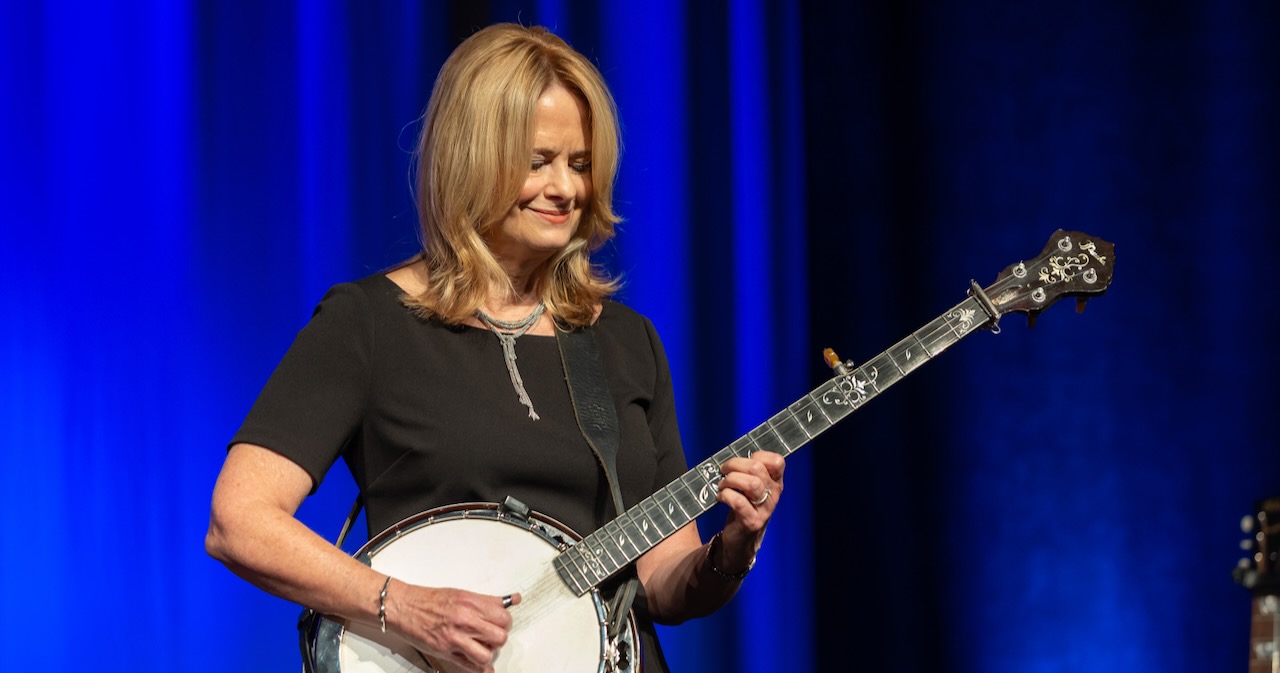
Benson, husband-and-wife bluegrass and string duo Wayne and Kristin Benson, release their brand new album today, Double Dose. We’ve shared a few tracks from the project over the weeks and months in the run up to today; to celebrate release day, we’re shining a spotlight on “Banjo Radio Bounce,” a swingin’ bluegrass instrumental with a title paying tribute to bluegrass radio and streaming service BanjoRadio. Also in bluegrass, long-running Michigan band Full Cord release a new track today featuring their friend, peer, and fellow Michigander Billy Strings. The band tell us a bit about the inspirations behind “Hubris Comes to Town” below. Strings and the stalwart MI band sound great.

Jesse Smathers, who you may know from the Lonesome River Band, has more excellent solo music to share today. A new single, “Gambler’s Last Game,” is another truly timeless number from the young artist and picker. Smathers, born and raised in the old-time and bluegrass rich territory of Southwest Virginia, is one of the most compelling up-and-coming creators who can collapse time with his songs. And he can effortlessly code switch between bluegrass, old-time, string band, and more styles from the primordial ooze that birthed this genre. Not many can.

You’ll also want to watch and enjoy a new animated music video featuring a song by artist, multi-instrumentalist, and songwriter Elena Moon Park and animation by Xuan. “Nothing Is Ordinary” is a song celebrating just how extraordinary every single little detail of life really is. It’s built on a prominent sense of gratitude wrapped with a bouncy, charming vibe – and paired with a music video that perfectly encapsulates its message. It’s beautiful and certainly captures “the grand and the mundane,” both of which are extraordinary in their ways.

We hope you enjoy these songs and videos. You Gotta Hear This!

The Arcadian Wild, “Cool To Know You”

Artist: The Arcadian Wild
Hometown: Nashville, Tennessee
Song: “Cool To Know You”
Album: Make It Out Alive
Release Date: May 27, 2026 (single); August 14, 2026 (album)

In Their Words: “I have known my best friend Carly since I was 3 months old. She is truly a sister that was gifted to me. She is the coolest girl I know, and she makes me cool just by knowing her. We live very far away from each other now and we have to work really hard to stay in touch and spend time together, but it is always worth the effort. This song came out of me after she was having a tough time and I couldn’t physically be there for her, so I wanted her to know that she is seen, she is loved, and I’m a better and cooler person for knowing her.” – Bailey Warren

“We’ve typically just captured intimate acoustic performances in our past work and it was fun to remove some limitations in the studio and really give it a full send approach. It felt like we gave ourselves permission to build an actual pop song from the ground up. Drums?! Electric guitar?! Mandolin overdubs?! What?! It was a delightful process of playful discovery, and we had a blast with our producer, Micah Tawlks, putting it all together.” – Lincoln Mick


Benson, “Banjo Radio Bounce”

Artist: Benson
Hometown: Boiling Springs, South Carolina
Song: “Banjo Radio Bounce”
Album: Double Dose
Release Date: May 29, 2026
Label: Mountain Home Music Company

In Their Words: Kristin: “‘Banjo Radio Bounce’ from our album, Double Dose, honors our good buddy Kyle Cantrell, who launched BanjoRadio around the time we recorded it. Obviously, if this is the title of the station, you know I’m gonna be a fan!” – Kristin Scott Benson

“‘Banjo Radio Bounce’ is a tune I wrote originally on electric mandolin. When Kristin heard the demo, she thought it would work well for banjo – and it did!” – Wayne Benson

Track Credits:
Wayne Benson – Mandolin
Kristin Scott Benson – Banjo
Jon Stickley – Acoustic guitar
Samantha Snyder – Fiddle
Jon Weisberger – Bass


Benny Bleu, “March of the Mollusk”

Artist: Benny Bleu
Hometown: Hemlock, New York
Song: “March of the Mollusk”
Album: When I Am a Fossil
Release Date: May 29, 2026 (video); June 5, 2026 (album)
Label: Circus Tent Records

In Their Words: “Even when I released this song as a solo banjo piece I had this drum groove in the back of my head. We all march forward whether we like it or not. Who sets our cadence? Climate change will march on whether we believe in it or not. Future generations on this planet will live simpler lives. With less stuff. They’ll live more local lives. Now that’s not necessarily all bad. To me, that sounds like the kinda place where folk and acoustic music will fit right in.” – Benny Bleu

Track Credits:
Benny Bleu – Banjo
Huck Tritsch – Drums
Eric Heveron-Smith – Bass
Gus Tritsch – Fiddle

Video Credits: Filmed at Ironwood Studio, Springwater, New York.
Filmed by Mike Martinez. Audio by Benny Bleu.


Full Cord, “Hubris Came to Town” Featuring Billy Strings

Artist: Full Cord
Hometown: Grand Haven, Michigan
Song: “Hubris Came to Town” (featuring Billy Strings)
Release Date: May 29, 2026

In Their Words: “‘Hubris Came to Town’ is a song that has many inspirations. Its structure and harmonic interest are similar to a song I wrote 11 years ago called ‘Downtown.’ The chorus has the vocal harmonies, chords, and darkness from the likeness of System of a Down, while the jam section is lightly inspired by Béla Fleck’s “Charm School.” Rhythmically inspired by the second movement of Shostakovich’s 10th string quartet. The lyric content could be construed as age-old rhetoric about anyone in your life that has these certain qualities. This is the kind of music I like to write for bluegrass, in an effort to put my own stamp on the genre with (primarily) harmonic interest and edgy lyrics. With Billy Strings and the band absolutely ripping throughout the entire song, it now has the aggressive demeanor I intended. All the guys in Full Cord made this version of the song what it is and I am very pleased with the track.” – Brian Oberlin

Track Credits:
Brian Oberlin – Mandolin, lead vocals, songwriter
Chase Potter – Fiddle, harmony vocals
Todd Kirchner – Bass
Eric Langejans – Guitar, harmony vocals
Max Allard – Banjo
Billy Strings – Guitar


Elena Moon Park, “Nothing Is Ordinary”


Artist: Elena Moon Park
Hometown: Oak Ridge, Tennessee
Song: “Nothing Is Ordinary”
Album: Nothing Is Ordinary
Release Date: May 29, 2026
Label: Adhyâropa Records

In Their Words: “This song, the title track of my new album, celebrates the idea that everything around us is magical, while also being oh-so common. We wake up and hear a bird song; in the evening stars appear in the sky. Nothing is ordinary, yet everything is ordinary. Or perhaps, everything is extraordinary. When I embrace this thought, I remember that my greatest joy is in noticing both the grand and the mundane, and listening to the stories around me. Inspired by a piece of art made by my friend Kristiana Pärn and accompanied by a truly magical video by Xuan, the song features an eclectic group of musical friends who encourage us to find our own stories and sing them out loud.” – Elena Moon Park

Track Credits:
Elena Moon Park – Vocals, jarana, Omnichord
Brett Parnell – Guitar, pedal steel
Nathan Koci – Horns, trumpet
Colin Brooks – Drums
Yoshi Waki – Bass
Michael Bellar – Synths
John Foti – Vocals
Sonia De Los Santos – Vocals
Devin Greenwood – Sounds
Chorus: Philippa, Roger and Marianna Thompson, Lyla, Ezra and Sruly Lazaros, Shai Fuller, Jay and Tearin Kim

Video Credits: Written, directed, and animated by Xuan.


Jesse Smathers, “Gambler’s Last Game”

Artist: Jesse Smathers
Hometown: Floyd, Virginia
Song: “Gambler’s Last Game”
Release Date: May 29, 2026
Label: Mountain Home Music Company

In Their Words: “‘Gambler’s Last Game’ was written by my talented pal Mason Via and myself. The modern-day ballad tells of a traveling gambler whose true love won’t settle down with him, so he heartbreakingly stays on the go. This tune was stripped down to the instrumental accompaniment of only Hunter Berry’s fiddle and Corbin Hayslett’s banjo. They did a tremendous job, weaving in and out of each other’s waltzing rhythm with their note selections. Ballad singing and fiddle and banjo interplay is such an important part of string band music tradition. Though this is a new song, its story, form, and melody was approached the same way I tackle learning songs that are 200 years old. It truly transports me to another time. I hope everyone is similarly transported hearing ‘Gambler’s Last Game.'” – Jesse Smathers

Track Credits:
Jesse Smathers – Vocal
Hunter Berry – Fiddle
Corbin Hayslett – Low-tuned banjo


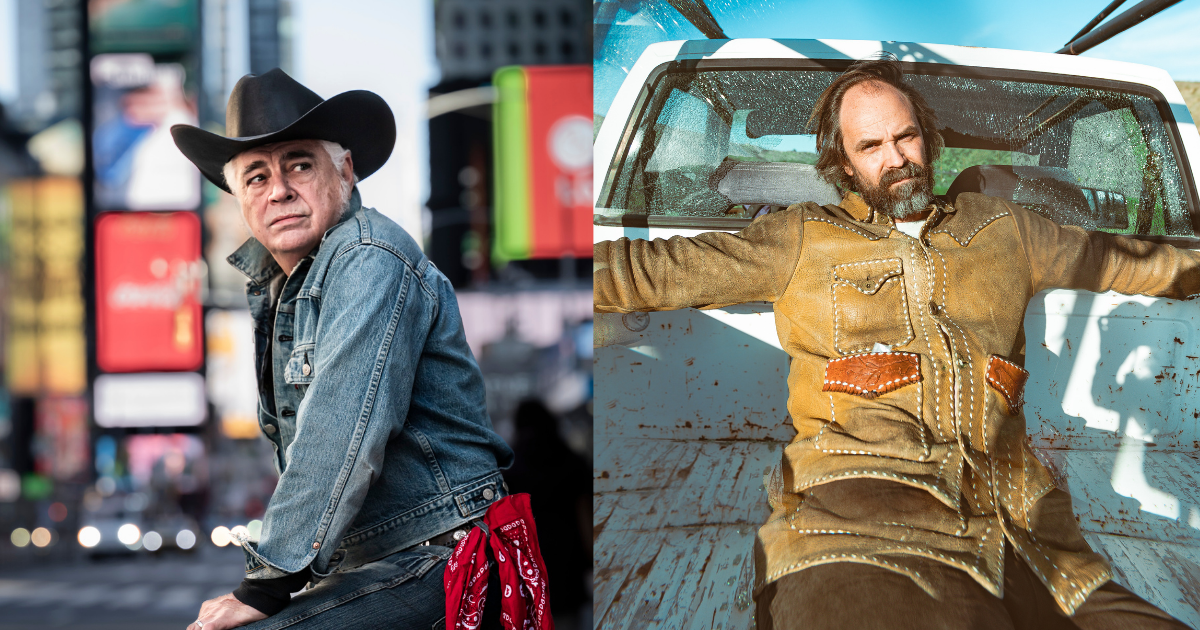
Photo Credit: Full Cord by Karuna Photo; the Arcadian Wild by Shelby Mick.
You Gotta Hear This: New Music From Don Williams, Victoria Bailey, and More

This week it’s absolutely packed in our weekly roundup of new roots music! You Gotta Hear This…

From the Blue Ridge Mountains of Western North Carolina, the Asheville Mountain Boys kick us off with a new performance video for “Don’t Take Me Back Again.” It’s a track from their debut self-titled album, which was just released in February. It’s straight-ahead bluegrass that will transport you right back to their beautiful home turf in Southern Appalachia. Also in bluegrass, from just down the ridge from NC in Boiling Springs, South Carolina, husband-and-wife duo Benson (Wayne and Kristin Scott Benson) have a new single out today, “Maybe It’s You.” Featuring their friend Heath Williams on the lead vocal, it’s a clean and crisp example of modern bluegrass with traditional bones.

You’ll also get to hear a lovely bluegrass-gospel-western rendition of a Randy Travis cut, “He’s My Rock, My Sword, My Shield” below, brought to us by Southern California singer-songwriter and roots artist Victoria Bailey. She effortlessly combines bluegrass, classic country, country & western, and gospel with her version of the familiar tune. The loping, cowgirl feel is just perfect. Plus, impeccable fiddler and multi-instrumentalist Andy Leftwich has a new album out today, Aced. To celebrate, we’re sharing “Crossville” from that collection, a tune from the catalog of Ricky Skaggs – Leftwich’s former boss, who’s a friend and a mentor – that has a transatlantic and somewhat Celtic feel. It features Leftwich on both fiddle and mandolin.

From further territory on the roots genre map, Paula Boggs Band calls on both Blind Boys of Alabama and Valerie June as special guests on their recording of “Ain’t Gonna Let Nobody Turn Me ‘Round.” Soulful string band folk is a perfect backdrop for the languid, marching track – one that remains all too timely and applicable in 2026. Watch a new lyric video for the song below and join the sing-along party, and the struggle for justice, too. Don’t miss Serafima and the Shakedowns’ paean to Seattle, the Queen of the Pacific Northwest. “Shivers” is a chill and vibing Americana track with lush guitars backing gentle ruminations on friendship, community, and place. Whether you have or haven’t felt the “shivers” in a while, this song will be there for you when you do again.

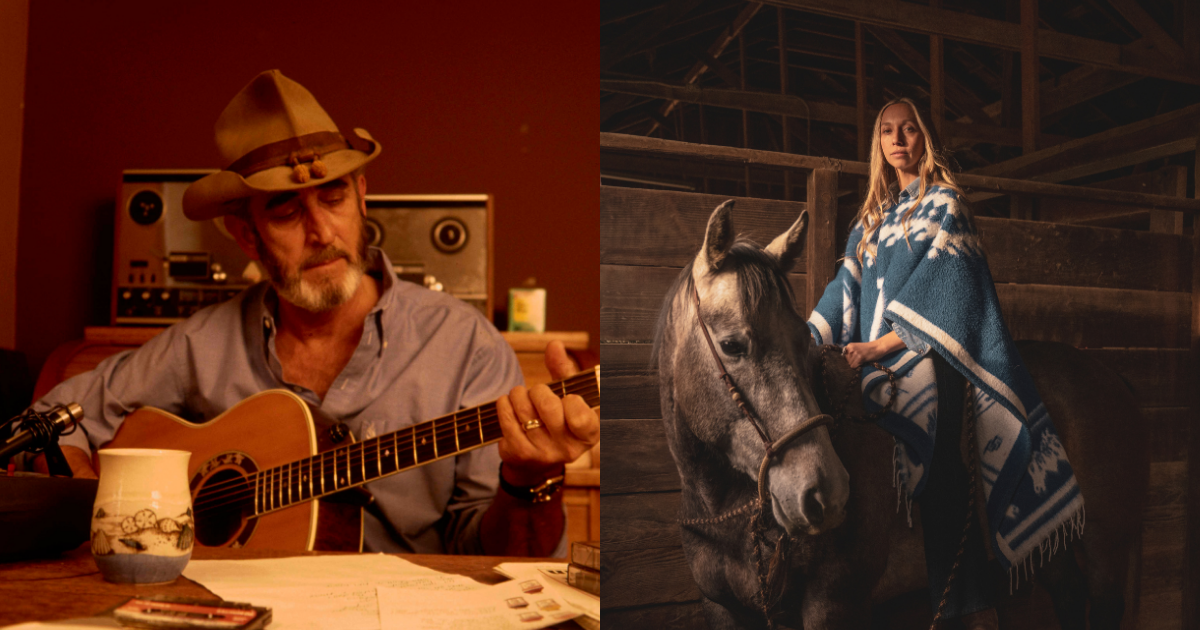
Keep scrolling, as there’s more gold to find. For instance, Gregory Alan Isakov and Sylvan Esso released a track together earlier this week, “Fade Into You.” It’s a lovely cover song of the cult favorite ’80s and ’90s alt-rock band Mazzy Star. For a while, Isakov wasn’t sure the track was finished – that is, until he called upon Amelia Meath of Sylvan Esso to complete the number with her vocals. Like Isakov, we love how it turned out. Finally, a legend of country music returns, posthumously, with a new album on May 29. Don Williams passed away in 2017, but his powerful legacy lives on. We spoke to his son, Tim Williams, about the latest single from Epilogue: The Cellar Tapes, a collection of found recordings made by Don himself dating back to the ’70s. The new single is an alternate version of a favorite track, “I’m The One,” that puts a magical focus on Williams’ vocals. You won’t want to miss it.

So much to love and enjoy is waiting for you below – You Gotta Hear This!

The Asheville Mountain Boys, “Don’t Take Me Back Again”

Artist: The Asheville Mountain Boys
Hometown: Asheville, North Carolina
Song: “Don’t Take Me Back Again”
Album: The Asheville Mountain Boys
Release Date: February 12, 2026 (album)

In Their Words: “‘Don’t Take Me Back Again’ is an original song written by our guitar player, Marshall Brown, and is featured on our new self-titled LP. Marshall brought the song to the group about a year ago and we had so much fun working it up into an early ’50s-style bluegrass song. Zeb and I wrote exchanging mandolin and banjo riffs for the song instead of normal solos; we felt that was an homage to how early Jimmy Martin songs would have more melody-based riffs than conventional solos. We shot the video at Asheville Guitar Pedals in West Asheville as sort of a tongue in cheek reference to our motto: ‘No Plugs No Pedals Only Bluegrass.’ We loved working with Rebecca Jones (video) and Carter Giegerich (audio) on this in-person, fully live take of the song. “ – John Duncan

Track Credits:
Marshall Brown – Lead vocal, guitar
Jacob Brewer – Tenor vocal, bass
John Duncan – Banjo, baritone vocal
Zeb Gambill – Mandolin

Video Credit: Videography by Rebecca Branson Jones, audio by Carter Giegerich. 


Victoria Bailey, “He’s My Rock, My Sword, My Shield”

Artist: Victoria Bailey
Hometown: Huntington Beach, California
Song: “He’s My Rock, My Sword, My Shield”
Release Date: April 24, 2026

In Their Words: “My cover of this Randy’s Travis gospel song, ‘He’s My Rock, My Sword, My Shield,’ truly sets the tone for where I am in music and with my faith. It’s been a few years since my album release (A Cowgirl Rides On) and I continue to grow a deep love for bluegrass and gospel. It only made sense to go in and record one of my all-time favorites by Randy Travis before I dive into my next record.

“This song was recorded live in studio with my bluegrass band at Station House Studio in Los Angeles, produced by my good friend Brian Whelan. It was a sweet reunion being back in that room and to honor such a beautiful, spiritual song. I often describe my sound as ‘a little bit gospel, a little bit bluegrass, and everything in between.’ This next single is a perfect recipe of all those things and I’m looking forward to more of it this year!” – Victoria Bailey

Track Credits:
Victoria Bailey – Vocals
Brian Whelan – Producer, lead guitar, BGVs
Ted Russell Kamp – Bass
Luke Adams – Drums
Philip Glenn – Fiddle
Leeann Skoda – BGVs


Benson, “Maybe It’s You”

Artist: Benson
Hometown: Boiling Springs, South Carolina
Song: “Maybe It’s You”
Release Date: April 17, 2026
Label: Mountain Home Music Company

In Their Words: “We love the tried-and-true themes of classic bluegrass songs. Cabins, farms, and mountains were relevant to the writers then. In fact, if you can find a new song that is reminiscent of those standards, it’s a real find. I think ‘Maybe It’s You’ is a nice representation of a modern bluegrass song, lyrically. Troubled relationships are timeless, but this is a contemporary take on that same theme.” – Kristin Scott Benson

“Heath Williams sang lead on ‘Maybe It’s You’ and we are so lucky to work with him. He has been a huge part of many Benson songs, like ‘Oh Me of Little Faith’ and ‘Lay ‘Em Down.’ He’s not from a bluegrass background, but is perfectly suited for it and has a really fresh, special take. In fact, Terry Herd, one of the co-writers, specifically mentioned him because Terry thought his approach would be ideal. After years of going to church with Heath and playing with him on occasion, it’s a joy to be recording with him now.” – Wayne Benson

Track Credits:
Heath Williams – Lead vocal
Wayne Benson – Mandolin
Kristin Scott Benson – Banjo
Cody Kilby – Acoustic
Kevin McKinnon – Bass
Zack Arnold – Harmony vocals


Paula Boggs Band, “Ain’t Gonna Let Nobody Turn Me ‘Round”

Artist: Paula Boggs Band
Hometown: Seattle, Washington
Song: “Ain’t Gonna Let Nobody Turn Me ‘Round” featuring Blind Boys of Alabama and Valerie June
Album: Sumatra
Release Date: March 27, 2026 (album)
Label: Boggs Media LLC

In Their Words: “Our cover of the civil rights anthem, ‘Ain’t Gonna Let Nobody Turn Me ‘Round,’ feels more relevant today than when we recorded it. To highlight its American roots heritage, we incorporated bluegrass instruments like banjo and fiddle. The featured artists, Blind Boys of Alabama and Valerie June, further enhance the song’s messages of hope and determination. The lyric video grounds the song in present times.” – Paula Boggs

Track Credits:
Paula Boggs – Lead vocals
Tor Dietrichson – Percussion
Jacob Evans – Drums, percussion
Darren Loucas – Acoustic guitar, Dobro, banjo, ukulele
Paul Matthew Moore – Acoustic piano, percussion
David Salonen – Upright bass, fiddle
Blind Boys of Alabama (Ricky McKinnie, Sterling Glass, J.W. Smith, Joey Williams) – Co-lead vocals
Valerie June – Co-lead vocals


Gregory Alan Isakov and Sylvan Esso, “Fade Into You”

Artist: Gregory Alan Isakov and Sylvan Esso
Hometown: Gregory Alan Isakov: Born in Johannesburg, South Africa; grew up in Philadelphia, Pennsylvania. Sylvan Esso: Durham, North Carolina
Song: “Fade Into You”
Release Date: April 16, 2026
Label: Dualtone

In Their Words: “I grew up listening to Mazzy Star and sort of sketched this song out one afternoon. I had read an article about Hope Sandoval (the singer of Mazzy Star) the week before and there was this paragraph about how she played a few shows at the Sydney Opera House in almost complete darkness. Some of the crowd was super disgruntled about it and walked out. I remember thinking, ‘Wow, what a hero.’ I sat on the recording I made for a long time, thinking it wasn’t quite finished, and reached out to Amelia of Sylvan Esso. She has one of my favorite voices of all time. Once I heard her on it, it felt ready. I really love how it came out.” – Gregory Alan Isakov


Andy Leftwich, “Crossville”

Artist: Andy Leftwich
Hometown: Carthage, Tennessee
Song: “Crossville”
Album: Aced
Release Date: April 17, 2026
Label: Mountain Home Music Company

In Their Words: “One of the greatest joys of playing music with Ricky Skaggs was getting a chance to jam on his original instrumentals! They all have great melodies and are structured in a way that gives you an opportunity to stretch out and push yourself. This song is certainly that. Ricky has always inspired me with his creativity and heart behind each note that he plays and I always looked forward to playing this one with him each night! It’s one of my favorites! I thought I’d pay homage to my friend and former boss by recording one of his wonderful compositions, ‘Crossville.'” – Andy Leftwich

Track Credits:
Andy Leftwich – Fiddle, mandolin
Byron House – Upright bass
Cody Kilby – Acoustic guitar
Matt Menefee – Banjo


Serafima and the Shakedowns, “Shivers”

Artist: Serafima and The Shakedowns
Hometown: Seattle, Washington
Song: “Shivers”
Album: Ride Easy
Release Date: April 14, 2026 (single); May 1, 2026 (album)
Label: BWGiBWGAN

In Their Words: “‘Shivers’ is an ode to Seattle, Queen of the Pacific Northwest – a cloud-soaked rumination that finds the song’s lonely voice wondering, is there anyone out there? My friends have left the city and I’ve heard I’m supposed to have a guardian angel – but where is she? Maybe she’s hiding behind the marine layer.

“This is a song about the city I grew up in, missing all your friends that have moved far away, feeling like they lied to you about stuff like having a guardian angel, and wondering if heaven is a real place – either up there or down here.” – Serafima Healy

Track Credits:
Serafima Healy – Vocals, guitar
Sam Burrows – Guitar
Joe McPhee – Bass
Jules Tennyson – Drums
Finn O’Hea – Trumpet
Aaron Khawaja – Piano
Jay Kardong – Pedal steel

Video Credits: Hand animations by Serafima Healy.


Don Williams, “I’m The One (Alternate Version)”

Artist: Don Williams
Hometown: Nashville, Tennessee
Song: “I’m The One (Alternate Version)”
Album: Epilogue: The Cellar Tapes
Release Date: April 17, 2026 (single); May 29, 2026 (album)
Label: Craft Recordings

In Their Words: “I remember this song very well from when I was 13-14 years old. I always loved the song. Obviously, Daddy did too, or there would not have been strings on it. Strings are always about the last thing before mixing (sometimes percussion). When I realized that it was one of the songs on the tapes in the cellar, I was excited. I did, though, want to take a crack at stripping it down a bit or making a little more room for Dad’s vocal, which was my intention and the approach I took. The original version is definitely cool and pretty complicated, actually, but I wanted a version that would be a platform from which maybe there’d be a little more focus on the vocals.” – Tim Williams, son of Don Williams


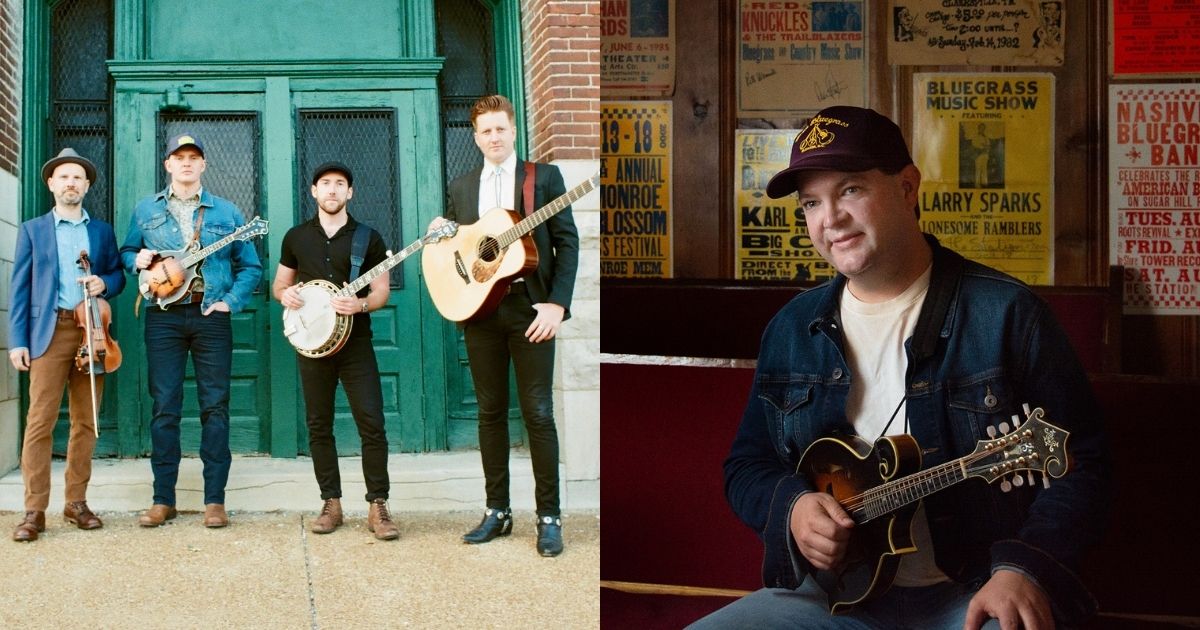
Photo Credit: Don Williams by Jim McGuire via the Grand Ole Opry Archives; Victoria Bailey by Dylan Gordon.

You Gotta Hear This: New Music From Dale Watson, Jonny Fritz, and More

You know what would be the perfect way to end the week? A bevy of new roots songs and videos! Well, we have just the thing – and You Gotta Hear This.

To start us off, South Carolina-based husband-and-wife duo Benson – Wayne and Kristin Scott Benson – deliver a brand new instrumental, “Slayton Court.” Inspired by Wayne’s first address when he moved to Nashville 30+ years ago, and their young adult son’s similar journey in the present, it’s a thoughtful and tender tune that’s lyrical and evocative. Their labelmates, Unspoken Tradition, who hail from just up the mountains from Benson, also debuted a new single today, “Rhythm of the Ridge.” Written by North Carolina native Milan Miller, it’s an excellent song built on regionality, community, and the importance of the cultures that birth roots music.

Keep scrolling, though, as there’s plenty to explore. Singer-songwriter Cuchulain offers an adorable, painstaking stop-motion video for his new single, “Flip Turns.” As he puts it, it’s a song for swimmers and/or folks trying to keep their head above water wrapped in smooth and jazzy, alt-Americana sonics. New Jersey singer-songwriter Sean Kiely kicked off 2026 with a brand new track featuring his friend and hero, Kaia Kater. We’re pleased to share a live performance video of “This Is The Year,” a perfect song for starting the new calendar year on the correct foot.

Los Angeles stalwart Jonny Fritz returns to his most recent album, Debbie Downers, to offer all of us a woodwinds version of that critically acclaimed LP coming in April. Today he unveils the first delightful woodwinds version from the reimagined collection, “Tea Man,” featuring clarinets, bass clarinet, flute, and Fritz holding it all together himself. For a dose of old-time, check out “Cheeky F” by George Jackson’s Local Trio. Stemming from the tradition of Texas-style old-time fiddling and melodies, Jackson, his trio-mates, and guest guitarist (and producer) Stash Wyslouch pick through the swinging and acrobatic pizzicato head with “Flight of the Bumblebee” aplomb.

To round out our roundup this week, we get a healthy dose of alliterative outlaw country from Ameripolitan crooner Dale Watson. “Willie, Waylon and Whiskey” brings alt-country, the Bakersfield sound, and psychedelic surf rock together as only Watson could. The track is driving and frenetic, leaning forward in the beat and referencing so many classic lines, melodic hooks, and tracks from his fellow outlaws. Would country be country without self-referential songs? It’s hard to imagine.

From bluegrass and old-time to folk and outlaw, there’s plenty to enjoy this week on BGS. You Gotta Hear This!

Benson, “Slayton Court”

Artist: Benson
Hometown: Boiling Springs, South Carolina
Song: “Slayton Court”
Release Date: January 23, 2026
Label: Mountain Home Music Company

In Their Words: “‘Slayton Court’ was the first address that I had when I moved to Nashville, Tennessee, around 1993 with my good buddy Greg Luck. This instrumental is inspired by kind of reflecting on that time when you first gain your independence. For me, I was a young working musician for the first time playing with IIIrd Tyme Out. And you fast forward all these years and now I have a 19-year-old son going through a similar season. We were going to make a slideshow to document those years, especially with his activity as a young angler and going into the world of college fishing. As we made that slideshow it felt like this same melody would serve as great background for that, as well. I hope you guys enjoy ‘Slayton Court.'” – Wayne Benson

Track Credits:
Wayne Benson – Mandolin
Kristin Scott Benson – Banjo
Cody Kilby – Acoustic guitar
Kevin McKinnon – Bass


Cuchulain, “Flip Turns”

Artist: Cuchulain
Hometown: Rock Hill, South Carolina, but currently live in Ithaca, New York. This was recorded in Eugene, Oregon, though, which was our hometown for the past five years.
Song: “Flip Turns”
Album: It’s Always Something
Release Date: January 23, 2026 (single); April 3, 2026 (album)

In Their Words: “‘Flip Turns’ is a song for swimmers, for folks keeping their head above water. Written between swim breaks on summer tour 2024 and recorded live last January 2025, this song was our Tiny Desk Contest submission last year. I’ll be touring East Coast listening rooms in April 2026 to support It’s Always Something, the live in-studio album for which this is the lead single. A stop-motion music video accompanies the single release. The video took me most of fall 2025: I hand-felted the figures, constructed sets, and filmed frame by frame on my phone during my newborn daughter’s nap breaks. Equally at home on a coffee shop playlist or swimming workout playlist, the songs on this album are meant to be photographs of what my Oregon band sounded like at our peak, and love letters to hopeless romantics trying to make sense of this wild world.” – Cuchulain

Track Credits:
Paul Carberry – Bass
Malcolm Orr – Drums
Poom Aempoo – Clarinet
Tom Whaley – Trombone
Cuchulain – Vocals, guitar, songwriter

Video Credits: Video by Cuchulain, color by Ashley Barry.


Jonny Fritz, “Tea Man”

Artist: Jonny Fritz
Hometown: Los Angeles, California
Song: “Tea Man”
Album: Debbie Downers – Woodwinds
Release Date: January 20, 2026 (single); April 3, 2026 (album)
Label: Gar Hole Records

In Their Words: “I love woodwinds and have wanted to make this type of record for as long as I can remember. I’ve had this vision of clarinets playing chicken pickin’-style telecaster solos. Just imagine a Jerry Reed covers album played with clarinets and piccolos. There’s something about the staccato tonguing of a reed instrument that seems to me as enjoyable as playing roadhouse country solos. I’ve never played one, so I don’t know, but I do think about it all the time. I couldn’t be happier to finally hear it out loud and share it with the world.

“The version of this record I brought to Andrew Conrad was very different from what it became. My version was ‘Twinkle Twinkle Little Star’ and he made it into ‘The Star Wars Theme’ (or something like that). He was so clearly overqualified for the job and it made me appreciate him even more.” – Jonny Fritz

Track Credits:
Jonny Fritz – Vocals, songwriter
Christine Tavolacci – Flute
Andrew Conrad – Clarinets
Michael Mull – Clarinets
Brian Walsh – Bass clarinet


George Jackson’s Local Trio, “Cheeky F”

Artist: George Jackson’s Local Trio
Hometown: Originally, Christchurch, New Zealand. Now, Madison, Tennessee
Song: “Cheeky F”
Album: Center Of The Universe
Release Date: January 26, 2026 (single); February 13, 2026 (album)
Label: Adhyâropa Records

In Their Words: “I was inspired by the way Texas-style old-time fiddlers hide all sorts of weird notes on upbeats, so this was a bit of a riff on a Texas-style tune and seeing how many non-chord notes I could hide around the melody on weak beats. Stash took a break from producing in the control room to join us with some driving rhythm guitar, which really helped channel the Texas-style energy. I’m really happy with some of the spontaneous energy that we were able to capture in this take, a real edge-of-your-seat, improvised, studio take.” – George Jackson

Track Credits:
George Jackson – Fiddle
Frank Evans – Banjo
Eli Broxham – Double bass
Stash Wyslouch – Guitar


Sean Kiely, “This Is The Year” Featuring Kaia Kater

Artist: Sean Kiely
Hometown: Jersey City, New Jersey
Song: “This Is the Year” featuring Kaia Kater
Release Date: January 1, 2026
Label: Multiple Logo

In Their Words: “I’ve been working on a new record since the fall and I was thrilled that Kaia Kater joined us on ‘This Is the Year’ singing and playing banjo. She elevated the tune so much, both in the vocal and in the groove of the banjo with the band. It came together really naturally and quickly, so we decided to release it on New Year’s Day, even as the rest of the album is still taking shape.

“I have a long list of favorite things about my friend and hero Kaia, but two in particular are her songwriting and her posture as a performer – the self-possession and power that’s just so right-there in everything she sings. They’re qualities I’m reaching for, so having her bring that craft to something I wrote was so rad.

“This video from the afternoon of New Year’s Eve is actually the first time we ever played the tune just as a duo and I gotta say it was no less exciting (and fun) to sit and pick ‘This Is the Year’ on Kaia’s couch just the two of us.” – Sean Kiely


Unspoken Tradition, “Rhythm of the Ridge”

Artist: Unspoken Tradition
Hometown: Western North Carolina
Song: “Rhythm of the Ridge”
Release Date: January 23, 2026
Label: Mountain Home Music Company

In Their Words: “The first time I heard the demo of ‘Rhythm of the Ridge,’ I realized it was as deeply meaningful for me as it was for Milan [Miller]. I grew up in an immigrant family and straddling two worlds. The mountains of Appalachia are where I found the inspiration to write my American story. It feels timely to tell a story of grounding ideals and identity in a time where external forces attempt to rend us further away from each other. Just as the culture of my family’s home is written on their hearts long after they left it, so too is the ‘Rhythm of the Ridge’ on my own.” – Sav Sankaran

“Although it wasn’t my original intention when I began writing ‘Rhythm of the Ridge,’ the song quickly took on a deeply personal narrative as the lines started falling into place. I left the mountains of North Carolina for Nashville almost 30 years ago, yet home is a melody that follows you long after you leave it – a rhythm in your bones and blood that quietly keeps time. This isn’t a song about longing or looking back; it leans into a sense of place that steadies you and guides you through new endeavors and experiences. Fully adept at honoring the traditions of bluegrass while championing material that feels fresh and forward-thinking, Unspoken Tradition has become one of my favorite bands to emerge in the genre over the past decade, and I am beyond thrilled that they’re adding ‘Rhythm of the Ridge’ to their stellar catalog.” – Milan Miller, songwriter

Track Credits:
Audie McGinnis – Acoustic guitar, harmony vocal
Sav Sankaran – Upright bass, lead vocal
Tim Gardner – Fiddle, harmony vocal
Ty Gilpin – Mandolin
Zane McGinnis – Banjo


Dale Watson, “Willie, Waylon and Whiskey”

Artist: Dale Watson
Hometown: Austin, Texas
Song: “Willie, Waylon and Whiskey”
Album: Unwanted
Release Date: January 23, 2026 (single); April 24, 2026 (album)
Label: 40 Below Records

In Their Words: “This song was written on stage in San Antonio at the Lonesome Rose Bar. Inspired by a large man standing in front of me all night because he was wearing a shirt that simply said ‘Willie Waylon and Whiskey.’ I asked if it was a band name or a song name and he just said, ‘No, I just saw it in Walmart and liked it.’ Well, I liked it, too, so I wrote the song on the spot. I knew it would be a keeper when by the second time the chorus came around the entire crowd was singing it with me.” – Dale Watson

Track Credits:
Don Pawlak – Steel
Manny Pagan – Drums
Zack Sapunor – Bass
Dale Watson – Vocals, guitars, songwriter
Matt Hubbard – Keys


Photo Credit: Dale Watson by Jacob Blinkenstaff; Jonny Fritz by Bobbi Rich.

You Gotta Hear This: New Music From Brit Taylor, Benson, and More

We’re back with another excellent edition of our weekly roundup of new music, fresh videos, and sneak previews of tracks to yet to come.

Bluegrass power couple Benson – Wayne Benson and Kristin Scott Benson – call on Zack Arnold of Rhonda Vincent & the Rage for their new single, “Bully of the Town,” which drops today. You may recognize the track, which is usually performed as an instrumental, but its unique chord progression shines with Arnold’s vocal as the somewhat unexpected cherry on top. Also in a bluegrass space – bluegrass saxophone, of course – Eddie Barbash continues his mini-series with us of classic bluegrass and old-time fiddle tunes rendered superlatively, as only he could, on sax. This time, we’re sharing his new performance video of “Tennessee Mountain Fox Chase,” shot at Larkspur Conservation in Westmoreland, Tennessee. We can’t get enough solo saxophone fiddle tunes!

From the bottom of the globe, progressive New Zealand string band You, Me, Everybody returns to the pages of BGS with a new music video. “The Rest of Us” is a contemplative, introspective song set to sparkling newgrass that’s about leadership, abandonment, and rising above – if you can. From country, our friend Brit Taylor also debuts a new music video this week for “All For Sale,” her most recent single that released just last month. The new video, which only features a short cameo by Taylor, a new momma, is a fun-fueled yard sale spurred by heartbreak and readiness for a blank, clean slate.

To round out our collection this week, legendary blues master Robert Finley is celebrating a brand new album via Easy Eye Sound today, so of course we’re highlighting a track from Hallelujah! Don’t Let the Devil Fool Ya to mark the special day. “Can’t Take My Joy” is an infectious song with a perennial message that Finley holds at the core of his values system – you really can’t steal his joy. And, with music like this in our weekly roundup, you won’t be taking our joy, either!

It’s all right here on BGS and, just like every week before this one, You Gotta Hear This.

Eddie Barbash, “Tennessee Mountain Fox Chase”

Artist: Eddie Barbash
Hometown: Nashville, Tennessee
Song: “Tennessee Mountain Fox Chase”
Album: Larkspur
Release Date: November 28, 2025 (The album will be released one song at a time with the last track coming out Nov. 28.)

In Their Words: “This song was recorded during a spring sun shower on the porch swing at Larkspur Conservation’s cabin headquarters. A barn swallow was nesting in the rafters just over my head and I was inspired by all of the bird songs around me to improvise this introduction.

“I learned the tune late one night from Ric Robertson after a party/concert in his Washington Heights apartment in NYC. I believe he learned it from Nate Leath and my version is also inspired by his recording. I decided to slow it down a bit and give it a lazier, swingier feel that just feels so good to play on the saxophone.” – Eddie Barbash

Video Credits: Shot and edited by Jeremy Stanley. 

(Editor’s Note: Watch the first video in our mini-series with Eddie Barbash here.)


Benson, “Bully of the Town”

Artist: Benson
Hometown: Boiling Springs, South Carolina
Song: “Bully of the Town”
Release Date: October 10, 2025
Label: Mountain Home Music Company

In Their Words: “I’ve always loved to play this song and didn’t even know it had lyrics for years. The chord progression is just different enough to make it work either way.” – Wayne Benson

“‘Bully of the Town’ is a good example of a song that wasn’t originally a part of the bluegrass genre, but is versatile enough that you can play it many different ways and it sounds like it belonged there all along. Wayne and I are pickers first and this arrangement is really built around being able to play around this fun chord progression, but the vocals are the icing on the cake, because prior to this cut, people typically played it as an instrumental. A lot of people don’t even know it has words, so adding vocals differentiates it and we got a young gun to sing it! Zack Arnold, from Rhonda Vincent & the Rage, did such a great job. He delivers it with a lot of energy, power, and a spirit that accompanies youthful musicianship. He really added excitement to an already-grooving track.” – Kristin Scott Benson

Track Credits:
Wayne Benson – Mandolin
Kristin Scott Benson – Banjo
Cody Kilby – Acoustic guitar
Kevin McKinnon – Bass
Zack Arnold – Lead Vocal


Robert Finley, “Can’t Take My Joy”

Artist: Robert Finley
Hometown: Bernice, Louisiana
Song: “Can’t Take My Joy”
Album: Hallelujah! Don’t Let the Devil Fool Ya
Release Date: October 10, 2025
Label: Easy Eye Sound

In Their Words: “There’s an old saying that I used to hear folks say, ‘There’s joy in the world, can’t take it away.’ Joy is something that can’t be measured by man and can’t be controlled by man. That’s why I say, ‘You can’t take my joy.’ You can take everything else, but you can’t take that. You can take my freedom and I can still be happy. Though there are problems, there is still a way to look beyond the faults and accept the good things in life. Joy is something that no man has the power to give and no man has the power to take away.” – Robert Finley


Brit Taylor, “All For Sale”

Artist: Brit Taylor
Hometown: Hindman, Kentucky
Song: “All For Sale”
Release Date: September 5, 2025 (song); October 9, 2025 (video)
Label: RidgeTone Records/Thirty Tigers

In Their Words: “We wrote this song like a script. There’s so much imagery in the song that it just seemed natural for the video to follow the lyrics. I decided only to make a quick cameo in the video and let my friends be the stars of the show! While it seems counterintuitive to what the rest of the industry is currently doing, it felt right to me. After all, the song isn’t about me, it’s about a story that wants to be told. And, honestly, my friends should probably move to Hollywood, because they really nailed their parts!” – Brit Taylor

Video Credits:
Robert Chavers – Producer, director, cinematographer
Steve Voss – Director
Solar Cabin – Production company


You, Me, Everybody, “The Rest Of Us”

Artist: You, Me, Everybody
Hometown: Ngāruawāhia, New Zealand
Song: “The Rest of Us”
Release Date: October 10, 2025
Label: Southern Sky Records

In Their Words: “I woke up with the melody and the lyric in the chorus, ‘If you’re the one who’s going to give up, what are the rest of us doing here tonight?’ And as much as the melody kept hooking me in, it took a while to find an angle for a song that could only really be about leadership. Even though it’s from the perspective of the people who are left when a leader abandons them, I was writing this with an awareness of how I felt I was letting people down at a time when I wasn’t following through on a commitment I had made. That’s why it’s less about blame and more about the heartbreak of watching someone lose faith in something they’d once worked so hard for.” – Kim Bonnington

Video Credits: Produced and edited by Kim Bonnington. Filmed by Ethan Bryant.


Photo Credit: Brit Taylor by Sammy Hearn; Benson by Sandlin Gaither.

Alison Brown Carries on the Legacy of Louise Scruggs

Alison Brown heard Earl Scruggs playing on the Foggy Mountain Banjo album when she was 10 years old – and it changed the course of her life. More than 50 years later, Brown is the newest honoree at the Country Music Hall of Fame and Museum’s Louise Scruggs Memorial Forum.

Yes, the circle really is unbroken.

Brown has received countless awards throughout her career as a groundbreaking banjo player. This time, however, she will be recognized for her many contributions to the business side of music.

The museum states that “The Louise Scruggs Memorial Forum recognizes a music industry leader who continues the legacy of trailblazer Louise Scruggs, a formidable businesswoman who set new professional standards in artist management.”

Michael McCall, CMHOF’s Associate Director of Editorial, said, “We always try to look at the people who are important in country music, but who the public may not know about.”

The forum began in 2007 with a mission to acknowledge Louise Scruggs’ remarkable contributions in light of the fact that “women don’t always get the recognition they should,” McCall said. “The forum is a way to shine lights where they don’t always shine.” Brown is the 17th honoree.

Default icon

Marty Stuart once told writer Jon Weisberger that Louise Scruggs “was to the business what Lester and Earl were to the music.” While performing with Bill Monroe, the “Father of Bluegrass Music,” Earl Scruggs introduced audiences to the three-finger style that we now think of as bluegrass banjo. That driving syncopation was one, possibly the primary, feature that separated bluegrass from the other forms of what was then called “hillbilly music.”

Decades later, bluegrass banjo players, almost without exception, cite Earl Scruggs as a primary influence.

While Louise’s impact isn’t as widely known, she was an equal force in the music industry. She turned the management of bluegrass artists from a casual afterthought to a profession. And her instincts and cultural awareness started ripples that are still expanding today as bluegrass, folk, and country meet in the land of Americana.

Louise was born in 1927. Shortly before she died in 2006, she told The Tennessean, “My mother worked her fingers to the bone, and my daddy did, too, and I didn’t want to go out in a field chopping corn.”

She developed office skills to fulfill a desperate determination established during the Great Depression to escape farm life. Those abilities set her on a path that in some ways changed the trajectory of bluegrass music. At the time, the bluegrass world was totally male-dominated on both the entertainment and business sides.

“But Louise was so good at what she did,” McCall said, that she was a total success. She overcame any resistance with her “integrity, and by being both hard and fair in business.”

Earl Scruggs and Lester Flatt started an immensely successful band in 1948. But it wasn’t just Lester’s voice and Earl’s banjo that made Flatt & Scruggs household names. It was Louise.

Louise had been working as a bookkeeper when she fell for Earl Scruggs, seeing him on stage as a member of Bill Monroe’s Blue Grass Boys. After marrying Earl, Louise initially stayed home to raise their three children. In 1955, she took over management of Flatt & Scruggs, becoming the first female manager and booking agent in the music industry.

In addition to excelling at contract negotiation and other financial aspects of talent management, Louise was a visionary. She pursued the potential of various media previously untapped by bluegrass, as well as navigating shifting cultural trends.

When Louise negotiated with CBS for use of “The Ballad of Jed Clampett” and appearances on The Beverly Hillbillies, the sound of bluegrass banjo was heard in living rooms across the nation – well beyond the coverage of the Grand Ole Opry. The theme song to Petticoat Junction kept the momentum going.

With “Foggy Mountain Breakdown” featured in the popular film Bonnie & Clyde, banjo teachers were inundated with requests to take new students.

Louise established Earl as part of the folk revival when she booked him into the first Newport Folk Festival. New York City audiences opened their ears and hearts to Flatt & Scruggs when the band appeared at Carnegie Hall. Louise also encouraged these revered bluegrass musicians to incorporate songs written by contemporaries like Bob Dylan and Johnny Cash; Earl even made some recordings with saxophonist King Curtis.

Flatt didn’t appreciate the expanded repertoire and he split from Earl in 1969. Louise quickly helped form the Earl Scruggs Revue with their sons, a “beyond-bluegrass” ensemble enthusiastically received on college campuses and at festivals. They performed with acts like Steppenwolf and The Byrds and they appeared at a major anti-Vietnam War demonstration in Washington, D.C., in 1969.

Default icon

The Country Music Association’s CEO Sarah Trahern said of Louise, “She was blessed with charm, intelligence, a puritan work ethic, and a wonderful sense of humor.”

The same can be said about Alison Brown, the 2025 honoree. To say Alison Brown is admired as a banjo player hardly touches the music community’s regard for her talents.

Once she heard Earl play at age 10, Brown never let up on the banjo, winning contests at a young age and working across her entire career to expand the banjo’s role in acoustic music.

She was the first woman to receive an Instrumentalist of the Year award from the International Bluegrass Music Association on any instrument. She has won GRAMMYs and has been nominated for others and she is in the Banjo Hall of Fame.

Kristen Scott Benson, six-time IBMA Banjo Player of the Year – the second woman to receive the honor – recalls hearing Brown’s Simple Pleasures CD. “It was the first time I had ever heard any banjo playing outside the bluegrass realm. I was completely fascinated and my ears were opened to a whole new world of writing and playing.”

These days Brown frequently writes and performs with fellow banjo player Steve Martin and receives rave reviews for numerous other collaborations.

When Brown graduated Harvard with a history degree, she faced the question of what to do next. Realizing that neither the humanities nor banjo playing were money makers, she adopted the attitude of, “A girl’s gotta eat, right?”

She was accepted into UCLA business school and spent three years in investment banking. Then Alison Krauss beckoned her back to professional banjo in the early days of Union Station.

This eventually led her to performing with Michelle Shocked and to meeting her husband-to-be, Garry West. Cut to an Alison and Garry discussion in a Stockholm café about the elements of a good life. They still have the napkin on which they jotted words like performing, recording, having a label, a studio, publishing – and family. That was how the idea for an independent record label was born.

Small World Music began with the goal of distributing music by little-known artists they heard while on tour. Initially, they worked with a tiny Australian company, promoting six products in their catalogue.

“There was a video called ‘Coral Sea Dreaming’ that was visual music – beautiful scenes of coral reefs, set to a new age soundtrack,” Brown described. She and West thought it would be perfect for the Nature Store chain, but the buyer ignored their overtures.

So, Brown said, “We started calling Nature Stores and saying that we’d heard about this amazing video called ‘Coral Sea Dreaming’ – did they have it in stock?” And a few days later, the buyer called them.

“That was one of the first big things that helped our cash flow, leading to the launch of Compass.”

While she had been happy to leave the dry work of entry-level investment banking, she appreciates the knowledge she acquired there and in business school. “Like how to put together a business plan and the financial projections to support it. It also gave me paper credibility,” with investors.

Compass Records has evolved to become one of the most respected independent labels in the industry, specializing in niche markets like Celtic, folk, bluegrass, Americana, jazz and many varieties of roots music.

Default icon

The business environment Brown entered when she started Compass Records in 1995 was a far cry from the all-male world that Louise Scruggs operated in.

“I’m a firm believer that we all stand on the shoulders of the people who have come before us. And that’s incredibly true for me as a woman in business. I’ve never had to deal with those kinds of challenges [being undervalued or ignored] as a female.”

Brown and West planned their lives so they could start a business, support their love of music, and raise two children – building in the resources they needed for balance and family time. Technology and changing gender roles made all that possible in a way that wasn’t available in the 1950s. But while she didn’t encounter the same challenges as Louise Scruggs, she finds herself facing more profound obstacles.

“The digital transformation has changed the music business, maybe more than any other industry,” she said. “How do you exist in an ecosystem where you’re creating music and having to give it away for free?”

Brown was recently elected president of the Nashville Chapter of the Recording Academy. She has assumed a leadership role in promoting the rights of artists and labels and she is a determined advocate for equality of broadcast royalties – more important than ever when “streaming pays a third of a penny per stream.”

“That’s a rate conceived by the Copyright Board before people knew that a stream wasn’t a small river,” she said. “I feel like this is a critical time for creators, and I fear that, with so many people in Washington in the pocket of big tech, creators’ interests could very easily become marginalized in this race for AI.

“It’s a precarious moment, but at the same time, I feel like some of the best roots music and bluegrass music that’s ever been made is being made now, and I think it will stand the test of time.

“I think that cultivating your community is the key to succeeding – knowing who your fans and supporters are and making sure they know who you are. And now we have the tools to connect directly with our audience, which we didn’t have when we started 30 years ago,” Brown said.

She also reminds fans that, “If you want to support the artists, buy physical product. That’s still where the artists can make some money.”

Default icon

Marian Leighton Levy, who started Rounder Records in the 1970s along with two partners, knows the challenges of an independent label. And she is well aware of how much more competitive the industry has become in the face of consolidation; artists’ ability to produce their own product; and the devastating effect of streaming on creators’ incomes.

Levy said of Brown, “She’s one of the few people who’s been a top-level musician, someone who knows her way around the studio as an engineer and a producer, has started and been running a record company with Garry and somehow or other had as balanced a life as one can have while doing all of those things. And she’s been doing remarkably well for a very long time – it is just incredible what she’s accomplished.”

At the Hall, McCall lauds Brown not only for her success with Compass, but with all the ways she contributes to the industry – from participating in IBMA to the Recording Academy to the Country Music Hall of Fame and Museum itself.

Brown feels deeply honored to be recognized at the Louise Scruggs Memorial Forum, “having been called Girl Scruggs for so much of my childhood.”

“Louise was such a wonderful, influential force in roots music, being acknowledged as following in her footsteps is incredibly meaningful.”

She sees the forum as a great contribution to the business of music by acknowledging how far the industry has come.

“One of the things that I think is so exciting about the moment that we’re living in is that women are peppered throughout the ecosystem in a way that wasn’t the case 50 years ago. We have women promoters, artists, DJs, running record labels. Now we have this golden opportunity to create the reality that we want to live in, and we can do that by supporting each other.”


Photo courtesy of the Country Music Hall of Fame & Museum.

You Gotta Hear This: New Music From JigJam, Ashby Frank, and More

A long weekend requires great music on the speakers, doesn’t it? Here are a handful of brand new tunes to add to your playlists for the festivities – You Gotta Hear This! This week, our roundup includes bluegrass from the Carolinas and from across the pond, too.

Below you’ll find fun-filled Irish bluegrass and string band JigJam enlisting Lindsay Lou for their new track, which releases tomorrow, called “Running Back to You.” It’s a delightful, traditionally-crafted song of love, longing, and life on the road.

From the foothills in upstate South Carolina, husband-and-wife duo Benson – Kristin Scott Benson (the Grascals) and Wayne Benson (IIIrd Tyme Out) – are joined by their friend from just up the mountains, Woody Platt, on a song written by Grant Williams. “Lover of the Road” continues in a similar vein to JigJam’s new number, lamenting the haunting and nagging feelings of being gone from the people you love while off traveling.

Rounding out our collection this week is Ashby Frank, Nashville-based North Carolinian mandolinist, singer, and songwriter, who’s assembled quite the band for his latest, “Everybody’s Got Their Nine Pound Hammer.” Frank found the song through Tim Stafford, one of the track’s co-writers, and was immediately drawn to the universality of its central sentiment.

It’s a mighty trifecta of bluegrass sampled from across this genre’s spectrum of sound – and geography. And you know what we think… You Gotta Hear This!

Benson, “Lover of the Road”

Artist: Benson
Hometown: Boiling Springs, South Carolina
Song: “Lover of the Road”
Release Date: July 4, 2025
Label: Mountain Home Music Company

In Their Words: “I’m really happy with how ‘Lover of the Road’ turned out. It was written by my best friend from college and we were so lucky to get Woody Platt to sing it. I’ve enjoyed the heck out of getting to play some shows with Woody and he sang this song perfectly. His vocal embodies the haunting, nagging feeling any of us can experience when trying to maintain relationships while traveling.” – Kristin Scott Benson

“Here’s a song by Grant Williams, who also wrote ‘Sleeping with the Reaper’ for the Grascals. The first time I ever heard Grant’s material was when he recorded a demo at our house, 20 or 25 years ago. He’s an eclectic writer and it’s been fun to watch him take an interest in bluegrass and see how appropriately he writes for us. We’re always trying to wisely pair songs with vocalists and Woody Platt did a great job delivering this one. Woody is well-known for good reason and we were really happy when he agreed to sing it.” – Wayne Benson

“I’ve long admired Kristin and Wayne Benson for their individual brilliance and their powerful partnership in shaping bluegrass music. Their influence on the genre and the industry is truly remarkable. It was an absolute honor to record ‘Lover of the Road’ with them!” – Woody Platt

“There’s something in me that loves being out on the road, but more than that, I love being at home with the people I love, my dog, and my bed. This song was what I imagined it would be like if those two loves traded places in priority in my heart.” – Grant Williams, songwriter

Track Credits:
Wayne Benson – Mandolin
Kristin Scott Benson – Banjo
Woody Platt – Lead vocal
Cody Kilby – Acoustic, harmony vocal
Kevin McKinnon – Bass
Mickey Harris – Harmony vocal


Ashby Frank, “Everybody’s Got Their Nine Pound Hammer”

Artist: Ashby Frank
Hometown: Nashville, Tennessee
Song: “Everybody’s Got Their Nine Pound Hammer”
Release Date: July 4, 2025
Label: Mountain Home Music Company

In Their Words: “I was immediately drawn to ‘Everybody’s Got Their Nine Pound Hammer’ when my good friend Tim Stafford shared a work tape with me. He co-wrote it with Eric Gibson and Greg Cornett. I loved the way it focuses on the everyday struggles we all face and it really has that traditional bluegrass feel. To bring this song to life, I brought in some incredibly talented musicians, including Matt Menefee on banjo, Seth Taylor on guitar, Jim VanCleve on fiddle, Tony Creasman on percussion, and Travis Anderson on bass. I was also honored to have Tim and my friend Kelsey Crews add those high and lonesome harmonies. They truly made the tune come alive and gave it a timeless quality. I’m really excited for everyone to hear it!” – Ashby Frank

Track Credits:
Ashby Frank – Mandolin, lead vocal
Seth Taylor – Acoustic guitar
Travis Anderson – Bass
Matt Menefee – Banjo
Jim VanCleve – Fiddle
Kelsey Crews – Harmony vocal
Tim Stafford – Harmony vocal


JigJam, “Running Back to You” (Featuring Lindsay Lou)

Artist: JigJam
Hometown: County Offaly, Ireland
Song: “Running Back To You” (Featuring Lindsay Lou)
Release Date: July 5, 2025 (single)

In Their Words: “I wrote this song on the road last year. Constantly being on the move going from hotel to hotel after shows isn’t easy when you’re away from a loved one. Having that someone to go home to after a tour can keep you going when the going gets tough and that’s where ‘Running Back to You’ comes from. Knowing there’s someone waiting for you at the end of a tour makes it a lot easier and worthwhile. The recurring fiddle tune part came to me first one day as I was on the I-55 from Chicago to St. Louis and the song was pretty much built around that tune. We thought Lindsay Lou would be a great fit for this song. We’re big fans of Lindsay’s music and her vocals have really complemented the track in both lead and harmony roles throughout. It’s a lively number and one we really enjoy playing at live shows!” – Jamie McKeogh


Photo Credit: JigJam courtesy of the artist; Ashby Frank by Melissa DuPuy.

50 Years of 0044: JD Crowe & The New South’s Landmark Album

Writer Marty Godby called it “The convergence of 1975.”

The elements: a band that would only be together for 10 months, a benevolent venture capitalist who loved bluegrass, and an upstart record label from Boston. The resulting product was unprecedented and unforgettable: The New South, Rounder Records 0044. Bluegrass fans know it simply as “0044.”

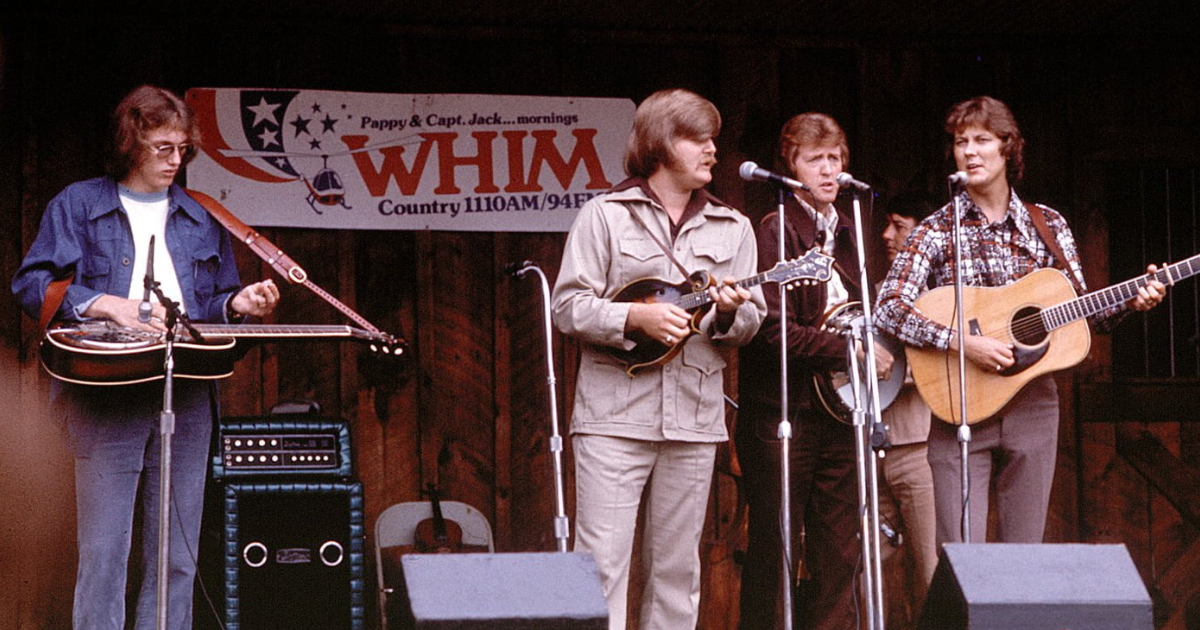
The New South of this recording was J.D. Crowe on banjo; Tony Rice on guitar; Ricky Skaggs on mandolin; Bobby Slone on bass; and Jerry Douglas on Dobro. The impact of that configuration and the album were stunning. Yet, within a year of the recording, Rice would leave to become a founding member of the David Grisman Quintet. Skaggs and Douglas formed Boone Creek. Crowe and Slone continued performing together for years.

Rounder 0044 was influential enough to be preserved in the Library of Congress’ National Recording Registry in 2024 and was awarded induction into the GRAMMY Hall of Fame this year. This month, Real Gone Music will re-release the album on vinyl, as will Craft Recordings later this year on compact disc.

Both the origin story and legacy of 0044 have inspired great narratives, probably more than any other bluegrass album. Bill Nowlin, one of the three founders of Rounder Records, wrote three articles for BGS on the album’s 40th anniversary. They offer a step-by-step look at what happened in 1974 and 75, plus hilarious and poignant anecdotes and quotes.

David Menconi dedicated a chapter of his excellent book, Oh, Didn’t They Ramble: Rounder Records and the Transformation of American Roots Music, to 0044. In 2016, radio host Daniel Mullins focused his college history capstone project on the album. Of course, it was 44 pages.

THE SHORT VERSION


J.D. Crowe, already revered for his banjo playing and baritone singing, led a band called The Kentucky Mountain Boys. From 1968, they had a six-nights-a-week gig at the Red Slipper Lounge in a Lexington, Kentucky Holiday Inn. Crowe added non-traditional bluegrass instruments and songs to the Holiday Inn repertoire. This was as much to please a diverse audience as it was to keep the musicians from getting bored. In 1971, Crowe changed the band’s name to The New South.

Of the name change, Rounder’s Marian Leighton Levy said, “It was obvious that this was a new kind of bluegrass.” From a broader view, “It was an era when the South was, in a way, trying to self-consciously reinvent itself as a new, modern place. And they [The New South] were kind of the musical representation of that wider political context.”

It was the ’70s, and change was brewing – even in the tightly controlled world of country music, Levy noted. Around the same time, Willie Nelson and his Outlaw Country compatriots were reaching out to new songwriters and moving away, physically and musically, from “the factory system of Nashville publishing companies.”

In 1974, lead singer Larry Rice left the New South and brother Tony took over singing lead. Ricky Skaggs’ pure tenor mixed with Rice’s unmistakable mid-range voice, creating a new, dynamic tension for their duets and trios. In the summer of that year, Crowe and the band toured without any product to sell. At the annual Gettysburg Blue Grass Festival, Crowe, his friend and manager, venture capitalist Hugh Sturgill, and the young founders of Rounder Records initiated “The Great Convergence” – an agreement for a studio recording. An innovative contract led to the first New South album.

THE BLUEGRASS WORLD EXPLODED


As soon as they heard the test pressing, the Rounder founders knew they had something remarkable on their hands. “Jack Tottle [who, along with John Hartford, wrote liner notes for the album] was stunned, and he kept saying, ‘This is one of the most amazing records ever made.’ And he was not given to exaggerating,” Levy said.

“It was clear. It was crisp … and the more you played it, the more you wanted to hear it.”

0044 came out in the spring of 1975. Levy said by festival season, other bands were playing the tunes from the record “pretty much note for note.” One observer said that at one festival, almost every band on stage played “Old Home Place.”

So, what is it about that record? Let’s start with the musicians. Skip Heller, who initiated the 0044 Real Gone Music reissue, said everyone in that group of players “would talk about it like it was high school prom and their first love … they had all been in good bands before, but this was the first time they had been in a band that was as great as anything in bluegrass music had ever been.”

Levy said, “They absolutely knocked each other out. … And I think that long before anybody heard the record, they knew the band would stand the test of time – because of all of them, not just one person.”

The record’s title was The New South. Only after the first printing sold out, three band members had moved on, and it was time to redo the cover (read about the cover photo – a great story in itself), was it retitled J.D. Crowe & the New South. Crowe, born in 1937, was the venerated elder and a banjo icon. After entering Jimmy Martin’s boot-camp-of-a-band at age 18, he developed impeccable timing, his own take on Scruggs-style banjo, and excellence as a baritone singer. And he knew how to pick his band members.

The influences of Tony Rice (age 24 at the time) on bluegrass and related music are limitless – from cementing the role of guitar as a lead bluegrass instrument, to modeling impeccable rhythm playing and singing, to excelling in so many genres outside the bluegrass boundaries. At 21, Skaggs had the instrumental chops, a stunning voice and the instincts to become successful in both country and bluegrass. Rounder’s Ken Irwin attributes much of 0044’s innovation to Skaggs, including bringing a teenaged Douglas into the mix.

Douglas is to Dobro what Rice is to lead guitar. Fifty years later, after 14 GRAMMY awards and countless other honors, he continues to inspire and encourage musicality and creativity in Dobro playing. Touring with Alison Krauss since 1998, it’s likely that he has been heard live by more people than any other resophonic guitar player. Of the veteran, Bobby Slone, Mullins said, “Everyone in the band wanted to make sure that Bobby got a lot of credit. … He was such a rock solid force on that band, not just on bass, but as far as camaraderie was concerned.”

By the time The New South entered the studio, Crowe, Slone, and Rice, later joined by Skaggs, had spent hundreds of hours performing together at the Holiday Inn. Individually, they were superb musicians. Together, they were as tight as a band could be.

THE SONGS


Long before 0044, Crowe had blasted out from under bluegrass constraints, incorporating songs like Fats Domino’s “I’m Walkin,” and at Larry Rice’s suggestion, The Flying Burrito Brothers’ “Sin City.” The songs on 0044 were just a small set of a huge repertoire. While the unconventional musical choices sparked controversy among traditionalists, they also sparked a flame of excitement that spread quickly and widely.

In 1975, Mullins said, Ralph Stanley & the Clinch Mountain Boys, Jimmy Martin, and Bill Monroe were still “killing it” at festivals with their first generation bluegrass sound. “On the other end of the spectrum, Seldom Scene recorded Live at the Cellar Door,” an immensely popular recording, that year. Like the Country Gentlemen, the Scene had been recording songs totally out of the bluegrass box, using bluegrass instrumentation, but with an emphasis on rich melodies and harmonies, rather than just the drive of traditional bluegrass.

Mullins said, “You go to Crowe, who’s got the street cred from all his records with Martin, but he’s also looking ahead, and so he’s able to get it all in there. A lot of bands were playing to one side or the other … but to have one that hit right in the middle, right at that time, was unreal.”

“When they saw J.D. Crowe’s name up front, and they knew that he had played banjo with Jimmy Martin on all those records they had loved for 20 years, it probably made some of those hard-edged fans pay more attention,” he said.

Whatever the dynamics of the time, The New South became synonymous with great bluegrass. And 0044 made Ian Tyson’s songs forever acceptable in bluegrass jams.

ON AND ON


Kristin Scott Benson, six-time IBMA Banjo Player of the Year, was born the year after 0044 came out. Benson said she was about nine the first time she saw J.D. Crowe. He was playing with the Bluegrass Album Band, “and that was a formative experience. That band was so explosive, and the crowd had an air of chaos, because everybody was so excited to hear the band. Every time Tony Rice ended a solo, you couldn’t hear any music.” (Because of the crowd noise.)

It would be four years until she picked up the banjo, and two more years until she learned about The New South album – and what it meant to a banjo player.

On 0044, she says, “If you just talk quintessential banjo solos, you’ve got ‘I’m Walkin’ and ‘You Are What I Am.’ His tone is aggressive. It’s just such confident, groovy, greasy, pristine banjo. It’s impossible to overstate how good it is and how influential it is.”

“But I think you should listen to his contributions on the less banjo-friendly songs [‘Home Sweet Home Revisited,’ ’10 Degrees’], because Crowe was great at that. He was a magical backup player.”

Billy Failing, who currently plays banjo with Billy Strings, agrees. Failing started out his banjo life drawn to more progressive players like Béla Fleck. But, he said, “As time goes on, the more I circle back to J.D. Crowe. I think of how much of a gold standard he is for bluegrass banjo, and how interesting his playing is.”

“He’s considered a traditional player,” Failing continued, “but then I’m always hearing some lick that surprises me. It’s been a gradual thing, but it becomes more meaningful as time goes on. I was just listening to The New South album, and on ‘Cryin’ Holy’ – it’s just so slamming! He’s turned it up to 11 constantly on that one.” And, like Benson, he points out what he calls Crowe’s “intricate touch” on banjo.

“It’s such a cool kind of push and pull between whether he’s out front or whether he’s playing backup … it catches your attention in such a cool way.”

Benson said, “It’s easy just to be drawn to those obvious picks [like ‘Old Home Place’] but the album is so much deeper than that. This particular band presented a tightness and a level of execution that was new – I don’t think there had been a bluegrass record up until that point that was so well done.”

“The vocals, the arrangements are so well thought out. Everybody’s playing so well together. It was just a special moment and a special group of people, and I think it raised the bar for bluegrass albums,” she said, and made an imprint on so many contemporary musicians.

Benson poses the question, “Who’s the most influential modern bluegrass guy? It would have to be Tony Rice, because he affected the genre with his rhythm guitar playing, which is phenomenal. And that type of rhythm playing affects the entire groove of the band. It became the new standard, what most people go for.”

“Never discount the importance of his rhythm,” she continued, “and then obviously his lead playing, but also his singing and his material choice … so if someone pinned me down and I could only name one, he might be the guy.”

Failing, speaking of his bandmates, said, “Everybody’s inspired by The New South. I hear Billy [Strings] constantly talking about his inspiration by Tony Rice, and Jarrod [Walker] by Ricky Skaggs.” (Walker wrote liner notes for the Real Gone Music re-release.)

Mullins noted that the Rice/Skaggs blend – a lead singer with a baritone-range voice coupled with a high tenor – established a hair-tingling blend that continues to be emulated, from Ronnie Bowman and Don Rigsby in Lonesome River Band through Alison Krauss’ duets with Dan Tyminski and Russell Moore.

Benson said, “It’s an important record for the genre as a whole, and it’s also an important record to me, personally, and really, to any banjo player who is serious about learning. It’s one of those essential albums.”

UNANSWERED QUESTIONS


First, how did it come to be widely known as 0044? Well, nobody’s sure. Irwin and Levy remember being in the very early stages of their operations at the time – with both a new label and a new distribution company. All three Rounders had been totally immersed in music, but they were learning the business as they went, developing it on their own terms.

Levy speculated, “It is possible that it went back to when we were just calling records by their numbers,” when there just weren’t that many products. “So, it may have been something we started when we were talking, and other people picked up on it, not intentionally. And we thought it was sort of humorous.”

And how did members of Emmylou Harris’ Angel Band get left off the credits, as well as the fact that J.D. played guitar on it? John Lawless goes into depth in his fascinating Bluegrass Today article.

HAPPY 50TH BIRTHDAY


As the liner notes to the Real Gone Music re-release say, “Virtually no other album anywhere in history is known to its audience by its label number. Not Kind of Blue, nor Pet Sounds, Glenn Gould’s Goldberg Variations, none.”

That says quite a bit about the recording’s importance. So does the fact that two labels are issuing re-releases this year.

The Real Gone Music edition is pressed on gold-colored vinyl for its golden anniversary. Both re-releases contain two cuts not included on the original product: “Why Don’t You Tell Me So?” and a version of “Cryin Holy” with Emmylou’s voice in the mix.

Failing sums up what 0044, J.D. Crowe, and the musicians he surrounded himself with mean to him and to many of the pickers making the best music today.

“Every time I circle back to the Bluegrass Album Band, The New South, and J.D. Crowe, I’m reminded, ‘that’s how it’s done!’”


Photo Credit: Phil Zimmerman

Wear your love for 0044! Shop our exclusive RR 0044 tee on the BGS Mercantile here

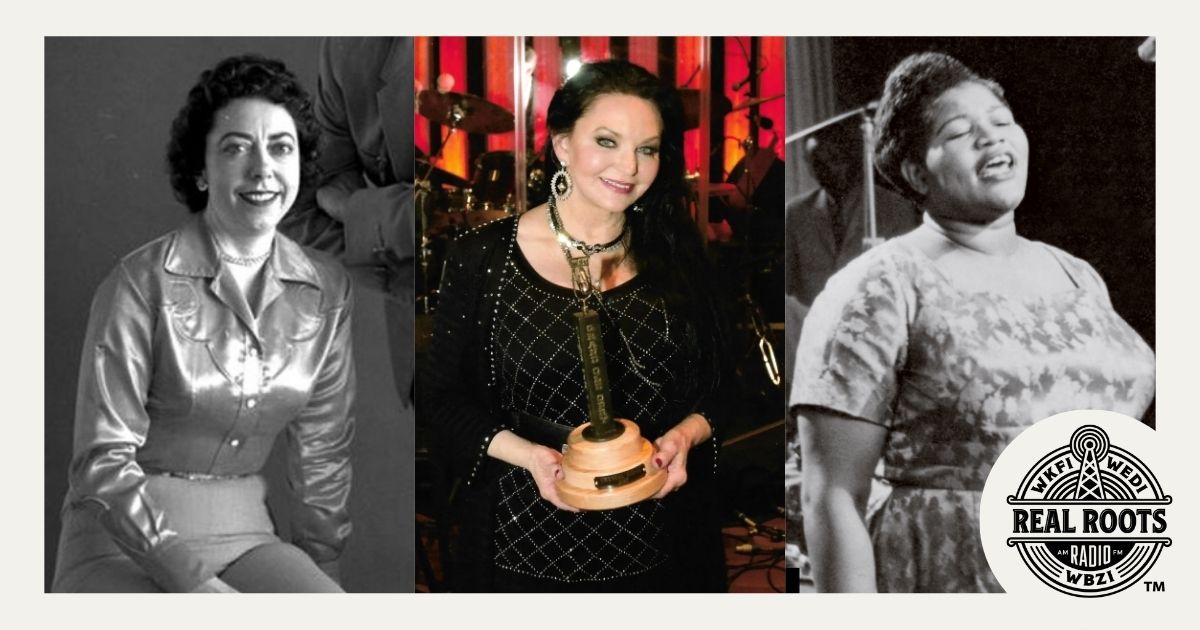
Celebrating Women’s History Month: Crystal Gayle, Rose Maddox, and More

Our partnership with our friends at Real Roots Radio in Southwestern Ohio continues as we move from Black History Month to Women’s History Month! This time, we’ll bring you weekly collections of a variety of powerful women in bluegrass, country, Americana, folk, and elsewhere who have been featured on Real Roots Radio’s airwaves each weekday in March, highlighting the outsized impact women have on American roots music. You can listen to Real Roots Radio online 24/7 or via their FREE app for smartphones or tablets. If you’re based in Ohio, tune in via 100.3 (Xenia, Dayton, Springfield), 106.7 (Wilmington), or 105.5 (Eaton).

American roots music, historically and currently, has often been regarded as a male-dominated space. It’s certainly true of the music industry in general and these more down-home musics are no exception. Thankfully, American roots music and its many offshoots, branches, and associated folkways include hundreds and thousands of women who have greatly impacted these art forms, altering the courses of roots music history. Some are relatively unknown – or under-appreciated or undersung – and others are global phenomena or household names.

Over the next couple weeks, we and RRR will do our best to bring you more examples of women in roots music from all levels of notoriety and stature. Radio host Daniel Mullins, who together with BGS and Good Country staff has curated the series, kicked us off last week with Dottie West, Gail Davies, and more. This week, we’re shining a spotlight on Kristin Scott Benson, Crystal Gayle, Big Mama Thornton, Reba McEntire, and Rose Maddox. We’ll return next week and each Friday through the end of the month with even more examples of women who blazed a trail in roots music.

Plus, you can find two playlists below – one centered on bluegrass, the other on country – with dozens of songs from countless women artists, performers, songwriters, and instrumentalists who effortlessly demonstrate how none of these roots genres would exist without women.

Crystal Gayle (b. 1951)

She’s a country music icon with signature floor-length hair and a voice as smooth as silk – Crystal Gayle!

Born Brenda Gail Webb in Paintsville, Kentucky, Crystal Gayle stepped out of the shadow of her legendary sister, Loretta Lynn, to carve her own path in country and pop music. She scored her first Top Ten hit in 1975 with “Wrong Road Again.” However, her major breakthrough came in 1977 with the GRAMMY Award-winning “Don’t It Make My Brown Eyes Blue,” a crossover hit that topped the country charts and even made waves on the pop scene. It peaked at Number Two on the overall Hot 100, setting Gayle up to be one of the premiere crossover artists of the era.

With 18 Number One hits, Crystal Gayle has the fourth most chart-topping songs for a female in country music history, even more than her older sister. She became a defining voice of the late ’70s and ’80s, blending country with soft pop for her signature sound. Who could forget those long, flowing locks – almost as famous as her music! A member of the Grand Ole Opry and the Kentucky Music Hall of Fame, she even has a star on the Hollywood Walk of Fame in addition to scores of other awards, honors, and accolades. Crystal Gayle is still shining today, proving that true talent – and great hair – never go out of style!

Suggested Listening:
Wrong Road Again
The Sound of Goodbye

Big Mama Thornton (1926 – 1984)

Before Elvis shook his hips and Janis wailed the blues, there was Big Mama Thornton. Born Willie Mae Thornton in 1926, this powerhouse of a woman changed music forever.

Thornton’s deep, growling voice and raw emotion made her a legend in blues and rock and roll. She recorded “Hound Dog,” which was written specifically for her, in 1952 – years before Elvis made it even more famous. It sold over half a million copies and reached the Top Ten on the Billboard R&B charts. Her recording of “Hound Dog” is regarded as a pivotal recording in the birth of rock and roll, and truthfully, her female perspective makes the song make a lot more sense.

Like many Black artists of her time, she never saw the wealth or credit she deserved. Big Mama wasn’t just a singer – she played drums, harmonica, and wrote music, influencing generations of artists. Janis Joplin’s hit “Ball and Chain” was written by Big Mama.

As a blues icon, she toured the United States and Europe, worked at many prestigious folk, blues, and jazz festivals, and even recorded an album with Muddy Waters. Sadly, her life was cut short after years of alcohol abuse, passing away at the age of 57 in an LA boarding house; Big Mama was buried in a potter’s field.

Big Mama Thornton paved the way for rock and roll, blues, and soul, and was posthumously inducted into the Rock & Roll Hall of Fame in 2024.

Suggested Listening:
Ball and Chain
Wade in the Water

Kristin Scott Benson (b. 1976)

A South Carolina native, Kristin Scott Benson is a six-time IBMA Banjo Player of the Year and an absolute force on the five-string. She was a mandolin player as a youngster, but caught the banjo bug at nine years old when she saw Doyle Lawson & Quicksilver in the 1980s with their exciting brand of bluegrass – and a young Scott Vestal on banjo. She joined the all-female bluegrass band Petticoat Junction when she was just a senior in high school, moving to Nashville in 1994 to attend Belmont University.

Unknowingly, she made history during her sophomore year in college when she was hired by The Larry Stephenson Band. She is viewed by many as having “broke the glass ceiling” in bluegrass, by playing in a male-dominated professional bluegrass band, without being married to, dating, or being related to any of the other members – she was simply a powerful picker. Kristin worked two different stints with The Larry Stephenson Band, in addition to working with Larry Cordle & Lonesome Standard Time. She joined The Grascals in 2008, where she has remained for over fifteen years.

Pointing to Sonny Osborne as her banjo mentor, she has fit The Grascals’ sound like a glove with their heavy Osborne Brothers influence. (It was actually Sonny who recommended her to The Grascals for their banjo job.) In addition to kicking tail on stage and in the studio with The Grascals, in recent years Kristin has formed a recording duo with her husband, mandolin master Wayne Benson of Russell Moore & IIIrd Tyme Out. Together they are simply known as Benson.

Kristin Scott Benson received the Steve Martin Prize for Excellence in Banjo & Bluegrass in 2018, and was inducted into the American Banjo Hall of Fame in 2024.

Suggested Listening:
Up This Hill and Down” – The Grascals
Conway” – Benson

Rose Maddox (1925 – 1998)

She was bold, she was brash, and she helped shape country as we know it! Rose Maddox wasn’t just another singer, she was a trailblazer.

Born in Alabama and raised in Modesto, California, Rose and her brothers – The Maddox Brothers and Rose – became pioneers of the “hillbilly boogie” sound. Performing on radio as teenagers, their career really took off when Rose’s brothers returned from World War II, anchored by her powerhouse vocals. One of the first hillbilly bands to come from California, The Maddox Brothers & Rose cut a wide swathe, touring across the country, performing on the Louisiana Hayride, and making smash records.

With wild outfits, high energy, and Rose’s infectious laugh, they were country music’s first real rock stars, known as America’s most colorful hillbilly band. In the 1950s, The Maddox Brothers & Rose parted ways and Rose pursued a solo career. She broke barriers as a female country star, scoring over a dozen Top 30 hits like “Sing a Little Song of Heartache” and inspiring legends like Dolly Parton and Emmylou Harris. She also recorded several popular country duets with another legend with ties to southern California – Buck Owens. In 1962, she released the first bluegrass album by a female artist, Rose Maddox Sings Bluegrass, joined by Bill Monroe, Don Reno, Red Smiley, Donna Stoneman, and more.

She would continue to tour and record, even recording an album with Merle Haggard & The Strangers as her backing band. The Hag always pointed to The Maddox Brothers & Rose as one of his influences. Maddox also performed on stage and in studio with California bluegrasser Vern Williams, and even received a bluegrass GRAMMY nomination for her Byron Berline-produced album $35 & A Dream, shortly before her passing in 1998 at the age of 72.

Honky-tonk, bluegrass, rockabilly – Rose did it all and she did it first! So next time you hear a fiery female country singer, tip your hat to Rose Maddox, the original queen of country sass.

Suggested Listening:
Honky Tonkin’” – The Maddox Brothers & Rose
Sing A Little Song of Heartache

Reba McEntire (b. 1955)

From the heart of Oklahoma, one voice has echoed through the decades, captivating fans with her powerhouse vocals and undeniable charm. Reba McEntire, one of the true Queens of Country Music, has been breaking barriers since she first stepped onto the scene in the 1970s.

Her big break came in 1974 when country & western singer Red Steagall saw Reba perform the National Anthem at a rodeo event in Oklahoma. He then helped her land her first record deal. But she was hardly an immediate success, working to find her footing in the music industry and after four years, she scored her first Top Ten hit, “(You Lift Me) Up To Heaven.” After that, she hasn’t looked back!

Reba topped the Billboard country singles chart for the first time in 1983 with “Can’t Even Get The Blues,” the first of her many Number One hits. With over 40 chart toppers and a career spanning more than four decades, she’s done it all. From mega hits to her legendary TV show, Reba, she’s not just a country icon, she’s a cultural force. However, Reba’s most iconic hit only reached #8, from her classic 1990 album, Rumor Has It. A song she learned from Bobbie Gentry, that has been a signature song of Reba’s ever since, it has been certified double-platinum, selling over 2 million copies: everyone loves “Fancy.”

Known for her fierce spirit and down-to-earth personality, Reba’s music continues to inspire generations of fans. Whether she’s singing about love, heartbreak, or resilience, one thing’s for sure – Reba’s voice is timeless. Reba McEntire, a true legend and a voice like no other.

Suggested Listening:
Fancy
Swing All Night Long With You


Want more Good Country? Sign up on Substack for our monthly email newsletter full of everything country.

Listen to Real Roots Radio online 24/7 or via their FREE app for smartphones or tablets.

Photo Credit: Rose Maddox courtesy of Discogs.com; Crystal Gayle courtesy of the artist; Big Mama Thornton from Ball N’ Chain.

You Gotta Hear This: New Music From Andy Leftwich, Carter & Cleveland, and More

Okay but really, You Gotta Hear This! Our weekly premiere and new music roundup is simply packed with entirely legendary bluegrass in this edition of the column.

Kicking us off, award-winning husband-and-wife duo Benson – made up of Kristin Scott Benson and Wayne Benson – offer their rendition of a Harley Allen song, “Things Have Changed,” with Dustin Pyrtle lending a perfect lead vocal to the track. The Seldom Scene, an iconic bluegrass band for now more than 50 years, release their brand new album today. We’re celebrating Remains to Be Scene by highlighting “Hard Travelin’,” a Woody Guthrie-written number that you, like Ron Stewart, may recognize from Flatt & Scruggs’s discography.

Fiddle is represented in force this week, too, with fiddler and multi-instrumentalist Andy Leftwich racing through an original, “Highland Rim,” with Cody Kilby, Matt Menefee, and Byron House along for the ride. Jason Carter & Michael Cleveland are releasing their debut duo album today as well, so we’ve cued up “In the Middle of Middle Tennessee” from that stellar project. Written by Darrell Scott, it features Carter’s tasty baritone and country star Charlie Worsham (who has strong bluegrass roots) on harmony.

To round out our collection this week, Joe Mullins & the Radio Ramblers preview their new bluegrass gospel album, Thankful and Blessed, set for release next week on March 21. “He Sees the Little Sparrow Fall” is a superlative example of the gospel and sacred traditions in bluegrass, a little concentrated dose of Friday revival for the end of your work week.

Every single track herein is bluegrass of the highest quality, so you know what we’re going to say… You Gotta Hear This!

Benson, “Things Have Changed”

Artist: Benson
Hometown: Boiling Springs, South Carolina
Song: “Things Have Changed”
Release Date: March 14, 2025
Label: Mountain Home Music Company

In Their Words: “We’re excited for this song to finally come out. We love the lead vocal by Dustin Pyrtle and the sentiment of ‘Things Have Changed’ is universal. It seems things do change so fast these days. Downtown Nashville is different every time I go! But even in small towns, you feel it, both physically and relationally with the people who live there. I love the line, ‘I’m sort of glad that Mom and Dad ain’t around.’ That melancholy embodies the mood of this guy who goes back home and feels an overall sense of loss. Wayne and I love to play this slower tempo on mandolin and banjo. He gets to tremolo and I get to play fun chord-based banjo. I always enjoy playing this kind of banjo backup.” – Kristin Scott Benson

“I’ve always loved Harley Allen and certainly do love this song. Dustin Pyrtle seemed like the perfect singer to reach out to and man did he ever deliver the goods on this one!” – Wayne Benson

Track Credits:
Wayne Benson – Mandolin
Kristin Scott Benson – Banjo
Cody Kilby – Acoustic
Tony Creasman – Drums
Kevin McKinnon – Bass
Dustin Pyrtle – Vocal


Carter & Cleveland, “In the Middle of Middle Tennessee”

Artist: Jason Carter & Michael Cleveland
Hometown: Nashville, Tennessee (Jason); Charlestown, Indiana (Michael)
Song: “In the Middle of Middle Tennessee”
Album: Carter & Cleveland
Release Date: March 14, 2025
Label: Fiddle Man Records

In Their Words: “This is a fun song that transports me to a place in my mind where I’d love to be – stuck in the middle of Middle Tennessee. Special thanks to Charlie Worsham for singing with me on this track. It’s one of the highlights of the entire record for me! I never had the chance to meet Darrell Scott’s cat, Bobtail, but somehow, I feel like I’ve seen him before. Thank you, Darrell, for writing this song about him!” – Jason Carter

Track Credits:
Jason Carter – Lead vocal, fiddle
Michael Cleveland – Fiddle
Charlie Worsham – Harmony vocal
Sam Bush – Mandolin
Jerry Douglas – Dobro
Bryan Sutton – Guitar
Cory Walker – Banjo
Alan Bartram – Bass


Andy Leftwich, “Highland Rim”

Artist: Andy Leftwich
Hometown: Carthage, Tennessee
Song: “Highland Rim”
Release Date: March 14, 2025
Label: Mountain Home Music Company

In Their Words: “I’ve always loved the intensity of a fast-paced instrumental and we hold nothing back on this one. Named after a raceway close to home where I grew up, I thought this one perfectly described the rush that you get from going fast. I wanted a song on this new project where we can go absolutely bananas and I feel like we captured it on this one!” – Andy Leftwich

Track Credits:
Andy Leftwich – Fiddle, mandolin
Byron House – Upright bass
Cody Kilby – Acoustic guitar
Matt Menefee – Banjo


Joe Mullins & the Radio Ramblers, “He Sees the Little Sparrow Fall”

Artist: Joe Mullins & The Radio Ramblers
Hometown: Xenia, Ohio
Song: “He Sees The Little Sparrow Fall”
Album: Thankful and Blessed
Release Date: March 21, 2025
Label: Billy Blue Records

In Their Words: “It’s so easy to sing a song of gratitude and celebration when we consider the beauty of creation. Our friend, songwriter Conrad Fisher, lives in a gorgeous valley surrounded by the mountains of Pennsylvania. No matter where we look around the world, seeing God’s magnificent beauty in creation is easy and worthy of our praise. A new song with an old-time flavor and a universal message opens our new album, ‘He Sees the Little Sparrows Fall.’” – Joe Mullins

Track Credits:
Joe Mullins – Vocal, banjo
Adam McIntosh – Lead vocal, guitar
Chris Davis – Vocal, mandolin
Jason Barie – Fiddle
Zach Collier – Bass


The Seldom Scene, “Hard Travelin'”

Artist: The Seldom Scene
Hometown: Bethesda, Maryland
Song: “Hard Travelin'”
Album: Remains to be Scene
Release Date: March 14, 2025
Label: Smithsonian Folkways

In Their Words: “This song comes from a Flatt & Scruggs album of the same title, circa 1963. Written by Woody Guthrie, the song was first recorded in 1947. Anyone who knows me knows how much I love Flatt & Scruggs and this is one of my favorites from the early 1960s when they were still plowing bluegrass, but using material from a broad range of writers.” – Ron Stewart


Photo Credit: Andy Leftwich by Erick Anderson; Carter & Cleveland by Emma McCoury.

You Gotta Hear This: New Music From Sarah Klang, Jaelee Roberts, and More

Who needs Black Friday when you have New Music Friday? We’ve got your doorbusters right here, in our weekly premiere roundup!

This week, from the bluegrass realm, we have two new tracks from labelmates Benson and Jaelee Roberts. Check out “Down That Road” from husband-and-wife-duo Benson, featuring bluegrass veterans Kristin Scott Benson and Wayne Benson – with vocals by Keith Garrett. Plus, Jaelee Roberts pays tribute to ’80s and ’90s bluegrass with a loving homage to the Lonesome River Band with her cover of “Looking For Yourself.”

Also in our premiere collection, we have a brand new lyric video for “Go to the Sun,” a new single from Swedish folk-pop singer-songwriter Sarah Klang all about going from a dark place to one of hope. To wrap us up this week – and this month! – don’t miss our exclusive two-song Tønder Session with Ugandan-Texan roots artist Jon Muq.

It’s all right here on BGS and You Gotta Hear This!

Benson, “Down That Road”

Artist: Benson
Hometown: Boiling Springs, South Carolina
Song: “Down That Road”
Release Date: November 29, 2024
Label: Mountain Home Music Company

In Their Words: “‘Down That Road’ is a great song. I love to play banjo on tunes with this lilting groove. Wayne and I are both huge Keith Garrett fans and we love his vocal delivery on this one. The song conveys a vulnerability and he did a great job capturing that.” – Kristin Scott Benson

Track Credits:
Kristin Scott Benson – Banjo
Wayne Benson – Mandolin
Cody Kilby – Guitar
Kevin McKinnon – Bass
Tony Creasman – Drums
Dustin Pyrtle – Harmony vocal


Sarah Klang, “Go To The Sun”

Artist: Sarah Klang
Hometown: Gothenburg, Sweden
Song: “Go to the Sun”
Album: Beautiful Woman
Release Date: November 29, 2024 (single); February 7, 2025 (album)
Label: Nettwerk Music Group

In Their Words: “‘Go to the Sun’ is one of the most personal songs I’ve ever written. This song represents going to better places, be it in your mind or physically traveling to those places. It’s about a person’s mental state going from a dark place to one of hope. It’s about escaping from the day-to-day and finding your way.” – Sarah Klang


Jaelee Roberts, “Looking For Yourself”

Artist: Jaelee Roberts
Hometown: Nashville, Tennessee
Song: “Looking For Yourself”
Release Date: November 29, 2024
Label: Mountain Home Music Company

In Their Words: “I absolutely love the ’80s and ’90s eras of bluegrass music and ‘Looking For Yourself’ (originally recorded by the Lonesome River Band) completely embodies that vibe. I’ve been a LRB fan my entire life and this song has always jumped out at me while listening to that classic album, so I decided that ‘Looking For Yourself’ should be the first bluegrass cover song that I’d record. Andy Leftwich, Cody Kilby, Ron Block, Byron House, John Gardner, and Grayson Lane are absolutely awesome and made this track go from dream to reality for me! Speaking of Grayson Lane, I just have to say how happy I am to have him singing harmony with me on this. We have known each other since we were born (literally) and he is one of my favorite singers and his voice on ‘Looking For Yourself’ was the icing on the cake. I hope y’all will enjoy my spin of one of my favorite bluegrass songs and that you’ll listen to it loud and sing along at the top of your lungs!” – Jaelee Roberts

Track Credits:
Jaelee Roberts – Vocals, harmony vocals
Byron House – Bass
Cody Kilby – Acoustic guitar
Andy Leftwitch – Mandolin, fiddle
John Gardner – Drums
Ron Block – Banjo
Grayson Lane – Harmony vocals


Tønder Session, Jon Muq

Earlier this year, during the waning days of summer, our videographer friends at I Know We Should traveled to Denmark to capture a handful of special sessions with Americana and roots artists performing at Scandinavian music festivals. For our next installment in this mini-series, we’re excited to feature singer-songwriter Jon Muq performing during his time at premier Danish music event, Tønder Festival.

Born and raised in Uganda, Jon Muq has made waves since relocating to Austin, Texas, and leaving his mark on the American roots music scene. Earlier this year he released his debut full-length album, Flying Away, on Dan Auerbach’s Easy Eye Sound. That’s the project from which Muq’s first selection is pulled. On a waterside boardwalk with a marshy backdrop, Muq offers “Bend,” a song about resiliency, flexibility, and connection, and “Hello Sunshine,” another track from Flying Away – one just perfect for August in Denmark.

Watch the full performance here.


Photo Credit: Sarah Klang by Fredrika Eriksson; Jaelee Roberts by Eric Ahlgrim.