Larry Sparks Is a Surprisingly Zen Bluegrass Star

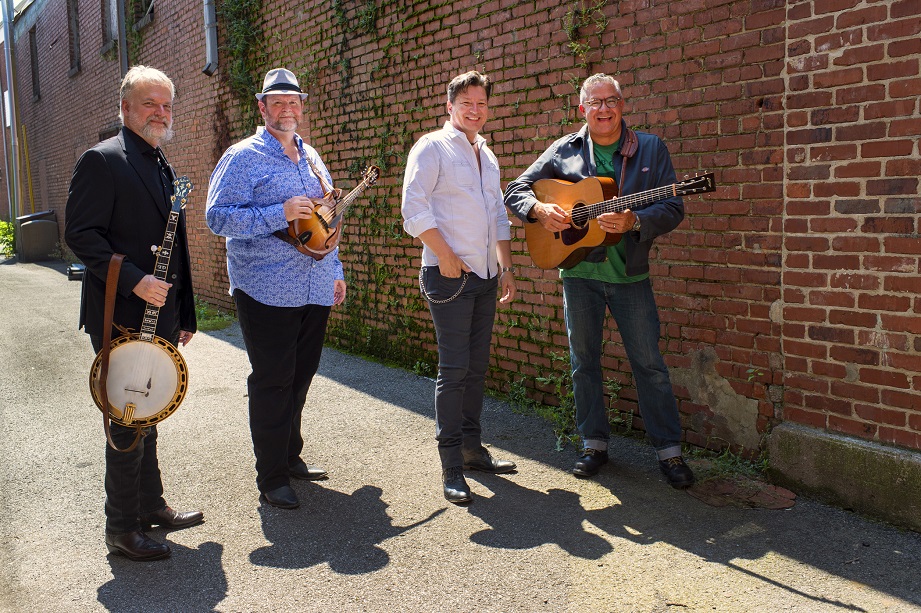
Speaking to Bluegrass Music Hall of Fame inductee and IBMA Award winner Larry Sparks over the phone, you might never guess you’re conversing with a living legend. He’s remarkably humble, down to earth, and plainspoken. And his approach to making bluegrass – as he has professionally for more than 60 years – is surprisingly zen.

His latest album, Way Back When, was released in late October 2025 and the project finds Sparks in exactly the same sonic space as any of his excellent LPs from the last six decades. If you were to take a short audio sample of Way Back When, it would be genuinely difficult to identify from which era of his lauded career it came. The project is warm, lively, and resonant, sounding like you’ve been dropped into a cozy living room with perfect acoustics and a superlative bluegrass string band.

The songs, as well, are timeless and classic, whether fresh tracks, iconic covers, or an old-timey instrumental fiddle tune with familial origins. Like his vocal style, guitar picking, and production preferences, Sparks’ song curation also feels like an intuitive extension of his personality. When he describes how he accomplishes this consistency across eras and executes the timelessness of his albums, it seems as though he becomes a sort of bluegrass guru.

“When songs touch me, they touch my feelings,” he explained to BGS . “When the song touches me, it’s saying something. I’ll take that and see what I can work with, and make it my song.

“The song’s me and I’m the song. And that’s the way that they did it back in the day. They become that song – the older singers, they became those songs. That’s the way that I do it, I try to make that song me and me the song.”

It’s a secret ingredient lacking from too many bluegrass records out there today. Not just his inhabitation of songs so that they can inhabit him, but also treating bluegrass like the forebears of this music did. As a living, breathing, cutting-edge thing that doesn’t need to be built on a foundation of regurgitation and emulation and litmus testing. Like Sparks puts it so simply – and eloquently – in our conversation, bluegrass has mainstream appeal. It requires heart, soul, and being present – becoming the music and becoming each song.

That right there is exactly how Sparks became a Bluegrass Music Hall of Famer and a hero to many – Alison Krauss, Billy Strings, and this writer included. It’s also how he’s maintained a consistent (never boring, stale, or regressive) sound over the course of his 62-year career. And, it’s what keeps him motivated to continue looking forward while inspiring all of us and reaching new audiences.

Let’s start by talking about your excellent new album, Way Back When. When I first listened to it in the fall, when it was released, I was struck by how old-school it sounds. The production style sounds so timeless, it sounds so warm and live – like real bluegrass. It also feels like it could have been pulled from almost any era of your career. with the way that it’s produced and the way that it stands out sonically. I wondered how you accomplished that?

Larry Sparks: I try to do things normal and just go for it. And all of the band– you just feel what you’re doing. You make it real. It’s hard to explain. It’s just, I sing and play from my heart, soul, and mind. Some songs you don’t have to do that, you just – like the old saying – rear back and let it go.

But some songs need attention, and you have to become that song and the song becomes you. That’s the way that I think probably all these songs are, everything I sing is pretty much that way. But, I don’t know, the feel just comes out natural. It’s more of an older feel, the real feel. That’s the way I like things. So much [that’s] added in today’s recording and music and everything, it’s okay – I’m not saying anything about it! But myself, I’d rather keep it pretty real, just like it used to be.

Are you tracking in isolation booths? Or are y’all tracking in the same room and live? It doesn’t sound like you’re putting the music under the microscope, as it were.

No, I don’t like that. You have to [sometimes], but I’d rather [not]. It’s [an] all in the same room deal. Sometimes you’ve gotta do an overdub break or something. You miss your hot lick, you gotta do it over again. Overdubs are good to use, but I don’t like to depend on them. I’d rather do it straight down the line, and if you make a mistake you do it over, you can overdub a spot or something.

Something else that stood out to me listening to the album is how consistent your sound has been over the decades. You have your own way of singing, you have a style that’s really consistent – as well how you pick the songs that go on your recordings. And you certainly have your own guitar-picking style. Almost no one picks like you these days. How do you think it is true, across 60 years in music, that when you listen to Larry Sparks, you know you’re hearing Larry Sparks and Larry Sparks alone?

It’s a natural style for me. I respect the older songs an awful lot. The older music and the older singers, that came along before I did, in the ‘30s, ‘40s, and ‘50s. I was a kid, but I remember the music mighty, mighty well in the ‘60s. All the older country singers were embedded in me, too. Some of the people just stayed in me. They were good singers and their music, their singing was real. It embedded in me.

I still had my own way of singing and playing. I never did wanna copy someone else. And although I respected what they did very much, the older music and the older country and bluegrass [artists] and whatever else – there is other music, too. It just became natural for me to have my own style of singing and playing, and I never really worked on it to do that. It’s just me, and the band pretty well feels what I’m doing.

The whole thing, you gotta keep it natural, real, and feel what you’re doing, from your heart and soul. That’s the way I do it. It’s nothing I plan to do. It just comes out that way.

I think that’s why it works and is so consistent across your entire career, because it’s not a costume that you put on, it’s not affectation, it’s not a target that you’re trying to hit. It’s just you being you.

People can feel that, too. The audience can feel what you feel. Most of ’em, they can feel exactly what you feel, what you do.
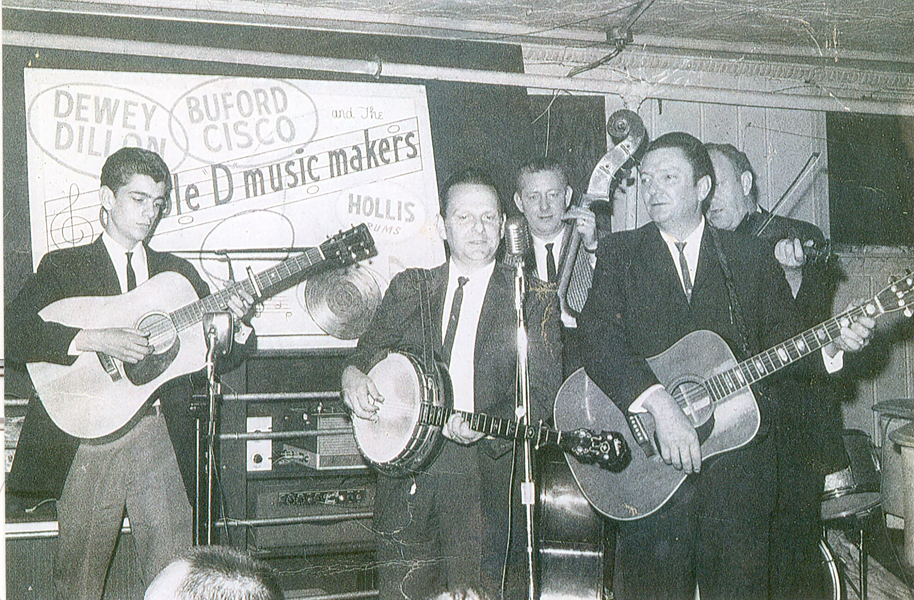
Larry Sparks (far left) performs with the Stanley Brothers before Carter Stanley’s death. Circa 1964. Image courtesy of Rebel Records.

I so appreciate that you bring up heart and soul, because I think people make the assumption that bluegrass is not a music that’s based on heart and based on soul. Especially when you listen to some barn burning, shredding bluegrass or jamgrass.

But for me, this music has always been as much about the stories, the heart, and the soul – and the feeling of it. And that’s clearly such an important part of it for you, too, and the storytelling. I think a lot of people don’t realize heart and soul are an important part of the tradition of bluegrass.

Yeah, sure it is. I’ve worked under the bluegrass name for years. Bluegrass is about 80 years old now, and I have been into it 62 of those years.

Wow.

I can’t believe I’ve been into it that long under the bluegrass name. My music is considered bluegrass, but actually a lot of my stuff could go either way. I’m considered bluegrass and that’s fine. I appreciate it. I’m honored, but a lot of my stuff can go into country or some other direction, too.

I just hold to what I’m doing and [what has] been a good business for me over the years. But you have to make it work and look ahead. The music is music, but you gotta make a business out of it. If you don’t, it’s not gonna work. And that’s what I did. It’s worked out for me. A lot of the bluegrass [industry] is not easy. It’s not one of the easiest forms of music to “make it” in.

And, it’s always been set behind [other] forms of music. I’d really like to see it be possible for bluegrass to be played on all stations. To play it [alongside] new country, modern country, rock and roll. Whatever it is, mix it up. But get bluegrass to program directors. If it ever could get played on other stations, with the right songs and the right artist – put in with everything else they’re doing – it would work. I don’t know if it’ll ever come to that or not, but that’s what it’s always been. We’ve always – like the old saying – took the backseat to the other forms of music.

But we got enough fans and that keeps it [going]. … I’m honored and I’m thankful for it. But it takes a lot of years, a lot of hard work. It’s not easy. I’ve done it all myself. I’ve done my own management, my own booking, my own phone calls, my own writing. This, that, this, that, this, that. I’ve done it all. Like I said, I’m gonna keep doing it, it’s working. It’s fine.

Like you mention, these songs really could go both ways. I love how much country is on this album, and you do such a great job of illustrating that bluegrass and country will always be related and that they cross-pollinate.

And I totally agree, bluegrass has mainstream appeal. And always has! I don’t know why we pretend like it doesn’t.

Yeah, we need more promotion on bluegrass. I wanna keep doing everything I can for it, because I respect it very much. Bill Monroe, the Stanley Brothers, and Flatt & Scruggs – these three names put [bluegrass] on the path and all that played bluegrass come after those three names.

Those three names are in you. I never did want to actually copy any one of those three names, but you take those three names – just to give you an idea. Take those three names I said and you put the Osborne Brothers with ‘em. Put Jim & Jesse with ‘em. Put Jimmy Martin, Mac Wiseman and others – and Larry Sparks – all those names. Every one of ’em are different sounds, different style. But they’re still on the same path. That’s what you gotta have. That’s what I knew, “I better stick to that and not be a copy.”

Let’s talk a little bit about your guitar playing style, because I think you’re carrying on a tradition of a particular kind of guitar picking in bluegrass that is rarer and rarer today. So few people who still make records and perform shows pick like you do. I love how front-and-center your guitar is on this album. Could you talk a little bit about your picking style and maybe who your influences were or how you came up in that type of picking?

Other guitar players are really good and there are a few players out there that can. But the way I do things, my playing is like my singing. I play the melody. And I don’t play over the melody. There’s less notes than normal guitar, it’s more of a feel. It’s hard to explain, but I just play the feel of the song and the melody. I try not to overdo it. I play it and when I hit a note or a slide or a backward– or whatever I do, a pull-off, I want it to come from me. I want it to be me and I wanna feel that note I’m doing, feel that slide I’m doing, whatever I’m doing. And [I want to] keep it that way and not overplay the song.

I also wanted to talk about the instrumental on the album, “Sleepin’ Lula.” Speaking of things that are rarer and rarer in bluegrass, having the clawhammer banjo on it is excellent. It feels like no one flogs the banjo anymore. There’s a lot of old-time players, a lot of clawhammer players, but it doesn’t really seem like anybody’s flogging it anymore. Hearing the instrumental, when the clawhammer kicks in, it was reminding me of that era of early bluegrass when you were just as likely to hear frailing banjo as a three-finger in a bluegrass band.

That’s great. Yeah, I thought it turned out pretty good. I was pleased with it. That’s an old tune. My grandpa, I got a recording of him playing that in 1953. Him and some guys, and he’s from Jackson County, Kentucky. Very good fiddle player. Very good. He was one of the best, he could’ve done something with his talent. He was born in 1877. Back in those days, up to the turn of the century, ‘20s, ‘30s, ‘40s, and ‘50s, he just played square dances around locally and stuff. He never did really go out. Stringbean asked him to go out with him some, but he never wanted to leave or go ‘round traveling and stuff. But he could have filled the bill for anything. He was that good.

I heard the tune from him. And I had never heard it before. “Sleepin’ Lula” – that was my grandma’s name, his wife’s name. She died in 1910 in childbirth and I never got to see her, of course. But her name was Lula, and so he recorded that “Sleepin’ Lula.” And I don’t know, I’m not going to say for sure if he wrote it. There’s a couple other fiddle players I heard play that from back in the ‘20s or ‘30s. But all respect to him. There wasn’t a player like my grandpa.

I don’t know who it came from. I don’t know if it came from my grandpa and he put it together because his wife’s name is Lula. Or if “Sleepin’ Lula” was the name [he gave another tune.] Someday I may try to trace that out a little further.

The other fiddlers that you know played it, did they use the same title for it, too?

Yeah!

Interesting. That’s so cool!

Yeah, it’s something else.

You’re a famous bluegrasser. You’ve been famous to me, for instance, my whole life. I was honestly nervous and a little starstruck to have this conversation. [Laughs] But you’re also becoming more famous at this moment, because two of the biggest bluegrass names to ever come out of the genre – Alison Krauss and Billy Strings – they’re such big fans of yours. I feel like both Alison and Billy see your legacy, they see how important it is, and they are translating that importance to people that maybe don’t know who you are or are just learning about you for the first time.

So I’ve just been curious to ask you, how do you feel about having these prominent “fans” – and it’s not just Alison and Billy, obviously. What does it mean to you to be part of that constellation of people that they look to as influences? And, what does it mean to you to see your music reach new audiences thanks to them and others?

It’s a new world. It’s a different world than what I’m used to. Which, there’s nothing wrong with it. I’m very honored that they stand behind what I do and my music. And, for the music, I’m very honored and thankful that they like it and that they maybe have it in their shows sometime or whatever.

But yeah, the new crowds in bluegrass – we have a very good crowd, but it’s bigger than it ever has been, now, bluegrass music is. But we still have that limited crowd [coming] from other forms of music. And that’s why I said, if it ever got to play on the big stations, give us a little room and respect for the bluegrass. It’s very important music and if the big country stations would give us some respect and get bluegrass to their program directors…

Don’t just [throw it out there]. You gotta be careful. Give it the right thing, the right artists, the right songs, and it would really help our music. It really would help.

But if it never happens, we still got a good crowd and we get more people all the time coming in. It’s a kind of a new crowd coming in, a new age group coming in. We still have a lot of the older people, but the younger people are coming into it. Teens to 20 years old, I’m seeing that happen more. That’s good. Bluegrass, it needs more push, it needs more promotion.

Do you see what Billy Strings is doing as that push or as that promotion? Can you tell, with younger fans coming in, that they started as Billy Strings fans and found you that way? I wonder, is there any way you’re measuring the impact of people talking about you and pushing your music?

I can’t really tell on that, for sure. I can’t. I’m just seeing people that’s young – teenagers and stuff – that wants to learn to play the music and are trying to play. And then that age group I was telling you about is. It’s coming in stronger all the time.

I’ll be honest with you. I don’t listen to other music. I don’t listen to anything hardly, music-wise. You gotta keep yourself fresh. But I respect other music. I respect it. All forms of music. I don’t have anything against the big bands and all the new names. But I like that old stuff. Of course, bluegrass and old country. And other things, blues, I like a lot of that.

You seem remarkably humble and so down to earth. You follow the songs, you put heart and soul into ‘em. But you’re literally a Hall of Famer and you’re one of the last of the first big generation of bluegrass makers that are still doing it today. You’re a legend to all of us. Does it feel like you’re a legend? To you, on the inside? Or no?

I would be to a lot of people, a legend, and to a lot of people I would be famous, I would be a star. But when I went into this business, went into music in my teens, I never looked at it as wanting to be a star or to be famous. I never looked at those two things. I wanted to take what talent I had. I knew I had something to offer. I had to put it together and see what I could do [to] make it work.

I don’t know if I’m a star or famous to people. I hope so, because that’d be nice. I’m pretty honored.


Photo Credit: Images courtesy of Rebel Records. Lead image by Michael Wilson.
Today’s Bluegrass Gospel Is All About Good News

While playing music in a bar, Tammy Rogers of The SteelDrivers learned a lesson that would guide her life choices. After Rogers graduated from college, she was happily earning her living as a musician. But she wondered if it was enough.

“I felt like it was all about me, rather than what I could give back and put into the world.” She had considered teaching or studying music therapy, thinking that, “Maybe I needed to be actively doing something to help.”

Here’s where the bar band comes in.

“I remember this like it was yesterday. I sang a gospel song.” Rogers said. “And after the set, a couple came up to me and said, ‘Thank you so much for singing that song. It meant so much to us.’ And it was like a light bulb came on – answering the question, ‘What should I be doing with my life?’”

For Rogers, the interaction with that couple in the bar was God giving her the message that she was doing what she was meant to do.

“The music that you write, the music that you play can touch people and help them, whether it’s in happiness or sorrow.”

Bluegrass musicians often incorporate old and new gospel songs into their performances. Whether it’s the melodies, the spine-tingling harmonies, the familiarity, or the content, gospel music has an enduring appeal to the full spectrum of bluegrass fans, regardless of culture or religion.

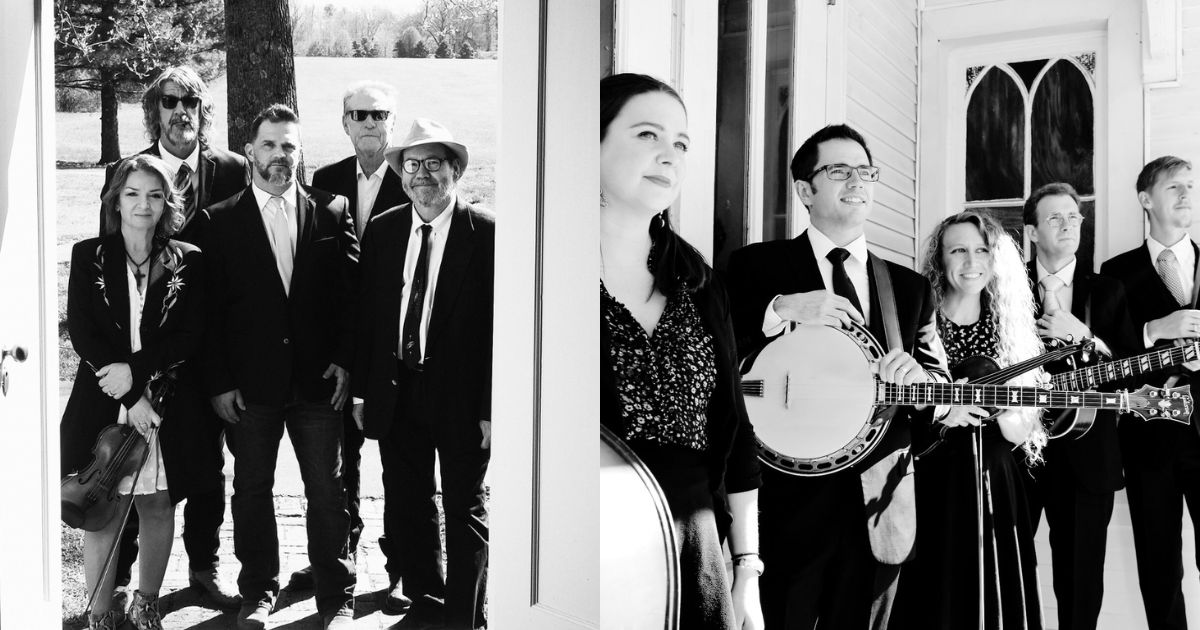
Last year, The SteelDrivers, as well as the young band High Fidelity, produced gospel albums – Tougher Than Nails and Music In My Soul, respectively – and Chris Jones released a gospel track, “Step Out in the Sunshine.” For them, the music is personal. They all come from a place of faith and sincere connection to the good news of the gospel, as well as loving the music itself.

In the rural communities where bluegrass began, life often centered around church, as a place of prayer, music, and friendship. Eventually, Southern gospel music also took on a life independent of worship.

Wayne Erbsen wrote in his charming book, Rural Roots of Bluegrass, “By the 1850s, songwriters were composing new gospel songs to appeal to the thousands who flocked to the rapidly growing number of shape-note singing conventions throughout the south.”

These lucrative gatherings – possibly more entertainment than spiritual – continued well into the 20th century. Erbsen told BGS that people would bring the books they already owned, but when they arrived, “they had to buy more books” to learn the new songs. The publishers hired excellent performers to attend the conventions and inspire the singers.

Erbsen wrote, “The songs and styles that were part of this shape-note singing convention tradition eventually merged with bluegrass instrumental and vocal styles to create a new genre now known as bluegrass gospel.”

Bill Monroe, like others of his generation, was exposed to religious-themed music. While performing with brother Charlie, Monroe’s first hit record was “What Would You Give in Exchange for Your Soul?” And just as he learned the blues from Black fiddler Arnold Shultz, he was “fascinated by the music of the Black churches,” Chris Jones said. That’s where Monroe learned “Walking in Jerusalem,” popular today for its rich harmonies.

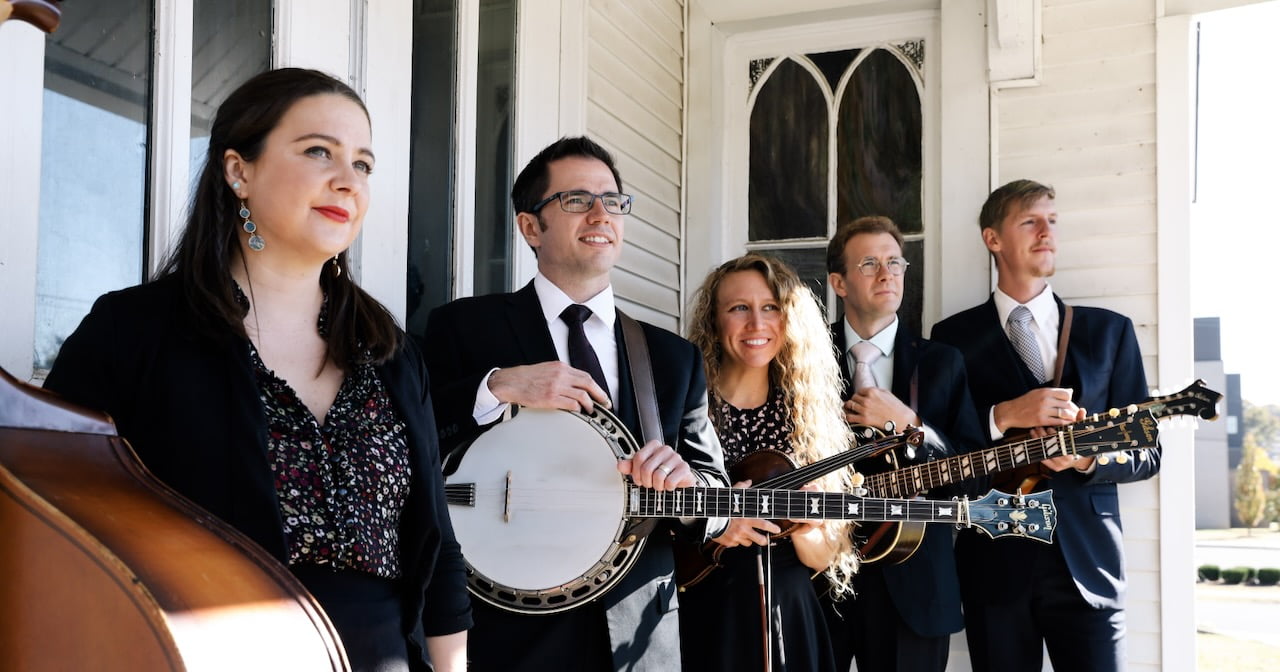
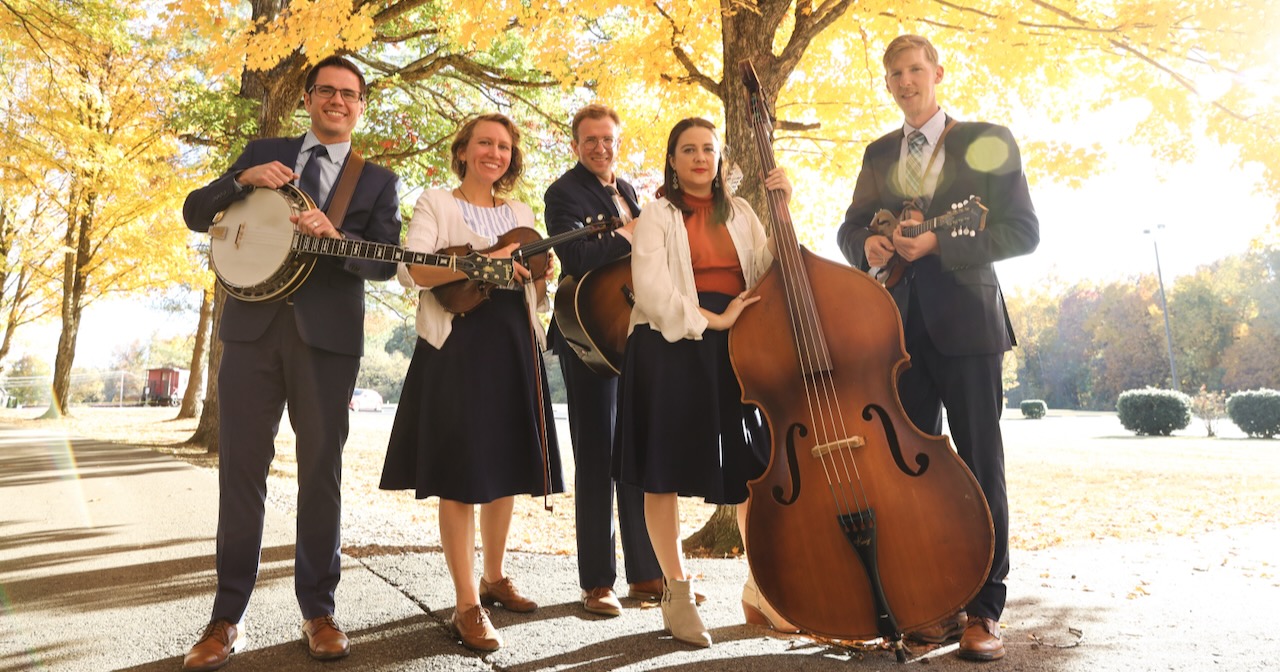
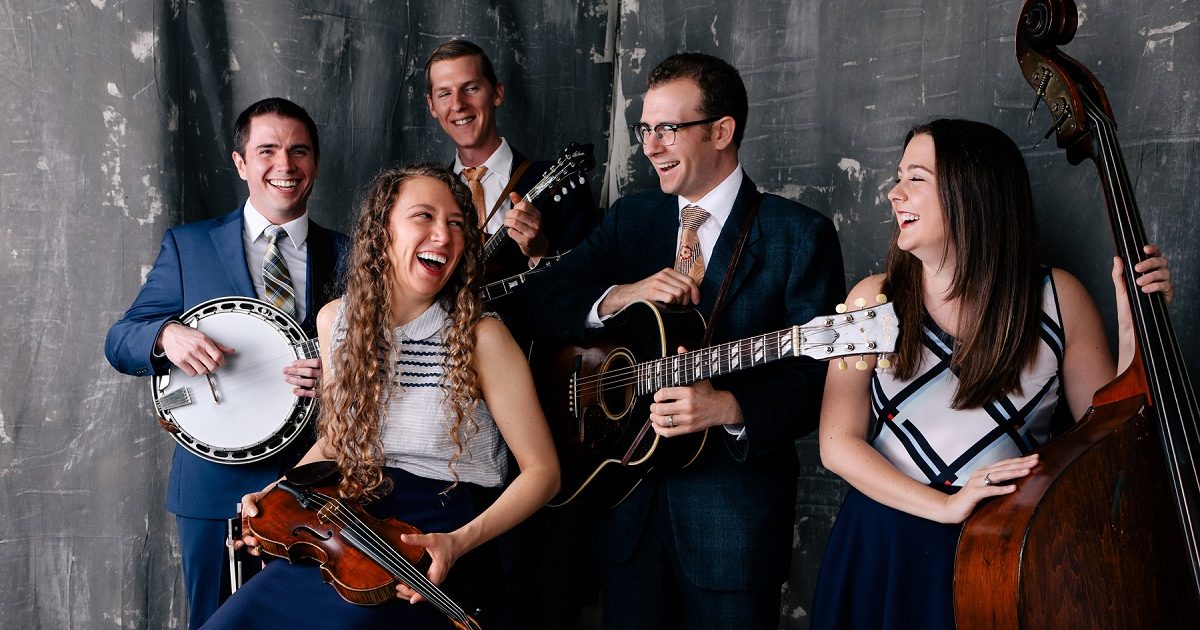
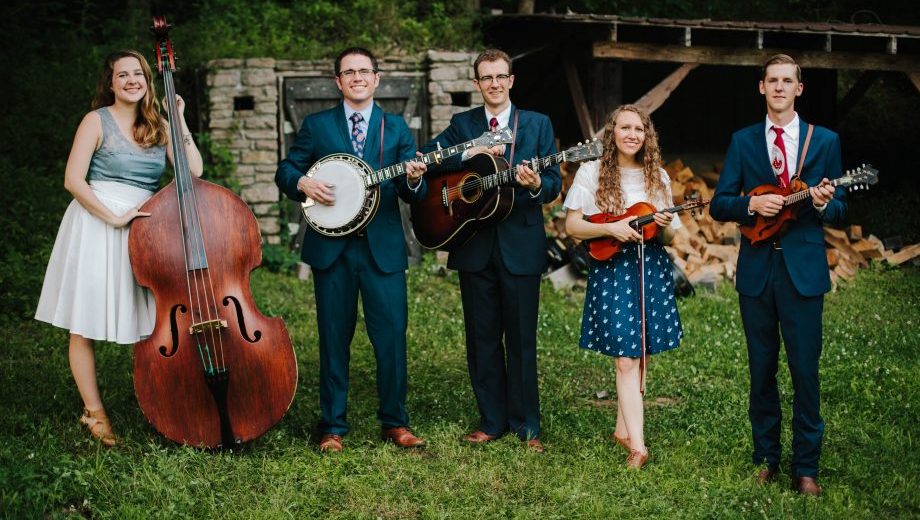
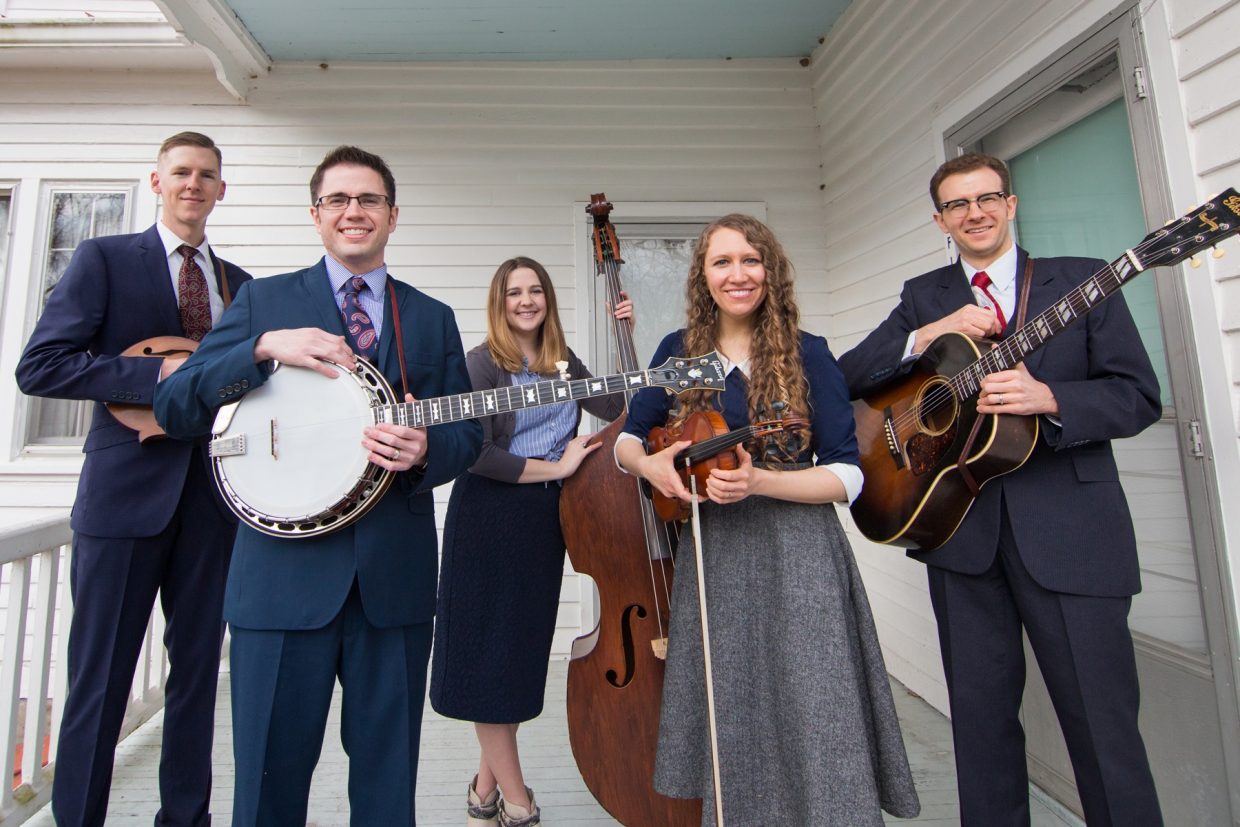
High Fidelity – Jeremy Stephens, Corrina Rose Logston Stephens, Kurt Stephenson, Daniel Amick, and Vickie Vaughn – is steeped in traditional bluegrass. Corrina’s parents got hooked on Reno & Smiley and the Stanley Brothers looking through department store record bins – and Corrina has stayed close to the traditional fold ever since. “It feels like it’s in my blood,” she said.

Jeremy learned to sing harmony from his grandfather. After he picked up the fiddle, a school bus driver made him a cassette tape of classic bluegrass. “And that tape was transformative to me,” he shared.

All of High Fidelity’s music is infused with the harmonies, instrumentation, and themes of early bluegrass performers. The friends who make up High Fidelity (the name comes from the words often on labels of early bluegrass records) came together as a band to compete in the SPBGMA band contest. They never imagined they would take first place. So, “It was this overwhelming gift that we won,” Corinna said. “It almost felt like divine intervention.”

“And everyone in High Fidelity is spiritual,” she continues. “We’re all Christian folks. We all identify with the songs that we’re singing.” So, from the earliest days, she said, they felt a gospel album was in their future, to “honor the Lord and thank him for giving us this gift.”

During a long period of illness that Corinna later learned was caused by toxic mold in their home (they since have moved out, and she feels a lot better), she received another gift from God, she said. She woke in the early hours of the morning with a song in her head that was so compelling, she had to get out of bed to record it. “And almost all of the verses just came out, bypassing my conscious brain.”

That song is “The Mighty Name of Jesus.” It is a centerpiece of, and the only original on, their recording, Music In My Soul. Corinna said, “We wanted [the project] to feel like a quintessential High Fidelity record, very bluegrassy.”

She wanted to emulate another early hero, Carl Story. When listening to Story, she said, “It wouldn’t even register that I was listening to a gospel record. It was just such good bluegrass… I wanted Carl Story’s vibes.”

Their recording successfully and joyously channels the spirit and musicality of the earliest bluegrass stars. High Fidelity worked hard to find little-known gospel songs from a variety of sources, performing them with the same enthusiastic vigor that they bring to their secular music. Listeners will recognize classic banjo introductions and harmony variations that have been passed through generations since bluegrass hit the radio.

And just as Music in the Soul is undoubtedly High Fidelity, nobody but The SteelDrivers could have created Tougher Than Nails. It is gritty, bluesy and achingly human.

Rogers said that for years, The SteelDrivers’ most requested song has been “Where Rainbows Never Die,” from the 2010 recording Reckless.

“We’ve gotten so many emails, messages, people come up to us at shows, telling us how they’ve played the song at their dad’s funeral or for grandpa or whomever and how much it’s meant to them.

“It doesn’t say the word God. It doesn’t say the word Jesus. It doesn’t even use the term heaven. But it is a gospel song, a spiritual song. It’s about passing on to the next life. To me, it is such a powerful, beautiful way of sharing,” Rogers said.

In the same way, she said, a SteelDrivers’ gospel collection wouldn’t be “preaching at people or using even the language they’re familiar with. But if the message is the same, why not?”

On Tougher Than Nails, expect the same gutsy, no-holds-barred, gorgeous vocals that we love from The SteelDrivers. Their original gospel songs are as much about the dangers, choices, and blessings of humanity as their songs about liquor, guns, guitars, and heartache.

They ask us to think about Mary Magdalene, and how she balanced love for the man with love for the divine. They wonder if Judas’ heart broke as he fulfilled his destiny of betrayal. And they celebrate the victory of love over the cruelty of crucifixion.

Even “Amazing Grace” is uniquely SteelDrivers – starting with a primitive drone that weaves into the blues-driven rhythms we associate with Black Baptist church choirs.

Chris Jones is one of the most enduring and admired singers in modern bluegrass. He also is a SiriusXM radio host and writer, and a respected commentator on all things bluegrass.

Jones recently recorded “Step Out In the Sunshine.” Jones learned the song from listening to Ralph Stanley on Jones’ “all-time favorite gospel album.” It’s a song of hope and joy.

“I think the feeling and sincerity of gospel music touches all different kinds of people. It has a broad appeal, whether you’re a believer or not,” Jones said.

He noted that many bluegrass fans relate to melodies and arrangements and often overlook the lyrics. He referred to a listener who loved the song, “Julie Ann,” because it was so happy. (It’s up-tempo, but sung by a man begging his wife not to leave him.)
But lyrics do matter to the musicians who sing them.

Jones echoed a sentiment reflected in the gospel choices of High Fidelity and The SteelDrivers. A religious commitment “makes you a little more selective of what you’re willing to sing. Is this a message I really want to send to people?” Jones chooses gospel songs that are welcoming and inclusive.

High Fidelity’s Jeremy Stephens said they avoided lyrics that sounded like condemnation, the ones that say, “You’re bad because you do this and you’re bad because you do that.” He said Music In My Soul “is our hearts talking to your hearts… the Lord said, ‘Come to me as you are.’ There’s so much peace and love and acceptance in him.”

Award-winning singer and guitar player Greg Blake currently performs with his own band as well as with Special Consensus. Blake had a ministry for 30 years before becoming a full-time musician. He said he has learned a lot over the years about judgement, love, and being open-hearted. And his insights inform his choice of spiritually-oriented songs.

“When I was younger, and probably more zealous and less informed, I felt like I needed to be ‘right.’ But as I got older and looked at the teachings of Jesus, I saw that his message was more about right relationships,” rather than proper dogma or theology.

So today, Blake says, “I like to bring into gospel even songs that may not have a strong Christian element, but are just good, positive songs… that leave one with a sense of hope and love and care for one another. I think that’s the message that people of the world need to hear today.”


Photo Credit: Photo of the SteelDrivers courtesy of the artist; photo of High Fidelity by Amy Richmond.

WATCH: High Fidelity, “Are You Lost in Sin?”

Artist: High Fidelity
Hometown: Nashville, Tennessee
Song: “Are You Lost in Sin?”
Album: Music In My Soul
Release Date: September 15, 2023
Label: Rebel Records

In Their Words: “‘Are You Lost in Sin?’ is one that Kurt Stephenson brought to the table. Collectively, we have a special affinity for the early Jim & Jesse Capitol recordings, and High Fidelity has recorded several selections from that era over the years. Here, Jeremy and Kurt even emulate Jesse’s mandolin breaks on the guitar and banjo respectively!

“Incorporating material and stylistic choices from Jim & Jesse has always been a core part of what we do in High Fidelity, and every time we have recorded one of their songs, Jeremy and I couldn’t wait to share it with Jesse McReynolds. Jesse was so supportive of us, and through the years that Jeremy and I were blessed to work with him in the Virginia Boys, he even featured us singing the Jim & Jesse songs we’d recorded on the Opry and beyond!

“This song holds extra special meaning to us as the last Jim & Jesse song we recorded while Jesse was still with us on Earth. We hope this video serves to bring to remembrance Jesse and his amazing legacy while bringing to focus the striking message behind this beautiful Jim & Jesse composition.” – Corrina Rose Logston Stephens

Track Credits: Written by Jim & Jesse McReynolds

Jeremy Stephens – Guitar and Lead Vocal
Corrina Rose Logston Stephens – Fiddle and Harmony Vocal
Kurt Stephenson – Banjo and Harmony Vocal
Daniel Amick – Mandolin
Vickie Vaughn – Bass


Photo Credit: Amy Richmond
Video Credit: Produced and filmed by Warren Swann

WATCH: The Kody Norris Show, “Fiddler’s Rock”

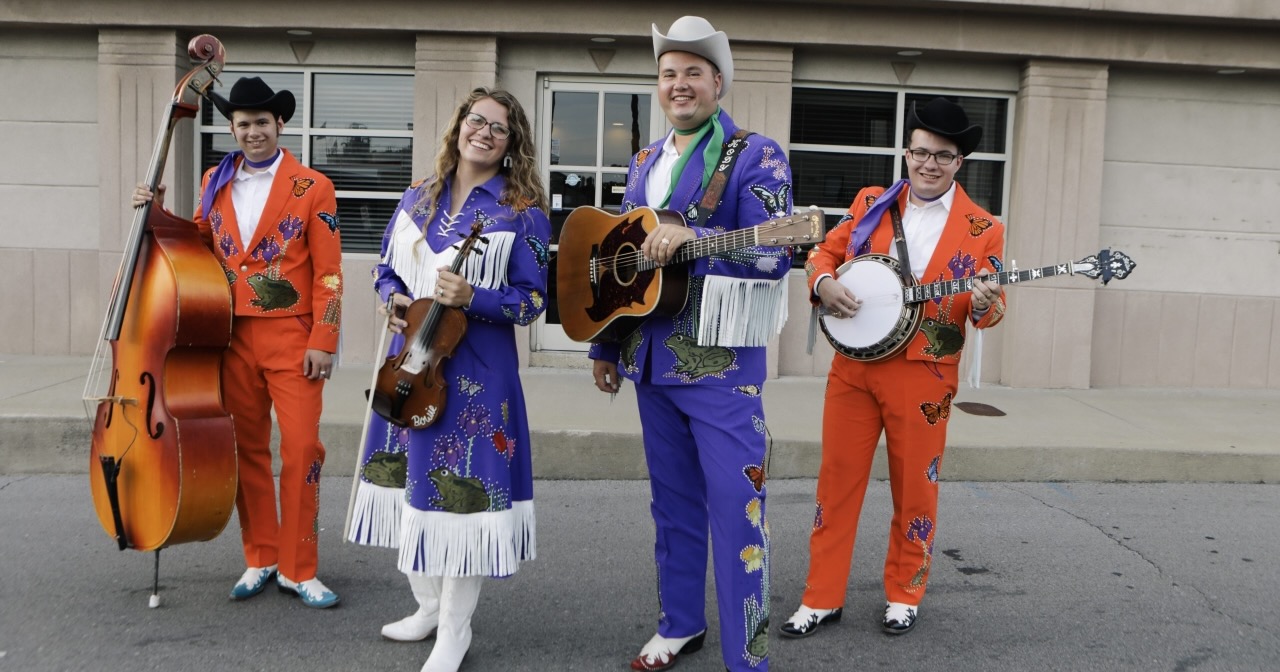
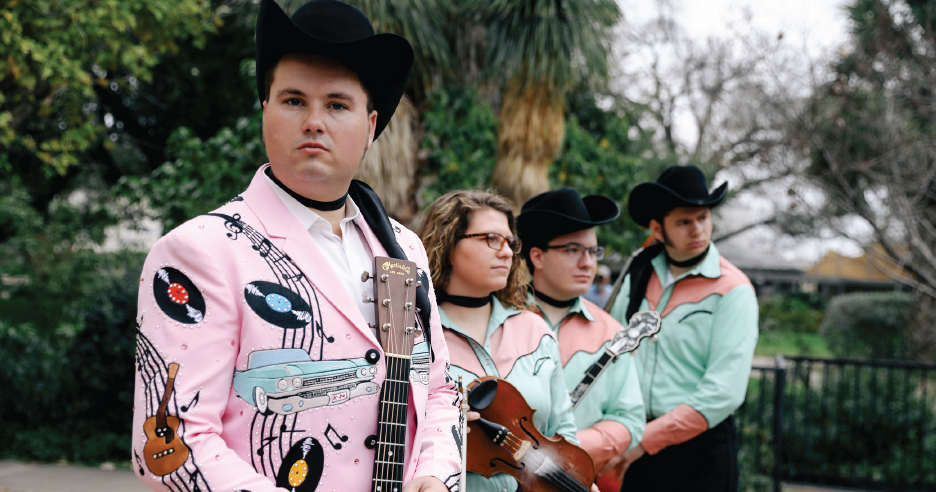
Artist: The Kody Norris Show
Hometown: Mountain City, Tennessee
Song: “Fidder’s Rock”
Album: Rhinestone Revival
Release Date: September 22, 2023
Label: Rebel Records

In Their Words: “The story of Fiddler’s Rock is one that I happened upon while in elementary school. It’s a story of an eccentric mountain fiddler by the name of Martin Stone, that often amused himself by playing his fiddle for a den of rattlesnakes. The legend says, he had the ability to charm the snakes to the point they would lay erect in the Sun. However, one day while watching the snakes in their trance, Mr. Stone was charmed and met his untimely demise.” – Kody Norris


Photo Credit: Radio Bristol
Video Credit: BubbleUp

WATCH: High Fidelity, “The Mighty Name of Jesus”

Artist: High Fidelity
Hometown: Nashville, Tennessee
Song: “The Mighty Name of Jesus”
Album: Music In My Soul
Release Date: September 15, 2023
Label: Rebel Records

In Their Words: “‘The Mighty Name of Jesus’ is an incredibly special song to me. It came to me at a time in my life when I was struggling with mysterious health issues, and all I had to get me through was my faith in the Lord. Early one morning, I woke up with it playing in my head like a recording. I knew I could easily fall right back asleep, and I actually started to, but I thought, ‘I better just grab my phone to record this.’ I was so sleepy that I actually forgot that it existed for a few days! When I finally remembered something about it and listened to the voice memo, I was a bit in shock. It was like listening to a song for the first time, only it was me singing it! I had gotten three verses and two distinct choruses that morning. As I wrote out the words, the fourth verse came to me, so I wrote it out, too. I could talk on and on about the amazing things with this song. I hope it is an incredible blessing to everyone who hears it!

“Much like the making of this song, there are so many special things I could talk about in the making of this video! Location after location fell through right up until the morning of the video shoot when the weather threatened to rain on our only day available for shooting. Love Circle was a location that came to me while desperately praying for ideas and direction, and it turned out to be absolutely amazing. The unique weather that day combined with our videographer Warren Swann’s artistic touch created an indescribable texture quality to this video that almost feels like Technicolor. It’s hard to believe that this is the first video High Fidelity has shot in our hometown of Nashville proper. The city has changed so much through the years, but we still love and care deeply for it. To be able to perform this song of healing and deliverance right there in our hometown with our beautiful city skyline behind us was beyond special. As the ‘songwriter,’ I feel so incredibly blessed to have received a song like this and to get to perform it with High Fidelity — I hope it can be a blessing and encouragement!”  ̶  Corrina Rose Logston Stephens


Photo Credit: Amy Richmond

WATCH: The Kody Norris Show, “Farmin’ Man”

Artist: The Kody Norris Show
Hometown: Mountain City, Tennessee
Song: “Farmin’ Man”
Album: All Suited Up
Release Date: September 10, 2021 (Single)
Label: Rebel Records

In Their Words: “‘Farmin’ Man” is a true-life account of the American farmer from my perspective. I grew up in a tobacco farming family in the mountains of eastern Tennessee, so I guess I had some firsthand experience of farm life and know all to well the ups and downs that come along with it. I feel that with this video we were able to capture on point the day-to-day life of the Farmin’ Man: the hard work, the struggles and uncertainty they face every day. We had such a great time filming this and it brought back so many memories of my childhood. I hope when fans see this they will take a minute to pay homage to one of America’s greatest heroes, the Farmin’ Man.'” — Kody Norris


Photo credit: Amy Richmond

Jeremy Stephens’ Old School Banjo Approach Is Made for the Present

Jeremy Stephens might be the most-featured musician in the history of this column. We’ve featured his band High Fidelity, IBMA Best New Artist nominees once again in 2021, twice over the past few years. Now he’s released a solo project entitled How I Hear It on Rebel Records.

How he hears it is how he plays it. Stephens’ banjo playing – and for that matter, his flattop guitar, archtop guitar, mandolin, bass, and beyond – is all at once effortlessly timeless and firmly grounded in the present. With acts like High Fidelity (which he founded with his wife and musical collaborator Corrina Rose Logston), the Chuck Wagon Gang, Jesse McReynolds, the Lilly Brothers, and others Stephens continually demonstrates a commitment to traditional bluegrass from long before the Bluegrass Album Band, Tony Rice, the Country Gentlemen, and other second- and third-generation groups began to eclipse their more old-timey, homespun, and gritty forebears. He has a penchant for Don Reno’s outside-the-box pickin’, and the chord-based licks, steel guitar phrases, and electric guitar back-up that were Reno’s signatures. 

Even with this perspective on the music — the earliest days of bluegrass being the string band aesthetic that resonates with him the most — his playing is neither antiquated nor backwards. At times, the most striking quality of his approach to the instrument is how in-the-moment it is. His techniques and musical vocabulary are couched so firmly in the past, yet never feel as if he isn’t expressing himself wholly in each and every musical and creative decision he makes. This fact remains true whether he’s playing something well-rehearsed, replicable, and measured or something purely improvisational. 

Though this column does focus on instrumental music — there are several astounding, hoot-worthy, slapdash, and gorgeous tunes on How I Hear It — it should be noted that Stephens can be just as present and in-the-moment with his banjo playing and improvisation instrumentally as when he’s singing harmony or lead, often a rare skill in banjo players. Anyone who’s enjoyed a performance by Stephens, the duo with his wife (billed tongue-in-cheek as The Stephens Brothers), High Fidelity, or any of the many bands that have featured Stephens as a sideman, will know just how jaw-dropping this talent of his can be. Acrobatic, nearly impossible Don Reno licks spat out rapid fire from his fingers while singing or playing syncopated against himself – it’s a sight and sound to behold. 

How I Hear It tracks “Sockeye,” “Lady Hamilton,” “The Old Spinning Wheel,” and “The Bells of St. Mary’s” perfectly capture the energy and ethereal quality of Stephens’ live playing in a way many more sterile bluegrass albums, and purposefully more modern sounding records, can only aspire to. With backing musicians such as Logston, David Grier, Mike Bub, Hunter Berry, and more, the entire project is the perfect vehicle to highlight and showcase this truly idiosyncratic — yet diversely and expertly pedigreed — style of banjo playing that’s all at both unapologetically old school and well-suited for a long, long lifespan into the future.


Photo credit: Amy Richmond

WATCH: High Fidelity, “The South Bound Train”

Artist: High Fidelity
Hometown: Nashville, Tennessee
Song: “The South Bound Train”
Album: Banjo Player’s Blues
Release Date: June 12, 2020
Label: Rebel Records

In Their Words: “Everything about ‘The South Bound Train’ just screamed High Fidelity to me, including the fact that it had been all but forgotten in the bluegrass collective consciousness. Jim & Jesse wrote and recorded it during their classic early ’60s era, but it was never released until the 1990s. It was such a strong song, especially with their arrangement, I thought, ‘We can’t not record this!’ Their version is led predominately by the banjo, and given High Fidelity’s love for the banjo, we wanted to put our spin on the song utilizing twin banjos. We have a history for pushing our own limits in this band, and I love the intensity of Jeremy and Kurt [Stephenson] singing and playing banjo at the same time on such an up-tempo number!” — Corrina Rose Logston, High Fidelity

“We had a blast making the video for this one, too. Corrina and I scouted the locations for the shoot with the help of a CSX employee that we met track-side in Northern Davidson County, Tennessee. He pointed us in the direction of an area with high volume and high speed rail-traffic, and that is where we went, finding the two locations that are seen in the video. It was very interesting being poised to shoot not knowing when a train was coming, but it all worked out great. We hope everyone else enjoys the video and the song as much as we did making it!” — Jeremy Stephens, High Fidelity


Photo credit: Amy Richmond

LISTEN: Band of Ruhks, “My Ol’ Tattoo”

Artist: Band of Ruhks
Hometown: Nashville, Tennessee / Kentucky
Song: “My Ol’ Tattoo”
Album: Authentic
Release Date: October 18, 2019
Label: Rebel Records

In Their Words: “‘My Ol’ Tattoo’ is a song that I had tinkered with for several years. I thought I had it finished a few times but really didn’t. We were having a writing session at Ronnie Bowman’s place with the awesome up-and-coming writer Billy Droze and I pulled this one out. They both loved it and we retooled it, making several changes that really nailed it. I had a Cajun feel in mind when I initially came up with the song and then when we got together to finish it, it took on a life of its own. I really like this one and owe Billy and Ronnie a ton for making it what it is!” — Don Rigsby, Band of Ruhks


Photo credit: Jeromie Stephens

High Fidelity: A Natural Feel for Traditional Bluegrass

It must be closing in on ten years since I first met Corrina Rose Logston Stephens, when she and I were both recruited into Retro & Smiling, a band devoted to the musical legacy of first generation Bluegrass Hall of Famers Don Reno and Red Smiley and their Tennessee Cut-Ups. Soon after that, the southwest Illinois native entered the music business program at Nashville’s Belmont University and began to establish herself as a formidable talent in the city’s bluegrass community.

In 2014, while working with a variety of bluegrass acts, including pioneering mandolinist (and Hall of Fame member) Jesse McReynolds, she and a couple of favorite colleagues—multi-instrumentalists Jeremy Stephens (whom she married that April) and Kurt Stephenson—did a little recruiting of their own in order to enter the long-running band competition at the Society for the Preservation of Blue Grass Music in America’s annual confab. With the addition of yet another multi-instrumentalist, Daniel Amick, and bassist Vickie Vaughn, High Fidelity won the contest, and a self-released album followed in 2016. The next year, the quintet signed with Rebel Records, and has now released their label debut.

Hills And Home is a stunning collection that, perhaps more than any other self-described traditional project, reveals the breadth of bluegrass music’s early years; it even features twin banjos, a rarity last featured a decade ago on Tony Trischka’s award-winning Double Banjo Bluegrass Spectacular, but once favored by artists like the Osborne Brothers and Eddie Adcock & Don Reno. And while there are a few familiar numbers, much of the album consists of relatively obscure works, like the Lilly Brothers & Don Stover’s “I Would Not Be Denied,” all rendered with an exquisite attention to detail that amplifies, rather than stifles, the fresh and compelling energy of High Fidelity’s approach.

As an enthusiastic fan of Corrina’s playing, I was curious to know whether she was wholly devoted to older styles of bluegrass, or whether the originality that was at the center of her senior thesis recording was still on her mind—and that’s where our conversation began.

You made an album of your own while you were at Belmont called Wind Caught My Bike, that was mostly originals written and played in a contemporary vein. And your album after that, Bluegrass Fiddler, was traditional. So are you still writing in a less traditional, more contemporary vein?

I am, I definitely am. But being a stylist in the sense of being able to separate styles and articulate those styles accurately has always been important to me, and something that I’ve admired. The person who I’d say is my biggest mentor, Jim Buchanan, he’s excellent at doing that; he can play like Jascha Heifetz, and then play Stéphane Grappelli, and then play some hoedown—and it all sounds different. Seeing that, being around people like him and Jeremy and Kurt made me want to do that. I wanted everything I did to be authentic, and only when I wanted to blend them, then I wanted that to happen; I didn’t want to be some mish-mash of things just because of my carelessness. But when I write, it’s just an outflow of [who] I am—a combination of all those influences. And there are no limitations on it, unless I want there to be.

Many of the musicians featured on the Bluegrass Situation are very eclectic, and it feels natural for these musicians to take elements from different kinds of music and put them together. And what I hear you saying is that you’re oriented more toward feeling that you want to be respectful of the integrity of a style; that’s what I hear you saying when you talk about being authentic. It’s a way of putting yourself into, rather than drawing from, that style. What’s attractive about that for you?

I am extremely detail-oriented. Everybody has to reign me in! So I think, why does this sound like this era of bluegrass and this person playing it, and why does that not necessarily. And if I want to convey a sound, then I have to abide by its specifics. I feel there’s a lot of power in being able to understand and articulate those things. You have people like Chris Thile, who understand those things and choose to put them together—as I do, in different situations—but I was always attracted to the first generation stuff, just probably because of how I grew up. And as I became closer friends with Kurt and Jeremy—I was 14 when I started playing in 2004, and I met Kurt in 2007 and Jeremy in 2009, and we were friends before we got serious dating—I saw them being able to segment that stuff, and that was always appealing to me.

High Fidelity is doing all old songs, but they’re by artists who sounded different from each other. Where do you locate yourselves between reinterpreting the song, which could be anything, and recreating the record?

I think the biggest thing is that there’s no formula, it’s all a feel thing. Somebody said—it could have been Chris Thile—that if you want to copy somebody, you should try it and see what happens, because you’re not going to end up sounding exactly like them. I, and I’m sure Kurt and Jeremy, have been in that place where you’re thinking, “I’m going to sound exactly like them.” Which is way harder than just saying, “Oh, this sounds like that to me.” So in High Fidelity, when we do “I Would Not Be Denied,” I’m not trying to sound exactly like the Lilly Brothers, or sing exactly like them, but I listen to what they’re doing, and I pull the highlights out of it.

High Fidelity’s sort of the convergence of that with many other added things, because Daniel and Vickie come from totally different places. Kurt and Jeremy and I grew up listening to it, and then Daniel and Vickie grew up listening to and playing music, too, but not the dyed-in-the-wool traditional bluegrass. And so they pull things out of different places. I think it’s a natural process, where you take in those influences, but you don’t obsess over sounding exactly like them, but you allow them to inform what you’re doing—and with your own constraints imposed of what you believe traditional bluegrass from that era sounds like, then something comes out that’s really interesting.

I feel blessed that High Fidelity has found this in a really natural way. I’ve never tried to sound like a man when I’m singing, but I listen to the timbre of the tenor singers’ voices, and I see that I need to push more with High Fidelity—much more than I do when I do my own thing. When I do my own thing, it’s just a natural outflow. So what ends up happening is that I don’t sound like I’m trying to sound like a man, but I’m trying to tap into the essence of bluegrass tenor singing. And then people are like “whoa, this is a girl singing this,”—and there are lots of things in High Fidelity that are interesting elements. Like when you look at a picture of us and then you listen to the music, there are some mind things that happen!

You’re strong in your faith, and in your musical preferences, and yet you guys are very much a part of a bigger musical and social community that’s built around bluegrass and the like.

Musically, that doesn’t ever seem like it’s an issue, because we each have a very diverse palette of what we like. Kurt plays with his wife, Andrea, and they do much more contemporary music—and of course, the things that I do are off the spectrum of insanity! Jeremy is also really rooted in old-time music, and he’s done a lot of commercial stuff with Ray Stevens, and things like that. I think there’s a stigma of, if you’re a traditional band, you don’t like any of that other stuff. But that’s not us at all. We went and played ROMP last year, and that was awesome; we didn’t feel weird there. We were proud and honored to be ambassadors for traditional music that day. So I don’t think we feel awkward about that; we love all these things.

And as far as our faith is concerned, the fact that we are all Christian people was just a coincidence that happened in putting the band together, and it was really cool. Because we were, wow, we can all approach these songs of the same mind. Which, other than Jeremy working with the Chuck Wagon Gang, is something that we had never really experienced in bluegrass band situations.

So the fact that we’re all Christians, and our example is Jesus…Jesus was out there doing stuff with everyone. There was nobody that was off-limits to him. And he said to go out there in the world and do stuff; be an example. That is a motivator for us, because we see ourselves as being a young traditional band, that are Christian, that are out there doing what we feel we’re called to be doing—being out there in the world. That’s what we feel the Bible says we’re supposed to do. So none of that ever really feels awkward as far as being part of the greater music community.

What do you guys hope that releasing this record will do for you?

The cool thing is that we started off doing what High Fidelity does because we just wanted to do it. We didn’t care what anyone thought. We thought it would be a sideline, cool, fun project, a recreational thing to supplement our musical endeavors. We never thought we were going to have a second record. And then people responded to it, and Rebel Records approached us, and we were like, wow, maybe we should do this.

Believe it or not, we had an existential crisis before this record. We felt like we’d pulled all the stops for the first one. Jeremy had had his little keepsake pile of songs forever, and he was like, “I’ve used all the gems, what are we going to do?” So we got to digging through stuff, and we amassed a bunch of stuff and sorted through it.

I say all that to say, we’ve really come with no expectations but to do what we wanted to do. And we’re satisfying ourselves musically in that way. One thing we never really focused on was putting ourselves out there. That’s always the burden of the musician, to have to do the business things. I love independently releasing things, and that’s very satisfying, but I know there’s a lot of things that come with having a record company behind you. Rebel has been amazing and I’ll never look at any of this the same way again. So I hope that the record gets us out there for people to know who we are, and I hope High Fidelity continues being a thing that grows. Before, it was a sideline thing, but it never stayed there. It just went like a rocket ship, and I hope the trajectory continues.


Photo credit (lead image): Warren Swann
Photo credit (within story): Russ Carson