Root 66: Reckless Kelly’s Roadside Favorites

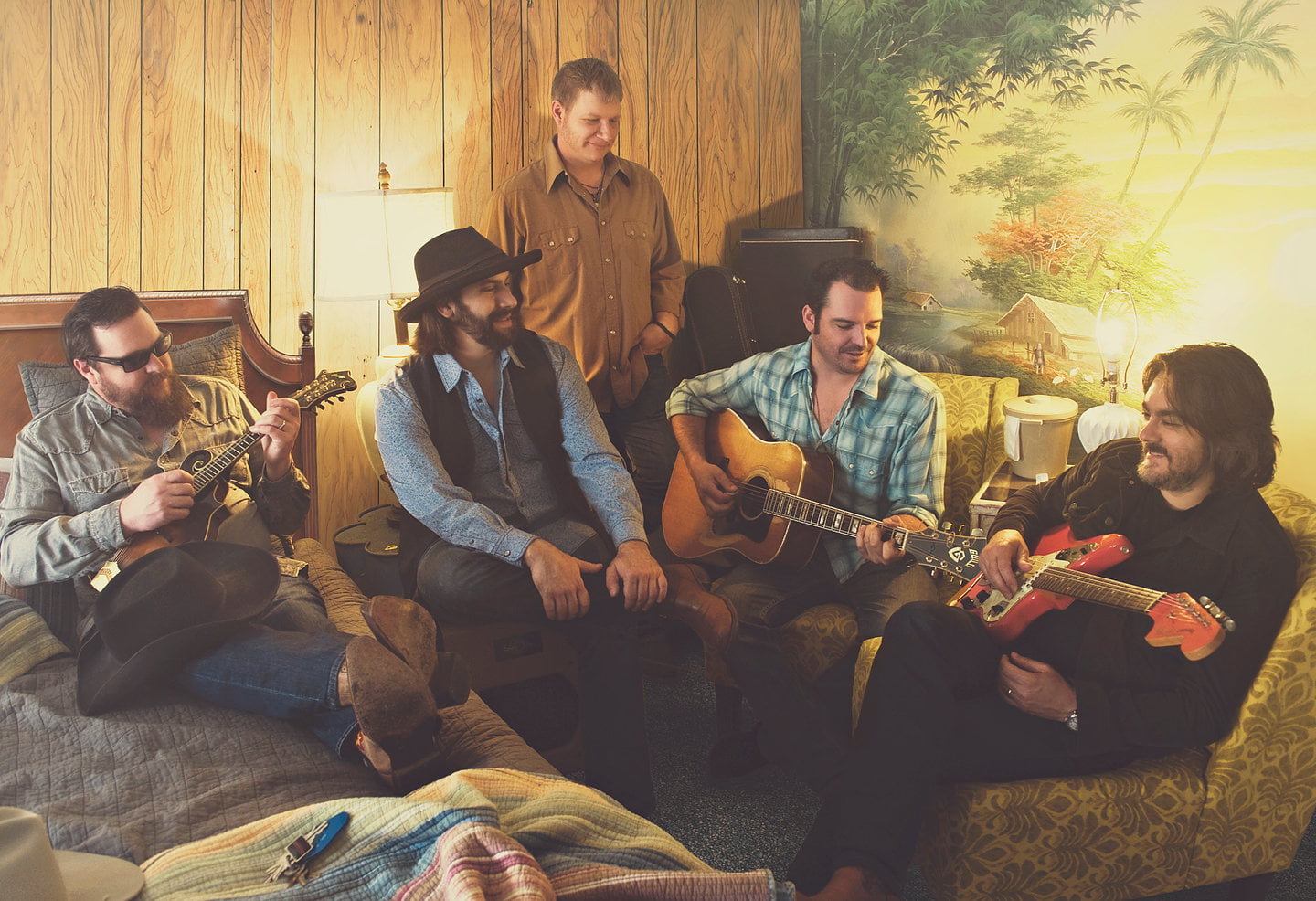
Name: Reckless Kelly
Hometown: Austin, TX
Latest Project: Sunset Motel

Tacos: Living in Austin, Texas, is like living in taco heaven. There’s a taco on every corner and you really can’t go wrong. We are currently involved in a breakfast taco war with San Antonio, which I believe we’re winning. They have some good tacos, too, but for my money, I’d have to say that Maudie’s has the best tacos in town, and if we’re gonna get specific, Pete's tantalizing breakfast tacos are the bomb. Flour tortillas filled with eggs, potatoes, cheese, sausage, and serrano peppers. They are already hotter than the fiery bowels of hell, but I like to put a little of their fantastic salsa on there, too … really ties the room together. 

Burger: One of the greatest little greasy spoons in the world is a little dive called Brown’s Diner in Nashville, Tennessee. It’s a little café with about an eight- or 10-stool bar that’s usually filled with songwriters eating their world famous cheeseburgers and fries while washing it down with a Budweiser for $1.10. We’ve been known to log in some serious sessions there … the kind where you order a second cheeseburger a few hours later because you’re still there and smelling those burgers will get you every time. I’m pretty sure they’ve never cleaned the grill, which may be the secret to the success of the cheeseburger. The also have a world class jukebox, filled with classic country.

Record store: Bop Street, in Seattle, Washington. It used to be right next door to the Tractor Tavern where we almost always play. They’ve moved a few blocks away, but as far as I know, are still alive and well, which says a lot in this day and age. I was in there once looking for a British copy of Revolver and the owner asked me what I was looking for. I told him I didn't see one, and he took me down to the basement where he had what he estimated to be 750,000 albums and three full shelves of Beatles. He had about 20 copies of Revolver, and I picked one out. I bet he had several hundred Beatles albums, an instant stamp of approval in my book.

Book store: Kevin and Dustin Welch always told me about City Lights Bookstore in San Francisco. It was on my list for quite a while before I finally made it in and, since then, I don’t miss an opportunity to stop in when we’re in town. I was on a big Steinbeck kick a few years back and was having a hard time finding some of his lesser known works. City Lights had them all. I think I spent a couple hundred bucks on Steinbeck alone and then had to haul a huge bag of books all over town for the rest of the day, but it was worth it. I still don’t think I’ve read them all yet.

Backstage hang: Speaking of San Francisco, there is a festival there called Hardly Strictly Bluegrass that is our favorite backstage hang. The festival is put on by the Helman family and they treat the artists and fans like royalty. It’s free to the public and there are no corporate sponsors, so basically, it’s all about the music. The back stages are all set up with comfy couches, chairs, and everything you might want backstage. The staff is second to none and they aim to please. They also have artist-only pathways between stages so you can easily get from stage to stage to watch other bands or get someplace fast, if you need to jump up and jam with someone. 

Gear shop: It’s called Austin Vintage Guitars. They have a huge collection of great old guitars and amps. They also have the best amp service in town and, for my money, the world. It’s the kind of place where, if you’re not in the market to buy anything, you better not go in, because there’s always a guitar or amp calling your name and making you re-evaluate your current financial situation: “Well, I guess I could sell the car, and do the kids really need new shoes?”

Listening room: There are some great listening rooms out there … but when someone says “listening room,” I immediately think of the Birchmere in Alexandria, Virginia. We played there with Robert Earl Keen a few times when Robert used to take us out on the East Coast with him when we were just getting our feet wet. They have a strict "no talking over the band" policy, and it was one of the first places I’ve ever seen people really listen like there was gonna be a test at the end of the show. It’s a beautiful room. I’ve heard a few people say things like, “I don’t like the Birchmere because they won’t even let you talk …” I’m always thinking, "Exactly."

Music Festival: I may be biased, but my favorite festival is one that my parents have been putting on since I can remember. The Braun Brothers' Reunion started in Stanley, Idaho, about 30 years ago and was held there on a flatbed stage at the scenic city park. We moved the fest to Challis, Idaho, about 15 years ago, and have built a permanent stage on the driving range at the local golf course. The driving range is a perfect natural amphitheater where fans spread their blankets, set up chairs and awnings. Kids will be rolling down the hill and tossing frisbees around while the music plays in the background. The views are incredible and the little town grows from about 800 to about 3,400 over the three-day weekend. Almost everyone camps out in RVs or tents since there are only a couple hundred rooms available, so there are all these little makeshift villages of people who return every year and reconnect with other music fans they’ve met there over the years. What started as a couple local bands playing to a couple hundred people from the back of a flatbed trailer has turned into a three-day event with acts like Chris Hillman, Alejandro Escovedo, Robert Earl Keen, and the Randy Rogers band. The list goes on and on … It’s a unique festival and we’re really proud of it!

Driving album: My favorite driving music lately is live Bruce Springsteen bootlegs. I have a place up in Idaho that’s exactly a four-hour drive from the airport to the front door, and my friend Dale is a big Boss fan so he always sends me Bruce bootlegs. Since he varies his set list so much and plays for almost four hours a night, one show will pretty much get me home, and another will get me back to the airport. It’s a great way to pass the time on a drive that I’d otherwise be getting pretty sick of.


Not a bad view from tonight's show at #LazyGators in Lake Ozark, MO!

A photo posted by Reckless Kelly (@recklesskelly96) on

Car game: Our favorite car game as kids was “Name That Tune.” The rules were simple: We’d crank up the radio and the first person to yell out the artist and song got a point for each, and a bonus point for getting both. If you guessed wrong, you lost a point. We also had what we called a lightning round, which was when dad would hit the scan button and it would stop on every station for about five or 10 seconds. You could really rack up the points during a lightning round. If dad was falling behind, he’d always stop on the oldies station for a few songs and kick our asses.

Dive bar: There are so many great dive bars out there that it’s hard to narrow it down to one favorite. I have my favorite one here in Austin, but I don’t want it overrun with hipsters, so I’ll tell you about another one … Mary’s Club in Portland, Oregon, is one of the best dives ever. It’s a little hole in the wall with cheap drinks, classic drunks, and great bartenders. It’s also the oldest topless bar in Oregon, but you’d hardly know it was a strip club except for the topless dancers who pick their own songs on the jukebox that’s on stage, and sometimes they have to borrow a buck from someone to get started. We’re not really big strip club guys, but in a world of great dives, this one is right up there … and there just happens to be a topless dancer in the corner.

Highway stretch: Of all the cool stretches of highway in America, I’d have to say the coolest and most breathtaking one is Route 1, or the Pacific Coast Highway, out in California. You’ve got the ocean on one side and hillsides on the other. You pass through Big Sur and a bunch of cool little overlooks along the way. It’s hard to keep your eyes on the road! I’ve written a lot of songs about the road and that stretch of highway has inspired a few of them. I camped out on a cliff overlooking the ocean for a few days one time and wrote songs. When I left, a guy pulled in with his camper and asked if he could take the spot when I left and that he had always tried to get that particular site for years and couldn't believe his luck. Since I was flying out, I gave him a few leftover bottles of good wine a friend in Carmel had given me. I thought he was going to cry. Pay it forward! 
Root 66: Chris Stalcup’s Roadside Favorites

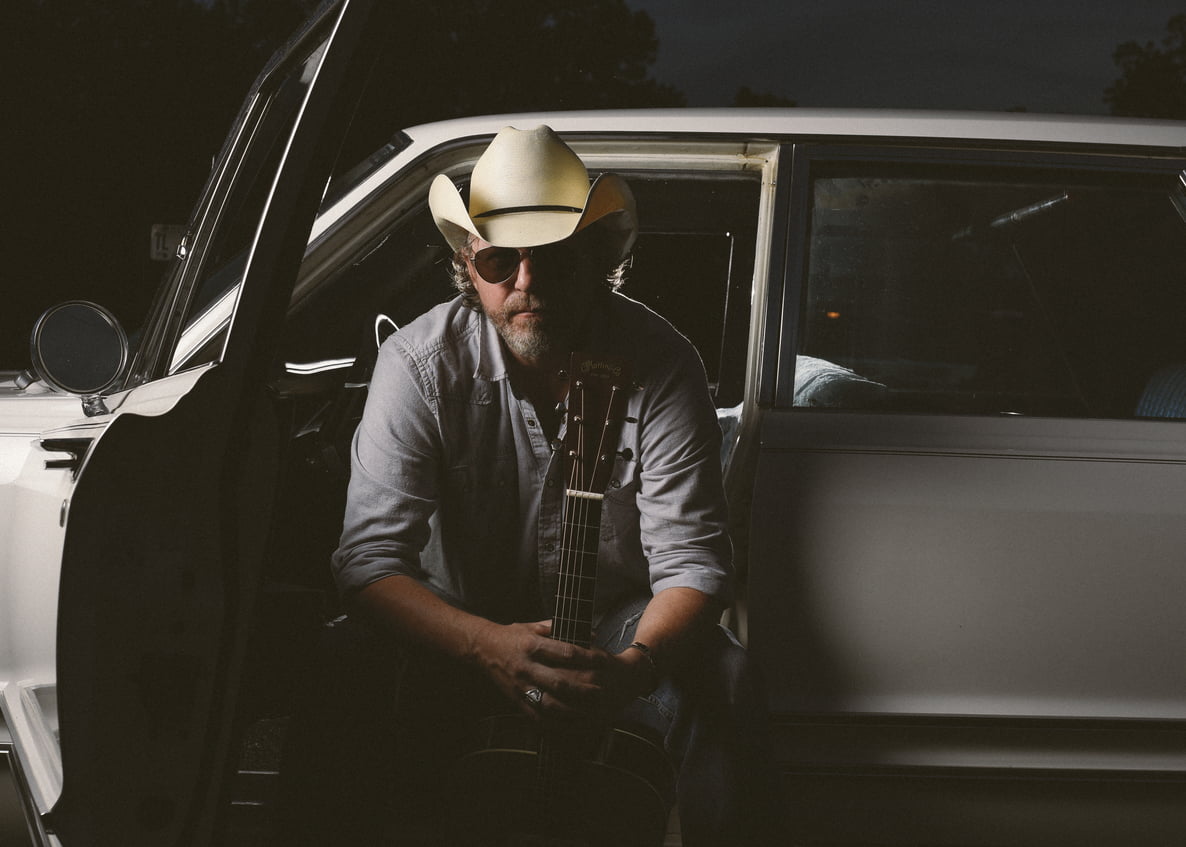
Name: Chris Stalcup
Hometown: Acworth, GA
Latest Project: Downhearted Fools

We tend to spend a lot of time in the Southeast and especially around Charleston, South Carolina. There is so much great food to be had there that it is hard to limit our favorites from all over, but there is something to be said about consistency and we hit these spots more yearly than any others it seems, so here goes:

Favorite BBQ: Home Team BBQ — Charleston, SC. Everything is fantastic, but their smoked wings and mac 'n' cheese are the best on the planet! They have three locations now in and around Charleston, and we have played each one of them. On top of great food, they are just awesome places to hang out full of great people. They only book Americana and they certainly know how to take care of the bands.

Health Food: The Tomato Head — Knoxville, TN. We look forward to playing the WDVX Blue Plate Special so we can go eat here after the gig. I don't now if it is considered "Health Food," but it is about as healthy as any of us eat in one sitting together, so we will give it that. Half the band is vegetarian and they have lots of great veggie options.

Cinnamon Rolls: Lost Dog Café — Folly Beach, SC. Cinnamon rolls are a crutch and, if they are made in-house, then I have to try them anywhere we go. The bar is high on this one for us, as our producer/engineer Ben Price's mother makes them from scratch and those just can't be beat, but if anyone comes close, it is most definitely the Lost Dog Café. They are huge and amazing. They are actually called "Awesome Cinnamon Rolls" on the menu and the place is awesome, too.

Tacos: Juanita Greenberg's — Mt. Pleasant, SC. We eat tacos everywhere. Something about Juanita Greenberg's tacos, though, seem so fresh. Plus, they are open late, so we can usually grab a few after a gig. I am a sucker for shrimp tacos and fresh salsa.


Low and Stalcup together again at last!

A photo posted by Chris Stalcup & The Grange (@stalcupandthegrange) on

Favorite Pizza: Basically anywhere that has pizza after a gig. If we find a local pizza spot before a gig and we know they will be closed once we are done, then we get a large cheese pizza to eat for later. There is a spot next to Juanita Greenberg's in Mt. Pleasant we try to hit when we can called Andolini's Pizza. Great, laid-back spot with plenty of room for a band to hang out, too.

Favorite Road Snack: Besides boiled peanuts just about anywhere, Holy City Popcorn in Charleston, SC, rocks my world. I can eat bags of their "Pinckney's Pecan" (caramel and pecan) popcorn while driving with coffee. Anytime we play Charleston, we meet up with them and get about a dozen bags and usually three or four of them are gone the first night.

Listening Room: High Cotton Music Hall — Hartwell, GA. This place has been a bluegrass venue for decades, lined with church pews and stadium seats, and it holds about 100 people — all real music lovers. The staff is laid back and friendly, and the people that come to hear you are some of the nicest folks and biggest supporters you will ever meet. We even had a guy bring us an entire Boston Butt he had smoked for us the last time we played there! If you play here, bring lots of merch!

House Concert: Scott Low's Grouse Mountain House — Clayton, GA. Scott and I have become friends through playing gigs together (and he is one hell of a musician). When he is not on the road hustling it like the rest of us, he puts on these house concerts in his living room in the mountains of North Georgia. Grouse Mountain House is a cabin on top of a mountain with spectacular views. Lots of local folks show up on a Sunday night for a potluck-style dinner and several great local and traveling acts. It is one of the most peaceful and pleasant gigs, packed with the most attentive audience sitting inches from you. No P.A. — just you and your instrument belting out your tunes. (Note: This also contends for best backstage hang.)


Hendershots Coffee. 8pm.

A photo posted by Chris Stalcup & The Grange (@stalcupandthegrange) on

Music Festival: Wildwood Revival — Athens, GA. Just on the outskirts of Athens, on a 30-acre farm, with "the soul of a juke joint, the wild spirit of a honky tonk, and the camaraderie of a supper club." We haven't played it yet (wink wink) but it is our kind of place — laid back and chock full of amazingly talented musicians and artists. Definitely one of the most intimate festival experiences I have ever attended.

Airport: Savannah, GA. The easiest and cleanest, by far. Get in and out with no wait, usually, and so easy to navigate. Quick flights to and from Atlanta make it easy for us to get down to Richmond Hill to write songs like "Ogeechee River."

Driving Album(s): There is no way to pick just one or a few, but here are a couple that I lean on heavily. Hiss Golden Messenger, Poor Moon: This album was on repeat as I drove solo across the West for days. I could actually just listen to the song "Blue Country Mystic" forever. It is the most amazing piece of music I have encountered in a long time. Lucero just slays me. I got to open for them once, and that's another story, but they are as real and raw as it gets for me. And we also listen to any and everything our buddies are doing. We have some amazingly talented buddies making some of the best music right now. Check it out on the playlist. 

Radio Station(s): WNCW out of the North Carolina when we can get it. This is where I first heard Ryan Adams on a radio station, long ago. Driving to Charlotte in the middle of the night, "Oh My Sweet Carolina" came on, and I knew if they were playing him that I had to find out who else they played. My band and I, at the time, would scour WNCW for new music and find tons of great stuff we had never heard of. I am also loving this brand new all-Americana format station in Murfreesboro, TN — 89.5 WMOT. We did an interview in-studio last week at a station next door to them at MTSU with Justin Reed and, after our 7:30 am sleepy performance and awkward pre-coffee banter — sorry Justin — I walked over and, lo and behold, there was John Walker at the helm. It blew my mind, and I didn't know what to say, so I gave him a copy of Downhearted Fools and tried to play it cool. I don't do that very well, so I'm sure it was nowhere near as smooth as I was hoping for.


Rock 'n Roll Breakfast! Thanks @theholycitypopcorn #popcorn #Coffee

A photo posted by Chris Stalcup & The Grange (@stalcupandthegrange) on

Highway Stretch: I-16 in Georgia from Macon to Savannah. Desolate as all hell to drive through the night on, but so good to ponder life and wonder why anyone would choose to do this for a living. It is usually my drummer Paul Barrie and me talking about the expanse of the universe and what it all means while we count the deer.

Coffeehouse: It is a tie between Rev Coffee in Smyrna, GA, and Hendershot's Coffee in Athens, GA. They both make great coffee, but the people and the environment at both feel like a living room — so relaxing. Hendershot's has a great stage and the sound is amazing there. Make sure to try their Nitro Coffee.

Backstage Hang: Awendaw Green Barn Jam — Awendaw, SC. If you haven't been to a Barn Jam at Awendaw Green, I suggest you remedy that immediately. This place is some kind of wonderful with brass instruments hanging from old live oaks, lots of great food, and usually about five to seven bands per night. I am pretty sure they do this every Wednesday night, rain or shine. They have had us down a few times, and we always try to fit it into our runs when we are down that way. I have met some of the most interesting people there and some amazing musicians.

The 2016 Americana Music Awards Winners

The 15th annual Americana Music Association Honors & Awards Show happened last night at Nashville’s famed Ryman Auditorium. Led by host Jim Lauderdale, the festivities honored Bob Weir, Shawn Colvin, Billy Bragg, William Bell, and Lauderdale with Lifetime Achievement Awards.

Each of those recipients also performed, along with Rodney Crowell, Steve Earle, Emmylou Harris, Jason Isbell, Nitty Gritty Dirt Band, Bonnie Raitt, George Strait, Alison Krauss, and quite a many more backed by a Buddy Miller-led house band. Presenters include Jack Ingram, Timothy B. Schmit, Taylor Goldsmith, Wynonna Judd, the Indigo Girls, Bruce Hornsby, and Joe Henry.

Winners are in bold.

Album of the Year
Something More Than Free — Jason Isbell, Produced by Dave Cobb
The Ghosts of Highway 20 — Lucinda Williams, Produced by Greg Leisz, Tom Overby, and Lucinda Williams
The Very Last Day — Parker Millsap, Produced by Parker Millsap and Gary Paczosa
Traveller — Chris Stapleton, Produced by Dave Cobb and Chris Stapleton

Song of the Year
"24 Frames" — Jason Isbell, Written by Jason Isbell
"Dime Store Cowgirl" — Kacey Musgraves, Written by Kacey Musgraves, Luke Laird, and Shane McAnally
"Hands of Time" — Margo Price, Written by Margo Price
"S.O.B." — Nathaniel Rateliff & the Nightsweats, Written by Nathaniel Rateliff

Artist of the Year
Jason Isbell
Bonnie Raitt
Chris Stapleton
Lucinda Williams

Duo/Group of the Year
Alabama Shakes
Emmylou Harris & Rodney Crowell
Lake Street Dive
The Milk Carton Kids
Tedeschi Trucks Band

Emerging Artist of the Year
Leon Bridges
John Moreland
Margo Price
Nathaniel Rateliff & the Night Sweats

Instrumentalist of the Year
Cindy Cashdollar
Stuart Duncan
Jedd Hughes
Sara Watkins

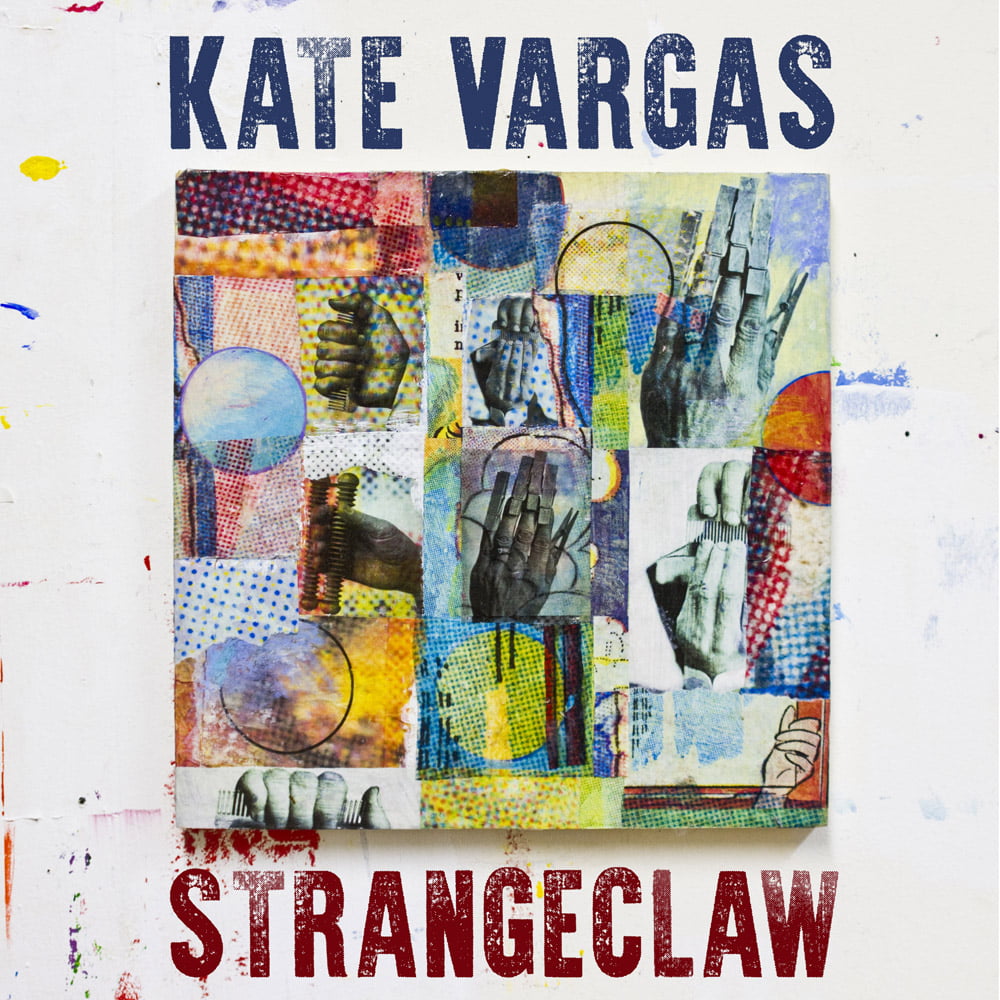
STREAM: Kate Vargas, ‘Strangeclaw’

Artist: Kate Vargas
Hometown: New York City
Album: Strangeclaw
Release Date: September 13

In Their Words: "Picture yourself walking through the desert, miles and miles of dirt and tumbleweeds that stretch straight out to what looks like the edge of the earth. You’re ambling along and you spot something there, sticking out of the dry ground. You pick it up and dust it off. It’s a strange claw of some sort. Where did it come from? Why is it here? Your mind creates curious, sinuous scenarios, so delightfully odd that you can’t help but lean into them. That’s the goal of this album." — Kate Vargas


LISTEN: Kingsley Flood, ‘Try’

Artist: Kingsley Flood
Hometown: Boston & DC
Song: "Try"
Album: Another Other
Release Date: October 14

In Their Words: "I spent this album talking about my own identity, and the politics defining it. I keep coming back to this idea that change – on the political level – is hard to come by. For 'Try,' I brought that idea to the personal level, and this fear I have of complacency. I wrote this tune after seeing an older couple in a restaurant not say a word to each other their entire dinner. And I got freaked out that age would lead to complacency and suck any excitement out of life. I swore in that moment that if I ever realized I was that set in my ways, I would find a way to change and inject some life into my life." — Naseem Khuri


With Headphones on the Floor: A Conversation with Chely Wright

Though singer/songwriter Chely Wright made her name on the country charts back in the ’90s, her new album’s quiet confidence showcases what is probably the truest side of her: a conscious and caring, creative and compassionate woman rooted in faith and family above all else. Produced by Joe Henry, I Am the Rain features 12 tunes written by Wright, along with one Bob Dylan cover that feels right at home in the set. It also continues the artistic recalibration Wright began with her 2010 Rodney Crowell-produced release, Lifted Off the Ground.

Congratulations on a hell of a decade you’re having. Can I just say that?

[Laughs] Yeah. It’s been pretty crazy. I’ve been really contemplative in the past few weeks as I’ve been doing some press about, “Gosh, what has happened in the past decade?” It’s been pretty action-packed.

Check my timeline. I was just putting it together. In 2010, you came out publicly, Like Me was published, Lifted Off the Ground was released, and the LikeMe Foundation was established.

Yeah.

In 2011, you got married … happy anniversary, by the way.

Thank you! Yep.

And the Wish Me Away documentary … which, kudos. That was so brave.

Thank you. I’m really happy with it.

Then 2013, the boys.

Yeah. Wait. Hold on. Got knocked up in 2012.

Okay. We’ll put that in. [Laughs]

Well, I mean, being a lesbian, it’s a little bit more than a back-seat of a Pontiac and tequila. It takes some getting done. [Laughs] So that’s important for the timeline.

Indeed. Then, 2014 was your huge Kickstarter campaign. So did you make the record last year or this year?

We made it in 2015 — 2014 was Kickstarter and my mother died in May. That really was a seminal moment in the process of the itch. You’re a creative person, you know. If you’re thinking about a piece you want to write, you write a lot of it in your head, I’m sure: “What am I going to say? What does it mean? What’s the point? What’s the art?” Then you get an itch when you know to sit down and start typing. My mom’s death in May of 2014 was the itch that caused me to go to my pile of songs and start taking inventory of what I had.

Got it. That Kickstarter campaign must’ve made you feel REALLY great. Did you write the songs and plot the record after that? It probably directed a lot of how you went about things, yeah?

I’ll answer both questions: Did it make me feel great, the Kickstarter? It made me feel things I didn’t know I needed to feel. When my managers and I discussed crowd-funding, at first, I was like, “That sounds like something other people do. I don’t really think I want to do that.” But Russell [Carter] was like, “You have to pay attention to the way history is changing. It’s not begging for money. It’s, essentially, a pre-sale.” He said, “More importantly, it re-engages you with your fans.”

I didn’t really hear that, when he said it. So, in my mind, when we kicked the whole thing off, my thinking was that a successful campaign would be to get funded. I quickly understood that the success of it, for me, was to reconnect with fans that had been following me for 20 years and new fans that I could connect with. More sentimentally, I was reminded that I didn’t lose all of my fans. I didn’t even lose half. Maybe I lost 30 percent of my fans because there were people saying, “You don’t know my name, but I love your records.” Or, “I saw you in Bagdad.” Or, “I saw you at the Nebraska State Fair in 1996.” It was emotional for me, in that regard.

But you probably picked up just as many from the documentary and all the other stuff, I would assume.

Here’s the thing about those new fans coming aboard: More people, in other demographics, became aware of me because I’m the new lesbian on the street, right? And they would go to my Facebook page and hit “Like,” I think, out of support for my coming out. But there’s a big chasm between somebody who doesn’t typically like what we think of as country music and their clicking “Like” on Facebook. They’re like, “I’m going to click ‘Like’ because I like what she did, but I’m not going to buy a country record.” So, a lot of those new people aware of who I am because of coming out — it doesn’t necessarily translate into record-buying, concert-going fans. In some cases it did, though. And that’s great. I love it.

And, to answer your second question: Did I write the songs before or after the Kickstarter? I think 70 percent of the songs that ended up on the record, I wrote before. And 30 percent after.

This record, it’s polished and pretty, but it’s not slick, I guess.

Ding, ding, ding! [Laughs]

[Laughs] Yeah, yeah. It continues to stake your ground in the more roughly hewn Americana world, which may be surprising to people who only know you from the way-back radio hits. What would be your message to those folks, in terms of getting them to keep listening, or re-listen, or start listening?

I love that you say that it continues to stake a claim there in the Americana world. It’s not slick. When you make a record with Joe Henry, if you want to make a slick record, you might as well put your guitar back in the case and leave.

And go on home.

[Laughs] And go on. Because Joe Henry … I mean, I learned a lot on my last record with Rodney Crowell, and I learned a lot with Joe. It was terrifying, frankly, the notion of working with Joe because I know what he does. And what he does is, he brings in everybody and demands that they bring their A-game for every second that they’re in there. There’s no going back and fixing. There’s not a “We’ll do this, then put a real guitar overdub on later and you can tidy up your vocals.” You have to get it when the band gets it. That’s scary for a person who’s made 20+ years of records that you can make them slick.

Punch-ins and vocal comps galore, right?

Yeah. Yeah. I had to unlearn a lot. I wanted to unlearn a lot of that stuff. You know when you go play golf and everyone’s watching you hit the ball? You don’t want to use your new grip, you just want to go back to that old one you know you can hit it with. But, if you want to change your game, you really have to go out there and swing with your new grip.

[Laughs] Ummm … a golf reference?!

[Laughs] I know, right? That’s how I equate it. There’s that temptation to use your old grip. But I went in fully trusting Joe and, frankly, fully trusting myself that this was worth being courageous. For that, I feel like we have a record that sounds like somebody hit record at a really good live show.

Working with Joe and some of my favorite players ever … plus your voice … other than the nerves, that’s a recipe for success, right there — that combination.

Well, one would hope. Our intention, with this record, was that it’s a narrative. It’s not meant to be listened to on your computer speakers while you’re emailing. You put your phone down. You put your favorite headphones on. You lie flat on the floor. You hit play. And you take in … I don’t even know how many minutes the record is. Do you know?

Let’s see … 13 x four-and-a-half …

I’ve got some long songs on there, friend.

Yeah, you have that fiver at the end, but you have some fours and three-and-a-halfs …

Alright. Yeah. Well, what we intended and hoped for people to do is put their favorite headphones on and hit play and follow along and absorb it. I’m guilty, even these days … I bought somebody’s record the other day and had the nerve to listen to it on my iPhone speaker. Halfway through the second song, I was like, “Shame on me! What am I thinking?!” [Laughs] Isn’t that awful?

Headphones on the floor … with maybe a little wine or … something … that’s my favorite way to listen to a record. It just is.

[Laughs] That’s how you do it! That’s what I want. If you glean anything from our discussion today, please pass along that that’s what I really want is for people to take a moment and absorb it in the spirit it was intended. Because Joe and I are really proud of it and we hope people find something in it that moves them.

How did those groovy little cameos come about with Emmy, Rodney, and the Milk Carton boys?

Well, first of all, Rodney … I call him Shep because he’s my shepherd and he has been for a long time. He and I co-wrote one song on the record called “At the Heart of Me.” It’s a song I had written and I brought Rodney in on. It was completely finished and we decided to let Joe join us. We never shared with him the actual music of it. We gave him the lyric, and he helped re-shape the lyric and the new melody. So Rodney was on the record, but it didn’t seem like that was a song to put him on.

But Joe and I had written a song called “Holy War” and Joe called me about five days after I got home from the sessions and said, “Hey, I called Rodney. I’m going to have him come in and see what he can render on ‘Holy War.’” I said, “Of course! Why not?! That makes sense.” What I love about Rodney on the record, it really does sound like … Rodney and I have done a lot of shows together and we end up around one microphone in the middle just singing … and it really sounds to me like a live take of a show.

What’s funny is that I get press releases all the time claiming “This record features Emmylou Harris,” “This one has Rodney Crowell,” and “This one has Milk Carton Kids.” You got the trifecta!

[Laughs] I did! I’m telling you: I’ve always been the luckiest person I know. I don’t know why, but I’m like Forrest Gump. I walk into these really great situations.

So Joe called me, again, about a week or so after I got back, and said, “’Pain’ is really raising its hand. It’s really standing up for itself, wanting to be seen. I think I’d really like to get somebody special.” We did some talking and who doesn’t agree that Emmylou Harris is just about as special as it gets. What made me so happy about her vocal is that she said, “I just want to match where you are. I just want to match the emotion of what you’re singing.” Hearing Emmy’s heartbreaking voice, her haunting voice, on a record of mine … not to mention a song I authored … I made up these lyrics and SHE’S SINGING THEM! What?! [Laughs]

[Laughs] Yep!

And it gets better when you know that, shortly after I moved to Nashville in 1989, I chased her around a Kroger at midnight one night. [Laughs] I came from a place where we didn’t have 24-hour grocery stores. When I got to Nashville, I worked at Opryland, and I got off my shift and needed groceries, so I went to Kroger. I’m buying my stuff and I see this beautiful woman that looks a lot like Emmylou Harris, so I start trailing her a little bit — like eight cart lengths behind her. Chased her down a couple of aisles and finally she turned around and said, “Yes. It’s me.”

[Laughs] Perfect.

[Laughs] I just nodded and turned around and ran the other way. So … 27 years later that she’s singing on a song I wrote … Isn’t that the American dream? Isn’t that what everyone wants?

I read in a Rolling Stone interview where you said, “Who doesn’t want to grow up to be Emmy or Loretta?”

Well, that’s true.

Did she pass along any advice to get you there?

Not directly. But one only has to watch what she’s done. That’s the perfect advice. When Rodney and I made Lifted Off the Ground, that was part of the discussion: I want to be a 55-year-old, 60-year-old woman sitting on a stool with 200 people showing up wherever I decide to play singing songs that I can believably sing. And say something. And feel good about saying something. She’s the gold standard — she and Loretta and Dolly. That’s as good as you get.

And then those crazy Milk Carton Kids … Joe Henry has a relationship with them. It was his idea to make the Bob Dylan song really jump off the page and I think they did magical work on it.

Speaking of … watch what I do here: Same Rolling Stone piece, you talked about how the pronouns in your songs wouldn’t suddenly go gay. But on the Dylan song — “Tomorrow Is a Long Time” — you sang it like he wrote it, which I always appreciate. I hate it when singers flip it so they don’t come off as … whatever. The beauty of storytelling is setting yourself aside and allowing space for listeners to insert themselves into the story. Is that your thinking, too?

First of all, I just love the craft in that sentence. That was really beautiful, a really great couple of sentences that you just spoke there. [Laughs] That is, I think, the beauty of storytelling. If you listen to my last record, there’s nothing on there, except for the song “Like Me,” where it’s clear I’m talking about a woman with whom I’m having a relationship. It’s not clear, in the other songs, if I’m singing as a straight woman or a gay woman. For this record, I’m singing a song called “Mexico” and I’m not singing as me. I’m the waitress in the song.

But, as far as the Bob Dylan song, I didn’t want to change it … for a couple of reasons. Bob Dylan is perfect and how dare I alter anything. But I really loved … it’s so intimate and it’s so truthful for me to say, “If only she was lying next to me, I could lie in my bed once again.” To me, it would’ve felt too cheeky to change it.

It’s interesting, though, isn’t it? Like, Patty Griffin, her pronouns are all over the place and nobody ever brings anything up. But as soon as you or Brandy Clark sing something either way …

The thing about Patty Griffin — which, by the way, when I say her name, I sign the cross on my chest — she was never part of the commercial machine that would dare question something so trivial and small. … Patty is the ultimate … she is the character singer. We don’t know anything about Patty Griffin, the person, really.

No. And she won’t give it up in an interview, either. I can tell you that.

She won’t. That, to me, is just a different way of approaching her art. And, boy, it’s paying dividends for her listeners. We love it, right?

We really do. Talk to me about the difference in feeling you get from impacting someone’s life with your activism or your charitable endeavors versus your music.

That’s another … you’re on fire today!

Thank you!

Without a doubt, receiving a letter or speaking to somebody … I got a beautiful letter today from somebody in Washington state, a young person, that said my book saved their life and my film helped start a repair with their parents. There’s no comparison. That’s it. That’s the most gratifying, the most heart-warming, the most invigorating, humbling thing I can experience.

And you wouldn’t have that platform without the music, so they are really kind of inseparable, in a lot of ways.

That’s a great point. That’s a really great point. There was criticism, when I first came out. I remember seeing a few things. People’s rants about “She did this for attention” … which is ridiculous. I don’t know of anyone … that’s obviously spoken from a straight person. Or people who say, “I didn’t get an award for coming out as straight!”

Yeah, because did their family disown them for that? Did they contemplate suicide for that? Really, guys?!

Right. Yes. When people have been critical, and I don’t hear it so much anymore, but when people have been critical about my coming out publicly the way I did, my feeling is, “I’ll tell you what: You go move to a city, from a podunk Kansas town, with thousands of other people who want the job that you want. You get the publishing deal. You get the record deal. You go on all the radio tours. You do all it takes and work with the record label and bust your tail end and you get a couple of hit records and then you decide what you’re going to do with that.”

I made my decision and it was the best thing I ever did — not just to come out, but to come out the way that I did. I look at my life now … my wife and I are celebrating five years and I just know I wouldn’t be alive, had I stayed in the closet. So, life is good.


For more on country singers going Americana, read Kelly’s interview with Wynonna Judd.

Past Perfected: Carrie Rodriguez in Conversation with Paul Burch

On paper, the concepts behind new projects by Carrie Rodriguez and Paul Burch might sound a bit formalistic — hers, a cross-cultural translation of generations-old Mexican ranchera songs and appreciation of her great-aunt Eva Garza’s overlooked recordings; his, a fictionalized musical memoir of pre-electrified pop star Jimmie Rodgers detailing, among other things, Rodgers's final, tuberculosis-hobbled trip to record in New York City. But, in reality, Rodriguez’s Lola and Burch’s Meridian Rising are truly dynamic albums, animated by the imaginative work of Rodriguez and Burch mastering nuances of musical style and cultural context, then allowing themselves ample room to play.

The seeds of both song cycles were planted years ago. Early in her fiddle-playing career, before she’d established herself as a duet partner to Chip Taylor or ventured out as a solo singer/songwriter, Rodriguez received a package of CDs burned from her great-aunt’s hard-to-find vinyl records and found herself transfixed. As for Burch, one of the driving forces behind a vintage country revival that overtook Nashville honky-tonks two decades ago and a standard-setter for roots smarts ever since, he was quite taken, too, when he came across an obscure recording of Rodgers and blues guitarist Clifford Gibson.

Have you two crossed paths before?

Paul Burch: Well, we actually did a long time ago. I think I opened for you, or we played a double show, at the Borderline.

Carrie Rodriguez: Yeah! With Chip [Taylor], right?

PB: Yes. Ages ago.

CR: I do remember that.

So you’re talking a number of years ago.

PB: Yeah. I’d say 10 or more. Does that sound right?

CR: Uh huh. Yeah. Because I was playing with Chip in my early 20s up through maybe 2006 or something. So it had to be before that. Whoa. Old.

PB. No, no. You’re not old.

It occurred to me that it might not seem immediately clear why I’d want you two to get on the phone together.

[Both laugh]

From my perspective, you’ve both released remarkable new albums that conjure long-gone musical figures in fascinating ways, but your approaches to doing that are very different. I thought it would be illuminating to put your ideas in conversation.

CR: Okay.

PB: I love it.

You both work in contemporary roots music, which often gestures backward in very general ways. But, with these projects, you’ve each brought such specificity to the act of engaging the past. Did you think of what you were doing as upping the ante?

PB: Hmmm. I’ll let you go first, Carrie. Ha!

CR: [Laughs] I was really hoping you’d go first!

PB: Okay, alright, alright. I’ll go first. For me, I don’t think of what I’m doing as reviving anything, or even revisiting anything old, because it all feels contemporary to me as long as it speaks to me. And I don’t mean that defensively at all. I think that’s part of my sort of cuckoo clock sense of time. I understand that it can be seen as old or revisiting an old style.

The record that you’re talking about is based on the life of Jimmie Rodgers. So I thought, “Why not fill the songs with the sounds of his contemporary life?” which is everything from the Mississippi Sheiks, which was the African-American fiddle group, to early Duke Ellington or early songs of Hoagy Carmichael. But to me, that was fun. Because as much as I love the Mississippi Sheiks, I had never sat down to try to write something with their rhythm and chord changes in mind. Hoagy Carmichael and Johnny Mercer and those guys, they all had a real interesting way of writing melodies, you know? And as much as I like it, I had never thought [of trying it]. This album, though, sort of gave me license to stay in that world; whereas, typically, when I wrote songs, I don’t know where the inspiration’s gonna come from. You know, I can be in a great mood and I’ll write a bunch of dark things.

Typically, when I go into the studio, as much as I love a lot of old music, I want what everybody wants — I want to make something that’s loud and energetic and all that kind of stuff. I guessed it upped the ante for me. … In a way it was kind of harder. Previous times, when I’ve written, I’ve tried to be sneaky. I’ve tried to be contemporary but find a way to put something in it that was part of my personal roots. And this was kind of the opposite. Even though this record has a lot of nods to older music, it ended up sounding kind of contemporary. I don’t know how that happened.

CR: I like this. This is a lot more interesting than doing an interview one-on-one. Getting to hear another artist answer a question, that’s really fun.

It’s been such a journey making this record. I mean, my initial idea was that I wanted to take a group of Mexican songs — ranchera songs, classic songs — and reinvent them for my time, for my era of music, for my tastes. I wanted a mariachi band that was not your typical mariachi band. So I thought [revered jazz guitarist] Bill Frisell was a great guitar player for the project. I put together this band, and that was the initial idea. But, as I started researching my favorite songwriters from the ‘40s, ‘50s, ‘60s — Mexican songwriters — and learning songs, I became so inspired to write, that the album ended up being half classic ranchera tunes, half originals. And the originals mostly came out in Spanglish.

PB: [Laughs]

CR: Not really on purpose. That’s just how they came out. So I think my original idea was that it was going to be kind of an album of classic music reinvented a little bit, but in the end, I don’t know. I think it is something new. Even the classic ranchera tunes … I mean, with the band we put together, they’re pretty different than any versions I’ve ever heard of them.

PB: I think it’s great that you chose Bill, because I think of him as being the kind of guitarist who would love to learn something, if he didn’t already learn it as it was written. But then his natural inclination as a songwriter and arranger would be to accent things that appealed to him. Was that sort of how it worked out with him?

CR: Yeah, in some ways. I didn’t wanna send anybody in the band too much advance music. I think I sent a few tracks by my great-aunt, Eva Garza. Part of the initial inspiration for this project was my great-aunt and her music. She started recording in the late 1930s. So I wanted them to hear her music, but I didn’t want to send the band too much, because I wanted them to hear these songs for the first time in the way that I was bringing [the material] to them. So for example, Luke and I — Luke Jacobs is my partner. Well, I call him my husband. We’re not married, but he’s like my husband. Musical partner, as well. We came up with sort of the grooves and feels for all of these ranchera tunes. And they are very different. But those are the only demos I sent to the band. … I wanted these tunes to be fresh, for the most part. We did an instrumental of a Cuco Sanchez song called “Si No Te Vas,” and I think I did send maybe my favorite version — which was Chavela Vargas singing that song — to Bill, but that one was an instrumental. So I knew he would listen to the way that [Vargas] sang it. He often will take a melody that’s sung and transcribe the whole thing and be able to play the melody exactly the way someone sang it. And then, of course, from there, he turns it into his own odyssey.

PB: [Laughs] I had a similar experience in that the group of musicians I used I’ve worked with for a long time, but not all of them are that well-versed in, say, the era of blues and the era of jazz that Jimmie Rodgers was working in, which was nice because they just heard it as music. Their reference was rhythm. Also, another nice thing about working that way was that we didn’t have any contemporary rock ‘n’ roll sounds that we could lean on. If we’re recording a kind of contemporary record, whatever records have been in circulation over the last few years, it’s gonna show up a little bit, no matter how hard you try — unless you play with musicians that are kind of out of the western world.

Carrie, you mentioned your great-aunt, Eva Garza. You recorded a song for the album that she’d recorded and you also have some originals depicting both the atmosphere that she recorded in and what it’s like for you now on the road. I hear you drawing connections between her experiences and your own as a professional performer and Latina woman. Do you feel like you’re staking your claim to a personal and musical heritage?

CR: Hmmm. That’s a nice way of putting it. I do really feel like this record is maybe more representative of me than anything I’ve done before. I never thought about it that much, but being a Chicana fiddle player is still a little unusual in this country. I don’t know how many there are of us. But thinking about my great-aunt’s music and my heritage got me thinking about my place in the Americana music scene. Really, there aren’t that many Latinas in that scene yet. I mean, there are a few. It definitely made me think about that being a unique part of who I am. Just, for example, with the sound of the record, I didn’t want to shy away from it sounding like country music, because that’s such a part of me, even when I’m singing the songs in Spanish. We had pedal steel all over the ranchera tunes. I do feel like it’s very representative of me in a whole way, whereas my records in the past, of course they’re often very autobiographical, but there was this one element that was maybe missing. And I think singing in Spanish, too, just naturally helps bring that to the surface. That’s the language of half my family.

And it’s something that’s you’ve very gradually woven into your live shows leading up to this point, right?

CR: Yeah. I was pretty chicken to make a whole album in Spanish. I thought about it for a long time. Frankly, I don’t think I was ready to record much in Spanish until now. It’s better if you’ve lived a few years and had some serious heartache, I think. It’s better for singing ranchera.

While Carrie has a strong personal and cultural connection to these songs, Paul, it occurs to me that your connection to Jimmie Rodgers is also about musical identity, but in a different way. You’ve talked about your fascination with how Jimmie Rodgers fashioned himself into a popular entertainer using any kind of music that struck his fancy. What is attractive to you about that?

PB: I think one element of it is that I’ve never felt like what small abilities I have are the kind of things that … my sense of music, I feel very confident about, but I’m not the kind of singer that will stop people in their tracks with anything that I sing. And I’m not such a superlative guitar player — or the other instruments that I play — that I can make an impactful entertainment kind of impression on people. So I think I’ve had to kind of make a personal style.

First, I find something I love and I think that I can sing. But I also have to sort of find a way to sing it, because many of the singers I admire, I don’t have the voice that they do. … In a way, that’s been helpful, because I haven’t felt like I had to be one kind of a singer. I know not everyone will like what I do, but I’d like to give everyone the chance to like it. So many of the performers I liked growing up, they played every kind of music. Jimmie has never been my number one person I’ve listened to, but it’s a very usable kind of model because he was very generous with the musicians he played with. He’d see people on the street. He’d meet people in the studio. And he would say, “Come record with me.” That’s a really healthy thing to do as a musician. A lot of musicians find it really hard to gather a combination of friends and strangers in the studio to make something. They either keep it kind of impersonal, or they keep it with the same crew. Neither of those situations are always ideal. Jimmie seemed to be someone who, he liked his own work. … In the same way that Louis Armstrong seemed to be a very generous musician, [Jimmie] loved to play. I relate to that. For all my many shortcomings as a musician, I always want to get better, and I think the only way to do that is to reach out to people you admire and say, “I love what you do. Could you come? I think you would be perfect to help me make this song really good.” I don’t know if that shows up in the record, but that’s the feeling that I was trying to imbue Jimmie with.

Carrie, you mentioned your awareness that you’re one of the few Chicana performers in the Americana scene. And Paul, you’re zeroing in on how Jimmie Rodgers was way more interested in incorporating an array of popular, current sounds than much of Americana is now. I could see both of your projects making people think a little differently about what’s possible in contemporary roots music — what it looks, sounds, and feels like. Are you finding that to be the case?

CR: I sure hope so.

PB: I hope millions and millions feel that way.

[Both laugh]

CR: Young ones that’ll keep coming to shows for a long time.

PB: Right.

CR: I wrote that song “Z” as a song for young women, honestly. I mean, it’s my story and it talks about being a Chicana fiddle player. The chorus is about showing up to a gig and my name is misspelled on the marquee, which has happened. And, you know, “Rodriguez” is kind of like the “Smith” of Mexicans; it’s pretty common. So it felt pretty good to tell country music where to put the Z. But honestly I’m waiting for the next big Latina — well, I haven’t seen one. I’m waiting for that Latina country superstar. I haven’t seen her. Where is she? Because, if you look at the demographics of our country, I just can’t believe that country music doesn’t have one yet. It doesn’t make any sense to me. So I was hoping with this song I might inspire some young girls to get into songwriting or whatever.

Paul, how about your tendency to take a little more stylistically promiscuous approach to roots music?

PB: Well, that’s Jimmie Rodgers in a nutshell. I don’t think I’ve ever heard it described that way, but that’s a beautiful description. I hope people think so. What I’ve most enjoyed now that I’ve performed these songs live is that they become contemporary feeling very easily. … When your ammunition is a song, you’re asking a lot of that song to really get through to people. When you’re telling a story, there’s always the chance that it could just get swallowed up. Luckily, these songs are not typically narrative. I tried to give them what Jimmie does, which is a sense of conversation, telling a story in a way that is a little bit cut off sometimes, is clipped, where you have to suggest intention without words somehow, almost in the rhythm and the beat.

It seems to be working. People seem to like it. I’m a very practical guy. If people like it, that makes me happy. Of course, I have high expectations, but I’m also glad to have music that I want to play that just seems different to me. … It doesn’t feel as conventional a rocker as I’ve written before or a ballad where there’s kind of a lot of signposts that people might recognize. This doesn’t feel like that. Hopefully, it’s new to the audience and it’s still new to me, too.

It says something about the audiences you’ve both built over the years that they respond to albums with some pretty involved musical concepts.

PB: I hope so. Whoever they are, bless their hearts.

CR: So far, so good.

PB: There was one part of me thinking that there could be no less commercial thing for me to do than to make a record about Jimmie Rodgers. It was so uncommercial and so not the kind of thing that anybody wanted to sell that it seemed to come completely around to the kind of thing that might work. I think the punk rocker in me just kind of enjoyed doing something so different, even if it didn’t work.

It’s so punk of you.

PB: Yeah, that’s me. Mr. Punk.

Thanks very much to both of you for being up for this.

PB: Oh, thank you! I can’t wait to hear your record, Carrie. It’s lovely to talk to you again.

CR: Yeah. Ditto, Paul. I’m gonna have to get online and get that record as soon as I get home. Now I’m completely curious and fascinated.


Illustration by Abby McMillen. Carrie Rodriguez photo courtesy of the artist. Paul Burch photo by Emily Beaver.

3X3: The Misty Mountain String Band on Superheroes, Baristas, and a Musical Take on the Seasons

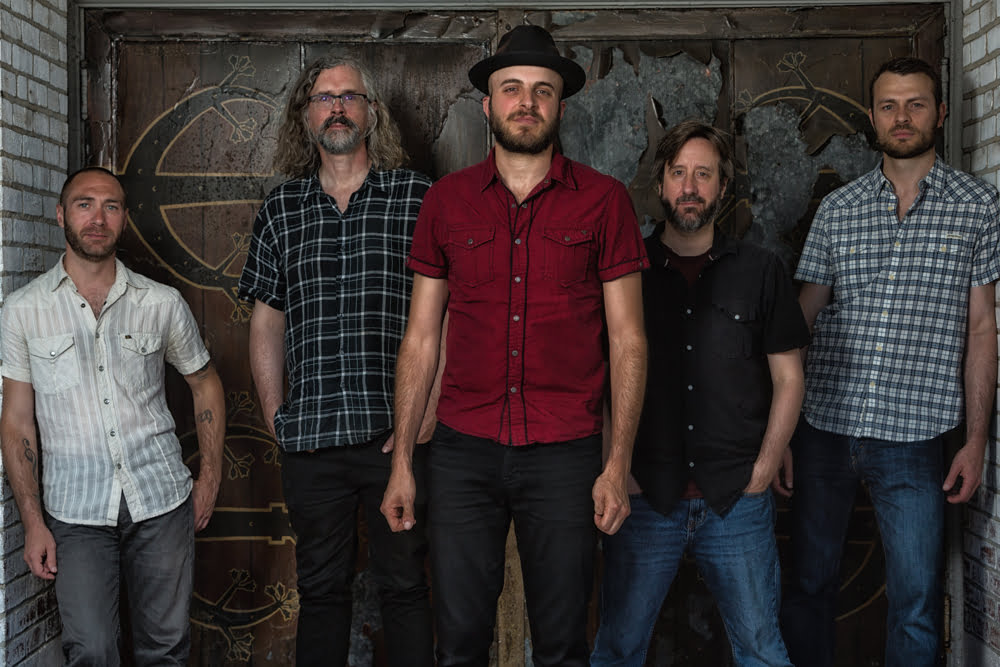
Artist: The Misty Mountain String Band 
Hometown: Louisville, KY
Latest Album: Red Horizon
Rejected Band Names: Paul rejected all names in favor of one too long for the Internet.

Your house is burning down and you can grab only one thing — what would you save? 
Brian: I don’t care, I don’t know, what would I save?  Just put anything. My cargo shorts.
Derek: My Magic the Gathering collection.  Wait, no my D&D collection.
Neal: I’m home so rarely, it would be months before I found the ashes.
Paul: My movie ticket stub collection from high school — 400 tickets to see Lord of the Rings.

If you weren't a musician, what would you be? 
Brian: It’s not a good day for me to answer questions like this.
Derek: Banjo player.
Neal: Professional caddie.
Paul: An artist … by that, I mean a barista.

If a song started playing every time you entered the room, what would you want it to be?
Brian: Stevie Wonder, "Superstition"
Derek: John Cage’s "4’33”"
Neal: "Throne Room" and "End Title", John Williams (Star Wars)
Paul: Metallica, "Master of Puppets"

What is the one thing you can’t survive without on tour? 
Brian: A constant barrage of insults from my band mates.
Derek: A theology book I mostly disagree with.
Neal: Meals every 20 minutes.
Paul: A cold pop: Dr. Pepper.

If you were a car, what car would you be?
Brian: El Camino.
Derek: A ’57.
Neal: Golf Cart.
Paul: Datsun.

Who is your favorite superhero?
Brian: The Silver Surfer. He surfs the universe looking for answers.
Derek: Dr. Manhattan. 
Neal: Robin, he’s the caddie of superheroes. The assistant to the superhero.
Paul: Batman. Because Neal said Robin.

Vinyl or digital?
Brian: Digital. I own four records, but no record player.
Derek: Digital. 
Neal: Digital.
Paul: Wax cylinder.

Dylan or Townes?
Brian: 
Townes.
Derek: Townes.
Neal: Who?
Paul: Townes.

Summer or Winter?
Brian: Donna.
Derek: Edgar.
Neal: Donna.
Paul: Summer.

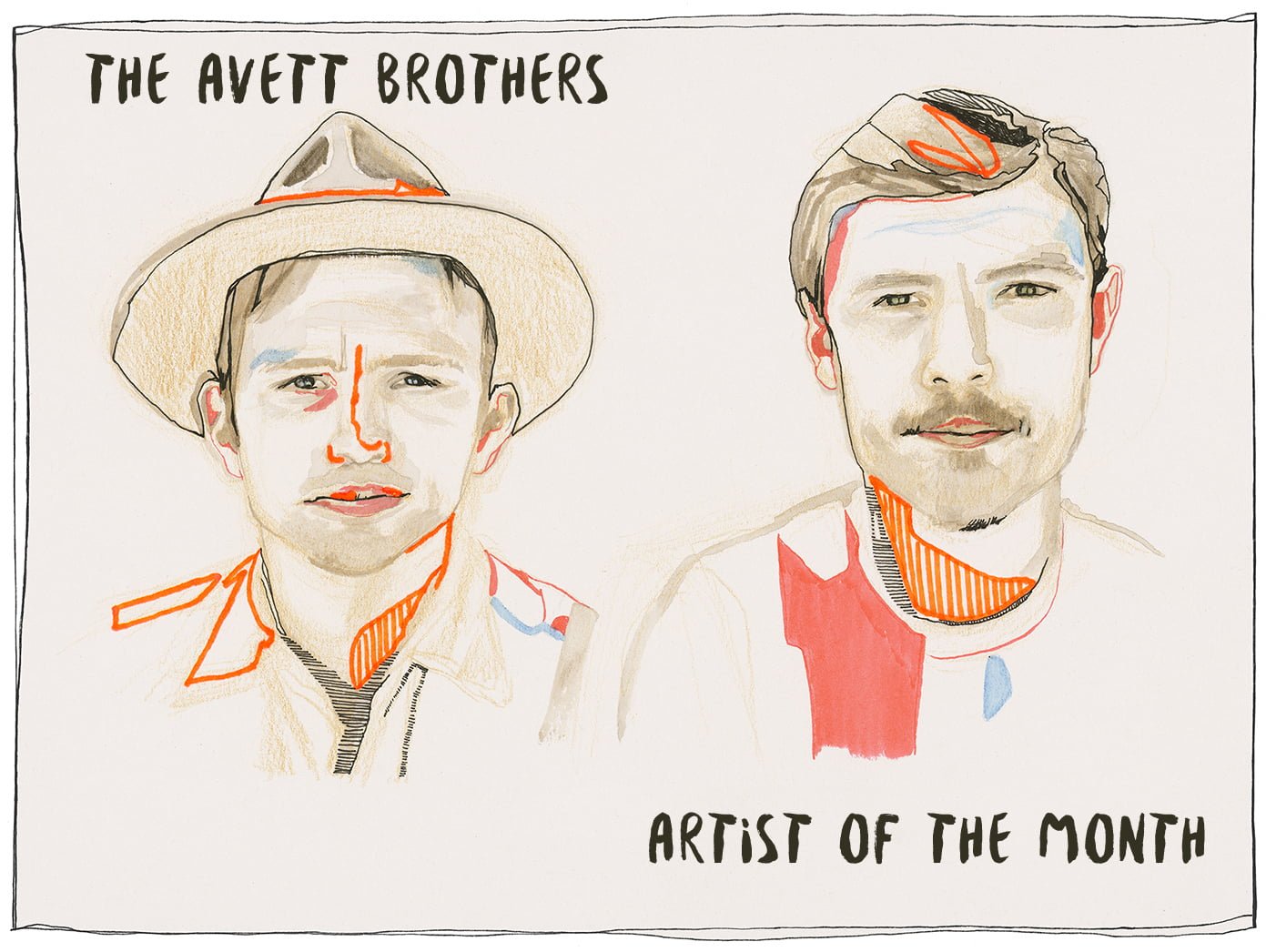
The Avett Brothers: A Truth That Soars Above the Bickering

True Sadness is an album about duality. It would have to be, really, for the boys behind the big-smiled, unbridled, foot-stomping joy on-stage at an Avett Brothers show to be naming a record something that sounds like such a drag. From lyrical jabs at the aging process to a well-rounded foray into new instrumentation, the Avett Brothers' effort catapults the listener and its authors into a sort of maturity where sadness isn’t a monumental event, but rather an underlying part of everyday life.

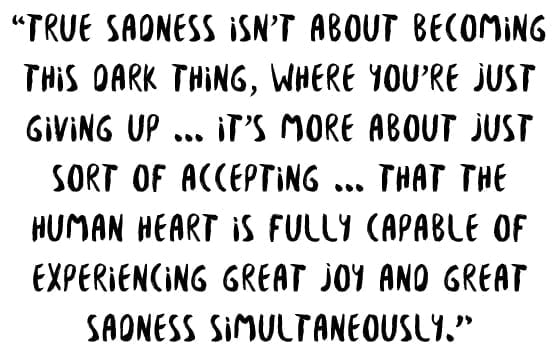
“It’s not necessarily this ongoing bummer,” Seth Avett says. “True sadness isn’t about becoming this dark thing, where you’re just giving up and realizing, ‘You know what? Screw it. Everything sucks.’ It’s more about just sort of accepting, as Bob [Crawford], our bass player, has very eloquently put it many times, that the human heart is fully capable of experiencing great joy and great sadness simultaneously.”

For True Sadness, the band’s fourth consecutive full-length working with producer Rick Rubin, every song began with a bare-bones recording using only the core trio of Seth, Scott Avett, and Crawford. Then, the songs were recorded with the full seven-piece band all live in the same room — a studio setup they hadn’t pursued since 2007’s breakout record, Emotionalism. They didn’t stop there: With Rubin’s assistance, a third step brought the final tracks well outside of their boundaries, instrumentally.

“We worked with another engineer who took the raw tracks and sort of re-imagined them with all these different samples and synths — just all these crazy sounds,” says Seth. Then they re-performed every song with the added depth of the tape sounds and synths, with certain tracks maintaining more of the new territory than others.

“What we ended up with was about four versions of every song,” Seth offers. “’You Are Mine’ ended up being one of those that was in, like, that third stage … third or fourth stage … it’s kind of everything mixed up in one.”

While this experimental, synth-stained streak reveals itself most clearly on tracks like “You Are Mine” and “Satan Pulls the Strings,” the energy behind the songs is unmistakably created by the same band that came up screaming and stomping their way through Southern stages.

“The simple answer here is that we do our best to just follow the song. Whichever way the song is represented best, that’s the way we leave it. We try not to get too caught up in how we’re perceived,” Seth says. “Like, ‘Well, we’re an American Roots band or and Americana band, so every song has to have only acoustic instruments’ and all that. We’ve never really felt any kind of allegiance toward that. [If] one song was kind of an oddball, [it’s because] it felt right like that.”

While the band is tapping into new sounds for True Sadness, they continue to thrive thematically with material that can be continuously re-interpreted by the listener: On standout track “Smithsonian,” the narrator rails through universal truths about aging like they’re breaking news. The song zeroes in on the strange quality of certain lessons or life changes that you have to experience yourself to truly understand, keeping pace with the album’s overall perspective.

“It’s a lot about resolve,” says Seth. “Just coming to a resolution about breaking down, and how that is completely, 100 percent natural — 100 percent normal — and it’s all good. It’s fine!”

A scroll back through the Avetts’ catalog almost feels prescient. Lyrics like the forlorn mention of elections on “Head Full of Doubt, Road Full of Promise” feel almost political today, where they may have once felt coming-of-age. The Avetts’ songs evolve with the listener in a way that’s given them a timeless quality, and True Sadness expands upon that facet of their music admirably.

“The truth remains the truth,” Seth muses. You won’t hear the Avetts proselytizing about current events — despite the ongoing controversy in their home state of North Carolina — but that’s not to say there aren’t takeaways that feel bigger than heartbreak or personal strife. “If you have your heart in the right place and you’re making your comments about humanity from the right place,” he says, “I think that it soars above the bickering within the political landscape.”

Lead single “Ain’t No Man” makes a strong argument to that point:“Ain't no man or men that can change the shape my soul is in / There ain't nobody here who can cause me pain or raise my fear.” You can take it as a personal pick-me-up, a nod to religion, or a knowing wink at current events, but you certainly won’t come away from the song feeling weighed down.

“It’s meant to be self-motivating — a little bit of currency to buy yourself a little confidence when you’re not feeling so confident,” he says. “We don’t always wake up in the morning thinking, ‘All right! Now I’m gonna knock it out today. I’m going to be joyful and I’m gonna be confident, but I’m also gonna contribute!’ Some days, you’re stepping into ‘em feeling just like a wounded animal. It just takes everything you’ve got to act civilized, in a way. So I think the song is a little like just giving yourself a motivational speech, and just getting solid and getting centered and kind of squaring your shoulders up, picking your head up, and just getting into it.”

True Sadness was announced to the world in an open letter about the ways that the Avetts’ music has become intertwined with their real lives, pointing from the very beginning to the heightened thematic complexity in each number.

"It does occur to me now, that in some regard, before any professional success, we were perhaps paradoxically more self-aware. The songs would show mere versions of ourselves — the heartbroken introvert, the frantic worker, the forlorn traveler, the philosopher, the romantic, the loner — all somehow imbued with the meaningful sheepishness of a James Dean character. We used to hope and vie for that attention, that perceived personality, that coolness."

If their previous work was about compartmentalizing the parts of themselves that feel, True Sadness abandons the pursuit of cool in favor of a pursuit of the optimistic and honest. “You have to come to a place of resolution within the tragedies that are always happening,” says Seth. “You don’t ever get to a point in your life, regardless of how well things are going, where everything is good — where it’s all good. There’s always going to be a duality, and I think we are all more aware of it than ever.”

Leave it to the Avett Brothers to serve up True Sadness and leave us mostly with real, gritty, imperfect joy.


Lede illustration by Cat Ferraz.

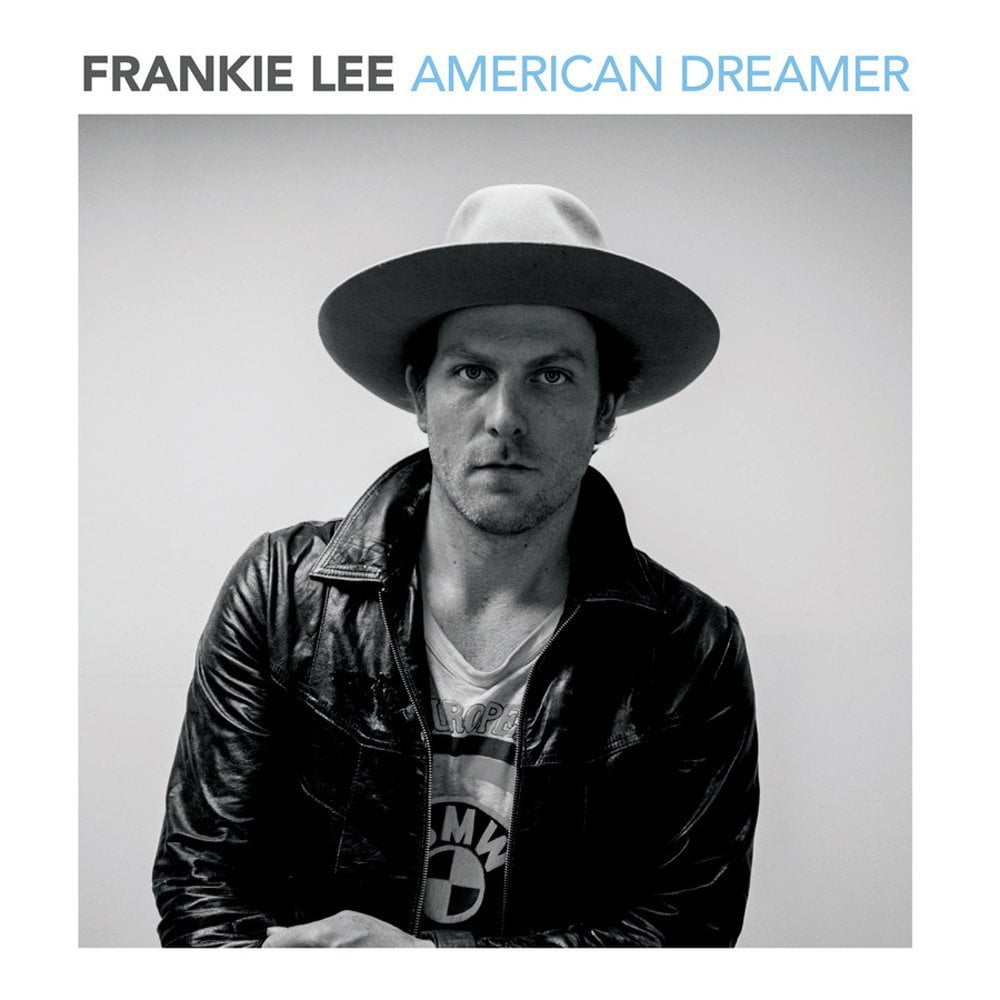
Frankie Lee, ‘High and Dry’

Frankie Lee doesn't care if anyone thinks that his new song, "High and Dry," is about smoking weed — with lyrics like "grow your own," which is presented as more of a proclamation and mantra than anything else, it's easy to make that mistake. But Lee, who hails from the Midwest and knows very well how important it is to be connected to our truest traditions, is actually praising something a little more fundamental than just lighting a joint: and that's the struggle of the American farmer, who often has a harder time surviving in a General Mills world than your neighborhood weed dealer.

With a soft, lightly rasped voice set to warm acoustic strums and tasteful, twangy embellishments touched by a polished sheen, Lee isn’t your everyday interpreter of heartland roots-rock: "High and Dry," like much of his debut LP, American Dreamer, doesn't just fall back on a cascade of guitars and hard denim, shouting his feelings to buck-the-man percussion. Instead, he channels his youth growing up in the small town struggle into songs where atmosphere is just as important as aggression, if not more so — it's a gentler call to arms, which, with his lyrical power and a keen craftsmanship that doesn't always rest on simple Americana tropes, is often far more effective.

"It's the same old story just a different time / there ain't no yours, and there ain't no mine," he sings. "And if you want to live, you got to build a home / And if you want to give, you got to grow your own." It's a lesson from a singer smart enough to know that sometimes you have to stop complaining and start planting. And if you want take a puff of grass before mowing it, well, that's cool, too.