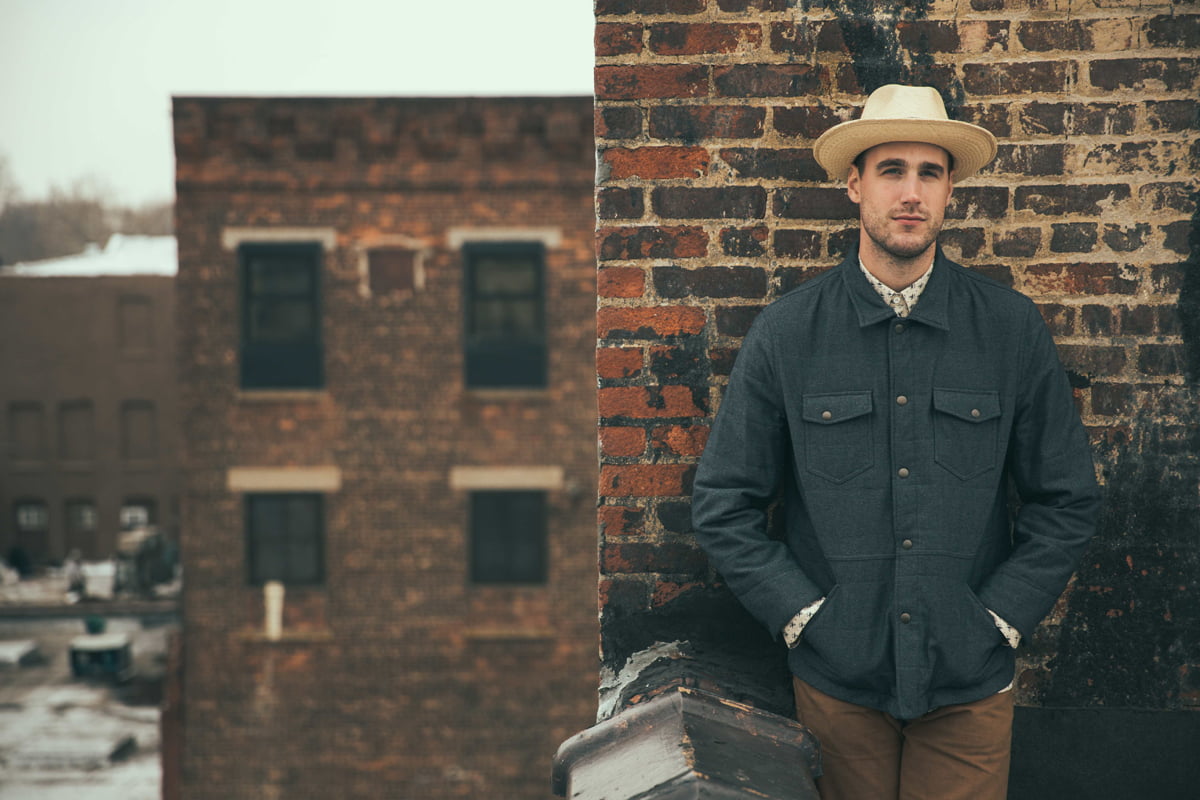
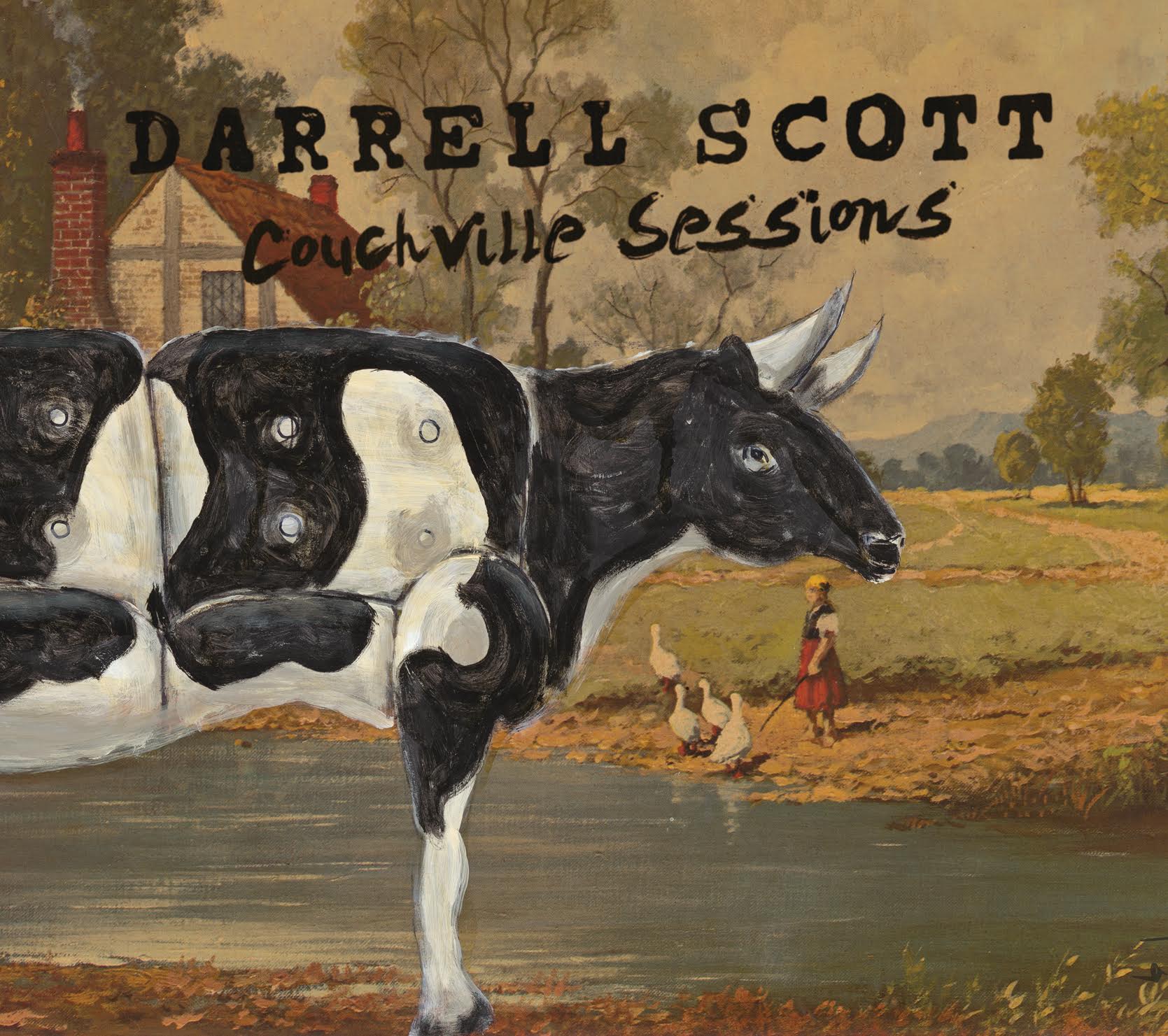
Darrell Scott, ‘Down by the River’

"We won't give a damn, if it's rock, folk, country, or blues," sings Darrell Scott on "Down by the River," a gloriously rollicking tune that's maybe all four of those things. And, really, who cares which? Writing, performing, and recording in Nashville for well over two decades, Scott was Americana before it was a trend and country before it bro'd, managing to exist in that glorious middle ground where he can both flirt with Music Row and give it a hefty, hearty middle finger.

"Down by the River," from his upcoming LP, Couchville Sessions, is mostly the latter. A locomotive folk waltz through the tumultuous journey of trying to keep your integrity in an industry often more concerned with sales figures and clever marketing campaigns than artistic freedom, it boasts a cascade of instrumentals, a howling gospel chorus, and even a little annotation by the one and only Guy Clark … and, if you listen closely enough, a lesson or two on just how to stay haunted by the mysterious, elusive muse in a world where even the simplest slight (or pushy A&R executive) can spook it away for ever.

"I have lived in Nashville for 24 years," says Scott. "I love the musical and cultural diversity here. This is a song about finding and then keeping your unique voice as an artist in an industry town that could attempt to talk you out of it."

… whether it's rock, folk, country, or blues.

On Love and Loss: An Interview with Tami Neilson

The Venn diagram crossing "traditional musicians poised for breakout in 2016" and "based in New Zealand" yields, unsurprisingly, only one name: Tami Neilson. Gifted with a voice that summons Patsy Cline's ghost, hair high enough to make Dolly proud, and a style lifted straight from the Saturday night stage at the Grand Ole Opry, Neilson's most recent records — the just-released-in-Canada Dynamite and New Zealand-only Don't Be Afraid — time machine back to the era of classic country with a few sidesteps into Sun Records-style rock 'n' roll, blues, and soul.

If this all seems unlikely from a nation whose biggest musical exports have been Lorde, Crowded House, and, er, Flight of the Conchords, that's because it is. But Neilson, who has won multiple New Zealand Music Awards, as well as the prestigious APRA Silver Scroll for songwriting (in 2014, the year after Lorde won), has paid her dues on the long, dusty trail.

Born in Canada, Neilson spent most of her tweens and teens touring relentlessly across North America as part of the Neilson Family, an old-fashioned gospel family band featuring her late father Ron, her mother Betty, herself, and two younger brothers — Jay and Todd. Having moved to New Zealand in 2007 for love and marriage, and, eventually two young sons, it's only now that Neilson is making her first steps to plug back in to her past life.

I want to start with an "Origins of Tami Neilson" question. From a young age, you were part of the Neilson Family, a touring family band. Would it be fair to say you had a nomadic youth?

We were just a pack of gypsies, really, the Neilsons. I look back now as a parent, I think, by taking their kids on the road full-time, my parents were either the bravest people I know or the craziest. But we definitely grew up on the road full-time and that was normal to me. Being in the same house with a dog and a white picket fence and the same friends your whole life, that was just so exotic to me.

Did you used to play in prisons with your family?

We did. That was when we were quite young. Mom and dad would bring us in, and Todd, my youngest brother, was probably four or five. I would have been about nine or 10. We would go in and dad would do his comedy, and he and mum would do a talk in the prison, and then we would get up and sing gospel songs as a family. I can remember my mom saying to my little brother, "Todd, when mommy and daddy are on stage, you stay with …" the Salvation Army lady or whoever had brought us in. "You don't go anywhere by yourself." And without fail they'd be onstage singing, and mom would see him get up and go up to a prisoner: "I need to go potty." She'd be mortified. So there were some heart-stopping moments on the prison performances.

Is it true there was a point where you and your brothers had to busk to earn money to survive?

Yep. In Midland, Ontario. On the main street. To make money to eat.

I know the town of Midland. It's not a music-friendly cultural hotbed. I can't see that being a gainful experience.

No, it was not gainful. But it did the trick for what we needed, at the time. At that time, we had just come off the road after a really bad management experience — we had basically lost everything due to our management and went back to my mom's hometown to lick our wounds, as a family. My dad plunged into a deep depression because he held the full weight of responsibility on his shoulders, and we all started looking for jobs. At that time, he didn't want to pick up a guitar; he didn't want to be anywhere near music because he felt that he'd failed us so abysmally. So my brothers and I went out on the main street every day and busked. Fifty bucks was a good day. We'd put it on the kitchen table and give it to mom and we'd get groceries until we could all find jobs.

If that isn't an authentic country music tale of woe, I don't know what is.

That's country. It doesn't get more country than that.

Do you have a band because of an earthquake?

That's actually not too far from the truth. I hadn't thought of it that way, but yes, I definitely have a producer [Delaney Davidson, Dynamite co-producer and part of the duo Delaney Davidson & Marlon Williams]. I was on tour when the earthquake in Christchurch hit. I knew the Eastern, who are a band from Lyttelton, and the venue we were supposed to play at was flattened. It had crumbled and caved in. There were just bits still standing and my poster was still in the window.

A few days later, I called Adam [McGrath] from the Eastern and said, "I'm supposed to be doing a show there" — of course, nobody's going to shows across the entire country because everybody's devastated by this news — and they were doing these pop-up acoustic shows. There was no power at all in the city. They're doing shows in parks around the city to boost the morale and lift the spirits of all the people who were living in mud and crumbled ruins. So I got in touch with him and said, "We're going to be in town, we've got instruments, let us know where you're playing and we'll come play with you." He texted me the details of the park they were going to be playing in, so we rolled up and I'm like, "Are we in the right place?" and then I saw this tall, skinny beautiful man with a white cowboy hat on looking like the ghost of Hank Williams. It was Marlon Williams (who has guitar and vocal credits on Dynamite), and next to him was a very serious, grumpy-looking guy with piercing blue eyes, and that was Delaney Davidson. We went to a barbecue after the show and really connected there. It's one of those things that's really burned on to your memory when it's in the midst of something so surreal.

To do the music you do in the style you do it, it's a very conscious decision. You've got a very traditional image, but it feels very authentic. How do you define the music you make?

The music side of it, it's Americana. It's not just country, it's not just blues, it's not just soul. But so many of those artists weren't. Johnny Cash, Elvis, the Staples … all of these people were just a hotbed of all of those genres.

Speaking of Johnny Cash, did you tour with him?

We opened for him at the Merritt Mountain Music Festival.

Did you get to talk to him or anything?

There's a story to that: The night before the gig, we had had a fire in our motorhome. Our motorhome caught on fire when we were driving to the gig. We had finished a gig in Kelowna, British Columbia, and got in the car to drive to the festival the next morning, so we were going to drive to Merritt that night. After a gig, if we were driving in evening, I would always change into my jammies in the motorhome to be comfy.

So we're on the road and these people are signaling to roll down the window, and we all thought that they had seen the show so we're waving back like this big happy family in the window. Dad rolls down the window and they're like, "You're on fire!" And dad's like, "Thank you, thank you." "No, you are on FIRE!" And we looked out and there was black smoke just billowing out the back of the motorhome. So we all got out and all of our clothes were ruined. Our instruments were stored underneath so there was smoke damage — they stunk, but they were still playable. All I had was my pajamas.

We rolled up to the festival the next morning, they gave us all festival t-shirts, and I opened for Johnny Cash in my pajamas and a t-shirt. So, yeah, my dad and my brother chatted with him, but I was too completely humiliated by the fact I was wearing my pajamas to talk to him. I was a teenager and you're just so concerned about being cool. I was just totally mortified. Of course now you're like, "Who cares?! Go back!" But when you're 18 and you're mortified, nothing matters except the fact I was wearing pajamas.

Is it true Roy Orbison held you as a baby?

Yes, and it actually makes me cry that I don't have the photo of it. That would be the cover of not just one album, but of every album I've ever put out. My dad was playing in the same venue as Roy and dad said, "Can I please get a photo of you with my daughter Tami?" Dad said Roy just lit up holding me. I can still remember the photos in our photo album. I was in this little white dress and this little bonnet. Then I took them to school for show-and-tell when I was a kid and stupidly lost them. I can still see them in my mind but it breaks my heart.

Dynamite has some songs specifically inspired by the birth of your children, whereas your newest album, Don't Be Afraid, revolves around the death of your father. In the last few years, you've experienced a really heavy, really full cycle of life.

It's definitely a lot of living in just a couple years. So I think that impacts so deeply on you as a person that you're never the same, so my music will never be the same. It will always be colored by, not necessarily grief, but the experiences of the death, of parenthood, and all those things. But love and loss are what country music is about, right?

And earthquakes and prisons and motorhome fires?

Oh my God. When you put it that way, I'm going to be writing about it 'til the day I die. I've got so much material. It's always a little bit daunting to think about what's next, especially because the latest album is something that's so deeply me and exposes me and it's the most vulnerable I've ever been. So you can't think about that too much and, when it's the next step, then you just take it. Otherwise, you get sucked up by earthquakes and fires and prisons.


Photo credit: Justyn Denney Strother

This Is What We Love: A Conversation with Lucie Silvas & John Osborne

It felt like a lucky break to catch singer/songwriter Lucie Silvas and her husband, Brothers Osborne’s John Osborne, while they were in the same room. After all, 2015 saw the independent release of Silvas’s first full-length since 2007, Letters to Ghosts, and all of the promotion whirlwind and touring that came with it. Meanwhile, Osborne had been touring, recording, and working toward the January release of Pawn Shop, Brothers Osborne’s debut full-length, while watching their single “Stay a Little Longer” climb the country charts. (The duo even nabbed a Grammy nomination for “Stay a Little Longer.”)

Even with their individual pursuits and shared influences, it's clear just how intertwined the couple's successes have become. It was difficult for either musician to get a word in edgewise as they poured praise upon one another, remembering the way their relationship began and running over the influences, creative environments and shared passions that allowed the last 12 months to be some of their most eventful.

Since I’ve got you both, let’s start with the way you first wrote together and got to know each other. I know you met when Lucie was first in Nashville in 2007. Can you tell me a little bit about that?

Lucie Silvas: Well, you know the first time we wrote together I think we were both — well, I’ll speak for myself — I was nervous. I was in a new place, and I was excited. I was trying to impress in lots of ways and just keep my cool. We just had fun collaborating. We did it a lot over the years; sometimes it was something we’d be put into, like a co-write with a third person. But sometimes we’d just sit there in the house. We’ve written a couple of songs I’m really proud of, over the years, and it always seemed easy. I don’t think all couples find it that easy to write together, but we seem to.

John Osborne: I wasn’t there to write a song as much as I was there to meet Lucie and somehow not make a complete ass out of myself. I kind of can’t even remember what the song was about …

LS: I can’t remember the song.

JO: It wasn’t even about the song. I had ulterior motives. [Laughs] But, since then, we’ve always had an amazing working relationship. There’s such a mutual admiration there. Lucie’s such a powerful singer and songwriter. I come from more of a musical, instrumental side of things. It’s great — her strengths support where my strengths are, and they don’t necessarily overlap. They really complement each other very well.

Letters to Ghosts is definitely a great example of that, what with John working on the record as a producer.

JO: Lucie needed to put out music. Anyone that’s as gifted as she is, at singing and conveying a song, needs to be heard. It would be criminal for her not to be heard, for anyone at her level to be silent. I kind of got the ball rolling: “Let’s just do this. We’ll worry about the rest later.”

We just did it piece by piece. We didn’t over-think it. As a producer, it’s really difficult if the artist isn’t great. It’s almost impossible if the artist isn’t good. But, with Lucie, she’s so amazing as a vocalist and as a conveyer and as a songwriter that it makes your job kind of easy. You let the songs steer you in the right direction. You let the singer steer you in the right direction. All I was hoping for was to not screw it up. It was so much fun because her music is quite different than the music that I play with Brothers Osborne. It was a lot of experimentation and a lot of work. We did it over the course of months, so we were able to really experiment with sounds and get some cool stuff and re-record a lot of things.

LS: John has always been really encouraging to me, just as a friend — let alone somebody who I was with in a couple. The creative process can’t be anything but exciting and inspiring when you’ve got someone with such enormous musical ability and such a laid-back nature. It makes it very easy to be fun. We also had no constraints on it. We were just sitting there having a blast in the studio. It’s nice to know we’re there for the right reasons and we’re having fun with it. John was doing all of this around a crazy schedule. He’d come home and he’d have no time to himself whatsoever, but he loves music so much that it just is a joy to him.

Every time I’d get frustrated and say, “How are we going to do this? How are we going to pay for this?” He’d be like, “Let’s just get resourceful — let’s just get our heads down and get our heads in the right place.”

JO: Sometimes not having a huge budget forces you to be creative. It doesn’t let you be lazy. It doesn’t let you rely on money. That, a lot of times, leads to really cool, new fresh things. It certainly did with this record.

Lucie, you’ve talked a lot about your interest in learning the mandolin and how that came through on Letters to Ghosts. John, you’ve got a lengthy guitar solo in “Stay a Little Longer,” and your reputation precedes you as a player in Nashville. Tell me a little bit about how instrumentals can change a song.

JO: I love playing long-winded solos. It’s fun for me. It’s exciting. But, at the end of the day, you have to service the song — that’s the most important thing. You have the melody and you have the lyric. And then you have the person that is singing them. That’s the most important part. Everything around them needs to complement that. I believe the long solo on “Stay a Little Longer” works; it has this kind of emotional thing. It’s this drawn-out moment between a man and a woman — or, like in our video, a man and a man — that seems to last forever. You’re not sure if you’re in love or out of love or what’s happening. It works within the context of that song.

LS: It really does.

JO: I f you listen to the rest of the songs on our record, there aren’t a lot of solos like that. On “Pawn Shop,” specifically, there’s kind of a hooky, licky part … I don’t think guitar solos should be gratuitous. They should support the song. A session guitar player told me, when I moved to Nashville, that the end goal is to be able to mute the lyrics and mute the vocal of the song and still kind of know what the song is about.

LS: That’s a really interesting question, though. It’s got my brain ticking. In “Stay a Little Longer” [the guitar solo] is the climax — it’s where the song is ending up. The frustration in the lyrics, the temptation that the song is talking about: you hear that. It goes and it goes and it goes, until you reach this sort of euphoric, heavenly moment with the guitar solo. That’s how love is; you get yourself into that headspace and you just acclimate from there. I think a lot of the songs on Pawn Shop do that. You get the feeling that the guitar is the song. John’s very good at, stylistically, adding what he does to make the song supported even more.

I think back to a lot of the Motown songs that I love — some of the Marvin Gaye stuff or Otis Redding or Stevie Wonder. Some of those musical riffs are the songs. They are the most identifiable moments in a song, regardless of the lyrics or even the voice, which is always phenomenal. They created the sound of the song, and that musical part of the song is also really important.

Brothers Osborne has a bluesy, rock edge that you don’t see in as many mainstream country songs. Lucie, your music has been embraced by some country stations, despite it not necessarily being bound to a particular genre. What do you think about the state of country and Americana music right now? Are the boundaries changing?

JO: It’s a really interesting time for music, in general. People don’t necessarily subscribe to one genre anymore. The iPod generation started that with the ability to shuffle the songs and make a playlist. The line immediately got deleted. On the one hand, it’s a slippery slope because it can muddy the waters of what makes a genre distinct. On the other hand, it has led to a lot of opportunity for artists that might be in the grey area like Brothers Osborne and Lucie.

It’s actually a really good time for music — especially country music — because people seem to be a lot more open-minded and willing to hear new sounds and new styles and new songs and new singers. They’re hungry for something fresh and original and genuine. Country music goes in and out of being genuine, but when it is genuine, it’s the most genuine genre of music, I think, that there is.

LS: And it’s exciting, because country music is on a world stage like it’s, possibly, dare I say it, not been in the same way before. It’s not kept separate like it might have been in the past. There’s room for good music and not necessarily these very tightly wound compartments or genres that can’t be broken. Music isn’t supposed to be about that. Music is supposed to be about feelings and emotions, making you feel something. I don’t care what genre something is; I just want to hear something good that touches me. I feel like things are becoming that way, and that’s extremely exciting to me.

Definitely. John, I’ve seen you say in interviews that Brothers Osborne was able to release Pawn Shop at the perfect time, and that makes sense, especially with what you guys are saying now. Let’s talk about that record.

LS: Oh my God, there’s so much. I’ve seen it take shape over a long period of time. They’ve been on this crazy, crazy ride, just traveling all the time and writing every chance they get and making this album. Like every album, it’s a challenge because you try not to feel … it’s not pressure from the outside. We put ourselves under so much pressure. It’s not that it’s not fun, because we have an absolute blast, but we just … it’s an amazing thing to be making an album, and we just want it to be great.

I got to sing on some of the album, which was a brilliant moment for me, just because I genuinely love the songs. John is very spontaneous when he does things, but he also takes a lot of care. He really does not do anything by half — he will sit there and do it until it’s a thousand percent finished. Somehow doing it like that, being very patient and methodical, has not gotten in the way of the passion you hear in his playing and on the album and in TJ’s singing and the whole thing. It’s very inspiring for me to watch and to witness them doing what is, I think, an exceptional album. It’s very exciting.

Okay, you go, John. [Laughs] We’re actually eating garlic bread, and we just reached for the same bit.

JO: We’re so in sync! [Laughs]

LS: John, did you want to add to that?

JO: I mean, our album definitely comes from a place of honesty and originality, the same place that Lucie’s album comes from. We never had a conversation about what was working on the radio. We never had a conversation about what songs were successful. We never had a conversation about what the masses would like. All we did was make music that we like. And it’s the same for Letters to Ghosts; it’s the same for Pawn Shop. When you listen to those records, even back-to-back, you’re going to hear a collection of songs and sounds that are unique to us. There’s no reason why any artist should put out something that’s already been done. As a listener, I wouldn’t want that. I want to listen to Thriller because I can only get those sounds on Thriller from Michael Jackson. I want to listen to a Willie Nelson record because I only get songs and sounds like that from Willie Nelson. A lot of artists, lately, copy what’s successful. You’re not going to find anything like that on Pawn Shop or Letters to Ghosts.

LS: You have your influences. There’s gonna be stuff you’re inspired by, and you can hear that in the music. Brothers Osborne, even though they’re signed to a major label, they have this thing where they’re thinking, “This is scary, because we might not fit in anywhere.” And we think that’s a good thing. But, in music — in the music industry — that can be a real challenge for artists. Because, if you don’t fit in, the chances are that you might not be put in any category.

Luckily, we’d rather do nothing or do something else than ruin the integrity of what we’re doing. It’s pretty much, “This is what we love, and we can’t compromise that.” We’ve both taken a long time to get to this point in our lives, and there’s a reason behind that. There’s a reason behind not releasing music just for the sake of being out there. We waited and we worked hard because it meant something to do something that was completely genuine, and didn’t worry about what was going to happen to it.

You talk about influences — tell me about those. Do you share a lot of the same heroes and influences, musically?

LS: We love something when we know it’s genuine. For me, growing up, that was Motown. It was Jackie Wilson and the Jackson 5 and, in some cases, the Eagles and Fleetwood Mac. As I got a bit older and was a teenager, it was all about Prince and Sheryl Crow. It was always these really strong characters. Whether it was their music or their personalities, some sort of power came from them and it was very inspiring. When I met John and saw him play, you could see there was a bond there over soul and blues. At times when we weren’t actually making music, we’d sit in the house and he’d play and I’d sing. We definitely had a connection there, in the type of music we gravitated toward. It’s just a coincidence that we had feelings for each other and we also had so much in common musically.

JO: The first time I heard Lucie sing, I heard so much soul and passion behind it. That’s one of the things that I deem most important, when it comes to singing and performing and playing instruments, is soul — that’s where it all came from. If you listen to rock music and soul music and R&B, it’s all stemmed from the blues. I feel like, in some cases, that the soul and the passion is missing; people are just singing or performing.

There are a lot of great singers out there, but that doesn’t make them great artists. I grew up playing a lot of blues music — I loved B.B. King and Albert King and Stevie Ray Vaughn and bands like the Allman Brothers, with Duane Allman and Dickie Betts. That just all are 100 percent heart in their playing. So that’s what I’m used to hearing, and the second Lucie opened her mouth and started singing I knew — I was like, “Yes, that’s exactly what singing should sound like. That’s what music should sound like.” Music should come entirely from the heart — only access the brain when needed. But it should start from the heart. That’s what my favorite music is like and that’s what Lucie’s favorite music is like.


I love this woman more than blueberry pancakes. @luciesilvas (photo: @tjosborne)

A photo posted by John Osborne (@jinglejohnosborne) on

What about the reverse? Is there a song that one of you really likes and the other really hates? What do you disagree on,musically?

LS: Um, I’m trying to think … We usually agree on many things, but we also have a lot of … we’ll tend to think the same thing about the song, and there’s a reason why we don’t like it. I’m trying to …

JO: We disagree on 1990s alternative rock music.

LS: Oh my God. Yes.

JO: When I was in middle school and high school, all I listened to was grunge and Seattle rock stuff — all the popular stuff, but like Nirvana, Pearl Jam, Sound Garden, Stone Temple Pilots. The list goes on and on. I love that music — still, to this day, I absolutely love that music. Scott Weiland dying was a big heartbreaker for me, because I was such a big fan of STP. That’s the only thing we disagree on.

LS: Hey, I love Nirvana, and there are a few things I really love about Stone Temple Pilots. But it is a general genre that I think missed me. [Laughs]

JO: At that time, we were listening to such different things.

LS: Yeah. I think I went through my Prince phase at that time. I’m also older than John. So I guess there were certain things I was listening to in school … I was really into Prince, really into Michael Jackson, really into Motown still. And I definitely got on the Nirvana thing. If John and my sister had met at that time, they would have been best friends, because she had the exact same taste in music.

But, you know what? Even if we disagree on that, I think it’s good. You can’t agree on everything, or there’s no challenge there. When we disagree on something and I hear him speak about stuff that he either passionately loves or passionately hates, it gives me more insight into how his brain works. That’s pretty cool. Then we’ll just agree to disagree [Laughs] Or, I’ll go away thinking I’m right.

Is there anything you feel like you’ve learned recently?

JO: Every time you’re in the studio, you learn something. You learn something about yourself. You should always be evolving, you should always be willing to try new things. If you’re a creative person, that’s what you do best, is to search and to create and find something new that hasn’t been done before. I guess that’s art in general — it doesn’t matter if you’re a painter or a guitar player, that’s what you’re trying to do. In the studio, you’ve gotta have an open mind. You have a blank canvas, and you have yourself and the people around you that are helping you play. You have a vocalist and you have musicians and you have the engineer and all that stuff and, as a team, you work together to create a piece of art. You have to be willing to be open-minded about it. There’s no reason to surround yourself with yes-people. You want to surround yourself with people who challenge you and bring up ideas that you’d never thought of. When you put all those things together, you create something original … hopefully. Every time I’m in the studio, I learn something. I learn a lot about myself. I learn about my strengths; I learn about my weaknesses. It’s a very eye-opening experience, I think. By the end of the record, it’s emotionally draining. I think it should be. The process is always … it should be that way. By the end of it, you’ve learned a lot. Almost too much, sometimes, but it’s always a good thing.

LS: Yeah, it is. I think that’s a good point: Every time you do anything, or even start a day in your life, you’ve got to hope that you can start at a very neutral place — start from zero. You never know how you’re going to surprise yourself. There have been many times where maybe I’ve had a bad day and I’ve gone into the studio thinking that, really, all the songs in the world must have been written already. [Laughs] I mean, there are only so many notes on the piano, so many notes in the world. And yet, you go in and you just think, "Well, I know the things I can do, but I’ve got no idea how many more things I can or can’t do. I’m just going to see."

Hopefully, you’re in a room with a person who helps to teach you that, to teach you something. John and I are both people’s people. We love meeting people, we love being around people. Because, you know, it’s always a fascinating experience — everyone’s got a point of view. Everyone’s got something to give and something you can learn from them. I absolutely believe that all people have to be equal in any collaborative situation or any musical situation. You go in and you respect the people around you, because you just never know what they’re going to teach you. You have to all be open-minded. If one person isn’t like that, it changes the course of the day. It changes everything about what you’re doing. You really can’t learn anything, if you’ve already decided something.
Cool Shit from the Library of Congress

In the past, we've taken you through Alan Lomax's online archives. Now, we'd like to take you on a digital journey through the vast collections available to the public through the Library of Congress's online collections. You could spend weeks going through all the site has to offer, but we've culled a few of our favorite roots-related items for your perusal. 

Dolly Parton and the Roots of Country Music: A Timeline

The Queen of Country Music, Dolly Parton's influence on the genre is endless. Take a look at major points in Parton's career — like in 1953, when she crafted her own guitar out of used instrument parts — from her birth through the mid-2000s. Check out other Parton features, like this look at the musician's relationship to copyright.

Quilts and Quiltmaking in America, 1978-1996

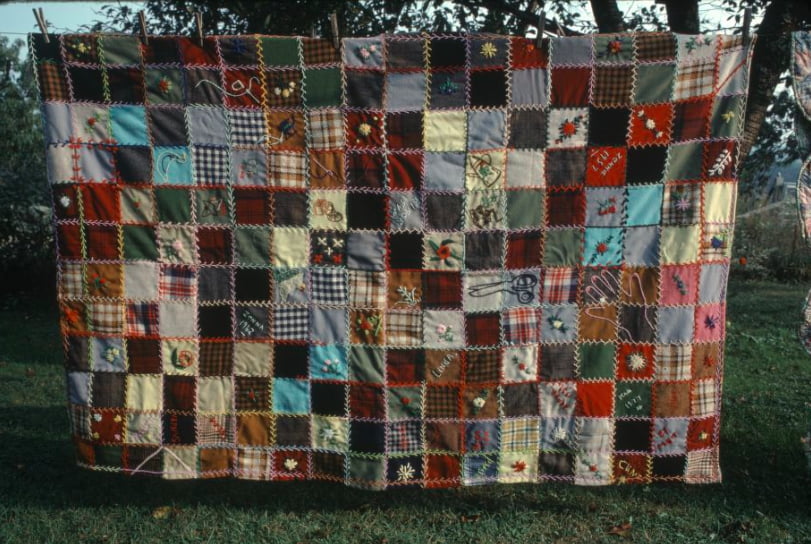
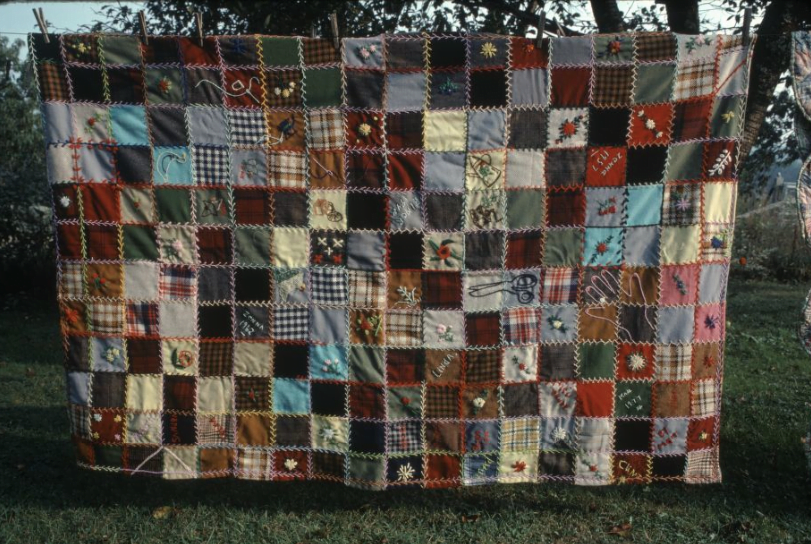
Quiltmaking is a major American art form, one that especially took hold in the Appalachian region. The Blue Ridge Parkway Folklife project documented major strides in quiltmaking in the late 20th century, a revival in the art in the Virginia and North Carolina regions.

The Amazing Grace Collection

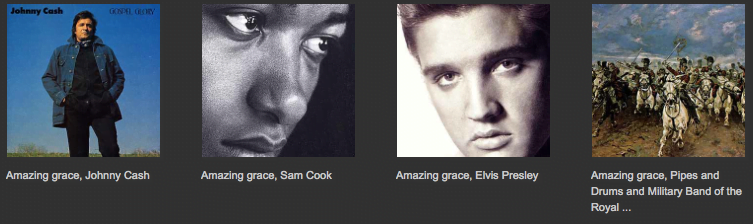
Perhaps one of the best known songs of all time, "Amazing Grace" has been recorded by countless artists, from Johnny Cash to Elvis Presley. This collection highlights some of the most important versions of that historic song.

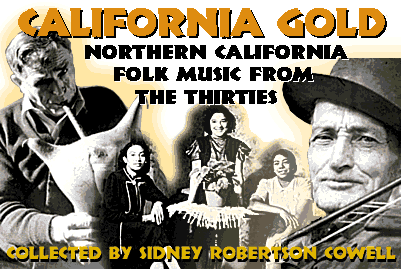
California Gold: Northern California Folk Music from the Thirties

This set houses 35 hours of folk music from the Northern California movement of the 1930s, and showcases a wide range of languages, ethnic groups, and musicians.

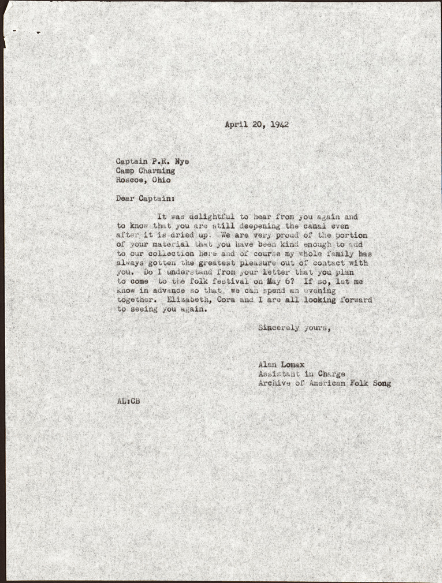
Letter from Alan Lomax to Pearl R. Nye

We'd be remiss if we didn't include one item from Lomax, and this letter to Captain Pearl R. Nye shows both Lomax's kindness and his genuine interest in broadening his collections.

Americana to Encompass All Music Genres, Film, TV

Nashville, TN — After years of attempting to define its parameters, the board of the Americana Music Association voted on Tuesday to include all musical genres, as well as the entire canon of American films and television shows, under its umbrella. Their press release concluded that the Americana label could, theoretically, be stretched to include anything created by an American, for an American, or in or near America.

“It’s so much easier this way,” AMA board president Holly Ferguson said, looking visibly relieved as she spoke with local news reporters. “By including everything from recorded sound to short- and long-form visual entertainment, we feel we have finally created an accurate definition of what it means to be Americana.”

She acknowledged a few dissenters who see the move as overreaching, but ultimately it was decided that, if the material had no more than three degrees of separation from America, it was to be considered Americana. “New Zealand tribal music was appropriated by the Australians who were settled by the British who then came to America. Boom: Americana.”

Having already brought British and Creole musicians into the fold, the AMA feels confident other media will quickly follow suit. “Think what this will do for our sponsorship reach; our Grammy, Oscar, and Emmy categories; and our brand as a whole,” said Ferguson. “It’s a huge move.” The organization’s 2016 marketing plan includes deals inked with LiveNation and Hollywood studios, as well as NBC, ABC, and FOX for all performances, films, and TV shows to end with the pre-recorded voice of Jim Lauderdale saying, “Now THAT’S Americana!”

Lauderdale was not available for comment.


The above is a work of satire. Any resemblance to actual persons, living or dead, or actual events is purely coincidental … although entirely likely.

Photo credit: StuSeeger via Foter.com / CC BY

LISTEN: The Winterlings, ‘When We Were Young’

Artist: The Winterlings
Hometown: Seattle, WA
Song: “When We Were Young"
Album: You Are Acres
Release Date: January 15

In Their Words: "You are paddling a scrap-wood raft across a sea of sharks and lightning, fleeing a country where the man who murdered your parents just wrote your name on his list in red ink. A mile distant, you see a beach where he cannot reach you. So, you begin to laugh, as do the other children you are traveling with. You will not die at sea, after all. Let them call you a refugee. Let them call you anything. How can you mind? You are alive.

Now, imagine this all happened before you were born … because it did. Your ancestors were hunted by men with axes, but some of them made it or you wouldn't be reading this or listening to their song. In verse two, you meet my grandfather, Gordon, who carried my life inside him when he enlisted in the navy at age 17, became a Frogman (Navy Seal), and nearly died at Normandy fighting the devil Hitler. If he had died in the Second World War, I wouldn't exist.

When he came home to America, he bought a horse named Domino and had three children, including my mother. That horse carried my grandfather, mother, aunt, uncle, cousins and second cousins, brother, nephew, niece, and myself which was a mighty heavy load. Such is the exponential nature of 'When We Were Young,' a trumpet-meets-ukulele celebration of what happens when bloodlines run backward to a beach where barefoot orphans marched toward the life you know." — Wolff Bowden


Photo of Gordon and Domino courtesy of the artist

LISTEN: Dylan LeBlanc, ‘Easy Way Out’

Artist: Dylan LeBlanc
Hometown: Shreveport, LA
Song: "Easy Way Out"
Album: Cautionary Tale
Release Date: January 15
Label: Single Lock Records

In Their Words: "'Easy Way Out' is one of the more personal tracks to me. It's about growing up in the more conservative part of the country and having to find my own way with my own ideas and personal beliefs… after first being run ragged through the mill with others' ideas and beliefs and paying serious mental consequences. It is about investigating things for yourself when others can't give you a solid answer. An answer that doesn't work for you. An answer that doesn't require fear and confusion." — Dylan LeBlanc


Photo credit: Abraham Rowe

The Very Best of AmericanaFest 2015

Ah, AmericanaFest. You little charmer, you. Spread out across six days and the whole of Nashville, you offer up the best roots music has to offer, from the cool country of Lee Ann Womack and Loretta Lynn, to the raw soul of Nathaniel Rateliff and Anderson East, to the heartfelt folk of Erin Rae and Caroline Spence, to the homegrown bluegrass of Della Mae and Rhiannon Giddens. You walk softly, AmericanaFest, but you carry a whole bunch of beautiful sticks.

Tuesday

The Bluegrass Situation's Late Night Windup basically kicked off AmericanaFest at Nashville's notorious venue, the Basement. Festival patrons could swing by, pick up their badges and wristbands, and enjoy cold one in front of Della Mae, the Wood Brothers, and a rowdy jam led by Punch Brothers' own Noam Pikelny. BGS's Brittney McKenna has the full story right here. — BMc

This is not a full-on-endorsement, but Cookout saved my life Tuesday night. A corndog as a side?! Get outta here. — CM

Wednesday

A bunch of folks crammed into RCA Grand Victor Studio A to hear a “Songs We Love” songwriters' round of Patty Griffin, Rhiannon Giddens, and Shakey Graves moderated by NPR Music's Ann Powers. Not us. We were hunkered down at the Station Inn filming four fantastic Sitch Sessions with Lera Lynn, Anderson East, Caitlin Canty, and Ryan Culwell. Swoons all around. — KMc

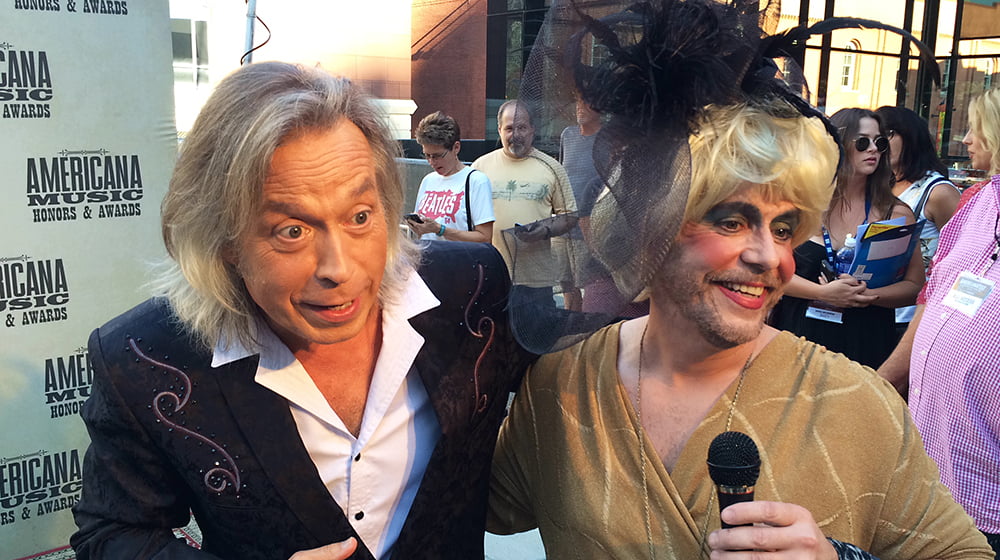
And then … THEN we hit the Americana Awards show red carpet at Ryman Auditorium with Marlene Twitty-Fargo and a bag full of mini whiskeys. Lee Ann Womack tried to put her long-standing feud with Marlene to rest by doing Fireball shots, while Keb' Mo' attested that “All the rumors are true,” as he posed for a selfie with Miss Marlene. Jim Lauderdale didn't quite remember the night so long ago that Marlene mistook him for George Jones in a Nashville bar, but the McCrary Sisters were the brightest highlight, singing a glorious verse of “Amazing Grace” with Marlene. Everyone outside the Ryman crowded around to hear. — KMc

Watching Marlene Twitty-Fargo and the McCrary Sisters belt out some American gospel music on the red carpet was beyond surreal. You know what else was surreal? Marlene interviewing Ricky Skaggs, bombing shots with Houndmouth, and trying to keep up with Nikki Lane. A star was born in Nashville this night. — CM

Nathaniel Rateliff set the 10 pm crowd at Mercy Lounge on fire with his soul band the Night Sweats. The set ended with "S.O.B." — the Missouri man's newest, hottest single. Many drinks were bought within those three-and-a-half minutes. Up next was Watkins Family Hour, a band we're pretty fond of around here. To my surprise, Fiona Apple tagged along to Nashville on the band's current tour. Watching her eviscerate the crowd with heavenly melodies was a festival highlight for me. — CM

Thursday

Lera Lynn summoned folks into Mercy Lounge with her sultry brand of Americana, pulling her set largely from last year's The Avenues with stellar tunes like “Out to Sea” and “Standing on the Moon.” She also proved that, yes, she had portrayed the barely living bar singer on the recent season of True Detective when she took a creepy/haunting swing through "My Least Favorite Life." With her suit-clad band, Lynn knows how to do it up right. — KMc


@leralynn has a packed house. And for good reason! #mercygoesamericana #americanafest

A photo posted by mercylounge (@mercylounge) on

The Legendary Shack Shakers put on, possibly, the most punk rock show of the festival at the High Watt. Singer J.D. Wilkes screamed with abandon and summoned the harmonica gods on several cuts from the band's recent record, The Southern Surreal. — CM

Friday

Having made herself right at home in Americanaland, Lee Ann Womack was relaxed and feisty at 3rd & Lindsley as she offered up tunes that spanned her career, from “Never Again, Again” to “Chances Are.” Man alive, that gal can sing! Before she brought out two extra fiddle players for “I May Hate Myself in the Morning,” she asked, "How country do you like it? Or better yet, how country can you take it?" While I was busy basking in this particular glory, word has it JD McPherson was blowing the roof off the Cannery Ballroom. — KMc

Over at City Winery, Anderson East cajoled and crooned his ass off in an attempt to get people to dance. He even hopped off the stage and ran a lap around the room. Finally, as he blasted his way through “Knock on Wood,” a bunch of folks gave in and grooved. Once up, they stayed up for “Find 'Em, Fool 'Em, Forget 'Em” and the rest of his killer set. East joked that he wasn't sure why he and his horn section were considered Americana, but he was having a great time anyway. — KMc

Saturday

Sadly, none of us made it over to Fond Object to catch John Moreland's set. Ann Powers was so enthralled that she dubbed him the "true heir to Townes Van Zandt." — KMc


#fondobjectrecords #johnmoreland #LiveMusic #nashville #eastnashville #americanafest #backyardparty

A photo posted by @bigcatnashville on

Emmy Rose Russell, Nikki Lane, Tift Merritt, Valerie June, and even Steve Earle (who delivered a beast of a set) were all just killing time as the crowd at Ascend Amphitheater waited for Loretta Lynn. Come show time, Lynn graced the stage in a new red sequined dress which she said weighed 300 pounds, as an excuse to sit down: “It's too big, so if it falls off, just keep clapping.” Lynn encouraged the crowd to shout out requests until one woman yelled, “Delta Dawn.” Lynn fired back, “My name's not Tanya Tucker! I don't even know that song.” She did, however, know “The Pill,” “Fist City,” “You Ain't Woman Enough to Take My Man,” and “Coal Miner's Daughter.” I saw Loretta … What else is there to say? — KMc


Loretta Lynn is still singing strong and on the road. #americanafest #tw #ascf

A photo posted by Bob Boilen (@tinydesk) on

Having to follow Loretta isn't an easy take, but Gillian Welch and David Rawlings were up to the task. However, while watching their legendary opening act, Rawlings turned to Welch and said, “We gotta put on our Nudie suits.” So they drove home and changed clothes. Rawlings told the crowd, “We needed more sequins to make this night correct.” Then Welch added, “It's like you already had a big hot fudge sundae and somebody asks if you want a pickle.” When the pickle plays the perfection of songs like “That's the Way It Will Be,” “Make Me a Pallet on Your Floor,” “Elvis Presley Blues,” and “Red Clay Halo” … bring it! — KMc

Andrew Combs charmed a packed Mercy Lounge with his Glen Campbell-era throwback country sound as he presented songs from his fantastic 2015 album, All These Dreams, and previous releases in a more rough-and-tumble manner than on the records. “Please, Please, Please,” “Slow Road to Jesus,” “All These Dreams,” and “Suwannee County” were all outstanding, but Combs and company cut all the way loose on a fiery, showstopping rendition of “Bad Habits.” Good stuff. Really, really good stuff. — KMc

The Artist’s Way: An Interview with Rayland Baxter

If Wendell Berry and Paul Simon were to somehow have an offspring, odds are he would be a lot like Rayland Baxter. An easy-going and contemplative musical poet, Baxter brings a light touch to his life and his art. He grew up in and around music — his father being multi-instrumentalist Bucky Baxter, who has played with Bob Dylan, Ryan Adams, and others. Still, the younger Baxter avoided following in the elder's footsteps until 2010, when he released Feathers & Fishhooks on ATO Records. The Ashkelon EP followed in 2013 and Imaginary Man dropped last month marking the next notable step in his artistic evolution.

Right at the top, I have to say that your team missed a big ol' opportunity by not marketing “The Woman for Me” as a lesbian theme song, because it's the story of my life, man. And I thank you for it.

WOW! Wow. That's incredible. The song still exists. We can hit that up. Just let me know.

Maybe we can get Melissa Etheridge or Chely Wright to cover it.

I'm down. You know those cats?

I don't know them, but we have people in common. I can bring it up at the next club meeting.

If you would like to do that, if we can work that, let's get that song to the lesbian community.

[Laughs] It would be a service to the ladies.

Yeah, that's what the song's for … it's for the people.

In an interview right before that first record came out, you talked about growing up poor and said, at that very moment, you had a single dollar to your name. Hopefully things have improved a bit since then.

Yeah, yeah. Money comes and goes.

Sure. Talk to me about the reality of the rock 'n' roll life. It's not all private jets and groupies, like people think it is.

[Laughs] Yeah. I'm in a 15-passenger van right now with five other dudes. Everybody seems pretty cozy, though. Everyone's got the right lens on, if you know what I mean. We all see the situation for what it is. I enjoy this. I love touring. I love being in the van and the conversations you have within the band while you're traveling and seeing the earth move by you through the window. This is it for me. I'm totally content. I'm pretty much content with everything that's happened since I tiptoed into the musicians' lifestyle. I have a pretty good outlook on everything involving that. In terms of the glamour, this is it. Someone gave me a free t-shirt yesterday — a $30, no-collar shirt.

You were stoked about that, weren't you? I've said for years that I feel like nobody should be allowed in the music business, to any degree, until they travel with five dudes in a van for six weeks.

Right. You gotta sweat. Sweat equity, you know? You gotta stink, you gotta hurt. Your back's gotta be twisted up a little bit. Poverty is the mother of creativity.

It certainly can be. Seems like you have the classic split personality of nomad versus romantic. One moment, the dream is to settle down and plant roots. In the next, it's hitting the road and exploring all options.

I can expand on that.

Yeah. Go.

The nomad versus the romantic … okay. I like this conversation. You know how in life, you have those things that get you off?

Yep.

Maybe you like fly-fishing or snowboarding or hanging and drinking beers or porn … whatever. One of mine is traveling. What better way to travel than touring and playing music. And I know that it's important for where I want to go with my career to play shows and hone my craft every night and experience a whole bunch of people … getting yourself in a whole bunch of situations like meeting a stranger and sleeping in their house. I'm sure lots of people reading this interview are like, “Oh, yeah. I've done that a bunch, too.” They all know that it's very exciting, for the most part, and kind of hairy sometimes, too. Like, “This is super-sketchy and these kids are kind of crazy and I don't know what that is in that pipe there that they're smoking … okay, sure. Yeah. I'll hit it.”

But I'm also in love with love. I love the feeling. I like being in love. I like seeing people in love. I like loving everybody. In terms of starting a family and all that stuff, that's a little bit difficult to do in my shoes, for now. But I'm content. Soy contenta.

Bueno. Are you a big daydreamer?

Big time. All the time. Yeah. I like to live in that world. You?

Yeah. Totally. It's so much better.

Yeah.

Even regular, sleeping dreams. I hate waking up in the morning.

Man … I'm with ya. It's like, “How do I fall asleep and get back to that place?”

Are you a lucid dreamer, by any chance?

No, I'm not. I have weird dreams. Weird. But I like them. They just make the world seem like a weird place when I wake up. Like, “Oh my gosh. I thought about that? That happened in my dreams? So strange.” But, then, some of them …

Yeah. Yeah. Okay, so this new record … “Rugged Lovers” is my obsession song.

Okay!

It almost feels like the continuation of the story that began in “The Woman for Me” … like you found her — your ideal woman — even just for a moment or so. Might that be the case?

Yeah, yeah, yeah. That's it. Yeah. [Pauses] Let me see how I can put my words to this. What I think about with that song … I never actually put the connection to “The Woman for Me” and “Rugged Lovers,” but I love it. That's the cool thing about a song: You hear those two songs together and you see the connection, and I don't even see the connection, but obviously I do now.

“Rugged Lovers” is kind of where it ends up. You meet somebody, maybe, and then you gotta go. It's pretty tough to grow with somebody when you're not around them. It's like shooting air balls. Or you "let the feather fall into the hook, cast it out," and there's nobody to bite on it. It's a hopelessly heartbreaking song. But it had to be that way.

Yeah. It has to reflect the reality of it all.

Or the made up of it all.

I was going to say, yeah, or the false reality of it all. Whatever it is.

Yeah.

On the whole, you expanded the sonic palette for Imaginary Man. Things are a bit denser, but it's still pretty light on its feet. Part of that's your voice. But another part of it must be how you shape your melodies. Am I getting that right?

Yeah, you're nailing it. Melodies are super-important. In terms of the music, we all had a bit more idea of what we were doing this go around. We being myself, the producers — Eric Masse and Adam Landry … they're just more experienced and better at their craft. All the musicians that played on the album, like Mr. Jimmy Matt Rowland … who played all the keys on the album. He's really come a long way in the last five years. [Laughs] He's sitting behind me right now. … Everybody in the circle of friends is just hardcore into becoming a better musician or musical mind, so the music came out really solid.

My songwriting, I'm on the same level as growing as a musician. I've evolved in terms of the lyrical content that I'm writing about. I've now had 31 years to think about melodies, not just the last seven. You get more and more the longer you sit around and hum to yourself or listen to music.


Photo Credit: Eric Ryan Anderson

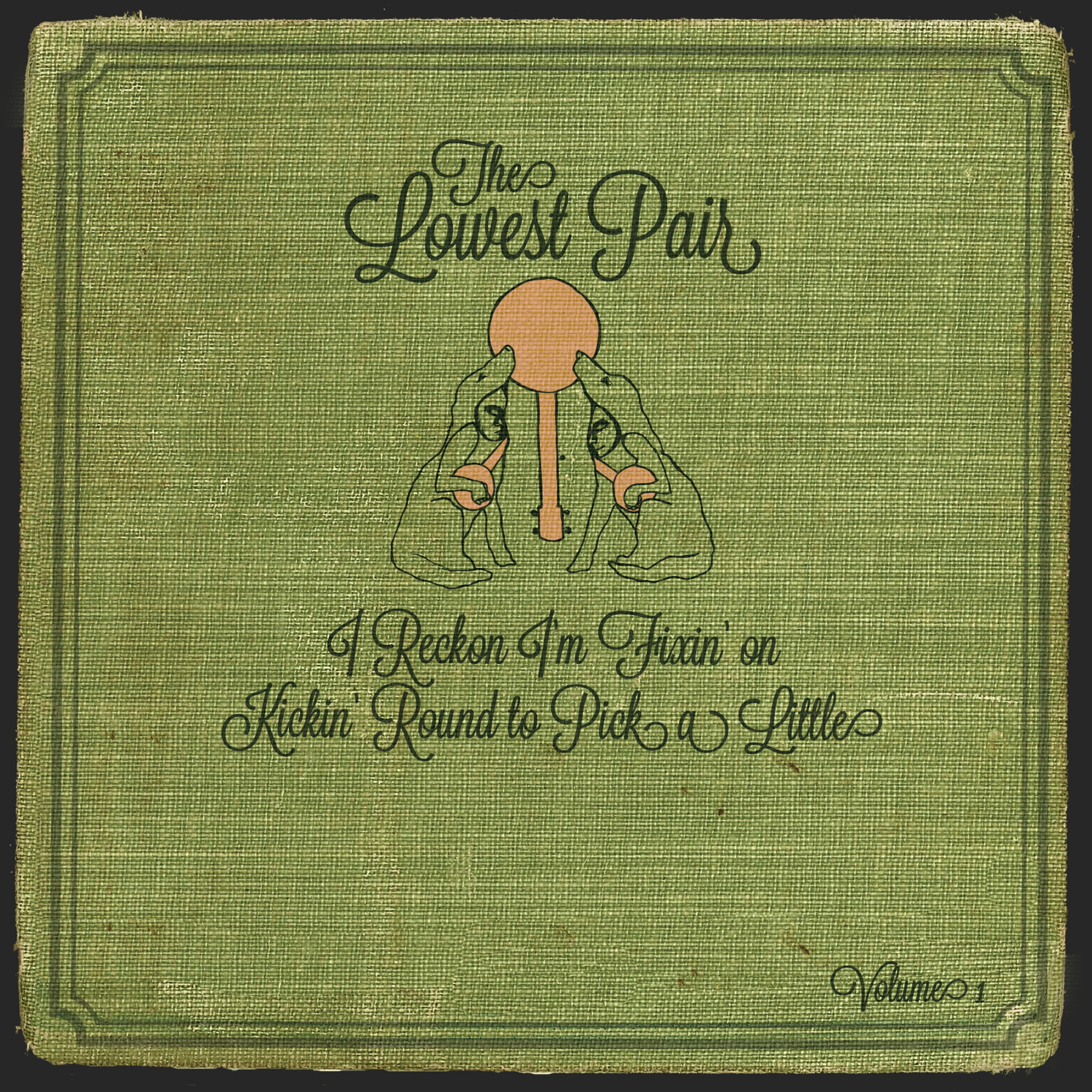
LISTEN: The Lowest Pair, ‘I Reckon I’m Fixin’ on Kickin’ Round to Pick a Little’

Pretty much anyone get away with making music with a band full of loud instruments blaring. But, when artistry holds up in the sparest of settings, that's when it's true. That's where the Lowest Pair comes in with their duo of banjos and voices. Much like Béla Fleck and Abigail Washburn, Kendl Winter and Palmer T. Lee play off each other and the long-tail of American roots music.

After meeting at a music festival on the Mississippi River, Winter and Lee became friends and, eventually, collaborators — their first couple of releases, 36¢ and The Sacred Heart Sessions, earning a fair share of kudos in Americana circles. For the upcoming I Reckon I’m Fixin’ on Kickin’ Round to Pick a Little: Volume 1, the Pair turned to traditional tunes and road-tested arrangements for songs like “Cluck Old Hen,” “Danville Girl,” and “Shortning Bread.” Then, with nary a bit of pomp or circumstance, they made a record.

"Well, the title says it all,” Lee offers. “We reckoned we were fixin' on kickin' around to pick a little, so we figured we'd record it. We don't make much effort to sound like an old time band, but we love the repertoire, the sound of that music, and we love playing the tunes. Once we forget half the words, make up some of our own, and filter the melodies through our own quirky styles, we end up with what we like call our own derangements. We figure that's just the American way — it's tradition to screw things up a little bit. Young, Sprinfsteen, Dylan … they've all done records like that. So we figured we'd join the club.”

I Reckon I’m Fixin’ on Kickin’ Round to Pick a Little: Volume1 will be released on July 24 via Team Love Records.