Cary Morin Picks His Piece

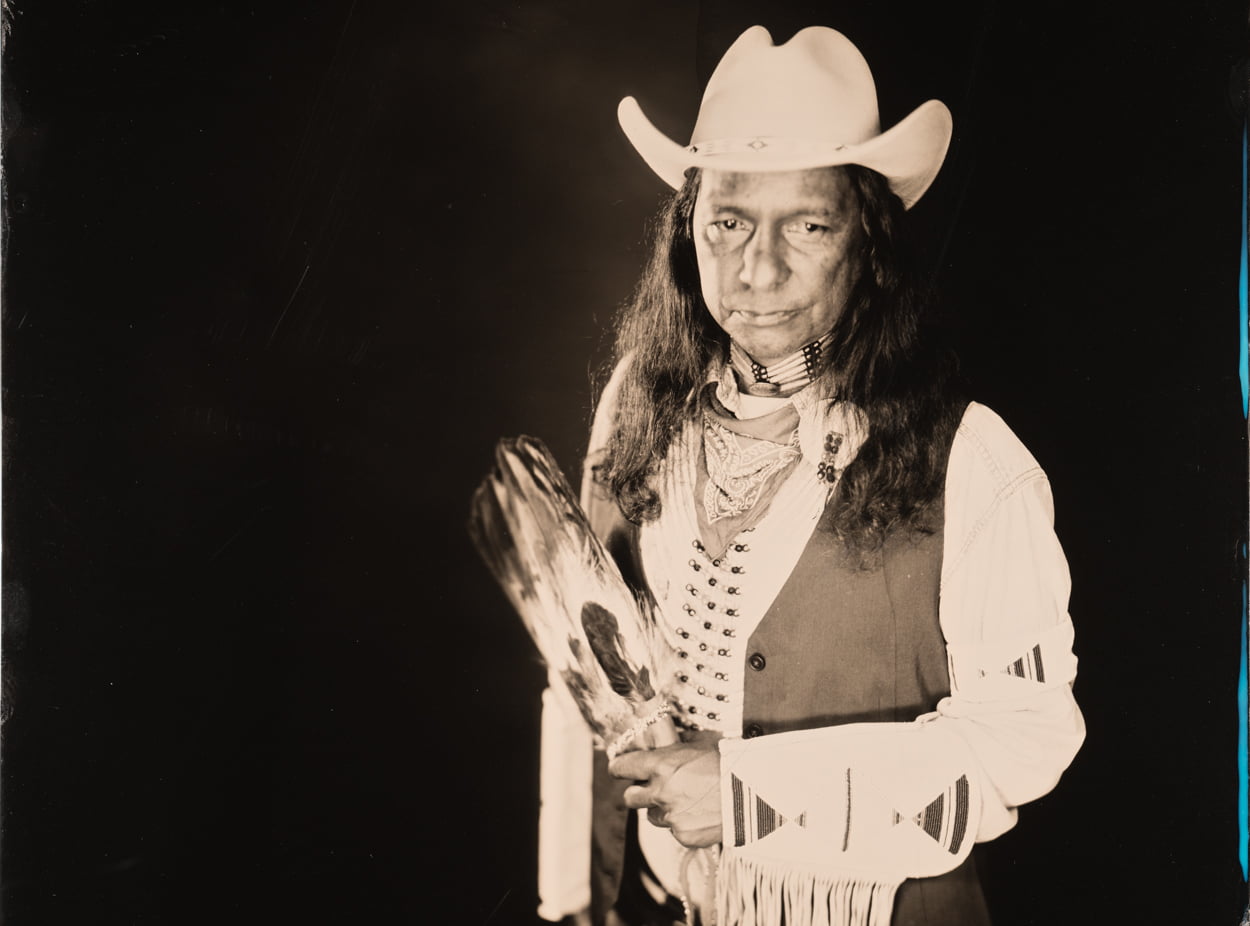
“Let there be no question of who’s wrong and who’s right. There should be no compromise. We all stand up and fight in the dawn’s early light,” Cary Morin sings on “Dawn’s Early Light,” written in support of the Standing Rock Sioux Tribe during last year’s protest of the Dakota Access Pipeline.

“A friend of mine was doing a show [at Standing Rock with the Indigo Girls] and she had asked me, just in passing, if I would write a song for the Standing Rock movement,” Morin explains. “I felt like there were a lot of people writing songs about that, at that time, and I wanted this one to be a little different and stand out a little bit, so it was really more concentrated on the activism, in general, and not so much Standing Rock, but just the whole idea of people coming together to promote clean water.”

“Dawn’s Early Light” is one of the poignant original songs featured on Morin’s latest album, Cradle to the Grave. In order to lend his perspective, Morin tapped into his experience growing up as a Crow tribal member near the Missouri River in Montana.

“When you think about roots music in America, it’s a culmination of so many things. It’s all the stuff blended together, much like the culture in this country is people from all over the world that end up here and create a unique situation,” Morin explains. “With my Native heritage, I could say that I’m really the only finger-style Crow guy on the entire planet. That’s unique. But we all can say that, to some degree. We all have unique things that make us who we are, and I’m really thankful to have grown up in the area that I did, surrounded by the people that I did.”

Morin came to the guitar by way of the piano, which he first began playing around the age of 10. When he picked up a guitar a couple years later, he was enamored. He played by ear, emulating the sounds he loved from his parents’ and brother’s record collection: Chet Atkins, James Taylor, Cat Stevens and Neil Young.

“I grew up in the ‘70s so, at that time, [there was] no Internet, there was very little TV, mostly radio. And the local music scene was really pretty folky and a lot of bluegrass, so I really grew up in the pursuit of flat-picking and [was influenced by] popular bluegrass bands at the time — David Bromberg, Norman Blake, Tony Rice,” says Morin. “I had really fantastic examples of what the music should be, but then I kind of mashed everything up into a combination of bluegrass and finger-style stuff, mostly from Leo Kottke, which turned into this thing that I do now.”

Morin moved to Colorado just out of high school and formed the Atoll, a world-beat band that he toured with for more than 20 years. “I played electric guitar [in the band], but I continued to mess around with the acoustic guitar,” he says. “Once I stopped doing [the band], my focus was really just acoustic guitar and a lot of practicing — just hours and hours of sitting around and playing. To this day, I try to play quite a lot. I’ve been introduced to open-D tuning by a friend of mine, and it took me about a year to get it going and figure out just the basics of it. But then, once I got it going, I just found it to be really fascinating, and I continue to learn new stuff all the time with that tuning. I just love the way it sounds. There’s a fullness and richness to it that I can’t seem to get out of standard tuning.”

Morin’s reconnection with the acoustic guitar led to the release of his most recent string of solo acoustic albums. Cradle to the Grave is the fourth in the series showcasing his adept fingerpicking style and warm, inviting vocals. An amalgamation of bluegrass, country, rock ’n’ roll, and blues, the album features eight original tunes and three cover songs: Willie Brown’s “Mississippi Blues” and, perhaps more surprisingly, Prince’s “Nothing Compares 2 U” and Phish’s “Back on the Train.”

“Phish is one of my favorite bands … I think that Trey’s playing has just really been inspiring and just the whole feel of the band and the approach they take. There’s so much freedom in what they do, and I used that as an example with my band, when I was rolling around playing clubs and festivals,” Morin explains. “A lot of times we’d play five songs without stopping. We’d just roll from tune to tune, and the whole point of that band was really dance music, just to provide an outlet for people to go out and have fun and dance.”

Morin uses the same ethos in his current performances touring behind his solo efforts.

“As a solo player, I can do whatever I want. I can play in whatever key. I can speed things up or slow it down, or just kind of make things up as I go along. And I really dig that freedom to just do whatever I want on stage,” he says. “Sometimes I’ll try stuff and sometimes it works, sometimes it doesn’t. But when it does, it’s a great feeling, and then it’s gone forever.”

While solo spontaneity on stage leads to such ephemeral moments, Morin has a solidified team off-stage that serves as his backbone — and they’re not going anywhere. From recording to promotion, it’s an organic, family affair.

“What I like about these four records [is that] the recordings are all done live in the studio with no headphones. I’ll sit and play these songs, and just play and play and play them, and a friend of mine has recorded all these albums,” Morin explains. “We’ve gotten together, I think, a pretty successful team with Maple Street Music and [my wife] promoting the live shows and the recordings, and Rich [Werdes] recording them, and we have the same person that’s been mastering and mixing the CDs, too. It’s just like the perfect combination of people and I like to think that I promote one guy, one guitar. People still are interested in such a thing … I just really enjoy being able to stand on stage by myself being able to do what I do.”


Photo credit: Timothy Duffy
WATCH: Befangled Night Bird, ‘Booth Shot Lincoln’

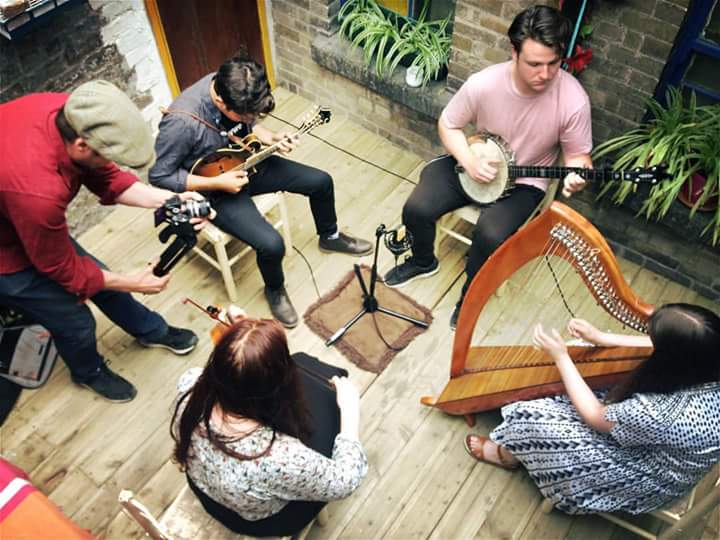
Artist: Tristan Scroggins, Ellie Hakanson, Allanah Thornburgh, and Ryan McAuley (aka Befangled Night Bird)
Hometown: Maynooth, County Kildare, Ireland
Song: “Booth Shot Lincoln”

In Their Words: “My favorite thing about touring in Ireland is getting to visit and play music with Alannah and Ryan and a collection of other incredible, young Irish musicians who we inexplicably met through Lauren Varian, the director of this video. It was really special to get to capture this kind of behind-the-scenes, cross-genre interaction, especially at a place like the Back Loft with a videographer as talented as Myles O’Reiley.” — Tristan Scroggins


Photo credit: Lauren Varian

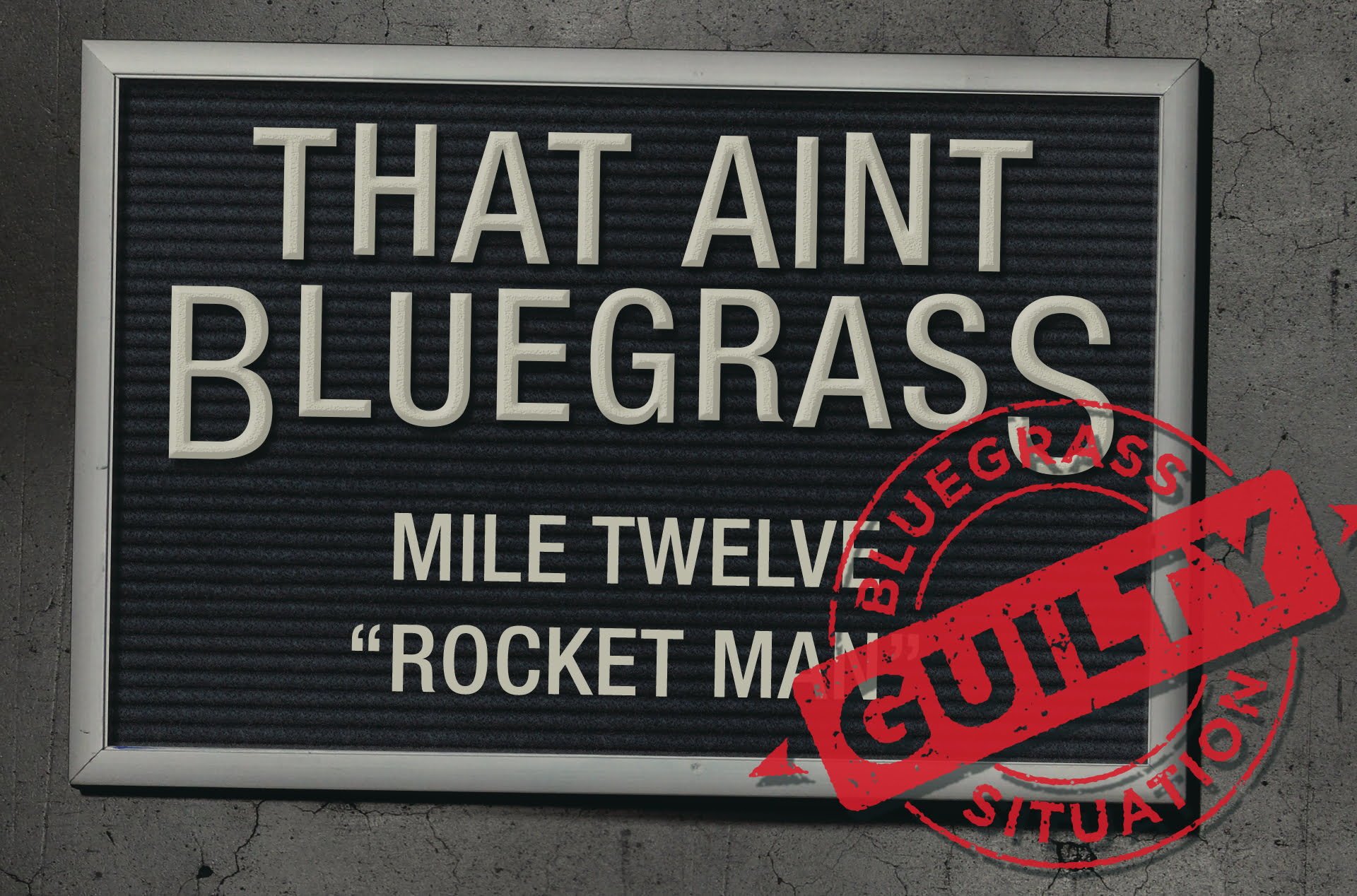
That Ain’t Bluegrass: Mile Twelve

Artist: Mile Twelve
Song: “Rocket Man” (originally by Elton John)

How did you guys decide to work up this song?

Evan Murphy: It was actually Nate [Sabat’s] idea, which is funny, because I don’t think he remembers that, so I should just take credit for it. [Laughs] We had been talking a lot about wanting to do a pop cover, at some point, just because so many bluegrass bands that we like have done that. We were looking for something that had an interesting arrangement to it, something that had parts that could be mimicked by acoustic instruments. Nate suggested “Rocket Man” one time while we were in the car and, while we were all listening to it, we realized that it had these different memorable motifs that happened throughout it and we though it could be really cool.

I remember it was last August when we were easing David [Benedict] into the group, he was flying up from Nashville to hang out, do some rehearsing, and see if it was a good fit, and we felt bad, because everything that we practiced with him would be a song that we wrote — so that would get tedious for him. We thought, to be fair to David, we should try to do something that none of us had done yet, something totally fresh, to see what it feels like. So we picked “Rocket Man.”

You mentioned other bluegrass bands covering pop songs — which is kind of a tradition in bluegrass. Why do you think that is?

A lot of musical genres do covers across genres, but bluegrass has such a specific aesthetic to it — in terms of what instruments are involved, what they sound like, and what their roles are. Bluegrass tends to be more codified than other genres. “Jazz” is such a big word, and “rock” is such a big word, so if you said that Queen did a rock ‘n’ roll cover of Elvis, that may not mean anything, because you’re using a big, catch-all genre like “rock.”

But to say that someone did a bluegrass cover of something tells you something really quickly. It tells you, most likely, what instruments were involved, that they don’t have a drummer, and that most of the instruments aren’t going to be plugged in. There’s just something inherent about the limitations of bluegrass as this acoustic form of music that doesn’t usually use percussion. So, if you say that someone covered a song from outside of the genre, instantly you have this feeling like, “Oh, I want to hear that. How did they do that?” I think that’s why it’s interesting to people.

Rather than changing the original to make it a bluegrass song, you arranged your version to basically mimic the original recording, but with a bluegrass band. How did you decide to arrange it this way?

That’s the question when a bluegrass band covers a pop song. Are you bluegrass-ifying it? Or are you trying to create a note-for-note recreation of it? There’s a band called Iron Horse that covered “Rocket Man,” and I was aware of their video of it for years — long before Nate suggested we cover it. I said to [Mile Twelve], “I’m happy to cover ‘Rocket Man.’ It would be a lot of fun to do at festivals and stuff like that, but just so you know, there’s this really popular video on YouTube of another bluegrass band doing ‘Rocket Man.’” I mean, it has like 1.3 million views on it. It’s a popular video.

The first question they asked was if they bluegrass-ified it or not. And they do. The band said, “Oh, then we’re good, because they do a bluegrass version of it and that’s not what we would do.” I was a little cautious, thinking, “Okay, we’re going to cover this song that’s already been popularly covered by another bluegrass band.” But for us, I think the point of doing pop music on bluegrass instruments is to not bluegrass-ify it.

There’s nothing wrong with doing that. We did an Alan Jackson song, “Ace of Hearts,” on our album, which we totally bluegrass-ified. With something like “Rocket Man,” it’s so well arranged; it has those spooky spaceship noises and the crashes in it. What’s so cool for people to listen to is to hear the things they recognize from the original arrangement. People will come up to us after they’ve heard the song and say very specific things like, “I loved when the fiddle did the spaceship noise.” People’s ears are catching these things that wouldn’t be there if you were to bluegrass-ify it.

You know that ain’t bluegrass, right?

[Laughs] Ain’t no part of nothin’? You know, I don’t think I’ve ever heard anyone say that to us. It may just be that we aren’t playing the most traditional festivals in the world. I definitely remember one time when we got an email back from a place that said we weren’t traditional enough for them. But we’ve mostly had the opposite experience.

We played at this place called Bill’s Pickin’ Parlor in South Carolina — this place is super old-school, pictures all over the wall of all these country and bluegrass stars. I was getting nervous, thinking we’re the dinky, Yankee band that’s playing polite, northern bluegrass for this audience. I remember specifically during “Rocket Man” thinking, “Oh, God.” I wasn’t getting a good read off of the audience. Then after, during the set break, a lot of people told us they loved our version of “Rocket Man.” Honestly, I feel like we mostly get the reaction of people being totally into it. It’s gotten to the point now where, if we come off stage and someone starts a sentence with “I loved …,” I’m 99 percent sure they’re going to fill it in with “your version of ‘Rocket Man.’” It’s a good problem to have, I guess. I think it’s the most popular thing we’ve done.

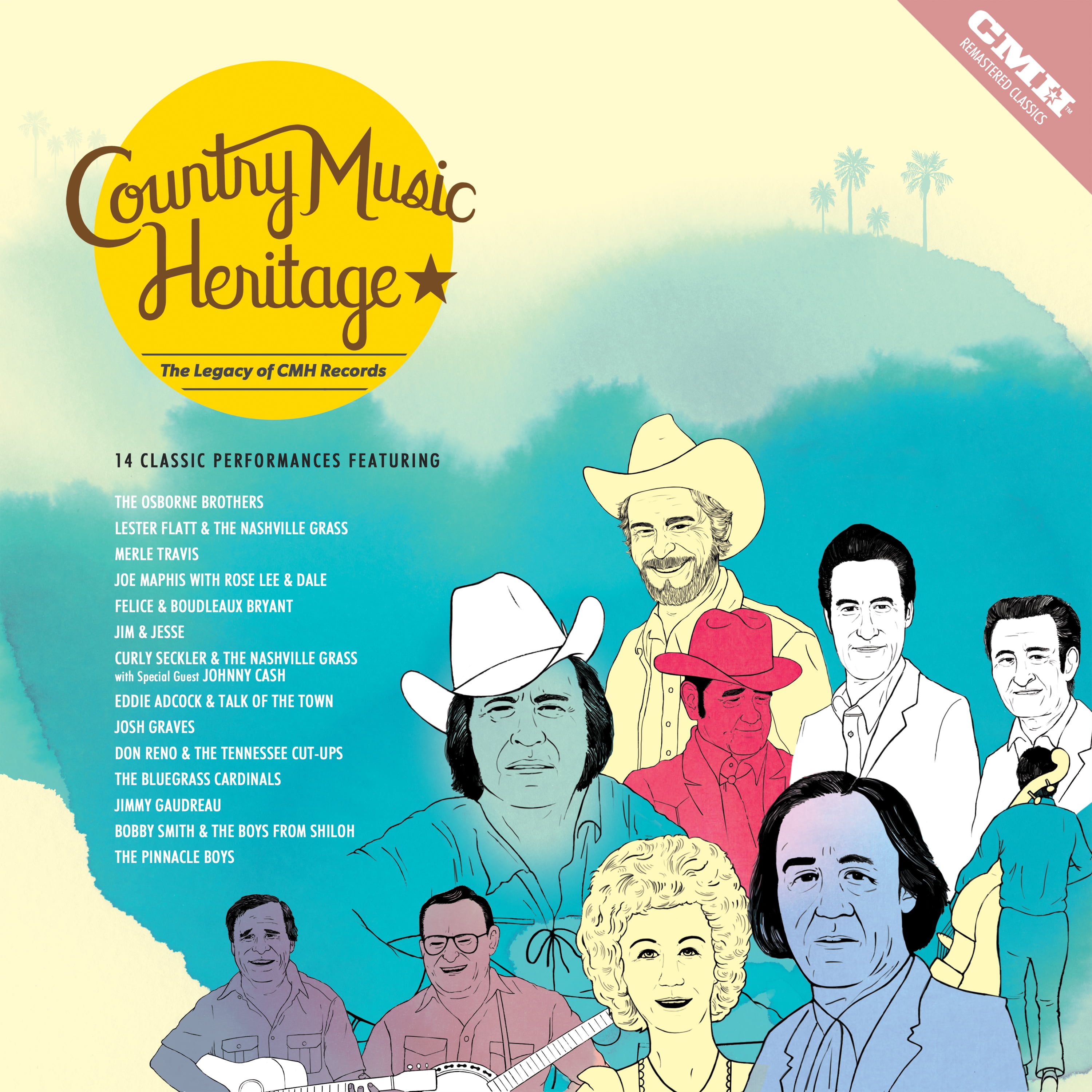
STREAM: Various Artists, ‘Country Music Heritage: The Legacy of CMH Records’

Artist: Various Artists
Hometown: Los Angeles, CA
Album: Country Music Heritage: The Legacy of CMH Records
Release Date: December 1, 2017
Label: CMH Records

In Their Words: “We were inspired to make this album, when we began to realize how many amazing records we had from all these legendary artists sitting in our vault, untouched and unlistened to for years. We felt we owed it to the artists and the fans to breathe new life into these songs. So, we sat down with all these old records, listening for over a year, working to compile our favorite cuts for this album. It was no easy task, as we had to leave off so many great songs, but that makes the end result something we’re very proud to share with everyone.” — Jeremy Stephenson, Executive Producer

Hangin’ & Sangin’: Old Salt Union

From the Bluegrass Situation and WMOT Roots Radio, it’s Hangin’ & Sangin’ with your host, BGS editor Kelly McCartney. Every week Hangin’ & Sangin’ offers up casual conversation and acoustic performances by some of your favorite roots artists. From bluegrass to folk, country, blues, and Americana, we stand at the intersection of modern roots music and old time traditions bringing you roots culture — redefined.

With me today at Hillbilly Central, Old Salt Union!

All: Hey!

John, Justin, Jesse, Rob, and Ryan.

Jesse Farrar: That’s right. That’s right.

Ryan Murphey: That’s a first!

Is it?

RM: People usually mix it around a little bit.

Heck no, I’m a professional here, guys. I do appreciate the alliteration of it all, so that is helpful.

JF: It’s like a sonnet!

…

So you guys have your latest record, it’s a self-titled release. Fourth release? Not fourth album, necessarily, but fourth release.

JF: Yeah it’s the fourth release, ‘cause we did a vinyl as well, a four-track vinyl. So, yeah, it’s our fourth release.

First on Compass Records.

JF: First on Compass Records, that’s right. And it’s self-titled as it’s kind of a culmination of all the stuff we’ve done prior. We reimagined it here in Hillbilly Central, and we rearranged it and re-recorded a lot of it, so it was kind of a “Best Of” if there ever was one.

Yeah, I was wondering about that, in terms of whether you felt like those older songs didn’t get a fair shake the first time around, or they had evolved some as you’ve played them over the years?

JF: Both really, yeah, I think we play 250 shows a year, so every night you’re trying to spice it up. Some things stick, some things don’t.

…

Alison Brown produced this one. You guys met her a few years back. So what is it about how she gets what you guys are doing? Is there something special about that?

JF: I just know from personal experience, she has such an open, creative mind and so, when you sit down with her at a table like we did, it’s really, really inspiring because you just bounce new ideas off of her and she doesn’t turn any ideas down. She’s open to explore. And I think artists, in general, sometimes don’t necessarily explore. Even if they don’t like an option or even if it’s not maybe their first option, they’ll kind of shut it down. But Alison’s very good at exploring these options, and not only that, but she has such a great ear and she’s such an amazing musician. So not only will she explore this idea, but she’ll find a way to make it really work.

Yeah, I was gonna say that, to me, the producers who are artists as well, because, this is actually quoting her, they’ve been on both sides of the glass, so they know how to extract a performance, they know how to take a song in a different direction instead of what’s brought.

…

Now you said you guys do 250 dates a year. … I think being road dogs is what develops a band and a fan base. Tell me where you started and the process and what that’s done both for the chemistry and the whole thing?

JF: Not to berate or bash anyone, necessarily, but we hit the ground running and we never really looked back. And I do agree. I come from kind of a musical family, so I saw these other guys in my family do that, which is, you just put your pedal to the floor and you just go. And that’s how you develop a sound, that’s how you develop a fanbase, that’s how you develop everything. And you see some bands skip that step. Whether they have financial backing or whatever, they kind of skip those hard times. I think those are vital to really find out who you are as individuals and as artists as a whole.

…

Other than pure sweat, what do you think it takes to rise above the fray in the world of string bands? Because there are a lot of dadgum string bands.

RM: There definitely are. I mean there’s the obvious that everybody tells you — persistence. I mean expecting to get knocked back, and you just have to keep pushing, keep chomping at the bit, keep continuing, progressing, and growing, and it’ll come.

JF: I think, musically speaking, there’s some people that kind of close off walls. They say, “Well, we’re a string band. We can’t go this direction. We can’t explore these ideas.” And that’s never been the case for us. I think the thing that maybe separates us is that we’re really open to anything. If John writes a song or Justin writes a song and it’s this crazy polka, we’re gonna explore it. I think that’s why working with Alison worked so good, as well, because we kind of had that same mindset. But, yeah, you’re right, there’s all sorts of string bands we run across every single night, a different breed, a different flavor. Yeah, persistence, and I think having fun and enjoying the music that you’re playing plays a big part. I think that translates to the audience members, sitting at home on a computer or at the venue.

…

There are a lot of different influences that you’re folding in here. But you had to start with a foundation of bluegrass, right? Or no?

RM: Kind of the opposite, almost. At the time we started, Justin had been playing mandolin for a few months, I had just bought a banjo, John was playing classical music, and Jess was pursuing his hip-hop career. [Laughs]

…

JF: Rob’s been in the band for over a year now. He’s the most recent member, but he probably came into it with the most bluegrass mindset, as far as pieces of the puzzle connecting. He kind of had a bluegrass mindset whereas I was doing hip-hop, alternative, classical, and I was a jazz major, and Rob was also a jazz major. So we had all these different things and we thought, “How can we take these instruments and let all of those genres kind of bleed into it?”

Watch all the episodes on YouTube, or download and subscribe to the Hangin’ & Sangin’ podcast and other BGS programs every week via iTunes, Podbean, or your favorite podcast platform.

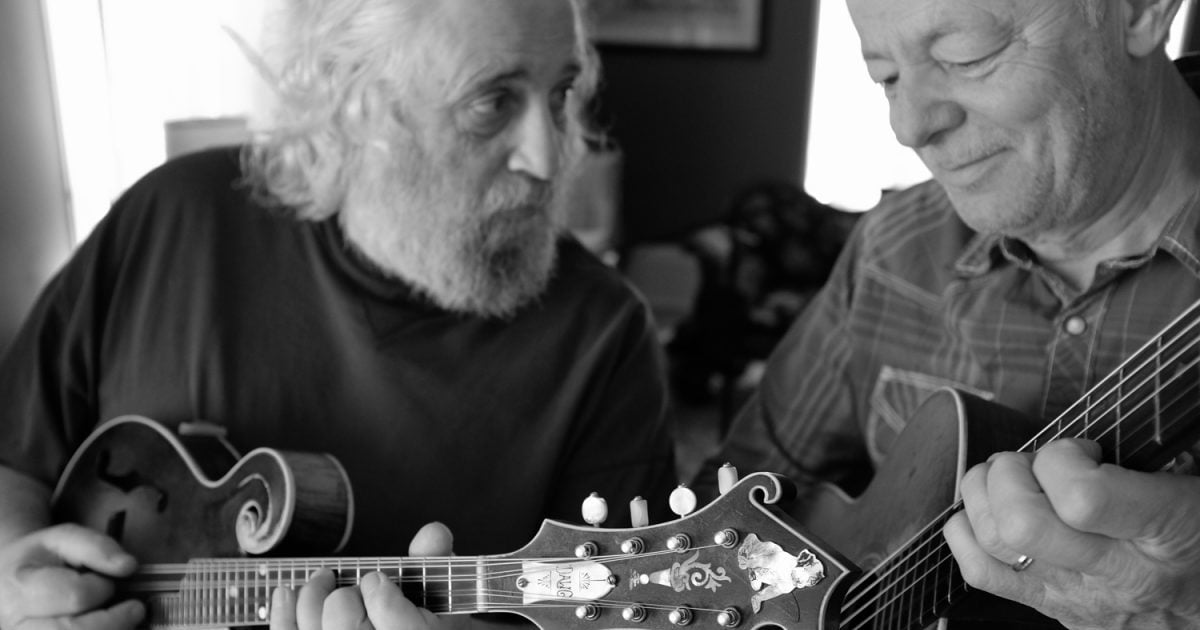
WATCH: Tommy Emmanuel and David Grisman, “Cinderella’s Fella”

Artist: Tommy Emmanuel and David Grisman
Hometown: Nashville, TN
Song: “Cinderella’s Fella”
Album: PICKIN’
Release Date: November 3, 2017
Label: Acoustic Disc

In Their Words: “‘Cinderella’s Fella’ was written after sampling a fine strain of weed grown by my late friend Jerome Schwartz in Petaluma. He called it ‘Cinderella’ and thus I became her ‘fella’ after inspiration took hold in the form of this airy dawg/jazz waltz. It was a gas playing and recording with the one and only Tommy Emmanuel in my living room, and I’m really looking forward to our first tour together.” — David Grisman


Photo credit: Clara Emmanuel

10 Bluegrass Songs Ready for Retirement

Let’s blow up some balloons, get everyone’s signatures on the card, buy a Costco sheet cake, and send each of these bluegrass songs into their golden years with a loving swat on the rear. Buy that motorhome! See the country! Spend more time with your family!

10. “Man of Constant Sorrow”

Why is this bluegrass staple ready to be put out to pasture? Because, right now, you’re imagining George Clooney with Dan Tyminski’s voice.

9. “Ashokan Farewell”

Fiddle contests, weddings, funerals, jams destined to be busted … this interminable waltz has been everywhere! Except retired. It’s often touted as an old Civil War tune, but the truth is, it was made popular by a 1990s PBS miniseries, then promptly played into oblivion.

8. “Big Spike Hammer”

If you know what “mash” is, you know why this one made the list. Also, it doesn’t really mean what it once did now that Della Mae has appropriated the lyric. RETIRE IT.

7. “Raining in L.A.”

This one will live on forever, reverberating off the walls of IBMA and SPBGMA’s host hotels. It no longer needs us to sustain it. “Raining in L.A.” doesn’t make me wanna stay, I’ll tell you what.

6. “Blue Moon of Kentucky”

For all of the thousands of times it’s been performed and the hundreds of times it’s been covered, somehow collectively we still can’t remember when it goes into 4/4 time and how the split breaks are divvied up. And if there’s a single Kentuckian in the audience, they’re going to request it. Let’s cut our losses on this one.

5. “Rawhide”

We already have “Back Up and Push.” Bluegrass only needs one tune in C without a distinguishable melody, right?

4. “Little Maggie”

There comes a point in the lifespan of a popular song where it’s more often butchered than homaged. Therefore, “Little Maggie” privileges have been unilaterally revoked. Listen to this recording and think about what you’ve done.

3. “Dueling Banjos”

“Where two or three are gathered …” with banjos out of the cases, there some dumbass requesting “Dueling Banjos” will also be. Can we retire the “Paddle faster, I hear banjo music!” t-shirts with this one, too?

2. “Wagon Wheel”

If your knee-jerk reaction to this song appearing on this list is “That ain’t bluegrass!” let’s quibble over that detail after we’ve relegated this torturous, Frankenstein-esque, pseudo-grass, I-just-bought-a-banjo-at-a-flea-market earworm to that pearly Johnson City, Tennessee, in the sky.

1. “Rocky Top”

On the 50-year anniversary of the Osborne Brothers’ release of “Rocky Top,” it seems fitting that we should take this stalwart of a song out of the greater bluegrass repertoire and put it in a safe place, where it can no longer be abused, taken for granted, or interrupted with loud shouts of “WOOOO!” If you anticipate going into “Rocky Top” withdrawals, just head down to the Grand Ole Opry. You can still hear Bobby Osborne & the Rocky Top X-press perform it — and they are the only ones today really doing the song justice. And at tempos not every 85-year-old could sustain.

Playing for the Change We Want to See (Op-ed)

Throughout this past year, I have been searching for a better understanding of music’s role in the world and in people’s lives. In the face of tragedy, playing music for a living can sometimes feel difficult to reconcile. This has been a challenging year, to say the least, but it has also caused many of us in this community to rethink what we do and why we do it.

In this past year, I have seen music extend beyond the art form itself, create bridges between people of differing viewpoints, and create unspoken bonds of love. I’ve discovered that artists who make themselves vulnerable through their work create positive ripple effects all around them. They inspire us to reveal ourselves to each other, drop defenses and look for better pathways together. Live music that we go out to see is more than just live music; it is a lesson of how to listen and learn from each other as humans. Music connects us to each other, to the earth, and to the universe. We are all vibrating together to the same rhythm. It has always been this way and, while I’m sad that it has taken the events of this year to begin to understand more clearly, I am grateful for the opportunity to search, connect, continue to learn, and play for a greater purpose.

I’ve always loved the message and melody of John Lennon’s song, “Imagine,” and how the meaning of it can be felt and interpreted without words. My friends and I recorded this cover of “Imagine” last August, the day after the White Nationalist rally in Charlottesville, Virginia. Playing together that day was a way of coping, understanding, and meditating on the change we want to see in the world. No matter your political beliefs, I hope that you’ll give this track a listen and connect to the intention behind the music. — John Mailander

All net profits from this track will be donated to the American Civil Liberties Union.

STREAM: The Railsplitters, ‘Jump In’

Artist: The Railsplitters
Hometown: Boulder, CO
Album: Jump In
Release Date: November 10, 2017

In Their Words: “We wanted to follow our impulses on this album, to take musical chances without worrying about what label or genre to attach to the music. You can hear diverse influences throughout the tracks, from hip hop to pop and salsa. We were continuing to push our boundaries and musical limits while still being able to reproduce the sound on stage with only acoustic instruments” — Peter Sharpe, mandolin and vocals