Avett Brothers Film Captures the Power of Character

One of the many moments that jumps right off the screen during May It Last: A Portrait of the Avett Brothers comes toward the beginning of the nearly two-hour documentary. During an on-screen interview, founding member and one-half of the band’s namesake, Seth Avett, recalls meeting Doc Watson. Seth explains that, up until that time, he operated under the impression that, as a musician, power came from volume. But Doc, he says, taught him that power comes from character.

That lesson resulted in a paradigm shift for Seth, whose brother, Scott Avett, was about to encounter his own musical turning point in the form of bluegrass. It was an unlikely genre for the brothers to gain their footing. Growing up on a farm in Concord, North Carolina, they spent their adolescence rebelling against any semblance of the rural culture reflected around them. Amidst a landscape of NASCAR races and country music, the duo wore flannels and combat boots, idolized Nirvana, and started a heavy-rock band called Nemo.

“I was gone to art school when Seth was young and still around in Concord and able to visit with Doc, so the personal connection there was different for me. I had not found my voice with an instrument yet. I was used to being in bands where we would sit and we would just play and just jam loud riffs, and I would just write lyrics, so I was always just all about the show, the lyrics, the poetry of it, the art of it,” Scott says. “But when I picked up the banjo out of an attempt at irony — because I didn’t know people who played the banjo — when I picked it up, I instantly connected with it: the harshness of it, also the sweetness of it … the dichotomy of that.”

Scott had dreams of fame, even when he was a little kid. In May It Last, he talks about how he used to imagine that a camera crew from Hollywood would happen to discover him while walking through the woods where he was playing.

“That’s in the value of growing up in a small place, where the views of, let’s just say New York City or Los Angeles, through this window of TV in the ’80s, you saw neighborhoods and landscapes and places that you thought, ‘Well where is that happening?’ ‘What is that?’ and, ‘How does that happen?’ You romanticize about it,” Scott says. “Just being from a small place, the value of that is so huge to develop the reach that we all aspire to, and I try to maintain that to keep the romantic view of the Big Apple. I’m not looking to crack that and ruin that.”

He says his parents encouraged his dreams, instilling a belief and drive in him and his brother from an early age. “There’s a form of being privileged that we experienced that has nothing to do with money or economic status. Our parents, they raised us in such a privileged way, and we were privileged in the sense that they surrounded us with encouragement and love and motivation for imagination,” he notes. “Our upbringing is just a massive part of the whole story.”

After picking up the banjo, Scott began incorporating tunes by Ramblin’ Jack Elliott and Old and In the Way into the band’s live set, while never losing sight of the Avett Brothers’ signature energy and vocal delivery. The result was a fusion of punk’s grit and folk’s heart, which yielded an undeniable sound that was distinctly Avett.

They met Bob Crawford through a friend and invited him to join the band on the stand-up bass. Cellist Joe Kwon officially came on board a few years later with the recommendation of Crawford, solidifying the Avett Brothers’ core lineup. From the family farm in North Carolina to the stage of Madison Square Garden, May It Last chronicles Scott and Seth’s journey by combining home movies, curated performances found on YouTube, on-screen interviews, and footage filmed over a period of more than two years in which the band recorded 2016’s True Sadness, their ninth studio album and fourth consecutive full-length with producer Rick Rubin.

But May It Last goes beyond the confines of a traditional music documentary thanks to co-directors Michael Bonfiglio and Judd Apatow (who used the Avett Brothers’ “Live and Die” in the credits of his comedy This Is 40).

“The thing that we knew from the beginning was that we wanted to make something that was real, that wasn’t a promotional piece for a band, that wasn’t just a behind-the-scenes of making an album,” Bonfiglio explains. “If we’re following the making of an album, at least to start, we know there’s a beginning, middle, and end to that process … But we knew that we didn’t want to make something just for the fans. We knew that we didn’t want to make something just for people who are really into music documentaries. Judd and I are both kind of nerdy about that; either of us would totally watch a movie that’s nothing but the creative process, but we wanted to make something that kind of transcended that, that somebody who had never heard of this band could find things to relate to and could enjoy as a moving experience.”

May It Last is as much a documentation of the creative process as it is a study of the human condition. What Scott and Seth lack in commonalities, they make up for in brotherly love. “We were terrified a lot of the time because there’s no conflict. What makes things interesting and compelling is seeing strong personalities not getting along and being able to make something — and this is totally the opposite,” Bonfiglio says.

“There were so many times when we would be like, ‘Is anybody going to watch this?’ And obviously, as we continued to work, what we found is what was so exciting and fresh and different and beautiful about it was how well they do get along and how they respect each other and take care of one another as human beings, as well as artists, and that’s what our movie was about — in addition to the fact that we spent so much time with these guys that, throughout that time, life was happening. They were changing as people. Things were happening in their lives, and we were able to kind of document that and watch that unfold. It’s a movie about people and relationships.”

The pains and triumphs that arose for the Avett Brothers throughout the filming of May It Last weren’t byproducts of being Grammy-nominated musicians on the road. Instead, they were universal: heartache, loss, joy, success. The film’s most tender moments surround Seth’s divorce, the birth of Scott and Seth’s children, and the wake of Crawford’s daughter undergoing surgery to remove a brain tumor.

A through-line throughout the documentary revolves around the family you’re born into and the family you make. There’s a distinct, palpable bond between Scott and Seth, but the genuine, strong ties between all of the band members can’t be ignored. Scott says the band’s closeness didn’t happen by design.
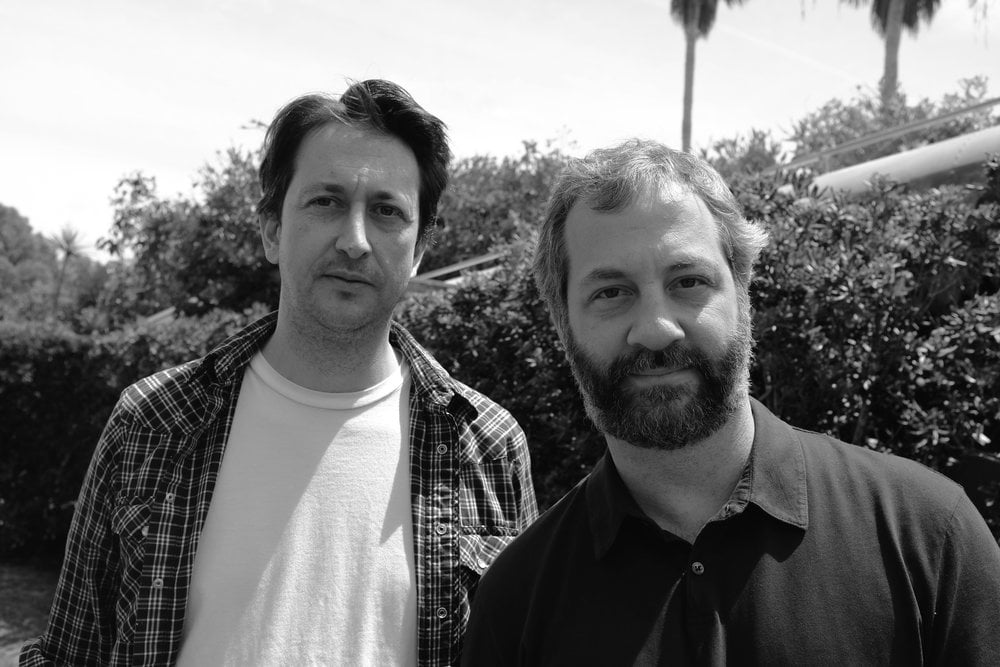
Michael Bonfiglio and Judd Apatow

“This can never be constructed intentionally, ever; it never could have been. We can’t take any credit for that. The only thing that we can identify as reason for this happening is that we try to be truthful and sincere about how we include people,” he explains. “Everyone that’s in our band, we worked together before we ever got on stage together, so it was never a hired first situation. It was really a friend first thing … For this band, we’re just lucky that we let it grow and, at this point, now that Paul [Defiglia] has left, let it contract naturally and not just fill spaces with someone else. We are what we are, and we grow and contract as we should and try to follow nature. The family love is there because it’s grown naturally and at a realistic pace.”

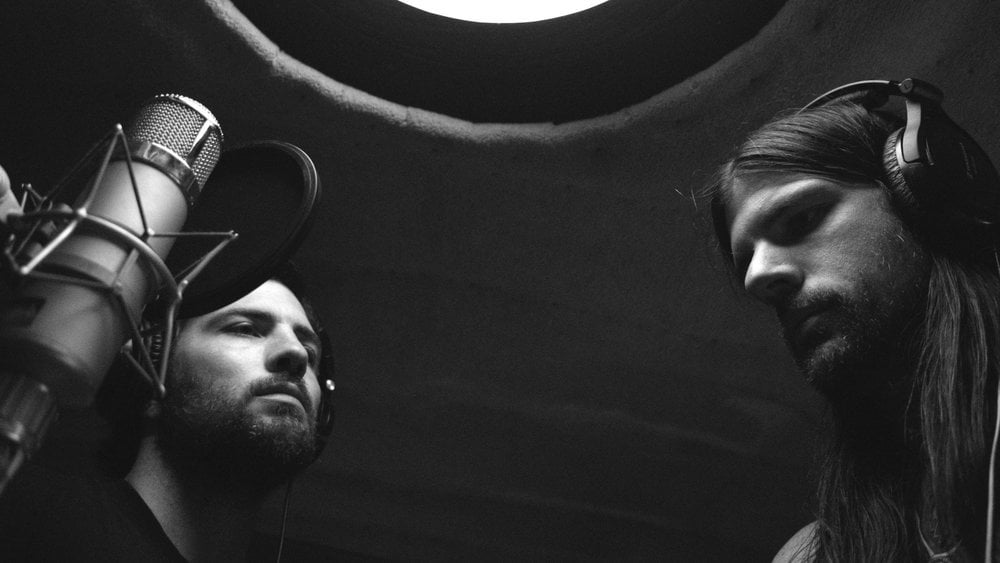
In May It Last, the band extends that same care to viewers, inviting them into their world as one of their own by offering an intimate look at some of their most vulnerable moments. One such moment occurs in the latter half of the film. After recording the gut-wrenching “No Hard Feelings” in the studio, Scott and Seth take a breather outside after Rubin and company congratulate them on the song. From behind the camera, Bonfiglio asks the duo to discuss what’s running through their minds. In an emotional and creative haze, they lay out the difficulty they have receiving praise for songs that stem from the most dark, tragic experiences of their own lives.

“That moment, after we shot it and by the time we got to the edit room, it was pretty clear that that would be the emotional climax of the movie. It was the most visceral, raw scene that we had captured and it spoke so directly to who these guys are as artists and what they do and their relationship with that and how they reconcile their lives,” Bonfiglio says. “That song is an incredibly personal song that you see what went into it in the performance of it and their reaction after and you hear it in the lyrics. It was probably one of the first scenes we worked on and one of the last scenes we worked on, in terms of just trying to get every single moment of it right. There’s not a whole lot of cuts in it, but we just really worked on it a lot, in terms of what came right before it and what comes after it.”

Completely funded by Apatow without a studio backing, May It Last premiered at this year’s SXSW and made its public debut during a one-night only screening last month. Encore showings have been scheduled through November, and HBO has picked up the U.S. television rights with an air date of early 2018. With the Avett Brothers’ down-to-earth nature and endearing honesty, viewers will carry the meaning behind May It Last with them long after the credits fade to black.

“You’ve got to throw yourself out there. That’s really what being an artist is about — exploiting your weaknesses,” Scott says. “I really believe that in myself, that I have to expose and exploit those weaknesses to relate to other people.”
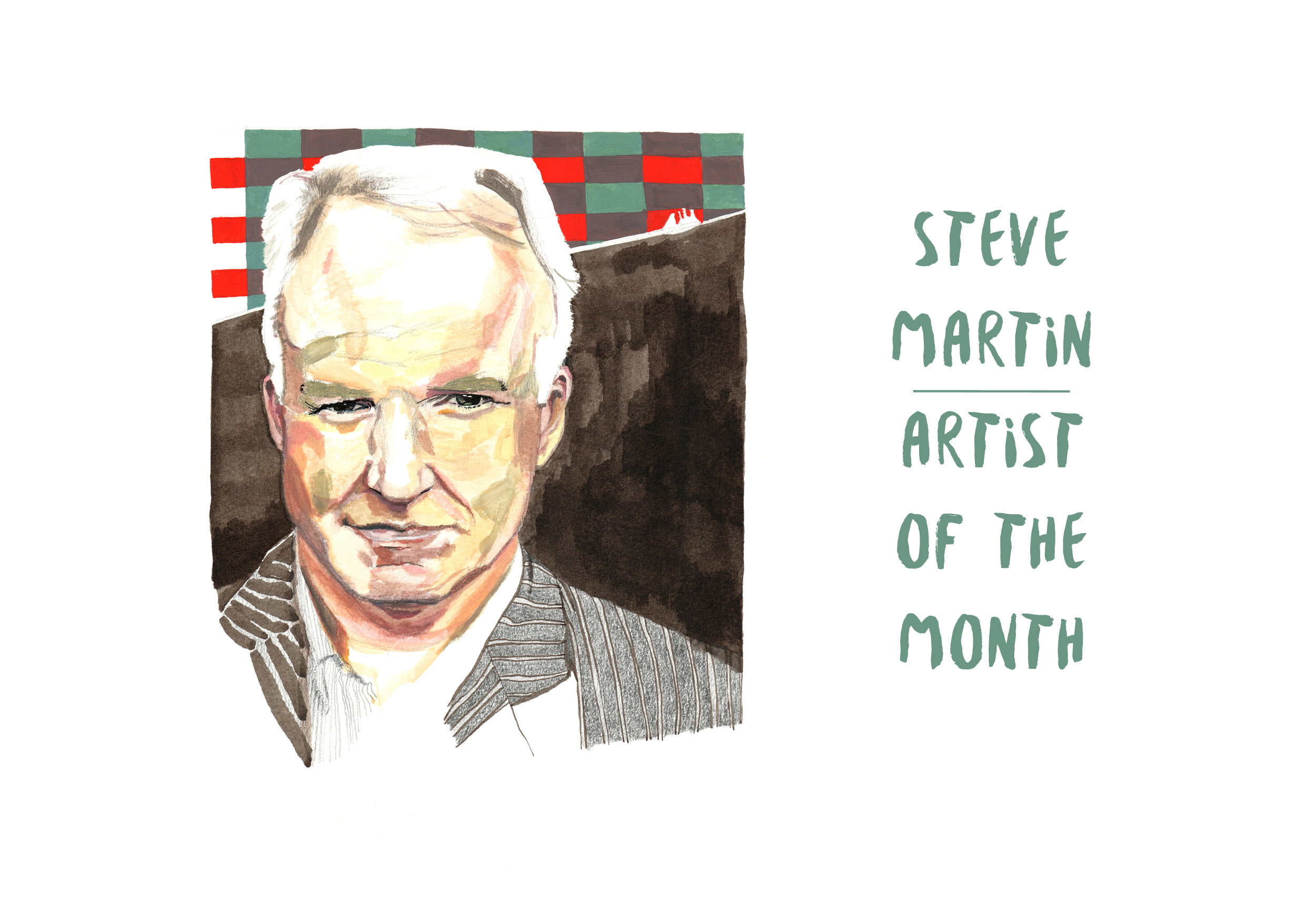

Steve Martin: Making the Same Sound Different

The sound of a five-string banjo has a cosmic pull. When Earl Scruggs first took to the Grand Ole Opry stage with Bill Monroe and his Blue Grass Boys in 1945, his rapid-fire, three-finger picking style shocked and stunned the Ryman Auditorium audience and radio listeners across the country. The standing ovation he received shook the entire building to its rafters with hands clapping, boots stomping, and hootin’ and hollerin’. It was the Big Bang of bluegrass banjo.

Almost every banjo player could tell you the first time they heard the instrument, the first time they encountered its cosmic pull — a personal, introspective banjo Big Bang unique to each person who is struck by its irresistible, joyful, magnetic sound. Steve Martin describes the first time he heard a banjo as his “What’s that!?” moment. “I kind of pin it on the Kingston Trio,” he remembers. “But I know there were earlier things. I fell in love with the four-string banjo, too. When I was 11, I would go to Disneyland to see the Golden Horseshoe Revue, and there was a four-string banjo player. When I worked at Knott’s Berry Farm, there was a four-string banjo player there, too.” His voice shifts to a whisper, as he adds, “But, we all know that five is better.”

He continues, “I do believe it was kind of the Kingston Trio or folk music, in general, that really made the sound like, ‘Wow, what a happy, wonderful sound!’”

He picked up the banjo as a teenager, taking on three-finger, Scruggs-style picking with the help and influence of his friend John McEuen. But, unlike most banjo pickers, who choose one style — Scruggs’ namesake method, or jazz and ragtime on tenor and plectrum banjos, or any of several types of frailing — Martin also had a “What’s that!?” moment with the old-time form, clawhammer: “It was a record called 5-String Banjo Greats and another record called the Old-Time Banjo Project. They were both compilations. So I don’t know who introduced me to clawhammer. When I was learning three-finger and I was into it about three years, I started to really notice clawhammer, and I go, ‘Oh, no. I have to learn that, too.’”

He is a master of both three-finger and clawhammer to this day and, on his brand new record, The Long-Awaited Album, he shifts effortlessly between the two — sometimes within one song.

Through his career as a comedian and actor, the banjo was ever at Martin’s side. It was a part of his stand-up act, it was peppered into his comedy albums, and it made cameos on his TV appearances. It would be cliché to assume that the banjo and bluegrass were a byproduct of Martin’s comedy career, but the instrument was never an afterthought, an addendum, or a prop. In fact, bluegrass and folk music showed him from his early show biz days working at theme parks that humor was an integral part of these musical traditions.

“When I first started hearing live music, like the Dillards or folk music of some kind, they all did jokes,” he says. “They all did funny intros to songs. They did riffs. They did bits. And then they did their music. That’s essentially what we’re doing now.” The silly, whimsical, comedic elements of the music Martin makes with his collaborators, friends, and backing band — the Steep Canyon Rangers — are just as much a testament to Martin’s history with bluegrass as they are a testament to his extraordinary comedy career.

During the seven years that elapsed between their last bluegrass album, Rare Bird Alert, and The Long-Awaited Album, Martin and the Rangers wrote, developed, and arranged the project’s material during soundchecks, band rehearsals, and downtime on the bus. Barn-burning, Scruggs-style tunes and contemplative, frailing instrumentals are sprinkled amidst love songs and story songs, silly and earnest, all steeped in quirky, humorous inventiveness. The album is centered on a solidly bluegrass aesthetic — but bluegrass is not a default setting.

Musical and production choices for each song were pointed and deliberate, with producer Peter Asher, Martin, and the Rangers keeping each song central and building out the sound around any given track’s core idea. “I love the sound of the five, six instruments that are traditionally bluegrass,” Martin clarifies. “That’s all we need. The Rangers, they say bluegrass is five musicians playing all the time. Other music is five musicians not playing all the time. In bluegrass, they have breaks, but there’s always the backup going. There’s always everybody chopping. So I thought, ‘What if we left out some of the instruments? What if we were not playing all the time?’ It really made a different sound.”

By leaving out an instrument here or there, adding in a cello or, in the case of the lead track, “Santa Fe,” an entire Mariachi band, the album’s sound registers immediately as bluegrass, but refuses to be lazily or automatically categorized as such. First and foremost, it sounds like Steve Martin and the Steep Canyon Rangers. “I’ve always loved the idea of the sound of the banjo against the cello, or viola, or violin, because you have the staccato notes against the long notes. The cello or viola contribute to the melancholy and mood of the banjo. But mostly, it’s just us, the seven musicians, including myself. We can reproduce it on stage … except for the mariachi. But the song called for a mariachi band, you know?” He laughs and adds, “There’s almost no way to avoid it.”

Where many bluegrass and folk writers eschew modern vernacular, places, and topics, Martin leans in, embracing contemporary scenarios and themes that don’t necessarily fit the stereotypes of train-hopping, moonshine-running, field-plowing folk music. The Olive Garden, nights in a biology laboratory, a gate at an airport, “Angeline the Barista” … the timelessness of roots and folk music isn’t lost in these themes and settings; it’s enhanced, it’s relatable, and it’s damn funny.

“I’ve written a song about a train, and I’ve written a song about Paul Revere. I think it’s got to be specific for people. They’ve got to go, ‘I know that!’ If I’m writing about a train, I know that 99 percent of people that the song will be heard by won’t really have that experience. But if I write about the Olive Garden and a girl busting up with you, I think a lot of people can relate to that, even if they don’t have that exact experience.”

The relatability and visibility of Martin’s music have brought bluegrass — and the banjo — to countless ears that may have never heard it otherwise. In 2015, the International Bluegrass Music Association awarded Martin a Distinguished Achievement Award with this visibility and outreach in mind. With The Long-Awaited Album; the Steve Martin Prize for Excellence in Banjo and Bluegrass that he awards annually; a national tour of his banjo-forward, Tony-nominated Broadway musical, Bright Star; and a heavy touring schedule criss-crossing the country with the Steep Canyon Rangers and his longtime comedy partner, Martin Short, Martin is poised to continue bringing the banjo to many first-time listeners.

But when faced with the idea that he, himself, could very well be the “What’s that?!” moment for an entire generation of brand new banjo players, he is unfalteringly modest. “What I try to express with the banjo is the sound of the banjo. When I first heard Earl Scruggs, I loved his skill, his timing, and his musicianship. I regard myself as someone who’s expressing the sound of the banjo rather than being a superior, technical player like Béla Fleck. So, if anyone picks up the banjo from hearing me, it’s because they fell in love with the sound of the banjo. What I do is get the sound of the banjo out there to a broader world, I guess.”


Lede illustration by Cat Ferraz.

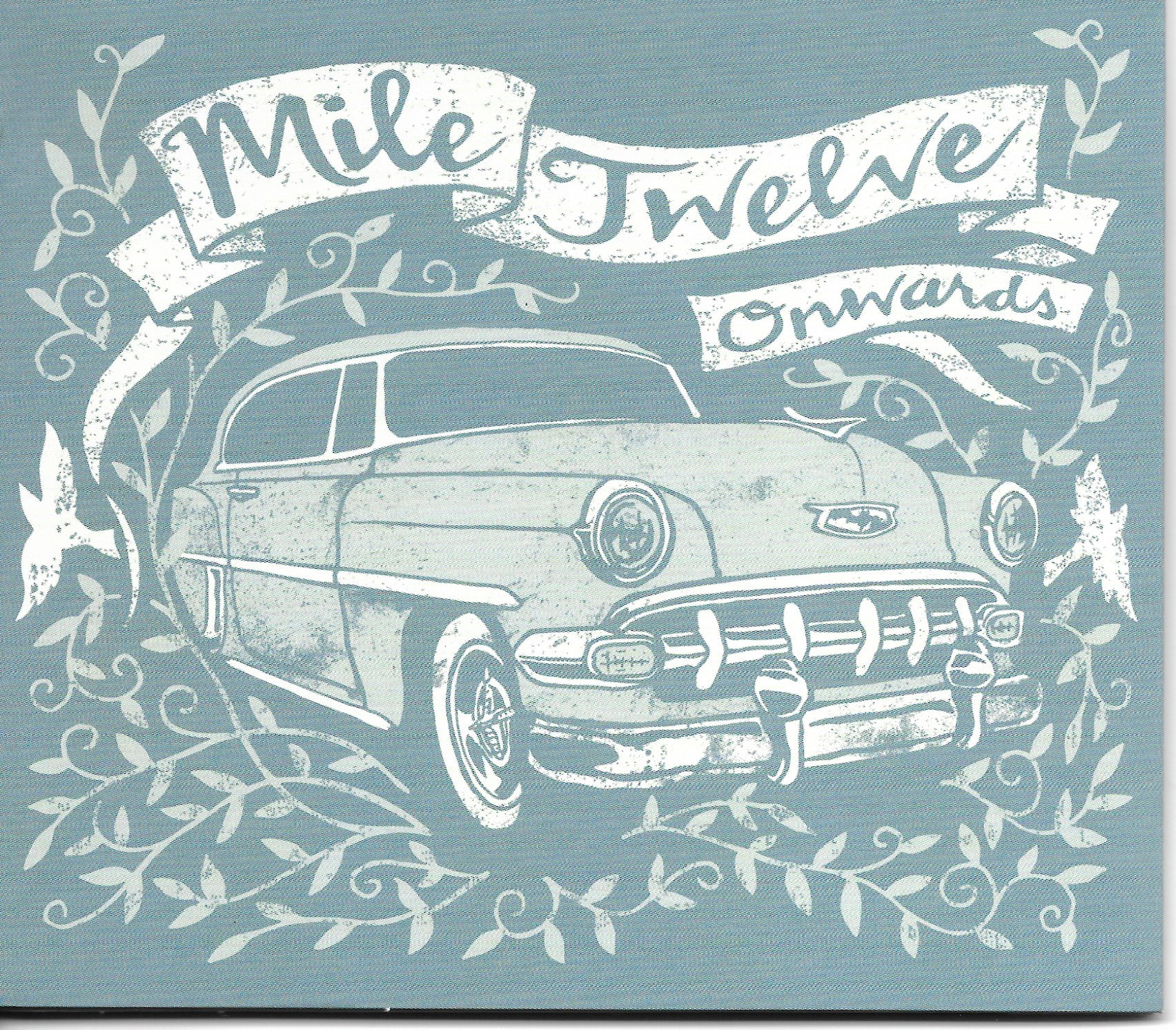
STREAM: Mile Twelve, ‘Onwards’

Artist: Mile Twelve
Hometown: Boston, MA
Album: Onwards
Release Date: October 27, 2017

In Their Words: “The past two years have been an exciting time of progress and productivity for Mile Twelve. After extensive bouts of touring, hours upon hours of meticulous songwriting sessions, more rehearsals than any of us can count, and, most recently, the addition of a fifth member, Mile Twelve has grown into something bigger than any single one of us. This album is the culmination of all that growth. Thanks for joining us on this journey, as we continue to travel onwards.” — Evan Murphy

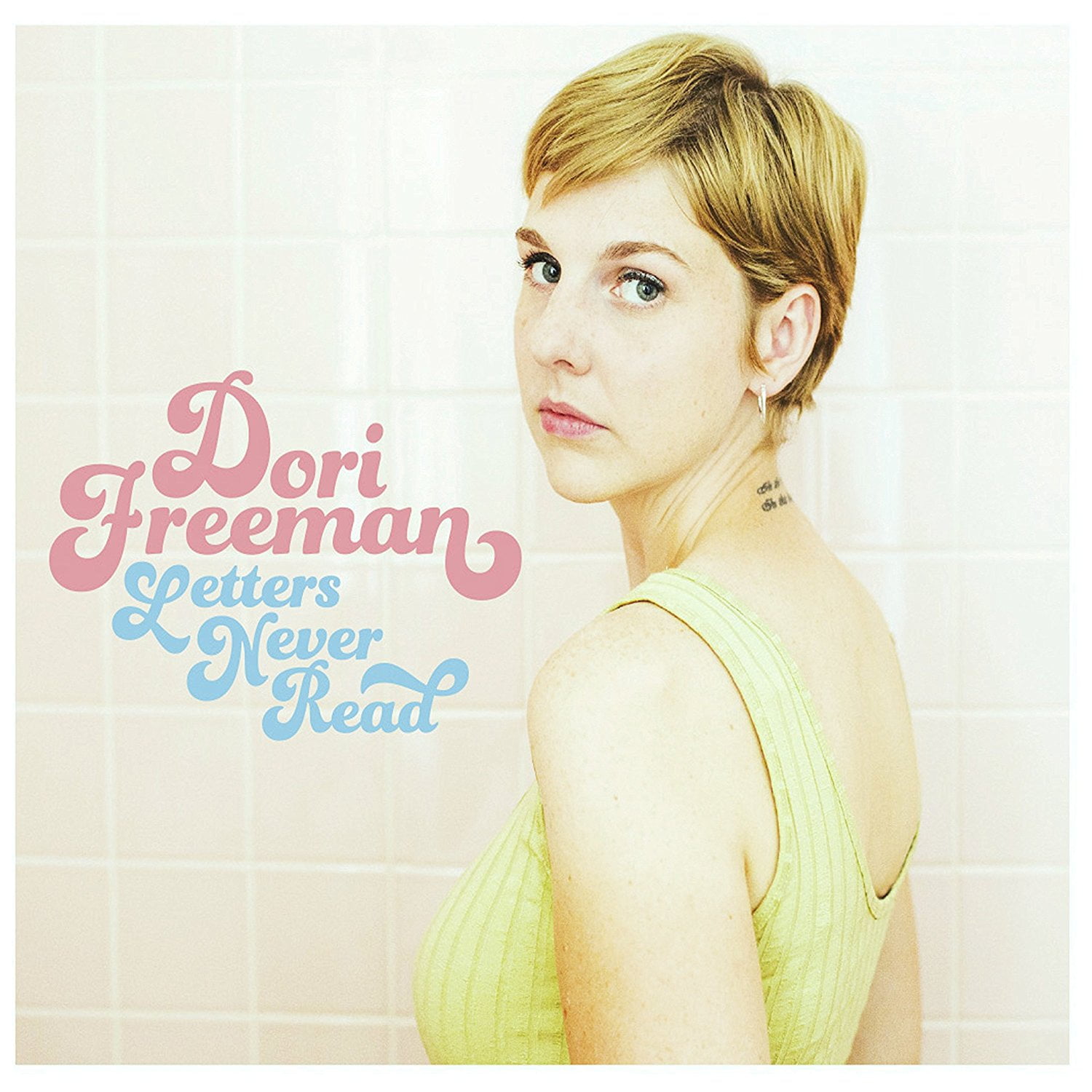
Dori Freeman, ‘Just Say It Now’

There’s nothing quite like a sad song that isn’t actually sad at all, or a happy song that’s anything but. It feels good to condition the emotions and not let things get too caught up in the predictable, the status quo. We’re programmed to think that minor keys and slow acoustics always mean that lyrics just as somber are to come; and we’re equally used to hearing sprightly tales alongside fast beats and carefree picking. But when music really gets interesting, is when this formula is dismissed completely: Often a tool of bluegrass, the instruments can walk a much different line than the brain, painting a more complex picture of the human experience. It’s rare that anything is cut and dry, anyway, and, like some mournful words paired with a dancing fiddle, there are usually two sides to everything … at least.

Dori Freeman, on Letters Never Read, knows this well. Many of her songs play with the ability to be many things at one time and unveil their true vulnerability once they have captured us within their inherent melodies. “Just Say It Now” is an ode to just getting the band aid ripped off before the pain is too intense, and it sounds delicate and light — a go-lucky sing-along with a gauzy, Lauren Canyon chug. “Just say it now before the silence makes me cry,” she sings. “From the beginning, I knew you would say goodbye.” Her voice is sharp and ethereal, pastoral and crisp, able to carry the task of complexity easily within a two-and-a-half-minute frame. Maybe the best sad songs are the ones that make us smile, too.

Jumping into the Deep End: A Conversation with Billy Strings

Guitar virtuoso Billy Strings (born William Apostol) is on the road somewhere between here and there, when he picks up the phone. That question “Where exactly?” gives him pause. “The other day, I couldn’t remember where I was,” he admits, a note of earnestness betraying his 25 years of age. It’s that sweet natured tendency the young have to overshare. “It took me probably at least 40 or 50 seconds just to go, ‘Oh yeah.’ I don’t know if you’ve ever felt that before, but it’s a really strange thing.” It’s the kind of problem that comes with being a popular bluegrass musician, and one he’s forever adjusting to as he zips from city to city. “We were in the van once, and I literally asked the question, ‘Is this where we are?’” he says with a laugh, knowing the existential weight of his own seemingly ordinary question.

Billy’s ever-probing mind, technical proficiency, and weighted voice all suggest a much older player. He recently released his debut LP, Turmoil & Tinfoil, recorded with Greensky Bluegrass’s producer, Glenn Brown, in the dead of Michigan’s winter. Even in that setting, it burns with a feverish heat. “It was like being snowed in, like cabin fever,” Billy says about the session, which could explain the album’s bracing pace. As much as he nods to tradition on Turmoil & Tinfoil, he also playfully stretches the bounds of bluegrass via face-melting guitar phrasing (thanks to his abiding interest in heavy metal, classic rock, the blues, and more) and socially conscious songs. Both the wounded “Living Like an Animal” and the frustrated “Dealing Despair” pry into issues of personhood and community at a time when both seem more fractured than ever. What others have termed his “authenticity,” Billy chalks up to “honesty,” and it serves, in a way, as his battle cry. He’s not afraid to keep asking questions, big or small.

Just out of curiosity, how many back-up strings do you bring on tour, given your penchant for breaking them in your wilder fits of playing?

Nowadays, I actually have three guitars onstage with me. I have two Preston Thompsons on stage, and then I have a Roy Noble on stage with me, as well. Rarely do I get to the third one anymore, but there have been times where I’ll reach for the Roy Noble.

So would you say, then, that a particularly crazy night on stage is a Roy Noble night?

Yeah, I guess so. You could.

Tradition has long been a defining force within bluegrass. How have you navigated your way through it?

I grew up playing bluegrass music and traditional bluegrass music, and I have a deep passion for that, as well, but I like all kinds of music.

Right, I know you’re a big metal fan, specifically.

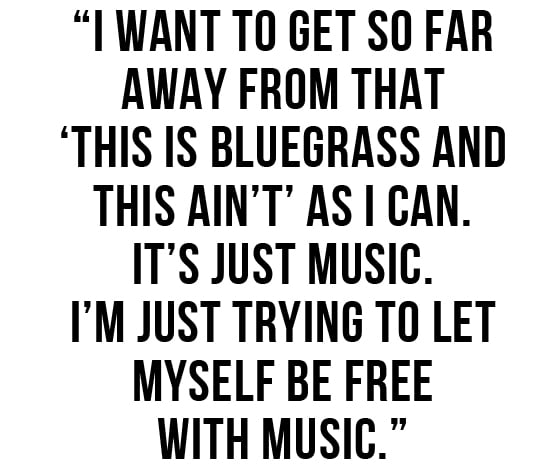
Yeah, I love some death metal and some rock ‘n’ roll and blues. I like all sorts of stuff. When I was younger, I was a little bit more closed-minded about a lot of things, whether it was “Why would you want to play bluegrass but not bluegrass?” This or that, you know? But eventually I got out of that shell, and I want to get so far away from that “This is bluegrass and this ain’t” as I can. It’s just music. I’m just trying to let myself be free with music.

I think that’s something that we’re seeing a lot from the younger generation, bringing all these influences into the genre.

Definitely. I think there will always be a hint of traditional bluegrass in my shows because that’s how I learned to play guitar. My ears were trained by “How Mountain Gals Can Love” and “Blue Moon of Kentucky” — that’s the music I cut my teeth on. You’ll always hear it, I think, but I’m also going to do whatever the song calls for. I used to be embarrassed to show anybody a song that I wrote, and I’m just trying to ditch that whole mentality. Who cares if a song is that or this, or if somebody likes it or they don’t? It’s the song.

You’ve mentioned in the past that you’ve never learned anything note for note; instead, you just hear it and emulate it. What does your writing process look like, then, for original compositions?

It looks like me walking around my house with my guitar, staring at my reflection in the microwave. Pacing back and forth when nobody’s home, just scribbling on notebooks and stuff, and being on my Google Doc. I sit there with my guitar and I sing it and then, if I got something cool, I’ll write it down.

“Dealing Despair” is such a powerful original song in light of how divided the country seems. Where did that come from?

I actually wrote that quite a while back. It was after another unarmed Black man was shot down by police, and I was awfully pissed off. I was shook. I’m feeling it lately, too; there’s so much going on in the world.

It feels so divided. I mean, it always has been, but more than ever it seems.

Yeah, and we should just talk about music. But I’m feeling it lately, and you’ve gotta write about what you’re feeling, and that goes back to what I was saying about letting it happen and not worrying about if people are going to like it or not because certainly some people might take that song as a little aggressive.

I know some listeners keep clamoring for artists to shut up about politics and just be artists, but bluegrass has always been a space to sort through social issues.

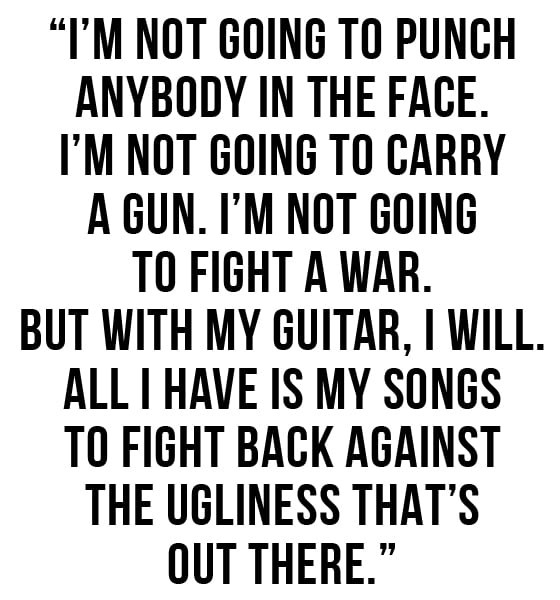
Well, man, that’s folk music. Look at Woody Guthrie, Bob Dylan. You have to sing about that shit. You absolutely have to. It’s kind of our duty. I’m not going to punch anybody in the face. I’m not going to carry a gun. I’m not going to fight a war. But with my guitar, I will. All I have is my songs to fight back against the ugliness that’s out there.

But that fight exists as an “either/or” these days, and it can alienate certain listeners.

I want people that are loving and not cruel to each other to come to my shows. I really don’t care what anybody thinks. I’m just doing my thing.

Turning away from politics, your father also played on this album.

Yeah, he’s on the last track [“These Memories of You”].

I thought so! The harmonies have this interesting familial tone.

What you just said is a huge compliment to me. My voice sounds the best when it’s right next to his; I can’t sing with anybody like that. My dad didn’t even know that song. He just walked right into the studio, and I wrote the lyrics on a piece of paper, and he just did it. He knows how to follow me, and I know how to follow him. My dad is a seriously heartfelt musician. When he plays a song, he really means it. He’s not just saying the words.

You learned from him when you were younger, so what was that moment like in the studio?

He was so happy to be there. It was kind of like he was a little kid. He sits around the house and plays, but he rarely goes and plays on stage anywhere — let alone in a recording studio.

And look how the tables have turned.

Those moments are what I cherish the absolute most. For instance, when I was six or seven years old, I was learning “Beaumont Rag,” and I just played the rhythm, but I kept messing it up in this one part. Right in the middle of the song, I said, “Stop. Dad, why don’t you play it and let me listen?” I listened to what he was trying to say with the guitar, and I go, “Now, let me try it again,” and I nailed it. He started laughing. He reached over his guitar and squeezed my little hand. He called my grandmother and said, “Listen to your grandson right now!” I was a little kid, but I’ll never forget that moment. Now there have been several moments since then, like when I got to introduce my dad to David Grisman in real life because my dad introduced me to David Grisman when I was seven years old. We got to sing songs all night.

That is so wild.

Yeah, it is wild because we come from a tiny little town and it’s not always been easy, and our family has had a lot of crazy stuff. Those moments are super good for me because I feel like it’s that same thing: It brings me right back to when I got the “Beaumont Rag” right. It really pushes me, and there are all sorts of reasons that I’m doing this, but that’s a huge one — because mom and dad are proud. I’m so grateful that they turned me onto this music. My childhood was a lot of bluegrass. I’m so grateful for that because I love this music.

It’s interesting, too, because it seems like listeners are, in part, gravitating toward what they keep calling your authenticity. At 25 years old, that can be a loaded statement. How have you found your own way through that kind of praise?

I don’t know. I haven’t heard that word thrown around me that much.

Maybe not to your face.

Yeah, right. When I was talking about my songwriting, I’m just trying to do my thing and just be honest. Even in life. Don’t dip your toes in the water; just jump right into the deep end. Don’t get yourself into a situation that you don’t want to be in because you know what you really want. Don’t lie to yourself. Just be yourself.

You are wise beyond your years.

I think a lot, you know?

That comes across in your playing, too.

When I’m playing, it’s easy to learn a song and go through the routine and just play it night after night. But when I go out on stage, that’s not what I do. I try to actually pour it out with my guitar, from my heart. If you listen to a lot of the people I grew up listening to — Mac Wiseman, Bill Monroe, Larry Sparks, Keith Whitley — when they’re singing, they’re not kidding. That’s why you can cry when you hear it. I love players like that. And there’s so much music out there today, you know Top 40 everything, that’s garbage.

Well, it’s too constructed, but I can see how your dad shaped you to sing from the heart.

Every time he picks up the guitar, he does that.

What a great way to learn.

I also learned a lesson from Sam Bush without him saying anything. I leaned over and took a drink of my beer — this was quite a while ago — and I looked over at Sam Bush and he had his eyes closed playing the hell out of the rhythm. It’s like, “Why do I think that I can just stop playing the song right now to take a sip of beer? Wake up, kid. You’re playing a song. What are you doing?” It’s that attitude. Whenever those dudes play, Sam Bush gives it 110 percent. Bryan Sutton was telling me the other day that Doc would never pick up his guitar and just play a little ditty or half of a song; he would always play the whole song.

Speaking of Bryan, I know you collaborated on “Salty Sheep.” How did that come about?

I think I just called him and asked him. [Laughs] It was so amazing for me. We sat a microphone in between us, and we sat in two chairs really close to each other, just facing each other. With no headphones on, we just played the tune a couple times, and holy shit.

Well, talk about Doc Watson vibes.

Well, that’s what me and him geek out on. When we go to lunch, we’re always talking about Doc Watson. We both love him so much.

So we can expect a covers album from you two soon?

I have no idea. I’m down, but you’d have to ask Bryan. He’s such a wonderful friend and mentor. He’s done this 20 years, and he’s got a lot of advice for a young guy like me. I’m so grateful for that advice. He just gives it away for free because he’s a good friend and he cares about guitar and Doc’s legacy and all that. I’m honored to have him as a friend, and completely honored to have him on the record.

LISTEN: Ragged Union, ‘Cross Country Chimes’

Artist: Ragged Union
Hometown: Boulder, CO
Song: “Cross Country Chimes”
Album: Time Captain
Release Date: October 27, 2017

In Their Words: “‘Cross Country Chimes’ is an original banjo tune penned by Chris Elliott, in the tradition of Earl Scruggs’ ‘Foggy Mountain Chimes,’ with a melody that combines a blues touch and a modern chord progression.” — Geoff Union


Photo credit: Josh Elioseff

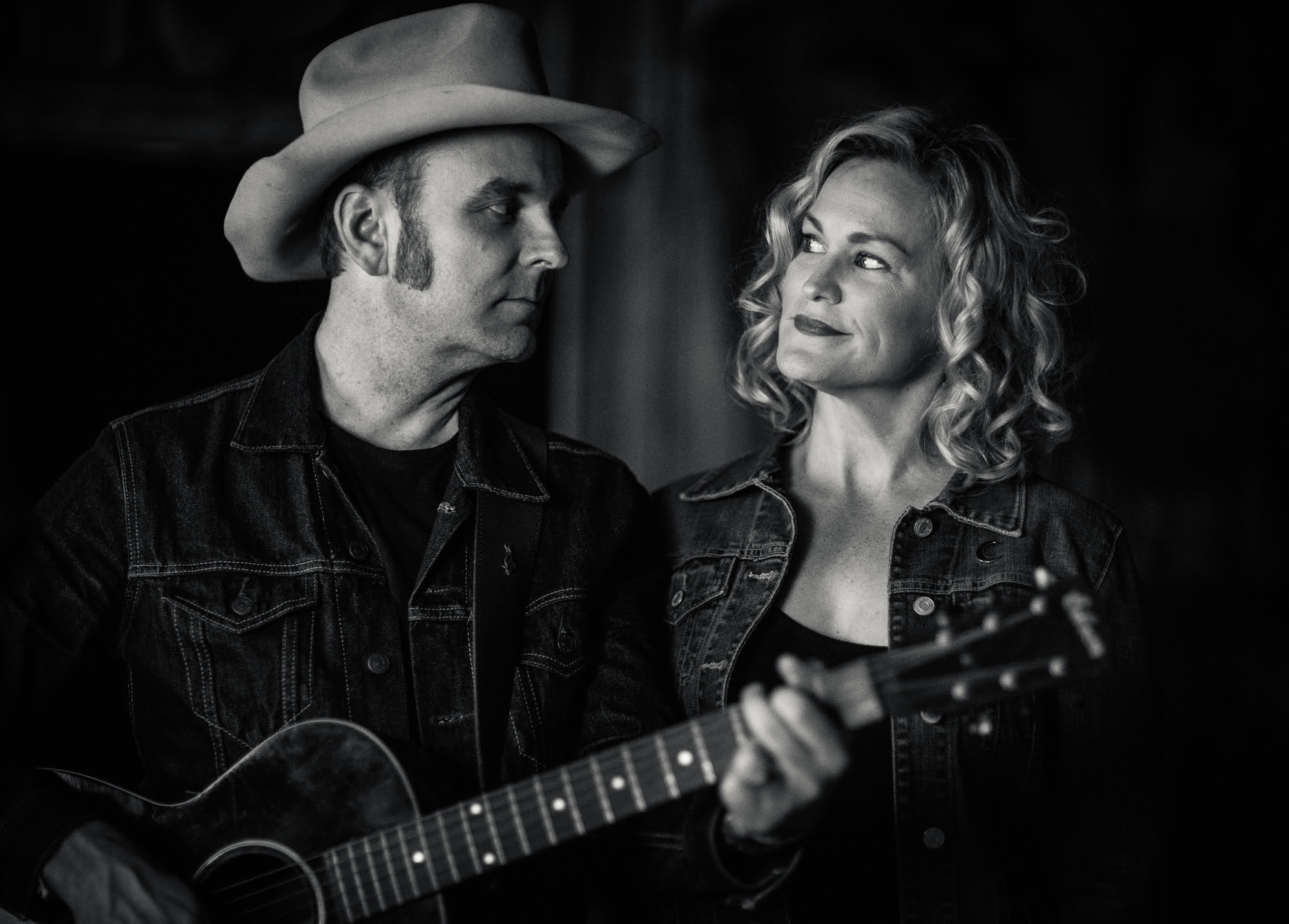
That Ain’t Bluegrass: Darin & Brooke Aldridge

Artist: Darin & Brooke Aldridge
Song: “ Someday Soon” (originally by Ian & Sylvia)
Album: Faster and Farther

When did you first hear “Someday Soon?”

Darin Aldridge: It’s one of the tunes that Brooke and I have been doing in the living room around our house, as we just sit around playing, coming up with tunes. [Laughs] Suzy Bogguss was probably the first for both of us. We were in Sarasota, Florida, about a year-and-a-half or two years ago with John Cowan — we’ve been on tour a lot with him lately. And the Nitty Gritty Dirt Band, some of those guys were down there. We were just soundchecking, and Brooke started singing the song as a vocal check. And they all asked if we would do that song that night. We started doing it from there.

What was your process for arranging it and putting it together?

We kept it in the same key for her. It sang really well. The chords are so beautiful in it the way Ian Tyson wrote them, so we thought, “Why change anything that’s not really broken?” She does hold out a part of it toward the end. It’s such a good note for her. And that’s different from any other versions of the song. We arranged it with the band we would be performing live with, so it would have the fiddle and guitar break. Dobro was in our band, at the time, so that’s how we had that in there.

It’s been a tradition since the beginning of bluegrass for artists to take songs from outside of the genre and turn them into bluegrass songs. Why do you think that is?

I think that as people in different genres and different eras — say the ‘60s til now — people just play music that they enjoy, writing they enjoy. I got to be a part of the Country Gentlemen in the last decade or so that Charlie Waller was alive. They were probably known as the first bluegrass artists to really be reaching out in the ‘60s, doing a lot of folk tunes, a lot of rock songs, like things from the movie Exodus and so forth. That trickled down through the decades. If it’s just a good song, it’s hard to keep down, and I think that’s what keeps a lot of the music fresh. Even Monroe ventured into some of the bluesy music, so did Flatt & Scruggs, to keep along with the times. Different artists just picked things that they enjoyed or spoke to them.

What’s your favorite thing about performing this song?

Probably the crowd response. It speaks to a lot of new folks listening to it the first time, then you get the older generation that have heard it from the hit by Judy Collins in the ‘60s, or from Suzy Bogguss’s hit — people who are 40 or 50 years old remember that from the ‘90s. It’s a good crowd favorite. We got to perform it on the Grand Ole Opry this year, when we debuted, and it got a great response. It’s just been a wonderful song. It’s up for IBMA Song of the Year. It’s been number one for us on the Bluegrass Today chart, Roots Music Report, and, I think, Bluegrass Unlimited.

You know that ain’t bluegrass, right?

[Laughs] ‘Cause it don’t have a banjo in it! I see it from both sides. Considering bluegrass the way Monroe and them played it in 1946 with that instrumentation — that’s ground zero for bluegrass. This song doesn’t have banjo in it, but it’s got soul, it’s got instrumentation of bluegrass, and of course wonderful singing. It’s hard to keep that down. It can crossover to whatever. It’s not too far from Suzy’s version of it or mainstream country and it’s hit a lot of country radio.

That’s a hard question, you know? If it’s bluegrass or it’s not. I think it’s people’s opinion about what they enjoy and that opinion is growing wider and wider, which makes the music grow. Why not let them fight over what they think is and isn’t bluegrass? That’s why they make CDs and downloads, so you can choose yourself, I guess? [Laughs]

My First IBMA

Ahead of this year’s annual gathering of bluegrass lovers at the IBMA’s World of Bluegrass festival in Raleigh, North Carolina, we asked some of our favorite players to recount a memory of their first time attending the illustrious event. Here’s what they told us:

Chris Pandolfi (Infamous Stringdusters)

“While my first IBMA was certainly exciting, driving roundtrip by myself from Boston for several days of nothing but jams and live music, it was my second IBMA that will always be my most memorable. It was a more formative, purposeful mission — my first trip there as an aspiring ‘professional musician,’ even though I wouldn’t necessarily describe my agenda as ‘professional.’ I had no formal engagements, no hotel reservation, no tickets, no real money to spare, and no worries about any of it. We were there to make music, meet new people, and tap into that magical, living art form that we all know as bluegrass.

The seeds of the Stringdusters had been planted, but we needed to find a few more players, and IBMA was the universal meeting place for anyone serious about the music. So when Travis Book sauntered off the elevator, no shoes and a backpack full of beer, we knew we had a good candidate on our hands. I also met Jeremy for the first time that year at IBMA, and it was definitely the first time that we five jammed together as a group, which was memorable, to say the least. That trip was a key part of the advent of the Infamous Stringdusters, which has become my passion and my life’s work.

Though our main purpose was to get a band going, we were also there as fans. I loved the sound. I was there to chase that passion, and just as important as meeting my bandmates was the ability to get that much closer to the music. I didn’t need a plan to know that making the pilgrimage to IBMA would be worth it, and it most certainly was, as there is no better place to connect with bluegrass.”

Casey Campbell

“I’ve been lucky enough to attend IBMA’s World of Bluegrass all my life. There are so many pictures of me as a baby and little kid running around Owensboro and Louisville. However, I didn’t really start making memories until the event came to Nashville in 2005. At that point, I was starting to get into playing music and discovering that there was more to WOB than just the hotel hallway jams. Thanks to Deanie Richardson and Kim Fox, I joined the Kids on Bluegrass program the following year, and my world opened up as I met these incredible young musicians like Molly Tuttle, AJ Lee, Cory & Jarrod Walker, Seth Taylor, Tyler White, and more. In fact, the majority of the folks I met during my Kids on Bluegrass tenure are still kicking ass across the bluegrass and acoustic music scenes today.

It has been such a joy over the past 10 years to watch so many other great musicians come through that program and find their groove in the musical world. I look at kids like Presley Barker and Giri Peters (who are way better than I ever thought of being at their age) and think that, without Kids on Bluegrass, those two might not have crossed paths for another decade. Of course, there will always be plenty of hallway jamming, exhibit hall perusing, and more hallway jamming, but one of my favorite World of Bluegrass memories will always be in the rehearsal rooms with those other musicians my age and thinking 1) I’ve found my people, and 2) Shit, I need to go home and practice!”

Michael Stockton (Flatt Lonesome)

“The very first year I attended IBMA was in 2008. I believe it was called Fan Fest at the time, and it was still at the convention center in Nashville, Tennessee. I had been hanging out with a few friends through the day on the Friday of that weekend. I worked up an appetite from all of the jamming I had been doing, so I went up to the Quizno’s that was on the top floor of the convention center and got myself a sandwich. Lucky enough for me, as I was walking into the grand ballroom, the Lonesome River band was taking the stage. Being that I was very new to bluegrass, I had no idea what I was in for. I can vividly remember sitting in the very back row of the hall, enjoying my sandwich and the music.

The part of the story that stands out the most, though, is from the last song on their set. They ended with the song ‘Them Blues’ (still one of my favorite LRB songs to this day), and they were getting after it! The song got around to the second banjo break where Sammy hangs on the seven note for the first few measures, and I came unglued! I completely forgot that I had a sandwich sitting in my lap and, when I heard that break for what was the first time in my life, I couldn’t help but jump up out of my seat and holler as loud as a I could! I spilled my sandwich, chips, and coke all over the floor, and I don’t regret it one bit. That was one of the first times I really pictured myself on stage. I put myself in Sammy’s shoes and told myself that I wanted to make someone spill their sandwich one day.

Fast forward to 2017: Flatt Lonesome has won four IBMA awards, and we are nominated again for Vocal Group of the Year and Entertainer of the Year. I never would have dreamed, back in the days of spilling sandwiches, that I would share the stage with my heroes. IBMA has been invaluable for me as a young musician. IBMA is where my dream to play professionally was cultivated, and it’s where that very dream has come true.”

Bronwyn Keith-Hynes (Mile Twelve)

“My first IBMA was wonderful and bizarre and totally exciting and, at one point, I found myself playing a set with two of my biggest heroes. I ran into Peter Rowan at the breakfast of the Super 8 I was staying in, and he recognized me because I’d played fiddle for him once before up in Boston. He told me to come to his set later that day and play fiddle, and I thought it was odd that he hadn’t found a fiddler yet, but I was happy to show up and play, so I didn’t ask any questions. Then I got there and realized he did already have a fiddler and it was Michael Cleveland — one of my biggest fiddle heroes. That was my first time meeting Michael and, once I got over my initial terror of playing in front of him, playing fiddle on stage with him and Peter was one of the coolest moments I can remember from any IBMA I’ve been to.”

Sierra Hull

“I went to my first IBMA when I was nine years old, when I was invited to be part of the Kids on Bluegrass showcase. I had never been to a bluegrass festival of that size before — anything I had ever been to had been very small, local festivals. Seeing a crowd of 1,000 people would have seemed like more than 10,000 to me. I was so excited to see IIIrd Tyme Out; they were my favorite band at the time — they’re still one of my favorites — and Steve Dilling took me under his wing the whole week.

One night, he brought me up to a hotel suite to meet Earl Scruggs. I couldn’t believe I was getting to meet him! Earl wasn’t picking while I was up there, he was just hanging, but they had me get out my mandolin to play some for him. I had only been playing for about a year and I didn’t know a whole lot yet; I just knew a few fiddle tunes. At one point, I remember Earl asking me, ‘Can you play “Pike County Breakdown?”‘ And I said to him, ‘I don’t believe I’ve ever heard that one.’ I couldn’t believe Earl Scruggs had asked me to play a song I didn’t know so the first thing I did when I went back to my mandolin teacher was tell him the story. I said, ‘You’ve gotta teach it to me! Next time I see Earl I need to know this song.’ My teacher just said, ‘You know he wrote that, right?’ Needless to say, I was super embarrassed, but I learned it! That definitely got me into learning more and more fiddle tunes. I had to be ready the next time Earl asked what I knew!”


Photo credit: Joerg Neuner via Foter.com / CC BY-ND

A Minute In Galax with Wild Ponies

Welcome to “A Minute In …” — a BGS feature that turns our favorite artists into hometown reporters. In our latest column, Doug Williams of Wild Ponies takes us through the town of his youth — Galax, Virginia. It’s also the town where Wild Ponies recorded their latest release, aptly titled Galax.

Galax, Virginia, is a little mountain town and is pretty much the undisputed center of the old-time and bluegrass music world. It’s the home of the Crooked Road and the Galax Old-Time Fiddlers’ Convention (82 years and running). It’s hard to get it down to just a minute in Galax — this might be more like a minute-and-a-half. There’s so much cool stuff, it’s hard to choose what to leave out — like the historical Rex Theater (hosts bluegrass bands every Friday night and broadcasts them live on WBRF, but also where my dad spent Saturday afternoons as a kid watching Westerns while his dad worked in Pless’s hardware store). I’ll do my best to give you an honest spin around the town and sneak in as much as I can. — Doug Williams

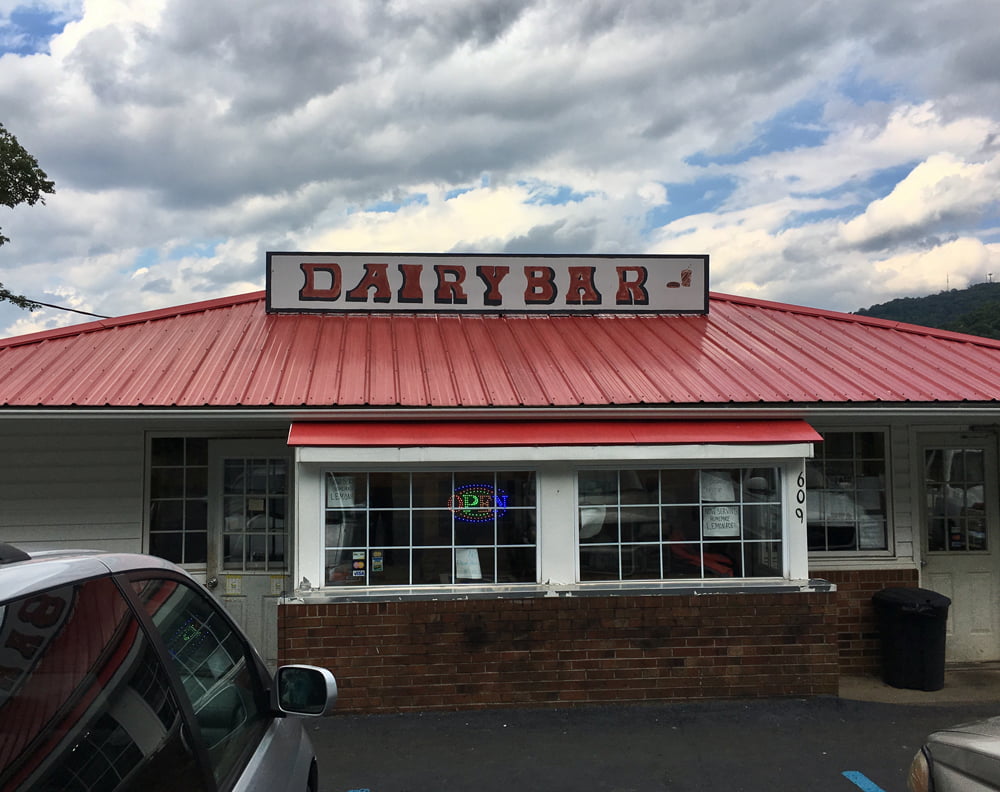
The Dairy Bar: Get a hot dog basket and a lemonade. Killer burgers, too. When my mom was a kid, she’d get the lime float. This is a real old-school drive-in, and they’ll bring the food right out to you. You can sit in your car or get out and sit on the deck, which gives you a bird’s eye view of Felts Park. So, if you’re there the second weekend of August, you can look down on the mayhem of the Fiddlers’ Convention while you chew. 


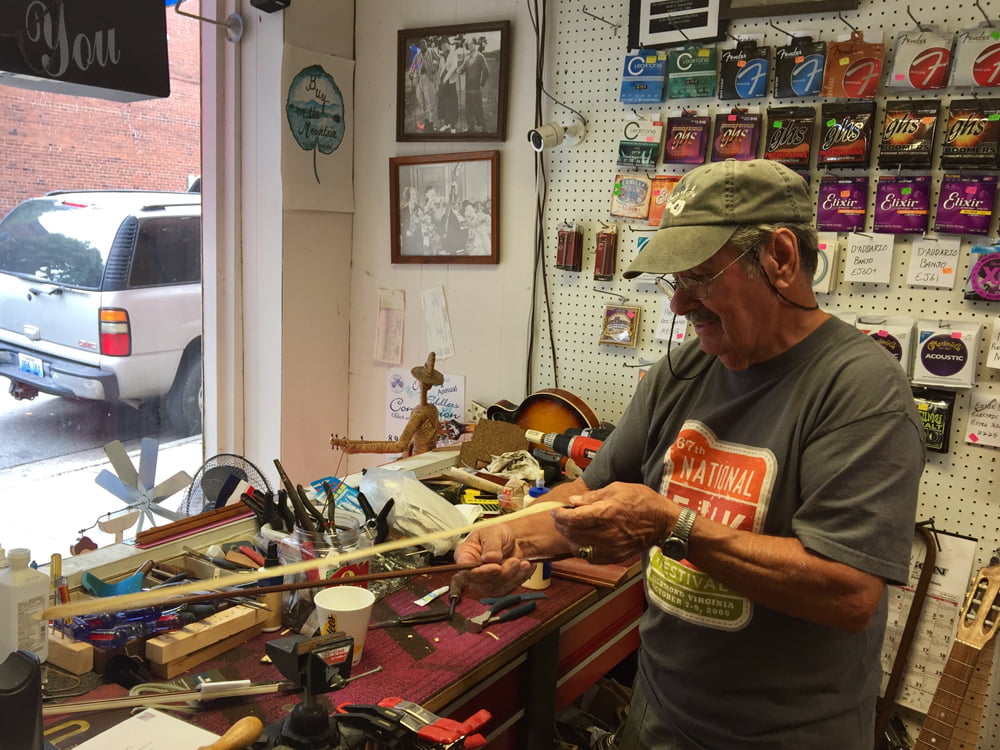
Barr’s Fiddle Shop: It’s hard to believe, but there’s only one music store in Galax. Barr’s is more than a fiddle shop, though; it’s also a small museum and an incredibly important place in American music history. It used to be a barber shop and, in the early 1920s, it was the place Al Hopkins formed his band that became known as the Hill Billies. This was the first ever use of that term, and actually has a pretty decent claim to the real foundation of country music. These guys were recorded in 1925, and the Bristol Sessions didn’t happen until 1927.  Either way, at least we got the word “hillbilly” out of it.  

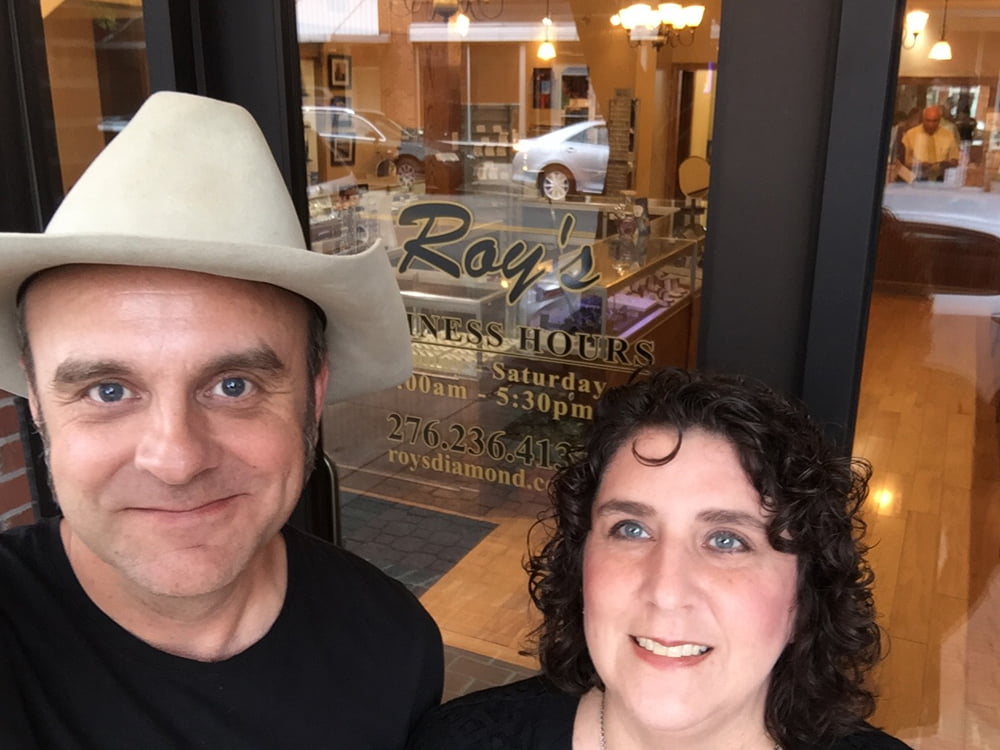
Roy’s: Directly across Main Street from Barr’s Fiddle Shop is Roy’s Jewelry. I’ve got to include Roy’s. They have some cool stuff. You can get custom Galax leaf jewelry here. Be sure to ask for Judith when you go in. Her father, Hazen Burnette, was one of my grandfather’s best friends. Hazen spent more time on horseback around Galax than anyone else. There was even an article about it in Western Horseman. Judith helped my grandfather pick out a LOT of jewelry for my grandmother over the years and, for that, she deserves sainthood. She’s also a huge part of the personality of WBRF. You can tune in and listen to her Blueridge Backroads show in the evenings. She’s great! 

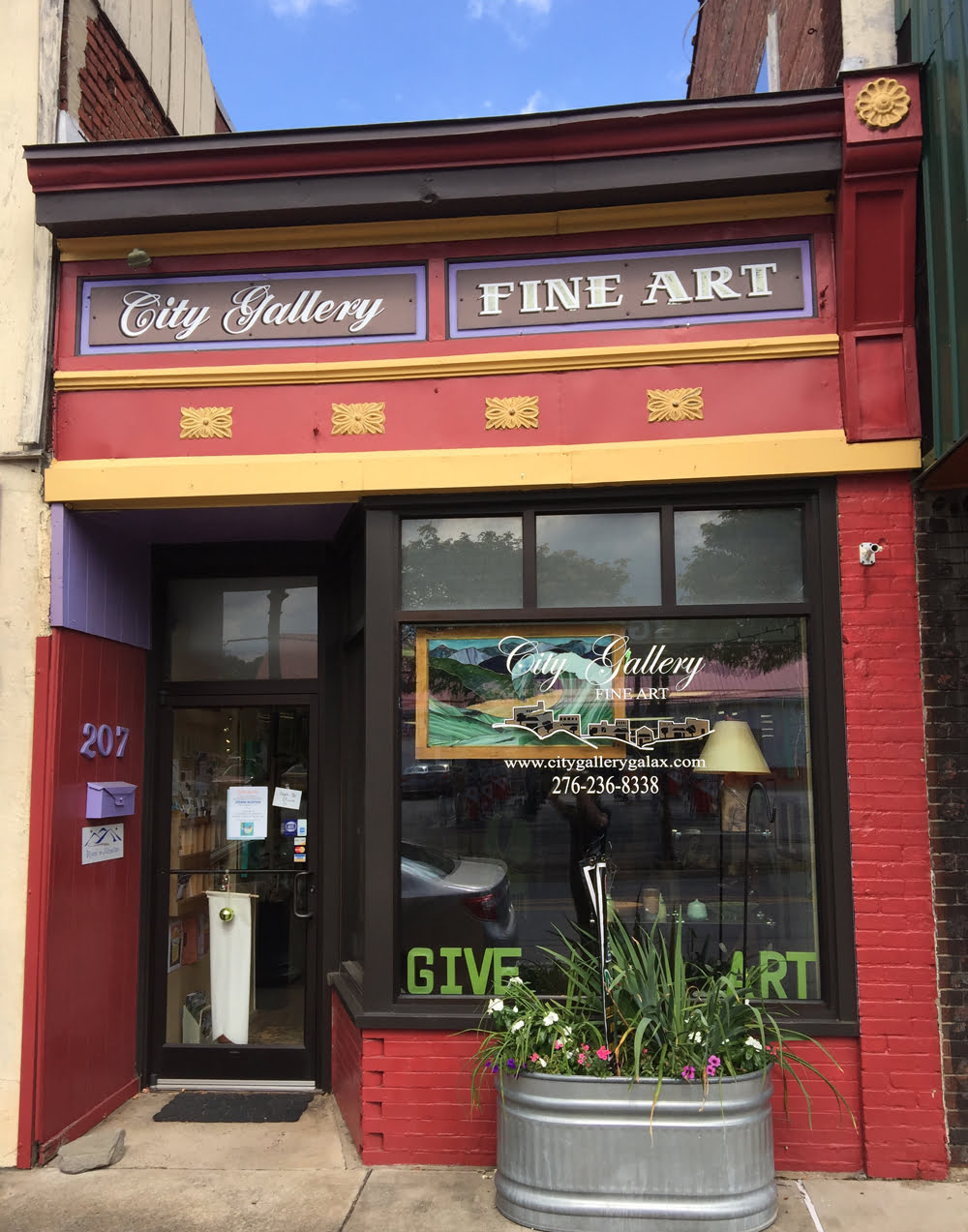
City Gallery: While we’re still wandering around on Main Street, you’ve got to stop by City Gallery. It’s sort of a local artisan center — paintings, handmade jewelry, just all kinds of cool stuff. We’re friends with a lot of the artists who sell things here, and it’s always fun to duck in and see what’s new. Becky Guynn’s paintings of local musicians and places in Galax really capture the spirit. Karin Carlson-Muncy’s copper work just blows me away.  I could go on … just trust me. 

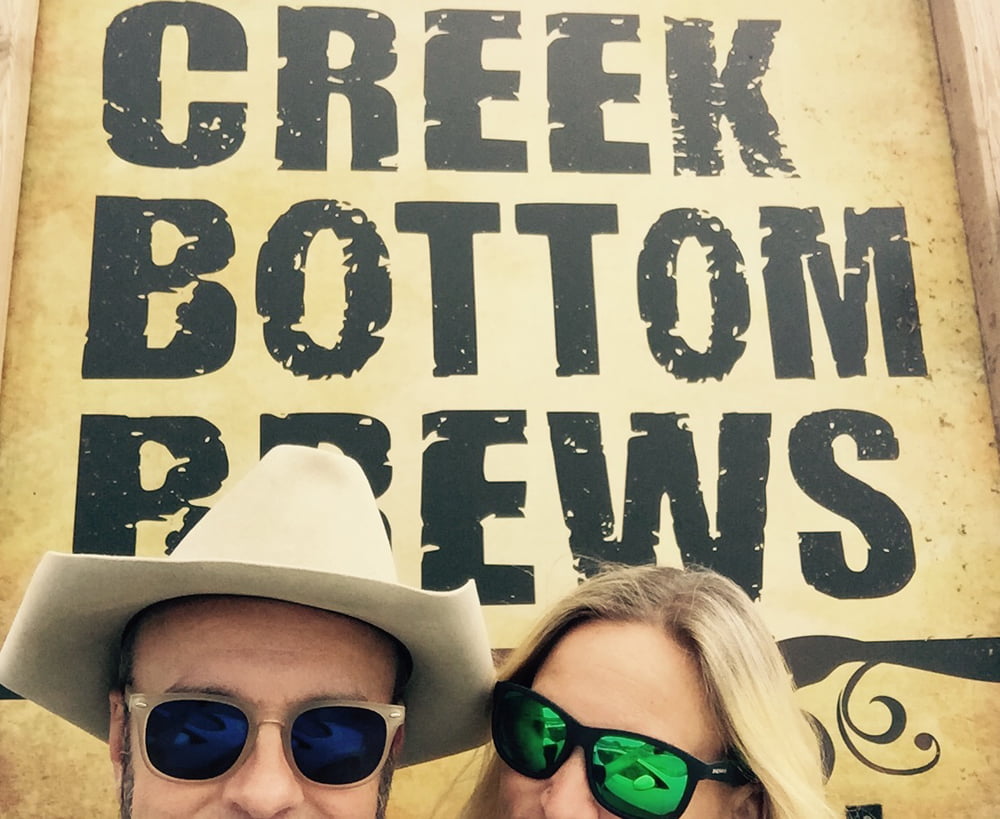
Creek Bottom Brews: This is a new place — it’s only been around for a few years — but it’s a welcome addition. It’s definitely not the place to go, if you’re just trying to breeze through town real quick and not let anybody know you’re there. You will be spotted. But that’s okay; we love our Galax family and friends. Creek Bottom has WiFi, which is great because my cell phone doesn’t work in Galax. They also have their own beer, which is really good, and a pretty huge assortment of other brews on tap and in bottles and cans (just clap your hands). Even if Creek Bottom didn’t have Wifi and beer, I’d still go for the pizza. They’ve got a big brick oven and they just keep cranking them out. So, so good. 

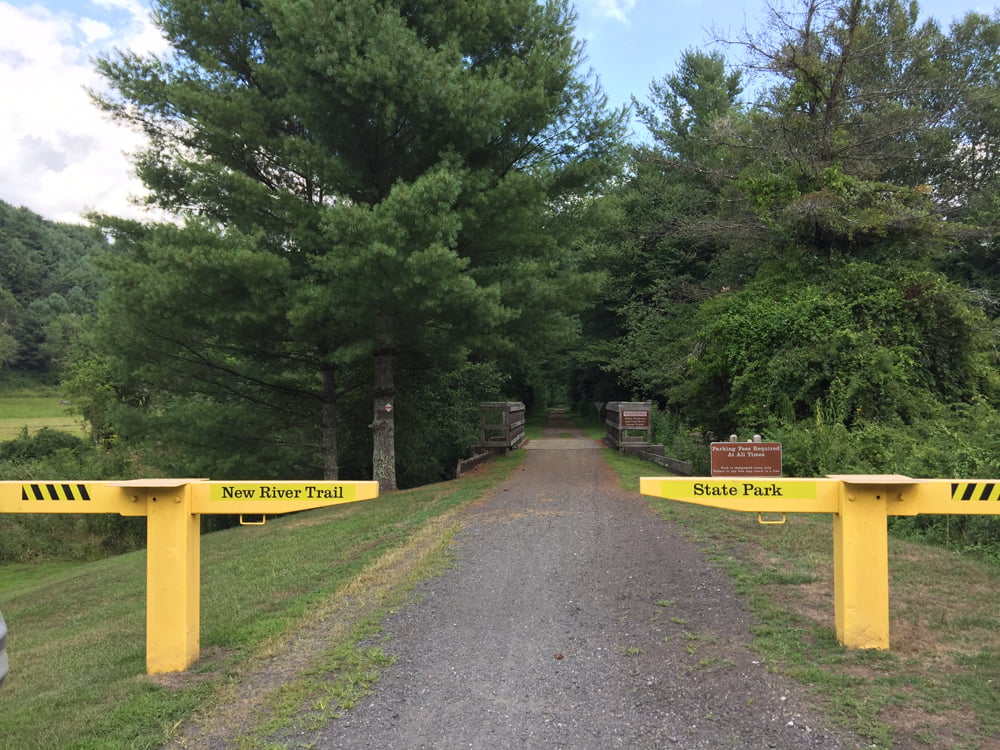
The New River Trail: It would be hard to not mention the New River Trail. It’s part of the Rails-to-Trails program. This particular stretch runs 57 miles, from Fries to Pulaski, and goes right through downtown Galax. It also goes right by my grandfather’s farm at the Gambetta Junction. (We spell it “Gambetty,” but whatever.) When I was a kid, we’d ride horses along the train tracks before it was converted into a state park. The trail follows along beside Chestnut Creek and then the New River. It’s a gorgeous place to ride bikes, horses, or just hike and look for Galax leaves. When we were making the Galax record at the farm, it just got too hot to play music and we all went down to the trail and hiked around a bit and played in the creek.   

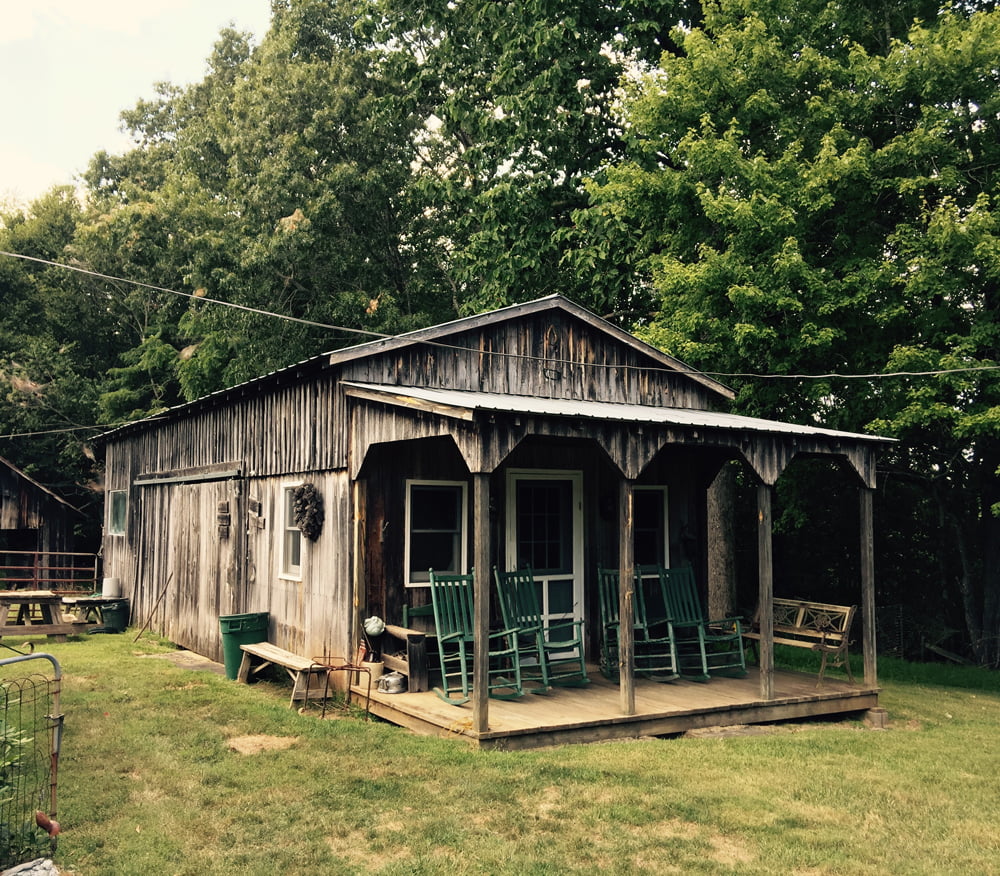
The Shed: I’m not going to tell you exactly where this is, but it’s not far from the New River Trail. This place used to be home to the best song circles and old-time jams anywhere in the world. Turns out, it’s a pretty good temporary recording studio, too.