John Reischman: Between the Salish Sea and Salt Spring

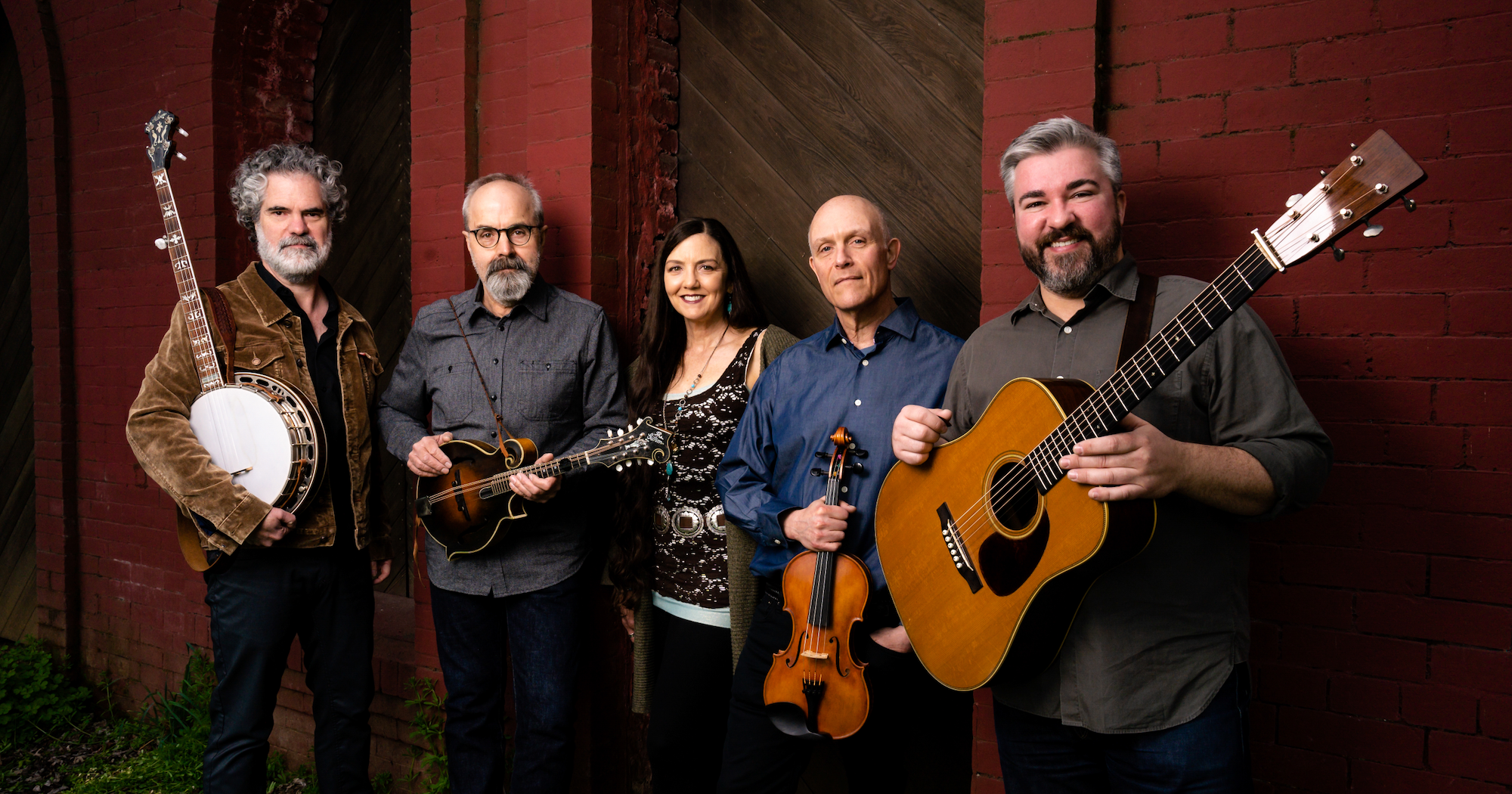
There are no U.S./Canada border wars when it comes to John Reischman. The revered mandolin master was born in Northern California but has lived in British Columbia since the early 1990s. His longtime band, the Jaybirds, are a quartet that includes two members who are also based in British Columbia (bassist/vocalist Trisha Gagnon and banjoist Nick Hornbuckle) and two who reside in America (fiddler Greg Spatz lives in Eastern Washington and guitarist/vocalist Patrick Sauber is from Southern California).

Their latest album, The Salish Sea, refers to the body of water between Vancouver Island and the British Columbia mainland. The record is their first since 2017’s On That Other Green Shore along with being the first to feature “new” guitarist Sauber on the entire album. The song “The Salish Sea” not only serves as the album’s title, but also is part of an original “Bluegrass Concerto” that Reischman was commissioned to create for FreshGrass in 2024. The honor is just one example in a long line of accolades for Reischman, who began his career in the Bay Area bluegrass/folk scene of the 1970s (including a stretch with the Tony Rice Unit) before moving to Canada, where he started the Jaybirds as well as performing solo and in other groupings.

In recent years, Reischman has seen his song “Salt Spring” become something of a modern bluegrass classic. He spoke with the BGS from his home in Vancouver about “Salt Spring” as well as The Salish Sea, his famous Lloyd Loar mandolin, and how he got into bluegrass music.

What was the process of putting the new album together?

John Reischman: There was one venue in Washington State where we had a residency. It was in the fall, in a beautiful spot. It was just ideal. So we took the extra day, worked up like six new tunes, and then started performing them right away. I guess this was October of ‘23.

And then you recorded the album in Vancouver?

In December of ‘23, I wanted the band to check out the studio here in Vancouver, where we ended up ultimately recording. I just want to make sure everybody was cool with it. I knew I liked it, because I had used it for my solo record, New Time & Old Acoustic. They all liked it. At the end of any tour we had that was close to Vancouver in 2024, I’d book a day or two in the studio, and we’d go record two or three or four songs. We were able to perform all this material mostly before we recorded it. … And it was great, because we’d be warmed up from the tour and we’d go in and track some tunes.

This album was the first in a while, and also the first that Patrick Sauber was fully on it.

Right, On That Other Green Shore came out in 2017. That was kind of the tail end of our time with [guitarist] Jim Nunally being a band member. He was exploring other things and decided he’d leave the band. We had a few more tracks to do… and we had some dates on the calendar.

I thought of Patrick immediately, because I’d known him for many years and I thought he’d be good. So he signed on for a tour and then another tour and it was just like, “This works great.” We asked him to join and he immediately said yes. He was a great fit.

How did the Jaybirds come together in the first place?

I didn’t really set out to have a band, except for the fact that I had a solo record called Up in the Woods. There was a local festival, so I put the band together to help promote the record. Seemed like a good idea. And I liked playing with all those people and it just continued on.

It’s called John Reischman and the Jaybirds, because I conceived of it. My name was probably the most well known at the time, but I wanted to be integrated into a bluegrass band. People present stuff, and I almost always accept it. Mostly it’s a pretty democratic presentation, I think. That’s what I like. It’s not Gladys Knight & the Pips.

Can you talk about the title track and how it’s also part of a larger project?

I had been asked to write what they call a “Bluegrass Concerto” by the East Coast festival FreshGrass, and I came up with these three tunes that work together. The first tune was the first movement, which ultimately was called “The Salish Sea.” I thought this will be my contribution to the new Jaybirds record, because they were involved with the performance of the Concerto.

We performed it [at FreshGrass in 2024] and I really liked the idea of having two mandolins and I’ve always loved two fiddles. I knew Darol Anger was going to there, so I asked him if he’d play twin fiddles on it. And then Sharon Gilchrist is a good friend and great mandolinist; we’ve played a lot together, and I asked her to play a mandolin on two of the three pieces.

I’ve got to acknowledge David Grisman, because the music is influenced by his “Dawg Music.” It’s also the sound that I initially heard on his first solo record, The David Grisman Rounder Record. He incorporated harmony mandolin on a lot of it.

It must have been very inspiring and gratifying to receive this commission.

You know, I’ve written a lot of tunes and a lot of folks have learned my tunes, which is really gratifying. But to have been commissioned to write this and have the confidence of this great festival and organization, yeah it was.

I had plenty of time to work on it and the time that it mostly came together was when I think my wife was visiting family. I had the house to myself. That first piece, in particular, really developed over a period of time. The second one [“The Family’s Farewell”], I came up with the A part pretty quickly and it took a while to get a bridge for it.

The third part [“The Little River Ramble”] was similar. … The thing about the concerto format is the third movement typically has an extended solo section and it’s often a bender where it’s just the featured soloist playing solo without any accompaniment. But I wasn’t really comfortable so much with that. I thought, I’ll just have it break down and I’ll solo all through there but have it build back up.

I’m really happy with the response it has gotten. Even playing it just as the five-piece band, I think the band sounds great on it. It’s only like icing on the cake when the twin fiddles and the twin mandolins are there.

And this spring, you’re going to record the entire concerto?

At the end of March, we’re going to be on tour on the East Coast and the FreshGrass Festival has a recording studio. They offered to make the studio available, so we’re going to record that just as we performed it, with Darol and Sharon joining in. That will be part of a solo record, even though I’m using those musicians. And I have other sessions planned. I’ve done one session that will add to the whole thing. Those three tunes of the concerto will just be one component of the new recording.

“Salt Spring,” one of your older songs, has become a highly popular instrumental now in the bluegrass world. How much of a pleasant surprise has that been?

It’s kind of remarkable to me that it’s as popular as it is. I mean, I’m not complaining. It’s great. … But it’s interesting how it’s just traveled all over and people think it’s just a traditional tune in some circles. They have no idea that it was composed by me. That’s cool, too.

The Jaybirds recorded it and it came out on a CD in 2001. We were at a music camp with some folks from Colorado and they learned it. I think that’s largely the beginning of it getting circulated among other people – where they took it back to Colorado. They’re the “patient zero,” I guess.

I know that a certain generation of Berklee students were playing it a lot, and maybe a bit later – maybe 10 years later. It’s pretty cool having people play your tune when you’re not there. That CD was never available digitally until recently, but we made a video of it around 2011… and that was the source, I think, for a lot of people learning it.

And then you recorded it again with Molly Tuttle, Alex Hargreaves, Max Schwartz, and Allison de Groot on your 2021 solo album New Time & Old Acoustic.

I didn’t have all the material when I started that whole project, but I knew I wanted to re-record “Salt Spring” with some of these younger musicians who had grown up playing it.

What do you remember about writing it? And why do you think so many musicians have gravitated to playing it?

I was on Salt Spring Island [in British Columbia] staying with some friends and they had a little old turn-of-the-century Martin small-body guitar. I was just playing the guitar and I was playing out of a D chord shape, and the A part of the tune just kind of took shape under my fingers. It was memorable enough that I don’t think I had to record it to remember it. The B part was just this little phrase I would play on the mandolin, just noodling around … so I just kind of stuck it on there and it worked pretty well.

I think the thing about the tune is the basic melody is very simple, but the way I played on the mandolin, the technique I use, is not quite cross-picking. But it falls into a right-hand pattern that sort of mimics the way the frailing banjo is played with that “bum-ditty, bum-ditty, down-down up, down-down up” pick stroke. So, these extra “down ups” are drone notes and that just kind of enhance the whole overall effect. Because of that, it lays out really nicely on the banjo. Then on the fiddle, you can add drones and add to it that way. And on the guitar also, you can fall into that kind of “bum-ditty” pattern as well.

I think you can learn the tune pretty easily. It’s not super challenging like some fiddle tunes where they’re very detailed in the melody. It’s pretty straight and so I think that’s partly why people gravitate towards it.

You grew up in Northern California. How did you get interested and involved in music, specifically bluegrass music?

Have you heard of a guitar player named Robben Ford? He grew up in the same town where I did in Northern California. He was in a high school band with my neighbors. I must have been 12 or 13. They were rehearsing on a patio and I went over to listen. I was interested in music and I heard them play the Freddie King tune “Hideaway,” which Eric Clapton recorded on the John Mayall & the Blues Breakers record. My brother Steve had that record. I recognized the tune and I thought, “What? This is impossible. This sounds as good as the record!”

From then on, I was just focused on trying to play the guitar. I had taken guitar lessons prior to that, but it didn’t really work. But there were guitars around the house. So that was the thing that really sparked my interest in learning to play. But I was open to all kinds of music. I’d have access to the PBS station KQED and they’d often air Pete Seeger’s Rainbow Quest, where he’d have different folk musicians, bluegrass musicians, old-time musicians. I thought, “Oh, this is cool!” And then the mainstream presentation of bluegrass with The Beverly Hillbillies, having Flatt & Scruggs on it, and the Dillards and the Country Boys playing on The Andy Griffith Show.

At some point, I had access to a mandolin, which I associated [with] bluegrass music, and taught myself to play it. I tuned it to an open chord for a long time, like a banjo, which was incorrect. And I didn’t use a pick. But eventually I got things squared away.

I discovered the John Hartford Aereo-Plain record. I saw them on TV as well. That was very inspiring. Then I discovered Norman Blake and Vassar Clements. I come to find out they had their own records. … That first Norman Blake record, I couldn’t believe it. I just flipped over that, and I thought, “This is so great!” And I’d heard Doc Watson at that point, so I just got really interested in it, and focused on that music, primarily.

So, was the Good Ol’ Persons your first significant band?

Yeah, it was the first real pro band I was ever in, and I was a fan of theirs before that. I [had] lived in San Francisco for a short while and saw their original lineup, which included all women. And it was exciting to get the opportunity to play with these folks. Because I was living near Eugene, Oregon, and I was just playing the mandolin all the time – a lot with my brother, Steve – but I wasn’t in a band, and I was working on a farm, just part-time. And a friend from the Oregon bluegrass scene had joined them and they needed a mandolin player. He said, “I know a guy.”

That placed me in the Bay Area, which was a great scene. There were lots of good bluegrass bands. And the Grisman Quintet was there. … But the thing that set Good Ol’ Persons apart was their original material, because Kathy [Kallick] is a fantastic songwriter. And Paul Shelasky, who was in the band, also wrote great songs. That opened the door for me to try and write tunes – because, “Oh, these guys write tunes. I’ll try it.” I wrote a few and people liked them. That just gave me encouragement to keep at it, which I have done.

So consequently, when Grisman and Tony Rice parted ways, Tony was aware of me. He’d heard me play at the local bar. He wanted to put a band together and needed a mandolin player. So, I went to the audition and he hired me.

You are well known for having an antique Gibson Lloyd Loar mandolin. What do you think makes those mandolins so special?

I guess that [mandolin] was kind of the ultimate expression of Gibson mandolins. But there’s plenty of new makers and a lot of them are using that basic design. So, aesthetically and as far as the craft of the instruments, some of these builders are way better than the Gibson mandolins were to look at, but the Gibsons have 100 years of aging and playing.

I think the playing of the instrument contributes hugely to its sound. Because, if there’s a Lloyd Loar that left the factory and went into someone’s closet and never came out for 50 years, I don’t think it’s going to sound like one like mine that has been played consistently over time.

I feel fortunate to be the caretaker for this great instrument. I think for most bluegrass musicians, it’s not only the music, but it’s the tools. These vintage instruments, like the Martins from the ‘30s and ‘40s, and Gibson mandolins from the ‘20s, and old banjos, it’s just a vibe that goes along with the music and aesthetic.


Photo courtesy of John Reischman.
Brennen Leigh’s Modern Retro Country

Brennen Leigh says she’s been a goner for country music since she was a teenager. But when it comes to her discography, she hasn’t been gone for long. Don’t You Ever Give Up On Love (released October 3) is the musician’s fourth album in five years, and it continues a creative streak that matches her love of traditional country arrangements with clever, well-crafted songwriting.

Recorded in Dayton, Texas, where Leigh now lives, Don’t You Ever Give Up On Love is a mostly up-tempo collection that should appeal to anyone who loves country from its golden eras. Catching up with Good Country, Leigh talks about the turning point in her love of country, her fondness for bluegrass, and how she really feels about one of Nashville’s most famous phrases.

I was curious about the title track, “Don’t You Ever Give Up On Love.” It’s got such a positive feel. Why did you choose that one to put on the cover of your record?

Brennen Leigh: I love the title of it, for one, and for two, I wrote that with a dear friend named Elijah Ocean. He’s a great writer and a player and we kind of came up through the mud together, I’ll say. He told me, “I just was thinking about you as I was writing it.” And not even about me singing it, but me as a person. He sent me the first verse – and I’m a procrastinator and I won’t read people’s texts and I won’t return phone calls – but he knows I love him, he doesn’t care. That’s how songwriters are. But about a month later, when I finally went and listened to it, I said, “Elijah, I hope you haven’t finished that, because I would love to participate.” He said, “Yeah, of course, that’s why I sent it to you.”

So I finished it. And it’s just two verses. That’s the whole song. I love that thing about songwriting, and specifically country music, where it’s just a quick statement and out. So many of the best songs are just a verse and a chorus, or even just a verse. We wrote it in the midst of recording this album and then we recorded it down in Dayton. And it’s like, well, that’s an obvious choice for the album, because it is so positive. I really like performing it.

It’s encouraging, too. Have you had a good response from the crowd with that song?

Yeah, I’ve had a lot of positive feedback from people. On the surface, it’s a love song and it’s a relationship record, but to me, it’s really more of a “Don’t ever give up on yourself” message. Because people come and go, sadly, in our lives, and for me, it’s more a story of resilience.

I think it’s similar to the song “Dumpster Diving,” where it gets the point across in a pretty cool way. You filmed that video for “Dumpster Diving” at the Sagebrush in Austin, right?

We did, and it was hot! It was like 90 degrees in April or something. We brought one of our favorite videographers, Oceanna, down from Nashville, and I just kind of threw her into this situation in Austin, but she rolled with it. She really has a wonderful eye. And we dressed me up and put me in a dumpster. [Laughs]

Then some of the other videos for this project look like ‘60s Nashville country. I love the vintage eyeglasses and that cool yellow-and-orange shirt in the “You’re Finally Hurting” video.

Those are my real glasses! [Laughs] I really have a prescription in them to drive with. And the thing specifically about the “Tell Me” video was that we wanted to make it look like we were the Nashville A-Team in the ‘60s. We were just going to work, like country business casual or Western business casual. Like, how an Anita Kerr or Chet Atkins would show up to work in kind of fancy dress, but casual. Read their charts, put the song down, and smoke a cigarette. You know, we weren’t smoking, but that’s kind of the idea.

“Tell Me” is a simple title, but that song says a lot. What was on your mind as you wrote it?

I was imagining calling somebody in a sweaty panic, like, “Oh, I heard something, I’ve got this feeling, and I need you to confirm my suspicions.” And not getting the answer that you want, but sort of trying to demand this answer. I love country songs that are one-sided conversations. There are so many good ones throughout history. For some reason, the one that is popping into my head is “I Met a Friend of Yours Today.” You’re feeling like a little bit of a psycho, like you’re losing your mind a little bit, and you confront somebody. That’s the sort of song that that is.

People often say country is “three chords and the truth.” Do you like that phrase?

I do like it, but I think in a way it’s not 100 percent accurate. We’re splitting hairs here, but for me, a lot of my writing is at least semi-fictional. Maybe I’m doing myself a disservice as an artist by saying that. But fans want to believe, and I think the listener wants to believe, that this is my story, and this came from me tossing in desperation on my bed and grabbing my notebook.

Well, you know, I’m a songwriter and it’s my job to make up stories. While this record has some truth on it, some of these stories are just straight made up! That doesn’t mean that there’s not feeling behind them, or that I haven’t experienced something similar, but I’m also a private enough person that I’m not going to just air things of a certain nature for the public. I do have lines that I won’t cross. Now, I’ll say some of these are true, word for word, and some of them are not. But that’s what imagination is for.

I think the song is not for me, it’s for the listener. So, if somebody gleaned something that they feel personally in one of these songs, I love that. And probably, as a Western swing person at heart, I should say we have a few more than three chords. But I do really appreciate and love that sentiment of like, “This is just no BS, I’m gonna sing this.” I mean, I like that saying, and I think at its heart, it’s pretty true.

How old were you when country music kind of sparked your interest?

I grew up hearing it around the house, but I was maybe 14 before I went headlong into it.

Was there a song or an artist that pulled you in?

There was one summer when my brother and I were already budding musicians. We were already playing gigs. He was heavily into Robert Johnson. I had gotten into that stuff, too, and I liked oldies. I liked ‘50s and ‘60s rock and roll and soul music, like Buddy Holly and Bessie Smith, and I liked some show tunes. We got into country one summer, courtesy of our parents’ record collection.

Then we got a free ticket – via donating a canned good to the radio station – to see Dwight Yoakam. I think I was turning 15, and I kind of flipped my lid. It was our county fair in Fargo, North Dakota and it was probably September or August – and it was probably 40 degrees. I stood there for that whole concert and went, “Wow!!” [Laughs] Then one friend gave me a box set of Hank Williams and that was huge. I already had heard him, but that Bear Family box set is like six or eight discs. I dubbed it onto tapes and that’s all I listened to.

Somebody else gave me a Smithsonian Folkways set that had Bill Monroe on it and it had Lucinda Williams on it, because it was more of a folk label. It was like, “Wow, there’s all these tentacles to country music.” And my family was into it, too. So, I was pretty well immersed, except geographically. I wasn’t around any live music, but I was around a lot of good recorded music.

Are you a fan of bluegrass?

Oh, yeah! Very much, and I grew up with it. My favorite guitar player is Norman Blake. I get asked all the time, “When’s your bluegrass record?” I would love to do something. I just need to get the songs together, because the bluegrass community, they’re the best fans in the world. Bluegrass fans are so loyal, and they know what they like and they don’t care what you look like. It’s a great culture and it’s diverse, and that’s a beautiful thing. So, yeah, that’ll happen.

You know, I wish there were two of me and I had double time. I’ve been loving East Nash Grass and Thunder & Rain. I love the Kody Norris Show. They’re so poised and so good. I’ve been feeling the influence to do something with bluegrass again, because it’s been a long time.

We can maybe wrap it up with this. What are you looking forward to the most coming up?

I just got off a three-week album release tour that was great fun. Before that, I was everywhere. [Laughs] So, to be completely honest, I’m looking forward to being home for a bit. But I’m also working on another project that’s even weirder than all the other ones I’ve ever done. I don’t want to say too much about it, but it feels like a spiritually important album for me to do. I’ve also got some songs in the can with my other band, Wonder Women of Country. We have a couple singles we’ve recorded and I think we’re going to be out together some next year, too.

You’re so collaborative and you’re not just off doing your own thing. It’s like a luxury to have such a great, rich community around you.

Well, thank you. And it is a luxury. Honestly that’s how I’ve gotten by and kept it sane, because I know it’s not about me. I know it’s about the art, and the art can be more fun than when you involve others sometime. Also, I’ve noticed a lot of the good things that have happened in my career are because I’ve worked with other people on musical collaborations. It’s just so much stronger together.


Photo Credit: Lyza Renee

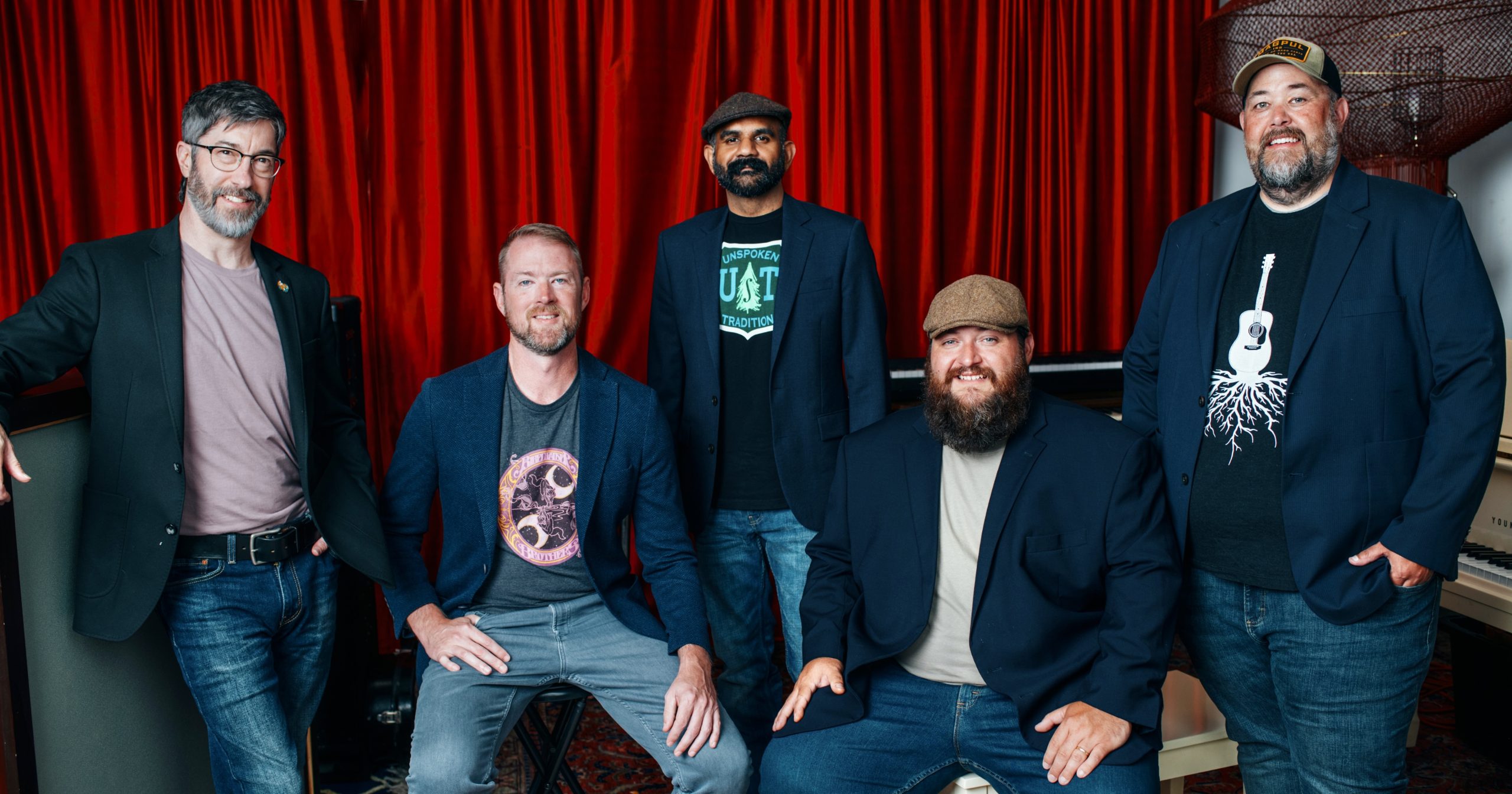
Unspoken Tradition’s
Resilience Playlist

We find ourselves at a proverbial crossroads in Southern Appalachia. Our land battered by the devastation of a hurricane, scorched by scores of wildfires; ancient rivers, swelled by floodwaters, carving new courses through the landscape. Yet the land and its peoples persist. As artists, we are the guardians of the stories of the people in our communities – stories of hope and love, of loss and desperation, of a community rising above tragic circumstance. Stories of Resilience.

On our new album, we reflect in song about what it means to meet the moment with music that both binds our wounds and demonstrates our healing. In bearing witness to this time and place, we recognize that the path forward is not just survival – it is the conscious choice to innovate, to adapt in the face of adversity. It is in that choice that we find meaning, and renewal.

The songs on this playlist refer to the theme of resilience or have a connection to specific songs on our album of the same name. We wanted to share the work of some of the other artists that wrote the material and/or inspired the songs we recorded. Check out and follow these folks – especially if they are new names. Their catalogs are terrific discoveries and their work is excellent! – Unspoken Tradition

“Linemen” – Zoe & Cloyd

John Cloyd Miller is the author of the song “Weary Town” from our album. Zoe & Cloyd are longtime friends and Western North Carolina natives who experienced the ravages of hurricane Helene in their neighborhood. “Linemen” is a tribute to the heroes of the rescue and recovery effort as they were on the front lines of restoring power to the region. God bless these Linemen!

“Katie and Burl” – Acoustic Syndicate

We wanted to share the original version of this song that we re-recorded for our album Resilience. Acoustic Syndicate is a seminal North Carolina fusion-grass band and writer-guitarist Steve McMurray is a dear friend.

“Dust Bowl Children” – Alison Krauss & Union Station

One of our favorite songs and artists! A story of trials, tribulations, and resilience from another point in history.

“Papertown” – Balsam Range

Western North Carolina native Milan Miller wrote this song as well as one from our album called “Weeds Don’t Wither.” This is the true story of the North Carolina mountain town of Canton and its paper mill that was the heart of the town’s industry. The mill has since been closed, adding an extra layer of disparity to the story.

“Alleghenies” – Saravanan Sankaran

From our bass player’s solo album Back To Bassics. It’s one Sav wrote about his Western Pennsylvania mountain home! This is a mainstay of our live set.

“Weary Town” – Unspoken Tradition

This song’s theme is at the center of our new album. It holds new meaning for us in the wake of the great flood disaster that came to our Western North Carolina home. When we play it live, we dedicate it to the city of Asheville and the resilient people of WNC.

“Back in Yonder’s World” – Norman Blake & Tony Rice

This song! And the album it’s from, Norman Blake & Tony Rice 2, is a “desert island” album for us.

“Margie” – Danny Paisley & The Southern Grass

This artist is one of our biggest influences, especially for Sav. We were thrilled and honored to have Danny join us on “I’ll Break Out Again Tonight” as a featured vocalist!

“Moments” – Unspoken Tradition

One of the first singles we released from the new album. Written by the album’s producer, Jon Weisberger, it embodies the sincerity of appreciating the subtle moments in life.

“I’m In a Hurry (And Don’t Know Why)” – Alabama

This country-rock hit was a radio staple in its time. We thought it would make a great bluegrass song. To hear our version, listen to our Mixtape below or, better yet, check it out on the new album!


Photo Credit: Sandlin Gaither

Son of the San Lorenzo

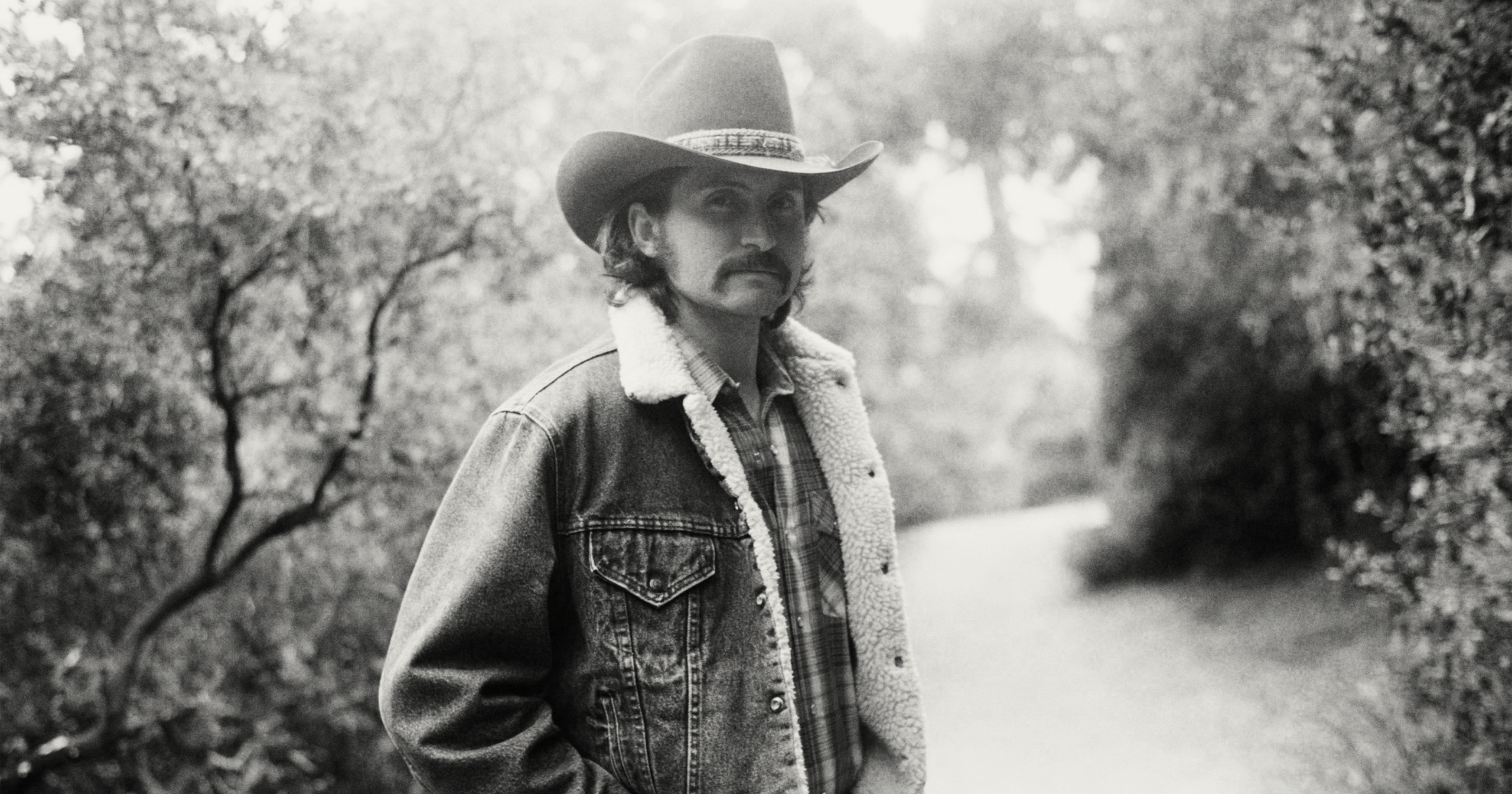
Jesse Daniel is carrying on a family tradition with his fifth studio album, Son of the San Lorenzo. As a kid growing up in Northern California, specifically in the San Lorenzo Valley, Daniel spent hours upon hours in his dad’s truck, listening to the songs that defined ‘70s rock and country radio. When the opportunity arose to create a new album inspired by those sounds, Daniel booked the Bomb Shelter studio in Nashville, recorded live with his band, and enlisted harmonica player (and Country Music Hall of Fame inductee) Charlie McCoy to add an unmistakable flourish to the new recordings.

Just as country fans have come to know their favorite singers as the Coal Miner’s Daughter, the Possum, or the Storyteller, Daniel’s hometown is enthusiastically embracing his alter ego: the Son of the San Lorenzo. Daniel dialed up Good Country to talk about how bluegrass music played a role in his musical development, the silver lining of his checkered past, and what he’s looking for in his fellow musicians when it’s time to hit the road.

For this album, you wanted to go back to the music you grew up on, which is ‘70s country and rock. How did you get introduced to that era of music?

Jesse Daniel: My dad was – and still is – a musician. Growing up, he was playing in bands and always just raised me with a guitar in my hand. Whenever we’d go on road trips, or we’d drive up to Oregon to go see family, we would be listening to Led Zeppelin or the Eagles, bands like that. There was a classic rhythm & blues influence on rock and roll, but a lot of that stuff had a very country influence, too, from Creedence Clearwater Revival to the Eagles. A lot of the bands were California bands, also.

I just heard that music growing up. That’s what was played by my dad’s band, and at birthday parties, events, and school gatherings. That was just good-time music, aside from what we were listening to as kids, when we were getting into metal and punk rock. But I guess that’s what all our dads were listening to, and the older people. So I went back to that, now that I’m in my 30s. That music has such a spot in my soul for that nostalgia, and it’s just so good.

Can you describe the experience of having Charlie McCoy on these sessions?

That was incredible. He showed up on his day to cut some harmonica and he was a very humble, unassuming dude. He told us the coolest stories about old Nashville, all the stuff he’s cut on, and all the people’s personalities back in the day that he used to know. I asked him all kinds of questions, soaking it all in. From the moment he blew on that harp and played some licks, Andrija [Tokic, the studio engineer] and I looked at each other like, “Yep! That’s the sound right there.” He just nailed it.

When I listened to “Child is Born,” the first track, I sensed you’re making a statement with this record. It’s a powerful way to open it. What was on your mind as that song was taking shape?

That song is about generational traumas or generational patterns within families and raising children. I pretty much wrote it from the perspective of trying to give some advice on how to raise a child, almost like a template. Throughout the verses, it talks about the pitfalls and what will happen if you focus on yourself and don’t raise your children right. That’s happened in my family and to so many other people. These fathers and mothers aren’t there for their kids, and when it ends up being their time to be taken care of, when they’re elderly, nobody’s there for them because they weren’t there in return. It becomes this vicious cycle that’s perpetuated. That’s where I was at with writing that one. It was an emotional one. It’s an emotional type of record in general, but I just wanted to start it off with that, for sure. A good, heavy starting place.

One of my favorites is “Son of the San Lorenzo.” I think you have had that title for a while.

Yeah, that one is a special one, too. I wrote that song in 2019 and I included it as the last song on my Rollin’ On record. I decided to re-cut it for this one and name the record after it, because since I wrote and released that song, it’s become a fan favorite all over the place, but especially where I grew up in the San Lorenzo Valley.

Whenever I would go back home for hometown shows, people would call me “the Son of the San Lorenzo” after that song. They would always sing that song. That became my nickname over the past five or so years. I thought, what better title for the record than that? With this record going back to my upbringing, to where I’m from, and identity and all that.

You’ve got references on this album to Highway 9, the Sierra pines, and the redwoods. You’re skilled at setting the scene in your songwriting. Why is it important to bring Northern California into these songs?

With my identity as a songwriter and an artist, it shaped a huge, huge amount of that. I always do things through the lens of being from Northern California. Going back to that sound, so much of the music I grew up on was from that exact area – bands like The Doobie Brothers, Larry Hosford, guys like that, who were making this country-rock and roll-blues stuff that really influenced me a lot.

Painting a picture of where you’re from, and of these things that are important to me and my music – I feel like that’s something that’s lost in music nowadays. People don’t do that as much, or if they do, it’s pretty well dominated by Appalachia or Texas. They have a lot of identity and pride in their musical heritage there and I just feel like it’s missing from California in general. And it shouldn’t be. It’s an amazing place, an amazing landscape, an amazing musical history. I see it as my cross to bear to try to carry on that legacy as best as I can.

Has bluegrass been an influence on you?

It definitely has. When I was in high school, I had a teacher for a short period of time who had a bunch of burned bluegrass mix CDs. She was the person that turned me on to bluegrass. I remember listening to that Tony Rice and Norman Blake song, “Eight More Miles to Louisville,” and I was like, “This is incredible!” The songwriting, the picking, the tempo. That made me fall in love with bluegrass. I’d been playing guitar for quite a while at that point, but that’s when I started learning the banjo rolls and trying to emulate some of those bluegrass things I’d heard and adding them into my chord progressions. Even though I don’t explicitly do bluegrass, I always have a bluegrass song on my records, or something that’s at least along those lines. For this record, it’s “Mountain Home” It’s got the banjo and fiddle and a little bit more bluegrass texturing. It’s a big part of my influence.

I was listening to “One’s Too Many (And a Thousand Ain’t Enough)” on Spotify and I couldn’t help but notice your mug shot from Santa Cruz County [as the Spotify Canvas] in the player. How did that come to be?

Yeah, that’s my mug shot from one of the times I went to jail. During that period of my life from 18 through my early twenties, I was a heroin addict, a methamphetamine addict. I was in a vicious cycle of addiction I had gotten into in high school. Once I was out of high school, it accelerated and I became a full-blown junkie, a full-blown drug addict. So that took me on frequent trips to jail for a week here, a week there. I never did any serious time, thank God. I should have, but I didn’t. I was constantly in and out of jail or rehab programs.

That mug shot is a reminder of that past and of that period of my life I wrote about in that song. That song is comprised of all the advice I had gotten from older people who had gotten their stuff together over the years, including some of my own family members who have been sober. They would tell me all these little bits of wisdom and try to help me, and I was just too deep in it to really see. But that song is basically the advice I’d give to somebody now, made up of all the advice I got back then when I was in that position.

Do people who know your story approach you for advice when you’re out on tour?

Quite a bit. There’s a cool, cathartic element to it for me, because I get to put my story and struggles into these songs and they help me. Then it becomes that for other people. I had a woman come up to me at a show, and she told me that my song “Gray” helped her mother get clean. She sent this song to her mother and it broke her down so much that her daughter was sending it to her, saying, “Hey, listen to the lyrics of this song. I care about you and I want you to get help.” And she did. She’s been clean for a couple years now and she says it’s because of that song.

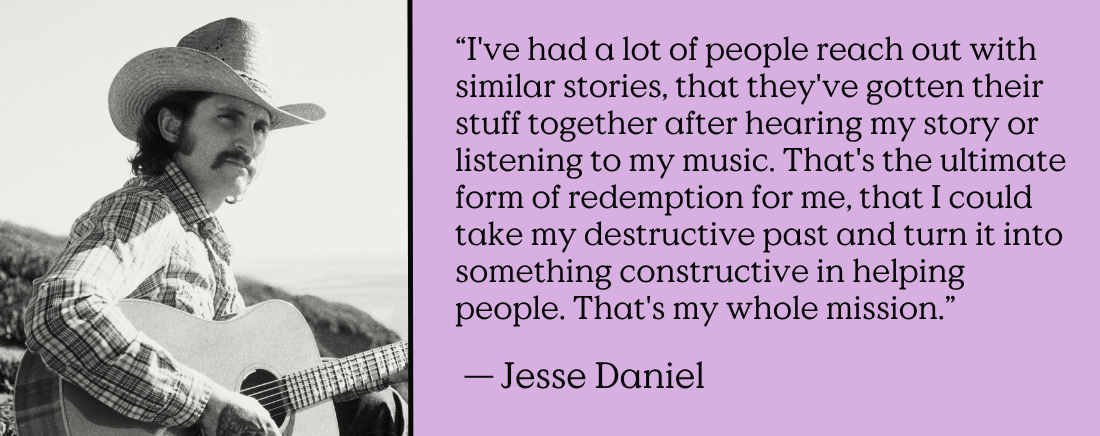
I’ve had a lot of people reach out with similar stories, that they’ve gotten their stuff together after hearing my story or listening to my music. That’s the ultimate form of redemption for me, that I could take my destructive past and turn it into something constructive in helping people. That’s my whole mission. Aside from making the music I love, that’s my mission in my contribution to music.

That’s interesting to hear your mission statement, because you’re the head of your own organization now. I don’t know if you think of yourself that way, but you’re a businessman.

Yeah, more recently I’ve started to think of it that way. And it’s true, especially doing it independently like we have for so long. We’re just now starting to work with a bigger booking agency, a bigger management. We’re stepping things up. But my fiancée Jodi and I really built this together ourselves, brick by brick.

I’ve often heard you shouldn’t get in a relationship with someone until you know you travel well together. What do you remember about those early years with Jodi on the road?

In the early years, even before we started touring in a band together, I would play regionally and Jodi and I would go on road trips together, camping trips, whatever. We just wanted to keep going. That was always part of our relationship. We traveled really well together. We had similar interests. We’d just listen to music and talk and go pull off at roadside swimming holes up in the mountains. We loved that sense of adventure and going places. It was one of the main things that drew me to her when we first got together. She had just as big of a sense of adventure as I did.

So, in the music aspect of it, that’s really helped because we both have that wanderlust and we’re just down to be on the road and to go play new places. When one of us gets tired and burnt out, or maybe sick of being on the road, or something’s not going right, we have the other one to put it in perspective and help balance things out. You lean on that person, which not a lot of people have. A lot of times, your wife or your husband or whoever is at home and you’re out there, alone, missing them. So, I do have the luxury of being with my person out there.

What did Jodi think about the song “Jodi” when you played it for her?

She loves the song. Just like I say in that first line, “To write a love song for you was not an easy thing to do.” It really was a hard subject to tackle, because it’s so vulnerable and true. I had to sit with that one and try to make it as meaningful as possible, so it didn’t come off as a corny love song or too cryptic. I wanted it to be straightforward, but really meaningful.

What do you look for in musicians as you start to put together a band for a tour?

First off, they’ve got to be a great musician. That’s number one. They’ve got to understand the styles and the stylings that I like to go for with my music. I know it’s not for everybody. Sometimes the guitar style is a little bit outside of their bubble, so the playing has to be there.

On top of that, personality-wise, it helps to have people with good attitudes. That’s a huge one I’ve learned over the years. If somebody isn’t there for the right reason, or if they’re halfway in, halfway out, or maybe they’re partying a whole bunch on the road. I’m clean and sober on the road, I don’t do anything, but my guys will go out and have a beer or whatever. That’s totally fine. But if guys are going out and doing drugs or drinking and having it affect their performance or attitude… That is something that happened in the past, so I have a pretty strict policy with that. If you’re going to be in my band, you don’t have to be a teetotaler, but just try to keep it pretty mellow. It’s about the music. That’s what the focus is.

When you listen to Son of the San Lorenzo front to finish now, what goes through your mind?

I see a pretty complete body of work. Sometimes I’ll listen to some of my earlier records and I’ll look back and think, “Oh, I’d change this,” or “I’d do this a little different,” or “Maybe I would have put this song here…” I think that’s easy to do, to pick things apart, especially when you’ve grown as an artist and a songwriter. But when I listen to this record, I put so much time into the song arrangement and into each lyric and each part of the production. I wrote all the guitar licks. Well, ninety percent of the ones you hear on here are ones that I wrote, and then I showed them to the guitar player and he played them better than I was able to play them. [Laughs] All these little things, I put so much effort into this record that I listen back and I’m just really proud of it.


Want more Good Country? Sign up to receive our monthly email newsletter – and much more music! – direct to your inbox.

Photos courtesy of Lightning Rod Records.

Guitarist Cameron Knowler’s Poetic Portrait of Yuma, AZ and the Gorgeous, Bleak Southwest

It’s a warm, summery day in early April when I sit down with archivist, writer, and guitarist Cameron Knowler on the shores of Old Hickory Lake in Middle Tennessee. Both Knowler and myself happen to now live in Old Hickory, a small village in Davidson County that was formerly a DuPont company town and is nestled on the edges of the eponymous, manmade US Army Corps of Engineers lake on the Cumberland River.

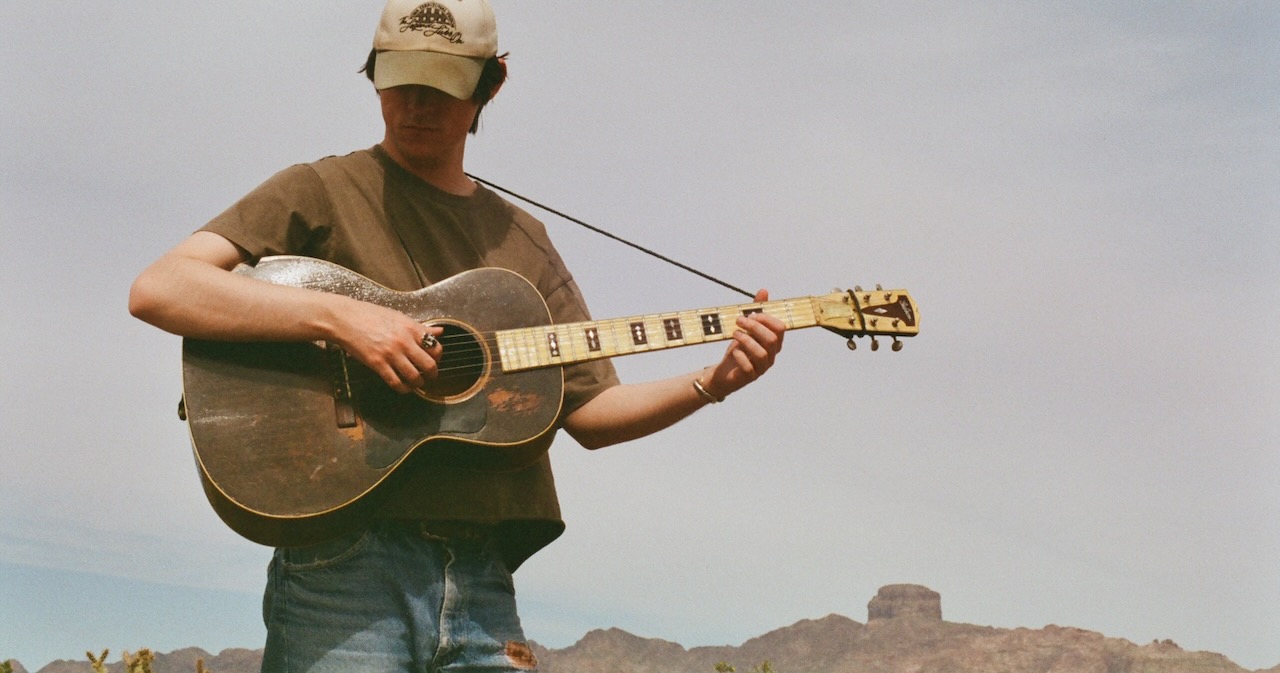
The setting is a far cry – geographically, topographically, and ecologically – from Knowler’s hometown of Yuma, Arizona, a place that serves as the inspiration, background, and foreground of his stunning new solo guitar album, CRK (released April 4 by Worried Songs). Knowler’s upbringing in Yuma was traumatic and bleak, not exactly a storybook experience by any measure. Still, like many roots musicians and creatives, the landscapes and dioramas of the wild west California/Arizona border town have become the guitarist-composer’s primary muse.

CRK sounds like the desert. Like hot, searing parking lots. Like mesquite and cactuses and roadrunners and mesas and red rocks. Stark flatpicked and finger-plucked melodies give equal consideration and immortalization to sweeping natural landscapes and small, depressingly human settings, too. Unlike so many of his subjects and inspirations in and around Yuma, this collection of compositions never moves to pave over the intricacies, nuances, and subversions Knowler finds in revisiting his hometown in music and memories. Still, the album is as gorgeous and transportive as any of our favorite famous paintings of the Old West, or soundtracks to iconic western films, or depictions of ancient pueblos. Perhaps his subject is a strip mall or a vignette of the proverbial “suburban hell,” but in this context each feels like an entire universe unto itself, a dreamscape – a home.

CRK opens with a gorgeous prose poem set to music, a track titled “Christmas in Yuma.” Immediately, the record is thereby attached through terroir and tradition to other western artists like Steinbeck and McCarthy. The album’s package is ornamented with gorgeous photographs, polaroids, bits of imagery, printed art, and poetry, further evoking artists we associate with the Southwest like Dorothea Lange and Linda Hogan. But the stories herein are told almost exclusively by guitar – usually Knowler solo as centerpiece, but sometimes joined by ensembles including guitarists Jordan Tice (who co-produced the project) and Rich Hinman, as well as other instrumentalists like Rayna Gellert, Robert Bowlin, Jay Bellerose, and more. The guitar is an instrument so pervasive and ubiquitous we often forget how aptly it can showcase these kinds of narratives, and how at home the six-string always feels in the West.

But with CRK, listeners won’t ever forget those facts. This is a narrative album. Is it also a technical achievement, intricate and intriguing and complex? Absolutely. But making an impressive guitar album was clearly not Knowler’s goal. Telling stories, with his medium being the guitar and the traditions that encircle it, was his chief aim. To say the project is successful in this regard would be an embarrassingly trite understatement.

And so, while watching the springtime water birds and snacking on lunch – with Knowler’s neck, wrists, and fingers dripping in Native-smithed silver and turquoise – we two sat down on the banks of a long, twisting lake on the Cumberland River in Nashville to discuss the guitar, the desert, and the little town on the banks of the Colorado River called Yuma – that Cameron Knowler once, and still, calls home.

I wanted to start by talking about place. I’m obsessed with how music has been slowly but surely divorced from its relationship to place over time. Your album, what jumped out at me immediately was it has such a strong relationship to place. How do you take something physical, tangible, geographical – a place like Yuma or Old Hickory Lake – and translate that into your medium? How do you think about evoking landscape or evoking an image with music?

Cameron Knowler: That’s a great question. I have like 10 ways of responding to that. As you said, music is getting divorced from place and I think it’s something of a cliche at this point that we’re losing regionalism. In the sense that, even with bow strokes– fiddlers in Galax, Virginia are different than fiddlers in northern Virginia. Not consciously, necessarily, but just as a colloquialism. As a part of their place. I didn’t [have] an old man or an old woman playing a fiddle who taught me tunes, I never had any of that [regionalism]. Instead, the “white kid from the suburbs” phenomenon happened. When I moved to Texas, I got connected with a regional fiddler in Terlingua, Texas – kind of [where the movie], Paris, Texas started. I learned his repertoire, which was interesting in that he learned a lot from Brad Leftwich when they were young and living in Santa Barbara. That was the void that I was missing. Not even musically, just in my life. I lost my mom, I lost my dad, I didn’t have family, so to me that was a cue, like a clue.

Then it flips, because there is a robust fiddle tradition of the Tohono O’odham [Nation] right there on the Yuma, Arizona/California border. But that’s not my culture. I could have gone in and said, “I’m gonna learn this tune” – or melody or whatever. Then that [could be] my way into the landscape. Instead of coming at it from an internal perspective, it was an external perspective, basically like a western painter. Like an oil painter painting Tucson or Walpi.

To answer your question, it’s slippery, ’cause you can’t go on stage and say, “Okay, this instrumental song is about a grocery store that I grew up driving by.” [Laughs] I can’t say that. It does come from that place, but I don’t say that. For me, the visual aspects of the record, I weigh them as equally, I would say, as the sonics. I think that’s where I can insert song titles – all the song titles on the record are related to Yuma.

There’s this tradition of stark solo or nearly solo acoustic guitar as an iconic sound of “the Wild West.” One of the first things I thought about listening to CRK is the score and soundtrack for Brokeback Mountain, so much of it is just solo plucked, tender guitar. Then of course in other music that evokes the West, you have sweeping strings and countrypolitan country and western. Even in that context you’ll often hear nylon-string guitar out front, solo. There’s something about unadorned guitar that is connected to landscapes.

But what I’m hearing you say is it’s not about translating the grandeur of Western landscapes at all. It’s about the grocery store, or it’s about the building that burned down, or it’s about a stretch of miles and miles of highway.

Totally. Yes. There’s so much programmed into the sound. David Rawling says, “The sound of a minor chord is a cowboy dying,” which is such a great way of saying that.

I believe this is true of the development of the flat-top guitar in general. At a certain point in 1934 or 1933, when the dreadnoughts start to get developed, there’s something about that that conveniently carries forward the agenda of interrelated musics – like Hawaiian music and bluegrass music for two totally different agendas. Then that [sound and body style] becomes the golden standard. But there were so many other brands and makers and thinkers from different cultures making guitars that, in an alternate universe not far from our own at all, would’ve been the golden standard. I feel the same way about the tradition of the music itself, right? And a dreadnought itself can do an infinite number of things, but just the format itself excludes a lot. As a constant instrument to play solo.

Another thing that David Rawlings says about his small guitar is that the smallest things sound the biggest, when they are in their own diorama – describing what he does with Gillian [Welch]. That’s his goal, to convince listeners that the “baby dinosaur” [small guitar] can actually eat them. Working in miniature, making little boats in glass bottles, you open yourself up, it’s an entire universe. The littlest things sound the biggest. In that way, there’s opportunity in the format itself.

I think people like Norman Blake and John Steinbeck are both hyper-regionalists who synthesize very eclectic sources to create something that is uniquely their own, but also totally comes outta left field. ‘Cause yeah, you think about Norman and certain people would say he is a flatpicker. Some people would say he was a pot smoking hippie who played with John Hartford – and they’re both equally true! Tying together otherwise disparate histories is a compelling format and is rewarding to the solo practitioner, I think.

We should talk about Steinbeck. We talked about it a couple of weeks ago when we first met by chance. But you starting the album with “Christmas in Yuma,” immediately I was like, “Oh, I know where we are. I know what we’re doing.” We’re in the West, there’s poetry/prose poetry happening. That song feels like it’s part of a longstanding tradition. Immediately I was thinking about a couple of my favorite Steinbeck passages listening to that.

Starting with poetry, starting with spoken word over that beautiful sound bed that you’ve created for it, what does that accomplish for you as an opening to a record?

Two things come to mind. Kenneth Patchen, who made these poetry records for the Folkways label in the ‘50s backed by a jazz band and it was almost comical, but he took it so seriously and it’s so convincing when you just forget what the format actually is. The great Texas – I don’t even wanna say outsider artist, but in terms of how he’s viewed – outsider artist Terry Allen, with some of his concept records like Lubbock (On Everything) with the pedal steel. You can do anything at that point. That’s why I started [CRK] out that way.

Also, quite frankly, Ice Cube’s records – I’m thinking of N.W.A. – start out with these sound collages of him getting arrested or walking down a cell block, or the imagined character is. To me, he could do anything after that point. He could make the amazing record that it became, or he could have done some something entirely different. I just think it’s an earnest way of saying, “I’m not trying to do what you [already] know.” We all know that everyone is infinitely complex, but in terms of what they release, it’s fine to not be infinitely complex?

For me, it’s not a flatpicking record. It’s not a fingerpicking record. I’m really not trying to make it a guitar record, so to speak. I wanted to make it a narrative record. [“Christmas in Yuma”] was just an earnest way of saying, “I’m not what you think I might be.”

It’s also a tradition in these roots and folk music spaces to play with expectation. People generally know what a solo guitar record is gonna sound like and what it’s gonna be and what it’s gonna do. I’m imagining a program director at a radio station putting on the record and doing the 30-second listen through – and the first song is poetry?!

I think maybe that’s what you’re talking about? Whatever conscious or subconscious projection you might have about what this album is in your hand, or what this is about to be as you put it on, you want to play with that projection. You’re saying, “I’m gonna tell you what this is.”

That is a beautiful point because, not to go too far back [in my history], but I was “unschooled” and I didn’t have a high school diploma or a GED. [Through all the hardships I’ve faced], I’ve learned this notion of leveraging. I surveyed how I was going to be able to reach people, and it gets more representative of myself as [time] goes. But it’s always been under the guise of leveraging unexpected muscle groups towards something else. That’s just built into this like fight or flight thing. I just have nothing to lose.

Your point about the radio DJ – or whoever that’s listening to the poetry – I think that’s a unique opportunity. At that point, they’re suspending judgment. If I wanna listen to a guitar record, I’m gonna listen to Leo Kottke 6- and 12-String Guitar. It’s perfect. It does exactly what it needs to do.

People should continue to try to make records like that. To me, it’s not a push against that at all. It’s starting out on a different foot. You may end up in a place that, by design, is very different than you would if you just tried to hit it on the nose. You can still hit it on the nose. Then you might even have a chance to open it up to somebody. Sometimes people just don’t know who Norman Blake is. But then, there’s a tune like “Yuma Ferry.” Who plays like that? Norman plays like that. If I were to make a whole record of “Yuma Ferry”-style tunes, I think everybody listening would know that it was a Norman Blake type of thing.

Let’s talk about “Christmas in Yuma” a little more in detail, because I’m curious about how you created it. Was it the poem that made the music happen, or the music demanded to have a poem set to it? What was the creative process like for the track?

I woke up from a nap on December 21, 2021, and I just went to Google Docs and typed it out. It just came out like that. The recording process, I had my friends Harry and Dylan sit down with me in our friend Marshall’s studio and we just recorded improvisations with the loose framework. [It’s read by my friend] Jack Kilmer, who similarly grew up in the Southwest. His father, like my mother, was also Christian Scientist. Those are all the things that were vibrating around. I was like, “He has to do it.” He’s an amazing voice actor, amazing actor, and just a great musician. Very musical and a beautiful artist. I had him do it first.

Then we went to the studio and we just said, “This is how long the track is. We’re not gonna play to the track. We’re just gonna play.” There was one take that was like the perfect length of time and I just put it under there. All those sonic features that interact with the vocal are totally incidental.

The music of CRK is so evocative and so visual and is so good at text painting, but I wanted to talk about your work in other media and about how you curated the package for the album, too. You’re so multifaceted in what media you’re working in – archives, photography, visual art, written word, music, melody. How do you see all those forms converging and diverging with this project specifically? Because I see your eye for detail at every level. You can just tell from the package that the whole thing is art to you, not just the songs.

Photography, it is always fiction. That, to me, is the beauty of it. If there’s a picture of someone jumping, you don’t really know where they jumped from. Or if they smile, they are actually crying? Maybe this person crying is not the good guy. Maybe they’re the bad guy.

You can start to track things like that, as the smile gets “invented” throughout photography. But it’s this line of fiction that, if you spend enough time with it, you can infer things right or wrong in there. They can all take you to a different place. Movies are that way, but you lose a little bit with the moving image. ‘Cause then you see the speed at which they’re moving, even if the frame rate isn’t representative of reality.

But then, say you’re playing jazz standards and you’re playing things with semantic content that came from a show, a Broadway show in the ‘40s. You’re shackled by the semantic content of that. I think it’s a convenient metaphor, in my opinion, to see photography and instrumental music as this thing, where – back to working in miniature – smaller things give you more room to insert yourself into it. I shouldn’t say more room, but there’s more fiction to play with, I would argue.

There’s less to compete with.

Right? In terms of things being programmed to you. In movies, you have the aesthetics, you have the costumes, you have the music, you have all this stuff. With photo books, the way that they’re sequenced by gestures is such a fitting way of dealing with sequencing things that aren’t visual. There’s a lot of inspiration from the photo book as a tradition, in terms of sequencing. And how with photojournalism, we don’t really have an American, coalesced identity of the West without the photography of the Dust Bowl. I’ve spent a lot of time looking at FSA photographs and there’s some great Dorothea Lange photographs in Yuma from May of 1935 which can be seen via the Library of Congress. I actually licensed one of them that was not within the purview of her [federal] work from the Oakland Museum and that’s in the song folio for CRK.

Obviously, Norman Blake is a really important musician to you and Dave Rawlings is as well. You’re talking about wanting to make music, wanting to make a record that isn’t just another acoustic guitar, flatpicking, flat-top record. Norman and Dave are great examples of guitarists who make albums that aren’t just the same old same old, and aren’t just products, they’re art. Both showcase that simple solo guitar, that miniature world we’re talking about, can be so expansive and huge and lush. But who are the others? Who are the folks that modeled for you that having your own voice and perspective on your instrument was more important than just doing it to do it. Or to be “best” or to sell yourself as a product for consumption?

For banjo, I think John Hartford. I love the idea that Blake Mills said, he called guitar an instrument for assholes. [Laughs] What I love about that is, no matter how you look at a guitar, the guitar is always a toy. [Andrés] Segovia tried to institute a formal repertoire. The bluegrass people tried to, the rock people [tried to]. Is Jimi Hendrix the definitive repertoire for the guitar? AC/DC? But, it’s still a toy. It’s still marketed as a toy.

I don’t need a million people to listen to my music to make a living or to keep doing it. It’s all within the art/archives, how to make these raw ingredients that are embedded into everyone into something that’s not commercial, but digestible.

In terms of other people [who inspired me]. John Fahey. Leo Kottke, but I didn’t fingerpick up until about three and a half years ago. About 80% of the record is finger picking. To your point about the poem earlier, there’s more outside of the solo, acoustic guitar canon of stuff, too. People like Rambling Jack Elliot and Sam Shepard, yeah.

One final point, I would play these solo concerts in Texas of just flatpicking melodies, like four flatpicking melodies in four different keys. And I was just like beating my head up against a wall, trying to tell some sort of cinematic, fiddle tune-driven [story over an entire set of just flatpicking]. I wanted there to be an arc. Through stubbornness, I decided I was going to learn how to fingerpick convincingly, where I had control of each voice. It’s really hard. It was a pain in my ass to figure that shit out.

But yeah, I see them all as tools: the poetry, the flatpicking, the fingerpicking, the drumming. It could be seen as pushing back against commercialism or whatever, but in some ways it’s actually the opposite. I was like, “I want more. I want a diverse audience. I want as many people to listen to this as possible.” Not sheer numbers, but in terms of who they are and what their listening diets are. Not just everybody in the audience being someone who will already know each of those fiddle tunes.


Photo Credit: Steve Perlin

You Gotta Hear This: New Music From Tim O’Brien, Joe K Walsh, and More

This week our roundup of premieres and new music is a special, “Oops! All Bluegrass!” edition of the weekly series. But still with plenty of variety herein.

Kicking us off, Infamous Stringdusters fiddler Jeremy Garrett unveils “Fly Away to Your Love,” a driving and bluesy modern take on how love can take command of your life, drawing inspiration from Romeo and Juliet. Garrett’s labelmates, Montana-based bluegrass band the Lil Smokies, continue with the theme of love, romance, and sacrifice with “Lay it Down for Love” – because investing in love always pays off.

Guitarist Cameron Knowler showcases “Mule at the Wagon” an acoustic guitar trio number from his new album CRK, which releases today and text paints the beautiful – and stark – Yuma, Arizona, its surrounding states, deserts, and the plains. Plus, mandolinist and professor Joe K. Walsh launches his new album, Trust and Love, today so we’re highlighting a lovely and vibey instrumental, “Oatmeal,” that he appropriately wrote over breakfast.

Bluegrass legend, multi-instrumentalist picker and singer-songwriter Tim O’Brien announces his upcoming album, Paper Flowers, today as well. The lead track from the project, “Lonesome Armadillo,” was written with folk icon Tom Paxton and O’Brien’s partner Jan Fabricius, who features across the new album. It’s a funny tale of a backyard critter trap and a surprise armored four-legged prisoner. Meanwhile, supergroup Sister Sadie bring us a devastating and heartfelt song, “Let the Circle Be Broken,” about interrupting cycles of generational trauma and finding redemption in ourselves and support systems. Written by Sadies Deanie Richardson and Dani Flowers with in-demand songwriter and artist Erin Enderlin, the track is moving and deeply resonant.

Each week of new music is its own adventure, but this roundup feels particularly superlative. You know what we think– You Gotta Hear This!

Jeremy Garrett, “Fly Away to Your Love”

Artist: Jeremy Garrett
Hometown: Drake, Colorado
Song: “Fly Away to Your Love”
Album: Storm Mountain
Release Date: March 28, 2025 (single); June 27, 2025 (album)
Label: Americana Vibes

In Their Words: “When troubles may come, in any relationship, the idea is to persevere – to overcome with grace. The hope of love eternal, or at least a love that stands the test of time. And in the end, like Shakespeare’s famous Romeo and Juliet, if it can’t be, then there is no hope of anything better. So, will it command your life? Is dying in hopes to be with the one you love better than life itself without that someone? Fly away to your love is a modern take, written in an old-time way, encompassing that passion and story in a song.” – Jeremy Garrett

Track Credits:
Jeremy Garrett – Lead vocal, fiddle
Chris Luquette – Guitar
Ryan Cavanaugh – Banjo
Travis Anderson – Bass


Cameron Knowler, “Mule at the Wagon”

Artist: Cameron Knowler
Hometown: Yuma, Arizona
Song: “Mule at the Wagon”
Album: CRK
Release Date: April 4, 2025
Label: Worried Songs

In Their Words: “‘Bull at the Wagon’ is a fiddle tune I sourced from The Lewis Brothers, a great old New Mexico-via-Texas string band with a sweet tooth for rambunctiousness. I changed ‘bull’ to ‘mule’ because, well, I’ve had a few donkey encounters out in West Texas, not far from where the Lewises cut their four sides for the Victor label in 1929. It’s one of those titles that popped into my life at the damndest times – while playing tunes with Frank Fairfield in Los Angeles, performing at a border crossing party in Terlingua, Texas, and visiting with Norman Blake at his home in Rising Fawn, Georgia. To my ear, its melody moves past some of the stylized landscape found in American traditional music these days; maybe it’s the way the four chord asserts itself in the second part, or the way the five chord lands so starkly and dominantly in the third; this mix of quick and static passages is highly generative for arranging and improvising.

“I wanted to see what this tune would yield in a lilting, sort of pastoral setting, so I called my talented friends Jordan Tice and Robert Bowlin who graciously agreed to record it with me at The Tractor Shed in Goodlettsville, Tennessee. Jordan tuned to open G (capo 2), I played out of standard (capo 2), Robert in standard with no capo. Mr. Bowlin and I are playing our old Gibson J-35s and Jordan is using his Preston Thompson OM. The performance found on CRK is one of the first takes.” – Cameron Knowler

Track Credits:
Robert Bowlin – Guitar
Cameron Knowler – Guitar
Sean Sullivan – Engineer
Jordan Tice – Guitar, producer


The Lil Smokies, “Lay It Down for Love”

Artist: The Lil Smokies
Hometown: Montana
Song: “Lay It Down for Love”
Album: Break of the Tide
Release Date: April 4, 2025
Label: Americana Vibes

In Their Words: “The greatest honor of my life is to have spent it fully immersed in music. That’s not to say it hasn’t come without cost. Words can’t carry the weight of the sacrifices required, though I’ve enjoyed trying to explain. All I know is that the loss and doubt I’ve faced has given me a more beautiful life than I ever imagined when I set out on this path. I wouldn’t change a thing. ‘Lay it Down for Love’ was written in some of the darkest days of my life, when there was no evidence that my wagers would come back to me. Today I hear it as a reminder that those days come and go, but investing in love always pays off.” – “Rev,” Matthew Rieger

Track Credits:
Andy Dunnigan – Dobro, vocals
Matthew Rieger – Guitar, vocals
Jake Simpson – Fiddle, guitar, vocals
Jean Luc Davis – Bass
Sam Armstrong Zickefoose – Banjo


Tim O’Brien & Jan Fabricius, “Lonesome Armadillo”

Artist: Tim O’Brien & Jan Fabricius
Hometown: Nashville, Tennessee
Song: “Lonesome Armadillo”
Album: Paper Flowers
Release Date: June 6, 2025
Label: Howdy Skies

In Their Words: “There’s an awful lot of talk about migrants invading from the south, but nobody’s talking about armadillos. After we started trippin’ over little holes in our yard, Jan baited a raccoon trap, focused the security camera on it, and then we drove to Memphis to play a show. On the set break, we saw we’d caught the hard-shelled offender, but after the show we saw that he’d arched his back, bent the trap, and escaped. We told Tom Paxton about it the next week and he said, ‘Let’s tell his story.’

“Jan and I started weekly co-writing sessions with Tom in the spring of 2023 and twelve of the fifteen songs on our June 6th release, Paper Flowers, come from those Wednesday afternoon Zooms. It’s our first real collaborative project and a narrative of Jan’s and my life together runs through the record – from courtship to growing old together, with a road trip, the armadillo, and a granddaughter’s wedding in between.” – Tim O’Brien

Track Credits:
Larry Atamanuik – Drums
Mike Bub – Bass
Jan Fabricius – Mandolin, vocal, songwriting
Mike Rojas – Accordion
Justin Moses – Resophonic guitar
Tim O’Brien – Guitar, vocal, songwriting
Tom Paxton – Songwriting


Sister Sadie, “Let the Circle Be Broken”

Artist: Sister Sadie
Hometown: Nashville, Tennessee
Song: “Let The Circle Be Broken”
Release Date: April 4, 2025

In Their Words: “Dani Flowers, Erin Enderlin, and myself wrote ‘Let the Circle Be Broken’ right after my Dad passed away. He was an abusive man who verbally, emotionally, and sexually abused me for most of my 18 years living at home with him. When I confronted him as an adult, he said that it had been done to him as a child. This song is about that generational trauma and abuse that keeps getting passed down. The continuing of that trauma and abuse stops with me. It doesn’t go any further. It was such a healing and therapeutic experience to write this with Dani and Erin. The recording session for this was so emotional for me. I felt like I was talking to my Dad at the end during the instrumental fade. He was there and he heard me. That circle is officially now broken.” – Deanie Richardson, fiddle

“Deanie, Erin, and I wrote this song about generational trauma, which each of us have experienced different levels of. This song is about how we’ve decided that these cycles that have been repeated over and over in our families end with us. I was born into a family of some of the worst types of people to ever exist in this world and it is sometimes so hard to sit with the fact that you come from a line of people who are capable of doing such awful things to others — to you. While I can’t say the same for many of my family members, I can say for sure that my children will never experience from me what I experienced from my mother and what she experienced from hers and what she experienced from hers.” – Dani Flowers, vocals

“The song ‘Let The Circle Be Broken’ touches us all within this band because of its very personal nature. We feel it every time we perform it on stage. Deanie, Dani, and Erin wrote an incredible song that touches the audience. It’s not uncommon to look out and see tears streaming down people’s faces. As a creator, it’s very overwhelming.” – Gena Britt, banjo

“I resonate so deeply with the message of ‘Let The Circle Be Broken’ and I find myself a little emotional every time we play it. As someone who is actively working to heal my own generational family trauma, seeing the strong women around me working to do the same makes me feel hopeful, grateful and connected.” – Rainy Miatke, mandolin

“I think ‘Let The Circle Be Broken’ is a beautifully written song that a lot of people need to hear. It has a very important message about stopping generational messes and I cry almost every time we play it. I love Deanie so much and I know this song means so much to her, as it does to all of us. ‘Let The Circle Be Broken’ I think could mean a lot of different things to a lot of different people, too, and that’s the sign of a fantastic song. Dani Flowers, Deanie Richardson, and Erin Enderlin crafted an amazing piece of art.” – Jaelee Roberts, vocals

Track Credits:
Deanie Richardson – Fiddle
Gena Britt – Baritone banjo
Dani Flowers – Lead vocal
Jaelee Roberts – Harmony vocal
Mary Meyer – Mandolin, piano
Maddie Dalton – Upright bass, harmony vocal
Seth Taylor – Acoustic guitar, electric guitar
Dave Racine – Drums, percussion


Joe K. Walsh, “Oatmeal”

Artist: Joe K. Walsh
Hometown: Portland, Maine
Song: “Oatmeal”
Album: Trust and Love
Release Date: April 4, 2025
Label: Adhyâropa Records

In Their Words: “There are so many tunes that I love that are comprised of an entirely (or almost entirely) diatonic melody which has been harmonized with non-diatonic chords. Some favorite examples are ‘Moon River,’ ‘Someone to Watch Over Me,’ David Grisman’s ‘Dawg’s Waltz,’ Pat Metheny’s tune ‘James,’ and Matt Flinner’s tune ‘Fallen Star.’ I’ve taught a tune-writing ensemble at Berklee for many years, with the idea that each of member of the ensemble writes and presents a tune every week, and I like to use this idea as a prompt for the students. This tune was one I wrote over breakfast in response to this prompt one morning before heading to Boston for school.” – Joe K. Walsh

Track Credits:
Joe K. Walsh – Mandolin
Rich Hinman – Pedal steel
Zackariah Hickman – Bass
John Mailander – Fiddle
Dave Brophy – Drums


Photo Credit: Tim O’Brien and Jan Fabricius by Scott Simontacchi; Joe K. Walsh by Natalie Conn.

10 of Our Favorite Roots Cellists

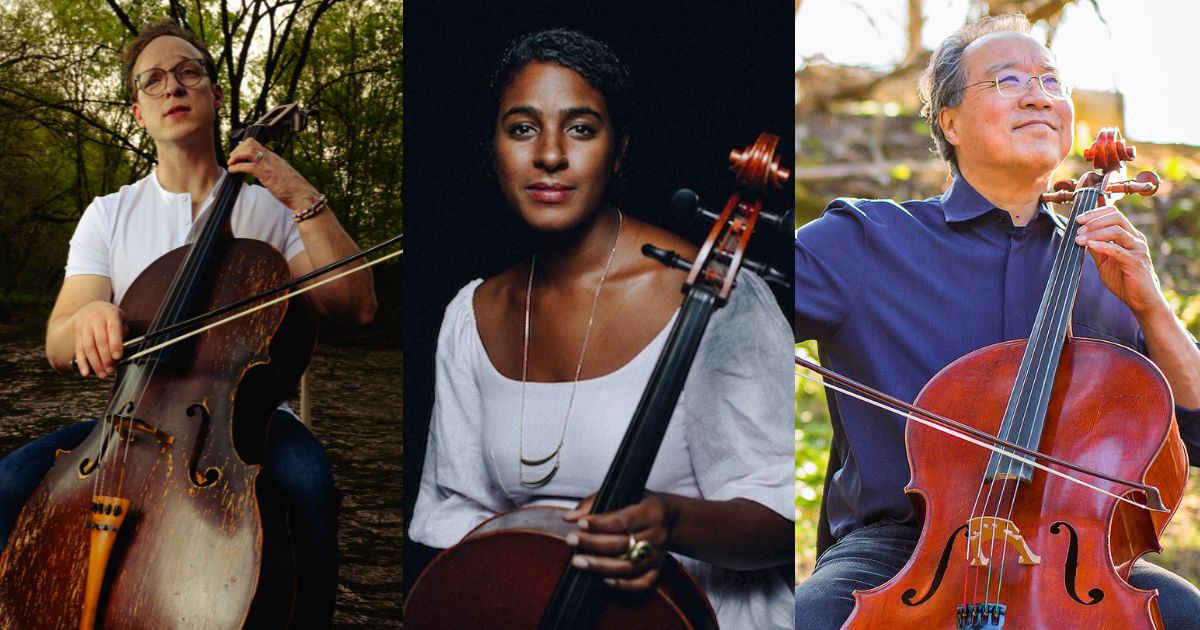
Though an uncommon encounter in the roots music scene, the BGS team will always applaud a roots, folk, bluegrass, or old-time cello moment. With velvety, rich tones and a unique percussive capacity, the cello deepens the flavor of every tune it encounters. While not considered a traditional bluegrass instrument, it carries an ancestry boasting many folk interweavings – and its proximity to both the upright bass and fiddle grant it a certain amount of creative leverage while integrating into roots music.

The cello’s undefined yet familiar positionality allows cellists an unconventional playing ground for innovation; without the same distinctly canonized roots traditions as say, the fiddle or the banjo, cellists can access a broadened range of textures and styles.

This list, though it is by no means comprehensive and is curated in no particular order, pays tribute to some of our favorite cellists in a variety of roots music contexts.

Leyla McCalla

A prolific multi-instrumentalist and multilingual singer, Leyla McCalla’s impact on the roots music scene continues to be nothing short of profound. An alumna of the GRAMMY-winning Black string band the Carolina Chocolate Drops and founding member of Our Native Daughters (alongside Allison Russell, Rhiannon Giddens, and Amythyst Kiah), McCalla also has five solo releases under her belt. She is the daughter of two Haitian immigrants and activists and her work is widely informed by Afrofuturist thinkers and Afro-diasporic musical influences. The 2022 recipient of the People’s Voice Award by Folk Alliance international, McCalla’s work has been recognized time and again for her deep commitment to ancestral study and social change.

More Leyla McCalla content here.

Mike Block

Ever seen a cellist perform standing up? If you have, they’ve probably heard of Mike Block. Among the inaugural wave of cellists to perform using a strap, Block was the first cellist to ever perform standing at Carnegie Hall and he did so using his own patented creation, the Block Strap.

Sonically, Block has also explored an expanded range of motion, as he is well known for his cross-cultural collaborations. While BGS fans may know him best from the Mike Block trio, his acoustic string band with Joe K. Walsh and Zachariah Hickman, Block also tours with an electric trio called Biribà Union, a duo with Indian tabla player Sandeep Das, a six-piece American/African fusion band, and the Silk Road Ensemble, a collective formerly spearheaded by fellow cello luminary Yo-Yo Ma. Block, astoundingly, has also released 20 albums of his own music, in addition to recording, performing, and arranging for other musical giants such as Miley Cyrus, Elton John, Raffi, and more.

Yo-Yo Ma

Perhaps one of the most renowned cello players of all time, Yo-Yo Ma is widely recognized for his feats in classical music. His discography includes over 120 albums (19 of which earned GRAMMYs), both paying tribute to the classical Western canon and forging revolutionary cross-cultural connections. One of our personal favorite examples here at BGS is Ma’s participation in the Goat Rodeo Sessions, a stellar 2011 collection of classical and Appalachian entwinements featuring Ma, Stuart Duncan, Edgar Meyer, and Chris Thile, with vocals from Aoife O’Donovan showcased as well. The result is nothing short of breathtaking – truly an original fusion of soundscapes that remained unparalleled until the supergroup’s release of their sequel album, Not Our First Goat Rodeo (2020).

Read our exclusive 2020 interview with Yo-Yo Ma on Not Our First Goat Rodeo.

Monique Ross

Hailing from Milwaukee, Wisconsin and now based in Nashville, cellist Monique Ross is one half of the dynamic sibling duo SistaStrings. She and her sister, Chauntee Ross (violin), blend their classical training with gospel, R&B, and folk influences to yield music that once again proves the age-old wisdom that there is nothing quite like sibling synastry. The pair’s vocal and instrumental prowess enrapture with both distinctive emotive execution and precise relationality. Both also perform as members of Brandi Carlile’s touring band and Carlile will serve as the producer for their upcoming project currently in the works.

Find more Monique Ross and SistaStrings here and here.

Larissa Maestro

Larissa Maestro is a Filipinx multi-hyphenate talent based out of Nashville, Tennessee. Named “Instrumentalist of the Year” at the 2022 Americana Music Awards, Maestro was the first cellist and the first member of the AAPI community to receive that honor. A composer and activist as well as a musician, Maestro arranges chamber music, co-founded a community orchestra (The Nashville Concerto Orchestra), and often fundraises for non-profit organizations through their craft.

Maestro’s ability to weave lush string arrangements into a vast array of genres positions them as a highly coveted collaborator, having worked alongside the likes of Hozier, Margo Price, Gillian Welch & David Rawlings, Ms. Lauryn Hill, John Legend, Allison Russell, and more as well as fronting and collaborating with various projects and bands.

Natalie Haas

Known for her impeccable traditional cello playing, Natalie Haas keeps centuries of Celtic traditions ablaze. She and Scottish fiddler Alasdair Fraser have toured together for twenty-three years, reviving and reimagining the tradition of cello/fiddle duets, popular in 18th and 19th century Scottish dance music. Though historically these duets featured a droning cello and melodic fiddle, Haas’s curiosity coupled with her virtuosity explore the cello as a dynamic instrument, capable of harmony, melody, percussion, and every blended iteration thereof. As Peter Winter once said, “Natalie basically wrote the book on the cello’s place in Celtic music.”

Read more about Natalie Haas and her collaboration with her sister, Brittany, here.

Ben Sollee

Ben Sollee is a Kentucky-based cellist and activist whose interdisciplinary work seeks to connect and elevate his communities. His most recent solo album, The Long Haul, interpolates both American influences and inspirations from the global south to deliver a dynamic album that, in part, processes the many griefs he faced during COVID’s inaugural years while maintaining a buoyant sense of resilience and growth. In addition to his innovative cello playing, Sollee works as a composer, having scored several films and the podcast “Unreformed.” Sollee has also recently helped spearhead a non-profit called Canopy to support local Kentucky businesses mindful of having a positive social and environmental impact on their community.

Read more about Sollee and The Long Haul here.

Nancy Blake

A pioneer for glimmers of cello in the modern American roots landscape, Nancy Blake is a cross-genre hero. Nancy began her relationship to the instrument at age 12 and grew up playing cello in the Nashville Youth Symphony. On a fortuitous day in 1972, her band Natchez Trace opened up for prolific picker Norman Blake. The two eventually married, and Nancy aptly fused her cello playing into Norman’s musical landscape. She also picked up several other more traditional roots instruments, such as guitar, fiddle, and upright bass, appearing on many of Norman’s releases throughout his career.

Joy Adams

Dr. Joy Adams is a versatile multi-instrumentalist, vocalist, composer, songwriter, and educator from Washington state who currently resides in Denver. While you may know her best from her extensive touring with Nataniel Rateliff, Darol Anger, and the all-women powerhouse group Big Richard, she has accrued a sprawling list of collaborators throughout her career. From recording on the Emmy award-winning soundtrack of The Queen’s Gambit to performing with the likes of Chick Corea, Kenny Loggins, Ben Folds, Waxahatchee, and more, Adams weaves energetic innovations into each of her collaborations.

Read our recent interview with Big Richard on their brand new album, Girl Dinner.

Casey Murray

Like many of our favorite cellists, Casey Murray is a talented educator in addition to their performance and compositional ventures. A Berklee grad based in the luscious roots scene of Boston, Murray finds much inspiration in blending Celtic, old-time, folk, classical, and improvisational sensibilities – like in their work with forward-looking string band Corner House. They particularly enjoy providing musical accompaniment for contra dances around the New England area, an exercise of their keen attunement to the rhythmic possibilities the cello has to offer.

Of course, even with ten incredible entries, our list of roots cellists barely scratches the surface of this vibrant community in folk, bluegrass, and beyond. With plenty of examples – like Rushad Eggleston, Nathaniel Smith, Kaitlyn Raitz, and many more – still to pull from, we’re already prepping a Part II to our roots cello exploration. Who would you include?


Photo Credit: Ben Sollee courtesy of Big Hassle; Leyla McCalla by Noé Cugny; Yo-Yo Ma by Austin Mann.

For Guitarist Jordan Tice, “Perfect” Recordings Are Never the Goal

Bluegrass. Newgrass. Chambergrass. Jamgrass. Thrashgrass. So many sub-genres, so little time. For guitarist Jordan Tice – solo artist and longtime member of Nashville-based Hawktail – there’s no time at all, because labels don’t define art and they don’t factor into his creative process.

“I don’t necessarily think about it,” he says. “I mostly do what I feel like doing and incorporate sounds that feel relevant, that I have a personal connection to and an excitement to explore, and the ability to replicate and share. I’d like to think that personality can unite disparate things if the heart is pure.”

Tice weaves a thread of musical connectivity on his new release, Badlettsville. The EP features two covers, Bob Dylan’s “Tryin’ to Get to Heaven” and Randy Newman’s “Dayton, Ohio – 1903,” as well as the originals “Mean Old World” and the instrumental title track. The four are staples of his live shows, but only now have they been committed to recordings.

“They’re all fundamental to my show and are requested as much as my other songs, but they didn’t have a place on either the last record or the next one, so they belonged in Badlettsville,” he says. “They fit together sonically as well. As soon as we got those four things down, I was like, ‘This is something.’”

Ever busy, Tice isn’t slowing down in 2025, although the emphasis is shifting somewhat. After two hectic years, Hawktail is dialing back a bit on gigging and Tice is devoting time to another solo album. “Hawktail has an EP in the can that will hopefully get out sometime soon,” he says. “We’re doing a few festival gigs but taking a much lighter year. I’m doing some dates in support of [Badlettsville], in addition to festivals with Hawktail. But I’m trying to take a little bit of a step back to focus on making this new record.”

Your website bio begins, “Jordan Tice is a musical seeker of the most dedicated sort.” What does the term “musical seeker” mean to you?

Jordan Tice: I’m always exploring my own interests and creativity, and also exploring the music that I do play, the roots of that. I want to understand myself and everything I do, and everything that came before me, better.

Part of the art of music is communicating to anybody, not particularly musicians. The more you understand about music in general, the more you understand what works and what doesn’t. The more you do it, get out there, and play and make records, the more you understand how things register and land with people – different types of thoughts and sentiments, things like that. Music is the art of sculpting sound within a given amount of time for someone who’s giving you their ear.

How has that manifested itself over the course of your solo albums and Hawktail?

With everything you do, there’s something you want to repeat about it, but there’s also things you want to do differently. I mostly grew up writing instrumental music and Hawktail is entirely instrumental. Long about 2015 or 2016, I started writing songs like crazy, just out of nowhere, and I realized I needed an outlet for that. But the instrumental stuff is still near and dear. Keeping a foot in both doors allows me to scratch this itch and this love for both of these things I do.

Did moving to Nashville have something to do with your songwriting?

I think so. I can’t provide concrete evidence, but the coincidence is too great – the fact that I started writing songs right when I moved to Nashville. So the answer is yes, but I couldn’t tell you exactly how. I also started hanging out with a lot more songwriters. My community was more instrumental-based in Boston and New York, where I lived before, so there’s definitely the influence of some new friends I made upon moving down here.

You’ve been playing guitar since you were 12. Does it sometimes feel the same today as it did then?

Yeah. I actually started taking lessons again, from a classical guitar teacher, just because I have some time off the road this winter. There’s things I wanted to improve and I decided I needed some help. I’m always trying to improve, always listening to things, and even in the music I love, there’s still the same sense of mystery of, “How did they do that?” The breadth of everything you’re aware of and assimilated expands, but at the same time it’s the same old [thing].

What led you to classical training?

We’re not doing classical music per se, I should clarify. But a lot of the things I was hoping to work on were technical-based, and classical guitar has such a codified, rigorous, technical study and a pedagogy related to technique in a way that other genres don’t necessarily have.

I’ve studied a lot of facets of music, but I’m not formally trained by any stretch. I took some jazz guitar lessons here and there, and I studied composition, but in terms of guitar I’ve never had formal technical training. I felt I was up against some roadblocks and walls with my playing and decided I needed the help of an expert, a teacher. This [teacher] came strongly recommended from my friend Chris Eldridge from Punch Brothers, and it’s been rewarding to expand the technical facility side of things.

You played a Preston Thompson Brazilian Rosewood and your main guitar, a Collings, on Badlettsville. Tell us about those guitars.

I was at Laurie Lewis’s house in Berkeley with Brittany [Haas] from Hawktail. We were in town playing and we were helping her move some furniture. She had this Preston Thompson in the corner that she was trying to sell and I was interested. It’s from 2016. She hand-selected the cut of Brazilian rosewood, a beautiful piece of wood, and had them make it with this wood that she had sourced. I absolutely love it. It’s going to be my main touring guitar for my solo stuff coming up.

The Collings is a D1A mahogany dreadnought that I bought in 2014. It’s perfectly balanced. It almost sounds like an old guitar. The overtones are exactly right. I have a relationship with Collings, but I bought this one at The Music Emporium in Boston because I liked it so much. It’s been my main axe for the last ten years. It’s what I play in Hawktail and what I recorded my last solo record on.

I brought both of those guitars to the studio, in addition to this new Yamaha FG Indian rosewood guitar that I’ve been working with them for the last couple years to promote and develop. They’re great guitars, and it was a fun process getting to work with them and help get the word out. They’re really fantastic.

How do your picking styles with Hawktail, on your solo work, and with other artists come together to create your style?

I write a lot of music, so my identity as a writer maybe puts those things in the same world. So I would say that it’s filtered through the same mind, and also the conceit is that it’s my music. Hawktail is collaborative, obviously, but it’s part of the same musical world.

I’ve always looked up to Norman Blake and Doc Watson. Norman Blake does a lot of different things, but you don’t really think about it. He plays fingerstyle, flatpicking, traditional music, writes his own music, but it all makes sense in the context of his world. I’ve always admired that as an archetype for a folk musician. He’s himself first. He’s not a historian. He picks and chooses things that work in his musical world, as opposed to something outside of himself. He’s an artist that happens to combine all these folk music techniques and sources into something that’s his own.

You’re thought of primarily as an acoustic player, but you also play electric guitar. Which ones?

I grew up playing rock and roll, in addition to bluegrass and things like that. My first music was the Allman Brothers. I got together with this guy in my church and he showed me the twin lead thing. We’d learn the two leads and then we’d switch. That music is near and dear to me – Jimi Hendrix, the Allman Brothers. So I’ve always played a little electric too. I think it’s going to work its way into the next album.

My main electric is an American Standard Telecaster that I swapped out some of the pickups and modified a little bit. I put a higher-output Seymour Duncan pickup in the neck position and I made it a four-way switch, so you have the humbucker setting in addition to the normal three settings.

Also I have a Yamaha Revstar Professional that they just sent that I’ve been having fun with as well.

What do acoustic and electric guitar each bring out in your playing?

An electric allows you the opportunity to fill up a room with less effort. You can saturate a room with sounds with less notes, with less physical effort. An acoustic is a parlor instrument. It’s meant to be played in a small room with your head right up against it. As soon as you stop making noises with your hands, the noise goes away. With electric, a lot of times less is much more, and with acoustic, a medium amount is a medium amount.

With this new record, I’m going to do it with drums, so I’ve been messing around with pickups on electrics and … I don’t want to say effects, but ways to expand the breadth of the sound, get a little bit of that electric expanse, but still treating it like it’s an acoustic. That’s been a fun and interesting pursuit.

How does collaborating with other musicians push you musically?

I have a little home studio setup, but I love going to the studio. I love there being, “This is the time that we’re making the record. What happens, happens.” I think that urgency puts you into a superpower mode. Also the camaraderie. There is truly no substitute for live chemistry. AI can try all it wants, but it will never get it. The communication and sound that happens … there’s so much subconscious and physical factors that are changing constantly. You can’t substitute it.

I love the element of not trying to perfect things, of a record being a snapshot in time. Treating it that way helps you bring your A-game because it’s, “I need to be able to do this at any given time.” It makes you focus on delivering a performance, crossing all your T’s and dotting your I’s, so that it’s all there when it’s time to push “play,” or when it’s time to play with other people, or time to get in front of people.

What snapshot does Badlettsville represent?

The tunes weren’t created or arranged with the idea that they’d be on a record, so in some ways it’s like a snapshot of the live show I’ve been doing over the last couple of years. It’s really organic in that regard.

All these arrangements came about from playing live, specifically with Paul Kowert and Patrick M’Gonigle. Patrick’s been playing a lot of shows with me, and Paul is my BFF partner in crime in Hawktail and beyond, so it represents my relationship with those two guys in a big way.

Also my interests, the fact that there’s cover songs by Randy Newman and Bob Dylan. If I had to pick my two favorite songwriters, it would be them. It’s a snapshot in time of the manner in which I’m playing and thinking about music and the people I’m doing it with right now.


Photo Credit: Cameron Knowler

A True Original, Italian Guitarist Beppe Gambetta is a Bluegrass Innovator

Most listeners would probably attribute the incredibly unique musical approach of guitarist Beppe Gambetta to his country of origin. Being a native of Genoa, Italy, he certainly brings a global and European folk flair to his bluegrass and old-time inflected six-string compositions. But it would be shortsighted to simply credit that truly original voice to mere geography.

Gambetta is an instrumentalist who always works with intention. Developed over a lifetime of playing and cultural cross pollination, his style exists in the fertile ground somewhere between a triangulation of Norman Blake, Doc Watson, and Django Reinhardt. He’s learned from, recorded, collaborated, and performed with so many of “greats” such as these across several generations of American roots music virtuosos. Gambetta is a bluegrasser through and through, but he’s also so much more.

His latest album, Terra Madre (released in April 2024), is a lovely continuation of his lengthy and harlequin catalog of recordings. It’s bilingual, cinematic, and thoughtful, while also impassioned and brash. But he’s never a one-note musician, so the collection is artfully subtle at the same time. Gambetta doesn’t just know this intersection – aggressive and gentle, bold and subdued – it’s as if he lives there. It’s his address.

Perhaps most of all, Gambetta is a perfect representation of how an individual can bring himself into a generational folkway and established aural tradition such as American roots music, while simultaneously preserving his selfhood and his singular point of view. Our email interview, like the new record, is a perfect representation of Gambetta’s melting pot style – and the way he uses the entire earth, terra madre, as his medium.

The title track  of Terra Madre is cinematic and vibey, with a bit of funk and a dash of charming silliness. I love that it starts with the sound of footsteps, grounding the listener on terra madre herself. Can you talk a bit about the song, its title, and how being embodied on earth, on this rock hurtling through space, inspires your music and songwriting?

The song “Terra Madre” is the most dramatic of the album: the footsteps are from a couple of escaping refugees, the song is about their dreams. They meet with friends and jump the border wall in the dark of the night with fear, pain and hope. We don’t know the exact story, the place where it happens is also unknown in order to represent a ubiquitous pain that can be found all over the world.

It was hard to express these extremely dramatic sentiments only with acoustic instruments, but the use of the flatpicking style with strong bass lines and heavy strums turned out to be a good tool. I used a regular guitar but also a low bouzouki guitar and few slide guitars “prepared” with special strings and tunings. As you noticed, I added the sound of the escaping steps in order to ground the listener to the earth and with drummer Joe Bonadio we decided not to use the snare drum in order to create a more “suspended” atmosphere only with toms and cymbals.

How much of the earth’s current worries are in this album? How much did the planet’s current state of being inform the song itself?

The album’s general concept is related to the cry of pain that rises from our Earth and to the right of musicians to dream about a better world in moments of darkness. In the different songs there are dreams for a better life, for peace, repentance, friendship through music, adventure, forgiveness, survival of minority cultures, redemption, dreams to win, rage, envy, hate, and more.

In a period where leaders and politicians in charge are not able to resolve conflicts and crises there is a need for every other category to give a positive contribution. Probably scientists, philosophers, historians, theologists will give important contributions, but also artists can do their part.

I’m sure that even in modern times there is still a strong power that comes from folk songs and I decided to write my songs in different languages. For different reasons the album is totally self-produced and if you self-produce you need to put more love, passion, time, and money using all your resources.

“Sit and Pick with You” is certainly the stand out track on the album. Can you talk a bit about that song, its meaning, and how important the community aspect of this music is? Because, truly none of us would exist as pickers in bluegrass and string band music without folks – whether friends or peers or heroes or legends – to sit and pick with.

The inspiration for the song came to me during a California tour. I wrote it in order to celebrate some musical encounters with legendary fathers of the music – David Grisman, Dan Crary, Peter Rowan – dear friends who, at the end of their careers, continue to hold high the torch of beauty. I wrote the song with the sounds of the 1930s in mind, with a guitar riff inspired by “The Wildwood Flower” or “Jimmy Brown the Newsboy,” because I believe it is a timeless sound that can still speak to people’s hearts and move them.

I decided to sing the song as a duo, like an old brother duet. I first asked Norman Blake by sending him a handwritten letter in pencil, as we used to do in our correspondence in the 1980s. The reply was really kind, also handwritten by Nancy and signed by Norman, who thanked me for the thought and encouraged me in the project, but at that time Norman felt that his voice was not at the right level to appear on an album.

Luckily, my friend Tim O’Brien was available to sing it and did it with a perfect vintage-style rendition. Then David Grisman added his unmistakable signature [sound] on mandolin. Dan Crary played guitar in harmony, taking advantage of the depth of his “long neck” guitar tuned down a tone. The final touch to the quartet’s sound came from bassist Travis Book.

The positive meaning of the song is felt by many fans who identify with the sentiments it expresses: The joy of getting together and the friendship that comes from the beauty of music. Many began to incorporate it into their jam sessions with friends, as it happened at the Walnut Valley Festival campground in Winfield, Kansas, a gathering place for music lovers par excellence. I received many requests for the guitar part and finally now I distribute the tablature at all my concerts. For sure, this is the standout track of the album and it got a very special recognition and attention. It was number one in the Folk DJ chart in June and July and still now it is present in the top positions.

Your approach to the guitar – and really, to music and composition and picking in general – is totally unique. You have a voice all your own on the instrument. I think a lot of listeners on this side of the Atlantic would attribute that to your being Italian, but I think that’s a bit shortsighted and simplistic. How have you cultivated your particular style and how do you keep your music and creativity fresh and innovative, to yourself and to your listeners?

I wanted to develop my own particular voice, starting from the style of the American fathers and filtering in the influences gained during my tireless journey on the road that has given me particularly formative encounters, not only in Italy but in the whole world. It took time and attention, choosing and adding to my style drops of beauty from different sources, trying to limit the obvious “Tony Rice mania” and using ideas also from Dan, Norman, Clarence and much more.

For sure, all my studies about old Italian music and generally my natural Italian aesthetic sense and passion for melody has influenced my style. The work that I did in researching and studying the “Italian string virtuosi” and performing the albums Serenata and Traversata (produced with David Grisman) left an important mark in my playing.

Studies and stylistic research in flatpicking can go in different and almost opposite directions. On the one hand, the virtuosity of breathtaking phrasing combined with speed and improvisation – the shiver in your spine that you start to feel when you listen for the first time to “Black Mountain Rag.” On the other hand, the search for expressive techniques and melodies that touch the listener’s soul – the passion and tenderness of “Church Street Blues” in Tony Rice’s version is the perfect eye-opener to the expressive potential of flatpicking beyond mere circus performance.

This second aspect, probably underestimated in the current scene, is the one that fascinated me the most. I worked a lot to learn to play slow (using tremolos, partial strummings, crosspicking, and “separate crosspicking” on two, four, five, six strings, string jumps, crosspicking to obtain grace notes, etc.).

Rhythmic tension and speed, however, continue to fascinate me; it was fun to develop the licks of my tune “Chipmunk,” an instrumental that describes the run of New Jersey’s fastest pet on the front porch of our Stockton home, using down-down-up on two strings at 162 beats.

The secret of the freshness of my style stays in continuing to be excited by both creating something new and playing something old, and in sharing this happiness every day with my wife Federica! Often before taking the stage I revive the memory of those who helped me and believed in my art (Mama Gambetta first of all) and this gives me a strong power. Even if I am close to my seventieth birthday I continue to be ready and happy to do my job.

I also think your shows are so stunning and one-of-a-kind, too. You do so much with just a guitar, your voice, and your stories. How do you keep your show engaging and interesting, when you have so few variables or so few inputs? Do you find such a stark set up to be limiting or empowering or…

Standing in front of an audience with one guitar, a voice, and a pick is certainly a big challenge. That is why I have been working over the years to create a show that I can take to audiences around the world and to distant places. I try to speak to people’s hearts and maintain my authenticity, deciding to minimize the use of excessive volume, technology, and sound effects, avoiding wiggles and winks, and simply presenting myself as I am, as if I were playing acoustically in a living room.

An artist who influenced me in this direction was John Hartford, for whom I opened a concert in Ohio many years ago and I was inspired by his charisma in communicating alone with the audience. Over the years I have studied singing, learned how to narrate and create special atmospheres with the use of open tunings and different languages, and also to joke with the audience with “Old World” irony. Not to mention “Gino,” the name I gave to my pedal loop, which I always use sparingly and treat as an old cousin who travels with me and accompanies me with his guitar.

In music, limitations are often a source of creativity; Django Reinhardt invented amazing phrases using only two fingers of the left hand, blues harmonica players got missing notes by inventing bending, and so on. In flatpicking, the strong limitation is the inability to play two distant strings at the same time as you would do easily with fingers. The effort to overcome this limitation has always forced me to invent creative solutions.

Can you tell us the story or stories behind “Saint James Hospital”?

In 2023, on the centenary of Doc Watson’s birth, in addition to visiting his grave and playing a tune for him, I decided to rearrange some of the master’s songs so that I could celebrate him on many occasions, because Doc was my most important influence and changed my artistic life.

Doc was a giant because he invented a fresh repertoire for the acoustic guitar and developed a unique and engaging way of building a show. Among the various songs of his repertoire, “Saint James Hospital” represents his extraordinary ability to discover and rearrange true gems of beauty. “Saint James Hospital” comes from ethnomusicologist Alan Lomax’s earliest field recordings, when he was first allowed to record the prisoners in a Huntsville, Texas, jail in 1933. Among the various prisoners was James Baker, known as “Iron Head,” and from this seemingly dangerous character came a song with a refined and touching melody that spoke of repentance, redemption, and a dream of a better end of life.

For me it was a challenge to create a new arrangement after Doc Watson’s and Tony Rice’s masterpieces. I decided to invent a new interlude using many guitars in different tunings and I completed the arrangement on the high register with the arpeggio of a Cuban tres. The result was well-rewarded because also “Saint James Hospital” appeared for many months on the Folk DJ charts.

What’s next for Beppe Gambetta? What should folks be watching out for?

One of the reasons I continue to be active and innovative with so many projects is because I am lucky enough not to have a retirement plan! It’s a joke that tells the truth: The anxiety of having to keep working for a long time feeds my creativity and helps my determination to invent new music, new productions, new events and embark on new journeys.

Future projects fortunately are many, first of all the upcoming tours in America and Europe in support of Terra Madre.

Besides touring, an event I’m very excited about will happen on February 15, 2025 in Mendocino, California. It will be a reunion concert with Dan Crary, who just turned 85. We will celebrate his legacy and more than 30 years of touring as a duo. On May 15-16-17, 2025 there will be the 25th edition of my Acoustic Nights, a thematic concert series with international artists on the stage of the Teatro Nazionale in Genoa, Italy, an event that we conceived with [my wife] Federica and made grow over the years. The edition number 25 promises to be a beautiful big party with a large audience of friends who will come from far away to celebrate.

Also, in Italy, I produced two different plays with actors and script, one related to my autobiographical book, Declarations of Love, and the other related to songs about legendary bandits.

Among the American projects I would like to mention, the trio show about Italian virtuosi of the early 20th century with Mike Guggino and Barrett Smith (members of Steep Canyon Rangers). It is a “side” project that is growing over the years and for the first time we will take it to a festival, Wintergrass, in 2025.

With the Folk Project in Morristown, New Jersey, we started an annual event, the New Jersey Guitar Summit, an educational full-immersion event with a final concert (held in October). And also in New Jersey on January 11 and 12 we will have my “home concerts” with guest Bruce Molsky at the Prallsville Mills in Stockton, New Jersey.

If there were any picker, living or passed, that you could sit and pick with today, who would it be and why?

In this respect I am very fulfilled, because one of the greatest joys of my artistic life is that at different times I was able to play “Salt Creek” with Doc Watson, Norman Blake, Dan Crary, and Tony Rice, four fathers of the music I love.

Of course, if I had the time machine, I would also choose to play “Salt Creek” with another great father of flatpicking, Clarence White, who I never met because he died young in a car accident. Using the same time machine I would certainly travel to Paris to play with Django Reinhardt, then I would move to Argentina to make music with the tanguero Roberto Grela. In Portugal it would be wonderful to meet the Portuguese guitar passion of Carlos Peredes, while in Italy I would certainly love to meet the early 20th century virtuoso Pasquale Taraffo, the inspiration for so much of my research.

The most enjoyable jam session of the last few years was with guitarist Cameron Knowler, a young picker who amazed me by cultivating and carrying forward into modern times the sounds of Riley Puckett and Norman Blake, a sign that among the new generations there is a refined aesthetic sense that goes beyond fashions and gives us hope for the continuation of the forgotten beauties of the past.


Photo Credit: Giovanna Cavallo

Bluegrass Memoirs: The Earl Scruggs Revue Early Recordings

In our last Bluegrass Memoir, “Beginnings,” I described David Hoffman’s documentary, Earl Scruggs with his Family and Friends. By the time NET aired it, the Revue was already off and rolling with Earl’s new music.

In 1970, bluegrass festivals – the first was in 1965 – were becoming quite popular. The music’s supporters had discovered that such events could present their favorite music to broader, younger, urban audiences. These larger crowds brought their tastes and preferences with them. At these booming festivals, new acts like the Earl Scruggs Revue spoke to musical perspectives shaped by contemporary popular music.

The Revue played to large numbers at Monroe’s Bean Blossom Festival that spring and to Carlton Haney’s Camp Springs Festival on Labor Day weekend. Earl’s solo album, Nashville’s Rock, and Randy and Gary’s solo album, All the Way Home, were released that year.

The Earl Scruggs Revue at Bill Monroe’s annual Bean Blossom festival, Bean Blossom, Indiana, June 1970. (L-R) Unidentified bassist, Jody Maphis, Randy Scruggs, Earl Scruggs, Gary Scruggs, and Leah Jane Berinati. Photo by Carl Fleischhauer.

In 1971, Columbia released Earl Scruggs: His Family and Friends (C 30584), a soundtrack album that included much of the content of Hoffman’s documentary along with two additional fine vocals by Doc Watson. In its liner notes, Don DeVito characterized the show’s topic:

Earl Scruggs is a man who has paid his dues. You can forget the generation gap … Earl has always been an innovator and an adventurer…

Also in 1971, newgrass music emerged. Its key figure at that time was singer-songwriter and banjoist John Hartford, whose “Gentle on My Mind” had been a 1967 Glen Campbell hit. John had flourished in the LA television business as a writer for The Smothers Brothers Comedy Hour and a performer on The Glen Campbell Goodtime Hour.

Hartford and Scruggs – they’d met in 1953 – had developed what Bob Carlin, in My Memories of John Hartford (University Press of Mississippi) calls “a deep friendship.” When Hartford returned to Nashville in 1971, he recorded what is now considered the first newgrass album, Aereo-Plain. The Revue’s Randy Scruggs played bass on this ground-breaking disc alongside Tut Taylor, Vassar Clements, and Norman Blake.

The Revue and Hartford were at the center of Nashville’s jam-based music, which embraced musicians from new scenes blending rock and older genres – folk, bluegrass, and country. Both bands appeared at a number of bluegrass festivals in 1971 and the Revue was busy recording in Nashville.

I Saw The Light With Some Help From My Friends (1972)

Earl was working on his next album, I Saw The Light With Some Help From My Friends: Earl Scruggs with Special Guest Stars. The back liners of the album (Columbia KC31354) described it as “Earl Scruggs and The Earl Scruggs Revue in performances with Linda Ronstadt/The Nitty Gritty Dirt Band/Stacey Belson and Arloff Boguslavaki.”

Stacey Belson was a pseudonym for blues singer Tracy Nelson, then with the band Mother Earth. Arloff Boguslavaki was Bob Dylan’s pseudonym.

Bill Williams’ liner notes describe the fabulous jam sessions that were happening at the Scruggs family house – hence the album’s concept:

Picture, if you will, the group sitting around together at the Scruggs home (although the actual locale was shifted to Columbia Studios) …

For this album, the studio became the living room and the producer was Don Law, the Nashville vet who’d worked in the ’30s with blues legend Robert Johnson and western swing pioneer Bob Wills and in the ’50s with Flatt & Scruggs.

At this Scruggs family jam session were Earl and sons along with their Madison High School contemporary, drummer Jody Maphis. Also in the room were fiddler Vassar Clements, in the process of moving from Hartford’s band to join the Revue, and several others who’d later join the Revue, including pianist Bob Wilson, a Detroit R&B musician who’d moved to Nashville and subsequently recorded with Bob Dylan.

Each of the featured star guests are heard in solo, sometimes singing in harmony with each other. Earl plays on every cut. Great to hear his backup work with all its nuances! Randy’s lead guitar and Vassar’s fiddling appear throughout.

It was as if these people had showed up at the Scruggs home one evening to play for and with each other – an old-fashioned domestic music session, with the host going around the room inviting each to perform and providing musical backups for all. The evening’s repertoire was the kind of stuff you might expect at such an event: mostly recent country, folk, blues and rock – things you might have heard on the radio lately in 1971.

The sound was that of contemporary popular music, suggesting that this was what you’d hear if the Earl Scruggs Revue came to your living room, festival, or auditorium.

The album’s first side opens with an LA country soul rock tune, Bonnie and Delaney’s “Lonesome and a Long Way From Home.” Gary is singing lead and playing bass; Nelson adds harmony. This is rocking R&B – Wilson’s piano opens the break and, with fiddle and drums, keeps it rocking to the end. Earl’s banjo is out front throughout.

Next comes Merle Haggard’s “Silver Wings,” sung by Linda Ronstadt with harmony by Nelson. The backup piano and Dobro are joined by a fiddle break. Straight-ahead Nashville country.

Track three features “Boguslavaki” (Dylan) singing Charles E. Baer’s 1896 hit, “It’s a Picture From Life’s Other Side,” a song that had gone into the folk tradition and been frequently recorded by hillbilly and gospel singers in the ’20s and ’30s. The laid-back fiddle, bass, and drums, along with Nelson’s harmony on the chorus, mark this as a parlor folksong.

It’s followed by Nelson’s performance of “Motherless Child Blues,” where accompanying musicians Earl, Norman Blake, Randy, and Vassar stretch out with some nice blues breaks.

This side closes with Mike Nesmith’s “Some of Shelley’s Blues,” performed with members of the Nitty Gritty Dirt Band, with Gary Scruggs and Jeff Hanna doing the singing and Earl and Randy both taking instrumental breaks.

The second side of the album opens with a vocal by Gary on another Bonnie and Delaney cover, “Never Ending Song of Love.” Ronstadt sings a county cover, Cash’s “Ring of Fire.”

Dylan brings out another pre-war country folk oldie, a great “Banks of the Ohio.” While Nelson is featured singing folksinger Bruce “Utah” Phillips’ “Rock Salt and Nails,” a song first recorded by Flatt & Scruggs in 1965, with Ronstadt adding harmony on the chorus.

The Nitty Gritty Dirt Band contributes another Nesmith song, “Propinquity.” The side closes with the album’s title track, a sing-along for everyone, “I Saw the Light.” The album was released in 1972.

Will the Circle Be Unbroken (1972)

Around the same time as I Saw The Light was made, banjoist John McEuen of the Nitty Gritty Dirt Band asked Earl to be on their new three-LP concept album, Will The Circle Be Unbroken. Scruggs was playing in Denver with the Revue when he and McEuen met. The Dirt Band’s sound, with McEuen’s skilled Scruggs-style banjo, appealed to him, as did their project to honor and make music with the earlier generation’s pioneers. That had been his own goal in bringing Maybelle Carter into the studio to record with Flatt & Scruggs back in 1961.

Earl, well-connected in Nashville as an Opry star with record, television, and movie hits, helped bring a number of his country music friends into the project. Both Gary and Randy were also involved, as were several of Hartford’s Aereo-Plain band members, notably fiddler Vassar Clements and Dobro player Norman Blake.

Unlike Earl’s Nashville’s Rock album, which covered recent rock and pop hits on the banjo with Nashville studio backing including electric instruments and, on several cuts, a soulful female vocal trio and a string section, this album had completely acoustic backup by the Dirt Band as they covered legacy hits by country, bluegrass and folk pioneers like Roy Acuff, Maybelle Carter, Doc Watson, and Jimmy Martin.

Earl played a pivotal role in the making of these recordings, playing guitar or banjo on sixteen tracks. The whole Scruggs family can be heard: Randy contributed guitar, autoharp, or voice on eleven tracks, Gary sang on eight, and Louise and Steve sang on one track.

Of the many interesting performances on this award-winning album, Randy Scruggs’ acoustic guitar version of “Both Sides Now” was perhaps the most remarkable; the final selection in the set, it followed a group sing-along of the title track, similar to the closing on the Earl’s I Saw The Light, in which all of the Scruggses sang. These recordings, released in 1972, were made in August 1971.

The Scruggs Brothers (1972)

Also recorded in 1971 was Gary and Randy’s second Vanguard album, The Scruggs Brothers (Vanguard VSD 6579). Some of the same musicians who played on I Saw The Light performed here, like Tracy Nelson, the Dirt Band’s Jeff Hanna and John McEuen, pianist Bob Wilson, and drummer Karl Himmel; but the album had more of a country rock sound. It opened with “Little Maggie,” a song Flatt & Scruggs had recorded at Carnegie Hall in 1962. With Gary’s bass and Jody Maphis’ drums leading the way, it sounded something like the Nashville studio A-listers Area Code 615’s 1969 version.

Throughout the album, Randy played a majority of the solo breaks, some on acoustic guitar but most on electric, in a heavy metal style similar to what I heard him playing in Maine in 1975. Four tracks were their own compositions, two by Gary and two collaborations.

On one, the instrumental “Trousdale Ferry Rag,” Earl played banjo. This up-tempo, bluegrass-style piece has an unusual ending, shifting to a slow blues beat. Most notable is Gary’s “Lowlands,” a great ballad set to the tune of Earl’s “Sally Ann,” which both brothers had been hearing at home all of their lives (Flatt & Scruggs recorded it in 1960). Gary plays guitar, Randy picks banjo.

Covers of older (dare we say traditional?) material includes a rocking version of Jimmie Rodgers’ “T for Texas,” and the other cut on which Earl played banjo, “Hobo’s Lullaby,” which features a sing-along chorus similar to that on the closing of the I Saw The Light and Will The Circle Be Unbroken albums. Another older piece was “The Johnson Boys” (Flatt & Scruggs did it 1962) on which John McEuen’s frailed banjo created the album’s most old-timey sound.

The Earl Scruggs Revue at Bill Monroe’s annual Bean Blossom festival, Bean Blossom, Indiana, June 1970. Randy Scruggs, Earl Scruggs, and Gary Scruggs. Photo by Carl Fleischhauer.

The boys’ continuing involvement with country rock is reflected in two songs that originated in 1967 with the LA band Hearts and Flowers. “Rock and Roll Gypsies,” which closes the first side of the album, seems to have been an attempt to garner radio play – it’s the only track on the record to include string section backup. The other Hearts and Flowers-connected track, “Bugler,” a sad song about the death of a dog, had recently been covered by Clarence White with the Byrds.

Live at Kansas State (1972)

During this year of extensive studio recording, the Revue was also out playing on the road. Although Earl Scruggs: His Family and Friends included a few examples of the group in action outside the studio, Live at Kansas State (Columbia KC 31758) was their first full show album.

Many of the songs the Revue did at this 1972 concert remained in the band’s regular repertoire and showed up, for example, at the 1975 Maine concert, including “T for Texas,” “Paul and Silas” (they titled it “Bound in Jail All Night Long”), “Sally Goodin[g],” “Carolina Boogie,” “Everybody Wants to Go to Heaven,” and “Foggy Mountain Breakdown.”

Several were on their recent albums, like “You Ain’t Going Nowhere” and “Both Sides Now.” Bluegrass classics included “Good Woman’s Love” and “Bugle Call Rag.”

In 1998, a reviewer for No Depression wrote that Live at Kansas State was “probably their album most deserving of a full reissue … a surprisingly cohesive ‘bluegrass-rock’ blend, the likes of which has seldom been heard since.”

In 1972, the band included fiddler Vassar Clements and Dobroist Josh Graves, a bluegrass icon who’d just left Lester Flatt’s band. The album package has several photos of the band; these are notable in that they include everyone but pianist Bob Wilson, who is very much present in the album’s audio.

Wilson had moved to Nashville from Detroit’s R&B scene. His first years in Nashville were slow going, but that changed when Bob Dylan came to town to record Nashville Skyline and wanted “a funkier piano sound than the usual Nashville cat could produce.” The success of his work on Dylan’s album gave him plenty of studio work and he also found time to go on the road with Scruggs.

“When I was with the Earl Scruggs Revue,” he recalled, “Earl always introduced the band, and when he came to me, he always told the crowd, ‘And this is the man who played piano on Nashville Skyline, Bob Wilson.’ I must admit the applause felt really good.”

In his memoir, Bluegrass Bluesman, Graves spoke of the challenges he enjoyed while rocking with the Revue: “Earl and that bunch forced you to work up new licks. You had to come in there on the stuff they were playing. It was so loud I couldn’t hardly stand it, but I really enjoyed it. It opened a lot of doors for me. They were into a lot of things. …”

“Earl was doing the same old tunes with a little modern touch. Earl got bored with bluegrass – I’ll tell you that. He just didn’t want to play it anymore. They had that big beat, that sound behind it, and that’s what he liked.”

“He’d play ‘Foggy Mountain Breakdown’ with that band and people would go wild.”

I saw this, too, in Orono in 1975.

The Revue carried on into the early ‘80s, with albums that drew from contemporary pop music and brought younger country, folk, and rock stars in as guest artists. We’ll touch on a few of these next time.

(Editor’s Note: Read our prior Bluegrass Memoir on the Earl Scruggs Revue here.)


Neil V. Rosenberg is an author, scholar, historian, banjo player, Bluegrass Music Hall of Fame inductee, and co-chair of the IBMA Foundation’s Arnold Shultz Fund.

Photo of Rosenberg by Terri Thomson Rosenberg.
Inset black and white photos by Carl Fleischhauer, courtesy of Carl Fleischhauer.

Edited by Justin Hiltner.