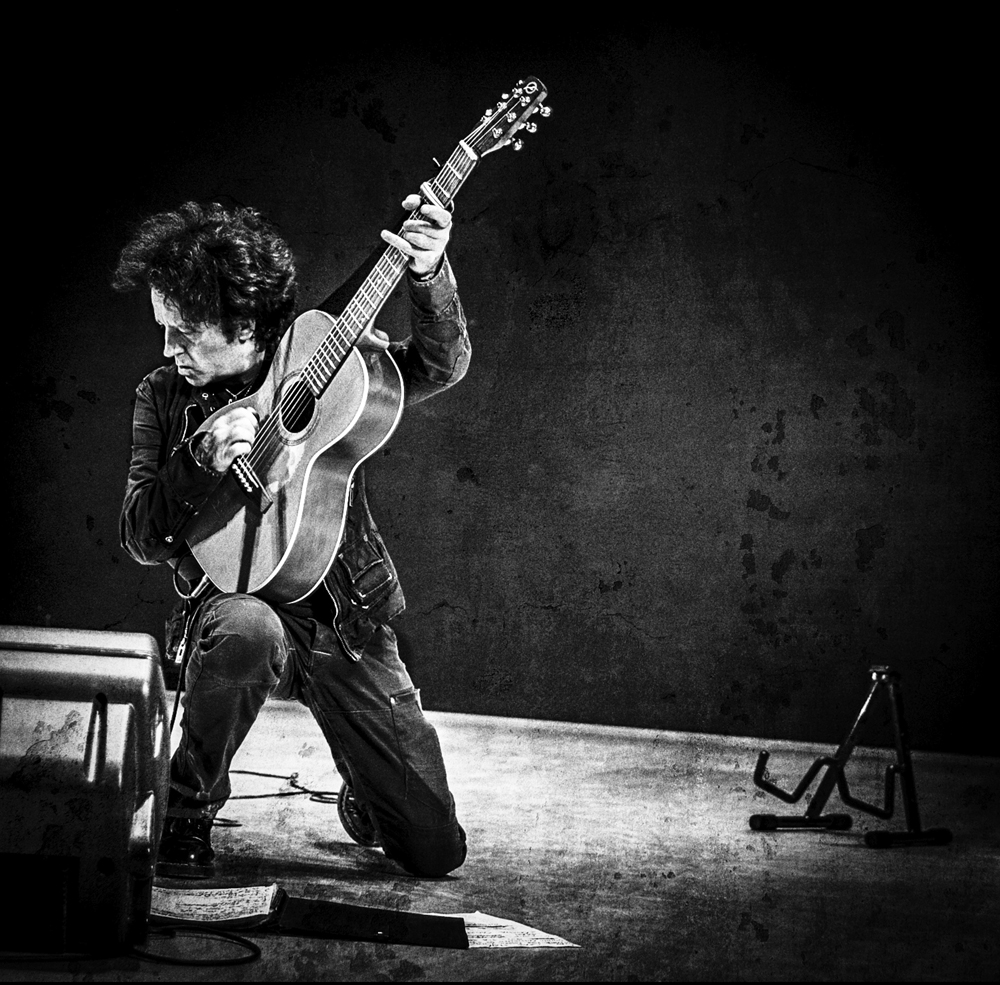
LISTEN: Willie Nile, ‘Subterranean Homesick Blues’

Artist: Willie Nile
Hometown: New York, NY
Song: “Subterranean Homesick Blues”
Release Date: June 23, 2017
Label: River North Revords via Virtual Label

In Their Words: “Bob’s mixing up the medicine in what sounds like one of the first rap songs. It was a total blast to record! The band was smokin’. It was the first track we recorded for the album. There was no rehearsal. We just went in the studio, and I played a ruff phone voice memo version of it to the band, and it was off to the races from there. I wanted to combine a bit of rockabilly and a bit of the Beastie Boys and have some fun with it and that we did. Chuck Berry meets the Beastie Boys at the Look Out Kid Motel: ‘Twenty years of schoolin’ and they put you on the day shift!’ ‘Look out, kid,’ indeed. A ‘how to get out of the box’ guide to being free. It’s as true today as ever.” — Willie Nile

3×3: Dispatch on Postal Uniforms, Sourdough Bread, and the Joni Mitchell Catalog

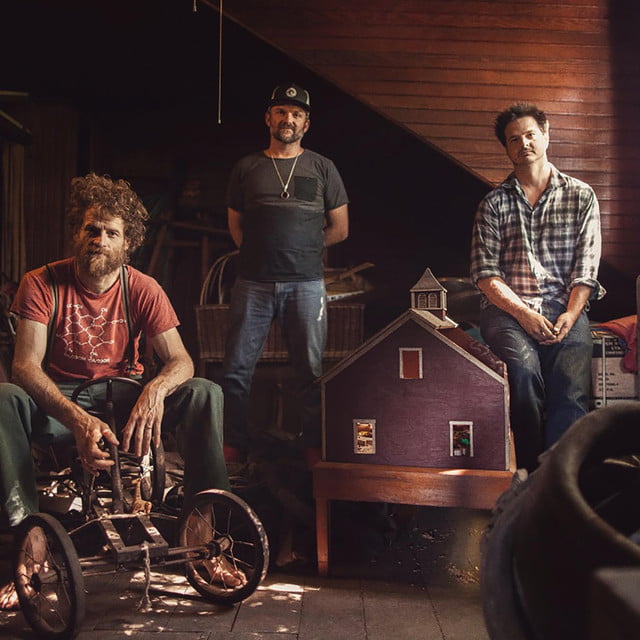
Artist: Chadwick Stokes (of Dispatch
Hometown: Boston, Denver, New York 
Latest Album: America, Location 12
Personal Nicknames:  Chetro/Chicoree, Braddigan/Brizzlebear

What song do you wish you had written?

“The Flesh Failures (Let the Sunshine In)”

Who would be in your dream songwriter round? 

Cat Stevens, Dylan, Joni Mitchell, Robert Hunter, Jimmy Cliff, Leonard Cohen, Nina Simone, Kurt Cobain, Shannon Hoon, John Lennon, Chuck D, Zack de la Rocha, Joe Strummer, Lead Belly, Shane McGowan 

If you could only listen to one artist’s discography for the rest of your life, whose would you choose?

Joni Mitchell 

How often do you do laundry?

I wear a postal uniform and it is made of magic government cloth that never needs washing.  

What was the last movie that you really loved?

The Pianist

If you could re-live one year of your life, which would it be and why?

Would it alter the time continuum? If it did, then I wouldn’t want to live any over again because I might not meet my wife. If it didn’t, I’d like to relive the year before I met my wife. 


To our beloved DISPATCH fans: Pete here. It is a genuine honor and pleasure to be part of the DISPATCH family – alongside @chadwickstokes and @bradcorrigan – and to feel your love and support from all the years. There is nothing quite like it. Last year, I was unable to join the European Tour. And I am realizing now that its likely I will not be able to join Chad and Brad on the road again this year. Like others you may know, I battle depression. In order to get better, this problem requires my complete focus and every bit of energy I can spare. Making the decision to take a leave-of-absence from the band has been hard. Yet, the extraordinary compassion, love and patience I feel from our close DISPATCH family… from Chad, Brad, Steve, Dalton, Sybil, and from my wife Katie, has now given me the strength to move ahead and the ability to come to this decision. In sharing my decision with you publicly for the first time, I feel a much needed sense of relief that will allow me to focus all of my energy on my healing. My entire family continues to offer their unconditional love and support as well. It is a tricky process to try to live and cope with any mental illness. The suffering and pain can sometimes be intense – and can come and go without warning. Yet the warmth from friends, family and fans has helped me to endure, to persevere – and mostly, to continue to have hope. So I will be taking some time off from the band now to try some new approaches and learn how to better manage my illness. I am grateful that I can share this personal piece of myself and what I am experiencing with all of you. My hope is that I will also get to share with you some of my successes as I travel what may be a rocky and sometimes uncertain path toward well-being. While I can’t tour with Chad and Brad right now, the good news is that I was able to work with them to record our latest album! I am SO proud of our work and can’t wait for all of you to hear it. THANK YOU again for all the LOVE you have already sent my way. It has truly been an awesome journey so far and I will continue every day to look forward to seeing you before too much longer. Your friend, @petefrancis3

A post shared by dispatchmusic (@dispatch) on

What’s your go-to comfort food?

Dandelion coffee alternative and sourdough bread.  

Kombucha — love it or hate it?

Love it! Made it here on the farm ’til my uncle John got sick.  

Mustard or mayo?

Peanut butter

Vikesh Kapoor, ‘Down by the River’

Like Bob Dylan to those roaring locomotives, the mythical river has long been a source of artistic inspiration, impacting everyone from classical musicians to modern rock stars: Less assuming than a powerful ocean but no less captivating, that wayward wind of water often tells a story of its own. The mystery of the river — so easy to take for granted, until it dries up or overflows — runs as deep and long as its path, always headed toward a greater force and never sedentary. A river can whisper one moment and rage the next, hiding truth and lies beneath its murky surface.

When folk musician Vikesh Kapoor wrote “Down by the River,” he wasn’t hopping steadily along the banks in the summer sun. Instead, he was stuck home in Pennsylvania, while a snowstorm lingered. “A river called the Susquehanna rushed through my town and I’d sit on its bank in the snow thinking about a Ukrainian girl I met there, by chance, the winter before,” Kapoor says. “A few nights later, waiting for the snow to melt, the image of her on the edge of the river became clear in my mind. I finished the song while the sun was still down, but never got to sing it for her in the morning.” Maybe, just maybe, she can hear it now.

Set to a delicate pluck of guitar and Kapoor’s voice floating like a gentle mist over the water, it’s a moment to appreciate the ephemeral nature of things: Just like love, which changes in an instant, the river is transforming as it’s being watched, ever shifting and creeping toward its eventual goal. On “Down by the River,” Kapoor acknowledges that movement — and understands that, as romance and time get washed down stream, there is nothing more valuable then a simple second of standing still.

3X3: Amilia K Spicer on the Space-Time Continuum, Bob Dylan’s Throwing Arm, and Whiskey, No Mixers

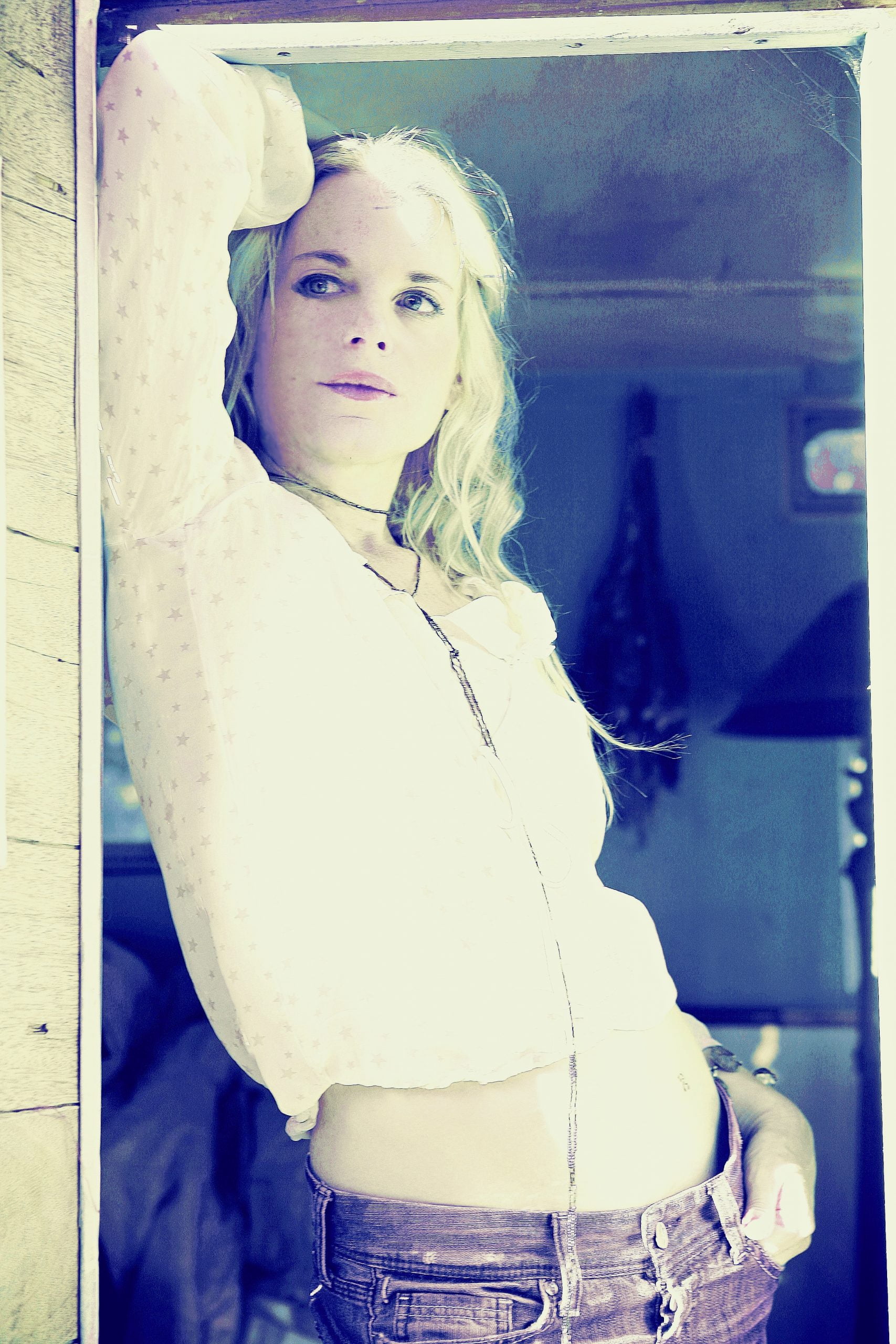
Artist: Amilia K Spicer
Hometown: Backwoods, PA
Latest Album: Wow and Flutter
Personal Nicknames: Spice

What song do you wish you had written?

“The Weight” — then I would be part of every all-star encore and late-night campfire jam.

Who would be in your dream songwriter round?

I think a festival would be best for my dream songwriter soiree. But let’s say we are gathered for the pre-party in my (quite large) living room. Hank Williams, Bruce Springsteen, David Bowie, Leonard Cohen, Dolly Parton, Curtis Mayfield, Prince, Lucinda, Elvis Costello. Lennon and McCartney are in the kitchen right now, with Merle Haggard and Carole King. Not sure what they are up to. Don’t even get me started about the pick-up game going on in the front yard. All I can say is Bob Dylan doesn’t have much of a throwing arm.

If you could only listen to one artist’s discography for the rest of your life, whose would you choose?

Beethoven.

How often do you do laundry?

I just buy new stuff. Nah! I buy VINTAGE stuff.

What was the last movie that you really loved?

Zootopia

If you could re-live one year of your life, which would it be and why?

Never mess with the space-time continuum, man.

What’s your go-to comfort food?

Vegetable soup and popcorn.

Which Whiskey is your favorite — Scotch, Tennessee, Myers, Shivers, or Gentry?

Yes. And, no mixers.

Mustard or mayo?  

Mustard. Spicey. Of course.

The Mile Markers of Music: A Conversation with Ketch Secor

It’s not a stretch to say that Old Crow Medicine Show is intrinsically linked to Bob Dylan. The country-roots band has never shied away from voicing their admiration for the seminal singer/songwriter, and the story behind the infamous “Wagon Wheel” is common musical fodder at this point: Old Crow’s Ketch Secor filled in the verses to an incomplete track titled “Rock Me Mama” from a Bob Dylan bootleg his bandmate Critter Fuqua found during a trip to London. After Darius Rucker’s cover of “Wagon Wheel” hit number one on the Billboard chart in 2013, Dylan’s camp reached out to Old Crow. They offered another song fragment Dylan dreamed up around the same time as “Rock Me Mama,” and wanted to see what Old Crow could do with it. Old Crow cut the track and after incorporating a couple of suggestions from Dylan himself, “Sweet Amarillo” became the first single from the band’s 2014 release, Remedy.

Now, Old Crow Medicine Show is paying homage to Bob Dylan with the release of 50 Years of Blonde on Blonde, celebrating the 50th anniversary of Dylan’s first Nashville record. The live album features Old Crow’s performance of Blonde on Blonde in its entirety, recorded last May at the CMA Theater, located in the Country Music Hall of Fame.

“As somebody with such deep respect for Bob Dylan, I hope that he likes what we did with the songs,” Secor says. “We really tried to go, ‘What if the Memphis Jug Band had come up with “Leopard-Skin Pill-Box Hat?” What if the Mississippi Sheiks had figured out how to write a song like “Visions of Johanna?” And what would it sound like if they did?’”

As Secor puts it, Blonde on Blonde was “the shot heard ‘round the world” – the record that changed the landscape of country music and split Nashville’s sound wide open.

Do you remember the first time you listened to Blonde on Blonde ?

The first time I heard Blonde on Blonde, I was probably 14, 15 years old and I was headed down a sweeping Bob Dylan kick and ingesting as much Bob as I could like it was water or wine.

Dylan has such a vast catalog. What was it about Blonde on Blonde that made the band want to take this particular record on? Why did you pick this record to celebrate for the 50th anniversary?

Well, it’s true we could have picked any of Bob’s records ’cause we’re at that point in a lot of history where we’re at milestone marks for many of the seminal musical efforts of the past 50 years and more. This one made a lot of sense because it was made in Nashville and it’s the first of Bob’s Nashville records. And this was also recorded at a time when Nashville had yet to have a rock ‘n’ roll record. This was kind of the very beginning of the ever-expanding Nashville sound, so it’s a real milestone in that regard and, with it, in the wake of Bob Dylan’s trip to Nashville, everybody from Leonard Cohen to Joan Baez to Ringo Starr and Neil Young were in Nashville in the next five years making their own records.

In recording and releasing this project, what are you hoping to communicate about the Nashville sound? Are you hoping to preserve that Dylan and post-Dylan time? Or how do you see Nashville as changing or staying the same in the last 50 years?

Well, one of the sentiments that seems active here in Nashville right now is this feeling of, “Wow, everything is changing.” You look at the skyline and there’s something new going up every day; it’s full of cranes and boom shafts and towers. So much development, so many people moving to town. So I think it’s easy for Nashvillians to think, “Wow, things sure are getting different.” My argument, with this record, is that 50 years ago is really when things started getting different, and that’s the shot heard ’round the world that the Nashville music community and its spectrum of sound became so much wider beginning with the making of Blonde on Blonde and that it’s very wide today.

Now, with country music, as it’s heard on the radio and viewed upon the charts, that has actually become very, very narrow in its scope. So I think, with a record like this, we’re hoping to kind of shine a light on a time in which that very thing was happening and somebody like Bob Dylan came in and said, “Hey, I belong to country music, too! I’m from a mining town just like Loretta Lynn. I’m the fringe of America, just like Charley Pride. And I’m an outsider.” So to make an outsider record in Nashville at that time was a really powerful turning point for our state.

Can you walk me through the prep for this project? How long did you all work on learning these songs or what did you do with the arrangements to make them your own? What was your approach?

We started this project about two months before we went in and recorded it — maybe two or three months — and just started learning the songs. That was the biggest challenge — getting all the lyrics down. This is probably Bob’s most intensely lyrical album in well over 50 years of record-making. So to be able to recite it was a real challenge. It’s such a kaleidoscopic collection of lyrics, so the real challenge is being able to differentiate at every moment in live performance whether you’re supposed to sing about the “sheet metal memories of Cannery Row” or the “sheet-like metal and the belt-like lace.” You know, it’s all this impressionistic poetry or Beat poetry or whatever it is, post-modernism or something, and trying to be able to find form and meter in it when Bob so deliberately created it to be formless and without meter.

I watched a promo video for this project — it was an interview with you in the studio where Bob recorded this album and you said something I loved: “These songs, Bob wrote them, but they belong to all of us.” I was wondering if you could expand on that sentiment?

Well, I think we all know what folk music is and I think we all know the term public domain or the idea of a statute of limitations by which copyrights run out and they become part of a common vernacular. I think it’s less obvious to apply that to something that’s so clearly Bob Dylan’s. But my argument is that “Will the Circle Be Unbroken” belongs to America, no matter who wrote it. And that’s the same … like Elizabeth Cotten wrote “Freight Train,” but I didn’t learn that song from Elizabeth Cotten. I learned it from my mother. And when music becomes the property of everybody, when it’s on everybody’s tongue and when it’s streaming out of a guitar instead of out of your little pocket telephone, computer, when the folk music muscle takes hold, that’s when songs cease to become so much about their origins and rather about them existing on their own. I really think it’s all folk music, everything — Beyonce’s Lemonade.

I think a better example of how pop music can be everybody’s is, you listen to the opening lines of “Beat It” or “Billie Jean.” “Billie Jean,” I mean, that’s basically “Knoxville Girl” without the murder. It has all the same intensity. Or like on our album, or on Blonde on Blonde, “4th Time Around,” the sort of lover’s duet. These are songs that are archetypal and they belong to whoever the singer is singing ’em. So, when you think about bluegrass music … bluegrass music is always exploring between the public domain or contemporary bluegrass songwriters. You know, Blonde on Blonde makes for pretty good bluegrass music, too.

You all also released a Best Of album earlier this year and, if I’m doing my math right, next year — 2018 — will mark 20 years as a band for Old Crow Medicine Show. What does it feel like to hit that milestone?

You know, it’s been a little while. About half of my life now, I’ve been signed up playing music for the Old Crow Medicine Show. I kind of feel like … well, the Yankees wouldn’t be a good metaphor because I don’t actually like the Yankees. I’m more of a BoSox fan. I kind of feel like Carl Yastrzemski — like a guy that has come to personify the Red Sox as much as the Red Sox themselves. You’ve gotta do things to keep it fresh and that means musical exploration can never cease. You can never get too good. Fortunately, for our band, when we started out, we could barely play our instruments. I mean, I remember when I learned to play the fiddle. I had been playing for two weeks before I was playing on the street corner with the one tune I figured out how to play. And I just played for 10 minutes and then I’d take a break, and play for another 10 minutes.

So the vista for Old Crow has been sort of endless because we started out at the very beginning of the trail. We started on street corners and we weren’t trying to get that much bigger. We were just having a good time doing it, and then the trail just kept unfolding and we just kept hiking up it. So, I think the 20-year mark, it hasn’t really sunk in yet because we’re still very much in 19, but you don’t really think about. When I think about 20 years, that kind of scares me, moreso than celebrates it. I think about this: When Blonde on Blonde was 20 years old, it was 1986, and I was a kid listening to Michael Jackson and was about to discover Bob Dylan about a year later. It’s funny the way that you find yourself being a part of the very time that you would celebrate. You know, 50 years of Bob Dylan’s Blonde on Blonde … that’s about 38 years of my life, too.


Photo credit: Laura E. Partain
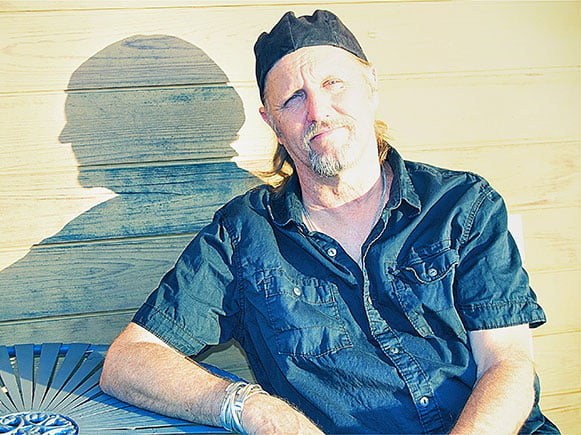
How It Must Remain: The Living Legacy of Jimmy LaFave (Op-ed)

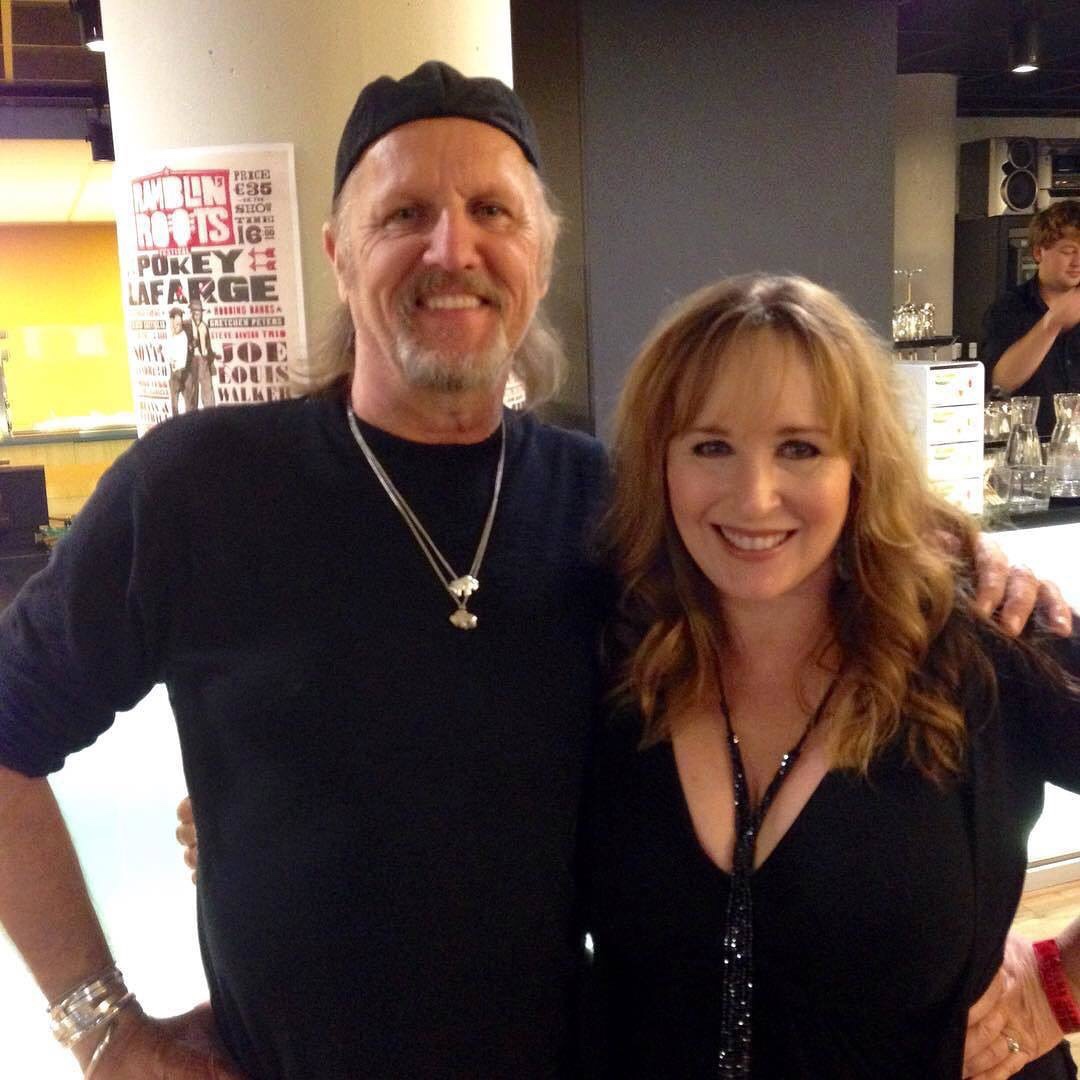
In light of the recent news that Jimmy LaFave has been diagnosed with a rare, terminal cancer, some of his friends have set up a GoFundMe page to celebrate and support him. Singer/songwriter Gretchen Peters also wanted to share a few words about her dear friend and cherished collaborator.

I love Jimmy LaFave. I love him as a friend and as a fellow musician, and I’d love him even if I hadn’t known him for the better part of the last 20 years. As a songwriter, I’ve been graced with not one, but two Jimmy LaFave covers (“On a Bus to St. Cloud,” which appeared on his Texoma album, and “Revival,” which came four years later on Blue Nightfall). Whenever I play in Texas, I always joke that the former is a Jimmy LaFave song which I just happened to write. That’s the power of his voice. I don’t know how many new fans have come my way via Jimmy’s recordings of my songs, but there’ve been plenty. Many of them admit apologetically that they thought “Bus” was a LaFave original until hearing him mention me from a stage somewhere. They don’t understand that I take it as a compliment. A singer like that can sing anything. I’m lucky my songs found their way to him; even luckier that we met, became friends, and ultimately collaborated with each other musically, too.

Our mutual friend, music journalist Dave Marsh, said of him, “Jimmy LaFave has one of America’s greatest voices. It’s a unique instrument with startling range and its own peculiar sense of gravity, liable to swoop in and wreck your expectations at any instant.” That’s as good a description as I’ve seen. You can usually trace the influences in a singer’s style, hear obvious DNA markers in his phrasing. With Jimmy, it’s as if he landed on earth from a distant musical planet, where syllables and notes appear in surprising and serendipitous places you’d never think to put them. His phrasing is all his own, his sense of melody and rhythm unique. Singing with him — one of my great joys — is a zen meditation.

Lots of people sing cover songs. Mostly, they’re derivative of the original version. Jimmy didn’t just open a door, in terms of interpreting other people’s (most notably, Bob Dylan’s) material; he blew out the windows and shook the foundation. This is how you tackle an iconic song like “Just Like a Woman”: You blow it apart like one of those exploded diagrams and then put it back together using your own architecture, an intuitive kind of red dirt Okie genius that knows what it knows and is so sure-footed that it sounds like the song was written that way in the first place.

Here’s who Jimmy is, musically: He’s dedicated a good part of his stage life to spreading the gospel of Woody Guthrie, singing Woody’s songs and gathering us — his many friends and co-conspirators — to join in and make a mighty noise on the Ribbon of Highway shows. He’s made a study of American song, and his choice of covers proves it: “Walk Away Renée” sits comfortably next to Dylan’s “Girl from the North Country” on the Austin Skyline album. And if that doesn’t convince you, I can personally vouch for the fact that Jimmy can sing American rock ‘n’ roll songs for two hours straight without a set list and never drop a lyric. I know, because we did that just last month. I’m in awe of the music that’s inside of him (I also never had a better time onstage). His devotion to the song as an art form is total — that’s what makes him a great singer and a great songwriter. For my money, his “Never Is a Moment” is his masterpiece.

Here’s who Jimmy is, personally: He’s a devoted friend. He’s one of the kindest people I know. He’s an empathetic soul who roots for the underdog. He’s funny, and sweet, and gentle. He’s humble to the core. Virtually no one I know has an unkind word to say about him.

Last month, while we were in Chicago doing a run of shows together, I watched him closely during his set. I wondered if I’d ever get another chance to hear him sing. I knew he was in some discomfort, and that his energy was flagging. Backstage, he was visibly tired. Onstage, he was emanating pure light. I’ve always been in awe of Jimmy’s ability to go right into the zone from note one, song one and stay there until the last encore. But watching him sing during those last couple of shows was like watching grace embodied. So rarely do we get to witness someone doing what they were born to do — fully committed to the moment, as if the moment is all there is.

I’m so sad and so sorry that Jimmy is, as he puts it, “on my way off the planet,” and, selfishly, that we’ll all be deprived of more Jimmy LaFave music. But watching him sing that night in Chicago, I thought that he is living the way I want to live: inside the song, inside the moment, not doing but being. He has already created so much beauty in this world. I can’t think of a better way to spend my own moments while I’m still here. And I can’t imagine a better legacy. Godspeed, my friend. There never is a moment that you are not on our minds.

3×3: Moonsville Collective on San Luis Obispo, Sriracha Mayo, and ‘Gran Torino’

Artist: Corey Adams & Ryan Welch (of Moonsville Collective)
Hometown: Long Beach, CA
Latest Album: Moonsville II
Personal Nicknames: We usually call Corey “Core” and Ryan “Ry.” I guess we’re too lazy to be bothered with an extra syllable. Matt is “Phantom,” as he wasn’t in any of our band photos for about two years. Dobro Dan is “Dobro Dan” because that’s who he is and what he plays. And Seth is “Tenney,” as his mom added her maiden name on his birth certificate to read “Daniel Seth Tenney Richardson,” though it has become more of a verb lately for some reason …


Pickin’ & Howlin’ @ojaideerlodge #ojaideerlodge #ojai

A post shared by Moonsville Collective (@moonsville) on

What song do you wish you had written?

CA: “Coffee Blues” by Mississippi John Hurt. He and this tune came along at the right time, a long time ago. He’s the real deal.

Who would be in your dream songwriter round?

CA: Lead Belly, Brownie McGhee, Gillian Welch, and Gary Arcemont — the scientist fiddle player from San Luis Obispo. That would be very satisfying. Proper storytellers, proper entertainers.

If you could only listen to one artist’s discography for the rest of your life, whose would you choose?

CA: Probably Bob Dylan. I bought Modern Times on CD when it came out a decade ago or so, and it just knocked me out. He gets a lot of shit for sounding old, but he is old. This record was as intriguing to me as Blonde on Blonde was the first time I heard it, and I know there’s plenty more in between that I can spend some time with.


Dobro Dan / Cow Strap Blvd. #studio #EPII

A post shared by Moonsville Collective (@moonsville) on

What was the last movie that you really loved?

CA: I don’t watch a lot of movies, but the last one that really hung around was Gran Torino. I’ve lived in the same neighborhood my entire life and, if I went into further detail about why the film is so great, I’d have to kick my own ass.

What’s your go-to comfort food?

CA: My wife’s vegetable soup is a warm jacket on a cold day. On the other end of the spectrum, McDonald’s original cheeseburgers.

Mustard or mayo?

CA: Do they not complement each other perfectly on any sandwich? There are days when I opt for the honey mustard. Sometimes it’s the sriracha mayo. The simplest things need not change.

How often do you do laundry?

RW: Whenever the hamper tells me to. I’m still trying to figure out what day is the least crowded down at the laundromat. 

If you could re-live one year of your life, which would it be and why?

RW: The year I was born, of course. I remember the world entrance light being so bright and beautiful and the swirling donkeys above my crib. The comfort of the rocking chair always eclipsed the discomfort of the diaper rash.

Which Whiskey is your favorite — Scotch, Tennessee, Myers, Shivers, or Gentry?

RW: Tennessee, I suppose. Scotch always gives me the shivers, Myers will help you meet the bailiff, and Gentry is just too high-class.

3×3: Ned Roberts on Big Bird, Berlin, and Bob Dylan

Artist: Ned Roberts
Hometown: London, UK
Latest Album: Outside My Mind
Personal Nicknames: Nedley, Neddy, if you’re not into the whole brevity thing.


Just chilling in the back garden with @rebeccacollingwood

A post shared by Ned Roberts (@nedrobertsmusic) on

If you had to live the life of a character in a song, which song would you choose?

I’ll say the Jack of Hearts from the long story song “Lily, Rosemary, and the Jack of Hearts” on Blood on the Tracks. He doesn’t quite get the girl at the end, but he does get the loot. I’ve always pictured it like a scene from Chaplin’s The Gold Rush.

Where would you most like to live or visit that you haven’t yet?

To live, San Francisco or, perhaps, Berlin. To visit, there are still too many continents and countries I’ve yet been to — India, South America. But actually, I think the Lake District is next.

What was the last thing that made you really mad?

The builders drilling and hammering right above my head this morning. Working at 8 in the morning, what is this madness?


That’s the 2nd largest pair of bellows hanging from pub ceiling I’ve ever seen.

A post shared by Ned Roberts (@nedrobertsmusic) on

Which Judd is your favorite — Naomi, Wynonna, Ashley, Apatow, or Hirsch?

I confess I had to look them all up, so I’ll have to get back to you on that.

Whose career do you admire the most?

The guy who’s been inside Big Bird for nearly 50 years.

What are you reading right now?

This year, I’m catching up on classics I should have read years ago. So it’s To Kill a Mockingbird, which to the surprise of absolutely no one, is really quite brilliant. I also just finished The Touchstone by Edith Wharton.


Broadway market putting on a big one.

A post shared by Ned Roberts (@nedrobertsmusic) on

Are you an introvert or an extrovert?

Both.

Whiskey, water, or wine?

Whiskey, then wine, then water. Reverse the process in the morning.

Facebook, Twitter, or Instagram?

I use them all for music, but I’m actually partial to Instagram …

The Producers: Cathy Fink and Marcy Marxer

Cathy Fink and Marcy Marxer have devised a clever game to play when they’re traveling — something to keep their ears sharp, when they’re away from their home studio outside Washington, D.C. “We’ll go into a room,” says Marxer. “Big room or small, it doesn’t matter. We’ll clap our hands and see if we can figure out what reverb setting we would need to copy that sound. It’s geeky all the way.”

The pair have visited a lot of rooms together over the years. For nearly four decades, they’ve been playing and recording and touring together: Fink is one of the best banjo players alive, and Marxer plays nearly everything else. They’ve released 45 albums covering a range of styles and set-ups, mostly folk and old-time, bluegrass and children’s tunes. Their latest, Get Up and Do Right, is their first collection of duets for two voices and two acoustic instruments, featuring a handful of originals and covers of songs penned by Alice Gerrard, Pete Seeger, and Bob Dylan.

Gently political and certainly timely, the album digs into folk’s enormous capacity for dissenting voices combining in beautiful harmony. For Fink and Marxer, making music is a way to get up and do right: an inherently radical act. Their DIY process extends into the studio, where they work as their own producers and, occasionally, their own engineers and mixers. Marxer is the more technical-minded of the two (see below for her favorite piece of equipment), while Fink is the conceptualist — the one who keeps the big picture in perspective. Together and separately, they have produced roughly 150 records, including Sam Gleaves’ 2015 breakout Ain’t We Brothers and Tom Paxton’s new album, Boat in the Water.

What unites this disparate catalog is a warmth of sound and an idea of music as a communal undertaking, a labor and a joy to be shared. “We both do many things and wear many hats,” says Marxer. “Sometimes we produce together and sometimes separately.” Adds Fink: “Even when we have separate projects, we have an open door with each other for what we call continuous consulting. It’s pretty hard for one of us to get involved in something where the other person doesn’t have some influence to make it better.”

How did you move into the role of producer?

Cathy Fink: We’ve both been playing music professionally since the early 1970s and, in the early days, I had the opportunity to work with some really great producers. Two who were very influential on me were David Essig and Ken Whiteley, both from Canada. Ken has produced probably 2,500 albums over the last 40 years. In both cases, I was a musician who was confident in what I wanted to accomplish, but didn’t feel like I had the knowledge to take my dream and get it on tape. By working with lots of producers I really trusted and whose music I enjoyed, I was able to pay attention to how they accomplished things. After a few projects like that, it was time for a transition, so I did an album where I co-produced. Marcy was involved, along with a lot of other people, and I bounced ideas off them. As we continued working together, we really relied on each other to the point where most of these things became co-productions.

Marcy Marxer: I started out very differently. When I was a kid, my dad used to go to the junkyard and collect wires and speakers and thermostats and things like that. He’d come home and give them to me to take apart and look at. When I was in the eighth grade, I built my first tube amp. That really developed the techno-geek side of my brain. Eventually, I got a job with Macmillan/McGraw-Hill producing 120 songs for an educational project. Since then, Cathy and I have been able to join forces, and it just mushroomed. We push each other to get better. We have a bit of a competitive streak, but it works in our favor.

It sounds like together you cover nearly every aspect of the recording process.

CF: You don’t need to be an engineer to be a good producer, but we found it so helpful to get those skills in order to better speak with the engineers we were working with. It really rounded out our abilities, and I’m in a better position to know what I’m looking for, how I might get it, and whether or not we’re getting it. In turn, we try to pass that along to other people. Our Grammys actually say Artist, Engineer, and Producer.

MM: It’s crucial to know every step, but it’s not crucial to do every step. It’s good to have a bigger team, people you trust, people who are fast at certain things, people who are the house painters of their field or the Rembrandts of their field. If we didn’t play and engineer and produce and mix, I don’t think we could efficiently speak with the other team members.

CF: We do lots of projects that we don’t engineer on. The reason we started engineering really had to do with a combination of convenience and health issues a long time ago. We wanted to do these things at home and at our own convenience. When you’re traveling as much as we do, we would sometimes book a date in the studio, and then the day would come and, oh man, we’re just too tired to do that today. So we learned to do our own tracks and our own overdubs at home. It gives us a whole new way of producing our own projects. Time is a big factor, so if we have two weeks to make an album, we’re not going to sit in the studio with all of the crayons and start creating the painting. We’re going to visualize the painting before we go in, and then we’re going to take the right steps to make it happen. When we do it all at home, we have the opportunity to take out all the crayons and try out different colors. We might do a take with different banjos or different harmonies and decide which one works better for a particular track.

Is that how you made Get Up and Do Right?

CF: Most of it was recorded in our home studio. There were two tracks recorded live at AirShow, and there are two tracks recorded at Jim Robeson’s studio. We wanted to do those tracks live, but didn’t want to have to deal with the mechanics of being engineers at the same time. Everything else was done at home, sometimes live, sometimes overdubbed, but always with the feeling of, “This is what it sounds like when we play together.”

MM: The great thing about the studio at home is that all of my instruments are here. When I’m working on other people’s projects, I might be doing some overdubs or filling some holes, and I’ll just fill up the car with instruments and see what I can do to finish it up. If I didn’t bring an instrument with me, then I can’t use it. So it’s much easier having everything in one place.

CF: We don’t have to think ahead to which five guitars we might need. If we’re at home, we can go, “What this song really needs is the electric baritone guitar,” and we can run and get it. But if we’re at someone else’s studio, too bad. We recently produced Tom Paxton’s newest album, and we worked with our engineer Jim Robeson at his studio. Tom did all of his tracks there, and a lot of other people came in, but when it came time to do our own tracks, we decided to do them at home. Another example is the project we did called cELLAbration!, which was a tribute to Ella Jenkins that includes an amazing array of artists, including Sweet Honey in the Rock, Red Grammer, and Riders in the Sky. I’d say about 60 percent of that album was done in a variety of commercial studios and about 40 percent was done at home. It’s a really fun way of filling out the whole puzzle.

Something that strikes me about your new album and Paxton’s new album is how rich and complex the instruments sound.

MM: We mic all the instruments in stereo. We almost never single-mic an acoustic instrument because we want it to sound like we’re listening with both of our ears. Both of those albums are so sparse, and you really want to hear all the detail. If something was going to sound really big, we might be inclined to leave it off. We want you to feel like you’re sitting in a living room with us — a really nice-sounding living room.

CF: We don’t have a giant collection of gear, though. What we’ve found is that we’re very good at using a handful of things, so we stick with a couple of mics that sound fabulous. We know how to deal with them, and sometimes we’ll cart them around, if we go to another studio. What you’re most familiar with is usually what you’re going to sound best with. I just have to give a huge amount of credit to Greg Lukens and Jim Robeson for the incredible tutelage they gave us. There aren’t a lot of female engineers who are well known, and we’ve certainly worked in a lot of studios where it was assumed that we couldn’t possibly know what we were talking about. But Greg and Jim really empowered us to do all of this stuff for ourselves.

MM: Every once in a while, I’ll be working with an engineer that I might not be very familiar with, somebody that I might not have a lot of faith or trust in or just might not know very well. If there’s a man in the room, then all the production questions will be addressed to him instead of me. It seems impossible in this day and age, but it does happen. I’ve stopped working with people like that, people I don’t absolutely trust. I’m not the kind of person who will put my foot down and demand something. Cathy is a little bit better at that, but I just try to avoid those people.

You seem to be at the center of a very large musical community, which reflects in the music itself — not just who’s on the record, but how those people interact.

CF: It is a very large, very close musical community in the D.C. area. One of the advantages of working in a place like this is that, when people think of where the hotbeds of music are in the United States, they may pinpoint New York or Los Angeles or Nashville. But in D.C., there isn’t such a competitive atmosphere. When I moved to town, I was welcomed into the world of session players and there wasn’t really a hierarchy. Musicians are very supportive of each other, and the engineering world, in particular, is not competitive at all. If one person has a problem, everybody’s going to help them out.

The other thing is, we have a pretty active touring schedule both nationally and internationally, so we’ve had a good time making that community even bigger. Twenty-two years ago, we played at the Auckland Folk Festival in New Zealand, where we met a couple of musicians that we’ve remained friends with all these years. One of them is Chris Newman, and the other one is a traditional harp player named Máire Ní Chathasaigh. We’ve played on their records through the magic of the Internet. And we just got back from a UK tour, where we did 10 days with Tom Paxton and then a week in the Orkney Islands in Scotland. Talk about off the beaten track. Our friends Hazel and Jennifer Wrigley have spent 10 or 15 years touring nonstop around the world as a fiddle and guitar duo playing traditional Scottish music. They’re just spectacular. They settled back in their home of Orkney to open up this place called Wrigley and the Reel, which is a music shop, café, venue, and educational facility. We’ve played on their records and, when they come to the States, they stay with us. So the community just gets larger and larger.

MM: We also find that when we meet other producers and engineers, they’re thrilled to discuss equipment and show you their gear. It can get pretty geeky. And if you’re wondering, my favorite preamps are simple and easily accessible. They’re APIs, and we use a full preamp rack mount that would sell online for $2,500 or something like that. They’re absolutely clear, beautiful, pristine sounds.

CF: We do get buried in the geekiness, but we try not to forget that what we’re really doing here is using the medium as a way to share the music that we love. When we produced Get Up and Do Right, we wanted to use all that gear to highlight the music — the feeling of the music and the message of the music. There is always something to discover and that’s what makes it fun.

MM: I’ll tell you two of my favorite recordings. One is Cowboy Calypso by Russ Barenberg. The vinyl sounds absolutely gorgeous. The other, which was done digitally, is John Fogerty’s Blue Moon Swamp. And anything Gary Paczosa produces always sounds beautiful.

There is something very direct about the music on this album, something very refreshing about its optimism during hard times.

CF: We have to stay optimistic. On our tour of the UK, we played to about 4,500 people, and the song “Get Up and Do Right” was a rabble-rouser every single night. It’s a song we loved, when we heard it two years ago and, when we recorded it, no one thought Donald Trump was going to win the election. We just knew that it was a great daily meditation, but we didn’t realize that it could be this ultimate rallying cry. I just finished a down-and-dirty video for the song that’s based on pictures that people sent us from marches all over the world. We went to a march in Kirkwall, in the Orkneys, a very tiny place, and the first night we’re there, there’s a vigil in front of the local church. We were very welcomed. When we got there, Marcy announces, “We’re Americans and we’re with you!” That got a big cheer, and we made a bunch of friends. It feels like our job every day is to get up and do right. Do the best we can to make the Earth a good place to live. Negativity breeds negativity. Action breeds positivity. Rather than get bogged down in the negative stuff, we’re just going to continue to get up and do right.

MM: Cathy and I are old enough to have lived through the civil rights movement, so we’ve done this before and we’ve come out better than we were for it. My parents went to marches, and it was really the music that kept us moving forward. It was the music that brought everyone together and kept us going. This was back when you used to have to dress up in your Sunday clothes and your Sunday shoes for a march. For a little kid, that’s not easy. But music gave us support and energy. Something happens when everybody is singing at the same time. They all take a breath at the same time, and that’s power. It’s real power.

Can you tell me how that sense of social responsibility informs your children’s music, especially the Children of Selma album from 1988?

CF: Children of Selma is a project that I still deeply love. I was brought to that project by Jane Sapp who was, at the time, working with the Highlander Center. That’s the place where Rosa Parks went for a workshop two weeks before she wouldn’t go to the back of the bus. Jane had met a woman named Rose Sanders who had worked with a group of kids after school in Selma. Rose is a civil rights attorney, but her purpose was to give the kids something useful to do after school. She turned out to be quite a prolific and incredible songwriter. I went down there and we went to an old YMCA or community center, where there was an out-of-tune piano, and Rose gathered the kids around to sing a bunch of these songs. I was blown away by the spirit of these songs and by the magic that happened when she engaged the kids who were singing about their real lives. One of the songs that comes back to me every election is “Vote for Me Until I Can.” That project was a big challenge: I had to go to a location where I didn’t know anyone and I didn’t know how to take a group of kids, who had never recorded before, into a studio. But the important part was taking their message to a bigger audience. Even though, commercially, it’s one of the least successful things I’ve done, in my heart, it’s one of the most important projects I’ve ever worked on.


Photo credit: Michael Stewart