Don’t Call Me Darlin’ Joins BGS Podcast Network

The BGS team is excited to announce yet another addition to the BGS Podcast Network lineup for 2026, after Folk Files, The Other 22 Hours and the Working Songwriter came on board earlier this year. On October 19, 2026, a new podcast titled Don’t Call Me Darlin’ will join the BGS family. This makes the 16th show to partner with or be produced or distributed by the BGS Podcast Network. (Hear Episode One.)

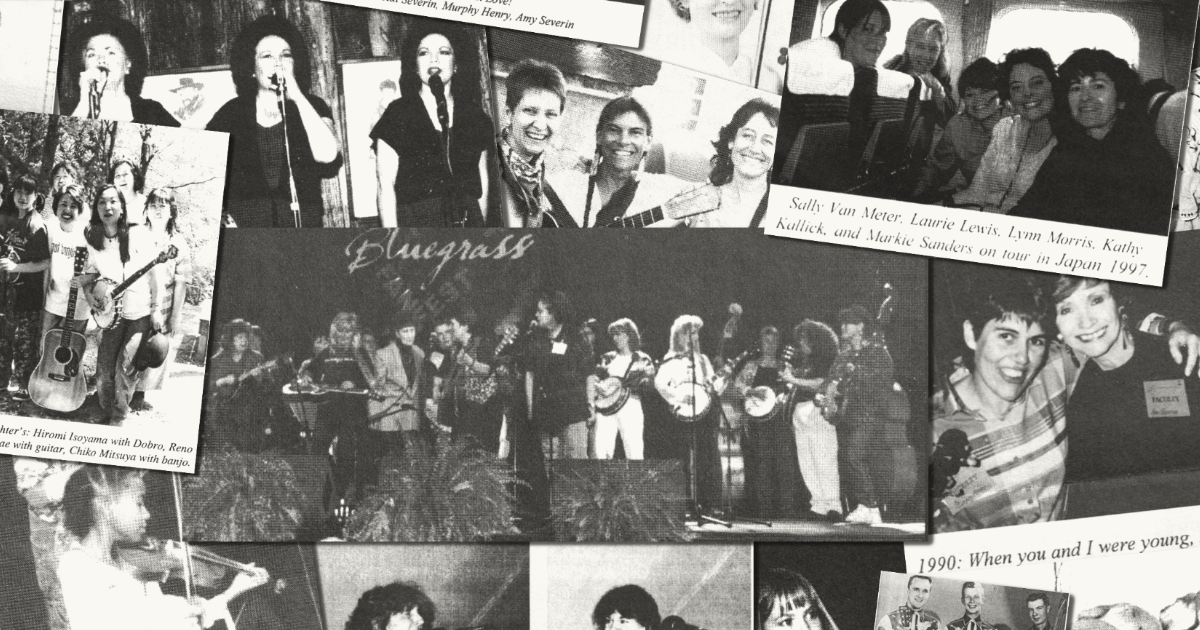
Before social media, the women of bluegrass had a bright blue newsletter that showed up in the mailbox and said what no one would say out loud. In Don’t Call Me Darlin’, host Carolyn Kendrick and co-creator Tristan Scroggins hit the road to find the women Murphy Henry profiled decades ago, in a story about genre, identity, feminism, and the communities we built before the internet.

Powered by RedCircle

LISTEN: APPLE • SPOTIFY AMAZON • REDCIRCLE •

What can our foremothers teach us about how to challenge the system? And when should we challenge our own expectations? In conversations with legends such as Alice Gerrard, Kristin Scott Benson, Laurie Lewis, Missy Raines, Alison Brown, Rhonda Vincent, Sierra Hull, Bronwyn Keith-Hynes, and many more, our hosts learn how tradition can bring community together and how it can break it apart. Join Carolyn and Tristan on their road trip as they explore the paradoxical world of bluegrass: an American art form with American problems, strengths, and growing pains.


Don’t Call Me Darlin’ is based on the Women in Bluegrass newsletter that was published quarterly from 1994–2003 by Murphy Hicks Henry. More information about Murphy, including how to purchase her book Pretty Good for a Girl: Women in Bluegrass, can be found here.

Read the Women in Bluegrass digital archive, created by Tristan Scroggins
To help support the archive, consider making a tax-deductible donation

For more information on our hosts and their other ongoing projects, please visit:
Carolyn Kendrick
Tristan Scroggins
Follow Don’t Call Me Darlin’ on social media
Interested in sponsoring us? Contact BGS
Underwriting Inquiries

Don’t Call Me Darlin’: Lost Girl

As a full-time musician living in Los Angeles, Carolyn Kendrick has a complicated relationship with bluegrass music. Despite years of experience and a deep connection to friendships formed in the community, Carolyn often thinks of herself as an outsider in the broader, male-dominated, and generally conservative genre. As life becomes more and more digitally saturated, the nostalgia-rich trappings and communal values of the bluegrass community speak to Carolyn as she finds herself yearning for a more grounded, unplugged time. She loves the music but is confused by how it fits into her sense of self.

She suddenly discovers that this internal friction is more common than expected when co-creator Tristan Scroggins shows her a collection of rare, feminist newsletters circulated in the ’90s by women who played bluegrass. These bright blue, hand stapled, self published newsletters contain nearly a decade of interviews, correspondence, and fellowship between women as they attempt to navigate and influence the genre.

As Carolyn explores these stories, it becomes clear that not only have women faced similar challenges since the music’s beginnings, but that previously gendered opportunities have gotten noticeably better in recent history. So why do the names and stories seem so unfamiliar? These questions lead down a rabbit hole as Carolyn and Tristan get in the car and drive to Virginia to interview Murphy Hicks Henry, the creator of the newsletter. Along the way they visit with friends, go to museums and festivals, interview friends, and re-interview the women from the newsletter to see what they think about the progress that has been made. All while recording to make this podcast.

Despite being a show about a newsletter about bluegrass, the show itself isn’t “about” bluegrass. It’s about community and what it means to be an insider. It’s about how tradition can bring us together but what happens to who gets left out. It’s about what we can learn from our elders and why we shouldn’t wait to ask them. It’s about women and their lives and what we can learn from them.

In this episode, you heard the voices of legends of bluegrass in the following order: Kathy Kallick, Missy Raines, Laurie Lewis, Maddie Witler, Murphy Henry, Dede Wyland , Lucy Singleton, Rhonda Vincent, Lisa Kay Howard, Sierra Hull, Kristin Scott Benson, Joselyn Skye, and Alison Brown.

Powered by RedCircle

LISTEN: APPLE • SPOTIFY • AMAZON • MP3


Don’t Call Me Darlin’ is based on the Women in Bluegrass newsletter that was published quarterly from 1994–2003 by Murphy Hicks Henry. More information about Murphy, including how to purchase her book Pretty Good for a Girl: Women in Bluegrass, can be found here.

Sources and citations for today’s episode.
Read the Women in Bluegrass digital archive, created by Tristan Scroggins
To help support the archive, consider making a tax-deductible donation

For more information on our hosts and their other ongoing projects, please visit:
Carolyn Kendrick
Tristan Scroggins
Follow Don’t Call Me Darlin’ on social media
Interested in sponsoring us? Contact BGS
Underwriting Inquiries

Photo Credit: Carolyn Kendrick

Basic Folk: Carolyn Kendrick

Carolyn Kendrick’s latest project explores complex themes of moral panic, tradition, and the figure of the devil (AKA Satan, AKA Lucifer). The LA-based songwriter opens up about the inspiration behind her album, Each Machine, which is accompanied by a thought-provoking zine. In our Basic Folk conversation, she discusses the significance of the color red in her work, symbolizing themes of anger, danger, and familial ties, and how it contrasts with the black and white imagery used throughout the project.

Carolyn also shares her unexpected journey into researching the devil, sparked by a podcast project that ended up overtaking her life, leading her to interview the leader of the Satanic Temple, among many others. This deep dive into the topic became a way for her to process the overwhelming political and cultural landscape. She candidly discusses the challenges of maintaining balance while being consumed by such a heavy subject matter (spoiler alert: she did not maintain balance at all).

LISTEN: APPLE • SPOTIFY • AMAZON • MP3

We also touch on Carolyn’s work in podcasting (You’re Wrong About, You Are Good) and how it has influenced her approach to music. She reflects on the importance of integrating culture and music, creating a world-building experience that connects various aspects of her life. Carolyn’s creation of the Gender Equity Audio Workshop, along with co-producer and Each Machine collaborator Isa Burke, highlights the power of women supporting each other in the music industry, fostering an environment where questions can be asked without fear of judgment.

She expands on her exploration of traditional songs through a devilish lens, which allowed her to examine how their meanings shift when viewed in this context. She also discusses her dual versions of the hymn “Are You Washed in the Blood,” inspired by Naomi Klein’s book ‘Doppelganger,’ and how they represent different facets of her musical identity.

Throughout this episode of Basic Folk, Carolyn Kendrick offers insights into forgiveness and harm, emphasizing the need for solution-focused actions in today’s society. Our chat concludes with a fun and quirky Satan-themed lightning round, where Carolyn shares her favorite pop culture depictions of Satan and imagines a music festival in hell. The devil is fun again!


Want more Carolyn Kendrick? Read our recent exclusive feature interview here.

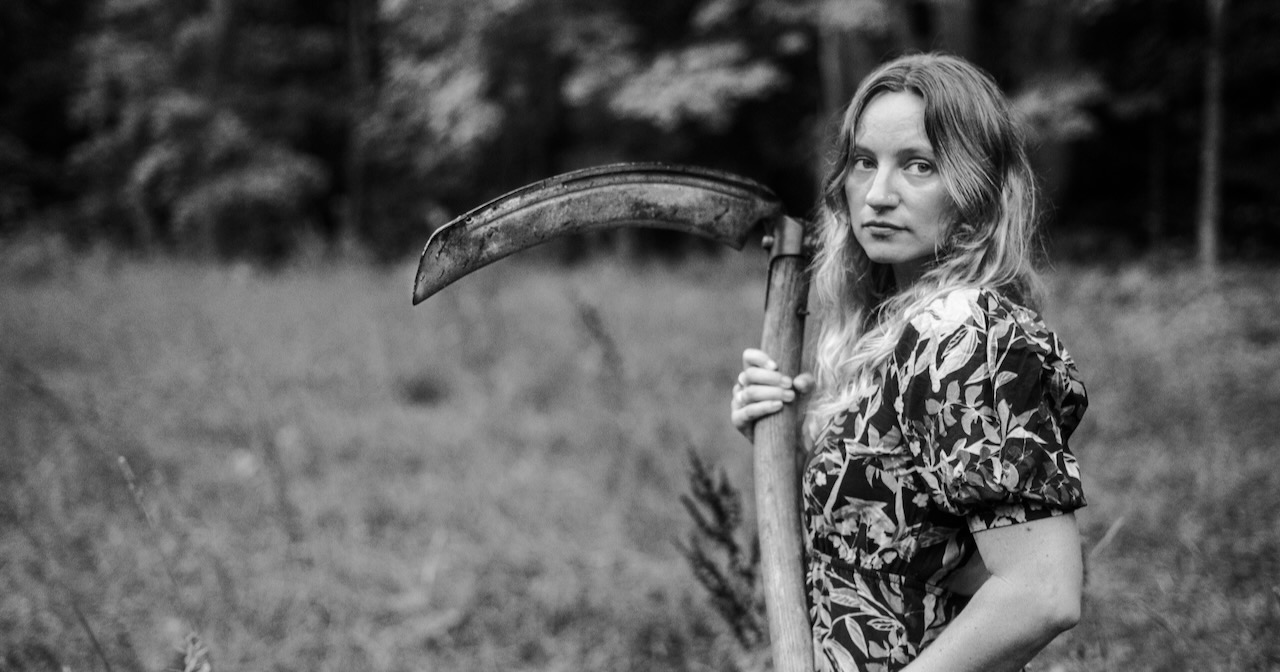
Photo Credit: Alex Steed

Carolyn Kendrick Takes on the Devil, Moral Panics on Her New Album

Carolyn Kendrick is known among folk and roots fans as a fiddler with legitimate trad bona fides and as a singer-songwriter prone to introspective, observational songwriting. In the podcast zone she has carved a place as producer, researcher, and composer for several shows, including the award-winning You’re Wrong About podcast hosted by Sarah Marshall and Michael Hobbes.

In fact, it was while Kendrick was researching the “Satanic Panic” of the 1980s for an episode of You’re Wrong About that she became obsessed with cultural panics in general. That obsession ultimately led to her haunting new album, Each Machine, which released December 6 on Occulture Records.

Last month, from her home in Los Angeles, Kendrick explained the album’s genesis.

“I’ve been thinking a lot about lineage and tradition lately,” she says. “… I’ve been thinking of all of these songs that have these deep traditional roots, that I’ve been listening to and learning and singing around campfires with, you know, friends at bluegrass festivals and folk festivals for years and years and years.”

The songs that were standing out to her all carried some darkness, a little shadow of the devil. She started wondering what might happen if she decided to reinterpret some of them in a way that asserted her personal instincts. “That includes things like more electric instrumentation, more sound design, more world building,” she says. “Not for it to sound inflated, but what if it was part of a more extended concept rather than just, you know, individual songs?”

To explore these curiosities, she enlisted the collaboration of her friend, multi-instrumentalist, and fellow Berklee grad Isa Burke (Aoife O’Donovan, Mountain Goats) to help her flesh out the sonic landscapes that are sure to envelop Each Machine’s listeners in a creepy, devilish fog.

Indeed, the album’s swallowing darkness even pervades on deceptively welcoming songs like “Sumer (Sing Cuckoo)” –sung here in the traditional round, a cappella except for some decidedly spooky timpani wallops. As a result, and in the context of so many songs about the devil, the duo’s approach feels particularly untouchable, like the story of a photograph of a memory of lighter times.

Then again, Kendrick felt compelled to include it amid her exploration of panic. As if to say: Perhaps the light is gone for now, but the nature of summer is that it returns.

To that end, she notes: “It was really, really fun to be able to take these older songs that have such a rich lineage and reinterpret them with the lens of … the issues that we’re going through as a people right now.”

This side of the 2024 election, most topical interpretations are probably incidental – she wrote the album long before votes were cast. But, while Each Machine implies a general warning about what happens when humans become wrapped up in an historical moment, it also becomes specific, for at least one track, on the topic of women’s health.

Track nine is a spoken-word piece Kendrick has titled “Sugar and Spice.” For fifty-five seconds, the listener is treated to a collection of recordings about what it is to be a woman in America. From the nursery school rhyme from which the track gets its name to a news report about the overturning of Roe v. Wade, the track ends with a distant crowd of protestors chanting about abortion. This is followed by the artist’s take on the trad song “Wind and Rain,” about a pair of sisters competing for a man’s attention: In pursuit of her prize, the one shoves the other into a river to drown.

Kendrick isn’t wasting anyone’s time being subtle about her views here. Then again, where’s the room for subtlety amidst panic?

As The New York Times reported in 1994, the Satanic Panic encompassed “12,000 accusations of group cult sexual abuse based on satanic ritual.” The same Times article clarified that none of these events seem to have actually occurred, but the fear they provoked in the public was definitely real. As a folk singer drawn to moments of cultural import, digging into the Satanic Panic caused Kendrick to consider the way these “panics” might be connected.

That she tied in songs about the devil; ruminations on a view of Earth from space; what womanhood requires of us; and even the poetry of Rainer Maria Rilke means this is not an album meant to be background music. To be sure, the musicianship and arrangements are lovely, but the spoken word bits are necessarily jarring.

Over and over, the disc interrupts itself with interludes that pull one’s attention back – from feeling to meaning – before moving into another song. This tennis match between the heart and the head reaches its apex about halfway in, when Kendrick pivots between two separate recordings, “Are You Washed” and “In the Blood.” Between them sits a spoken word piece (the title track) which feels intimidating and disorienting.

Her decision to include two interpretations of the one song was inspired by Naomi Klein’s Doppleganger. That book, Kendrick explains, “really changed how I’m thinking about how we receive information.”

“As Americans,” she adds, “our media diets are so different and atomized from one another. And there’s also this confusion within the conspiracy landscape that we live in right now. … How can we be receiving the same information and interpreting it so differently? … [So that song is] an experiment. How do I approach one thing and look at it from all different angles? And how will that make me feel differently?”

Indeed, Each Machine is clearly trying to get through a whole lot of questions. And in just eight songs, it somehow achieves its goal. In addition to the questions already mentioned, there’s the Satanic Panic of it all. What, then, does fear – of the devil, of freedom, of technology, of one another – teach us?

As she sends Each Machine out into the world, Kendrick is clear that the lesson she learned is that she’s grateful to have a creative outlet to help her find light in darkness.

“I had been going through all of this really difficult subject matter,” she says. “… I had so many feelings of distress and worry – and also of hope. [I was in] this flurry of all the big emotions that we go through [when] we’re dealing with reality. I needed a place to put all of my feelings about moral panics, I guess.”


Photo Credit: Alex Steed
LISTEN: Carolyn Kendrick, “Break of Day”

Artist: Carolyn Kendrick
Hometown: Nashville, Tennessee
Song: “Break of Day”
Release Date: November 4, 2022

In Their Words: “During the time of a cross-country move, I started waking up uncharacteristically early, feeling a lot of apprehension about what my future would look like. I wrote ‘Break of Day’ very literally at the break of day, early in the morning on one of those anxious mornings. Writing this song was one of those magical meditative moments where everything that has been simmering in the subconscious comes to the forefront and flows out all at once. It’s vulnerable to admit your fears, hopes, joys and frustrations held in life, especially to yourself. This song is near and dear to me, in that writing it unlocked my ability to be honest with myself. Recording ‘Break of Day’ was a joyous occasion, with some of my oldest friends and musical colleagues in a gorgeous studio in rural Maine. I think the intimacy and solitude of the recording process lent itself to the song beautifully.” — Carolyn Kendrick


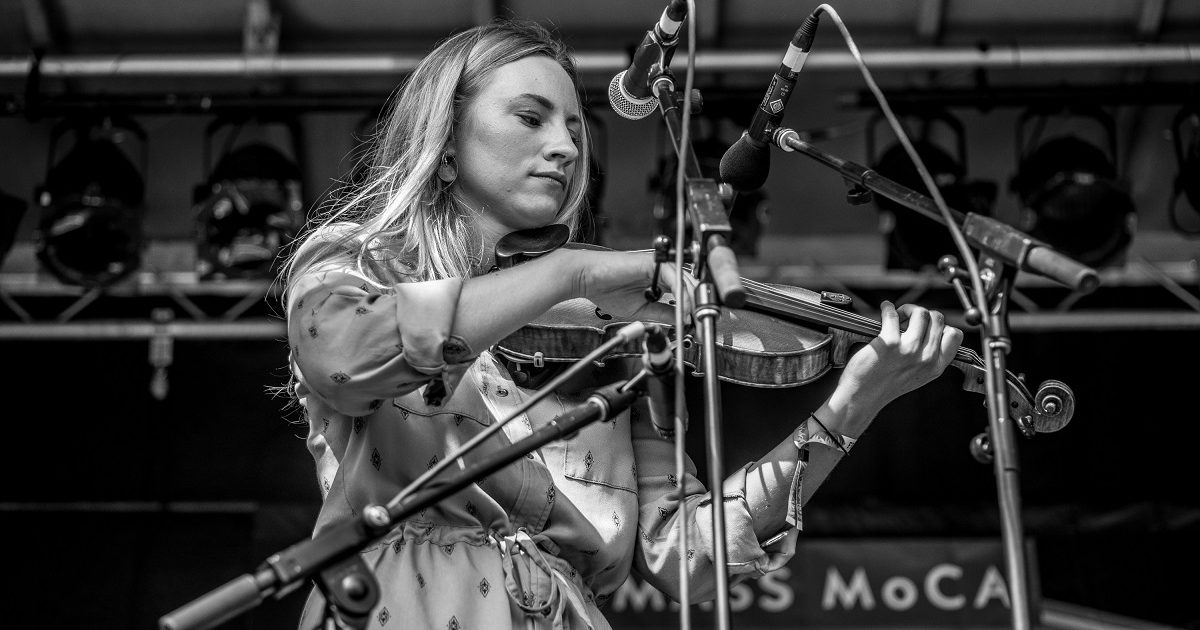
Photo Credit: RedLineRoots