Rhonda Vincent Brings New Perspectives, Special Guests to A Possibility

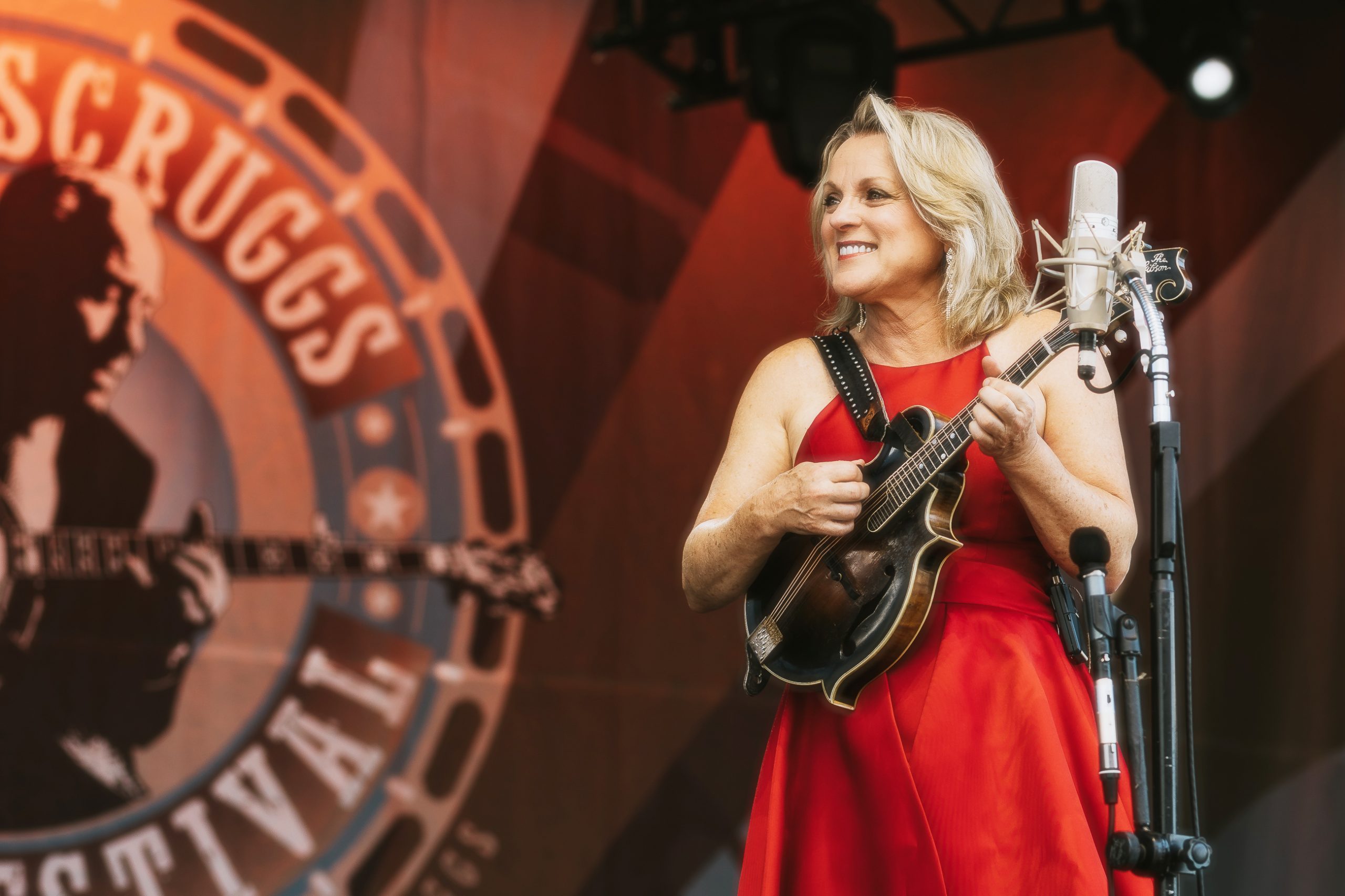
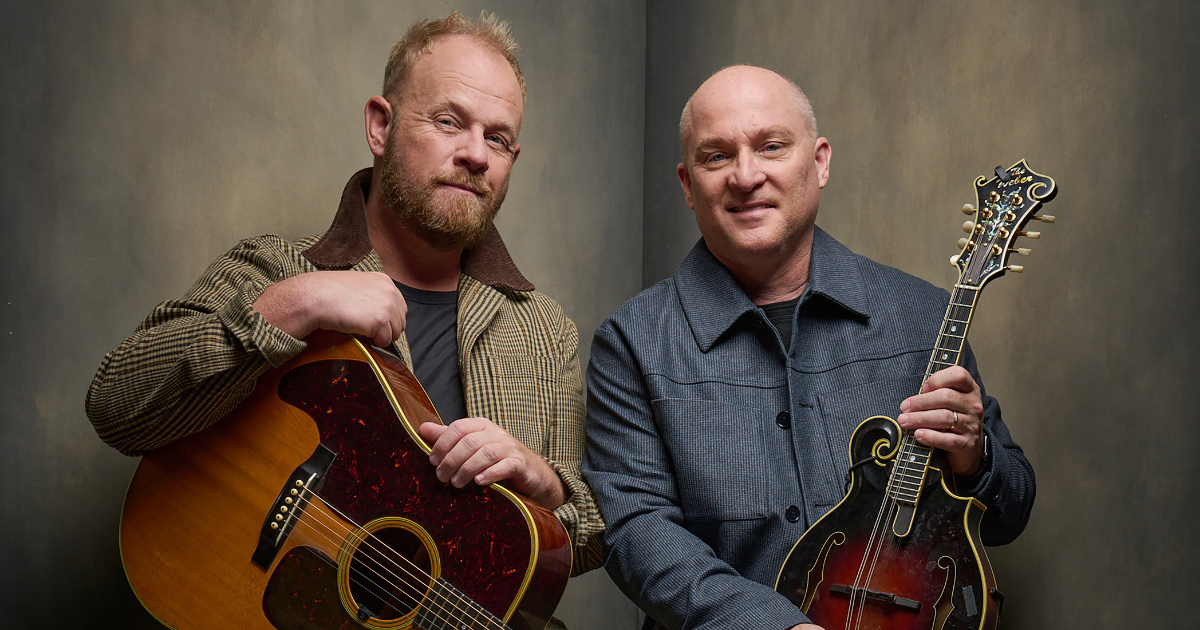
The undisputed Queen of Bluegrass, Rhonda Vincent, returns with a studio album of original and newly recorded material that demonstrates the unwavering command of her craft, while shining a light on a new cast of musicians who helped shape this project into something she didn’t foresee.

Talking with Vincent on the phone between her shows at Dollywood, we learn about the process behind writing and tracking A Possibility, a project that sidesteps her usual rituals. Partnering with co-producer Adam Haynes, who also plays fiddle in her touring band, Vincent says, “I loved working with him. There’s a calmness about him, and that calmness carried over into the creative process. Going into this album, I didn’t expect him to become a co-producer, but that’s what happened.”

Combining their respective stashes of vintage microphones and recording equipment, then outfitting a new space with pleasant furnishings, Vincent and Haynes created a studio atmosphere that felt as much like home: “One day I hauled in a couple of recliners because I realized we had all this amazing equipment, but nowhere comfortable to sit.” Haynes also encouraged her to reach out to Dan Tyminski, who sings on the album’s title track.

In her earnest, Midwestern way, Vincent may describe her own creative process as “willy-nilly,” yet it’s clear that every choice is thoughtfully made in the interest of making honest, sustainable work that speaks for itself, with the ability to move audiences near and far. A Possibility is no exception.

BGS: What was the process of cutting this record? I’m also wondering if you have a certain “religion,” so to speak, that you live by in terms of when, where and how you cut records.

Vincent: If you follow me around for very long, you’ll see that my process is pretty sporadic. I’m actually very organized. I know where everything is, and I have a plan in my head, but from the outside it probably looks chaotic. A lot of it starts with an idea, then I just start building from there. Most people come off the road and spend two or three months writing. I’m usually on the road, working, performing, and trying to fit everything in around that schedule; so, my process is probably more chaotic than most. That’s just the way I’ve always worked.

This project was different, though. We probably started thinking about it in January. We had just come off 84 Christmas shows in 30 days, which took us right up to January 4. Knowing we wanted to start a new record, we gave ourselves a little bit of breathing room. We jumped back on the road quickly, but there was a gentler start to this project than usual.

Is there a certain way you like to write songs—on mandolin, guitar, or does it move around?

Yeah, I don’t really consider myself the kind of person who sits down and decides to write a song. Most of my songs come from inspiration. “A Possibility,” the title track, happened when we were getting ready to leave on the bus. I was carrying the trash down to the corner and walking back when I looked up at the sky. It was unbelievably clear, full of bright stars. I just started singing and thinking, “I wonder if this star talks to that star.” By the time I got back on the bus, I was still singing, and that eventually became “A Possibility.” I guess I’m more of an inspiration writer than anything else.

I sent Dan a message [about singing with me] and didn’t hear anything back. A little later we were playing the same festival. I saw him sitting outside his bus in a lawn chair, so I walked over. Honestly, I was thinking maybe he didn’t like the song because I hadn’t heard a word. Before I could even ask, he looked at me and said, “People are sick of your song on the bus because I’ve listened to it over and over and over and I’ve been singing along to it. I can’t wait to record it”. I thought, ‘Well, that’s a pretty good sign.'”

Then there’s “Vesper Thompson,” which is about my great-grandfather. The story behind that song is true. He had two children with his first wife, and then she left. In researching the family history, I went back and found the actual records, and Aladyne was the woman’s real name. My great-grandfather worked in a coal mine in Novinger, Missouri, not Queen City. Adam helped me write the song, and he used Queen City because it’s closer to where I’m from and it fit the rhyme.

As the story goes, the mine owner sent his daughter, Aladyne, to stay with him. I’d never even heard the name Aladyne before. What I didn’t include in the song is that she eventually became pregnant. The two of them went on to have six more children together, and one of those children was my Grandpa Charlie, my mother’s father. He passed away when I was eight years old. I remember going to his house, and what stands out most in my mind is this big ashtray and his pipe. I can still picture him sitting in the front window, smoking his pipe.

When he died, my mom took me up to the casket at his funeral. It affected me deeply. I remember thinking afterward, “I don’t ever want to make my kids go through this.” She also took Polaroid pictures of him in the casket, and I had nightmares about those photos for the longest time. Even so, those memories stayed with me, and somehow all those years later, I ended up writing a song about him.

I love “Would You Like to Buy Some Flowers” with Sierra Ferrell, and the Carter Family nature of its arrangement. Did you record that together in the studio?

No, we recorded the track and sent it to her. Along with it, I included a note that basically said, “Whatever you’re thinking, just go for it.” I assumed she’d approach it the traditional way. I thought I would sing the first verse, she’d take the second verse, and we’d sing the chorus together. But she took it in a completely different direction. I sang the first chorus, then she came in on the verse, and after that we started singing together. When I heard what she had done, I thought, “Wow, I never would have come up with that.”

That’s one of the things I loved about working with all these different people on the album. Everybody brought their own ideas and their own perspective to the music. A lot of the time, they came up with things I never would have thought of myself, and the songs ended up being better because of it.

Have you started performing the new songs?

Yes we are. The first one we performed was “Even If I Tried” at Bill Anderson’s 65th Opry anniversary celebration. Bill Anderson, Bobby Tomberlin, and Will Jones wrote that song, and to get a brand-new, unheard song from Bill Anderson was incredible. He’s been writing hit songs for decades and is a member of the Songwriters Hall of Fame, so I could hardly believe I was getting a song from him.

We debuted it on the Opry almost as soon as it was finished. The harmonies had been recorded the night before. Jamie Johnson from The Grascals sang on it, and I think it was the very day of the performance that I called Ben Isaacs because we needed a third harmony part. I said, ‘Ben, could you put a harmony on this?’ It turned out he was on the Opry that night too. He came in that afternoon, sang the part, and then we walked onto the Opry stage and performed the song that night before it had even been released. That’s the way a lot of things happen for me, kind of willy-nilly, but somehow, they always come together.

Right now, we’re at Dollywood for five days, and this is our fifth day here. We’ve done ten shows this week, and by now I think we’ve performed almost every song on the album at least a few times. We’re just working them into the sets here and there and seeing how audiences respond.

Yesterday we performed “Far Away From Home.” I’ve been using my phone to pull up lyrics when we’re introducing some of the newer songs, but this time my phone wouldn’t bring them up. We ended up going ahead and doing the song anyway, and we got through it without needing the lyrics. I was happy about that! As of today, I believe it’s been the No. 1 song on Bluegrass Today for its second consecutive week.

Congratulations! How did “Even If I Tried” arrive to you? Did they have a demo or were you left to construct some of it yourself?

Well, that’s the crazy thing. Bobby Tomberlin texted me that song at 11:30 one night. I was half asleep, and normally I would’ve waited until the next morning to listen to it, but something made me hit play right then. He said, “Bill and I have written a new song,” and that immediately got my attention. I listened to it, and the whole thing was about smoking, drinking, and cussing. Well, I don’t smoke, drink, or cuss. So, I texted Bobby right back. I said, “I love the song, Bobby, but can you make this a little more relatable to me?” I told him, “I don’t smoke, drink, or cuss, and it feels very male-oriented.”

They got together the very next day and customized it for me. They changed the lyrics and worked in things like exercise and shopping instead. So, I ended up with what was basically a custom-written song from Bill Anderson, which is pretty cool.

It certainly sounds like they were thinking of you when they wrote it.

Bill told me he thought of us when he wrote it, but I had no idea the kind of impact it was going to have. Before it was released, we performed it at Gettysburg in August. After the show, a man came up to me crying uncontrollably. At first, I didn’t know what he wanted because he couldn’t even compose himself enough to speak. When he finally did, he said, “That song. I have to have that song.”

I told him, “Well, it’s not out yet.” He said, “You have to teach me the chords. I have to have the words.” Then he told me his wife had battled cancer four different times. He said, “I have to sing it to her and tell her it’s for her.” I still get chills just talking about that encounter.


Photo Credit: Linden Stackley
Industrial Strength Bluegrass Sessions: Larry Sparks, Rhonda Vincent & More

Bandwagoners, have we got a treat for you: four exclusive videos featuring performances from some of the most legendary voices in bluegrass, all filmed at the Industrial Strength Bluegrass festival in Wilmington, Ohio.

Industrial Strength Bluegrass – founded by renowned radio host and musician Joe Mullins – won Event of the Year from IBMA in 2022 and 2024. Featured artists from this series include Larry Sparks, Rhonda Vincent, Pitney Meyer, and Nothin’ Fancy.

This post is an exclusive for members of the BGS Bandwagon

Subscribe to get unlimited access to bonus content, merch gifts, access to exclusive giveaways, festival pre-sales, and more.

Already a member? Log in here

Don’t Call Me Darlin’ Joins BGS Podcast Network

The BGS team is excited to announce yet another addition to the BGS Podcast Network lineup for 2026, after Folk Files, The Other 22 Hours and the Working Songwriter came on board earlier this year. On October 19, 2026, a new podcast titled Don’t Call Me Darlin’ will join the BGS family. This makes the 16th show to partner with or be produced or distributed by the BGS Podcast Network. (Hear Episode One.)

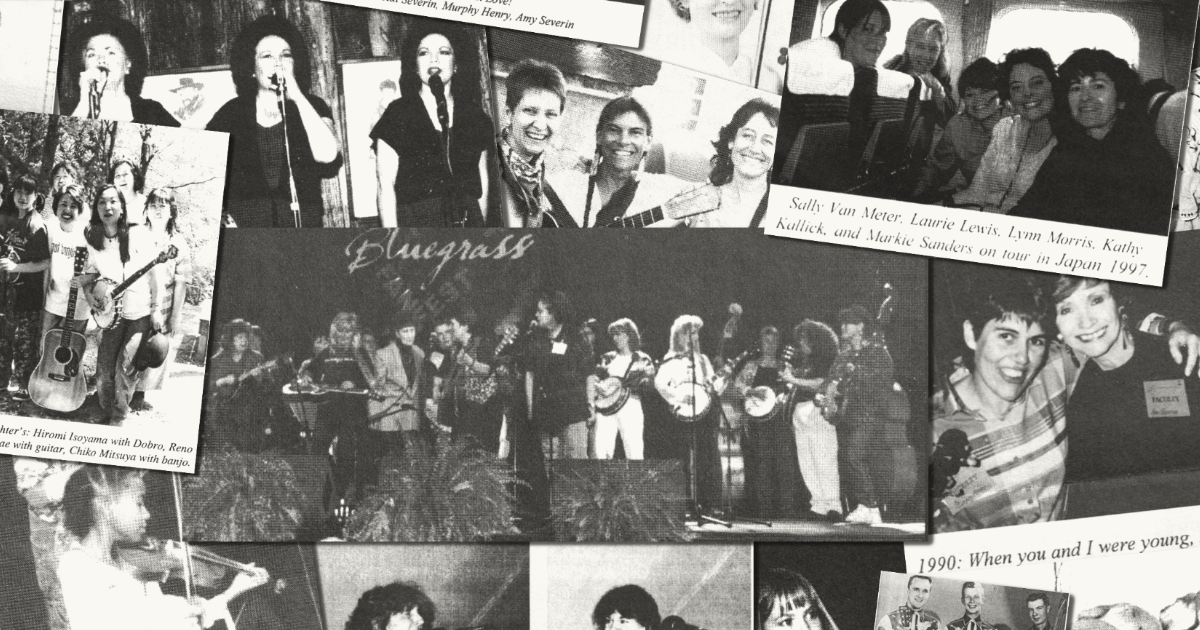
Before social media, the women of bluegrass had a bright blue newsletter that showed up in the mailbox and said what no one would say out loud. In Don’t Call Me Darlin’, host Carolyn Kendrick and co-creator Tristan Scroggins hit the road to find the women Murphy Henry profiled decades ago, in a story about genre, identity, feminism, and the communities we built before the internet.

Powered by RedCircle

LISTEN: APPLE • SPOTIFY AMAZON • REDCIRCLE •

What can our foremothers teach us about how to challenge the system? And when should we challenge our own expectations? In conversations with legends such as Alice Gerrard, Kristin Scott Benson, Laurie Lewis, Missy Raines, Alison Brown, Rhonda Vincent, Sierra Hull, Bronwyn Keith-Hynes, and many more, our hosts learn how tradition can bring community together and how it can break it apart. Join Carolyn and Tristan on their road trip as they explore the paradoxical world of bluegrass: an American art form with American problems, strengths, and growing pains.


Don’t Call Me Darlin’ is based on the Women in Bluegrass newsletter that was published quarterly from 1994–2003 by Murphy Hicks Henry. More information about Murphy, including how to purchase her book Pretty Good for a Girl: Women in Bluegrass, can be found here.

Read the Women in Bluegrass digital archive, created by Tristan Scroggins
To help support the archive, consider making a tax-deductible donation

For more information on our hosts and their other ongoing projects, please visit:
Carolyn Kendrick
Tristan Scroggins
Follow Don’t Call Me Darlin’ on social media
Interested in sponsoring us? Contact BGS
Underwriting Inquiries

Don’t Call Me Darlin’: Lost Girl

As a full-time musician living in Los Angeles, Carolyn Kendrick has a complicated relationship with bluegrass music. Despite years of experience and a deep connection to friendships formed in the community, Carolyn often thinks of herself as an outsider in the broader, male-dominated, and generally conservative genre. As life becomes more and more digitally saturated, the nostalgia-rich trappings and communal values of the bluegrass community speak to Carolyn as she finds herself yearning for a more grounded, unplugged time. She loves the music but is confused by how it fits into her sense of self.

She suddenly discovers that this internal friction is more common than expected when co-creator Tristan Scroggins shows her a collection of rare, feminist newsletters circulated in the ’90s by women who played bluegrass. These bright blue, hand stapled, self published newsletters contain nearly a decade of interviews, correspondence, and fellowship between women as they attempt to navigate and influence the genre.

As Carolyn explores these stories, it becomes clear that not only have women faced similar challenges since the music’s beginnings, but that previously gendered opportunities have gotten noticeably better in recent history. So why do the names and stories seem so unfamiliar? These questions lead down a rabbit hole as Carolyn and Tristan get in the car and drive to Virginia to interview Murphy Hicks Henry, the creator of the newsletter. Along the way they visit with friends, go to museums and festivals, interview friends, and re-interview the women from the newsletter to see what they think about the progress that has been made. All while recording to make this podcast.

Despite being a show about a newsletter about bluegrass, the show itself isn’t “about” bluegrass. It’s about community and what it means to be an insider. It’s about how tradition can bring us together but what happens to who gets left out. It’s about what we can learn from our elders and why we shouldn’t wait to ask them. It’s about women and their lives and what we can learn from them.

In this episode, you heard the voices of legends of bluegrass in the following order: Kathy Kallick, Missy Raines, Laurie Lewis, Maddie Witler, Murphy Henry, Dede Wyland , Lucy Singleton, Rhonda Vincent, Lisa Kay Howard, Sierra Hull, Kristin Scott Benson, Joselyn Skye, and Alison Brown.

Powered by RedCircle

LISTEN: APPLE • SPOTIFY • AMAZON • MP3


Don’t Call Me Darlin’ is based on the Women in Bluegrass newsletter that was published quarterly from 1994–2003 by Murphy Hicks Henry. More information about Murphy, including how to purchase her book Pretty Good for a Girl: Women in Bluegrass, can be found here.

Sources and citations for today’s episode.
Read the Women in Bluegrass digital archive, created by Tristan Scroggins
To help support the archive, consider making a tax-deductible donation

For more information on our hosts and their other ongoing projects, please visit:
Carolyn Kendrick
Tristan Scroggins
Follow Don’t Call Me Darlin’ on social media
Interested in sponsoring us? Contact BGS
Underwriting Inquiries

Photo Credit: Carolyn Kendrick

MIXTAPE: AJ Lee & Blue Summit’s Songs That Stick With You

Hi, we’re AJ Lee & Blue Summit! We’ve spent our ten years as a band playing for people all across the country (and occasionally the world) and these are some songs we’ve picked up along the way. We love a cover song, it’s the start to everyone’s musical journey. From day one picking up a guitar, every song you learn teaches you something in return. Many will stick with you throughout your life, songs that become a part of you. And for us, to perform them is to share that part of ourselves with you, and give you the songs back as we see them.

Some of these songs transport us back to childhood, listening to the radio from a carseat, some to our teen years wringing every second out of the too-short nighttime at a bluegrass festival, and some are recent additions, songs that grabbed us in one way or another and inspired us. These songs are probably familiar to you, listeners, from your own musical memories. They’re not all deep cuts. What they are, though, are songs that have shaped us, and songs that have been part of our live show, some for many years. They’ve become favorites of ours and I hope soon, of yours. — Cheers, AJLBS

“Meet Me in the Morning” – Bob Dylan

I’m a huge Dylan fan and this is my favorite album of his. His songwriting is a little more serious than it was on some of his ’60s stuff and his voice hit its all time peak in my opinion. I’ve covered most of the songs on Blood on the Tracks at various different times but after playing this one with the band for a few years it felt like we’d really found our own groove. – Sully

“Matterhorn” – The Country Gentlemen

This is a song I grew up listening to. My dad would put on bluegrass in the living room in the background and I usually didn’t know the names of the bands or songs but this one stuck out to me and I’d often request it. It’s always been one of my favorite bluegrass songs and brings back a lot of childhood memories. – Sully

“Who Walks In When I Walk Out” – Bob Wills & His Texas Playboys

I heard this song for the first time a few years ago while listening to a bunch of Bob Wills. His recording, played fast and energetic, made me want to do a version with the band sort of like his but with a bit of Django Reinhardt influence thrown in as well. – Sully

“Drivin’ Nails in My Coffin” – Rhonda Vincent

“Drivin’ Nails In My Coffin” was written by Jerry Irby, who originally recorded and released the song in 1945. I was inspired by Rhonda Vincent’s bluegrass version from her 2001 album, The Storm Still Rages. Rhonda was one of my first inspirations as a female singer. – AJ

“Red Dirt Girl” – Emmylou Harris

“Red Dirt Girl” was written by Emmylou Harris and released in 2000. I first came across a version on her 2001 album, Hickory Wind, and fell in love with it. The story of a girl named Lilian who’s dreams were never achieved tug at my heartstrings every time! The weight of the lyrics and emotion in Emmylou’s voice attest to her superior songwriting and musicianship. When we recorded our version I was a little under the weather, but I believed it worked out for the better. I had to execute a more gentle approach than planned and I was actually happy to have some airy notes. – AJ

“Glendale Train” – New Riders of the Purple Sage

“Glendale Train” was written by John Dawson, lead singer and songwriter of the band New Riders of the Purple Sage. A few years ago we were practicing and a bandmate had the funny idea to stretch out the middle section into a funky psychedelic jam (which isn’t typical in traditional bluegrass music). For fun, we’ve kept that section of the song open for improvisation. – AJ

“Wish I Could Say I Was Drinking” – Cadillac Sky

“Wish I Could Say I Was Drinking” was written by Ashley Gorley and Cadillac Sky’s Bryan Simpson. Their album, Blind Man Walking, was released in 2007 – a very influential year for 10-year-old AJ. This band has been the most inspirational to me throughout my musical career. They had so many unique arrangements. I was sad when the group disbanded in 2011. – AJ

“Fishin’ in the Dark” – Nitty Gritty Dirt Band

“Fishin’ in the Dark” was written by Jim Photoglo and Wendy Waldman. The song was first recorded by Ed Bruce in 1986, but was made famous by Nitty Gritty Dirt Band in 1987. We decided to “bluegrassify” this country-rock classic by replacing the halftime feel with a more driving feel. Wherever you are, this song will make you feel like you’re out in the country laying where the “cool grass grows”. – AJ

“Tear My Stillhouse Down” – Gillian Welch

“Tear My Stillhouse Down” was written by Gillian Welch and first released by The Nashville Bluegrass band in 1995. Gillian followed up with her own version in 1996. Gillian is another of my most inspirational female singers/songwriters. – AJ

“It Takes One to Know One” – Jimmy Martin

“It Takes One to Know One” is a classic country song written by Harlan Howard and Freddie Hart. It’s one that I’ve heard sung in bluegrass jam circles all my life. To me, the theme of this song is giving trauma bonding. – AJ

“Soak Up the Sun” – Sheryl Crow

“Soak Up the Sun” was written in 2002 by Sheryl Crow and Jeff Trott. This song has been a longtime favorite of mine. It’s almost impossible to not sing along when the chorus comes around. I’ve listened through many rotations of the album C’mon C’mon, which features Sheryl’s iconic rock sound. – AJ


Photo Credit: Natia Cinco

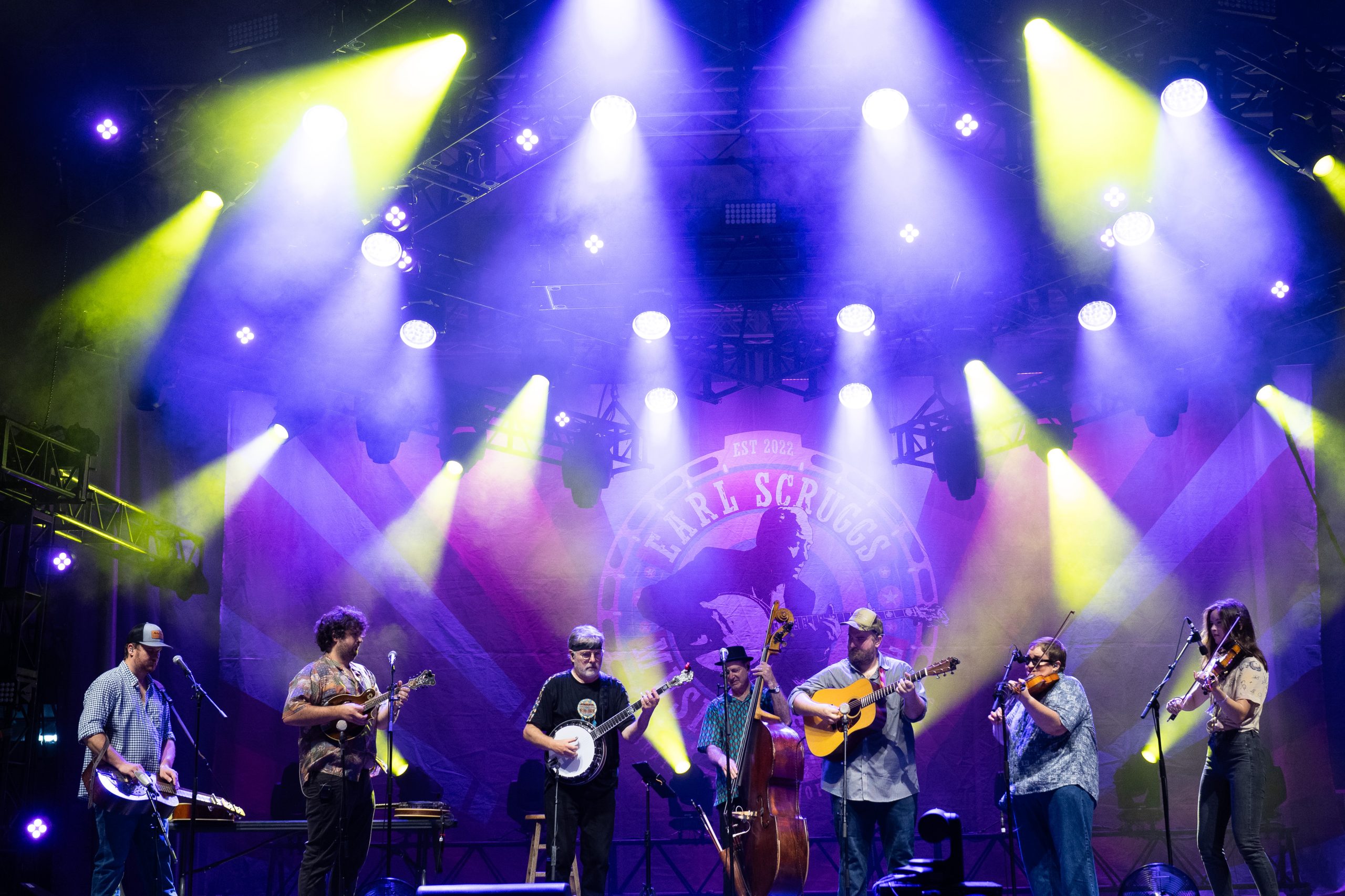
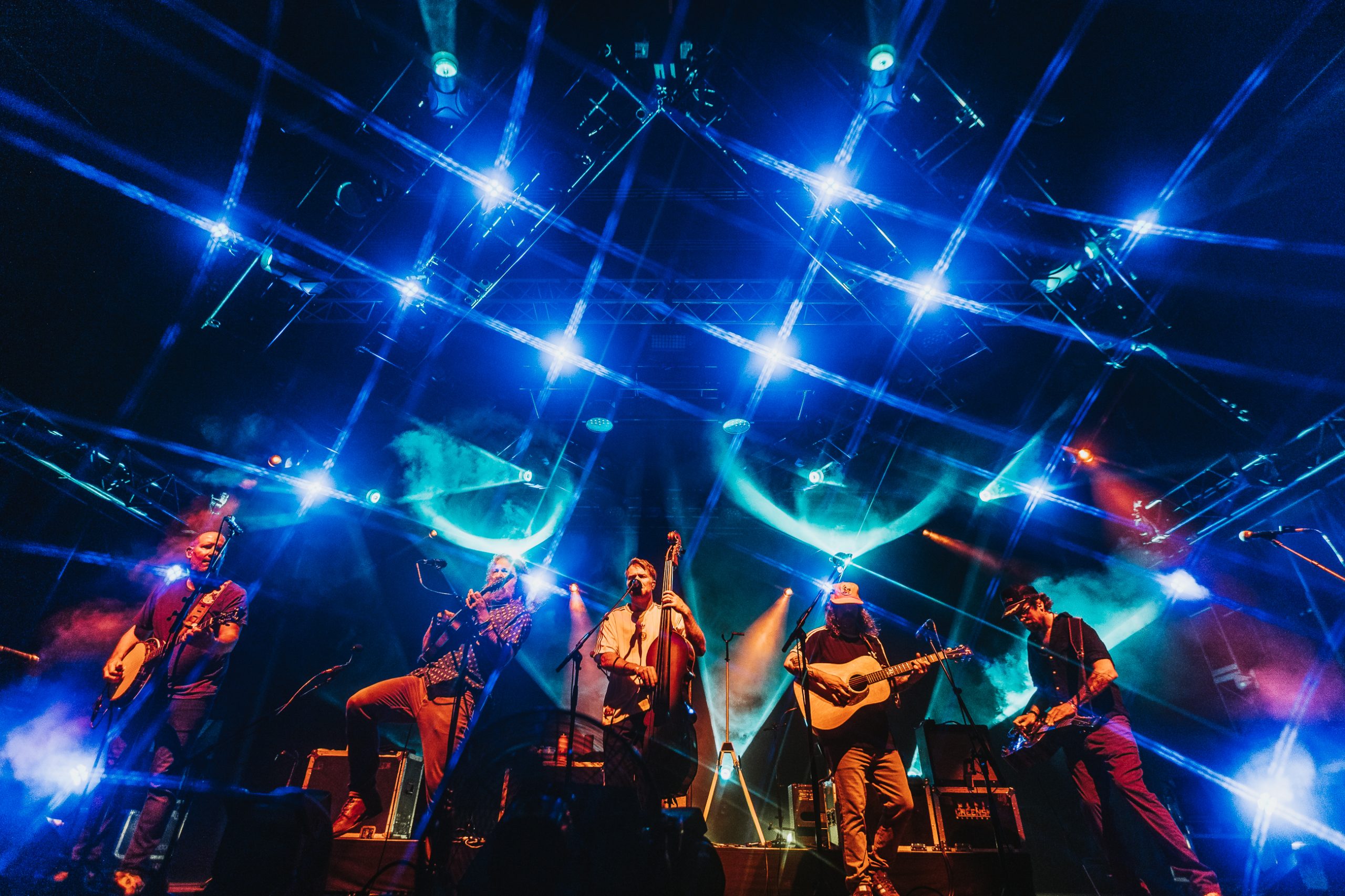
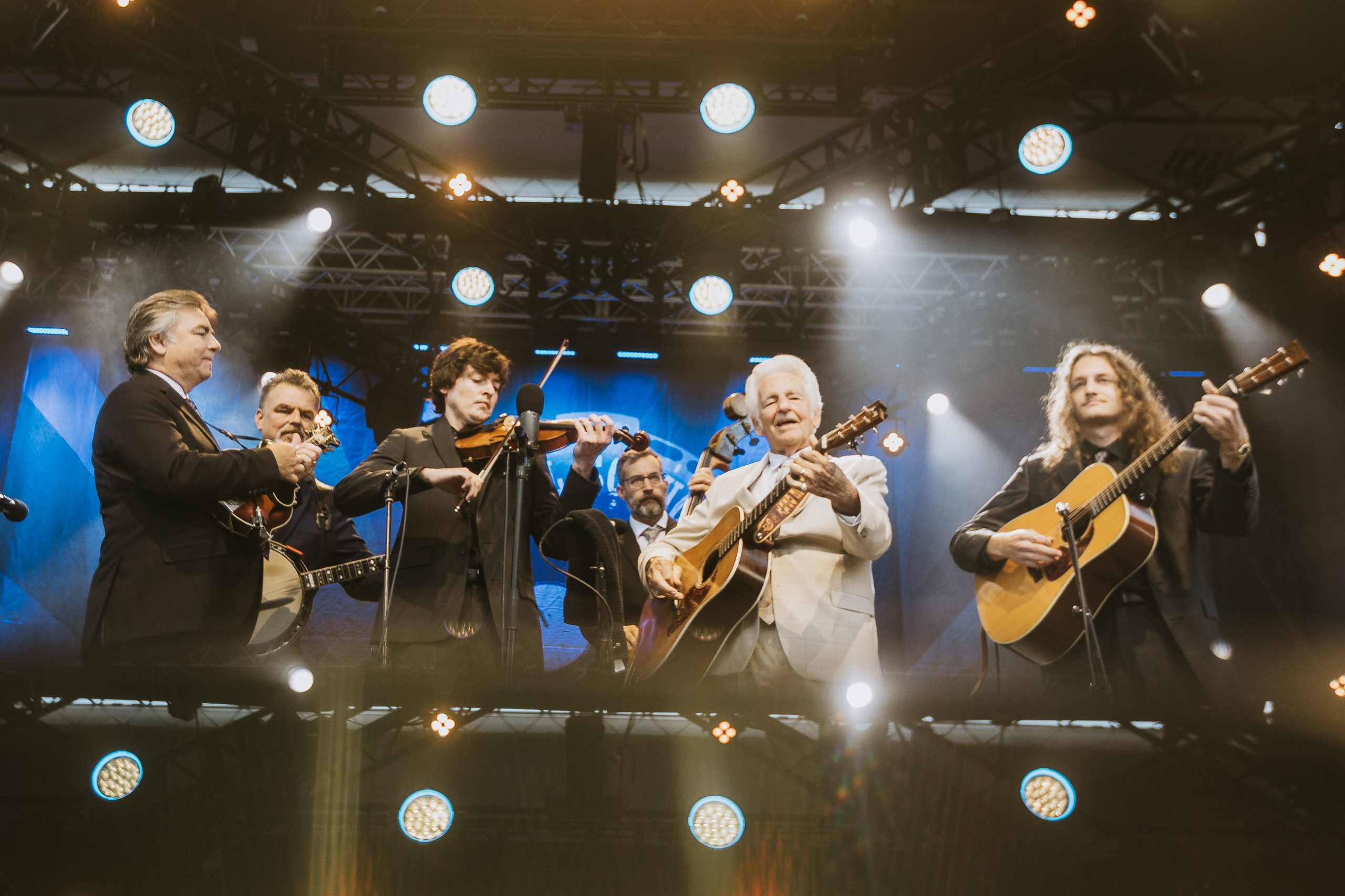
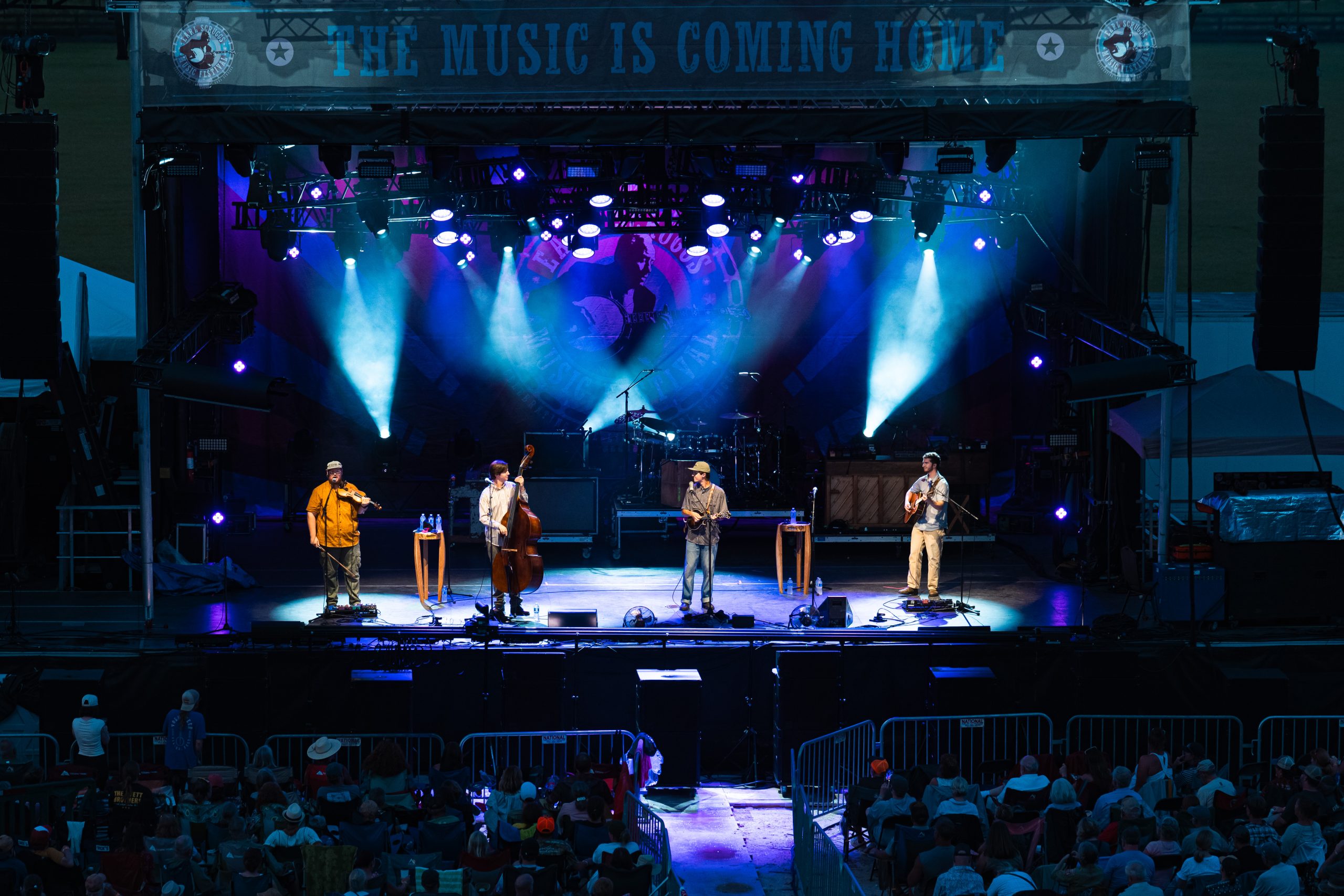
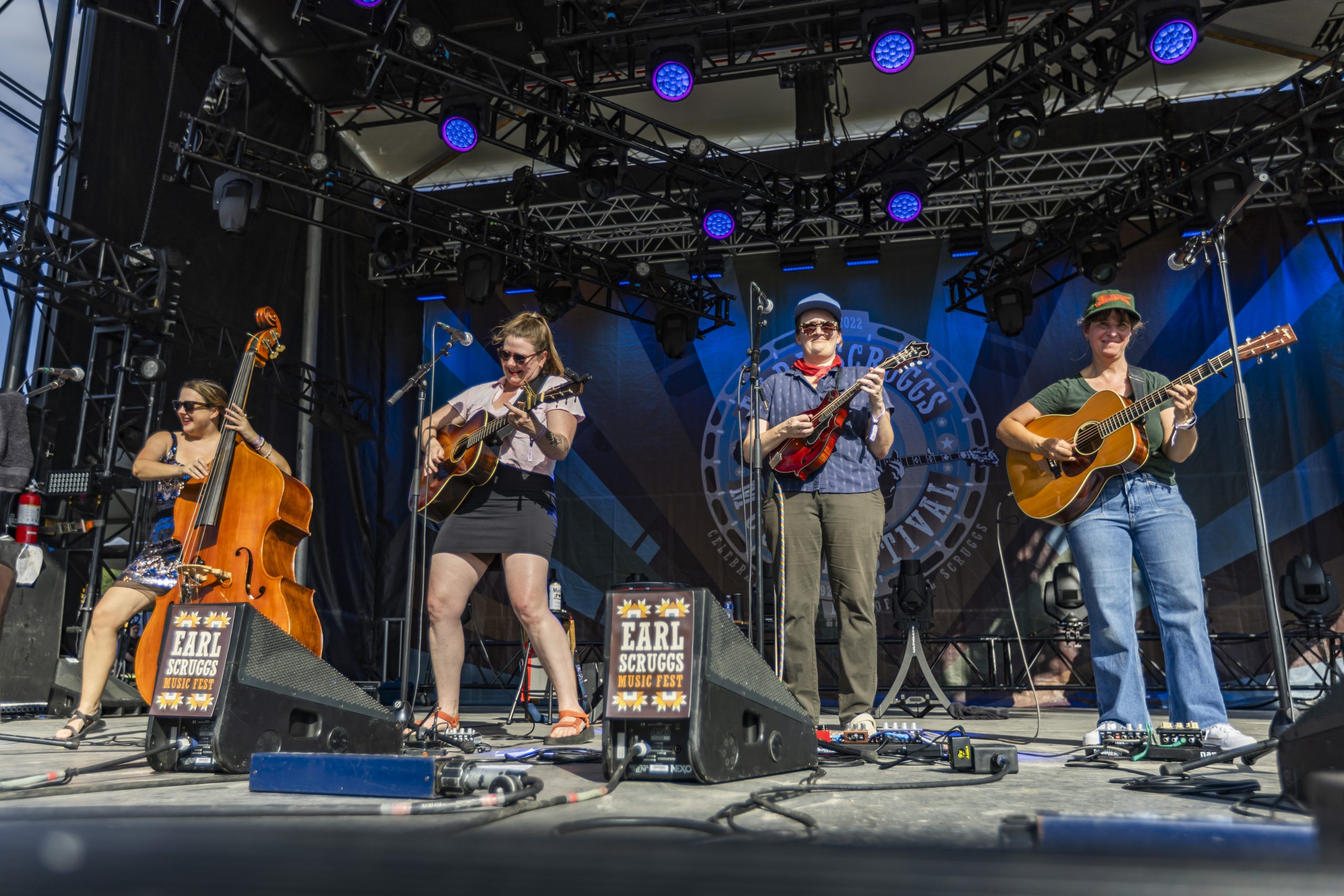
Earl Scruggs Music Festival Honors a Bluegrass Banjo Hero

The sheer beauty and alluring magic of the Earl Scruggs Music Festival is akin to the film Field of Dreams. That adage of, “If you build it, they will come.”

Why else would one of the premier bluegrass gatherings be held at an equestrian center in the middle of nowhere, just off a rural highway, surrounded by vast farm fields in the foothills of the Blue Ridge Mountains of Western North Carolina, and work to absolute perfection year after year?

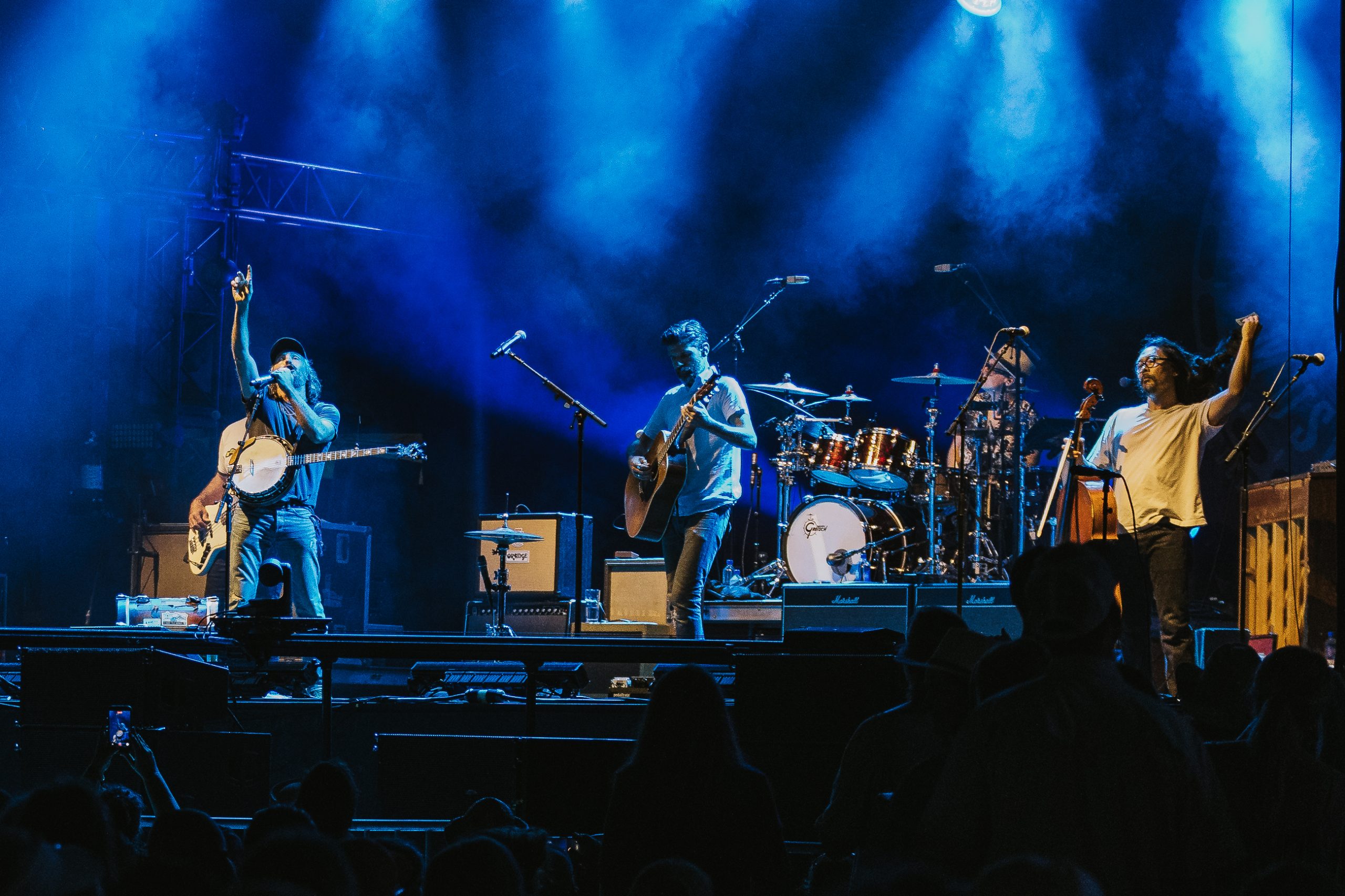
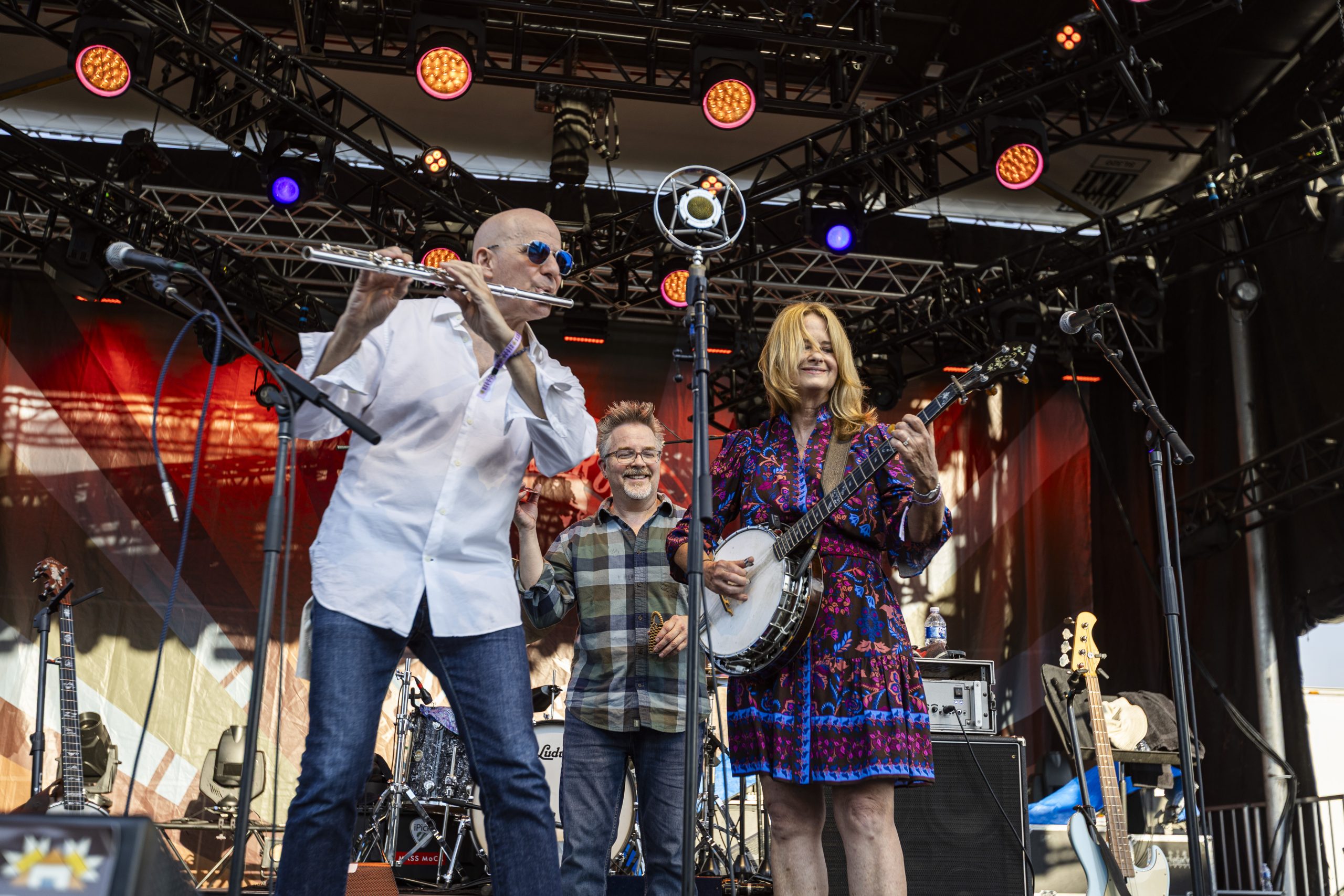
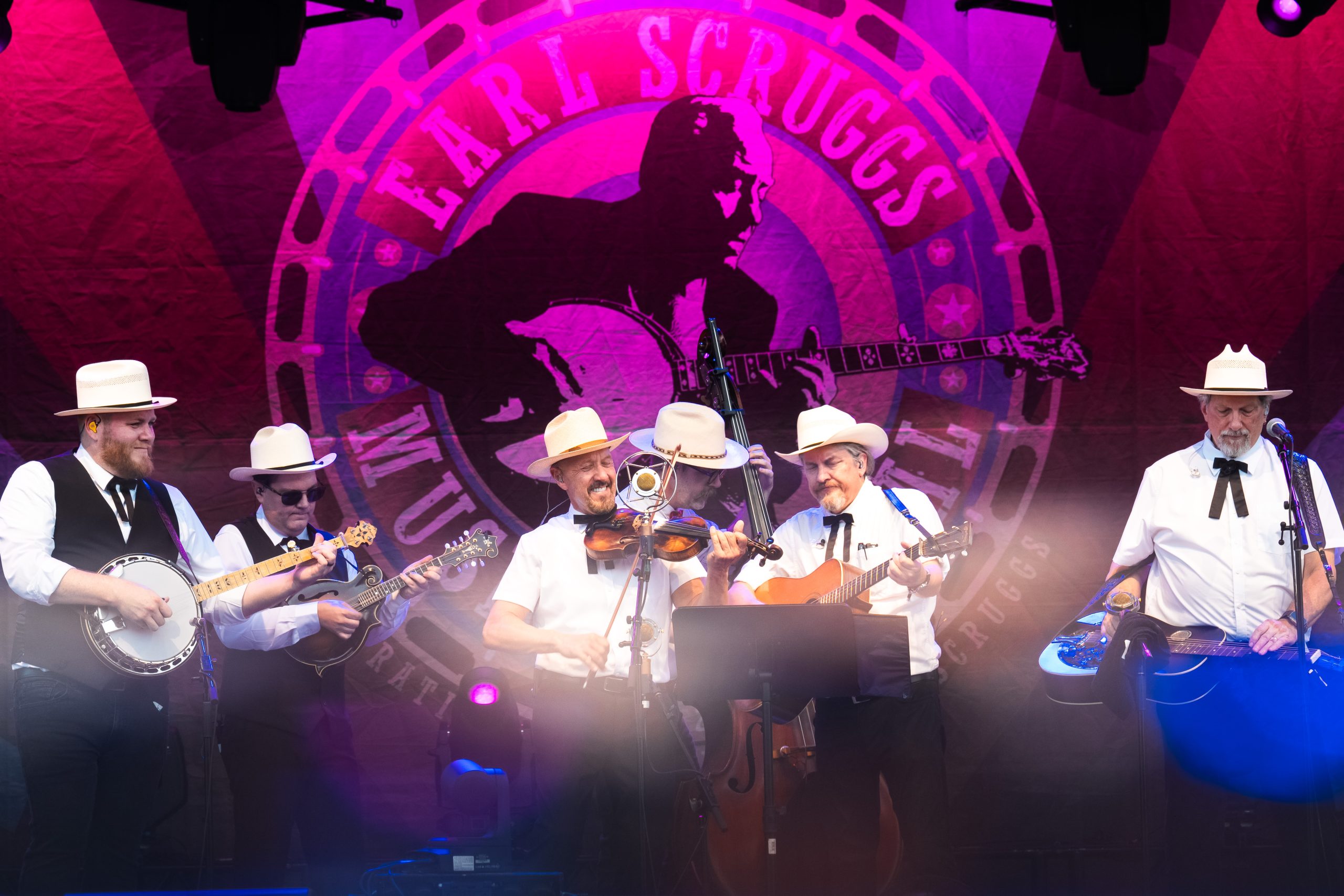
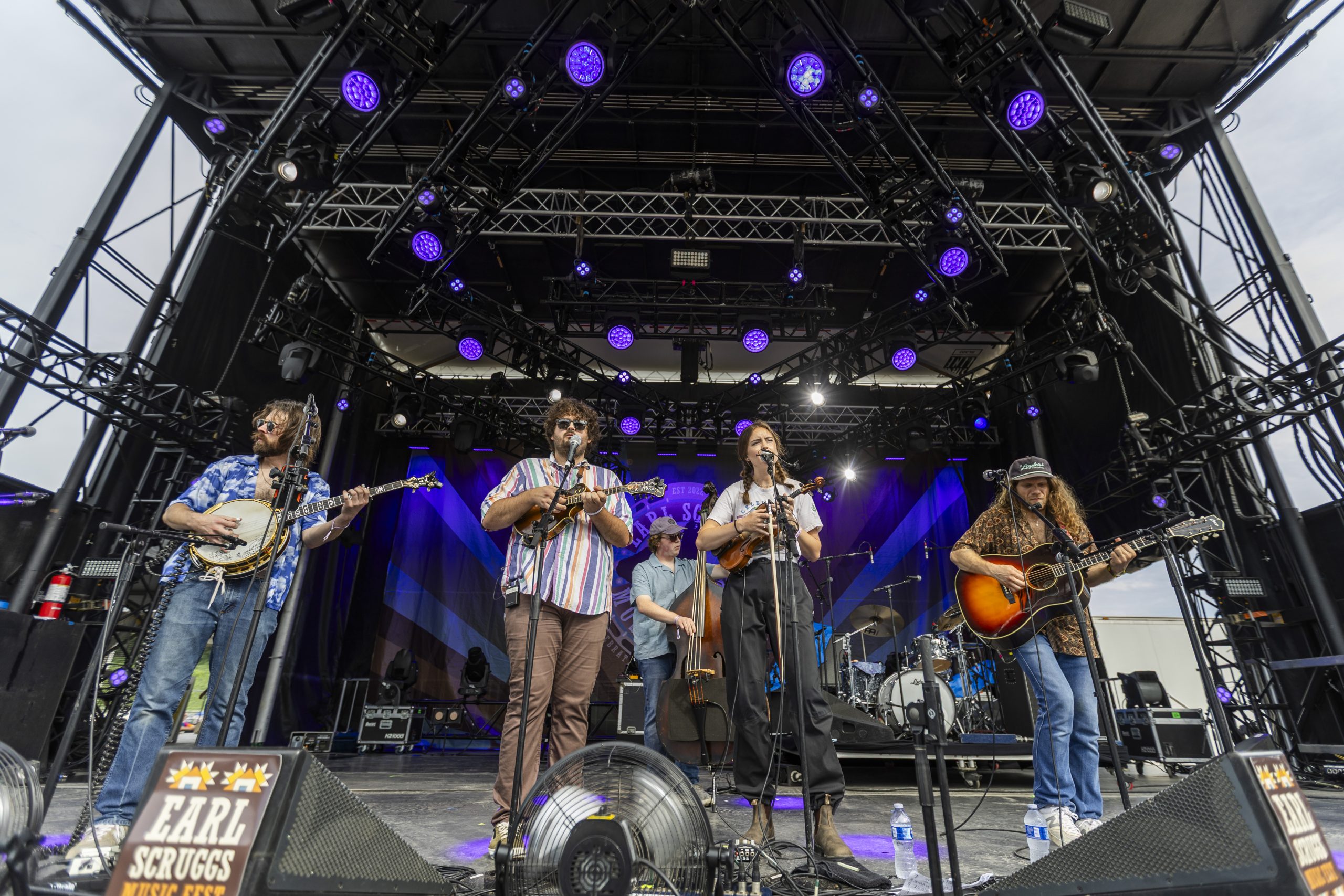
Well, it does. And for its fifth anniversary, the festival, held at Tryon International, once again invited a slew of the marquee names when it comes to the “high, lonesome sound” and those arena acts orbiting the genre itself: The Avett Brothers, Greensky Bluegrass, The Del McCoury Band, Béla Fleck, Rhonda Vincent & The Rage, Alison Brown, Mountain Grass Unit, Lindsay Lou, Della Mae, East Nash Grass, The Earls of Leicester, and more.

“He was my gateway. If it weren’t for Earl, I wouldn’t be me,” says Brown, a world-renowned banjoist and co-founder of Compass Records. “Earl was a traditionalist, in the sense that he created this style that we all play, which we consider to be the cornerstone of bluegrass. But, he was an adventurer. He was not afraid to take the banjo to places it hadn’t been before.”

Born just down the road from the festival grounds in Cleveland County in 1924, Scruggs revolutionized the banjo when he perfected a three-finger approach to the instrument. With clawhammer banjo using down-picking (using the thumb and middle or index finger), “Scruggs Style” utilized the thumb, middle and index, resulting in a rapid picking tempo known as “rolls.”

“When I was first starting to learn [banjo], I was playing out of the Earl Scruggs book,” says Michael Bont, banjoist for Greensky Bluegrass. “And I’ll never forget, there was this morning where I had been practicing the rolls and trying to play the songs, and it was ‘Little Cabin Home on the Hill.’ That’s the song [where I went], ‘Oh my god, I’m doing it.’ It never ceases to amaze me [how Earl developed] this new style of playing an instrument.”

At age 21, Scruggs joined Bill Monroe & His Blue Grass Boys. On Dec. 8, 1945, Scruggs found himself on the Grand Ole Opry at Nashville’s Ryman Auditorium when Monroe debuted his new sound to numerous standing ovations. Although Monroe had built this “muscle car” of a band that would showcase a whole new genre of music, it was Scruggs who was the gasoline that put Monroe’s vision into motion. Not long after, Scruggs would form the wildly popular Flatt & Scruggs with his Blue Grass Boys bandmate, guitarist Lester Flatt; when that duo broke up, he created the groundbreaking Earl Scruggs Revue with his sons Randy and Gary. A third son, Steve, later joined the group, too. In 2012, Earl Scruggs passed away at age 88.

Behind the festival is a partnership between the Earl Scruggs Center in Shelby (in Cleveland County), Isothermal Community College and WNCW 88.7 FM (both located in nearby Spindale). Coming together to share the story of Scruggs and expand his legacy in the 21st century, the trio built this annual gathering from the ground up, where it’s now become a bona fide bastion of bluegrass music and camaraderie.

“When you go into the first [festival], you never know if it’s going to be successful, and you always hope the next year is bigger,” says Mary Beth Martin, executive director of the Earl Scruggs Center. “But, then to be crossing this milestone of year five is pretty amazing — people are marking it on their calendar every year.”

Since its inception, the festival has showcased some of the biggest names in bluegrass and beyond: Alison Krauss & Union Station, Marty Stuart & His Fabulous Superlatives, Tanya Tucker, Yonder Mountain String Band, The Wood Brothers, Peter Rowan, Old Crow Medicine Show, Nitty Gritty Dirt Band, etc.

“Honestly, just the love that people have for the music and for the acts we’re bringing in is really touching and inspiring,” Martin says. “Because, at the same time, they also have that same love for Earl, and we’re continuing to put his legacy front and center.”

Friday afternoon. Heading backstage, I approach the green room trailer for The Earls of Leicester, a Grammy Award-winning bluegrass group that exclusively performs songs from the Flatt & Scruggs repertoire. Knocking on the door, dobro legend Jerry Douglas answers. As someone who personally knew Scruggs and spent decades getting to interact with the man himself, onstage and off, Douglas can’t help but be proud of what the festival is cultivating from both sides of the microphone.

“Every little niche of [Earl’s] musical life is being explored here,” Douglas says. “And, like Earl, the festival is doing [what he did] — staying open-minded and taking the music forward. There’s room for everybody, and we’re just pushing the envelope a little bit more.”

For Douglas, he remains in awe of Scruggs and the music he created.

“Every time I go away from it and come back to it and listen to it again, I’m amazed all over again that it even happened the first time,” Douglas notes. “And how a guy like him played this kind of music, and was able to push a whole band, a whole idiom that far.”

Before I exit the trailer, Douglas pulls an antique red bow tie out of his travel bag. Placing it on the table, he looks at it, then looks at me. “That was Cedric’s,” Douglas says.

“Cedric Rainwater?” I reply in amazement.

“Yep,” Douglas grins. “I’m letting our bass player wear it tonight.”

That evening, EOL bassist Daniel Kimbro is sporting the bow tie, this incredibly powerful symbol of Howard “Cedric Rainwater” Watts, a first-generation name etched into the bedrock of bluegrass, a musician who played bass in Bill Monroe’s Blue Grass Boys, the “Original Bluegrass Band” when Monroe debuted his new sound alongside Scruggs in the mid-1940s. Watts would later become a member of Flatt & Scruggs’ Foggy Mountain Boys and Hank Williams’ Drifting Cowboys.

Right after the whirlwind performance ends, Kimbro walks sidestage and tracks down Douglas. He hands the tie back and thanks him for letting him wear it, if but for a moment. “Keep it, it looks good on you,” Douglas says with a smile. Kimbro is rendered speechless by the poignant gesture.

Following EOL was Béla Fleck, who closed out the Flint Hill Stage on Friday night with his project, My Bluegrass Heart, which has been the banjo wizard’s highly successful return to his musical roots in recent years.

“I didn’t know I was a banjo person. Then I heard Earl Scruggs play the banjo, and suddenly I was a banjo person. He was the spark, and he’s that for a lot of people,” Fleck says backstage. “Something about Earl has that sound that makes people go, ‘Well, I don’t know what that is, but I’ve got to hear more, and I’ve got to figure out what it is’ — he had that effect on me.”

Featuring a rotating cast of stellar musicians, Fleck presented fiddler Michael Cleveland, bassist Mark Schatz, guitarist Jake Stargel, Dobro player Jeff Partin, fiddler Maddie Denton and mandolinist Harry Clark (the latter two of East Nash Grass) to a raucous audience soaking it all in.

“The part of that [musical] language that all banjo players always come back to is Earl Scruggs,” Cleveland says. “It doesn’t matter what else I’m doing, I can always turn on Flatt & Scruggs and it’s like hearing it for the first time.”

The festival grounds also showcase an endless sea of bluegrass activities and educational opportunities to immerse oneself in the history and lore of not only the genre itself, but that of Western North Carolina, too. There were numerous musical workshops and live audience Q&A sessions with artists, and even the “Spirits of Bluegrass,” a cultural collaboration and tasting area sponsored by The Bluegrass Situation and featuring local/regional distillers.

Saturday evening. The Del McCoury Band is headlong into its Flint Hill Stage set. Nowadays regarded as the elder statesmen of bluegrass, the 87-year-old McCoury represents the finest in traditional sounds. He also remains this sponge of curiosity, this open-minded, kind heart and carefree, welcoming soul that mirrors the ethos of Scruggs in more ways than just the music.

“If I hadn’t heard Earl Scruggs when I did, I wouldn’t be playing today,” McCoury says in a humble tone. “There’s something that just struck me about him. He was a genius. All of those great banjo players learned from Earl.” (To note, although McCoury is well-known for his guitar playing, he originally started out in the bluegrass realm as a banjo picker.)

“High on a mountain oh, wind blowin’ free/Thinking about the days that used to be,” McCoury’s high, powerful tenor voice rings out, his signature tone ricocheting around the arena and across the nearby fields. “High on a mountain oh, standin’ all alone/Wondering where the years of my life has flown.”

Sitting sidestage watching McCoury intently was 19-year-old Murphy Campbell. Performing earlier in the day as part of the Blue Ridge Music Trails presentation, Campbell, a native of Western North Carolina, is a rising old-time banjo player/singer. For her, music is not only tradition, it’s life, and to see McCoury in all his glory was something she was grateful for, and inspired by.

“We all have this common goal of preservation, and to see people do it on such a large scale is deeply encouraging,” Campbell says. “I’m not used to stuff like this, it’s crazy to watch it from [sidestage]. I never thought that me playing the banjo would get me here to sit and watch [Del] play.”

As of late, Campbell is in the midst of recording new renditions of old ballads that were cherished and collected by her ancestors over a century ago in Mitchell and Yancey counties in North Carolina. Those tunes were cataloged in the book English Folk Songs from Southern Appalachia, with Campbell’s relatives writing down their ballads back in 1918, on a date that coincides with Campbell’s exact birthday.

“We’re all grasping onto something that has roots, because no one feels like they [have roots] anymore” Campbell says when asked about the massive revival in string music in recent years. “And they hold on hard, real hard.”

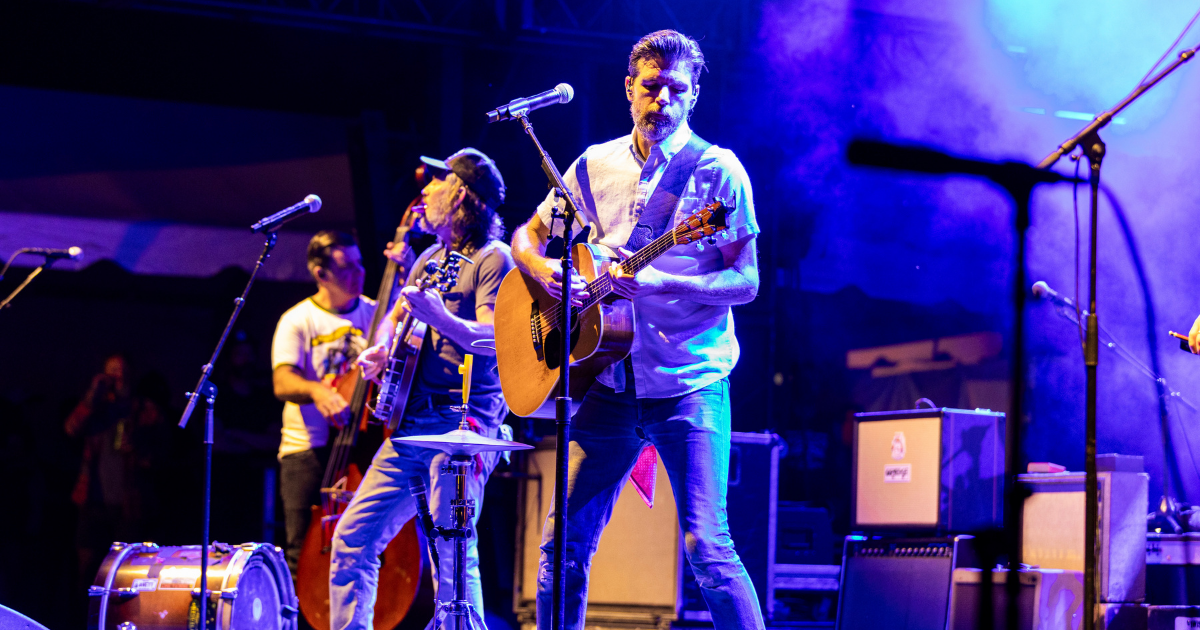
And when it comes to North Carolina musical roots, you’d be hard-pressed to find deeper ones than those of The Avett Brothers. Tying a bow on the weekend with the honors of playing the Sunday finale, the Avetts roared across the stage with their mesmerizing blend of Americana, bluegrass and folk stylings, the culmination of which being this incredibly vibrant tone of heart and soul.

“Three words that became hard to say/I, and love, and you,” Scott Avett howled to the heavens, an audience of thousands of joyous faces in the grandstands completely mesmerized and singing along to every single word. “What you were then, I am today/Look at the things I do.”

“Earl Scruggs used to be the model for a technique when I started [playing banjo],” Avett says. “And the more I learned about Earl, followed what he did, and paid close attention to his creativity, I realized he was a pioneer in more than just a technique, he was a pioneer in being an individual.”

For Avett, “being an individual” is a core value of the band’s ethos, and something that genuinely reverberates throughout the festival and the artists taking the stage. All of this circling back to Earl Scruggs and what it means to be original and authentic, whether it’s in reference to one’s music and art or simply the way one interacts with the world at-large — this deep, intrinsic sense of curiosity and camaraderie, passion and purpose.

“Doc [Watson] told us personally, ‘You’re on your path. Stay on your path. You’re not on Doc Watson’s path,’” Avett says. “Tom T. Hall told us the exact same thing, Willie Nelson would say the same thing now. I think Earl would say, ‘You guys need to do what you do,’ and we take that to heart.”

See photos from the Flint Hill Stage at the 2026 Earl Scruggs Music Festival.


All photos courtesy of Earl Scruggs Music Festival. Lead image of The Avett Brothers: Bain Stewart.

You Gotta Hear This: Rhonda Vincent Ft. Sierra Ferrell, Plus Riley Downing, and More

Every Friday, BGS shines a light on some of our favorite new tracks in bluegrass, folk, Americana and beyond. Then we ask the artist about the inspiration behind the music and pass their wise words along to you.

This week, country fans will find a lot to like in Alicia Blue’s mysterious “Rose of Tennessee” and Riley Downing’s self-deprecating “Like I Always Was.” Virginia troubadour surprises us with a love song, while Brennan Wedl takes a wholly different approach to love songs, writing a platonic one called “Two Dollar Pistol.”

Bluegrass queen Rhonda Vincent teams up with Americana all-star Sierra Ferrell on “Would You Like to Buy Some Flowers,” a thoughtful duet that should greatly appeal to audiences of each artist. Folk fans will certainly be pulled into new tunes from Stephanie Sammons and Brittany Ann Tranbaugh, who offer a unique response to relationships that have unraveled. And taking a page from the history books, Miko Marks immerses herself in the history of Battle of Little Big Horn on “Death Rolls Like Thunder.”

We mean it when we say, You Gotta Hear This!

Alicia Blue, “Rose of Tennessee”

Artist: Alicia Blue
Hometowns: the San Bernadino line, California; McAllen, Texas; and Nashville, Tennessee
Song: “Rose of Tennessee”
Album: Country Desire
Label: A Blue Lion

In Their Words: “I love old country and folk tunes filled with all that good stuff, like death, murder and infidelity. The darker and sadder they are, the more they do it for me. ‘Lily of the West’ is an old traditional song that greatly inspired ‘Rose of Tennessee,’ although I flipped things around a bit. Rose is the anti-hero full of strength, chaos and seduction. Her self-awareness is what makes her so worthy. Aubrey Richmond brought out that Appalachian sound with the riff on her fiddle that lets you know something ominous is coming. It’s also the hook that makes the ‘Rose of Tennessee,’ whoever she may be, so memorable and forever in our minds.” — Alicia Blue


Riley Downing, “Like I Always Was”

Artist: Riley Downing
Hometown: Holt, Missouri
Song: “Like I Always Was”
Album: Landfill Poetry
Album Release Date: August 28, 2026
Label: Oh Boy Records

In Their Words: “It’s about knowing you need to do one thing but then doing another and being well aware of it but not too hard on yourself. The world is hard enough–-with this one I kinda wanted to just admit fault and then laugh about it before anyone else can, so you can get on with what you was supposed to be doing in the first place. Some of the best advice I never asked for came when I first had to get my picture taken for my passport. The first person that took one in Missouri didn’t tell me to take my hat off, but the second person I met at the office to get my passport in New Orleans did. So I went to go take a new picture as fast as I could and when I did I asked the lady who took it if I could take another one and she said, ‘No, that’s what you look like.’ Well, she wasn’t wrong and I think about her often. That’s what I look like, just like I always was.” — Riley Downing


Colby T. Helms, “Fireside Love”

Artist: Colby T. Helms
Hometown: Boones Mill, Virginia
Song: “Fireside Love”
Album: One for the Losers
Album Release Date: October 23, 2026
Label: Photo Finish Records

In Their Words: “‘Fireside Love marks a new chapter in my songwriting because it is the first happy love song I’ve ever written. As you know, Tales of Misfortune is chock-full of sad love songs. I wrote ‘Fireside Love’ with my girlfriend and partner in mind. We both work diligently at our own crafts, and more often than not, we find ourselves forgetting to stop and smell the roses. Let’s face it: we all need some time away from the hustle and bustle of the modern world. Whether it’s a romantic campfire with your sweetheart or a wild night of belting out campfire jams with the boys, ‘Fireside Love’ is sure to satisfy that primal spirit inside you that tells you to put your phone down and start gathering up a pile of kindling.” — Colby T. Helms

Miko Marks, “Death Rolls Like Thunder

Artist: Miko Marks
Hometowns: Flint, Michigan, and Oakland, California
Song: “Death Rolls Like Thunder”
Album: Hell or High Water
Album Release Date: October 30, 2026
Label: Redtone Records

In Their Words: “This song is about victory over the forces of greed, ego, inhumanity. It uses the Battle of Little Bighorn as its setting, also known as Custer’s Last Stand. The battle is an example from our own history about the power of a people defending their land and their right to remain. The devil rides in on a pale horse, his army following. Death and destruction for the people look inevitable, but the tables turn. The riders who have come to conquer are driven back and defeated. It’s a reminder of people throughout history who have fought against the undoing of their world. People who have found ways to hold on, to resist, to rebuild. Remembering these stories feels so important today, to remind us that we have that same power.” — Miko Marks


Stephanie Sammons, “Marathon”

Artist: Stephanie Sammons
Hometown: Dallas, Texas
Song: “Marathon”
Album: Head Noise
Album Release Date: August 21, 2026
Label: Point Guard Records

In Their Words: “I had finally reached the resolution that there was nothing more I could do to help a dear loved one trapped in the cycle of addiction now for two decades. She will get close to collapse and somehow manage to come back from the brink, only to self-destruct again and again. That’s when the idea for ‘Marathon’ came to me. How does the person I love so much continue to get up after going to the extreme and falling on her face? There is a special kind of resilience within her to never give up regardless of how difficult the circumstances are. Her ability to keep running this race of life with endurance in the face of recurring self-destruction, and still come out alive, is nothing short of a miracle. I wanted to write about her strength as something positive, and ‘Marathon’ is what came out.” — Stephanie Sammons


Brittany Ann Tranbaugh, “Dinner With a Divorcee”

Artist: Brittany Ann Tranbaugh
Hometown: Philadelphia, Pennsylvania
Song: “Dinner With a Divorcee”
Album: Lucky Broke Girl
Album Release Date: August 28 2026

In Their Words: “I wrote this song for an online School of Song class taught by Adrianne Lenker. The prompt was to write a song on an unfamiliar instrument and/or in an unfamiliar tuning. I picked up the banjo I had impulse bought a few years back but never learned to play, and quickly wrote this tune.

“At the time I was still living with my ex who I’d been with for a decade (we had decided to split about two months prior) and was busy apartment-hunting and reimagining my life as a single person. It was honestly a stressful and dark time, but instead of writing a sad song about how I felt in the moment I decided to write a lighthearted and funny one from the perspective of myself a year later. I imagined myself dating for the first time in over a decade, living in a new apartment with a roommate, being broke and carless, and having to explain the quirks of my continued relationship with my ex, for example staying on her health insurance and sharing custody of pets.

“When it came time to record the song, it helped to have bandmates (Shona Carr on fiddle and Liz Faure on acoustic guitar) who are veteran old-time festival jammers to give it the feel I’d been dreaming of.” — Brittany Ann Tranbaugh


Rhonda Vincent, “Would You Like to Buy Some Flowers”

Artist: Rhonda Vincent Featuring Sierra Ferrell
Hometown: Greentop, Missouri
Song: “Would You Like to Buy Some Flowers”
Album: A Possibility
Label: Upper Management Music

In Their Words: “Loved getting to record with Sierra Ferrell. The call came at 10:30 pm that she would sing the next day. She was on tour and not expected to sing her part for several months. We stayed up all night preparing a track for this very special duet. When Grammy Award-winning engineer Gary Paczosa mixed a sample of what he recorded and sent, I was amazed to hear the blend of our voices. Our voices were similar, yet there was a true distinction. I felt the song, ‘Would You Like To Buy Some Flowers,’ written by Conrad Fisher, had a true authentic sound that our voices could interpret with a rich, yet raw innocence. It seems to be a favorite from the new project A Possibility and my dream now is to perform the song with Sierra, and it would be extra special if it was on the Grand Ole Opry!” – Rhonda Vincent


Brennan Wedl, “Two Dollar Pistol”

Artist: Brennan Wedl
Hometown: Nashville, Tennessee
Song: “Two Dollar Pistol”
Album: S/T
Album Release Date: August 21, 2026
Label: ANTI-

In Their Words: “‘Two Dollar Pistol’ is a platonic love song that slowly came together over time like most dependable friendships do. I started writing it in 2023 and finished key lyrics in the studio right before recording vocals. A time crunch like that can help me buff out diamonds from lines that weigh down the song like a big bag of rocks. A little pressure can help me get out of my own way.

“This song demanded lines that show the listener what I’m singing about vs. simply telling them. I learned this trick from Writing Better Lyrics by Pat Pattison. For instance, the lyrics in verse 3 — ‘Sharpen up your teeth, become a saber tooth tiger, coming out of your cage, step in the light of desire.’ This has far more juice than what the line was in its first draft — ‘Show them your teeth, come on out of your cage, look them dead in the eye.’

I try to write songs that have ample square footage. There’s not much room to party when every little detail is being described in a song. Letting the listener fill in the gaps is much more exciting.” — Brennan Wedl


Photo Credit: Linden Stackley (Rhonda Vincent), Tori Mills (Riley Downing)
Artist of the Month: Dailey & Vincent

Since they were boys, Jamie Dailey and Darrin Vincent have been surrounded by music. As a child, Dailey sang with his father, who was in a gospel group. Vincent performed at a young age with his family’s bluegrass gospel band, the Sally Mountain Show (which included his older sister, Rhonda Vincent). In 1990, he joined the John Hartford Band and then, in 1996, the multi-instrumentalist and singer signed up with Ricky Skaggs & Kentucky Thunder for nearly a decade. In 1999, Dailey started his successful nine-year run in the esteemed bluegrass group Doyle Lawson & Quicksilver as a tenor and baritone vocalist, and played acoustic bass before moving into rhythm guitar.

Dailey & Vincent met at the IBMA’s annual business conference and festival in 2001 and became quick friends. One day, after having breakfast at a Cracker Barrel Old Country Store, they went to Dailey’s car to listen to a tape of a song he had written. When they sang along to it, the two realized that their voices blended together in an uncanny way. It took several years for them to leave their respective groups and officially become a duo.

Along the way, they contributed the track “Beautiful Star of Bethlehem” to a Christmas compilation and that tune hit No. 1 on the Prime Cuts of Bluegrass charts. Dailey & Vincent then scored a deal with Rounder Records based on a demo they submitted. Since 2007, they have released 11 albums (including A Beautiful Life, released in June), won multiple SPBGMA and IBMA awards, and received several GRAMMY nominations. They also host a TV series, and have attracted a devoted following for their mix of traditional and contemporary musical styles that draws upon bluegrass, country, and gospel.

From September 17 to 19, the two are again hosting their annual Dailey & Vincent Music Fest. Held in Hiawassee, Georgia, up in the Blue Ridge Mountains, the festival’s lineup this year includes friends and family like Ricky Skaggs, Rhonda Vincent, and Doyle Lawson & Quicksilver, as well as Lonesome River Band, Seldom Scene, Gene Watson, and Wyatt Ellis – with Dailey & Vincent performing different sets each day.

To celebrate A Beautiful Life, we’ve named Dailey & Vincent our BGS Artist of the Month in August. Enjoy our exclusive AOTM interview with the duo below and don’t miss our Essential Dailey & Vincent Playlist, too. Plus, keep an eye on our website and social media for even more D&V content all month long.

When you all were creating your new album, A Beautiful Life, did you go in with an intention to make a certain type of album? Because your records frequently have had some type of theme or concept – like your prior release, 2022’s Let’s Sing Some Country.

Jamie Dailey: For me, it was not a themed record at all. I think Darrin and I both feel the same way. We just wanted the best songs that we could get our hands on to record. By being with Morris Higham [Management] and our manager Robert Filhart having the tie-in to the publishing companies to help us with songs, that gave us a whole new breath of life to be able to get a hold of some really great songs. And so that’s kind of how we were looking at it. We were not thinking about a theme at all.

Darrin Vincent: We’re able to create the bluegrass and the country music feel on the same record. But it’s mostly acoustically based. One of the coolest things about those elements was our management saying, “Go out and create the best songs and the best record you guys can. Don’t worry about [the album being] branded at anything or themed at anything. Just go make yourself a record.” And that’s kind of our mindset, and what we did with that encouragement.

How did you find these songs come together?

JD: Our manager, Rob Filhart … took us to Music Row and set us in publishing offices with speakers on both sides of our heads and a person across from us. They would play song after song after song, and you would listen to one and you’d be like, “No, that’s not it.” They’d play another one. “No, that’s not it.” And then a song came on and it was, “Wake up in the morning to a big orange sun/ Calling in sick, gonna have a little fun…” I thought, “Wait, wait, wait, what is that?” I want to keep listening. And it was “A Beautiful Life.”

One of the reasons that we love the song is that both of us have lived that lyric. Growing up, we have lived that lyric and still live a lot of it today. So that song touched our hearts and touched who we are as human beings. And we thought, “Man, we’ve got to record that song.”

We kept listening to more and more songs. Then they played us the song that was written by Don Schlitz and Josh Kear called “I Grew Up in Heaven.” Once again, we’re sitting there and I’m like, “I grew up in a beautiful rural area with the hills and the mountains and lakes and the rivers and bluffs and wildlife.” And I’m like, “Oh my goodness, I’ve lived this lyric” – and so has Darrin, you know? We fell in love with that. So, we thought, “Well, that’s going to be a good song.”

DV: We actually recorded 16 of the songs and those 12 [on the album] seemed to fit together the best. We got four other songs we haven’t even finished yet, but they’re great songs as well. We need to probably look at those at some point, but these really fit together well. I’m so thankful for them.

“Ruby” makes for a tremendous lead-off track. How did that get in the album?

JD: We got a call from the Grand Ole Opry, and they were going to recreate a show from 1974. They said, “We want you guys to come in and sing an Osborne Brothers song and a Jim & Jesse song and recreate a night that they were on this stage. You have to say what they said that night and you have to sing one of their songs.” They gave us choices. Darrin picked the song “Paradise” from Jim & Jesse. And I picked the song “Ruby.” I didn’t really want to sing “Ruby,” because it’s really high. It’s really fast and it’s really hard. I’m going to be honest, I was extremely intimidated by the song.

We sang the song on the stage of the Ryman Auditorium during the Grand Ole Opry. And the crowd went bonkers. I mean, bonkers from the front to the middle of the back! We thought, “What is going on?” And I simply think it was because they enjoyed watching me trying to kill myself singing. But when we came off stage we said, “Man, what a reaction! You know, it really doesn’t lend itself to the record, but people loved it so much. It might be a great opener to the record – loose and fast and high and all the things.” So, we decided to do it and lo and behold, it went No. 1 [for multiple weeks on the Bluegrass Today charts].

DV: My favorite thing is to watch Jamie kick off “Ruby” and see the people’s reaction to that. They’re just absolutely floored and that the reaction is so cool. I don’t think they’ve ever seen anything like it. It’s awesome.

The album has a good number of songs, like “A Beautiful Life,” that have a soulful, soul-feeding quality. Not just in a religious way, necessarily. Like “God’s Country,” you might think it is a religious song but it’s just about praising – praising where you come from.

JD: Yeah, and the place that I come from, everybody has different beliefs here. They have different political backgrounds. The song is for everybody. It’s not just for one set group of people. It’s for everybody because I love everybody. I mean, if you’re a nice person and try hard and treat people right, then I love you. I don’t have an issue with anybody.

When you started off as a duo, your first show was the Grand Ole Opry, right?

JD: We’ve played the Opry a lot. Darrin had played it longer than I had. But we both played the Opry a lot in other bands we’d been in. And then as Dailey & Vincent, we started our career off there. Darrin can tell you about us turning down dates just so we could play something like the Opry.

DV: Yeah, we had a manager by the name of Don Light who really, really put us under his wing and really gave us great advice. Advice we’re still using today after all these years. After we quit [working with] Ricky and Doyle, or we turned in our notice … we were getting all these offers of really good money to go out and play. Don Light said, “Boys, there’s only one first. I really believe your first [performance] needs to be at the Grand Ole Opry.” He said, “I know you all could use the money and it’s nice to have money,” but he said, “It’s more important for the longevity of you guys to make that Grand Ole Opry your first performance.”

Jamie and I agreed to it, we said no to everybody, and just kind of hung on to that. The thing of it is we weren’t promised [the Opry gig]. Pete Fisher [Opry VP/GM at the time] did not promise, “Yes, you guys can make your debut at the Grand Ole Opry.”

JD: It was a gamble.

DV: He and I took a gamble. We said no to everybody and, man, are we ever glad we did! ‘Cause we can honestly say our very first paid performances were the Grand Ole Opry. The Ryman, no less, of all stages. The birth of bluegrass music [was there], started with Bill Monroe. Isn’t that something? That’s really something!

JD: And we had to eat beanie weenies for about four months, but, you know, we’re alive now. We made it.

You both have been performing music since you were children, and been professionals for a long time. Besides having a lifelong love of music, it seems like you have a respect for the profession of being a musician.

DV: We’ve been recording records for a long time and have been on wonderful projects. Jamie grew up with his dad playing music and I did the same thing with my mom and dad. I think that my very first recording was at age five. So, we’ve been doing this a long time. I tell people this is not a hobby. It’s our job and our life and our livelihood, and man, it’s our DNA. It’s the way we grew up, and being members of the Grand Ole Opry and just being able to carry on that legacy of our family tree is really, really important. … It’s what we’ve done all of our lives. My wife, as a child, wanted to be a teacher and be in education. For us, this is our job, yes – but it’s more than that. It’s our life. I mean, this music, this record, is our life.

I think there’s some people that do it for a hobby, and that’s wonderful. But for us, our job is to get music, songs that will help people. I mean, we’re basically therapists as well. I can’t tell you the number of people that come through our line that are going through chemotherapy or some kind of issue in their life. This music is therapeutic – especially “A Beautiful Life.” I’ve had so many people come up to me and say, “That just makes me happy listening to those lyrics.” I feel like we’re sometimes musical doctors as well.

Harmony singing has always been important to you, and to the history of bluegrass. Jamie, I know the Statler Brothers were a huge influence on you. How do you see the state of harmony vocals in bluegrass music today? Is there a resurgence or are you just like holding the torch?

JD: Okay, we may have two different answers… How I’m going to answer this, I want everyone to know, I don’t mean this negative at all. This is just something that I’m seeing – and I could be wrong, okay? I’ll be the first to admit it. I am seeing more great pickers and a lot of picking now than I am, per se, a lot of great, top-notch vocal art. Now, yes, there are lots of people out there doing it, but it used to be that I saw more of that than I did a lot of the hot picking. It seems to me that’s what I’m seeing now. Folks, I could be wrong. Okay? If I am, please point me in direction so I can learn. But that’s what I’m seeing and what I’m hearing. So I found that to be interesting. Darrin, how do you feel?

DV: Yeah, you know, [Jamie] and I are always going to do four-part harmony, if possible. I never ever did four-part harmony with my family group all those years. With Ricky [Skaggs], we would have “Remember the Cross,” the Bill Monroe song, with the bassist in Ricky’s band doing the Bill Monroe quartet kind of thing. Of course, now Jamie, being with Doyle in those nine years, that was absolutely Doyle Lawson’s sound, the four-part harmony gospel. We have since moved back to three-part harmony, and we’ve been having Kyle [Ramey], our banjo player, do the bass part. I think Jamie and I will always do duets, trios, all the different types of songs, because that’s our DNA, that’s part of bluegrass’s DNA as well, all the way back to Flatt & Scruggs and Bill Monroe. It’s just something that’s part of bluegrass. I think that people need to hear that and we certainly feature that on our TV show. It’s very important and it’s just a cool thing to hear.

It also feels like you two are at an interesting traditionalist/non-traditionalist intersection, where you respect and follow some traditional leads, but also listen to your own inner voices of what you want to sound like.

JD: That has been a craw with some people on the traditional side. You know, “What are you guys? You used to be bluegrass, but we can’t really call you bluegrass. But you’re not really country, so we can’t call you that. What are you?” And all we know to tell them is: Dailey & Vincent! We sing and play the songs that we like and love. We play and sing the styles that we like and love. And we play and sing the way that we play and sing. We don’t know what that is, other than it’s just us. It’s how we think. How we breathe. It’s just who we are. And that’s not a good answer for a lot of people. They don’t like that answer, but honestly, we really don’t know how else to answer it.

You’ve finished your tenth season of your TV show. How has the TV show fit in with or affected your overall music career? Like, has it improved your live show?

JD: One of the things that I am so thankful for about the television show is, of course, we get to sing our bluegrass songs, whether they’re covers or originals that we’ve written. We get to sing a lot of the country songs that we like – original or covers. But something I have loved, it has given me the ability to sing songs like Bryan Adams’ “Heaven.” I’ve been able to sing Christopher Cross’s “Sailing.” I’ve been able to sing Sting’s “Fields of Gold.” All these old pop songs.

It’s given me an avenue to get that side of my fanboy out on all these pop songs and get to sing them and put them out. It’s interesting. When we have put them on social media, I have been very clear in my wording of, “Hey, one of the reasons we love to get to do our television show is we get to sing songs we’ve always wanted to sing, but that we never really could put on a record or necessarily really sing on a stage somewhere.” So, that has been one of the most fun parts for me. Darrin, how about you?

DV: I’ve loved being able to sing different songs and create different musical settings for different songs. Even songs that we did bluegrass, we go back into country now and just flip it around. It’s just wonderful being on the creating side of the musical side of that with these songs.

For me personally, I love all that and creating, but I’ve always been behind the vocalists in my group. It was my dad and my sister Rhonda. When I went with John Hartford, it was John. He was the frontman. He was the voice. Ricky, he was the voice. Jamie’s a great MC and a great frontman. But in our group now, I have to walk out and do more lead vocals and do more talking. And being a part of the Grand Ole Opry and this TV show has really set me to be out front, to be more of a talker. I’m more of a thinker on that side of it. Jamie is great off the cuff. I have to think about what I say and then I have to try to make it feel correct. I struggle with that.

JD: [Laughing] I probably should think about what I said!

DV: I’m not ashamed of this. I spent my whole entire life in special ed. Education was very hard for me. Being in the background is more where I like to be. I love being on the backside of things and I don’t need the spotlight. But since it’s Dailey & Vincent, Jamie and I both go out there, but those [TV show] settings have helped me to try to be more outgoing. I love that Jamie’s very outgoing. He’s such a great speaker and it has really encouraged me to try to do better at that. He’s absolutely the best, but I feel like I have grown because of those platforms to be able to speak better. My thought process goes a little quicker now and I feel more comfortable with it, and I’m sure grateful for that.


Photo Credit: Gregg Roth

The Grand Ole Opry Returned to Carnegie Hall

Bluegrass picking, soulful singing, and clever comedy complemented a night of contemporary country music as two of America’s longest-running institutions reunited in New York City on Friday, March 21, 2026 when the Grand Ole Opry returned to Carnegie Hall.

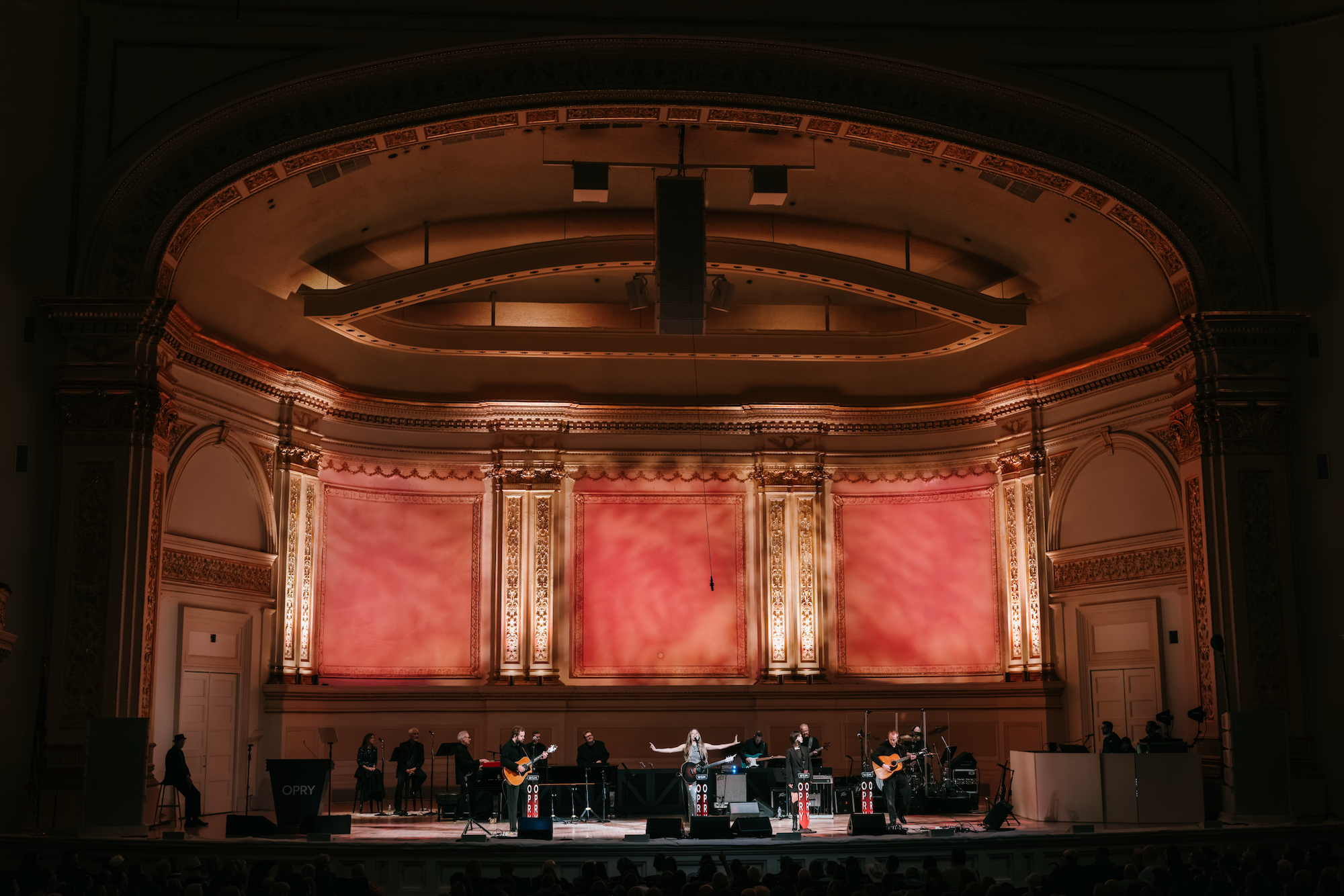
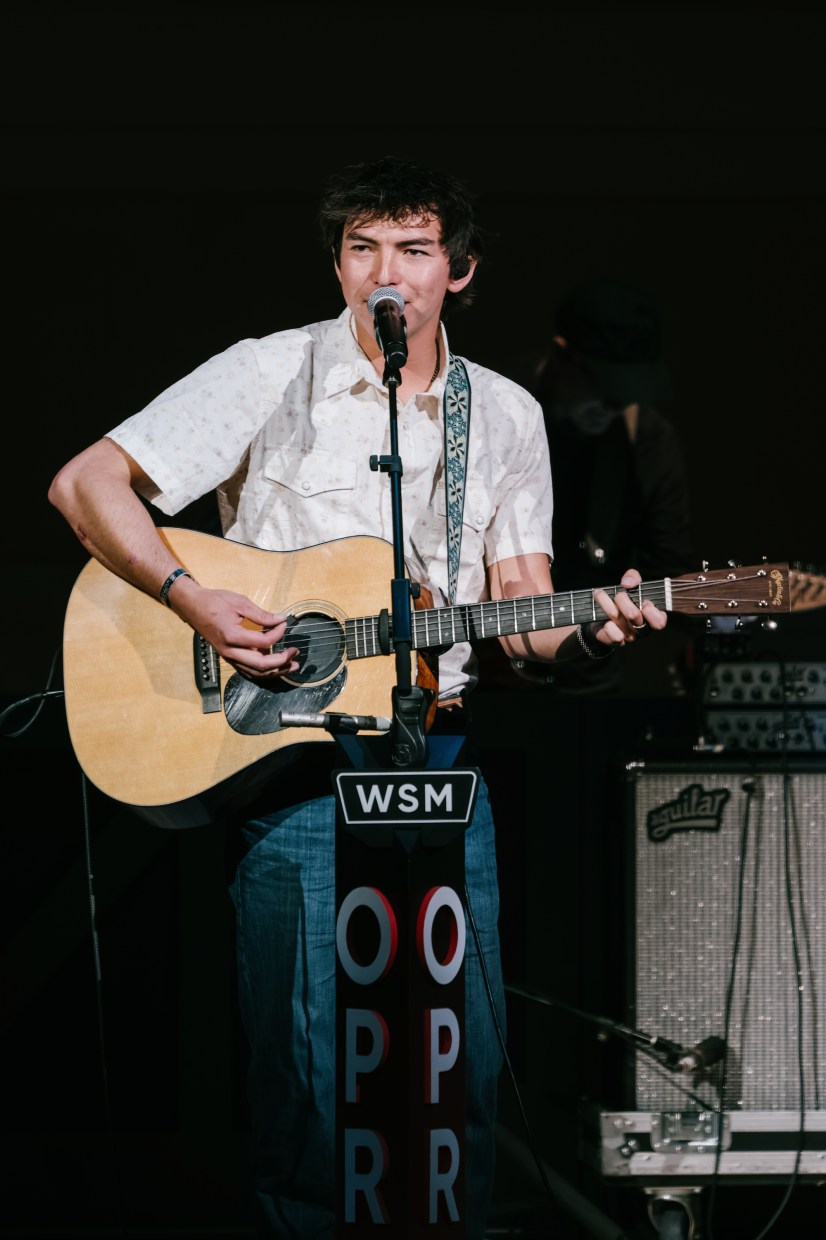
Amidst the elegant surroundings, the evening offered a prestigious Carnegie Hall debut for all six performers: Opry members Kelsea Ballerini, Henry Cho, Scotty McCreery and Rhonda Vincent, and special guests Wyatt Flores and The War and Treaty. Although there wasn’t a barn backdrop or a velvet curtain, the ivory walls were often lit up in red reminiscent of the Grand Ole Opry House in Nashville throughout the night.

Kelsea Ballerini performs with a gorgeous and iconic Carnegie Hall backdrop.

If you poke around long enough, there are hints of Carnegie Hall’s connection to country music – an autographed photo of Emmylou Harris in an upper tier, a souvenir program on display from Johnny Cash’s 1962 debut, and a collage of albums recorded at the venue, including the iconic one from Buck Owens & The Buckaroos in 1966. Of course, bluegrass fans also know that the Country Gentlemen and Flatt & Scruggs recorded landmark live albums from the fabled stage, too.

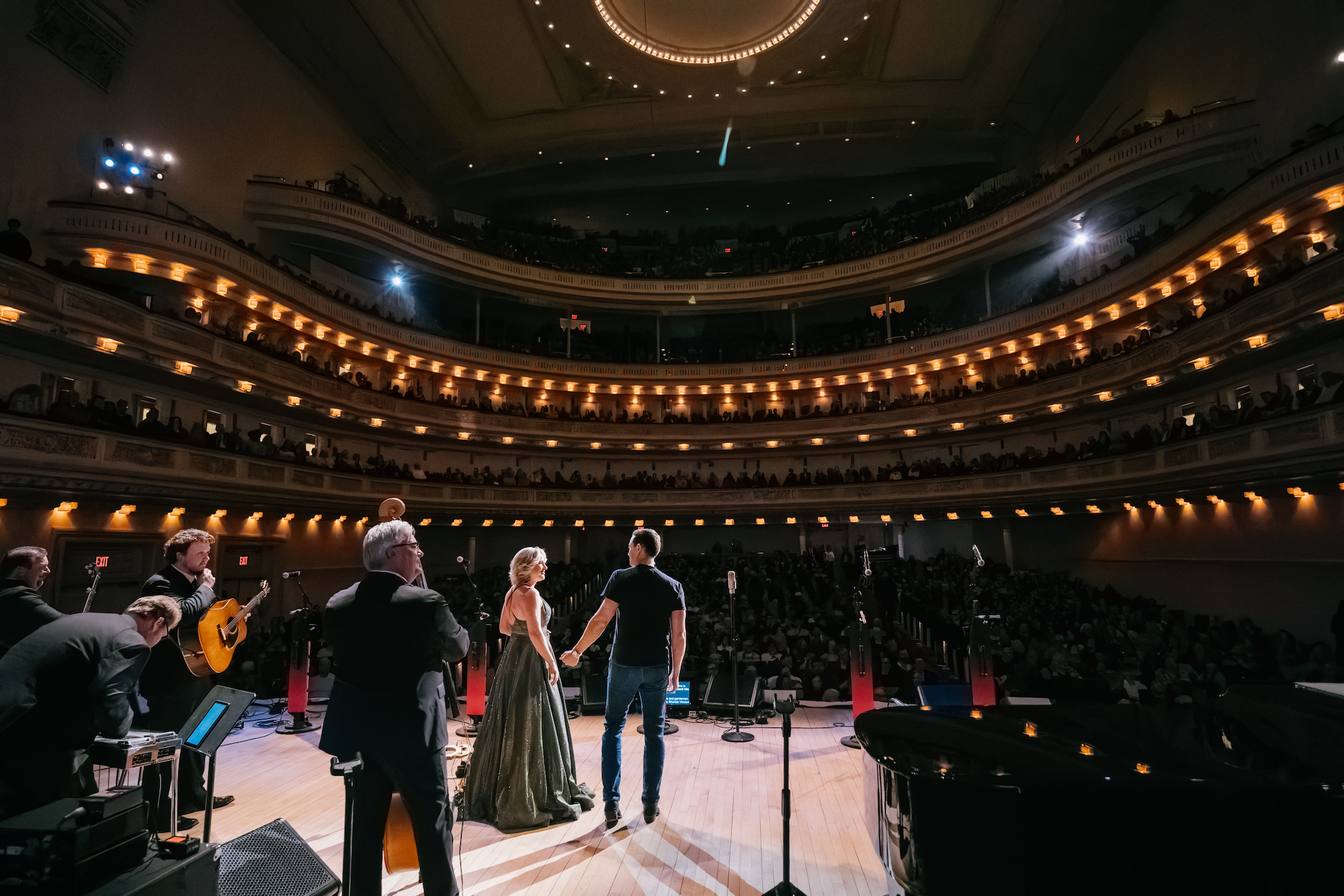
Scotty McCreery joins Rhonda Vincent & the Rage on stage at Carnegie Hall for “Blue Moon of Kentucky.”

Rhonda Vincent & The Rage carried on that bluegrass tradition by opening the show with a rendition of Bill Monroe’s “Blue Moon of Kentucky.” McCreery also stepped onstage to give an Elvis Presley-inspired performance of the classic song, which Monroe wrote. After some welcoming remarks from Opry host Charlie Mattos, Vincent resumed her energetic performance with “Kentucky Borderline,” a bluegrass cover of Dolly Parton’s “9 to 5,” and a pleasant sing-along version of John Denver’s “Take Me Home, Country Roads.” Keeping with bluegrass tradition, Vincent also introduced her beaming band members: Aaron McDaris on banjo, Adam Haynes on fiddle, Zack Arnold on guitar and vocals, and Mickey Harris on bass.

Wyatt Flores made his Carnegie Hall debut.

Wyatt Flores, a fast-rising, 24-year-old newcomer, admitted he was nervous to play Carnegie Hall since many of his favorite live albums were recorded there. However, the raspy-voiced Oklahoma native confidently delivered a well-received set of new songs, including “Runnin’ on E,” “Half the Man,” and “South Dakota.” Flores told the audience he was sharing this career achievement with his parents (on their first-ever trip to New York City) and his girlfriend (the inspiration for “South Dakota”).

The War and Treaty’s Michael and Tanya Trotter lifted up the crowd with “Five More Minutes,” then slowed things back down with an emotional interpretation of Otis Redding’s “Sittin’ on the Dock of the Bay.” Michael Trotter took a few moments to speak about the duo’s musical influences and the artists who inspired them, including Ray Charles, Rissi Palmer, and John Prine. They concluded the first half of the show with strong performances of “Yesterday’s Burn” and “You Can’t Hurt Me Anymore.”

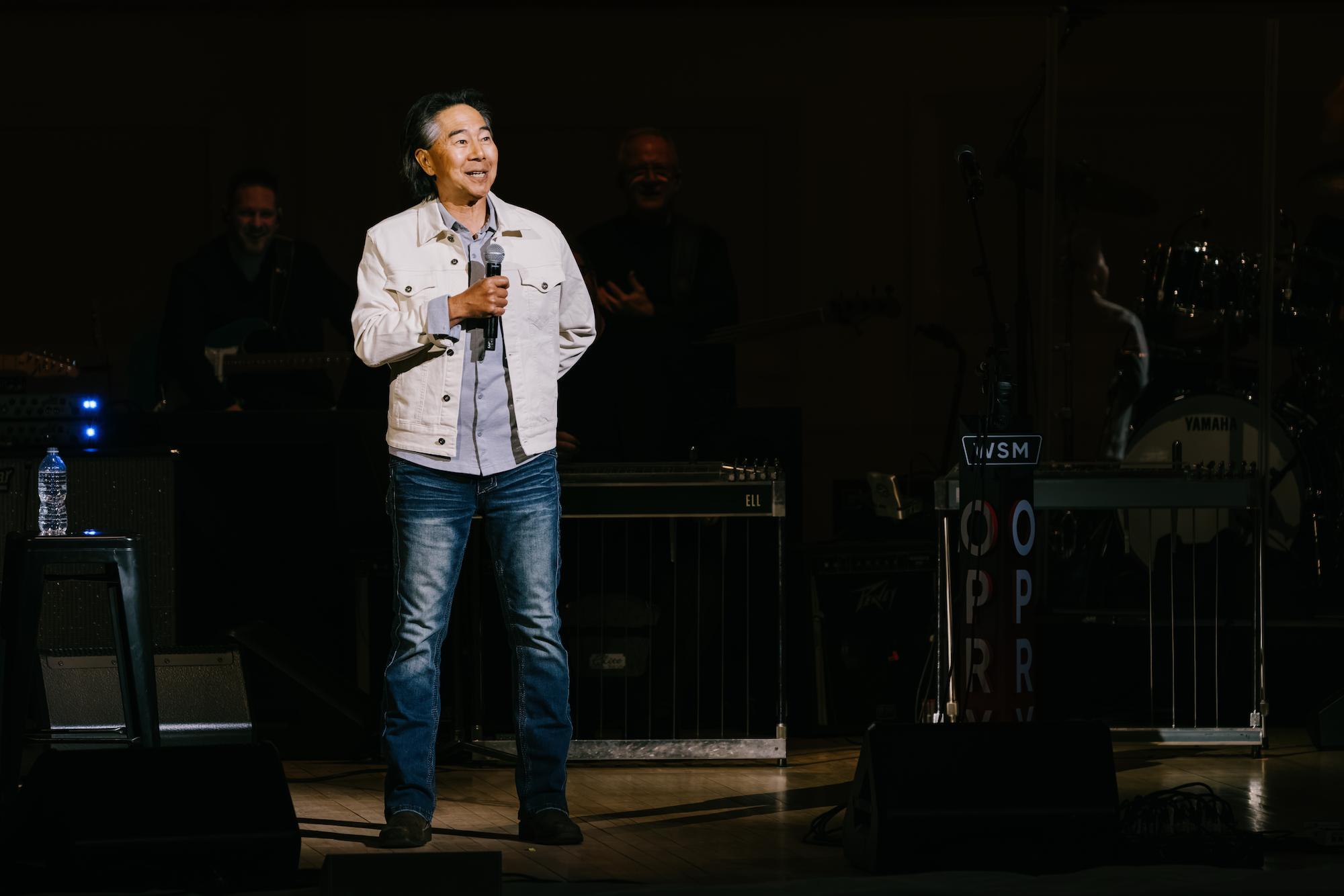
Grand Ole Opry member, comedian Henry Cho performs during the show.

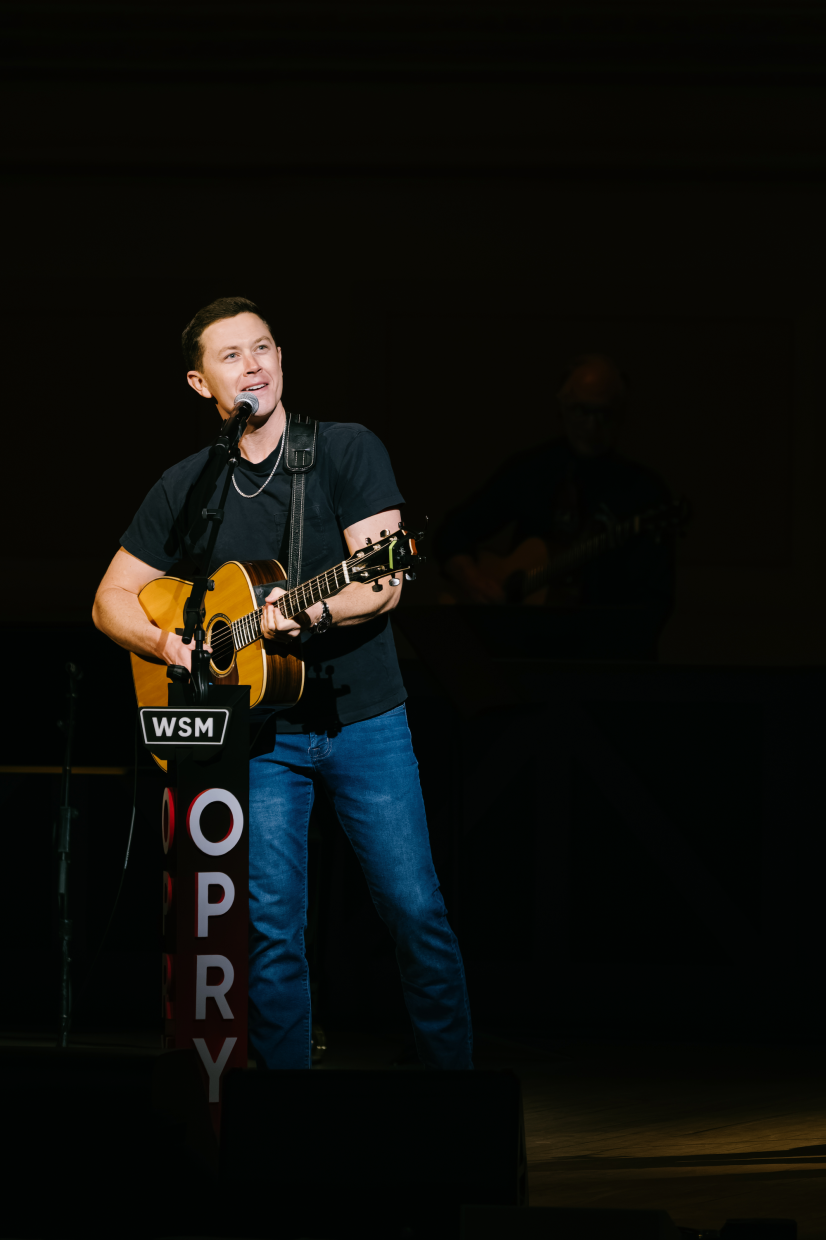
New York City is obviously a comedy town and Henry Cho rose to the occasion with a mix of signature quips and amusing stories about his wife, kids, and friends. Fresh off a European tour, the good-natured Scotty McCreery worked the stage as he sang some of his best-known radio hits, including “It Matters to Her,” “Damn Strait,” “Five More Minutes,” and “Bottle Rockets.” East Tennessee native Kelsea Ballerini closed the evening with conversational banter, an announcement that she’s now living in New York City, and a country-tinged selection of fan favorites, such as “Baggage,” “I Sit in Parks,” and “If You Go Down (I’m Goin’ Down Too).”

‘American Idol’ winner and Grand Ole Opry member Scotty McCreery delighted the NYC audience.

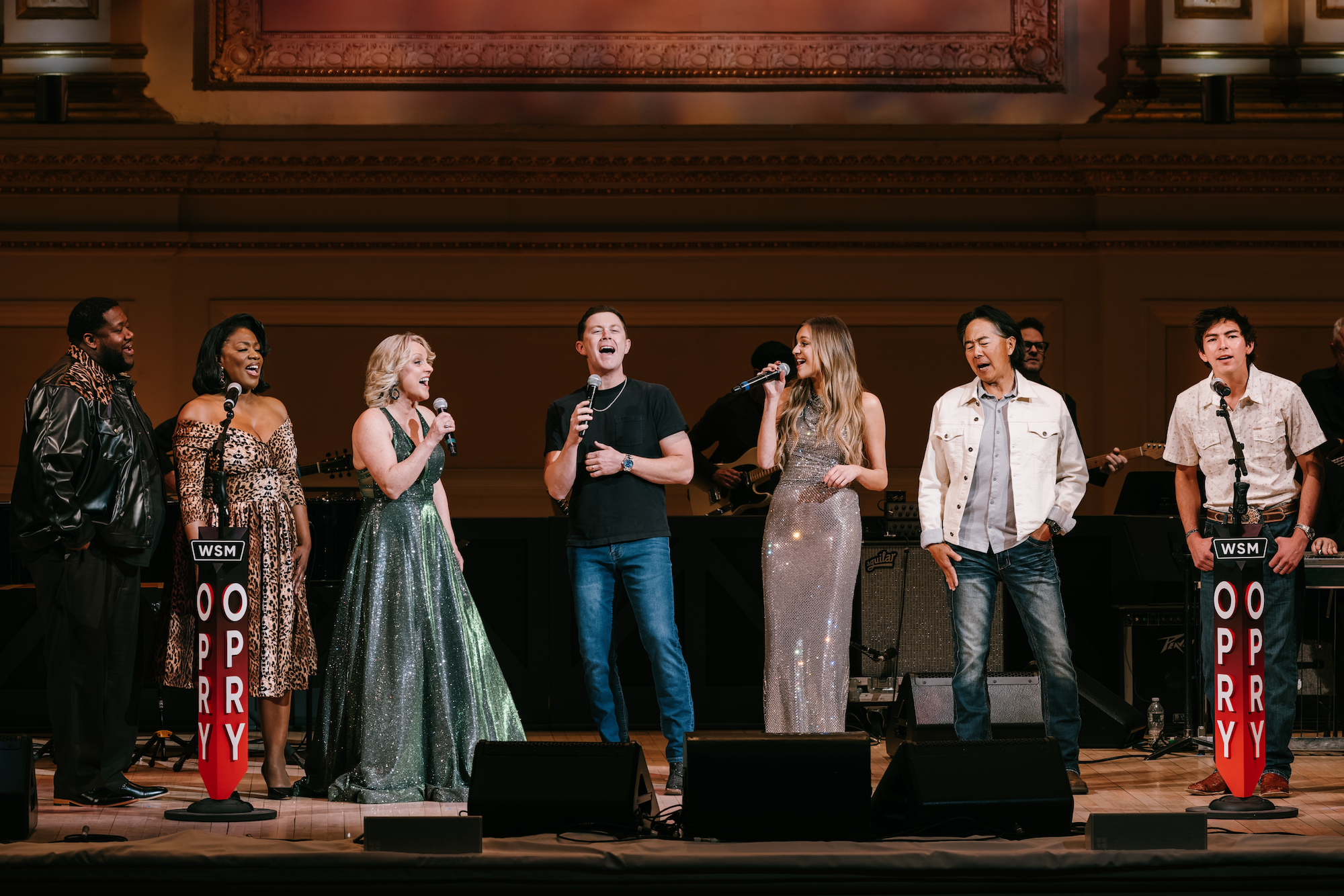
Among the night’s performers, Ballerini has surprisingly been an Opry member the longest. Prior to joining the roster in 2019, she would often sing a country classic during her guest appearances. At Carnegie Hall, she revived “Make the World Go Away,” which she learned from Martina McBride’s 1995 album of country classics, Timeless. She also shared her belief that country music is for everyone, a fitting comment on a night that explored the breadth of the genre. Many of the Opry’s special nights conclude with an all-sing finale of “Will the Circle Be Unbroken,” and this performance was no exception.

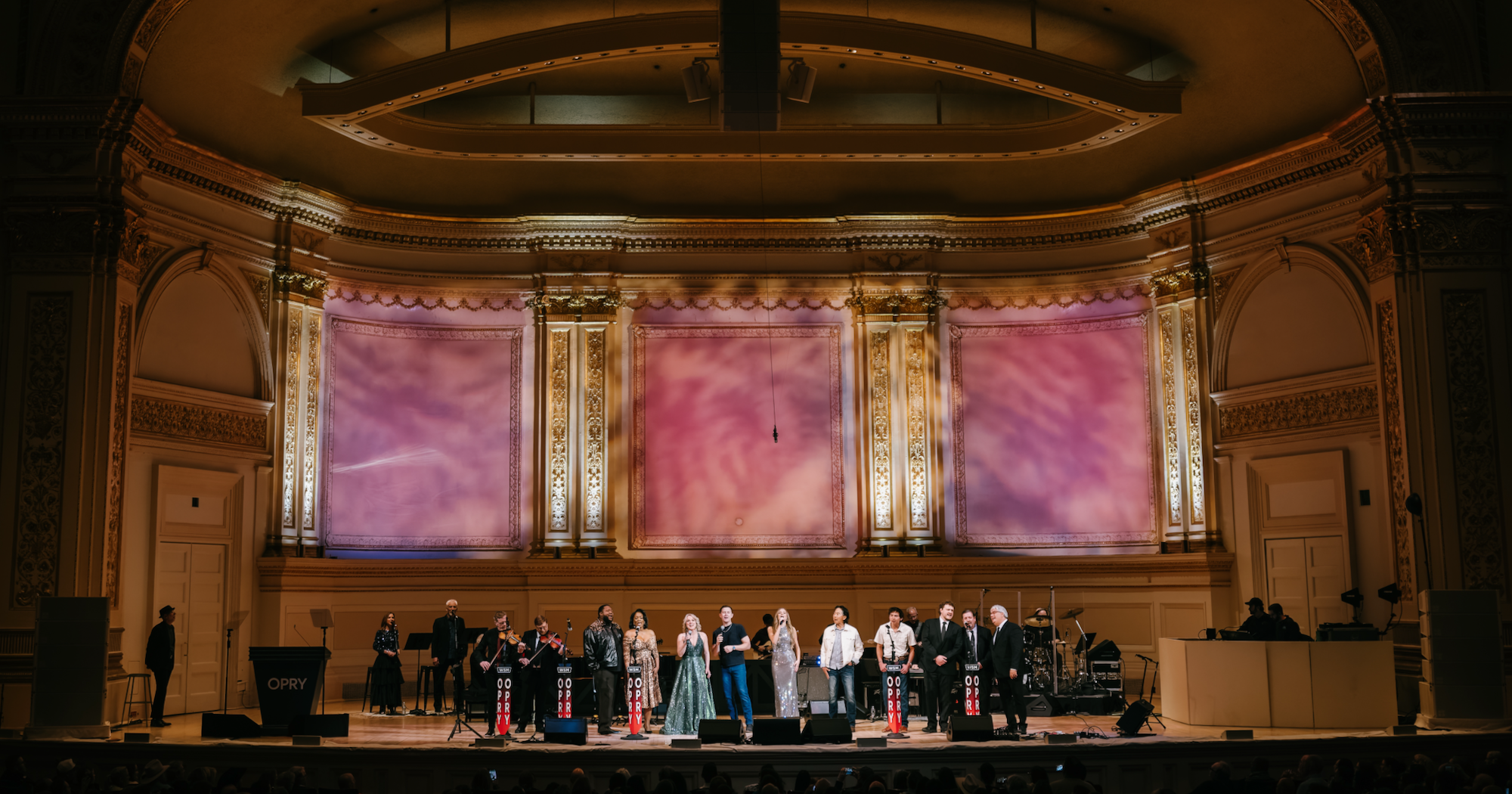
The star-studded cast of the Grand Ole Opry at Carnegie Hall sing “Will the Circle Be Unbroken” together to conclude the evening.

During his hosting duties, Mattos mentioned that Carnegie Hall opened in 1891, just one year before the Ryman Auditorium in Nashville, the Opry’s former (and still occasional) home. Yet this is only the show’s fourth time at Carnegie Hall, following visits in 1947, 1961, and 2005. The fortuitous timing for this event is part of Carnegie Hall’s United in Sound: America at 250 series and coincides with the Opry’s 100th year. (The world’s longest-running radio reached that milestone on November 28, 2025.) With country now reaching more listeners than ever before, here’s hoping for a New York City encore as the Opry’s new century begins.


All photos shot by Fadi Khelr, courtesy of the Grand Ole Opry. Lead Image: The entire cast of the evening return to the Carnegie Hall Stage to perform “Will the Circle Be Unbroken” together.

The Many Perspectives of Rissi Palmer

Rissi Palmer is putting her lifelong love of country music into Perspectives, her first project in six years. With three tracks produced by Shannon Sanders and a fourth by Dan Knobler, the new EP places Palmer back in the artist spotlight after a period of time focused on personal and professional evolution.

Palmer also hosts an Apple Music country radio show, Color Me Country, which spotlights original music from artists of color. But there’s even more to the story. She’s collaborated on a children’s book titled Color Me Country: A Celebration of Black Women Who Shaped Country Music and she’s also wrapped a memorable tour called The Trailblazing Women of Country, where she performed some of the best-loved songs from Patsy Cline, Loretta Lynn, and Dolly Parton. Off the stage, she’s devoted more time to her two daughters following her divorce, while still ramping up to the release of Perspectives.

Though she’s based in Durham, North Carolina, Palmer caught up with Good Country in Belfast, Northern Ireland, during the Your Roots Are Showing conference. At the event’s opening night concert, she sang “Old Black Southern Woman,” a heartfelt ballad that touches on the loss of her mother when Palmer was just seven years old. Perspectives also offers a cover of the SteelDrivers’ “Can You Run?” as well as an original song titled “Good For Me” (about diving back into the dating pool) and a rendition of a Loretta Lynn classic, “Somebody Somewhere.”

“All these things came together, and Shannon so graciously decided to be a part of this with me,” Palmer recalls. “He said, ‘Well, two of these songs sound very bluegrassy. What if we just did the whole project like that?’ I was like, ‘That’s kind of dope,’ because I hadn’t done anything like that. And again, perspectives. Two Black musicians, making this very bluegrassy, but still very soulful, project. And I decided midway through that we’re going to call it Perspectives.”

What was on your mind as “Old Black Southern Woman” was taking shape?

Rissi Palmer: I wrote that with Kyshona, and that was our first time writing together. Kyshona has a way of getting straight to the heart of whatever it is that you’re talking about. I had the idea for the chorus, the “ooh-ooooh” thing, in my head, and I hadn’t really started writing anything. So, we sat down and we started talking. When you go to her house, she’s got all these really cool plants from her mom and her grandma. We talked about that, and I wanted to write something that paid homage to my mother but also acknowledged all the other women that came in and helped raise me.

It’s a universal thing, too. Everybody thinks of getting older as really bad, and I don’t know what I thought my 40s were going to be like, when I was in my 20s. I honestly don’t know, but I don’t feel old! [Laughs] I think I thought 40 was going to feel different, but 40 actually feels just like a creakier 25! And I see the blessing in it. I feel really lucky to be here, because I outlived [my mother] and I have babies now. I just wanted to write something that says it’s OK to get old. It’s actually really cool to be able to get old and to see the fruits of your work.

I think the title kind of throws people off because they’re like, “Oh, this is a song about some Black people.” But it’s actually about getting to be old, seeing the blessing and good in that, and making the most of it.

When you sing that song now, it gives you a chance to talk about your mom and share her memory. Is that extra special for you?

Yeah. It was hard, I’ll be honest. The first few times that I sang it were really hard and I would cry. I’m starting not to cry when I sing it. Especially when we get to the lyric, “Every curse my family claimed ends with me.” That’s always where it got hard. You don’t realize how hard it is to overcome and not repeat mistakes.

Was it a dream for you as a kid to become a singer?

I’ve always known. I don’t know how, but I’ve always known that this is what I wanted to do. In that way, I’m very lucky. It was never, “Maybe I should be…” I would say that I was gonna do other stuff, just to make my parents happy, because I figured that they were probably really scared about me wanting to be a singer. So, I was like, “I’ll be a lawyer.” They’ve got a lawyer. My brother is a lawyer, so they got one. So, we’re good. [Laughs]

Now I did not always want to be a country singer. I wanted to be a singer and I wanted to write songs. I knew the kind of songs that I wanted to do, but I didn’t call it that. That didn’t become clear to me until I met my first managers, and then that was when I realized, “Yeah, I guess that is what I want to do.”

Is bluegrass an influence for you?

I like bluegrass! I’m a Rhonda Vincent fan and I’ve always been an Alison Krauss fan. And on Jon Randall’s first record he has this really cool song with Vince Gill called “My Life.” That’s one of my favorite records, by the way. It’s called Walking Among the Living.

I’ve always been a fan. I’ve always listened. I’ve always had those things on my playlist. I just never thought of myself as that, because there’s a very distinct vocal style. There’s a very distinct cadence in which they’re singing. A lot of the people on the show last night [at Your Roots Are Showing] were just brilliant bluegrass singers, and I never thought of myself that way because I can’t do that. Like, that’s not what I do. I didn’t really think of it as something that I could do. I used to write stuff like that all the time and I tried to give it to other people. But it was Shannon – Shannon was the push. Shannon was like, “Let’s do this.”

What was the Trailblazing Women of Country tour like?

It’s one of my favorite things that I’ve ever done. It was an all-female band and it was myself and Kristina Train, who’s a brilliant singer, as the two leads. We split the show in half, usually there was an intermission between Kristina and me, and we sang two songs together. You know how it is to be a fan, but you don’t necessarily know everything by a person? Patsy, I knew. For Patsy, I didn’t even have to study, because I knew all those songs. Most of my Dolly stuff I knew, but there’s a lot of words in “Coat of Many Colors”! And then Loretta, I’ll be perfectly honest, I had not gone super deep into Loretta’s catalog, so that was fun. That was the one that I needed the most work.

And I loved it! We did mostly theaters. I played in places I never went before. I went to Alaska. We did Wyoming – and you haven’t lived until you’ve driven across Wyoming! It’s just space! It’s wild! With the audiences, it was really funny how they varied. Sometimes we would make jokes, and sometimes people would say things to me. Like, someone asked me once, “Where’s your blonde wig?” when we got to the Dolly part. And I was just like, “Did you ask Kristina that?” They didn’t say anything, and I was like, “Girl, why would I cover up my fabulous hair?” and everybody started laughing.

You know, we got some weird comments. There were some people that (gasps) when I walked out. And afterwards, people would say really kind things. I never had anything rude said to me. But I did notice the [look of surprise] at first. It was good for me. It reminded me about why I love country music. I think I needed that, because you spend so much time, like with Color Me Country, talking about what’s wrong with the industry and talking about ways that we’ve been slighted or ignored. Then you lose sight of why you even started this in the first place, and that was why. It’s because of those songs. It’s because of those women. It’s because of the connection that the audience had with that music.

I can’t tell you how many people came up and told me stories. I met one woman who actually saw Patsy Cline performing on the bed of a truck when she was a kid. And I was just like, “That’s the most amazing thing I’ve ever heard before.” That’s country music.

You’ve got a lot of things coming up. Where would you like this new music to take you?

That’s a great question. I put so much into other facets of my career for the last few years. I put a lot into my children, because of our changing family situation, and just wanting to be there for them. At the same time, I was wanting to experience the career wave that I was having and trying to balance that. So, my own music took a backseat. I started feeling like, “I think people forget that I sing.” And really what I’m saying is, “I think I forgot that I sing,”

I was still doing shows, and still doing things in between, but it was like, “I don’t want everybody to forget why I’m here.” Really I’m saying, “I don’t want to forget why I’m here.” The Trailblazing Women of Country really cemented that for me, especially the “country” part. I’ve been experimenting and trying different things – and there is a project that comes later – but I wanted to do this. I felt like this was a really important statement to make, like, “This is why she talks so much shit.” [Laughs] Because this is where I started and this is what I do.


Photo Credit: Dire Image