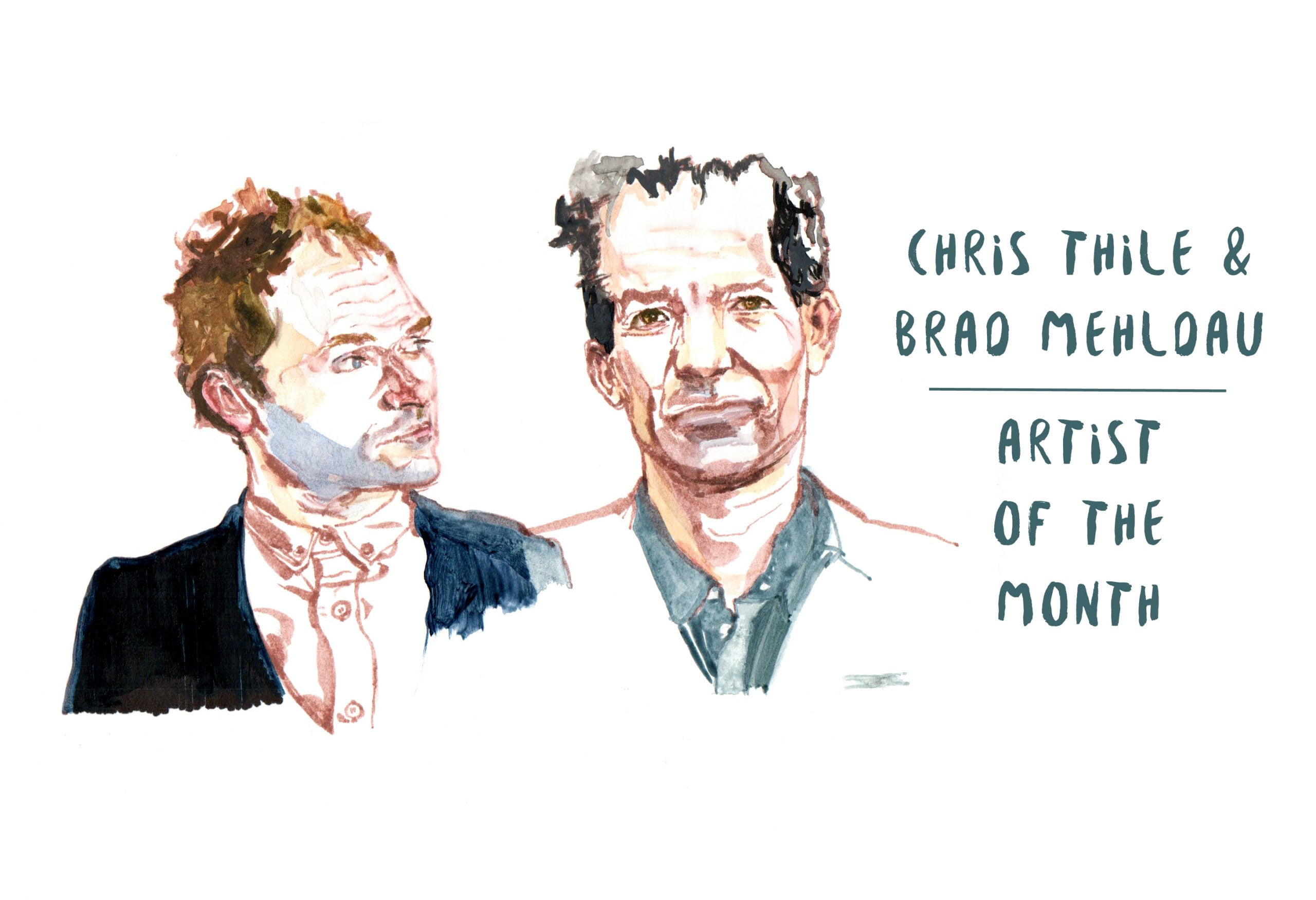
Chris Thile and Brad Mehldau: Playing Against Type

The repertoire for mandolin and piano isn’t exactly teeming with arrangements. Compared to other duets, those two specific instruments haven’t conversed with one another as often, but consider that dearth a starting point from which anyone daring enough can create their own dialogue. Mandolinist Chris Thile and pianist Brad Mehldau, virtuosos in their own right, have concocted just such a conversation — by way of original composition and cover, alike — on their first duo debut album, Chris Thile & Brad Mehldau.

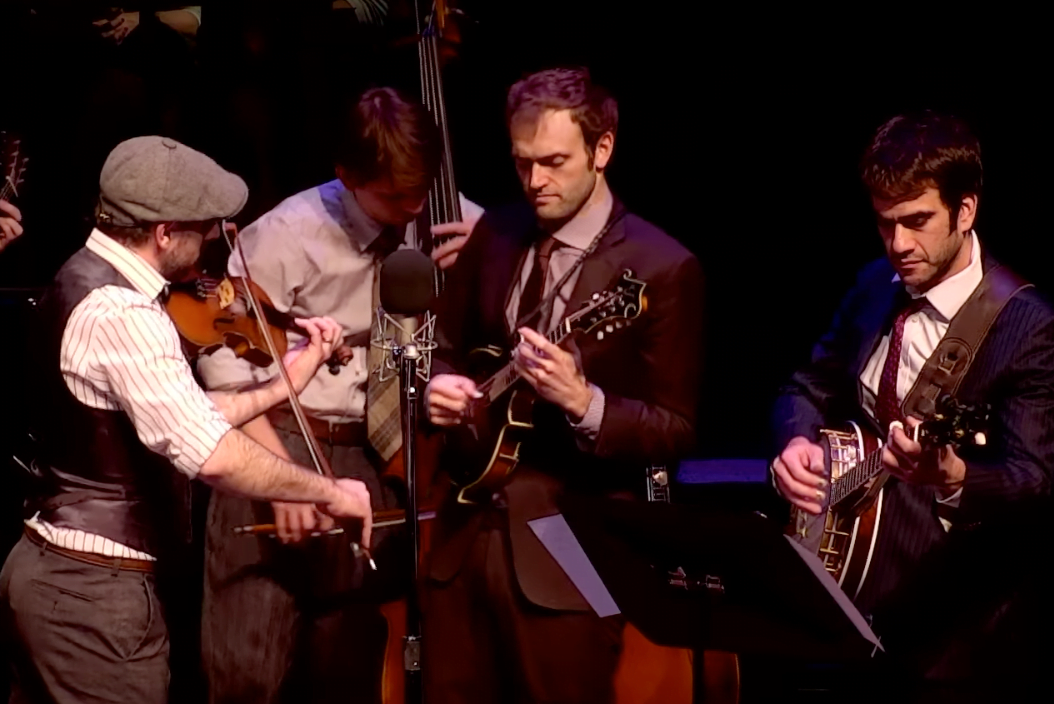
The pair first experimented with what they could “say” when they performed a handful of live shows together in 2011 and briefly toured later in 2013. But getting to the studio would take some time. Thile sums up the reason in one word. “Schedules,” he admits, with a sharp chuckle. “We both have pretty voracious appetites for musical projects, and we both love to perform. The little touring things that we had were always coming in the cracks of other projects.” Those projects ranged from Thile’s role in progressive bluegrass band Punch Brothers to Mehldau’s eponymous trio, as well as a whole host of solo, duo, and collaborative projects in between.

The two stay busy, to put it mildly.

Thanks to their respective projects, Thile and Mehldau have learned the art of accommodation, but embarking on this particular album required a novel approach. “I felt like Chris and I were orchestrating for each other a lot,” Mehldau says. “We were finding the right ‘instrument’ to play for each other. Sometimes Chris gave me a drum part during my piano solos, sometimes I gave him low cellos during his. That orchestrating is a big part of the fun of the project.” Beyond that, Thile and Mehldau needed to find a balance between airy mandolin and weighty piano. Mandolin lacks dynamic range. It excels at being soft — Thile compares all the ways it can “whisper” to the myth about the Inuit’s many words for “snow” — but other instruments tend to sacrifice their own clarity to make way for it. “The challenge for me was to not drown out Chris with the piano, because the instrument is simply louder and bigger,” Mehldau explains. “I really enjoyed that challenge, though.” Thile credits Mehldau’s ear with helping the two instruments find a shared space. “He’s such a sensitive listener,” he says. “He immediately intuits the potential issues.”
Listening, as an exercise, has shifted for Thile ever since he took over hosting A Prairie Home Companion. “I feel like my ears have grown four or five sizes,” he says about his new gig. “I’m listening to everything with far more open ears. I’ve often listened to music like, ‘What can this do for me and my musicianship?’ as opposed to listening for pure joy. But joy is improving. Within my craft, I can get so mercenary about it. That hunger to improve can result in unhealthy listening habits, and I feel like this show is actually helping me grow out of that.”

As critical as Thile may be about his listening habits, he has always heard outside the box. It’s a connection he shares with Mehldau. Both men have covered artists seemingly antithetical to their styles, such as Beyoncé or Nirvana but, in that kind of play, they’ve forged edifying creative spaces, and the same is true on Chris Thile & Brad Mehldau. The 11-track album features an array of covers. There’s Gillian Welch’s “Scarlet Town,” Bob Dylan’s “Don’t Think Twice It’s Alright,” the 17th-century Irish tune “Tabhair dom do Lámh,” and more. “I think the reason why it worked so well was because of the common musical ground Chris and I share,” Mehldau says. “Roots rock, Bach, Radiohead … a whole bunch of stuff.” In short, there’s a level of fanboy about the album.

Thile and Mehldau went back and forth trading favorite songs, some familiar and some not. Thile says, “He and I have operated that way for a long time, as individuals, whether it’s something we’re listening to because we love music and hope that this thing we’re listening to seeps into the stuff we’re creating on our own, or whether it ends up as a performance piece or something we record.”

One particular track shows off the imaginative possibilities inherent in piano and mandolin, or at least when Thile and Mehldau play them. It’s a striking seven-minute cover of the jazz standard “I Cover the Waterfront.” Mehldau takes over the song from Thile’s anxious mandolin shortly after the 1:30 mark, at which point Thile concentrates on singing. What results is one of his most diaphanous vocals thus far. “I really enjoyed it because I had all this time to listen,” he says about the song’s extended phrases. “So then it was like an out of body experience for me. When I would start singing, I didn’t feel like I was singing, I felt like I was listening to myself sing.”

If there’s a parallel to Billie Holiday’s infamous version, it’s because she influenced Thile. “It’s so mournful and beautiful and delicate but strong,” he says. Thile captures those qualities in bits and pieces, but puts his own hurt on the track, as well. Mehldau says, “I think it’s a double challenge for Chris when we think about the possibility of a cover. Sometimes with vocals, the original performance is so iconic, it’s not immediately clear what more there is to do. I was just thrilled by what Chris did with all the covers that he sang on — he got to the heart of what was great about the song in the first place, lyric included, but also just completely made it his own, in this very easy-going manner, like he wrote the tune himself.” Thile, for his part, admires what Mehldau accomplished on “I Cover the Waterfront,” calling it a “masterpiece of a solo.”
As much as Mehldau brings a jazz and classical sensibility to the album, playing with Thile revealed a new quality to his own style. “In some deeper sense that is hard to put in words, I really have discovered another kind of musical expression with Chris, but I would say it was like unearthing something inside of me that I didn’t know was there,” he says. “It’s definitely not the jazz guy from New York; it’s the hillbilly who was born in Jacksonville.”

Aside from covers, Thile and Mehldau include a handful of original compositions on their debut, like “Noise Machine,” a song about a restless infant and sleep loss. Thile wrote the song to his son Calvin, but it ends up taking on the form of an ode indirectly addressed to his wife, actress Claire Coffee. “Whatever I go through pales in comparison to what she goes through, and she has a full-time job,” he explains. “I’m doing what I can, but I travel and he needs her because he’s still nursing.” The song oscillates between explaining sleep’s incredible fun to Calvin and making sure he knows just how lucky he is to have the mother he does. “So I sing just above the noise machine. Your mother is a hero,” Thile sings on the chorus, extending his delivery while Mehldau dances around him on piano. In the lyrics’ nuanced construction, Thile hit his intended mark — a way to praise Coffee for all she does — without becoming overly saccharine about it. “I’m amazed at my wife and won’t hesitate to praise her, but a song where I’m like, ‘Baby you’re great,’ doesn’t feel like the right approach in this case,” he says. As for sleep, that’s still hard to come by in their house. “I wrote that song over a year ago now and I thought for sure it would only be relevant to me for a little while, but, no, it’s still very relevant,” he says.

Chris Thile & Brad Mehldau is, at turns, compelling, curious, and playful. The two create soothing music together because they bring such care and consideration for one another to the recording process. Each track contains a deep breath, of sorts — one that comes from Mehldau’s jazz approach and Thile’s bluegrass-tinged response. But Thile knows the real secret to the album’s success. It’s not a matter of experimentation or improvisation or the sheer gumption of taking two instruments and exploring the conversation that results. “The secret is for the piano player to be Brad Mehldau, and then it works real well,” he says with a laugh.


Lede illustration by Cat Ferraz.
Serving the Story: An Interview with Gabriel Kahane

If you’ve picked up a copy of the Punch Brothers’ new EP, The Wireless, then you’ve heard the work of Gabriel Kahane — the Brooklyn-based songwriter penned “Sleek White Baby” for the band. But Kahane’s skills far exceed that single song; in fact, he’s got a steady track record of beguiling works that range from his 2006 collection of short, hilarious interpretations of Craigslist ads to full-blown symphony commissions. Last year, Kahane released a stunning LP, The Ambassador, which examined the city of Los Angeles through songs that were stirring and poignant. With each listen, the album slowly reveals itself to be a richly complex and breathtaking work.

Kahane followed the summer release with a staged presentation of the record, which premiered in Chapel Hill, North Carolina, last October before moving on to the Brooklyn Academy of Music and UCLA. For much of the past year, Kahane has been crossing the country in support of the album. 

Your songs aren’t what most people would consider traditional folk or Americana music. But some of your work, like The Ambassador or Gabriel’s Guide to the 48 States, is still about distinctly American experiences. Is that something you’ve focused on in your work on purpose?

I don’t know that it’s something that I’ve thought about deliberately, but I did have this revelation at the beginning of 2014. I’d been sort of continually frustrated by journalists writing pieces about genre, people writing about my music and writing about genre like, “He’s a composer and he’s a songwriter!” I was doing this Q&A at some festival and suddenly it occurred to me that the thing that really unifies all of my work as a musician — whether if it’s in an orchestral realm or in a club setting where it’s just me and a piano and a guitar, or me with a band — is that I love telling stories. I think that the spiritual kinship that I feel with the folk tradition is very much about storytelling.

I realized that the best way to sort of side-step a conversation about musical sophistication — or why is this song in 11/8 or what are those weird chord changes — is to just make it clear that I’m first and foremost interested in telling stories, and whatever musical vocabulary is necessary to tell those stories is the vocabulary that I will go after. I am glad that I have a broad musical palette to draw on, but that musical vocabulary is only worth as much as it can enhance the telling of a story. If it becomes about doing some weird polyrhythm or some weird harmonic thing or some weird chord change as an end to itself, then I think it sort of defeats the purpose for me.

So you draw on your musical background just as a means to illustrate these stories as colorfully as possible, as opposed to sticking to one particular style?

I wouldn’t even say telling as colorful a story as I can as much as identifying the story I want to tell and telling it as truthfully as possible … whatever that means. Obviously, some of the stories that I tell in my songs are fictional and others are not. But the music, for me, is really in service of the story, and that’s how I would think of it.

You premiered the staged version of The Ambassador in Chapel Hill almost exactly a year ago. How has the year since been for you?

There’s been a lot of uplift, and there’s also been some frustration. The positive things that have happened are that I’m really, really proud of the piece that John Tiffany and Christine Jones and I made with those seven extraordinary musicians. I feel like we set out to try to find a different way to tell stories on stage through music, and it felt — both from a critical standpoint and an audience standpoint, in Chapel Hill and New York and Los Angeles — it felt like we were really getting our message across and that people were engaged in what we were doing and were moved by it.

The frustrating part is that, I guess there were sort of two frustrations. One is that my record label had basically checked out before it even got to BAM. To a certain extent, it’s understandable. The recorded music industry is in a total free fall. But it was definitely frustrating, given that their line from the outset had been, “Oh, this is going to be a slow burn,” and we had the rare luxury of a second phase of the album built in in the form of this staged piece in Chapel Hill and at BAM. There were some pretty serious missed opportunities in capitalizing both on the really generous press, and that we’d made something that we felt really good about, and that audiences were responding to in a really beautiful way. That was frustrating, and we’re still very much hoping to stage it again, but I don’t know when that’s going to happen, exactly. And then there’s been the other side of performing these songs, which has been outside of the context of the stage version.

This year, I’ve spent a lot of time on the road with the Punch Brothers, and will continue to do so in December, and that’s been really, really wonderful. Their audience has been incredibly generous toward me. And I think part of that is just a function of Punch Brothers training their audience in a beautiful way to be great listeners. I’ve had a really extraordinary time in a lot of really unexpected places singing these songs and telling these stories … and finding that their audience has basically been always game for it. That’s been a huge pleasure. It’s still a slog. Being a songwriter is a slog.

Even though you have really different styles, your and the Punch Brothers’ music fits together really nicely. Can you tell me more about your musical relationships?

I think something that Chris [Thile] and I have in common — and I don’t want to speak for him, but I’m going to speak for him, because he’s not here — I think we’re both interested in tricking people into listening to music that is more complicated than it sounds … which, to put it another way: I think we both are interested in making sophisticated music that sounds simple. I think very often, in technical terms, it has to do with writing melodies that are very singable, but having a shifting and murky harmonic space underneath that.

From a rhythmic standpoint and a harmonic standpoint, we’re trying to both honor the tradition of American song while also pushing against the walls that confine those forms. My suspicion, just based on the extent to which the audience has been receptive to my music, is there is some kinship there. On the surface, I’m playing piano and electric guitar, and it’s pretty far from what Punch Brothers are doing, but there are a lot of similar values there.

Have you found it frustrating to have been pigeonholed into specific roles as just a composer or just a songwriter?

Yeah, and I think the thing that was probably most frustrating for me for a long time — and I think this is finally starting to change — is that there was this idea that somehow became prevalent that I was a composer who started writing songs … when, in fact, it was the other way around. When I finished college, I moved to New York and I started writing songs. In 2006 was when I wrote Craigslistlieder, which I wrote initially to just sing in clubs and in bars, and the fact that it was kind of a classical piece was secondary. There’s nothing unapproachable about that music. The texts are so incredibly contemporary and so bawdy, like, “You looked sexy even though you were having a seizure,” or whatever. And so it was through that I started getting invitations to do classical commissions.

Then, for whatever reason, I was written about more in the context of being a composer for a while than being a songwriter. That was frustrating to me because I feel like I am first and foremost a songwriter, and actually, I’ve taken some steps to kind of limit what I do in the strictly classical world as it becomes more and more clear to me that my heart is really in being a songwriter. That’s both what I love doing the most, engaging in audiences in that way. And I think it’s also where my skill set lies the most clearly — in the relationship between music and words, and putting them together.

What do you see happening for you in the next year? Do you have a new record planned or are you going to keep working with The Ambassador?

I’m doing some tours in the Spring. I’m doing a tour with Brooklyn Rider, the string quartet, and that will be a lot of stuff from The Ambassador and also some other chamber music of mine for string quartet and voice. And I’m doing a tour with my friend, the pianist Timo Andres. But, yes, I am getting started on a new record. I thought I was going to be working on a big adaptation of a big novel, which will remain nameless for various reasons, and ultimately I decided that I wanted to do something that grew more from my own imagination.

The last three big projects that I’ve done — which I would consider to be The Ambassador, Gabriel’s Guide, and before that, the musical February House — they were all adaptations of one kind or another. Even though The Ambassador was all original words and original music, a lot of the stories that I’m telling are stories that are inspired by other popular culture — film, fiction, architecture, so on and so forth. There’s this way that a lot of what I’ve been doing has been referential. Not to say that I’m going to write a hyper-confessional singer/songwriter record, but there is something really appealing to me about making a new body of work that isn’t mediated by some source material, where I can just wake up in the morning and write really, really intuitively and not have to triangulate with some other source.


Photo credit: Josh Goleman

Get Off Your Ass: December’s Halls Need Deckin’

Gary Clark, Jr. // The Theatre At Ace Hotel // December 1

Corb Lund // Resident  // December 7

The Wild Reeds // Echoplex // December 8

Lee Ann Womack // The Canyon // December 9

The Steel Wheels // Genghis Cohen // December 10

Tribute to Linda Ronstadt // The Theatre At Ace Hotel // December 11

Michael Kiwanuka // The Fonda // December 12

Sara Watkins // The Troubadour // December 14

Brothers Osborne // The Belasco Theater // December 15

The Dustbowl Revival // The Hi Hat // December 15

Cody Jinks // 3rd & Lindsley // December 2-3

Ruby Amanfu & Friends // 3rd & Lindsley // December 4

Billy Strings // The 5 Spot // December 7

Birds of Chicago & Michaela Anne // The Basement // December 7

Mary Gauthier // Bluebird Café // December 8

Shawn Colvin // City Winery // December 14

Brent Cobb // The Basement East // December 15

Luke Bell // Exit/In // December 15

Gillian Welch // Ryman Auditorium // December 27

Robert Earl Keen // Ryman Auditorium // December 28

Jason Isbell, John Prine, & Kacey Musgraves // Grand Ole Opry House // December 31

Old Crow Medicine Show & Dom Flemons // Ryman Auditorium // December 31

Andra Day // PlayStation Theater  // December 1

Donovan // Symphony Space // December 2

Chris Thile // Town Hall // December 3

Steve Earle // City Winery // December 5

Kacey Musgraves // Town Hall // December 8

Cris Jacobs // Brooklyn Bowl // December 9

Steep Canyon Rangers // Town Hall // December 10

The Stray Birds // Rockwood Music Hall // December 15

Albatross // Rockwood Music Hall // December 16

Anais Mitchell // Rubin Museum of Art  // December 23

Tony Trischka // Joe's Pub // December 24

Nathan Bowles // Terminal 5 // December 28

The Passing On of the Experience: An Interview with Bob Boilen

A persistent, young Bob Boilen showed up to the National Public Radio offices every day for a few weeks in 1988 until he was hired on All Things Considered. With his foot in the public radio door, he began to actualize a vision for sharing music in the digital age and, thus, NPR Music was born. Boilen created the Tiny Desk Concerts, started and hosts NPR’s All Songs Considered, and is a musician himself, playing synth in his current band Danger Painters.

Earlier this year, he released his first book, Your Song Changed My Life, in which he tells an oral history of modern music through interviewing artists about the song that altered their career and, ultimately, steered them into musicianship during their formative years. As Boilen puts it, “My job as a writer is to sort of figure out what it is that connected their song choice to their current music. Like, they could tell me they loved it, and they could tell me why they loved it, but what I tried to do in the book is figure out how that connects to the music they now make.”

From Lucinda Williams to Trey Anastasio to Chris Thile, Boilen interviewed artists about their musical inspirations, connecting the dots to their current musical works as he wrote. The book points to an interconnected global music scene, the weight of familial influences, and the undercurrent of poignant songwriting and composition. It also highlights to a few chance meetings with music — like when a box of CDs literally fell off the back of a truck in front of St. Vincent’s Annie Clark’s house, and what those meetings with fate meant for the artist.

How did you choose the lineup of artists in your book, and did you being a musician yourself influence the artists you chose?

Everybody in the book I madly cared about, except for one person. I didn’t feel like spending my time on people I didn’t really love, and that’s true with just about everything I do. When I pick songs on my show, I rarely play songs I don’t like, so I started with people I really liked. And then it was really about availability. Like Jimmy Page happened to be touring — someone I’d always dreamed of talking with — and it just so happened he had a book coming out, a really beautiful photography book. Also Physical Graffiti had just been reissued. As he would say, “The mother of all double albums.” And he’s right. He was very fun to talk to. The music I love and the music I make are all one big ball of the same thing. I look for music with adventure, music that challenges … at least, challenges me.

In terms of Americana music and bluegrass music, it’s not my forté, but I always find things in the genre that I love. Pokey LaFarge’s dedication to that form and that sound is so real and honest. I don’t know anyone like Valerie June. Her voice is incredible and her songwriting is so good, and, as I hint in the book, I think it’s just beginning. The song that changed her life was “Imagine” by John Lennon, which I didn’t really ever imagine would be the case. She aspires to writing something with a deeper meaning, and a bigger reach, and I imagine she’ll do it.

She stops you in your tracks. Is there anyone you didn’t interview that you really wanted to interview?

Let me tell you about the one artist I interviewed who I didn’t really care for instead, and then we’ll do that. Trey Anastasio, of Phish, was the one artist in the book who I didn’t come to the table loving his music, because I don’t. It’s not that I dislike his music, but I’ve just never fallen for it. What I appreciate about him is, when an artist connects with fans, and fans connect with an artist, and there’s this back-and-forth that happens, that’s this little community that just pops up and disappears, and Phish does that almost better than anyone. I’ve really admired it, and I really wanted to explore it, and that conversation was probably one of my very favorites — if not my favorite. It was so surprising.

The book goes through a lot of artists who pick songs and you’ll say, “Oh, I love Josh Ritter. Of course he picked Bob Dylan,” and it goes on like that. But then you get these monster surprises, like Trey, who picked Leonard Bernstein’s piece from West Side Story "Somewhere," and then goes through this reasoning as to what it means to him.

You don’t really think of Phish and Leonard Bernstein, and that was the fun of writing the book. For him, it was just really about understanding music and music theory. That made him a great improviser, and Bernstein helped him understand how music works, and why certain tensions work and certain chords work, and so he tried to understand the theory of music. Once he did, he became really fluent at it, so he could be a great improviser. Chris Thile was not unlike that, either, who I madly love. He came to Bach — this Goldberg variation — but that makes a little more sense, because you hear that in the Punch Brothers.

Through hearing the surprises — and the ones you thought made sense — did it say anything to you about the natural progression of music, or even the global implications, of an Aussie like Courtney Barnett choosing Chicago’s Wilco? Did you come to any realizations or conclusions about the connections you saw?

It made me think a lot, because a lot of the people in the book lean a little bit older, so they grew up in households where there were physical music collections, be it vinyl or CD. But then you get to Ásgeir, who’s very young. There are CDs still, but I start to think about what is next. What does it mean to grow up in a household where everything is digital and there’s nothing to hold onto? How do you, as a parent, pass on your collection? I don’t judge it, but I grew up buying vinyl because that’s all there was. It makes me wonder how that experience becomes as impactful when there's nothing physical. There’s something about the passing on of the experience that feels like the physical means so much. So, Josh Ritter going through and finding records in his parent’s record collection, things like that, made me wonder. I don’t know what the future will be like.

Playlists?

But people are not going to pass on their Spotify playlists. I mean, there won’t be a Spotify! You can almost bet on it. It’s just the nature of the changing world. It really moves so fast.

I was a CD kid, but now I’m a Spotify kid.

Do you like it?

I love Spotify — specifically collaborative playlists. I think they are the coolest thing out there because you can see who contributed what songs. But, like you said, it’s hard to archive a playlist because it’s not physical.

If they unsubscribe or stop paying their subscription, what happens to their participation in the list?

It’s still public, but you can’t control the order. And you have to listen to the horrendous ads. Has the process of you connecting to music in the digital world changed, specifically with singles versus albums? Has that changed for you, as things have migrated to digital?

The thing that I miss most is the artwork. My favorite album this year is probably the Car Seat Headrest record, and I can barely describe the front cover of that record. That’s crazy. I know that you can judge an album by its cover. I’ve done it all my life, and so that process is gone. I no longer can just look through 60 things that I get in a morning, and say, "Oh, these four things …"

Do you think that democratizes the process at all?

No, because you can tell an album by its cover. The decision of the artwork is often made by the artist, so it conveys an aesthetic. It just really was a part of what that album was at that moment in time for an artist. These days, I mostly deal with downloads. I do like listening to music, so to speak, blindfolded. During the day, I’ll listen to a bunch of stuff that even sounds remotely interesting. I’ll rip, and then put it on a playlist. That’s a democratization process that I like a lot.

With All Songs Considered, I try to pick music people will latch onto the first time they hear it, because the odds are they aren’t going to listen to my show twice, so I try to pick songs that work the first time around, right off the bat. That democratized playlist shuffle is helpful there.

You have introduced me to many of my favorite bands, and I’ve never really thought about it like that; I’m specifically thinking of "Coffee" by Sylvan Esso.

Right?!

How could you not love that song? And now I have stalked that band all over this country, but I never really thought of you trying to pick the most available one for the show.

It came to me a couple of years into doing the show … that no one’s going to listen to the show twice.

When I first moved to Nashville, everyone told me not to go to shows every night. They told me, “Pace yourself, or you’ll get jaded by the music because it’s all around.” And I went to a lot of shows and, subsequently, went through a jaded period. Have you ever experienced that?

I find I get overwhelmed. When I was directing All Things Considered in the late '90s, I’d get lots and lots of handmade CDs, with their handwriting on the record, and it really made me connect with the fact that this is somebody’s life and dream. I try to hold onto that and never forget that. I mean, sure, I go to shows where I think, “You’ve got to be kidding me. I cannot imagine how you’ll make it." I certainly don’t care for it, but I also know that getting up on a stage is a brave act. Putting yourself in front of people and singing or playing your heart out is a meaningful act. We’re all humans looking for our place in life. If I keep that grounded thought, it really helps me. But, it doesn’t mean that I’m going to love and embrace all that I hear.

And, if you don’t like it, someone else might. I heard your interview with John Congleton where he talked about, when he hears certain music he doesn’t like, he believes it’s his problem or fault.

Yeah, that’s a really brilliant way to look at music, right?

I know, I thought, “Man, what a genius this dude is.” Do you ever have that issue?

I have huge blind spots in my taste.

We all do.

I’m not a fan of hip hop. I’m not a fan of beat-based music, so that eliminates a lot of music. What I’m careful about saying is, it’s not that it’s not good music — it’s amazing music — it doesn’t speak to me, and that’s okay. I think that what I’ve learned in writing this book is that there are some times in our lives — usually in those hormonal days — when you connect with a kind of music, although you may continue to love all different types of music as you grow up. Much of the Boomer Generation, like myself, thinks that Neil Young and the Beatles and all those other bands from the '60s and '70s are it and that no one's ever done music that good. Well, that’s crazy talk.

Thank you.

But, that said, ingrained in me is the love of a song that has a structure, because I fell in love with that in my hormonal years. I think what we have to do is respect it all. Even as a teen, I would think, “Oh, that’s shitty music,” “That’s really stupid,” and it isn’t that. As Congleton says, it’s kinda your own fault and your own failings, but accept that you can try to fix it.

Did your parents have an influence on your musical taste?

Not in a good way. [Laughs] My mom liked the Barbra Streisands and show music of the world, and I really really really don't like that music. And my dad is a big band enthusiast, of which I didn’t come to until a bit later. I fell really hard for the music of the '20s and '30s. But I grew up in a time that was so fertile for rock music in the '60s and '70s, and it was unfolding so fast. Plus, our generation was a generation that was rebellious against our parents, which I don’t really see anymore — which is amazing, really. And that’s what rock 'n' roll was all about. That was the nature of the beast.

I have one off the wall question: I saw a video that you made in 1988 of the chairs of NPR.

Oh my gah.

Personally, I think the video should have more than 778 views on YouTube. How have the chairs changed at NPR?

[Laughs] Thank you. We have nice chairs now. The fact is, the chairs are wonderful now.


Photo credit: Maggie Starbard/NPR

Chris Thile Accepts Garrison Keillor’s ‘Prairie Home’ Torch

In summer of 2015, Garrison Keillor announced plans to retire from his post as the longtime host of A Prairie Home Companion, the wildly popular radio show he created in 1976. With that announcement came another surprising piece of news: Keillor had chosen mandolin player and longtime BGS friend Chris Thile as his successor. Fans of the show — and critics, alike — were skeptical of the decision, The Atlantic going so far as to pose the question, "Can Chris Thile fill Garrison Keillor's shoes?" 

Flash forward a year-and-a-half and we're about to find out, as Thile's first day as full-time host is this Saturday, October 15. What began as a few guest slots on Keillor's incarnation of the show has since become something of a torch-passing, the radio veteran hand-selecting Thile — known throughout the roots community for his work with Nickel Creek, the Punch Brothers, and as a solo artist — and calling him personally to gauge the musician's interest in helping to write a new chapter for his beloved show.

"I listened to Garrison’s voice in my living room before I really could differentiate it from that of my father’s voice," Thile says. "It’s kind of all swirling around in the living room, and Prairie Home Companion was there with Where the Wild Things Are and my dad’s records and mom reading the Lord of the Rings to us. I might as well have been getting a call from Gandalf.  

"I let it go to voicemail. I was on tour and I figured, 'He probably wants me to play on the show next Saturday or something. I’ll just let it go to voicemail.' I checked it and he said, 'Uh, Chris, I have something I think might be of interest to you I’d love to talk about. Give me a call.' So I steeled myself and called him back and he started outlining the plan that we’re in the middle of implementing now and I was just uncharacteristically silent for a little while trying to process it. I talked to my wife and started daydreaming about the whole thing a bit, called him back the next morning and said, ‘Now did I understand you right?’"

Before he knew it, Thile was dipping his toes into the Prairie waters, hosting two shows in February of 2016 that featured guests like Ben Folds, Sarah Jarosz, and his band the Punch Brothers. During one of those shows, Thile and company debuted a new song, "Omahallelujah," in advance of that weekend's Super Bowl game between the Carolina Panthers and the Denver Broncos. For his permanent tenure on the show, he plans to write and premiere a new song each week and keep a steady roster of guest musicians. His October 15 episode will feature Jack White and Lake Street Dive. 

Evidence points to Thile's take on Prairie Home to lean more heavily on music than Keillor's did, although he has made it clear that he and his team will remain reverent to the variety show format that sets the show apart from its talk-based counterparts. He also, especially given the timing of his first handful of broadcasts, will touch on current events, including the November 8 election, although he doesn't plan to be too forceful in his politics. "That’s something that’s kept me up at night on occasion," he laughs. "I won’t shy away from it, but maybe my mystification will be comforting to people."

His biggest goal, though, is to follow Keillor's most-repeated piece of advice: to be himself. "It’s so tempting, being in front of that microphone and that audience, to start adopting not only Garrison’s demeanor but his outlook, the cadence of his speech, all of those kinds of things. I think that’s an important piece of advice to hear again and again — to make sure that I’m not doing my best Garrison Keillor," he says, then adds with a laugh, "Because I’ll only ever be a pale shadow of the real Garrison Keillor."

While Thile has his own plans for the show, fans of Keillor's needn't worry: They are in good hands.

"Garrison’s given us this world that we can poke around in," he says. "It’s not high-stakes like our world, but it’s fleshed out like our world. It’s the illusion of reality, the illusion of depth and an order of things that suggests reality. We’ve had that space to escape to for 40-plus years. It’s my job to make sure that people continue to have that space. I think it would be a tragedy if we allowed that space to disappear after Garrison says goodnight. "

Old, New, Borrowed, and Blue: A Conversation with Sam Bush

I first heard Sam Bush in the early 2000s — I was 11 or 12, probably — when my dad brought home Glamour & Grits. The CD jacket was a minor epiphany. Here was this wildcat-looking guy wearing big, black shades and a cheetah print headband. In his hand was a busted old Gibson mandolin. Not a Les Paul. Not a Strat. A mandolin. Something in my tiny little music-obsessed mind said "DOES NOT COMPUTE."

From there, I found New Grass Revival, the genre-expanding string band founded in the early '70s. I started with On the Boulevard, featuring R&B expatriate John Cowan and a very cute-looking banjo player named Béla Fleck, and moved on to Fly Through the Country, where Sam’s Duane Allman-inflected slide mandolin solos gave my pubescent mind something else to struggle to categorize. Through my teenage years spent banging on guitars in garage bands, it was Sam Bush who kept me holding out hope that there could be something interesting — something cool — in the otherwise hokey genre my dad loved called bluegrass.

Though I wasn't around to witness the string band world of the '70s, I’ve learned to revere those heady days. All my heroes were buddies: There was John Hartford, the hip eccentric with steamboat stories; Norman Blake was the traditionalist who looked more like a train conductor with his wire-rimmed glasses and worn-out shoes; and Tony Rice landed somewhere near Richard Petty on the redneck scale and mostly dressed like a lounge singer, but he and David Grisman had dominant 9th chords, goddammit, and they weren’t afraid to use them. Sam Bush, on the other hand — Kentucky-born mandolin-toter though he may have been — was cut from a different cloth. He was rock 'n' roll, 100 proof, who managed both to piss off Bill Monroe (“Stick to the fiddle, son”) and to introduce the Big Mon’s licks to a new generation.

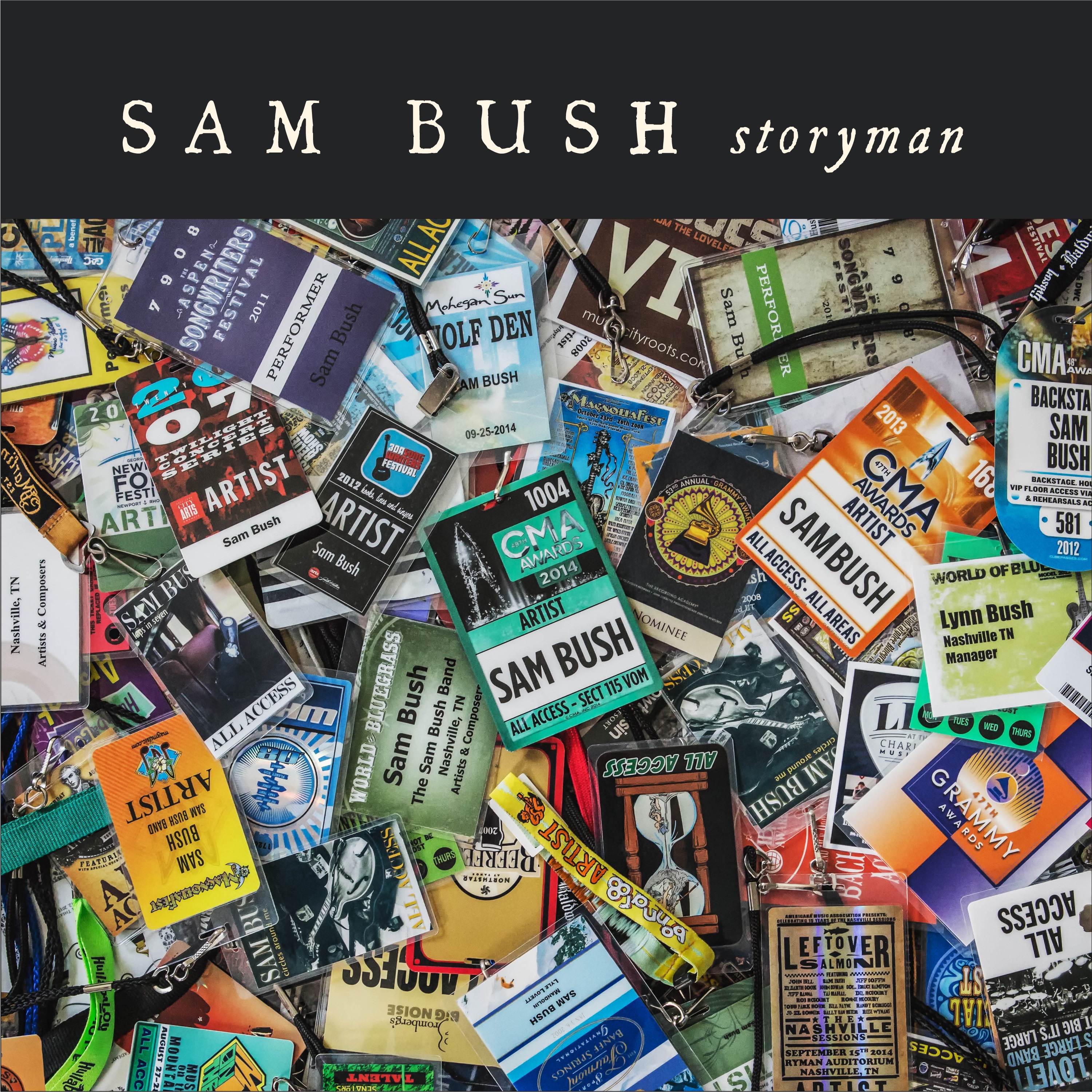
I got to talk with Sam this week about his new record, Storyman. We touched on his songwriting process, festivals in the 1970s, and the future of his instrument of choice: the mandolin. These days, 46 years into his career, he’s often praised with patriarchal titles — Father of Newgrass, King of Telluride — but while he embraces his role as elder statesman, I got the sense that he mostly thinks about playing music, discovering new records, and writing songs with new friends or old heroes — for a man in his fifth decade of professional music making, he still brings to the stage a surprisingly joyful, boyish energy. In fact, if you see him off stage at a festival, he’s probably jogging to another set, mandolin case in hand, floppy curls bouncing above his unmistakable grin. He’s still loving it, even after all these years.

I’m struck that Storyman really showcases a band. It’s not just a backing band, but a band band.

Absolutely, yep. And that’s my love. That was my first wish as I tried to accomplish this singer/songwriter record. Really, my favorite musicians I get to play with are those four guys. We’re all in a band together.

That’s cool. It’s a pretty eclectic batch of tunes.

We did a couple of different treatments on this one, with an out-and-out country shuffle song on the duet with Emmylou [Harris], and then a Jimmie Rodgers kind of song with the one Guy [Clark] and I wrote, "Carcinoma Blues." Within our group, keeping it all acoustic, that seemed to be another thread to follow. Because I love to play electric music and to mix the two, but these songs were all definitely acoustic-style songs to me, so in that way, the obvious choice was our band.

Guy Clark and Emmylou Harris are a couple of my favorite songwriters. What was it like writing songs with those two?

Guy was the most masterful songwriter I’d ever worked with. With Guy, it’s kind of like the way he made his guitars: simple, to the point, not one wasted chisel. He liked his guitars plain and unadorned, just like his songs. And with Emmylou, you know, I played in her band for five years, so she’s taken on the role of big sister for me. For us to write together and sing together, it’s really a comforting feeling.

So there’s the country-style song, “Handmics Killed Country Music,” with Emmylou, and there’s even a little reggae thrown in there on “Everything Is Possible.”

Yeah, that tune with Deborah Holland! Steward Copeland and Stanley Clark and Deborah Holland, the three of them were in a band called Animal Logic. She’s a tremendous talent. So Deborah and I wrote this tune a number of years ago, and she had these real positive lyrics already going, so we said, we need to make this a Bob Marley-sounding song. So we put it together.

Funny you mention Bob Marley. When I was a kid, my dad’s two favorite bands were New Grass Revival and the Wailers. And you guys played Marley tunes, so I grew up thinking that combination of newgrass and reggae wasn’t weird at all. But sometimes people talk about you as if you dip your toes into separate styles — a little bit of reggae, a little bit of country, a little bluegrass — as if the genres are a buffet line. Do you think of those divisions when you’re arranging or writing a tune?

I don’t think about the genre divisions when we’re actually sitting and arranging. And that’s fine with our band, because there are different areas we can play in, so we’re fortunate that we can just think about the song. The way these songs were written kind of dictated the arrangements.

How was the recording process?

Really, we just went into the studio down in Florida, and the way the banjo and mandolin solos sound, that’s the way we played it that day. Boy, when you think of it, Scott Vestal is kind of the star of the record to me. He just plays so beautifully. His parts, his banjo picking is just perfect to me. I never suggest anything for him to play, and Stephen Mougin the same way. As Stephen and I were writing “Play by Your Own Rules,” we were trying to find a little fiddle tune-style melody to go with the lyrics. Those kinds of songs really turn me on. I guess we’ve got a couple of those on the record, that one and the one called “Bowling Green.”

Your hometown, right? Tell me about that one, “Bowling Green.”

On that one, Jon Randall came over to the house one day and he already had most of the first verse written, which was about my mom and dad, of all things. [Laughs] He had me and Lynn in tears. I said, "Well, hell, let’s finish that one." In that one, we specifically mention a couple of fiddle tunes. My dad, man, he loved the fiddle. God, he couldn’t have enough fiddle. His favorite tune in life was "Tennessee Wagner" and he just called it “The Wagner.” He loved fiddle contests, and all the Texans would come up to the fiddle contests and they would add an extra chord to the song. So my dad would say, “I don’t want to hear that 'Texas Wagner.' I want to hear the one from Tennessee!” So that’s why the song says, “He loved to saw 'the Wagner' / The one from Tennessee.”

That’s cool that it’s an homage, not just to those fiddle tunes, but to the music in your family.

Yeah, and that song’s true, you know. We would work in the tobacco fields and come in for the midday meal, which wasn’t lunch — it was dinner. And then at night, it wasn’t dinner — it was …

Supper!

[Laughs] Supper, that’s right. So we’d come in for dinner and we’d play a tune or two. It’s all true. Then we’d listen to the Opry. It’s just like the scene out of Coal Miner’s Daughter. We’d sit around and listen to the Opry on Friday and Saturday nights, gathered around that radio. My dad would just sit and wait for somebody to play a fiddle tune.

You know, I grew up with a lot of music, including some bluegrass, but I’m still pretty new to the insider’s bluegrass world. I’ve been to the last few IBMAs, since they’ve been held in Raleigh, and it’s always cool to see the mix of bluegrass communities that come out of the woodwork. From the real dyed-in-the-wool traditionalists from Southwest Virginia, to the Colorado folks with Grateful Dead T-shirts on …

Yeah, and that’s been true for all of my professional life, which started in 1970 when I got out of high school. That Spring, before I graduated, I went to the Union Grove Fiddle Festival, and that was the first time I found hippies out in the field playing. They were called the New Deal String Band from Chapel Hill. They were a little older than me, and I made pals with them. Of course, there were old-time traditionalists. You had the hippies and rednecks, the young people and old people. And that’s the great thing about acoustic music, bluegrass, old-time, folk music — the music was the tie-in. It isn’t just for one age group. I’m hoping this record is that way, too. It’s not for one age group.

I’ve heard Union Grove was a wild time back then. A lot of folks think of ’71 at Camp Springs, too, as a real watershed moment when you and Tony played with the Bluegrass Alliance. Now it’s been 45 years. Did you know it was a big deal at the time?

No, we were just trying to stay in tune! Camp Springs in ’71 — now looking back I know that, right around that very weekend, a lot of things turned around in bluegrass. Tony Rice’s last performance with the Bluegrass Alliance was that weekend. Tony was leaving our band to join J.D. Crowe’s band. That was a big turnaround in bluegrass music when Tony went on with Crowe. And the reason J.D. Crowe’s band had a vacancy is cause Doyle Lawson left Crowe to join the Country Gentlemen. And the reason there was a vacancy in that band was because Jimmy Gaudreau left the Country Gentlemen to form the Second Generation with Eddie Adcock. I mean, four bands turned around within a month.

And then, within two months, the Bluegrass Alliance became Newgrass Revival. Probably within the next year, they started getting the Seldom Scene going in D.C. And you still had the New Deal String Band over in Chapel Hill. And the Osborne Brothers, to me, were just outrageously great then. They were totally the kings of progressive bluegrass-style music. So those early '70s were really important. But right off the bat, it was obvious to me that bluegrass-style music wasn’t for one age group. It wasn’t for one type of person. And it doesn’t revolve around trends. It revolves around people learning to play and sing.

Talking about trends and tradition reminds me of Nick Forster’s speech at IBMA last year, where he said something like, “I love the Earls of Leicester, but we should realize that we gave our Grammy to a cover band …” What do you think about that? Too much homage being paid to the traditional stuff?

You know, I think bluegrass-style music has been in a good spot for a while now. Unfortunately, we just lost Ralph Stanley. I was privileged to see the Stanley Brothers in ’65, and, when I first saw Ralph, I knew I was seeing an incredible musical force, and he always has been. And he sure will be missed. But we still have some of the greats. The next great king of bluegrass for me is Del McCoury, and boy is it resting in great hands. And, of course, the Travelin' McCourys are a force — and then you think of Sierra Hull, and way on the top of the scale, the Punch Brothers, and then over on the West Coast, David Grisman has the David Grisman sextet, and then on the rock 'n' roll side, you’ve got the Sam Bush Band. We all give a nod to old-time bluegrass all the time. Too numerous to name them all because they’re all great — and anybody younger than 50, I think of them as the young bands! Within the world of bluegrass, the variety is pretty healthy I think.

I just saw Sierra play with the McCourys at DelFest, and, man, she’s great. I’ve seen you a few times now at Tony Williamson’s Mando Mania workshop at Merlefest. I take it you’re feeling good about the future of the mandolin?

Oh, the future of the mandolin is really rolling right along. Tony Williamson does such a great job with Mando Mania because, every year, he introduces me to a new, young player that I haven’t met. So Tony’s the one out there with his ear to the ground paying attention to all the young mandolin pickers, and, once again, he brings someone new that I haven’t met before that I’m always knocked out with.

As far as mandolin itself, I hesitate to start naming mandolin players because I’m a fan of all the young pickers. Now, with the advancement of people like Adam Steffey and Chris Thile, and now Sierra Hull — I see her as kind of having learned from Chris and Adam — the bar is being raised. I’m fascinated by the things they can play. I’m just glad to be in there somewhere!

You think [Bill] Monroe’s style is going to stick around alongside all the modern stuff?

As far as Monroe style, you know, that’s alive and well very much in the hands of Ronnie McCoury, Roland White, and especially Mike Compton. I really believe there will be people that always will want to play like Bill Monroe. Actually, it’ll be interesting: I think in the next 20 years we may see more people playing like Monroe than we have lately. The same way that guitarists love to dig up stuff from Muddy Waters and Elmore James and Skip James, you know, Freddy King and Albert and B.B. King. The way guitarists are honoring them, I have wondered if there might be a resurgence in Bill’s style, the same way that all banjo players want to play like Earl Scruggs.

Thinking of all the distinct styles of heroes like Scruggs or Monroe — you know, the first name guys, Doc [Watson], J.D. [Crowe], Clarence [White] — they sound now like they came up with their own style out of whole cloth.

Yeah, true.

A lot of young folks nowadays — and I mean friends of mine, great pickers — are coming out of programs like Berklee. Do you think there’s anything lost with the more conservatory-style instruction?

No, I think it’s just a different way to look at it. Once again, it sure hasn’t hurt Sierra Hull to go to Berklee for a couple years. You know what, great musicians come from both areas, whether you were schooled or simply learned by ear and are following the traditions. What’s the old joke? “Can you read music?" "No, not enough to hurt my playing.” Or, "How do you get an electric guitar player to shut up in the studio?"

Show him some sheet music?

[Laughs] To me, I mean, I chose to start playing after graduating from high school. I chose to move to Louisville from Bowling Green, Kentucky, and I started playing five or six nights a week in a bluegrass band. I was either going to go to college and play violin or do that. And I chose the more improvisational side. Of course, they’re both valid, but for myself, I believe I chose correctly. I tell you what — nothing will make you tighter than five nights a week playing in a bluegrass band. You spend a number of months in the wintertime doing that, when you hit your first festival, you are ready. You have done your homework. It was that way with New Grass Revival. When we recorded our first album, we were playing so much that, when we hit the studio for our first record, I know we did the whole thing in three days. We knew those songs — bam! — like the back of our hands. We were ready to go.

Any new stuff outside of bluegrass you’re digging these days?

You know, my listening tastes are pretty eclectic, I guess. Let’s see, what am I into these days? John McLaughlin’s new record called Black Light. The new Eric Clapton record called I Still Do has got some really great stuff on it. There’s a record called D-Stringz, and it’s Stanley Clarke on bass, Biréli Lagrène on guitar, and Jean-Luc Ponty on violin. And then, on the other side of the coin, I’ve been looking for this Country Gentlemen record on Mercury called Folk Session Inside forever … for I don’t know how long. Lynn and I walked in a great record store in Louisville, Kentucky, called Matt Anthony Records, and there it was — for eight dollars. [Laughs]

Man, that’s a good feeling.

So I finally just got Folk Session Inside — I’d had a tape of it, of course, but I’d never owned the record. Just when I least expected it, I was walking out of the store with that Country Gentlemen record and I was totally thrilled.


Photo credit: Shelley Swanger

Get Off Your Ass: July Won’t Wait Forever

Sarah Jarosz & Sara Watkins // Hollywood Bowl // July 1

The Dustbowl Revival // Levitt Pavilion // July 2

Joe Pug // Echo // July 7

Lyle Lovett & Emmylou Harris // Greek Theatre // July 10

Chris Thile // The Theatre at Ace Hotel // July 20

Dixie Chicks // Irvine Meadows // July 20

Hayes Carll & Luke Bell // Teragram Ballroom // July 21

Billy Strings // Levitt Pavilion // July 22

Jim Lauderdale // McCabe's Guitar Shop // July 24

Joseph // Fig at 7th // July 29

Buckwheat Zydeco // The Mint // July 30

Honeyhoney // The Troubadour // July 30

Marcus Blacke // The Basement // July 1

Mary Gauthier // The Bluebird Café // July 2

Brandy Clark // Riverfront Park // July 3

Robert Ellis // 3rd & Lindsley // July 3

Sheryl Crow, Ruby Amanfu, & Andrew Combs // Ascend Amphitheater/Riverfront Park // July 4

Chris Stapleton // Nissan Stadium // July 9

Leon Russell // City Winery // July 10

Andrew Leahey & the Homestead // The 5 Spot // July 12

Gary Clark, Jr. // Ascend Amphitheater // July 16

Sam Lewis // Acme Feed & Seed // July 16

Sarah Jarosz // Station Inn // July 21

John Moreland // The Basement East // July 29

Colvin & Earle // 92nd Street Y // July 13

Drive-By Truckers // Brookfield Place // July 13

Ray Wylie Hubbard // Hill Country Barbecue // July 13

Earls of Leicester // City Winery // July 14

Deer Tick, Margo Price, & Anais Mitchell // Hudson RiverStage // July 16

The Wood Brothers & Hiss Golden Messenger // Prospect Park Bandshell // July 16

Buddy Guy // Theater at Madison Square Garden // July 20

Ryan Adams // Central Park // July 20

Alabama Shakes // Randall's Island // July 22

The Wild Reeds // Union Pool // July 23

The Cactus Blossoms // Rough Trade // July 26

case/lang/veirs // Prospect Park Bandshell // July 26

3×3: Michael Daves on Gandalf, Rogen, and Chris Thile’s Food Obsessions

Artist: Michael Daves
Hometown: Brooklyn, NY (but from the ATL)
Latest Album: Orchids and Violence
Personal Nicknames: None self-applied, but I've gotten Doc, Bluegrass Gandalf, the bother father. And it's not a nickname, but enough people call me Dave by accident that I usually respond to it.


Storming Shelter Island with Bryan Sutton

A photo posted by Michael Daves (@michael.daves) on

Which decade do you think of as the "golden age" of music?
2020-29.

If you could have a superpower, what would you choose?
Teleportation

If you were in a high school marching band, which instrument would you want to play?
The tuba. Mostly because of that scene in Freaks and Geeks where Seth Rogen's character likens playing one to blowing into a toilet.


It's an orange Christmas. #hisandhers #rawk @trcrandall Watch out, 2016

A photo posted by Michael Daves (@michael.daves) on

What's your go-to road food?
Usually, something I can't get at home in New York City. When out West, In-N-Out Burger; In the Southeast, Waffle House. But, when I'm traveling with Chris Thile, it's whatever the most esoteric, ridiculous, and mind-blowing foodie establishment in a town may be. Or several towns over. We've been known to drive an hour out of our way for better coffee. Yeah, we're that guy.

Who was the best teacher you ever had — and why?
Yusef Lateef. He was very concerned with his students learning to sound like themselves, play from their own experiences and emotions, and find new sounds. Plus, he was so warm and sincere toward everybody that he's the only person I can imagine ever having gotten away with referring to my wife as "Mrs. Brother Daves" without getting punched.

What's your favorite fruit?
Currently, shishito peppers.

Boots or sneakers?
Have you ever seen me? Sneakers, always.

Noodles or rice?
Rice noodles!

Pacific or Atlantic?
East coast, through and through


Photo credit: Jacob Blickenstaff

Chris Thile Makes ‘Prairie Home’ Host Debut

In mid-2015, it was announced that Chris Thile would take over A Prairie Home Companion, filling the shoes of longtime host Garrison Keillor, who is retiring. This weekend, listeners got their first taste of what a Thile-helmed Prairie Home would sound like, and, well, it sounds pretty good.

An all-star lineup of guests included Thile's Punch Brothers, Brandi Carlile, Sarah Jarosz, Ben Folds, and our own Ed Helms, who joined Thile for a conversation about crickets, among other things. A music-heavy evening, listeners and audience members were treated to tunes like "Magnet" from the Punch Brothers, "The Eye" from Carlile, and "Yes Man" from Folds, the last of which featured Thile and his bandmates. 

Thile also performed the never-before-heard tune "The Mississippi Is Frozen" with a little help from Jarosz. He plans to reveal a number of new songs over the course of his hosting gig.

While there have been questions about whether or not Thile can fill the giant shoes left by Keillor, this first broadcast should do much to ease those concerns. And, for you purists out there, Keillor will resume hosting A Prairie Home Companion on February 13 before completely retiring from the gig and passing the torch to Thile this Fall. Listen to this weekend's show and watch video clips here. Look for Paul Simon and Andrew Bird on next Saturday's broadcast.