Gillian Welch: Retracing the Miles of Music

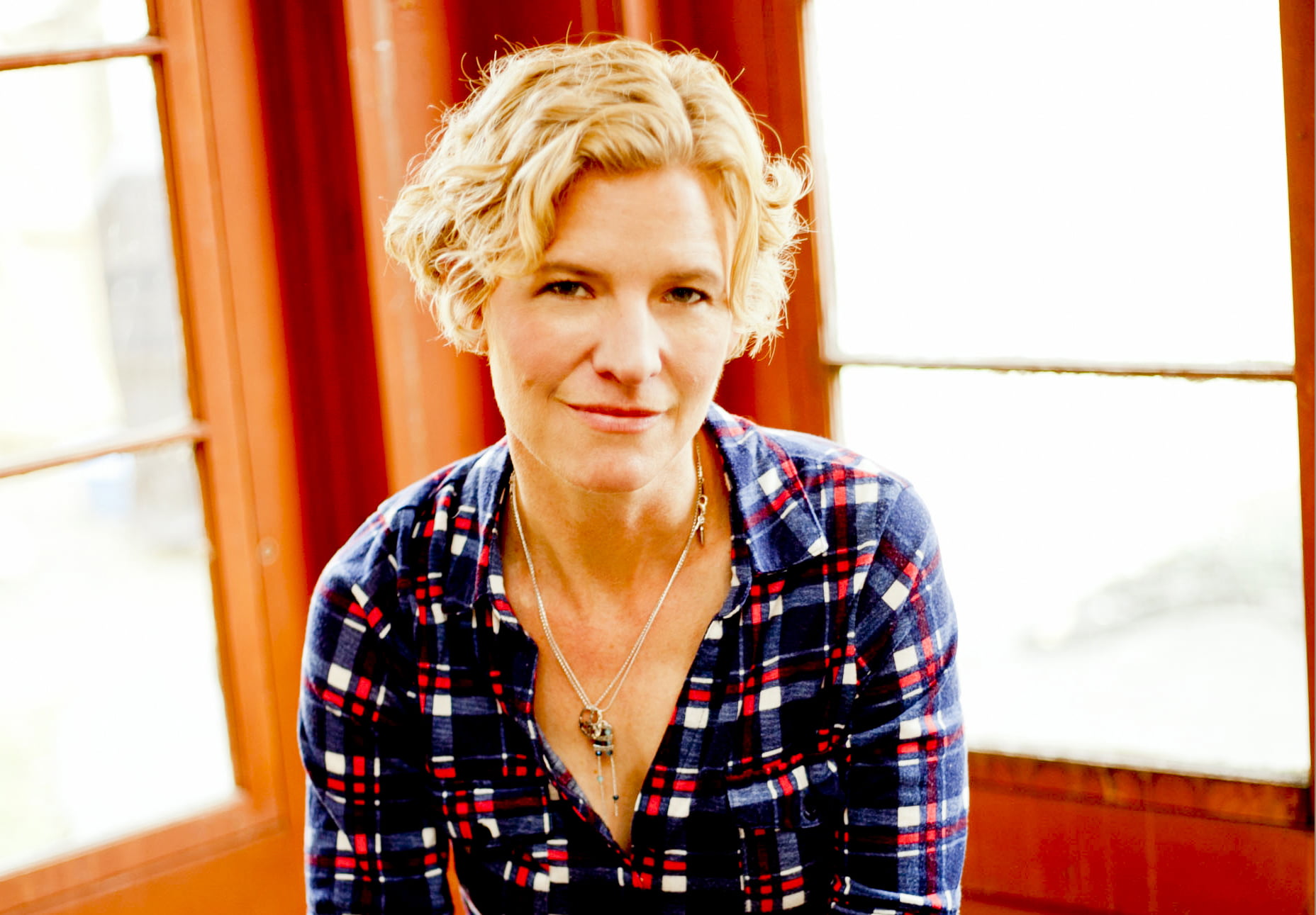
There’s something about looking back at an old photograph — especially a candid one, a moment you didn’t ever know would be dug up and reflected upon some-odd years later — that makes you look at the present differently. Sometimes you recognize long-ingrained mannerisms that still pop up. Other times, you exhale with relief at the fact you’ve kicked a regrettable habit, letting out a smirk or a quick pang of embarrassment at the passing trends you rocked for the cameras or the half-smiles you favored to hide your braces. It’s a pretty personal thing, to take a piece of your life preserved in print and trace the way it led you to where you are now. Gillian Welch’s latest release, Boots No. 1: The Official Revival Bootleg, is the musical incarnation of that kind of endearing deep-dive into the past.

“I hear me before I really sound how I sing,” says Welch of the 21-song release, which is comprised of early demos and unreleased recordings from the time period leading up to her breakout debut, Revival, in 1996. “My voice is in there, but it's just not quite as focused, and there aren't as many miles on me. Dave [Rawlings] and I often talk about being able to hear the miles on a singer. There's just no substitute for the years and the hours and all of the gigs — literally, all the miles.”

For an artist like Welch, whose careful interpretation of bluegrass and gospel music effectively laid the groundwork for today’s thriving Americana scene, rewinding the mileage is all the more rewarding. A 1993 living room tape of “Orphan Girl,” for example, reveals a lighter, higher vocal than the one fans came to know three years later. (It’s a thrill, too, to realize that Emmylou Harris likely decided to record the number based on this very tape.)

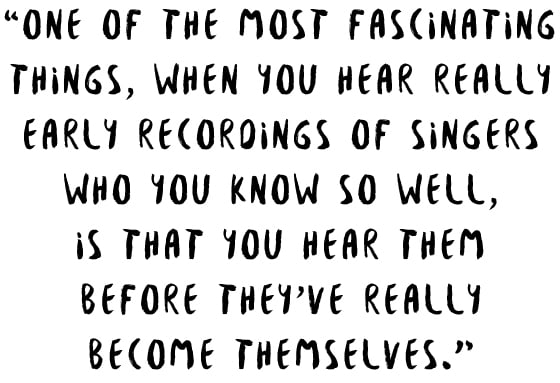
“[These sessions] were some of the first times I was ever recorded, and you can hear my influences,” Welch says. This act of retracing early work is one she’s enjoyed as a fan of other artists, too. “I think it's interesting to hear where they started and what they changed. One of the most fascinating things, when you hear really early recordings of singers who you know so well, is that you hear them before they've really become themselves.”

In addition to the novelty of hearing a greener Gillian on the more popular songs from her catalog, Boots No. 1 also boasts songs like “Wichita,” which appeared on set lists and a live DVD but never made a proper album, and “Dry Town,” which was written by Welch but recorded by Miranda Lambert and Nitty Gritty Dirt Band.

“I guess we just didn't feel like they fit in. I don't think we had any agenda, didn't have anything against these songs. We're really album-oriented artists,” says Welch. “This was a great way to have them come out in to the world, because they really make sense in context with Revival.”

The sessions for Revival began in the Summer of 1995 in Los Angeles, bounced down to Nashville in the Fall, and wrapped up back in L.A. at the end of the year. These recordings formed the basis for the archival project — after all, the fact that these forgotten sessions were mixed live was an unusual luxury.

“This is very rare now, and was fairly uncommon in the mid-'90s,” notes Welch. “This would have been how people were making records in the '60s and before. But it was great for this project because it meant that we actually had mixes of takes that never got used, alternate takes. People these days aren't often in that situation.”

Welch had lived in Nashville for about three years when the recordings featured on Boots No. 1 went to tape, mostly performing as a duo with partner Rawlings in small clubs and on writers’ rounds while finding a voice as a songwriter. “We were playing as much as we could,” she says, though the out-of-town gigs were only beginning to roll in.

“I had moved to town with two songs,” she says. “By the time we were going in to make Revival, I was going into the session with something like 35 songs. It had been, for me, an incredibly productive couple of years.”

Specifically, she cites a songwriting competition at North Carolina’s Merle Watson Memorial Festival as the catalyst for better gigs and more credibility as a writer, and the community she found there continued to push her forward.

“After that, people like Peter Rowan, and Tim and Molly O'Brien, and the Nashville Bluegrass Band, all these people suddenly knew who we were and started asking us to open for them. The bluegrass world was really the first place where we got acceptance. That was our home,” she says. “Actually, the night that I met T Bone [Burnett], we were opening for Peter Rowan at the Station Inn in Nashville.”

Burnett was the perfect fit for Welch and Rawlings in the studio, but if the final product he helped to sculpt on Revival sounds like a departure from what listeners hear on Boots No. 1, it’s not because the veteran producer was out to change their sound.

“Dave and I knew what we liked,” says Welch. “We really did, going into it; but even so, it's hard when you're that young and you've never done any recordings to just go in there and do it and feel confidence. He gave us that strength — not even to mention the fact that he knew his way around record-making like crazy. Nothing got put on that record that Dave, T Bone, and myself weren't happy with.”

That attention to detail is as evident today as it was in 1996 and, although each of the songs on Boots No. 1 is its own glimpse into Welch’s roots, each half of the double album stands as its own: a Revival for parallel universes.

“Dave felt very strongly that whatever we made should be playable like a record, not feel like a library project. I felt very strongly the same way,” she says.

These recordings may have been cast aside as the songs themselves evolved into live anthems and borrowed cuts. But to hear them emerge unchanged as puzzle pieces that fit together in such a meticulously curated collection as Boots No. 1 is a compelling message for any artist or maker: that even the less-polished parts of the past can be a vital part of the future.

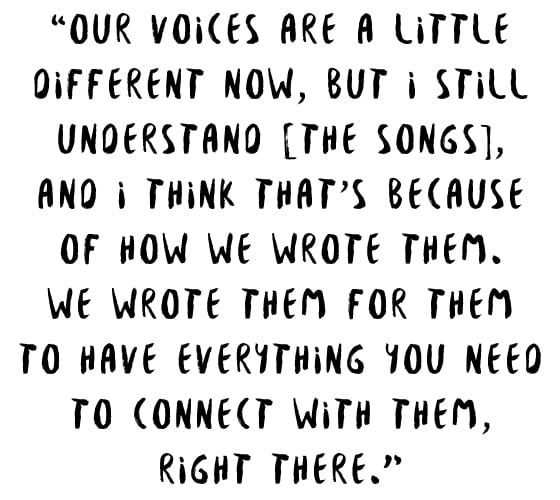
“I hear a starting place to where we ended up going, and hopefully that's interesting to people. I know, as a listener, it's interesting to me,” she says. “Obviously we play [the songs] a little differently, and our voices are a little different now, but I still understand them, and I think that's because of how we wrote them. We wrote them for them to have everything you need to connect with them, right there.”


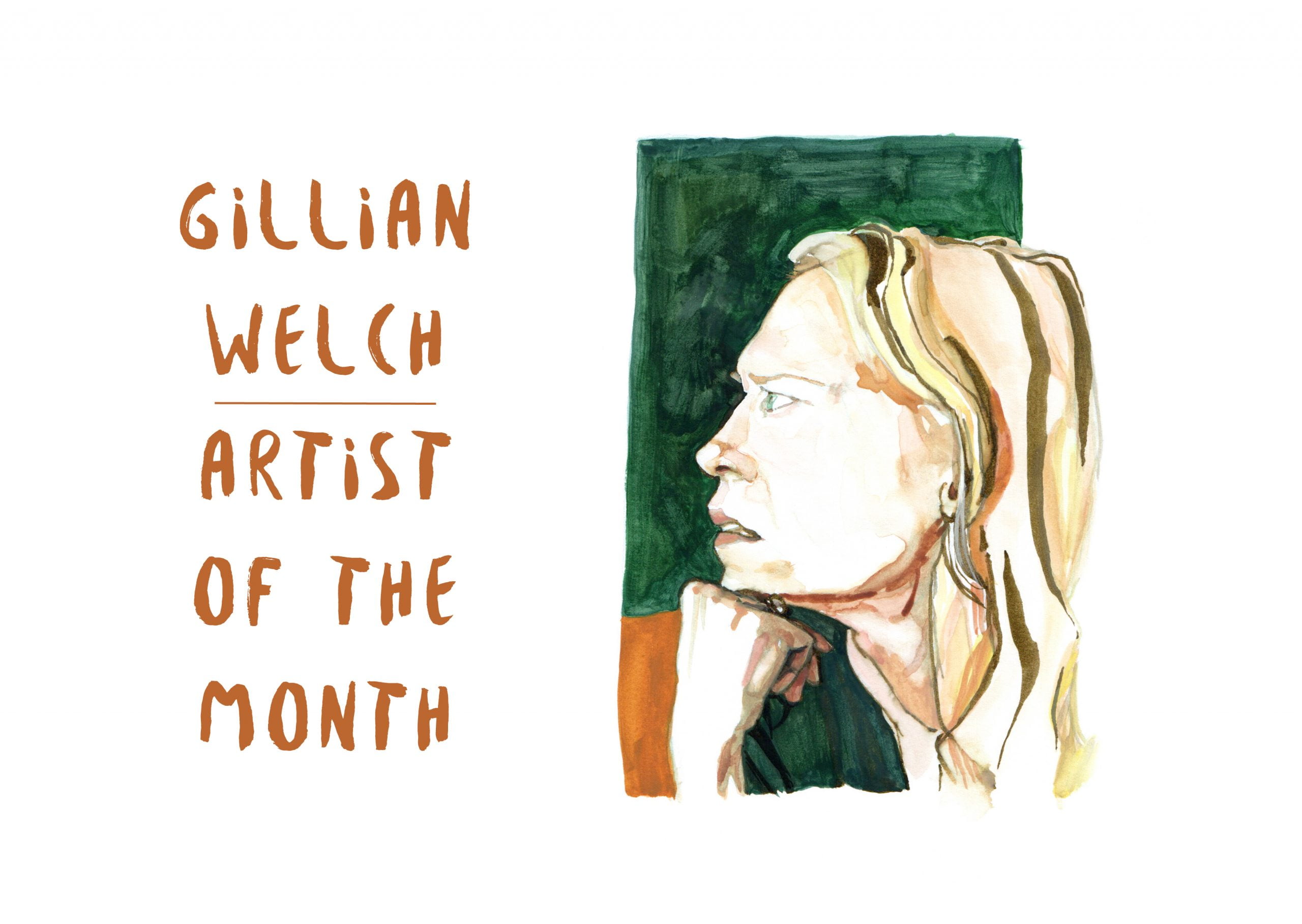
Lede illustration by Cat Ferraz.

LISTEN: Catie Curtis, ‘Please Explain’

Artist: Catie Curtis
Hometown: Boston, MA
Song: "Please Explain"
Album: While We're Here
Release Date: February 3, 2017
Label: Catie Curtis Records

In Their Words: "I wrote 'Please Explain' during the breakup of a long-term relationship. The essence of the song is grappling with profound changes ahead. Our culture is suddenly in uncharted waters and everything we thought we knew is being turned upside down. We’ll need courage to move forward, seeking and speaking truth!" — Catie Curtis


Photo credit: Paul Janovitz

3×3: 3hattrio on Sherlock Holmes, Desert Musk, and the Importance of Good Hair

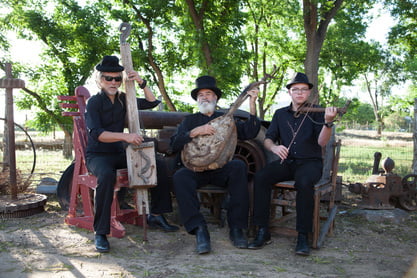
Artist: 3hattrio (Eli Wrankle, violinist)
Hometown: Toquerville, UT
Latest Album: Solitaire
Personal Nicknames: Bad Dog


3hat impressions #3hatcdreleasetour #3hattrio

A photo posted by We Are 3hattrio (@3hattrio) on

If Jesus, Buddha, Krishna, and Mohammed were in a band together, who would play what?
Jesus would play drums because of his long hair head-banging abilities. Buddha would probably be very quietly playing a chapman stick. Krishna would be on keys/synth because she's the quiet one. And Mohammed would be the lead singer because he gets all the ladies. 

If you were a candle, what scent would you be?
Desert Musk

What literary character or story do you most relate to?
3hattrio relates best to Sherlock Holmes and Dr. Watson. We have our dark, mysterious side, along with our playful, energetic side. The characters themselves also work well for us, too. Greg is very much Sherlock: His ways are slightly unconventional and mysterious, but he always comes out at the end with a solution. Hal is sort of the opposite — Dr. Watson. He is very good at what he does, and keeps Sherlock from going too far over the edge. I (Eli) bounce between the two characters, depending on the situation. I can either swing toward Sherlock or Watson, and I think this provides a healthy balance in the band.


Hal and Eli enjoying a little down time #3hatcdreleasetour #3hattrio #hisandhers

A photo posted by We Are 3hattrio (@3hattrio) on

How many pairs of shoes do you own?
Approximately 5 1/2

What's your best physical attribute?
My hair (Obviously)

Which is your favorite Revival — Creedence Clearwater, Dustbowl, Elephant, Jamestown, New Grass, Tent, or -ists?
Elephant Revival, for sure. The washboard/violin combo is fantastic.


Photo shoot last night for our new music video! Be sure to check it out! @cheriesantiago thanks for shooting it!

A photo posted by We Are 3hattrio (@3hattrio) on

Animal, mineral, or vegetable?
Animal because I'm fairly innocent most of the time, but can be aggressive in my music.

Rain or shine?
Rain, for sure. I look way better in a coat than a swimsuit.

Mild, medium, or spicy?
Medium. I like to ride that line between too hot and not hot enough.

Songs in the Key of Life: An Interview with Shirley Collins

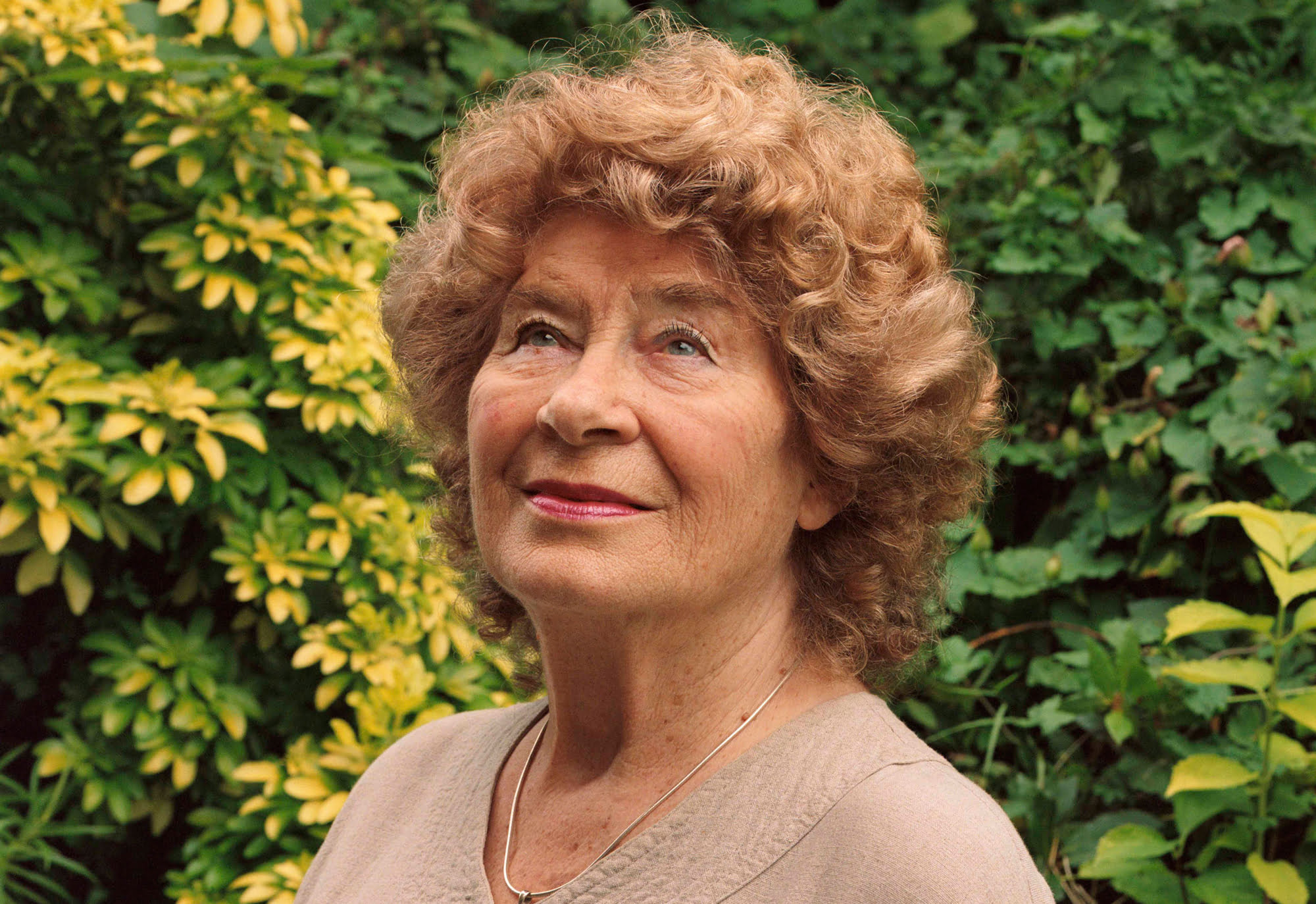
“It seems such a contradiction, really,” says Shirley Collins with a bright, lively laugh. “I’m such a cheerful person, but I love all these dark songs.” Her new album, a gem titled Lodestar, is full of viscera and violence: drownings and stabbings and poisonings, what might be a bloody disembowelment, and a man dancing on the grave of the woman who rejected his proposal. Most of the songs are hundreds of years old, missives from deep within English history, and Collins sings them with a solemn matter-of-factness that lends heft to the human suffering.

She has been singing these songs for most of her life. In the late 1950s, she joined Alan Lomax on a three-month song-collecting tour of America, which she still speaks of fondly and excitedly. In the 1960s, she was at the vanguard of the English folk revival, recording old tunes in new settings, often a cappella, but sometimes with accompaniment by her sister Dolly Collins. In 1965, she paired with the guitarist Davey Graham for Folk Roots, New Routes, a landmark album that launched several generations of co-ed folk duos.

However, at the end of the 1970s, Collins abruptly stopped singing, recording, and performing. She retired to her cottage in Essex, where she raised her children and kept listening to the old songs. During that time, she developed a reputation as the grand dame of English folk music, inspiring musicians on both sides of the Atlantic, including Billy Bragg, Will Oldham, and the Decemberists’ Colin Meloy (who recorded a covers EP in 2006).

It’s only been in the last few years that she has found her voice again and returned to singing; Lodestar is her first record in nearly 40 years, and it’s one of the best and most welcome comebacks of 2016, a bright spot in a sorry year. The time away has added some grain and texture to her voice, which is lower and less steady than it was in the ‘60s and ‘70s but still careful in its phrasing and sensitive to the material — not just the human horrors contained in the songs, but the long histories they represent.

When you’re singing a song that’s several centuries old, are you thinking about the real people who might have sung it? Are you thinking about characters?

Not necessarily. You connect with the songs, but they’re not personal songs. What you’re doing is passing them on. You’re slightly removed from them, in a way, because we don’t sell songs, people who sing folk music. We don’t sell it. We don’t push it at you. We let you come to it, so I think it retains its essence. You don’t have to sing them in front of an audience, necessarily.

I just feel these people behind me — the people who have sung the songs down through centuries — and they know them by heart. I want to treat them with a warm respect and present them with the best accompaniments I can make, then just let people make up their minds about the songs. Just sing them as straight as I can, no embellishments really. Because that’s not the way we English sing, really. The Irish have great deal of ornamentation in their singing, but the English don’t. It’s just a different tradition. We sing the songs quite straightforwardly, but that doesn’t mean they’re not crammed with emotion. I think they are.

Singing these songs sounds like a very immersive experience for you, like you’re being swallowed up by history.

That’s absolutely right. You focus in on the song and you inhabit it, as well, but without it being pretentious. I can’t bear it when people show off when they’re singing or get too dramatic and overload a song. I just sing it as straightforwardly as I can, but recognizing that virtually every song has a fantastic history. So I feel responsible for doing the best I can with them. That, in one way, is why I stopped singing for so long: I felt I wasn’t doing the songs justice, and I couldn’t quite bear that. It was very difficult.

In what way?

My voice wasn’t up to it, for quite a long time. And I had a very bad marriage breakdown. My husband had left me for another woman almost overnight. I was singing in public every night at the National Theater with the [Albion Band]. We had a promenade audience right in front of us, and I was in such a state of heartbreak that, some nights, I opened my mouth to sing and I would croak. My voice would break or nothing would come out at all. Martin Carthy, who was also in the band, would help me out on those nights. Some nights it was fine, but it just got more and more scary because I didn’t know what was going to happen. I kept trying and trying, but finally I felt I couldn’t put myself through it and I can’t put the songs through it, either. I had two kids to bring up, so I had to find another job for quite a long time. But a friend said to me, "You listen to field recordings of old singers, and you don’t mind their voices being old." No, I guess I don’t. In fact, I love it. So I summoned up all my courage and started singing again. So here I am again and happy about that.

Do you revisit your old recordings? Especially for something like the new version of “Death and the Lady,” which you recorded in 1970.

I recorded that in the first instance with Dolly, my sister who did arrangements for flute and organ. Why did I go back to it? It’s a song that’s haunted me for ages. A musician friend of mine named David Tibet persuaded me, after some years of asking if I would sing at one of his concerts. He kept saying, "Just one or two songs." It was the first time I had sung in public for some time, and I knew I could manage to sing “Death and the Lady” because it wasn’t a huge range. I’d slightly altered the tune anyway. David played it on guitar, and it just felt so appropriate. It’s so dark, and there’s a real sinister quality to it, so I decided to put that one on the album.

Ian [Kearey], the guitarist who also produced the album, he and I meet regularly. It was Autumn and we were rehearsing “Death,” and I suddenly broke into a Muddy Waters version of it. You know “Mannish Boy,” of course. When I got to the verse about death, the verse that goes, “My name is death,” I went, “I spell it D. E. A. T. H.” I don’t think it’s disrespectful, really. It’s such a strong song that it can take it.

These songs provide such wonderful raw material. You can mold it into something new without losing its integrity.

Some purists might not like it, but it worked really well. The thought of death stalking the country is quite relevant these days, isn’t it? There’s so much many horror. Some people think that song comes from the time of the Black Death in Europe, when death really was stalking the land. Whether that’s true or not, I don’t know. It might be even older.

Were you choosing songs with any particular thematic criteria in mind?

We started off just with the first song, “Awake Awake Sweet England,” the penitential ballad, and it just grew from there. I jotted down one or two songs that I really like and had never really sung, like the “Banks of Green Willow,” which is a favorite of mine. It was collected here in Sussex, but I had never sung it and I wanted to. I had three or four songs jotted down, and then other things just filtered through into my mind. Other songs, like the last one, “The Silver Swan,” we used to sing it at home when we were children. Just the three of us: Mum, my sister Dolly, and me. It’s a five-part madrigal, and I was given the bass part or the tenor part because I had a deeper voice than mum or Dolly. When Ian and all of us were sitting around the table talking about the album, for some reason it just slipped into my head. I just sang it and everybody said, "We’ve got to do that." Every once in a while, there’s a bit of real good fortune and the right song comes to the forefront of your mind. You might have been lodging somewhere in the back of your mind for too long and suddenly it pops up and says, "Sing me! Sing me!"

I’m very pleased that I’ve recorded two American songs. Both were songs that Alan Lomax and I collected when I was over there in 1959. I actually collected “Pretty Polly” in Arkansas from Ollie Gilbert, who was a wonderful mountain singer. That’s a lively song about the American War of Independence — and I’m on your side! Otherwise, the songs are all English.

Do you know a singer named Horton Barker? He was in his 70s when we were there. He was recording a song for Alan called “The Rich Irish Lady,” and he forgot the words. He got halfway through singing it in a very gentle and beautiful way, but then he forgot the words. He said to Alan, "I’m sorry, sir. I can’t go on." And Alan said very gently to him, "Can you speak the words?" And he did. So there’s the complete ballad, half sung and half spoken. I have it and I put it all together with Horton’s tune and recorded it.

That song definitely has an Appalachian flare, especially with the coda.

That’s where it came from. It came from Virginia. And then, of course, we tacked on a fiddle tune from Kentucky on the end, and I will just tell you that, when we were in the studio listening to the playbacks, there was a young engineer there, and he listened to the words of the song — “I’ll dance on your grave, when you’re laid in the earth.” He turned to me and said, "He doesn’t mean it, does he?" And then the fiddle tune comes in hard and strong, and he said, "Ah, yes, he does mean it!" It’s great, because it means we achieved what we meant to.

I’m always surprised by how dark and brutal some of these songs are.

It’s not the most cheerful album, but then so many folk songs aren’t cheerful anyway. The thing is, every single subject was sung about in folk songs, so some of them are very dark and very brutal. It’s extraordinary for many of us that people wanted to still sing them, but they still do. There’s a sort of courage in it: You can sing about murders and suicides and revenge and Lord knows what, and it’s all acceptable. In fact, I find those songs particularly fascinating because they own up to what human beings are.

On the other hand, there are also songs of great beauty. There are gentler ones. I love them all. I’ve always loved old things. I loved history when I was in school. I just love the age of some of this stuff and how it’s clung over the centuries. This is before words or tunes were written down and before there were field recordings. People just sang them and they learned them by heart, because a lot of the English laboring class in the countryside couldn’t read or write. So they had to learn them by heart. The songs must have been important for them to do that. Because of that, there are thousands of songs that are still around.

What I’ve learned from the folk albums of the ‘60s and your recordings, in particular, is that these songs document a history that we can all take part in simply by singing and play them.

It’s a great social history. There’s always that behind it. It’s so valuable. In a way, it’s a bit like archaeology: You dig up the ground and you find something remarkable, even if it’s just a piece of pottery from medieval times. That’s how I feel about this stuff: You find it and it should be treasured. Like the very first song on the album, “Awake Awake Sweet England,” which was written in the 1560. There was an earthquake in the center of England, but it was a big enough one that some of the tremors reached London and toppled part of old St. Paul’s Cathedral. So this chap, Thomas Deloney, wrote a song warning the people to improve their behavior and look to God to become more righteous. This was God’s judgment on them, sending an earthquake. That happened! But I hadn’t ever heard of it until I found it in the book Folk Songs of Herefordshire from 1907, and it was in that book because Vaughan Williams heard it sung by a farmer and his wife in Herefordshire. Where had it been in the meantime? But there they were, this farmer and his wife, singing it 400 years later. It’s extraordinary, isn’t it? I’m bowled over by the wonder of it all.

Not only does it survive after so many centuries, but it still seems relevant today. “Awake Awake” could have been written about Brexit.

Nothing really changes. Well, certain things change. Lives are much easier now, but there are certain deep truths that never change. They’re permanent. People are so different nowadays, but deep down, we all must have something in common.


Tell me about your trip to America. That seems to have informed Lodestar .

I did have a wonderful time in America when I was there in 1959. I remember hearing the Stanley Brothers for the very first time, I think at a fiddle gathering in Virginia. I was on my feet! There were the Stanley Brothers in their Stetson hats and their smart maroon suits and playing something virtually impossible on a banjo. I was on my feet clapping and cheering. I had never seen anything quite so exciting as that. Those memories are still very vivid, despite it being such a long time ago. The music made such a great impression on me. So did the people I met. I was so fortunate to be on that trip, at that time, when there were still enough people in the mountains singing the way they always had done and playing wonderful old fiddle tunes. That was just the most incredible experience and just reinforced everything that I was starting to learn about traditional songs. It reinforced the wonder and the beauty and the excitement of it.

Where did you travel?

We started in Tennessee, then went up into Kentucky and down to Alabama and Mississippi, where we recorded for the first time Mississippi Fred McDowell. Then we went down to the Georgia Sea Islands to record the people who lived on St. Simons. It was quite a comprehensive trip, and it took us three months. And I’ve been to Arkansas, where we met Jimmy Driftwood, whom I absolutely loved, and Almeda Riddle, who is perhaps the greatest singer I’ve ever heard in my life. She sings some wonderful ballads and love songs, and they’re absolutely haunting.

It was a great experience just meeting people of that generation. I was just 23 when I was there, and I was meeting people in their 60s and 70s. It was such an honor to hear them sing and make friends with them. They were often thrilled, as well, to meet us, especially people like Almeda and Ollie Gilbert. When they sang a ballad, I was able to sing the English version that is still going in England. They were so delighted to know that the songs were still being sung back at home. They spoke of England as the old country. I think perhaps, at that time, they thought the interest in songs and old singers was fading a bit, so it was wonderful to share that with them. About 15 years ago, I wrote a book about it called America Over the Water, so it’s absolutely been kept alive in my mind in the freshest way possible.

One other thing about Almeda Riddle singing: She was right deep in Arkansas, and she’d never see the sea in her life. She sang a ballad called “The Merry Golden Tree,” which is a song about unpleasant happenings on the high seas, set in times of galleons — probably older than that. When she sang the chorus — “As she sailed upon the low and the lonesome low, as she sailed upon the lonely low lands seas” — the way Almeda sang it, you could just see a seascape. She just brought the sea right in front of you, though she’d never seen it. That’s just the power of words and the power of music and the power of the voice. I get goosebumps when I think about that now.

Do these songs change for you or reveal new meanings or significance that you hadn’t caught before?

I think perhaps I appreciate them even more than I did at first because, when you’re young, you’re a little bit superficial, aren’t you? Because you don’t know much. But it all still holds up so wonderfully and I get very emotionally attached to it, too. It’s a great tug of memory for me to go back to when I was a young woman in America and I’d never left home before. It was quite extraordinary, really. I went over on a boat because that was cheaper than flying. Flying was for film stars, and going on a boat was for ordinary people. Quite the reverse nowadays. But I think I still have the more or less same response, but an even greater admiration for it and an even greater emotional attachment to it — which I don’t think I’ll ever lose.

There is one thing I wish I’d learned to do, and that was Appalachian flatfooting or buckdancing. Oh, I wish I’d learned to do that when I was in America. I think it’s magical stuff, but it’s beyond me now for sure.


Photo credit: Eva Vermandel

LISTEN: William Matheny, ‘Blood Moon Singer’

Artist: William Matheny
Hometown: Mannington, WV
Song: “Blood Moon Singer”
Album: Strange Constellations
Release Date: February 24, 2017
Label: Misra Records

In Their Words: "'Blood Moon Singer' is the thematic center of Strange Constellations. It was the final song that I wrote for the record and it unified a lot of the strands that I had been following. The last thing that I want to do is squelch anyone's individual interpretation, but for me, this song is about not always understanding your own motives (or, if you're so inclined, not understanding the stars that are guiding you) and how, if you're truly going to love someone or something, you have to get close." — William Matheny


Photo credit: Josh Saul

WATCH: Fruition, ‘If I Needed You’

Artist: Fruition
Hometown: Portland, OR
Song: "If I Needed You" (Townes Van Zandt cover)

In Their Words: "This is one of our favorite songs by a man that is a huge influence on Fruition — and on American folk music in general. We got this Townes song as a request from a friend — which worked out because it's unanimously one of our favorite Townes songs of all time. It's a beautiful and longing love song … something we can all relate to." — Jay Cobb Anderson and Kellen Asebroek


Photo credit: Cameron Browne

WATCH: Adrian + Meredith, ‘More Than a Little’

Artist: Adrian + Meredith
Hometown: Nashville, TN
Song: "More Than a Little"
Album: More Than a Little
Release Date: November 4

In Their Words: "'More Than a Little' had to be our title track. It signifies everything this record is to us. It was our first co-written song as a duo and it solidified the project, the sound, and direction of the following record. Festival editorials have been speaking to Meredith's driving rhythm and hook on this particular track, since we started playing it live.

Living in changing Nashville for five years already, the tunnel vision was strong with the branding, marketing, and push that city has a history with. I took a step back, left our current management, and got back to the root of the entire industry — the creative process. Once on the outside looking in, it became obvious that the generic and crowd-pandering lyrics, the already-been-done-before sounds/songs, and the built-for-commercial successes that I was living and participated in. With new perspective — mostly upon my own craft — came an honest, brutally truthful, and cleansing display of self- and scene reflection. The chorus tagline came first: 'Theres a science to selling bullshit by the pound,' meaning anything can be sold and bought. Do songs lose authenticity of honest emotion, when it's so calculated?" — Adrian Krygowski


Photo credit: Lauren Hanson

WATCH: The Sea the Sea, ‘In the Altogether’

Artist: The Sea the Sea
Hometown: Albany, NY
Song: "In the Altogether"
Album: In the Altogether
In Their Words: "This was the last song we wrote before going into the studio to record our most recent release. The idea for the song actually came while we were looking for an album title, something that meant stripped-down; but we also knew we wanted the album to be a collaboration with the musical community we were finding in Upstate New York, and we were looking for a word or phrase that could be a nod to that, as well.

The idea of being 'in the altogether' seemed like it meant all of those things and captured that sense of what it's like to be vulnerable with the people around you. So, those conversations about its meaning turned into a song. Also, this year we've ventured out from playing primarily as a duo to bringing our friend and collaborator, Eric Margan, out on the road with us for some trio shows. So we're really happy to have that configuration captured here in this video, recorded live by our other dear friend and collaborator, Troy Pohl, at one of our favorite local venues, the Hangar (Troy, NY)." — Mira Stanley


Photo credit: Jo Chattman

David Crosby: On Opening the Doors to the Muse

Throughout most of his time in the music industry, David Crosby’s name has usually been followed by at least two others, Stephen Stills and Graham Nash, and occasionally a third, Neil Young. Though the majority of his work has been with groups — be it CSN, CSNY, or even the Byrds — Crosby has ventured into solo territory on more than a few occasions. While his last solo effort, Croz (2014), had a full band backing the prolific songwriter, he returned in October with something markedly different, something that highlights what he’s capable of creating when all production falls away and it’s just a man and a microphone.

Crosby’s new Lighthouse harkens back to his first solo album, If Only I Could Remember My Name (1971), which is exactly what producer and collaborator Michael League (of GRAMMY Award-winning pop/jazz ensemble Snarky Puppy fame) thought they could achieve with this latest project. Recounting first approaching League, Crosby says with a calm, centered voice that becomes gravelly now and then, “I thought I would ask him to produce the record, and it would be like hiring a master craftsmen with a gigantic toolbox, namely his band, which are an unbelievable bunch of players.” But League had another idea. “I said that to him, and he said, ‘Well, no, actually. I really loved your first solo album, and the direction I’d really love to go is acoustic guitar and bass and vocals. I think we can make that kind of record.’ And I said, ‘Well, that’s right in my wheelhouse. I would love to do that. That sounds terrific.’”

It’s funny how life always has other plans in mind. John Lennon, perhaps, said it best in that regard.

Whereas If Only I Could Remember My Name exhibits a folk sound distinctly pinned to its time period — with bright guitar, meandering rhythms, and introspective lyrics engaged with the political activity of the 1970s — Lighthouse has a much different feel, even while it borrows from its predecessor. It’s as sparse as it is meditative. Built largely around Crosby’s voice and guitar, the instrumentation doesn’t get fluffy and the arrangements remain stripped down to the essentials. If a song need be loud in order to be visceral, Lighthouse instead proves the opposite to be true. Even though they are arguably quieter because of the soft melodic phrasing he builds around his contemplative thoughts, Crosby’s songwriting still resonates physically. Listening to them, one can’t help but feel a pang in the chest or a pull at the heartstrings, to borrow a worn phrase, even though that kind of reaction tends to follow from louder or more thickly arranged music.

Then there’s Crosby’s reflective songwriting — the ace he’s always held no matter for whom he’s writing — which oscillates between his family-first mindset to current events like the Syrian refugee crisis. The album begins with a love song directed toward Crosby’s wife Jan, “Things We Do For Love.” It’s a sentimental reflection about how deeply Crosby feels for her. Of course, having written about love in many different ways over the years, it’s naturally shifted with each passing album. How exactly? “There was at least one snotty egotistical answer there, but maybe I should try,” he chuckles, trying to answer the question seriously when his inclination is to be lighthearted. “I’ve gotten better at it, that’s what I was going to make a joke out of,” he continues. “It started out, when I wrote about love, I was writing about romantic love. And now, when I write about love, it’s family. Family gets to be really big for you later on in life. It really gets to be wonderful.” But he doesn’t draw a sharp line in the sand between romantic and familial love. “That particular song is romantic love, too,” Crosby adds, “because it’s to my wife and I feel very romantic about my wife.” So romantic, in fact, that his wedding ring served as the song’s primary percussive instrument, and took on a greater symbolic role as a result.

For a man who has experienced his share of personal and professional drama, ranging from health issues to a contentious public falling out with Graham Nash, Crosby understands family’s importance more than ever. “My wife and I have been together 40 years, and that’s an amazing thing in our world. Two of my ex-partners got into huge divorces last year in their 70s for Christ's sake, and I’m so glad I’m not driven to do that kind of thing,” he says, avoiding naming names and moving right back into his own matrimonial bliss. “It’s a joy, and it’s the only thing that’s as important as my music: my family.”

Besides singing about his personal life and the moments of joy he’s discovered there of late, Crosby’s political nature again arises on Lighthouse. He once said songwriters have a responsibility to play the part of town criers, those willing to call attention to something untoward going on in the greater social fabric. But getting people to pay attention when there’s so very much to pay attention to remains the larger question. “It’s very tough,” he admits. “Here’s the thing: You do feel the urge to do that town crier part of the job, but you can’t have that be all you do because your job is — even more than that — to make people boogie, and to make people feel stuff: Make ‘em wanna dance, make ‘em feel emotions, make ‘em feel the blues, make ‘em feel love, make ‘em feel triumph. And then, every once in a while, you can say, ‘Oh by the way, it’s 11:30 and all’s well, ‘ or ‘Oh by the way, it’s 11:30 and you’re electing that son of a bitch to be president?’ But if you do it all the time, then you turn yourself into a preacher, and nobody listens to preachers.”

Crosby doesn’t get preachy on Lighthouse, but the social activist does include two tracks focusing on contemporary affairs. “Somebody Other Than You” chastises politicians sending people off to war while protecting their own children, while “Look in Their Eyes” focuses on the Syrian refugee crisis. For a man as outspoken as Crosby has been on Republican presidential candidate Donald Trump, it seems like a missed opportunity to avoid taking aim, even obliquely, at a man exposing the racist underbelly still rampant in the U.S. It’s something he doesn’t remain silent about for long. “I’m surprised and very disturbed by it,” Crosby says of Trump’s popularity, not mincing his words about those who support him. “It’s an aberration, but it reveals how many people there are who are really almost illiterate or essentially quite stupid. Or they would not buy this guy. This guy can’t even control his face, let along his mouth. You can read everything he thinks right on his face. It’s very disturbing that there is that much ignorance and that much stupidity out there, that they can have a party of a whole candidate’s worth of people who don’t get it. It’s kind of shocking.”

Perhaps some kind of song about Trump will make it into his next album, which he’s working on with his son, James Raymond. “James and I are just about to finish it. It’s called Home Free, and we have it just about down.” That project will follow closely in Croz’s footsteps and include a full backing band.

At 75 years old and with over 50 years in the music industry, songwriting still brings the brightest color to Crosby’s world. “I don’t know how I got to here,” he admits, when discussing how the muse continues to choose him after all this time. He likens the moment to leaving all the doors and windows in a house open to catch a breeze. By remaining open to creativity, Crosby finds it continues to stop by for a chat, and he’s more than ready to listen. “I know that the music comes to me, and that it is a joyous process for me to make songs. I just love writing songs,” he says. “These are very visceral forces to me. I don’t really understand how come they’re so strong, but they’re there and I have to pay attention to them because it’s a gift I’ve been given and I don’t want to not use it.”


For another side of the coin, read Amanda's Artist of the Month feature on Graham Nash.


Lede illustration by Cat Ferraz.

LISTEN: Wharfer, ‘Baton Rouge’

Artist: Wharfer
Hometown: Scranton, PA
Song: "Baton Rouge"
Album: To be announced
Release Date: Fall 2016

In Their Words: "Fully aware of the big-time cliché territory I was entering, last Summer I moved into an old house with a piano and four jazz- and bluegrass-leaning musicians. This upcoming set of songs is what came out. It's the first time I've built tunes around the piano, first time I've worked with a string section, first time I've played electric guitar and bass on a Wharfer record, and 'Baton Rouge' sort of showcases all of that." — Kyle Wall


Photo credit: Justin Camerer