Old Crow Medicine Show’s Americana Commonwealth Canon

More than any of the world’s music, the songs of America are a reflection of a national identity and character. We are our songs.

Distilled into a few memorable minutes go the nation’s hopes and aspirations, the glories and tragedies of her past, and the promises of her future. This American canon is as diverse and vast as the country itself – our blues, breakdowns, or corridos are as different as prairies are from coastlines, as the Appalachians are from the Rockies. And yet, somehow, still our sound is a commonwealth, a singular voice rising from the chorus of many just like our national motto purports: “E Pluribus Unum.”

250 years is not a long time in the global scheme, and neither is 28 years of Old Crow Medicine Show‘s reign as an Americana string band. But somehow it is the vigorous and youthful American voice/song/songwriter/band (and not our transoceanic elders) that can best capture the world’s heart and soul in just a few minutes.

In this Mixtape, I’m proud to share some examples of this powerful artistry. You might already know every word to some of these songs while others you may have never heard, yet each is stitched together with a cloth of commonwealth that can only be found of uncommon ancestry. Though the singers may be perfect strangers, the songs that bubble up from our national cauldron are enough to nourish each and all. – Ketch SecorOld Crow Medicine Show

“Howdy Do America” – Old Crow Medicine Show, Jesse Welles

Jesse Welles came whirling into the studio the other day and helped put a spit shine on this love song about the 50 states. I wondered if he was gonna get excited when he sang “Arkansas” and brother, he did not disappoint. Love this cat. He’s a brother, and I expect we’ll all be singing his tunes for years to come.

“Golden Rocket” – Jim & Jesse

I had the privilege of knowing Jesse McReynolds, even traveling and performing with him, and buddy there’s no wonder why Jerry Garcia thought he was the best of the bluegrassers.

“Field of Opportunity” – Neil Young

I was raised on Neil Young’s unique brand of tall prairie country rock. This track features the great Cajun fiddler Rufus Thibodeaux.

“Heaven Help Us All” – Joan Baez

Joan’s a real hero of mine. She’s like that tree planted by the water we all sing about, unmovable. Of all the singers on this playlist, I can say without a doubt if more people could be like Joan Baez, then this world would be a better place.

“I Wanna Go Country” – Otis Williams & the Midnight Cowboys

I love this Motown singer turned country crooner, and the world would have too, if Nashville hadn’t been so narrow-minded.

“Beautiful Land” – Old Crow Medicine Show, Maggie Rose, Lee Oskar

I wrote this one with a Baháʼí faith elder named Eric Dozier just down the street from the Tennessee State Capitol building. Sometimes politics feel like a fortress. But music has a way of wandering through the keyhole of even the most impenetrable door.

“There’s a Star Spangled Banner Waving Somewhere” – Elton Britt

I played this one for my kids on Memorial Day. They sat through it start to finish, and you should, too. It’s easy to get complacent about the sacrifice our grandparents and great-grandparents made in the 1940’s for each of us. Don’t do it.

“Oasis” – Molly Tuttle

Molly’s my favorite American singer. Here’s one of our travelogue-style songs. I had it stuck in my head all last week at the Tico Time Bluegrass Festival in Aztec, New Mexico.

“The Green Rolling Hills of West Virginia” – Hazel Dickens & Alice Gerrard

These girls rip. Back at MerleFest in the year 2000, I filled out Old Crow’s first ever W-2 form and gave it, with a shaky hand, to the great Alice Gerrard.

“How’s About You” – Dave Rawlings Machine

The Great Depression gave the world some of its most powerful songs. And even generations later, the events of the 1930s remained powerful enough to inspire music like this.

“Rock of Chickamauga” – Jimmie Driftwood

Songs about the Civil War are some of my favorites in the national cannon. Jimmie Driftwood is one of my favorite songsmiths. He’s an absolute master of the historical ballad.

“Across The Great Divide” – Kate Wolf

I am awestruck by the landscape of the West, and few songwriters can take you there better than the amazing Kate Wolf.

“What Did You Learn in School Today?” – Tom Paxton

I’ve been singing this one since I was a youngin. When I was 12, I discovered my uncle’s weathered copy of Vanguard’s album Newport Broadside: Topical Songs at the Newport Folk Festival 1963, and that was my introduction to Tom.

“The Tramp on the Street” – Molly O’Day

Born in Pike County, Kentucky, she’s one of my favorite bluegrass singers. She first heard this song from Hank Williams on a Birmingham radio station, and it became her signature song. American music has a way of championing the underdog better than most.

“Shenandoah” – Bob Dylan

I think I was 15 when I first heard Bob singing this gem, hidden in the ruffles of one of his more questionable ’80s albums. I thought, “Damn, Bob knows where I’m from.”

“Corrido de John F. Kennedy” – Los Reyes del Corrido

My band has been dabbling in conjunto for two decades now. We got to learn this one for next time we play the big D (Dallas).

“Which Side Are You On” – The Weavers

No collection of American songs is complete without a protest piece from the labor movement, the first dark corner where the full power of American music was unleashed.

“The City of New Orleans” – Arlo Guthrie

When we play Chicago, I always talk about Steve Goodman, who wrote this song. I sure would have liked to have known the guy. Thankfully his music will last forever.

“Cowboy National Anthem” – O.B. McClinton

O.B. left this world before he was fully known by the country music fanbase that would soon send black country singers consistently to the top of the charts. He was a man before his time, but the music he made reminds us that, just like Ray Charles said, “Country music is black music.”

“Deportee (Plane Wreck at Los Gatos)” – Old Crow Medicine Show

We love Woody Guthrie, and this is one of the numerous songs of his we’ve recorded through the years. In a nation of immigrants (I’m a French Huguenot), it’s hard to imagine how we could exist without a steady flow of new members to our American family.

“Big Backyard” – Molly Tuttle

When Molly and I wrote this, it was on account of having a massive vacant lot behind the house we were composing in. Now that same lot is full of little yellow flags and “coming soon” signs. Yet still we sing, louder this time.

“For What It’s Worth” – Buffalo Springfield

A few years back, I had the distinct pleasure of sharing an elevator with Stephen Stills, author of this earthquaking song which Buffalo Springfield recorded in 1966 – and we covered this year on our new album, Union Made. I wanted to tell him thanks, gush, and get my picture made. Instead, I stood quietly until he rasped, “I heard your soundcheck. Great band you got there. Keep ‘em together if ya can.” Thanks, I will Stephen.

“Louder Than Guns” – Old Crow Medicine Show

This summer, PBS stations across the country are broadcasting the film we spent three years making in a half-dozen tour stops along our travels. It’s a movie about bringing together the disparate ends of the 2nd Amendment debate during an era in which guns kill innocent Americans at shocking rates. It’s a tall order, coming together to flatten the curve, seeing past our silos and personal politics, but in town after town I watched people listening across the divide. As easy as it is to be hopeless, the film has made me hopeful we’ll get beyond this impasse and prioritize the safety of our communities. This song is the theme of this film.

“American Tune” – Allen Toussaint

I’m glad you made it through to the end. Old Crow opened up for the great Allen Toussaint in the Berkshires back around 2011. The record featuring this song had just come out and when he launched into it, I was nearly knocked off my feet. So powerful. So simple. Says it all.


Photo Credit: Ed Rode
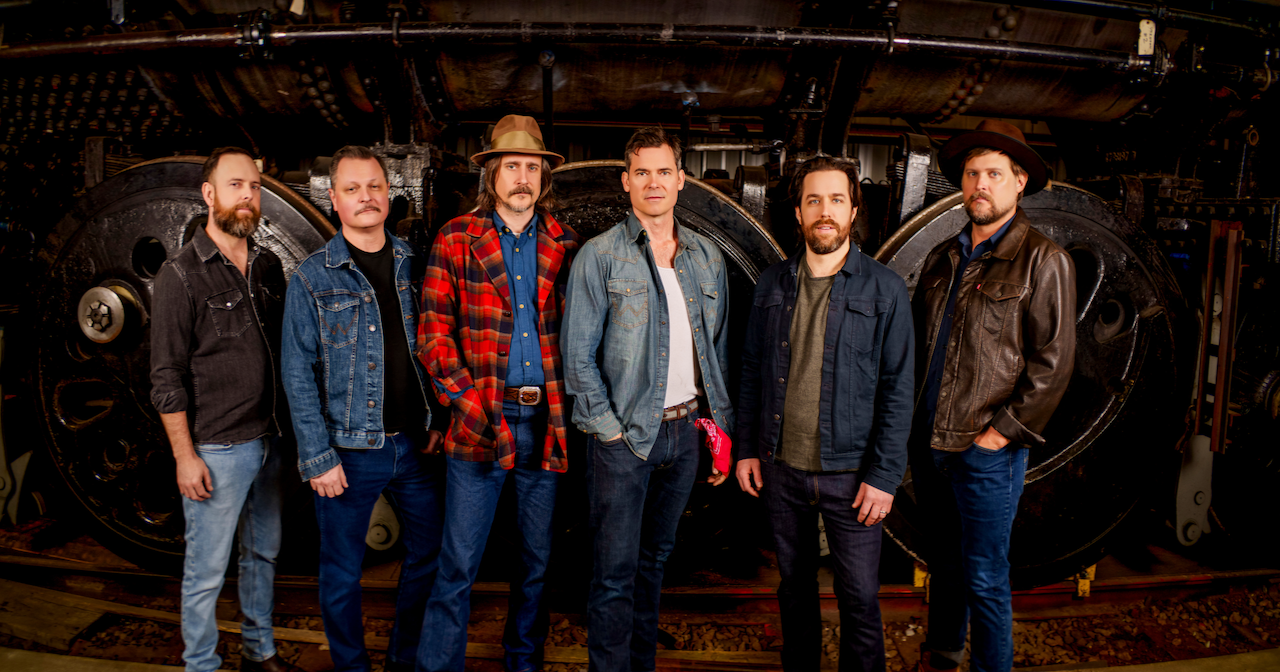
BGS 5+5: High South

Artist: High South
Hometown: Nashville, Tennessee
Latest album: Change in the Wind

Which artist has influenced you the most … and how?

High South has many influences and each member has his own favorite(s), of course. Interestingly though, we really do share a LOT of influences! Groups like CSN, America, the Eagles and The Band all immediately come to mind as helping shape our music. I also feel like there was an era of music from the mid ‘60s through the ‘70s when artists were very socially conscious. They wrote about love, peace and inclusion. We’ve been inspired greatly by that same spirit and whenever possible try to inject those same ideas into our music. — Jamey Garner

What’s your favorite memory from being on stage?

My favorite “on stage” High South memory is a recent one. We traveled to Grundlsee, Austria, this past summer to play to 10,000 very enthusiastic music fans. It was our biggest crowd yet. Such a rush!!!! — JG

What rituals do you have, either in the studio or before a show?

A favorite ritual of ours is one we like to call “The Victory Dance.” There’s a Victory Dance at some point after every single High South show. It’s a chance for (usually) just the three of us to gather ourselves, talk about the show and also usually the last chance to bring up business before we really let loose. The Victory Dance is also how we refer to the joint that gets passed around during that meeting. — Kevin Campos

If you had to write a mission statement for your career, what would it be?

Mission statements can be a tricky thing. Sometimes it’s easy to get lost in the big picture. Obviously, we want to spread as much peace, love and harmony as we can, on as large a scale as possible. But the deeper we get into this thing, it’s starting to become more and more apparent that the best way to spread love is to give it honestly. That requires connection on a personal level in order to be authentic. The beauty of a real expression of love is that it feeds on itself and grows exponentially. The small victories turn into big ones in a hurry. We’re just trying to water the garden plant by plant, so to speak, in hopes that human nature will take it from there. It can be a beautiful, compassionate world if we let it be. — Phoenix Mendoza

Which elements of nature do you spend the most time with and how do those impact your work?

A part of nature that never leaves our side, especially when we’re home, is our pets. Phoenix has a dog and Jamey has two. I am the proud uncle of Rico, Boo and Lulu, respectively. Our producer and co-writer, Josh Leo, has seven dogs and four cats out on his property in College Grove, Tennessee, where we did a lot of recording for the EP. In fact, at the very end of “Change In The Wind” you can hear a bark from his dog Jack that was at the end of an acoustic guitar track. He was probably asking to be let back in after going outside to relieve himself. Needless to say, we love our pets and have an affinity for all animals. Love, in all its facets and manifestations, is a central part of what High South is about and we feel like there a lot to be learned from the type of love a dog is capable of giving to those it chooses to love. — KC


Photo credit: Jim Shea

The Essential Dan Fogelberg Playlist

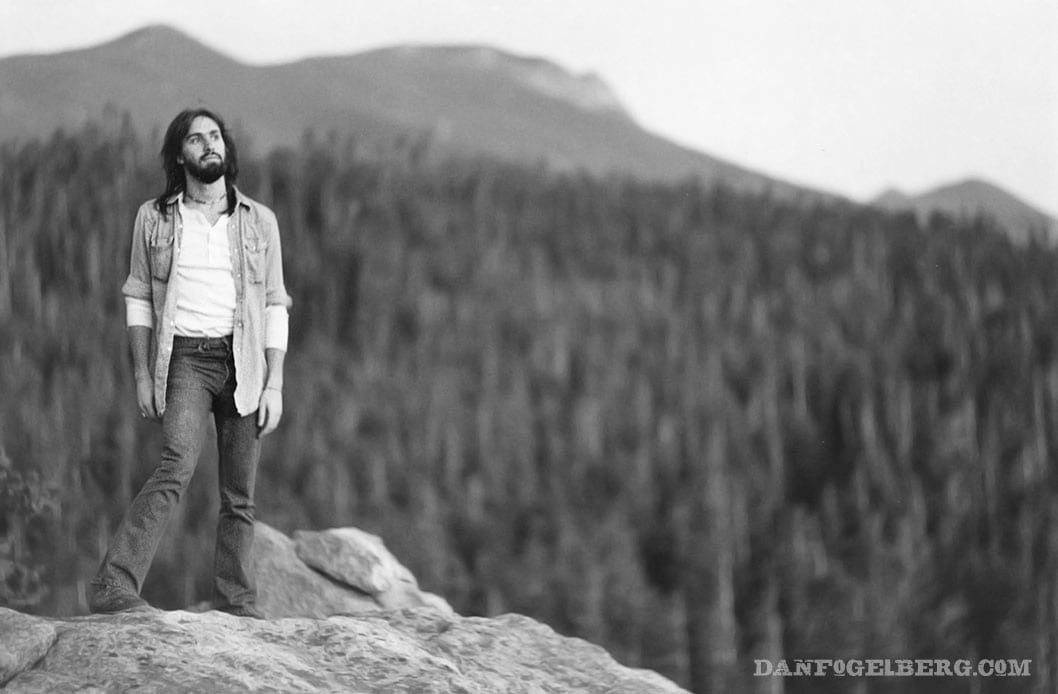
Contrary to what it sounds like on his records, Dan Fogelberg wasn’t born in Colorado. He was born in Peoria, IL, the son of a classically trained pianist mom and a high school band director dad (the person who inspired Fogelberg’s hit, “Leader of the Band”). As a teenager, Fogelberg played in the requisite Beatles cover bands before trying his hand at the folk music circuit around Chicago during the early '70s. It was there, at the famed Red Herring Café, that REO Speedwagon’s manager and future label exec, Irving Azoff, discovered him and signed him to a record deal.

Transplanted in Nashville, Fogelberg tracked his first record, Home Free, with Norbert Putnam behind the wheel. It pretty well tanked commercially (though has since gone platinum) but it encouraged Epic Records to stick with him and assign him a second session (with the strange bedfellow Joe Walsh as producer). Souvenirs — recorded with a cadre of L.A. session players plus Graham Nash and guys from both America and the Eagles — reached the Top 20, the single “Part of the Plan” made the Top 40, and Fogelberg’s career achieved liftoff.

Starting with Souvenirs, Fogelberg recorded five straight multi-platinum albums, wrapped up the '80s with a pair of platinum records, and became the unofficial voice of the Colorado snows (second only to John Denver). His 1985 album, High Country Snows, is a fine record of songs in the bluegrass tradition and, mixed in with his solo albums, he tracked two sets with jazz flautist Tim Weisberg, the first of which — Twin Sons from Different Mothers — is considered an acoustic classic.

Though some would categorize the late singer as nothing more than an MOR pablum pusher — which was true on a few occasions — Fogelberg was a well-loved performer, a respected songwriter among his peers, and a guy who made a melody sing. Herein, we offer an essential playlist of his best songs, a mix of those pop radio classics and some deep album cuts.


Photo courtesy of DanFogelberg.com

Between the Lines: ‘A Horse with No Name’

On the first part of the journey, the part before my wreck and the horse and getting lost and things, I actually got a lot of work done. I'd been out in the Mojave Desert for three days collecting samples of lizard droppings for my doctoral thesis at the University of Paducah. Late in the late morning of the fourth day, I was looking at all the life there around my camp. There were plants and birds and rocks and things, and things that looked like rocks but turned out to be some really pristine samples of male Sauromalus ater droppings. Feeling like it's best to go out on top, I decided to head back to Paducah that day. I figured I could get to Tucumcari by midnight, and home late the next day.

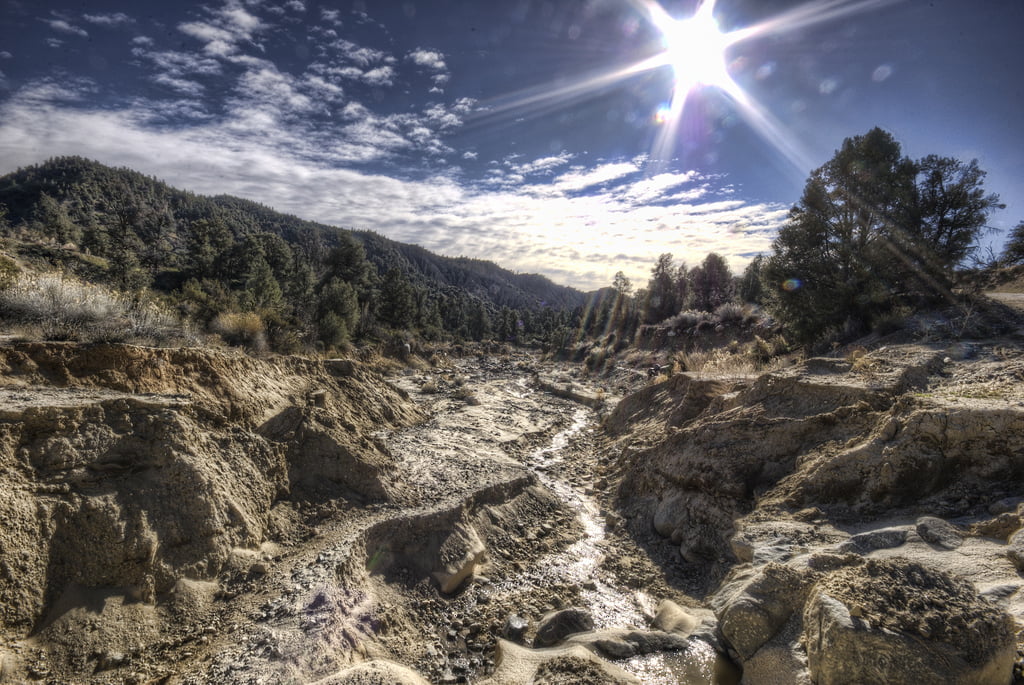
I collected the last specimen, broke camp, and drove back down the one-lane desert road toward the state road and I-40. I was so excited about finding that Sauromalus scat that I mistakenly took a left at the fork instead of a right. I didn't realize this for a while, when there was sand and hills, and I felt like I'd been driving in rings around the desert. The road had narrowed to a track, with a hillside on my left and a dry riverbed to the right. This is the beginning of the second part of the journey. In attempting to back the truck up the track, I hit a soft spot and went off the road and rolled down the embankment 20 feet into the dry riverbed.

When I came to, the first thing I met was a fly with a buzz, and he was right in my face. The truck was on its side and there was the sky with no clouds through the broken passenger window. The heat was hot and I couldn't see out of my left eye. The ground was dry against my shoulder. The truck wasn't running, but the air was full of sound. The sound of thunder. I unbuckled myself and climbed out of the wrecked truck, and saw my precious lizard dung samples scattered around in the sand. I looked up when I felt the first heavy raindrops, and saw that the sky was dark and moving fast. Lightning flashed, thunder broke, the wind came up, and it began to rain in hard sheets. Water was flowing around my feet. I tried to carry an armful of specimens up the slippery bank to the road, but fell and dropped them all into the muddy torrent. Very soon after, the truck and all my work and belongings was swept away by the flood.

That's when I saw the horse. He was down the road 50 yards or so, standing and looking at me. He was black, with a white blaze on his forehead. I looked around, didn't see anyone else, and when I looked back he was walking toward me. The rain had let up and there was a little blue sky in the west, and a bit of sun coming through. The horse walked up, looked down at the water, looked up at me, and kept walking down the road in the direction I'd been heading.

"Hey Mr. Ed!" I called. He just kept walking. "Trigger! Velvet! Scout!" Still no response. "Hi ho, Silver! Pharaoh! Clover! Festus!" I followed along as he walked up the track, trying every name I knew. "Applejack! Pony! Ulysses! Major! Daisy! Babe! Gypsy! Patches! Dakota…" Eventually, I was running out of names, and I realized that we'd walked quite a distance and I was completely lost. "Virgil! Moonbeam! Bocephus! Feydra! Jake!" He stopped and looked up at "Jake." I'd done it! Then I realized he'd only stopped because a jackrabbit had run by. I started to think he might not have a name.

What would I tell my colleagues? That I've been through the desert on a horse with no name? They would certainly laugh at that. "Every horse has a name," they'd say. Well, regardless, it felt good to be out of the rain and I eventually gave up trying names on him. In the desert, they say because of the dry heat you can remember your name easily, but I think it's 'cause there ain't no one for to give you no pain in the ass about what your name is.

I kept following the horse, figuring he knew the way out of the desert.

We came out of the hills and down onto the plain, where there was a little grove of trees with a spring of cold water. I filled my canteen and the horse had some grass, as horses do. He then continued on across the desert, and I followed. After two days in the desert sun, my skin began to turn red because, of course, I hadn't grabbed my sunscreen from the truck before it washed away. After three days in the desert "fun," 
I was looking at a riverbed that had run dry. We had stopped in the shade of a mesquite tree to rest. I noted how wide the riverbed was, and the story it told of a river that flowed here made me sad to think it was dead, or dry at this time.


After nine days of this, I finally figured out he didn't know where he was going, as well as having no name. So, I let the horse run free, because the desert had turned to sea anyway, and I was sure I was near Encinitas or somewhere. There were plants and birds and rocks and things here, too, but different species and geology, of course. 
There was also sand and hills here, and the surf is so loud it rings in your ears. In a way, the ocean is a desert with it's life underground, or actually, I meant to say, underwater, and with a perfect disguise above. Back in civilization, under the cities lies a heart made of ground and concrete and wires and pipes, But the — we — humans will give no love to this heart/ground continuum.

I eventually made it back to Paducah safely. I sit here in my lab and look out over the leafy campus and wonder about that horse, and if anybody ever figured out what his name is.

Story by Freedy Johnston based on "A Horse with No Name" by America. Photo credit: Neil Kremer / Foter / CC BY-ND.