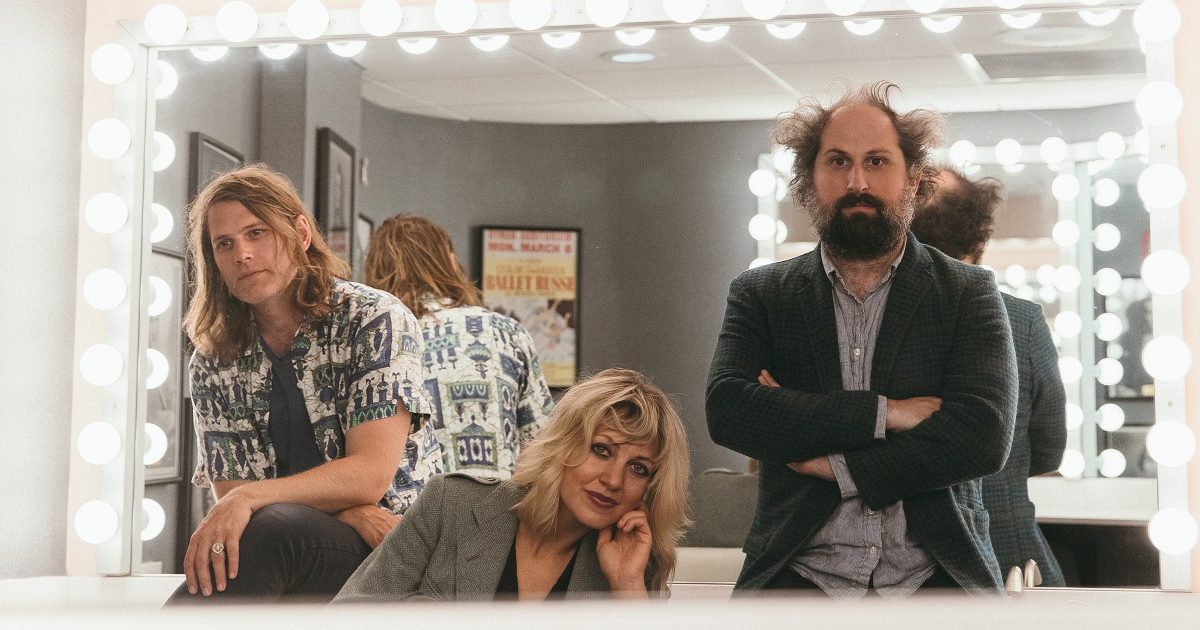
The duo Mandolin Orange have surprised fans with a new video and a name change to Watchhouse. Band members Andrew Marlin and Emily Frantz shared on social media, explaining how their former band name didn’t necessarily encapsulate their personal songs.
They wrote, in part, “This past year has been the first time we’ve stayed still since we were 21, and the pause gave us the opportunity to sit with ourselves and set intentions. We have long been burdened by the dichotomy between our band name and the music we strive to create — if you’ve heard the songs, you know they are personal. Now that we can see a future where music is a shared experience again, we’re defining the space we share with you on a stage or in your headphones, and making it one that welcomes our creativity and anyone who wants to listen.”
FRIENDS! Our band is now called Watchhouse 💖. Same music, same us. We’ll tell you more about it: pic.twitter.com/0Klwh0WtBS
— Watchhouse (formerly Mandolin Orange) (@watchhouseband) April 21, 2021
The band’s most recent project has been 2019’s Tides of a Teardrop, although Marlin released two instrumental albums earlier this year. To coincide with the announcement revealing Watchhouse, the band released a new video for the song, “Better Way,” produced by Josh Kaufman and released via Tiptoe Tiger Music / Thirty Tigers. Take a look:
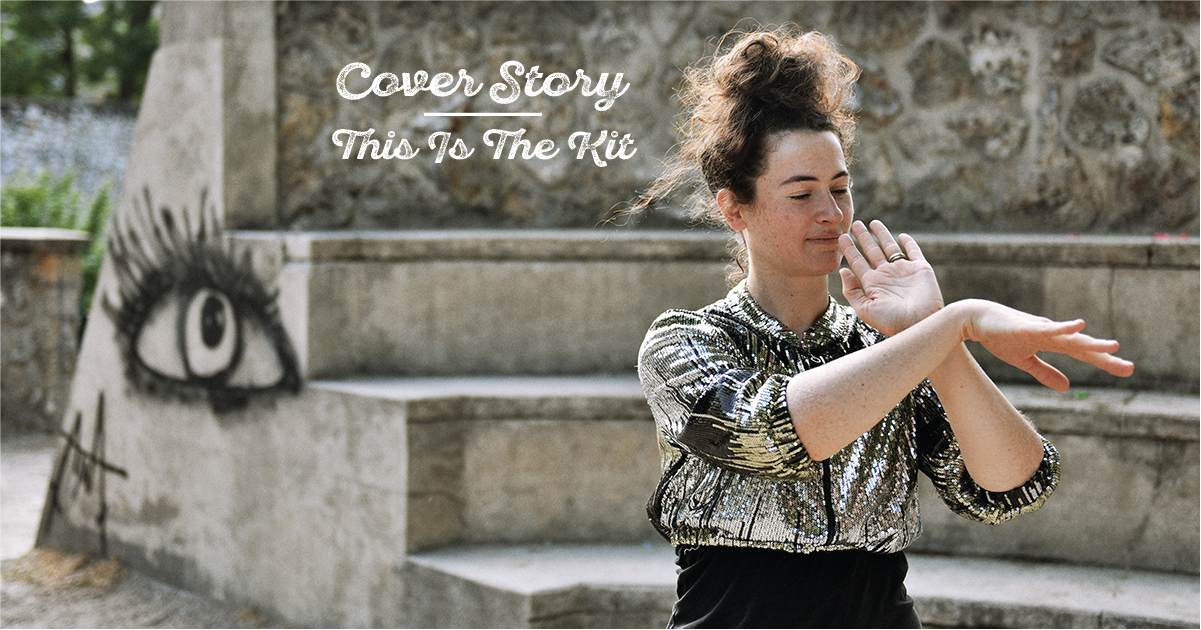
Kate Stables, principal of alternative roots outfit This Is the Kit, didn’t intend to write a pandemic album to follow her acclaimed 2017 debut, Moonshine Freeze. In fact, she wrote the entirety of Off Off On well before the term “COVID-19” entered our collective consciousness.
In the way that great art often can, though, the songs Stables wrote for Off Off On anticipated the needs of our current moment. Across 12 tracks, Stables sings of growth-inspiring personal reflection, the “two steps forward, one step back” nature of processing trauma, and continuing to move forward in the face of grief, all explored with deeply felt empathy and sharp insight.
Stables and her band recorded the bulk Off Off On prior to the COVID-19 lockdown alongside producer Josh Kaufman (Bonny Light Horseman, the Hold Steady) at Real World Studios in the U.K. Sonically, the album builds atop the lush, banjo-driven alternative folk of Moonshine Freeze, with complex, often subtle arrangements that offer thoughtful soundscapes for Stables’ striking lyrics.
BGS caught up with Stables via Skype to discuss finding sources of inspiration, writing about difficult personal moments, and living as a musician during the COVID-19 lockdown.
BGS: To start us off, everyone has had their own specific difficulties resulting from the pandemic, but musicians, especially, have been dealt a tough blow. How has that affected you and how have you adjusted to being home more, and not being able to tour this record?
Stables: At first, it was kind of novel and a bit of a relief, almost. For the first summer in living memory, I didn’t have loads of festivals to do. So it was a summer I spent with my family doing family stuff instead. So that was nice, at first. Now that the time for actual touring would have been starting soon but it isn’t starting soon, it feels a bit weird. It’s the longest amount of time I’ve ever gone without playing gigs and without touring. So it feels really weird and I miss doing gigs so much. And I really miss my band. They’re in the U.K. and I’m in France. I’ve never gone this long without seeing them.
With regard to the album, you wrote and completed the majority of it before the pandemic started. What were the origins of the album and how has its meaning evolved for you since you first began plotting it?
I don’t usually have a pre-album vision. It’s normally just me writing songs as and when they come and seeing what kind of shape it all takes along the way. One of the earliest songs that was written for this album was “Started Again.” “Started Again” is almost a bit of a bridge song from the last album to this album, because I feel like it could have gone on either, in terms of what I was thinking about. It feels like it’s connected to my past life, in a way, because I feel like everyone has a new type of life now. The world has passed through this strange portal and we’re all a bit different and have to adapt to things. It’s not an obviously key song on this album… but it’s also a bit linked to my thinking about perseverance and getting through the difficulties and coming out the other side again and again. It’s funny because that’s also what the world seems to be dealing with at the moment. Those are themes that accidentally came out while writing the album, without knowing that COVID-19 was coming.
I read the track-by-track notes that you wrote for the album, and one line that stuck out to me was, “Listening through to these recordings, I hear new COVID-19 references every day.” Could you elaborate on that? I heard some myself when I was listening, but am curious as to which resonated with you.
Partly there’s the “we’ve all got to get through this” that I was dealing with in the album, which now seems like I’m talking about COVID. There are lines like, “Try not to cough.” That is too ridiculous and coincidental. There’s a song about a hospital and the breathing apparatus in the hospital; that felt spooky, now that so many people are in hospitals than ever before. Things that were written with one story in mind and now this new situation has given them another story.
I’ve talked to a few other artists who have had similar experiences. It’s interesting, because obviously no one could have predicted where we are now, but it does make you wonder if you were intuiting that we were collectively going down this road.
Yeah, are we all tuned into something that we don’t know about? It does feel weird. I think also with writing, and you may get this in your work, you do end up with funny coincidences and predicting the future accidentally sometimes. It’s just the way it goes when you’re working with words and language and storytelling, whether it’s journalism or fiction or songwriting. These weird cosmic moments do happen.
One of my favorite tracks, both sonically and lyrically, is “This Is What You Did.” How did you write that one?
Writing it was fun because it was an example of me playing with rhythm, which is my favorite thing to do. I tried to find a banjo-picking pattern that was quite hard, something I almost couldn’t do, and worked until I got it. I tried to find a pattern where I wasn’t using the same fingers every time, something as random as possible. The beats were regular but the strings I was picking were somewhat randomly generated. Then I tried to find vocal rhythms that were difficult for me to sing at the same time. I guess it was like brain gymnastics. I like it when you can’t tell where a pattern starts and finishes. … That repetitive, cyclical nature of the music lent itself to this mind-loop approach with the lyrics.
Reading through your notes about “No Such Thing,” you reference both Jack Kornfield and Jane Austen as inspirations. How do you find inspiration? Do you always have your antenna up?
Language is the material I work in and I really enjoy exploring other people’s work with language. When I hear a phrase that makes me laugh or that sounds pleasing to say out loud, I’m always noting down little quotes of things that make a spark in my brain, even if it’s something out of Bob’s Burgers or something… So I guess I do always have a bit of a radar up for rhymes, assonance alliteration; things like that make my ears prick up.
When you reach the point in your writing process when you’re ready to fully arrange a song, what does your collaboration with your band look like? They’re such fantastic players and it sounds like you’re all quite close.
Sometimes I have a bit of an idea of the vibe or the kind of pace that I was envisaging for a song, but it’s also nice to not say anything until they’ve tried something out. Quite often they’ll find something that’s better than what I had in mind. I’ve ended up with three of my favorite musicians playing in my band, which feels like a privilege and a real kind of fluke. So it’s nice to let them do their own thing as much as possible. I’d be interested to know, though, if they think that’s what I do. Maybe they think I’m really controlling. [Laughs] What I hope I do is let them have space to do their stuff.
Prior to lockdown, you got to spend a lot of time on the road with the National. How does playing as part of someone else’s project inform your work as a solo artist?
In a few ways, but it’s hard to put your finger on one. Traveling is nutritious for me in terms of writing and wellbeing and being inspired. The act of traveling, even just looking out the window while you’re going along the road, is inspiring. But also the fact that you’re going to different places and meeting new people and having these new experiences… Also just seeing how other people work. I found it fascinating to be part of this symbiotic ecosystem that’s going around on tour. Everyone plays an important part and looks out for each other and it’s really fascinating to see how other people tour.
It’s a bit tricky to look too far ahead right now, but, in addition to getting your album out, what are you looking forward to in the coming months?
Because the gigs aren’t there to be looked forward to, I think I’m looking forward to seeing what I can get done instead. There are a lot of musical projects that I’d love to get stuck into, and I hope that I just will. This time, we’re all learning how to be ready for anything and not to assume that something is going to happen, so, ideally, I’ll just be making music instead of touring. I really hope I’ll be able to make music with people, even if it’s long-distance.
Bonny Light Horseman, a new American supergroup interpreting old British folk tunes, is one of the few good things to come from Twitter. After spending nearly fifteen years shepherding her ambitious musical Hadestown all the way to Broadway, Anaïs Mitchell was catching up on some of music she’d missed out on, and she took to the social media platform to shout out the Fruit Bats, the long-running indie-pop band led by Eric D. Johnson. It just so happened that he had recently discovered Mitchell’s music and was a new fan.
“It’s an embarrassing way to meet someone,” Johnson says, “but that’s how it happened. She tagged me and said she loved my band. There are so many bad vibes on [Twitter], but I do like the fact that you can write a very short fan letter and you know they’ll get it.”
Mitchell was already working with producer/multi-instrumentalist Josh Kaufman (Craig Finn, Josh Ritter) on a new project for the Eaux Claires Festival, and Johnson admits he steamrolled his way into the gig. At the 37d03d Festival in Berlin, the trio spent a few hours each day creating and recording new arrangements of old folk tunes like “Blackwaterside” and “Lowlands” with a small army of friends and collaborators joining in — including members of the National, Hiss Golden Messenger, the Staves, and Bon Iver. The result is a lush and lovely collection of songs that may be centuries old, but sound very much of their moment.
At least on paper it may seem like an unlikely folk alliance, considering Mitchell is the only artist among them popularly identified with that genre. Kaufman is more associated with artful indie rock, while Johnson is well known for crafting supremely catchy pop hooks.
“I have a fairly strong folk background,” says Johnson. “I used to teach banjo at the Old Town School of Folk Music in Chicago, but somewhere along the way I veered off on a poppier path. But Anaïs has a bona fide folk background beyond her career as a singer/songwriter. She knows all the old stuff and grew up with those records in her house. So she’s been a teacher to Josh and me in a lot of ways.”
This kind of collaboration fits with the 37d03d ethos. Founded by Bon Iver’s Justin Vernon and the National’s Aaron Dessner, the organization encourages and supports creative cooperation between artists in different genres and often on different continents. Already the duo have released an album together under the name Big Red Machine, and the recent posthumous Leonard Cohen album features 37d03d artists putting new music to his unrecorded lyrics. (It should be noted that the organization was originally known as PEOPLE, but changed its name to 37d03d in early 2019. It’s still pronounced PEOPLE, though. To see why, just turn your computer upside down.)
“They’re interested in artists expanding and exploring and collaborating,” says Mitchell. “After a while you get a kind of artistic identity, like a calcification of who you are as an artist and what you do. But there are people who are yearning to be free from the trappings of who people think they are. So PEOPLE offers an opportunity to be kind of childlike, to get back to that beginner’s mindset.”
For Mitchell it’s been a nice break, a way to settle gently back into her old life as a singer/songwriter after devoting so much time to Hadestown. Just before they embarked on a long tour supporting their debut, two-thirds of Bonny Light Horseman — Johnson and Mitchell — convened to talk about the durability of folk music, the joys of collaboration, and people who need 37d03d.
BGS: How did 37d03d inform this project?
Anaïs Mitchell: I feel like we were forged in the fires of PEOPLE. They’re interested in people expanding and exploring and collaborating and trying new things, so it was really perfect that we got to be a part of it before we really had any idea who we were or what we were doing.
Eric D. Johnson: I don’t know where this project would be without it. I don’t know if there’s anything modern that can be compared to it. I try to imagine how they pull it off from a financial or logistical standpoint, but they’re doing truly the Lord’s work, which is essentially creating a really easy platform for a bunch of people to get together and do something creative. I don’t know if it’s the most modern construct ever and they’re light years ahead of time, or if they’re completely out of their minds and operating on some sort of beatnik principle that’s completely untenable today. It’s probably both and/or neither. It’s an out-of-time thing in a very beautiful way.
AM: I’d been working with Josh on some of this material. I’ve been an admirer of his for a few years now — his playing and his producing on other people’s records. The thing was kind of a gleam in the eye, you know, when Justin [Vernon from Bon Iver] and Aaron [Dessner from the National] reached out to see if we wanted to do this project. Why don’t you play that at Eaux Claires festival? That was cool of them, because we didn’t even have a band name yet. We were just exploring. Just messing around.
EDJ: Then I steamrolled my way in, and it ended up becoming this band. That’s how it got started, and that parlayed its way into the big Berlin project, where they did this big, unique artist-in-residency festival type thing at the Funkhaus. It was like summer camp. That’s the only way to describe it.
Photo credit: D. James Goodwin
I think of PEOPLE as promoting that kind of collaboration, where you can play on somebody’s record or in somebody’s band without having it be a major statement.
AM: Totally. There was a moment in the middle of the recording where Josh said, “Man, we could really use a drum on this track.” Out in the hall, we heard a cymbal fall to the floor and make a big crash. Josh opened the door and it was Andrew Barr from the Barr Brothers. He was on his way to another session, but he had three minutes so he came in played the one drum that we needed on that tracks. It’s stuff like that. Or there’s a song that has a couple of the Staves on it and Lisa Hannigan. They just happened to be free. There was a lot of serendipity with that stuff.
When we were in Berlin, we didn’t know that we were making a record or that any of that stuff was going to have any value to anyone else outside of us. But then we got back to the States and we listened back and we were like, Wow, this gig is really good! It felt like half of an album. So the question became, how can we finish it? How can we make the other half of the record feel like it’s of a piece with that stuff, even though the setting is going to be different? So we made the rest of the record at Woodstock at this beautiful studio called Dreamland, which is just a big, old, weird church.
EDJ: We recorded in Woodstock for two days. It was more of a traditional recording setup. I remember we did “The Roving” there and “Deep in Love,” which are two of the singles and I think two of the strongest tracks. We did them at 1 in the morning. They’re both completely eleventh-hour songs.
At what point did the idea to cover old folk songs come into play?
AM: Traditional folk music is kind of a passion of both of ours, especially like British Isles stuff. We started to mess around with some things, and the very first song that Josh and I ever worked on together was “Lowlands.” Which is interesting because I hadn’t heard any versions of that song. I guess I had maybe seen some texts, and I learned that there are two strains. One is this British Isles strain, and the other is from the American South. They’re basically ghost stories, in which a dead lover appears to a woman or in some versions a man. They’re also stevedore songs, songs about working up on the shore, loading crates onto ships.
So the song that we put together contains elements of both of those things as well as some stuff that we made up. It felt like a cool puzzle to put together. A lot of them I would say have had less research. We said very early on that we didn’t want it to feel like a research project. We really wanted to be more heart-led and wide open.
EDJ: I would say we were adamant that we didn’t want to do a research project. We just want to enjoy it. But it is incredible when you do a little research on these songs — and this is not news — you don’t have to be an advanced musicologist to know just how interwoven American music and the music of the British Isles are. That music came to western Appalachians and eventually gave us country music and rock ‘n’ roll.
The through lines are so short still. It’s really not that old. When it split off, our grandparents were alive. Those songs are so ancient and so thoroughly modern at the same time in the themes they’re singing about. If you listen to the lyrics of “The Roving,” which are hundreds of years old, it sounds like the plot to a teen summer movie from the ‘80s. It’s just people loving and longing and grieving and having sex and everything else we’ve been doing and singing about for as long as anything.
It doesn’t sound like an album concerned with preservation or historical accuracy. You’re taking a lot of liberties with them without trying to explicitly update them to our current moment.
AM: A lot of the songs have new music but the text is traditional to one degree or another. The text of “The Roving” is based on songs like “Courting Is a Pleasure” and “Handsome Molly,” but the music isn’t connected to any of those songs. But it still feels like a heartfelt way that the voice wants to sing. This is a total aside, but it’s just such a pleasure to sing with Eric. He’s so unfettered in his singing. It makes me want to sing that way, too. I had to sing my heart out in order to get on the same level as him.
EDJ: This is folk music. It doesn’t need to be finely hewn. It can just be a lump of clay that you emotionally hack at until you get something out of it. There might be some deep, deep purists who think we’re very impure in how we approach these songs. But these songs are meant to change over the years. They’re from the oral tradition, from pre-recorded times, so we don’t even know what the original version of “Deep in Love” sounds like. We just know what we came up with. That song was sort of a sketch that I had written for the last Fruit Bats album, but I couldn’t get anywhere with it. I had a melody written, just a do-do-do verse that I sang in the studio, and Josh opened up a book of traditional Welsh folk lyrics. He said, “Sing these lyrics over that melody.” They slotted perfectly, and that’s how you hear it.
Is this a one-off project, or do you think Bonny Light Horseman will continue?
EDJ: I think we’re gonna pick it up again, but we have no clue what we’re gonna do next. We could just be this band that keeps reinterpreting British folk music forever, but maybe not. Making this first one was very natural and easy in a lot of ways, and we’ve enjoyed playing shows together, but I don’t think the way forward has been pointed out to us just yet.
Photo credit: Nolan Knight
This website uses cookies to improve your experience. We'll assume you're ok with this, but you can opt-out if you wish.AcceptRejectRead More
Privacy & Cookies Policy
Privacy Overview
This website uses cookies to improve your experience while you navigate through the website. Out of these, the cookies that are categorized as necessary are stored on your browser as they are essential for the working of basic functionalities of the website. We also use third-party cookies that help us analyze and understand how you use this website. These cookies will be stored in your browser only with your consent. You also have the option to opt-out of these cookies. But opting out of some of these cookies may affect your browsing experience.
Necessary cookies are absolutely essential for the website to function properly. This category only includes cookies that ensures basic functionalities and security features of the website. These cookies do not store any personal information.
Any cookies that may not be particularly necessary for the website to function and is used specifically to collect user personal data via analytics, ads, other embedded contents are termed as non-necessary cookies. It is mandatory to procure user consent prior to running these cookies on your website.