How Courtney Hartman
Made With You

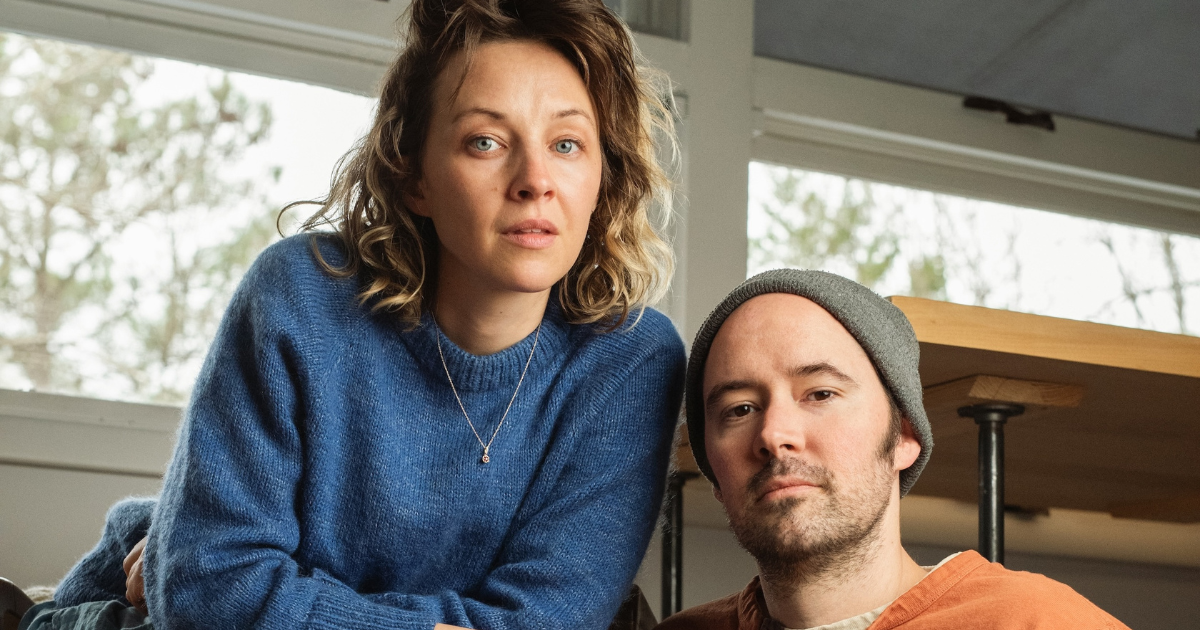
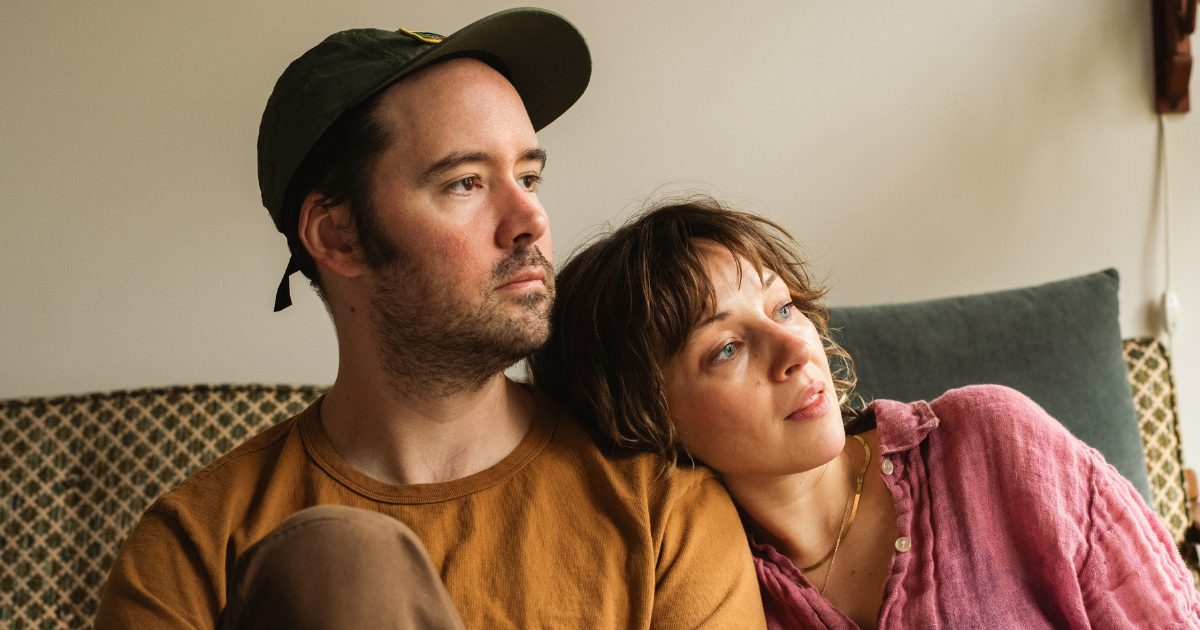
In the late summer of 2022, Courtney Hartman realized that the songs she had written for a new album were not the songs she needed to release. “I had found out I was pregnant a few months earlier, [and already] had a batch of material I was working on for a new record. I felt this quiet urging to set all of that aside and give my attention to what was happening in our life and in my body,” she says.

She discarded everything and began writing her third album, With You, a personal journey through motherhood set to music.

“What was happening in our life” refers to a tumultuous string of events that saw Hartman and her husband, John, through the best and worst of times. Best because the couple were expecting their first child, rebuilding their house in Eau Claire, Wisconsin, and Hartman was on tour; worst because her husband fell off a ladder, could not work for months, lost two jobs, she was dropped by her booking agent, and they totaled their car.

The cumulative effect left the couple in need emotionally, physically, and financially. They soon found themselves uplifted by their community – their immediate one and her music community at large. The experience left Hartman deeply grateful and dedicated to giving back even more than she received.

In September of that year, Hartman began writing “in earnest” the songs that became With You. She and her husband welcomed their daughter in February 2023 – more best of times followed by worst of times as Hartman struggled with postpartum depression.

“At the end of [2023] I had all this material and realized I wanted to invite in other voices and stories and perspectives, specifically those of other mothers,” she says.

Once again, she drew on her community, calling on a fellowship of songwriter mothers – Sarah Siskind, Dawn Landes, Ana Egge, Tift Merritt, Kristin Andreassen, and Emily Frantz Marlin of Watchhouse – to help take her deeply personal new songs to an even higher level.

“I spent another few months, December [2023] to February [2024], writing mostly over Zoom, finishing the material with those other writers,” she says. With You was recorded in June and July 2024, at The Hive studio in Eau Claire, with Hartman producing and Brian Joseph as co-producer and engineer.

As one might expect from Hartman, there are plenty of guitars on the album – her Lawrence Smart Archtop, Bourgeois Parlor,
PreWar (modeled after a Gibson J-45), Bischoff Dreadnought, Martin 00,
and a Telecaster – but if you’re looking for the lightning flatpicking work that makes her a bluegrass force to reckon with, you’ll be best served on YouTube. With You tells a story that calls for understated guitars as a palette for its songs.

“Things weren’t all bright and shiny in that season,” she says, “but the impetus to write and pay attention helped me pay attention to some of those lighter moments. Not all the songs on With You are about everything being light, because that’s just not how it is. But there was this extra attention to some of those details that do help buoy your spirit when things are a little more challenging.”
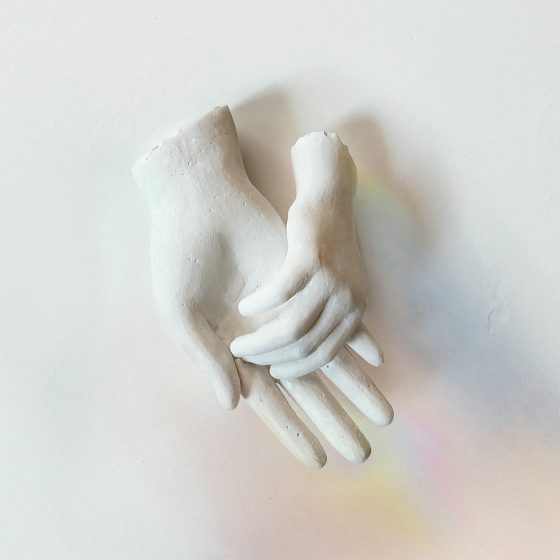
Courtney Hartman’s ‘With You’ album cover art, created by Claire Lindwall.

Completing the journey is With You’s striking cover art. The work of Hartman’s close friend Claire Lindwall captures the music’s delicate intimacy. “Claire is primarily a watercolor artist and illustrator,” says Hartman. “A special part of creating an album, for me, is giving the music to someone who then translates it into a visual piece of art. Every time, it’s surprising and expansive in a new way.”

Lindwall cast her own hand and that of her daughter’s, and positioned the casts so that one holds the other. “We experimented with drawings around it, then having just a splash of watercolor behind the piece,” says Hartman. “That’s all it needed.”

With this album now making its full debut, how do you feel about sharing so much vulnerability?

Courtney Hartman: The processing has happened in phases. I think it started just by saying yes to writing the material. There was an accepting of, “I’m writing about this thing that feels more vulnerable and more naked than anything I’ve written about before.” Bringing those songs to other writers, to collaborators, there was another level of vulnerability there.

A year ago I brought all of this material to my greater community and asked for support, because at that point I needed help putting the album out. Now, to give it to the rest of my community and listeners in the world, there’s a level of vulnerability, but I feel mostly excited. It feels like, “We made it.”

You’ve explained in other interviews that you had to use funding meant for the songs that came before these in order to get back on your feet. Needing financial assistance is also a vulnerable place and one that often brings publicly imposed shame and guilt. How did you process it?

You’re bringing up something that my husband and I have been talking about a lot, just with the news cycle and trying to get an understanding of what we can do for folks in our community. And having had small tastes of that in our life, because I know what we’ve experienced is so small compared to what so many people live through and are currently living through.

An important [word] that you touched on is shame – the shame of needing help; of not feeling like you can do it on your own or you can stand on your own two feet; of needing help for basic things like groceries. I think maybe accepting help and accepting care expands our capacity to feel compassion and to be able to then care for others.

In a podcast for Acoustic Guitar, you used the phrase “the intimacy of sound.” Could you talk more about what that means in the songwriting and guitar playing?

What I hear when you reflect that phrase back to me is the sound of the skin of your finger on the guitar string, or the sound of hands against a percussive instrument. When we went into the studio, I told the friends that were with me there on the first day, “Just as a guiding directive, whenever we imagine a sound that we want to create, let’s see if we can find something natural to create it with.”

Everyone took it in their own way, some on their instruments. Sean Carey was heavily involved on the record and he took that more literally in a lot of the percussion work. He found a nest outside when he was wandering around and that became the percussion on a track. Or even just the sound of skin on skin being a sound that we used as well; bringing in and magnifying some of these quieter sounds and allowing that to be a part of the soundscape [was part of the intimacy of sound].

Did you select the guitars around the songs or did some of the songs develop around your guitars?

Sometimes you think you know what a song wants before going into the studio and then you sit behind a mic and you’re like, “This isn’t serving it quite right.” And sometimes that experimentation takes a little longer than you think it will. Or sometimes you sit down with a first instinct and it’s totally right. That’s part of the reason it’s fun to have a good array of instruments in the studio.

Is the guitar as much a part of expressing your feelings as the lyrics?

It is. I think part of that comes from how long it’s been an instrument that feels like a voice to me. Songwriting came around the same time. I was about 12 when I started writing songs. Singing feels like something I still have so much exploration and learning to do.

How did working with other mothers, and their lived experiences, bring understanding to what you were going through?

What I was given [was the] shared experience and the acknowledgement of, “This is really hard. It’s really beautiful, but it’s also really challenging.”

So much of the caregiving that happens [as a mother], especially in that first year … so much of it is invisible. Maybe an aspect of that applies to all sorts of giving care – that it’s invisible other than to the one giving the care and the one receiving the care. When you feel invisible, it can also make you feel isolated and that can really feed into some of the struggles. A lot of folks have postpartum [depression] and societally we’re not set up to honor and support that season very well at all. It’s something I care a lot about, both from experiences with my family, but also as I’ve delved into work as a birth doula.

When you say, “Societally we’re not set up to honor and support that season very well at all,” what do we need to do?

We need to honor and uphold the importance of rest and nutrition and preparation. Parents are prepared for “Here’s what birth might look like,” but after that six-week checkup [traditional care usually ends]. Postpartum extends far longer than that.

A lot of [postpartum] mental health struggles won’t show up until maybe nine months or a year after a child is born. Better supporting [people postpartum] that would be the first thing I can think of. We live pretty isolated lives, as families in our insular homes, and so we’re not set up to receive support very well.

Or ask for it.

Yes, totally, [we need to be] preparing [people] to know that this is a time to accept and receive care. Preparing your heart for that is such a big piece of it, to know that we, as your village and your community, want to care for you in this time.

You’ve spoken openly about postpartum depression. What was that period of time like for you?

Moments of real happiness, but also moments of hitting my head against the wall … when I was struggling. [It was] hard to admit to myself and then to speak that [struggle] out loud to anybody. It wasn’t until afterwards that I could say, “That was hard.”

All depression is misunderstood and will often make people in your circle run away.

Let’s go back to your community, and the community of mothers, and how they lifted you.

I felt so cared for by our community in a way that was deeply humbling and in a way that somehow prepared me to do some of the caregiving that was going to be required of me. I was receiving so much love and support and meals and folks showing up. That kind of care is life-changing. It changes the way we see the world and our community around us.

My daughter was about nine months old or so when I started reaching out to other mothers, asking if they would collaborate on some songwriting. Having some tether creatively helped pull me through that season. It helped weave together the woman I was prior to having a child with the woman I was in that new space. … Sometimes it feels like … you almost can’t remember who you were before.

I was really afraid of [losing parts of myself]. I was afraid I wouldn’t create music again. There’s all these fears, irrational or not, that show up. Creating and being able to have these conversations that normalize what you’re experiencing. Having women who are [a] few years ahead of me be like, “It might be extra-challenging now, but it doesn’t stay that way forever.”

It’s almost 2026 and society still misunderstands and stigmatizes mental health, certainly PPD, and even some aspects of pre- and postpartum healthcare. Why are we uncomfortable talking about things that are so natural and important to discuss? Are we making progress or going backward?

I hope we’re making progress. It was a lot easier for me to ask, “Why don’t we talk about these things?” when I wasn’t part of the “we.” As soon as it was also part of my story to talk about and share, [I had to come] to terms with my own hesitancy. Why do I not want to talk about something as normal as pregnancy and motherhood in my songs? Why do I feel like if I put this music out, it will be discredited and potentially ignored, even though it may speak to so much of the population? …

I still don’t have an answer. Maybe it’s because there’s so many generations of women having to hide those things for fear of losing wages, or jobs, or discrimination, whatever it might be. For everybody’s sake, there’s so much we have to learn from mothers’ voices, and I hope we’re beginning to really listen.

On a podcast, The Other 22 Hours, you reflected on the period after Della Mae and the realization, at the time, that “Music was not a healing thing.” What role does music now play in your healing and mental health?

It has become healing again. Years ago, I was dealing with physical pain in my hands. That was magnified by touring all the time, being on the road so much, and the strain on my body. So I was speaking about it in a physical way. [Music] has become a lot more than just physically healing [for me]. I think this album exemplifies that.

You have worked with so many people. Who is your wish-list artist or artists?

Oh my gosh. The first person that came to mind – and maybe it’s because I’ve been listening to her record all week – I would love to play music in the same room as Brandi Carlile. She gives all of herself and it’s so good.

We had a listening party [for With You] and as I was listening to the album for the first time with a whole group of friends and collaborators, what I hear on it is my friends and heroes, which is such a joy. There are so many folks on this album that I look up to so much and who have been dream collaborators. So, in that way, a lot of it has been a dream list fulfilled.


Photo Credit: Michelle Bennett
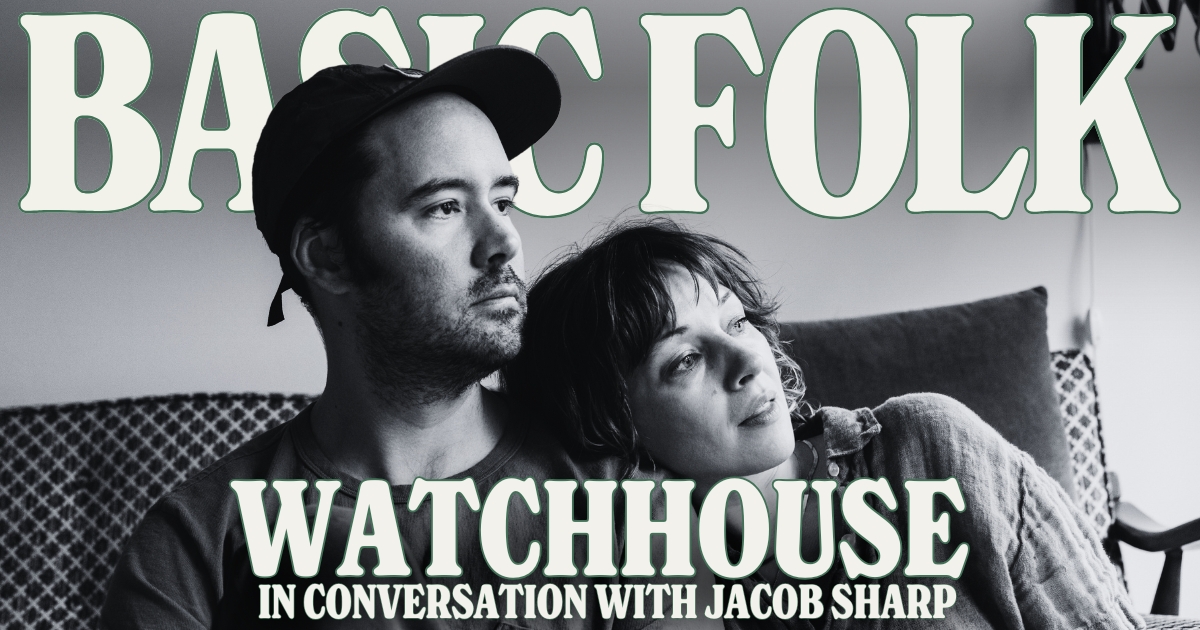
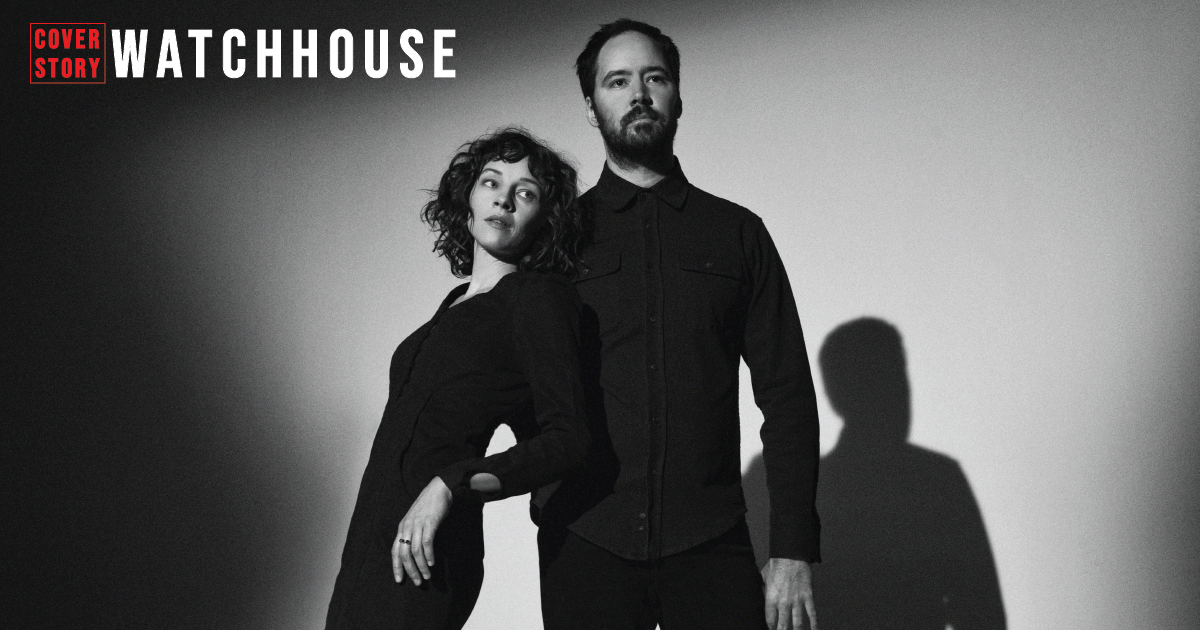
Basic Folk: Watchhouse

Oh, WOW! A bonus, surprise episode with Watchhouse? Yes! And it is a treat.

We are pleased to have Jacob Sharp of Mipso as our guest host in conversation with his friends Andrew Marlin and Emily Frantz of Watchhouse, talking about their new studio album, Rituals. The record was co-produced with Ryan Gustafson of The Dead Tongues and finds the North Carolina duo exploring themes of identity, awareness, and evolution.

LISTEN: APPLE • SPOTIFY • AMAZON • MP3

We are so pumped about this pairing on the pod! We are also huge fans of Jacob’s music – with Mipso as well as in his solo endeavors – from his attitude to his vibes. Not to mention how super talented he is. This is a really fun conversation between some old pals. Jacob was based in California, but now moving back to North Carolina, so it’s cool to have a little homecoming for these North Carolinians. Thanks for listening!


Find more of our Artist of the Month content on Watchhouse here.

Photo Credit: Jillian Clark

Watchhouse Found New Rituals Amid the Push and Pull of Change

Chances are you’ve cultivated a few personal routines to help you navigate the world: one for daily life, one for weekly, monthly, and so on. There’s also likely a handful of individual habits that affect how you choose to go about your routine. The former, at times, can influence the latter, fitting within each other like a pair of nesting dolls, adjacent and similar in their roles.

Then there are rituals. Though these three recurring sets of actions – routines, habits, and rituals – would seem like easily overlapping bedfellows, rituals carry an intrinsic quality the other two lack: mindfulness. Rituals bear a sense of intention like the other two, but it’s often coupled with an element of symbolism or custom. It’s not just a matter of doing something and saying it’s done; there are other connotations or expectations that may influence why doing it matters.

Holding this notion in mind, it’s Rituals that Andrew Marlin and Emily Frantz of North Carolina duo Watchhouse have decided to name their new album. Through its 11 tracks, the married musicians posit an abundance of questions and actions, their contemplations placed in settings that are as clear as a simple back porch and as abstract as a space “through the looking glass,” “beyond this to and fro.” Settings that exist outside of not only any kind of routine, but separate from time and space all together.

Though Watchhouse’s new writings don’t seem to present rituals in their conventional form, the title still feels wholly appropriate. Marlin and Frantz’s reflections, wistful pining, and open-ended ruminations don’t lead to a sense of clear, expected structure that rituals would traditionally provide, but each song is lined with an abundance of intention, mindfulness, and hope for various outcomes. Sometimes these are overtly stated – Oh, I’m dreaming of a life with you in the sun/ And I hope our time together has only just begun… – and sometimes they are dressed in metaphors: Go fire your cannonball, go and fire away/ When the ashes fall we’ll start a brand new day.

There are defined ideas that Watchhouse put forth on the album: identity and awareness, the distinction between patterns and truths, how to develop a positive relationship with change, and what it means to evolve. All the same, while our internal responses to these songs may change over time, the very act of revisiting, replaying, and reconsidering their meanings, and how we are affected by them, can be a form of ritual in its own way.

Amid an extensive tour that will take them all over the U.S. and into Canada through summer and fall, Watchhouse spoke with BGS about their collaborative dynamic, how their individual artistic instincts influence the direction of a song, and the prevalence of duality in the album – as well as in their lives.

It’s been about four years since your last album and eight years since both your lives changed from bandmates to family. Given that Rituals focuses on patterns and the perception of change on our lives, how has the ever-growing longevity of your union in marriage — and all the ways marriage transforms a relationship on its own — changed the way you perceive and interact with the music making process?

Andrew Marlin: When you hit the road and join forces with other people to play music, it’s kind of like stepping outside of the norm and stepping outside of the daily life to go up there and almost take on a role or take on a character in order to get inside the music. You kind of just forget everything that the day often requires of you, because all of a sudden those requirements aren’t there. It’s just the stage and the music and the people that are there rooting for you to go deep, you know?

I think finding that zone with Emily has had its challenges in the past, because we’re so closely tied to each other. We raise kids together and we live together, and so doing all this traveling together and playing music together too, it makes it harder – or made it harder for me at the beginning, I think – to leave the daily routine and expectations behind on stage and just shed all of that and take on that character. It’s one thing to look at your bandmates’ eyes and get a little nod or whatever’s happening during the music. It’s kind of like this understanding of, “I’m not here right now. This is just me playing music.”

Getting to that zone with Emily, now that we’re 16 years into it, has taken a while to get to that point to where it’s an acceptance of all of it, instead of just leaving things behind to get on stage. It’s like we’re carrying all of it with us at all points in time. People that come to see us get a real and honest version of ourselves, trying to go deep in the music but also being completely aware of each other too.

Emily Frantz: I was just thinking about how much things changed in 2020 and 2021, living our mundane day-to-day lives in our house, and the transition back into being on the road again and touring. We’ve obviously been doing that for a few years now since COVID, but that experience made us relearn what the relationship is between our daily life at home and touring and [figuring out] how can they coexist in a healthy way.

Ironically, the album’s opening track, “Shape,” avoids the traditional shape or structure of a song (all verses, no chorus) while the actual narrative of the song embraces ideas that lean into a sense of purgatory and a nebulous state of being — the very opposite of what would help establish a sense of shape, boundaries, identity, direction, patterns, or truths. What were the mental and emotional motivations that inspired you to take the song in this direction?

AM: It’s like establishing the shape or the pattern in order to separate yourself from it. That’s what a lot of those verses are doing, kind of outlining the things that often make me feel like I’m in a box and I’m trying to get outside of that box. The only way to do it – because there’s no real form to it – is to imagine the parameters, imagine the spaces that it ends up kind of confining you in, in order to step outside of those [boxes]. I think that was the intention with “Shape.”

EF: And the way that “Shape” came into its final form, at least final the way it appears on the record, was a lot of the things that you said about it: It didn’t ever really conform and it got rearranged and had things added and taken away from it so many times, a lot more so than other songs. But it always did feel like the backbone of this record in a lot of ways, which is why it felt really right as the opening track of this record.

AM: If there was a shape to define that song, I’d say it’s a spiral.


View this post on Instagram


A post shared by Watchhouse (@watchhouseband)

How have you fit rituals into your lives and have they helped you maintain a sense of stable continuity as a family and as musicians?

AM: I feel like since having kids, the day has taken so much more form. Because I think that, and Emily [is] really brilliant about this, giving structure to the day is super helpful for them. So that they don’t have to wonder what’s happening, so that they can really pay attention to what is happening. I’ve watched both of our kids blossom in that environment. Emily’s really good about helping to create that and make sure we stick to it. Carrying that on the road has been really helpful, too and something that I didn’t realize I was going to benefit very much from. Because I definitely, when left to my own devices, am like a sheet left out to dry – just flapping in the wind. To have a little bit of structure to the day, and have to enter into these mental zones with the kiddos, has added a lot of mental structure to my existence. I think that’s the biggest thing for me.

And within that, it’s about realizing what the day actually requires of me, instead of what I imagined today to be expecting of me. Finding those real anchors and a little more gravity to the things I’m working on have helped me shed old expectations of myself and what I think I’m supposed to be doing. I think that’s what led us to be okay with changing the band name and changing up some of the sounds and approaching this thing we’ve been doing for a long time in a whole new way.

EF: I think the thing that we are [focusing on] 16 years in is finding where the balance is between freedom and artistic expression, and also just daily life and figuring out how to have those two things like coexist and make each other better and not be in a constant sort of push and pull.

The first verse in “Beyond Meaning” is intriguing. The statement of your “gentle” disposition is nice, but its seemingly conditional nature gives pause — particularly when considering that life is noisy and out of our control more often than not. What is it that you’re trying to say about your own identity and awareness of how you cope with the noise and bustle of everyday living?

AM: I feel like what I was getting at is to view it as though it’s external noise. But it’s actually internal noise. That’s often the thing that keeps me from my peace and keeps me from being gentle. It’s my own defenses and my own self-consciousness that end up creating all of this noise. It paints the external noise in a negative light. When I can control that and remember to keep my own defenses at bay and be open and actually present, the idea that maybe this external noise is not a malicious one keeps me gentle and then often what comes from that is a gentle interaction. So it’s more about controlling the internal noise in order to actually experience the external factors.

Out of the 11 songs on the album, Emily is the primary vocalist only for “Firelight.” Why was Emily the right fit to sing the story of this one song? And more broadly, what went into your shared thought process on when, and for how long, you two would sing together? Is it a purely harmony and arrangement-based decision, or do the emotions of a song influence how each vocal arrangement is structured?

EF: A lot of times it can be pretty cut and dry. If we’re deciding who should sing lead on a song, it might just have to do with the range or the key, where we think it sounds good. Sometimes that plays into it maybe even more than the lyrics or the subject matter. With Andrew doing the songwriting, he’s always been more of the primary lead vocalist. Oftentimes, by the time we’re arranging a tune and finding out how we want to present it, it’s very cemented in his voice. But then a lot of times, there will be tunes that we’re struggling with and we’re not quite finding it. By switching out who’s singing, it reframes the whole song and allows us to not just change the lead vocalist, but to find a whole different zone for the song in terms of what we hear and how it gets arranged and recorded. That was the case with “Firelight.” We had so many different versions of that song over the years leading up to recording – different time signatures, different instrumentation – and that was one of the last ones that came together for this album. Most of it got done after the initial tracking session because we were searching on it for a long time and I think I like it more and more the longer I sit with it, the more I hear it.

AM: Often people do want to know why Emily’s not singing more tunes or why the roles are what they are. But I think it’s really important to shine a little light on what Emily does behind the scenes when she’s not singing. The way she plays rhythm and plays violin or whatever instrument she’s on, it ends up being this anchor for everyone in the band. The way that offers complete structure to what we’re doing and allows everything else to sway around that a little bit, I feel like even when she’s not singing, her musical voice is such a strong presence in the music. I’ve heard her say this before, like when she’s playing violin, she’d rather not sing lead because it’s almost like having to sing with two voices. That became part of the structure of what we’ve been doing all along, not just with the lead vocal. The feel of the song and the rhythm and the chord structure and the flow of it all often is hinged on what Emily ends up doing. I think that’s just as important as her taking a lead vocal.

EF: I’ve really, over the years of us playing music together, come around to enjoying singing lead when we find the song that feels good in my range. But for the most part, I’d rather be singing harmony to Andrew and that definitely brings me just as much, if not more, fulfillment than singing lead on a song.

Endless Highway (Pt. 1)” and “Sway / Endless Highway (Pt. 2)” leave a much heavier state of reflection than that of “Patterns,” the song you chose as the album’s finale. Were the lighter tone of the music and the lyrics a driving factor for why these last three songs are in this order? Did you want to avoid an ending that leaves the listener with a more uncertain emotional state?

AM: I’ll start off by saying Ryan Gustafson, who produced this record with us, actually ended up coming up with this track order. Having not listened to it that way and then taking Ryan’s perspective on it, it was like being able to listen to these songs in their entirety for the first time. All of a sudden, I was getting feelings from these recordings that I hadn’t gotten yet.

“Endless Highway (Pt. 1)” is a heavier song and talks about a really traumatic event that Emily and I went through and that long drone at the end of it kind of dances around the dread of that. Then into “Sway,” it’s more of a coming out of that [feeling]. How do we peek our heads out of the hole once we’ve gone down and slowly crawl back out? To finally get into “Endless Highway (Pt. 2),” where it feels like a real revelation and a real triumphant part of the record? So, you get to the top of the mountain on this song. But I do believe that while those revelations come, we get to the top of those mountains, everything’s clear, and there’s so much lightness and clarity around us, we still have to wake up the next morning, make coffee, make breakfast, get kids to school, go and run errands and carry that little mountain of revelation with us everywhere we go.

I think that the heaviness and the profoundness of that idea ends up giving way to these smaller, mundane parts of our life. That’s what “Patterns” feels like to me. It’s an admission that if we can hold on to those little revelations and the clarity they offered us, hopefully it’ll keep us light by offering us that little reminder of hope.

EF: Going back to what Andrew was just saying about having these big events or these heavy, emotional things happen, and then having to go on with our lives, and the push and pull of that – there’s frustration and beauty in it. I love the order of those [last few] tracks, because I feel both the “Endless Highways” and “Sway” are songs that were written in the middle of this album being written and there’s a lot of anguish from a lot of different sources in those songs. And then “Patterns” was the last song that was written for the album before we recorded it, so it feels like it has a certain clarity to it. Going down in the trench and making your way back up, even though it’s still really just posing a lot of the same questions [as the beginning of the album], but from a more settled state of mind.

What truths about yourselves and how you view the world have you discovered and accepted since finishing Rituals? How many of the questions you’ve posed through these songs do you feel you’ve managed to settle on answers for?

AM: I don’t think I would often look closely enough at how I was making a person feel, as much as I would look at the way the person was. I think that’s becoming more of my truth these days, just to trust that showing up open-minded with awareness and consciousness, focused on experiencing rather than projecting, is probably the closest to any truths that have come out of writing these songs and getting to the end of this record. The takeaway is that it’s not like we found answers, necessarily.

EF: It’s all just a pursuit, always.

AM: You know, it’s not always about finding answers. It’s about finding out–

AM/EF: It’s figuring out what the question is.


Photo Credit: Jillian Clark

Explore more of our Artist of the Month coverage here.

Artist of the Month: Watchhouse

What picker doesn’t dream of a bluegrass jam meet-cute? For Andrew Marlin and Emily Frantz, a fateful inauguration day jam in 2009 not only introduced each to their lifelong beloved, but also sowed the seeds for a renowned roots duo – Watchhouse.

In a radio interview with WNCW, Marlin recalls the pair’s chemistry felt immediately apparent, with Frantz’s harmonies lending new life to The Carter Family standard “Bury Me Beneath the Willow,” one of Marlin’s jamming mainstays at the time.

The North Carolina-based duo got right to work, gigging across the backyards and front porches of their Chapel Hill community. Both multi-instrumentalists and vocalists in their own right, Marlin took on the role as primary songwriter/guitarist/banjoist/mandolinist/vocalist, with Frantz augmenting via fiddle/vocals/guitar throughout their articulate arrangements.

By 2011, the pair had released two full-length albums, Quiet Little Room (2010) and Haste Make/Hard Hearted Stranger (2011) under the name Mandolin Orange. Though they would later outgrow the moniker, Mandolin Orange utilized just two instruments to primarily sculpt the duo’s sound – the mandolin and the orange fiddle. With lyrical depth and sensitive instrumental synastry, they established themselves as adept songweavers in the roots scene.

The year 2013 saw the pair signed to Yep Roc Records, a celebrated North Carolina label, starting a distinct shift in their visibility and distribution. Their debut release under the new label that year, This Side of Jordan, earned attention from an expanding national audience, with NPR deeming the record “effortless and beautiful.” They would go on to release three more albums with Yep Roc before shedding the Mandolin Orange title in 2021. Having conceived of the name Mandolin Orange in their early twenties, Marlin remarked that the shift to Watchhouse signaled leaning into intentionality, as the two had “long been burdened by the dichotomy between our band name and the music we strive to create.” As their palates developed, the sense of intimacy in Marlin’s songwriting ripened over time. Their 2019 release, Tides of a Teardrop, an album brimming with tenderness, honesty, and grief, reckoned with Marlin’s mother’s early death.

Propelled to rename the project with similar authenticity, the name Watchhouse emerged after a year of percolating during COVID quarantine. Their subsequent self-titled album, Watchhouse (2021), centered a sonic expansiveness that reached past the confines established and upheld by their moniker of old. Additionally, the duo gained full creative control as their own label, Tiptoe Tiger Music, released the record, partnering with Thirty Tigers for distribution. Layered with novel tones that veer into the vicinity of pop, Watchhouse maintains its makers’ telltale warmth and intimacy while dressing the project in a new glow.

Notably, many of these evolutions occurred in tandem with the birth and growth of Marlin and Frantz’s daughter, Ruby, who was born in late 2018. When asked by BGS back in 2021 about the influence becoming a parent has had on his songwriting, Marlin responded, “I would love to help pave a safe path for my daughter and hopefully inspire some of our listeners to be kind and open up a kind world for her to go into. And that’s made its way into my perspective even in songs where I’m not talking about it.” The songs grapple with a wide range of muses, from parenthood to life during climate change, remaining buoyant despite the weightiness of it all.

That tenor of pondering accompanies Watchhouse into the release of their 2025 album, Rituals, which entered the world on May 30 via Tiptoe Tiger Music/Thirty Tigers. The provocative 11-track collection, true to the duo’s thematic strengths, interrogates the circular nature of humanity, inspecting the relationship between steadfast, cyclical ritual and ever-evolving change.

Of the title track, Marlin states in the song’s press release, “When my circumstances change, who I think I am changes, and then my established rituals and patterns no longer serve me. This song is a leap of faith, a message to anyone feeling like they are struggling to leave a former self behind. We cement ourselves through constant sharing and projection, and it feels like it’s in direct conflict with staying present and evolving. ‘Rituals’ is a song of empathy, both for myself and for others – an acknowledgment of the celebrated nobody in us all.”

Throughout the album, Marlin’s songwriting investigates these themes, brought to life by a stunning range of vocal and instrumental performances, from harmonium to pedal steel to drum kit. Frantz and Marlin strike a vocal blend as warmly entangled as ever; listening to the two sing in harmony feels akin to being mesmerized by a crackling campfire dancing beneath the starlight. Frantz even graces listeners with a rare display of lead vocals on the track fittingly called “Firelight.”

In 2019, following the release of Tides of a Teardrop, Frantz told The Boot, “I like to play more of a supportive role, as someone who’s not doing much of the songwriting and someone who likes to sing harmony more so than lead. It’s always been what I’ve gravitated to – trying to complement the song as honestly as I can without taking too much ownership over it.”

“Firelight,” therefore, feels like a glimmering gem, a highly yearned-for showcasing of Frantz’s lilting vocals. Her timber and sway sift thoughtfully through Marlin’s lyrics of memory and connection, further infusing the album’s universe with a soft haze of timelessness.

The album art adds yet another dimension to these motifs. Its subtle depiction of domestic ritual (clotheslines, coffee machines, mugs, pots, etc.), emulates the familiar tenderness with which Watchhouse posits their profound inquiries. Reckoning with the simplicity of this imagery provokes listeners to explore the songs’ ponderings in the mundane alongside the larger overarching picture. Grown with an immense deal of care and attention, Rituals is a sonically transcendent record that begets deep inner stirrings within its listeners.

With Watchhouse presently in the midst of their album release tour, the entire BGS team is simply elated to name this dynamic pair our Artist of the Month. For all of June, we’ll be resharing articles, interviews, and music from the incredible duo from the BGS archives. Plus, don’t miss our brand new, exclusive interview with Marlin and Frantz and a special edition episode of Basic Folk featuring the duo in conversation with Jacob Sharp (of Mipso), as well. Check out our Essential Watchhouse Playlist below and, if you’re lucky, catch these wondrous performers on the road this festival season!


Photo Credit: Jillian Clark

BGS Top 50 Moments: Newport Folk Festival

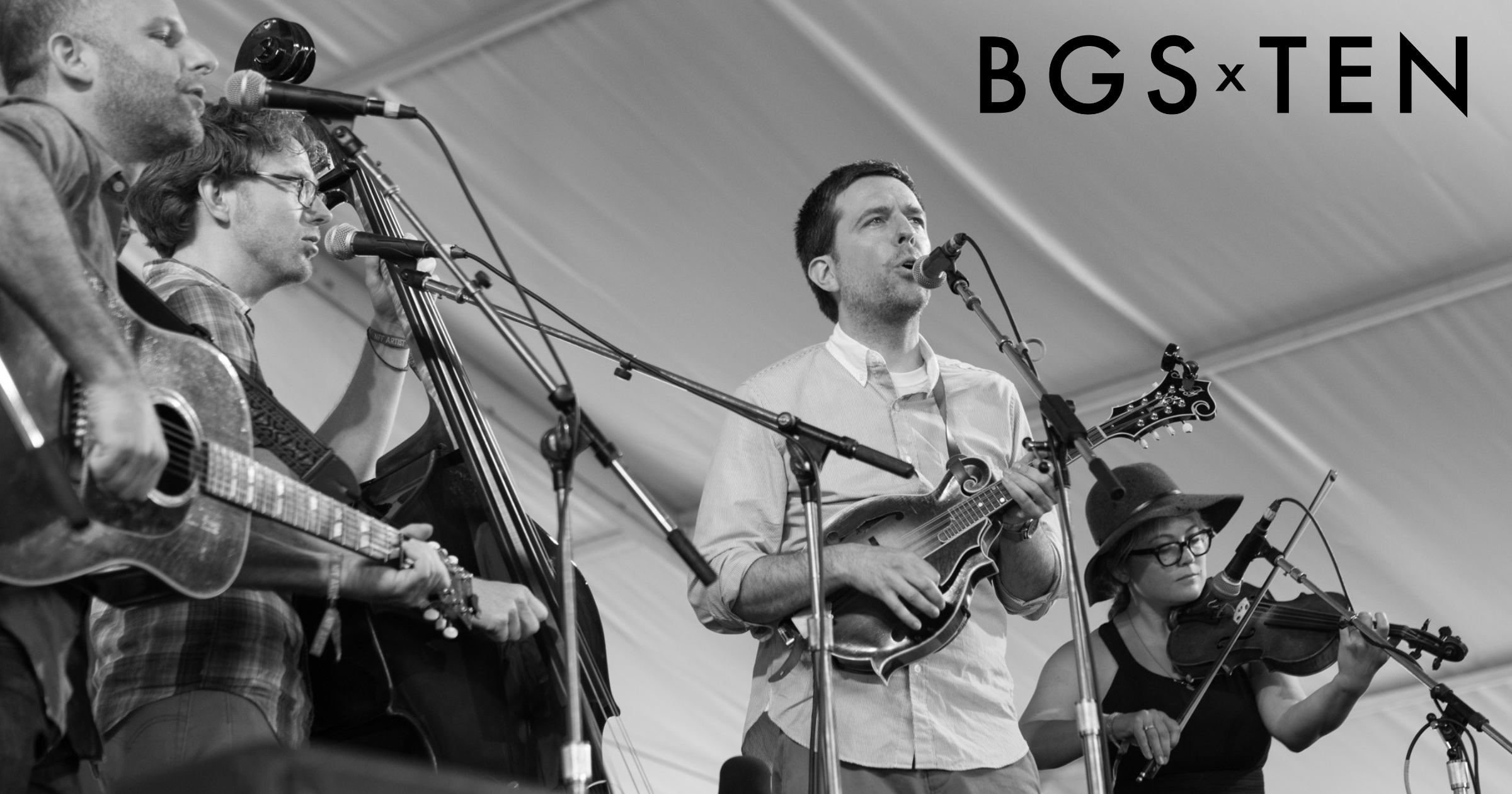
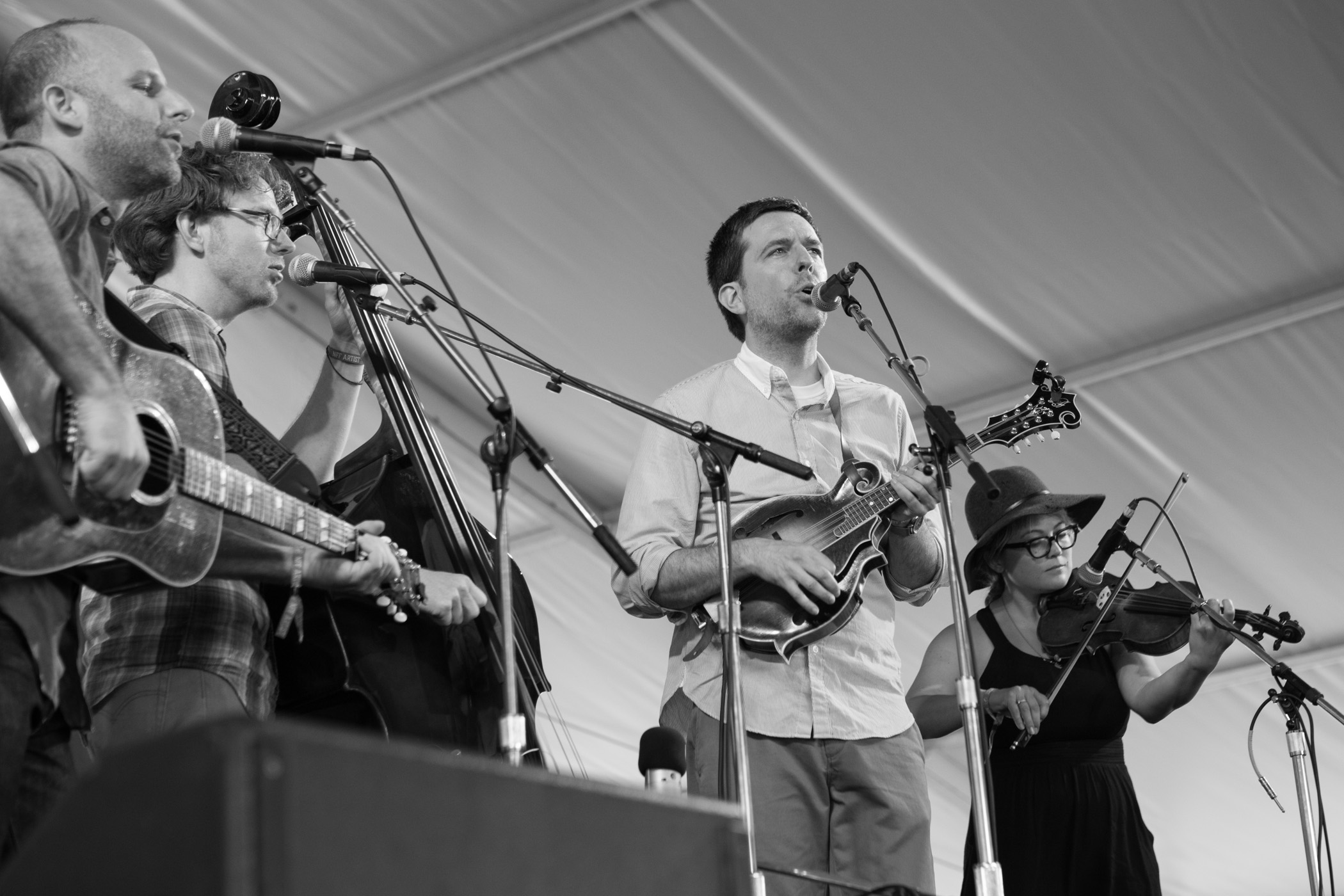
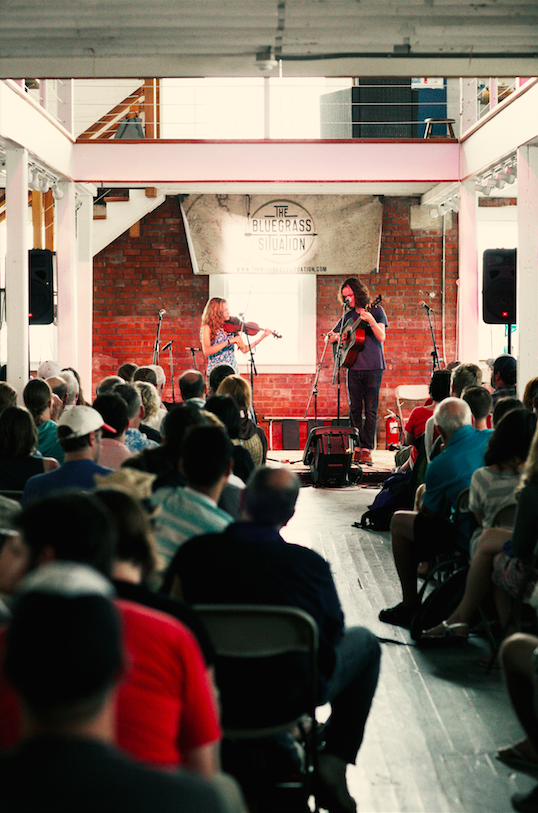
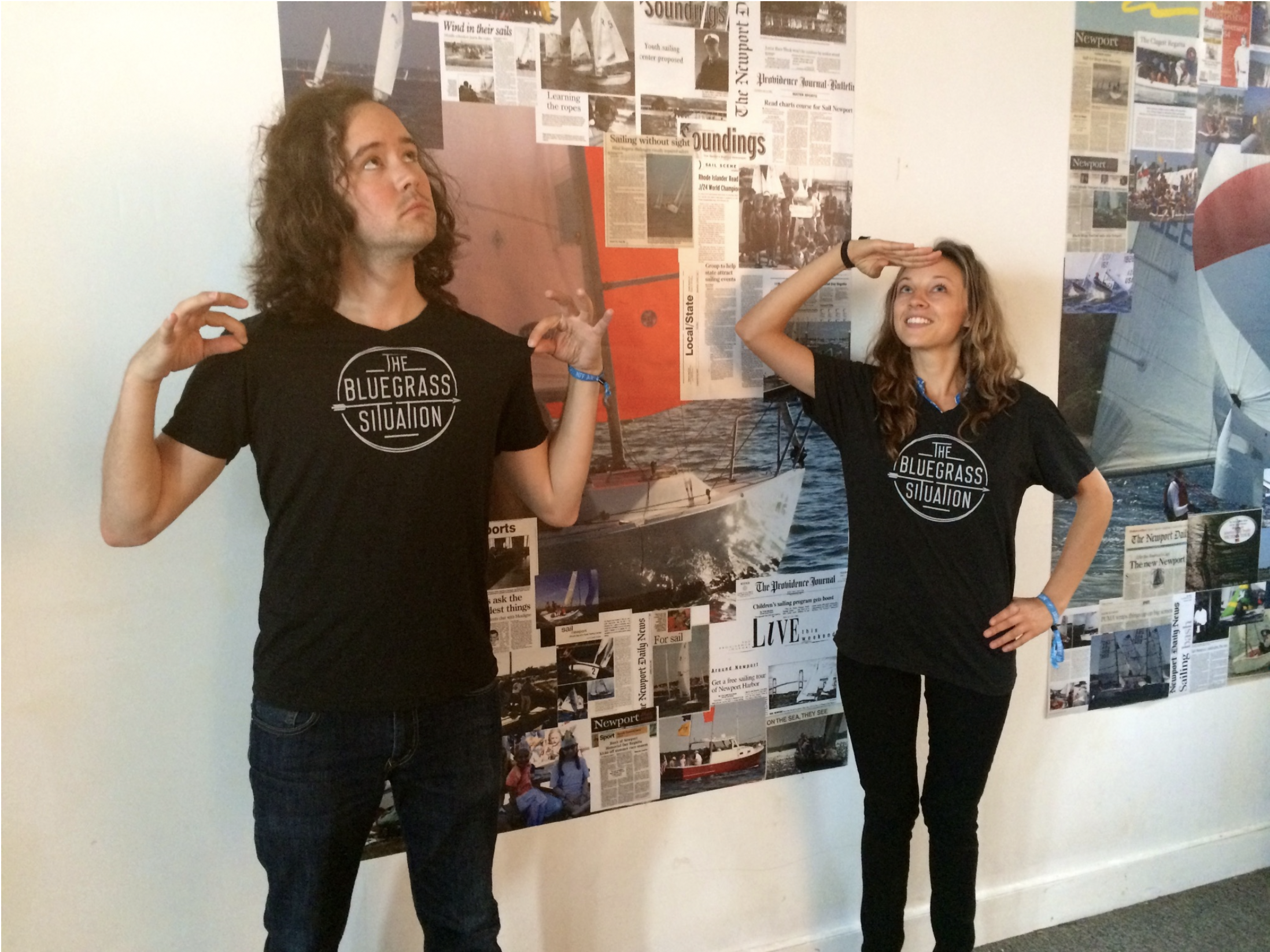
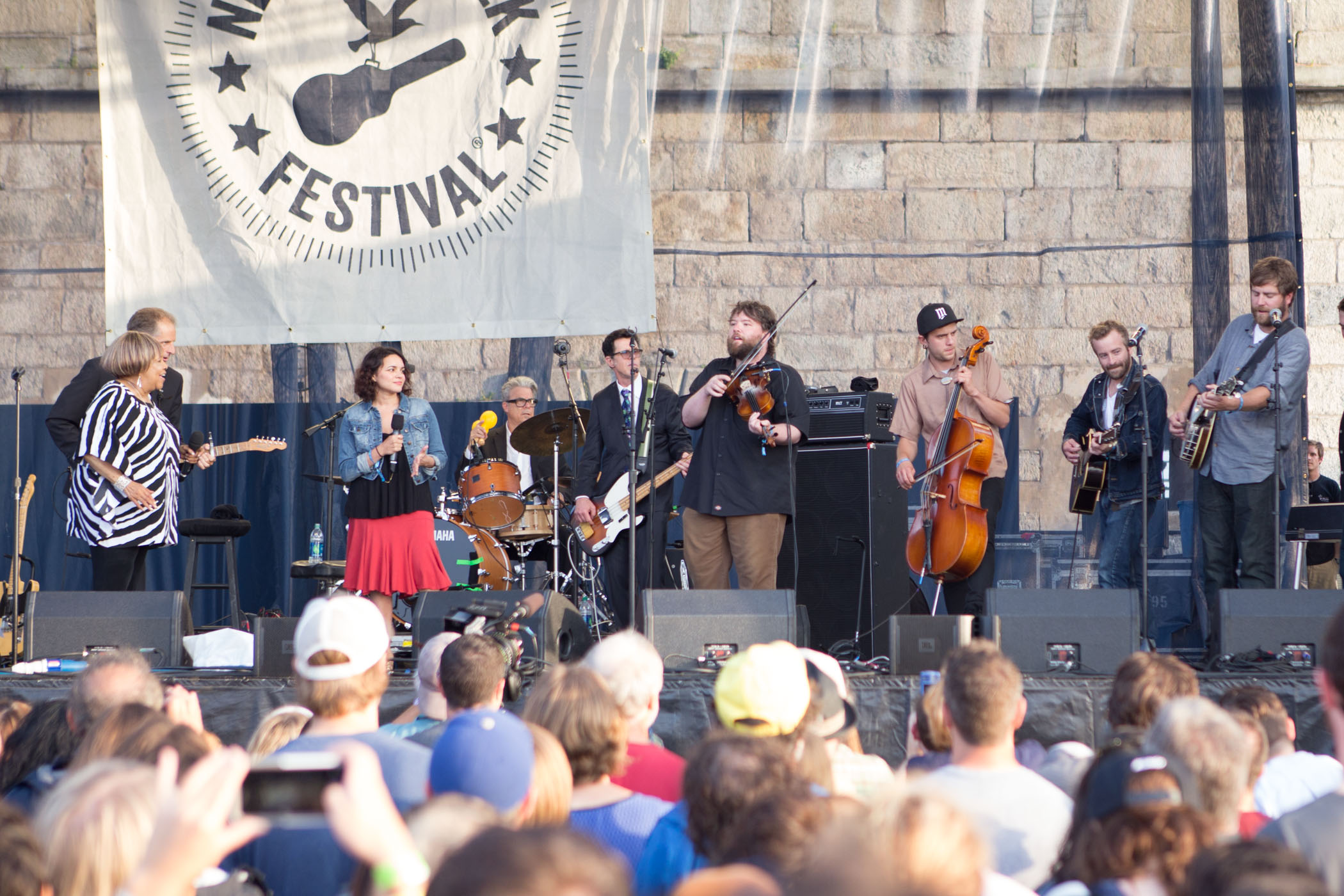
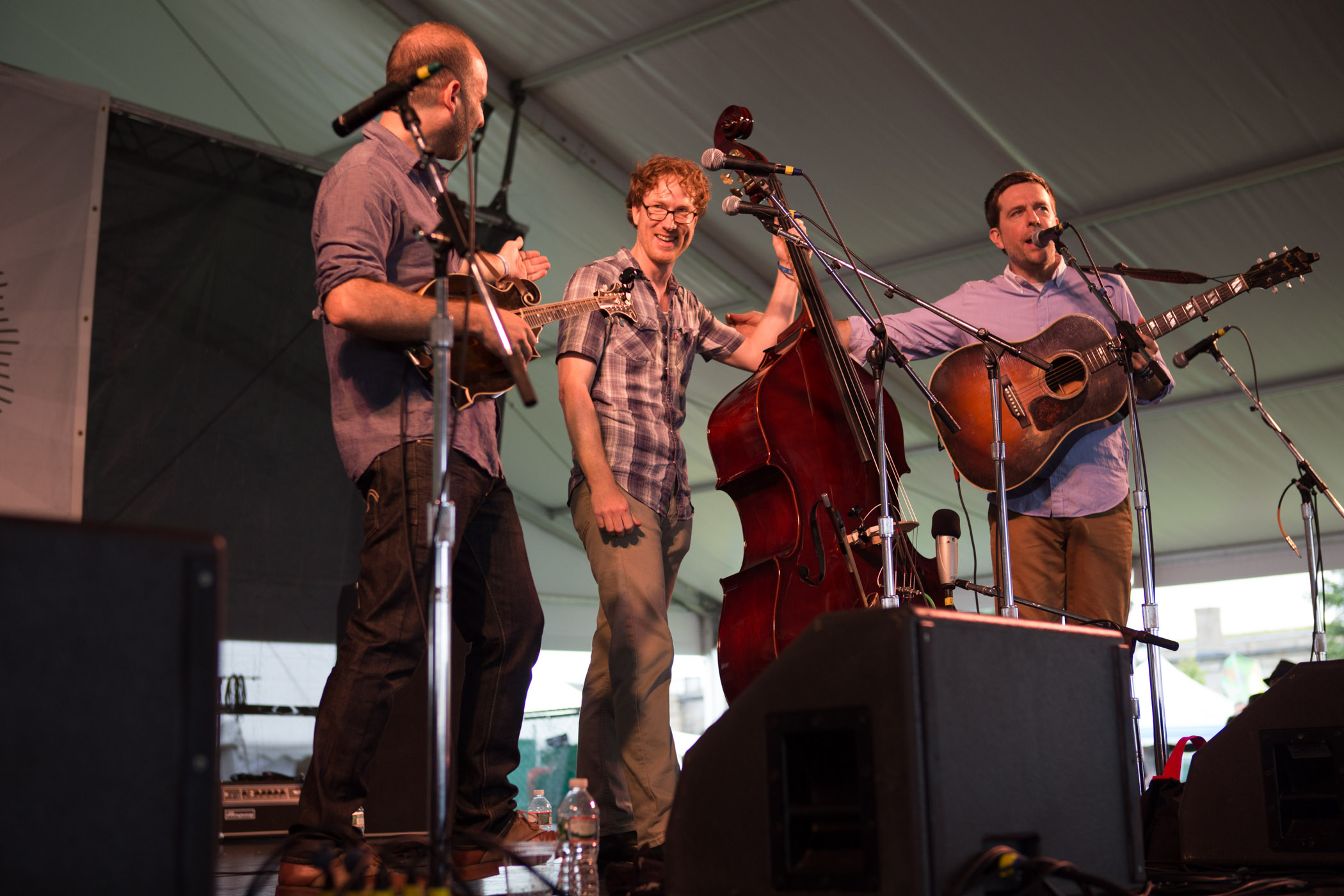
Dylan going electric in 1965. Lomax making his historic archive recordings in 1966. Joni taking the stage after 50-something years in 2022. Newport Folk is a festival full of milestone moments and lots of surprises. And for a brief moment in time in 2014, BGS was a small part of Newport Folk Fest’s long and storied history too, when we presented our Bluegrass Situation Workshop Stage inside the intimate Whaling Museum building on Sunday at the Fort.

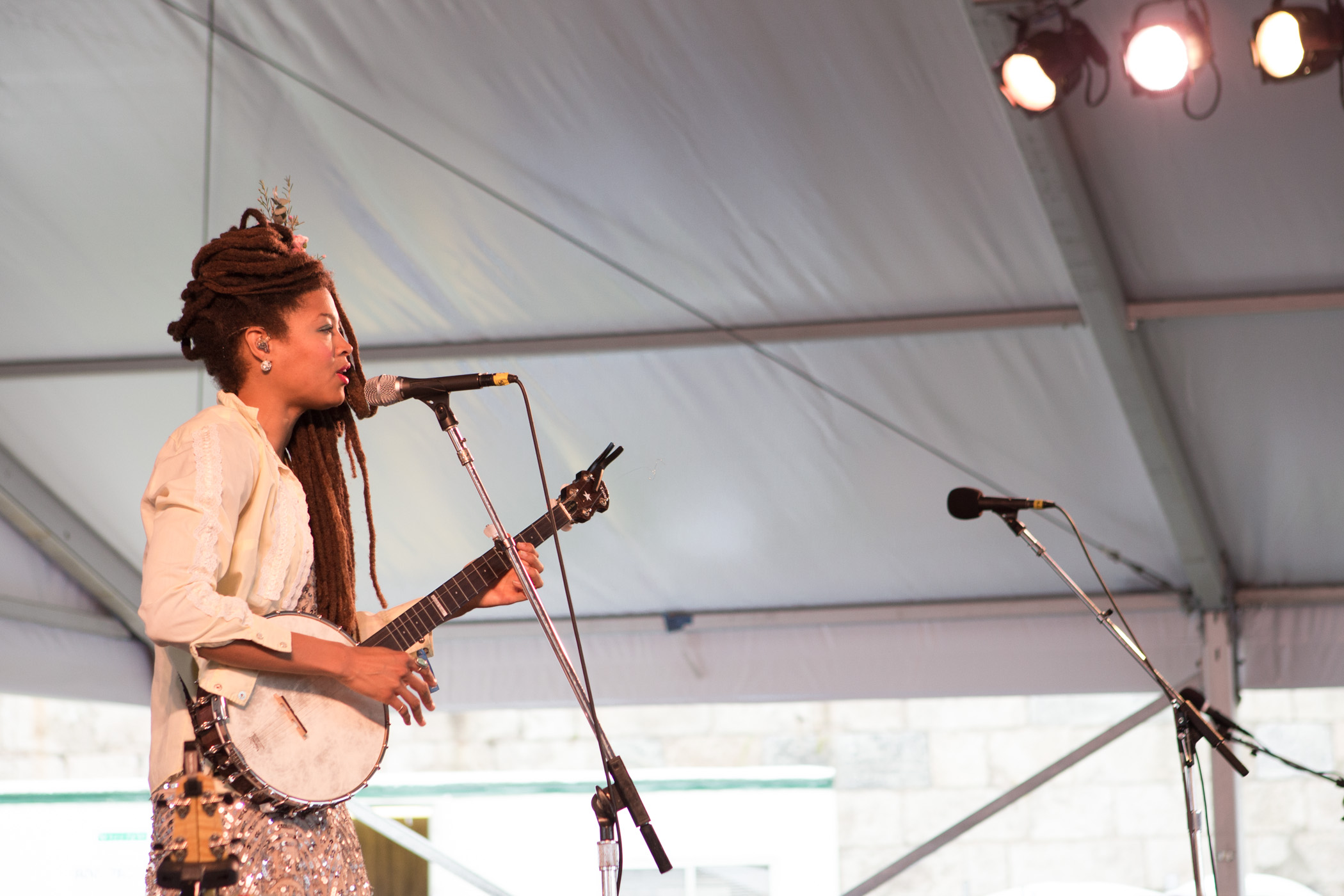
Amidst a festival lineup that included such stalwarts as Nickel Creek, Trampled by Turtles, Dawes, Valerie June, Hozier, Jack White, and Mavis Staples, the BGS crew – helmed by co-founder Ed Helms and his Lonesome Trio bandmates Ian Riggs and Jake Tilove – hosted a few “up and coming” acts we were very excited about, singing songs about significant “firsts” in their lives. Some of those young whippersnappers you might have heard of, like Shakey Graves (joined by Chris Funk of the Decemberists and Langhorne Slim), Aoife O’Donovan, Wilie Watson (with special guest Sean Watkins), and Watchhouse (who were still going by Mandolin Orange at the time), which marked Andrew and Emily’s very first – but certainly not last – appearance at Newport.

That big “first” for us was significant – to be welcomed into the “Folk” Family and made to feel like we were all part of something big and wonderful. And it’s that feeling that’s brought us back to the Fort year after year ever since.


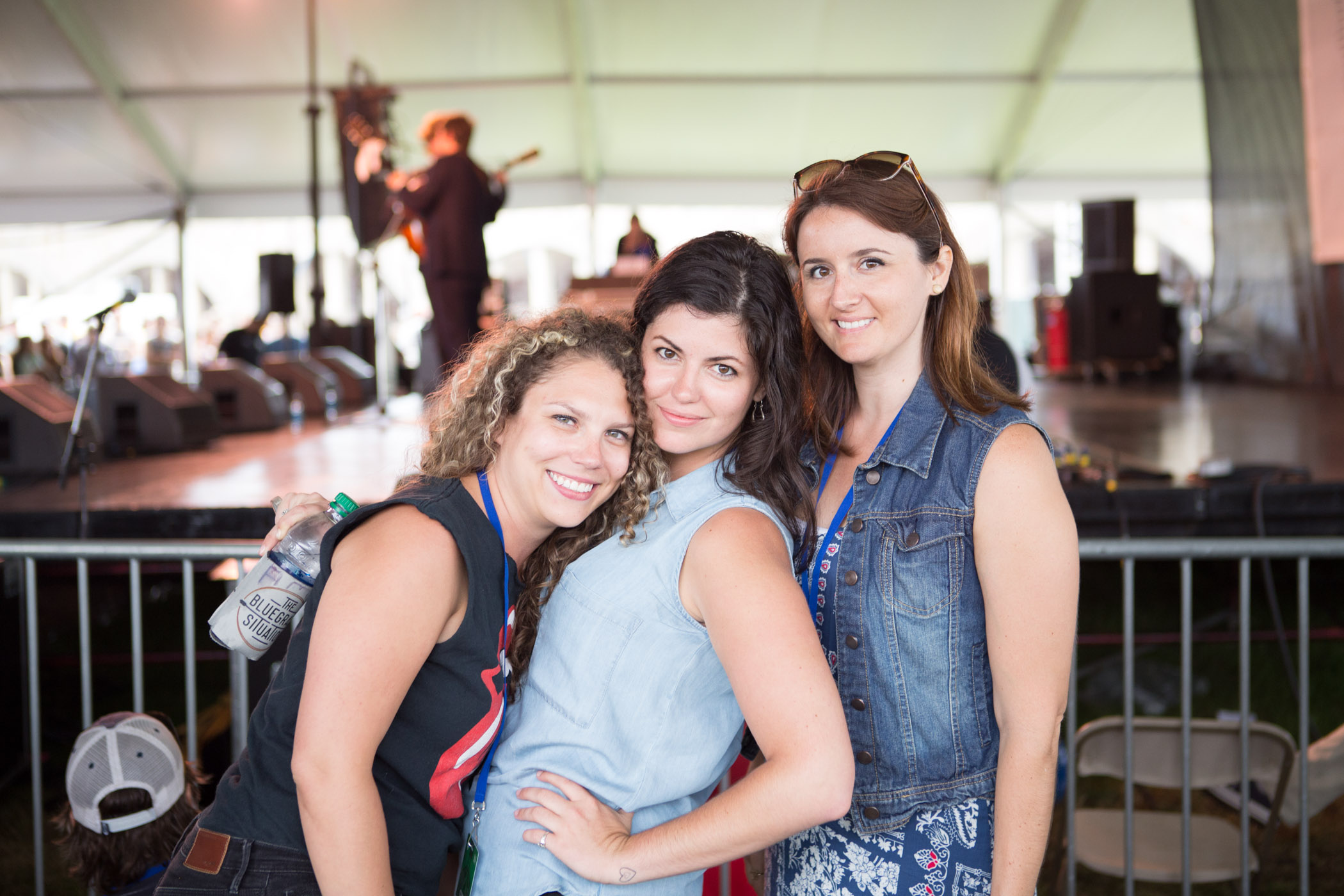
Photos by Samara Vise

BGS & Come Hear NC Explore the Musical History of North Carolina in New Podcast ‘Carolina Calling’

The Bluegrass Situation is excited to announce a partnership with Come Hear North Carolina, and the latest addition to the BGS Podcast Network, in Carolina Calling: a podcast exploring the history of North Carolina through its music and the musicians who made it. The state’s rich musical history has influenced the musical styles of the U.S. and beyond, and Carolina Calling aims to connect the roots of these progressions and uncover the spark in these artistic communities. From Asheville to Wilmington, we’ll be diving into the cities and regions that have cultivated decades of talent as diverse as Blind Boy Fuller to the Steep Canyon Rangers, from Robert Moog to James Taylor and Rhiannon Giddens.

The series’ first episode, focusing on the creative spirit of retreat in Asheville, premieres Monday, January 31 and features the likes of Pokey LaFarge, Woody Platt of the Steep Canyon Rangers, Gar Ragland of Citizen Vinyl, and more. Subscribe to the show wherever you listen to podcasts, and be on the lookout for brand new episodes coming soon.

LISTEN: APPLE • SPOTIFY • STITCHERAMAZON • POCKET CASTS • YOUTUBE • MP3

Andrew Marlin Reveals the Observations and Explorations Behind ‘Watchhouse’

When you’re the child of musicians, you get to see the world. By the time Andrew Marlin and Emily Frantz’s daughter Ruby was one year old, she had been to 34 US states and nine different countries. “She was on a bus when she was three months old,” says Marlin. “She loves traveling.”

After a year of hiatus, the family of three is back on the road again as the duo formerly known as Mandolin Orange tour their new self-titled album, Watchhouse. And Ruby, now a toddler, has transitioned back to road life more smoothly than her father, who admits he’s still “struggling to find my sea legs.”

But then this has an unarguably big summer. Performing as Watchhouse, after more than a decade as Mandolin Orange, was no small change. A year of lockdown had given the couple space to reflect on a name change that they’d wanted for a while, but resisted, concerned at how any reinvention would affect their devoted following.

Their latest project proves that their fans have nothing to fear: a medley of richly intimate songs and beautiful vocal harmonies that’s as identifiably them as anything they’ve ever made. Marlin, who writes the songs and plays mandolin to Frantz’s acoustic guitar, spoke to BGS about the new album from their North Carolina home, where they were enjoying a short pause between gigs.

BGS: Your current tour’s taking you coast to coast, from the Newport Folk Festival in Rhode Island to Redmond, Washington and all points between…

Marlin: It’s all over the map, literally. We’re out for three or four days at a time and I’m enjoying being back on tour but it’s kind of difficult to get in the groove. After we’ve been moving at a snail’s pace at home this past year, this all feels so fast-paced, so much to keep up with!

How do you feel about touring in this age of COVID. Does it feel safe yet?

I was one of the naive ones who thought we were nearly done with this thing, but we’re really not. There is a vaccine but people just aren’t taking it. So no, I don’t feel safe at all. But it’s a balancing act: we need to make money because we haven’t worked in 18 months, and we want to play shows, because that’s what we’re driven to do. Everybody wants to get back to their lives, everybody needs purpose to stay sane. To feel like there’s a reason to get up in the morning.

Was a year of lockdown hard as a new parent?

It’s all relative. Emily and I travel so much that we wouldn’t have spent so much time home as full-time parents otherwise. Eighteen months ago you would have been talking to a different person, but now I just try to live day to day, and write a little here and there. It was really difficult to write at the beginning of the pandemic, though. As a songwriter I try to latch onto things that not many people are writing about and with so many people thinking about the same thing it was hard to separate myself from it and find a way to write about it that didn’t seem unoriginal. I wrote a lot of instrumentals so I could explore how I was feeling without having to put it in words.

Have you discovered some good tunes for getting Ruby to sleep?

Pretty much anything by Paul Brady. She loves him, especially that album he did with Andy Irvine. I put that on and she’ll start talking to Paul and Andy. And because she’s been around our music since she was in the womb, if I sit down and play mandolin very quietly that’ll chill her out. I’ll sit in her room and play and she’ll doze off.

There are a lot of songs sung from a parent’s viewpoint on this new album: “Upside Down,” “New Star,” and “Lonely Love Affair.” Has becoming a father changed your perspective as a songwriter?

Passively, yes. I think the change is that I would love to help pave a safe path for my daughter and hopefully inspire some of our listeners to be kind and open up a kind world for her to go into. And that’s made my its way into my perspective even in songs where I’m not talking about it.

That’s very much the message of “Better Way,” which is about online trolling. Was that inspired by a specific incident?

A number of incidents. It isn’t unique. Every time somebody puts themselves out there on social media you have the people who love to drum up negative energy. And I can’t wrap my head around it because that’s not how I was brought up. I rarely meet people who would do that when they’re talking to you face to face. So I don’t understand why those people feel compelled to sit at their computer or pick up their phone and try to rip others apart. It’s a weird way to live.

Emily says it’s one of the favorite tracks you’ve ever laid down together.

Yeah, I love the sound of that tune. It’s a gentle drive to it, the way the groove is so set. It has this steady pulse that fits with the whole idea of the tune, this nagging thing in the back of my head: why do people feel compelled to be such assholes?

These songs were recorded all the way back in February 2020. Where did you decide to record them?

We did it right outside of Roanoke, Virginia. It’s not quite in the mountains, but it was in the hills for sure, a very peaceful place on a lake. I like making records in places that aren’t studios. It feels a little more free, to just go sit in a living room and to turn that space into a very positive musical environment is way more appealing to me than a studio where you’re watching the clock and every time you hear it tick that signifies a certain amount of money. I think you feel that relaxed energy. There’s no trying to beat the clock on this record. It’s exploring all the directions we could go as a band.

The sound of the album is certainly more exploratory than previous ones — a little richer in texture, a little less acoustic, even a touch psychedelic at times…

There are a lot of sounds we’ve used in the past but on this one we didn’t try to hide them. In the past we’ve tried to keep the simplicity of what Emily and I do in the forefront and have all these light textures around that. I think of it as a mountain peak. We’d be up at the top singing our songs and beneath us is this luscious forest, a lot of organ songs, electric guitar, drums, bass. Well, on this record we brought all the sounds up to the same level.

We’d been touring with many of these musicians since 2016 and so we were already thinking about arrangements that worked for the band and it’s a good representation of what we can do live, as a unit. A lot of people think of Emily and I as a folk duo but we have a lot of music in us! It felt nice to change the name and feel we can do whatever we want to and not limit ourselves to any idea of who people think we are.

The new name, Watchhouse, seems to be a good choice to reflect the observational world of your songwriting.

One of the most important things you can do as an artist is observe the world around you and I’ve always sought out those little peaceful places I can let my mind wander. I don’t do well in chaotic situations. I’m not the one to be right up the front by the stage in a show. I’ll usually go hang out in a corner and close my eyes and listen. I just like to find those places wherever we are, whether we’re on tour, in our neighborhood, or at home.

It makes you sound like a pretty chilled person to live with.

I play music a lot, so if you don’t like to hear constant music then probably not… in lockdown there was a lot of noodling, a lot of searching. A lot of aggression being taken out on an instrument too.

Fair point, I can see Emily needing an occasional break from that.

Oh yeah, all the time! She’d send me out of the room, or she’d go out herself…

You’ve been in a band together for 12 years, and all that time you’ve been a couple too. How do you manage to spend so much time together without driving each other crazy?

We’ve talked about that sometimes, especially with Emily’s parents. They can’t seem to wrap their head around it. I guess we just like each other!

One song on the album that seems especially raw is “Belly of the Beast.” Can you tell me the inspiration behind that?

I wrote that tune after Jeff Austin committed suicide. I didn’t know him super well, but we had a lot of mutual friends and had crossed paths through the years and it woke me up in a scary way. Being a full-time musician you have to continually find new ways to stay relevant and interesting to people, and you have to deal with real bouts of anxiety and self-consciousness. Is this good enough? Am I good enough? Writing and playing is something I’m extremely driven to do for myself, but I also have to do it for others, and I throw my music out in the world to be judged by other people. It’s a weird process that I’ve found is extremely helped by therapy!

So is that what performing is for you: “Hiding from the monsters in the belly of the beast”?

Yes — I love that line. When people talk about being nervous to perform, for me it’s not wondering whether I’m able to perform well, it’s more that when I step out on stage I don’t know what that crowd’s energy is going to be, how receptive they’re going to be. Are these people going to allow me to be myself tonight or am I going to have to put on a hat? For the most part our fans are really receptive and I can be myself. That’s when it feels like things are right.

“Beautiful Flowers” is one of the more cryptic songs on the album. It starts with a tiny flash of color and ends with some powerful images about the climate crisis. How did you get from one to the other?

I hit a butterfly when I was driving down the road and it really bummed me out. Animals have no ideas what cars are. For something to come out of nowhere at 70 miles per hour has got to be the weirdest thing in the world. And that got me thinking about who had made the first car, and it turned out it was this guy, Karl Benz. And when he made this car he had no idea where it was going to lead and how terrible it was going to be for the environment.

For our own convenience we destroy a lot of this world and don’t give a lot back as humans. And my car hitting that butterfly felt like a really strong metaphor for what we’re doing to the earth. It’s a very delicate ecosystem and we’re killing all its intricate little working parts.

Is that a challenge for you, too, with your own carbon footprint as a touring musician?

Our carbon footprint is massive, riding on buses and planes and cars… going to a festival and them using generators to supply all the power. We all see all the problems but how to step outside of your own daily needs and confront them is the conundrum, and I’m as guilty as anyone. How do you inconvenience yourself to make positive change in this world? We’re asking ourselves that right now in terms of racism, climate change, housing inequality, you name it.

Given how personal the songs are, and the fact they’re drawn from your shared life, do you ask for Emily’s input or approval as you’re writing them?

No, not really. The way I write I’ll take a specific idea and continue to break it apart until it’s more universal. I don’t want to reveal too much of myself in any given tune. I’m not laying out a bullet point retelling of my life, just musing on how I felt in a given situation — or maybe how Emily felt, or maybe a friend of ours. In fact sometimes I’ll play a new song for Emily and I’ll tell her what it’s about and she’ll say, “Huh, I thought it was about this.” And you know what? She’s not wrong.


Watchhouse is coming to the Theatre at the Ace Hotel in Los Angeles on Saturday, February 19th 2022 – grab your tickets here.

Photo credit: Shervin Lainez

Mandolin Orange Changes Its Name, Unveils New Video as Watchhouse

The duo Mandolin Orange have surprised fans with a new video and a name change to Watchhouse. Band members Andrew Marlin and Emily Frantz shared on social media, explaining how their former band name didn’t necessarily encapsulate their personal songs.

They wrote, in part, “This past year has been the first time we’ve stayed still since we were 21, and the pause gave us the opportunity to sit with ourselves and set intentions. We have long been burdened by the dichotomy between our band name and the music we strive to create — if you’ve heard the songs, you know they are personal. Now that we can see a future where music is a shared experience again, we’re defining the space we share with you on a stage or in your headphones, and making it one that welcomes our creativity and anyone who wants to listen.”

The band’s most recent project has been 2019’s Tides of a Teardrop, although Marlin released two instrumental albums earlier this year. To coincide with the announcement revealing Watchhouse, the band released a new video for the song, “Better Way,” produced by Josh Kaufman and released via Tiptoe Tiger Music / Thirty Tigers. Take a look:


Photo credit: Kendall Bailey

We’re Looking Back (and Forward ) With Mandolin Orange’s Music at the Mansion

At the one-year mark of the pandemic drastically changing our daily lives, let’s take a minute to reflect. Sure, we’ve seen more livestreamed content than we ever cared to see, we’ve ordered more takeout than we deem reasonable, and we’ve had far fewer haircuts than we’d like to admit in the last 12 months. Live music has all but disappeared from our lives. Although the brilliant artists we love have found creative ways to connect with their audiences, fans haven’t been able to regularly engage in a person-to-person musical experience in some time. As we reflect on all these things that have come to pass, it is this author’s earnest and sincere hope that we also look forward.

The live music experience is gradually coming back, too, and to remind us of the beauty of an intimate acoustic performance, we’ve dug up this video from Mandolin Orange’s show for the North Carolina Department of Natural and Cultural Resources. Now that spring is here, let the joys of new beginnings fill your home by watching this full set and remembering what it’s like to crowd into a room to hear beautiful music, seeing no mask and fearing no illness. As tumultuous as the last year was, let us remember, celebrate, and continue pressing on, making preparations for the possibility of having intimate musical experiences like this once again in 2021. Watch the lovely concert below.


Photo credit: Kendall Bailey

Mandolin Orange: How Bluegrass Brought Them Closer (Part 2 of 2)

Because they have developed a fan base that stretches across genres and generations, it isn’t so easy to, ahem, segment Mandolin Orange into one specific category. But throughout a decade of performing together, bluegrass has been a major part of the music created by the duo’s Andrew Marlin and Emily Frantz. In the second part of our BGS cover story, they discuss their biggest bluegrass influences.

Editor’s Note: Read Part One of the BGS Cover Story with Mandolin Orange.

BGS: There’s a real country feel on “Lonely All the Time.” Are you classic country fans?

Andrew: Yeah. It’s not something I dig into, and really break apart, like I do with old-time and bluegrass music, but I think Emily and I both grew up listening to classic country. My dad is a country music fan, and that was a song that inadvertently got written from his perspective, living alone these days. I wanted to do a classic country duet sound for that, and Emily had the idea to do harmony all the way through it, like a George Jones and Melba Montgomery tune.

Emily: I think our road to classic country has been more roundabout. We listen to a lot of bluegrass, and when you listen to a lot of the older country, it’s a lot more acoustic and smaller-sounding, sonically. A lot of it is not very different than standard bluegrass tunes. It feels like that’s a natural path for us to go down with this band.

Andrew: Yeah. I like Hank Williams and early Johnny Cash, where it’s just a small ensemble playing the music.

Who are some of the bluegrass musicians you return to, just for enjoyment?

Emily: Andrew spends a ton of time listening to Bill Monroe, from a place of really digging into mandolin, and I guess for enjoyment too. But for listening pleasure, I would say a lot of the brother duets – the Stanley Brothers, the Louvin Brothers…

Andrew: Yeah, the Stanley Brothers for the songs, too. They were lonely, man. They were lonely dudes! I think the Stanley Brothers had a natural, bluesy feel, and their songs were so heavy and beautiful. Definitely, for songwriting, the Stanley Brothers would be a big influences, especially on our tune, “Suspended in Heaven,” on the new record. But also the Sam Bush and Tony Rice era. I listen to a lot of Sam Bush and Tony Rice, and just keep getting farther and farther into the Sam Bush catalog. I love his energy and what he brings to whatever ensemble he’s playing. It’s cool that he has a documentary out about him now. He’s getting the respect that he is due.

You may never emerge if you dive too deeply in Sam’s catalog. That stuff is so great, and sounds so good at festivals. He’s like the king of festivals.

Yeah, I think that’s because he’s able to maintain what he wants to do musically, but he’s still energetically appealing to mass audiences. That’s a hard to thing to do at a festival and I feel like he does it well.

That festival crowd can be tough. How many festivals have you all played over the last 10 years?

Andrew: We’ve played a bunch of ‘em. And playing quiet music. That can be an intimidating thing sometimes.

How did you overcome that?

Andrew: We shut our eyes and just hope they don’t mind hearing some quiet music. (laughs)

Emily: I think it was actually realizing that there is a place for that at festivals, even though it doesn’t seem like it. We’d get on stage and feel outgunned at the outset, but the more that we talked to people and realized that they appreciated having that in their festival experience, to offset all the crazy jamming going on. Everybody needs to balance out a bit. Once we realized that, we were able to own it a little more and recognize that that could be our role.

Andrew: It’s more like the hangover weed crowd than the late night drunk crowd, I would say.

I want to go back to “Suspended in Heaven.” It does have that Stanley Brothers sound, but it also has that church music sound, in a way. Are you influenced by music of the church?

Emily: Probably more in that we listen to and enjoy the old gospel tunes that are part of the bluegrass repertoire. We both grew up with church music but it wasn’t necessarily this kind of church music.

Andrew: My mom’s mom was the piano player for the church I went to, growing up, and then my mom took over her responsibilities, then my sister took over for a little while. So it’s like three generations of piano players at this church in Afton (North Carolina) that we went to, growing up. I was around a lot of old hymns and old gospel music, and you can’t really separate my mom from gospel music. I think in wanting to pay homage to her, and to her life, it made sense to write a standard old gospel tune. I guess the lyrics are not traditionally leaning but the sound definitely is.

Tell me how you became interested in bluegrass music.

Emily: For me, it was in the very beginning when I was taking Suzuki violin lessons as a kid. Our teachers didn’t give lessons in the summer but they did fiddle camps. I always played by ear but that was my first experience of being encouraged to learn to play by ear and not being forced to read sheet music. So I learned “Old Joe Clark” and “Bile ‘Em Cabbages Down” – all the first fiddle tunes you learn. And gradually I phased completely out of doing anything classical.

I was able to take more fiddle lessons and play in a local bluegrass band around the time I started high school. And learned a ton from the guys I was playing with, about how to sing tenor and what role the fiddle is supposed to play. It’s cool that traditional bluegrass has pretty hard-and-fast rules about what the given instruments are supposed to do, and I’m really glad that I learned that. We don’t play that way ourselves, on our own tunes necessarily, but it’s really fun to jump in and make a bluegrass song sound just like bluegrass-–if you know the rules.

Andrew, how about you?

Andrew: I’d only just started getting into bluegrass when Emily and I met each other, actually. I grew up with country and switched to rock ‘n’ roll, and then from there I fell into a metal zone. I was in a metal duo, actually, before I moved to Chapel Hill. I don’t think there are any recordings of that out there – hopefully not. I credit the Skaggs & Rice record a lot as being that switch for me that flipped me to bluegrass. When I heard that, I was like, ‘Who is this guitar player?” And the way they are singing together, it’s really quality. Especially Ricky Skaggs’ mandolin playing on that record.

So from there, I found out about Norman Blake and David Grisman and John Hartford and of course Sam Bush. I just fell in love with it, and especially the mandolin. So I think when Emily and I first met, I’d only been playing the mandolin for a year or so.

Emily: Andrew didn’t know very many bluegrass tunes. I was more of the source, at that point.

Andrew: She was showing me a bunch of fiddle tunes to learn on the mandolin, which really helped me figure the instrument out. I’m still figuring it out. So I’d say meeting Emily was a big part of my schooling in bluegrass, in a lot of ways.

After ten years of knowing each other, do you have a good intuition about what the other person is thinking?

Emily: I would say yeah, especially musically. I think all those years, too, of playing just the two of us, it becomes like a second language, and you don’t even necessarily realize it’s happening.

Was there a time when you did realize it was happening? Where you thought, “Wow, this is actually pretty good.”

Andrew: It depends on what we thought the other one was saying. (both laugh)

Emily: I remember reading an interview with Gillian Welch a long time ago, when she was talking about playing with a duo, about how it’s so much harder than playing with a full band, but also how it’s so much easier. And a lot of the things that she said about it made me realize how we were communicating, in a way that I didn’t necessarily realize before.

Andrew: I definitely love the spontaneity of playing in a duo, playing with just one other person. It’s really hard to make that split-second decision to vamp on a chord if you forget a lyric, or to extend a solo section, when there are four other people on stage with you. But when it’s just the two of us, we can kind of look at each other and give an eyebrow raise, and it’s like, “Oh yeah, I forgot the lyrics, so….”

Emily: It’s not even visual sometimes, but if somebody misses something, you automatically compensate for it in some way, and it’s not even conscious. I guess that’s probably possible in larger ensembles but it probably takes ten times as long to get there.


Photo credit: Kendall Bailey