Baylen’s Brit Pick: Dean Owens

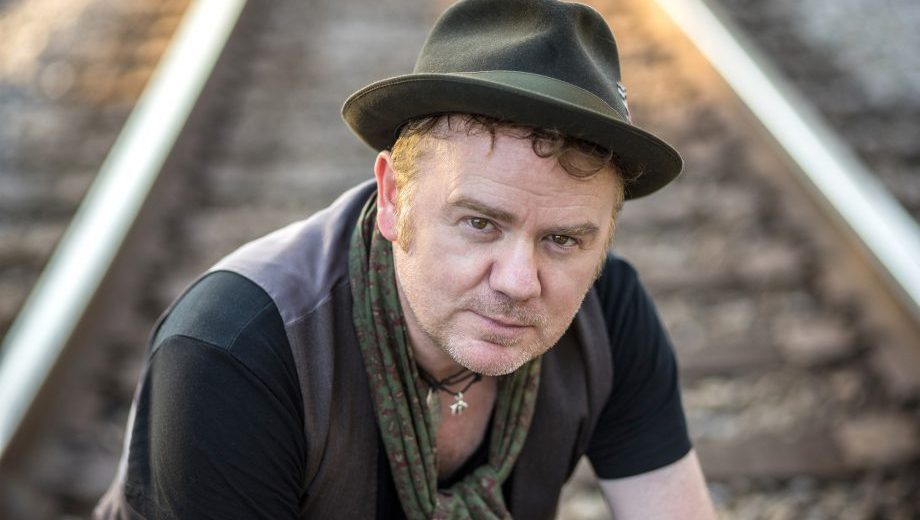
Artist: Dean Owens
Hometown: Leith, Edinburgh Scotland
Latest Album: Southern Wind

Sounds Like: A swampy Townes Van Zandt by way of Scotland, with a bit of jam band thrown in every now and again.

Why You Should Listen: Long heralded as one of Scotland’s best troubadours, the talent of Dean Owens is too big to be confined to one country, as glorious and wonderful as that country may be. His previous album, Into the Sea, was a deeply personal set of songs with Celtic influences right up front. The new album, Southern Wind, while no less personal, has more of a marshy Delta, Americana feel. At first, I thought this album was the perfect rainy day album. You know the type — one that you pop on when the weather is terrible and the last thing you want to do is go outside and you just want to be soothed into lying on the sofa all day. But then I was listening to Southern Wind walking through the park on a bright sunny London day, and you know what? It was the perfect sunny day album, too. That’s no small feat — an album that not so much forces its mood on you, but has some sort of magic in it that actually matches your mood.

A celebration of the musical connection between the UK and Nashville, this is really a Transatlantic affair with producer, players, songwriters, and singers from both sides of the pond working on this project. Will Kimbrough, Neilson Hubbard, Kira Small, Danny Wilson, and previous Brit Pick Worry Dolls, among others, all bring their respective skills to the mix … and what a lovely mix it is. Featuring songs about Elvis, Muhammad Ali, a mother, the street where Dean grew up, and a sister gone too soon, with blues, gospel, country slow waltz, and a bit of reggae rhythm, the album is both eclectic and completely harmonious. Just when you think you’ve figured it all out, the next song takes you somewhere new but, once you’re there, it makes perfect sense after all. Southern Wind begins with a track called “The Last Song,” so you should know you’re in for the unexpected. Enjoy the ride.


As a radio and TV host, Baylen Leonard has presented country and Americana shows, specials, and commentary for BBC Radio 2, Chris Country Radio, BBC Radio London, BBC Radio 2 Country, BBC Radio 4, BBC Scotland, Monocle 24, and British Airways, as well as promoting artists through his work with the Americana Music Association UK, the Nashville Meets London Festival, and the Long Road (the UK’s newest outdoor country, Americana, and roots festival). Follow him on Twitter: @HeyBaylen

Nora Jane Struthers’ Home-Style Fashion

“I was excited that you wanted to shoot at my house because I feel it’s the best representation of my style.” — Nora Jane Struthers

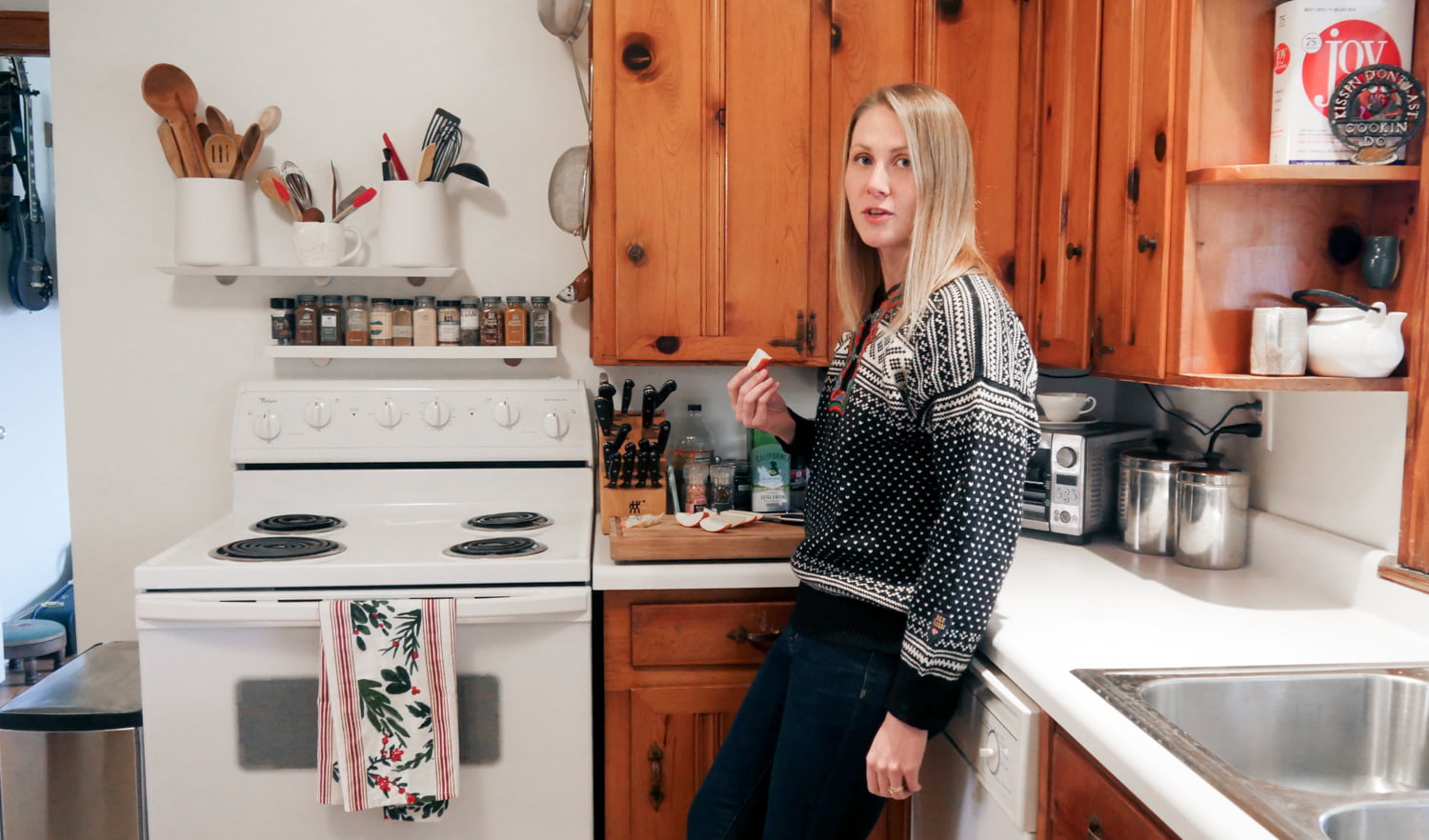
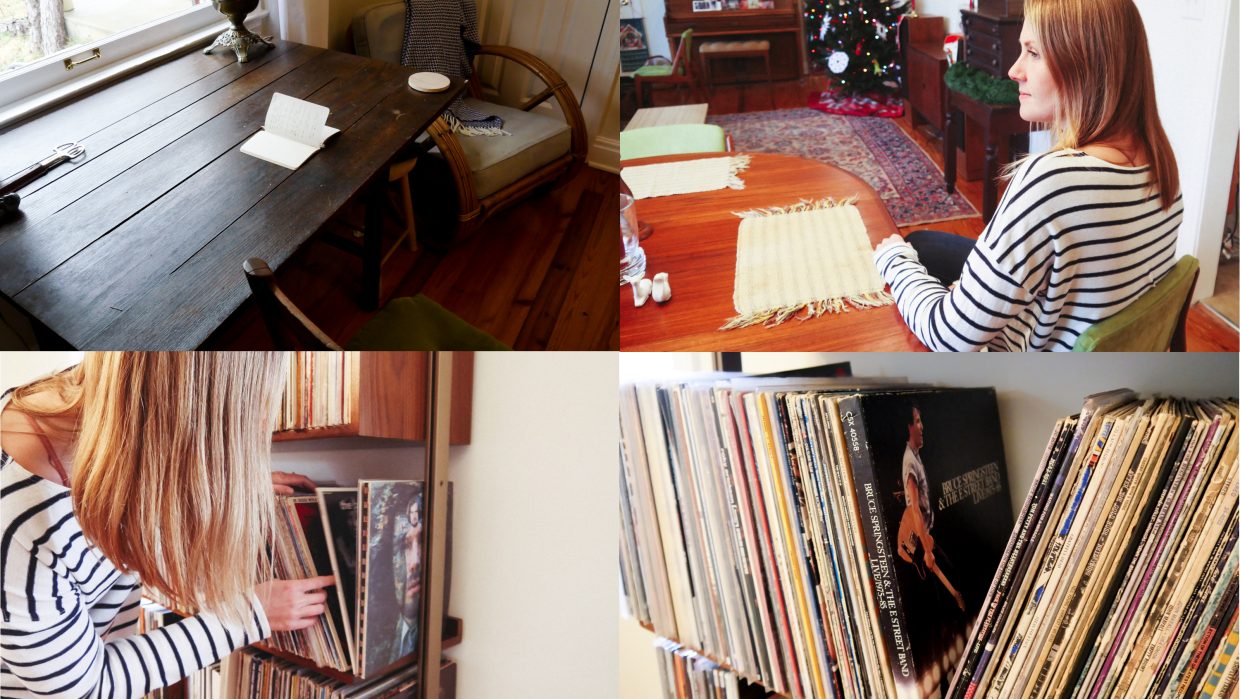
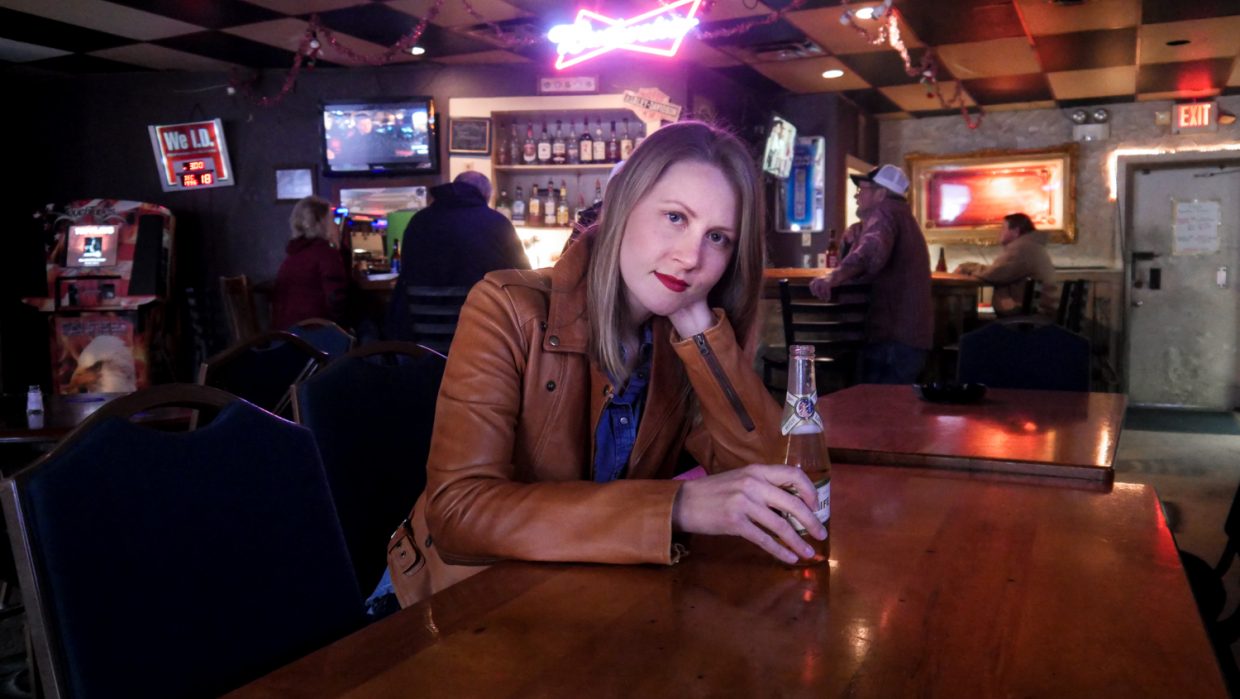
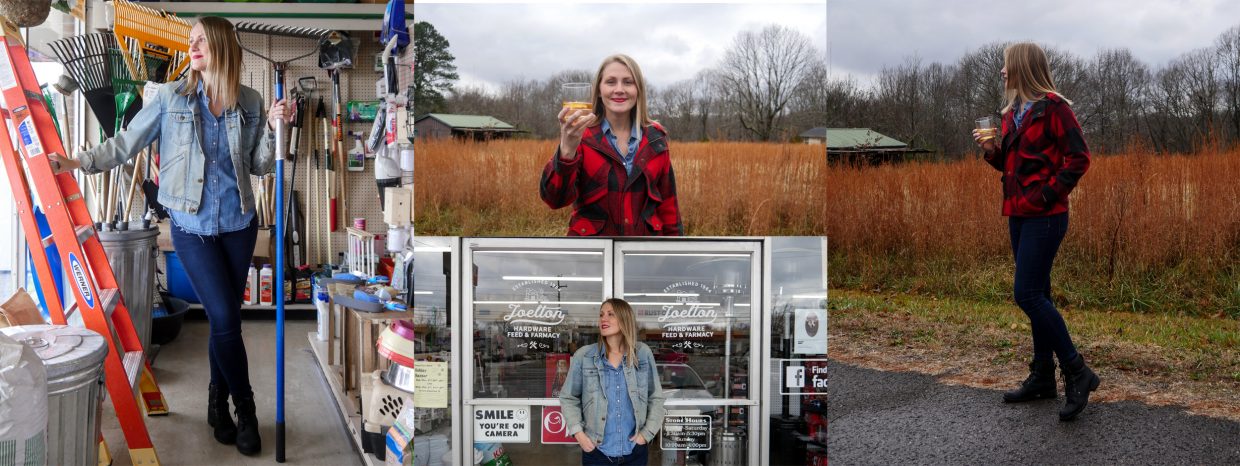
In a small town just outside the city limits of Nashville, Tennessee, there lies a market, bar, hardware shop, and the ranch-style home of Nora Jane Struthers and her husband, Joe Overton. A few days before Christmas, on a cold, overcast day, she greeted me at the front door of her home with a bright smile, a warm hug, and a hot cup of mint tea. She wore a vintage, Norwegian-style wool sweater, denim pants, and a pair of fur-lined leather house shoes.

As she prepared the tea, I prepped my camera and began to admire the details of the living and dining rooms: wood floors, white walls, vaulted ceilings, eclectic but minimal decor. Other than a few classic Christmas decorations, the space was free of clutter and knick knacks (something that is far from my reality), with the exception of one toy dinosaur on the liquor cabinet.

As I looked around, I could see the similarities between her wardrobe and living space — simple, minimal, practical, with bursts of interesting vintage treasures. We toured the rest of the house, and I had to scrape my jaw off the floor when she showed me just how minimal her closet truly is. The width of the closet was no more than three feet wide and, when she opened the door, there was space to spare. Sifting through my closet at home, that’s easily twice the size of hers, I constantly find myself with “nothing to wear.” How did she manage to narrow down her wardrobe, or keep it bare, yet still fresh and exciting? What was she considering while out shopping?


Here are a few things Nora Jane is looks for in clothing:

• Natural fibers: She goes for things that are breathable, sustainable, chemical-free, and biodegradable fabrics made of cotton, linen, silk, wool, cashmere, or hemp.

• Hand-Me-Downs: Nora Jane’s favorite pieces have always been big-sister, best-friend, or boyfriend/husband hand-me-downs. Lately, her number one has been her husband’s jean jacket that was given to him by his father.

• Versatility: This is key to keeping the number of closet items down to the bare minimum. Denim on denim is a reliable staple because a simple shoe swap, coat change, or a little lipstick can change it up day-to-day.

• Uniforms: She has specific outfits for a variety of different things — pjs for writing, denim-on-denim while on the road, camo pants in the tour van, etc.

• Boss worthy: If it doesn’t make you feel like a boss, then you don’t need it.

Nora Jane pulled together a few of her favorite looks around the house and gave me a brief tour of her little town. If you haven’t already, be sure to check out Nora Jane’s latest video for “Each Season.”

Nashville School of Traditional Country Music Plays It Forward

The act of passing down traditional music through generations is as inherent to the craft as the music itself is to its region of origin. Amidst the flurry of YouTube tutorials, tuning apps, and streaming services available at the fingertips of today’s technologically advanced society, a crop of non-profits are working to ensure that traditional music continues to be shared from person to person. The Junior Appalachian Musicians program — nicknamed JAM — is one such effort. The after-school program offered in locations across North Carolina, South Carolina, Tennessee, and Virginia offers music lessons to children, focusing on Appalachian tunes and instruments like the banjo or fiddle. Singer/songwriter Meredith Watson was a fiddle instructor in the JAM program in Black Mountain, North Carolina, for three years.

“I saw firsthand how valuable group learning can be when it comes to music, as opposed to the sort of traditional model of sheet music learning or ‘learn this to tune’ or ‘learn this piece of music on whatever instrument you’re playing and go practice for 25 minutes by yourself everyday,’” Watson says. “[That’s] a very isolated experience of learning music, but I’ve seen both from the JAM program and then also my own personal life in old-time music, music is just so much more than that. It’s so much more than practicing by yourself; it’s community.”

An accomplished musician — both solo and with her band, Locust Honey — Watson moved to Nashville nearly three years ago. Despite the lore of Music City, Watson was surprised to find that there were no organized instructional programs or gathering places for musicians.

“It’s the most welcoming community I have probably ever found, musically, so you know, everybody hangs out together and has dinner parties and plays music together, and it’s all very supportive. So it occurred to me, at some point, that there was the Old Town School of Folk Music in Chicago and there’s the St.Louis Folk School and there’s Jalopy [Theatre and School of Music] in Brooklyn … that makes [the music] accessible to the rest of the town, and we didn’t really have that here,” she explains. “It seems like there’s this moment happening in Nashville right now — all these people have moved to town that are world-class, absolutely top-of-the-game players of traditional country music, and there’s nowhere that’s really teaching it. There are obviously private lessons galore, but there’s nowhere that’s teaching music as a community-building art.”

Watson started brainstorming with friends about what an organization or program that filled this gap in Nashville might look like. She used her experience in the JAM program as a jumping-off point and harkened back to her childhood for more inspiration.

“I grew up going to a community theater in Cape Cod in Massachusetts, when I was a kid, and I remember the feeling of having a place outside of my own house that felt like home,” she explains. “It was a really creative place where all you did was problem solve creatively all day. It was just so many different creative minds coming together.”

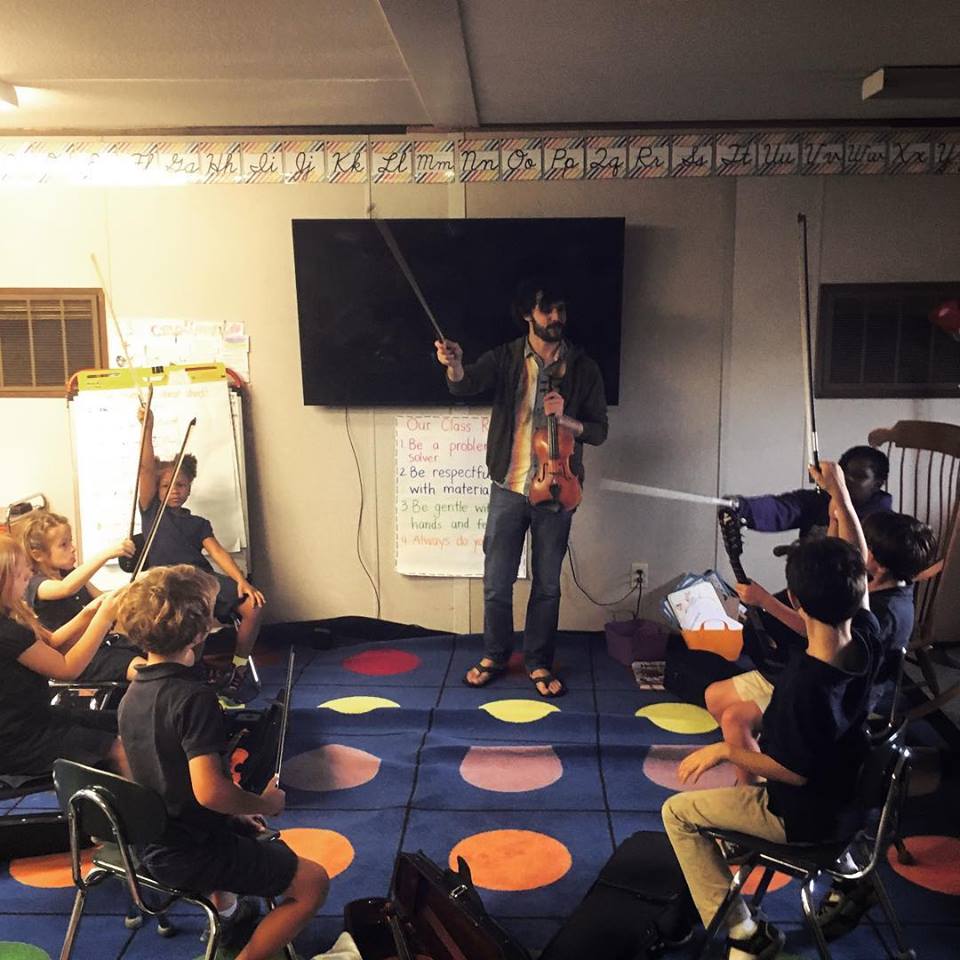
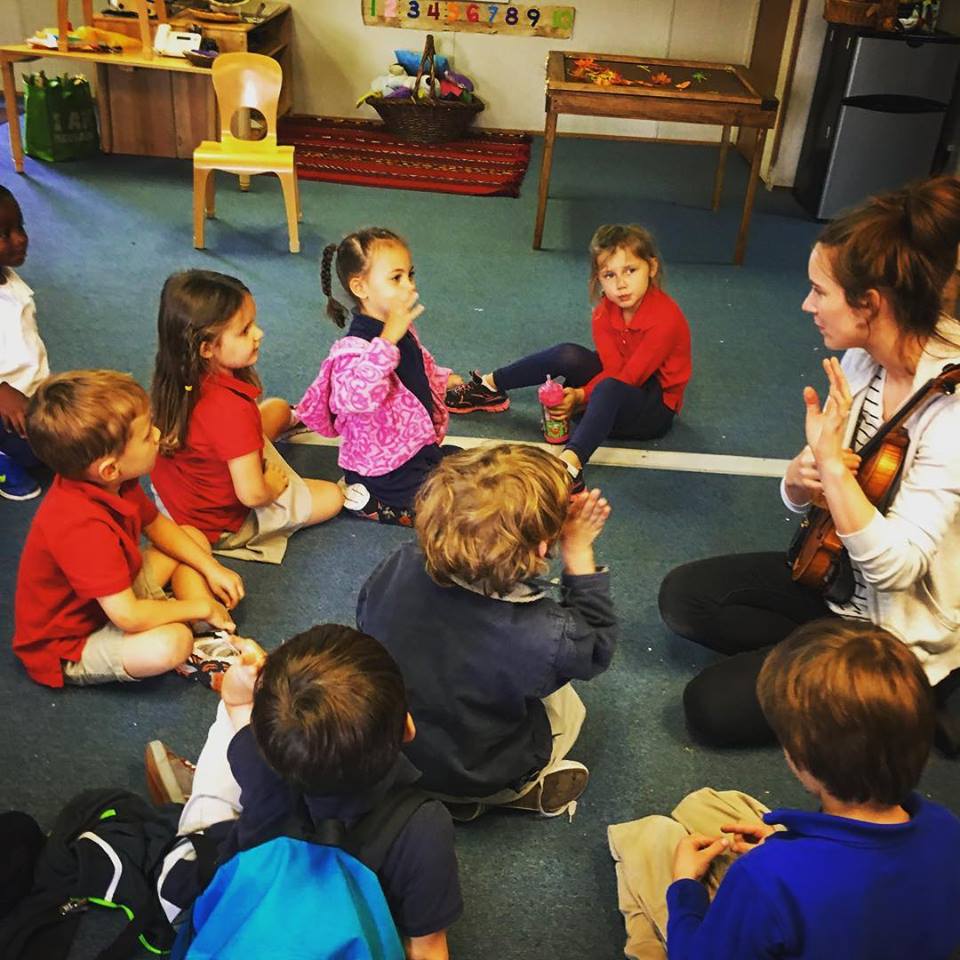
Watson’s vision for bringing such a place to Nashville has been realized with the Nashville School of Traditional Country Music. Still in its seed stage, the school has about a dozen instructors and is offering a spate of winter classes for children, including fiddle, ukulele, and guitar instruction.

“Because Nashville is growing at the rate that it’s growing, there are a lot of buildings going up and there’s a lot of concrete and just like money, money, money happening, and I just wanted to make sure that everybody knew the reason that this town has the name that it has,” Watson says. “It’s because all of this music from the American countryside came through here. You know, ‘country’ is a weird word because people have very different ideas of what that means, but it’s Music City. All of this vernacular music happened out of human need in rural America and then it came through here and people got to hear it because there was a wider access from here, but it seems like that’s being forgotten. And, having lived in places where that is still celebrated, I see how important it is and I just want to make sure that this particular city doesn’t forget kind of where it came from.”

While the Nashville School is beginning with children’s programming, Watson aims to eventually pivot to gatherings that adults and professional musicians in Nashville can attend, too. The person-to-person connection is what drew Watson to traditional music in the first place. “I went to the Tisch School of the Arts at NYU and then, after college, I was living in New York playing gigs just by myself, playing a lot of old blues, pre-war blues stuff, and some of my own stuff, and I just sort of got really lonely,” Watson says.

She was working at an Irish pub and bar for supplemental income when an Irish jam session on Monday nights caught her attention.

“It had been going on for 15 years and, every Monday night, I would have these guys come in and just sit in a circle and play traditional Irish music,” she recalls. “And I was like, ‘This is what I’m missing. This is what I’m longing for: connecting with people.’”

Watson dove headfirst into the aspect of music as community.

“I [didn’t] want to just get up on a stage; that’s not what music is about,” she says. “So I fell in love with this idea of the music of a people and, through that session, I ended up finding out about old-time music and I started going to festivals, and it was really a cure for my loneliness because I realized that there are all these gatherings that happen all throughout the year of people who just get together, cook together, play music, dance. I felt like music was integral to life, as opposed to being something that you had to try to do in your spare time or make happen somehow.”

Watson hopes to cultivate this feeling for others with the Nashville School of Traditional Country Music, whose mission lies in passing on and preserving the original sounds of American country music. Under that umbrella, she says, is generating a wider support for artists and their music.

“Because art is not valued as a necessity in America, we all struggle really hard just to even put [our music] out and have it be heard or seen,” explains Watson. “I want to make sure that all of our teachers get paid an actual living wage to teach. I don’t think music is extracurricular; I think it’s necessary for the human soul, and I want to make sure that the people who have spent thousands of hours learning how to play it, and then are kind enough to pass it along, are also taken care of.”


Photo credit: judy dean on Foter.com / CC BY

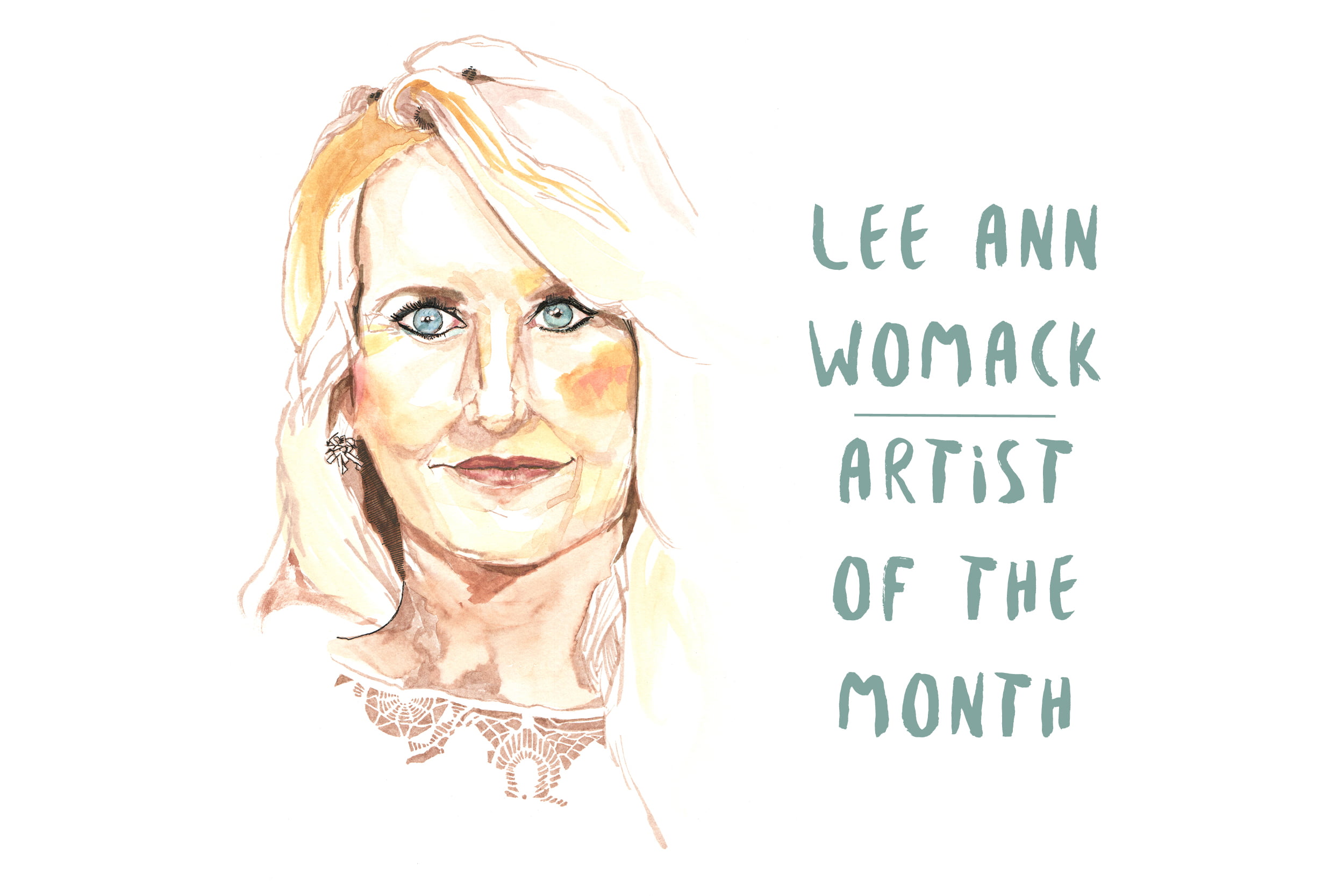
Lee Ann Womack: Keeping it Real

Lee Ann Womack had to get out of Nashville to make what she calls a real country music record. Specifically, she had to get about 800 miles away. For her eighth — and maybe her best — album, The Lonely, the Lonesome & the Gone, Womack trekked down to Houston, Texas, and set up camp at the historic SugarHill Studio, which has hosted famed sessions by some of her musical heroes: Lightnin’ Hopkins, the Sir Douglas Quintet, George Jones, and many others. Nashville has plenty of similarly legendary rooms, of course, but Womack needed to get away from the grinding gears of the country music machine — what she derides as “McRecords.”

“It’s like a factory,” she says. “What was great about being down there in Texas is that you’re in a studio where people go to work everyday and you have all kinds of music being recorded there. Nobody’s going in thinking, ‘We’ve got to lay down a three-minute uptempo love song for radio.’ They’re not thinking about how we’re going to make the most money out of three minutes of music. All they’re thinking about is going in and making great music.”

Womack is one of the few artists who can drop a phrase like “real country music” into conversation without sounding defensive, dismissive, or derisive — in other words, without buying into received notions of authenticity. Her definition of “real” is deeply personal and based on the country music that was popular 40 or 50 or even 60 years ago, but Lonely proves that even old tunes and old sounds can speak to this modern moment. Rather than restrictive, the term becomes freeing: These new songs range from the stately countrypolitan of “Hollywood” to the gritty blues of “All the Trouble,” from the beautiful reimagining of the 1959 Lefty Frizzell “Long Black Veil” to the remarkable insights of the title track, a country song about country songs.

Recording in Houston actually brought her closer to some of her Nashville heroes. Womack grew up in a small town called Jacksonville, Texas, about three hours due north of Houston. Her father was a country radio DJ, a profession that provided his daughter with a deep grounding in the music’s history. As a child, she loved Bob Wills & His Texas Playboys. “I thought he was funny. The music was upbeat and bouncy, which any kid would like, and then you’ve got this guy talking all over the tracks: [Imitating Wills’ falsetto] ‘Shoot low, sheriff! I think he’s riding a Shetland!’” She might have been laughing at the bandleader’s antics, but she was subconsciously absorbing the complex horns and fiddles. “It becomes part of the fabric of your musical DNA.”

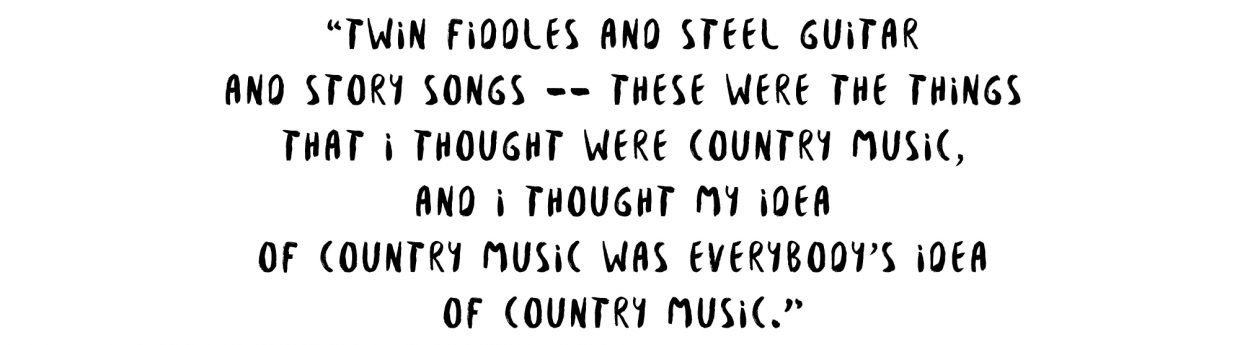
As she grew up, Womack raided her parents’ record collection, which was full of albums by Ray Price, George Jones, Porter Waggoner, Dolly Parton, and, of course, Willie Nelson. “Twin fiddles and steel guitar and story songs — these were the things that I thought were country music, and I thought my idea of country music was everybody’s idea of country music.” Ironically, being in Nashville only distanced Womack from her first loves. “Growing up in East Texas, I was full of dreams and hope. Then I moved to Nashville and, after 20 years, you get kind of jaded. Things change,” she says. “Every time I go back home, I have a spark of that feeling I had growing up. I wanted that again. I haven’t made a record in that frame of mind in so long. I just wanted to be surrounded again by the things that shaped me growing up.”

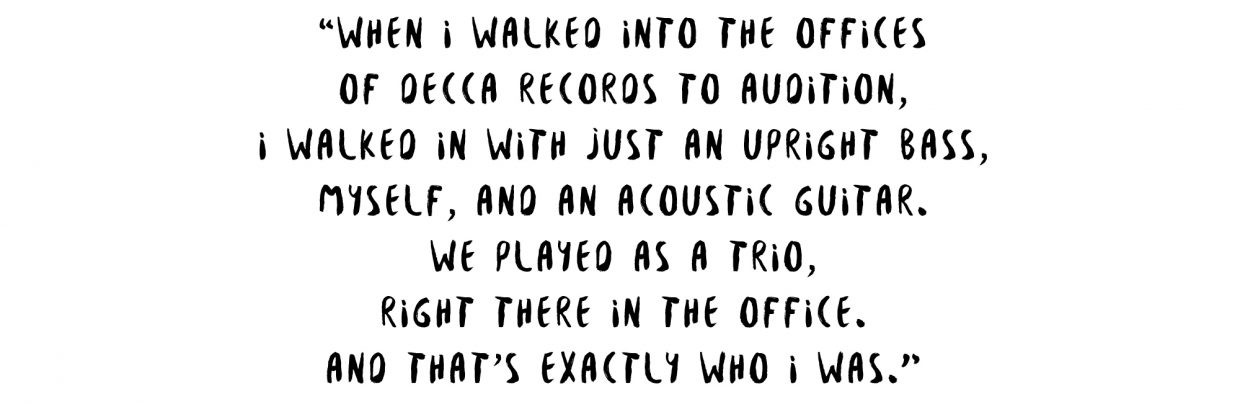
All of those old sounds inform the new record, which was produced by her husband, Frank Liddell, and finds Womack moving even further away from the country mainstream. Disregarding the need for radio airplay and signing with ATO Records [home to the Drive-By Truckers and Hurray for the Riff Raff] suggests she is cementing her place within the Americana market, adopting a rootsier sound for a very different kind of audience. As she recounts her career, however, Womack insists she has always gravitated toward this kind of music, even when she was just starting out. “When I walked into the offices of Decca Records to audition, I walked in with just an upright bass, myself, and an acoustic guitar. We played as a trio, right there in the office,” she recounts. “And that’s exactly who I was. My first record had a song on it called ‘Never Again, Again,’ and that was stone-cold country. Even in 1997, I felt like I needed to remind people of what country music really was.”

And yet, within the country sphere and without, she is best known for 2000’s smash single, “I Hope You Dance,” which achieved the crossover success so many Nashville artists covet. Recorded with Sons of the Desert, it’s a slick and sentimental pop-country anthem whose uplifting lyrics could double as a graduation speech or a Hallmark card: “I hope you still feel small, when you stand beside the ocean. Whenever one door closes, I hope one more opens.”

To her credit, Womack doesn’t ignore or disregard her biggest hit, no matter that it is something of an outlier in her catalog. She still performs it at almost every concert, still sings it like it’s a brand-new song, still invests those lyrics with sincerity and immense generosity, even as she strips it down to its core. “Those lyrics still stand up with just an acoustic guitar,” she says. “I might have cut a couple of lightweight pieces along the way, but I tried to cut the best songs I could find. And now when I go out and play with fewer musicians in a more stripped-down setting, those songs hold up because they were great songs to begin with. I guess a lot of shit got put on them to make them more commercial.”

That is perhaps one of Womack’s most undervalued talents: She is a sensitive and intuitive song collector with a discerning ear for complex sentiments, sturdy melodies, and relatable characters. On her last album, 2014’s The Way I’m Livin’, she covered the Texas singer/songwriter Hayes Carll and managed to outdo Neil Young on her tender version of “Out on a Weekend.” Lonely includes a handful of old-school covers, but the standouts are those penned by young scribes like Brent Cobb, Adam Wright, and Jay Knowles.

During the sessions in Houston, there were discussions about the title track, which includes the line, “[Hank Williams] never wrote about watching a Camry pulling out of a crowded apartment parking lot.” According to Wright, who co-wrote the tune, “Some people were like, ‘Camry isn’t very cool. Is there another car we can use?’ But Lee Ann said, ‘No, it’s a Camry. Those are the lyrics and that’s what it is.’ And that’s the point, after all. It’s not a Jaguar. It’s not a cool car. It’s not romantic.” As she sings it, that is one of the most arresting lines in a song this year — country or otherwise — and she delivers it with a gentle despair and even a little resignation, as though measuring the romance of an old country song and the reality of everyday life. “The care she takes with these songs left a big impression on me,” says Wright.

For Womack, country music is real when it’s about real people — not just the musicians who write and sing the songs, but the listeners who play those tunes over and over again, who hear their own dreams and hopes echoed back to them. “I have this theme about myself and about others,” says Womack. “I don’t know how else to describe it, except to say that I am drawn to losers. I hate to call anybody a loser, but I throw myself in that pile.”

By “losers,” she means people facing down challenges bigger than they are, and that accounts for just about everybody on earth. “That’s why I’m drawn to songs like ‘All the Trouble’ and ‘I Hope You Dance.’ They’re about challenges, about hard moments in life,” she muses. “There was a time when country music spoke more to those types of people. Now it’s speaking to a different group of people. That’s fine, but I want to speak to the challenges of life. The lonely, the lonesome, and the gone? Those are my people.”


Lede illustration by Cat Ferraz.

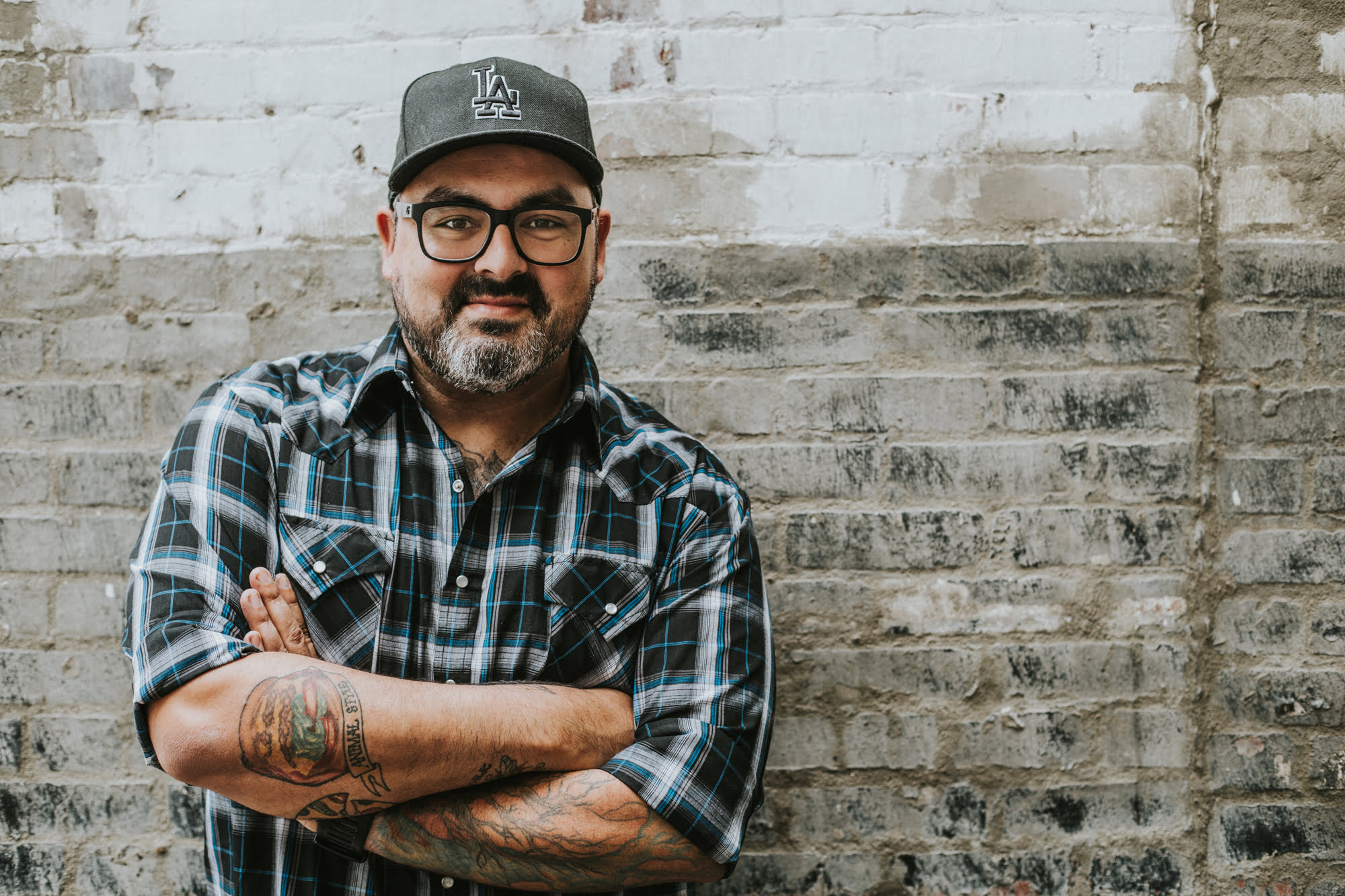
SHIFT LIST: Levon Wallace

For Levon Wallace, whipping up a signature dish in the kitchen isn’t unlike songwriting.

“Some of the best cooking happens when it’s freeform, when it’s fluid, when it comes from the heart,” Wallace says. “Sure, we’re relying on things like muscle memory and technique, which any musician worth their weight would, as well. I mean, you practice and practice and practice, but some of those best songs — or some of those best dishes — really are just coming from a sense of place inside. You can’t train that. That has to be, I think, from the heart.”

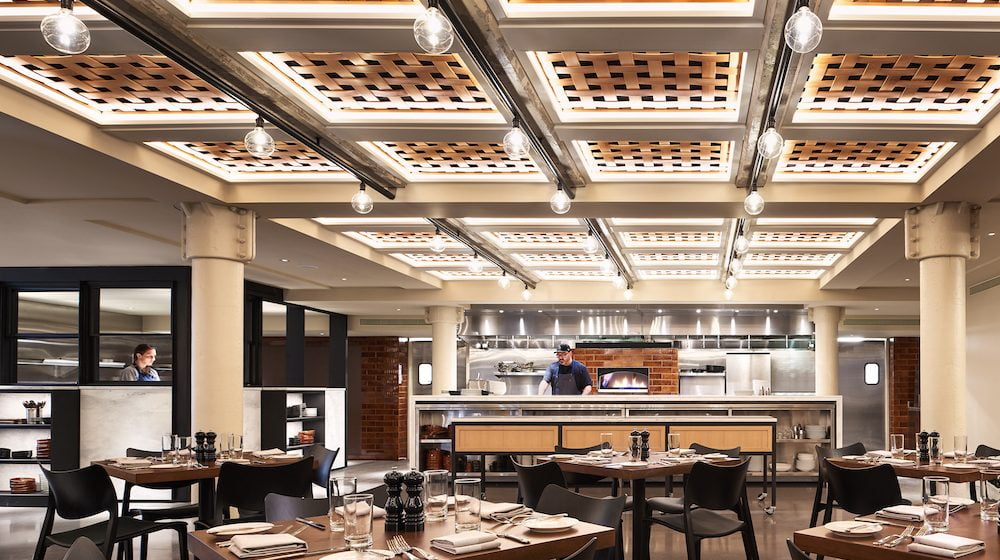
Wallace exercises that same care in his current post as executive chef of Gray & Dudley, located in the 21c Museum Hotel in downtown Nashville. Housed in the historic Gray and Dudley building that dates back to 1899, the restaurant draws not only its name, but also its aesthetic from the founding tenants by focusing on communal plates and pioneering dishes.

“The Dudley family is super prominent here in Nashville. Ms. Dudley was an avid, strong activist for women’s rights in the South back in the day, and the Gray and Dudley Manufacturing Company, which was the original name of this building, was the hub for commerce. If you needed anything — whether it was a cast-iron stove, shaving kit, hunting apparel, or baby carriage — you went to Gray and Dudley. It was like the Sears, Roebuck of its time,” Wallace explains. “We came into the space and we were developing menus and developing service concepts and food concepts for this restaurant, and that name really just resonated with what’s going on with our food.”

Born in Los Angeles, Wallace dove head-first into the world of culinary arts when he moved to San Francisco at the age of 18. “I just fully immersed myself in the food culture and chef culture and restaurant culture,” he explains. “Produce, artisans, makers, cheesers, wine — you can’t walk down the street without being hit in the face with something amazing. It’s a culinary revelation. My life experience in the Bay Area was this fast and furious romance with every cuisine under the sun.”

Wallace attended school full-time and spent in-between hours working at a catering company and volunteering at any restaurant that would have him for the day. He eventually made his way down the California coast, landing as the chef de cuisine at the Ojai Valley Inn and Spa, a luxury resort near Santa Barbara. The resort’s idyllic grounds boast orchards and herb gardens — a lush haven of fresh ingredients.

“I made it a part of daily preparation to use the walk to work to pick bay leaves from the bay trees for service,” says Wallace. “[I decided] whatever it is that I do, I want to make sure that the care in the attention to ingredients is there.” It’s a guiding principle that Wallace has applied throughout his career, which has taken him to Nashville by way of Martha’s Vineyard and Louisville.

“I’ve always kind of had this wanderlust, but something about this place, particularly Nashville or middle Tennessee, really truly does feel like home,” Wallace says. “I’ve been very fortunate to travel and see a lot of different places and this beautiful region we call the South, it’s absolutely consistent, you know, the welcoming, warm personalities, the hospitality. But I do feel like it’s just a little bit sweeter here in Nashville.”

In order to create heartfelt dishes that tap into Nashville’s profound sense of community, Wallace relied on his philosophies about ingredient sourcing.

“We talked about the importance of ingredients, and I’m a firm believer in supporting our local makers, our local ranchers and farmers, but I also think that it’s important to include regional accountability and regional support,” he says. “In this region, if we have seafood at all, it should come from the Gulf. We should be eating the right stuff. Chefs, especially nowadays, we have a platform which we didn’t have before where people actually give a shit about what we have to say, and so we have an opportunity to use that platform, whether it’s in menus or whether it’s in advocacy.”

Crafting a menu, Wallace says, is a creative process. “The approach to the food at Gray & Dudley is really about [being] soulful,” he explains. “I think a lot of us go through that phase where you’re trying to discover yourself and find your style and find your voice and cooking is like playing a lot of chords just to make one song … That’s kind of what we’re trying to hit — just the right chords.”

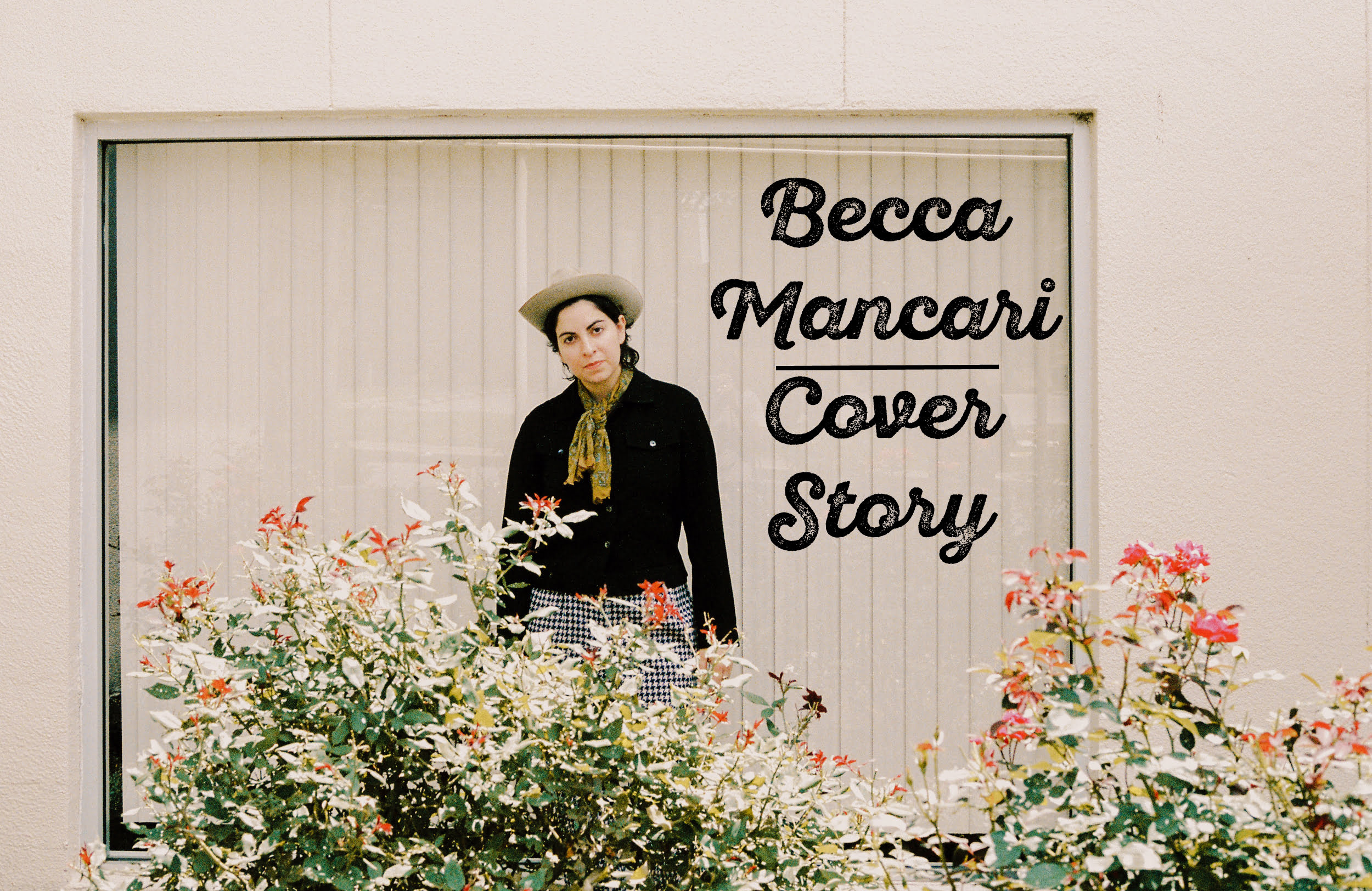
A Lot of Life: A Conversation with Becca Mancari

Becca Mancari may live in Nashville, but the sound she’s developed in her music is anything but “Nashville.” It makes a good deal of sense, though, when you consider Mancari’s earlier life, which included stints in India, the Blue Ridge Mountains, south Florida, and Staten Island.

On her debut album Good Woman, Mancari weaves her myriad life experiences into a lush tapestry of gold-toned tales which, sonically, hew far more closely to dreamy California folk-pop than the tradition-heavy throwback country currently making the rounds in much of Music City’s music scene. In doing so, Mancari has transcended her status as a local favorite to that of a nationally acclaimed artist, songs like “Golden” and “Arizona Fire” earning her nods from major outlets like NPR and Rolling Stone.

Mancari is also one third of one of the most buzzed-about new bands of any genre — Bermuda Triangle. Alongside singer/songwriter Jesse Lafser and Alabama Shakes’ Brittany Howard, Mancari and Bermuda Triangle recently released a single (the Laurel Canyon-esque ballad “Rosey”) and have plans to tour intermittently throughout the rest of the year. 

You have a new solo album. Can you tell me how the album first started to take shape for you?

The album, it’s my debut record. I’ve only had one song out, “Summertime Mama,” and now we have two versions, which I think confused people a little bit. But it’s so great, the idea of the power of one song. I had that one song do its work and time-and-a-half. Everything from Ann Powers featuring us last year with NPR for AmericanaFest — which is huge, she’s been a huge blessing in my life.

I decided I was going to take my time. I met a lot of producers and I just couldn’t get the right vibe. I noticed that this guy — his name is Kyle Ryan — he would be coming to our shows all the time. I know he’s a busy guy. He’s Kacey Musgraves’ band leader, and he’s also deeply involved in her recordings now. But he would just keep showing up and, by the last time, he had a notebook in his hand and was taking notes at my show. I went up to him afternoon and I go, “Hey man, you wanna get coffee?” So we did.

I actually had never really heard anything that he had done production-wise, but everything that he talked to me about, I was on the same page, from inspirations like Tame Impala to the way he is more of a Beatles fan and less of a — and this is not against the Nashville sound or the country way, but I just don’t feel like I fit in that world, and I didn’t want to make a throwback record. I would say he was like another member of our band. Tracking was all done by my live band. The only “studio” musician was a trumpet player that I had come in.

Did y’all do the actual recording in Nashville?

Yeah, we did it over at his studio, which is right behind his house, right close to Mas Tacos. Of course, there’s like a million studios everywhere. He makes gold, man. He’s incredible.

You mentioned how the Nashville sound of the current isn’t necessarily what you’re after or what you do, but it does seem like you’ve still been embraced by that fan base — which, granted, is pretty broad these days. What do you think it is about your music that still appeals to that contingent?

That’s a good question. I don’t know. I feel like we are so much of a family in Nashville, so I feel like that’s kind of playing into it. I have friends like JP Harris or Christina Murray or Margo [Price] — real country musicians — and they listen to other music, too. It’s not the only music they listen to, and I think that what I’ve noticed is that they’ve been excited to come to the shows because they’re like, “Hey, you’re doing something different on that steel. I don’t know what you’re doing, but I really like it.” I think it’s just refreshing, maybe.

I really don’t have any background in country music. I didn’t really listen to it growing up. I don’t know how to play it, even. I do think, though, that I love songwriters, and I’d say my greatest influences, when I was young and still now, are Bob Dylan, Neil Young, even John Prine. To me, these people are able to translate even in the indie world because they’re just great songs. You can kind of do whatever you want, when you have great songs. I let my guys take what I write and put the sounds to it, put the vibe on it, and that’s how we function as a band.

Since you’re an artist crafting such song- and lyric-driven music, do you have a tried-and-true writing process that you follow?

I do the traditional sit down and pull out my guitar and be by myself thing. “Golden” came to me in the night, which is fairly rare. I think one of the things I also like to do is I listen to one record over and over and over again. I was listening to Gillian Welch at the time when I wrote that song, and I just wouldn’t stop listening to it, and there was this one song — I think it’s called “Orphan Girl” and it’s not the same thing at all — but there’s this one note that I keep turning in my brain.

That’s how I kind of take melodies sometimes, where I’m like … it’s not their melody, but it’s a hearing thing. I write a lot as a hearer. I don’t know how to read music. I wish I did, but I don’t. I play it by ear and I always have. I’ve always been really sensitive to sound, so a lot of times, it’s sound. I write better when I’m in the car driving, watching things and hearing things. I also voice memo a lot, then I take it back and figure it out on guitar. So it depends. But a lot of it is from sound, for some reason.

Lyrically, the songs sound like they are very personal. Do you draw very heavily from your own life?

I think I do. I’m in awe of the John Prines of the world who write these stories, but they are very personal. I also try and allow space for somebody else’s emotions and feelings and thoughts. There’s an element of somebody wanting to take it for themselves. But yes, a lot of this record has an overarch of time and life in it. I think it’s just because it’s my first record, too, so there’s a lot of life in this one, including mine.

It sounds like you’ve led a pretty nomadic existence, moving from place to place and seeing lots of things. How do you think that transience, if at all, has influenced you as an artist?

Oh, man. When you grow up with parents like mine that just wanted us to see so much of the world … My first time leaving the country was at 14. Not many people get to do that. I went to Peru when I was a kid and experienced that and saw so much of another part of the world that we aren’t introduced to, oftentimes. I think that has helped me open my eyes to seeing the other side of things, with empathy and compassion, I hope.

It’s easy to forget, in the world that we live in. We become obsessed with our own stuff. But I do think that helped. I was talking the other day in an interview with Ann [Powers], and she was asking me about that. I got to live in India for a while, and my older sister lived there for five years. Just spending time around Hindi culture — which is so different than anything I’ve ever experienced. I can’t explain India. Even the way we made “Arizona Fire,” I feel like there’s an entrancing, kind of dream-like aspect to it where I did get inspired by the hypnotic, circular sound that is in traditional Hindi music. Traveling all over the country, seeing different ways of life, I feel like, if I could tell any young person, I’d say, “Go. Go see everything you can, because it’s going to seep into you.”

Going back to what you said about writing from a place of compassion and empathy … one thing I find myself wondering about anybody who’s releasing a piece of art right now is whether or not the political climate had an impact on those pieces. Did you find yourself feeling influenced by that, when you were writing some of these songs?

Yeah, there’s definitely some social aspects. “Devil’s Mouth” is very personal to me. It has my family involved in it. I had some even — I don’t know what the word is — baggage, or pain, I guess, from feeling like I’m on the outside of things, even being somebody that came out [as gay] pretty young, when it was pretty scary still. Those things are definitely reflected in there.

The current climate that we live in reminds me a lot of when I was little. There’s a lot of fear-based living. And there’s a lot of an idea of pushing us away from people who have really worked hard to be open. And even what happened just recently with DACA … I wrote a song with Bermuda Triangle, another band that I’m in, called “Tear Us Apart,” and it has everything to do with it. It’s actually really emotional for me to even get into right now because it deeply affects my family — my nuclear family of me and my girlfriend — and just the life we have. It’s a lot.

Right now, I feel like I have not even gone to those places yet to figure out how to have a voice. I just talk openly, and I will use my music however to defend people that are in trouble right now. And there are a lot of people that are, and a lot of people that don’t really understand what it’s like to be affected by the Trump administration. I grew up in a Hispanic culture, and it’s a scary time for a lot of us. I’ve been really upset for the last few days. I don’t even know how to explain it right now.

Well, on a more optimistic note, you did mention Bermuda Triangle. I haven’t seen people this excited about a new band in a while. How did y’all first start pulling this project together?

Oh, man. Thank God for the light-hearted things in life. We have serious songs — serious heartbreak, political things — but we are just so about having fun. If you’re ever able to come to a show, it’s just funny. Brittany is hilarious. I like to have a good time, and we’re all truly best friends. I hang out with them all the time. They’re the people I’m spending my life with. So it was just a natural progression. Brittany and I met each other four years ago, and we joke/believe that we met each other in a past life, all three of us. We talked to a psychic and she was like, “Oh yeah, you’ve known each other for forever.” So there’s a little element of mystery and fun and also just true friendship.

For us, what a wonderful time to be together and enjoy each other, and that’s what we want our shows to be like. I don’t know why I’ve read any of this stuff, but I’ve read some haters already, but Brittany is so special to people, and I get that. But the thing is, we’re also special to each other and she understands that. I think the world needs to understand that more, especially with us as women. We celebrate each other. We don’t compete against each other. We push each other to be better, and that’s what this band is about. We really truly love each other, and we really truly believe in each other’s music. We get to demonstrate that in the way we want to and not because we have to survive off this band. We all have our projects. Brittany is going to continue to blow our minds. Jesse has been the most underrated writer in Nashville for years, and I’m just so proud to see her finally get the attention she deserves. I’m just excited that this Triangle is going to give us an open door to have fun, but also to put out some really great stuff. Yeah, we basically met on porches drinking tequila and started playing music.


Photo credit: Zachary Gray
MIXTAPE: Derek Hoke’s Tunes from $2 Tuesday

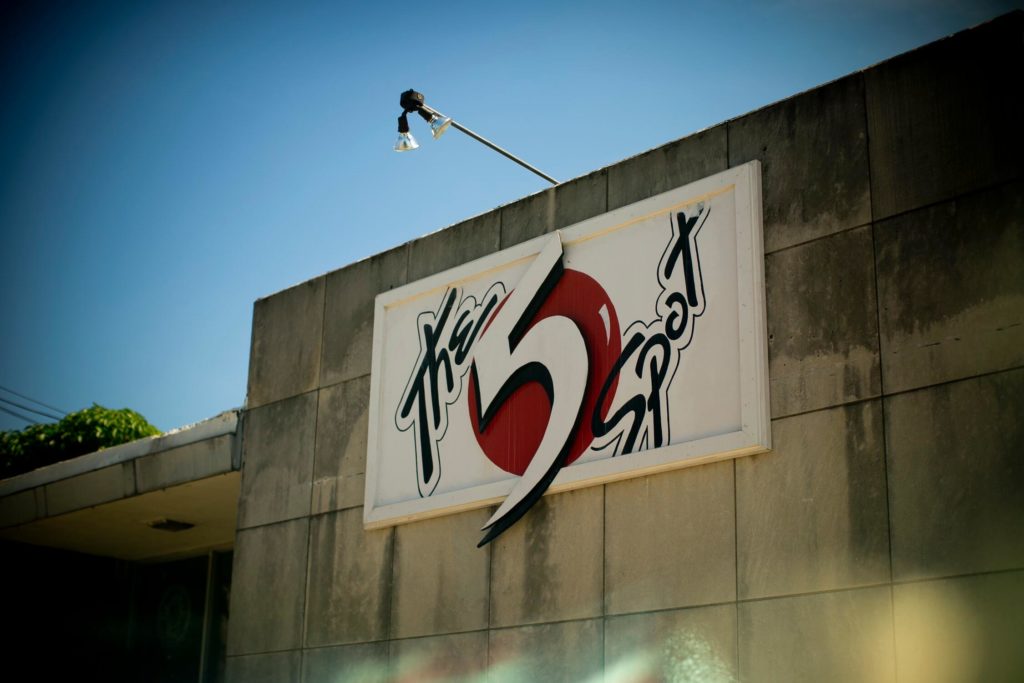
Back in 2010, the 5 Spot in Nashville was known for two things — the Monday night dance party and the Wednesday night Old Time Jam. They were both very popular weekly events.
But Tuesdays were a dead zone. Either the venue was closed or a haphazard show or writer’s night was thrown together. Most of the time it was just me and a few other local musicians hanging out at the bar.

Those musicians just hanging out? Caitlin Rose, Margo Price, and Ricky Young (The Wild Feathers).

So, I tried to think of a way to get those people on stage and do something fun, without making it a big deal. Take the “business” out of the music business. It took a while to catch on, but over time, we all started having fun with the opportunity to play music with zero pressure.

The key was to do this every week. I booked five acts who each got to play five songs each. I tried focusing on booking a diverse set of acts — I really wanted it to be a variety of styles. That was the hard part. I had to get new people involved. I had to get musicians to come to the 5 Spot to play a few songs for no money and a very small audience. So I made it about the neighborhood: East Nashville. It was something for “us.” I had to get people to think about it like a live rehearsal for their new band — a place to try out some new tunes — and it had to be fun. I’d play a set every week with my newly formed band and act as emcee. Co-owner Todd Sherwood and I came up with the name “$2 Tuesday.” Local brewery Yazoo got on board as a sponsor, and we were off and running. I saw it as an East Nashville night club act that happened every week.

Who’s on the bill doesn’t matter. $2 Tuesday is the show. There’s no opener and no headliner. I just want the music to be good. Now that we can charge $2 at the door, I can pay everyone a little something for their time and talent. That feels good.

Two things eventually happened that solidified the format of each Tuesday: A band called the Clones (now Los Colognes) moved to town and started playing a lot of late-night sets on Tuesdays. Also, my friend Tim Hibbs brought his turntables to play records in between acts. Now I had an Ed McMahon to my Johnny Carson …

The first few years saw acts like Corey Chisel (who was living in Nashville at the time) and a virtually unknown Jason Isbell play some tunes. Peter Buck of R.E.M. sat in on bass one night. The newly termed “Late Night” slot gave an opportunity for longer sets. Folks like Hayes Carll would take that slot to run through a tour set. Shovels & Rope packed the place for a sneak peak of their new material. Over the years, we’ve hosted Nikki Lane, Sunday Valley (Sturgill Simpson), Bobby Bare Jr., Nicole Atkins, Lydia Loveless, All Them Witches, Lloyd Cole, Robyn Hitchcock, Margo Price, and on and on. All of this done without posters or fanfare. No Facebook invites or business contracts. Just word of mouth. A “you had to be there” type of show. Tuesdays have become a night to get turned on to new music of all kinds. Songwriters from all over the country, bluegrass acts, touring and local rock bands looking for a show. We’ve even had hip-hop and comedy acts. That’s what I’ve always loved about Tuesdays. It’s just this little thing that grew into something really special. All of this for just two bucks.

People from all over the world have come to $2 Tuesdays at The 5 Spot. I never imagined that. When I travel to other cities, people there have heard of it. It still blows my mind. Each week, with a big smile on my face, I ask the audience, “Are you getting your $2 worth?” After seven years, I’d say the answer is, “Yes.” — Derek Hoke

Cory Chisel — “Never Meant to Love You”

Cory lived in Nashville for a short time. Couch surfing in between tours. He came by $2 Tuesday to show us all how it’s really done. Still one of my favorite songs. 

Jason Isbell — “Alabama Pines”

I was working with Jason’s manager at the time. She brought him by a $2 Tuesday, and I asked him if he’d like to do a couple of tunes. Pretty sure the bartender was the only other person that knew who he was. A couple of years later, the whole world would know. 

Buffalo Clover — “Hey Child”

Before she was “Margo Price,” she and her husband Jeremy were rocking soulful tunes like this one. This song really floored me the first time I heard it. Powerful. Margo was (and still is) part of the little 5 Spot crew that makes the East Nashville music scene so special. 

Shovels & Rope — “Birmingham”

I first met Cary Ann Hearst at a $2 Tuesday. We were talking about South Carolina, where I’m from. Had no idea she lived in Charleston. I thought she lived down the street! Little did I know that Charleston had a killer burgeoning music scene going on. They played the Late Night slot a few weeks later. Still one of the best sets I’ve ever seen. So much beauty and soul. You wouldn’t think just two people could make a sound so strong. 

Robyn Hitchcock — “Somebody to Break Your Heart”

First time I ever did a double take at $2 Tuesday was when Robyn walked in. He’s just so unmistakably “Robyn Hitchcock.” I grew up listening to his records. He’d come by and sit in with bands. Do some Dylan tunes. My band and I would back him on some Elvis stuff. He’d do his own tunes. He quickly became a fixture around the neighborhood. Now I see him at the coffee shop down the street all the time. Always makes my day. Such a unique talent and very kind person. East Nashville is lucky to have him. 

Lloyd Cole — “Myrtle and Rose”

Another blast from my musical past. Lloyd came on board via $2 Tuesday DJ Tim Hibbs. Lloyd had been on Tim’s radio show earlier that day and he asked him to stop by. We all had the pleasure of hearing him play some new tunes, as well as guest DJing the night. A very memorable evening. 

The Wild Feathers — “If You Don’t Love Me”

Ricky Young is one of the most talented people I know. In typical music biz fashion, he would sell out the Exit/In, then two months later be waiting tables again. Then he went to California. When he came back, he brought the Wild Feathers with him. Sweet harmonies and killer tunes. They played $2 Tuesday before their debut record was released. Great live band. And great guys, too. 

Adia Victoria — “Mortimer’s Blues”
Adia made her $2 Tuesday debut accompanied by local pianist Micah Hulscher. A quiet, captivating performance. Stark. Raw. Beautiful. Retro, yet modern. A true artist. 

Los Colognes — “Working Together”
When they moved from Chicago to East Nashville, they were calling themselves the Clones. A group of super-talented and endearing dudes, they quickly became a $2 Tuesday staple. Playing the Late Night sets and garnering attention. Their brand of bluesy rock ‘n’ roll was just what this singer/songwriter town needed. A breath of fresh air. 

Nicole Atkins — “If I Could”
Nicole’s backing band consists of a lot of former 5 Spot employees. That goes for numerous other acts, too, now that I think about it. Nicole kind of has it all. Great singer, wonderful performer, and an amazing songwriter. She put on a stellar show for her $2 Tuesday Late Night set. 

Hayes Carll — “Hard Out Here”
Hayes was in town writing for his new record, at the time. He was also getting ready for a tour. His band met him in East Nashville, and they put on a killer set at $2 Tuesday for those lucky enough to be there that night. 

Finding Refuge at the Edge: A Conversation with Cory Chisel and Adriel Denae

On a weekday afternoon in September, Cory Chisel and Adriel Denae are at home in Appleton, Wisconsin. It’s been a busy summer. Several weeks earlier, the couple brought 225 bands to town for Mile of Music, the citywide festival that Chisel helped launch in 2013. Not long before that, they hosted the recording sessions for a handful of upcoming albums — including Erin Rae’s newest, Putting on Airs, as well as the debut release from Traveller, Chisel’s trio with Robert Ellis and Jonny Fritz — at the Refuge, the 33,000-square-foot building that once served as a monastery and now pulls triple duty as an art studio, live music venue, and Chisel’s headquarters.

“We used to live at the Refuge, too,” he says. “Now, we have a house as nearby as we could possibly be, without being on the grounds. It wound up being good for us to have a little bit of distance, and not be at ground zero all the time.”

A little bit of distance … Chisel has been working on adding some sort of space — a buffer zone between his current environment and the one he once inhabited — to much of his daily life. Once a roots-rock road warrior who spent eight months of every year on tour, he’s since grown more attached to the home, and the family, he’s built alongside Denae in Appleton. It’s easy to see why. The two have a son, Rhodes, as well as a new album, Tell Me True. Years ago, they would’ve promoted Tell Me True by hitting the highway and gigging relentlessly, but things are different these days. Priorities have shifted. And with those shifting priorities comes a deeper appreciation for the things that matter: family, roots, the gigs that do find a way onto the couple’s schedule, and the downtime that elapses between those shows.

You spent years living in a van, but this year has been different. What pushed you to stay home and plant deeper roots in Appleton?

Cory Chisel: As an artist who tours, you know how you feel like you’re constantly chasing something? You’re chasing the crowds. You’re chasing the people who like you. That’s what the majority of our careers have been. I’ve always felt like I’ve showed up to the party one year after the party ended. Our approach now is to invert that system, if only just to try it. We’re at a point where we’re looking inward and creating our own environment that has pieces of all those things we’ve seen elsewhere, rather than running to those places.

Adriel Denae: Finding out I was pregnant really shifted everything, too. I’d been living on the road since I was 21, and I enjoyed the gypsy lifestyle. I think I had this delusion that I was gonna have a baby and strap him on my back and keep doing it, but when our son arrived, I felt an immediate shift and started craving a deeper connection to the place I was living.

As artists, what are the benefits of spending more time in one place?

AD: It can really help you, in a creative context, to sink down a little deeper into life and a community. I enjoy interacting with artists who’ve lived this way for a long time, and never got on the industry boat the way we did. There are fascinating artists all over the world who’ve never played the game we started playing. I’m finding it really inspiring to interact with them. That’s something that’s fun about moving outside of the music mecca parts of the country.

Let’s compare your current situation with your busiest days as touring musicians. Which album kept you on the road the longest?

CC: That would be Old Believers. And I’m not complaining at all. I needed that experience.

AD: We did have a blast.

CC: We did. But I did have a nervous breakdown, too, where I felt like my soul was always two towns behind me. I showed up to the Letterman stage, and I’d be lying to you if I said I felt anything. This would happen a lot: I’d get to this place I thought I wanted to reach, and either it didn’t feel nearly as momentous as I had expected it to feel or the comedown was so strange that I’m not sure it was worth coming up. We traveled the world as bodiless ghosts for years. For most artists, that’s how you survive. You’re just trying to pick up the next $100 in the next town. But the thing is, that $100 is exactly the price it takes takes to get to the next $100. And at some point, you ask, “What are we doing, exactly? What’s next on this journey as an artist?” After years of touring nonstop, I was ready to try something new.

AD: We hit a season, right around the time we moved to Nashville, where we were only home for a few days a month for the whole year. We’d say hi to friends, do laundry, and then get going again. I liked the lifestyle. I honestly may have enjoyed it a bit more than Cory …

CC: Because I was in charge of the thing. When you’re in front of the boat, you’re taking the full waves, too. Nothing was wrong with it; I was just done with it for awhile. So that’s why I wanted to create a context where I could still be an artist, but reorganize.

And part of that organization included transforming the Refuge’s chapel into a recording studio. You made Tell Me True there. Is the studio a reaction to the more expensive studios you’ve seen elsewhere?

AD: When you’re a young musician, you spend a lot of time dreaming and anticipating the moment where you’re in the studio for the first time. You think it’s gonna be a certain way. But in reality, I was unprepared for the amount of anxiety and awkwardness that a professional studio environment can create. At first, I thought it was a problem with me. Then I read this interview with Elliot Smith, where he was comparing the process of home recording to the experience you get in a big studio. You know what it’s like in a big studio: There’s an artist sitting in a booth with headphones on and cords everywhere, and you get into this headspace where you’re ready to create your song, and suddenly there’s a buzz in some line somewhere, and everything has to stop, and everyone starts running around, and you have to sit there and maintain some space for yourself while they fix it. There’s a lot stacked against you, before you even consider the financial constraints. I can really understand the draw to recording in non-traditional spaces, whether it’s someone’s home or someplace else. A lot of my favorite recordings were done that way. We hit a point in our journey where we were really longing for that.

When did the songs for Tell Me True begin to arrive?

AD: During those months of our son, Rhodes, being a newborn.

CC: It arrived either as a way to soothe our little baby or immediately after he went to bed, in those weird half-awake, half-asleep moments you have as a new parent, where you’ve got a tiny amount of time to do something other than grapple with a new life. It was in those little, tiny spaces. I used to have all the time in the world to do God knows what. That time vanished, but the songs didn’t. I worried that if I added more to my life, the music would go away. But the music just accompanies life. It’s a way of digesting or processing what’s happening to you.

AD: I remember once, when Rhodes was just a few weeks old, I woke up in the middle of the night and Cory wasn’t in bed with us. I could hear a guitar from the other room and, around sunrise, Rhodes woke up and we both went to find Cory, and he was sitting on the floor in Rhodes’s room, which our son never actually moved into. He had that crazed look you get when you’ve been writing all night, and he’d completed a song. It came out through the night like that. There were other songs, like “Tell Me True,” that were refrains we’d been singing for weeks. A lot of the music on the record was something that had been floating around us in that three-month period. I feel like Rhodes brought a lot to us with his life, and that record is part of what he helped to create when he came.

You haven’t entirely stopped touring, though.

CC: We haven’t, but touring is different now. I don’t go out with Traveller for more than 10 days at a time. Our upcoming tour to Australia and New Zealand is a good example. We might have continued that run, but I just couldn’t do it. So Robert [Ellis] is going to Japan afterward to play solo shows. I have things now that matter more to me than going everywhere during a tour. Being present in this life, here, is my number one treasure. When I say to an audience now, “I’m so glad you’re here, and I’m so glad I’m here,” I’m definitely not lying. I love having so much truth to that exchange.

I visited Appleton for the first time this year as a Mile of Music performer. The town is great, but the festival … that festival is fantastic.

CC: Thank you. That festival was born out of one question: Could this thing be done differently? Could we have a festival that was really for the benefit of the people attending, as well as the artists playing? We weren’t asking ourselves, “How much money can we squeeze out of these people involved?” For me, it feels different than other festivals. So we thought, “If that’s possible, why can’t everything be changed?”

You mean, if a festival like Mile of Music can be successful, why can’t a recording studio like the Refuge be equally successful? Or a homemade album like Tell Me True?

CC: Sure. The music industry isn’t that old. We think of it as this unchangeable thing, but it hasn’t been around long enough to earn that kind of respect. I think it’s necessary to disrespect it a bit and see what can be changed.

Meanwhile, Adriel has been working on her new record, too.

AD: Cory and I are in different places in our careers. I’m just beginning the process of releasing my own songs and couldn’t be more excited to do it.

Norah Jones produced it. She’s been a friend and fan for years, right?

AD: I was a fan of hers first. Norah took Cory out on the road in 2012, and she wanted it to be a stripped-down opener. He brought me and a guitar player along, and we wound up finishing the tour just the two of us. I was so star struck. I could hardly even talk to her. I was just a huge fan and have been since her first record.

How did the tour lead to an offer to produce your record?

AD: She started asking me if I’d been writing my own songs, and she asked that I send them to her. I sent her some demos, and she was so encouraging and affirming. She had built out a home studio at her house and she offered to produce, and that was just the biggest dream come true. So I went to New York in January of that year, and I found out I was pregnant 48 hours before getting on the plane. That threw a huge curveball into the equation.

CC: Norah was pregnant, too, so the producer and the musician were both making a record and a baby at the same time.

AD: It was a very sober recording experience! We were in our pajamas and slippers the whole time. I kept seeing her as a painter, more than a producer. It felt like she was helping me find my colors and helping me paint this picture around my ideas. It was really fun to experience record-making with that kind of feminine sensibility and energy to it.

Where was Cory during this?

AD: He was watching Game of Thrones in Nashville.

CC: I told her not to make a record while Game of Thrones was on!

Do you look back and regret that you weren’t there, Cory?

CC: This was Adriel’s art, with Norah in the producer’s role. Now I get to enjoy it as one of my favorite records, and I don’t have that weird feeling of … you know when you work on an album, you can’t hear it the way other people hear it? It’s almost as though, if you participate in it, you can’t be a fan the way others can. So I’m glad to have that record in my collection, where it can be one of my favorites.

Is there a title?

AD: There’s still time to figure that out, but I’ve always thought of it as being called The Edge of Things, which is a song on the record. I like to start some of my sets with that song because, for me, it’s a kick in the pants to not be afraid to jump into the unknown. But I guess we’ll decide before February, which is when it’s coming out.

What about the Traveller record?

CC: If all of this pans out, it would be fun to time it together, so Traveller’s record and Adriel’s record both come out at the same time, and we’re all touring at once. Because then we’ll be a tribe, and everyone’s traveling all together. And suddenly, Gary, Indiana, becomes a lot more fun to be in.


Photo credit: Justus Poehls

Cale Tyson Shifts His Fashion Gear

After moving to Nashville, Tennessee, from Fort Worth, Texas, there was a brief period where I would return to H-town for the holidays, and my pals would say something along the lines of “I love your outfit … you look very Nashville.” While I knew they intended this to be a compliment, I’ve never wanted my style to be categorized as the entire population of a city. After the third or fourth time hearing that, I bagged up my existing wardrobe, took it to the GoodWill off Gallatin Pike and started over. I have nothing against looking “Nashville.” I love Nashville. It’s just that I’d rather have my own style that reflects me and my interests — not my surroundings.

So, when singer/songwriter Cale Tyson told me he recently threw out every plaid, piped, pearl snap he owned and has hung his hat for a moment, I completely understood. The once outlaw-outfitted artist has traded his honky-tonk duds for a more accurate reflection of who he finds himself to be … today. I met up with Cale to capture two fresh looks that he’s enjoying these days.

When Cale showed up to the shoot wearing overalls and Birkenstocks, I knew the next couple of hours would be a lot of fun. Sure, the thought of combining overalls and Birks together can be a scary one. There is a high possibility of something going terribly wrong with the details, but Cale classes up the look with smart pairings. Layering the overalls over a solid, wide crew-neck tee, a neat cuff at the hem line, and a classic pair of Ray-Ban sunglasses elevated the outfit.

The only thing I love more than a monochromatic outfit is a natural white monochromatic outfit. Makes me think of West Texas deserts and great open skies. Cale tops off this look with a sandy belt, sandy cowboys boots, his favorite turquoise ring, and his go-to round metal frame Ray-Ban sunglasses. This look can carry into the winter and fall with the addition of sweaters, a denim jacket, a wool cap, or a structured hat. If you’re thinking of giving this look a go, just make sure to stick to a single color and vary up the shades and fabric textures. Don’t know where to start? Check out Imogene + Willie for some natural white staples.

Cale is doing a brilliant job keeping to the basics and looking far from basic. His wardrobe is made up of relaxed, versatile items that come together for an effortless, yet polished look. While the items hanging in Cale’s closet are great pieces, I think his tall, lanky posture and disheveled mane contribute more to individualizing his style. I dig the role his body and personality play in setting a vibe for whatever he throws on. There’s a lot shifting in the young musician’s life right now, and I’m enjoying hearing and seeing his expression through this phase.  ​