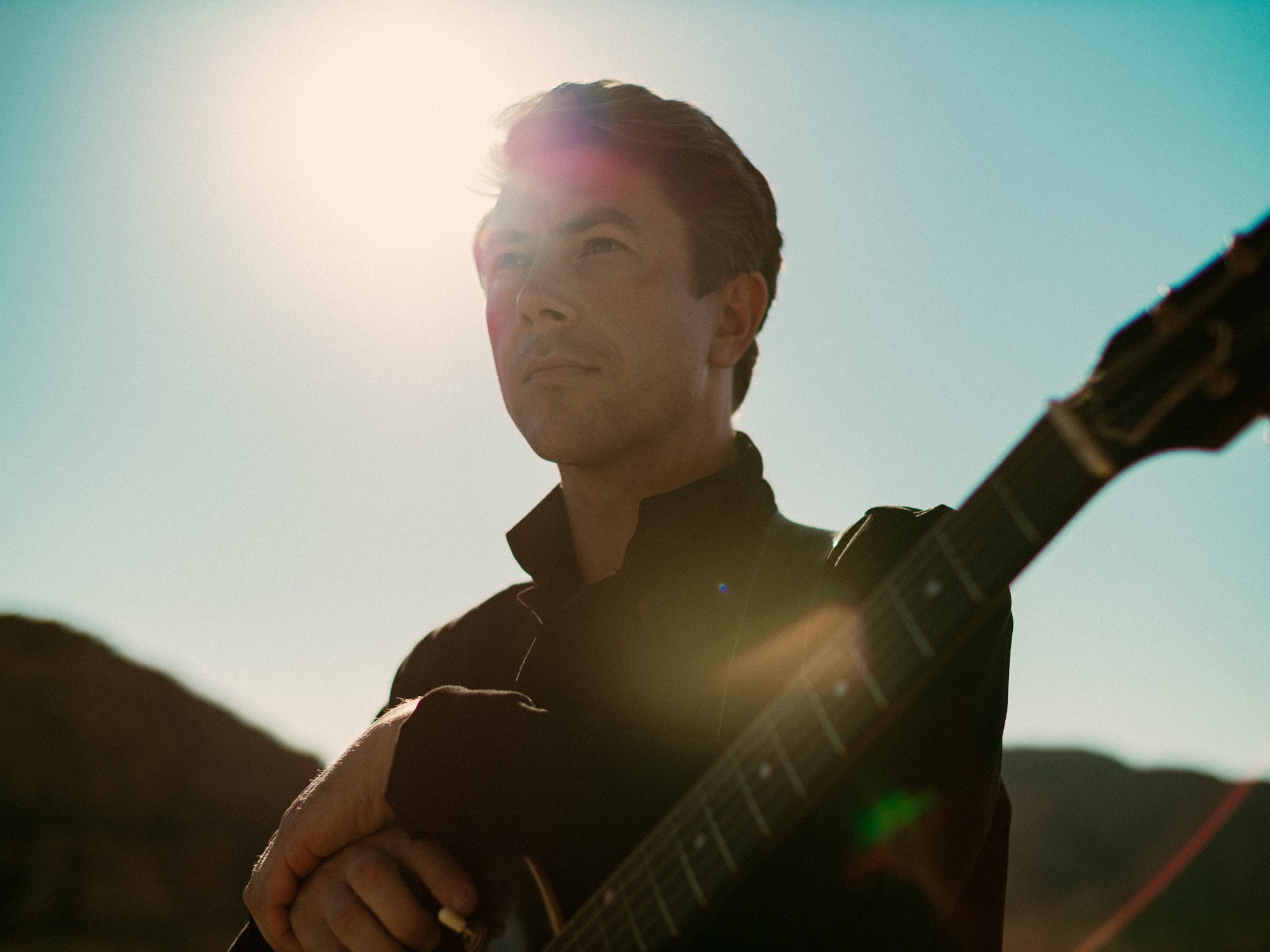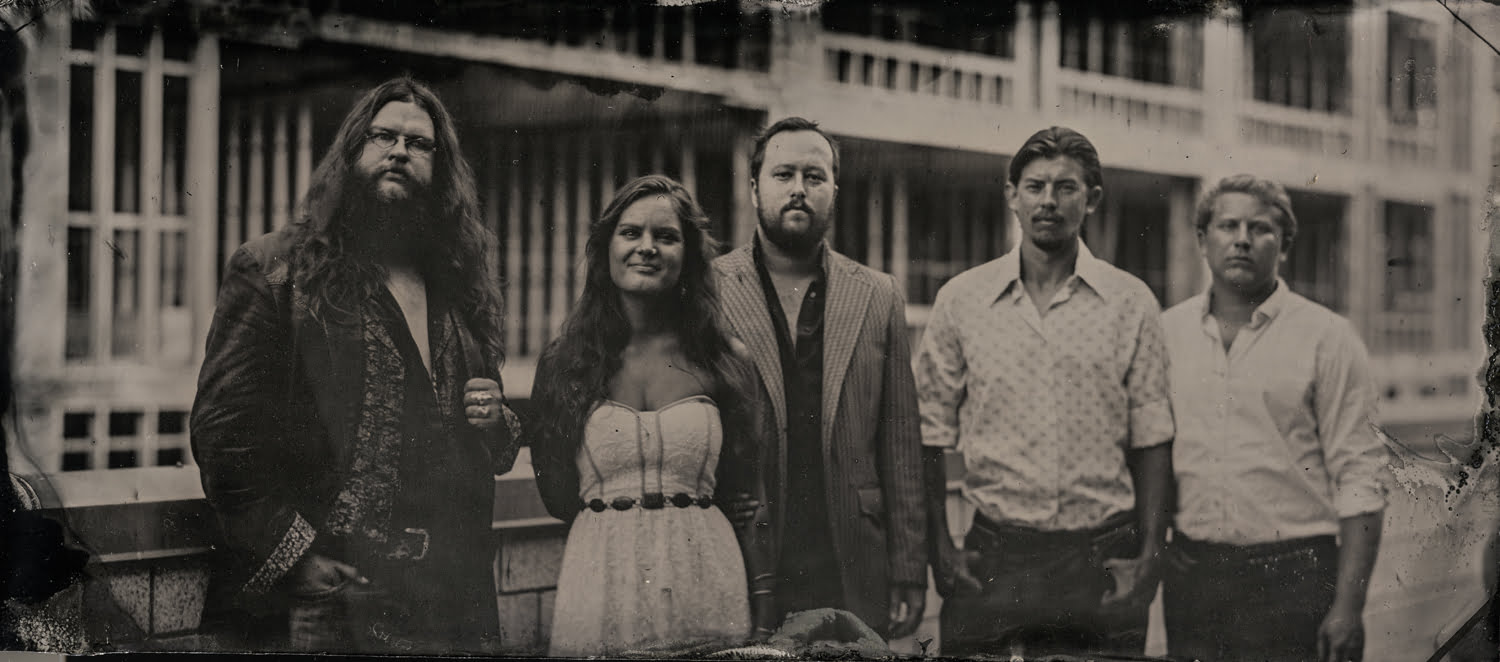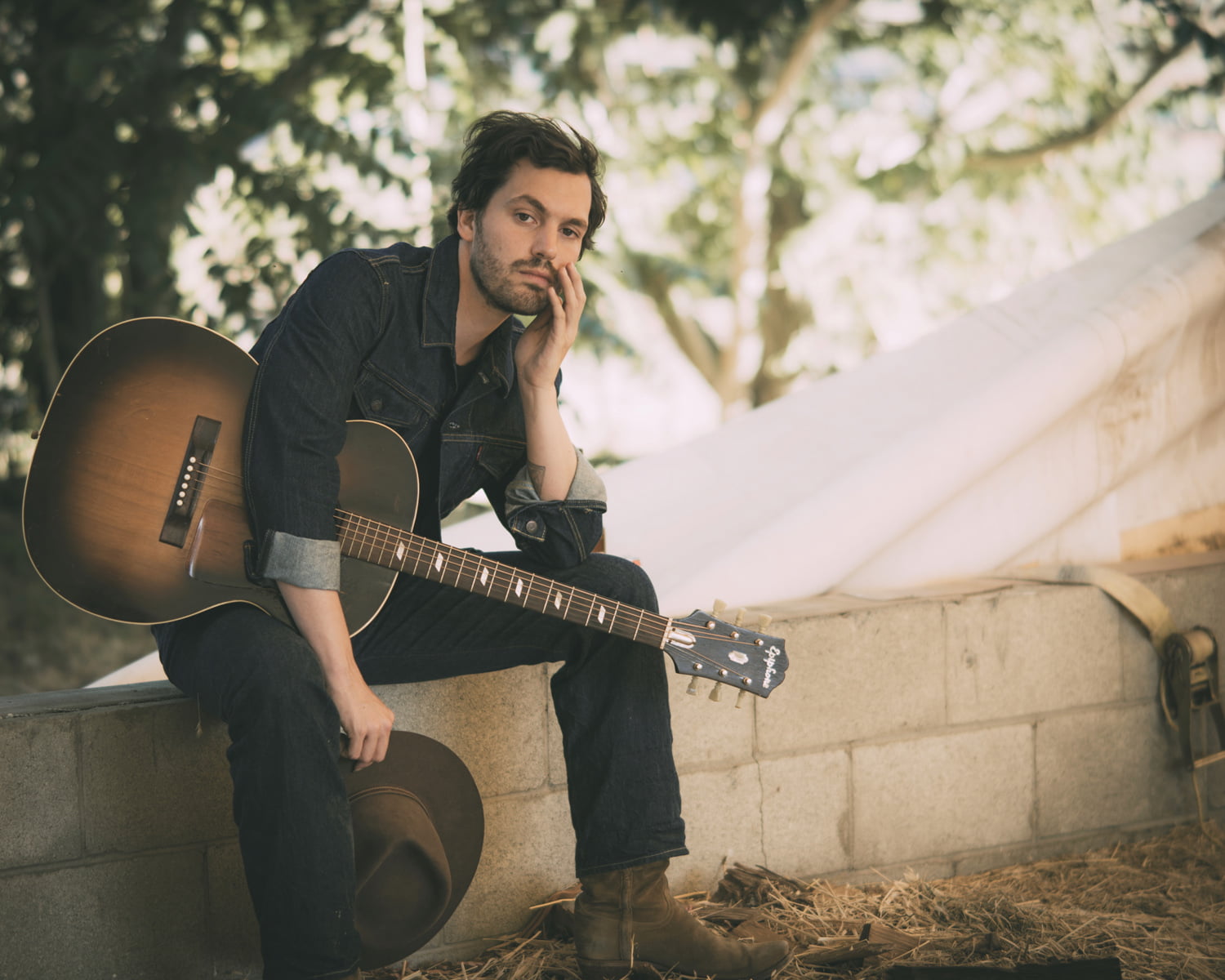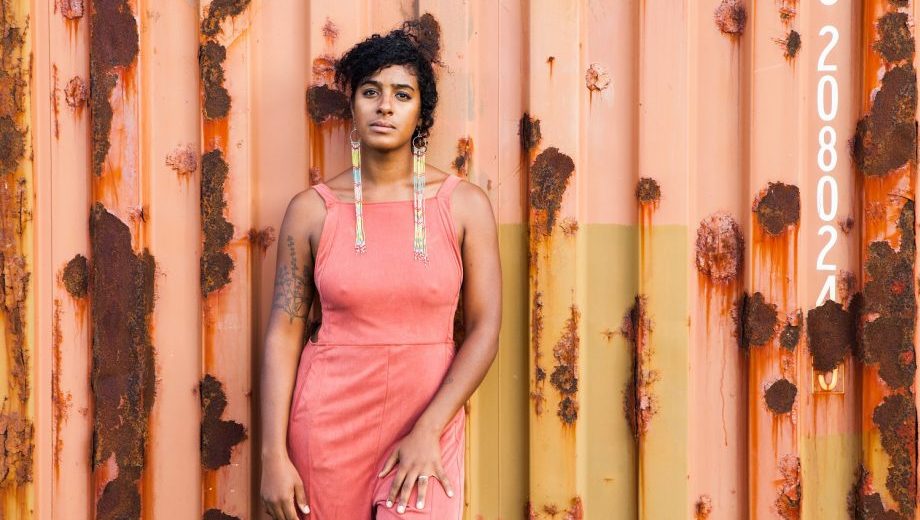
LISTEN: Jon Hatchett, “You Can’t Regret What You Don’t Remember”

Artist: Jon Hatchett
Hometown: New Orleans, Louisiana
Song: “You Can’t Regret What You Don’t Remember”
Album: Mother Nature Wins Again
Release Date: October 26, 2018

In Their Words: “I wanted to make an album of music to dance to, but lyrically explores sad or difficult territory that is relatable. For instance, this song was written as a comedic cautionary tale about getting phone calls in the morning about what happened the night before, but not remembering it.

The cover illustration (by my friend and neighbor Nicky Bob Shoulders) comes from the title track, taking problems we (at least myself) face in society today. I tried to set these things in popular uptempo form, with the familiar and the unfamiliar put together — a form of satire to think about, but also to party to.

Most of my favorite dogs are mutts, and you could say the same about this album. It’s country enough to where you can two-step to most of it, but there is a touch of New Orleans R&B, rock and roll, and really whatever we thought fit the song. We tried to arrange it while still letting it feel loose enough to step out of the range of conventional country music.” — Jon Hatchett


Photo credit: John Dixon

Coming Around: A Conversation with Andrew Duhon

Andrew Duhon took a winding road to get to False River, his first album in five years. The New Orleans musician endured a crushing breakup that prompted the new suite of songs, then came up dry while looking for the right producer. Finally, the tide turned when he met Eric Masse, who ultimately helmed the sessions in his East Nashville studio, The Casino.

They both had a lot to live up to, as Duhon’s prior album, The Moorings, received a Grammy nomination for best engineered album. However, with touring band members Myles Week on bass and Max Zemanovic on drums, Duhon immersed himself in False River. With Masse’s guidance, the dynamics of Duhon’s voice are never drowned out. Instead, on thoughtful ballads and exuberant songs alike, his compelling baritone effortlessly converges with the band. He caught up with the Bluegrass Situation during a coffee break in Nashville.

I’m curious about the studio vibe for this record. How would you describe The Casino to somebody who’s never been in there?

Well, it is a garage recording studio, but of the finest standards. They did a good job to build it out and get some good sound in there. But as [Eric Masse] said, and I appreciated on our first phone call, he said, “You know, I call it The Casino because I gamble with artists’ careers.” He laughed immediately and I laughed. But I appreciated that because in our first phone call he made it very clear that he understood the gravity of what he was taking from me to create.

I think I could have gone much safer routes to put these songs down in their immortal form, but he helped us make a much bolder record and take some chances that I’m sure we wouldn’t have otherwise. On the first day of recording, he said, “We’re in Nashville right now and there’s 150 records being made today that are the singer-songwriter Nashville records. We can make one of those or we can make something else. We can make something different. We can try to make a cool record that’s never been made.” And there was no doubt that’s what we were there to do.

Well, that’s an interesting comment about the so-called Nashville songwriter record because that isn’t what you do at all. Have you ever lived here?

No.

No, so you wouldn’t even be that.

I did make my first record here. And you’re right, I think coming from New Orleans there’s more than osmosis from that place than from Nashville. But certainly I think I was first inspired by the stories in country songs. I would credit that as a reason why I’m trying to be a songwriter and not a poet. There’s something really special about the American songbook, so to speak.

What area of country music in particular are you thinking about?

Well, I remember that in my dad’s van, it was George Jones and Garth Brooks. Not everybody I was listening to was writing the songs, but there was an adherence to the story and they were really serving the song. So I appreciate that craft, for sure. … But I do enjoy, for the moment, only recording the songs I wrote myself. I’m open to the co-writing idea or recording other songs that just speak to you. But so far it’s been really a validating path to just figure out what I want to say.

Yeah. It seems to me that you figured it out, too.

No way, dude. I think I’m figuring out that I’m on the right path. You know, it still feels like I don’t see any rest stop up ahead or anything. It feels like, OK, if there’s two months, three months that go by where there’s not a new song to add to that path, then I start wondering what am I doing: “OK, wait, I’m out of balance, I need to go back to songwriting and stop putting on the business hat every day.”

I guess what I mean by that, it seems like you’re able to articulate after that breakup what was in your mind and that you were able to convey that on the record. Would you agree?

Oh, sure.

And I like “Comin’ Around” because it seems like you’re saying “Alright, I’m coming around to something better.” And then you explain where you’ve been, which I thought was an interesting way to structure that record. What was your frame of mind when you wrote that song?

Yeah, it has that little wordplay about the element of the spherical nature of the world, right? And this cute idea that if you walk in one direction you’ll end up back where you were, theoretically speaking. So to go away from something, but to be coming around in that physical sense, spherical sense, but also in a figurative sense like, “I didn’t like tomatoes as a kid, but I’m comin’ around.”

I love the idea that maybe coming around on that heartbreak means I’m coming around to that person – or I’m coming around to the idea that I’m just not going to be with that person. I like that there wasn’t really an answer in that song necessarily, but moving forward, what’s going to be the answer? At the time when I wrote that song, that’s what I needed. I needed to know that the only way back to her way straight ahead. I needed to go far enough away to really get an answer.

I wanted to ask you about melody. I think a lot of songwriters get asked about their lyrics so much but how much time do you spend on melody, making the songs stand apart?

I think I wander blindly through the dark when it comes to melody. I don’t think it’s innate to me, what a catchy melody is at all. I think I probably struggle to write something catchy. I will try things and especially on the road, I’ll try a lot of different interpretations. It was great for those years on the road with this band because they were always listening and I can hear them grunt with pleasure sometimes if I tried something they liked. “OK, grab that one and put that one in my pocket.”

And I think a lot of melodies were honed that way specifically, just improvising a new rendition of the same song and coming up with a new idea. … But then again, you know, the track is just another rendition that you sang. The producer picked his favorite version and I’ll sing it differently next time. I don’t always adhere to the same melody and I love the idea of writing a catchier melody, but it’s not my focus.

I think a lot of the music that I like has a sense of motion to it. That’s your life, basically, it seems like. Are you ever in one place for more than a couple months at a time?

No, that’s right. I love traveling songs myself, but not so obviously a traveling song, necessarily. But I think since getting out of college, it just started with me sleeping in my car and getting shitty shows that paid just enough to get gas and a meal and go to the next spot. But I thought that was going to introduce me to some new place that I hadn’t grown up in and I wouldn’t just be a product of my raising or the place that I grew up. I would find this new place.

And I learned two things since then. One, that I’m really lucky to be raised in New Orleans because that is a very special place. The other thing is, I think travel is more about changing everything around you while everything inside stays the same. So you really get a sense of “How do I react to all these different things?” You learn what’s in there, more than all these things that are changing, and you only get a snippet of.

It goes back to a line that I read in a homework assignment in English class in high school which was Ralph Waldo Emerson’s essay Self Reliance. And the line was, “To believe that what is true for you in your private heart is true for all men — that is genius.” And that was a new idea for me. To me it said, “Wait a minute, so if my quest in life is to go and seek out the goal, wherever it is, maybe it’s not out there. Maybe it’s in here. And that was a special moment. And I think it introduced me to my artistic will.

Yeah, well you have to have that to be an artist or a songwriter. I would think you have to believe you can say something in a way specific to you but also that someone else would enjoy.

Without a doubt, that is true. Without that theory, I’m wasting my time.


Photo credit: Hunter Holder

LISTEN: Ric Robertson, “The Friend”

Artist: Ric Robertson
Hometown: New Orleans, Louisiana
Song: “The Friend”
Album: The Fool, The Friend
Release Date: June 29, 2018
Label: Blue Hens Music

In Their Words: “Sometimes I wake up ready to seize the day. But most often, I’m just trying to keep the wheels on my life. This tune is a loving and somewhat envious tribute to the folks who seem to have it all figured out.” – Ric Robertson


Photo credit: Gina Leslie

Bringing It All Back Home: A Conversation With Luke Winslow-King

Luke Winslow-King has been drawn to the blues since he was a kid growing up in Cadillac, Michigan. At 14 years old, his namesake blues band was playing clubs and festivals around the Midwest. Whatever he lacked in life experience, he made up for it with prodigious guitar work and an easy stage presence. Yet any lingering innocence would have eventually fallen away following 15 years of living in New Orleans, spiked with a couple of international tours.

Now in his mid-30s, Winslow-King’s pedigree in the blues is far more defined after enduring a divorce, the loss of his father, a couple of friendships falling apart, and the deaths of more than a few musical influences. In other words, he’s no longer just a boy with the blues. In fact Blue Mesa is Winslow-King’s first new album since he moved back to Cadillac from New Orleans last year. Considering what he’s been though, his writing offers a streak of hard-won optimism in songs like “Better for Knowing You” and “After the Rain,” elevating Blue Mesa beyond just another breakup record.

At what point during the making of this record did you move back to Michigan?

It probably was right after we recorded it that I moved to Michigan. I went on tour for three months, so I didn’t live anywhere. Then I moved to Michigan after the tour. I was in transition at that time. I’ve spent the better part of 15 years in New Orleans. Some of that time was spent in New York or on the road, but I’ve been in New Orleans pretty solid since 2001 or 2002. I learned a lot; the city has been great to me. It’s been an incredible place to get my career started. I’ll enjoy going back there soon, but I’m just ready for something else right now.

Was there a moment where you said, “All right, I’m changing”?

Yeah. I went through a divorce there and did some editing as far as my friend group goes. Now I just want to be in a place with nature and family so I can focus on my career in a different way. When I’m home, I’m off. When I’m on the road, I’m on the road. In New Orleans, you come off the road and you’re in this music scene where you’re playing every night or every other night when you’re home. It’s nice, man. I’ve been enjoying fishing, and bowling, and canoeing, and cross country skiing. It feels real to be back home. I’m enjoying it.

Has that helped your creative mindset?

I think so. I’m feeling less pressured to write and do business and just being like, “You know what? This is my life.” I’m going to follow it through and do the best I can. If people like it, cool. If they don’t, then someone else will. just keeping at it and trying to keep it real rather than force anything. I think that’s how the record comes off a little too. I quit telling the band what to do and just let them do what they do best. If I didn’t like it I would tell them but usually I was just like, “Sure. Sounds great, let’s go for it.” I think there’s a certain breath of freedom in it.

You’ve got a lot of tasteful playing on this record. How did you learn the skill of not overplaying or just ripping through your songs?

Just listening, and years of playing, and learning how to speak through the guitar. The guitar doesn’t necessarily have to sound like a guitar. You can speak a language through it or sing through it. My guitarist Roberto Luti, who is not touring with us because he’s back in Italy, is my guitar maestro. He is our unicorn for gathering the spirit and learning how to be very tasteful and minimalist on a guitar. I’ve learned a lot watching him too.

How did the Italian recording sessions for this album come about?

Well, we were hitting the road pretty hard in Europe this summer for eight weeks or something like that. We had a five-day break in the middle of it and we were in Italy anyway. Roberto is from there, so he knew people who owned a really nice studio. It ended up being this cool getaway up in the mountains in Tuscany. We had the tunes ready enough. We had to rehearse a little to get ready for the session but the tunes were at that perfect point where they weren’t over-rehearsed.

We caught a really cool moment, which is really important in a session. We were comfortable with each other and the material. We all needed a break, but we were still excited about the music. Everyone was laid-back. This is the first album where I’ve kept all my live vocals. Usually I go back and do an overdub session, which a lot of people do, but it felt nice to be like, “This is natural and real.” All the takes on the solos and guitars are live. There are keyboard overdubs and edits here and there, but it’s mostly all live.

It makes sense to do it that way, rather than get it so perfect that it’s too polished.

There’s a sweet spot – you obviously have to know the songs well enough. I’m a huge Bob Dylan fan and listen to records like Desire. You can tell the rhythm section has maybe never heard the song before. It makes for an awesome recording. Everyone is on their toes.

You had a blues band when you were a teenager in Michigan, right?

Yeah. I grew up in northern Michigan and I started the Winslow-King Blues Band when I was 13. We played a few music festivals. My parents used to go see me play at bars on the weekend. I’ve come back to a sound that’s a lot more similar to what I was playing when I was 14 years old, which is like an electric trio with a Stratocaster playing blues. The difference is I’ve lived between then. I’ve explored folk music. I had classical string quartets on my first album. New Orleans jazz was mixed in there for a while. I tried jazz, a lot of different styles.

Now I’m playing original music that I can stand by. There’s a lot more diversity in it, of course, but it feels good to come full circle and be back to my roots. A lot of my friends back home were like, “When are you going to rock again? I remember when you were young you used to rock.” Even my dad was like, “I liked it when you rocked.” I’m back to that, so it feels good.

I wonder what that’s like for people who remember you as a teenager, and now you’re back home as an adult. They have to reevaluate you and you have to reevaluate them at this stage. Has that been the case for you?

Well, that’s what’s so great about going home and being back with your old family and friends. It’s a very understanding reevaluation. You are who you are. The friendships go beyond whatever music you’re playing or what notes you’re playing. I’m glad to be back home and have salt-of-the-earth friends. My best friend was a logger and now is a sand miner; my other best friend is a fishing guide and snow plow truck driver in the winter. It’s cool to have friends who are concerned with normal daily life. You can go fishing and hang out and not have everyone be into cool music everywhere you go.

This album has very cinematic moments too. A lot of it felt like it could be placed in movies on the closing credits. Are there soundtracks or composers that you consider primary influences?

Yeah. I’m a huge Ry Cooder fan. That’s one of his things that he’s been known for and made a career out of. I’m also a big fan of Neil Young’s soundtrack for the Dead Man movie. I’ve always really liked that and listen to that in the van sometimes. I went to school for classical music and I’ve always loved great classical music. I also love Clint Eastwood. I’ve been watching a lot of Clint Eastwood and Sergio Leone movies and hearing that stuff too. It’s not necessarily stylistically what I want to do but I love how evocative some of those sounds are and how much they bring the listener to the setting. It would be cool to be able to do that in my own way with my music.

Are there any filmmakers other than Clint Eastwood that have affected the way you see your art?

I’ve watched all five Rocky movies and all the Rambo movies this winter, I’m embarrassed to say.

No, don’t be embarrassed. Rocky won an Oscar.

Chris Davis, my drummer, is a huge, huge Rocky fan. We just went to Philly and ran the stairs while we were there. Honestly we’re in this Stallone phase. Roberto, our Italian guitarist, always says ‘Stallone-ay’ which we love. Honestly, Rocky is a really inspiring movie. I appreciate that Stallone did that movie on a shoestring budget and was inspired to make it himself. Right now Rocky has been what I’m all about. It’s that underdog mentality. Even though everyone makes fun of Stallone and it is so cheesy, and some of the acting is so terrible, there’s a really beautiful sentiment in that movie about going the distance.


Photos by Victor Alonso

The Heritage of New Orleans’ Jazz Fest

Three hundred years ago just about now — May 7, 1718, so legend has it — representatives of the riches-minded colonial French Mississippi Company decided that a malaria-infested swamp in the crescent bend near the base of the river for which it was named would make a great place for a port settlement. Nouvelle-Orléans they called it.

Thanks to them, over the course of the next couple of weekends, not too far from that original settlement, you can find a spot where, depending on how the breezes are blowing, you will be able to hear five, six, maybe seven kinds of music all at once. This is music representing cultures from all over the world — from Haiti, from Mali, from Cuba, from Brazil, from Nova Scotia, from the bayous and prairies just a few hours away, and from Congo Square on the edge of that former swamp. Music originated by escaped slaves, by French refugees booted out of Eastern Canada, by Irish dockworkers, by free people of color and landed aristocrats, by Baptist celebrants and Catholic congregants and European Jewish immigrants. Oh, and of the indigenous tribes who were there long before the Europeans. Blues, gospel, country, rock, salsa, merengue, Celtic, hip-hop, bounce, rara, R&B, Cajun, zydeco, klezmer, funk, brass bands’ Mardi Gras Indian chants, and real Indians’ pow-wow chants. And jazz, of course, both traditional and modern, just for a start.

And while you’re standing there, in that same spot, you can savor the irresistible aromas of cuisine from just as many traditions, all blended together in ways that have come to be associated with this place, which we now know as New Orleans … though that’s a different story … or a different part of the same story, perhaps.

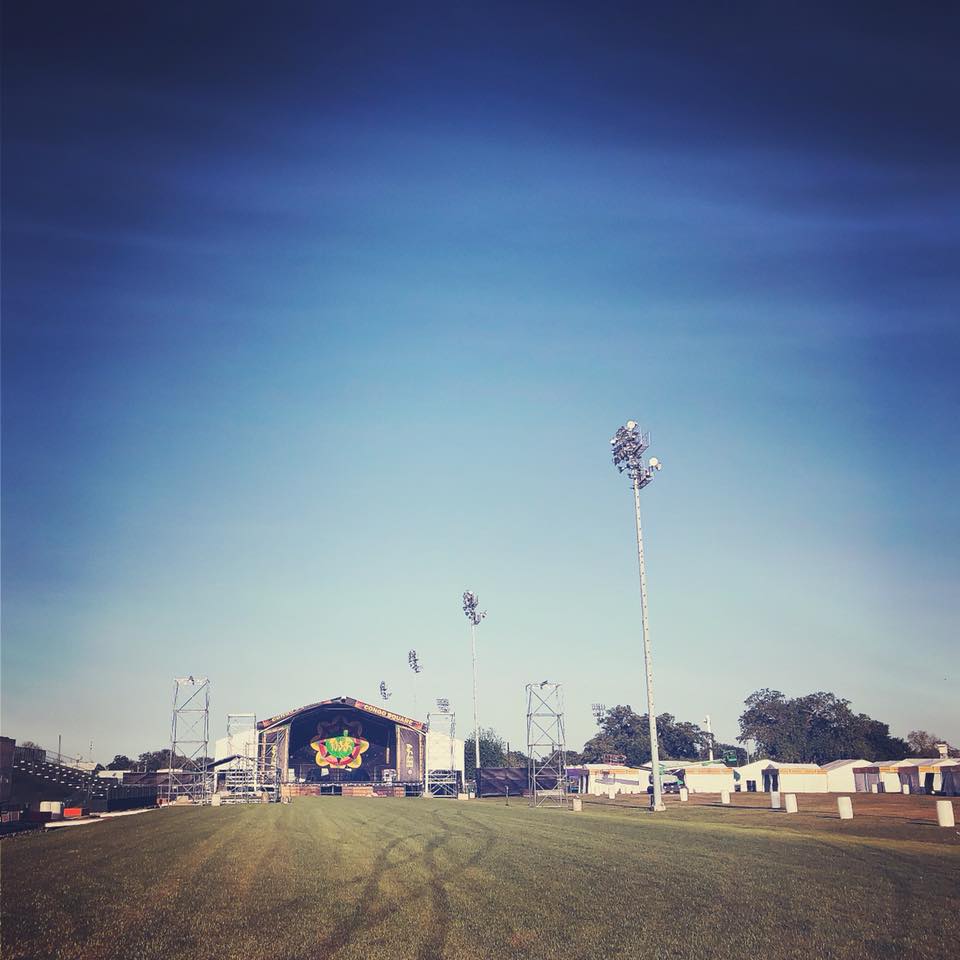
That spot is in the middle of the Louisiana Fairgrounds which, part of the year, is a horse-racing track, but for the last weekend in April and first in May, has for decades been the site of the famed New Orleans Jazz & Heritage Festival. And this year, the event is marking the city’s tricentennial with a valiant attempt to showcase and celebrate all of the many cultures that made this city like nowhere else in North America, really nowhere else in the world. Technically, that’s always been part of the mission of what people refer to as JazzFest — its baker’s dozen of stages spread around the grounds hosting artists with connections to that heritage.

This year, that specific mission will be concentrated in a tent very near that mid-Fairgrounds spot. Most years, a Cultural Exchange Pavilion has hosted music, art, crafts, and workshops devoted to a particular country or culture with historic ties to New Orleans. Cuba was spotlighted last year, Belize in 2016, and Haiti, Mali, Brazil, and Native America among others featured in recent years. For the tricentennial, all of that is being squeezed into the pavilion, an ambitious, but fitting focus.

The late, great singer Ernie K-Doe was fond of saying that, while he wasn’t positive, he was pretty sure “all music came from New Orleans.” Hyperbole from a man who called himself the Emperor of the Universe? Well, a little, maybe. A more accurate statement might be that pretty much all music came to, and through, New Orleans. Heck, after hosting its first documented opera performance in 1796, the city was known as “the Opera Capital of North America” through the next century. And, if you roll your eyes when JazzFest announces its big name artist headliners — a crop this year including Aerosmith, Sting, Beck, Rod Stewart, Lionel Richie, and LL Cool J — well, how many of them would be making the music they make, if not for the powerful influences of music tied to the heritage of New Orleans and the surrounding region?

It was all pretty much in place, even before the city’s single centennial, as cultural historian Ned Sublette notes in the introduction to his definitive 2005 account of those first 100 years, The World That Made New Orleans.

“New Orleans was the product of complex struggles among competing international forces,” he wrote. “It’s easy to perceive New Orleans’ apartness from the rest of the United States, and much writing about the city understandably treats it as an eccentric, peculiar place. But I prefer to see it in its wider context. A writer in 1812 called it ‘the great mart of all wealth of the Western world.’ By that time, New Orleans was a hub of commerce and communication that connected the Mississippi watershed, the Gulf Rim, the Atlantic seaboard, the Caribbean Rim, Western Europe (especially France and Spain), and various areas of West and Central Africa.”

And with all of that came music, gene-splicing and mutating through the years, from the drumming, dancing, and singing of slaves, given Sundays off, gathering in what became known as Congo Square (in what is now Louis Armstrong Park, just across Rampart from the French Quarter) to the backstreets and brothels of the Storyville district down the street where Buddy Bolden and Armstrong played their horns and Jelly Roll Morton worked the sounds of Latin America — “the Spanish tinge” — into roiling piano adventures through the collision of rhythm & blues and country-blues in the years just after World War II that brought about the birthing of rock ’n’ roll in Cosimo Matassa’s J&M Studios right on the other side of Rampart.

As Sublette put it: “The distance between rocking the city in 1819 and [Roy Brown’s] ‘Good Rocking Tonight’ in 1947 was about a block.”

At the same time, that distance is a trip around the world. This year, it’s all in one little tent.

A few highlights of note from the Cultural Exchange Pavilion lineup:

Sidi Touré — The guitarist, singer, and songwriter from Bamako, Mali, is one of the leading figures in modern Songhaï blues, roots of which became American blues and its variations via slaves brought across the Atlantic and, in turn, influenced by American blues and rock.

The Cajun/Acadienne Connection — A special collaboration between descendants of French settlers relocated to the Louisiana bayou prairies after being booted out of Eastern Canada by the conquering British in1755, and descendants of those who managed to stay in Canada. The former is represented by the Savoy Family Band, Marc and Ann Savoy standing among the leading forces in the revival of once-oppressed Cajun music and culture joined by sons Joel and Wilson, who have brought their own vitality to the form. The latter comes via Vishtèn, a young trio from the resilient Francophone community on Easter Canada’s Prince Edward Island which mixes French Acadian and Celtic influences with overt nods to their Louisiana “cousins.”

Cynthia Girtley’s Tribute to Mahalia Jackson — The formidable Girtley, who bills herself as “New Orleans Gospel Diva” offers her homage to New Orleans’ (and the world’s) Queen of Gospel and force in the Civil Rights Movement who, two years before her death, was a surprise performer at the very first JazzFest in 1970 in Congo Square, singing “Just a Closer Walk with Thee” with the Eureka Brass Band, followed by a formal concert the next night in the adjacent Municipal Auditorium, which now bears her name.

Tribute to Jelly Roll Morton with special guest Henry Butler — New Orleans-born Butler has long been one of the leading keepers of the flame of the city’s great piano traditions, an heir to such greats as Prof. Longhair and James Booker. Here, he is featured in a set honoring Morton who, if not the inventor of jazz (as he was wont to boast himself), was one of its key innovators and promoters in its formative years.

Jupiter & Okwess — Hailing from the Democratic Republic of the Congo’s capital Kinshasa, dynamic singer Jupiter Bokondji and his forceful band have become an international force in modern Congolese music, as it’s taken to the global road recently, gripping audiences at festivals and clubs alike in Europe and North America.

Kermit Ruffins’ Tribute to Louis Armstrong — Trumpeter and singer Ruffins became a star as a teen, helping lead a new generation of NOLA street musicians with the Rebirth Brass Band in the ‘90s, and has continued as a local favorite through his solo career (plus wider exposure via featured spots in HBO’s Treme, among other things). His love for and debt to the one-and-only Satchmo has always been a core presence in his playing and gravelly, good-natured vocal approach.

Leyla McCalla — The cellist, banjoist, and singer emerged in the second version of the Carolina Chocolate Drops alongside Rhiannon Giddens. Settling in New Orleans and starting a family, she’s dug deep into Haitian and Creole roots in her colorfully wide-ranging solo albums, showing herself a visionary, talented artist in her own right.

The East Pointers — Another young trio from Canada’s Prince Edward Island, this group draws more on the British-Celtic traditions, but with the distinct character of its home. Their latest album, What We Leave Behind, explores the sadness of young people leaving the island to seek work and wider horizons elsewhere.

Lakou Mizik — This Port-au-Prince group has been called the Buena Vista All Stars of Haiti, as it was formed after the devastating 2010 earthquake around a vibrant core of Haitian musical elders joining with rising youngsters. Their 2017 JazzFest performance was one of the year’s highlights.


Photo of Congo Square courtesy of New Orleans Jazz & Heritage Festival

3×3: Chamomile and Whiskey on Prine, Performing, and Pairing Socks

Artist: Koda Kerl (of Chamomile and Whiskey)
Hometown: Charlottesville, VA
Latest Album: Sweet Afton
Personal Nicknames: My sister calls me Shiny and Lavin (banjo player) calls me Kokomo sometimes. We also call our new guitar player Drew “Old Spice.”

If you could safely have any animal in the world as a pet, which would you choose?

An elephant would be cool, could work him in as part of our act.

Do your socks always match?

No, they almost never do.

If you could have a superpower, what would you choose?

To write songs as well as John Prine.

Which describes you as a kid — tree climber, video gamer, or book reader?

Tree climber

Who was the best teacher you ever had — and why?

My high school theater teacher, Mrs. Driver. She’s so wonderful, and I’d never even thought about performing, until I met her. She completely changed my life.

What’s your favorite city?

New Orleans

Bubbly and tunes for a summer Sunday today @earlymountain …duo set with Koda and Marie till 4.

A post shared by Chamomile And Whiskey (@chamomileandwhiskey) on

Boots or sneakers?

Boots. Always.

Which brothers do you prefer — Avett, Wood, Stanley, Comatose, or Louvin?

Louvin

Head or heart?

Heart


Photo credit: Aaron Farrington

3×3: Robert Francis on Rescuing the Pitbulls, Disappearing from Parties, and Playing the Piano

Artist: Robert Francis
Hometown: Los Angeles, CA
Latest Album: Indian Summer
Personal Nicknames: Baboo or the Crushed Beer Can

a Tim Reed classic

A post shared by Robert Francis (@robertfrancismusic) on

If you could safely have any animal in the world as a pet, which would you choose?

I’d like to have a ranch with hundreds of rescued pitbulls.

Do your socks always match?

Never

If you could have a superpower, what would you choose?

The power to disappear from parties.

miss this

A post shared by Robert Francis (@robertfrancismusic) on

Which describes you as a kid — tree climber, video gamer, or book reader?

All of the above.

Who was the best teacher you ever had — and why?

My father. When I was two years old, he’d hum melodies and ask me to play them back to him on the piano. That’s how I developed my ear. He was an amateur astronomer, photographer, and classical record producer.

What’s your favorite city?

New Orleans. My grandad and all the men in our family before him are from there.

Boots or sneakers?

Boots

Which brothers do you prefer — Avett, Wood, Stanley, Comatose, or Louvin?

Louvin

Head or heart?

Heart

On Histories, Stories, and Identities: A Conversation with Leyla McCalla

For cellist Leyla McCalla, everything begins with rhythm. On the titular single off her sophomore album — A Day for the Hunter, A Day for the Prey — the formally trained McCalla takes her bow, drawing it back like an arrow and embodying for a moment the song’s noted hunter before releasing it in quick, short bursts that suggest a ballooning urgency. McCalla’s approach twists the cello’s low, luscious timbre to produce a different, but equally physical, effect on the listener. As a composer, her technique defies the traditions that shaped her musical foundation, helping her tell more nuanced stories as a result. The song, based on a Haitian proverb, recounts two narratives almost simultaneously — cello and banjo on the one hand; a second cello and fiddle on the other. Instead of devolving into a cacophony, the stories find their nexus, a point that echoes throughout the album and McCalla’s life.

Both literally and figuratively, McCalla’s music exhibits a web of spatial exchange, particular histories bumping up against one another in ways that reveal their convergences. If her first album, 2013’s Vari-Colored Strings, involved original compositions set to Langston Hughes’ poetry — a dialogue between past and present — her newest work moves beyond that tête-à-tête to exhibit a more polyvocal quality. Not only does McCalla sing in Haitian Creole, French, and English, but she also draws on old folk songs, proverbs, and more to shape A Day for the Hunter, A Day for the Prey. That kind of complexity makes sense coming from a Haitian-American musician who grew up in New Jersey, spent time in Ghana, and settled in New Orleans in 2010. Not finding herself in the traditional American landscape, McCalla unearthed her layered identity through a process of self-discovery that largely came to fruition in the Crescent City. After feeling an unusually tangible connection to the city — one bolstered by discovering many family names in its cemeteries — McCalla began researching Haiti and its connection to Louisiana. As a result, she hit upon the ways in which her identity cannot be confined to one explanation, one story. Her music is the result of those many utterances.

While you primarily play cello, you also play guitar and tenor banjo. How do these timbres embody your identity or your perspective?

The cello has all these different roles it can play, musically, and I think that’s one of the things I really like about it. I tend to play the cello like a rhythm instrument. In a recording situation, I’ll overdub, if I’m using the bow. And even sometimes when I’m using the bow, I’m still playing it like it’s a rhythm instrument. I think I play all of those instruments very rhythmically and, in composing and writing songs, I’m always thinking of those instruments as the ground for the song. It’s a different sort of conceptualization of the music, I think, because I’m not trying to fit into the classical context; it gives me a lot more freedom.

When I first heard [“Day for the Hunter…”], I thought, “Maybe I should play that with a bass drum.” Then I thought, “Well, what if I could experiment with the cello being that sound?” I felt like it was very percussive, so I’m bouncing the bow on the string, and that’s kind of how that song was born. I heard the rhythmic structure for it before completing the lyrics and the melody.

You’ve said before how, growing up, you felt disconnected because you identified as a Haitian-American, but didn’t see that reflected in the United States. How has New Orleans helped ground you by giving you a more physical sense of where you came from and who you are?

I think that’s just it. Being here in New Orleans has given me a very physical sense of place, in terms of my heritage. It’s said very often that New Orleans is the northernmost city in the Caribbean, and I think there’s a lot of truth to that. The more I stay here, the more I see all of these parallels between the culture of New Orleans and the culture of Haiti. Last weekend was Super Sunday and, Saturday night in the neighborhood, the Mardi Gras Indians came out, and we got to watch them parade and battle each other. It was so intense, but it reminded me of the Rara bands. The rhythm is almost the same. It kind of comes from the same place, like spiritually and culturally.

When I moved to New Orleans, I was like, “Huh, what’s going on here?” Some of these things feel so familiar, so I read a lot of books and did a lot of research and I was like, “Wow, how did I not know that there was a mass migration of people from Haiti to Louisiana in the 1700s during the Haitian Revolution? Why wasn’t I told that? Why isn’t that more talked about?” I remember going to St. Louis Cemetery and seeing my family’s names. That kind of tripped me out.

What an interesting way in which your history found you.

Yeah, and beyond that, I feel like myself here. I feel this sense of belonging that I never really felt up north, and I never felt in New York, and I never felt when I was growing up in New Jersey, and not in Ghana when I lived in West Africa. I think there’s something to that. That, in and of itself, is really inspiring to me. I feel so curious about what’s really going on here in terms of the history, but also in terms of how I understand what’s happening in our society and in our culture now. This album is definitely born out of a lot of curiosity and processing of those things.

Speaking of the album, what kind of narrative legacy do you want to leave for your daughter?

It’s a hard question because there are so many things I want to say. I want her to not feel the limitations that so many people feel now. It scares me that she could grow up feeling that, because she’s a woman or because she’s biracial or because she’s Black or whatever. I want her to understand the things that other people have had to live through and I hope that she doesn’t have to live through to have her freedom. I think it’s important to understand; I think it’s important to know the history and have that as a reference for things that are happening in our society today. I think it’s idealistic to think she won’t experience the pain of prejudice of racism or misogyny in her lifetime. I think that would be naïve, but I hope she’s more prepared than I was to face those things and to know how to deal with them.

I would imagine it kind of unfolds as she gets older, too.

Yeah, I think you have certain experiences in your life that are bigger teachers than any book that you can read or anything that anyone can tell you. That will really be part of her learning process is her life experiences.

Do you see your music providing her with a bit of that legwork? As if you’re able to say through your albums, “Here’s where we are and who we are and where we came from. I hope this helps inform you in some way.”

Definitely. Working on this album, as a new mother, that was so close to my heart and on my mind throughout the whole process, since she was physically not far from me, because I was still nursing. There are a lot of songs that were addressed specifically to a mother or to a child that came up on the record, because I feel like the challenge of figuring out survival in our world, it starts really early — it starts with your relationship with your parents. That comes up for me a lot, in thinking about this record. The thing about these songs is that, yeah, this is something I can share with her and talk about.

What a neat conversation piece around the dinner table.

That’s the fun thing about making a record. This is going to last past my existence and past her existence, and hopefully it’s something she can pass on to her kids, if she decides to have kids. Even if it sucks, I would love to hear the music that my grandmother made. The music industry can make you feel like, “Oh God, what am I doing with my life?” But the creative side of it is really magical and gratifying, and will exist for a while.

What have you learned between your debut and sophomore albums?

Oh, man. I learned a lot. I think when you release an album, you tour it when you’re pregnant, and then get married, and have a baby, and then record another album, it’s impossible not to feel like, “Oh God, I’m learning too much!”

Did you have time to stop and take it all in?

I think it’s hard. I’ve had time to stop physically, but mentally, it’s hard to stop and take it in, and especially me. I’m always, “What’s next? What’s next?” We travel so much with my daughter on the road, and my husband and I started playing music together, so there’s a big learning curve there. I feel lucky to work with the people that I’m working with, and I feel I learn a lot from the musicians that I work with about music, about respect, about self-respect, about how to take care of yourself, about how to stay diligent in your work, which I think is a true challenge as a parent. Your time is just not the same anymore.

Well, it’s a consideration and a responsibility of someone else’s time.

Right. I feel I’m still trying to learn what opportunities to be okay passing on, and what opportunities to take. Luckily, I have a team of people around me that I can trust, that I can express myself with and truly be heard. That’s very important, I think. I feel, in some ways, I’m a lot more organized and engaged than I was before. Now I know more of the questions to ask about how we’re planning things, and how to get this music out into the world in a way that feels that it’s the right way.

And also just how to not be afraid to say, “Hey, I don’t really understand what you’re saying. Can you say that again?” I think — especially as women — we’re not taught to be comfortable with that, because you have the pressure on you to know how to deal with the world, and I think just being engaged and willing to stand up for yourself and say, “Hey, this is making no sense. Explain it to me or fix it” — that’s pretty empowering. I think it’s something that’s come a little bit easier to me since becoming a mother, because I have that instinctiveness, like, “I can’t really bullshit right now. I don’t have the time to be cute and please you right now.”

Right, so “Get to the point and let’s get going.”

Exactly. In some ways, motherhood is very empowering, as difficult as it can be and challenging in all these other ways. I feel I’m less afraid and really realizing that I’m a full-grown woman and this is my time to not try to be cute and hide what I think or what I feel. It’s very valid. I wish I’d known that when I was younger. I guess you have to learn.

You do, but thank goodness you’re learning now instead of 20 years from now.

I know! Think of how many artists … the Darlene Love story comes to mind … you know that film 20 Feet from Stardom, and just her not getting credit for all the creative work she did when she was 16? What gives?

Etta Baker — whose music I love and I’ve learned a bunch of her songs on guitar and gotten into that style of music — didn’t record hardly anything until she was in her 60s, and it was because her husband didn’t want her playing music. God, I can’t imagine. I would be divorced immediately. I guess it wouldn’t happen because my husband plays in my band, but yeah. It’s mind-blowing how far we’ve come in some ways, and how much further we still have to go.

Your last album drew upon Langston Hughes’s work, and your new album incorporates a variety of writing, like folk songs and proverbs. What kind of writing strikes you the most?

I think that I am drawn to those things that speak to me immediately, or the things that kind of make my mind turn over and over again. I felt that way about Hughes’s poetry. I feel that way so much about Haitian music. And I feel that way so much about Louisiana music, and so many other things, as well. Reading the biographies of Nina Simone and Bessie Smith … these women who were true pioneers and really sort of paved the way for me to be onstage — me and so many other artists. Reading about their lives and the decisions that they made, and how many children they had, and how they felt at that time, and what they lived through. Those are the things that really inspire me and motivate me. It’s not limited to Black artists or Black expression, but I feel that’s so much a part of my experience as an American it’s hard for me to not think of those things immediately.

I also read the Loretta Lynn biography. I love reading women musician biographies. Like, “God, how do we do this? How does it happen?” She’s like, “There’s no simple task.” It helps me remember that because, when you’re young and you think, “I’m going to be a musician; I’ll just meet the right people and things will just click into place.” And it’s like, “No, you still have to do that creative and spiritual work that feeds your art and feeds your craft” — like how to stay inspired in the face of having to pay your rent or your mortgage or find a daycare center for your kid, or figure out how to get health insurance. All those things. That’s the great balancing act. How to take care of yourself and your family, and also stay inspired and stay creative, and live your life in this way. That, I feel, is a big question for me, and I’m always answering through my work in some way.


Photo credit: Sarrah Danzinger
Keeping the Culture Alive: A Conversation with Trombone Shorty

If recent reports are to be believed, New Orleans has usurped Las Vegas’s drunken, fluorescent-pink crown as the go-to spot for bachelorette parties. Gaggles of girls trouncing down the Tremé sporting satin bride-to-be sashes are not an uncommon sight, as brash replaces the sound of brass that defined the city that Troy Andrews, known to most as Trombone Shorty, grew up in. Like everywhere with a deep and steely soul, gentrification has landed, bee to flower, and Andrews, who became a bandleader before most children had their training wheels removed, is intent on keeping that spirit alive: but in a way that makes sense for the modern world, not despite it.

On Parking Lot Symphony, his newest LP, Andrews collaborates with everyone from members of Edward Sharpe and the Magnetic Zeros to Aloe Blacc, and has previously shared the stage with country, rock, and pop greats — including Dierks Bentley, Red Hot Chili Peppers, and Madonna, to name a few. There’s a lot of arguing these days about how to best ensure that music keeps thriving in a bachelorette party-inundated, streaming- and synth-heavy world, and Andrews’ school — one that fuses R&B, jazz, blues, and big band — is the type to actually keep the art of song cogent. It’s full of tradition but never once traditional, rich in talent and technique, but never trying to fly out of reach.

The title track, written with Alex Ebert of Edward Sharpe and the album’s producer, Chris Seefried, is this dichotomy in action: It’s slick and funky but joyfully unpredictable, adorned with pulls of the trumpet that are as lyrical as the words itself. Parking Lot Symphony is partly inspired by a youth spent playing anywhere outside of four walls, marching down the Tremé in street parades, and partly by Andrews’ sponge-like approach to current culture — more often than not, he’s browsing the Spotify Global Top 50 over any individual record.

“We played everywhere from Jackson Square to parking lots, funerals, backyards, on street corners, on street cars, everywhere,” says Andrews. “So Parking Lot Symphony really means music can go anywhere, be played anywhere, and take you anywhere.” True to form, the record feels blissfully free of any sonic or physical walls.

It’s been four years since your last record (2013’s Say That to Say This) was released. Was there a song that kicked things off for this new collection and made you realize the direction you wanted to take things?

I don’t know if it was one song; it was more a process of letting inspiration come to me while I was traveling and working on the road. Then some sparks of inspiration would come up to do some new music, and I’d be writing a hook. I went into the studio by myself for two weeks and played all the instruments before I introduced the band to the songs. I wanted to get a bunch of ideas out first, then have the musicians play the parts better than I could while we perfected the arrangements.

You have such an interesting roster of co-­writers on the record: Kevin Griffin from Better Than Ezra, and Ebert amongst them. On “Familiar,” with Aloe Blacc, you even create a new palette you’ve called “trap funk.” What do you do to stay connected to every corner of music, regardless of genre?

I think it is a natural progression. When I grew up, I was listening to brass bands and I was listening to New Orleans hip-hop, so that is a part of my culture. I started, then, playing my horn to hip-hop beats and rock beats. It’s part of knowing where you come from, but trying to move the music forward.

You chose two covers for this record, both from local legends: “Here Come the Girls” by Allen Toussaint, and the Meters’ “Ain’t No Use.” What musical gaps were you hoping those would fill?

I didn’t want to play standard songs and, when I heard “‘Here Come the Girls,” even though it was written before I was born, I almost feel like it was written for me to perform. I just thought that the horns in “Here Come the Girls” would fit really well with the sound I was creating at this moment. “Ain’t No Use” is a song we have played live.­­ The Meters are New Orleans legends. Their sound to me is New Orleans, and you can hear in their music how they adapted and grew and expanded on the traditions they started in, which we try to do.

Is there a song on the record that you are most nervous to play live?

I don’t really get nervous, but singing, in general, for me, can be a little challenging. It’s easier and more natural for me to play than it is for me to hear my own voice. Singing feels more like jumping over a hurdle. And I feel like I really pushed myself vocally on this album and I’m looking forward to doing that in our shows, as well.

Speaking of nerves, you’ve played at the White House before. Would you do it now? Do you think musicians should be overtly political?

It’s a personal choice to be political or not, and I don’t want to tell anyone what to say. I did play four or five times for President Obama at the White House, and a few times were for Turnaround Arts to support arts education. Those were tremendous experiences because I also got to collaborate with kids, as well as some artists that I never thought I would get to play with. It was just great to be on stage there, be among some of the greatest musicians in the world, and be able to play in front of the President and the First Lady.

You’ve also played with country musicians like Dierks Bentley and Zac Brown. Do you enjoy modern country?

I love all music. Garth Brooks is probably right at the top of the list for me, as far as artists I respect and would love to work with. Seeing Zac Brown live when we toured with him, I learned a lot from that, how he plays with so much emotion. And playing with Dierks Bentley and with Little Big Town … you can just feel the power of their talent.

New Orleans is once again becoming one of the biggest tourist destinations — a hot destination for bachelorette parties with AirBnbs everywhere. Does that worry you? Do you ponder gentrification much?

It does, when I go to the old neighborhood and realize how many of the people who made it a special place aren’t there. The Tremé is the neighborhood where I grew up, but since the storm, many of the original Tremé people I grew up with can’t afford to stay there any more. So, in some ways, it is already a New Orleans that lives on in my music.

We’re in a world of synthesizers and automation — as a musician, do you think about instruments themselves being at risk long-term, and kids growing up not wanting to play an instrument? What do you think can be done to ensure we keep kids picking up guitars and trombones, not just computers?

I can remember playing and marching down the street in the Tremé. Without that, and the people around me who taught me or provided access to instruments, I wouldn’t be who I am. That’s why I feel the responsibility to carry on the traditions that raised me. I don’t want to wait until late in my career to give back. I want to do it while things are growing for me. I felt an unspoken responsibility to give back.

What do you hope people take away from this record emotionally?

My goal is to put out great New Orleans music, and I’ve taken everything that I’ve learned, everything I’m interested in, everything I’ve played onstage with different people from country and western, to rock ‘n’ roll, to funk, to hip-hop, and I’m just putting that in the context of my own tradition of what I grew up with in New Orleans. So I hope people take that you can be true to your roots and still make your own way forward.


Photo credit: Mathieu Bitton

3×3: Mike Wheeler on Heavy Thinking, Hopeful Dreaming, and Rural Living

Artist: Mike Wheeler
Hometown: Vermonter living in Owensboro, KY
Latest Album: Sunbeams All Twisted
Personal Nicknames: Wheeler


Beauty day for a drive to #nc

A post shared by Mike Wheeler (@micwheeler) on

If Jesus, Buddha, Krishna, and Mohammed were in a band together, who would play what?

Jesus on the Flying V, Krishna on the Yamaha Wind Midi, Mohammed on drums (plus heavy-duty earplugs), and Buddha on a Jazzmaster bass.

If you were a candle, what scent would you be?

Miller High Life in New England Basement

What literary character or story do you most relate to?

Marco Polo in Invisible Cities by Italo Calvino. I’m often guilty of describing similarities between places and, once in a while, they just blur together. Honorary mention to Ignatius J. Reilly (A Confederacy of Dunces) as the character I most often talk about, but hope in almost every way to not relate to … though I’d gladly live in New Orleans.


Happy Valentine’s Day #hugsforall #songfamily #darksongs2016 #troop333 #barrettshiddenagenda #gentletouch

A post shared by Mike Wheeler (@micwheeler) on

What’s your favorite word?

From a hopes and dreams standpoint — impeachability. But more casually, and not too distantly related — jabroni.

What’s your best physical attribute?

My E.T.-shaped second toes. They let me phone home when the road gets rough.

Which is your favorite Revival — Creedence Clearwater, Dustbowl, Elephant, Jamestown, New Grass, Tent, or -ists?

My teenage self says CCR, but after selling my soul to bluegrass and moving to Kentucky, Sam Bush and the boys. If I say otherwise, they might send me down the river.


#hotel #campfire #fai2017

A post shared by Mike Wheeler (@micwheeler) on

Are you more a thinking or feeling type?

Feeling, with bouts of heavy thinking.

Urban or rural?

I can’t do one for too long without some relief from the other, but rural takes the cake.

Apple or orange?

Cranberry