BGS WRAPS: The Christmas Jug Band, “Shoveling Snow”

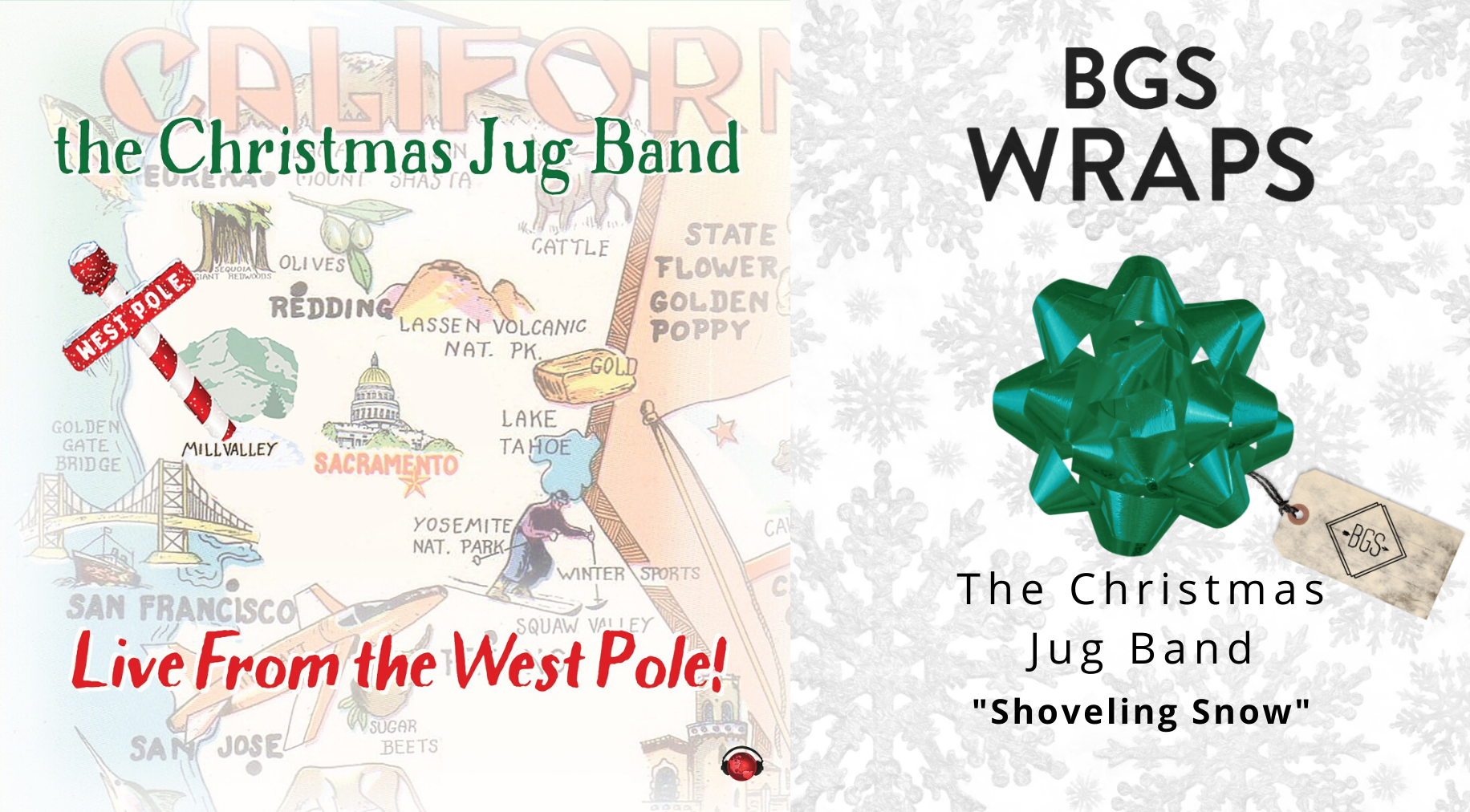
Artist: The Christmas Jug Band
Song: “Shoveling Snow”
Album: Live from the West Pole!

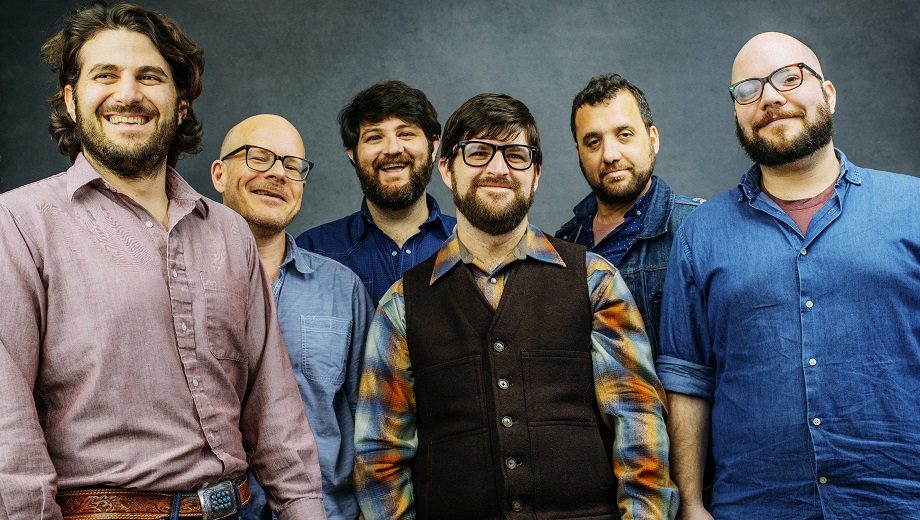
In Their Words: “Being a member of the Christmas Jug Band for over 30 years has afforded me the opportunity to write A LOT of Christmas tunes, most of which have the name ‘Santa’ in the title. In 2016 I was determined my new Christmas Jug Band tune would NOT have ‘Santa’ in the title. So that set me thinking about other things that are going on during December and the holiday season.

“After considering decorating Christmas trees, shopping for presents, cooking the Christmas dinner, etc., I landed on shoveling snow. I liked the idea, but I knew writing a song about just shoveling snow wouldn’t be all that interesting. But what if I made ‘Shoveling Snow’ a euphemism for shoveling something else? You get the picture. That opened up all sorts of possibilities for humorous lines to fill in the storyline.

“Once I had the concept, the song pretty much wrote itself. When I sat down at the piano to set it to music, it immediately felt right as a New Orleans/ Professor Longhair groove. It’s become one my favorite CJB tunes to play live and I’m not just shoveling snow!” — Paul Rogers, The Christmas Jug Band

MIXTAPE: The Revelers’ Cajun Christmas

What can be said about Christmas music? It’s so ingrained in us as Americans, most of all during these two months of the year when music of the Great American Songbook and golden eras of popular music once again reign over the flavors of the week. In Southwest Louisiana, which is predominantly Catholic, Christmas is as intertwined with its history as Mardi Gras.

Many of these songs you’ll recognize. I think it’s revealing to hear songs we know well reinterpreted by Cajuns — it helps to make the idiosyncrasies of the genre stand out. Others are pretty generic-sounding Cajun songs (waltzes and two steps) that are tangentially about Christmas or take place with Christmas as a backdrop. You might not be able to translate “Christmas on the Bayou” but you probably have a pretty good idea what Vin Bruce is singing about. And “Christmas Blues” has many common Cajun tropes — the protagonist is imprisoned by a love of the past, he’s crying, the children are singing, and it’s Christmas Day… Cheery!

Some highlights:

We kick things off with Belton Richard, “the Cajun Elvis.” This cover might have helped to earn him that title. So, so good we had to include a few, spanning both Cajun and Swamp Pop (“Please Come Home for Christmas” is a great example of the latter).

Many of these tracks come from an album from the late ’80s called Merry Cajun Christmas. Check out that full record if you want a deep dive into Cajun culture and some of its enduring stereotypes (complete with spoken word Christmas poems!), but we selected some of the less cheesy numbers for this playlist.

We included a few classics that aren’t strictly Cajun, but fall under “Revelers influences” — Roy Orbison, Buck Owens. After all, Cajun and country have always borrowed from one another. And a shout out to honorary Cajun Dirk Powell (Balfa Toujours) and Bahamian guitarist Joseph Spence. — Chris Miller of The Revelers


Photo Credit: Sandlin Gaither

Joe Henry Surrenders to the Song

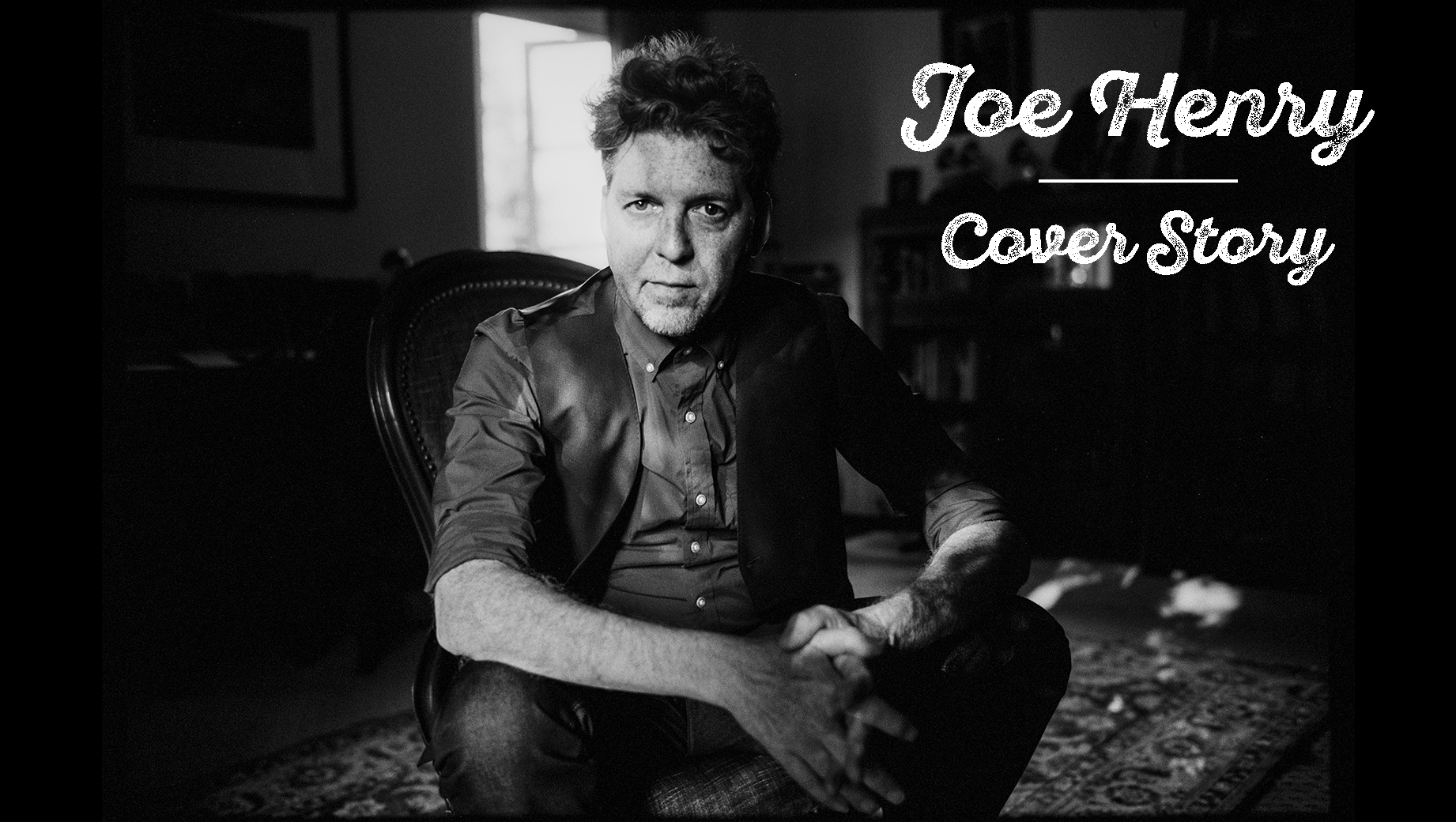
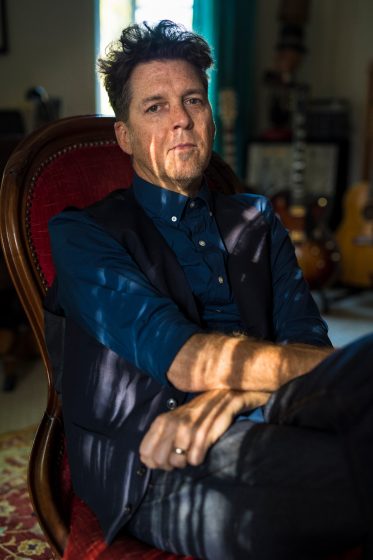
Joe Henry is sitting and chatting in the living room of his vintage, Spanish-style home in Pasadena, California. The subject of the note that starts off his new album, The Gospel According to Water, comes up. He looks over his left shoulder and points to the corner.

“It’s that guitar right there,” he says. “It’s an all-mahogany Martin from 1922. It was the first guitar they made that was created for steel strings.”

Seeing this small, plain instrument, it seems impossible that it was from this that he conjured the note in question, a sound deep yet brittle, intimately resonant. It’s at once ancient and fully present in the now. And it’s a sound that serves as something of a motif throughout the marvelously moving, affectingly poetic cycle of songs. It was a sound from a specific source that was echoing in his head when he sat in the Los Angeles studio of his longtime friend, recording engineer Husky Huskold, to set a new batch of songs on tape.

“I played him one song from Lightnin’ Hopkins,” he says. The song was “Mama and Papa Hopkins,” a 1959 recording from the point of view of young Lightnin’ getting his feuding parents to see the good they share.

“It was just vocal and acoustic guitar. And Lightnin’ is mostly singing to a single string that he’s playing. And yet the way it’s recorded, it’s so heavy. There’s such a sense of ominous space. And I said, ‘Look. I know I’m not him. I’m never going to be Lightnin’ Hopkins. But listen to what’s going on here. There’s something that’s making this so visceral in a way that I want to hear. Even if this is just demos, I want to hear a sense of drama.’”

You’d think Henry, who just turned 59 last week, would have had more than enough drama. A week before Thanksgiving 2018, he’d been diagnosed with prostate cancer, which had metastasized to his skeletal system. (He is in remission now and feeling hearty.) When he went in to record, it was a week before Father’s Day. All but two of the songs had been written in an unexpected rush of expression that started at Valentine’s Day. He specifically references those poignant holidays when giving the timeline.

As he plucked that first note for “Famine Walk” (one of two songs on the album written during a two-month writing residency at a small art college on the west coast of Ireland, before the cancer diagnosis), he had no idea it would be how he opened the album. He had no idea he was making an album.

He just wanted to get these songs down while they seemed fresh, and that’s all he thought he was doing in the course of two quick days of recording with his son, as well as reeds player Levon Henry, pianist Patrick Warren and guitarist John Smith sitting in on some of the songs, and with David Piltch playing bass on “Book of Common Prayer.” At the end of the second day, he went home to listen to the recordings, sitting in his office with his wife Melanie Ciccone, Levon, and a friend. Only then did he really hear what he had.

“We just listened to the whole thing,” he says. “And it was so obvious to me and to everybody in the room listening back that it felt fully realized. I mean, it’s raw. It’s really spare. But emotionally speaking, I heard it and thought, ‘I don’t know if I’ll get closer to the intention of these songs.”

The only thing added later was the background vocals of Allison Russell and JT Nero, AKA Birds of Chicago, on the songs “In Time for Tomorrow” and “The Fact of Love.” He would have added his longtime drummer Jay Bellerose to some of this, but when he sent the tracks to him, Bellerose responded with a simple voicemail: “Um, not on your life.” His drummer’s instincts of when not to play, though extreme here, were exactly right.

In its sense of space, The Gospel According to Water is a perfect portrayal of the experiences that brought it about, mystifying and mystical in as personal a way as can be. At times it’s as elliptical and elastic as the engagingly playful folk-jazz that’s been a signature of his last several albums. But here that portrayal is stripped down to its essence.

At the center is the natural fragility of Henry’s voice as he lingers over key words and phrases in ways that can be enchanting and startling, sometimes both at once. While it’s instantly recognizable to anyone familiar with his work, it stands apart not only from his previous 14 solo albums, but also from his many production credits: for New Orleans titan Allen Toussaint’s final works (including the 2006 The River in Reverse, a collaboration with Elvis Costello following the city’s devastating flood), Bonnie Raitt, Rosanne Cash, Bettye LaVette, the Milk Carton Kids, Joan Baez’s most recent album Whistle Down the Wind, and Rhiannon Giddens’ and Francesco Turrisi’s stunning there is no Other.

But he winces at this being considered his “cancer album.” He even considered trying to avoid the topic in interviews and promotion of the release. But ultimately he opted for openness.

“Whether it’s fair or not, it’s going to happen,” he says. “I lost a little bit of sleep over that, wondering how I can mitigate that. And then I just realized that I can’t now, more than I ever could, control how people respond to the music — if they respond at all — and rein that in… People are going to hear it like that, and there’s not much I can do about it. It’s an aspect of how this record happened and what it is.”

Indeed, as the music made its way out to the world, friends and fans alike started sending him notes, almost all mentioning his health issues. He came to accept that for the good intentions, too.

“I just believe in the songs enough,” he says. “They’re already moving out into the world without me. They’re going to have to make their own way. They’re going to have to straighten their own teeth, find their own job. I can only do so much and when I go out and perform these songs, I may or may not at times offer any framing context about how the songs occurred or when they occurred.”

He references a comment made many years ago by his mentor T Bone Burnett, who produced Henry’s 1990 album Shuffletown, when discussing his Christian faith in regards to his art. Burnett said that while some sing about the light, he sings about what he sees illuminated by the light. Henry addressed that, in his own way, when he first played a few of the songs in public, in a concert at the Los Angeles’s Largo theater.

“Part of my preamble was to say, ‘Look, I know I’m holding this shoehorn that would help you into the tight fit of a big batch of new songs. And if I have one reluctance to hand this shoehorn over it’s because I don’t want you to think, from what I’m about to say, that where a song comes from is what a song is,’” he says. “A song is not where it comes from. Just because my particular health crisis has invited me to receive these songs in a particular sort of way, that is not what the songs are.”

He thinks back to being with Toussaint, doing interviews right after New Orleans was flooded in 2005, his home among the many destroyed. In interview after interview, Henry saw Toussaint refuse to deliver the “heartbreak” stories journalists craved. Finally, when pushed by a CNN interviewer, he made his point.

“He said, ‘You have to understand something: More than a drowning, this was a baptism,’” Henry recalls. “And talk about something that silenced the room, myself included. I’ve thought about this so many times since this occurrence for me, the fact that Allen wasn’t in denial about what had just happened. He just had the ability to see, that his vision didn’t stop with this trauma. He was seeing beyond.”


Some of that is elusive on the album, found in shadows cast by the metaphorical light. The song “Orson Welles” is a good example, with its arresting chorus: “You provide the terms of my surrender, I’ll provide the war.” He’s still mystified how that one came about, the words written as he and Melanie flew from Burbank to San Francisco.

“That’s just something I found falling off my hand,” he says. “I open my notebook and I literally watched my hand write ‘Orson Welles’ at the top of the page. And I didn’t know what Orson had to do with anything. It’s just one of those moments where it felt spring-loaded. I didn’t believe I was writing about Orson, but I believe that somehow his specter was kind of directing, gesturing me on to something, somewhere I needed to go in that moment. And I just followed, because, you know, who wouldn’t?”

He found himself thinking about a part of Citizen Kane in which Welles’ title character wants his newspaper to have headlines from a conflict in South America that is petering out, so he cables his correspondent there, “You provide the prose poems, I’ll provide the war.” (In real life, William Randolph Hearst instructed his staff, “You furnish the pictures, I’ll provide the war.”)

For Henry it took a different turn, though, with the idea of surrender — certainly tied to his health situation, and the ultimate lack of power over it, but extending far beyond that.

“I feel like I’ve written about surrender a good bit,” he says. “And I don’t mean surrender in terms of resignation, I kind of mean surrender in terms of radical acceptance, which is empowering, which is motivating, as opposed to the idea of collapse.”

Two titles stand out, though, for the clear view of the basics of life, the perspective brought by such things as loss, age, kids growing up and facing mortality. “The Fact of Love” is pretty much self-explanatory, but “Salt and Sugar” really captures it. “Everything is salt and sugar now,” he sings, boiling it down to things that make life possible and meaningful — though too much of either can kill you.

He explains that he and Melanie have been doing some “decluttering” in recent years, having left the large house in which they raised their two kids, and moving twice to subsequently smaller places. But the song definitely shows what he’s seen from the light brought by his health.

“It’s paring things down to salt and sugar,” he says. “Everything. What matters? How do you make a record? How do you express what you want to say? Who do you spend your time with? What do you spend your days doing? All that.”

He recounts many of the changes in his life in recent years, the moves, the attachments and the letting go of attachments. Finally, he sums it up in a way that gets to the heart of what he has done with The Gospel According to Water, and it’s just as on-point as that note he plucked to start the album.

“I mean, just, you know, occupy life.”


Photo Credit: Jacob Blickenstaff
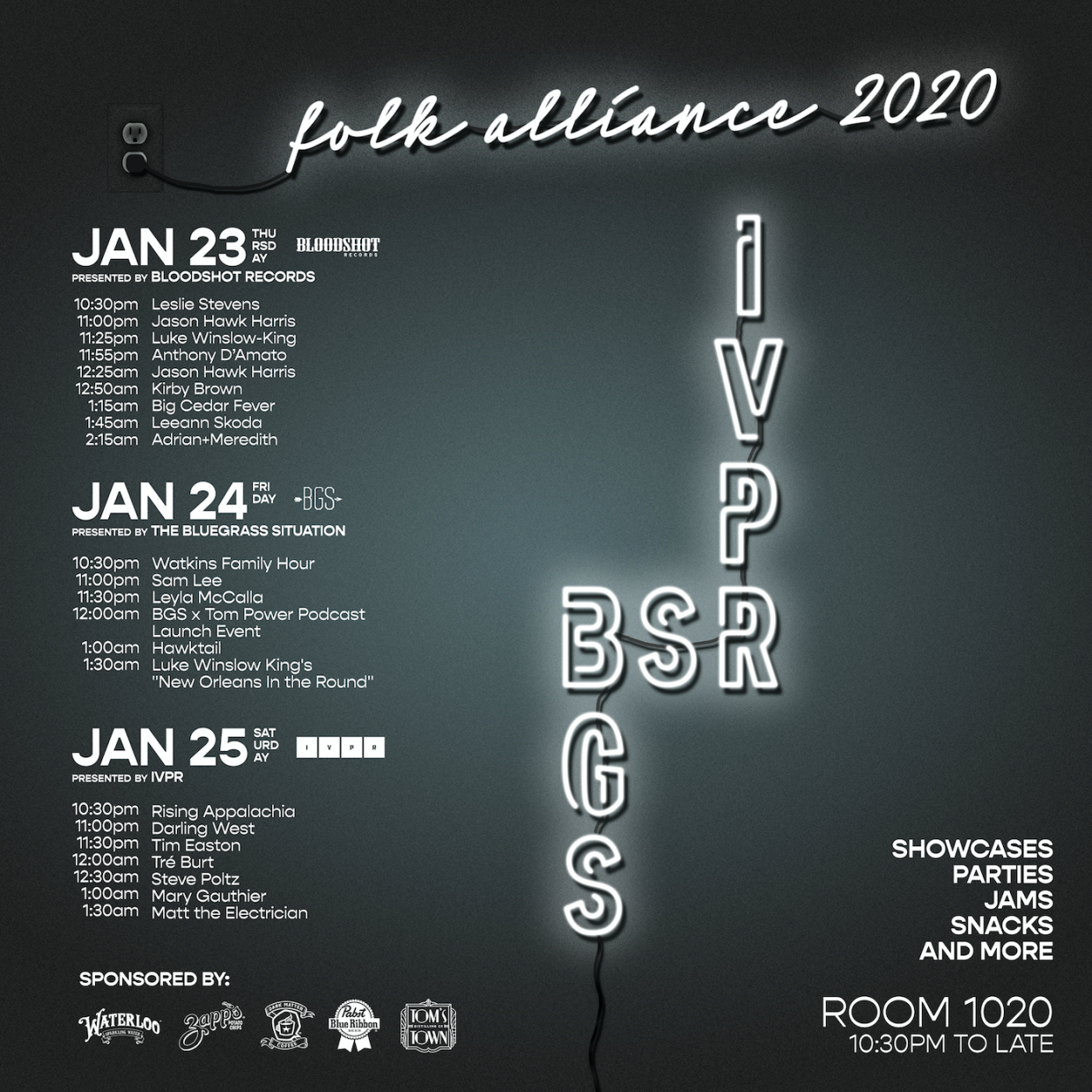
ANNOUNCING: BGS, IVPR, Bloodshot Records Partner for Folk Alliance 2020

BGS is proud to announce we will once again be partnering with our friends at Bloodshot Records and IVPR at Folk Alliance International 2020 in New Orleans, Louisiana. In past years, folk, bluegrass, and Americana artists of all varieties have performed in rooms sponsored and co-sponsored by the three staples of the American roots music industry. Over time these lineups have perfectly balanced the truly unique atmosphere of discovery at FAI with showcasing the best of the best in folk music. As Folk Alliance moves to New Orleans for a singular year, BGS, Bloodshot, and IVPR are excited to fully incorporate this integral American music city, its sounds, its songs, and its local scene into their programming as well.

The full schedule for the Bloodshot + BGS + IVPR room at Folk Alliance International 2020 is available now! Make plans to join us each night starting at 1o:30pm, Thursday through Saturday, at room 1020 at the Sheraton New Orleans.

Find more info about attending Folk Alliance here.

LISTEN: Esther Rose, “Lower 9 Valentine”

Artist: Esther Rose
Hometown: New Orleans, Louisiana
Song: “Lower 9 Valentine”
Album: You Made It This Far
Release Date: August 23, 2019
Label: Father/Daughter

In Their Words: “This is a sweet song about a love I had in the Lower 9th Ward. I thought of the title one day while I was driving and thought, ‘Has anybody written this song yet?’ so I pulled over immediately and started writing it out. I sent it to my boyfriend at the time and he said, ‘But you hate Valentine’s Day,’ which is actually true. So I added the line, ‘February 14th don’t mean a thing to me.'” — Esther Rose


Photo credit: Rush Jagoe

LISTEN: Luke Winslow-King, “Going to New Orleans”

Artist: Luke Winslow-King
Hometown: Cadillac, Michigan
Song: “Going to New Orleans” (single)
Release Date: April 26, 2019
Label: Bloodshot Records

In Their Words: “‘Going to New Orleans’ is this song I learned street busking in New Orleans. The oldest version that I can find is that of Babe Stovall. Babe was a notorious street performer through the ’60s and ’70s. His original version was entitled ‘G’wine to New Orleans.’ I also mixed in a few lyrics from Danny Barker’s Mardi Gras Indian classic ‘Chocko Mee Feendo Hey’ and wrote a few of my own verses. Roberto Luti (Playing for Change) is on electric guitar, and Chris Davis (King James and the Special Men) are featured prominently on the track.” — Luke Winslow-King


Photo credit: Victor Alonso

BGS 5+5: Carsie Blanton

Artist: Carsie Blanton
Hometown: Luray, Virginia, but currently New Orleans
Latest album: Buck Up
Personal nicknames: My stage name ages 14-16 was Carsie Bean Blue. And “Carsie” is technically a nickname; my legal name is “Carson” (my namesake is Southern Gothic novelist Carson McCullers who was, by the way, a badass).

What other art forms — literature, film, dance, painting, etc — inform your music?

I find poetry and novels very inspiring as a songwriter. My new album has themes of desire and futility, and while I was writing it I had an excerpt from a poem by James Richardson hanging above my writing desk (which I also included in the album liner notes):

And what was King Kong ever going to do
with Fay Wray, or Jessica Lange,
but climb, climb, climb, and get shot down?
No wonder Gulliver’s amiably chatting
with that six-inch woman in his palm.
Desire’s huge, there’s really nowhere to put it
in our small world that it will stay put

What rituals do you have, either in the studio or before a show?

I write most of my songs in my writing studio, The Watermelon, which is a freestanding 8′ x 8′ shed in my backyard–it’s all mine and nobody else has a key! It’s green on the outside and watermelon-pink on the inside, and it’s filled with every object I own that inspires me or makes me feel lucky: terracotta pigs from Chile; a badger skull; milagros and alebrijes from Mexico; prints by my favorite artists; books by my favorite writers (plus a collection of rhyming dictionaries and thesauri); orchids and succulents; prayer candles from my local voodoo shop; and both of my guitars (a 1907 Washburn parlor and a cherry red 1972 Gibson ES-320). There’s also a sea-green writing desk with drawers full of markers, stamps, and newspaper clippings. When I’m ready to write, I light all the candles and water all the plants and make myself a cup of tea.

If you had to write a mission statement for your career, what would it be?

Pleasure and playfulness are serious business. I believe it’s possible–nay, necessary–to thwart fascism and make capitalism obsolete while having maximum possible fun, writing great hooks and taking breaks for sex and cookies.

Since food and music go so well together, what is your dream pairing of a meal and a musician?

Rare steak and old Scotch with Ray Charles.

What was the first moment that you knew you wanted to be a musician?

The one that comes to mind is seeing Gillian Welch and David Rawlings at Merlefest when I was ten or eleven. I was already a huge fan, and I had brought an autograph book and really wanted Gillian’s autograph, so I knocked on the stage door after her set. A bouncer answered, and for some reason, he let me in! I remember seeing all the people hanging around backstage–musicians and crew–and thinking, THIS! This is where I belong.


Photo credit: Jason Albus

Small World: Leyla McCalla Makes a Statement with ‘The Capitalist Blues’

Many seeing Leyla McCalla’s performance at the New Orleans Jazz & Heritage Festival last May had a bit of a surprise midway through the set. It wasn’t just that the musician and singer, generally associated with cello and banjo, strapped on an electric guitar. And it wasn’t just that the guitar was poised precariously over her very pregnant belly (she would give birth to twins three weeks later).

It was the music she and her band launched into that provided the shock, intentionally: A powerful new song, dense in structure, forceful in rhythm, marked by her despairing vocals and distorted guitars.

“You were like, ‘Wow, this is different!’” she says now.

The song, “Aleppo,” captures deep emotions she had while watching in-the-moment accounts of the horror experienced by those caught in the 2016 siege of the Syrian city. It was a dramatic departure from the largely acoustic Haitian/Louisianan/Delta/etc. inspirations of the rest of her set and of the two solo albums she’d released to that point, as well as from the African-American string band renewals she’s done in the Carolina Chocolate Drops.

But it’s also a sonic center, if an extreme one, of her new album, The Capitalist Blues. Working with producer Jimmy Horn, a.k.a. the formidable frontman of New Orleans’ rowdy ’n’ raw R&B stompers King James & the Special Men, she broke into new territories while staying firmly grounded in her musical and personal histories. The whole of her is here: being raised in New Jersey by her activist Haitian-born parents, spending two teen years living in Ghana, staying with her grandmother in Haiti during childhood summers, and now living in New Orleans as a concerned citizen and mother.

BGS: “Aleppo” really is quite different from anything you’ve done. How did that come about?

McCalla: I was watching Facebook Live testimonials of the people in Aleppo during the siege of 2016. People basically saying, “I exist. I’m here. This is what’s happening in my city.” It was really surreal… I had the line come into my head: “Bombs are falling in the name of peace.” That opened the doors to exploring the idea, not just the idea, but exploring how violence is seen as a way to peace in our society, how backwards that is, how messed up. I wanted it to sound angry and frustrated and devastating. I think we got it!

It’s not a surprise that you’d take on social issues. You’ve done it before, of course. And the title of the album and the first song is “The Capitalist Blues,” after all.

A lot of my songs come from a very personal place. And then I start to realize that my personal experience is related to many others’ experiences. I started writing that song several years ago when I was really just starting my [solo] career. It was new to me having an agent and a manager and discussing publishing deals and the business of music. It was a conflicted feeling of making music and being an artist. And I saw how many people can’t even find jobs, and the housing market is out of control and gentrification is everywhere. I sat on the words a long time and one day just came up with “I’ve got the capitalist blues,” and very quickly realized that it would be the title of the record.

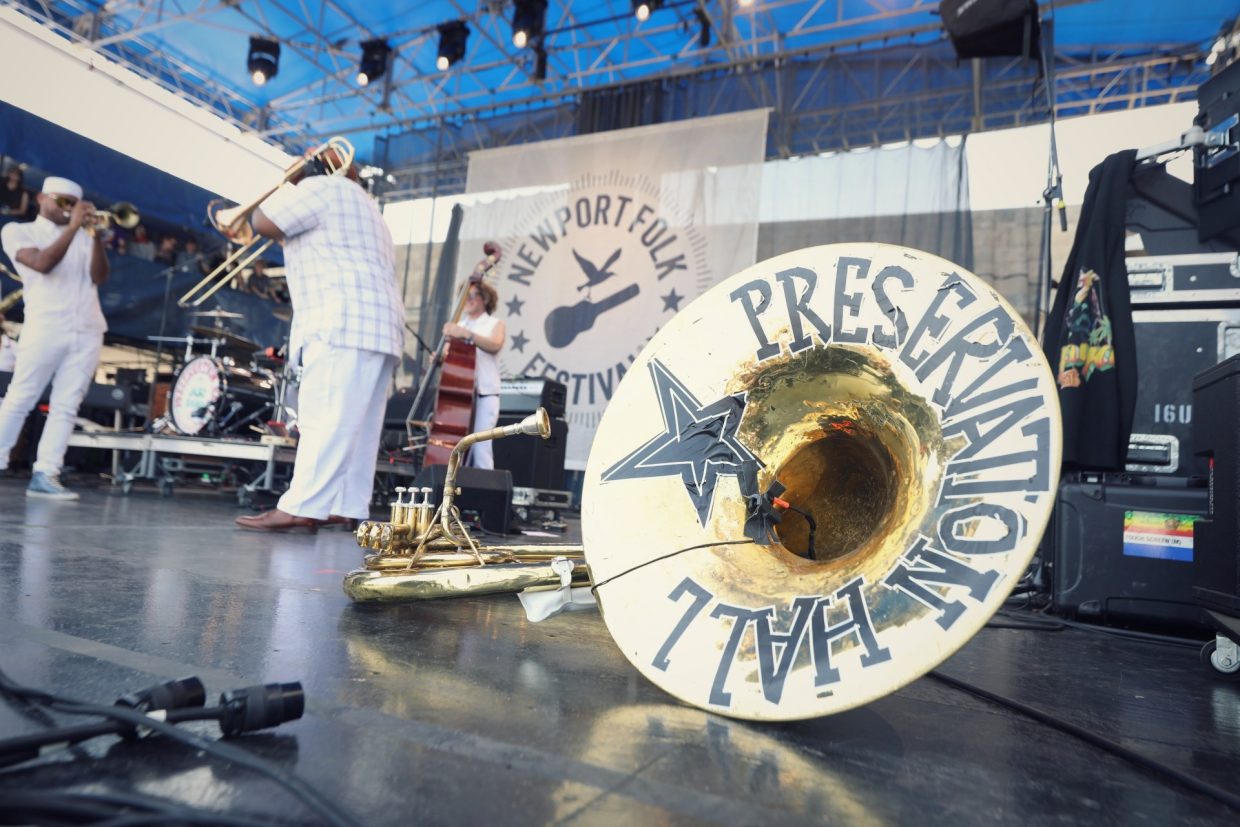
You made it at Preservation Hall in the French Quarter in a traditional New Orleans jazz mode.

I’d always imagined it as a brass band, but didn’t know how I’d pull that off. It was such a dreamy experience to record it at Preservation Hall with basically the original Palmetto Bug Stompers band featuring [drummer] Shannon Powell and [banjo player] Carl LeBlanc.

The move into new sounds seems a natural progression.

[On my earlier records] I was inspired by field recordings, before there were amplifiers and electric guitars. But I was listening to Coupé Cloué, one of the forefathers of konpa music, Haitian dance music, what bachata is to the Dominican Republic. The origins of konpa are in Haitian troubadour music, music I was inspired by. A lot of these songs talk about social and political issues, metaphorically in coded language.

I was listening to [Cloué] and Trio Select records, same concept musically but with electric guitars. Magical music. I thought about the late ‘60s and early ‘70s, everything being plugged in, Bob Dylan at Newport. My band has been cracking me up — “We’re like the Band for you!” Yeah, and it’s 2019 and people might still be upset about this! But it’s a natural extension of what I did before. I’ve never been a purist.

“Heavy as Lead” is as personal as it gets.

I wrote that song in one day. All the words came down and, Boom! it was a song. My daughter had elevated lead levels in her blood and I was devastated with that. I don’t like to think of our home as unsafe, but I realized all my friends with young children have that experience. This is a systemic issue.

You have three cover songs on this. The calypso “Money is King,” originally by Neville Marcano, and the Haitian “Lavi Vye Neg,” by Gesner Henry, are familiar territory for you. But “Penha” is Brazilian, with you translating the Portuguese lyrics into Kreyol and English, something a bit different.

That’s a Luiz Gonzaga tune. I’ve been a big fan of Brazilian music since I was a teenager. My dad introduced me to the [1993] album Tropicalia 2, by Caetano Veloso and Gilberto Gil. Then I got into Caetano and saw him perform when I was 15, blew my mind, how he mixed indigenous Brazilian music with rock ’n’ roll. I hear the same chord changes and inflections in Kreyol music, not just in Haitian music but Louisiana and Cape Verde and all over Latin America, Trinidad.

The original title of this song is “Baião da Penha” — Baião is rhythm and Penha is the statue of the Virgin Mary. I loved the sentiment of it, believing in peace. I found the lyrics in Portuguese online and I went on Google Translate to translate the lines. I liked the melody but had no idea what it was really about. Then I thought, “Oh, this would be so cool if I could also sing this in Kreyol!” And that’s what I did.

You’re fluent in Kreyol.

I grew up with a lot of people speaking Kreyol around me, but not necessarily to me. Spent the summer with my maternal grandmother in Haiti in ’95, and after that was fluent, but after that I lost it. My comprehension has gotten much better since I’ve been exploring Haitian music, and spending more time in Haiti. I was 10 with my grandmother there. She was very determined to make me love Haiti and help me develop a Haitian-American identity. I think she thought me and my sister were spoiled brats and needed to come experience what other kids were like. That had a huge influence on my life path.

I can’t really talk about why I’m influenced by all these different kinds of music without addressing the oppression of Haitians and black people in the world and why that exists. I live in this. I deal with racial bias on a daily basis. It’s endlessly fascinating, not something that will be solved. I try to puncture the glass ceiling of preconceived notions of what it means to be Haitian, what it means to be black, what it means to be Kreyol, what it means to live in Louisiana. All that becomes part of my music.

You close the album in Haitian parade mode with the band Lakou Mizik on “Settle Down.” How did that happen?

I got really lucky. They played at JazzFest this past year and in 2017. When I recorded with them it was the spring of 2017. I was listening to NPR and they were talking about people protesting at the inauguration who were arrested. They want us all to settle down and fall into place and be complicit to whatever political motives they have. I was thinking about what it means to protest, what it is to march in the streets, how powerful that experience can be. They were putting anti-protest legislation on the table. They just want us all to settle down. So I knew I wanted the song to be part Kreyol and heard it as a rara tune. They [Lakou Mizik] have those instruments and play that style, that’s how they started as a band. It just magically worked out. Hard not to feel it was meant to be, it was written in the stars.


Photo credit: Sarrah Danzinger

BGS 5+5: Upstate

Artist: Upstate
Hometown: Hudson Valley, New York
Latest Album: Healing
Personal nicknames (or rejected band names): Honeyoye, Loudmouth, June Bug Flew, Upstate Rubdown

Which artist has influenced you the most … and how?

We all listen to a broad range of music, but the biggest point of overlap for us has always been the Wood Brothers. We really struggle to make music that’s both emotionally and intellectually compelling, and I think the Wood Brothers really demonstrate how to achieve that balance. All of their songs feel earnest and groove hard, but they’re also very musically sophisticated. That sort of writing and arranging is a big influence for us. — Harry D’Agostino

What rituals do you have, either in the studio or before a show?

Our whole band huddles and takes a collective breath before every live performance. It’s a nice way to bring ourselves into the present moment before we play, since load-ins and soundcheck and life in general can be a bit disorienting. It gets us centered and connected to one another at least a little so we don’t phone in on our interactions on stage. — HD

If you had to write a mission statement for your career, what would it be?

I think everyone has a desire to do useful and meaningful work in their lives, and I spend a lot of time thinking about all the ways that music can fit that description. I love making music that people can dance to, and writing songs that people can connect with and that can help reflect the world around them. A journalist for Al-Jazeera once asked the Iraqi cellist Karim Wasfi if music was really just an indulgence given the shortage of basic necessities. He replied that “It is needed as much as food, as much as oxygen, as much as water because it refines and cultivates. Because it inspires people.” I think that’s a good enough reason to dedicate your energy and time to something. — HD

Since food and music go so well together, what is your dream pairing of a meal and a musician?

I think the big thing that food and music have in common I the way that different cultural styles and recipes collide and evolve together. I think the richest music and food comes from places where that process has happened the most. I’d probably like to pair a meal like gumbo or paella that mixes lots of flavors with music from New Orleans or Cuba that does the same. — HD

How often do you hide behind a character in a song or use “you” when it’s actually “me”?

Both of our albums have one song written in the second person that takes the form of advice, like the reassuring voice inside your head. In both those cases I really wrote the song as a way to talk to myself, but also with the expectation that the doubts or challenges I was confronting weren’t unique and that others would appreciate it. That so many people have listened to “Old Advice” sort of validates that sentiment. — HD

Editor’s Note: Look for Upstate at the upcoming Winter WonderGrass Festival in Stratton, Vermont, on Dec. 14-16.


Photo credit: Jennifer Elrod

A Minute in New Orleans with Kelcy Mae of Ever More Nest

Welcome to “A Minute In …” — a BGS feature that turns musicians into hometown reporters. In our latest column, Kelcy Mae of Ever More Nest takes us through New Orleans, Louisiana.

Growing up as a curious, imaginative kid in Bible Belt North Louisiana, I knew when I could, I’d seek a land with a little more freeness, more color, and more fun. As soon as I graduated high school, I headed south to New Orleans, which I’ve now called home for half my life. New Orleans’ tricentennial celebration is underway, and with three hundred years of history, every path in the city is a beaten one. But today, I’ll try to take you off the beaten path with a few well known spots as well. – Kelcy Mae

New Orleans City Park

Home to the New Orleans Museum of Art (NOMA), City Park consists of 1,300 acres of land that make it easy to forget you’re in the middle of a city. With 800-year-old, sprawling oaks and land both manicured and wild (an overgrown pre-Katrina golf course), the park offers an outdoor experience for everyone. Attractions like NOMA and the Sculpture and Botanical Gardens, Carousel Gardens Amusement Park, bike and boat rentals, mini-golf and sports fields, playgrounds and picnic areas, and running/walking paths allow for hours of entertainment or escape.

“Big Lake” in City Park is a portion of my jog route, made more fun by the ducks, geese, turtles, and occasional pelicans that grace its waters. Big Lake is also home to the famous chime tree, a towering oak filled with giant, mesmerizing wind chimes.


Lola’s

New Orleans has so much good food, you could write about restaurants for days. I’m skipping the usual fare here with a nod to my favorite date-night locale. Lola’s, tucked along Esplanade Avenue in Mid-City is a quaint, unpretentious spot that always lends itself to a delicious meal, which in turn lends itself to great conversation with a date or friends. The strong smell of garlic and butter greets you along Esplanade, thanks to appetizers like the popular garlic and mushrooms. The complimentary warm bread and garlic aioli are also part of the magic. Deservedly famous for its paella, the restaurant offers meat, seafood, and veggie versions of the flavorful, traditional Spanish rice dish in addition to a dozen or so entrees.


Siberia Lounge

What initially began as a sort of hybrid metal bar is now home to a tamer and more versatile music club, bar and restaurant. Along the ever-evolving Saint Claude Corridor, Siberia offers a dim bar decorated with ornate mirrors, large paintings, and some wild, secondhand taxidermy including a ‘40s-era bobcat. The musical lineups run the gamut, but Siberia is notably one of New Orleans’ few bars that play host to local and touring Americana, alt-country, bluegrass, and folk artists. Thursday is always Eastern Bloc Party night, which features local Balkan and Klezmer music. Part of what makes Siberia so special is its kitchen, known for “Slavic Soul food” with highlights like pierogi, stroganoff, golubtsy, and popular vegetarian options like the famous beet reuben.


Chickie Wah Wah

While New Orleans is full of bars that host live music and even a number of large capacity clubs and theaters, one thing it’s short on is listening rooms. Chickie Wah Wah doesn’t operate like your traditional bar, full of TVs and patrons that may or may not tune in to what’s happening on stage. People go to Chickie Wah Wah to hear music and the room delivers with quality sound and vibe. While the venue hosts plenty of traditional, long-time New Orleans performers, you’ll also find quality touring acts. The venue largely plays host to a variety of Louisiana’s comfort-zone roots music genres such as jazz, blues, rock, and honky tonk.


Webb’s Bywater Music

Need something repaired? Need a pack of strings or pair of sticks? Webb’s Bywater Music is an unassuming neighborhood music shop with new and used instruments in addition to accessories. Well regarded, Paul Webb is considered the go-to guy by countless area musicians for their instrument and electronics repairs. The shop has the charming, cluttered vibe of an always-busy mom and pop store, one that lives on thanks to the loyal musicians who prefer quality service from a knowledgeable pro over cheap, corporate rigmarole.

Joey K’s

You can’t talk about New Orleans without naming at least one restaurant known for classic New Orleans fare, be it Creole, Cajun, soul or southern. I have to point out Joey K’s for what I consider a notable feat in a town famous for fried seafood: the best fry batter around. Of course the gumbo’s great. And you’ll always see a number of New Orleans’ finest hitting the stewed chicken, the white beans with a fried pork chop, or any number of daily specials. But my favorite is hands-down the fried catfish. The onion rings are heavenly—the best ever. You can’t go wrong with the fried chicken or shrimp, either.


Port Orleans Brewing

Port Orleans Brewing Company is one of many local craft breweries that have opened across the city in the last decade. Located on Tchoupitoulas Street, near the actual Port of New Orleans, Port Orleans makes my list for its bright, airy tasting room and easy-to-drink brews. Massive windows behind the bar showcase the impressive 30-barrel brewing area. On cool days, the tap room opens up its front wall, bringing the outdoors in. My favorite flagship beers include the Riverfront Lager and the Slackwater Brown Ale. Of course they’ve got great pale ales, India pale ales, and stouts. They even offer Mexican-style lagers, the Dorada and Negra Dorada. Variety is the spice of life, and variety abounds on tap at the brewery.


The Bombay Club

New Orleans is known for being a boozy city, and one of the benefits to living here is easy access to a quality cocktail. The Bombay Club is tucked away in the French Quarter, hidden under the Prince Conti Hotel. Entering the bar and restaurant requires a short stroll through the hotel’s parking garage, so it’s fitting that the dark, English-style pub feels a bit underground. Martinis are the focus at the Bombay Club, but you can expect an expertly crafted traditional New Orleans drink like a Pimm’s Cup or Sazerac as well. With an affordable snack-focused happy hour and a solid dinner menu, it’s a nice hideaway in what can be an otherwise very pricey and noisy French Quarter. Solo pianists and jazz duos appear nightly.


Mississippi River

Whether you’re chilling with locals at “The Fly” (Uptown) and Crescent Park (Bywater) or you’re strolling alongside tourists at the downtown riverfront, you can’t help but marvel at the waterway that breathed life into this region three hundred years ago. The Mississippi River is a behemoth of a river. Sitting beside its rushing waters will strike fear and wonder into anyone, a humbling experience to say the least. Watching the river barges piloting turns piled high with shipping containers will make you question what’s humanly possible in this world. Locals and visitors can enjoy the view from the various parks or by purchasing a ride on one of the paddle wheelers that offer a tour downriver. Touching ten states, the Mississippi River’s watershed drains all or parts of 31 states. That’s a lot water moving through New Orleans and into the Gulf of Mexico.


Lake Pontchartrain

Across town from the river views are views of Lake Ponchartrain. Made famous in a variety of folk songs, Lake Ponchartrain is a massive lake, forty miles wide, of brackish water that’s frighteningly home to both alligators and bull sharks. On Wednesday nights from March through November, you can watch or take part in sailboat races put on by the New Orleans Yacht Club. The lake offers a great view to accompany a dozen oysters on the half-shell at Felix’s, Blue Crab, or Landry’s. Grabbing a bite near the yacht club or sitting along the banks of the lake is great for people watching, bird watching, boat watching—you name it. Water views make everything better. But maybe it’s just the Pisces in me.


Tickfaw State Park

Just on the other side of Lake Pontchartrain, about an hour’s drive outside of New Orleans is Tickfaw State Park. Though smaller and less recently updated than some of Louisiana’s other state parks, Tickfaw offers something many of the other parks don’t: easy boat access to calm waterways full of magnificent bayou wildlife like alligators, turtles, snakes, egrets, blue herons, and butterflies. The calm, manageable canoe trail out to the oft-slow Tickfaw River gives you an opportunity to leisurely stroll by canoe or kayak through gorgeous, albeit murky, South Louisiana waterways. For hikers, the park offers a three-mile river trail in addition to over a mile’s worth of boardwalk trails, but wear your boots—the park often detains floodwaters when rains overflow the Tickfaw River banks.


Travel photos by Kelcy Wilburn, except Port Orleans Brewing by Bill Loehfelm
Photo of Kelcy Mae by Summer Dorr