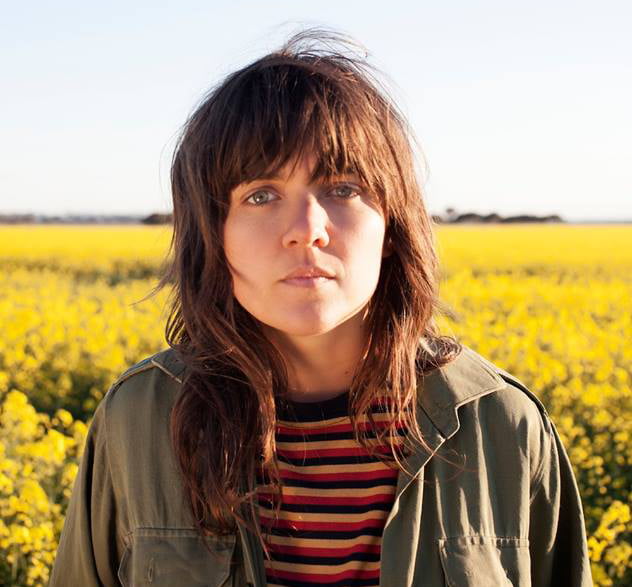
BGS 5+5: Rachel Baiman

Artist: Rachel Baiman
Hometown: Nashville, Tennessee
Latest album: Thanksgiving EP
Label: Free Dirt Records
Personal nicknames: “Baimo” (from my guitar player Cy)

What other art forms — literature, film, dance, painting, etc — inform your music?

Literature is a big influence on my writing. One of the first songs I wrote, “Weight of the World,” is based on an amazing scene from the book Cold Mountain. While I’m driving I like to listen to The New Yorker Fiction podcast; short stories are great for writing songs because they are small windows into a particular scene, situation, or world – kind of the same amount of story that you can fit into a song.

“Throw Away the Moon,” a song I wrote with Caroline Spence, is based on a crazy short story I listened to in which the people had decided that the moon was looking too old and scuffed up, so they got a crane to take it out of the sky and replaced it with a new, shinier model. Poetry is big for me, too. I’ve written two songs based on poems: Sylvia Plath’s “Mad Girl’s Love Song” and Ishmael Reed’s “When I Die I Will Go to Jazz.” Reading fiction helps me to see the world around me as a million different stories and characters, to hear phrases and thoughts as song lyrics.

What’s your favorite memory from being on stage?

I was just reminded of this great stage memory from a show I did in Washington DC many years ago with Christian Sedelmyer as 10 String Symphony. We were in the middle of a song on which Christian sang the lead vocals. Suddenly he starts hacking and coughing…misses half the verse and finally we finished the song. Christian said to the audience, “I’m so sorry, there must have been some dust on this mic or something,” and the whole audience yells out, “It was a moth!” So he had swallowed an entire moth in the middle of the song. We told that story fondly for many subsequent shows.

What rituals do you have, either in the studio or before a show?

I have a pretty strict tour regimen. When I’m touring my own trio I have to be really careful with myself to make sure that I can operate at 100 percent and play a good show every night. I’m in charge of everything–schedule, driving, booking accommodation, writing set lists, selling merch, making sure everyone is well-fed and in a good mood–so it feels a little bit like being an endurance athlete.

I don’t drink almost at all on tour. I don’t even drink coffee unless it’s one of those three-hours-of-sleep nights and I really need it. I stick to green tea. I try to get plenty of sleep, go running every other day, and eat a ton of Rx bars. Then when I get home I feel like I can relax and party a little bit. I generally party a lot more at home than I do on the road, which is probably not what most people would expect.

Since food and music go so well together, what is your dream pairing of a meal and a musician?

An awesome pairing of food and music can be found at Plaza Mariachi in Nashville. My friend Alexa Voytek introduced me to this spot; she’s always got her finger on the pulse of something really interesting and fun. Plaza Mariachi is big, open-court mall celebrating Latin American culture. There are tons of great food stands, bars, and in the middle of the mall, traditional music and dancing. Friday is Mexican cowboy night and you can bet it’s a hell of a time.

How often do you hide behind a character in a song or use “you” when it’s actually “me”?

I don’t usually hide the “me” because I think it’s all too obvious to the people for whom it would matter, but I have definitely written songs about other people and tried to hide it. I think that all songwriters do, we have to write about emotional situations, and you can’t always say to people what you actually think about their lives, nor would they want you to.

Sometimes you write about somebody as you see it, and you could be completely wrong, but it still makes for a great song. At the end of the day, the feelings are merely fuel for the creative process. The song goes through so many iterations and then it becomes a piece of art all on its own. It shouldn’t really matter who it’s about or how accurate it is to that person, but rather how it rings true as a song or statement of its own.


Photo credit: Gina Binkley

IBMA Awards 2018: Read the Full Winners List

Some of the most decorated artists in bluegrass, such as Balsam Range, Doyle Lawson & Quicksilver, and the Travelin’ McCourys, picked up even more International Bluegrass Music Awards on Thursday night (Sept. 27) in Raleigh, North Carolina. Other top winners included longtime favorites like Joe Mullins & the Radio Ramblers, Special Consensus, and Becky Buller.

Instrumentalist awards were presented to Michael Cleveland (fiddle), Sierra Hull (mandolin), Justin Moses (Dobro), Ned Luberecki (banjo), Tim Surrett (bass) and Molly Tuttle (guitar). Hot Rize, the IBMA’s first-ever Entertainer of the Year recipient in 1990, hosted the show.

The recipients of the 2018 IBMA Awards, presented by the International Bluegrass Music Association, are listed below:

ENTERTAINER OF THE YEAR:
Balsam Range

VOCAL GROUP OF THE YEAR:
Doyle Lawson & Quicksilver

INSTRUMENTAL GROUP OF THE YEAR:
The Travelin’ McCourys

SONG OF THE YEAR:
“If I’d Have Wrote That Song” – Joe Mullins & The Radio Ramblers (artist), Larry Cordle/Larry Shell/James Silvers (writers)

ALBUM OF THE YEAR:
Rivers & Roads – Special Consensus (artist), Alison Brown (producer), Compass Records (label)

GOSPEL RECORDED PERFORMANCE OF A YEAR:https://thebluegrasssituation.com/?p=10924&preview=true
“Speakin’ to That Mountain” – Becky Buller (artist), Becky Buller/Jeff Hyde (writers), Crepe Paper Heart (album), Stephen Mougin (producer), Dark Shadow Recording (label)

INSTRUMENTAL RECORDED PERFORMANCE:
“Squirrel Hunters” – Special Consensus with John Hartford, Rachel Baiman, Christian Sedelmyer, and Alison Brown (artist), Traditional arranged by Alison Brown/Special Consensus (writers), Rivers & Roads (album), Alison Brown (producer), Compass Records (label)

EMERGING ARTIST OF THE YEAR:
The Po’ Ramblin’ Boys

RECORDED EVENT OF THE YEAR:
“Swept Away” – Missy Raines with Alison Brown, Becky Buller, Sierra Hull, and Molly Tuttle (artists), single release, Alison Brown (producer), Compass Records (label)

FEMALE VOCALIST OF THE YEAR:
Brooke Aldridge

MALE VOCALIST OF THE YEAR:
Buddy Melton

BANJO PLAYER OF THE YEAR:
Ned Luberecki

BASS PLAYER OF THE YEAR:
Tim Surrett

DOBRO PLAYER OF THE YEAR:
Justin Moses

FIDDLE PLAYER OF THE YEAR:
Michael Cleveland

GUITAR PLAYER OF THE YEAR:
Molly Tuttle

MANDOLIN PLAYER OF THE YEAR:
Sierra Hull

Previously-announced inductees into the International Bluegrass Music Hall of Fame – Ricky Skaggs, Paul Williams, Tom T. and Dixie Hall – were honored at this evening’s show.

At the Special Awards Luncheon earlier in the day, the recipients of the following awards were announced:

BLUEGRASS BROADCASTER OF THE YEAR:
Steve Martin (Northern Kentucky-based host of Steve Martin’s Unreal Bluegrass)

BLUEGRASS EVENT OF THE YEAR:
Bluegrass on the Green; Frankfort, Illinois

BEST LINER NOTES FOR A RECORDED PROJECT (tie):
Craig Havighurst – The Story We Tell by Joe Mullins & The Radio Ramblers
Peter Wernick – Carter Stanley’s Eyes by Peter Rowan

BEST GRAPHIC DESIGN FOR A RECORDED PROJECT:
Lou Everhart
A Heart Never Knows by The Price Sisters

BLUEGRASS PRINT/MEDIA PERSON OF THE YEAR:
Neil Rosenberg

BLUEGRASS SONGWRITER OF THE YEAR:
Jerry Salley

SOUND ENGINEER OF THE YEAR:
Ben Surratt

LISTEN: 10 String Symphony, ‘The Ballad of Bruno’

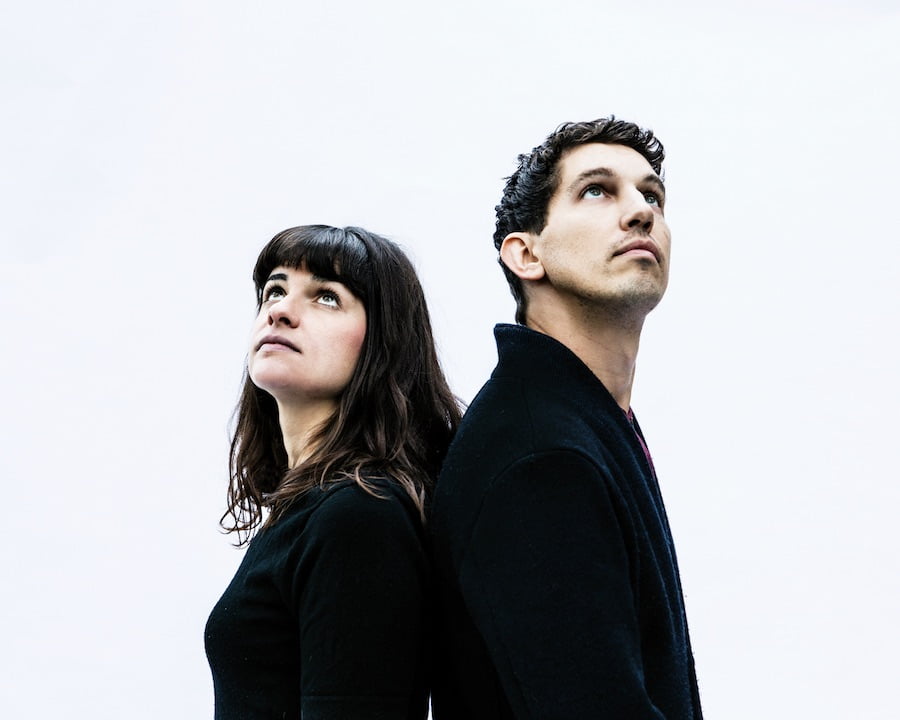
Artist: 10 String Symphony
Hometown: Nashville, Tennessee
Song: “The Ballad of Bruno”
Album: Generation Frustration
Release Date: July 13, 2018
Label: Tasty Note Records

In Their Words: “‘The Ballad of Bruno’ was inspired by a children’s cartoon history show that Rachel happened to catch accidentally while on tour. The program told the story of an ancient philosopher named Bruno who had some very advanced and controversial ideas for his time. He was one of the first to argue that the universe was infinite, and that the earth was not, in fact, the center of the universe. He was imprisoned for his blasphemous ideas and eventually burned at the stake in Rome. Several real biographical situations make their way into the song, including his seven-year imprisonment in the Tower of Nona. As an ancient hero of critical thinking and free speech, we thought Bruno deserved a song. The chorus, spoken in Bruno’s voice, proclaims ‘I gave to them infinity and yet they were so daft, they crushed me between their fingers for what they could not grasp.'” — Rachel Baiman/Christian Sedelmyer


Photo credit: Gina Binkley

Rachel Baiman: Ain’t No Shame

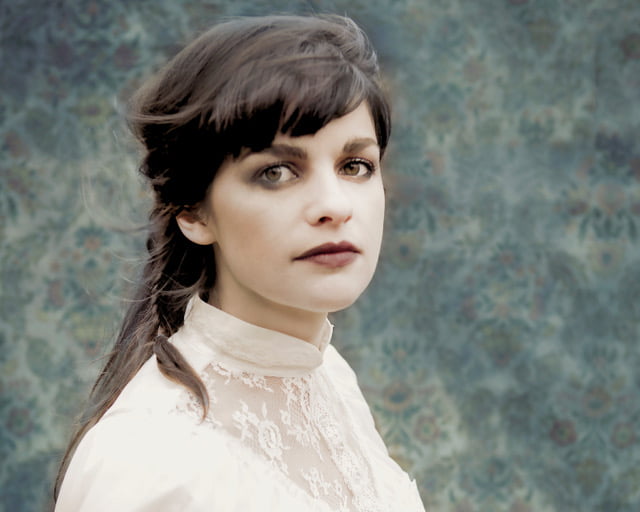
The night before Rachel Baiman and I spoke about her new record, Shame, she played her Nashville album release show at the Station Inn, dressed in a Little House on the Prairie-esque dress she also wears on the album’s cover. She sang about “old white men” looking happily down on others, about sexual abuse, and about preferring jazz over heaven as a final destination after life — all unusual themes among the typical messaging of folky bluegrass-influenced songs such as hers.

The night after we spoke, she played in Chicago, Illinois. After the show, she followed up on our conversation with this message:

“During a quiet moment, someone yelled at me, ‘We don’t want your politics, just play music!’ Here’s the thing: Music doesn’t exist in a vacuum; it’s born of human experience. My experience right now is waking up each day worried about how I will afford healthcare, worried about what is happening to our planet as the temperature rises, and worried about the hateful rhetoric against women that our president has managed to normalize. And as much as some might enjoy the luxury of not having to think about these things, I don’t have the luxury of not being affected by these political decisions. For me, politics is personal and the personal is musical, therefore, the music is political. No, you can’t just have the music and not the politics.”

With Baiman, you know you’re going to get a healthy dose of fiery fiddling, thoughtful songwriting, and music with politics, but you won’t get a single ounce of shame.

Bluegrass, Americana … these roots music genres that are so close to all of our hearts, that we all have such strong opinions about, we end up — whether intentionally or not — shaming people for how they create their own music or how they express themselves through their music. I know there are the moral, political, and social aspects of shame that you’re calling out, but how does musical shame play into your identity as a musician and the aesthetic of your record?

Being female and not being from the South, there was sort of a decision that I made with the writing and the recording of this album to not worry about anything — to not give any fucks, essentially, about other people’s expectations or opinions or concerns. I think the reason I was able to do that is because it was such an open-ended project, because I was writing and recording purely for the sake of doing it. I wanted to see what would come about. As a result, there was a feeling of liberation behind the project and that became part of the whole concept of not being ashamed of anything, of being completely comfortable with who I am and what I have to say. There were some risks I was willing to take with this project that were sort of new for me, because of the way it all came about — the way I was feeling during the creation of it and the lack of confines around what it was supposed to be. In that respect, the idea of shame, or lack thereof, really did become a bit of a rallying cry around the whole project.

I can feel that listening to the record. Through the voice of the speaker, as it changes song to song, through the production, through the songwriting, it feels like you’re somewhat lovingly flipping off all of these presuppositions that listeners have about a record like this. I know that you have these traditional roots — you’ve studied these forms of fiddling that come from deep within the “tradition.” Where did you get that gumption?

[Laughs] It’s come full circle, in some ways. I grew up with a super-political background in my family. I was maybe brought up to be a little bit rebellious, in terms of my political, social opinions. I didn’t really embrace that for a lot of my adult life. I went down this road of playing music, studying music, and trying to learn those traditions, which I think is important. You can’t just walk in and push the envelope before you know what the envelope is. So I went down that path of trying to learn these amazing musical traditions and being a student of that.

When I was writing for this album, a lot of the writing and recording process was happening during the presidential campaign, the primaries, and continued all the way up until the general election. All of a sudden, there was this kind of reckoning between the person that I was brought up to be and the person that I was in high school, when I was more of an activist and really concerned with social justice and politics. I think, because of the state of the country right now, it came into focus for me that it was a huge priority in my life, that these things are incredibly important to me, and I needed to find a way to address them. Somehow, in this project, those two aspects of my life collided, musically, maybe for the first time.

People sometimes bristle when there are conversations about “women in bluegrass” and “women in roots music,” because their immediate response is to rattle off the names of famous female musicians as proof that women aren’t being marginalized. What is your response to those people when they truly don’t believe that these genres are not equal opportunity spaces for women?

Success stories are not an indication that there has not been an extreme challenge there. If you were to ask any of those famous female musicians about their experiences, I’m sure they’d have a lot to say about it. It’s also about giving voice to women’s issues beyond women’s issues in music. There have been many amazing female songwriters who talk about these things, but that doesn’t mean it’s not still an issue to be tackled.

One of the tough things about the bluegrass scene, specifically, is that it’s very much an instrumentalist scene. That’s an area where women haven’t seen as much success and find it much harder to break in. I don’t know why that assumption exists, but it seems like there’s acceptance and embrace of the female singer. But, for instance, even though Alison Krauss is a fantastic fiddle player, her success was about her vocals. I think that’s often the way it goes. There’s nothing wrong with a successful vocal artist, but there’s still a lot of difficulty for women who are trying to be instrumentalists.

There seems to be this strange phenomenon where people think that, if a woman writes heartbreak songs, she’s undermining the validity of her voice. Did you feel an inclination to keep the political material and the heartbreak material separate? Did you worry that writing a fluffy heartbreak song would make the activist themes less strong?

I didn’t worry about it too much, in the process. I was just writing what I wanted to write about and what felt valid and interesting to me, at the time. I did have a review come out the other day that was hilarious. It said, “Unsurprisingly, this an album of almost completely break up songs.” And I was like, “No! It’s not!” [Laughs] I think that people are hilarious with lyrics, because often they don’t listen to the lyrics. For instance, the song “Take a Stand” is not a break up song, but I would imagine that this guy listened and thought, “Ah. This is a sad love song.” It’s a song about inappropriate mentor relationships with young women, not a break up song! There are a few songs that I can see that, if you weren’t really checked in, you might think they were just break up songs.

We’ve seen this happen before, like in this review of Miranda Lambert’s most recent record where the reviewer said the record is clearly intended to be enjoyed more by women than by men.

What the heck is that?!

At the same time, people think there isn’t sexism in this music, because there are artists like Miranda Lambert putting records out. How do you unpack that for somebody who might be reading this column thinking, “But … heartbreak songs are for women.”

You can’t write music for the benefit of other people. If you start to worry about people’s perception, if you’re sitting there going “I wanna write a song, but I don’t want to write a love song because I’m a girl and people will expect that” — if you feel naturally inclined, if that feels like the most genuine thing you want to write about, that’s what you should do. All you can do for people is to point out the reality of what you’re doing. I try to tell the audience what the songs are about when I’m playing them, so people know what’s important to me. There are so many ways that your music can be construed, not only with societal constructs, but with weird music “things” we all decide to put on it. [Laughs] I’ve been pretty lucky with some of the press really understanding the idea and the feeling behind the album. I’m glad that’s been more of the narrative than the “an album of break up songs.”

I also wanted to ask you about “Let Them Go to Heaven.” The ubiquitous, Judeo-Christian themes through roots music can be exclusive to people of different walks of faith or spirituality. When I listen to this song, I feel like I’m hearing you, rather than just the character of the speaker of the song, telling these more traditional, more Christian fans and musicians that they can go to heaven, but you’d rather go to jazz yourself. Is that how you feel with this song?

Absolutely. I got this idea from an Ishmael Reed poem. I love the concept of music as a spiritual or religious experience. There is this tradition of Judeo-Christian religious threads going through these music traditions and that’s just part of the tradition. I think it’s something really beautiful. I love a lot of the old gospel music and bluegrass, but it is important that this music is for everybody and inclusive of whatever belief one might embody. For me, that is a lack of belief. I’m not a religious person, I struggle a lot with religion, in general — conceptually, no matter what religion. I guess I have more experience being an “outsider,” not having belief, living in the South and not having bought into the general religious consensus that exists in the South. I honestly think that it can affect your hire-ability in certain bands. It’s an expectation that you’re going to be bought in, or people take that as an indication of your moral standing or your ability to be a good person or a good person to work with.

For a lot of people, whether or not you are religious in any way, music and art are things people do for no practical reason. These are things that exist beyond the reasonable, rational fear of human thought. In that way, they’re kind of on that religious plane. You can’t really explain to someone why music affects you the way it does or why it means what it does to you. That’s my way of saying, “I’m not religious. I don’t get it. But here’s what I get and I think you get this, too. I can understand what you talk about when you’re talking about God, because I have this experience. Here’s where we can meet and talk about things that aren’t reasonable, rational, scientific phenomena.”


Photo credit: Gina Binkley

WATCH: Rachel Baiman, ‘I Could’ve Been Your Lover Too’

Artist: Rachel Baiman
Hometown: Chicago, IL
Song: “I Could’ve Been Your Lover Too”
Album: Shame
Release Date: June 2, 2017
Label: Free Dirt

In Their Words: “This song is about lust, pure and simple. The feeling of wanting someone you can’t have, and knowing that it’s wrong to feel the way you do. It’s perhaps one of the most powerful feelings in the world and can make you do some crazy things. The lyrics of the chorus are ‘A man in love ain’t mine for the taking, but if he comes my way, Lord, I’m … gonna shake him.’ Although we never discussed the subject matter of the songs, in the studio, Andrew Marlin (who produced the album) kept changing the words of this song to ‘That chicken’s ripe for the pluckin … and if he comes my way, Lord, I’m … gonna …’ which resulted in a lot of takes being interrupted by fits of laughter.” — Rachel Baiman


Photo credit: Gina R. Binkley

The Brilliance of Courtney Barnett

If Courtney Barnett were a photographer, her subjects would be the most mundane people you could imagine doing unremarkable activities — mowing lawns, eating toast, moving to the suburbs. Her snapshots would capture an intense beauty and warm humor in what feels suddenly to the viewer like a universal human experience. Her photos would not be framed or enlarged; they would be mere Polaroids tacked on the wall, haphazard, like her casual, cynical, and deadpan vocal style. Yet, if you walked by one of these hypothetical photos, you wouldn’t be able to stop yourself from taking a long look, giggling, and being filled with a sudden giddy joy.

Here is Courtney Barnett’s portrait of one unremarkable “Oliver Paul” (from her song “Elevator Operator”):

"Oliver Paul, 20 years old
Thick head of hair, worries he's going bald
Wakes up at quarter past nine
Fare evades his way down the 96 tram line
Breakfast on the run again, he's well aware
He's dropping soy linseed Vegemite crumbs everywhere
Feeling sick at the sight of his computer
He dodges his way through the Swanston commuters
Rips off his tie, hands it to a homeless man
Sleeping in the corner of a metro bus stand and he screams
'I'm not going to work today
Going to count the minutes that the trains run late
Sit on the grass building pyramids out of Coke cans'"

It’s the specific details in each scene that make the songs so interesting. The day-to-day worries about going bald and toast getting everywhere which somehow add up to a feeling that one’s life might be passing by in a state of total insignificance. It’s an enormous idea wrapped in a deceptively humorous normality, not to mention Barnett’s sheer skill with effortless wordplay.

In addition to being simultaneously profound and hilarious, the 28-year-old Barnett, who makes her home in Melbourne, Australia, is a brave female voice in a world that doesn’t always want to hear the realities of a woman’s thoughts. Her lyrics are unflinching to the point of discomfort, yet remain completely relatable. In her song “Lance Jr.” from her Double EP: A Sea of Split Peas, she writes:

"I masturbated to the songs you wrote
Resuscitated all of my hopes
It felt wrong, but it didn’t take too long
Much appreciated are your songs
Doesn’t mean I like you, man
It just helps me get to sleep
And it’s cheaper than Temazepam
I underestimated your intelligence
A little bit of weed mixed with some sentiment
Over-rated films marked 'XXX'
Come on play it with some tenderness"

In an industry where females are often expected to be seen and barely heard, Courtney Barnett is the musician’s equivalent of Amy Schumer or Lena Dunham in that she talks openly about the good, the bad, and the ugly. Like a female comedian, the humor in her songs hits home in ways that feel refreshingly female. Barnett’s Grammy nomination for Best New Artist is something to celebrate. It is not only a big win for indie music, it’s a win for women who have a real voice … and not always a pretty one.


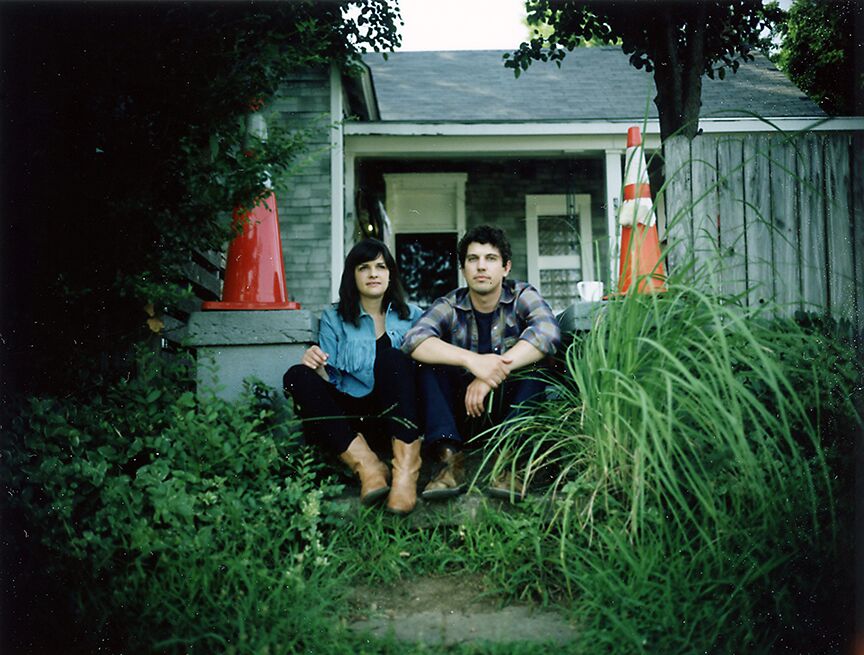
Guest columnist Rachel Baiman is a fiddle/banjo player, singer, and composer based out of Nashville, Tennessee. In addition to her solo project, Rachel is currently part of a duo project called 10 String Symphony (with Christian Sedelmyer).

Photo credit: Mia Mala McDonald

WATCH: 10-String Symphony, ‘Someone to Be Good For’

Artist: 10-String Symphony
Hometown: Nashville, TN
Song: "Someone to Be Good For"
Album: Weight of the World
Release Date: October 23 
Label: Poppychop Records

In Their Words: "'Someone to Be Good For' is probably the closest thing to a love song that I've written, although it's directed at a hypothetical person. It's largely about losing the motivation to be the best version of yourself, and wanting to find that person who will inspire you to be better, and make those moments where you chose a harder, more honest path, feel worthwhile.

I wrote this song with my good friend Caroline Spence, who is one of my favorite songwriters here in Nashville. I had the line 'someone to be good for' and a couple of the verses and I just got stuck. I couldn't finish it, even though I knew exactly what I wanted to say. I finally brought it to Caroline and she started strumming her guitar and, in about four minutes, she had transformed the chorus and come up with 'I don't need to be good / I just need someone to be good for.' It was kind of amazing. We worked through the verses together, focusing on some specific moments that the chorus could describe.

Christian and I wanted a really minimal arrangement for this one to highlight the yearning aspect of the song. Christian came up with the rhythmic chop, which is the backbone of the arrangement, and it felt really good to break into a full, old-time melodic break after all of that tension and build up." — Rachel Baiman


Photo by EJ Holmes. Video by Philip Noss. Audio by Tyler Andal.