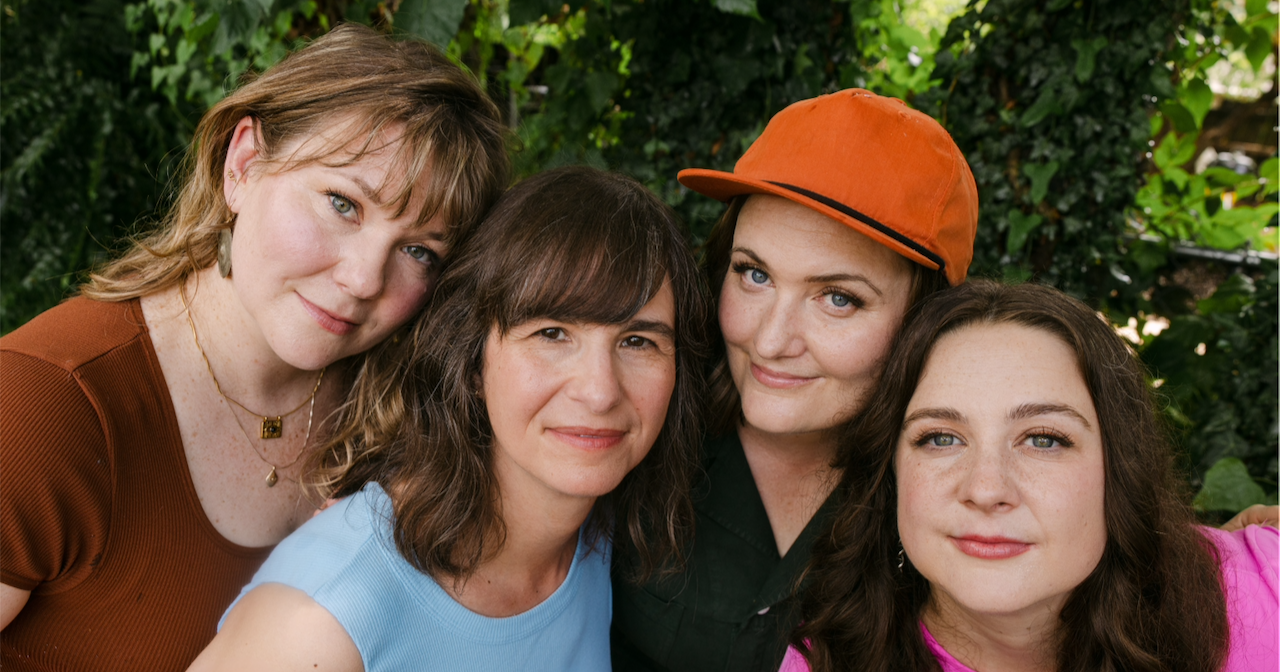
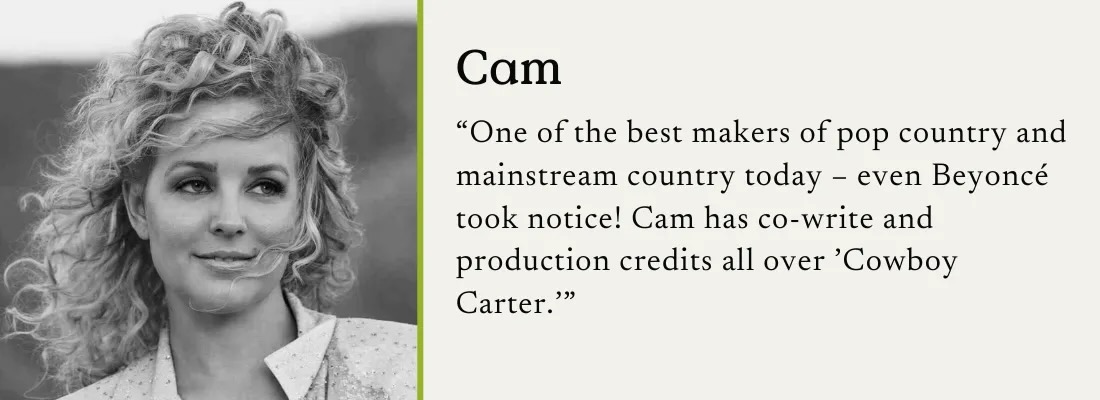
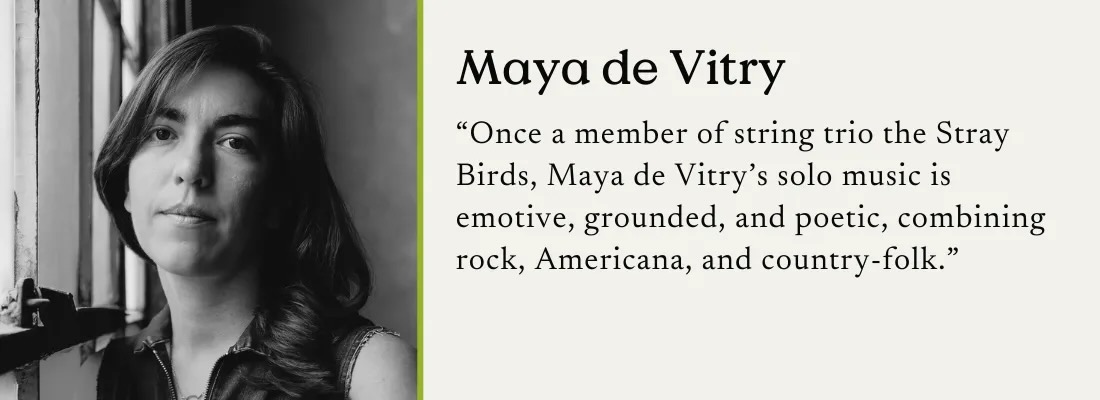
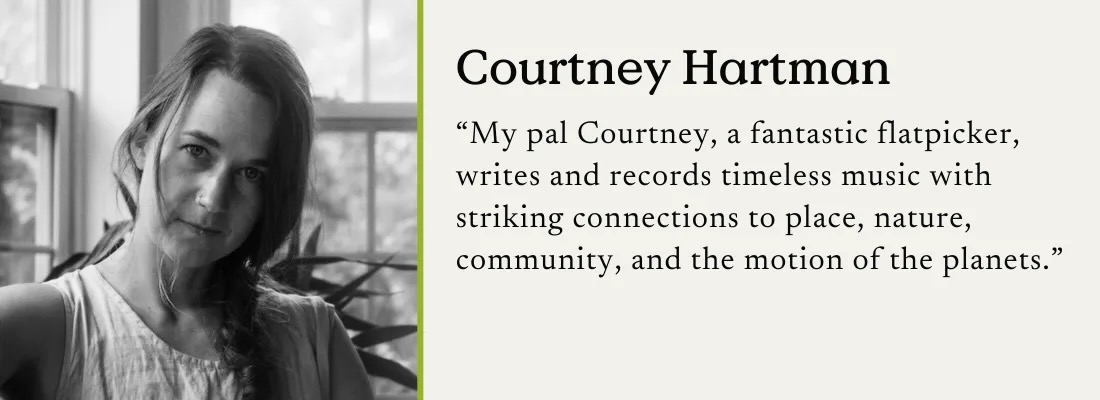
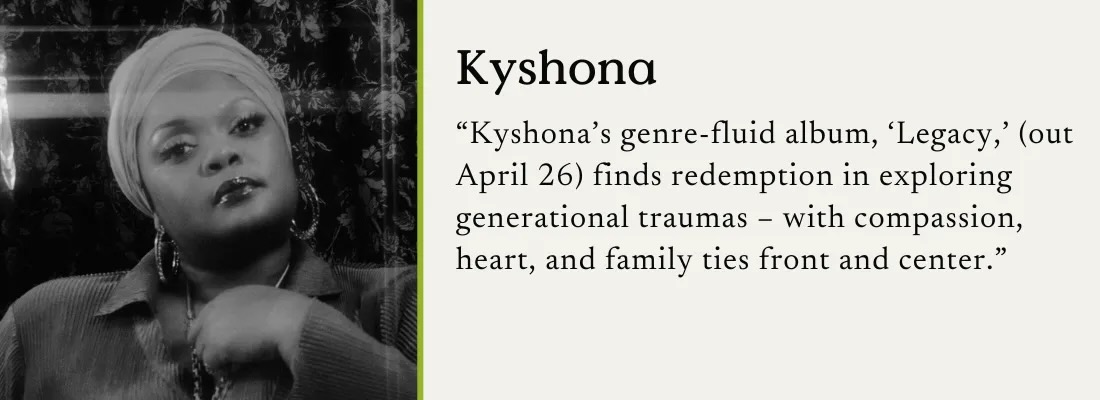
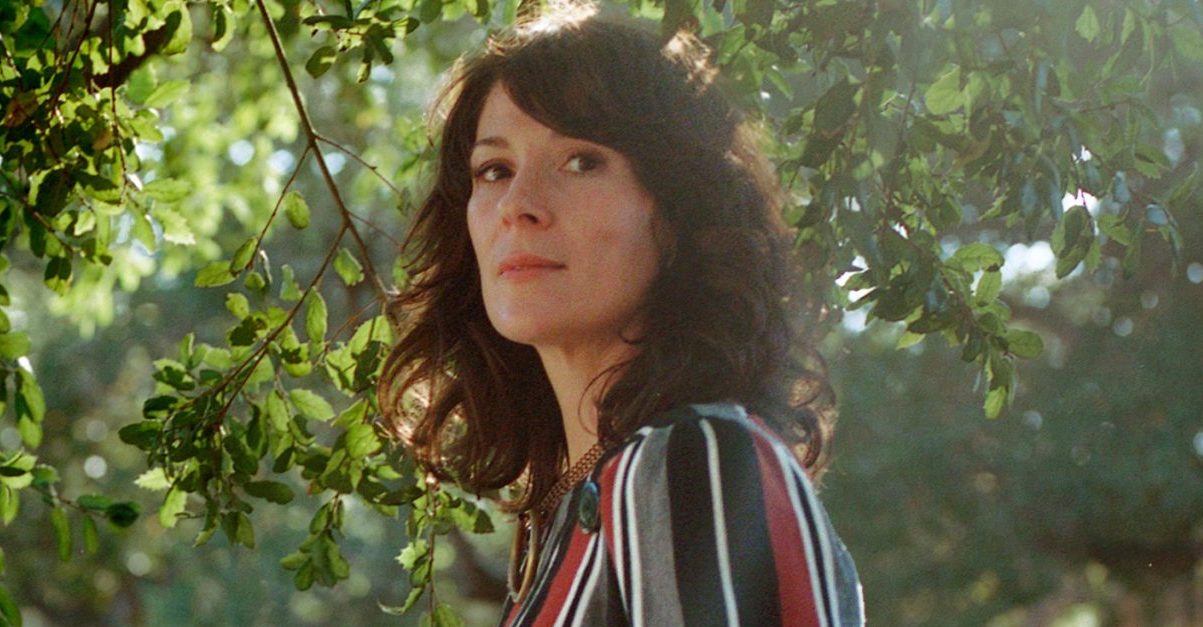
Fifteen years ago, bluegrass band Della Mae’s vocalist Celia Woodsmith wrote her future self a letter. She was 25 years old, burned out on trying to make it in Boston’s rock scene, and reeling from the loss of her father.
“If you can just die, why would you be doing something that you didn’t love to do?” she asked.
Her answer – and her hopes for her future self, which Woodsmith wrote into that letter – inspired the title track and underlying message of the band’s new album, Magic Accident, which marvels at the improbability of existence. As Woodsmith sings on “Magic Accident”:
We all start with something No one comes from nothing It took a millennia to get you here You’re a magic accident, the way that fate bent With a little carbon and gravity Carbon and gravity
“Our life is just a series of these little accidents – my parents meeting, their parents meeting. And it’s a beautiful and magical thing that we’re all here right now. It’s a beautiful and magical thing that Della Mae is here,” Woodsmith says. “That’s the basis behind that song, and it’s the basis behind how I think about a lot of my life. It’s just a beautiful accident that I’m here at all. So I might as well enjoy it and do the best thing, the best that I can, while I can.”
Magic Accident, as an album, a song, a concept, and a band ethos, celebrates following one’s own path. All four members of Della Mae – Woodsmith, founder and fiddler Kimber Ludiker, guitarist Avril Smith, and bassist Vickie Vaughn – lost their fathers prematurely, which bonds them as a band and altered how each woman sees the world. And making it as one of the few all-women bluegrass bands inherently required the Dellas to push boundaries and carve out space for their lives and stories.
“If I could talk to the little girl inside of me/ I’d let her know the world ain’t what it seems/ And if she would listen/ Could I keep her safe from making my mistakes?” the band wonders on “My Own Highway,” the album’s second track. Later, they remind the next generation of the same sentiment in “Out Run ‘Em,” written by Smith (co-written with Caroline Spence) for her pre-teen daughter, advising, “If you go with the crowd, you can’t out run ‘em.”
Indeed, all of Magic Accident listens like a set of love and advice letters to the band’s younger and current selves.
“I don’t think we could have written this album as young women. This is an older, wiser woman sort of thing,” Woodsmith says.
Elsewhere on Magic Accident, the band appreciates life’s small, sweet, desperately important moments. “Nothing at All,” which Woodsmith wrote with Spence, is a gentle appreciation of love that’s aged comfortably, while “Little Bird,” which the pair also wrote, relishes slow days and simple life joys.
“What do they say? One of the biggest forms of revolution is having joy in spite of what’s going on around you,” says Vaughn, about including these kinds of emotional interludes on the album. “And sometimes, the little things are all we have right now, whenever all this bullshit is happening.”
These songs would not be confused with light subject fare, though. The weight and wisdom of lived experience grounds Magic Accident in conviction and clarity, even when it may appear uncomfortable. “Family Tree,” a furious track driven by producer Alison Brown’s banjo picking and Ludiker’s fiddle, explores what it takes to break harmful generational cycles. “What You’re Looking For” ends a relationship that no longer serves the narrator. On the album’s only cover, Bruce Robison’s “Lifeline,” Vaughn on vocals (with Mary Bragg on harmony), reaches a hand down to anyone struggling to find their footing in the buffeting of life.
“The weight has become unbearable,” Woodsmith says. “We speak our minds and we fight for the things that we think are right; we all feel strongly about a lot of the same things, like women’s rights. But that can be a heavy load to bear and to sing constantly night after night.
“Sometimes we choose not to sing some of these songs that we believe so strongly, just because it’s become hard to bear that weight. I think this album lets us see the light a little bit.”
Though it’s full of interpersonal songs, on the final track of Magic Accident Della Mae zooms out to consider the state of the world. Sonically bluegrass and lyrically a protest, “Takes All Kinds” – co-written by Vaughn and singer/songwriter Melody Walker – asks the world to consider its future, as well:
Oh, the politicians who write the laws (Oh, lord it takes all kinds) They say they stand for the underdog (Oh, lord it takes all kinds)
But then they take my rights away (Oh, lord it takes all kinds) For a greenback dollar at the end of the day (Oh, lord it takes all kinds)
Ludiker started Della Mae in part out of frustration with how few women she saw on concert bills and in bluegrass bands. “After talking with a lot of people, it was pretty clear that maybe those bands also wouldn’t hire women for various reasons; I eventually got the idea to start my own band,” she says.
“My brain just wouldn’t accept the fact that [otherwise] maybe I wouldn’t have some of the [same] opportunities that I would have if I was a boy.”
To that end, Della Mae has been part of building a more inclusive, supportive community in bluegrass. Indeed, Woodsmith joined the band soon after writing herself the letter that inspired “Magic Accident.” At the time, she planned to quit music and join the Peace Corps. Instead, 15 years on, Della Mae has produced six studio albums (including their GRAMMY-nominated This World Oft Can Be on Rounder Records) and toured over 30 countries with the U.S. State Department music diplomacy program.
Della Mae is, by their own estimation, the longest-touring all-woman bluegrass band. Which would prove, as they put it on their website, “once and for all, that a band of all women is not, nor has ever been, a mere novelty.”
“Hopefully we can inspire other little magic accidents,” Woodsmith says. “Like other women or other young people who want to play, who see us at the right time in their lives to push them forward to playing music, and to step outside of their comfort zones and do something they thought might be impossible.”
Roots music was everywhere this year. It’s time we decide once and for all: Is roots music enjoying a “moment”? Or are these genres and sonic stylings alwaysthis foundational to popular and mainstream music?
Maybe roots is just at the center of everything we do here at BGS, but we’re inclined to the latter option. Roots music, folk music, whatever you want to call it, these styles are at the root – pun intended – of everything we love, not just in our scenes and spaces, but what we love about pop music, radio hits, and the musical mainstream, too. It’s no wonder, then, that roots shows up in albums and offerings by Bad Bunny and Sabrina Carpenter. That roots music finds its way across the globe in the fight for justice. That banjos and fiddles and the blues and bluegrass can be seeds by which entire resplendent artistic universes can be birthed, whether festivals or films or documentaries or albums or songs.
For our final year-end retrospective list of 2025, we asked our BGS contributors to reflect on the roots music and moments that stuck with them over the course of this year. Instead of setting strict criteria for what qualified as “roots music,” we did just the opposite, leaving our year-end “best” prompt as loose, open, and broad as possible. The results reaffirm our central belief that roots music isn’t a niche, it’s everything. There’s no limit to what it can touch on, impact, and transform.
We look forward to continuing to celebrate all things roots music and roots culture with you in 2026. In the meantime, enjoy our BGS Class of 2025. Roots music below, bluegrass here, and Good Country here.
Bad Bunny, DeBÍ TiRAR MáS FOToS
Last year, the most mainstream and far-reaching roots album was most certainly Beyoncé’s Cowboy Carter. The project has amassed billions of streams and listens, millions of sales, and has been certified Platinum by RIAA. This year, the most prominent roots album has received little to none of the controversial discourse of “belonging” and genre and roots-adjacency that Cowboy Carter attracted. Bad Bunny’s 2025 masterpiece, DeBÍ TiRAR MáS FOToS, is perhaps a bit sneakier in its rootsiness – or, being that it was made by a Puertorriqueño and is delivered entirely in Spanish, perhaps the same sorts of racism that put Beyoncé under the crosshairs may have relieved Bad Bunny of such targeting.
DeBÍ TiRAR MáS FOToS is jaw-dropping in its artistic and sonic accomplishments. Reggaeton and pop, hip-hop and house are grounded and contextualized by roots music, which does incredible heavy artistic lifting across the album. Interludes and intros reference many of the Latin and Caribbean folk styles that would birth the genres Bad Bunny currently inhabits. Calls of endemic frogs are mentioned alongside varied sounds of the diaspora, gentrification decried while advocating for self-determination. The album successfully does the work of so many solely folk and/or roots projects, but given its mainstream appeal and A-lister creator, that fact seems to have been lost in the glitz, glamour, and Super Bowl Halftime Show of it all. Make no mistake, though, for all the things that it is, DeBÍ TiRAR MáS FOToS is obviously roots music. – Justin Hiltner
Carsie Blanton
Singer-songwriter Carsie Blanton gave the most fun performances I saw on folk stages this year. Whether solo in the round or with frequent collaborators Sean Trischka, Joe Plowman, and Isa Burke, a Carsie show feels like a block party. People pack in corners to see what she will cook up next: a saucy tale, a power pop-influenced anthem of revolution, a quiet moment that demands reverent attention. Blanton has a gift for translating history into sing-alongs without softening any of her political edges. It takes an expert vocalist and arranger to sing “I guess America’s coming untied/ Half of my neighbors are living outside” without the audience feeling gloomy or preached at.
It helps that Blanton embodies the kind of working-class swagger that only a bad bitch from New Jersey can pull off. An outspoken feminist and member of the Party for Socialism and Liberation, this past October she brought the revolutionary hope of her songs to Global Sumud Flotilla to Gaza, where she risked her life as a member of the humanitarian coalition. Blanton, along with many of her comrades, was detained when the Israeli military intercepted their boats. Her bandmates were waiting at the airport when she got home. – Lizzie No
Brooklyn Folk Festival
Celebrating its 17th year, the Brooklyn Folk Festival is the best of the independent roots music community incarnate. Each November, the festival brings together members of the New York folk music community with musicians from across the country (and sometimes the world) for one weekend of homegrown joy, hosted in the Saint Ann and the Holy Trinity Episcopal church in Brooklyn. Musicians swap instruments and stories and audiences pack church pews and sit cross-legged on the floor to listen, intently.
The festival fosters space both for old-timers and young musicians; each year students from the Jalopy Theatre and School of Music, which hosts the event, perform. This year, the mainstage audience waited patiently, giving grace to 91-year-old folk legend Alice Gerrard (of Hazel & Alice) as she remembered the lyrics to one of her songs. Friends, lovers, and children waltzed together to Black string band New Dangerfield. And when musician Nick Shoulders invoked folk music’s long history of protest and compared old-time music to public lands – dubbing both worthy and precious resources, which should be protected and preserved as free for all – the entire room cheered. Community uplift at its purist and sweetest. – Meredith Lawrence
Sabrina Carpenter’s Sneaky Roots
They say the Germans have a word for everything. Do you think there’s one for how good it feels when roots music sneaks into the pop mainstream? Maybe… Beyoncénfreude? There should be some term for it, because it’s a special kind of satisfaction, and this year the good vibes continued with Ms. Short n’ Sweet herself, Sabrina Carpenter.
The superstar had already shown a genuine appreciation for country when she teamed up with Dolly Parton on “Please, Please, Please” (even changing explicit lyrics to better suit the mild-mannered icon) and with the dreamy country-folk of “Slim Pickins.” But in 2025 two important things happened. 1) She made her Grand Ole Opry debut in October, beaming with pride and lavishing the institution with praise. “Please, Please, Please” and “Slim Pickins” were both part of her set. And, 2) “Man Child.” Beneath the disco pulse ran an undercurrent of country twang, with a rhinestoned electric guitar hook dripping in her signature campiness.
This alone would be a prime case of Beyoncénfreude, but the best part was how Carpenter felt no need to call attention to the matter. It wasn’t a play or statement. She just wanted some country in there and knew her fans would accept it. What that says about roots music and the mainstream is definitely a 2025 highlight. – Chris Parton
Neko Case, “Winchester Mansion of Sound”
The late great Flat Duo Jets guitarist Dexter Romweber, who died at a too-young 57 last year, was an inspirational figure to generations of artists, Neko Case among them. The Americana siren repaid that debt with a cameo on Dex Romweber Duo’s 2009 LP Ruins of Berlin, and goes one better with this eulogy from her latest album, Neon Grey Midnight Green. Over spectral tack piano plinking away, Case paints a picture of kindred spirits bound together by music:
I still think of you And your wild, recurve guitar Only you can play so far out of tune And still kick me in the heart.
By the end, shortly before the full band kicks in for the outro, Case concludes, “Only music is forever.” Perfect.
This has been just one of 2025’s Romweber afterlife artifacts, including posthumous induction into the North Carolina Music Hall of fame and depiction in the teen drama TV series, The Runarounds. But this one is the best of all. – David Menconi
Chatham Rabbits, Be Real With Me
Despite its general lamenting about growing older – something I can relate to all too well – I can’t get enough of husband-wife duo Chatham Rabbits on Be Real With Me. But instead of focusing on the aches, pains, and other changes that come with the passing of time, Sarah and Austin McCombie also reflect on the wisdom that accompanies it as well.
This manifests itself in missives like “Matador,” where Sarah sings about trusting people too fast and ignoring red flags along the way, and “Gas Money,” which touches on overcommitting to relationships with others before first looking after yourself. The duo also navigate everything from falling out with longtime companions (“Childhood Friends”) to wanting freedom while also having desires to build and nurture a family (“Collateral Damage”), painting an understandably complex web of stories in the process.
The result is a very millennial-leaning record that puts a positive spin on aging as a young adult and will leave any 20-something listening ready to do what Austin describes on the album’s lead track, “Facing 29” – “Grabbing 30 by the strap of its boots.” – Matt Wickstrom
Michael Daves, Early Morning Sun
2025 has been a bang-up year for new releases and one at the top of my list is Michael Daves’ five song EP, Early Morning Sun. Daves’ music is always inspiring, but this EP differs from his past releases. Unlike Orchids and Violence, which was a two-part album with one side being bluegrass covers and the other being electric covers of those same bluegrass songs, Early Morning Sun is just Daves and his guitar.
All recorded on a low-tuned Kay guitar in an old church in Brooklyn, the EP has a rough, thrashy bluegrass and somewhat country feel. It’s an album of covers that, if you live in Brooklyn, you’ve probably heard Michael play around town, especially at the Jalopy Theatre or in the old days at Rockwood Music Hall. What’s special about this EP is that you can really feel the energy of how it was recorded. The slight echo of the church compliments the songs in a unique way, bringing a lot of oomph to the songs both in his vocals and his guitar playing. – Emma Turoff
Flock of Dimes, The Life You Save
Feeling weighed down by life? Tired of propping up others who can’t (or won’t) get their act together? Friend, have I got a record for you.
Jenn Wasner has been telling survivors’ stories through exquisite, deeply textured music for two decades. Her third Flock of Dimes LP, The Life You Save, leans into the atmosphere of Wasner’s voice over instrumental theatrics. Its songs find her in the deeply wearying role of reluctant savior, trying her best to heal her little corner of the world – or at least herself. The album’s money shot is “Long After Midnight,” which sounds like it could be about anything – from trying to save a friend from a drug problem or a parent sliding into dementia. The video shows Wasner sitting on the floor singing as every piece of furniture behind her is removed, finally directing attention to herself near the end:
I live my life among the lucky ones When things are bad I never let them know When you come from where I come from There’s only so far you can go…
But if you try some time, you just might find, you get what you need. – David Menconi
Rhiannon Giddens & Justin Robinson, What Did the Blackbird Say to the Crow
Rhiannon Giddens reunites with former Carolina Chocolate Drops bandmate Justin Robinson for what is essentially a crash course in the music of North Carolina. What Did the Blackbird Say to the Crow contains 18 songs – a healthy mix of instrumentals and tracks with lyrics. The music comes alive in the pair’s very capable hands and invites the listener to take a 44-minute stroll through Appalachia and North Carolina’s Piedmont. Their late mentor, Piedmont musician Joe Thompson, taught them all he knew, which is quite evident on selections such as “Hook and Line,” “Little Brown Jug,” and “Old Molly Hare.” Together, it’s like no time has passed between Giddens and Robinson, and they reach new heights in their work with some of the most propulsive and emotive string work of the year.
What Did the Blackbird Say to the Crow demonstrates that learning and growing never end. String work is best served when untethered to strict structures, but rather fluid and gently gliding, they evoke both a sense of whimsy and raw emotion. – Bee Delores
The History of Sound
I was in a cab going up the mountain to see Bugonia, and I was talking to another queer friend about The History of Sound. Specifically, about Josh O’Connor and Paul Mescal singing “Pretty Saro” and “Silver Dagger” to each other as a method of seduction. We talked about other versions of both songs – especially “Silver Dagger” – about how tender the song is in general, how O’Connor makes it softer, and about how his halting, half-good singing was effective in ways that, for example, Joan Baez wasn’t.
I thought a lot about the “Silver Dagger” scene, with a heat and a hunger, more than anything else in that film; a song which was too formalist to fully represent the erotic lives of the main characters. The movie made me sad and aroused, and what else can you ask for from a film? But it also made me worry about what songs we absorb from which traditions, and that the trading of these two famous songs as signifiers of a kind of melancholic, cock-blocked Appalachia only considers one kind of desire, one kind of hunger, and one kind of aesthetic. One marked by loss, and one which never completes except in death.
I wondered what it would mean, instead of “don’t sing love songs,” to sing every possible love song for every possible kind of love. In that too-short scene in the tent, Mescal and O’Connor sing to each other as a mode of seduction, but we get an incomplete song and an incomplete seduction. If we are listening to folk songs for their ardor, then the tradition must allow for all kinds of ardor – all kinds of desire. Sure, we have their version of “Pretty Saro” (the movie convinced me that nothing would be sexier than hearing that song post-coitally), but what about everything from “The Money Comes Rolling In” to “The Wanton Seed” to “The Two Magicians”? – Steacy Easton
I’m With Her, Wild and Clear and Blue
Right from the get-go, 2025 was a hard year. The Los Angeles wildfires ripped through homes and communities in January, displacing thousands of people, including many of my friends and music industry peers. Even for those of us whose homes were unscathed, everything suddenly felt untethered and dangerous, like it could disappear at any second.
For me, nothing captured that unnatural feeling quite like I’m With Her’s “Standing on the Fault Line.” “Is it when the reservoir runs out/ And the birds stop flying south/ Are we gonna know it’s time to flee?,” questions Sara Watkins. Many of us did have to flee, loading our cars with whatever we could grab; evacuating to anywhere that seemed remotely safer. But as climate change and economic and political upheaval continuously flip our world upside down, is anywhere really safe?
The rest of I’m With Her’s beautiful album, Wild and Clear and Blue, has been a soothing balm amidst these strange times. Each song captures a different aspect of womanhood, family, home, and the slipping of time – a testament to the shared songwriting duties of Aoife O’Donovan, Sara Watkins, and Sarah Jarosz. Their harmonies ring out like an old friend offering words of comfort on the other end of the line. – Amy Reitnouer Jacobs
Lilith Fair: Building a Mystery
One of the highlights of the late 1990s was Lilith Fair, a popular music festival co-founded by Sarah McLachlan and featuring the talent of such acts as Fiona Apple, Mary Chapin Carpenter, Sheryl Crow, Bonnie Raitt, and The Chicks over three years (1997-99). Director Ally Pankiw, known for I Used to Be Funny and two episodes of Black Mirror, pulls from a remarkable 600 hours of never-before-seen footage that cuts to the core of what Lilith Fair meant – and continues to mean – for women and female-identifying people. Interviews with Emmylou Harris, Brandi Carlile, and Jewel, among others, give new insight into the landmark festival and the tough-as-nails artists who stormed its stages.
Pankiw pulls back the curtain and offers the audience a peek into the blood, sweat, and tears that festival planners and the talent endured for the sake of the art and proving to the world that women artists were far more valuable than as tokens in a sea of men. Lilith Fair: Building a Mystery is raw, honest, and probing. For any casual music fan, it’s a must-watch of the year. – Bee Delores
Jess Sah Bi, Jesus-Christ Ne Deçoit Pas
Seven years ago, I worked on the reissue of Our Garden Needs Its Flowers (1985) by the West African country, folk, and afro-pop duo Jess Sah Bi & Peter One. Back in the 1980s, they were one of the most popular musical acts in Côte d’Ivoire (Ivory Coast), entertaining stadium-sized audiences at home, and later on, throughout Benin, Burkina Faso, and Togo.
When I first heard it, Jess Sah Bi & Peter One’s music was a revelation. In a sense, it offered a whole new lens through which to view country and folk music, while unlocking an entirely different set of African musical histories to learn from. Afterwards, Peter One scored a deal with Verve Records, culminating in his celebrated comeback album, Come Back to Me (2023).
Earlier this year, Awesome Tapes From Africa, the label that gave Our Garden Needs Its Flowers a second wind, reissued Jess Sah Bi’s rare early-1990s gospel, folk, and country solo album, Jesus-Christ Ne Deçoit Pas (Jesus Christ Does Not Disappoint). Written and recorded after recovering from a mystery illness and relocating from Côte d’Ivoire to the United States, the album’s seven songs, sung in French and Gouro, are soaring, transcendent, and undeniable. – Martyn Pepperell
Caroline Spence, Heart Go Wild
For me, 2025 has been typified by abject, all-encompassing grief. Singer-songwriter Caroline Spence’s past albums are certainly also heartfelt and lean towards tear-jerking and raw emotion-inhabiting, but Heart Go Wild feels particularly primed for a good, cathartic, therapeutic cry. Spence processes quite a few life and career changes within these songs, but the specificity by which these tracks and lyrics were born don’t hem them in or limit their relatability. On the contrary, by Spence opening up her own particular introspections to all of us, yet again, she enables each of her listeners to find our own healing, growth, and redemption in the same way she has. Through song.
Tracks like “Fun at Parties,” “Confront It,” “Why the Tree Loves the Ax,” and “Where the Time Goes” – really, the entire collection – have been remedies I didn’t know I would need so deeply when the album was first announced. Spence never needs to rely on tropes or platitudes to handle these sorts of topics. She rises above gratuitousness or melodrama, even while she acknowledges the sorts of grief, pain, and change she’s reckoning with aren’t aberrations from the human experience, they are the human experience. She’s reminding herself as much as each of us, and I suppose that’s where the magic of her particular skillset truly lies. – Justin Hiltner
Billy Strings at IBMA World of Bluegrass
When it comes to the International Bluegrass Music Association, two big things happened in 2025: the annual conference, festival, and awards show found new digs in Chattanooga, Tennessee, and Billy Strings finally returned to where it all began for the star. Taking home his fourth Entertainer of the Year award this year, Strings made a genuine, heartfelt effort to appear at the IBMA events. Not only to accept his recognition, but also to hang around the festivities all week.
Strings kicked off the conference with a stunning keynote address, only to then perform two shows in Chattanooga (one with his full band, one with guitar wizard and mentor Bryan Sutton). Throughout the week, Strings casually popped up all over the city, either jumping in on jam circles or merely stopping to chat with fans and fellow musicians alike, including a memorable jam with 90-year-old bluegrass icon Paul Williams. Strings’ presence was a well-received thing for a bluegrass community not only indebted to the six-string ace for what he’s brought to the scene, but also to remind everyone he hasn’t abandoned bluegrass — it’ll always be the essence of his melodic core. – Garret K. Woodward
Molly Tuttle, So Long Little Miss Sunshine
Molly Tuttle’s So Long Little Miss Sunshine actually comes loaded with sunshine and it’s evident from all angles. The empowered and fearless lyrics start on the first track, “Everything Burns,” and continue through “No Regrets” and “Story of My So-Called Life,” showing Tuttle standing proudly in feelings, intentions, and reflections that are true to this chapter in her life.
Whether she’s basking in a seemingly perfect headspace (“There’s no valley I can’t cross, or mountain I can’t climb/ I’m in a golden state of mind”) or making a messy choice and owning it without self-abasement (“Don’t try to fix it when you break my heart/ Knew when you hit me with your poison dart”), every moment is deliberate and delivered with confidence. That includes the sonic side of things, too – despite judgmental heat coming from folks who think Tuttle is trading in pickin’ parties for pop(ularity).
First: There’s plenty of Tuttle’s prodigious musicianship shining on this record. Second: take a cue from Tuttle herself and embrace what’s new as we go into the new year! Because for Tuttle, not all the personality on this album is new. It’s just new to us because she’s finally letting it out and letting it breathe. – Kira Grunenberg
Cristina Vane, Hear My Call
The Italian-born, Nashville-based singer and multi-instrumentalist Cristina Vane has long been at home playing bluegrass, country, blues and everything in between, but on Hear My Call she’s finally at home with the most important thing of all — herself.
Across the album’s 13 tracks Vane embraces the cultures and sounds that have shaped her, from finding joy in everywhere she’s been on the rock anthem, “Little Girl From Nowhere,” to relating to the stories of someone born an ocean away on the banjo ballad, “My Mountain.” While many songs on the record lean heavy into introspection and the strength that comes from it, others find power in everything from fun and sensual moments (“Shake It Babe”) to moving on from people who don’t value your presence and time (“You Ain’t Special”).
On top of Vane’s clever songwriting, I also can’t get enough of her playing on this album. Throughout, she moves effortlessly from banjo to slide guitar without skipping a beat, further reinforcing her staying power. This is someone to watch from 2026 onward. – Matt Wickstrom
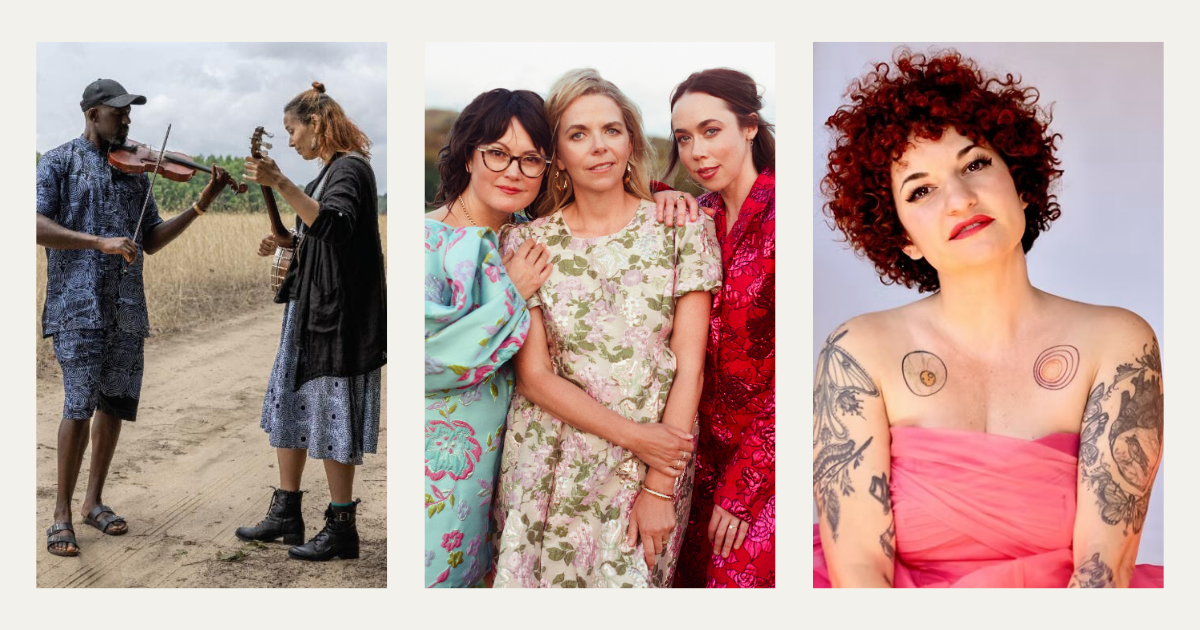
Lead Image: Justin Robinson & Rhiannon Giddens by Karen Cox; I’m With Her by Alysse Gafkjen; Carsie Blanton by Bobby Bonsey.
In our eyes and to our ears, there’s no better family of musical genres to usher in the holiday season than roots music. Bluegrass, Americana, old-time, country, blues, and beyond – they’re all perfectly suited for the coziest time of year, for togetherness, for parties and gift giving and cookie icing. Whether you celebrate Christmas, Hanukkah, Kwanzaa, or Winter Solstice – or even if you feel like opting out of the ruckus altogether – there is roots music for you.
Each year, we like to share our picks for the rootsiest time of the year in BGS Wraps, a weekly collection of songs, videos, albums, shows, tours, and events that celebrate the season. We share a few of our favorites, mostly brand new but often classics and timeless selections, too. Plus, we collect all that we can into a running playlist so you’re ready when the family or party hands you the aux cable.
To kick off the season this year, we’ve got a BGS Wraps full of Good Country, jingle bells, Texas snow, holiday generosity, and plenty of glittering lights and joyous cheer. We hope you enjoy BGS Wraps and tune in the next two weeks as we continue our series celebrating the holiday season.
A Very Carper Christmas, Melissa Carper
One of our favorite purveyors of Good Country in the most legit old-school, Texas, Western swing, and outlaw styles, Melissa Carper has just launched her own album of holiday music, A Very Carper Christmas. It boasts quite a few originals and co-writes and a couple covers of classics, too. The collection is silky smooth and timeless, a perfect accompaniment to holiday cooking, decorating, gallivanting from store to store, or cozying up by the fire with your loved one of choice.
Starting December 4, Carper will join JD McPherson’s “Socks: A Rock & Roll Christmas” tour around the Southeast, East Coast, and Midwest. So don’t miss your chance to catch these Good Country seasonal songs live in person. Melissa Carper tour details here.
“When It Snows in Texas,” Chaparelle & Sierra Ferrell
Let’s keep it going with more Austin-based Good Country! Last month, alt-country supergroup Chaparelle announced a brand new co-write and collaboration with everyone’s current favorite old-time Americana goddess, Sierra Ferrell. “When It Snows in Texas” is the perfect seasonal holiday number, apt for each and every rootsy holiday playlist and certainly suited to occasions beyond just Christmas. With a languid, loping groove, it’s all wrapped up in alt sounds that remind of Nitty Gritty Dirt Band and a casual sing-along sidled up to a shiny wooden bar all at the same time. This is the country & western (heavy on the ampersand western) vibe we all crave – this time of year or anytime.
Feels Like Christmas, Mickey Guyton
Singer-songwriter and country star Mickey Guyton is no stranger to festive song releases, but Feels Like Christmas is officially her first full-length holiday album. From the adorable “Sugar Cookie” to the classic pop trappings of the title track to her “Christmas Isn’t Christmas” duet with the Michael Bolton, Feels Like Christmas feels… well, grown up. Fully realized. Ready for your moody, ambient Christmas cocktail hour or a laughter-rich, full kitchen, too. Guyton makes some of the best crisp, modern, radio-ready country around today, and this holiday collection – like most if not all of her discography – feels made to last the ages, too.
Further leaning into the festivities of the season, Guyton will also appear in a brand new Hallmark movie, A Grand Ole Opry Christmas, which is premiering this year during Hallmark Channel’s 16th annual Countdown to Christmas programming event. Guyton certainly has our number, and we’ll be camped out in front of the TV with our hot ciders and sugar cookies ready and waiting for this incredible Opry, country music, and Hallmark crossover.
I’ll Be Home for Christmas, Drew & Ellie Holcomb
Drew & Ellie Holcomb have added to their deep-and-wide catalog of holiday and seasonal music with a brand new EP entitled I’ll Be Home For Christmas. The project adds three lovely covers of Christmas favorites to the stacked roster of selections the couple and their Neighbors trot out each winter for the season. This year, they’ll perform two “Neighborly Christmas Special” shows in Tennessee – in Memphis on December 5 and in Nashville on December 12 – before heading out on their next headline tour in February. Find ticket info here, then put on I’ll Be Home For Christmas while you make your holiday lists and check them twice.
The Greatest Christmas On Earth, Robert Earl Keen
Now this right here sounds like our kind of Americana Christmas circus! Robert Earl Keen kicks off his “The Greatest Christmas On Earth” tour this week, crisscrossing the South and Southeast through the month of December spreading cheer, joy, silliness, and light – and keeping the party going down the road forever, as he does.
The tour will kick off on December 4 in REK’s hometown of Kerrville, Texas, and you can be sure each night will feature his paean to the beauty and dysfunction of families at the holidays, “Merry Christmas From The Family.” Put all your own rowdy relatives in the van and don’t miss these shows. Ticket info here.
“Dream a Dream of Christmas,” Lydia Luce
Lydia Luce just released her excellent brand new album, Mammoth, in late October, but even before the project’s release she was looking ahead to the winter and holiday seasons with a A-side / B-side single release, “Dream a Dream of Christmas.” Like her songs in general, the A-side selection is contemplative, emotional, and rich with text painting and lush piano and vocals. Resonant strings play along with the contours of her vocal, punctuated by Christmas-y percussion and scoring, like Hollywood holiday offerings of the ’50s and ’60s. The track’s B-side is a delightful rendition of the beloved carol “Silent Night” that’s dramatic and rich – and features guest vocals by Caroline Spence. Both songs would be excellent additions to your themed playlists for the season.
OCMS XMAS, Old Crow Medicine Show
It’s hard to believe one of bluegrass and old-time’s longest running party string bands, Old Crow Medicine Show, have just released their first holiday album this year – but it’s true! OCMS XMAS is zany, rollicking, and unhinged. (As it should be.) It’s a collection of stories, songs, and tableaus that are just as fantastic and engaging as any of their rip-roaring live shows or any of their adored albums from their stacked discography. It’s a Christmas album as only Old Crow could make, and frontman Ketch Secor’s fingerprints are all over the track listing. From “Corn Whiskey Christmas” to “Breakin’ Up Xmas” to “Krampus Night” and beyond, this set of material will certainly be a Holiday Hootenanny on stage. Catch their Holiday Hootenanny on tour through December 20, before the band returns yet again to the Ryman Auditorium for their iconic annual New Year’s celebration performances to close out the year.
Sweet Relief’s Annual Holiday Auction
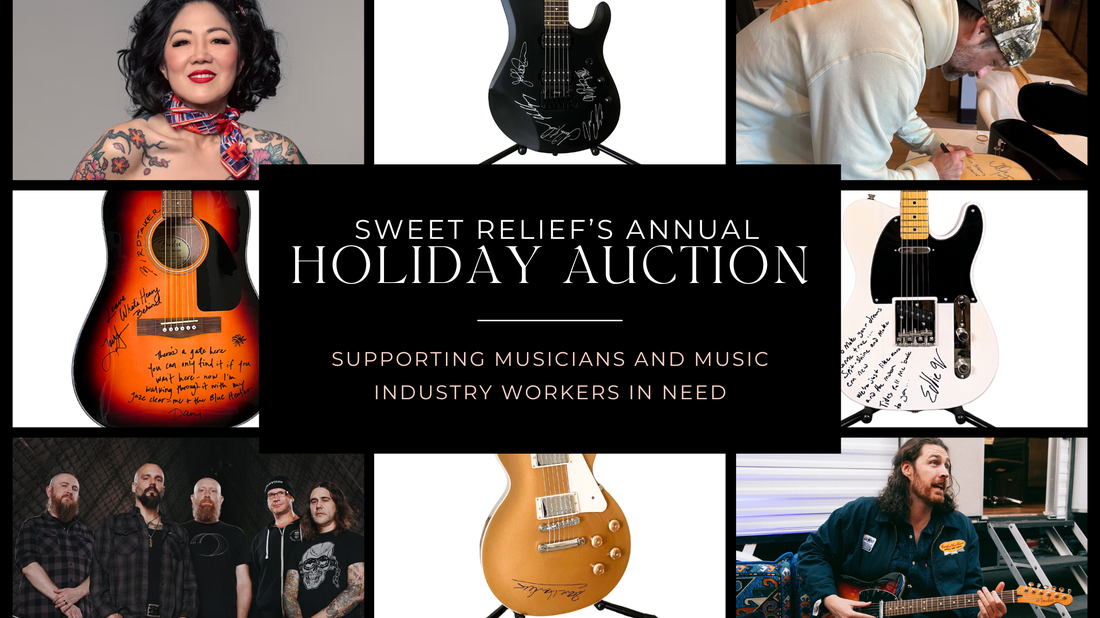
Sweet Relief is a non-profit organization with a mission that we all – in the music industry and outside of it – can get behind. For more than 30 years Sweet Relief has worked to provide financial assistance to musicians and music industry workers who are facing illness, disability, or age-related challenges. Just last week, they launched their annual holiday auction yet again, offering signed memorabilia and in-person experiences with a variety of artists in roots music and beyond, all of which benefit their important mission and vital work supporting music professionals’ mental and physical health.
Folks can bid on offerings from artists and musicians like Billy Strings, Hozier, Pearl Jam, Walker Hayes, The Decemberists, the Black Keys, Amanda Shires, Gregory Alan Isakov, and many, many more. If you’re planning your Giving Tuesday donations and also wondering what to get the music lover in your life who already has everything, perhaps you can check two things off your list in one go by supporting Sweet Relief. Learn more and view the auction items here.
Jingle All The Way Tour, Béla Fleck & the Flecktones
No holiday season would be complete without regularly returning to one of the best roots holiday albums ever made, Béla Fleck & the Flecktones’ Jingle All The Way. Released in 2008, the GRAMMY Award-winning album is beloved in and outside of roots music spheres – it even landed a mention in Oprah’s O Magazine back in ’08! Now, Fleck and the band – including Victor Wooten, Roy “Future Man” Wooten, Howard Levy, and special guests Jeff Coffin, Alash, and Sierra Hull (on select dates) – are taking their virtuosic cheer back on the road with a full slate of Jingle All The Way Tour shows. The tour kicked off in Nashville and will continue through December 20 hitting performing arts centers and theaters in the Midwest and across the Eastern U.S. To mark the occasion, Fleck & the Flecktones released their first holiday music since Jingle All The Way, a single medley of “The First Noel/Joy To The World.” If you can’t make the shows, put the original album and new single on the stereo – but we really recommend snagging tickets and seeing them live, with this superlative lineup, if you can.
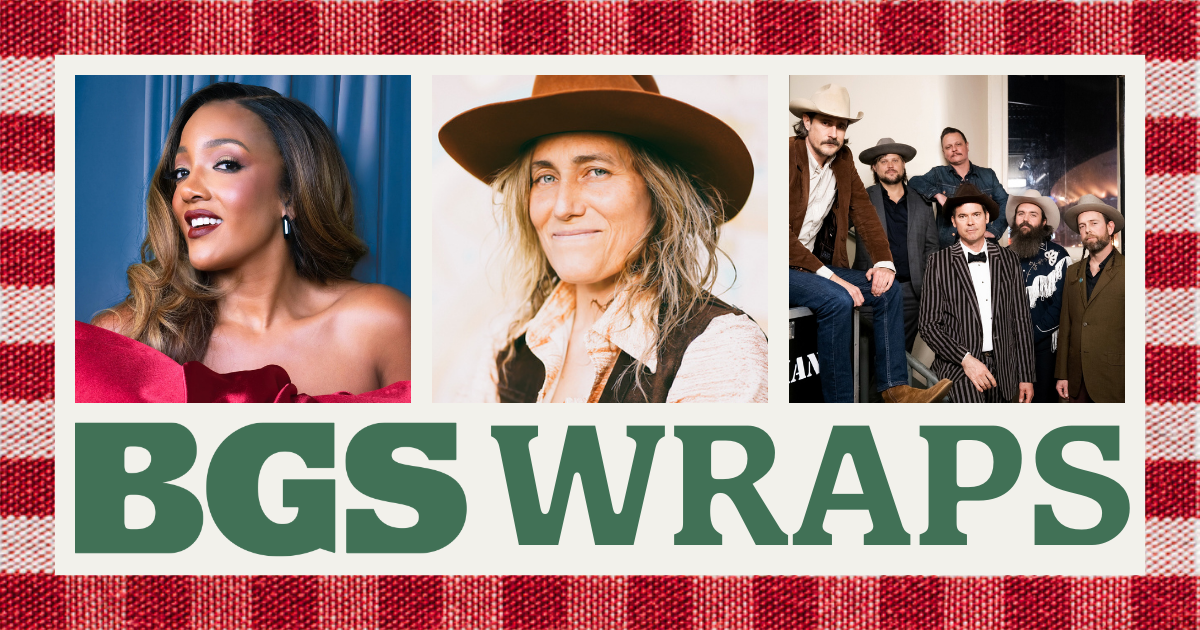
Lead Image: Mickey Guyton, Feels Like Christmas; Melissa Carper by Lyza Renee; Old Crow Medicine Show courtesy of the artist.
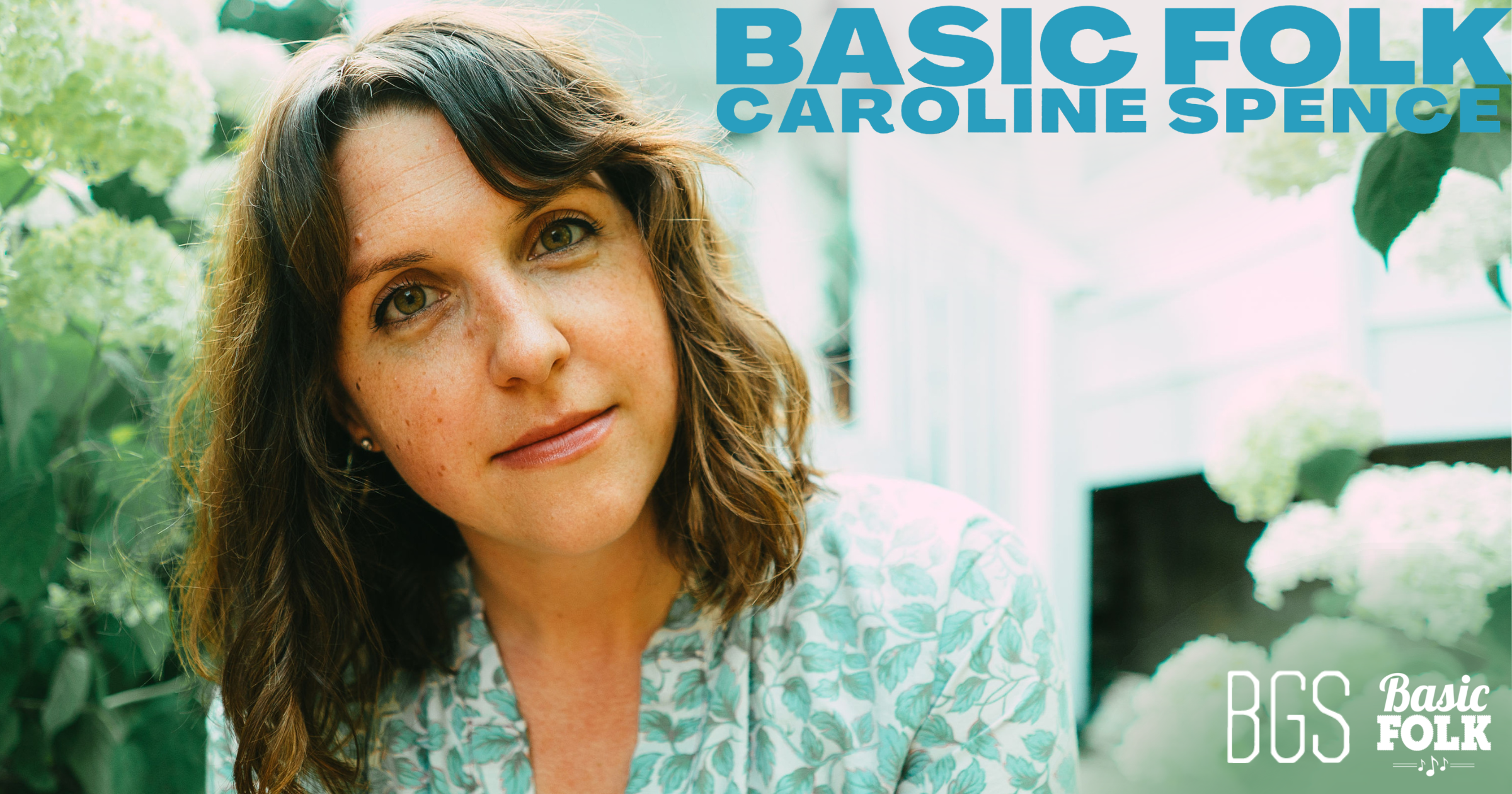
Caroline Spence knows better than anyone the importance of community in the roots music scene. Since her 2015 debut album, Somehow, the singer-songwriter has risen through the ranks with four additional solo albums including her latest, Heart Go Wild. Stylistically, Spence fits within the realm of Natalie Hemby, Aoife O’Donovan, Lori McKenna, and Mary Bragg, with a smattering of Mary Chapin Carpenter sensibility. She has garnered praise from both direct peers and industry giants alike. From signal-boosting her work online to recording her songs, many musicians and artists have used their platforms to give Spence a well-deserved spotlight.
Throughout the past decade, Spence has used these moments to nurture friendships within a thankless industry. “The acknowledgement and validation from artists that I respect have been vital in keeping the fire burning under me when parts of the industry have threatened to put it out,” Spence tells BGS.
“No ‘suit’ can convince me I’m not good enough when I have worked with my heroes and have the respect of artists I admire.”
Lori McKenna and Caroline Spence after recording “The Next Good Time” together. Photo by Jordan Lehning.
Reciprocated applause and mutual admiration prove essential to building relationships, in addition to contextualizing an artist’s music within the scene for those fans who may not be familiar. For example, Miranda Lambert has enlisted countless lesser-known artists for her tours, including Gwen Sebastian, Ashley Monroe, and Angaleena Presley. These placements introduce her loyal audience to talent they might not have discovered elsewhere, thus giving those artists more name recognition.
Even more importantly, Spence finds these shout-outs and promotional spots to be her “life force” in keeping her inspired to push through trying times. “My primary goal has always been to be good at my craft and to get better at it,” she says. “To me, the most important judges of that are those who are masters of theirs, and it’s been deeply meaningful every time someone I admire has paid attention to, let alone praised, what it is that I do.”
In her career, Spence has tumbled into the orbits of countless artists who have shown unwavering support for her work. A big Hayes Carll fan, she covered his song “It’s a Shame,” from his 2002 album, Flowers & Liquor, early in her career and later toured with him in 2021 – a moment Spence describes as coming “full circle.” She’s also toured with John Moreland and Madi Diaz. In addition, she wrote “Heavy” with Carl Anderson for Andrew Combs’ album Worried Man and another song she wrote, “We Don’t Know We’re Living,” was recorded by Lucie Silvas, Brandi Carlile, and Joy Oladokun. “[Brandi] called it ‘a once in a century song,’” notes Spence.
Madi Diaz performs with Spence as special guest and opener on tour in 2022.
Despite not having a “game-changing platform,” as she puts it, she pays it forward by sharing “the work of my peers and what I am loving listening to. I think word-of-mouth from trusted personal sources is still the best way to get someone to pay attention to music.”
She takes a moment to shout out others, beginning with Ken Yates & Brian Dunne before mentioning several other artists she’s been listening to, including Angela Autumn (“Her song ‘Electric Lizard’ is intoxicating and reminds me of some of the tracks that made me fall in love with music in high school,” she says), Brennan Wedl & Mariel Buckley, and Danny Malone, “an incredible songwriter out of Austin that I recently saw at a house show in Nashville and was absolutely floored by.”
In our conversation, Spence names an additional six artists, from Miranda Lambert to Tyler Childers, who have uplifted her music over the years.
The National
“The fact that I have a duet with Matt Berninger is still completely insane to me. When I was in college in Ohio, falling in love with The National, I could have never even dreamed that I would cross paths with Matt, let alone have him sing words I wrote. I love that band, and his voice is legendary. It still feels unreal.”
Miranda Lambert
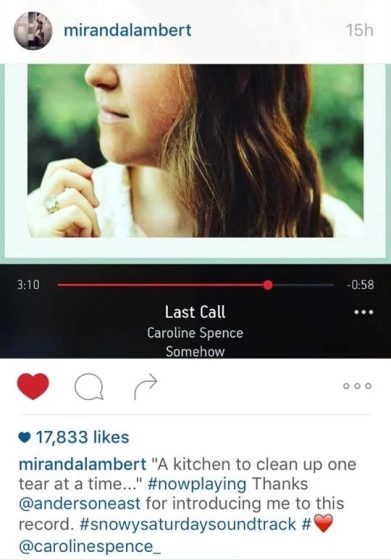
“[She] posted about my first record back in 2016, and that totally blew my mind. I had just been in the studio making my second record [Spades and Roses] and was questioning a lot, and that really felt like a sign to keep doing what I was doing. Part of my dream when I moved to Nashville was to write songs for her, so that was an incredibly validating moment.”
Miranda Lambert shared a Spence original, “Last Call” on her Instagram in 2016.
Lori McKenna
“Lori added my music to her monthly favorites playlists that she makes. She featured on a song we wrote together called ‘The Next Good Time.’ One of my biggest heroes and one of the people who inspired me to start pursuing this work.”
For our Artist of the Month feature, Spence joined McKenna for an intimate and engaging conversation. Read here.
Clare Bowen
“Clare recorded my song ‘All The Beds I’ve Made’ on her self-titled album.”
Tyler Childers
“I’ve known him since 2014 and he opened for me in early 2016 – a month after Miranda posted about my record, and she actually came to the show. I toured opening for him in 2017 and 2019. At some point, he posted about my album on his IG.”
Spence and Tyler Childers backstage together on tour in 2019. Photo by Jace Kartye.
Mary Chapin Carpenter
“We connected on social media and she eventually invited me to open some shows for her. A treasured memory was performing in the round with her at the Edmonton Folk Festival and her asking me to play ‘I Know You Know Me’ and her singing it with me.”
Caroline Spence and Lori McKenna are both lauded for writing songs that cut straight to the heart. In conversation, it’s clear they also share admiration and a generosity of spirit, offering insight into how a life built around family can both coexist with and deepen a life in music. The two met with BGS via Zoom to discuss Spence’s new record, Heart Go Wild, produced by Peter Groenwald, Mark Campbell, and Spence herself.
As Spence charts her first year of motherhood, McKenna reflects on building a catalog of piercingly honest songs while raising five children of her own. Together, they explore the mysteries of publishing, the influence of mentors like Mary Gauthier, and the butterfly effect of one songwriter’s choices on another’s path.
Their exchange drifts from songwriting craft to the role of co-writers in self-discovery into the bigger questions of life: how family and creativity intertwine, how community ripples outward, and how songs become offerings that carry meaning long after they leave the writer’s hands.
What emerges is a portrait of two artists at different points along similar paths, each proving that family life and creative life are not competing forces, but intertwined sources of inspiration and strength.
I know you two have a lot to talk about, but I’d love to start, if we can, with how you know each other? Did you know of each other musically first, and then how did you come to know each other personally?
Lori McKenna: I think the first time we met might have been at breakfast that time?
Caroline Spence: Right. I think that was another Bluegrass Situation connection. I think that was the first time I met you.
I had a good friend from summer camp and we would often trade mixes. She put one of your songs on a CD for me. I had already found Patty Griffin and was having my singer-songwriter love affair. That led me to The Kitchen Tapes, which led me to everything else. And I distinctly remember when Faith Hill cut “Stealing Kisses” and I thought, “Wait, that’s how that works?” I didn’t know what publishing was. I didn’t know how music worked in that way and that became a new little baby dream of mine that I carried with me: to write a song that was good enough that maybe somebody else would want to sing it. I feel like I would not be aware of the job that I have had I not found you, Lori.
LM: That is really cool. I remember not knowing anything about publishing, how it works and all that stuff, too. And I still feel like I know just a tiny bit more.
CS: I know, totally. It’s still a mystery.
LM: We were at a wedding over the weekend and my son Chris, who’s a writer in town, has his first single that he co-wrote that’s going to radio. So we were singing songs and at the end of the night, my brother was like, “Chris sold the song!” I’m like, “It’s not called selling the song.” He’s like, “Well, how does it work?” Nobody knows.
CS: Yeah, nobody knows. They just stream it now into the abyss.
LM: The only reason I knew anything was because of Mary Gauthier. I did know people who had moved to Nashville before Mary, but because I’m in the Boston area, they came back saying, “Yep, it’s very different.” It is very different in Nashville. I didn’t know anyone who had stayed before Mary, you know? I love being inspired by other people. I love it that that’s how life works, that you see someone else do something, and you’re like, “Wait! I can do that! At least I can try!”
CS: I’ve been thinking about that a lot lately, the butterfly effect, and how that happens within our community. Like, if Mary hadn’t done this, then this wouldn’t have happened for you, and if you hadn’t done that, then I wouldn’t have known about this, and I’ve been thinking about that as I’ve been in this creative community for a decade now. There’s so much stuff that you never know your little ripple is doing.
LM: The ripple is such a good word. It’s such a ripple, isn’t it? It’s crazy. We’re really lucky. I know you just had a baby, but the number of people that come up to me and ask, “How did you do this with kids?” Nobody told me that I couldn’t. I know stories of other artists that someone’s told, “You can’t do this and have a family at the same time.” I’ve heard those stories, but nobody ever told me that.
It didn’t seem impossible at the time. But now my son Chris has a baby. I look at them and I’m like, “Wait, how does anybody do that ever? How does anybody have a baby?”
CS: Man, some days it really feels that way. Most days it feels that way. No one ever said that to me either, but those are absolutely the cultural messages you absorb. There are certain gigs I might not get because of my familial obligations, but you just make your choices. And I’m not building my life around what I “might get.” I want to build my life around what I know I want to have. I just feel like all of that is gonna feed your person. You can’t starve yourself of these big, beautiful growth opportunities for some sort of potential. My life is bigger than my career, and I would like it to be as big as possible.
LM: And it’s crazy, right?
CS: Yeah, it’s nuts. Absolutely nuts. The fact that I got a shower this morning is a big win.
LM: Well, that and the fact you’re putting a record out!
CS: Yeah, yeah, and the record!
LM: You did good.
CS: It’s a little bit cuckoo, but it’s been done for a while. A lot of the heavy lifting was done even before I was pregnant, so that was an accidentally smart idea and we’ve just had to be strategic about everything else. I feel like there’ll be a lot of people who assume this is a record about marriage and family, which it’s not. I’m sure I will have that, but this feels like a record that’s more about the chaos before I decided I could do all that.
LM: From the minute I knew who you were, I’ve always loved the way that you express your feelings in such a way that makes other people be like, “Oh! I’ve felt like that! This song makes me realize that I’m not alone in feeling that.”
There’s something in the way that you write that is like arms are reaching out, but they’re also like, “I know you feel this way, too and it’s okay that we all feel this way.” I feel like that’s why music exists. For someone pulling over their car and being like, “Oh my god, okay, I’m not gonna die today because I just heard the song!” It is the biggest reason, the service of songwriting, as Mary Gauthier says. You don’t do it consciously, but it just is your way of doing it. It just seems so innate in the way you write.
CS: That’s so kind and means a lot to me, because that’s really how I feel about it. It’s been a progression. I started writing because I needed to get these hard things out when I was a younger person and as I started putting those out there, I would have conversations where someone would say, “I feel that way, too.” That kind of cemented in me to keep writing from that place, because that’s what music did, and still does for me.
What is personal is universal. I feel like someone smart said that before I did, but it’s so true. And Mary’s perspective of songs as a service resonates so deeply with me. There’s a quote I read when I was doing The Artist Way a few years ago that says, “The artist has to be humble, for he is essentially a channel.” To let the divine in, whatever it is, to flow through you, you have to get small and get in your humanity.
And when I’m feeling really in my head and when I don’t want to perform or I’m feeling self-critical, I think about what I’m doing as an offering, and it makes me feel better and more inside what I’m trying to do.
LM: I love the offering.
CS: People want to feel understood. As a listener, you want to find your soundtrack for your hard time or your good time.
LM: Well, congratulations on doing all this, because the record’s beautiful, as usual. You co-produced this whole thing, right? Did you always co-produce? Because this record seems, and I hate to use the word “rockier,” but it feels like it moves a little bit more. Was that intentional?
CS: I think a lot of that might sort of be a songwriting change for me. I feel like I’ve gotten better at translating what I’m hearing into the actual thing, so I think that’s a skill I’ve slowly developed from my slow folk songs for years.
LM: The transition is so beautiful. With the song “Soft Animal,” if I wrote that song, it would be just the slowest. It wouldn’t move the way [it does].
CS: It totally started on the page, too. It was very much like a poem. Sometimes I sit down to a piece of writing, if I’m going through my ideas, and if something’s sort of dead on the page, I’ll just start playing. That one was one where it sort of just came out that way. The clash of “Soft Animal” to something that felt really thrashy, the irony of that felt celebratory to me, and it was fun. That’s one of my favorites production-wise on the record.
LM: Oh, that’s great. When I work with a producer, you can tell. You can listen to the record and know that this is definitely different. But there’s been this really consistent line with you the whole time, which is kind of remarkable when you think about how much you’ve changed in life and as a person over the years. There’s this vibe that really just comes through where you can tell that you are a big piece of the production of everything.
CS: Thank you for saying that. That was actually a dealbreaker thing for me for this record, that I would only work with people who would give me a production credit, because I felt like over the years – and not to discredit the people who are credited as producers on my albums – but because of who they are as producers, it was collaborative, and there were times when I was making sure that my vision got to the finish line in spite of their initial instincts. I didn’t know it mattered to me until maybe I’d read some press that would bring that person’s name into it and it made me feel a certain way.
Producers are important because I think it’s really helpful to get outside of yourself and your own instincts, and to be challenged. But sometimes what’s helpful is to be challenged, and then you know exactly how firmly you feel about something.
For this record, I really wanted to know that it was collaborative from the jump. That felt incredible, and I worked with two people who had the best energy and a healthy sense of ego, and it was just really fun.
LM: That’s awesome. You come through. I’m exactly the opposite, because I can’t stand being in the studio.
CS: I understand that as well.
LM: I don’t know how you do it, because I literally only hear the song and what it sounds like when I sit at my kitchen table and sing it. People kept telling me over the years that I’d start to hear parts. So I am a person who needs producers… I’m just like, “Here are the songs.”
CS: Yeah, I’ve done that so many times, I’ve given a pile of songs and been like, “I don’t know what I made. What’s speaking to you?”
LM: Well, this morning I was listening to the album again, and I thought, “Oh, she’s gonna produce other people’s records someday.”
CS: That’s very kind and, honestly, a thought I hadn’t really had for myself, but I really did enjoy it. I think if I ever do that, it’s gonna be because of the experience I just had with these people that built up my confidence in that space. It was a lot of fun.
LM: You have this beautiful voice. I have an unpretty voice and you have a very pretty voice that you know how to use really well. You can say the hard things with that beautifully well-orchestrated production and then your beautiful voice, and it still makes you feel all the feels, versus I always feel like no matter what I sing, it’s gonna sound sad.
CS: I feel like a lot of the time I try to be like, “I’m not so sweet,” and grit up the production or avoid certain songs. I was self-conscious about it, which I think may be some internalized misogyny, because I have such a high female voice.
Speaking of songs being of service, babies and children come out singing, you know? It’s such a natural thing to do. We’re meant to do it. It’s joyous; it’s a release. And knowing the way it feels in my body to perform or really sing has changed the way I perceive my own voice.
LM: It is the first thing anybody knows how to do.
CS: Your voice has this wisdom to it. It kind of doesn’t matter what you’re singing; it sounds like you believe what you’re saying and you trust what you’re saying. You have this earnestness to your voice. If you were singing “Red Solo Cup” I’d be like, “That song means a lot to me.”
LM: I actually was at a round at the Bluebird [Cafe] with the Warren Brothers a couple of weeks ago, and they sang “Red Solo Cup.” I am so jealous of songs like that, because I could never write them.
In terms of writing for you, how have things changed since the baby?
CS: I haven’t had the same amount of headspace. My publisher held a sync camp and my mom came to town to help. I wrote for days straight and that felt really good to get back at it. As far as writing by myself, that’s just now kind of coming back.
LM: Is your son enjoying you playing the guitar?
CS: It’s a pacifying thing. I could put him in his playpen if I want to and mess around on guitar, and he’s super happy to listen. The other day, I was practicing for this Springsteen cover night that I got asked to do and I just started kind of riffing around. The flow started and that felt really good. I was like, “Oh, okay, it’s still in there.” I just hadn’t had the circumstances to put myself in the position where I’m visited by that energy. Being in creative spaces with others has been really nice right now, too, to slowly rebuild.
LM: When my kids were little, I actually wrote a lot. They all shared a bedroom and, after dinner, my husband would work on the house while I tried to sing them songs – sometimes terrible ones – or make up songs while they fell asleep. That routine gave me more time to write than I expected.
Two of my kids are songwriters now, though at the time they probably went to sleep just to get away from me singing the same line over and over. But honestly, if I hadn’t had that hour and a half every night with them, I don’t think I would have learned how to write. I wasn’t planning to be a musician. My children gave me the time and space to discover that.
By the time I had five kids, I started doing open mics. I never would have had the courage to get up there if I didn’t have my kids. They were my world, so if people didn’t like what I did on stage, I could always just go home and sing in the living room with them. That gave me the confidence to try.
CS: That balance is so important and it’s hard to reverse-engineer for people. If you move somewhere completely career-focused, you can get lost in that and miss the balance of family and partnership. I feel like any sense of longevity in life or career needs that.
For me, I’ve realized that to be a happy, well-rounded person – good partner, good friend – I need a rich family and personal life. Otherwise, my career just eats me alive. I think the reason you’ve been able to sustain your career and create a catalog of songs full of humanity is that you’ve always had that balance.
LM: Exactly. And it’s not just a woman’s thing. I know men who do it, too. But when you put family first, you have to say no to some things. You can’t always do that week-long tour, for example. But the things you say no to fade away; you don’t remember them. You only remember what you did. Instead, you stayed home and sat in the backyard with your kids and that’s the summer you wrote that one song that you’re still singing years later.
Love is supposed to be the thing you surrender to. It just opens up the universe wider. I’ve seen it happen again and again; even songwriters who know exactly what they want in their twenties, after falling in love or having a child, the world opens up in new ways.
CS: That’s making me emotional. That’s exactly where I am right now. I feel like my life is starting in a really good way. My career feels like it is starting over again. It is making me recalibrate how I want to show up in the world. And it’s freeing to have my compass aligned around my family. It feels like a new beginning. It’s really beautiful.
LM: That’s exactly it. Parenthood gives you a stream of love you hadn’t experienced before and it changes everything creatively. For me, it didn’t really happen until my fifth child, but it always happens. The universe shows up when you do something hard, like having a baby. I remember putting out a record in May, right around the birth of my son, David. By Thanksgiving, I had Faith Hill cuts. It’s like the universe says, “We should remind her that she gets to keep doing this.”
CS: That really resonates.
LM: I always listen to the last song on a record first.
CS: I love that because some of my favorite songs on your records are the last songs.
LM: When I heard “Where the Light Gets Through,” that song is such an offering, such a service. I don’t know if you want to talk about where that song came from, but years from now you are still going to have people tapping you on the shoulder saying “thank you” for that song.
CS: We’d made the record basically and we couldn’t figure out the last one. I said to the producers, “What if we write this one together?” Mark and Peter started building the track. I was going through ideas and I’d been writing a lot about my brother-in-law’s passing away. It just so happened that something I’d written fit almost exactly word for word and we shaped it from there. It couldn’t have just been me on that record, because it needed to feel lighter than I wanted it to.
LM: I know exactly what you are talking about. That’s why I love co-writing. You get perspectives that you could never create alone. Sometimes you can’t do it by yourself, and the song only exists because of that.
I’ve had that experience with Liz [Rose] and Hillary [Lindsey]. I had a song I’d been trying to write for a month by myself and I was so mad I couldn’t. I showed it to them and Liz was writing and singing it immediately. Hillary was like, “Do you know this song?”
CS: Do you feel like that is possible because you know each other so well that they can meet you where your brain is?
LM: Absolutely. And that’s another thing I love about co-writing. You fall in love with each other so quickly in the room. And when you trust yourself with someone, you can say the dumbest thing and it might turn into the smartest thing. I rarely sit with someone who doesn’t make me feel like I can speak my mind. With Liz and Hillary, Liz can read my mind and Hillary is like a musical and emotional genius. They both are.
Parenthood also gives you that focus. You don’t have all the time in the world, so you go straight to the point.
CS: I’ve heard many parents say they become more productive because they have to think differently about time and energy. I feel that now, with my baby being a little more self-sufficient.
LM: Exactly. And think of all the things you can do since having a kid! You weren’t opening drawers with your feet before, were you! Well, I love what you do, and I was genuinely happy when I heard you were pregnant. It’s a good thing for artists to step into family life.
CS: There’s a class of women my age choosing to have families now, balancing careers – it feels like a statement in all the best ways.
LM: Parenthood changes your perspective. You look back and wonder how you managed everything, but the flow and the creative life meet you there. You make the things you have to make because that’s what we’re here for.
CS: Man, there’s a lot of stuff I needed to hear today that you just spouted out. Thank you for spending time with this record.
LM: Congratulations. The record is so good. I hope the biggest challenge with it is all the things you have to say no to.
Author and artist Jenny Odell begins her impeccable book, How to Do Nothing, immediately driving to the heart of the matter:
Nothing is harder to do than nothing. In a world where our value is determined by our productivity, many of us find our every last minute captured, optimized, or appropriated as a financial resource by the technologies we use daily.
The book is a striking, heartfelt argument for a realignment of societal and personal priorities that decenters social media, the “attention economy,” and the ways each of our individual “rat races” have now penetrated every aspect of our own lives and our each and every waking moment. In Chapter 1, “The Case for Nothing,” Odell continues,
Currently, I see a similar battle playing out for our time, a colonization of the self by capitalist ideas of productivity and efficiency. … The removal of economic security for working people dissolves those boundaries – eight hours for work, eight hours for rest, eight hours for what we will – so that we are left with twenty-four potentially monetizable hours that are sometimes not even restricted to time zones or our sleep cycles.
These paradigms of and assumptions about “productivity” immediately jumped into my mind when I first heard singer-songwriter Caroline Spence’s lovely new album, Heart Go Wild. Released August 29, it marks Spence’s return to independently releasing music – on her own terms and retaining ownership of her own intellectual property (and the productivity that birthed it).
Over 12 original tracks, Spence is meditative and introspective, angry and tender, grateful and underappreciated, clamoring for justice and toying with the idea of giving up. There’s self-cajoling and there’s self-acceptance. There are aspirations, too, but the undercurrent of this collection isn’t ambition or climbing Music Row ladders or seeking any sort of superlative recognition. More than perhaps any of her other delicious albums – which also carry through many of these same themes – Heart Go Wild seems to be an exercise in songcraft, music-making, and album production that’s more in the vein of “doing nothing” than “doing everything, for everyone, 100% of the time.”
So, while these songs will surely elicit tears, spur daydreams, trigger longing, and untether dozens of emotions, overall they feel like one long, therapeutic sigh. A “deep breath out” to purge years of being underestimated or overlooked or underserved by record label execs, an exhale to eliminate any traces of ambition only for ambition’s sake, and to say goodbye – once and for all – to making art in order to meet the expectations (or profit margin targets) of others.
Since Spence’s most recent prior album, 2022’s True North, the shape of her professional life and network isn’t the only way her day-to-day has changed. She married her life partner, together they started a family, and the rocky relationship she had with the music business and its executives was just one facet of many in a deep self-searching and realignment of her musical and artistic priorities.
You can hear this shift in – or perhaps, recovery of – her values system in each of these songs. Spence has learned that “doing nothing,” that is, working outside of the machinations of the music industry, has always been her preferred method. And, just as she tends her bulbs, wildflowers, and hydrangeas, rain by rain, day by day, season by season, she now brings the same sort intention to her entire music-making process.
Odell continues in How to Do Nothing, “Our very idea of productivity is premised on the idea of producing something new, whereas we do not tend to see maintenance and care as productive in the same way.”
These songs – whether “Confront It,” “The Sound of You,” “Soft Animal,” “Dried Flowers, Old Habits,” and many others on the LP – indicate a deep, in-her-bones understanding that maintenance, stillness, rejuvenation, and feeding one’s soul – and the souls of your loved ones – is always productivity. Does it pad the pockets of suits in Nashville board rooms? Certainly not. Can it birth one of the best albums of the year? It does seem so!
Heart Go Wild is full of redemption – and the labors required to bring about a “blank slate,” a fresh starting point, and a re-solidified foundation. It may not feel like a totally new turn for diehard Spence fans (either sonically or textually), but there is still a palpable sense of the dust being shaken off and a new and endless creative horizon coming into view – tempting, tantalizing, and ready for Spence to gallop off toward.
As often as these songs are sad and self-challenging they are bold and dripping with agency. There are many moments of looking back and asking, “Why? How?” and “Did it need to end up this way?” Which are that much more impactful alongside their counterparts that say, “I know who I am,” “I know where I’m going,” and “I know who I’m bringing with me.”
Heart Go Wild places at its center – first and foremost – the loved ones Spence will elect for her songwriting and album-producing “board room” in her mind: her loving husband, their child, her family, her friends and peers, and her endlessly faithful rescue dog, Roxy. Spence is looking forward, utilizing the clarity she did gain from looking back to establish a new sort of workflow.
Externally defined productivity clearly won’t have the power over this critically acclaimed and musician-and-artist-beloved singer-songwriter anymore. (Though this writer is skeptical it ever truly did have that power to begin with.) Spence, like many of us, has spent the last few years, especially post-COVID and in the midst of growing her family, to learn how to constructively do nothing.
Now, with this stunning set of songs, she’s passing along those lessons to us. And, as we’ve already established, this kind of nothing isn’t nothing at all, no matter how hard it is to do. This kind of doing nothing is doing everything.
Caroline Spence is our Artist of the Month! Check out our Essential Caroline Spence playlist below and stay tuned as we share content on Spence, her music, and her songwriting throughout the month. We also have a very special “in conversation” interview feature with Spence and Lori McKenna. Follow on social media, too, as we dip back into the BGS archives for all things Caroline Spence all month long.
(Editor’s note: Each issue of Good Country, our co-founder Ed Helms will share a handful of good country artists, albums, and songs direct from his own earphones in Ed’s Picks.
Photo Credits: Cam by Dennis Leupold; Maya de Vitry by Kaitlyn Raitz; Courtney Hartman by Jo Babb; Kyshona by Anna Haas; The Local Honeys by Erica Chambers; Caroline Spence by Kaitlyn Raitz.
For the past eight or so years I’ve been making this joke that we (the music industry) should “Give women Americana.” As in, if we gave the entire genre — and bluegrass and country and old-time and folk, for that matter — to women and femmes and non-men, I wouldn’t so much miss the men and the music would certainly be well cared for and well set up for the future.
My point, as I continue to make this joke year after year to many puzzled reactions, is that women and femme roots musicians have and will always be my favorite artists, creators, songwriters, and pickers. As I crafted my debut solo album, 1992 – often with incredibly talented women like producers and engineers (and pickers) Cathy Fink & Marcy Marxer, mastering engineer Anna Frick, photographer Laura E. Partain – the music that inspired, informed, and challenged me most through this release was all made by women. (Ask me sometime about my monthly Spotify playlist, Don’t Need No Man.) When BGS approached me to make a Mixtape to celebrate 1992, I knew I had to share some of the women who helped me realize, musically, artistically, socially, emotionally, that there could be a home for me in bluegrass, largely because they had created such a home exactly for me. Here are a few of my bluegrass, old-time, and country inspirations, all of whom have filtered into this album in one way or another. – Justin Hiltner
Ola Belle Reed – “High On the Mountain”
1992 was tracked in Ashe County, North Carolina, in a little town called Lansing nestled into the Blue Ridge Mountains, right where Tennessee, Virginia, and North Carolina meet. I love it out there on the mountain, in the wind, in the clouds, on the rocky little road cuts and switchbacks through the hills. Lansing also happens to be the hometown of a legendary Appalachian musician and bluegrass forebear, Ola Belle Reed. A banjo she once owned and had signed hung on the wall beside me while I tracked every song. I definitely see my album as stemming from the lineage of Ola Belle, humbly and gratefully. Cathy Fink & Marcy Marxer – “Hold Each Other Up”
I’ve been so lucky to collaborate with folk icons, Grammy winners, and children’s music legends Cathy & Marcy in so many different contexts and scenarios, every single one delightful and fulfilling. They’re amazing mentors and encouragers and while we recorded 1992 we had to take the chance to channel their amazing attitudes and worldviews into a COVID-inspired (or -instigated) track, “Hold Each Other Up.” I love getting to pick and sing with these two, and their engineering, production, wisdom, and guidance all made this record possible.
Laurie Lewis – “I’m Gonna Be the Wind”
Long before I ever got the chance to tour and perform with Laurie Lewis she was a hero of mine, someone I looked up to and knew would be a bluegrass legend and stalwart who could or would accept me for who I am. Turns out, often in bluegrass, it is okay to meet your heroes, because when we met and I got to work for her, it turned out I was absolutely right. Her writing style, her artistic ethos, and the way she infuses pure bluegrass energy and her personality into everything she does reminds me I can be who I am, play the music I play, and write the way I write. This song picks me up whenever I’m down and gives me self-confidence and optimism when I need it most.
Alice Gerrard & Hazel Dickens – “Mama’s Gonna Stay”
I never had the honor of meeting Hazel before she passed in 2011, but Alice Gerrard and I have become friends over the past six years and honestly, if 17-year-old Justin knew he’d become friends with this Bluegrass Hall of Famer, he’d die. We happen to share a birthday, too. Alice is a gem, a trailblazer, an unassuming and unrelenting activist and organizer and community builder. She inspires me in all of the above, but especially in her willingness, across her entire career, to write music about things no one else was writing about. This song, which Laurie Lewis turned me onto (she performs it as well), is a perfect example.
Playing shows and recording totally solo is often terrifying. Especially as a bluegrass banjo player used to playing in five-piece lineups. It took many years and lots and lots of practice time and experimental shows to figure out how exactly I wanted to arrange songs, build shows, create and ride a storytelling arc during my shows, guide an audience, and do all of that confidently with just a voice and banjo. Artists and pickers like Elizabeth Cotten gave me frames of reference for what I was doing that felt solidly bluegrass, but still building a show and sound that feels fully realized and not lacking for being minimal.
Missy Raines – “Where You Found Me”
Missy Raines is another hero of mine that I feel so lucky to now call a friend. Despite coming from different generations and very different circumstances we have so much in common. It just sometimes astounds me that we can have seemingly endless conversations around if bluegrass (or country or roots music) are accepting and open; meanwhile one of the winningest pickers in the history of bluegrass and the IBMA – that is, Missy Raines – has always been both accepting and open. Who needs the sexist, homophobic, womanizing, problematic elements of bluegrass when you have absolute badass legends like Missy!? I once covered this song for a “Cover Your Friends” show and it continues to devastate me to this day.
Caroline Spence – “Scale These Walls”
When I first moved to town, Caroline Spence was one of maybe four or five people I knew in all of Nashville. We spent a lot of time together in those early years, back in 2011 and 2012, and pretty soon after that we wrote a song together, “Pieces.” We both loved it a lot, performed it here and there with different lineups and bands, but it never landed on a record ‘til now. “Scale These Walls,” from Caroline’s most recent album, is constantly stuck in my head. I love how it showcases her jaw-dropping skill for writing dead-on hooks that feel so organic and never corny. I love this song.
Molly Tuttle – “Crooked Tree”
Molly Tuttle and I wrote “Benson Street,” a track off my new album, together about five or six years ago. It’s a cute little number about longing told through the lens of an idyllic Southern summer. I love every chance I get to make music or write music with Molly. She’s a constant source of inspiration for me and proof positive that you can be a proverbial crooked tree in bluegrass and still carve a pathway to success. Plus, she’s another great example of a picker who can command an entire audience totally solo. Trying to steal tricks from Molly Tuttle? Couldn’t be me.
Rhiannon Giddens – “Following the North Star”
Rhiannon Giddens is the blueprint. When I think about my artistic future and the way I want to be able to glide between media, between contexts, between areas of expertise and subject matter, between pop and roots and so many other musical communities, I think of Rhiannon. The way she has built her career around her artistic and political perspective, so that no matter what she does it feels grounded in her personality and selfhood is exactly how I want to be as an artist and creator. Plus, I always want to be as big of a music nerd and as big of an old-time nerd as her.
Maya de Vitry – “How Bad I Wanna Live”
Maya is one of those writers and musicians who just makes me feel seen and heard and understood, and I know I’m only one in a huge host of people who would say the same. The vulnerability and transparency in her writing and the emotional and spiritual availability within it are astounding. Plus, she’s almost always, constantly challenging herself to consider the ways she creates and makes music outside of consumerism and art as a commodity. I moved to Nashville to be challenged, musically and artistically, by those around me and I feel so lucky to have Maya around me and a member of my community.
Courtney Hartman – “Moontalk”
Courtney Hartman’s “Moontalk” makes me feel like every single song I’ve ever written about the moon is good and right and allowable. (We both have quite a few songs about the moon, actually.) “Moontalk” feels like Mary Oliver incarnate in bluegrass-informed picking and singing. It feels meditative and contemplative, but not timid or insular – something I’m always trying to accomplish in solo contexts. I’m constantly inspired by Courtney and the way she centers community building in her music and life. She’s another one who, though she thrives performing and making music solo, you know that music came from a multitude of folks pouring through her.
Dale Ann Bradley – “He’s the Last Thing On My Mind”
I thank a few artists who have inspired and influenced me in a huge way in 1992’s liner notes and Dale Ann Bradley is one of them. I feel like I am constantly ripping off and (poorly) mimicking her vocal runs, phrasing, licks, and delivery. I think she might have the best bluegrass voice of all time, or at least it’s very very high up on the list. When I first moved to town I worked as an intern at Compass Records and just getting to be a small part of the team that worked a handful of her records meant so much to me.
Lee Ann Womack – “Last Call”
Lee Ann Womack is another who I thank in the album’s liner notes, another who I emulate vocally as much as I can get away with. I used to wear out this track and this album, Call Me Crazy, listening on repeat over and over. When I found out this song was co-written by an openly gay songwriter, it rocked my world. I already heard so much queerness in LAW’s catalog, and this confirmation came at a time when I needed to feel like I was given permission to exist in bluegrass, country, and Nashville. I know now that no one needs that permission, but it was critical then.
Linda Ronstadt – “Adios”
During the 1992 recording session I recorded a solo banjo rendition of this song, one I’ve been performing for years at shows. It means so much to me and Linda’s performance is stunning in its power and tenderness, a combination I’m often striving for. I hope to release it some time soon as a single, then again on a deluxe vinyl edition of 1992. It will not be the last time I pay tribute to Linda and her incredible career and catalog – plus, she is a huge bluegrass fan! It just makes sense to me.
Dolly Parton, Emmylou Harris, Linda Ronstadt – “Wildflowers”
When I had the pleasure of being a guest on the hit podcast Dolly Parton’s America, I sang this song and “Silver Dagger” among a few other from Dolly’s catalog that I felt had queer under/overtones. The response to my on-air picking was enormous, and there were immediate demands to release my versions of the songs. Cathy, Marcy and I recorded “Wildflowers” together during the 1992 sessions and it’s one of my favorite tracks that resulted from that week on the mountain. It’s gotten quite a lot of play, which I’m so grateful for, and always gives me an opportunity to talk about Trio and Dolly and how the story in “Wildflowers” parallels many a queer journey. It’s the perfect track to round out this Mixtape and I thank you for reading and listening along.
Originally from Charlottesville, Virginia, Caroline Spence came from this cool family that always seemed to be messing around with music: both listening and playing music. She’s recently been discovering and sharing home movies from when she was a kid: scooting around in diapers on a guitar case, singing with her grandfather and mother. The clips, which she used in the video for “Clean Getaway,” were a gift in which she was able to see her personality and genuine love of music from a young age. She was emboldened to perform and write by her musical aunt, who invited Caroline to open for her as a teenager.
She came to Nashville for a job in the music industry and slowly started putting herself out there as a songwriter for other musicians. Her writing is based in honesty and she opens up about her relationship to the truth in our conversation. We also get into how she had to develop ego, why it matters and how she let herself have access to it. We discuss her love of flowers and how she relates the songs on her new album True North to different flowers. Caroline is an avid reader of Mary Oliver and even has a song named after her as the poet feels devotional and spiritual. Enjoy Caroline Spence!
Editor’s Note: Basic Folk is currently running their annual fall fundraiser! Visit basicfolk.com/donate for a message from hosts Cindy Howes and Lizzie No, and to support this listener-funded podcast.
Artist:Jamie Drake Hometown: Los Angeles, California Song: “Easy Target” Album:New Girl Release Date: June 10, 2022 Label: AntiFragile Music
In Their Words: “It’s easy (pun intended) for me to relate to this song because it’s about how naive I have been in the past when it comes to love. Like many, I’m someone who grew up in an abusive home and as a result searched for love to fill that void. I searched my whole life until I truly realized that I had to love myself first. Love addiction is one of the common side effects of growing up in an abusive environment. I’m really happy and proud to say I’m a recovering love addict who has finally found my person as a result of loving myself first. ‘Easy Target’ is an honest reflection on my not-so-recent past, as if I’m reminiscing over the mistakes of my younger self with a forgiving smile, knowing that I’ve finally learned my lesson.” — Jamie Drake
Photo Credit: Kathryna Hancock
This website uses cookies to improve your experience. We'll assume you're ok with this, but you can opt-out if you wish.AcceptRejectRead More
Privacy & Cookies Policy
Privacy Overview
This website uses cookies to improve your experience while you navigate through the website. Out of these, the cookies that are categorized as necessary are stored on your browser as they are essential for the working of basic functionalities of the website. We also use third-party cookies that help us analyze and understand how you use this website. These cookies will be stored in your browser only with your consent. You also have the option to opt-out of these cookies. But opting out of some of these cookies may affect your browsing experience.
Necessary cookies are absolutely essential for the website to function properly. This category only includes cookies that ensures basic functionalities and security features of the website. These cookies do not store any personal information.
Any cookies that may not be particularly necessary for the website to function and is used specifically to collect user personal data via analytics, ads, other embedded contents are termed as non-necessary cookies. It is mandatory to procure user consent prior to running these cookies on your website.