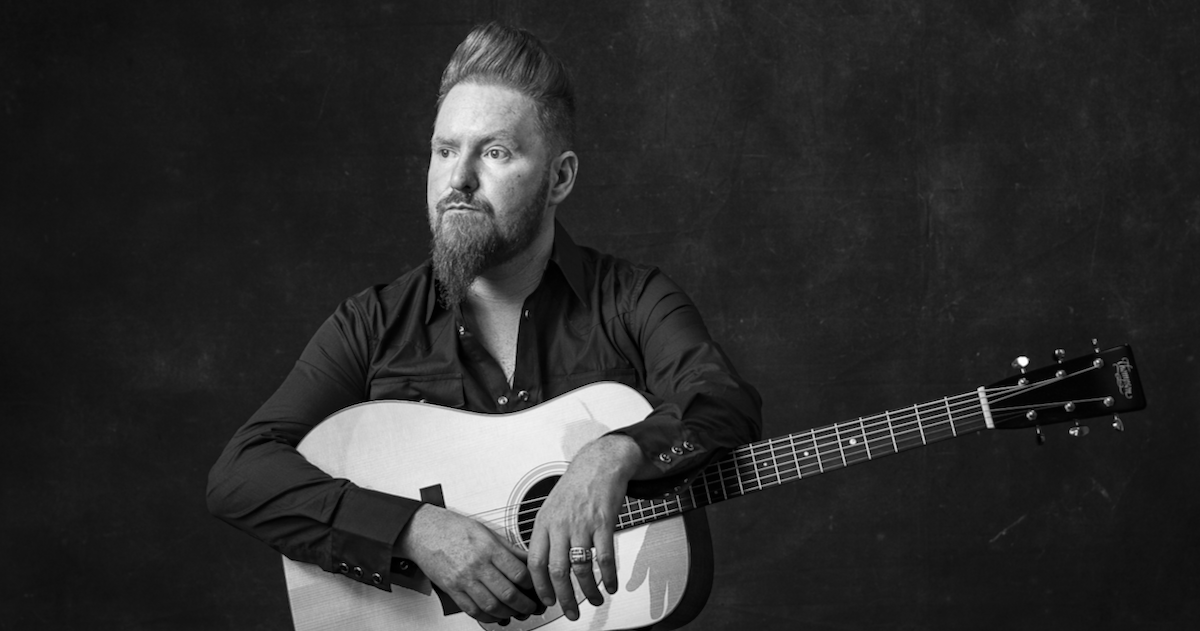
Brit Taylor’s Roots Are Planted in the Land Of The Forgotten

After writing with Dan Auerbach for her 2021 debut, Real Me, and with Sturgill Simpson on 2023’s Kentucky Blue, Brit Taylor instead looked in-house to bring her latest effort, Land Of The Forgotten, to life.

Cue up her husband, Adam Chaffins. Taylor not only co-wrote seven of the album’s 11 songs with Chaffins, but asked him to produce the record, as well – his second straight after doing the same for Kentucky Bluegrassed (2024) as well. Together the two homed in on tunes rich in working class and Appalachian themes that push back and occasionally lean into narratives about the region and its people.

From the hillbilly manifestations of “Broke No More” to throwing all your ex’s possessions out on the curb (“All For Sale”), to the resilience of mountain folk (“Land Of The Forgotten”) and infidelity with the bottle (“Warning You Whiskey”), Taylor shows that Appalachia is much more than just a footnote or only worth mentioning when things go sideways.

“It puts a lighthearted spin on some of the tougher things about life,” says Taylor. “Not to make light of difficult times, but to remind us two things can exist at one time. And, [remind us] not to forget to take a look at the bright side too, and to not take it all so seriously.

“There’s a lot of awful things happening in the world that we need to be aware of and need to do what we can to change, but dwelling on it and ignoring all the good things around us in the process doesn’t help anyone.”

On the eve of the album’s March 6 release, Taylor spoke with BGS about motherhood, outsider perceptions of Appalachia, black sheep, and more.

Leading up to Land Of The Forgotten’s release you mentioned achieving a sound with this project that you’ve been trying to attain since first moving to Nashville in 2007. What was it you captured and how were you able to do it?

Brit Taylor: Just that bluegrass influence on country, particularly the late ‘80s sound of The Judds, Ricky Skaggs, and Patty Loveless. When I go back and listen to those things I noticed they’re all very acoustic driven. At some point all of that became really unpopular – fiddle, steel, and mandolin all went out of style for a while. We had a lot of fiddle on the last record, but [we’re] incorporating those instruments more than ever before on this album, which gave it a very “back to my roots” feel.

Everything, down to how this record is mixed, turned out just the way I wanted it to. A lot of it’s because Adam grew up [just over an hour away] in Louisa, [Kentucky] – so we listened to the same radio stations and the same types of Appalachian country music. Us understanding each other so well musically is what made this all click.

I know that most of the album wasn’t written with bluegrass in mind, but I find it interesting that you say this album is more bluegrass-y than Kentucky Bluegrassed. Are there any key differences between the two?

Even those bluegrassed versions weren’t “actual” bluegrass songs, because they still had drums on them. We made that record to showcase bluegrass versions of those country songs. We weren’t really shooting for a country record with that one, but the goal with Land Of The Forgotten has very much been to make a country record, but one that’s heavily influenced by bluegrass instrumentation similar to anything from Patty Loveless to Lee Ann Womack when she sings “Does My Ring Burn Your Finger.” On those songs you could strip the drums out and they would feel right at home as bluegrass songs even though they all come from country-leaning records.

You just touched on Patty Loveless (Emory Gordy) and Lee Ann Womack (Frank Liddell), both of whom recorded frequently with their husbands as producers as well. Tell me about that connection, both with them and your husband Adam, and how each informed the project?

It started out with me just making a giant playlist of songs I love that were all over the map with no goal in mind. But as I started listening to it I began noticing a lot of similarities between the songs on it, whether they were from Willie Nelson, Ricky Skaggs, Dwight [Yoakam], Patty [Loveless], or Lee Ann Womack. Then I noticed that a lot of them were produced by Emory Gordy or Frank Liddell, whether it was Lee Ann Womack or the Pistol Annies.

From there, I went to Adam and told him, “These are the things that I love – I need you to be my Frank and Emory.” [Laughs] They’re two of my favorites, and just so happened to have worked with their wives, so it made so much sense for me to do the same. Adam knows me better than anybody else and hears me sing in a billion different places. He just knows me, just like [Emory and Frank] knew their wives and knew what they wanted and how to get it as well as pushing and encouraging them at the same time.

Another family tie to this record is that it’s released only a few months after the birth of your first child, Beulah. What was it like bringing this project to market while also going through that experience?

We cut the record last January, and at that point I was not pregnant yet. We’d been talking about wanting a kid for a really long time, and this record came out exactly the way I wanted it to. When we found out about the pregnancy I was like, “I need to be as fearless about the personal decisions in my life as I am about music, and stop letting the stigmas about what the industry thinks of women with kids dictate the way that I live my life.” Or else I’m going to run out of time to get the things done that I want. So we just decided to take a leap of faith and it’s all worked out, as it often does when you trust the universe, that it has your back, and that everything’s going to be okay.

It was so much fun starting out the year cutting that record and then going on tour with the Nitty Gritty Dirt Band and Adam was with me. It was while in St. Augustine, Florida, doing that when we found out we were pregnant. I started back with them on another leg of the tour in July and showed up with a big belly, and it was so fun! I did that entire tour with no shoes. Jeff Hanna was always cracking up because I was just barefoot and pregnant on tour. [Laughs] It’s been really empowering to know that you can have it all, you just have to be brave and stop listening to the limitations that other people would like to put on you all the time.

Of all your albums so far, Land Of The Forgotten has some of my favorite wordplay. A prime example is “Warning You Whiskey,” a drinking song disguised as a ballad about an unfaithful lover. How did the idea for that one come about?

I love when songs have a twist or they’re not quite what you think they are. I also love a good story, so when my husband and I sat down with Adam Wright and he started telling us about this idea for a song called “Warning You Whiskey,” that sounds like you’re talking about a woman at first. I loved it from the beginning. We worked out the music and got that first verse and chorus written so fast that it wrote itself.

When we got to the second verse, I remember sitting there looking at both of them saying, “Man, I really want to kick this whiskey bottle’s butt!” [Laughs] Then my husband blurted out, “I’ll grip my hand around your long, skinny neck” and I just lost it. I jumped out of my chair because I was laughing so hard. Then Adam Wright popped out a line, I did the next, and within five minutes we had the entire thing written.

It reminded me so much of something Loretta Lynn would write and makes me think of women in my family that I’ve observed growing up. My mamaw really fought hard in the beginning of her relationship with my papaw, with him drinking, and she stuck by his side. Sometimes all he needed was a butt whoopin’. She’d just stand by his side and helped him through everything.

In the past you also haven’t hesitated to write a catchy song about getting through the daily grind, like “Rich Little Girls.” This album has two: “Lately I’ve Been Thinkin’” and “Around and Around.” Is there anything beyond that ties the ones on this record together?

“Around and Around” is just about life in general. It’s funny because everybody expected us to tie a really pretty bow on it in the bridge, but we just didn’t, because sometimes that’s how life is – we just keep spinning and spinning. Sometimes we figure out how to get out of the rat race and sometimes we don’t. The song is an observation of this girl who is finally becoming self-aware enough of her circumstances to stand outside of them and decide if she wants to change them or not.

As for “Lately I’ve Been Thinkin’,” it’s definitely inspired by the music industry. We were actually writing a different song that’s going to be on Adam’s record, but in the middle of writing [we] began talking about one of the award shows taking place that week, how much we hated it and all of the butt-kissing that goes on at them. Then [my husband] said, “Lately I’ve been thinking, I don’t like much stuff” and Adam Wright started cracking up. It was so funny because it all just started from a conversation. By the end of it, we all were like, “Well, it’s really not that bad. We get to sit here and write songs. We actually have it pretty good.”

It seems like many of the songs on Land Of The Forgotten originated from spontaneous writing moments. Is that a regular occurrence for you?

Those are my favorite songs. When the three of us write, we never sit down and think we’re gonna write a song for a specific person today. We just write what’s in the room, what’s moving us, and what we’re feeling. That usually ends up being something out of conversation and is oftentimes funny, because the three of us have the same sense of humor and [same] kind of outlook on life. I know a lot of people can get a bad taste in their mouth about co-writing and how like “white-coat” it can be, but when you find your tribe and you find your people, it’s awesome. It’s so much fun.

Earlier you discussed how distinctly Appalachian this record is. In my opinion, one of the best embodiments of that is the title track, “Land Of The Forgotten.” Was there a specific moment or place that inspired it?

I don’t remember if I wrote the song around when the floods happened, but I remember writing the hook down when all the floods happened back in my native Knott County in 2022. I feel like that’s the only time that we’re remembered, when tragedy strikes, and then we’re just kind of forgotten again until somebody can make fun of us. A lot of people have negative perceptions of what they think Eastern Kentucky or what hillbilly is, but it’s nothing like what people think. It’s about resilience, and strength, and honor, and family, and beauty, and folklore. Appalachia is so beautiful and so misunderstood.

I’ll spend the rest of my life trying to write a song as good as Darrell Scott’s “You’ll Never Leave Harlan Alive.” I don’t know if I did that with this song by any means, but that’s always the goal when trying to write about home. I think that’s probably why I’ve never had a song about Appalachia. I’ve had a song about Kentucky in general, but it was more of a love story. I’ve tried to write it a million times, but I finally did one that I’m proud of, and that’s “Land Of The Forgotten.” When we put all these songs together, it quickly became a lot of stories about blue-collar life, surviving, and just how hard it is right now in this economy. Through that, “Land Of The Forgotten” became the theme of the record without even trying.

One of the album’s more lighthearted moments comes on “Crazy Leaf,” which sees you ruminating on that one black sheep we all have in our family. How did that one come to be?

When we sat down to write that – my husband, Jeremy Bussey and I – we started talking about all the crazy people we had in our families. It was Bussey who had the idea for the title, “Crazy Leaf,” which is a combination of these characters from our families into one song. But we didn’t want to pick on anybody too hard or put too much truth in there that you hurt somebody’s feelings.

My favorite thing was when I played it for my mom, and there’s that baptism line – “He got baptized for the fifth time, because the first four didn’t work” – where my mom said, “Your mammy used to say that if the water was too cold in the creek, the baptism wouldn’t take.” [Laughs] But in all honesty, it’s probably me – I’m the crazy leaf in my family.

From “Crazy Leaf” to motherhood and bringing this album to life with your husband as producer, Land Of The Forgotten has a whole lot to do with family. That won’t change anytime soon either with you and Adam going on a co-headlining tour together this spring. What are you most excited for about that?

I could not be more excited to be able to travel with Adam and for both of us to be able to do our own sets. We both work together a lot, but we’re still two individual artists as well, which I think confuses people sometimes. People will ask, “What’s your band name?” I’ll have to say, “No, I’m Brit Taylor and this is Adam Chaffins.” Maybe we’ll do a band thing eventually.

I’m also nervous because we’ll have the baby on the road for the first time, but that’ll also be really fun too. I can’t wait to show her pictures one day. I’ll be taking her on tour with me this summer out west with Nitty Gritty Dirt Band, too. She was in my belly through all those tours last year, so it’s gonna be so fun to have her on the road this time. My goal is to one day be touring bigger venues on a bus with my entire family there so we can travel the world together – that’s the dream.

What has the process of bringing Land Of The Forgotten to life taught you about yourself?

It’s a continuation of what everything keeps teaching me, which is that I just need to trust my gut and stop second-guessing things all the time. Adam has been a huge help with that. I feel like I can be hard on myself and always assume that somebody else knows better than me because they’ve got more experience. I don’t know if the creative process works that way. I think it only works when you’re true to yourself, and that’s something that isn’t always easy for me as a people pleaser and somebody that doubts herself a lot. So just learning to stand in my own truth and stand in my power and be confident in myself.


Photo Credit: Sammy Hearn
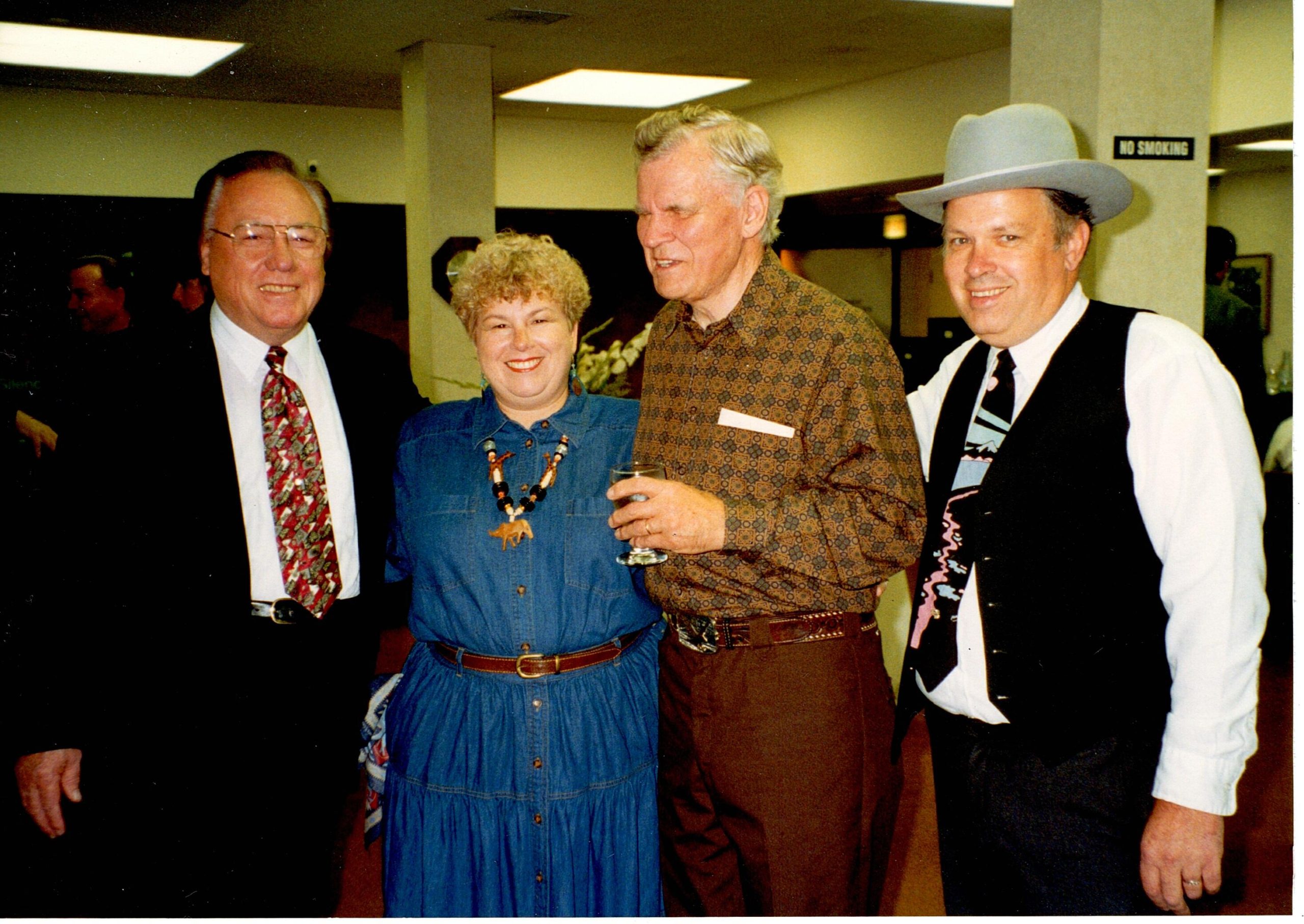
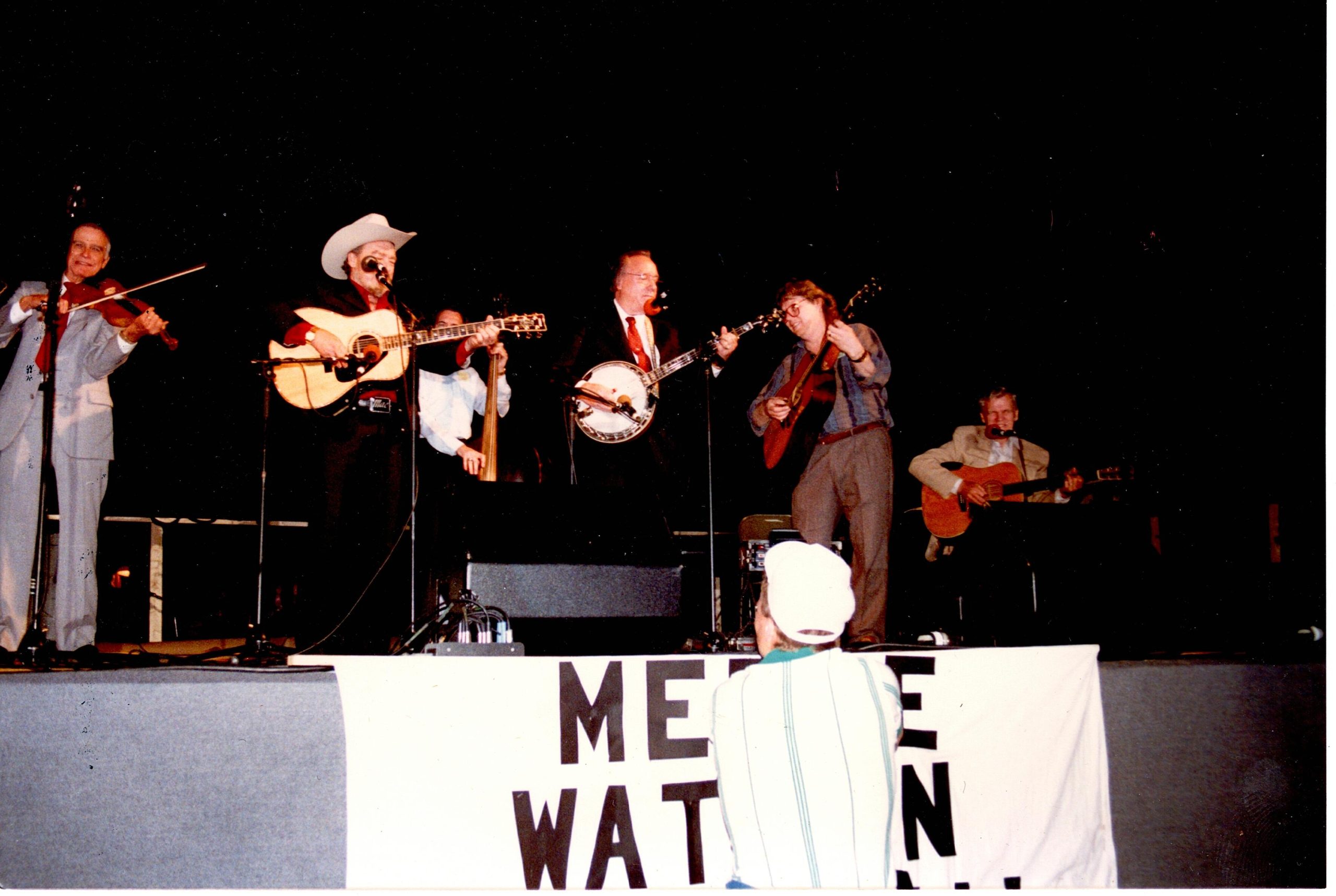
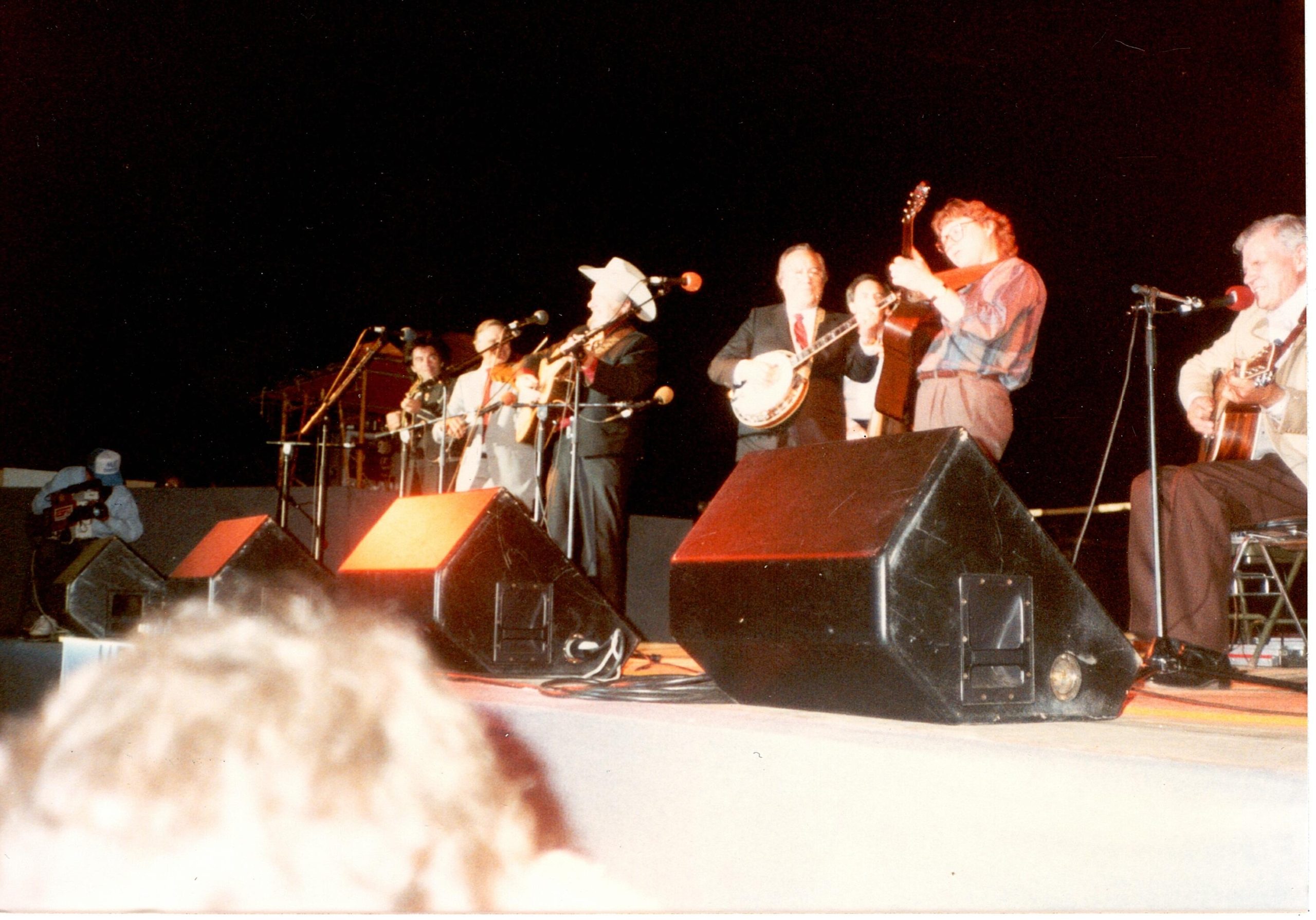
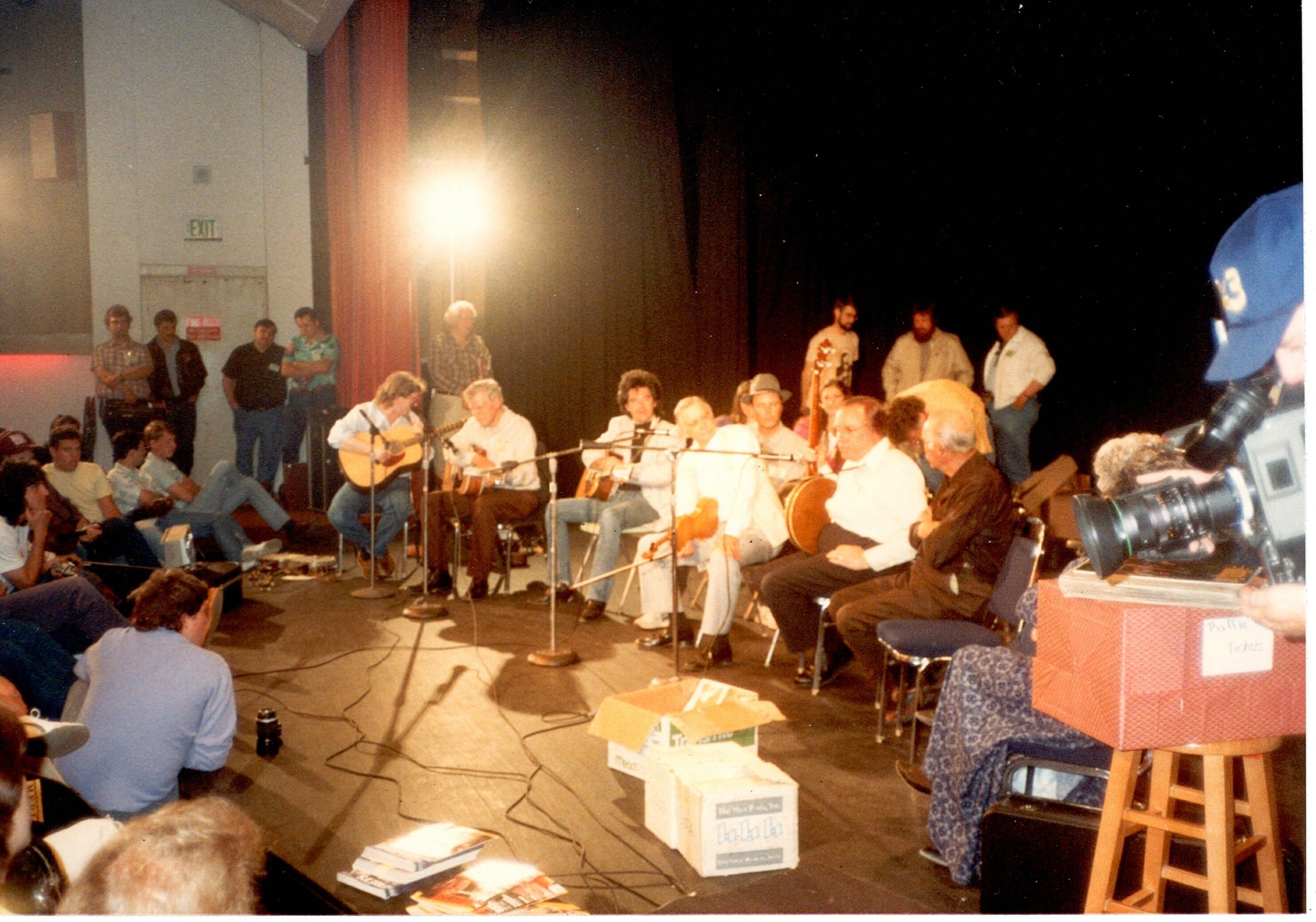
Doc Watson & Earl Scruggs’ Friendship in Photographs

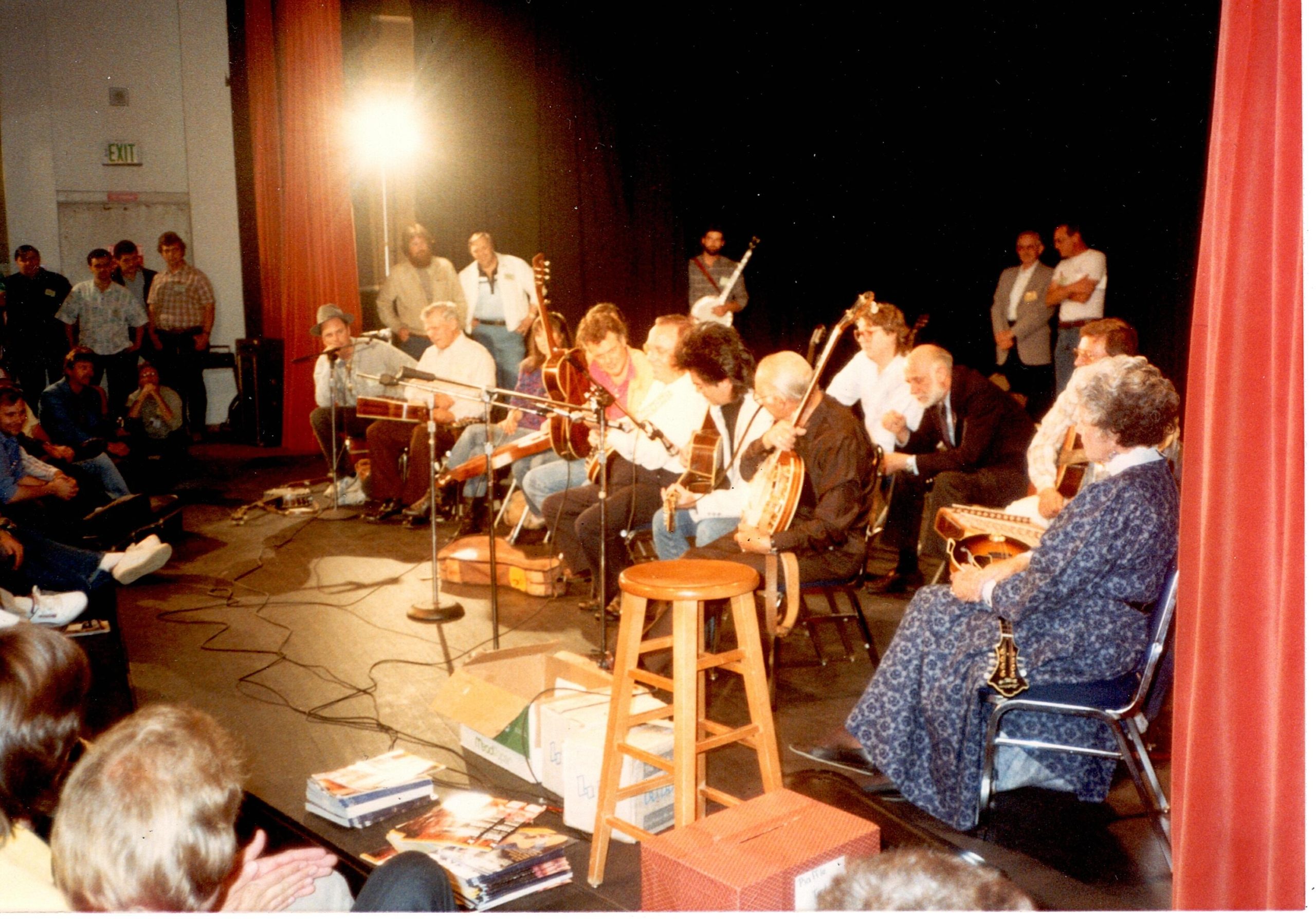
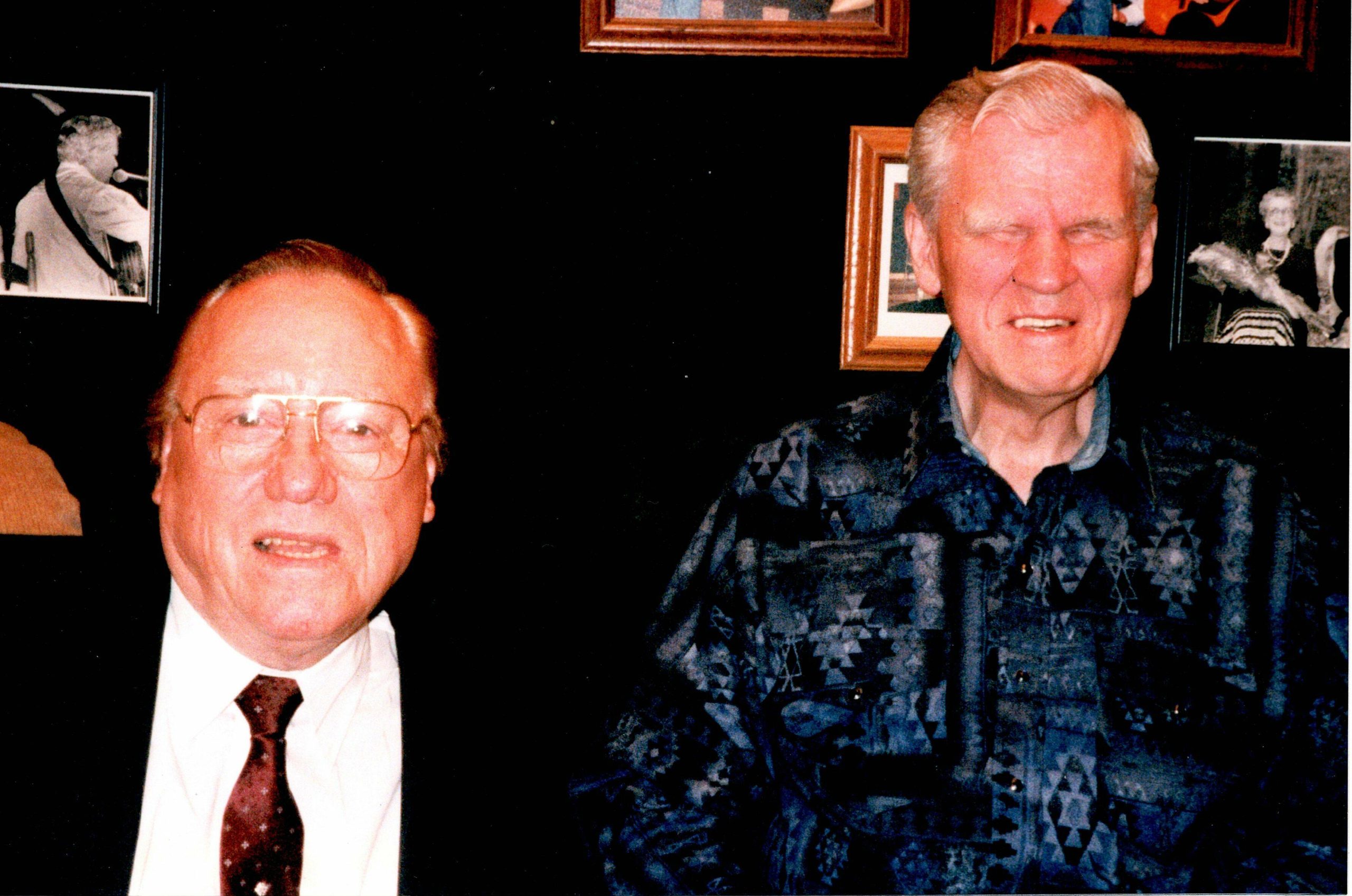
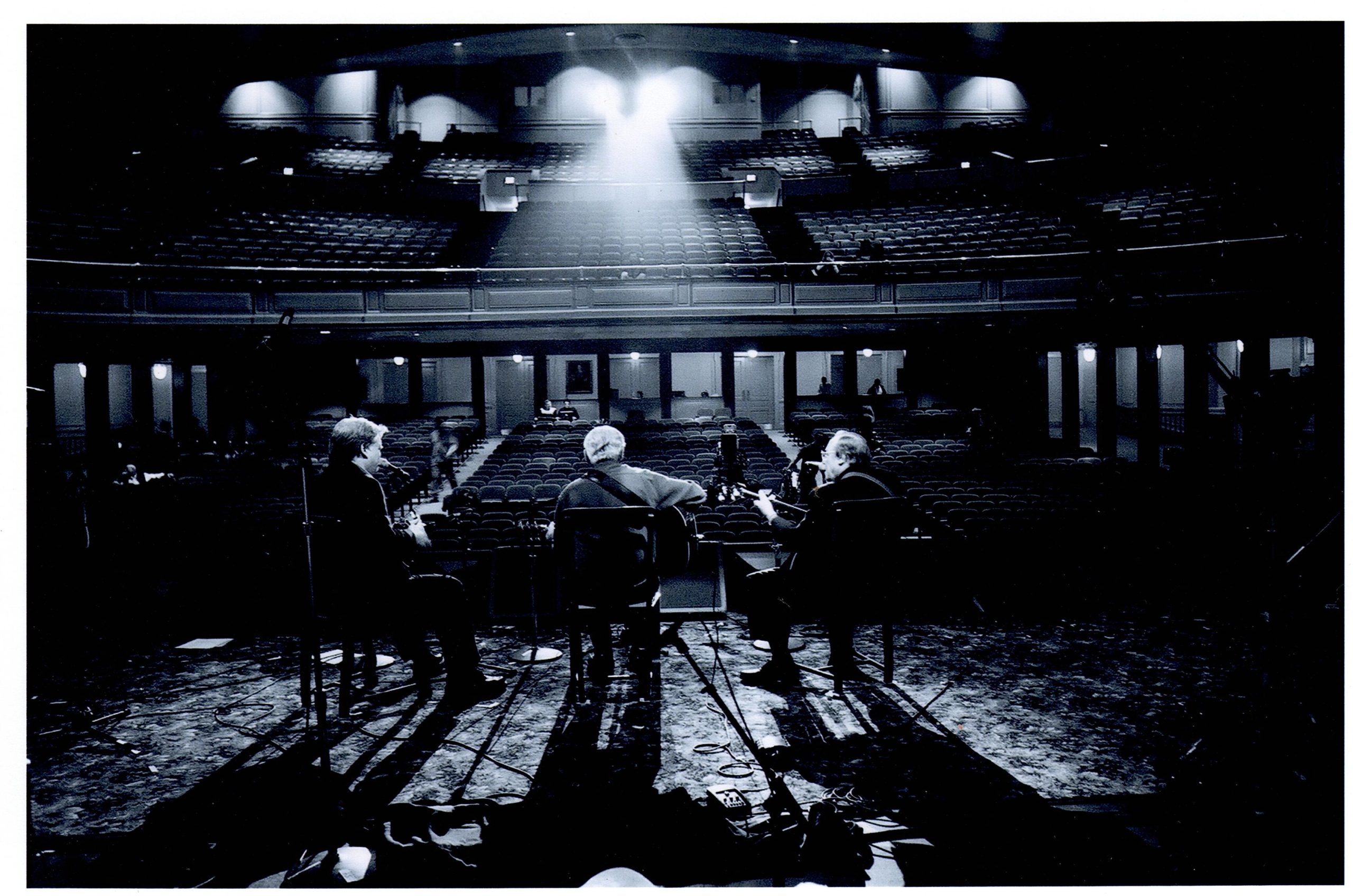
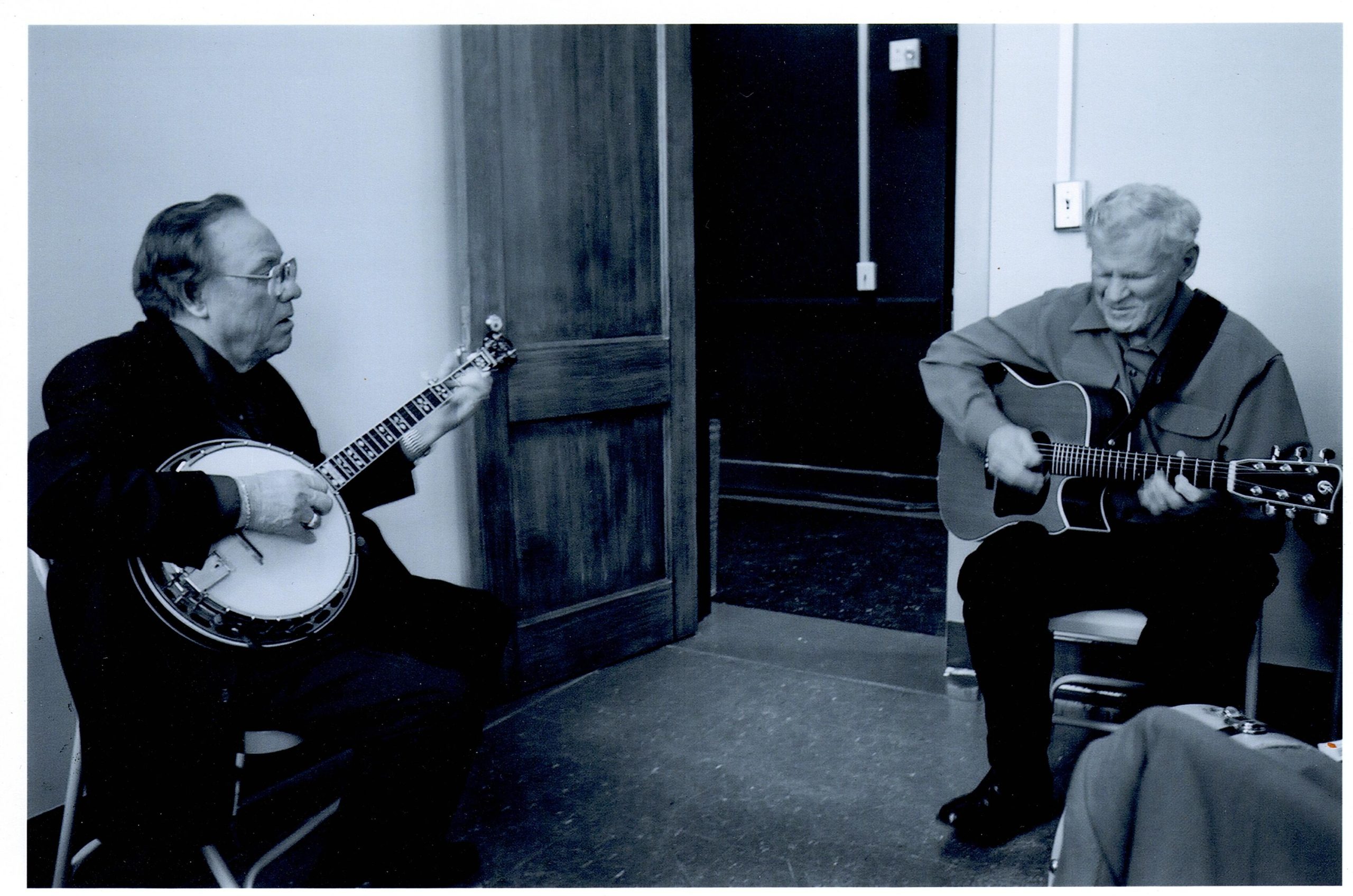
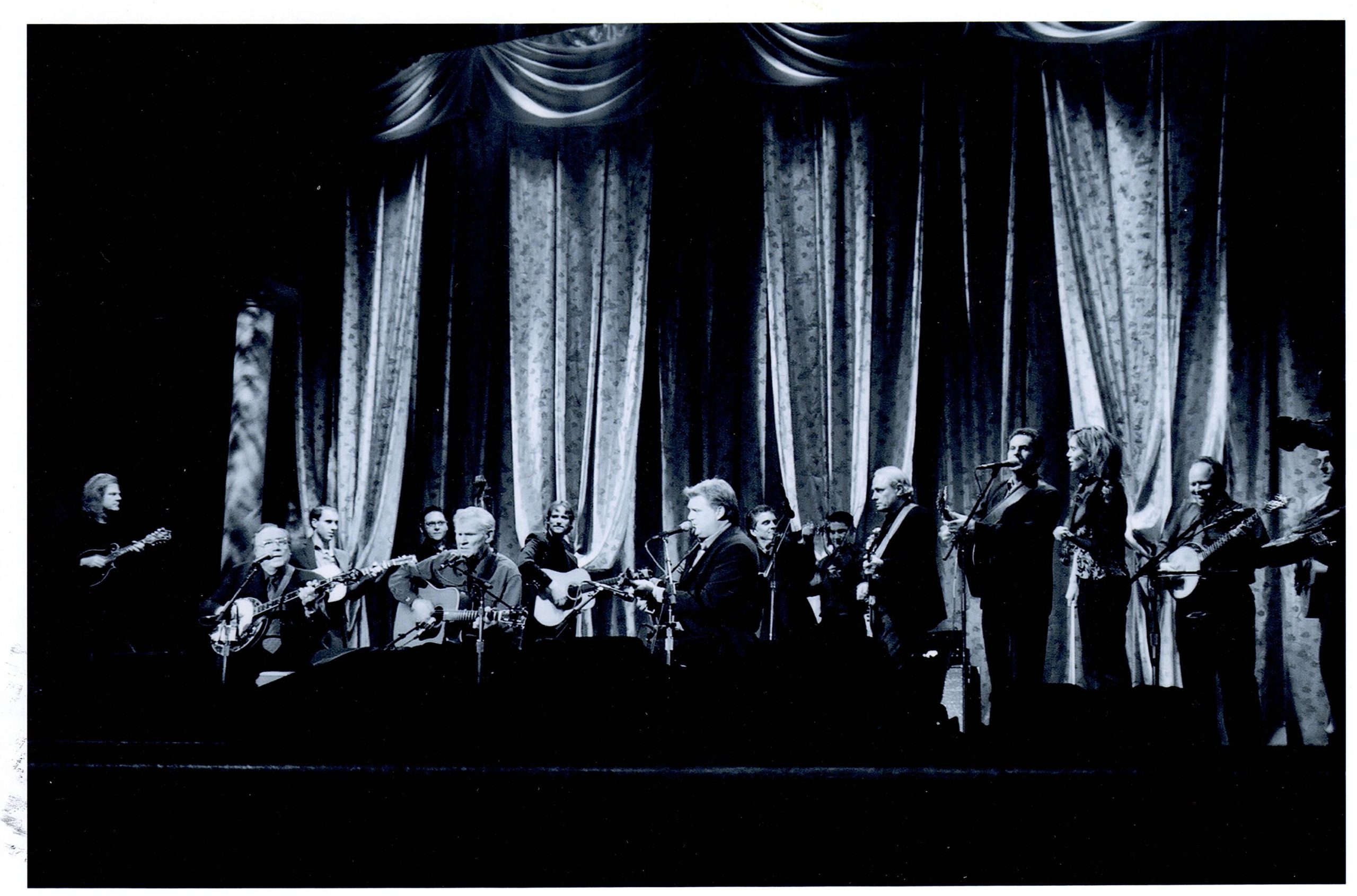
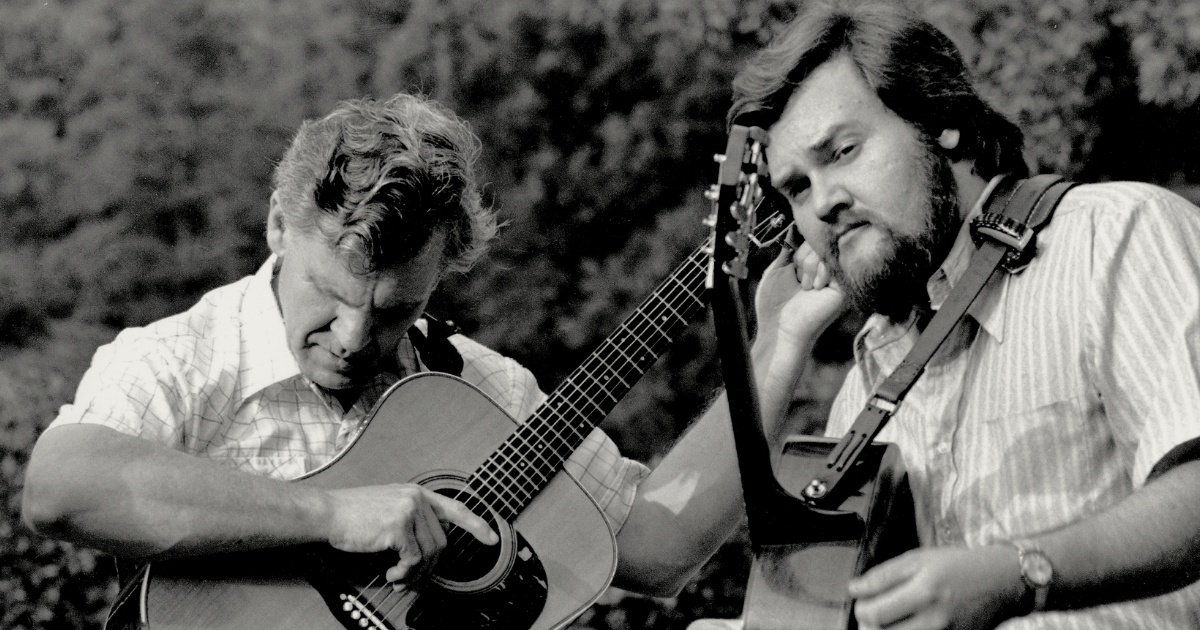
It’s no secret that Earl Scruggs and Doc Watson were great friends, collaborators, and mutual admirers. Both of the bluegrass, old-time, and mountain-music stylists took inspiration and borrowed heavily from the other across their careers, whether they were making music together or separately in any of their many endeavors. The moments they came together, though – from The Three Pickers album and concert film, to David Hoffman’s iconic backyard jam session film of the Scruggs and Watson clans picking together, to many more appearances and recordings – were always magical. Two legendary stylists bouncing musical ideas off of each other as only these two could.

In honor of our Doc in December series for Artist of the Month, we’ve partnered with our friends at the Earl Scruggs Center in Shelby, North Carolina, to bring you an exclusive look inside their collection and archives at photos of Scruggs and Watson together. The Center’s executive director, Mary Beth Martin, pulled a selection of historic photos from the collection as well as a handwritten quote directly from Scruggs’ notes about Watson and his influence:

“There are two people’s sound no man can, in my estimation, duplicate,” Earl states in a notebook. “Of course I’m referring to Mama Maybelle and Doc Watson. I’ve had the pleasure to work [with] and visit these people. I will never cease to admire the courage of these people.”

You can certainly hear the impact and influence of Watson and Maybelle Carter on Scruggs’ playing, especially his approach to acoustic guitar, when he would most often fingerpick the six-string.

“Earl had enormous respect for Doc and admired him deeply,” says Martin of the Earl Scruggs Center via email. “Both grew up in humble North Carolina homes surrounded by rich musical traditions and went on to leave an incredible mark on music. Having Earl’s personal memories and photos of Doc in our collection makes their connection feel especially meaningful.”

Over the course of their careers in roots music, Scruggs and Watson performed, collaborated, and recorded together dozens and dozens of times. We’re very proud to be able to share these photographs from the Earl Scruggs Center Collection to celebrate the cross-pollination of these two Bluegrass Hall of Famers and Doc in December.

The Earl Scruggs Center is located in downtown Shelby, North Carolina, and celebrates the life, legacy, and groundbreaking sound of Earl Scruggs. Their collection includes many treasured Scruggs family objects and remarkable pieces from Earl’s career – including more than 2,000 photographs. In January, they’ll install new interactive exhibits that dig deep into the roots of the region’s music and the history of bluegrass. The entire ESC team is excited to welcome everyone back to the museum when they reopen on February 3, 2026, after renovations and completion of the new exhibits.

Beyond the museum, the Earl Scruggs Center team are also restoring the Earl Scruggs Homeplace in the Flint Hill community of Cleveland County, bringing Earl’s childhood home back to the formative era that shaped him as a musician.

To stay in the loop and to catch upcoming Earl Scruggs Center events like the Earl Experience Banjo Camp, visit their website and connect with them on socials. We hope you enjoy our special photo story with our friends at the Earl Scruggs Center celebrating Earl Scruggs, Doc Watson, and Doc in December.


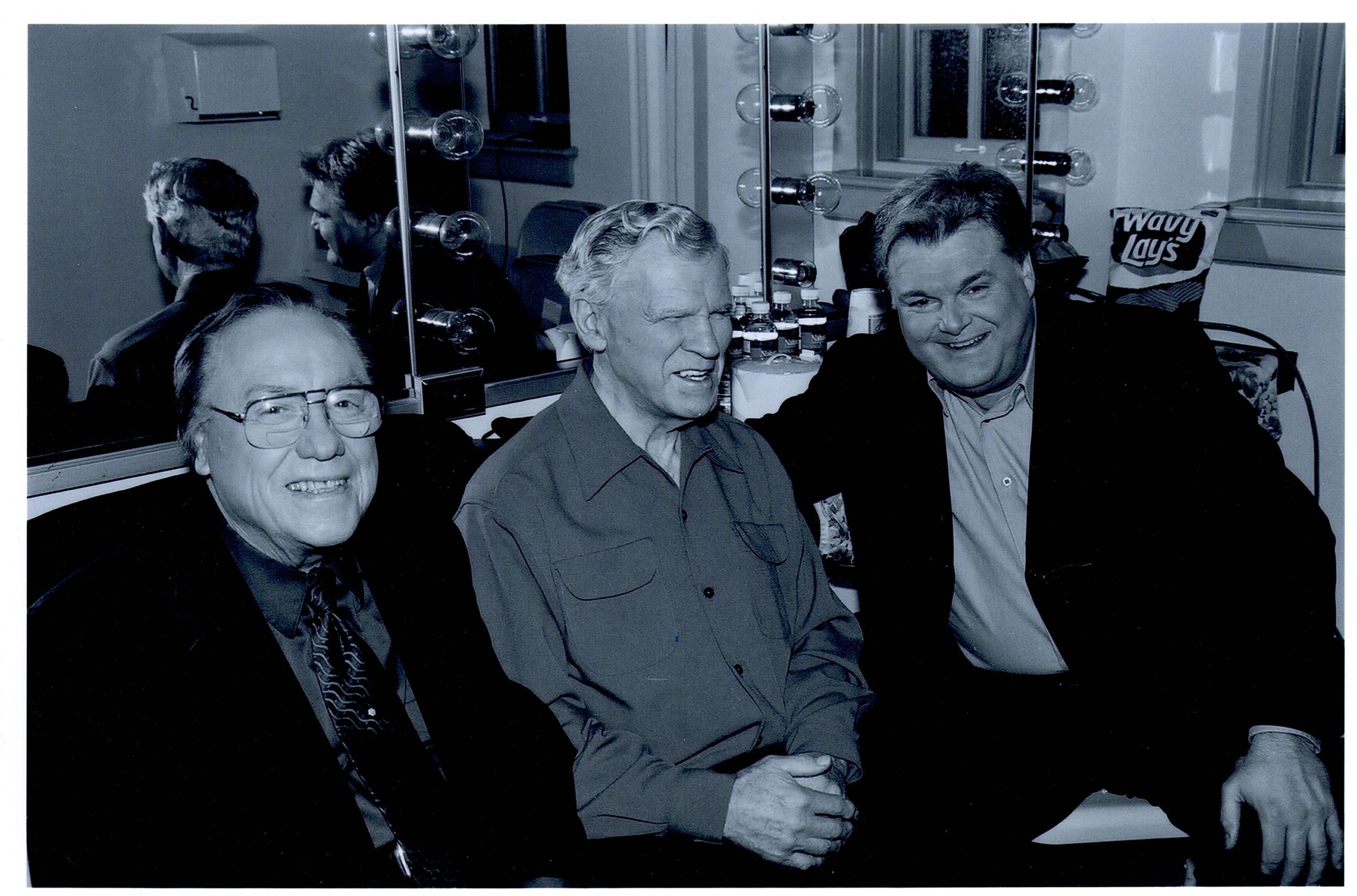
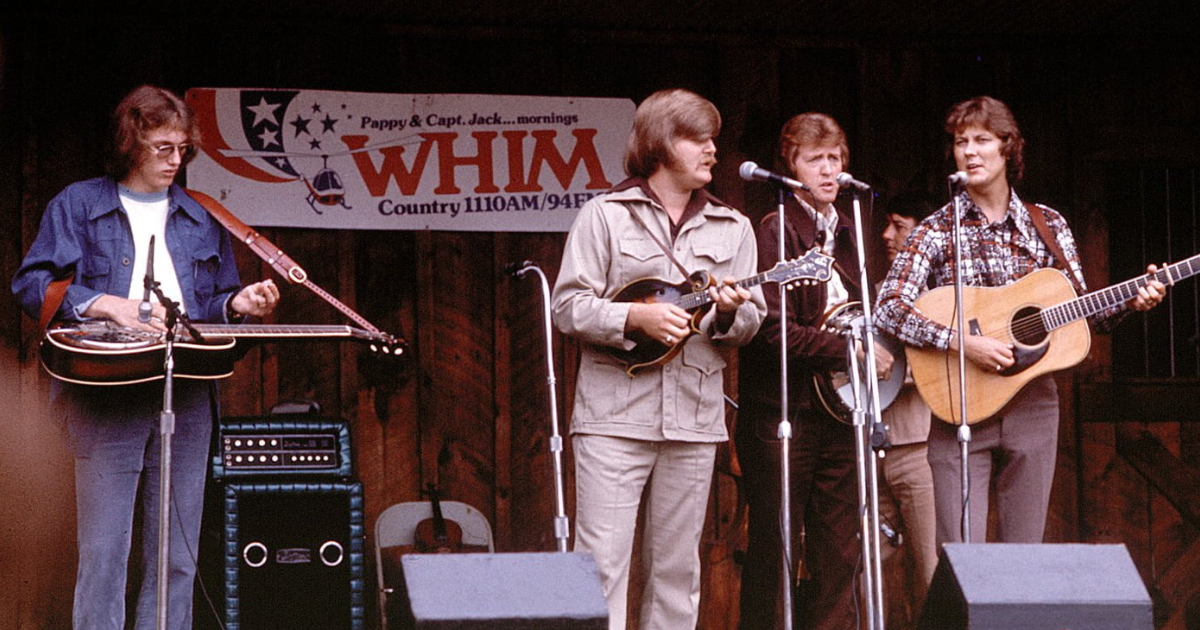
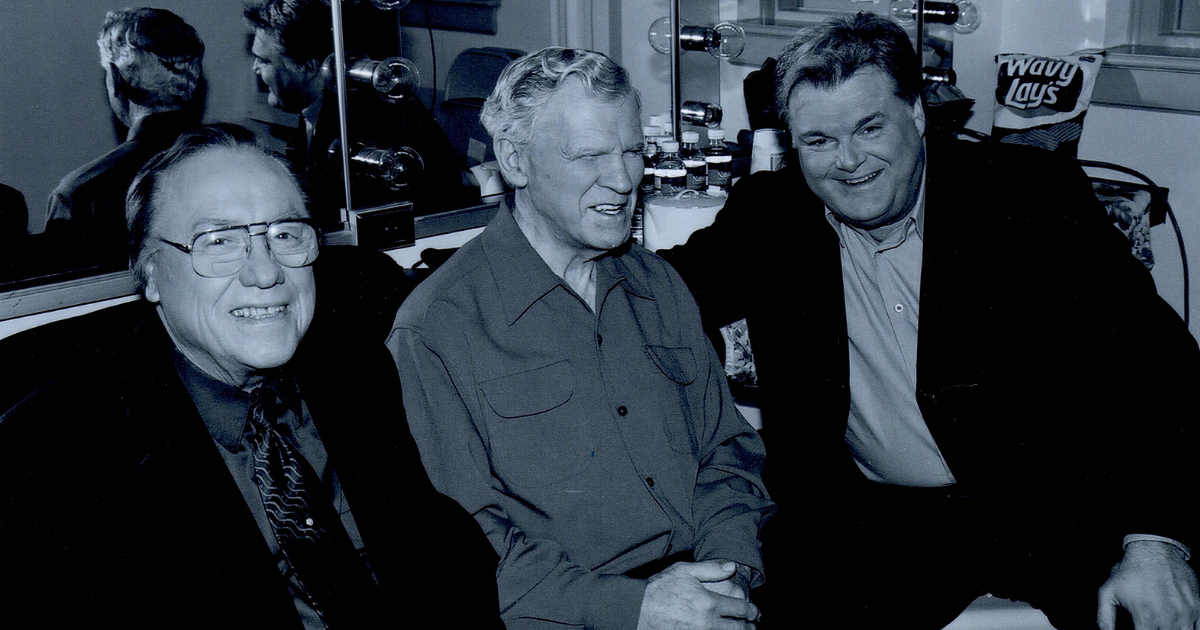
All photos courtesy of the Earl Scruggs Center Collection. Lead image: Earl Scruggs, Doc Watson, and Ricky Skaggs backstage at the taping for The Three Pickers.

Doc Watson’s Legacy in Collaboration:
8 Essential Performances

Few musicians have ever moved as fluidly between eras, genres, and generations as Doc Watson. From front-porch duets to grand-stage bluegrass revivals, Watson’s collaborations have a way of dissolving categories entirely.

His flatpicking precision, rhythmic calm, and vocal warmth made him the kind of performer who elevated everyone within earshot – young prodigies, genre pioneers, folk-tradition torch bearers, and musical iconoclasts alike. His reputation as a consummate accompanist was built not on showmanship or flamboyance, but on musical generosity and an intuitive sense of timing, phrasing, and expression that allowed others to shine while retaining his unmistakable voice.

Part of Watson’s power lies in the consistency of his musical identity. He never strained to fit into a new format or trend; instead, others bent gratefully toward his center of gravity. Whether playing an old-time fiddle tune, trading licks with a jazz-influenced mandolinist, or harmonizing with a younger bluegrass singer, he brought a sense of ease and groundedness that anchored every ensemble. That stability gave his collaborators the freedom to explore, improvise, and innovate – knowing Doc would be right there, steady and sure.

This sense of balance between precision and freedom made him a model collaborator for musicians across generations, and his impact can be traced through countless recordings, festival lineups, and mentorships of younger players.

Watson’s influence was not just technical but communal. He could guide a performance without overwhelming it, offering the ideal blend of authority and humility. In his guitar, listeners hear the voice of the North Carolina mountains, the pulse of Appalachian tradition, and the adaptability of a musician able to engage any genre without losing authenticity.

Today, YouTube’s patchwork archive of footage allows us to witness these collaborations anew: small moments of musical connection, sometimes real-time, sometimes reconstructed from archival sources. Below is a curated set of eight standout filmed or recorded collaborations that illustrate Watson’s reach. From storied duets with Chet Atkins or Earl Scruggs to meetings with newer-generation players.

“Roll in My Sweet Baby’s Arms” – Doc Watson, Earl Scruggs & Ricky Skaggs
(The Three Pickers)

This relaxed but virtuosic performance features Watson, Scruggs, and Skaggs playing with the ease of a porch jam made public. Watson’s crisp flatpicking forms a warm foundation, while Scruggs’ banjo drives with characteristic agility and Skaggs adds mandolin flourish and bounce.

The trio exhibits mutual respect and joy, and their lines interweave with natural conversation.
The recorded performance comes from the 2003 album The Three Pickers. The energy and clarity of the musicianship exemplify Watson’s ability to anchor an ensemble while remaining entirely supportive, a model of intergenerational teamwork. It is a performance that displays the combination of technical mastery and intuitive musical empathy that defined Watson’s career.

“Tennessee Stud” – Doc Watson & Nitty Gritty Dirt Band
(Will the Circle Be Unbroken)

Watson’s performance of “Tennessee Stud” on the Will the Circle Be Unbroken project exemplifies his ability to blend seamlessly with both established musicians and a younger ensemble eager to learn from him. His deep, resonant vocals float over understated but fluid flatpicking, supporting the Nitty Gritty Dirt Band’s harmony vocals and rhythmic drive.
Watson’s musical sensitivity allowed for a dialogue that bridged generations, bringing traditional songs into a contemporary context while retaining their original heart and vibrancy. This track also highlights Watson’s ability to adapt to the studio environment, shaping a sound that was both authentic and polished. The 1972 studio album is well-documented, though various YouTube versions may mix studio, rehearsal, or live takes.

“Tennessee Rag / Beaumont Rag” – Doc Watson & Chet Atkins (Reflections)

In this medley, Watson and Chet Atkins engage in a playful, masterful guitar dialogue. Watson’s flatpicking exhibits crisp, percussive articulation, while Atkins’ thumb picking introduces a smooth, jazz-inflected counterpoint. Both artists navigate tempo and dynamics with precision, creating a performance that is both technically dazzling and deeply musical.

The track appears on the Reflections album and while some online performances derive from live shows or reissued audio, the studio recording itself exalts the collaborative interplay. This duet demonstrates Watson’s ability to move effortlessly between folk and jazz guitar traditions, honoring both while creating something uniquely their own. The performance underscores his adaptability, an essential quality in a musician sought after by so many genres and generations.

“Black Mountain Rag” – Doc Watson & Merle Watson

The father-son dynamic between Doc and Merle Watson is in full display in this live rendition of “Black Mountain Rag.” Merle’s nimble, rhythmic energy dances atop Doc’s grounded guitar tempo, producing an interplay that is conversational, playful, and intricate. Their shared history and years of touring allow for spontaneous embellishments and musical commentary woven into the tune.

This performance captures the essence of the Watson family legacy, showing how Doc nurtured both musical skill and expressive interpretation in the next generation. The piece also serves as a lesson in ensemble sensitivity, as Doc balances his playing to give Merle ample space while maintaining rhythmic and harmonic cohesion.

“What Would You Give in Exchange for Your Soul?” – Doc Watson & Bill Monroe

Watson and Monroe’s pairing on this traditional tune combines the latter’s piercing, high-lonesome tenor with the former’s warm baritone, creating a striking emotional contrast. Watson’s guitar provides steady, unobtrusive accompaniment, allowing the vocal interplay to take center stage.

This recording exemplifies Watson’s ability to adapt to any partner, responding in real time to vocal phrasing and tempo shifts. The performance demonstrates his interpretive sensitivity, highlighting how he could honor a song’s emotional core while integrating his own stylistic voice.

“Shady Grove / Summertime” – Doc Watson & David Grisman

Watson’s collaboration with David Grisman blends Appalachian folk with progressive acoustic styling. In this rendition of “Shady Grove,” Watson’s rhythmic guitar backgrounds Grisman’s mandolin flourishes, resulting in a lively, conversational back-and-forth. Improvisation is key, as both musicians respond to each other’s phrasing, demonstrating mutual respect and spontaneity.

This collaboration underscores Watson’s versatility, showing he could navigate between traditional melodies and innovative interpretations, elevating both in the process. It is a reminder of his role in bridging traditional and progressive acoustic music for audiences and colleagues alike.

“Amazing Grace” – Doc Watson & Jean Ritchie

Watson and Jean Ritchie’s collaborations were well-established, including performances at venues like Folk City in the early 1960s. However, the specific attribution of some YouTube uploads titled “Amazing Grace” is ambiguous. The Live at Folk City album recording is the most reliable source, showing their complementary styles: Watson’s gentle, precise guitar lines support Ritchie’s clear, expressive vocals, blending Appalachian tradition with personal interpretation. They represent the transmission of Appalachian folk music to wider audiences and the seamless melding of their similar sensibilities.

“Summertime” – Doc Watson & Mark O’Connor

Watson’s influence on multi-instrumentalist Mark O’Connor is well-known; O’Connor cites him as a formative inspiration and their collaboration remains significant as a symbolic bridge between generations. Watson’s teachings and style informed O’Connor’s fiddle mastery, illustrating Watson’s mentorship and the continuity of American acoustic tradition. Indeed, their shared repertoire speaks to the passing of musical knowledge and the sustaining of tradition through personal and professional interaction.

These eight performances above collectively highlight Doc Watson’s role not only as a primary musician, but as a profoundly generous collaborator. He created space for others to excel, whether alongside legends like Bill Monroe, Earl Scruggs, and Chet Atkins or with younger rising stars such as Alison Krauss and Mark O’Connor. Watson’s approach combined technical mastery with emotional intelligence, allowing him to respond intuitively to fellow musicians in real time.

His collaborations illuminate the breadth of his influence. Watson moved with ease between old-time Appalachian tunes, rag medleys, gospel-inflected ballads, rocking hillbilly sounds, and improvised jam sessions. Across these contexts, he remained unmistakably himself: grounded, warm, and adaptable.

By mentoring younger musicians, bridging generations, and seamlessly adapting to new musical contexts, Doc Watson demonstrated that tradition is not static; it is a living, evolving practice. His legacy continues to teach musicians the art of generosity, the importance of listening, and the beauty of musical dialogue. Perhaps in every collaboration, Watson’s spirit resonates, ensuring that his contribution to music endures across time, space, and audience.


Lead image courtesy of MerleFest.

Danny Burns’ Roots Music Journey Through the South

My new album’s theme, along with the theme of this Mixtape, is a roots-inspired journey through the South, with songs that evoke the feeling of traveling across its landscapes and into the heart of the Deep South. I hope the fans enjoy the journey of these songs and all the sounds and people it takes to make them come to life on Southern Sky – it takes a village.

That village comes to life across the nine-track journey of Southern Sky, where Irish roots fuse with Southern soul driven by Dobros, fiddles, and rich storytelling that soar with Appalachian tradition and Southern warmth. Inspired by the textures of the South, the spirit of the album is like Allen Toussaint’s Southern Nights, where Appalachian tales intertwine with the deep twang of the South.

Southern Sky features a multitude of musical titans – Vince Gill, Tim O’Brien, Ricky Skaggs, and Sam Bush to name a few – all contributing to the exceptional sound that I strive for. – Danny Burns

“Summer in Siam” – The Pogues

I always loved this tune, growing up listening to the Pogues and having met Shane many moons ago.

“My Old Friend the Blues” – Steve Earle

Steve is one of my favorites. I’ve had the honor to sing with him, open shows with him, and hang on his bus. His songs are epic; this is a great example of that.

“Southern Nights” – Citizen Cope

I first met Clarence Greenwood in New Orleans when I was driving him, Neal Casal, and Jon Graboff (the Cardinals) around while they were playing Tipitina’s. I fell in love with Clarence’s songs and his performances. Another great American artist and songwriter.

“Whenever You Come Around” – Vince Gill

I’m a huge fan of Vince and this track is about as good as it gets. I’ve always admired his songs, his voice, and everything he brings to the table.

“Locals Only” – ERNEST

I first heard this song down in Mexico during the pandemic while hanging out on the beach in Puerto Morelos. It became a bit of an anthem for those days by the water.

“Waiting On You” – Cecilia Castleman

A truly killer talent. Cecilia can play, she can sing, and I’m sure her skills as an engineer and producer are just as strong. This song is fantastic.

“Angel Flying Too Close To The Ground” – Willie Nelson

This has always been one of my go-to lonesome Willie tunes.

“That’s How Every Empire Falls” – John Prine

Epic song written by RB Morris out of Knoxville. I love both versions, but it was John’s take that first introduced me to it.

“The Lucky One” – Alison Krauss & Union Station

What can I say about Alison’s voice– absolutely world-class. Pair that with a world-class band, production, and song and it’s just unbeatable.

“Years” – Sierra Ferrell 

This is pure ear candy. So intriguing and instantly captivating. It feels amazing and sounds incredible. Perfect work!

“Colony” – Damien Dempsey

A heavy hitter in the Irish scene, this track is a prime example of his finest work.

“Settle For A Slowdown” – Dierks Bentley

I really loved this album; it feels like a perfect introduction to where country meets bluegrass with a modern twist.

“Señor” – Tim O’Brien

Love Tim and his take on this epic Bob Dylan song.

“Linger” – Áine Burns

Love Áine’s take on this Cranberries hit – can’t wait to hear more from her before the year’s end.


Photo Credit: Jim Wright

Bluegrass Gospel,
Arena-Style

This feature ought to start with a laundry list of our subject’s accomplishments, but rootsy country hitmaker Dierks Bentley’s résumé and inventory of accolades, awards, and trophies would be far too long to include. After 30+ years in Nashville, Bentley has more than made it and his particular brand of country – down-to-earth approachability, bro-ey (while remarkably non-toxic) good-time vibes, honeyed crackling vocals, an unwavering sense of humor, and fierce love for bluegrass virtuosity – has now gained such a strong gravitational pull, it continues to shift Music Row. (For the better, of course.)

In June, Bentley released his eleventh studio album, Broken Branches, and launched an eponymous continent-spanning tour with everybody’s favorite, fellow trad country lover Zach Top, and swampgrass North Georgia duo the Band Loula in tow. Broken Branches features guests like Miranda Lambert, Riley Green, John Anderson, and more and – like all of the albums in his expansive Dierkscography – quite a few string band- and bluegrass-inspired moments, as well.

The Broken Branches Tour, which has been clipped and shared thousands and thousands of times on social media over the past several weeks, includes many hits, striking sets and theatrical tech, cameos from the infamous Hot Country Knights, and, yes, plenty of bluegrass. On the set list, Bentley and Top duet on an incredible “Freeborn Man” – we’re leaving out spoilers here so you can catch the tour’s scant remaining dates yourself and still be delighted. Bentley also performs the title track from his hit bluegrass album, 2010’s Up On The Ridge, and Logan Simmons and Malachi Mills of The Band Loula join him elsewhere in the set for a delicious bit of church.

@thebandloula the broken branches tour is in fulll effectttt 🥹🤧 y’all come see us with @dierksbentley and @Zach Top ♬ original sound – The Band Loula

Singing a Bill Monroe bluegrass gospel number in tight, intricate three-part harmony may seem like an odd choice for a big mainstream country arena show, but longtime fans and listeners of Bentley will know this is no aberration. This is the norm. Whatever the sonics of his music, from the most poppy and radio-ready country to the more Americana-coded to straight-ahead bluegrass, classic rock, and New Orleans grooves (and back again), Bentley brings bluegrass with him everywhere he goes. He brings its pickers, legends, and unsung heroes, too, uplifting them for all to enjoy.

When Mills, Simmons, and Bentley step to the center stage of an enormous auditorium or amphitheater to sing “Get Down On Your Knees and Pray,” depicted behind them on towering LED screens is a little log cabin dive bar with a neon cross steeple and a flickering “open” sign. As they lead the audience in the stark, convicting, hair-raising number – with grit and heart and endless spirit – you realize, yes, this is church. This is gospel. This is country and bluegrass, front porch music and arena music. This is Saturday night and this is Sunday morning.

It’s hard to imagine all of these intricate roots music details not only being palpable in a show of this scale, but they’re also measured, vulnerable, and intimate – traits not known as hallmarks of either country or bluegrass. It’s here that we find exactly the conglomeration of reasons why Bentley retains such widespread appeal and adoration from fans of all entry points. While neither he nor any other artist is universally loved, Dierks Bentley accomplishes being the modern country “everyman” not by diluting himself and his personality beyond recognition, but by purposefully, creatively, hilariously – and spiritually! – putting all of himself on the line in his music.

Before the Broken Branches tour launched earlier this summer, Good Country sat down backstage with Dierks Bentley and the Band Loula during a break from tour rehearsals, after the trio had just run through “Get Down On Your Knees and Pray.” We spoke about what bluegrass means in a country context, the appeal of gospel to folks of any (or no) faith, tent revivals and camp meetings, the joys and vulnerabilities of singing harmony, and much more.

Obviously, Dierks, across your entire career you’ve had a relationship with bluegrass. And not just Up On The Ridge, which we just heard you rehearse a bit of for the Broken Branches Tour. You’ve got records and posters on the wall at the Station Inn here in Nashville, you namecheck Keith Whitley on the new album. You’ve worked with the McCourys over and over, Charlie Worsham, an excellent bluegrass picker, is in your band. There are so many more bluegrass touchpoints. Your bluegrassy CMA Awards show appearance last year was very popular with our audience.

And for y’all, the Band Loula, you call yourself “swampgrass.” The harmonies clearly have the grit and the gospel of bluegrass and the timbre of how your voices blend together reminds me of bluegrass.

It might be an obvious question to ask, but I figured we could go around the circle here and get each of your takes on what does the genre mean to you? What’s your relationship with bluegrass? What does bluegrass mean to you in the constellation of country music that you make now?

Dierks Bentley: When I think about bluegrass, obviously it’s the music and all that, but really it’s just people with acoustic instruments gathering to play and sing together. I never really did a lot of stints on my own, solo. Probably I’m not good enough, but bar gigs where I was just doing cover songs never really interested me. I always liked being in a band. I love the way this instrument talks to that instrument, this voice talks to that voice, and this voice gets added and– “Whoa!”

Like the Osborne Brothers, they’re switching harmonies. Sonny is singing the high tenor, then the next thing you know, he is on like a low baritone part. The voices, the way they move around. That’s the main thing, that’s what drew me in when I walked into the Station. And there were guys my age. I always thought bluegrass was kinda like Hee Haw stuff. I walked in and I was like, “Oh my God, there’s guys my age.”

It was about just playing songs together. And they were doing a lot of Merle Haggard songs, George Jones songs mixed in. Johnny Cash songs mixed in with Stanley Brothers, the Osborne Brothers, and all that too. So it was just, “Wow.”

It’s more about the community of people congregating through and with their instruments. And using those to have fun – and drinks as well. [Laughs] Lotsa drinks, a lot of moonshine back then. The real stuff! No label on it.

Not 30 proof. [Laughs]

DB: That’s what it means to me and that’s what I hear in [The Band Loula’s] music, a lot of, if you want to call it, “front porch” picking music. Picking their roots – you know, deep, Southern gospel-y kind of roots, the mixing of that, and those voices together.

That’s what bluegrass has always been to me. It’s about the community as much as it is about the instrumentation and the bands. It’s the great community of people.

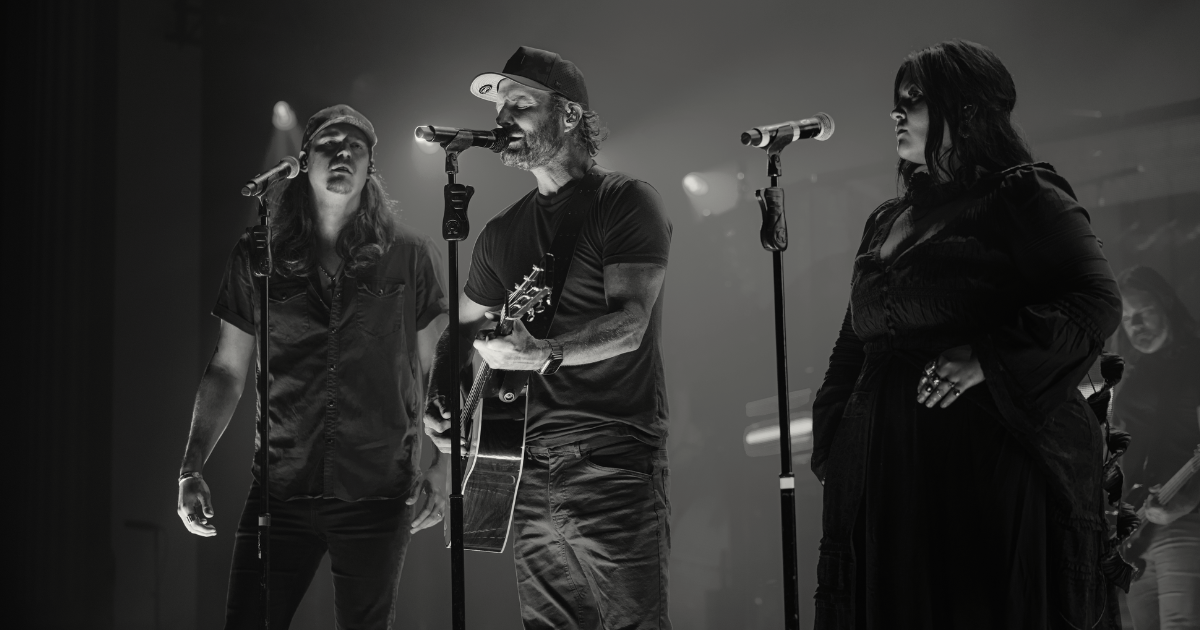
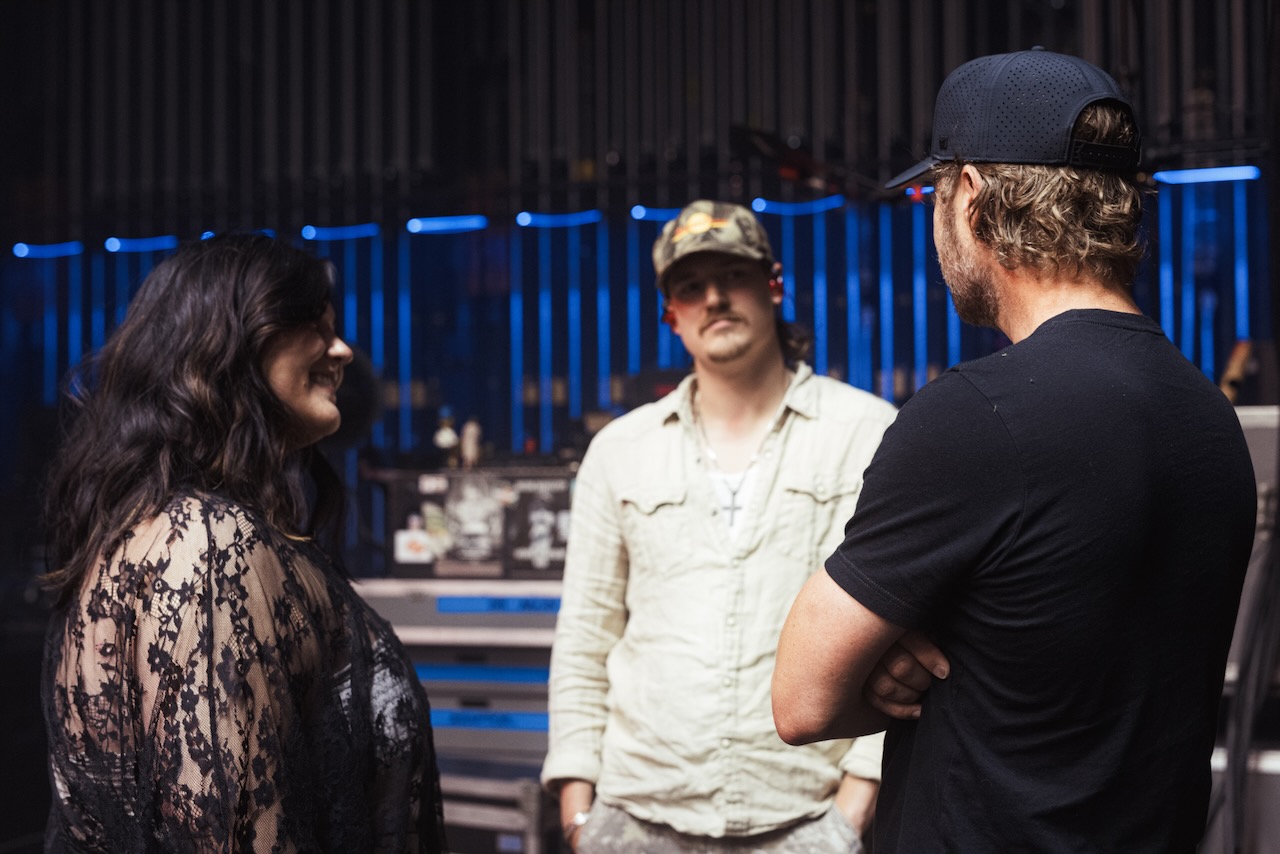
(L to R): Logan Simmons and Malachi Mills (of the Band Loula) confer with Dierks Bentley during rehearsals for the Broken Branches Tour. Photo by Zach Belcher.

Logan Simmons: I’ll say something that comes top of mind for me. I spent my whole life going to tent revivals. It’s not just, “I go and it’s summer camp, ’cause somebody made me.” It’s like the pinnacle of who I am.

I really believe that it’s the pillar of my family. We go for about 10 to 15 days every year. It’s beside my nanny’s house, and all it is, red-back hymns and bluegrass. The service happens every night and you go for about an hour and a half before service starts, before preaching starts, to hear bluegrass, gospel bands.

That’s how I learned harmonies, hearing all my godmothers and aunts sing the wrong ones around me. [Laughs] And you’ll hear somebody over there, Linda’s like [sings operatically and off-tune] and she’s not on it at all. But I was at least learning something and I feel like with my roots in general, it already infused that bluegrass sound into my life.

Then when Malachi and I became friends and started making music together. He has a lot of Motown roots. I think, blended together, the blues and bluegrass just made something beautiful. And, on top of that, the family harmony we have together. We’ve been friends forever, half our lives.

Malachi Mills: It all comes back to blues, yeah. And just like you said, that cross-pollination of the different genres. North Georgia is like the southern point of Appalachia. Like she said, it really influences the music we make by our harmonies. That’s the biggest thing we take from it. I love bluegrass music, but I’m not like a bluegrass buff. I would lose at bluegrass trivia. [Laughs] But it’s just in our bones and in the harmonies that she was talking about. Growing up in church and everything influences the way that we sing together and the notes that we pick whenever we’re singing harmonies. One of the biggest things that I love about bluegrass is the rhythm and pocket. And the intonation of the instruments. Bluegrass players choose to be intentional about [all of] it, the pocket, the timing, the tuning. It’s all so dead on. The details matter when you’re making records.

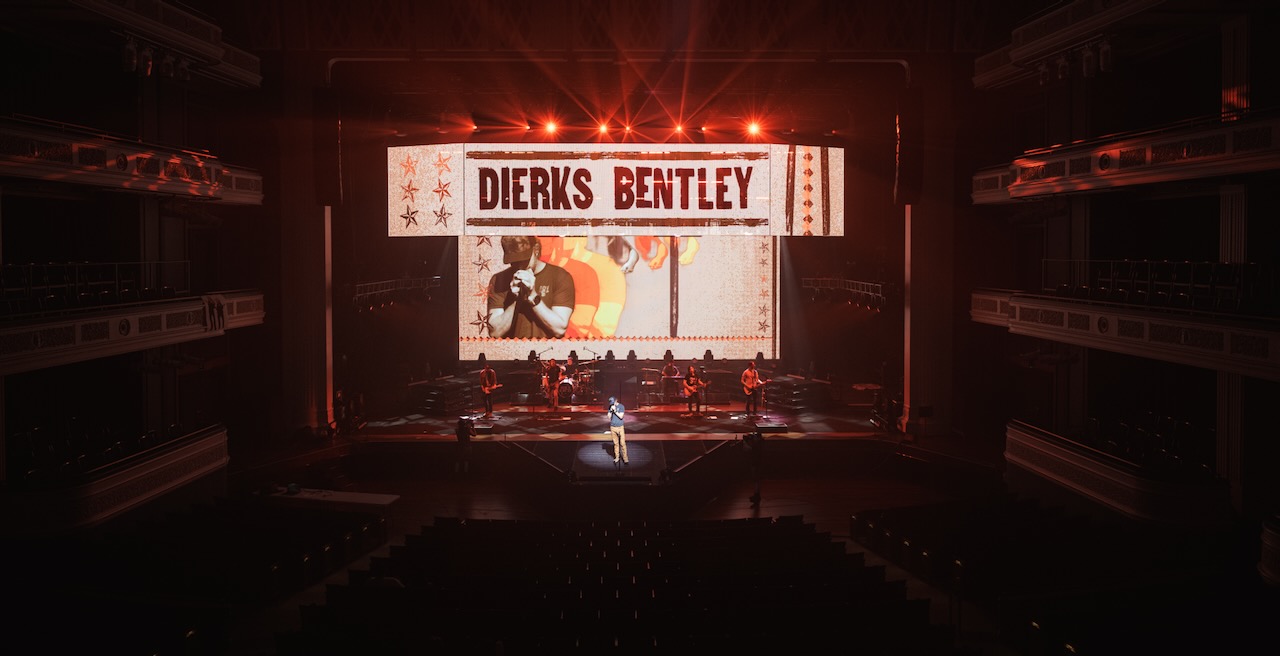
Dierks Bentley and band give Good Country and members of the media an exclusive sneak peek at their Broken Branches Tour set at rehearsals in May 2025 in Nashville. Photo by Zach Belcher.

I think that’s one of the reasons why it’s striking that y’all have this bluegrass song as part of this big, arena-sized stage show. Because for me, translating those details in such a big space and in such a broad format could be really hard.

Then I hear and see y’all singing in three parts with a neon cross behind you and suddenly yes, this is church. This is what it is. Any close-singing harmony vocals are great, but when it really sounds like bluegrass to me is when you can hear the reeds of your voices match up when you’re harmonizing. That was a really beautiful moment.

Could you talk a little bit about capturing those details for a big audience in big rooms like this – or even outside, in amphitheaters. How do you take a Bill Monroe gospel song and translate it to that space?

DB: Well, there’s “Bluegrass” Ben Helson out there walking the hallways. Ben and a couple other guys in the band have played with Ricky Skaggs. Ben played with Ricky and Tim [Sergent] still plays with Ricky. I always say, if you can graduate from the Ricky Skaggs school of bluegrass and country music, you’re probably a pretty good musician. He also played with Rhonda Vincent.

I’m a big Del McCoury fan. They did [“Get Down on Your Knees and Pray”] and Del has such a cool version of it. We were just kinda thinking of songs to do with these guys that would be great using their voices. Like [they] said, they’re the blues and bluegrass. I’m still trying to figure out their sound. It’s such a unique mixture; it’s so Americana in the way that in this country we have this melting pot of stuff. We thought it would be cool to do a little three-part thing, so that one came up.

Marty Stuart also did a really cool version of that song. But Ben [Helson], our guitar player really came up with that [arrangement], leaning into the swampy stuff they do. Gave it that feel, a little Southern – I don’t know what the vibe is there, but that telecaster is playing and it just has a cool kind of dirty, bluesy vibe to it. Then working up the harmonies, there’s just something about hearing a cappella bands.

I remember seeing Billy Strings at a bluegrass festival years ago and the band all stopped – no one knew who he was back then. Bryan Sutton had told me who he was, so I was where he was. He played like a Thursday set in the middle of the day. They had just done three songs and then they stopped and did a four-part harmony thing. There’s just something about it that’s so powerful. It goes straight to your soul.

The oldest version of entertainment there was was probably harmonizing. Finding people, seeing how your voices sound together, it’s a weird, cool thing. Singers talk about it all the time, in any genre of music about how seeing how we sound together is an intimate thing.

It’s vulnerable and it’s immediately establishing that community that you’re talking about. “We may not be a band, but now we’re a thing.”

DB: I feel like I blend well with anybody, because I’m like the condition. I sing it pretty straight here and allow the people around me to really do their stuff. I’m just gonna hold the line. There’s like nothing special about my voice, but it’s good to blend with ’cause other people have these amazing voices. They can do a lot of movement and a lot of great vibrato. I’m like the dumbest Del McCoury School of Bluegrass [student], just find that note and put everything into it. [Laughs]

Not to mention, introducing people to bluegrass as well – I love that. You have a chance to be a bridge to your heroes and that is always fun. People have been that to me, Marty Stuart probably the biggest. You get into Marty Stuart’s music and you find out who he likes, and then, whoa! He brings you back there. So [I hope] this turns somebody onto Bill Monroe. That’s pretty cool.

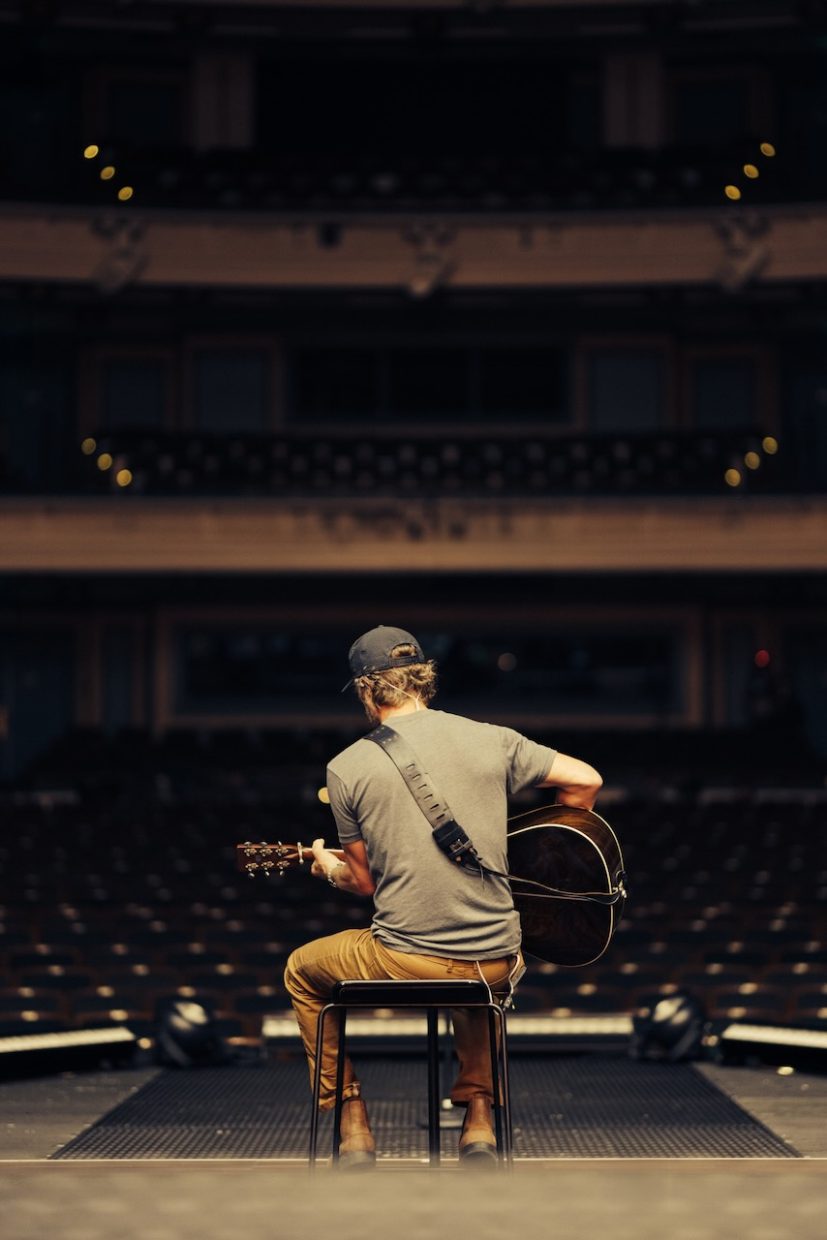
Dierks Bentley has a quiet moment on stage during rehearsals for the Broken Branches Tour. Photo by Zach Belcher.

Country – a lot like blues, R&B, and the early days of rock and roll – it has this often tempestuous and inspiring relationship between the fun of Saturday night and the conviction of Sunday morning. So seeing y’all sing that song in front of the depiction of a church as a dive bar, complete with a neon cross and a flickering “open” sign – to me that’s “a little bit holy water, a little bit Burning Man” epitomized. You guys are embodying that relationship between the sacred and the secular here. And that duality is all over your new album, too, Dierks.

MM: I’ll say, I think that one of the biggest things that contributes to that is the goosebump, hair-standing-up-on-your-arm feeling. It’s knowing that you have a part in something and whenever you sing and play bluegrass music together, you have to give way to one another on stage. So it’s the whole stage saying we’re doing this very intentionally in unity, in harmony.

And everybody in the crowd, whether they know that or not, they feel it. That’s what I think people feel. Even if you’re not a believer and maybe the message that’s being said [doesn’t apply], but you still resonate with serving each other. With being present, which is a strong energy. I think that’s what makes me excited about playing this song. I don’t know what’s gonna happen emotionally for me whenever that moment happens, ’cause it’s gonna be so much of that unified energy.

DB: Unified energy is a good way of putting it. It’s unified and it really is energy.

We’re pretty involved with the church. I have an older daughter who’s involved in the church and another middle daughter who doesn’t believe it like I did. But there’s something divine that you just can’t ignore, whether you believe it or not – just look at a sunset, look at a flower, look at a fish, look at so much unnecessary beauty in the world. There’s just some energy that exists and you can’t deny it when you sing a song like this. It just taps [something] on anybody. Recognizing how small you are in this world and the power of whatever version of prayer you do.

LS: I liked how you said it joins secular and holy together and that actually made me think of the tent revival, as well. I think growing up in Appalachia, like Malachi said – I wish I could just teleport you there so you could experience!

DB: That would be cool, a tent revival – I can’t even imagine.

I haven’t been to a camp meeting or revival in so long!

LS: Everybody’s invited to camp meeting. I don’t know if you’d love it. Our tent – I say tent, it’s like a shack on a square, it’s like a big square, four sides. So we’ll say, “Are you on the upper line or the lower line?” We’re on the upper line, which is not a good thing. It’s like you think upper line is like uppity people or something, but it’s not. Our shack is the oldest and [most] untouched of the whole campground. It was built in 1846.

DB: Wow!

LS: So there’s holes in the roof and like, my bunk bed, I get water drops on my head if it rains. There’s hay floors, there’s no air, and there’s a lot of us, so it’s all packed in there. But camp meeting is where I learned my first Bible verses and where I smoked my first joint. [Laughs] So it all marries together how you said, like holy and secular at the same time. I think of that picture of going to the gospel tent revival, going to camp meeting, singing those red-back hymns, doing all those things – but then also learning the grit of growing up.

I just loved when you said joining those things together, because that was such a representation of my upbringing. Yeah, it’s a little bit holy water, a little bit Burning Man. It’s definitely Saturday nights and Sunday mornings – and the tent revival is where I feel like those two worlds are so evident.

Dierks, in all you’ve done across your career there are all these bluegrass moments. The country that you “grow,” it’s mainstream, it’s radio-ready, but it’s like there’s bluegrass in the “soil” you grow it in, so you can always taste bluegrass in everything you do. Like on the new record, “Never You” with Miranda Lambert feels that way and “For As Long As I Can Remember”–

DB: There’s a little “Circles Around Me” by Sam Bush [reference] there at the top of that song.

Oh my gosh, yeah! Exactly what I’m talking about.

You said a little bit earlier turning people onto your heroes always feels great, but for you, from your own perspective being that guy that used to just hang out at the Station Inn and now being the Dierks Bentley and going on tour in sheds and arenas and amphitheaters… Why do you keep bluegrass with you?

Dierks Bentley: It is selfish in a lot of ways. I have such a great band and I just take so much joy watching them do cool stuff that I can’t do. It’s like our guitar player, Ben, he’s just an unbelievable flat picker. Charlie Worsham’s in our band and Charlie won the CMA Musician of the Year. He is just an incredible musician. Dan [Hochhalter] is an incredible fiddle player. Tim is so underutilized. Our steel guitar player – who plays banjo and everything else – he’s one of the best singers to me. Hearing him is like hearing Merle Haggard. He sings like nobody else, but he’s also so underutilized. And Steve’s been playing with me since 1999.

It’s just a great group and we love bluegrass music, featuring that, and having the music part of the show. I like being in a band setting, so just getting to be around it and hear these instruments swirling around me playing, I think it’s just cool.

I got a chance to play ROMP Festival last year and I feel lucky to be friends with guys like Jerry Douglas and Sierra Hull and have them come up on stage and play with us. I still think bluegrass music is the punk rock of country. It’s just the coolest genre of music there is.

It’s gotta be centering or grounding to a certain degree just to have that as something you can go back to, to feed yourself and fill yourself back up even while you’re touring.

DB: Absolutely. In the show we go from playing Tony Rice to John Michael Montgomery. We play bluegrass with the Hot Country Knights with costumes on. It’s just it’s all very selfish! It’s like, “How can I have a lot of fun in the next 90 minutes?”

I wanna do our radio country. I want people singing songs back, because that’s a great feeling. I want to get a little bluegrass in there. Just see if we get away with that. Then, can we try to get canceled on the way out? [Laughs] I dunno. It’s really fun for me. And having these guys [out with us] and getting to harmonize with them, it’s gonna be really fun. Check back in a few months, see how it turned out.


Want more Good Country? Sign up to receive our monthly email newsletter – and much more music! – direct to your inbox.

All photos by Zach Belcher.

50 Years of 0044: JD Crowe & The New South’s Landmark Album

Writer Marty Godby called it “The convergence of 1975.”

The elements: a band that would only be together for 10 months, a benevolent venture capitalist who loved bluegrass, and an upstart record label from Boston. The resulting product was unprecedented and unforgettable: The New South, Rounder Records 0044. Bluegrass fans know it simply as “0044.”

The New South of this recording was J.D. Crowe on banjo; Tony Rice on guitar; Ricky Skaggs on mandolin; Bobby Slone on bass; and Jerry Douglas on Dobro. The impact of that configuration and the album were stunning. Yet, within a year of the recording, Rice would leave to become a founding member of the David Grisman Quintet. Skaggs and Douglas formed Boone Creek. Crowe and Slone continued performing together for years.

Rounder 0044 was influential enough to be preserved in the Library of Congress’ National Recording Registry in 2024 and was awarded induction into the GRAMMY Hall of Fame this year. This month, Real Gone Music will re-release the album on vinyl, as will Craft Recordings later this year on compact disc.

Both the origin story and legacy of 0044 have inspired great narratives, probably more than any other bluegrass album. Bill Nowlin, one of the three founders of Rounder Records, wrote three articles for BGS on the album’s 40th anniversary. They offer a step-by-step look at what happened in 1974 and 75, plus hilarious and poignant anecdotes and quotes.

David Menconi dedicated a chapter of his excellent book, Oh, Didn’t They Ramble: Rounder Records and the Transformation of American Roots Music, to 0044. In 2016, radio host Daniel Mullins focused his college history capstone project on the album. Of course, it was 44 pages.

THE SHORT VERSION


J.D. Crowe, already revered for his banjo playing and baritone singing, led a band called The Kentucky Mountain Boys. From 1968, they had a six-nights-a-week gig at the Red Slipper Lounge in a Lexington, Kentucky Holiday Inn. Crowe added non-traditional bluegrass instruments and songs to the Holiday Inn repertoire. This was as much to please a diverse audience as it was to keep the musicians from getting bored. In 1971, Crowe changed the band’s name to The New South.

Of the name change, Rounder’s Marian Leighton Levy said, “It was obvious that this was a new kind of bluegrass.” From a broader view, “It was an era when the South was, in a way, trying to self-consciously reinvent itself as a new, modern place. And they [The New South] were kind of the musical representation of that wider political context.”

It was the ’70s, and change was brewing – even in the tightly controlled world of country music, Levy noted. Around the same time, Willie Nelson and his Outlaw Country compatriots were reaching out to new songwriters and moving away, physically and musically, from “the factory system of Nashville publishing companies.”

In 1974, lead singer Larry Rice left the New South and brother Tony took over singing lead. Ricky Skaggs’ pure tenor mixed with Rice’s unmistakable mid-range voice, creating a new, dynamic tension for their duets and trios. In the summer of that year, Crowe and the band toured without any product to sell. At the annual Gettysburg Blue Grass Festival, Crowe, his friend and manager, venture capitalist Hugh Sturgill, and the young founders of Rounder Records initiated “The Great Convergence” – an agreement for a studio recording. An innovative contract led to the first New South album.

THE BLUEGRASS WORLD EXPLODED


As soon as they heard the test pressing, the Rounder founders knew they had something remarkable on their hands. “Jack Tottle [who, along with John Hartford, wrote liner notes for the album] was stunned, and he kept saying, ‘This is one of the most amazing records ever made.’ And he was not given to exaggerating,” Levy said.

“It was clear. It was crisp … and the more you played it, the more you wanted to hear it.”

0044 came out in the spring of 1975. Levy said by festival season, other bands were playing the tunes from the record “pretty much note for note.” One observer said that at one festival, almost every band on stage played “Old Home Place.”

So, what is it about that record? Let’s start with the musicians. Skip Heller, who initiated the 0044 Real Gone Music reissue, said everyone in that group of players “would talk about it like it was high school prom and their first love … they had all been in good bands before, but this was the first time they had been in a band that was as great as anything in bluegrass music had ever been.”

Levy said, “They absolutely knocked each other out. … And I think that long before anybody heard the record, they knew the band would stand the test of time – because of all of them, not just one person.”

The record’s title was The New South. Only after the first printing sold out, three band members had moved on, and it was time to redo the cover (read about the cover photo – a great story in itself), was it retitled J.D. Crowe & the New South. Crowe, born in 1937, was the venerated elder and a banjo icon. After entering Jimmy Martin’s boot-camp-of-a-band at age 18, he developed impeccable timing, his own take on Scruggs-style banjo, and excellence as a baritone singer. And he knew how to pick his band members.

The influences of Tony Rice (age 24 at the time) on bluegrass and related music are limitless – from cementing the role of guitar as a lead bluegrass instrument, to modeling impeccable rhythm playing and singing, to excelling in so many genres outside the bluegrass boundaries. At 21, Skaggs had the instrumental chops, a stunning voice and the instincts to become successful in both country and bluegrass. Rounder’s Ken Irwin attributes much of 0044’s innovation to Skaggs, including bringing a teenaged Douglas into the mix.

Douglas is to Dobro what Rice is to lead guitar. Fifty years later, after 14 GRAMMY awards and countless other honors, he continues to inspire and encourage musicality and creativity in Dobro playing. Touring with Alison Krauss since 1998, it’s likely that he has been heard live by more people than any other resophonic guitar player. Of the veteran, Bobby Slone, Mullins said, “Everyone in the band wanted to make sure that Bobby got a lot of credit. … He was such a rock solid force on that band, not just on bass, but as far as camaraderie was concerned.”

By the time The New South entered the studio, Crowe, Slone, and Rice, later joined by Skaggs, had spent hundreds of hours performing together at the Holiday Inn. Individually, they were superb musicians. Together, they were as tight as a band could be.

THE SONGS


Long before 0044, Crowe had blasted out from under bluegrass constraints, incorporating songs like Fats Domino’s “I’m Walkin,” and at Larry Rice’s suggestion, The Flying Burrito Brothers’ “Sin City.” The songs on 0044 were just a small set of a huge repertoire. While the unconventional musical choices sparked controversy among traditionalists, they also sparked a flame of excitement that spread quickly and widely.

In 1975, Mullins said, Ralph Stanley & the Clinch Mountain Boys, Jimmy Martin, and Bill Monroe were still “killing it” at festivals with their first generation bluegrass sound. “On the other end of the spectrum, Seldom Scene recorded Live at the Cellar Door,” an immensely popular recording, that year. Like the Country Gentlemen, the Scene had been recording songs totally out of the bluegrass box, using bluegrass instrumentation, but with an emphasis on rich melodies and harmonies, rather than just the drive of traditional bluegrass.

Mullins said, “You go to Crowe, who’s got the street cred from all his records with Martin, but he’s also looking ahead, and so he’s able to get it all in there. A lot of bands were playing to one side or the other … but to have one that hit right in the middle, right at that time, was unreal.”

“When they saw J.D. Crowe’s name up front, and they knew that he had played banjo with Jimmy Martin on all those records they had loved for 20 years, it probably made some of those hard-edged fans pay more attention,” he said.

Whatever the dynamics of the time, The New South became synonymous with great bluegrass. And 0044 made Ian Tyson’s songs forever acceptable in bluegrass jams.

ON AND ON


Kristin Scott Benson, six-time IBMA Banjo Player of the Year, was born the year after 0044 came out. Benson said she was about nine the first time she saw J.D. Crowe. He was playing with the Bluegrass Album Band, “and that was a formative experience. That band was so explosive, and the crowd had an air of chaos, because everybody was so excited to hear the band. Every time Tony Rice ended a solo, you couldn’t hear any music.” (Because of the crowd noise.)

It would be four years until she picked up the banjo, and two more years until she learned about The New South album – and what it meant to a banjo player.

On 0044, she says, “If you just talk quintessential banjo solos, you’ve got ‘I’m Walkin’ and ‘You Are What I Am.’ His tone is aggressive. It’s just such confident, groovy, greasy, pristine banjo. It’s impossible to overstate how good it is and how influential it is.”

“But I think you should listen to his contributions on the less banjo-friendly songs [‘Home Sweet Home Revisited,’ ’10 Degrees’], because Crowe was great at that. He was a magical backup player.”

Billy Failing, who currently plays banjo with Billy Strings, agrees. Failing started out his banjo life drawn to more progressive players like Béla Fleck. But, he said, “As time goes on, the more I circle back to J.D. Crowe. I think of how much of a gold standard he is for bluegrass banjo, and how interesting his playing is.”

“He’s considered a traditional player,” Failing continued, “but then I’m always hearing some lick that surprises me. It’s been a gradual thing, but it becomes more meaningful as time goes on. I was just listening to The New South album, and on ‘Cryin’ Holy’ – it’s just so slamming! He’s turned it up to 11 constantly on that one.” And, like Benson, he points out what he calls Crowe’s “intricate touch” on banjo.

“It’s such a cool kind of push and pull between whether he’s out front or whether he’s playing backup … it catches your attention in such a cool way.”

Benson said, “It’s easy just to be drawn to those obvious picks [like ‘Old Home Place’] but the album is so much deeper than that. This particular band presented a tightness and a level of execution that was new – I don’t think there had been a bluegrass record up until that point that was so well done.”

“The vocals, the arrangements are so well thought out. Everybody’s playing so well together. It was just a special moment and a special group of people, and I think it raised the bar for bluegrass albums,” she said, and made an imprint on so many contemporary musicians.

Benson poses the question, “Who’s the most influential modern bluegrass guy? It would have to be Tony Rice, because he affected the genre with his rhythm guitar playing, which is phenomenal. And that type of rhythm playing affects the entire groove of the band. It became the new standard, what most people go for.”

“Never discount the importance of his rhythm,” she continued, “and then obviously his lead playing, but also his singing and his material choice … so if someone pinned me down and I could only name one, he might be the guy.”

Failing, speaking of his bandmates, said, “Everybody’s inspired by The New South. I hear Billy [Strings] constantly talking about his inspiration by Tony Rice, and Jarrod [Walker] by Ricky Skaggs.” (Walker wrote liner notes for the Real Gone Music re-release.)

Mullins noted that the Rice/Skaggs blend – a lead singer with a baritone-range voice coupled with a high tenor – established a hair-tingling blend that continues to be emulated, from Ronnie Bowman and Don Rigsby in Lonesome River Band through Alison Krauss’ duets with Dan Tyminski and Russell Moore.

Benson said, “It’s an important record for the genre as a whole, and it’s also an important record to me, personally, and really, to any banjo player who is serious about learning. It’s one of those essential albums.”

UNANSWERED QUESTIONS


First, how did it come to be widely known as 0044? Well, nobody’s sure. Irwin and Levy remember being in the very early stages of their operations at the time – with both a new label and a new distribution company. All three Rounders had been totally immersed in music, but they were learning the business as they went, developing it on their own terms.

Levy speculated, “It is possible that it went back to when we were just calling records by their numbers,” when there just weren’t that many products. “So, it may have been something we started when we were talking, and other people picked up on it, not intentionally. And we thought it was sort of humorous.”

And how did members of Emmylou Harris’ Angel Band get left off the credits, as well as the fact that J.D. played guitar on it? John Lawless goes into depth in his fascinating Bluegrass Today article.

HAPPY 50TH BIRTHDAY


As the liner notes to the Real Gone Music re-release say, “Virtually no other album anywhere in history is known to its audience by its label number. Not Kind of Blue, nor Pet Sounds, Glenn Gould’s Goldberg Variations, none.”

That says quite a bit about the recording’s importance. So does the fact that two labels are issuing re-releases this year.

The Real Gone Music edition is pressed on gold-colored vinyl for its golden anniversary. Both re-releases contain two cuts not included on the original product: “Why Don’t You Tell Me So?” and a version of “Cryin Holy” with Emmylou’s voice in the mix.

Failing sums up what 0044, J.D. Crowe, and the musicians he surrounded himself with mean to him and to many of the pickers making the best music today.

“Every time I circle back to the Bluegrass Album Band, The New South, and J.D. Crowe, I’m reminded, ‘that’s how it’s done!’”


Photo Credit: Phil Zimmerman

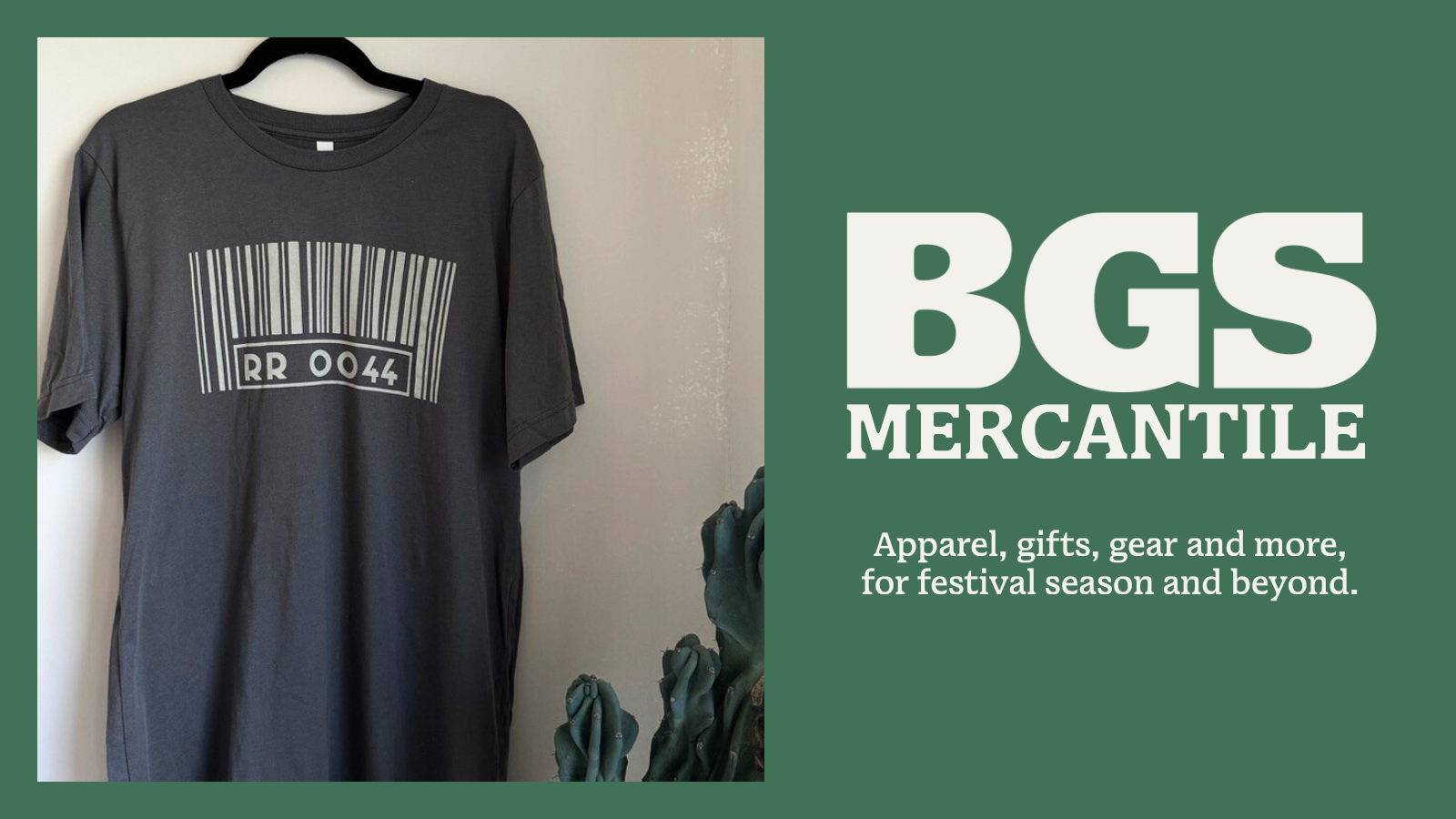
Wear your love for 0044! Shop our exclusive RR 0044 tee on the BGS Mercantile here

BGS 5+5: Adam Chaffins

Artist: Adam Chaffins
Hometown: Louisa, Kentucky
Latest Album: Trailer Trash EP (released May 16, 2025)
Personal Nicknames: “Chaffins”

Genre is dead (long live genre!), but how would you describe the genres and styles your music inhabits?

I’ve considered myself a multi-genre artist from the beginning. While I feel confident identifying as a country artist, that label doesn’t capture the full range of my influences. Growing up, I listened to country alongside Top 40 hits and classic rock – those styles shaped my ear just as much. In high school, I discovered bluegrass and jazz, and during college I really dove deep into those genres and honed my craft within them.

All of those influences have filtered into my writing today and I think that’s especially clear on this new EP. Music, like culture, is becoming increasingly interconnected and multi-dimensional. It’s exciting to see more country artists exploring new spaces and I want to make music that is part of that evolution.

Which artist has influenced you the most – and how?

Speaking of multi-genre artists, Willie Nelson is a great place to start. He’s part of the foundation of country songwriting – hell, songwriting in general. His music draws from so many different influences and we wouldn’t have the classic Willie Nelson records without that breadth.

It’s tough to single out just one artist as my biggest influence, but more often than not, when I’m writing a line or delivering a phrase, I catch myself asking, “What would Willie do?” His sound has never felt forced or put on – it’s authentic because he’s lived every word of it. Beyond the music, his lessons in patience and positivity have been a huge influence on me and have played a big part in keeping me grounded and continuing to make music.

Which elements of nature do you spend the most time with and how do those impact your work?

I love the outdoors – it’s essential for my creativity. Whether I’m kayaking on the lake, hiking with my dog, or cycling down country backroads, being outside helps me reset. When I’m feeling bogged down by the ‘business’ side of music, stuck on a lyric, or just need a break from a piece I’m learning, nature gives me the space to clear my mind. It’s like a creative reset button – being in the elements helps me return with energy and perspective.

What was the first moment that you knew you wanted to be a musician?

Some of my earliest memories are of wanting to be a musician – or at least be around musicians. I had toy guitars and drum sets and would just bang away, trying to get the sounds in my head out long before I had any idea what I was doing.

One moment that really stands out happened before I could even read or write. A local DJ I was obsessed with was doing a promo at a car lot and my mom took me to meet him. I thought he was the gatekeeper to all of music. I remember scribbling on sticky notes – what I explained were the instruments and band members I wanted for my future group. He smiled, folded the notes, and tucked them into his shirt pocket with a wink, just before going back on the air.

Looking back, that moment felt like an early manifestation. Even then, I knew music was where I wanted to be – I just didn’t have the words for it yet.

If you didn’t work in music, what would you do instead?

I love to cook. When the world shut down during COVID and there were no shows to play, I got a big offset smoker trailer and started smoking whole chickens outside a locally owned grocery store. Honestly, I probably earned fans faster with barbecue than I ever have with music…

That said – it’s tough work. Tending fires inside a steel pit during a Tennessee summer isn’t for the faint of heart. But then again, neither is rolling around the country in a van playing songs for strangers. I guess one just happened to be the dream I had first. I still cook and smoke meat whenever I can and, if I weren’t making music, I could absolutely see myself doing that full-time.


Photo Credit: Natia Cinco

Opry 100: A Live Celebration

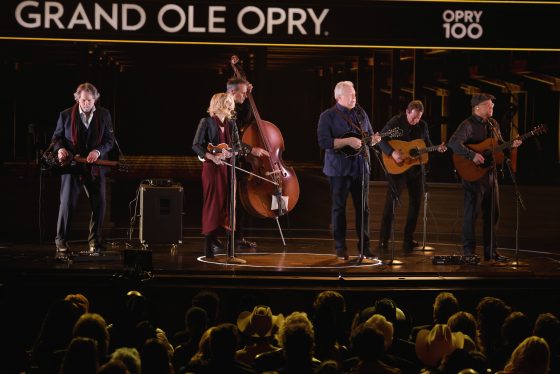
If you missed the Grand Ole Opry’s no-holds-barred 100th birthday party and live television broadcast extravaganza on NBC, we’ve got your recap right here on BGS.

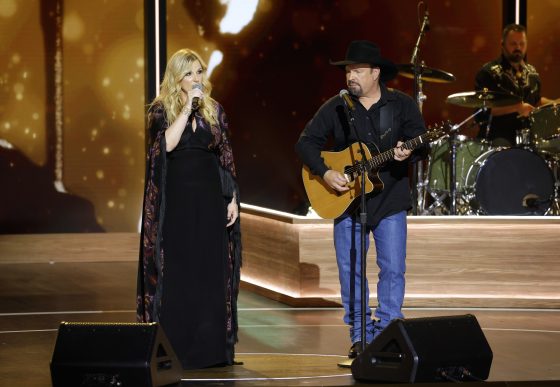
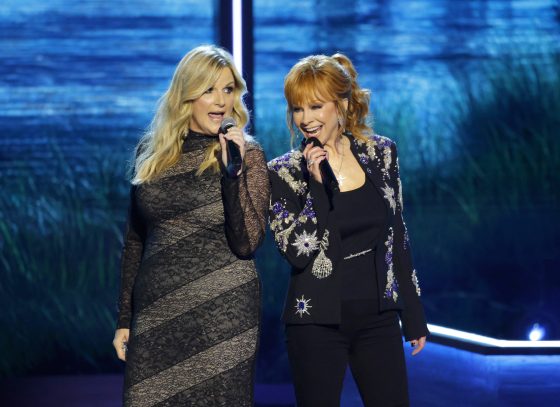
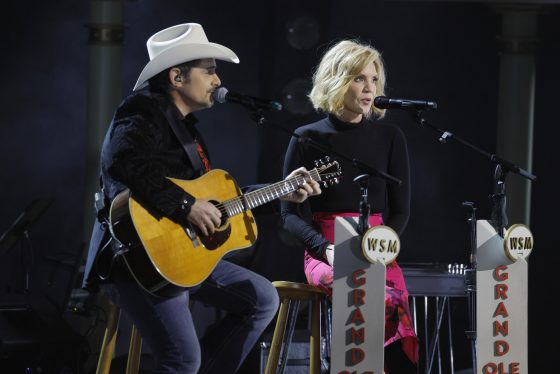
Hosted by Blake Shelton at the historic Grand Ole Opry House in Nashville, Tennessee, Opry 100 included performances by artists like Vince Gill, Alison Krauss & Union Station, Lainey Wilson, Brad Paisley, Ashley McBryde, Reba McEntire, Dierks Bentley, Garth Brooks, Trisha Yearwood, and many more. The primetime broadcast and streaming concert is just one event among an incredible, chocked-full effort by the Opry to celebrate their centennial – officially November 28, 2025 – throughout the entire calendar year.

Over the two-hour broadcast, there were dozens of show-stopping moments, from the brash, bold, and sensational to tender, intimate, and heart-wrenching performances. Good country of all varieties was on display from a wide array of artists at all levels of notoriety.

The War and Treaty sang alongside Steven Curtis Chapman and Amy Grant; Vince Gill reunited with his old pals Jeff Taylor and Ricky Skaggs; Ashley McBryde brought the house down alongside superstar country newcomer Post Malone and elsewhere in the show, ’90s stalwart Terri Clark; Lainey Wilson shared the stage with country picker and renaissance man Marty Stuart; husband-and-wife Trisha Yearwood and Garth Brooks were on hand; and Brad Paisley and Alison Krauss reunited for their 2003 smash hit duet, “Whiskey Lullaby.”

The show wrapped with a stunning full cast tribute to Dolly Parton, who greeted the Opry House audience via video and gave her sincere regrets for not being able to appear at the event. (Parton’s husband of 58 years, Carl Dean, recently passed away.) Dozens of the evening’s star artists took to the stage to pay tribute to Parton by singing her most famous hit, “I Will Always Love You,” a perfect, soaring sing along to close the momentous show.

There are truly too many once in a lifetime collaborations, songs, moments, and performances from Opry 100 to list, but we’ve collected a few of our favorite moments so you can relive this once-in-a-lifetime – or once-in-a-century – show! Get your fix by traveling through a few of our own favorite moments from Opry 100: A Live Celebration below.

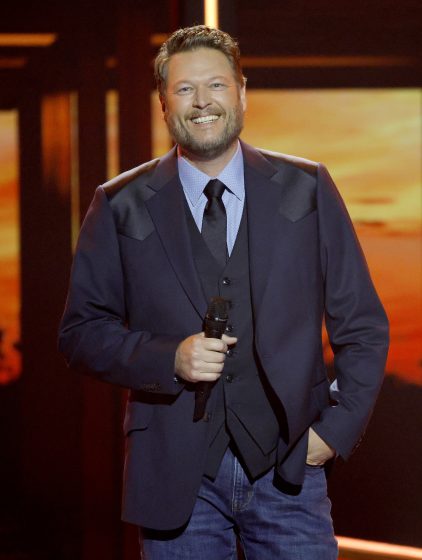
Blake Shelton Hosts

Country superstar, award winner, and television personality Blake Shelton was a more than qualified host for Opry 100: A Live Celebration. Of course, he also gave a rousing performance of Joe Diffie’s “Pickup Man” to the delight of everyone in the crowd who find somethin’ they like in a pickup man. It wouldn’t be a celebration of country or the Opry without a truck mention.


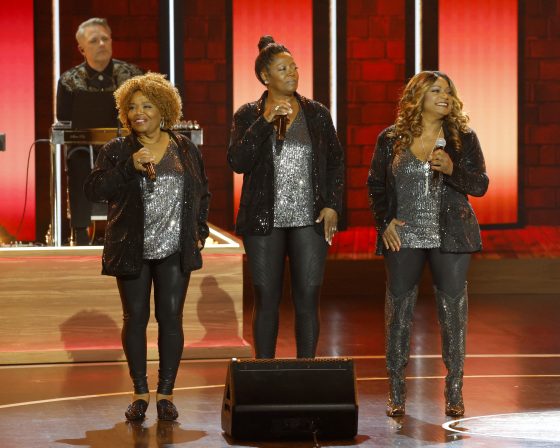
Nashville’s Own, the McCrary Sisters

Nashville’s favorite, in-demand singing siblings, the McCrary Sisters were on hand for Opry 100, too. It’s certainly not their first time on the hallowed Opry stage, but in the centennial context their appearance reminds of the legacies of similar groups who blazed trails at the Opry before them – like the Pointer Sisters – and those who’ve followed in their footsteps, like the Shindellas and Chapel Hart.


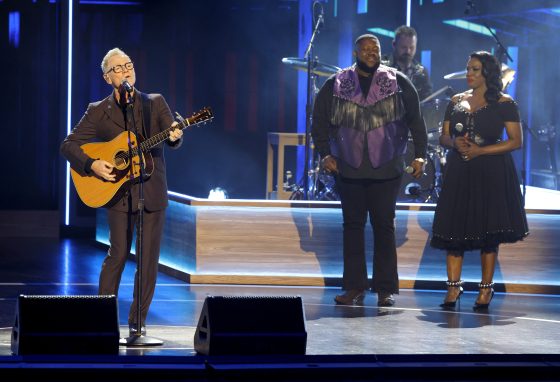
Steven Curtis Chapman and the War and Treaty Share a Sacred Moment

Grand Ole Opry member and contemporary Christian singer-songwriter Steven Curtis Chapman was joined by Americana/soul/country duo the War and Treaty for his performance on Opry 100.


Lainey Wilson and Hall of Famer Marty Stuart Duet

One of the biggest names in country at the moment, former GC and BGS

Artist of the Month Lainey Wilson was joined by bluegrasser, fiery picker, and Country Music Hall of Famer Marty Stuart backing her up on mandolin. They perform “Things a Man Oughta Know” from her huge 2021 album, Sayin’ What I’m Thinkin’, which many regard as her breakout release.


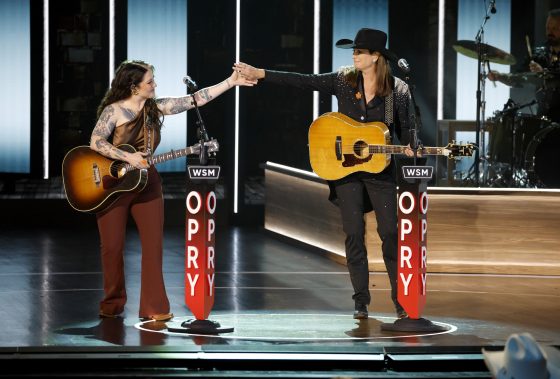
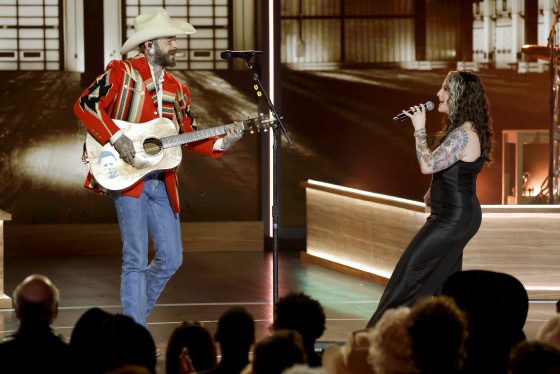
Ashley McBryde with Post Malone and Terri Clark

Ashley McBryde had multiple stellar moments during Opry 100, including these two prime duo performances. One with ’90s country star Terri Clark and another with a superstar newcomer to the genre, Post Malone. Her song selection with Postie was impeccable, too, taking the Opry 100 down to “Jackson” to mess around.


Trisha Yearwood with Garth Brooks and Reba McEntire

Country has boasted many amazing artist couples, but who better to take the Opry 100 stage than Trisha and Garth? Trisha also appeared with Reba McEntire to perform “The Night the Lights Went Out in Georgia,” a track that has been a huge generation-spanning hit for McEntire.


Brad Paisley and Alison Krauss Reunite

An iconoclastic example of a tear-jerker country story song, Paisley and Krauss’s recording of “Whiskey Lullaby” was released in the 2000s, but has had immense staying power. It shines from the Opry 100 stage in its simple and stripped-down styling. Is anyone a better duet partner and harmonizer than Alison Krauss? Perhaps not. Certainly a highlight among all of the many highlights of the broadcast


Alison Krauss & Union Station Perform, Too

On the precipice of their first album release in over 14 years, Alison Krauss also brought her band Union Station – including newest member,

Russell Moore – to the Opry 100 stage. Introduced by the Queen of Bluegrass, Rhonda Vincent, AKUS performed a hit from a prior era, “Let Me Touch You for Awhile” off 2001’s New Favorite. Their brand new project, Arcadia, releases March 28.


Country Music Hall of Fame Inductee, Vince Gill

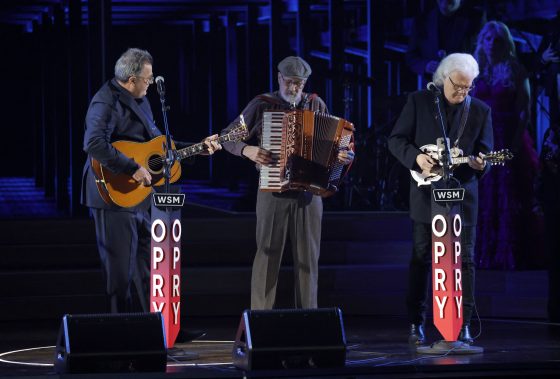
It wouldn’t have been a complete lineup for Opry 100 without Vince Gill! The Country Music Hall of Famer was joined by his old friends Jeff Taylor on accordion, Sonya Isaacs, and fellow inductee Ricky Skaggs, to sing perhaps his most famous song, “Go Rest High on that Mountain.” An impactful and inspiring number, the original has been a comfort to thousands of fans and listeners experiencing their own losses and grief. Of his deep-and-wide catalog of music, there’s not a better choice for an evening like Opry 100.


Ketch, Dierks, and Jamey

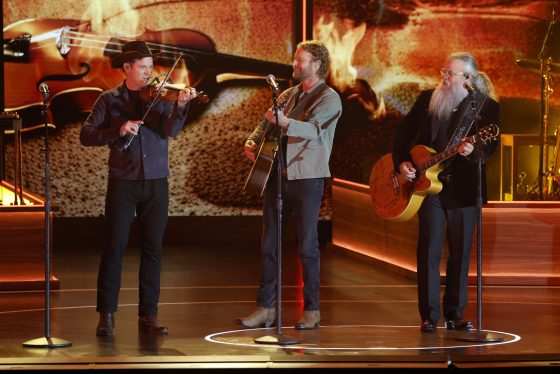
An Opry member trifecta, Dierks Bentley, Jamey Johnson, and old-time and bluegrass fiddler Ketch Secor (of Old Crow Medicine Show) paid tribute to the Charlie Daniels Band with a perfectly honky-tonkin’ medley of “Drinkin’ My Baby Goodbye” and, of course, “The Devil Went Down to Georgia.” From the sidewalks of Lower Broadway to the Grand Ole Opry stage, Charlie Daniel’s impact on country is indelible.


Luke Combs’ Mother Church Moment

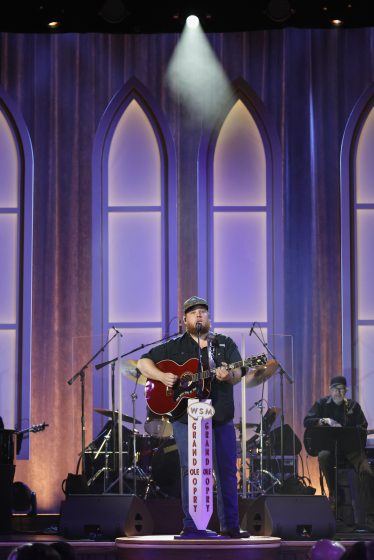
From the hallowed stage of the Ryman Auditorium, the most famous former home of the Grand Ole Opry, one of the most popular singers in all of country, Luke Combs, performed George Jones’ “The Grand Tour,” as well as “Hurricane,” for Opry 100. With more than 800 million streams (on Spotify alone), “Hurricane” is one of his biggest hits from his 2017 album, This One’s For You, which has been certified double platinum by RIAA.

This long list of our favorite Opry 100 moments is still, somehow, merely the tip of the country iceberg. Stay tuned as the Grand Ole Opry continues their 100th birthday celebration all year long.


All photos courtesy of the Grand Ole Opry; credit Getty/Jason Kempin.

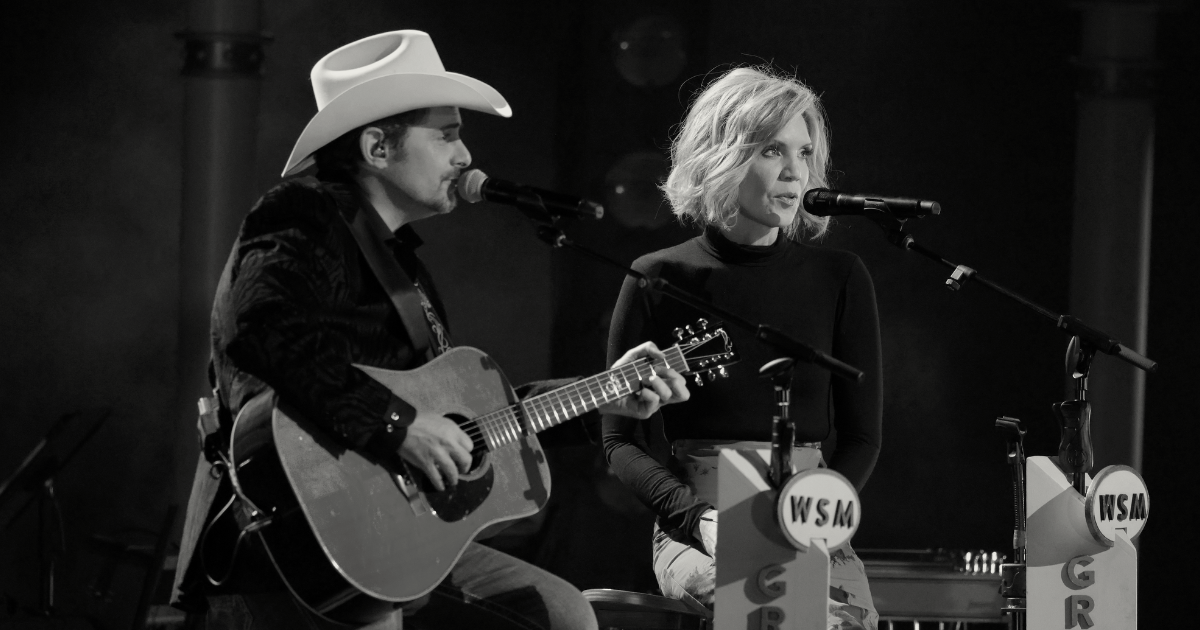
Lead image: Brad Paisley and Alison Krauss perform “Whiskey Lullaby” live at Opry 100.

Tommy Emmanuel’s Fiery Guitar Picking Is Not Just for Musicians, It’s for Everyone

Tommy Emmanuel is in his happy place: spending a Thursday afternoon at Nashville’s Gruhn Guitars in anticipation of recording a new solo album. “I’m here getting a new pickup system featured in one of my guitars, buying strings, hanging out with the guys, and getting a little Gruhn mojo from the shop,” he says. “The weekend, I’ll spend stringing up and playing my guitars, making decisions about which guitar I’ll use for what song, and stuff like that.”

For the next hour, however, he’s upstairs in the store’s amp room, settled in to discuss his two new albums – the just-released Live at the Sydney Opera House, recorded over the course of two performances in May 2023, and a solo album in the works – along with many other topics. Highlights from that conversation follow.

I was trying to find a starting point for this interview, which is challenging because there are so many. I listened to your January interview with Rick Beato and had a “stopped me in my tracks moment” when you said you spent three days listening to Taylor Swift’s The Tortured Poets Department. I thought, “Tommy Emmanuel is a Swiftie! We’ll start there.”

Tommy Emmanuel: Taylor, as a writer, is definitely a big influence on me. Someone who achieves what she achieves is doing something beyond the norm. Even beyond talent, it’s a spiritual experience, it’s big, and it’s deep, and I like to observe, listen, and learn from people who achieve like that.

You described her songwriting as “crying from the heart.” That stood out because that’s really what music is – it comes from the heart. We always hear that tone is in the hands, but is the heart not at the core of that?

Exactly. I was [writing a new song] and trying to find something that could give me the right melody to say with the chorus what I wanted to say without words, making the melody this cry from the heart. It’s– [sings melody], the chords change underneath, and so there’s movement, but there’s this cry from the heart right in the middle of everything.

Can you tell us more about this new solo album?

Normally, I record here, fly to LA, mix and master it with my friend Marc DeSisto, and I’m the producer. With this album, I’m working here in Nashville with Vance Powell, the busiest guy on the planet. We start on Monday and we’ve got to get it all done in four days.

I have eight new songs, including this piece we’ve been talking about, “A Drowning Heart.” There’s “Black and White to Color,” “Young Travelers” – I’ve got some interesting titles. The songs are different to what I’ve written in the past. There’s a couple of typical fingerpicking tunes that I really like. They’re a little more folk-influenced. The other ones I’ve been talking about are much more ’80s rock and roll style. I have a song called “Scarlett’s World.” The introduction and ending sound a bit like Dire Straits. I did that on purpose, because it’s such a cool sound. That song is inspired by the movie Lucy with Scarlett Johansson. I love that movie. I love her work. My granddaughter is like Scarlett and she is a force of nature. I got the idea to call the song “Scarlett’s World” when I was with her.

I’m enjoying this phase of my life. Whatever page I’ve turned to get to this stage has been worth it, because some songs have come to me in this last six months that I really love playing in my shows. Playing new songs live gets rid of anything that doesn’t need to be there, because sometimes you can write a song, you’re trying to be clever, you’re trying to be creative, you’ve got all these good ideas going, and then you play it for somebody and you realize, “Oh, this part here is not necessary.” You throw it out and get to the meat and potatoes. Forget all the other stuff. Just tell me the story. Take me somewhere. That’s why I like to perform my songs to an audience before I record them. Your instincts are on a hundred. When you walk on stage, your physical and spiritual instincts have risen up and they’re ready to serve you.

Of course, you’ve also just released your live album. You’re known for working without a set list. With such a rich repertoire, how do you sequence your shows, and sequence them so that the performance speaks both to musicians and non-musicians?

That’s so important to me. My music is not for musicians; it’s for everybody. I’m trying to be an all-around artist, entertainer, writer, player, performer. I’m trying to give people a bit of everything. [The show] has to be a journey, a story, entertaining, and when it’s over, I want people to think, “I’ve got to see that again.” There’s a passage in the first Indiana Jones movie that I never forgot. One of the characters says, “What are you going to do now, Indy?” Harrison Ford says, “I don’t know. I’m just making this up as I go along.” That’s me. That’s how I live my life.

Your history with Maton Guitars goes back to your days playing electric guitar. The common trajectory is the player begins on acoustic, and then goes on to electric. True to originality, you did the opposite.

I started on electric. When I was starting to be a songwriter and making my own records, I was mostly writing on electric, 60 to 70 percent, and the rest was acoustic. I started doing solo shows on acoustic and all of a sudden I realized, “Holy smoke, this really works well.” So I started writing more songs to play as a solo acoustic player. It was more pop and rock and roll music, funky, all that sort of stuff.

The record company wanted me to do something we could get on radio, so I made some jazz-oriented records. I got a lot of airplay on jazz stations and that kind of forced me into that direction for a while. It was good, because I learned to write and perform that way. When I moved to Nashville, I wanted to be on the Opry and play the Ryman, so I focused on being more country- and bluegrass-based, which is my roots. My biggest influences when I was a kid, before Chet Atkins, were Jimmie Rogers and Hank Williams. They were my first two loves of music.

What are the biggest challenges of doing what you do the way you do it?

Everything comes down to commitment. How committed am I to be a better player? I often tell people who want to talk about my technique, “I don’t talk about my technique. It’s invisible.” The music is what counts, not how I do it. My abilities fluctuate because I’m a human being. I’m not a robot; I’m not going to be exactly the same every time.

If you want it to be good, to flow, and to be wonderful to watch, then there’s a lot of work ahead. You’re going to have to work so hard to make it that way. I never stop working on my abilities, because it’s so important. My role model, Chet Atkins, worked harder than anybody I’ve ever seen at practicing and making sure that every little detail was so smooth. I will follow that with adding that my age is challenging me as well. There are things I could do twenty years ago that I can’t do today and I have to be okay about that. I have to find new things to replace some of the things that I physically can’t do.

I’ve just come off a five-week tour, which was grueling, long, lots of travel, not a lot of chance to do some serious practice. Every day was like, get to the venue, get my guitar out, start playing, work on some songs that maybe I didn’t play the night before or the night before that, remember some of my other songs that I haven’t been playing, put them in the show, and constantly find ways of making it different and interesting from the night before.

I’ve got to be in good shape physically, mentally, and spiritually to get up there and play my heart out for nearly two hours and throw my whole life into it. I’ve got to eat well, rest well, and have enthusiasm for what I’m doing. I can’t remember a time where I was standing on the side of the stage and thought, “Not this again.” That never has entered my mind. I’m like, “I can’t wait to get out there. I can’t wait to play. I can’t wait to see how this night is going to go and what I’m going to do that’s going to surprise me.”

You’ve told us a bit about your introduction to bluegrass, coming to acoustic guitar from electric, and your passion for jazz. Can you draw a through line between all those genres? How do they shape what you do?

It’s about musical abilities and musical ideas. When I play with Ricky Skaggs, or Molly Tuttle, or anybody, it’s about me fitting into what they do and serving the music as best I can. There’s a bit of bluegrass in everything I play. There’s a bit of blues in everything I play. I don’t feel like I need to be in a box or have a style stapled to me. It’s all music to me.

When I play with Billy Strings, I can hear Doc Watson and Tony Rice, of course, but I can also hear little bits of Stevie Ray Vaughan, B.B. King, George Harrison. You know, we’ve all got it in us. It’s all styles of music together. Bluegrass is such an open-ended thing to me. If I’m playing “Highway 40 Blues” and I take a solo, I don’t necessarily think, “Oh, I’d better tap into Tony Rice.” I just play what I feel at that moment.

A number of musicians have told me that they sometimes get sick of their own playing. Does this ever happen to you, and if so, how do you climb out of that rut?

I get tired of myself sometimes and usually something comes along that lifts my faith in my gift. Right when I think I’ve had enough of me, I need a break, something happens and somebody needs me to play for them, and they remind me, “Don’t forget – you’re here for a reason. You’re here to serve others. When you play, people feel something. They feel happy. So get out of your own head and do it for someone else.”

There are times when you definitely need a break. I just had a week after the tour I finished in Zurich a week ago. I flew into England to be with my grandchildren and my daughters and I didn’t play much. I played a little bit after the girls had gone to bed. I made my dinner, played a little bit, and then watched Netflix and chilled out. It was good. I needed that break.

When your colleagues talk about you, they always describe you as a good guy, a nice guy, a mentor. How much of that comes from the kindness and mentoring you received from Chet Atkins?

I’m just trying to hand on what was handed to me. When you’ve been loved on by a guy like Chet Atkins, you know you’ve been loved. When you’ve been loved on by someone like my mother, who led by example her whole life … what a great soul, a great spirit.

When I moved to the big city when I was young, I was so used to people being almost aggressive towards me, because they thought I was showing off or thinking I was much smarter than them. And it never entered my mind. But they were full of jealousy or fear or whatever, I don’t know. So when I got to the big city and I saw musicians who did things I couldn’t do, when I got to know them, they were so encouraging to me. They were so honest with me. They treated me with a dignity that other people didn’t. And so I just want people to feel good when we play together, because it’s a very honest experience.

Who is your dream artist to work with?

Marty Stuart. What a talent! He’s a free spirit and the kind of guy I like being around. I would love to work with Marty.

You’ve spoken openly about your long battle with addiction. You are in recovery and you’ve also done the work through therapy. What part has guitar played in your recovery journey?

The guitar has always been my go-to thing to help me get through stuff. When I went through my first divorce, we’d been married for 15 years and I thought we were doing great. Everything was wonderful, I’ve got two little daughters, then my wife wanted to separate and then she was with someone else. I had to let her go and I went through a painful divorce.

I was broken beyond measure and my world went upside down. It was during that period that I wrote some of the best music I’ve ever written. It came to help me and gave me something good to focus on. Next thing I know, people are loving the music I’ve written, and I’m out, I’m starting again, I’m off on a new road.

The thing I love [about sobriety] is being clear. I’m present. My love of music and playing in general has grown so much since I’m not ruled by drugs or alcohol. I’m [five years] free and I’m so grateful. What I do now is better, it’s more honest, it’s more real. I don’t feel self-obsessed, self-absorbed, or feel sorry for myself for all the bad things that nearly destroyed me.

I know what addiction is now. I know how to deal with it. It’s finding what the problem is, being willing to talk about it, put the work in, follow the steps, and keep doing the work that has made my life so beautiful and so much better. Sometimes I think, “How the hell did I ever survive that?” I’m guessing that my maker was with me all the way. I’m totally free today, but I don’t take it lightly. It’s living one day at a time, and it’s beautiful.

And finally, what is the difference between playing guitar and being a guitarist?

Being a guitarist is being a gun for hire. Being a guitar player is a way of life. A guitar player is someone who loves to play for people and who loves his instrument deeply.


Photo Credit: Alysse Gafkjen

You Gotta Hear This: New Music From David Starr, Darren Nicholson, and More

For our final New Music Friday of February and as we look ahead to March, here are a half dozen brand new songs and videos you simply gotta hear.

Kicking us off, JD Clayton reminds himself and all of us that the speed of the internet, the news cycle, and social media is too damn fast. His new video reminds us of the power of “Slow & Steady” with a glitzy and gritty alt-Americana sound. A modern blues picking icon David Starr brings a new video for “Hole In The Page” as well, writing the book on lost love, lessons learned, and a liberal dose of longing with wailing organ and plenty of licks. Rounding out our videos this week is a frolic by Miss Georgia Peach, “Dusty,” that was inspired by her independent Maine Coon cat, Dusty Springfield, but ultimately celebrates autonomy and agency soundtracked by Americana meets Southern rock.

From the bluegrass realms, Darren Nicholson and band perform an original that Darren penned with Charles Humphrey (Songs From the Road Band). The pair regard their number, “Any Highway,” as a “modern classic” – and we think you’ll agree when you’ve heard this propulsive traveling song. Nicholson’s labelmate, Jaelee Roberts, can be found with a new track below, too. This gospel selection, “He’s Gone,” was written by Kelsi Harrigill (formerly of Flatt Lonesome) and features special guest vocalists Ricky Skaggs, Sharon White, and Cheryl White Jones joining Roberts.

You won’t want to miss a new single from new acoustic-infused Colorado string trio Salomé Songbird, who debut the lovely and contemplative “I’m Alright.” It’s a bit of a musical mantra, pushing through darkness and precipitous mental health to find strength with mandolin, violin, and guitar lending bluegrass and old-time touches.

It’s all right here on BGS and You Gotta Hear This!

JD Clayton, “Slow & Steady”

Artist: JD Clayton
Hometown: Fort Smith, Arkansas
Song: “Slow & Steady”
Album: Blue Sky Sundays
Release Date: February 28, 2025
Label: Rounder Records

In Their Words: “‘Slow & Steady’ is about a young carefree couple taking life easy in the summertime, living in the moment, fully content with living the slow life. My generation is crippled by depression and anxiety with me chief among them. We’re addicted to our phones and the attention we receive from strangers on the internet. I can’t go more than five minutes without checking to see if someone texted me or shared my post. I don’t want this for my life anymore. I want to change. I know things can be better! ‘Slow & Steady’ is more than a song, it’s a mindset. It’s a movement. I’m going to love and live in each moment. Slow and steady, easy does it. This is going to be the greatest summer of our lives.” – JD Clayton

Video Credits: Drifters Productions
Directed by Hannah Gray Hall.
Director of Photography – Ryan Mclemore


Miss Georgia Peach, “Dusty”

Artist: Miss Georgia Peach
Hometown: Saint Paul, Minnesota
Song: “Dusty”
Album: Class Out The Ass
Release Date: February 14, 2025
Label: Rum/Bar Records

In Their Words: “Technically, this song is about our feral, gorgeous Maine Coon cat, Dusty Springfield. The song practically wrote itself, following the opening hook, ‘Dusty’s goin’ out tonight,’ which came to me as she ran in looking perfectly happy and unworried after being gone for a number of days. The lyrics are for any wild independent beauty who can’t or won’t be tamed and knows what’s best for herself. She’s going out all night, doing exactly what she feels like doing, and despite your worries, she knows what’s what. She is mysterious and unknowable and incredibly fascinating. The music conveys love and frustration, confusion and devotion. The one left [at] home is the one going crazy and trying to figure out what’s going on, not experiencing the adventure Dusty is having. The video puts it in the context of a teenage girl living with her grandma in the country, testing her boundaries, wondering when her life will start. Like most teens, I felt trapped at home, ditching school and running wild at night with my friends. I was home in the morning and for dinner, but the in-between times were mine.” – Miss Georgia Peach

Track Credits:
Miss Georgia Peach – Vocals
Ruyter Suys – Guitar, backing vocals
Blaine Cartwright – Guitar
AJ Srubas – Fiddle
Mark Hendricks – Bass
Travis Ramin – Drums
Heather Parrish – Backing vocals

Video Credits: Directed and shot by Miss Georgia Peach.
Edited by Wendy Norton, Norton Video.


Darren Nicholson, “Any Highway”

Artist: Darren Nicholson
Hometown: Canton, North Carolina
Song: “Any Highway”
Release Date: February 28, 2025

In Their Words: “‘Any Highway’ is one of the first songs I ever wrote with Charles R. Humphrey III. Not only is it one of my favorites, but the No Joke Jimmy’s always had this one in the set list, so I felt I needed to get a good studio recording of it. It’s a story of a man who is so heartbroken by a free-spirited young lady he feels compelled to leave immediately. No plan, no direction, he just knows he has to go elsewhere. Sometimes, the best way to get over a heartache is by just getting to a place where you don’t have to stare it in the face it anymore.” – Darren Nicholson

“‘Any Highway’ is the first song Darren and I wrote. We had met years ago in Alaska while playing in separate bluegrass bands together. I was, and still am, a long time admirer of Darren’s singing, picking, and larger-than-life personality. These are qualities I look for in co-writers. In my opinion, the song itself is a historical fiction account of ‘the one that got away.’  The song style pays tribute to the bluegrass greats that perfected the hard-driving slick style of playing. I think it’s a really cool song, and it’s been the start of a fruitful co-writing friendship with Darren. ‘Any Highway’ is a modern day classic!” – Charles Humphrey III

Track Credits:
Darren Nicholson – Mandolin, lead vocal
Zach Smith – Upright bass
Colby Laney – Acoustic guitar
Deanie Richardson – Fiddle
Kristin Scott Benson – Banjo
Tony Creasman – Drums
Kevin Sluder – Harmony vocal
Jennifer Nicholson – Harmony vocal


Jaelee Roberts, “He’s Gone”

Artist: Jaelee Roberts
Hometown: Nashville, Tennessee
Song: “He’s Gone”
Release Date: February 28, 2025

In Their Words: “As the songs were coming together for my new album, I was still in need of a gospel song to record so I reached out to my very dear friend and mentor, Kelsi Harrigill, to see if she had written anything recently. She sent a few songs to me that I really liked but none of them felt like ‘the one.’ However, a few days later while she was vacuuming, she was inspired to write the song ‘He’s Gone’ and I knew after the first listen it was absolutely the one for me to record. This gospel song tells the incredible story of how Jesus was crucified, buried, and rose again. ‘Praise God the tomb’s empty, He’s Gone.’

“I am so happy that I got to record this special song and thrilled to be joined by amazing musicians: Ron Block (banjo), Stuart Duncan (fiddle), Cody Kilby (guitar), Andy Leftwich (mandolin), Justin Moses (dobro), and Byron House (bass/producer). To top it off and make a dream come true, three very special people in my life came to the studio to sing with me – Sharon White Skaggs, Cheryl White Jones, and Ricky Skaggs. I feel very blessed and honored to have their voices on ‘He’s Gone.’ I love this song so much and I am thankful for the message of ‘He’s Gone’ and I hope that each of you will love it, too.” – Jaelee Roberts


Salomé Songbird, “I’m Alright”

Artist: Salomé Songbird
Hometown: Colorado
Song: “I’m Alright”
Release Date: February 28, 2025

In Their Words: “Broadly, ‘I’m Alright’ is about being stuck someplace and needing to escape. It is full of imagery from every place I’ve ever been desperate to leave. There are a lot of references to following the sun or heading west, which would be a return home in my mind. On a personal level, this song is about suicide. I hope anyone listening who is also feeling that kind of darkness feels a little less alone. There is always someone who wants to help you and there is always another door that’s not that one.” – Joy Adams, songwriter, mandolin, vocals

“‘I’m Alright’ is a song that has been an important part of finding our voice and an audience that voice resonates with during live performance over the last couple years. I’m glad it’s now one of the first songs we’re releasing as a band.” – Bryan Dubrow, guitar

Track Credits:
Joy Adams – Songwriter, vocals, mandolin
Ariele Macadangdang – Vocals, violin
Bryan Dubrow – Guitar


David Starr, “Hole In The Page”

Artist: David Starr
Hometown: Cedaredge, Colorado
Song: “Hole In The Page”
Album: Must Be Blue
Release Date: January 24, 2025 (song); February 28, 2025 (video)
Label: Quarto Valley Records

In Their Words: “I am so excited to share my first release with Quarto Valley Records! It’s kind of ironic, because this song was the last song written for the album that happened by accident. The idea came about because of something I misheard on a radio show, thinking they said ‘hole in the page,’ which got the wheels turning. While I can’t remember what they actually said, I am so grateful for that spark of creativity. It’s funny that this song then turned into being the one to kick off the rest of the project. I love the energy of the track and that it packs a punch. Jason Lee Denton and I have collaborated on a number of videos together and I knew he would knock this one out of the park. I love the direction he took, it is the perfect visual representation of the song!” – David Starr

Track Credits:
David Starr – Acoustic guitar, vocals
Greg Morrow – Drums
Jeff King – Electric guitar
Mark Prentice – Bass, keyboards
Michelle Nicolo Prentice – Background vocals
Joe Starr – Electric guitar

Video Credits: Jason Lee Denton, Solar Cabin Productions


Photo Credit: David Starr by Jason Lee Denton; Darren Nicholson by Jeff Smith.