Sweet Petunia Grew Into Their Foggy Mountain Mental Breakdown

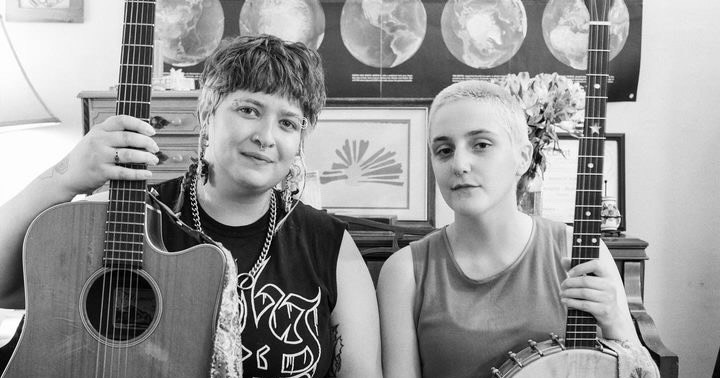
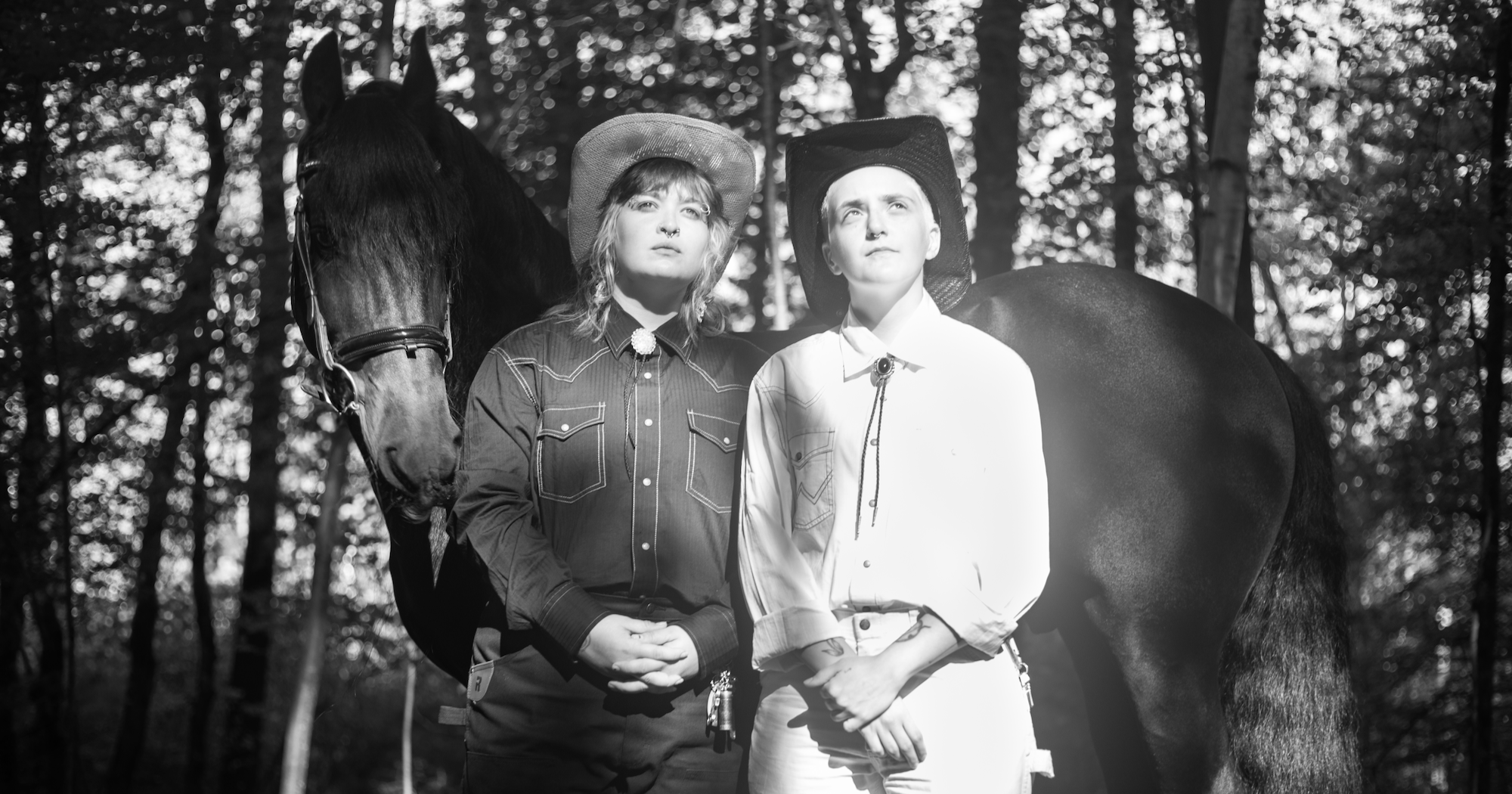
Little did Mairead Guy and Maddy Simpson know upon enrolling in Greg Liszt’s 21st Century String Band ensemble at Berklee College of Music that the course of their musical careers were about to be forever altered. Upon being paired up for a rehearsal by chance, Mairead and Maddy unearthed their musical synastry quickly. The two wove a vocal blend of sibling-like precision and their musical instincts coalesced with ease. After several jam sessions, the inevitable was clear – Mairead and Maddy were meant to make music together. With banjos in hand, the two joined forces to establish the cherished Boston alt-folk duo, Sweet Petunia.

2026 sees Sweet Petunia unfurling its petals even further – on March 13, the duo released their inaugural LP, Foggy Mountain Mental Breakdown via Ani DiFranco’s Righteous Babe Records, their first release since their 2021 EP, Lovingly. Laden with ripe lyrics and expansive sonic landscapes, Sweet Petunia harvests new growth with 12 tracks navigating dynamic emotional thresholds and lyrics that cover themes from gender identity to toxic relationships to heartbreak and beyond.

BGS was elated to sit back down with Sweet Petunia and discuss all things Foggy Mountain Mental Breakdown.

We last got to chat in 2024 for One to Watch. What has the shape of the last two years looked like for y’all?

Maddy Simpson: Lowkey pretty crazy! We started working with a booking agent and got hooked up with our label, Righteous Babe. We’re also in talks with a manager, so we’ve kind of legitimized in that way. I think the last time we spoke we didn’t have any of that.

So exciting! How has that changed the scope of your project?

Mairead Guy: They’ve been doing this so much longer and the range of people that they can connect us with is so vast compared to what we’ve been able to build so far, which is really cool.

MS: Yeah, it’s interesting to have other perspectives to bounce off of, too. The team is very thoughtful in many ways and they think of things that we would have never thought of. It does feel like this has legitimized the record and the band in a big way. Not that we weren’t legit before, but now we’re thinking about things on a much wider scale.

Speaking of which, congratulations on the new record! What about this moment in time do you feel like influenced the birth of Foggy Mountain Mental Breakdown?

MS: Truly, once we started working with the label, we just wanted to get it out as quickly as possible. March just worked best for them to slot it in, so we went with it!

MG: And March 13th must be a cosmically good day to put out an album, because we have a couple friends putting out albums that same day – Anjimile and Grace Givertz.

How fortuitous! So what was it like putting this album together? How was it different from the process for your EP, Lovingly?

MS: We recorded Foggy Mountain Mental Breakdown essentially four years ago at this point. It was our first try recording a full-length album and we did it in a kind of hybrid format – some in a couple different home studios, and then an actual recording studio. It was the first time we really brought in additional people to play on it, which was cool. We were much more thoughtful about the arrangements and the production and all that. It was the biggest thing we’ve ever done, and it was a lot, but it was incredible to see how it all turned out.

MG: We definitely learned a lot about what works and what doesn’t and what we want for next time. Even if all that was the only thing that came about from this process, it would have made it worth it.

Could you say more about what you learned?

MS: I think we both grew a lot. I learned a lot more about what I wanted and how I want things to sound. It was really awesome to work with some really close friends of ours; I learned more about collaborating, which was really cool. I also learned that it takes a really long time to put out a full-length record. Even once it’s finished, it takes quite a while, which I already knew in theory, but then to live it – it can take years sometimes, which is crazy.

MG: I feel similarly. It is cool to have the time to dedicate to thinking about the way that you want things to sound in their recorded form. That was great to learn about, especially differentiating between the ways in which that can be helpful and then also the ways in which you can get stuck in a loop of overthinking.

Now I have to ask, the title of the album is Foggy Mountain Mental Breakdown, and I’m curious if there’s anything you’d like to say about the influences behind that – Earl Scruggs, mental health, etc.?

MG: We thought it was funny! We were around a lot of bluegrass at the time – I think we came up with it at a bluegrass festival, and then a lot of our songs are pretty sad. There was sort of this trend where a lot of people were giving their projects jokey names that were plays on words, like Dolly Spartan or Chet Faker. Stuff like that was popular at the time.

MS: And it’s a little bit of an “if you know you know” vibe, because nobody knows “Foggy Mountain Breakdown” unless you play roots music and if you do, it’s the most old news bluegrass song. It’s like “Free Bird.” But then normal people have no idea what it means, which is kind of silly. It’s also a nod to our origins. Though we never really played bluegrass music, for the first three or so years that we were a band, we were almost exclusively around traditional roots music and a lot of those people were playing bluegrass. It is a huge part of our band, even though we’re more so old-time people, we love bluegrass.

The folks over at BGS definitely catch your drift!

So on FMMB, there’s a ton of lush instrumentation — what was that like? How did you find the additional musicians for all of these orchestrations?

MS: Most of the people that played on the album were people that we knew who were friends and musical collaborators of ours already. We know a lot of musicians, so it was pretty easy to put a lineup together. For example, we knew Lucy Nelligan – who plays all the fiddle on the album – from college and had played with her before. It was really a no-brainer to just have her come in and track a bunch of fiddle, just letting her go and do whatever she was gonna do. It’s cool to have that trust built with people where you know they’re going to produce quality tracks. We’re lucky that we are around so many amazing and talented musicians.

“Wilting” is the track with all the woodwinds and that was really cool because our producer, Leah Gutman, found a bunch of people to play on that session. All those people are now friends of ours, though at the time we didn’t really know any of them that well. It’s wonderful to see how our relationships have grown over time with the people that live in our community and play in our scene. For “Wilting,” our friend Christian Schmidt, who’s my roommate, played flute, but then our friend Brendan Wright from the band Tiberius was playing clarinet. And Miles Chandler from Clifford came in and played, our friend Nate Scaringi and our friend Maria – all these people that we’ve gotten to know over the years, but they were virtually strangers when they came in and tracked that song.

Do y’all have any dream collabs?

MS: Dolly Parton. Sabrina Carpenter got to do it, so…

Oh, and Willie Nelson! I’d really love to play Luck Reunion.

MG: Paul Simon. Or like, Simon & Garfunkel 30 years ago. When they reunited at Central Park we could’ve opened. Or Rhiannon Giddens would be cool.

MS: Gillian Welch and Dave Rawlings would also be awesome.

What track on the album do you each feel a deepest kinship to? Or is that like asking a parent to choose their favorite child?

MS: Hmm. I really like how “In David’s Living Room” turned out. I really love all of the auxiliary stuff that happens. I remember when Leah and I were cooking on that, I was just very excited with the direction that track was going in, because it felt like our indie moment in a record that’s pretty traditional. Though there’s other moments like that too, I think that’s my standout right now.

MG: For me, it’s probably “Grub.” That’s just one of my favorite songs that we’ve ever worked on together. You know, there’s a lot of songs on the album that, because they’re so old, don’t necessarily feel as relevant to where I am now, but “Grub” is one that I feel very protective of. The flute that Christian put on it is just so beautiful. It was also really fun to record — we did it on a 4-track while sitting on Maddy’s washer-dryer. Plus my roommate, Riley Halliday, made a beautiful stop-motion puppet music video for it.

Oh, tell me more about the music video.

MG: Yeah, so my roommate Riley – they’re an incredible visual artist, and they are really good at making puppets. We came to them about three years ago, probably, and asked them if they’d be interested in making this video. They did a combination of stop-motion, claymation, hand-drawn animation, and puppets that they built completely themself. They handbuilt everything and made this perfect video that I feel just represents the song so well.

Talented friends seriously make the world go round! Was there anything outstandingly difficult about making this album?

MG: Well, I was living in Maine at the time, so I was commuting down every weekend. In terms of life, it was great for me to be down there every weekend, but it definitely made things take a little bit longer. And it was harder, for sure, because we couldn’t just pop in really quick and do something. Everything had to be planned out pretty far in advance.

MS: Yeah, that was tough. Also, it’s really expensive to put out a record. Often it’s something most people can’t do unless they crowdfund or save up hella money for. For us, it just took a lot of saving and being very smart with money – and lowkey we ran out of money in the process. So if anyone wants to buy some merch!

A hypothetical for you – if you each could wake up tomorrow having mastered any instrument, what would it be?

MS: I’ve actually been thinking about this a lot lately, because I kind of want to learn how to play the drums. Our friend Andre M is so crazy on the drums. He has this beautiful technique – it’s very beautiful to watch him play. Every time I see his band, I’ll have like one Miller High Life and then I’ll be like, “I’m gonna do that!” So yeah, I’d definitely love to learn how to play the drums better.

MG: I always thought that I maybe have the vibe of a bass player, so that could be fun. Maybe we’ll start our drum and bass era – we could be a drum and bass duo.

I’d so be here for that. How would you each sum up FMMB in five words?

MG: College angst and bad dreams.

MS: Lowkey sad, but it’s chill.

Okay, y’all killed that.

So what’s coming up for y’all? Where can the good people find you?

MS: We are going on an album release tour in April. We’ll be out for most of April and the beginning of May all over the place – the Northeast and the South. We’re so excited to be playing five dates supporting Ani DiFranco. Our full list of tour dates is out now. Come through!


Photo Credit: JJ Gonson
You Gotta Hear This: New Music From Sweet Petunia, Big Richard, and More

Your weekly dose of new music is here! You Gotta Hear This.

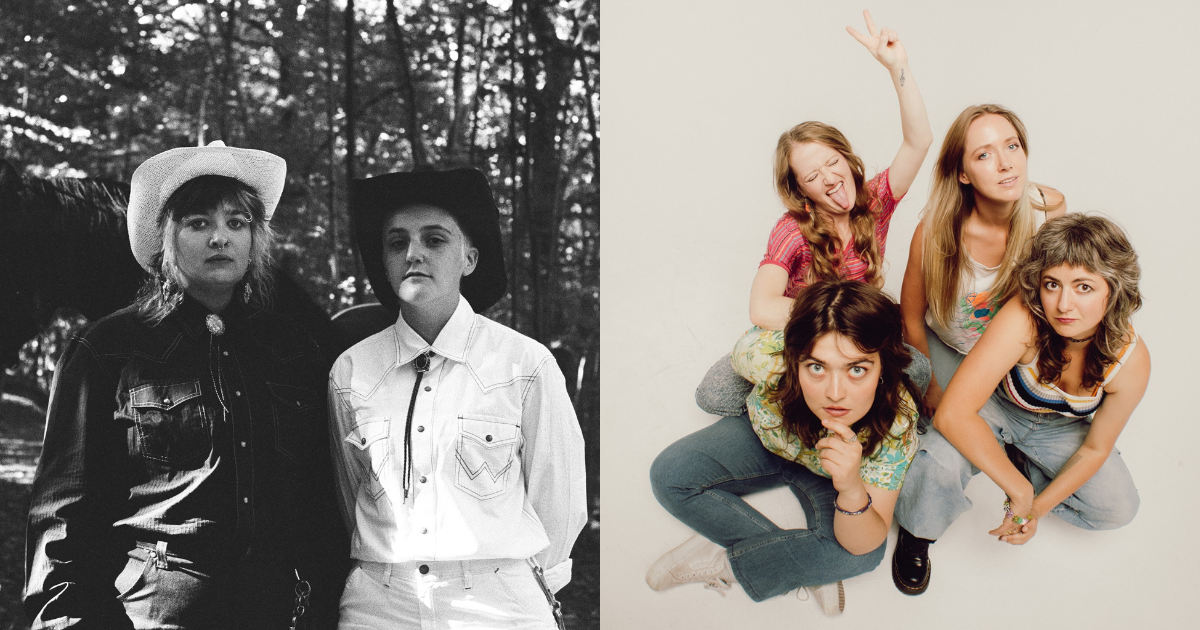
We’ve got a couple of brand new music videos, leading off with Big Richard absolutely smashing a David Olney song, “Millionaire.” To say the track is apropos for this moment in time would be a laughable understatement. The string band/bluegrass supergroup give it their signature impassioned treatment, with energy, conviction, and musicality. Their new music video for the just-released single was shot in and around Salt Lake City. Plus, Boston-based alt-folk duo Sweet Petunia bring us a new music video, as well. Their new, stark indie folk track “Grub” is set to a delightful animated, stop-motion, hand-drawn music video. The song explores identity, embodiment, beauty, and pain, and holds space for solidarity for trans and gender-nonconforming folks.

You’ll also find a music video for Michael Haney’s new cover of a Bruce Springsteen song, “Brilliant Disguise,” rich in Americana rock ‘n’ roll. Haney knew he wanted to record the number because of how it “speaks directly to the heart of the human condition.” Singer-songwriter Kirby Lyle picks up the same mantle on the title track for his brand new EP, Change Is Hard. It’s also a song of solidarity and community, because who is going to save us if we don’t save us? But we are going to save us.

It’s a lovely collection of tracks this week highlighting community, togetherness, and how roots music is built upon both. We hope you enjoy, cause we think You Gotta Hear This!

Big Richard, “Millionaire”

Artist: Big Richard
Hometown: Denver, Colorado
Song: “Millionaire”
Album: Pet
Release Date: January 13, 2026 (single); February 6, 2026 (album)
Label: Signature Sounds

In Their Words: “‘Millionaire’ is a song about the greed and corruption of the rich written by David Olney, originally released in 1991. It is still wildly topical nearly 35 years later, although it might be time to change ‘millionaire’ to ‘billionaire’ at this point.

“We added this song to our setlist just after the inauguration last year and it has become one of the most emotionally charged moments in our sets. For us, this song is a unifying message, because regardless of which side of the line you voted on, we are all on the same side in the great class war. All of us are at the mercy of a very few, who only have their own best interests in mind, and who would never dismantle the systems that hold them in their places of power. It’s up to us to join with our neighbors and tear it down, from the joke that is the insurance industry to the politicians that are openly bought and controlled by corporations.

“We filmed the music video in Salt Lake City, where local fans will recognize many of the landmarks, which include the state capitol building, the offices of the LDS (who currently own more real estate than any other entity in the world), and the fuel refineries that choke the air of that beautiful city.

“We sing this old song with a lot of hope in dark days like these. Our species is brilliant, and more than capable of solving the problems that we have, if we would put the money in the right pockets and put limits on the folks that choose to hoard it.” – Dr. Joy Adams

Video Credit: Wonderstone Films


Michael Haney, “Brilliant Disguise”

Artist: Michael Haney
Hometown: Originally from Columbia, South Carolina; now living in Nashville, Tennessee
Song: “Brilliant Disguise”
Release Date: January 23, 2026
Label: Rock Ridge Music

In Their Words: “I chose to record ‘Brilliant Disguise’ by Bruce Springsteen as an up-tempo rock version, because I’ve always been drawn to the tension and truth in that song. It’s one of his most well-known pieces from a transitional period in his life, and I think it speaks directly to the heart of the human condition — that universal experience of hiding parts of ourselves, even from those we love most. The more you sit with it, the more you realize the song captures something even deeper: how often we don’t truly know who we are in the first place. We walk through life trying to piece together our identities, yet we still build masks on top of that uncertainty — sometimes to protect ourselves, sometimes because we’re afraid of being seen, and sometimes for reasons we don’t fully understand.

“I liked the idea of doing late-’80s Springsteen as if mid-to-late-’70s Springsteen had taken it on, with that raw, energetic edge that defined his early sound. Reimagining it that way let me lean into the emotional conflict at the center of the song — the push and pull between authenticity and self-deception — while giving it the kind of drive that felt truer to my own voice. It’s not a song that’s been covered often, which made it feel like the perfect addition to my catalog: both as a tribute to his songwriting and as a reflection of where I am personally right now, navigating my own questions about identity, honesty, and the parts of ourselves we choose — or struggle — to reveal.” – Michael Haney

Track Credits:
Michael Haney – Vocals
Ben Jackson – Drums, percussion, keys, Hammond B3 organ
Luis Espaillat – Bass
Brian Fechino – Acoustic guitar, electric guitar
Brad Sample – Electric guitar
Kaleb Thomas Jones – BGVs


Kirby Lyle, “Change Is Hard”

Artist: Kirby Lyle
Hometown: Nashville, Tennessee
Song: “Change Is Hard”
Album: Change Is Hard (EP)
Release Date: January 16, 2026

In Their Words: “‘Who’s gonna save us if we don’t save us?’ That’s the line. We are. Us. You and me. Right here in the moment. Every time I play ‘Change Is Hard,’ my soul activates! I’m so full of gratitude that the heart has an infinite capacity when it’s shared, because I can’t express this feeling alone. The music commands a full choir and joyful ruckus of players to lift it up to megaphone level. When the audience engages, our positive energy is ubiquitous! The hope is simple: inspiration toward progress – personal and societal. It’s on us. Be moved. Get better. Make each other better. Together.” – Kirby Lyle

Track Credits:
Kirby Lyle – Lead vocals, guitar, auxiliary percussion, songwriter, background vocals
Kyle Tuttle – Banjo
Keyboard – Jacob Merlin
Erika Nalow – Saxophones
Jordan Perlson – Drums
Background Vocalists: Maya de Vitry, Kyle Tuttle, Ethan Jodziewicz, Anthony Saddic, Brenna, Dana Baker, Emory Major, Noelle McFarland, Rachel Isabella, Sean Donovan, Kimberly Albertson, Laura Stack


Sweet Petunia, “Grub”

Artist: Sweet Petunia
Hometown: Boston, Massachusetts
Song: “Grub”
Album: Foggy Mountain Mental Breakdown
Release Date: January 13, 2026 (single); March 13, 2026 (album)
Label: Righteous Babe

In Their Words: “‘Grub’ is a song about my experience of being trans and the beauty and the pain that come with it. The song came to me almost completely at once. Most of the first verse came out in one fell swoop as you hear it today, but the second verse was inspired by a video of beautiful baby birds crowded into a small nest. I was so jealous of how close and happy they looked — a perfect opposite to reflect the isolation and sense of otherness that I explore in the first half of the song. Maddy and I then spent two hours just playing it over and over and over again until we finally found the perfect duet of banjo and vocals to support the song.

“I feel so lucky to have been able to share this song with so many other trans people through years of performing it live and hear how they connect to it within the context of their own experiences. It feels particularly special to be putting ‘Grub’ out in a time where our rights and lives as trans people are being put in harm’s way in a much more visible way than in the past few years.” – Mairead Guy

Video Credit: Riley Halliday


Photo Credit: Sweet Petunia by JJ Gonson; Big Richard by Rett Rogers.

One to Watch: Boston-Based Alt Folk Duo Sweet Petunia

From the crosshairs of the Boston folk community and punk/DIY scene emerges Sweet Petunia, an innovative duo consisting of multi-instrumentalist songwriters Maddy Simpson and Mairead Guy. A synthesis of banjos, queerness, emotive lyricism, and life-affirming harmonies, the pair’s music explores the fluidity of futurity, even when anchored in centuries of tradition.

With two EPs and several singles under their belt, Sweet Petunia graces the ears of multitudes with an active touring schedule and their vigorous participation in the Boston music scene. The queer alt folk duo’s commitment to community and uplifting overlooked histories only deepen the resounding impact that their music inspires.

So, to start things off, how did the two of you first meet?

Maddy Simpson: We both went to Berklee College of Music and we got placed into the same ensemble, 21st Century String Band, taught by Greg Liszt, who is an incredible banjo player. One day we were supposed to have an additional rehearsal with another guy that was in the ensemble, but he stood us up (shoutout Rob with your Legends of Zelda beanie with a brim!) The two of us showed up for the rehearsal and he never came. So we just had 45 minutes to talk to each other. We ended up talking about our goals, the music we liked, and found out that we had a lot of similar likes and plans for the future. So we decided to get together and play some music. When we did, immediately we were like, “Okay, let’s be in a band.”

What does your musical chemistry with one another feel like?

MS: Well, we always joke that we’re related. I mean, we do sound very similar when we sing together. So it kind of feels like we’re like a family band even though we’re not related.

Mairead Guy: Yeah, I mean it just works – really well. Obviously we put in a lot of work into what we do. But a lot of it feels very easy when we’re playing and arranging together. We have similar intuitions about the way things should go, and that makes it really fun and special to play together.

What is your process like when you songwrite and arrange together? And what’s it like arranging with two banjos?

MG: Most of the time we come to each other with an almost-completed song. Sometimes we write together, but usually we come together once the song is pretty much finished and arrange it from there. And that’s just a lot of playing it over and over and over and over, trying different things and seeing what sticks and what pops out.

That works! How did each of you come to the genre and/or the banjo?

MS: I came to folk music through the folk revival of the ’60s. I listened to a lot of Simon & Garfunkel growing up and then when I was a little bit older, I got into the folk revival revival, so like Mumford & Sons, The Head and the Heart, The Lumineers, and that kind of stuff. I had no idea that was just the tip of a really big iceberg – I didn’t really discover true traditional music until college, when I got really into old-time music and ’50s country blues and that kind of thing.

The reason I started playing banjo is that obviously it was pretty present in the music that I was listening to like all throughout high school and my childhood, but when I got to college I had a dorm-mate who played banjo. He was a banjo principal and he would play banjo in the lounge and the laundry room – just everywhere. One day I told him that I was interested and he said, “If you buy a banjo, I’ll give you lessons.” So over Thanksgiving break I went home, bought a banjo, came back, and started taking lessons with him. And then I started taking lessons with other people at Berklee and that was it for me – it became my primary instrument.

MG: So, I grew up in Virginia. There’s a lot of traditional, old-time bluegrass around in that area and a lot of my family is pretty musical – my uncle and aunt and my great uncle and his longtime partner. We’re are all professional musicians and my great uncle was a phenomenal clawhammer banjo player. My brother plays the banjo and I’d always wanted to play it, because it’s such a beautiful instrument. When Maddy and I first started playing together, we had a lot of songs where we would trade our instruments around. When she switched to banjo I thought it was the perfect time to finally sink my teeth in and do it. Similarly to her, once I picked one up I was like, “Oh my God, why haven’t I been doing this the whole time?” Yeah, it’s an addictive instrument to play.

I noticed that the stylization of a lot of your lyrics is super unique and you have several songs with strong narratives. Can you talk a bit about the song “Quilt Too Big to Fold”? I’ve had it on repeat for weeks.

MS: Thank you. Yeah, I wrote that song for a class. We were given this assignment to write a story song. And I was thinking a lot and sort of had this refrain in my head, “All you do is sit all day and sew.” So I did some journaling about all of the things that you can sit and sew. Fiber arts are really important to me and at the time of writing that song I was really into embroidery and I was getting really into visible mending – dabbling in this world of fiber arts.

I started thinking about all of the different fiber mediums you can have. And I started to think about quotes. And then, obviously, I’m also gay. I had already seen the AIDS Memorial Quilt, so I began to look into it more deeply. The quilt was started by a lesbian and was just one of the many forms of activism that came out of the AIDS crisis. The song sort of formed around that pretty quickly. It was easy to write given the fact that I’m queer and then just creating this work of fiction where I did a lot of thinking about what it would be like to go through that, taking my own passions and interests in sort of like translating them into a historical lens. And it was really an interesting process.

Really, really amazing stuff. I also saw that you both played an integral part in Club Passim’s inaugural Pride show? Can you talk a little bit about that and what that was like?

MG: Oh it was all Maddie! Well, we played it together, but it was all Maddie.

MS: Mairead kept me sane – I was freaking out the whole time. I was given the opportunity to curate Club Passim’s first ever truly Pride-themed show. We’ve done Pride open mics and once we had a queer festival, but that was during COVID, so it was all online. So we’ve had some queer-centered events before, but this was the first ever show specifically dedicated to Pride Month.

I was given this opportunity through The Folk Collective, which is an initiative that Passim is spearheading right now. Basically, it’s a cohort of 12 artists and cultural thought leaders that live in and around Boston. Passim has invited them into the club to synthesize what the future of folk music could be like, since folk music has, in the cultural narrative, been seen as a really white-washed and male-centric genre. So it’s 12 people of varying marginalized identities and people of all ages and races and gender identities and sexual identities coming together to talk about what the future of folk music could look like.

I was given an opportunity through the Folk Collective to bring together six queer acts who are making music either directly inspired by or within the traditional genre. We had several performers who played super traditional instruments – I mean, we both played banjo and we had somebody who plays the mountain dulcimer, which was really cool. We had somebody else who did country blues and talked about gender non-conforming people in the genre. And we also had some incredible singer-songwriters as well. It ended up being a crazy night of celebrating queer identities and also celebrating the traditional music that everybody at Club Passim loves so much. It was very, very awesome.

MG: Hell yeah. Beautiful night – Maddie put so much time and effort and care into curating all of these artists and making this happen in such an important and cognitive way, and it was just such an incredible thing to ride along the coattails of.

Hopefully there are many more! In general, what does the community feel like in Boston, within the folk scene, and how do you see Sweet Petunia fitting into it?

MG: I think that Maddie and I have a particular perspective on it just because we work at Club Passim, so we see all the musicians that pass through. But I mean, as is evidenced by the event that we just had, there is a pretty wide community of queer and trans folk musicians who are drawing inspiration from traditional roots music. And even beyond tradition, things like the pedal or lap steel are becoming super popular in different genres of music. Even the banjo people are using electric banjo to get a super sick like electric guitar tone and that sort of thing.

MS: Yeah, I was just gonna say that we sit in a really weird intersection, because we’re not quite in the traditional folk scene. We’re also really established within the DIY scene as well, which is primarily indie rock and hardcore music in Boston. But because we exist in both circles we get the best of both worlds. Sometimes we get asked to play punk shows, but we also can play listening room venues like Passim.

Outside of the folk and Americana scene, what are your biggest influences right now?

MS: I love slowcore and also the huge bootgaze thing that’s happening right now. I feel like I exist in the perfect time to be 25 and into DIY music, because most of the music being made around here at this point has some bootgaze element.

Could you define bootgaze?

MS: It’s like shoegaze-inspired country music. Or country-inspired shoegaze music. Some blur into indie rock, some are just shoegaze bands that use country instrumentation or come from a place where country music is the main genre. The band Wednesday is probably the biggest right now. They sort of pioneered the genre. MJ Lenderman, Florry – there’s lots to explore if you look up bootgaze or countrygaze.

What about you, Mariead?

MG: I mean, definitely same. I’ve also really been loving a lot of hyperpop and pop music recently. Just like the energy in songs like that is so interesting. I’ve been thinking a lot about the banjo as a similar percussion to a drum machine in a super fast hyperpop song. I’ve been trying to think about ways to incorporate that because most of the songs that I write make you feel kind of bad, but I think it’d be kind of fun to write songs that made you feel kinda good.

I think you’re onto something! Do you two have any fun projects coming up?

MG: We’re working on a Dolly Parton cover EP. Every year for Halloween since 2019 (except for 2020 because of COVID) we have done a Dolly Parton cover set. And so this will be our fifth year of Dolly Parton cover sets. So we wanted to do a little something to commemorate it.

MS: Yeah, it’s gonna be really fun. That’s coming in October. There will be a bill for a cover show. So if people are local to Boston, they can come to that.

That is so exciting! So you’re our One to Watch, but who are you watching? Are there any artists, creatives, musicians, etc. that you’re appreciating especially right now?

MS: I think that my one to watch is Roman Barten-Sherman, the person from Passim’s Pride show who does traditional country blues. She’s incredible. She’s so good. She is so smart. And so well-read and knowledgeable about early American country blues. During her shows she’ll introduce every song with so much knowledge about the genre and people who play it. She knows so much about gender-nonconforming and trans individuals and Black women who have contributed to the genre. She knows everything – it’s crazy. And then she’ll play the song and it’s the best fucking thing you’ve ever heard. She’s just so good. I think she’s going to take over the world. She’s my one to watch.

MD: I definitely second that – she’s one of the people I was thinking of. I would also say Jarsch. Just absolutely incredible, visceral songwriting. Beautiful lyricism relating to both the pain and joy of queerness and gender and life itself – religious trauma, all sorts of things. Everytime I see her play I literally just cry and cry. It’s so beautiful. She’s the only person I’ve seen able to yield a guitjo in an appropriate manner, and she just has so much love for what she’s doing and the community she’s in. I feel very lucky to know her. Definitely a one to watch.


Photo Credit: Barry Schneier