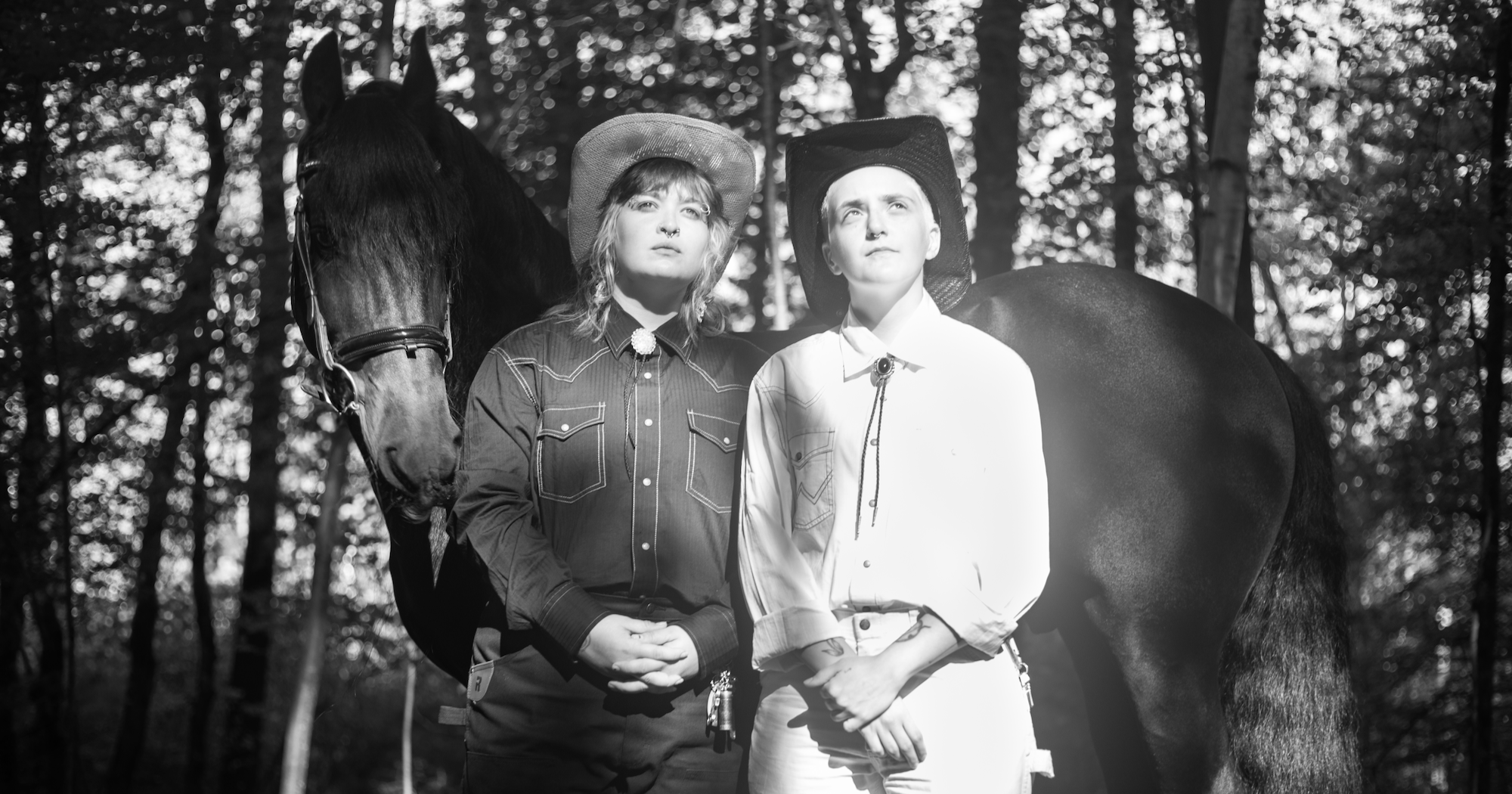
Sweet Petunia Grew Into Their Foggy Mountain Mental Breakdown

Little did Mairead Guy and Maddy Simpson know upon enrolling in Greg Liszt’s 21st Century String Band ensemble at Berklee College of Music that the course of their musical careers were about to be forever altered. Upon being paired up for a rehearsal by chance, Mairead and Maddy unearthed their musical synastry quickly. The two wove a vocal blend of sibling-like precision and their musical instincts coalesced with ease. After several jam sessions, the inevitable was clear – Mairead and Maddy were meant to make music together. With banjos in hand, the two joined forces to establish the cherished Boston alt-folk duo, Sweet Petunia.

2026 sees Sweet Petunia unfurling its petals even further – on March 13, the duo released their inaugural LP, Foggy Mountain Mental Breakdown via Ani DiFranco’s Righteous Babe Records, their first release since their 2021 EP, Lovingly. Laden with ripe lyrics and expansive sonic landscapes, Sweet Petunia harvests new growth with 12 tracks navigating dynamic emotional thresholds and lyrics that cover themes from gender identity to toxic relationships to heartbreak and beyond.

BGS was elated to sit back down with Sweet Petunia and discuss all things Foggy Mountain Mental Breakdown.

We last got to chat in 2024 for One to Watch. What has the shape of the last two years looked like for y’all?

Maddy Simpson: Lowkey pretty crazy! We started working with a booking agent and got hooked up with our label, Righteous Babe. We’re also in talks with a manager, so we’ve kind of legitimized in that way. I think the last time we spoke we didn’t have any of that.

So exciting! How has that changed the scope of your project?

Mairead Guy: They’ve been doing this so much longer and the range of people that they can connect us with is so vast compared to what we’ve been able to build so far, which is really cool.

MS: Yeah, it’s interesting to have other perspectives to bounce off of, too. The team is very thoughtful in many ways and they think of things that we would have never thought of. It does feel like this has legitimized the record and the band in a big way. Not that we weren’t legit before, but now we’re thinking about things on a much wider scale.

Speaking of which, congratulations on the new record! What about this moment in time do you feel like influenced the birth of Foggy Mountain Mental Breakdown?

MS: Truly, once we started working with the label, we just wanted to get it out as quickly as possible. March just worked best for them to slot it in, so we went with it!

MG: And March 13th must be a cosmically good day to put out an album, because we have a couple friends putting out albums that same day – Anjimile and Grace Givertz.

How fortuitous! So what was it like putting this album together? How was it different from the process for your EP, Lovingly?

MS: We recorded Foggy Mountain Mental Breakdown essentially four years ago at this point. It was our first try recording a full-length album and we did it in a kind of hybrid format – some in a couple different home studios, and then an actual recording studio. It was the first time we really brought in additional people to play on it, which was cool. We were much more thoughtful about the arrangements and the production and all that. It was the biggest thing we’ve ever done, and it was a lot, but it was incredible to see how it all turned out.

MG: We definitely learned a lot about what works and what doesn’t and what we want for next time. Even if all that was the only thing that came about from this process, it would have made it worth it.

Could you say more about what you learned?

MS: I think we both grew a lot. I learned a lot more about what I wanted and how I want things to sound. It was really awesome to work with some really close friends of ours; I learned more about collaborating, which was really cool. I also learned that it takes a really long time to put out a full-length record. Even once it’s finished, it takes quite a while, which I already knew in theory, but then to live it – it can take years sometimes, which is crazy.

MG: I feel similarly. It is cool to have the time to dedicate to thinking about the way that you want things to sound in their recorded form. That was great to learn about, especially differentiating between the ways in which that can be helpful and then also the ways in which you can get stuck in a loop of overthinking.

Now I have to ask, the title of the album is Foggy Mountain Mental Breakdown, and I’m curious if there’s anything you’d like to say about the influences behind that – Earl Scruggs, mental health, etc.?

MG: We thought it was funny! We were around a lot of bluegrass at the time – I think we came up with it at a bluegrass festival, and then a lot of our songs are pretty sad. There was sort of this trend where a lot of people were giving their projects jokey names that were plays on words, like Dolly Spartan or Chet Faker. Stuff like that was popular at the time.

MS: And it’s a little bit of an “if you know you know” vibe, because nobody knows “Foggy Mountain Breakdown” unless you play roots music and if you do, it’s the most old news bluegrass song. It’s like “Free Bird.” But then normal people have no idea what it means, which is kind of silly. It’s also a nod to our origins. Though we never really played bluegrass music, for the first three or so years that we were a band, we were almost exclusively around traditional roots music and a lot of those people were playing bluegrass. It is a huge part of our band, even though we’re more so old-time people, we love bluegrass.

The folks over at BGS definitely catch your drift!

So on FMMB, there’s a ton of lush instrumentation — what was that like? How did you find the additional musicians for all of these orchestrations?

MS: Most of the people that played on the album were people that we knew who were friends and musical collaborators of ours already. We know a lot of musicians, so it was pretty easy to put a lineup together. For example, we knew Lucy Nelligan – who plays all the fiddle on the album – from college and had played with her before. It was really a no-brainer to just have her come in and track a bunch of fiddle, just letting her go and do whatever she was gonna do. It’s cool to have that trust built with people where you know they’re going to produce quality tracks. We’re lucky that we are around so many amazing and talented musicians.

“Wilting” is the track with all the woodwinds and that was really cool because our producer, Leah Gutman, found a bunch of people to play on that session. All those people are now friends of ours, though at the time we didn’t really know any of them that well. It’s wonderful to see how our relationships have grown over time with the people that live in our community and play in our scene. For “Wilting,” our friend Christian Schmidt, who’s my roommate, played flute, but then our friend Brendan Wright from the band Tiberius was playing clarinet. And Miles Chandler from Clifford came in and played, our friend Nate Scaringi and our friend Maria – all these people that we’ve gotten to know over the years, but they were virtually strangers when they came in and tracked that song.

Do y’all have any dream collabs?

MS: Dolly Parton. Sabrina Carpenter got to do it, so…

Oh, and Willie Nelson! I’d really love to play Luck Reunion.

MG: Paul Simon. Or like, Simon & Garfunkel 30 years ago. When they reunited at Central Park we could’ve opened. Or Rhiannon Giddens would be cool.

MS: Gillian Welch and Dave Rawlings would also be awesome.

What track on the album do you each feel a deepest kinship to? Or is that like asking a parent to choose their favorite child?

MS: Hmm. I really like how “In David’s Living Room” turned out. I really love all of the auxiliary stuff that happens. I remember when Leah and I were cooking on that, I was just very excited with the direction that track was going in, because it felt like our indie moment in a record that’s pretty traditional. Though there’s other moments like that too, I think that’s my standout right now.

MG: For me, it’s probably “Grub.” That’s just one of my favorite songs that we’ve ever worked on together. You know, there’s a lot of songs on the album that, because they’re so old, don’t necessarily feel as relevant to where I am now, but “Grub” is one that I feel very protective of. The flute that Christian put on it is just so beautiful. It was also really fun to record — we did it on a 4-track while sitting on Maddy’s washer-dryer. Plus my roommate, Riley Halliday, made a beautiful stop-motion puppet music video for it.

Oh, tell me more about the music video.

MG: Yeah, so my roommate Riley – they’re an incredible visual artist, and they are really good at making puppets. We came to them about three years ago, probably, and asked them if they’d be interested in making this video. They did a combination of stop-motion, claymation, hand-drawn animation, and puppets that they built completely themself. They handbuilt everything and made this perfect video that I feel just represents the song so well.

Talented friends seriously make the world go round! Was there anything outstandingly difficult about making this album?

MG: Well, I was living in Maine at the time, so I was commuting down every weekend. In terms of life, it was great for me to be down there every weekend, but it definitely made things take a little bit longer. And it was harder, for sure, because we couldn’t just pop in really quick and do something. Everything had to be planned out pretty far in advance.

MS: Yeah, that was tough. Also, it’s really expensive to put out a record. Often it’s something most people can’t do unless they crowdfund or save up hella money for. For us, it just took a lot of saving and being very smart with money – and lowkey we ran out of money in the process. So if anyone wants to buy some merch!

A hypothetical for you – if you each could wake up tomorrow having mastered any instrument, what would it be?

MS: I’ve actually been thinking about this a lot lately, because I kind of want to learn how to play the drums. Our friend Andre M is so crazy on the drums. He has this beautiful technique – it’s very beautiful to watch him play. Every time I see his band, I’ll have like one Miller High Life and then I’ll be like, “I’m gonna do that!” So yeah, I’d definitely love to learn how to play the drums better.

MG: I always thought that I maybe have the vibe of a bass player, so that could be fun. Maybe we’ll start our drum and bass era – we could be a drum and bass duo.

I’d so be here for that. How would you each sum up FMMB in five words?

MG: College angst and bad dreams.

MS: Lowkey sad, but it’s chill.

Okay, y’all killed that.

So what’s coming up for y’all? Where can the good people find you?

MS: We are going on an album release tour in April. We’ll be out for most of April and the beginning of May all over the place – the Northeast and the South. We’re so excited to be playing five dates supporting Ani DiFranco. Our full list of tour dates is out now. Come through!


Photo Credit: JJ Gonson
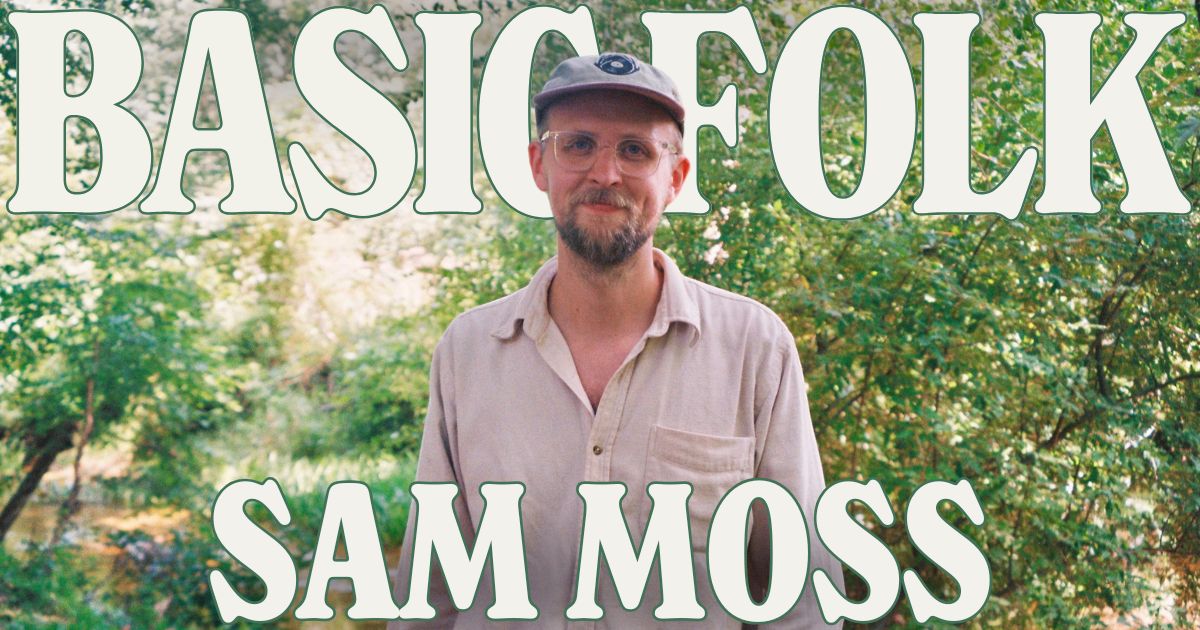
Basic Folk: Sam Moss

Although the ever-enigmatic Sam Moss is not a great swimmer, he named his latest album Swimming. The folk singer with a gentle demeanor is back with thoughtful songs and captivating melodies. Hailing from New England, Sam has carved out a unique niche in the folk world, blending naturalistic themes with an introspective approach to songwriting. We explore how his New England roots continue to influence his music – despite his current residence being Virginia – and how his upbringing in a family of visual artists has shaped his artistic sensibilities.

LISTEN: APPLE • SPOTIFY • AMAZON • MP3

Sam also talks about how movement and the natural world inspire his songwriting, if not with more oblique lyrics. We dig into his latest album Swimming, where he boldly embraces more direct lyrical expressions; we discuss the balance between mood and narrative in his work, too. Our Basic Folk conversation touches on his journey from a shy young musician to a confident performer, as well, thanks in part to the encouragement of close friends like Jackson Emmer. He counts Emmer, who he played with in old-time duo The Howling Kettles, as one of his greatest inspirations for following his own creative arrow in music.

Elsewhere in the episode, we explore Sam’s passion for woodworking, a skill he honed as a respite from musical burnout. He describes the satisfaction of crafting tangible objects and how this practice complements his musical endeavors. We also really dive into his feelings around the word “gentle,” which is often used to describe his music and persona. He doesn’t actually mind being known as a gentle person– in fact, he hopes people do find his music soft and tender and, in that gentleness, that they still leave feeling his songs’ striking impact.


Photo Credit: Lead image by Jake Xerxes Fussell; alternate image by Alaina Shefelton.

Jeffrey Foucault Remembers Billy Conway with The Universal Fire

In our episode with Wisconsin-born, New England-based Jeffrey Foucault, we had a handful of questions for the singer-songwriter about his background: coffee, the Midwest, and Mark Twain wisdom. Then, we talked about Billy Conway for more than an hour. Conway was Foucault’s long-time partner in music, his drummer, and best friend who died from cancer in 2021. He was a roots rock and roll legend in Boston with his tenure in Morphine and Treat Her Right. Conway was like a holy man, known for his creative, curious, and infectious spirit where even people who met him only one time (myself included) were quite taken and inspired by his presence. His loss hit the music community hard. In 2023, a tribute album showcasing the songwriting of Conway recorded by some of his closest friends (including Chris Smither, Foucault, Kris Delmhorst, and Billy’s wife Laurie Sargent) was released. And now, with his latest album release, Jeff’s given us a working wake for his friend Billy, The Universal Fire.

LISTEN: APPLE • SPOTIFY • AMAZON • MP3

Elsewhere in the episode, we talked about what was going on with Jeff when he met and started working with Billy in 2013. What state of mind made this spectacular friendship and collaboration completely click? Jeff has also been conscious about his reaction to Conway’s death and processing grief, when it comes to being an example for his teenage daughter (who is also getting into folk music and live performance, too – hi, Hazel!)

We also dig into the new album. Jeffrey paralleled the loss of Billy Conway with a different type of loss, the 2008 fire at the Universal Studios lot in California that destroyed master tapes of hugely influential American recordings. And finally, we check in on how Jeffrey’s human-ness is faring in the high-tech world in the year 2024.


Photo Credit: Joe Navas

Basic Folk: Guster

On the latest episode of Basic Folk, frontman ​Ryan ​Miller joins us ​to ​talk ​about ​all ​things ​Guster. ​From ​their ​tried ​and ​true ​collaborative ​writing ​process ​to ​the ​theatrical ​delights ​of ​their ​recent “We ​Also ​Have ​Eras” ​tour, ​to ​what ​it ​really ​looks ​like ​to ​make ​environmental ​sustainability ​a ​priority ​on ​tour. ​

Guster ​has just released ​their ​9th ​studio ​album, ​Ooh ​La ​La. ​As ​we ​talked ​about ​the ​new ​record, ​Ryan shared ​how ​these ​new ​songs ​touch ​on ​questions ​that ​the ​band ​has ​been ​asking ​throughout ​their ​over 30-year ​career. For ​example, ​”Maybe ​We’re ​Al​right” ​calls ​back ​to ​the ​collectivist ​spirit ​that ​we ​loved ​in ​2003’s ​Keep ​It ​Together. ​​”Gaugin, Cezanne (Everlasting Love)” ​talks ​about ​God ​in ​a ​way ​that ​brought ​up ​new ​questions ​for ​me ​about ​2010’s ​album, ​Easy, ​Wonderful. ​This ​is ​what ​makes ​being ​a ​Guster ​fan ​so ​rewarding. ​The ​longer ​you ​listen ​to ​these ​guys ​and ​the ​deeper ​you ​dig, ​the ​more ​you ​feel ​empowered ​to ​ask ​questions ​about ​the ​world ​around ​you ​and ​approach ​the ​answers ​with ​playfulness. ​Guster ​is ​a ​band, ​but ​it ​is ​also ​a ​place ​where ​we ​all ​meet ​to ​dance ​away ​the ​big ​questions ​with ​whimsy ​to ​the ​beat ​of ​tasteful ​hand ​drums.

LISTEN: APPLE • SPOTIFY • AMAZON • MP3

It ​is ​no ​exaggeration ​to ​say ​that ​co-host Lizzie No ​has ​waited ​over ​20 ​years ​to ​talk ​to ​Ryan. ​They became ​a ​fan ​of ​the ​New ​England ​indie ​outfit ​in ​2003 ​when the group opened ​for ​John ​Mayer ​at ​the ​West ​Point ​Military ​Academy, ​of ​all ​places. ​The ​vibe ​in ​the ​room ​was ​a ​little ​stiff, ​but ​Guster ​was ​anything ​but. Their ​exuberant, ​generous, ​harmony ​filled, ​idiosyncratic ​performance ​blew her ​teenage ​mind. ​As Lizzie ​dug ​deeper ​into ​their ​lore, ​they ​discovered ​that they were ​a ​part ​of ​a ​vast ​network ​of ​weirdos: The ​Guster ​fandom. ​


Photo Credit: Alysse Gafkjen

WATCH: Caroline Cotter, “The Year of the Wrecking Ball”

Artist: Caroline Cotter
Hometown: Providence, Rhode Island; currently Ellsworth, Maine
Song: “The Year of the Wrecking Ball”
Album: Gently As I Go
Release Date: August 18, 2023

In Their Words: “I wrote ‘The Year of the Wrecking Ball’ in the winter of 2020 as I reflected on the challenges of transition and the act of letting go. I grew up in a brick house, in a quiet residential neighborhood on the East Side of Providence, Rhode Island. This home was my place of refuge, belonging, and comfort. Cozy mornings listening to records on the green rug by the heat vent in our family room, sliding down the long wooden staircase in sleeping bags, being sung to sleep by my parents, surrounded by a menagerie of stuffed animals. Then as I got older and my siblings left the house, nostalgia and the unkept lawn grew, paint chipped, and our family continued to change. When I was 20, my parents divorced and sold the house. It took me years to understand what saying goodbye to my childhood home meant to me. As painful as the loss was, it gave me a push to find belonging in the present moment, make home wherever I was, and see the light through the cracks. ‘The Year of the Wrecking Ball’ revisits a place and relationships that could never be the same, and finds gratitude in the spaces made by inevitable change.” – Caroline Cotter


Photo Credit: Katherine Emery

Basic Folk – Peter Mulvey

Milwaukee-born Peter Mulvey has, along with classical duo SistaStrings, made an anti-fascist record. According to Peter, “to make an anti–fascist record, you must keep kindness and compassion in the foreground.” Love is the Only Thing goes from family, to politics, to family, to racism and back to family. It’s as optimistic and introspective as it is filled with “running out of a burning building” type of songs. All the while, Peter is joined by powerful, thoughtful and extremely talented musicians in Monique and Chauntee Ross.

LISTEN: APPLE • SPOTIFY • STITCHERAMAZON • MP3

Lots has happened in Peter’s life since his last album. He originated himself in New England, fell in love and got married, a pandemic, and he’s become a father. All these eek their way into the songs on the new album. Particularly poignant is his co-write with his partner, the song about their possible future as parents (good luck not crying to all the parents out there!) Don’t worry if you didn’t catch all the Buddhist references, we talk about each one in finite detail. Enjoy!


Photo Credit: Joe Navas

BGS 5+5: Rachel Sumner

Artist: Rachel Sumner
Hometown: Lancaster, California
Latest album: Anything Worth Doing
Personal nicknames (or rejected band names): No nicknames, but strangers universally call me “Rebecca” when they can’t remember/don’t know my name.

Which artist has influenced you the most … and how?

My original background is in classical music and composition. When I started playing guitar it was primarily because of my affection for bluegrass music, which developed after hearing the Smithsonian/Folkways Pioneering Women of Bluegrass album by Hazel Dickens & Alice Gerrard. Because I was introduced to that music only a handful of years ago, I still find myself being exposed to new artists who influence me in very significant ways.

One artist whose work I consumed and who’s had what I would consider a major influence during the creation of my new album is Anaïs Mitchell; musically, of course, but I also have been inspired by her trajectory through varying genres and projects, everything from reinterpretations of traditional ballads to extended narratives, to writing a successful folk opera turned Broadway show. I still can’t believe that. She’s amazing.

What other art forms — literature, film, dance, painting, etc — inform your music?

Paintings and poetry are probably the most informative non-musical mediums to me. One of my favorite places on earth is the Museum of Fine Arts, Boston (MFA). I used to visit almost every week while I was in college. I had the most incredible art history professor while I was a student at Berklee — his name was Henry Tate and he used to be the curator at the MFA. Henry made it his mission to show his students the parallels between painting and writing music: we learned how artists guide the viewer from the beginning or “entrance” of the painting along a particular path, all by manipulating placement and color.

When I sit down to write, I often think through those terms and techniques and notice similarities between the two mediums — songwriters can also create paths in songs for listeners to take, and they don’t necessarily have to be linear. Poetry activates me in a similar way. Sometimes I find a really good poem that feels like a familiar and forgotten thought; something I thought about once but couldn’t express myself. Jack Gilbert is a current favorite, and in fact his poem “Failing & Flying” inspired my song “Anything Worth Doing.”

What rituals do you have, either in the studio or before a show?

When we were about to record the first Twisted Pine album, I thought it would be really fun to record the entire thing in my pajamas just so I could listen back and think, “Gee, I made that in my PAJAMAS.” We ended up filming the sessions, so I settled for wearing my slippers. Now I always record in my Studio Slippers.

Which elements of nature do you spend the most time with and how do those impact your work?

I’m a Southern California transplant living in New England, and I’ve lived here as long as I’ve been writing songs. Something new to me, that I spend a lot of time either enjoying or warring with, are the seasons. I’d never experienced the full spectrum of seasons before moving east. In Lancaster, California, we essentially just have summer and winter, and winter there is barely comparable to winter in New England. There is nothing like seeing fall in full swing in Western Massachusetts and Vermont. Nothing. There is also nothing like the thawing feeling you get when the first beautiful spring days arrive after harsh, snowy winters. I like the winters, though. I find the theme of seasons comes up a lot in my writing, generally as a reference point for the listener.

Since food and music go so well together, what is your dream pairing of a meal and a musician?

Since I live on the opposite coast from where I grew up, I don’t have the pleasure of indulging in my grandmother’s tamales nearly often enough. And at the top of my list of musicians who I haven’t seen live but would love to is Joanna Newsom. Her music and language are so vibrant and delicious — so are my grandma’s pork tamales. So, I can’t imagine a dreamier paring.


Photo credit: Louise Bichan