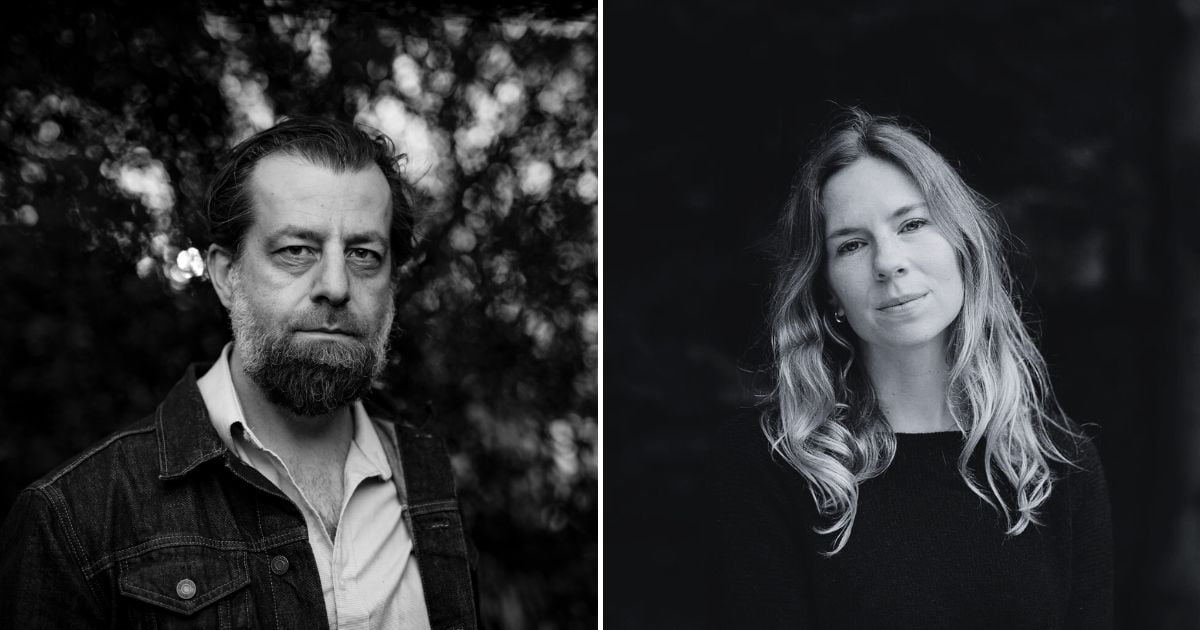
Molly Tuttle has shared stages and recorded with Ringo Starr and Billy Strings, yet she still grapples with the unpredictable “ups and downs” of a musician’s schedule and the inherent instability of the road. We talk with the GRAMMY-winning artist – who was also the first woman to win IBMA Guitarist of the Year – about the “baggage” of turning a passion into a profession. We explore the necessity of trusting one’s gut over industry expectations, how she navigates the transition from bluegrass traditionalism to rock-leaning solo projects, and the quiet power of having a partner who understands the nuance of tour routing.
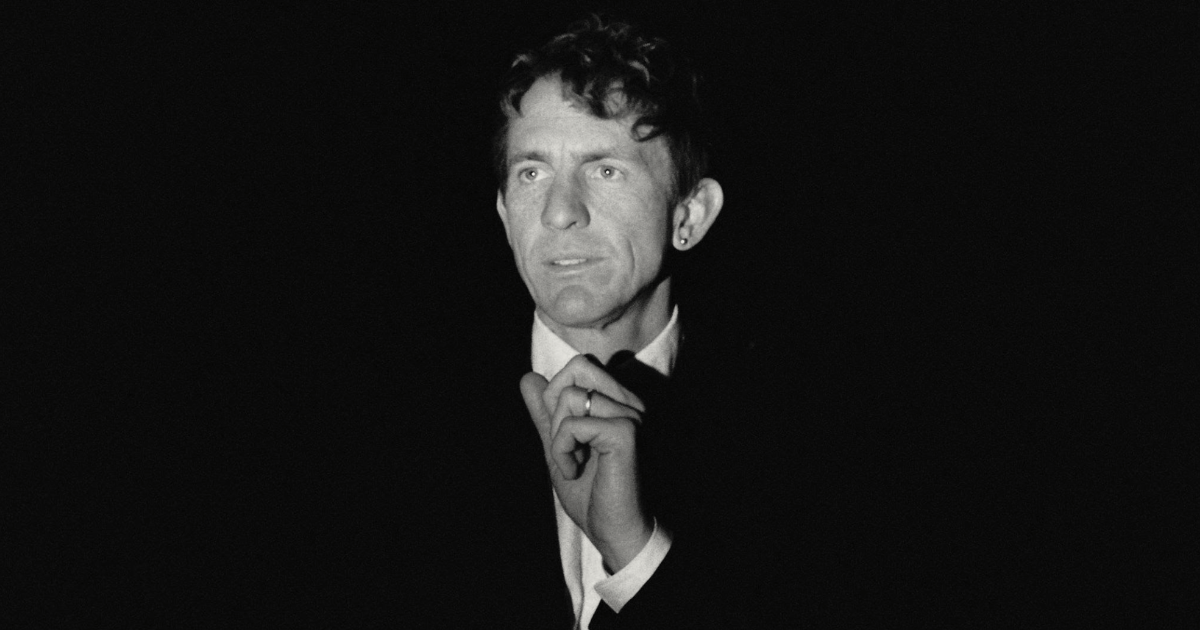
Buck Meek doesn’t give the whole game away. It’s not guaranteed he’ll tell you exactly what his songs are about. However, he will expound, in detail no less, on how he gets himself in alignment to write them and what the mechanics of his songwriting process look and feel like. After six albums with Big Thief and four solo albums, most recently The Mirror, he has more than earned the right to hold back in some ways while sharing deeply in others.
Born and raised in Wimberley, Texas, Meek grew up playing guitar, singing, and writing songs surrounded by a community of old-guard outlaw songwriters, western swing players, and barrelhouse blues musicians who took him under their wing at a young age, taught him how to play it how he felt it, and gave him his first gigs around the Texas Hill Country. At the same time, annual trips to the nearby Kerrville Folk Festival introduced him to the rich traditions of Texan folk music.
As the grandson of scholars who studied the two Williams – Shakespeare and Faulkner – and the son of a child psychologist and a glass sculptor, it’s easy to surmise he was never short on literature and art. His depth of influence and fluency come through in how he speaks about his musical practice and his commitment to it.
When he was 17, Meek left Texas for Boston, where he studied jazz at Berklee College of Music before finding community with a generation of young musicians who wanted to write their own songs and play sweaty rock shows in basements. Later, he moved to New York, where he began performing with Adrianne Lenker. The two musicians lived in a van, singing their songs across the country before forming Big Thief. Fourteen years later, the East Coast’s long-standing punk and rock traditions are as much a part of his musical DNA as the Americana, country, folk, and blues he was raised on. The eureka moment came when he let his two worlds collide musically.
Produced by Big Thief drummer James Krivchenia, The Mirror features a stunning cast of family and friends turned collaborators, including his brother Dylan, Lenker, the hauntological harpist Mary Lattimore, Adam Brisbane, Germaine Dunes, Staci Foster, and the Avant-Americana icon and former BGS advice columnist Jolie Holland.
Opening with the range-roving rhythms and bittersweetly sung melodies of “Gasoline,” Meek digs into the intricacies of relationships and communication throughout the album, rendering them in a traditionalist alt-country and western style, underpinned by modular synthesis and subtle electronic textures from Krivchenia and engineer Adrian Olsen.
On “Can I Mend It,” he describes a deeply regrettable moment where raw emotions crystallize, before shattering into a million potentially irreparable fragments. As he laments on the chorus, “Can I mend it?/ Can I make it whole?/ Now that you’ve seen into the dark side of my soul.” Later, when Meek looks in the mirror on “Demon,” Olsen’s modular synthesis briefly overpowers the band with a not-so-subtle squelch. As with all parts of the album, there’s a reason for this.
By the time The Mirror closes with the summery, sunset shuffle of “Outta Body,” we’ve lived with Meek for a spell. Although, as he argues in this interview, we never really fully know anyone else, or even ourselves for that matter. Sometimes, when you look at someone from that right angle, or let our communication move beyond words, we achieve brief but precious moments of understanding.
On a Wednesday morning in early March, Meek spoke with Good Country by video call about all of the above and more.
How are you doing? What do your days look like at the moment?
Buck Meek: I just moved to Los Angeles. I got this big old yard, but the fence is kind of patchy. My little dog keeps running away. I’ve just been chasing my dog around every day. She keeps escaping and there are peacocks everywhere in my neighborhood. So my dog is just chasing peacocks all day long. I’ve also been trying to learn how to garden a little bit, planting some plants, and doing lots of interviews.
It’s one thing to be in a band that succeeds, but it’s a whole other thing to be able to have a solo career as well. What’s the difference between how things have played out for you and the future you imagined when you were younger?
I grew up playing blues, ragtime, and jazz manouche with some local cats, Django Porter and Brandon Gist, and playing in icehouses around the Texas Hill Country. I felt really happy when I played the guitar, and that was enough. I didn’t really have any idea what it even meant to be a musician in the world. When you’re a kid, you don’t know how any of that works. Of course, I idolized Jimmy Page and the like, but that felt completely out of reach.
Do you think what you’re describing was a common experience for musicians your age growing up in Texas?
I think the bar bands of the world are the modern folk musicians. Really, the people who are keeping the songs alive are the ones who have never made an album, or nobody’s ever heard of. The people who play in bars around the world in small towns. They’re the ones who keep the spirit of music alive. There is this incredible relationship between the elders at the bars and the little kids coming up as guitar students. Inevitably, the star kid, the kid who works the hardest, gets taken under the wing by the old-timer as their protege. There are these beautiful relationships that pass down knowledge. I think you find that pretty much everywhere.
I’ve gone on to have bands with names and travel around the world, but when I’m on stage playing guitar, it still feels the same as it did back then. It’s just me and my guitar. It’s a very simple form of happiness. It’s very fulfilling, whether people show up or not. There’s a life cycle to attention, but as long as I have my guitar, I don’t care.
At the heart of it, it’s about your relationship with your instruments and the musicians you play with, right?
Totally. In the words of Tom Sachs, the reward for good work is more work. As long as I get to do it again the next day, I’m good.
When you think about your career in Big Thief and as a solo artist, do you feel like you’ve mostly been able to do it on your own terms?
Yes, for the most part, but we’ve done it collectively. Everyone in Big Thief is very uncompromising in our own ways, but we all have blind spots. Because we’re a group of people, we’re able to call each other out on our blind spots, maintain our collective lack of compromise, and never sell out, never sell our souls. I’ve been lucky to be surrounded by people who have a perspective on that. We’ve done it on our own terms. I’ve definitely learned the power of that over the years.
Do you ever feel like you were born in the wrong era?
No, I don’t feel that way. I’m stoked.
What do you think the era you emerged within has afforded you that a previous era might not have?
Of course, it’s a two-headed monster, but access to communication, for example, how we’re talking now, helps so much. Not being beholden to a record label giving you a budget, and being able to record your own music at home is huge as well. Now, people are able to hear that music on Bandcamp or the like, which allows you to go and play shows around the world. That’s a very new phenomenon. It’s been a huge part of building my career.
When we started booking tours, we recorded our first album at our friend’s house. We were burning copies to CD-R, putting them in brown paper bags, and passing them out to anyone we could think of. We basically asked all our friends in Brooklyn if they had friends in other towns and got their email addresses. We’d email them our record and ask if we could play a show in the town where they lived. We just kind of pieced this tour together around the country.
We used the internet as a tool to get started, but we’d drive to these towns, meet these people, shake their hands, and become friends. Eventually, we moved out of our apartments, bought a crappy van, hit the road, and played a lot of shows: parties, basements, whatever. Getting in a room with people was essential.
How do you feel about going on the road by yourself?
Lately, I really enjoy traveling with a band. I’ve had some really good solo tours, especially down in the desert and around the Southwest. My friend Tony Presley, who runs the label Keeled Scales, released my first two solo records. He’s an Austin kid. He’s a booking agent as well, but he primarily books small towns and DIY venues. He booked a few tours for me around the Southwest. Taos in New Mexico, out in the desert, El Paso and Santa Fe. Little towns in Arizona, and out in the Hill Country of Texas, stuff like that. That’s always a lot of fun.
How much impact do you think the people you meet through these experiences have had on your music?
I think they’ve made me who I am, which has a big impact on my music. I mostly think of songwriting as the time I spend away from my guitar and my songs. I really try to put it down and just go out into the world and live my life. That’s the real work, living your life as a person in the world.
How close do you think we can get to truly knowing another person?
We never fully get there. I think the closest we can often get is by looking at them sideways or trying to find oblique solutions to communication. I think language is really powerful, but it’s limited. The space between words and conversations, and unspoken communication, often adds up to more of an understanding. The truth is, we never fully know ourselves either. So how can we know someone else? Often, I feel like it’s easier to understand someone else than to understand yourself. I think it’s just shifting constantly. There are moments of understanding, but there’s never any kind of permanence.
Tell me about the conditions under which your new album came together.
I spent a couple of years just living my life. I was living in a log cabin in Topanga and booked a recording date with my band about six months in advance. I sat on the porch every day for eight hours and wrote these songs. I’m blessed to have the resources to do that thanks to my label, 4AD. I put in the time to write the tunes, and then I brought the band together in the cabin.
We set up the big living room with the drums. I stood on the front porch and recorded the vocals outside with a big window into the living room. So there was enough isolation for the drums. Our producer, James Krivchenia, had this setup of electronic instruments and modular synths in the control room with our engineer, Adrian Olsen. They were using the live band as triggers for modular synths and some electronic synthesis feedback in the mix. The album was made live with my band. We moved pretty quickly. There was about a week and a half of tracking.
The other thing I’m the proudest of is how much fun we had making it. It was a great group of people. We had a blast cooking good meals, playing cards, and running around the woods. The music was just a small part of it. I’m glad I can share it as an artifact, but the experience was really the best part.
I thought it was interesting how subtle the use of modular synthesis was.
The entry point for the idea was to be pretty bold, but in practice, the band held a lot of space for the songs. James wanted to focus on the songs as the primary force. There were certain moments where the modular synth took the lead. At one point in the song “Demon,” it kind of takes over and swallows the band for a second. There’s this battle between the two worlds.
For the most part, it’s pretty subtle. For me, it represents the subconscious. The band is the conscious world – a structured, acoustic-instrument world. The electronic elements represent the subconscious. I speak about this in the lyrics of these songs, this kind of play between the conscious and subconscious, intention and intuition, and all these things. It’s subtle, but if you were to remove the electronics, the impact would be great.
It’s like Ernest Hemingway’s iceberg theory. You only ever see the 20% of the iceberg that floats above the surface.
I think having a nod to this limitless space, this ambient world where there’s no grid, no structure, not as much transient energy, this textural, abstract, liquid aspect of the album, opens up the subconscious a little bit in the listening experience.
While listening to The Mirror, I thought about how no one has a monopoly on interiority. Just because someone doesn’t say much in a conversation doesn’t mean they don’t have a lot going on upstairs.
I like playing with that in songwriting. I feel this pressure to be precise and create a very clear map and logic for people to follow. My ideas have to be very concrete, but that’s a rule I’ve imposed on myself. It’s exciting to be able to, to some degree, reveal an abstract inner world amid structure and logic.
I know that pressure is self-imposed or has been projected onto me by society at large. It’s something I try to push back against, while still honoring the medium. There’s a reason that people want some form of relativity or underlying structure. There is always a need for a starting point in communication, but I think we must know when to depart from that structure to express the full spectrum of our ideas and truth. There’s a balance. It’s important to honor it, because otherwise you’re just isolating yourself.
When did you start thinking about songwriting in the sort of terms you’ve just articulated?
I started writing songs in high school as a confession to my high school crush. I just wrote a love song for love’s sake. It was no more complicated than that. I think that’s really the heart of a song. Ideally, for me, a song has a reason to be. It comes from some form of compulsion, or a need to articulate something or to create an artifact, to be able to pull something out of your body and observe it as some form of catharsis. To me, those are the best songs, but there are no rules for the context.
How did you develop your approach to it all?
As I started writing, my self-education was mining the world for songs that, for lack of a better term, felt good. I was trying to find songs that really moved me. Intuitively, I started trying to understand why a song makes me feel something. I’d unpack every word and learn the song and the melody while trying to understand the relationship between them. I wanted to understand how the melody sanctified the lyric and what the rhythm had to do with it.
Let’s talk about taste. There’s a constructed taste you can use as a tool to help people understand where you are. Then, there are those songs that you might not even think you like, but they make the hairs stand up on your neck.
The older I get, the more willing I am to accept those things for myself and really listen to that intuition. As a young kid, I was obsessed with pop country. In my teenage years, I rejected it. When I listen now, it still hits me in the same way it did when I was six. I’ve learned to embrace that. Sometimes, you’ve got to be able to come home. I think with this album, I was thinking about moments when my body wanted to say something, but my mind would kick in and say, “Oh, the critics won’t think that is cool, hip, or smart enough.” I had to lean into those lines and say them twice, say them louder. If you can do that, no one can touch you.
Have you ever thought about how lakes and streams were the original mirrors?
Yeah, ponds and lakes and puddles and things. Good point. They’re still enough to provide a reflection, but also fluid enough that you can throw a rock in and diffuse them. There’s still a relativity to it, which is more true to what a reflection really is. There’s some form of objectivity, but to some degree, it’s just a construct.
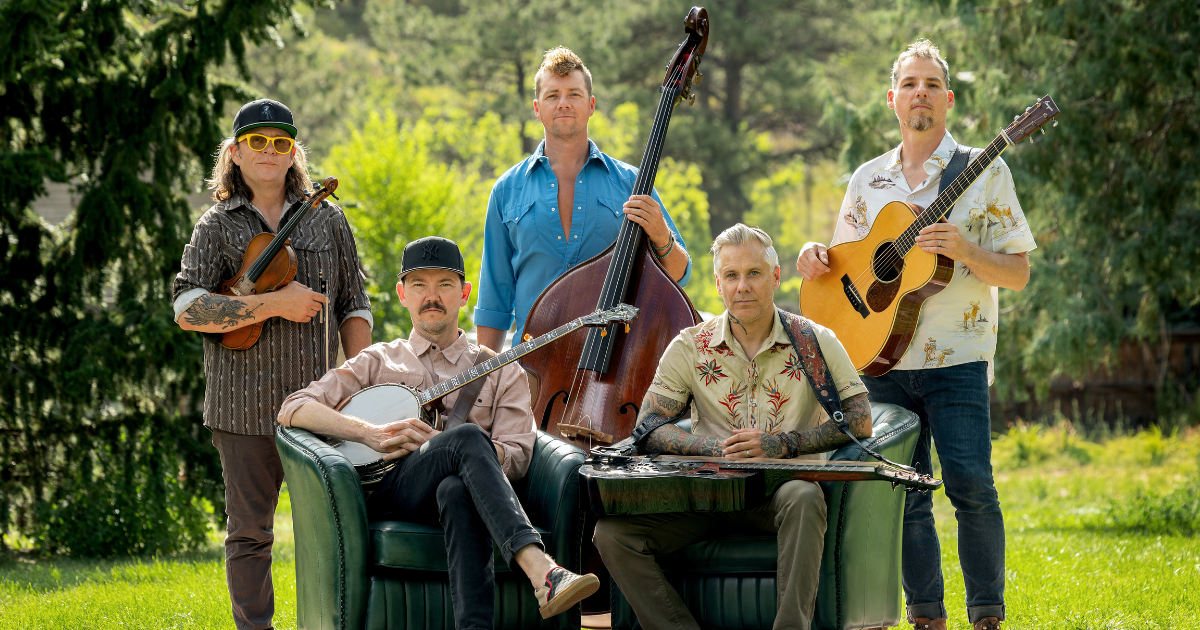
During the Infamous Stringdusters’ recent holiday gig at The Orange Peel in Asheville, North Carolina, the storied venue was packed out with jamgrass freaks, the performance itself a kickoff of sorts for the band’s 20th anniversary in 2026. I found myself standing sidestage when show opener Bronwyn Keith-Hynes came up next to me. A smile emerged on her face taking in the band and the audience.
“The Stringdusters made me want to start a band,” the GRAMMY-winning fiddler said, turning to me. “The Fork In The Road album was the most influential modern bluegrass album for me when I was at Berklee.”
Keith Hynes’ sentiment conjured numerous memories and moments I’ve been lucky enough to be a part of when it comes to the ‘Dusters. The first time I ever laid eyes and ears on them, it was the 2008 Targhee Bluegrass Festival in Alta, Wyoming. I was 23 years old and a rookie reporter for the Teton Valley News, based just down the mountain in Driggs, Idaho. By that point in my life, both personally and professionally, I was diving deep into the jamgrass world – the intersection of ancient tones, psychedelia, improvisation, and a collective love of the Grateful Dead.
The initial spark of the modern jamgrass movement was lit by Yonder Mountain String Band, Leftover Salmon, and the String Cheese Incident, all three acts coming into the national spotlight by the end of the 1990s. A musical template had been formed, and the ‘Dusters would emerge in the early 2000s to throw gasoline onto that melodic fire, ultimately becoming a missing link (alongside Greensky Bluegrass) between jamgrass originators, those ‘90s propagators, and folks currently carrying the torch into new, exciting realms: Billy Strings, Sierra Ferrell, Molly Tuttle, Sierra Hull, and more.
“That’s what’s so beautiful about bluegrass music, in particular,” Stringdusters fiddler Jeremy Garrett told me recently. “You pass it on to the next generation and they take it and they do their thing with it. Luckily for us, we were around at a time that [that] was very important, and a transitional time in the industry.”
In 2010, a couple of years after my introduction to the band at Targhee, when I returned to my native North Country of Upstate New York, I found myself covering a show at the intimate Showcase Lounge at Higher Ground in Burlington, Vermont. I was there to see the ‘Dusters once again. Their sound and energy immediately transported me back to the Rocky Mountains that I missed dearly. (Sharing the bill was another rising jamgrass act, Trampled by Turtles.)
I remember walking away from that gig feeling in awe and refreshed with a genuine feeling that something was happening. Something was on the horizon when it came to bluegrass and string band music. This wasn’t a traditional bluegrass band in matching suits, standing like statues. It was a rock show with acoustic instruments. Baseball caps and long hair, grins ear-to-ear. More provocative than standstill, more vibrant than just going through the motions of what past generations were instructed to do.
“Being able to showcase our own songs, in our own way, [our] writing skills, and making the decisions on what was chosen to play and how to play it [were] foremost for most of us at the beginning,” Garrett says. “Over time, we realized that we were actually growing a community. And after all these years, that honestly has become the most important part, the most important thing that we could possibly do.”
What I witnessed in Wyoming and Vermont years ago is what I’ve continued to experience with the Infamous Stringdusters, in person and in method, from Florida to Colorado and beyond. They set the pace then for where we stand with jamgrass right now, built on a full-throttle approach, one which remains sonically elusive as well as paying homage to the architects of bluegrass and those who broke from the pack and made something all their own.
Aside from the talents of the Stringdusters, either as individuals or the sum of their parts, you also have a unique setup. Alongside founding members, banjoist Chris Pandolfi and Dobroist Andy Hall, who emerged from the prestigious Berklee College of Music in Boston, you have the tradgrass pedigree of Garrett, who was born and raised in a traveling family bluegrass band hailing from Idaho. This fusing of road-tested grit and grace with conservatory-style techniques is at the heart of what this group does best: jam.
All of which circles back to the Asheville Orange Peel performance in late 2025. There were tightly knit melodies and freewheelin’ improvisational explorations. They broke down the invisible walls between themselves and the audience, maintaining a two-way street of momentum, energy, and inspiration from both sides of the microphone – a vortex of sound and scope, all revolving around a deep sense of community.
“The band is stronger than ever and making some of the best music we’ve ever made,” Garrett says. “But, the thing I see that is the most important being carried on is that community factor. We certainly didn’t invent that, but we took note and applied the philosophy to our scene, and hopefully the next generation realizes how important that piece is.”
Ultimately, this 20th anniversary celebration for the Infamous Stringdusters is a culmination of a tried-and-true effort to bring this hallowed music into the unknown and unfolding musical landscape of the 21st century. With their upcoming album, 20/20 (out February 13 via Ameriana Vibes) they continue their efforts to break new ground and forge ahead, together, whatever the next 20 years hold for jamgrass and the ‘Dusters.
The Infamous Stringdusters are our Artist of the Month. Below, enjoy our Essential Infamous Stringdusters playlist and stay tuned as we share brand new and archive content on the ‘Dusters throughout the month of February here on BGS – and across our social media channels. Like our exploration of their 20-year discography or our oral history of the band featuring all five members in conversation.
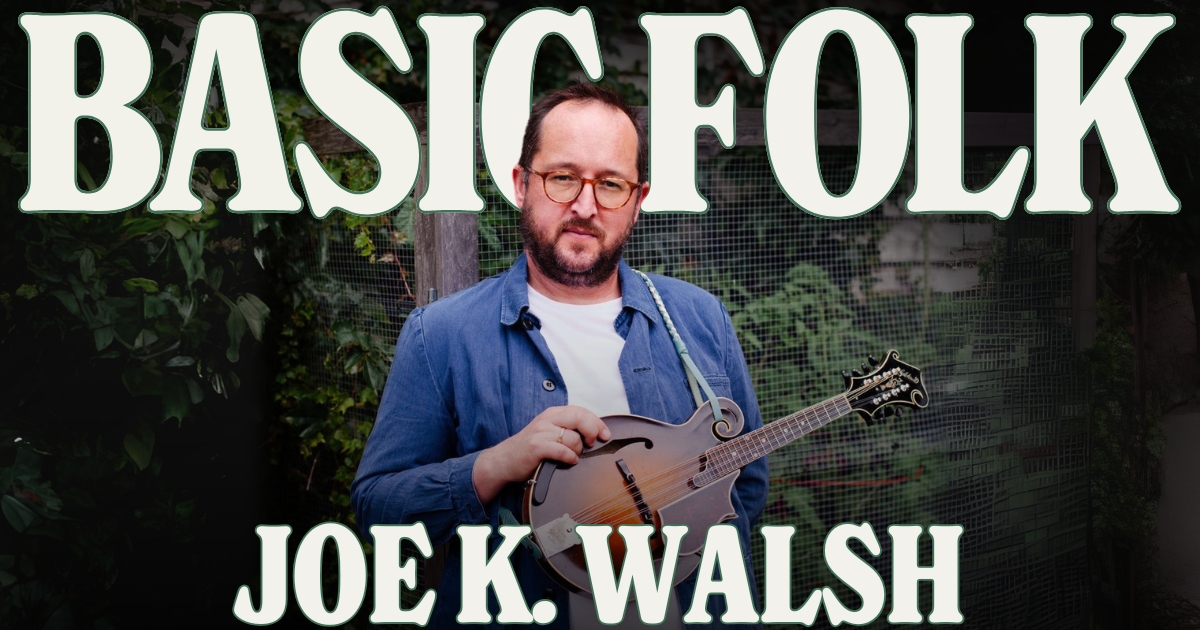
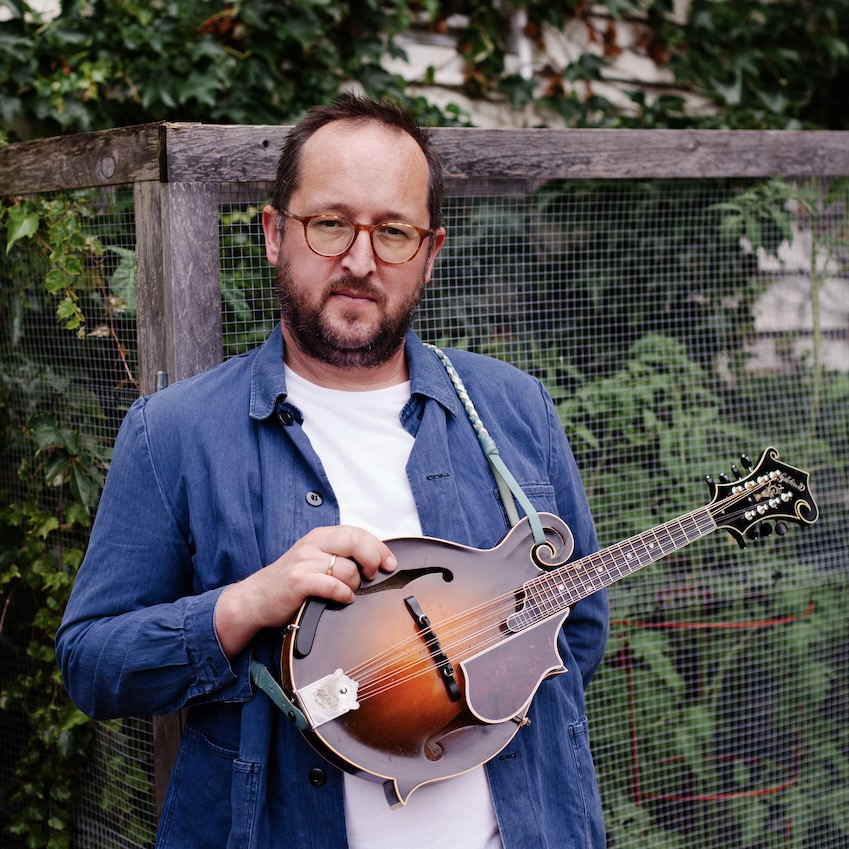
Joe K. Walsh grew up in Duluth, Minnesota, and became enthralled with the mandolin (his primary focus, currently) after hearing the first David Grisman Quintet record. His dad got the young Joe his own mando. He ended up getting very serious about the instrument and found himself studying at Berklee College of Music in Boston (where he is now on faculty in the string department). Joe, in fact, was the first mandolin student at Berklee in a town that is now flooded with amazing mandolin players. His already strong sense of community and collaboration led him to becoming a main player in the Boston scene with his string band Joy Kills Sorrow, and with the Gibson Brothers. He now resides in Portland, Maine, and plays solo as well as with Mr. Sun, a group led by fiddler Darol Anger.
In our Basic Folk conversation, we talk about taking over at Berklee after the death of professor John McGann, a beloved trad player who recorded with David Grisman, Mark O’Connor, Tim O’Brien, and the Boston Pops, among others. Joe addresses the question of whether bringing folk music into a college setting is “academizing” it or perhaps “folking” music academia. He also gets into hot button issues like improv, simplicity, and restraint. And, of course, he finally reveals his true feelings about the “other” Joe Walsh. Joe’s new instrumental album, Trust and Love, is a peaceful listen in these wild times. I’m happy to know Joe and have already benefited from his friendship! He and his wife gave my family a ton of baby hand-me-downs that have proved so useful. Everyone has a friend in Joe. K Walsh.
On April 4, Joe K. Walsh released his latest album, Trust and Love. The project is an utterly gorgeous take on minimalism within music. It combines a unique instrumentation of Joe (on the mandolin family instruments), Rich Hinman (guitar, lap steel, pedal steel), Zachariah Hickman (bass), Dave Brophy (drums and percussion), John Mailander (fiddle, except track 2) and Bobby Britt (fiddle, track 2).
I’ve been very fortunate to get to study mandolin with Joe as my teacher for the last four years at Berklee College of Music. In talking with him about Trust and Love, what stood out to me in a significant way was the excitement he has in making music with his friends and finding music that brings a great amount of joy. Often as musicians, we lose track of the point of playing music–to bring joy to ourselves and those who are listening to it. Joe has always emphasized this and in listening to his new album, it brings home this powerful message.
What was the inspiration of the album and when did you start writing it?
Joe K. Walsh: Well, I’m always writing. Every day I try to write, I think it’s a good goal. I like the concept of not waiting for inspiration and there’s that line Bill Frisell had in his notebook which was, if you want to learn how to write, pick up a piece of paper and a pencil or something like that, just start doing it. So I try to write every day and most of it’s garbage, but I believe in the numbers game. This wasn’t really a batch of tunes written all together. Some of the tunes are older, probably as old as six or seven years. As for the inspiration for the album, the music I need at the moment and have [needed] for about five or six years is peaceful music. Music that has a restorative quality, as opposed to exciting or some sort of impressive stuff. I’m trying to write stuff that fills a room with beauty as opposed to stuff that’s just like, “Oh man, kick ass bro!” That was the idea with this collection of tunes.
Let’s say I have 30 or 40 tunes. In a moment where I’m like, “These might be worth giving some air to in public,” then you look for some sort of theme that ties some of them together. That was the theme here. There was a while when I was making records that I believed in, but were also partially about what I thought the mandolin was supposed to do. There was a disconnect between what I listened to and what I played, and I think it’s weird that there was a disconnect. I just became really aware I was listening to these spare and peaceful records that are entirely about interaction and trying to find beautiful melodies as a composer, but also as an improviser with the group. That’s not totally distinct from bluegrass, but it’s also not the same.
In your album description, you write that this body of work is “showcasing the power of musicians listening and reacting to each other, sensitive improvisors sharing a musical conversation and following the threads.” When you’re writing something like this and give it to the band, was there more or less an arrangement idea that you had? Or was it just you all playing with each other and experimenting with it as you went?
I think it’s a little of both. I think in situations like this record, the hiring is probably as important as the writing. Finding people whose musical instincts I completely trust and don’t want to direct was really important. I’ve been privileged to be in situations like that with people where I don’t want to give them all the answers. I know that if I do, the end result will not be as good as if I bring in some ingredients and see what collectively we come up with. I’m not saying a person wouldn’t come in with some arrangements, I like to come in with ideas and try things out. I like the phrase “remain open to revelation.”
You also say that a big concept of this album is “less is more” and that, now more than ever, we need to be thinking about that. Can you talk about how you would take those life concepts and apply them to your music and how you practice?
There’s a lot there! [Laughs] Well, first of all, I am kind of a little disenchanted with the approach to playing the mandolin or the approach to playing improvised music that is centered around technical fireworks. I think that that can be exciting, but it’s also not where I’m at emotionally these days, with the state of the world and the state of my family and everything. I do think I’m finding myself preferring music that leaves space and that doesn’t have to state everything, that has faith in its listener, where you can hear a connection without it being explicit or made insultingly explicit. I think all those things would fall into the category of less is more.
But the main thing for me, and this is not a “hot take,” this is not my solitary opinion, but obviously we’re living in a maximalist moment with just an unstopping onslaught of information and stimuli. I really need music now where we have an attention span and patience for something unfurling slowly. Obviously that’s not everybody, everybody doesn’t need that, but I do. I need a longer form. You know there’s longer form journalism, I’m drawn to that of course, and I think there’s an argument that there’s a connection with music for longer form and longer amounts of patience.
Yeah, I definitely hear that.
I feel like many people know you for your more bluegrass-adjacent mandolin playing. You also play in a not-so-bluegrass, bluegrass-related band, Mr. Sun, which sounds pretty different from this album. You talk about the idea of minimalism in a time of maximalism, do you feel like that is a newer concept that you are playing with in this album, or is that something that you are thinking about often, even when you’re playing a lot of straight ahead bluegrass? Are these concepts and feelings still in your mind?
Yeah, you know how the version that one friend knows of us is different than the version somebody else knows? Both of those versions can be true and I feel like the same thing happens with going from one musical relationship to another. What comes out may be dramatically different, and hopefully you focus on the shared value system of whomever you’re playing with. That may end up being a distinctly different sound. I guess that is to say, I feel like all these things are reflecting a similar value system; it just comes out differently with different people.
How did you come up with the instrumentation for this group?
That’s a good question. It’s unusual to have a record with mandolin and pedal steel on it together.
I love it!
Nice, awesome! You know, when I came out of Berklee, I used to think, “OK, I found a banjo player, now I need to find a fiddler.” You know, thinking about it from these “recipes” we’re getting acquainted with and understand. It took me a little while to shift to thinking about personalities that I connect with more so than instruments. I just felt a strong intuition that all the things I’m articulating were values that Rich shared, but also I knew it was the case with John, Bobby, and Zach. I knew Dave less, but I felt safe guessing. But specifically with Rich, I really felt that all the things I was trying to do were based on values that he shared and I didn’t even have to particularly discuss it. That’s always the best, when you just know that someone gets your goals and you don’t have to describe them; they’re already sharing the same goals.
I feel very grateful to have the opportunity to work with musicians that I find very inspiring and beautiful. It’s a great privilege to get to share some days with musicians like that and have them be willing to share their personalities that way. It’s not something to take for granted.
That’s pretty beautiful, especially with an album that’s just so much about time and space and overall has a sweetness to it.
I appreciate that. Like I said, I realized the things I was listening to just sometimes felt distinctly different than what I was sometimes playing. Both are great, and I’m definitely not trying to say I don’t like playing bluegrass or listening to it. I absolutely love it. It’s great and definitely a big part of my musical diet, but also, for years – decades even – I’ve been listening to these really quiet, understated records. I always think, “What’s the thing that ties Martin Hayes and Bill Frisell together?” They are very different, but they sustain my attention in a way that doesn’t use the tools that many other people do with maximalism is really what I mean.
That’s a great way to put it, because I never really thought of music as being minimal or maximal. But after listening to your album and reading what you wrote about it, I started thinking about it and it’s interesting to go back and observe things that you thought were just so sweet, realizing that actually there is so much happening.
Music, for me, is about trying to create beauty and trying to create a feeling and a shared connection through those things. I’m really adverse to the idea of music as a tool for ramping up our own egos, which is a challenge. I feel like there are choices you can make, and I’ve become more aware of the choices that I feel are serving my ego versus serving the music or moving towards a feeling. It’s not always either/or, but I’m trying to be more suspicious and adverse to the things that feel like they’re serving my ego.
On this album, you go between different members of the mandolin family–
Yeah, mandola, octave mandolin, and the mandolin of course.
How did you find the right instrument for each song?
[Laughs] It’s an experiment! They’re all tuned in fifths, so in a sense you could just argue they all feel the same, but I think when you try and write, even picking up different mandolins, even just one mandolin to another, may inspire different thoughts. Certainly switching from the mandolin to the mandola leads to me paying attention to different things and, if I’m lucky, catching inspiration to chase an idea. Some of these tunes were written specifically on the mandola and stayed there, and the same is true with the octave mandolin.
I also think, [thinking about] sustain, the octave mandolin, bizarrely enough, feels to me like it does that in the mandolin family. Sometimes I feel like playing the octave mandolin you can’t be as athletic, because of the physical challenges of the instrument, but also it can sometimes have a little more sustain. Again, you can be nudged in a nice, positive, “less is more” direction trying to be musical with a smaller collection of what’s possible.
Let’s talk about some of the tunes on the album! I feel like throughout the whole project there is this really solid vibe that you build and it’s just gorgeous. Then you get to “Cold City” and it feels to me like a different vibe. Did it feel that way to you?
I think that’s fair.
I can see what you mean with the minimalism in this song, but it also has that kind of rocking “oomph” vibe going.
No, you’re totally right. You know, part of the whole thing with this arc – of trying to just crack the code on how to make quieter music that sustains interest – is just being afraid of letting go of some of these things that I know sustain interest. I like that tune, and I think it turned out good, although I think I also could have saved it for a more bluegrass record and that maybe would have made more sense. [Laughs]
I think it works in such a cool way on this album, because it lends this new lens to what you’re already seeing through the other songs.
I also think contrast is one of the most important things in music and that song certainly is contrasting. Basically, I never walk away from a record feeling like I will no longer doubt the decisions I made. That’s not how it works for me. You kind of just get used to the idea that there won’t be a full resolution on some of these decisions you wrestle with. That’s just how it is and you move forward anyway.
The pedal and lap steel on this album are really awesome and amazing. I feel like a lot of musicians don’t seem to mess around with those sorts of textures.There is a moment in the steel solo on “Closer, Still” where it feels like the other instruments drop out a little bit and it’s just the mandolin and steel. That spot feels really special to me and feels like there is this little conversation that the mandolin and steel are having. What it evoked to me was that they are sharing a little secret. How do you think about those two instruments intertwining in general and with music on this album?
Well, one thing that is distinctly different playing with a pedal steel – and again, I really feel like it’s about personalities you can connect with. But in a more tangible way, sustain changes everything. It’s not like we don’t have sustain on the mandolin, but it’s not like a fiddle or a pedal steel. I think with sustain, you’re able to do less and I think that’s probably true for what Rich can do or doesn’t have to do. I think it’s also true that when he is sustaining something, I don’t feel as compelled to, “Quick! Do something!” I think there’s a sense that things can wait a little bit.
I also think that’s true having the drums. That buys a little space, in a sense. There’s more going on, but somehow I can do less or it feels like there’s less going on.
As I recall, there isn’t steel on the whole album. There are some songs where Rich plays other instruments. I like that, in that moment coming out of the steel solo, or still kind of in there, it’s just such a different texture and it was really cool to hear it.
One of my favorite things is listening to people who really listen to each other and for whom the next thing that’s gonna happen is not predetermined. That’s the thing that kind of ties together the people that I was excited to hire for this particular record!
You can do that, obviously, with jazz language and that’s a beautiful thing, but I also think it’s really beautiful and under-explored to do that without requiring jazz language. So often that approach, mentally, goes with advanced and more complicated harmony that some people would call “jazzier” harmony. It’s a really beautiful thing to have that mindset, but not necessarily move in a more harmonically complicated direction.
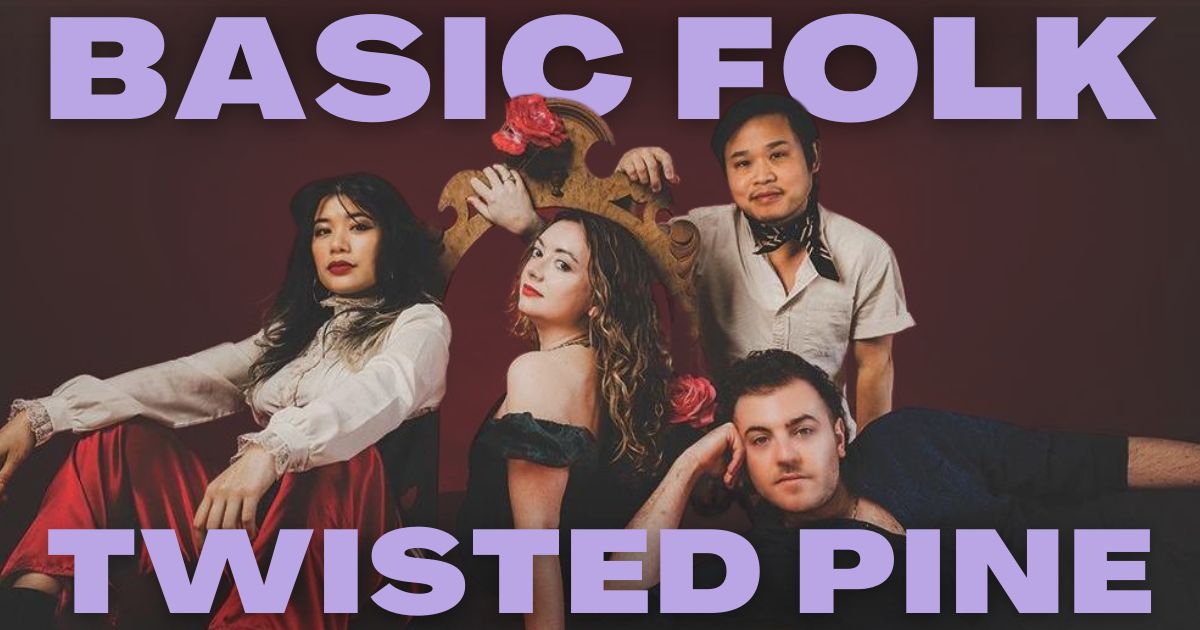
Hot off the heels of Twisted Pine’s latest release, Love Your Mind, Kathleen Parks is here to dig into her uncelebrated polka origins. Daughter of renowned trumpetist Eric Parks, the younger Parks grew up in New York’s Hudson Valley in a very creative family (her mother was also a dancer and the one who made Kathleen practice all the time). She started young on the violin and was surrounded by her dad’s polka music, as he was a member of Jimmy Sturr & His Orchestra, which my dad (also a polka-head) calls “the top polka band revered by all polka bands.” Parks even sat in with the band as a teen, when she would occasionally fill in for their violinist. She fully embraced her strong Irish roots not only in music, but also dance, which she calls her second love. After accepting a full scholarship to Berklee College of Music in Boston, she started meeting and jamming with bluegrass musicians in the area, especially at the Cantab Lounge, famous for its weekly bluegrass night. This is where her new band Twisted Pine scored a residency and started building a following.
On the group’s new record, Kathleen is the de facto lead singer, which she’s just fine with. She also explains the band in one phrase: “Let’s see what happens.” That philosophy is definitely present on the new record, which is filled with wild vocal performances and sees the band operating at its highest level.
In our Basic Folk conversation, we explore the mental health themes highlighted in “Funky People,” a song about how difficult it can be to take care of yourself on the road and the relief you find in people you meet. Plus, we cover “After Midnight (Nothing Good Happens)” and finally find out what time one should go to bed at a bluegrass festival. It’s always earlier than you think.
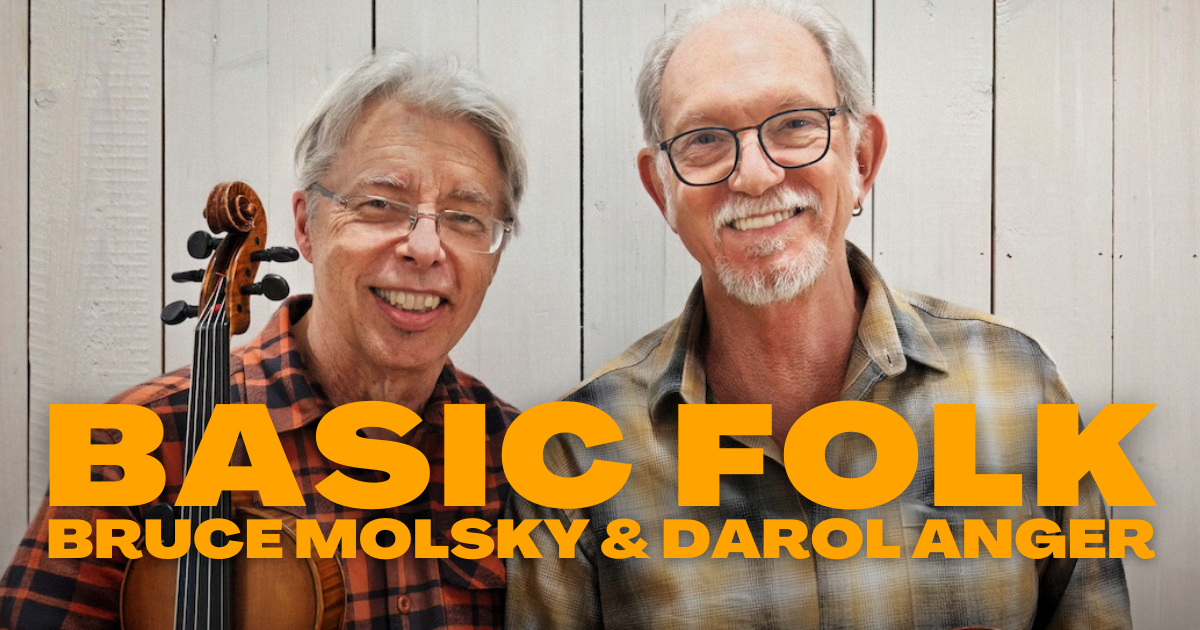
The names Bruce Molsky and Darol Anger have come up more often than not when talking to fiddlers on Basic Folk. The pair have single-handedly mentored hundreds of our favorites in fiddle music at Berklee College of Music in Boston, Darol’s online music school, music camps, festivals, and more. The pair joined us on the occasion of their newest folk music collab, their new album Lockdown Breakdown. Folk music has often been associate with nerdiness, so we get right into their nerdy roots with Bruce’s love of fountain pens, his background in mechanical engineering, and all facts about American roots music, bluegrass, and fiddle music you can stand.
Both talk about their origins: Bruce in the Bronx and Darol in Northern California, which eventually led him to become a co-founding member of the David Grisman Quintet. We discuss the social aspect of the old time and bluegrass world and how that has translated into the way they each approach socializing. Then, we get into the thousands of fiddle lessons they’ve given younger players and why they like to mentor younger generations.
And of course, we chat about the album, which was recorded live in a Nashville studio in just a few days. Darol and Bruce talk about what the energy was like in the room for all their live takes during the session. It was a pleasure to speak with these two very funny, very influential musicians! They are doing incredible and important work.
“Bluegrass music is a truly American artform. It reflects the culture and the time in which it’s created, and as with many traditional artforms, a preservationist stance is held on a pedestal. Bluegrass music’s history is very gendered, and when this happens, the music can’t reach its full potential.”
My teacher Laura Orshaw told me this.
There has been no shortage of amazing women bluegrass musicians to come out of the roots department at Berklee College of Music. Gillian Welch, Sierra Hull, Molly Tuttle, Bronwyn Keith-Hynes, and on and on. I’m going into my senior year at Berklee this fall as a mandolin principle, and one of the reasons I went to Berklee was how inspired I was by these women and their music.
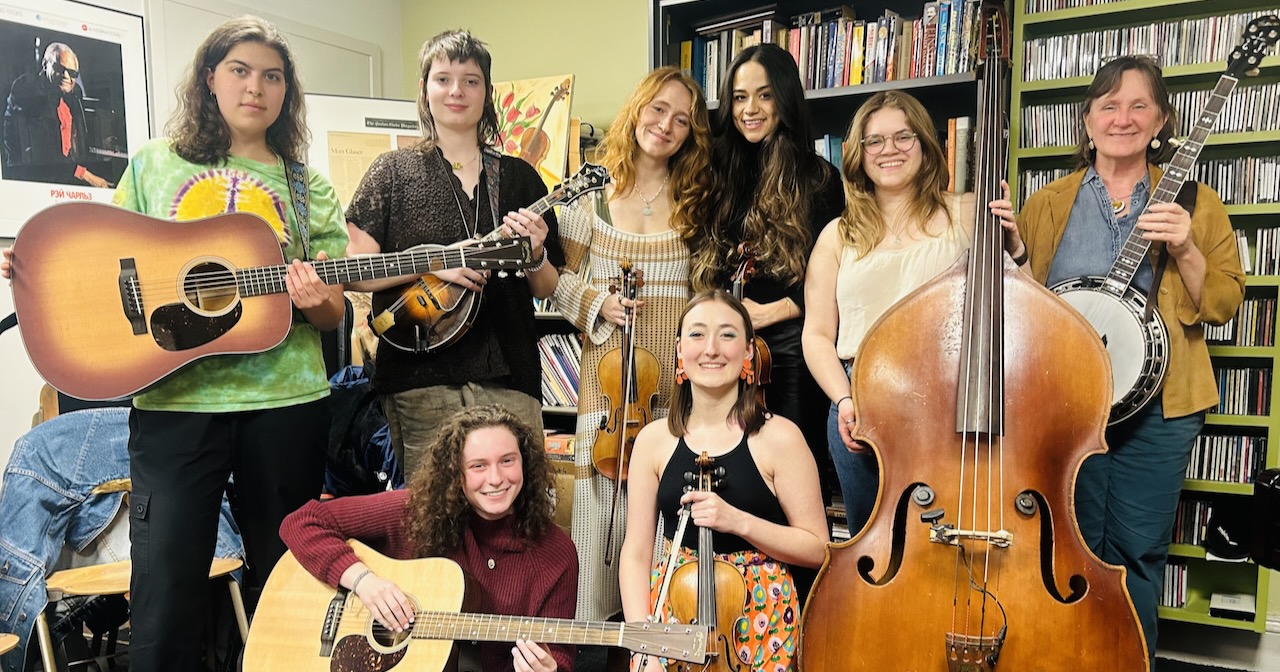
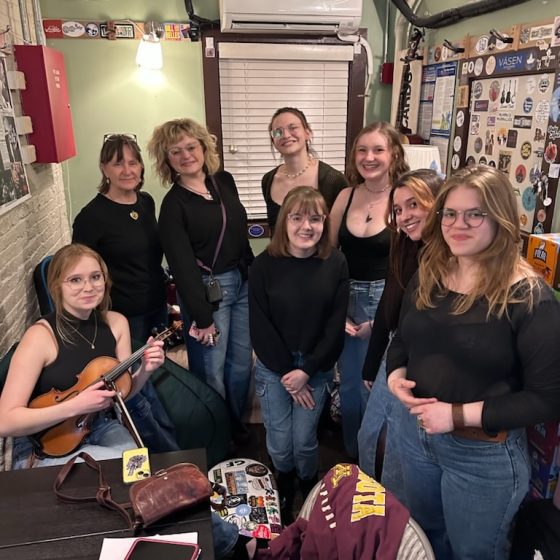
Towards the end of my sophomore year, my friend Katelynn Casper – a brilliant bluegrass fiddler – came up with an idea. She wanted to start a bluegrass ensemble of all women and non-binary folks. Katelynn approached Matt Glaser, the artistic director of the American Roots Music Program, about helping us create a class in which we would study and perform in a group. Excited by the prospect, he brought in Laura Orshaw (the Po’ Ramblin’ Boys) to be our mentor. In the past few years, there had been a strong influx of women who came to Berklee and wanted to play roots music, so it didn’t take us long to find people who wanted to join the project.
The ensemble started in October of 2023 with about 12 members, enough for us to break into two ensembles. I got to be in both groups, in one as mandolinist and the other as bassist. Our focus between both groups was to play music mostly written by women who we looked up to and were maybe overlooked.
Through the course of our year together, we moved through a catalog of songs and tunes written by our heroes and then delved into original material. We wrote songs and tunes together and on our own and fleshed them out as a band. It was an empowering experience to be a part of and it was beautiful to watch my friends explore a new kind of confidence in their music.
This past April, the American Roots Music Program sent all of us down to Washington, D.C. In June of 2022, the Smithsonian Center for Folklife and Cultural Heritage opened up an exhibit entitled Music HerStory: Women and Music of Social Change. Laura had caught wind of the exhibit and wanted us to visit, so we could witness its content and impact. The exhibit explored many women who were significantly overlooked in music, but yet the world would have been drastically different had their music not been a part of it.
We heard and read stories of when Loretta Lynn put out “The Pill” and how much of an uproar it caused; stories of how Elizabeth Cotten had to put her music on hold to raise her children and didn’t come back to it until she was in her 60s, putting out “Freight Train” and “Oh Babe It Ain’t No Lie” and still was not given much credit.
Walking through the exhibit, I couldn’t help but think about all the different musical influences I have and how so many of those influences were inspired by these women, but how that was never really talked about.
On the same trip, we also got the privilege of going to Smithsonian Folkways Recordings and learning about some of the history of their record label and how it came to be. When we were checking it out, both ensemble bands did a little recording in the archives to commemorate the trip. Playing our originals and covers written by powerful women was an incredible experience. We were surrounded by original recordings and records that made bluegrass and old-time what it is now and some of the music that brought each of us to the genres to begin with.
While we were down in D.C., we also got the chance to hang out with Kimber Ludiker (fiddle) and Avril Smith (guitar), two members of Della Mae. In both groups, the inspiration from Della Mae was so apparent – we all learned many of their songs. Getting to stand up and play their songs with them was a mind-blowing experience.
Taking part in this project has been such an inspiring experience. As a kid who grew up in the bluegrass and old-time world, there weren’t always a lot of women to play music with, so to get the opportunity to dedicate time each week to just sit down with a group of deeply passionate women and non-binary folks who are also such remarkable roots musicians was an indescribably moving experience.
A common conversation amongst us during that time was how freeing and comfortable it felt to play music in a setting like this. Whether or not you think about it, music as a whole is an intensely male dominated world – and bluegrass isn’t any different.
“Here’s a question that crossed our minds every week,” Laura said. “‘What would bluegrass be like without patriarchy or bias?’ The answer comes through music, not essays, and this project certainly chipped away at our goal.”
Being in this ensemble, I learned a lot about myself. Being surrounded by a community of women and non-binary folks playing music taught me a lot about my confidence as both a person and a musician. Being in that environment gave me an amazing place to explore.
“When Matt [Glaser] asked me to be the curator of this project, I couldn’t have guessed how impactful and enlightening it would be for me. Working in an all-women and non-binary band filled a void for all of us – creatively, academically, and socially,” Laura continued. “Students shared experiences of the not-so-glamorous parts of working in a male-dominated field. They studied the music and songs of their heroes, who sometimes got overlooked in other classes and ensembles. They wrote songs, arranged music, and tried on different leadership roles in the band.
“But most of all, they encouraged and inspired each other to be better musicians. The mutual dedication and enthusiasm were palpable in every rehearsal.”
It’s been an experience of a lifetime to learn the music I love with a group of women who want to push the boundaries of the genre. To sit with a group of people who understand the intricacies of being a woman or gender non-confirming person playing bluegrass – or even music in general – was a very comforting experience. We all grew so much as people and musicians.
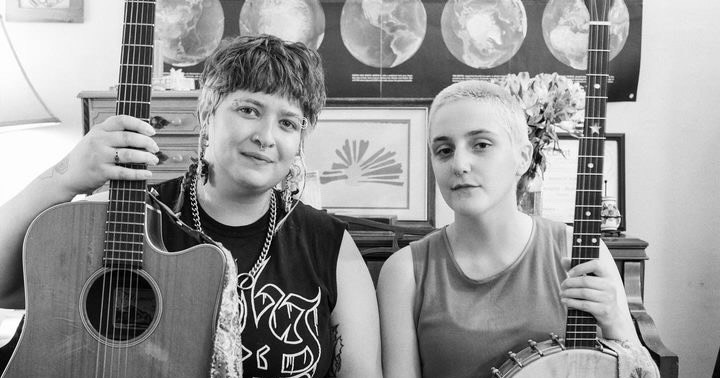
Photos courtesy of Emma Turoff. Lead image: Ensemble, No Man’s Land. Inset image: Ensemble, Ain’t That Just Like A Man.
From the crosshairs of the Boston folk community and punk/DIY scene emerges Sweet Petunia, an innovative duo consisting of multi-instrumentalist songwriters Maddy Simpson and Mairead Guy. A synthesis of banjos, queerness, emotive lyricism, and life-affirming harmonies, the pair’s music explores the fluidity of futurity, even when anchored in centuries of tradition.
With two EPs and several singles under their belt, Sweet Petunia graces the ears of multitudes with an active touring schedule and their vigorous participation in the Boston music scene. The queer alt folk duo’s commitment to community and uplifting overlooked histories only deepen the resounding impact that their music inspires.
So, to start things off, how did the two of you first meet?
Maddy Simpson: We both went to Berklee College of Music and we got placed into the same ensemble, 21st Century String Band, taught by Greg Liszt, who is an incredible banjo player. One day we were supposed to have an additional rehearsal with another guy that was in the ensemble, but he stood us up (shoutout Rob with your Legends of Zelda beanie with a brim!) The two of us showed up for the rehearsal and he never came. So we just had 45 minutes to talk to each other. We ended up talking about our goals, the music we liked, and found out that we had a lot of similar likes and plans for the future. So we decided to get together and play some music. When we did, immediately we were like, “Okay, let’s be in a band.”
What does your musical chemistry with one another feel like?
MS: Well, we always joke that we’re related. I mean, we do sound very similar when we sing together. So it kind of feels like we’re like a family band even though we’re not related.
Mairead Guy: Yeah, I mean it just works – really well. Obviously we put in a lot of work into what we do. But a lot of it feels very easy when we’re playing and arranging together. We have similar intuitions about the way things should go, and that makes it really fun and special to play together.
What is your process like when you songwrite and arrange together? And what’s it like arranging with two banjos?
MG: Most of the time we come to each other with an almost-completed song. Sometimes we write together, but usually we come together once the song is pretty much finished and arrange it from there. And that’s just a lot of playing it over and over and over and over, trying different things and seeing what sticks and what pops out.
That works! How did each of you come to the genre and/or the banjo?
MS: I came to folk music through the folk revival of the ’60s. I listened to a lot of Simon & Garfunkel growing up and then when I was a little bit older, I got into the folk revival revival, so like Mumford & Sons, The Head and the Heart, The Lumineers, and that kind of stuff. I had no idea that was just the tip of a really big iceberg – I didn’t really discover true traditional music until college, when I got really into old-time music and ’50s country blues and that kind of thing.
The reason I started playing banjo is that obviously it was pretty present in the music that I was listening to like all throughout high school and my childhood, but when I got to college I had a dorm-mate who played banjo. He was a banjo principal and he would play banjo in the lounge and the laundry room – just everywhere. One day I told him that I was interested and he said, “If you buy a banjo, I’ll give you lessons.” So over Thanksgiving break I went home, bought a banjo, came back, and started taking lessons with him. And then I started taking lessons with other people at Berklee and that was it for me – it became my primary instrument.
MG: So, I grew up in Virginia. There’s a lot of traditional, old-time bluegrass around in that area and a lot of my family is pretty musical – my uncle and aunt and my great uncle and his longtime partner. We’re are all professional musicians and my great uncle was a phenomenal clawhammer banjo player. My brother plays the banjo and I’d always wanted to play it, because it’s such a beautiful instrument. When Maddy and I first started playing together, we had a lot of songs where we would trade our instruments around. When she switched to banjo I thought it was the perfect time to finally sink my teeth in and do it. Similarly to her, once I picked one up I was like, “Oh my God, why haven’t I been doing this the whole time?” Yeah, it’s an addictive instrument to play.
I noticed that the stylization of a lot of your lyrics is super unique and you have several songs with strong narratives. Can you talk a bit about the song “Quilt Too Big to Fold”? I’ve had it on repeat for weeks.
MS: Thank you. Yeah, I wrote that song for a class. We were given this assignment to write a story song. And I was thinking a lot and sort of had this refrain in my head, “All you do is sit all day and sew.” So I did some journaling about all of the things that you can sit and sew. Fiber arts are really important to me and at the time of writing that song I was really into embroidery and I was getting really into visible mending – dabbling in this world of fiber arts.
I started thinking about all of the different fiber mediums you can have. And I started to think about quotes. And then, obviously, I’m also gay. I had already seen the AIDS Memorial Quilt, so I began to look into it more deeply. The quilt was started by a lesbian and was just one of the many forms of activism that came out of the AIDS crisis. The song sort of formed around that pretty quickly. It was easy to write given the fact that I’m queer and then just creating this work of fiction where I did a lot of thinking about what it would be like to go through that, taking my own passions and interests in sort of like translating them into a historical lens. And it was really an interesting process.
Really, really amazing stuff. I also saw that you both played an integral part in Club Passim’s inaugural Pride show? Can you talk a little bit about that and what that was like?
MG: Oh it was all Maddie! Well, we played it together, but it was all Maddie.
MS: Mairead kept me sane – I was freaking out the whole time. I was given the opportunity to curate Club Passim’s first ever truly Pride-themed show. We’ve done Pride open mics and once we had a queer festival, but that was during COVID, so it was all online. So we’ve had some queer-centered events before, but this was the first ever show specifically dedicated to Pride Month.
I was given this opportunity through The Folk Collective, which is an initiative that Passim is spearheading right now. Basically, it’s a cohort of 12 artists and cultural thought leaders that live in and around Boston. Passim has invited them into the club to synthesize what the future of folk music could be like, since folk music has, in the cultural narrative, been seen as a really white-washed and male-centric genre. So it’s 12 people of varying marginalized identities and people of all ages and races and gender identities and sexual identities coming together to talk about what the future of folk music could look like.
I was given an opportunity through the Folk Collective to bring together six queer acts who are making music either directly inspired by or within the traditional genre. We had several performers who played super traditional instruments – I mean, we both played banjo and we had somebody who plays the mountain dulcimer, which was really cool. We had somebody else who did country blues and talked about gender non-conforming people in the genre. And we also had some incredible singer-songwriters as well. It ended up being a crazy night of celebrating queer identities and also celebrating the traditional music that everybody at Club Passim loves so much. It was very, very awesome.
MG: Hell yeah. Beautiful night – Maddie put so much time and effort and care into curating all of these artists and making this happen in such an important and cognitive way, and it was just such an incredible thing to ride along the coattails of.
Hopefully there are many more! In general, what does the community feel like in Boston, within the folk scene, and how do you see Sweet Petunia fitting into it?
MG: I think that Maddie and I have a particular perspective on it just because we work at Club Passim, so we see all the musicians that pass through. But I mean, as is evidenced by the event that we just had, there is a pretty wide community of queer and trans folk musicians who are drawing inspiration from traditional roots music. And even beyond tradition, things like the pedal or lap steel are becoming super popular in different genres of music. Even the banjo people are using electric banjo to get a super sick like electric guitar tone and that sort of thing.
MS: Yeah, I was just gonna say that we sit in a really weird intersection, because we’re not quite in the traditional folk scene. We’re also really established within the DIY scene as well, which is primarily indie rock and hardcore music in Boston. But because we exist in both circles we get the best of both worlds. Sometimes we get asked to play punk shows, but we also can play listening room venues like Passim.
Outside of the folk and Americana scene, what are your biggest influences right now?
MS: I love slowcore and also the huge bootgaze thing that’s happening right now. I feel like I exist in the perfect time to be 25 and into DIY music, because most of the music being made around here at this point has some bootgaze element.
Could you define bootgaze?
MS: It’s like shoegaze-inspired country music. Or country-inspired shoegaze music. Some blur into indie rock, some are just shoegaze bands that use country instrumentation or come from a place where country music is the main genre. The band Wednesday is probably the biggest right now. They sort of pioneered the genre. MJ Lenderman, Florry – there’s lots to explore if you look up bootgaze or countrygaze.
What about you, Mariead?
MG: I mean, definitely same. I’ve also really been loving a lot of hyperpop and pop music recently. Just like the energy in songs like that is so interesting. I’ve been thinking a lot about the banjo as a similar percussion to a drum machine in a super fast hyperpop song. I’ve been trying to think about ways to incorporate that because most of the songs that I write make you feel kind of bad, but I think it’d be kind of fun to write songs that made you feel kinda good.
I think you’re onto something! Do you two have any fun projects coming up?
MG: We’re working on a Dolly Parton cover EP. Every year for Halloween since 2019 (except for 2020 because of COVID) we have done a Dolly Parton cover set. And so this will be our fifth year of Dolly Parton cover sets. So we wanted to do a little something to commemorate it.
MS: Yeah, it’s gonna be really fun. That’s coming in October. There will be a bill for a cover show. So if people are local to Boston, they can come to that.
That is so exciting! So you’re our One to Watch, but who are you watching? Are there any artists, creatives, musicians, etc. that you’re appreciating especially right now?
MS: I think that my one to watch is Roman Barten-Sherman, the person from Passim’s Pride show who does traditional country blues. She’s incredible. She’s so good. She is so smart. And so well-read and knowledgeable about early American country blues. During her shows she’ll introduce every song with so much knowledge about the genre and people who play it. She knows so much about gender-nonconforming and trans individuals and Black women who have contributed to the genre. She knows everything – it’s crazy. And then she’ll play the song and it’s the best fucking thing you’ve ever heard. She’s just so good. I think she’s going to take over the world. She’s my one to watch.
MD: I definitely second that – she’s one of the people I was thinking of. I would also say Jarsch. Just absolutely incredible, visceral songwriting. Beautiful lyricism relating to both the pain and joy of queerness and gender and life itself – religious trauma, all sorts of things. Everytime I see her play I literally just cry and cry. It’s so beautiful. She’s the only person I’ve seen able to yield a guitjo in an appropriate manner, and she just has so much love for what she’s doing and the community she’s in. I feel very lucky to know her. Definitely a one to watch.
(Editor’s Note: Musician, forager, and ‘Can I Eat This?‘ host Sean Rowe recently chatted with singer-songwriter and instrumentalist Hannah Read for BGS about her new instrumental fiddle album, The Fungi Sessions, which was inspired by her mycologist father, who passed away in 2020. Their conversation has been lightly edited for flow and clarity.)
Sean Rowe: This is really cool for me, because obviously BGS had secret reasons for pairing us together and I think they made a good choice. I feel like we have some interesting things in common…
Let’s start with your origin. You were born in Scotland, correct? Whereabouts?
Hannah Read: Yep. I was born in Edinburgh. It’s a gorgeous city. I mean, it really is. I was born in Edinburgh, grew up there, and then I also lived on the Isle of Eigg, which is a wee island off the west coast of Scotland. When we lived there – I lived there with my mom and my sister – there were 60 people living on the island. Now it’s up to 120. It’s this incredible, incredible island, and that’s where I really got into music. We lived there full time when I was seven in a little house completely off the grid with no running water or electricity. Music just became my thing at that point.
That was kind of my Edinburgh – Edinburgh to Eigg and back. We were back and forth a lot until I was 18.
SR: I definitely want to talk about this new album, but before we get into that, can you tell me a little bit about the music you grew up with and also how it changed or evolved when you moved to the States?
HR: I grew up playing trad music. I’m heavily immersed in that scene. As I’m sure you’re well aware, the Scottish trad scene is thriving and has been thriving forever – at least in my lifetime. I was very involved in that. I was also very involved in the Scottish jazz scene. That was a big part of my upbringing.
My mum played music growing up. She played cello and we were around a lot of music. My dad was not a musician, but he listened. His record collection was absolutely bonkers and he had hitchhiked across America three or four times in the late ‘60s, early ‘70s, and was super into all the folk revival stuff. I was hearing a lot of that growing up, a lot of California folk stuff. It’s funny that I’m living here now, but a big part of my upbringing was listening to a lot of that stuff, alongside going and seeing any acts that were coming over from America, doing the circuit over there. [At] about 15 or 16 years old, I got super into jazz singing. And actually, I went to Paris and studied jazz vocals for a year when I was 18. I did like a one-year diploma there. Then I went over to Berklee College of Music, because my underlying thing, even when I was doing that, was that fiddle music was my true calling.
SR: And why the fiddle? What does it do for you?
Hannah Read: Oh, the fiddle. When I play the fiddle – I was actually playing yesterday and I had put it into a different tuning, it’s like F B, F B, this tuning that I’d just heard about a couple of nights ago. It doesn’t always do this, but the way it just kind of evokes so much, it’s such a deep resonance in my body, basically. I think I felt that my whole life when I’ve been playing the fiddle, being able to play with people, the community. The fiddle has opened up so many doors for me, it’s just become my whole community.
A couple of weeks ago, I was in Louisiana at Blackpot Festival. There’s this fiddle player called Rosie Newton who lives up in Ithaca and she was down there. She’s a great Cajun and old-time player and we hadn’t actually played tunes before, but we sat down and kind of like locked our knees [together] and played tunes. The way she plays, I was so interested to actually sit with her and play music. As you know, when you are playing just locked [in], there’s nothing in my mind as magical as when a fiddle on fiddle groove together.
SR: Aside from music, I’m also a forager. I have been for many years. I know that your father was a mycologist, how did you get into that world? What are some of your early memories around it? Your dad, I assume maybe he took you out on field trips, showing you things. Tell me about it.
HR: We were around it from when I was born, and I’ve been thinking about it a lot recently, obviously. You know, things from the salt shaker and pepper shaker in our house [were decorated] with little mushrooms. There was mushroomy stuff all over the walls – not in like a, “Bleh, we’re surrounded by mushrooms!” way, it was subtle, but it was very much there.
Dad had a lab at Edinburgh University. So when we would spend our weekends going to dad’s house, we would spend our weekends running around the labs at Edinburgh University. [I remember] the distinct smell of being in the biology lab at the university and checking out the new microscopes.
SR: Did you think it was weird? Compared to what your friends were doing or was it strange to you?
HR: My dad was so passionate, he was contagious. I think his passion for mycology, mushrooms, and his work has been a massive influence on me and my work and the passion that I have towards music and what I do. I mean, it’s an obsession, he was obsessed. Completely obsessed. And I am pretty obsessed with what I do, as well.
I remember going down to Newcastle, dad had some colleagues down there, friends down there, that we would go on forages in the woods with. He would also come over to Eigg and we would go out and look at mushrooms. We were always going off and getting chanterelles and puffballs. It was just what we did. He was always pointing them out. However, I think because it was Dad’s thing, and it was [always] around us, I never took the time to go, “Hmm, I’m going to learn more about this myself,” because I was surrounded by it. When people would talk about being into foraging or mushrooms suddenly I’m like, “Oh yeah, me too!” But, until dad passed away – three and a half years ago, at the beginning of the pandemic – and suddenly mushrooms. It almost felt like dad died and suddenly all this whole world opened up for me, because everybody was stuck at home and able to delve into these curiosities like fungi and being out in nature more, it became this thing. I was like, “Oh, this actually is my thing.”
But I don’t know that much about it. That was a funny bit. You know, the Fantastic Fungi film coming out and all of the buzz around that, and I actually did not realize until the last couple of months that my dad was friends with all of these people and I had met them all. I had met Paul Stamets. Dad was the president of the Royal Mycological Society – also the British Mycological Society. He was president, so he actually organized the 2010 world meeting which happened in Edinburgh at Usher Hall. All of these people came and I met them all then.
I played at the opening and closing event and I was around all of these people, but I never put two and two together until a couple of years ago when these films were coming out and there was all the buzz and until the album was about to come out. I had one of Dad’s colleagues say, “I’ll send the album to Paul Stamets and Merlin Sheldrake” – and all these other people.
So, over this time it had crossed my mind, “I’d like to learn more about this stuff.” I didn’t have the knowledge and I can’t quite talk about mushrooms – because there’s so many people that know way more than me, I feel underqualified – but anytime it came up and someone was like, “I do a lot of foraging,” and I’d [respond], “Oh, you do? I don’t, but I did.”
In the spring, the day after the anniversary of my dad passing, I was contacted by a mycologist at Edinburgh University called Dr. Edward Wallace. The topic of the email just said “Fungi music?” I was like, “What?” It just said, “I would love to commission you to write an album of fungi-inspired music. What do you think?”
Right away I was like, “Yes, this sounds amazing.” Turns out he’s about my age, he is also a fiddle player, and had been to see me play and I’d announced, “I’m playing a tune called ‘Waltz to a Fun Guy,’ which was this tune I wrote for my dad” – which was just a simple little waltz that was on my old-time record.
[Wallace] heard that and he thought, “I would love to hear more of this stuff with more of a focus.” That’s really where it came from. There was a grant from, the Welcome Trust, which is a trust in London, and they funded a full album. They gave me the opportunity to do whatever I wanted. It’s been a really, really interesting process. It came out of nowhere and it actually came at a perfect time… I gave myself a week in May to write the whole thing, because I felt that it was really important for this album to feel organic and feel really grounded and capture a moment in time.
SR: Putting limitations on yourself can sometimes really boost creativity – and art itself, I think, by the limitations. I think that has a lot to do with the kind of thought that’s involved, the analytical side of things can wreak havoc when overdone. When I record, I will record in completely new environments with all new people that I haven’t met before. Could be a total disaster, but it’s the act of creating these limitations that I think make for a kind of danger, it’s a kind of unknown territory. But that can also open things up in a way. It also makes me think of foraging.
This is kind of funny, but I have this kind of superstition where I always joke to myself that if I prepare too much to go out foraging, I’m not going to find what I’m looking for. It’s those moments when I’m really not even looking for that thing, or I’m open to whatever happens, that I find something good – and then I might not even have anywhere to put the stuff to take it back home. There’s a sort of magic in that. The limitations, that’s a really interesting idea all around I think.
HR: I totally agree with that.
SR: When you were approached with this idea for this album, did you immediately think, “Oh yeah, instrumental”? Or did you have to work this out in your brain, whether or not you were going to write songs or do it instrumental?
HR: Great question. My initial reaction was [all over the place]. I just had so many ideas, off the bat. I remember calling my sister after getting that email being like, “I can do this– Oh, could be a children’s album–, Oh, it could be this– Oh, it should be accessible for this…” But it came together slowly more and more. I got a bit more anxious about it and I was like, “Actually, Let’s keep it simple.” Nobody’s asked me for anything. I can do whatever I want here. Nobody is asking me for songs. Nobody is asking me for tunes. Then I was like, “I don’t actually know enough to write songs that will feel authentic.” It feels almost icky to me, writing about something that’s a very precious thing that I actually don’t have the knowledge to back up.
So I thought, keep it simple. I’m going to write, I’m going to just capture each tune. I want to capture a feel of some sort of different species. I actually reached out to one of my dad’s colleagues, Pat Hickey, who he used to work with at Edinburgh. He’s a scientist still based in Edinburgh, but not at the university. He and my dad used to make all these beautiful videos of mycelium growing, time lapse videos of them growing under these incredible microscopes. I asked him if he could send me a bunch of stuff and I just started watching those and seeing what came up.
If it was going to be lyrics and if stuff was going to naturally come that way, great! But it wasn’t. It was just instrumentals. I thought, “Great. This is going to be an instrumental record.” Volume 2 might have lyrics, but it also might not. I might collaborate with a poet, somebody who does have more knowledge on this stuff.
I think it would have been a very interesting, different thing if I had gone down the lyric route – and that door is not closed. I’m super keen to, I think that would involve collaboration. I would love to work with someone who does actually know a lot about it.
SR: Before we go through a few of the tracks, the first thing I’m very curious to know is about the interludes, because the little bit I read about them was that they include dirt and bark decomposing. How were those sounds acquired? It’s very cool.
Hannah Read: My friend, Charlie Van Kirk, lives up in Round Pond, Maine. He and I have been collaborating for years, but I really wanted the album to have something else – rather than just instruments. I wanted the listener to be taken on a journey.
I feel like there’s millions of fiddle tune records out there, but I’m glad that you went for a walk and listened to it. For me, [the goal was] having tracks and links that pull you down to the underworld or the undergrowth, where your imagination can go wherever it wants to go. Like the sounds of leaves. I gave Charlie full creative control with this. He’s a percussionist as well. I just wanted him to just go for it and see where it took him and just break up the album [with] little breathers. I really trust him as a collaborator and his musical instincts. The next album, I think might have significantly more of those sounds, I think they’re a crucial part of the album.
SR: If it were a film, they would be like a sort of filter on a film. A certain color that sort of wraps all of the songs together.
Let’s go through the tracks. When “Silverphae” comes on I get this ominous sense from it, but not a sinister kind of ominous. It’s more like a mysterious kind of feeling, but also inviting, like there’s something to see here. “Panellus Dancer” is the next track, that’s the one that’s in waltz [time], so there’s obviously a connection with dance. Are you referring to the glowing mushroom in this?
HR: There’s this book, which was my dad’s, but there’s a whole section on bioluminescent mushrooms and there are videos that go with it. I’m actually going to share some of the videos online soon. They’re so beautiful, you’ll love them. They’re just amazing.
SR: Totally get that. It kind of reminds me of jellyfish actually, in a way – the grace of it all. And that was another feeling I got from it, there’s a mischievous that came up for me, a playfulness to it, and also joy. I love that one.
I thought “Stinkhorn” was funny, because I do have an experience with that mushroom and I think for most people, the smell comes to mind. But it’s such a celebratory song, I thought it was funny because what immediately came to my mind was kids smelling the stinkhorn and running to go get their friends. You know how kids do that? They love to have each other smell something that smells horrible. That was the image I was picturing, but why so happy about stinkhorn? Tell me about it.
HR: “Stinkhorn” is a bit of a curve ball in the record, because I know what a stinkhorn looks like. I know that they can be slightly repulsive. I just find them funny. They’re funny things. And I also just think the name “Stinkhorn” is a great old-time [tune] name. I was watching stinkhorn mycelium and it’s so beautiful, it’s absolutely stunning. These videos, it’s absolutely beautiful, it’s kind of the opposite of what the stinkhorn physical model looks like.
SR: I felt like it had to be some kind of comedy in there – and it is funny too. It makes me think of the phallic nature of a lot of mushrooms. It’s almost like nature is joking around, like it ran out of ideas to you know to for a unique design. So it’s like I’ll just use this. I got a kick out of that one.
The next song is definitely a departure from the last one, but I was curious about the title, “Celia.” Is that someone’s name or is that related to mushrooms somehow?
HR: That was related to mycelium!
SR: I wasn’t even paying attention to the title of the album when I was listening to it, but I wrote down a couple of things and one of them was “interconnectedness.” Also the mechanistic imagery of nature. In other words, these sort of woven tapestries – mycelium is like exactly what I’m describing here.
I remember I had a psilocybin experience a while back – I know a lot of people share this kind of thing too – where you’re seeing a lot of connectedness in things, like gears in nature. That’s what was going on in my head during “Celia.” So well done.
The next one, “Valley Fever,” from this I got a deep sense of solitude, almost like trying to shut out the noise of life and look closer. Which, is very much a common theme that comes over me in nature, but I felt like this one was powerful. It was like drawing me into a quiet that the other songs hadn’t necessarily done as much.
HR: That is very interesting. This one was written to create a lone feeling. It feels very Western. I was drawing from a few images that I’d been given that were quite orange and they felt like the desert. I was rolling with that. I was writing it [imagining] Utah, and a horse, like just a lone cowboy riding on a horse.
But the more I got into it, the more I was struggling with the name. Struggling, because that [western place] was where I’d been taken with it. I was like, “How does this link in? Is this random?” And then Edward [Wallace] was like, “There is a fungus that is only found in the desert, and it’s called Valley Fever.”
SR: That’s so cool.
HR: I feel like it does have a very lonely feeling and it feels sparse. And it feels sparse in the way we did it just fiddle and guitar and upright bass.
SR: I love that. This next song, “Nick’s,” is my favorite. I’m assuming that’s your father’s name? Nick? To me, this is the most melancholy song on the record. For me, melancholy is a different kind emotion than depression or sadness. It’s not those things. There’s a kind of sadness in it, but it’s almost like an acceptance at the same time. There’s a real beauty in that collective feeling, those things that work together to create that feeling of melancholy. It has a transient quality to it, too. It’s almost like a storm that comes in and is only there for a moment and then blows out, you know?
HR: God, well you nailed it on the head! That’s the one that I wrote the last day in the studio. I listened to everything else that we had done and I was like, “We’re missing this.” We need– I need this feeling. And that was the feeling. A feeling of a cathartic piece at the end of the album.
Because, it is a tribute for me. I wouldn’t have just made a mushroom-related album. I wouldn’t have come up with that if it hadn’t been for my dad. It wouldn’t be interesting. Why should I do that?
I didn’t know the rest of the order of the album at this point, but I knew I wanted to end the album with “Nick’s” and leave the listener with that [melancholy, cathartic] feeling. Because I feel like there’s also a hopefulness in that last track. It’s a very fragile piece for me.
The album came out 20th of October and on the 19th, the day before it released, I played the album at a launch show in Edinburgh. Played the whole thing top-to-bottom with the banjo player, Michael Starkey, who’s on the record, and Patrick Hickey, who I was talking about before, did a video for every track.
By the time it got to that last piece, it was so emotional. That piece is incredibly emotional to play, but it feels so important at that point, at the end of the whole suite. I was shocked and actually overwhelmed and very surprised to feel that way in the live performance. Suddenly, the emotions, I was trying to keep it together, but that’s what music is. That’s why I do this.
I’m really happy to hear that you enjoyed it, that’s a very special tune for me.
SR: I can imagine. I’m sure your father would be really proud of that – and of the whole record, but especially that one. Such a beautiful melody and you really captured the feeling.
Photo Credit: Sean Rowe by Joe Navas; Hannah Read by Samuel James Taylor.
This website uses cookies to improve your experience. We'll assume you're ok with this, but you can opt-out if you wish.AcceptRejectRead More
Privacy & Cookies Policy
Privacy Overview
This website uses cookies to improve your experience while you navigate through the website. Out of these, the cookies that are categorized as necessary are stored on your browser as they are essential for the working of basic functionalities of the website. We also use third-party cookies that help us analyze and understand how you use this website. These cookies will be stored in your browser only with your consent. You also have the option to opt-out of these cookies. But opting out of some of these cookies may affect your browsing experience.
Necessary cookies are absolutely essential for the website to function properly. This category only includes cookies that ensures basic functionalities and security features of the website. These cookies do not store any personal information.
Any cookies that may not be particularly necessary for the website to function and is used specifically to collect user personal data via analytics, ads, other embedded contents are termed as non-necessary cookies. It is mandatory to procure user consent prior to running these cookies on your website.