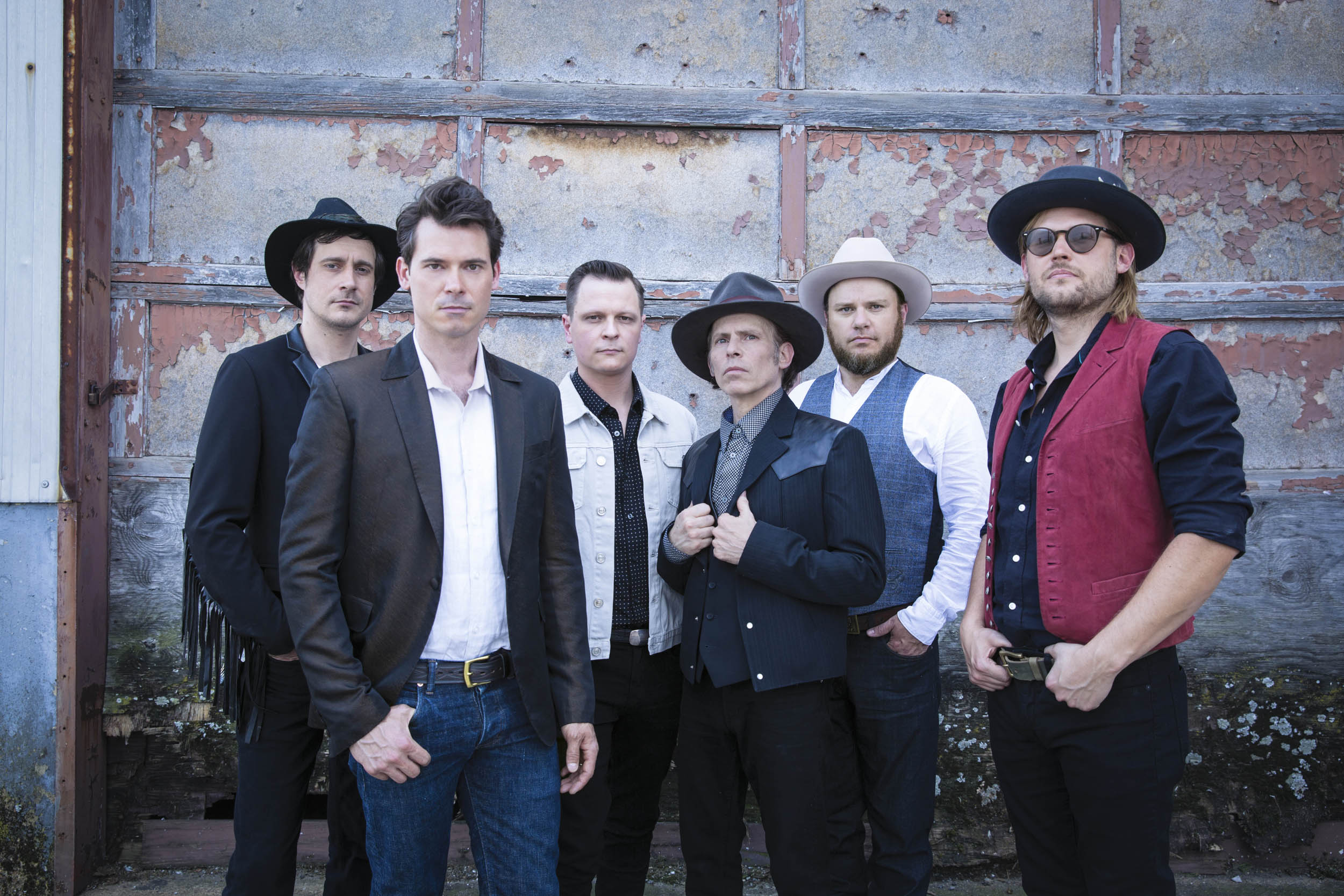
MIXTAPE: Cordovas’ Unknown Legends

The playlist is called Unknown Legends because each song carries a factor of the unknown; be it a somewhat unknown version (“Connection”), artist (Altyrone Deno Brown) or even origin (“Statesboro Blues”). These compositions and singers are the backbone of American weirdness, the reason we love our country’s music. – Cordovas

“Shake Sugaree” — Elizabeth Cotton

Cotton’s “Shake Sugaree” is crucial. Hard to find anyone that good at being a singer songwriter in the early 1900s but she was. Perfectly written, this song is a masterpiece of American music. This Carolina girl was an unknown legend

“Sweet Pea” — Altyrone Deno Brown

Just look at the picture of the dude. He could slay drums and he was 9 or 10 when he got signed. They want him to be the next Michael Jackson. Listen to his vibrato and the tenderness in his voice. The way he heard other singers seems to come out.

“The End of the World” — Skeeter Davis

This perfect melody. So sweet. Skeeter. Heartbroken and gettin’ over it by singing the blues. Some dynamite two part she throws down.

“Sign Language” — Eric Clapton

Clapton is obviously very well-known but this is a lesser known song. Featuring lead guitar by Robbie Robertson, harmonies by Richard Manuel, and a verse by Dylan himself, this is a beautiful scene in some movie. Two lovers. “You Speak to me in sign language as I’m eating a sandwich in a small café at a quarter to three.” So simple.

“Jesus I’ll Never Forget” — Forbes Family

Gospel Vocal groups. They believe. They lift their voices. This one has some epic 5 part harmony. It gets us singing in exaltation “Jesus I’ll Never forget” in the van as we ramble on. We are atheists.

“Piney Mountains” — Bruce Molsky

Jump up on the flat wheel car and let this fiddle tune take you up into the u-pined hills. “My hands can’t fiddle and my heart’s been broke, lord, and my time ain’t long.” Brother Bruce.

“Runs in the Family” — The Roches

The Roches have a masterpiece here. They address here the things we pass down in our families and in our ways and ambitions. Our desires. Through and through, concept, arrangement, feeling, this one is so well thought out and executed. On the idea of the sisters themselves coming of age the Roches sing, “Something about the danger zone, wouldn’t leave the bunch of us alone”

“Matty Groves” — Fairport Convention

This is a reworking of the old English ballad that tells a tale of lust, deceit and revenge in a renaissance setting. Sandy Denny’s powerful, convincing vocals are flanked by 20 year old Richard Thompson’s innovative, unpredictable guitar lines and Dave Swarbricks masterful electric fiddle, tying the tradition to a new era.

“Shady Grove” — Doc Watson

An Appalachian folk ballad by Doc Watson. There are some 300 stanzas collected reaching back to the 1800’s. There have been a vast amount of versions recorded and documented of this song, but Doc Watson’s version would come to be known through the folk revival period of the 1960s and making its mark into popular music by way of Jerry Garcia and David Grisman.

“Statesboro Blues” — Blind Willie McTell

This song came about from his many trips to a tobacco warehouse during harvest season in Statesboro, Georgia. He collected change from the laborers in a tin cup tied to the neck of his 12 string guitar that could be heard right outside the loading docks. “Reach over in the corner mama, grab my traveling shoes”.

“Going Down the Road Feelin’ Bad” — Woody Guthrie

Accompanied by Sonny Terry (harmonica) and Cisco Houston (mandolin, vocals) Guthrie’s rendition would provide the template for many subsequent versions of the song in both the bluegrass and the folk rock genres. Alan Lomax recorded this for the library of Congress.

“Connection” — Ramblin’ Jack Elliott

“Connection” is a Jagger/Richards song about being stuck while traveling, wanting to be home. Covered by NRPS among others, the song is on Elliott’s Reprise debut where it takes new life, now sung by a gunslinger-type.

“Tamp’ Em Up Solid” — Ry Cooder

Cooder’s “Paradise and Lunch” is a collection of older tunes, some somewhat unknown, including songs by McTell, Philips, and more. “Tamp’ Em Up Solid” is a traditional, attacked by Cooder in his unique style.


Photo credit: Alysse Gafkjen

Another Ring in the Tree: A Conversation with Ketch Secor

Maybe it’s true in life, but it’s certainly true in writing about music that the longer you do it, the more often you hear echoes of the past — not only in the music itself, but in artists’ attitudes and, especially, in their stories. Hearing Old Crow Medicine Show’s Ketch Secor recount the odyssey that preceded the band’s settling in Nashville, it’s easy to be reminded of the contintent-spanning journey taken by Western swing ensemble Asleep at the Wheel some 30 years earlier. Like AATW, who eventually were embraced by all but the most benighted purveyors of authenticity — and with whom they recorded a blistering “Tiger Rag” in 2015 — Old Crow have made their way into the heart of hillbilly music’s most cherished institutions, signified by their 2013 induction into the Grand Ole Opry cast.

Yet the group’s ascension to Opry membership was hardly predictable, much less preordained. Old Crow’s stature in the country music world has been built on a determination to make their own sound that’s every bit as strong as their allegiance to the broad swath of hillbilly music music that forms its foundation. When Marty Stuart invited them to join the Opry, he mentioned an early description of the radio barn dance as a “good-natured riot,” and it’s a description that obviously applies to the band’s shows, too — a simultaneous looking back and looking forward that has made legit fans out of the likes of bluegrass Hall of Famer Del McCoury. With Volunteer marking the group’s 20th anniversary, it seemed like a good time to look back at how they got from there to here.

The press release mentions this is the 20th anniversary of the band.

That’s no joke, brother.

Does the band have a hard start date — a day you could point to and say, “This is the day the band was formed”?

Well, the band left — that’s the day the wheels turned, and we left our home — in October of 1998, because grape season was over, and we had money. We had picked enough, and raised enough, and washed enough dishes, and cleaned enough attics, and played enough nursing homes, and bought enough cartons of cigarettes to get across the border in style.

I was thinking about this because the occasion for this interview is the release of a new record and, 20 years ago, the record industry and the music industry looked a lot different than it does now. And you guys have become what you are during this period of tremendous change and turmoil.

For example, when we crossed that border and finally got waved through into Canada in the fall of 1998, one of the things we had packed was our boombox, so that we could dub our tapes. Because this band sold cassettes. In 1998, this band sold cassettes on the street corner for $10 — Canadian. That was crazy. We were selling them, too. Our tape was flying out of the box — we had a shoebox full.

Why was that?

Well, it was not the quality of the tape. The tape wasn’t very good. We recorded it with one microphone hung from the ceiling, on a four-track recorder. It sounded really, really shitty — low-fi, low quality. That tape was called Trans:Mission. It was the time to dream, with your body, the things that you wanted to have happen. It was the time to read Bound for Glory by Woody Guthrie and think, “I’m going to get on that boxcar, too, goddammit; I’m going to hobo. I’m going to thumb it, I’m going to flag the diesel down. I’m gonna go West.” A good time in life to take that risk, and drop out. Isn’t that what it’s all about? Isn’t that where all of the magic lies, in that moment of deciding that you’d rather wear a mask — and pick a really great one?

So you made your way to Nashville …

That happened three or four years later. Now, I had already been to Nashville before I got to Ottawa. I had been here with another band in 1997, and played on the street corner here. I was gonna busk! I’ve been busking Nashville for like 23 years, or something stupid like that.

What’s the value of busking? I mean, aside from the financial.

Well, we can’t all play like Del McCoury, or anyone in that band — particularly when we’re kids. But we had the passion. It’s the same passion. I was never gonna get as good at playing the fiddle as Jason Carter, but I had the same drive to play as hard as Jason plays. And I couldn’t get onto a stage anywhere because … well, one, I was drunk. I had taken this old-time loyalty oath that made me fiercely pro-old-time and anti-bluegrass, so I didn’t play well with others. I was rabble-rousing. And also, I sucked. So where was I gonna go, with all of that energy and drive, but none of that finesse? And I was somewhat unapproachable. I might have smelled bad. I might have had blood on my shirt, or on my mouth. That was part of the mask I wore, was unapproachability.

Being in Tennessee seems to be important to the band, at this point. Is that a fair statement?

Yeah. I think, as soon as we got to Tennessee, it got a lot more legit.

In what way?

It got legit because it got more focused on the idea that, all right, this band is the soap box. In the chapter previous to our move to Nashville as Old Crow — which is the chapter that runs from about 1999 to about 2000-and-a-half — in that chapter, we were probably as interested in farming and making whiskey and planting by the lunar signs as we were about playing live shows. And that was where learning about early hillbilly and country music was as much an engagement with the landscape of the music as it was with the actual performance of the music. When it got to Nashville, then it became about doing that in Nashville, which had a different musical landscape.

So, in our journeying, we start with the quixotic journey, which is the fire, the odyssey. And then we end up in this sort of hillbilly monastery up in east Tennessee and west North Carolina. And then we come to Nashville, and we end up in this crack house kind of mentality of revolving doors of freaky people, motel rooms, and rent money going out and booze coming in, and songs, and percolation, and Del McCoury, and the road. The beginnings of the way the road would look. It became more vocational and less about kind of artistic presence and disturbance. As buskers, we were as much protesters as we were entertainers.

You guys still feel that way?

Yeah.

How does it express itself? Musically?

Oh, there’s a ferocity to what we do, and an intensity. I mean, I’m feeling it right now, which is why I’m jacked up. But I’m jacked up always. I’m always jacked up, when I talk about the fiddle, and when I talk about John Hartford and Del McCoury. I’m always jacked up because that stuff’s just so powerful.

When I hear “volunteer,” especially in a music-related setting, I think of the Volunteer State — Tennessee. Is the title a reflection, in part or in whole, of the environment in which you’re in now? Or does it have some other significance?

What I think it means is that it hearkens to the pack mentality of our youth. The band really took this oath, this pledge, and we all volunteered to risk our lives, to sacrifice personal identities, personal goals, for collectivity. To be very much a band. The way that we lived together — it’s like we had all signed up, that we would do it come hell or high water. And it turned out it was both.

There’s an audience connected to old-time and bluegrass and country music — all the variety that gets presented on the Opry — by virtue of where they were born, who they grew up with, and the community they live in. And then there are whole other audiences who are drawn by maybe musical affinity, or some kind of cultural signifying. One of the features of our world in the last few years has been that the differences between all these people has become more apparent and the edges become a lot sharper. You guys are also heading for your fifth anniversary as Opry cast members. You play the Opry, which is still kind of a focal point for one community, and then you go out and tour and play for all these other audiences. It feels to me like that’s reflected in some way in this record. Is that true?

When we play the Opry, we’re mostly playing for tourists. But we’re also playing in a kind of center of all of hillbillydom. And when we play the “Wabash Cannonball” on the Grand Ole Opry, we sound more like the Woody Guthrie role than we do the Montgomery Gentry role, or even the Roy Acuff role. Roy is kind of the same as Woody. He’s a good example because, though politically, he’s certainly on the right — he’s from East Tennessee, he’s a Republican, he’s a conservative dude, he wants to shut down the Opry because he doesn’t want to share the same locale as the peep shows and the drug dealers, so he advocates moving it out. But he’s singing music that makes you want to desegregate a school, because that’s the power of the “Great Speckle Bird,” that’s the power of the “Wabash Cannonball.” They’re actually very front-line songs, really excited, rabble-rousing kind of proletariat sounds.

That’s the thing about country music: The people, en masse, who believe in the power of folk music, just by nature of having an underserved class being championed by a music — that’s a very expansive concept, one that can’t be pigeonholed in any particular political realm. We played the Budweiser stage last week, and most people were about 25 years old or younger. We’ll play gigs this summer where everybody’s 25 or older, 50 or older — we’ll see crowds from Delaware to Red Rocks and everything in between. We’ll play in Oklahoma to drunk leftists, and we’ll play in New York City to conservative lawyers. And everywhere we go, we will allow people to step into a world that has no political affiliation. That is the world of Old Crow, the entertainer. And the Old Crow who’s an entertainer, I always think of him as this top hat-wearing bartender that’s serving it up to the people, no matter what the color of the skin is, or who they voted for. Because the Old Crow, he doesn’t vote. He just pours.

So what’s the connection between Old Crow, the entertainer, and that volunteer collective that stepped up and took its oath? What you described as the fundamental nature of the band — of you coming together and making this choice to pursue something — seems to imply a certain kind of purposiveness that goes beyond being an entertainer.

The political party here is, live music is better. The revival tent, or the voting booth, or the campaign rally is one in which you believe that live music has the power to change the world. I like records fine, but we’re a live band. What we do is play the music that we play in the moment that you’re hearing it. If you’re on your phone getting a message from a friend, you missed it. Sorry, dude. If you go to the beer line, that’s cool, we’re going to keep doing it. You don’t have to hang on every word. But this is our tent here. It’s the live music hour. That’s what we do.

We’re having this conversation, in part, because you made a record. So if live music is where it’s at, and that’s one of the changes in the music industry over those 20 years, and that records no longer occupy the same position in the music world, what are you wanting to do with this record?

Put another ring in the tree upon which this Old Crow has been precariously perched these 20 years. It’s just another ring in the tree, another notch in the belt.


Photo credit: Danny Clinch
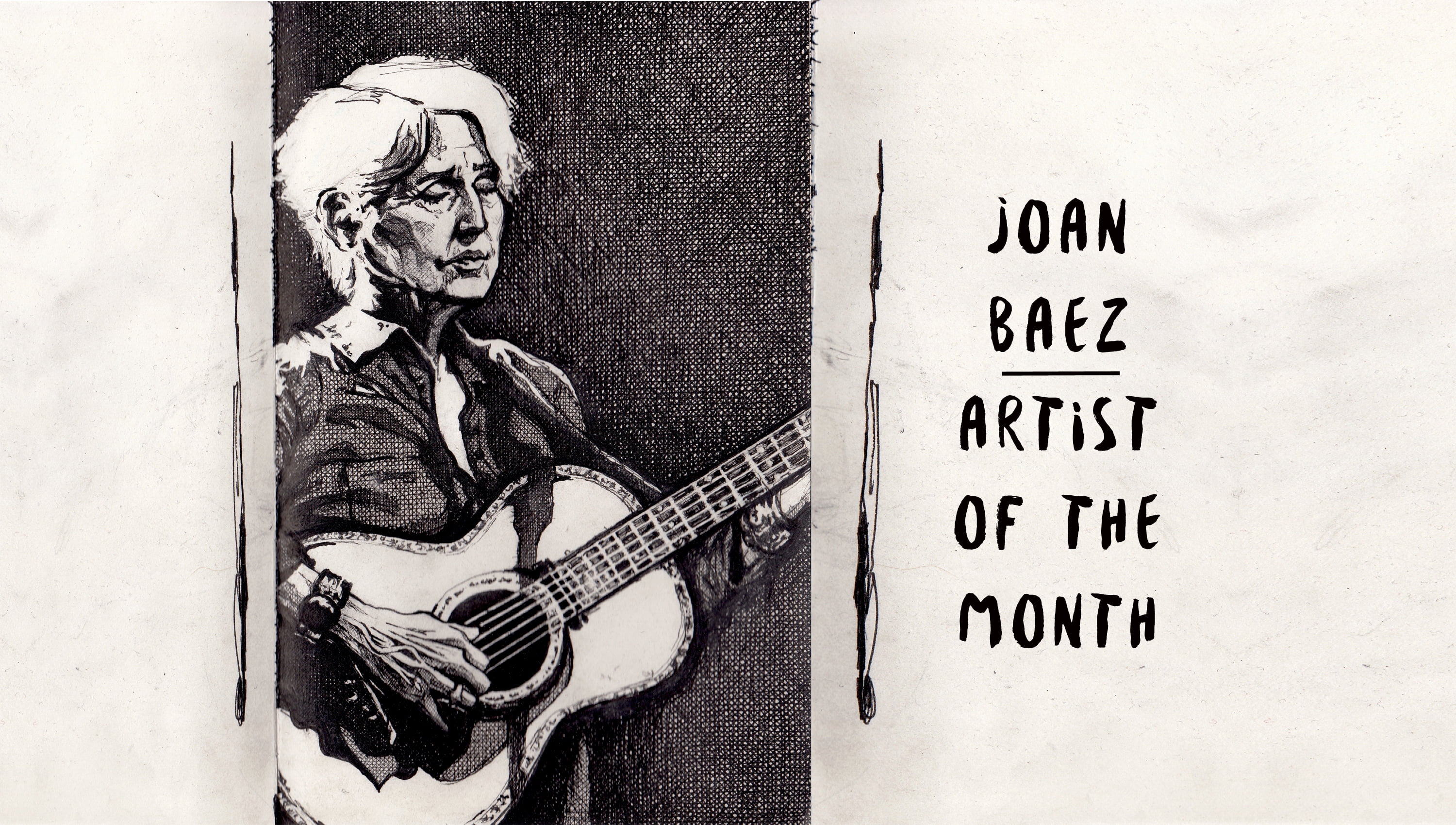
Joan Baez: Turning the Glass Upside Down

Joan Baez admits there’s a gaffe in “Civil War,” a harrowing song of uprisings, both personal and public, on her new album, Whistle Down the Wind. “There are a couple of words that come out funny,” she says, “and there’s one where I sound like I have a big lisp.” It’s hard to catch that particular mispronunciation, especially as the lyrics are littered with sibilant S’s (“… this civil war”) that might blur her words together, and those mistakes may not be apparent to a casual listener or even an obsessive fan. But Baez hears them every time.

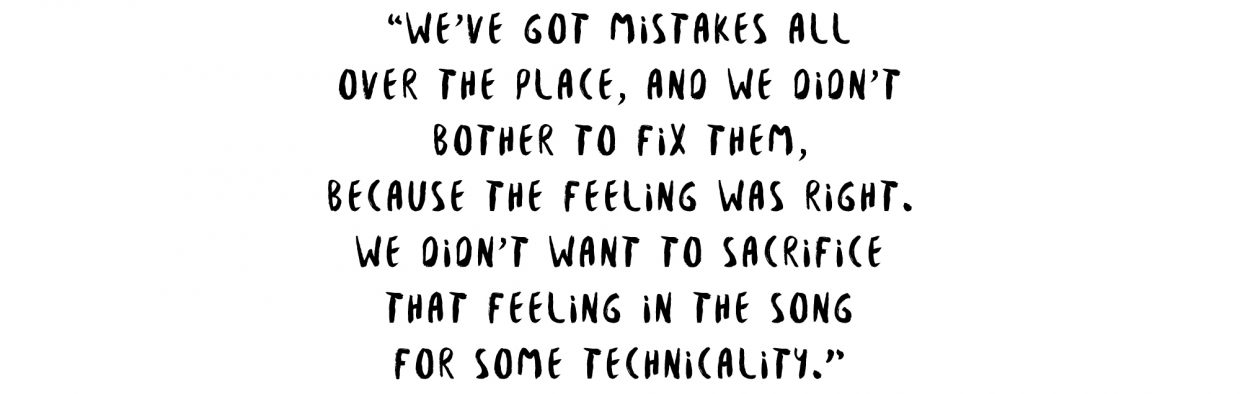
Partly, those blemishes are the byproduct of the recording process, which was loose, casual, and largely unrehearsed. Baez made the trip from her home in the Bay Area down to producer Joe Henry’s studio in Los Angeles, where she worked with a band of session musicians who have become regulars on the albums he has helmed for Solomon Burke, Lizz Wright, Bettye LaVette, and Over the Rhine. She would play a song a few times for them, enough to give them a sense of the piece and the ideas she wanted to convey. “I didn’t stop to say, ‘Listen, we’re going to hold this note for this long and do this thing here,’” says Baez. “I just didn’t know any of that. We just pieced everything together.” As a result, “We’ve got mistakes all over the place, and we didn’t bother to fix them, because the feeling was right. We didn’t want to sacrifice that feeling in the song for some technicality.”

Henry agrees, arguing that a mistake isn’t a mistake, if it actually strengthens the song: “To me, it’s only a mistake if it breaks the story and takes you out of the trance. I don’t hear that happening anywhere on the album, because people are playing together. They’re in a real-time conversation, musically speaking. They’re in a moment of discovery together, in real time. Nobody is playing anything by rote.”

Least of all Baez. Sixty years into a storied career, she is still searching, still discovering. Whistle Down the Wind is her first album in 10 years, and she has intimated that it may be her last. If so, it will be a remarkable swan song: a collection that gauges the tenor of 2018 just as intuitively and authoritatively as her self-titled debut did in 1960 or Diamonds & Rust did in 1975.

Baez speaks through the songs of other writers, bending them to the present moment or finding new implications buried in the lyrics and melodies. There are two Tom Waits character studies, odes to personal stubbornness, whose melodies and sentiments fit so well with Baez’s delivery that you’d think he wrote them specifically for her. She covers Zoe Mulford’s “The President Sang ‘Amazing Grace,’” about President Obama’s impromptu performance of an old Sacred Harp hymn at the funeral of Rev. Clementa Pinckney. Josh Ritter’s “Silver Blade” sounds like a response to the traditional ballad “Silver Dagger,” which has haunted Baez’s set lists for half-a-century.

Whistle Down the Wind is not interested in replaying old glories or indulging any nostalgia for the heyday of folk music. And that’s why those technical mistakes matter so much. Even if you don’t hear them, they nevertheless act on your subconscious. They increase the intimacy of the recording, making these songs sound more direct, more forthright, more urgent. Moreover, they speak to the messiness of what has become Baez’s truest subject: the times. Certain ideas and issues — whether it’s civil rights in the 1960s or gun control in the 2010s — are much more complicated and unwieldy than the means by which we choose to address them. It is less the fault of the song than the singer. As well intentioned and as righteous as an artist may be, the implication is that she or he remains an imperfect vessel for the song and the ideas contained within. Leaving that lisp in “Civil War” is Baez’s way of acknowledging that fact.

The miracle of her long career is that she still believes mightily that such songs are still worth singing, that they can speak to their historical moment, that music still has a function in the everyday life of a community or a nation or a planet. “It’s community building,” Baez says. “It’s empathy building.”

In the 1960s, that belief placed her at the epicenter of the folk revival, when she played demonstrations as routinely as she booked concerts. Like Woody Guthrie and Pete Seeger, she was armed with a guitar, an encyclopedic history of folk music, and a strident sense of mission. Unlike those two influences, she had a high-flying voice, one that swooped playfully around her upper register. In recent years, age has robbed her voice of its former agility, but on Whistle Down the Wind, it has grown deeper, taking on a slightly rougher texture, yet retaining its original authority and compassion.

Her peers might have taken determined steps away from the responsibilities of protest music, but Baez simply expanded her scope and subject matter. Especially in the 1970s, she found new ways to mix the personal and the political. Never a confessional singer/songwriter — at least not in the way the West Coast folkies were — she still put a lot of herself in her songs, whether they were about her own personal relationships or those between communities. “I don’t know how I would have done that stuff back then without the music,” she says. “That was such a big part of it.”

Few folk musicians of her generation managed to keep the audience rooted in the foreground of her music. Her songs speak to “you,” but in most cases that “you” is plural. On her cover of “Another World,” by Anohni, who previously performed as Antony & the Johnsons, Baez bangs softly on the frets of her guitar, creating a gently frenzied pulse for lyrics about leaving this world and finding a new one. Her version is an ecological warning, a life-size take on a planet-size woe.

“I’m gonna miss the snow,” Baez sings. “I’m gonna miss the bees.” As the song continues, that guitar thrum becomes a timer counting down the end of a life or possibly the end of all life. “The song is as dark as it is beautiful and as beautiful as it is dark,” says Baez. “It’s spellbinding. [Anohni] turns the glass upside down. It’s not half-full or half-empty, but upside down.”

Baez changes the song in one crucial way. In her original, Anohni sings, “I’m gonna miss you all.” Baez adds a new word: “I’m gonna miss you all, everyone.” It’s a small change that doesn’t disrupt that melody or change the song in any dramatic way, but it does give an idea of the audience Baez (and Anohni) imagines for herself. She is addressing that “everyone.” “Joan understands very well that music is about community,” says Henry. “It’s about gathering people in real time to a pointed moment. It’s always and only about community for her.”

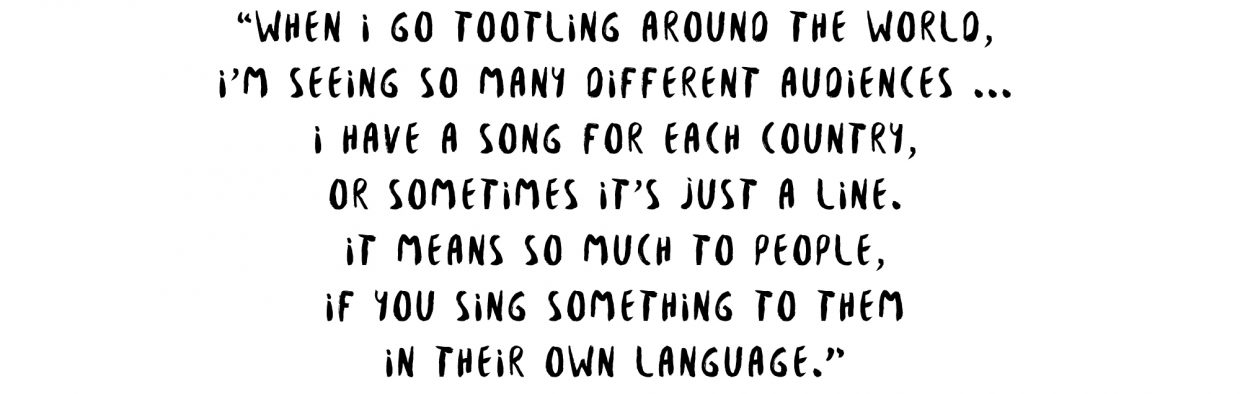
That idea is ingrained in her vast catalog, although it grows more poignant now that her career appears to be winding down. “When I go tootling around the world, I’m seeing so many different audiences,” Baez says. “I’ve played a lot of festivals in Germany and adopted France as a second country. I do five songs in French for them. I have a song for each country, or sometimes it’s just a line. It means so much to people, if you sing something to them in their own language. It’s hard work, but it’s a way to thank people for showing up.”

It’s also a way of speaking to them more clearly. In 2009, she recorded a simple YouTube clip of herself, presumably seated in her kitchen, singing a version of the old spiritual “We Shall Overcome.” It’s a song she’d sung countless times, but this version was both in English and Farsi, and she dedicated it to the people of Iran, who were protesting the contested election of President Mahmoud Ahmadinejad. “The lyrics were written out phonetically. I couldn’t possibly remember them. And they don’t have the same scales, which meant I couldn’t get the notes right. They just didn’t exist in my vocabulary of notes.”

For Baez, music not only speaks to these communities; it binds them together and can, in some ways, define them. Every movement demands a soundtrack, and Baez is under no illusion she can provide one for March for Our Lives or Black Lives Matter or #MeToo. “We need a brilliant anthem so people have something to sing, so they don’t have to shout so much. I wish I could write that kind of thing. But it’s so hard. Still, I think it will come.”


Illustration by Zachary Johnson

LISTEN: John McCutcheon, ‘When My Fight for Life Is Over’

Artist: John McCutcheon
Hometown: Smoke Rise, GA
Song: “When My Fight for Life Is Over”
Album: Ghost Light
Release Date: February 9, 2018
Label: Appalsongs

In Their Words: “One of the great treats and honors of my life has been to work with some of Woody Guthrie’s lyrics. This one was especially challenging because the lyrics were obviously incomplete — it was up to me to flesh out both lyrics and melody. But after a lifetime of being ‘schooled’ by Guthrie’s work, I though I might be ready. Taking it to Tim, Kathy, Stuart, and Richard was the icing on the cake.” — John McCutcheon


Photo credit: Irene Young

LISTEN: Country Joe McDonald, Arlo Guthrie, Jack Elliott, & Pete Seeger,

Artists: Country Joe McDonald, Arlo Guthrie, Jack Elliott, & Pete Seeger
Song: “Goin’ Down the Road (Ain’t Gonna Be Treated This A-Way)”
Album: Woody Guthrie: The Tribute Concerts
Release Date: September 22, 2017
Label: Bear Family

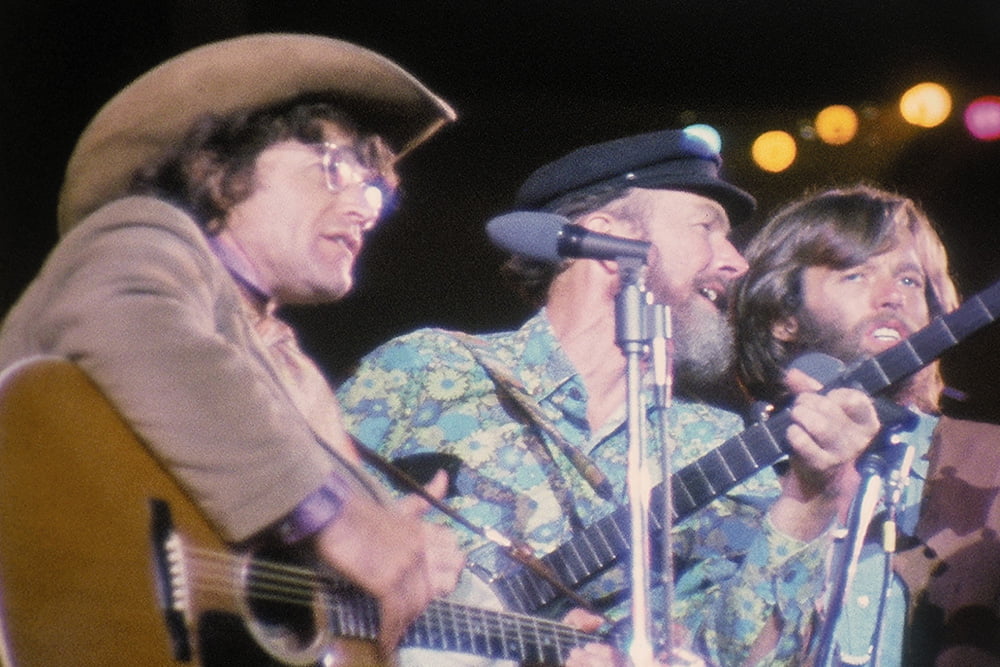
In Their Words: “On Sundays, my father would come home from the hospital and lots of musicians would come over for a hootenany. Old friends, young-uns … you never knew who was going to show. It was a mix of talents and instruments — bring something, play something, sing something. This track reminds me so much of those days. Here, Pete Seeger is backed by a young Ry Cooder, trading verses and breaks with Country Joe McDonald and Swampwater fiddler Gib Gilbeau. Jack Elliott and Arlo hold it together because, hey, like Dylan, they’re usually the ones who know all the words!

That’s what Woody’s original 1940s hootenanies were like when the young-uns then included Pete Seeger, backed by elders Woody or Lead Belly. ‘Goin’ Down the Road’ is a perfect example of this classic, easy-going approach to music learning, which spurred the ’60s community of folk and folk-rock musicians who continued to ‘hoot up’ (aka jam) on this song.” — Nora Guthrie

3×3: Cordovas on Brautigan, Baseball Cards, and Buck Owens Back Tattoos

Artist: Lucca Soria (of Cordovas)
Hometown: Joe’s from Charlotte, NC; Jon’s from Macon, GA; Graham’s from Orange County, CA; and I’m from Des Moines, IA.
Latest Album: That Santa Fe Channel
Personal Nicknames: Monstruo niño

If you had to live the life of a character in a song, which song would you choose?

“Thankful N’ Thoughtful” by Sly & the Family Stone

Where would you most like to live or visit that you haven’t yet?

Osaka, Kyoto, Tokyo — Japan in Spring

What was the last thing that made you really mad?

Reading about the proposed “health care” bill.

If you had to get a tattoo of someone’s face, who would it be?

When I just now turned to my girlfriend Kelsey and asked, “Whose face should be tattooed on my back?” she said, “Buck Owens” and I think that’s a good answer.

Whose career do you admire the most?

Willie Dixon’s, Woody Guthrie’s

What are you reading right now?

I just finished The Collected Poems of Wallace Stevens this morning and plan on reading either In Watermelon Sugar by Richard Brautigan or The American Claimant by Twain.


Summer Tour dates are up at cordovasband.com including @familywash 7/3—see y’all soon #Nashville #NYC

A post shared by Cordovas (@cordovasband) on

Are you an introvert or an extrovert?

Extrovert because I think anyone singing and playing in front of people becomes one.

What’s your favorite culinary spice?

Red pepper

What was your favorite childhood toy?

Either my baseball card collection or Star Wars action figures.


Photo credit: Rebecca Ward

Won’t You Be a Neighbor? (Op-ed)

It all started in the Hague. I was backstage getting ready for the first night of tour with the Mastersons when the Dutch venue crew turned on a live broadcast of the inauguration. I’d hoped that touring Europe during the early days of the new administration would offer a bit of relief from the constant media bombardment that I’d been experiencing in America, but it turned out that the opposite was true. American politics are world politics, and so the rest of the trip was spent responding to questions about current events that had no good answers.

There was a sense of dread every time I connected to a hotel WiFi network. What executive order had been signed since the last time I had Internet access? Who was the president attacking now? What progress was being undone? Dressing room conversations often centered around feelings of frustration and helplessness at being so far away from home during such a tumultuous time. My friends were back in the States protesting, but outside of attending the Women’s March in Amsterdam, there seemed to be little I could do to participate. That changed after a backstage chat with Shovels & Rope in Gothenburg, Sweden, though. I left the venue that night feeling fired up and reinvigorated about the power of music and what I could do as an artist to make my voice count, and I decided the minute I got home, I would start work on the Won’t You Be My Neighbor? EP.

This group of songs is my attempt at channeling all of the anxiety and energy and negativity of 2017 into something productive and positive. I wanted to bring together a diverse group of artists I admired and create a collection of political music for a cause I believe in, but I also wanted to push on the idea of what exactly makes a song political. The tracks here are a mix of covers and originals reimagined for a year in which kindness and empathy have become their own form of political statements. I remember lying in a hotel bed in London watching the Super Bowl and reading about the uproar from conservative outlets about commercials that advocated for treating immigrants and the poor with civility and respect. Displays of human decency were being treated as attacks on Trump. (How that doesn’t give his supporters pause to consider which side of history they’re on, I may never understand.)

The collection opens with “This Land Is Your Land,” which includes background vocals contributed by Josh Ritter, but it’s perhaps not the version you’re used to hearing. I peppered it with samples of American political speeches from George Wallace to Donald Trump to highlight that the struggle for equality — whether it be in regard to race, religion, sexual orientation, nationality, etc — is an ongoing one, not simply a part of our past. I also used Woody Guthrie’s full 1940 lyrics, in which he denounces walls and bears witness to the struggle of the poor. “As they stood hungry, I stood there wondering if this land was made for you and me,” he pondered. We don’t teach those verses in school, but I think they’re important. Being patriotic means holding the country you love accountable to its own ideals and asking the tough questions.

The song feels even more prescient in light of the president’s decision to withdraw from the Paris climate accord. Guthrie’s not just singing about the concept of “America” here; he’s very literally singing about the trees and the air and the water. If these things do, indeed, belong to all of us, then it’s our duty to be responsible stewards of them. This land doesn’t just belong to us; it belongs to the countless generations yet to come.

Some of the songs I covered surprised me as I dug into them. Bob Marley’s “One Love,” for instance, revealed itself to be entirely devoid of rhyme. Separated from the music, the lyrics felt like a prayer or recitation (in no small part because some of them are lifted from the Bible), so I decided to recast them over a very solemn, hymn-like arrangement. I’d always been a fan of Tom Petty’s “I Won’t Back Down,” but with a professional bully in the Oval Office, the urgency of those verse lyrics hit me harder than I expected. And I’m not sure “Won’t You Be My Neighbor?” has ever served as a protest anthem, but in these days of refugee bans, ICE raids, and border walls, I can’t hear it as anything else.

All profits from sales of this collection will be donated to the International Rescue Committee to help fund their efforts aiding refugees around the world. Everything was recorded at no cost in bedrooms and home studios around the country, and all the guests contributed their time and talent out of the goodness of their hearts. Even the packaging is made with recycled cardboard and is handpainted at home in Brooklyn. I hope that folks enjoy the collection and think about what the songs have to say, and I hope that the money we raise with it can do some real good for people who are in desperate need around the world. I know a project like this is a small gesture in the grand scheme of things, but I truly believe that every little bit counts in the fight for what’s right.

See you around the neighborhood,
Anthony D’Amato

For the Won’t You Be My Neighbor? charity EP, Anthony D’Amato created a stripped-down collection of reimagined political music to benefit the International Rescue Committee’s refugee aid efforts. Musical pals — including Josh Ritter, Sean Watkins, Israel Nash, Michaela Anne, the Mastersons, Lizzie No, and MiWi La Lupa — contributed background vocals. Donate to the cause and pick up a handprinted copy of the EP here.


Photo credit: tinto via Foter.com / CC BY

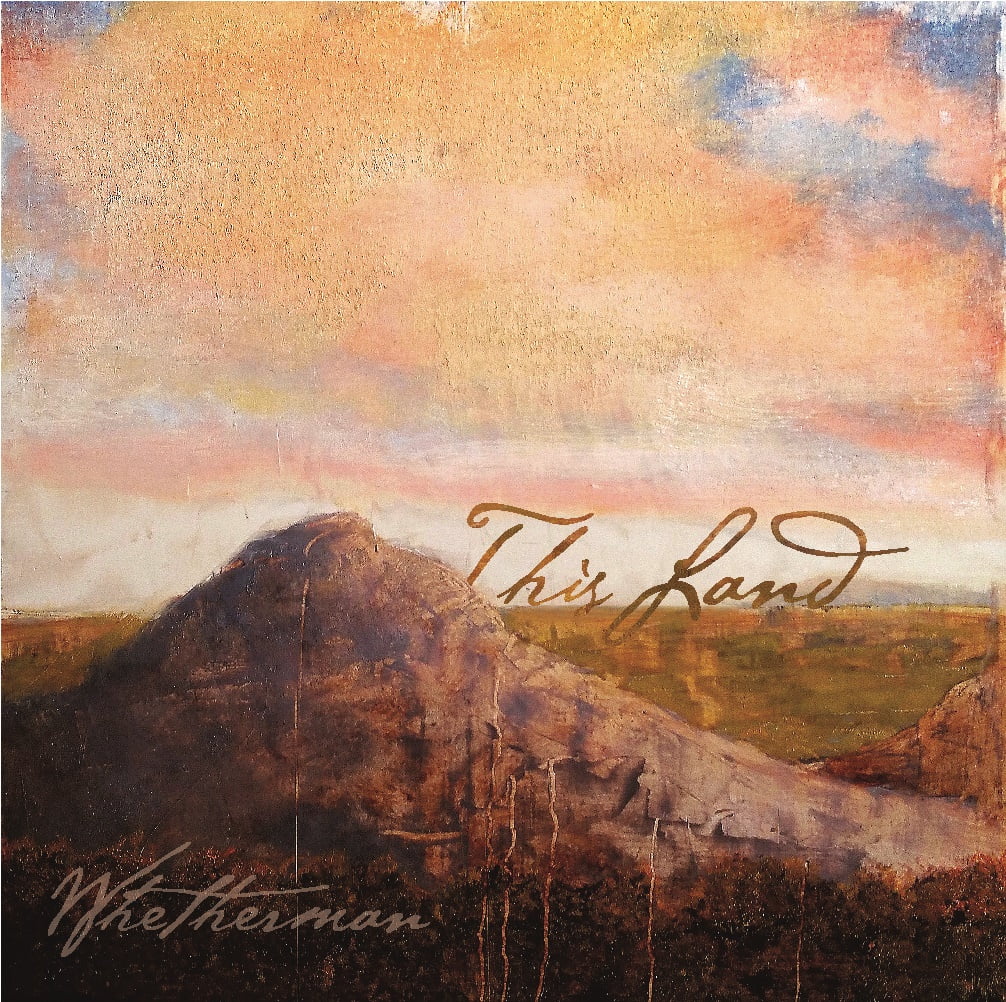
STREAM: Whetherman, ‘This Land’

Artist: Whetherman
Hometown: The Open Road
Album: This Land
Release Date: June 16, 2017

In Their Words: “This record came about because of many musical interests. Through many miles traveled, my sound has become a blend of American-made music spanning folk, blues, soul, country, and bluegrass. It represents the beautifully different aspects of our culture, the current political and social climate, and conserving the amazing landscapes across this great nation, with respect to the message of Woody Guthrie and Pete Seeger in ‘This Land was made for you and me.’” — Nicholas Williams

3X3: Diego Davidenko on Loving Ice Cream, Hating Kombucha, and Reliving Life

Artist: Diego Davidenko
Hometown: All over. Currently L.A.
Latest Album: In an Empty House
Personal Nicknames: Deegs, Double-D

What song do you wish you had written?

“The Stars of Track and Field” by Belle and Sebastian

Who would be in your dream songwriter round?

Woody Guthrie, Elliott Smith, Lisa Germano

If you could only listen to one artist’s discography for the rest of your life, whose would you choose?

Conor Oberst


Playing here at 7 — come on down folks. #scarfweather

A post shared by diego (@diegodavidenko) on

How often do you do laundry?

When I’m out of clean underpants.

What was the last movie that you really loved?

Sweet Bean

If you could re-live one year of your life, which would it be and why?

This one. It’s so full of adventure and love.

What’s your go-to comfort food?

Ice cream with Reese’s Peanut Butter Cups.

Kombucha — love it or hate it?

Hate it

Mustard or mayo?

Mustard. Pretty much anything over mayo.

Counsel of Elders: John Cohen on Never Giving Up the Search

In 1959, John Cohen went searching for something. Were you to ask him at the time, before he headed south toward Kentucky from New York by way of bus, he might’ve responded that it had to do with a sound. But underneath that sonic exploration lay an interest in weightier connections beyond what he’d heard pour out of his family’s speakers when his mother or his father dropped the needle on a new Frank Sinatra LP. Cohen was looking for a connection.

Over the course of his long and varied career, Cohen has been a musician, a filmmaker, a photographer, and more, but at the heart of those titles — and the identities they color — exists a desire to cull the past for its most earnest and forgotten correspondences. As if the banjo playing of Roscoe Holcomb or the traditional songs Cohen performed with his band the New Lost City Ramblers in the 1950s and 1960s, and more recently with the Down Hill Strugglers, contained an integral message to be cared for and passed on. It’s an appreciation for the past that has led some to describe him as a documentarian or a historian or even a preservationist, but any such qualifier only strikes Cohen as being too stiff for the living things they contain.

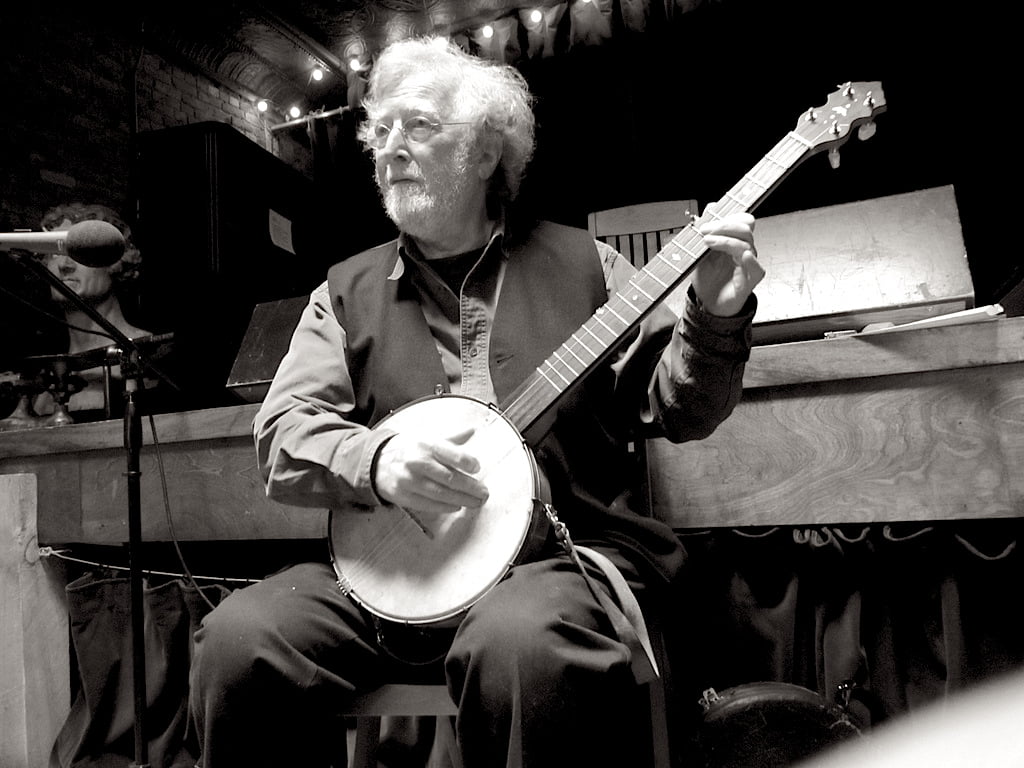
Cohen will be performing with the Brooklyn-based old-time string band the Down Hill Strugglers at the Brooklyn Folk Festival beginning April 28. He joins a host of traditional and world sounds that have shaped him and continue to inform his listening aesthetic to this day. The search, after all, is never finished.

You’ve mentioned before how you wanted to differentiate yourself from your parents and the standards they listened to at the time — like Frank Sinatra — and, later, the collegiate trend within the folk revival. How did class factor into your taste?

My grandparents were immigrants. My parents were children of immigrants in New York City and, in the process of distancing themselves from their parents’ orthodox Russian Jewish background, they let us kids run wild in American culture. We lived in working class Queens, a place called Sunnyside, but around my 10th birthday, they changed classes and went down to the suburbs and took me with them. And I became middle-class.

By the end of my years in high school, I felt something was wrong and I became an open revolt against that. Music was an important part of my realization of what a cocoon the suburbs were. When I heard Woody Guthrie — this is 1948 I’m talking about — and the Carter Family and Uncle Dave Macon, well, it just opened my horizons. It showed me things about America that I had never even heard of. Here I was listening to Lead Belly when I came home from high school, while everyone else was listening to Frank Sinatra. I was on a very different track, and it’s been that for the next 70 years.

Authenticity is such a loaded word, and yet it seems like you were turned off of the pageantry and production that surrounded popular music at the time. What were you pursuing in this kind of sound?

It completed the picture. The middle class, the Frank Sinatra, the comfortable life, and even the things around rock ‘n’ roll, which are really beautiful and exciting but pretty safe … and then suddenly to see this other side to things. That put the two together and made a much bigger picture. I spent many years making films and photographs in Peru, and it’s even more profound there because the culture is so different. Everything is so different than what we’re raised on here in America. I’m not a universal man, but I have this sense of seeing things from many sides at once. I’m satisfied that I got to that place.

Now we have the Internet and infinite discovery at our fingertips, but you really had to go searching, especially with regards to music.

Eli Smith, a dear friend of mine who presents the Brooklyn Folk Festival, gave me an iPod a couple of years ago loaded with 15,000 tunes, but they’re mostly old blues, old hillbilly music, traditional music, and music from all around the world. I just can’t believe how much joy it gives me, and it’s not exactly “joy” because I put it on shuffle. One moment I’m listening to a Ukrainian orchestra and then, in the next moment, an old bluegrass band. In my mind, I’m constantly asking, “What is it about this music that can make me feel so good about each of them, or what do they have in common?” There’s a certain age to the music, to the singing, a certain vigor that you don’t find in every day life.

A certain connectivity?

Yeah, I mean I could go into ethnomusicology terms, but that’s just a structure around it. It’s a feeling, an intensity. There’s a wonderful writer and musician named Julius Lester and, during the Vietnam War, he went up to North Vietnam and said at midnight they were at the edge of the river waiting for a ferryboat to come and get them across. A ferryboat was just one man in a little boat with an oar, and [Lester] said that man was singing and it sounded just like Clarence Ashley, who was an Appalachian singer from the 1920s. To hear that, it explains it. The same feeling, the same ache to the voice, the same explanation of a life.

These subjects are universal. You’ve described yourself as an artist not a documentarian, and — as a thought experiment — if you put those two identities on the same spectrum, I wonder if you won’t fall somewhere in the middle, like a preservationist, if that’s not too staunch of a term.

It is. It reminds me of formaldehyde. Walter Evans, a wonderful photographer, he used the phrase, “Well, I work in a documentary style,” which means it looks like what people think a documentary is, but that doesn’t mean that it really is. The other thing that I find all over the place is that the word “interpretation” comes in more. I look objectively. I take a photograph: It’s a lens, it’s a film, it’s a fact. But by the time I finish with it, it’s an interpretation. In a way, it holds true for my music, too. I don’t consider myself to be an original musician. The origins are somewhere else, and I’m constantly interpreting those origins. That’s the way I have to look at it.

Yes, but you’re also interested in sticking to the instrumental and melodic foundation. There’s an inclination to preserve there.

I use that as the tools with which I work, but I admire so much and I’m so moved by some of the inventive old sounds that it’s my attempt to get at that. Of course, I can never be them — I can never be Clarence Ashley — but I can reach for it, as long as I don’t lose sight of the original. And very often when I sing or perform, I’ll refer to the source … and it’s not for historical reasons or anything; it just helps me get through the song.

A seeking instinct led you to Kentucky, and the idea of seeking has shifted in recent decades. Have we lost anything?

With the Internet and a lot of phonograph records, you can get the illusion that you’re with someone else and still be sitting on your sofa. But the real trick is to get up off the sofa and get out the door and go somewhere else. And don’t go as a tourist. Tourism is one of the biggest industries in the whole world right now, but that’s because people are looking for something beyond themselves. They don’t know how to approach it. I mean, I went down looking for banjo recordings.

Door-to-door, no less.

More gas station to gas station. And once the folks start retuning the banjo, it opens up their memories of songs they hadn’t played in years or sounds that they don’t play regularly. It’s like a continual opening up of very special things when you have something that you’re after.

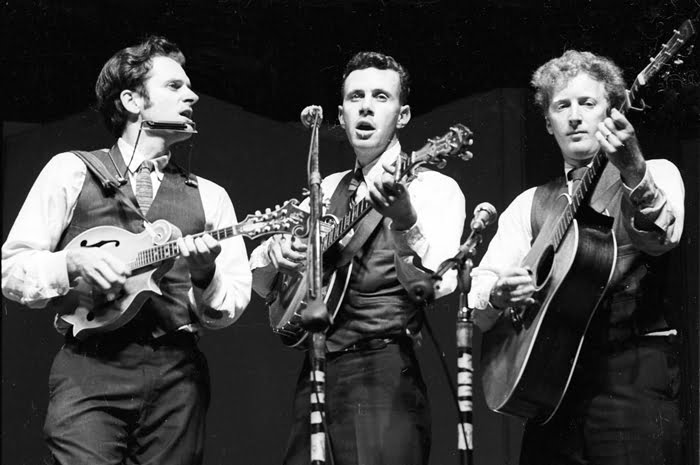
New Lost City Ramblers at Newport Folk Festival

I look at the Internet and obviously someone could “seek” by searching, but you lose that face-to-face connectivity.

Oh yeah, and all the questions like, “Where am I going to eat?” When you go somewhere else, you gotta ask those questions yourself, unless you stay on the main path all the time. One of the things about my approach to music — and it’s not just me alone — is when you hear something that you wanna get at and you try to play it, you’re engaging in a very different way. You have to listen again; you have to listen closely. That’s another form of engagement. I guess it’s about seeking the experience of making music or participating in it rather than just listening to it.

What excites you about the Brooklyn Folk Festival?

It’s a reflection of all the things I’ve been talking about. It’s a great opportunity to see these people in person and hear the music in person, but again, you’re not sitting in your living room with your headphones on. You’re there.

Like you said, opening up the experience.

Yeah, the depth of variety of music … it’s like that iPod. It’s loaded with stuff from all over the place and strong because it’s been curated: They selected one group rather than another. And it goes back in time, as well as being contemporary.

Years ago, in 1961, we formed an organization called the Friends of Old-Time Music and our purpose, for the first time, was to bring traditional performers from the countryside into the city and give them solo concerts. It was the first time we had tried that. Very often, you have a traditional American singer come and be a guest on a Pete Seeger show or a festival or something. Here we were putting on full concerts and that kind of set things in motion in this direction.

Nowadays we’re enjoying the culmination of that exposure.

When my band the New Lost City Ramblers started in 1958, we tried to get at that music: The music that wasn’t being heard, we tried to perform it. We were showing that city kids or urban kids or kids from another tradition could really involve themselves in performing this music, and I’m so proud, after all these years, to see the size of the string bands. There’re festivals and there’re gatherings; it’s all over the place. How many young men and young women study violin and then they change their mind and they play fiddle music? They’re off and running.


Lede photo: John Cohen with Doc Watson and Mississippi John Hurt. All photos courtesy of John Cohen.