John Reischman: Between the Salish Sea and Salt Spring

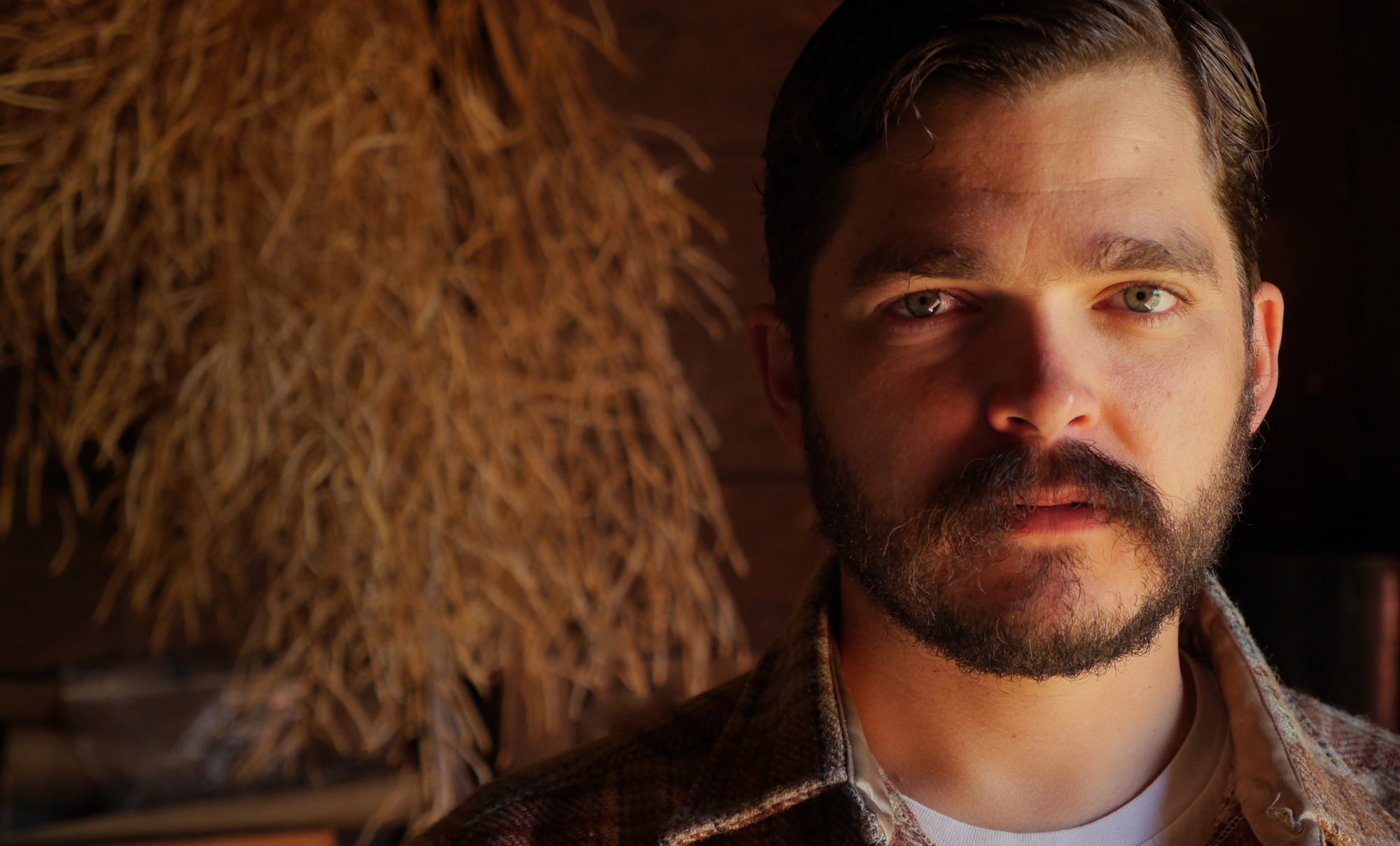
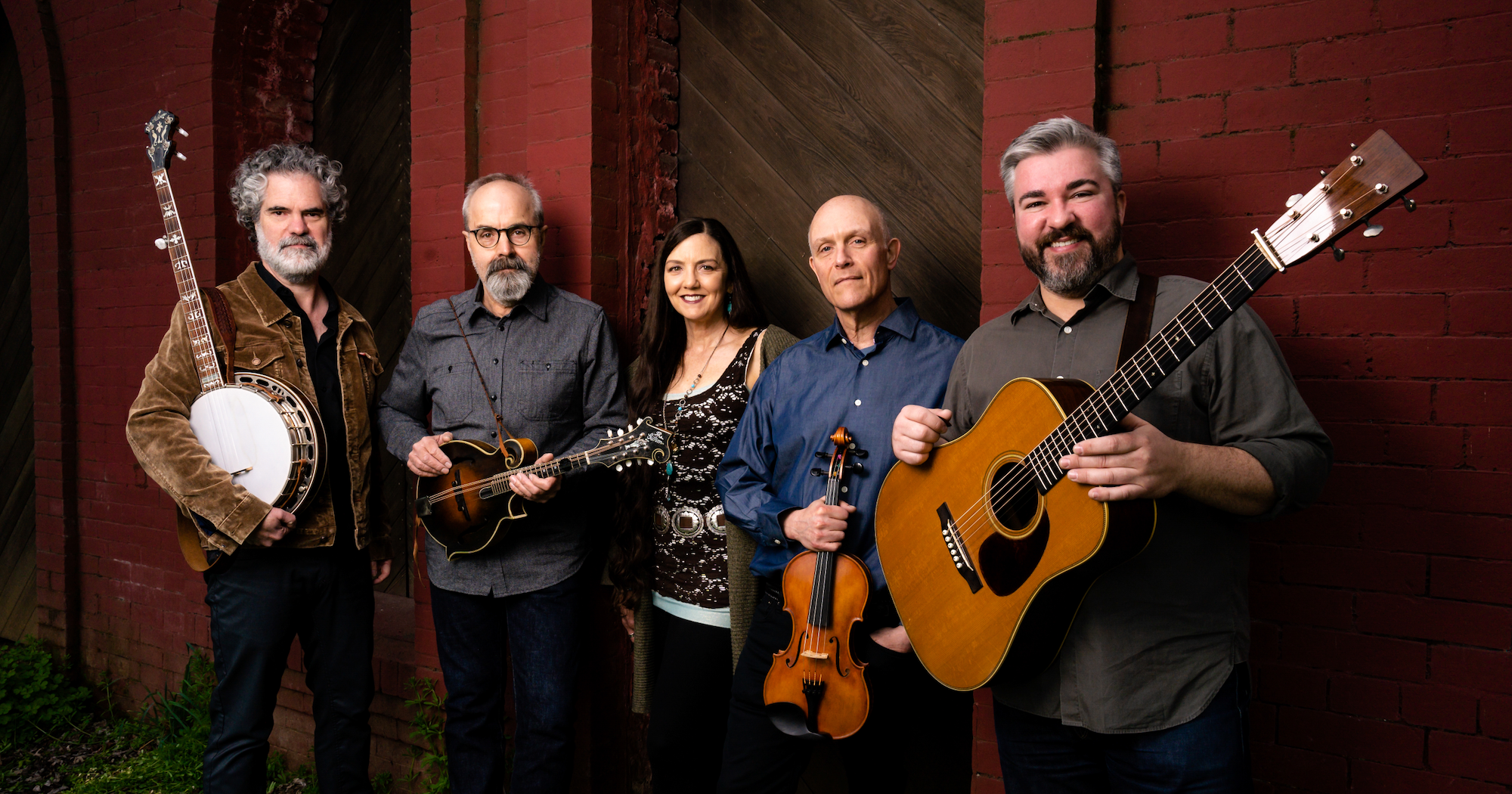
There are no U.S./Canada border wars when it comes to John Reischman. The revered mandolin master was born in Northern California but has lived in British Columbia since the early 1990s. His longtime band, the Jaybirds, are a quartet that includes two members who are also based in British Columbia (bassist/vocalist Trisha Gagnon and banjoist Nick Hornbuckle) and two who reside in America (fiddler Greg Spatz lives in Eastern Washington and guitarist/vocalist Patrick Sauber is from Southern California).

Their latest album, The Salish Sea, refers to the body of water between Vancouver Island and the British Columbia mainland. The record is their first since 2017’s On That Other Green Shore along with being the first to feature “new” guitarist Sauber on the entire album. The song “The Salish Sea” not only serves as the album’s title, but also is part of an original “Bluegrass Concerto” that Reischman was commissioned to create for FreshGrass in 2024. The honor is just one example in a long line of accolades for Reischman, who began his career in the Bay Area bluegrass/folk scene of the 1970s (including a stretch with the Tony Rice Unit) before moving to Canada, where he started the Jaybirds as well as performing solo and in other groupings.

In recent years, Reischman has seen his song “Salt Spring” become something of a modern bluegrass classic. He spoke with the BGS from his home in Vancouver about “Salt Spring” as well as The Salish Sea, his famous Lloyd Loar mandolin, and how he got into bluegrass music.

What was the process of putting the new album together?

John Reischman: There was one venue in Washington State where we had a residency. It was in the fall, in a beautiful spot. It was just ideal. So we took the extra day, worked up like six new tunes, and then started performing them right away. I guess this was October of ‘23.

And then you recorded the album in Vancouver?

In December of ‘23, I wanted the band to check out the studio here in Vancouver, where we ended up ultimately recording. I just want to make sure everybody was cool with it. I knew I liked it, because I had used it for my solo record, New Time & Old Acoustic. They all liked it. At the end of any tour we had that was close to Vancouver in 2024, I’d book a day or two in the studio, and we’d go record two or three or four songs. We were able to perform all this material mostly before we recorded it. … And it was great, because we’d be warmed up from the tour and we’d go in and track some tunes.

This album was the first in a while, and also the first that Patrick Sauber was fully on it.

Right, On That Other Green Shore came out in 2017. That was kind of the tail end of our time with [guitarist] Jim Nunally being a band member. He was exploring other things and decided he’d leave the band. We had a few more tracks to do… and we had some dates on the calendar.

I thought of Patrick immediately, because I’d known him for many years and I thought he’d be good. So he signed on for a tour and then another tour and it was just like, “This works great.” We asked him to join and he immediately said yes. He was a great fit.

How did the Jaybirds come together in the first place?

I didn’t really set out to have a band, except for the fact that I had a solo record called Up in the Woods. There was a local festival, so I put the band together to help promote the record. Seemed like a good idea. And I liked playing with all those people and it just continued on.

It’s called John Reischman and the Jaybirds, because I conceived of it. My name was probably the most well known at the time, but I wanted to be integrated into a bluegrass band. People present stuff, and I almost always accept it. Mostly it’s a pretty democratic presentation, I think. That’s what I like. It’s not Gladys Knight & the Pips.

Can you talk about the title track and how it’s also part of a larger project?

I had been asked to write what they call a “Bluegrass Concerto” by the East Coast festival FreshGrass, and I came up with these three tunes that work together. The first tune was the first movement, which ultimately was called “The Salish Sea.” I thought this will be my contribution to the new Jaybirds record, because they were involved with the performance of the Concerto.

We performed it [at FreshGrass in 2024] and I really liked the idea of having two mandolins and I’ve always loved two fiddles. I knew Darol Anger was going to there, so I asked him if he’d play twin fiddles on it. And then Sharon Gilchrist is a good friend and great mandolinist; we’ve played a lot together, and I asked her to play a mandolin on two of the three pieces.

I’ve got to acknowledge David Grisman, because the music is influenced by his “Dawg Music.” It’s also the sound that I initially heard on his first solo record, The David Grisman Rounder Record. He incorporated harmony mandolin on a lot of it.

It must have been very inspiring and gratifying to receive this commission.

You know, I’ve written a lot of tunes and a lot of folks have learned my tunes, which is really gratifying. But to have been commissioned to write this and have the confidence of this great festival and organization, yeah it was.

I had plenty of time to work on it and the time that it mostly came together was when I think my wife was visiting family. I had the house to myself. That first piece, in particular, really developed over a period of time. The second one [“The Family’s Farewell”], I came up with the A part pretty quickly and it took a while to get a bridge for it.

The third part [“The Little River Ramble”] was similar. … The thing about the concerto format is the third movement typically has an extended solo section and it’s often a bender where it’s just the featured soloist playing solo without any accompaniment. But I wasn’t really comfortable so much with that. I thought, I’ll just have it break down and I’ll solo all through there but have it build back up.

I’m really happy with the response it has gotten. Even playing it just as the five-piece band, I think the band sounds great on it. It’s only like icing on the cake when the twin fiddles and the twin mandolins are there.

And this spring, you’re going to record the entire concerto?

At the end of March, we’re going to be on tour on the East Coast and the FreshGrass Festival has a recording studio. They offered to make the studio available, so we’re going to record that just as we performed it, with Darol and Sharon joining in. That will be part of a solo record, even though I’m using those musicians. And I have other sessions planned. I’ve done one session that will add to the whole thing. Those three tunes of the concerto will just be one component of the new recording.

“Salt Spring,” one of your older songs, has become a highly popular instrumental now in the bluegrass world. How much of a pleasant surprise has that been?

It’s kind of remarkable to me that it’s as popular as it is. I mean, I’m not complaining. It’s great. … But it’s interesting how it’s just traveled all over and people think it’s just a traditional tune in some circles. They have no idea that it was composed by me. That’s cool, too.

The Jaybirds recorded it and it came out on a CD in 2001. We were at a music camp with some folks from Colorado and they learned it. I think that’s largely the beginning of it getting circulated among other people – where they took it back to Colorado. They’re the “patient zero,” I guess.

I know that a certain generation of Berklee students were playing it a lot, and maybe a bit later – maybe 10 years later. It’s pretty cool having people play your tune when you’re not there. That CD was never available digitally until recently, but we made a video of it around 2011… and that was the source, I think, for a lot of people learning it.

And then you recorded it again with Molly Tuttle, Alex Hargreaves, Max Schwartz, and Allison de Groot on your 2021 solo album New Time & Old Acoustic.

I didn’t have all the material when I started that whole project, but I knew I wanted to re-record “Salt Spring” with some of these younger musicians who had grown up playing it.

What do you remember about writing it? And why do you think so many musicians have gravitated to playing it?

I was on Salt Spring Island [in British Columbia] staying with some friends and they had a little old turn-of-the-century Martin small-body guitar. I was just playing the guitar and I was playing out of a D chord shape, and the A part of the tune just kind of took shape under my fingers. It was memorable enough that I don’t think I had to record it to remember it. The B part was just this little phrase I would play on the mandolin, just noodling around … so I just kind of stuck it on there and it worked pretty well.

I think the thing about the tune is the basic melody is very simple, but the way I played on the mandolin, the technique I use, is not quite cross-picking. But it falls into a right-hand pattern that sort of mimics the way the frailing banjo is played with that “bum-ditty, bum-ditty, down-down up, down-down up” pick stroke. So, these extra “down ups” are drone notes and that just kind of enhance the whole overall effect. Because of that, it lays out really nicely on the banjo. Then on the fiddle, you can add drones and add to it that way. And on the guitar also, you can fall into that kind of “bum-ditty” pattern as well.

I think you can learn the tune pretty easily. It’s not super challenging like some fiddle tunes where they’re very detailed in the melody. It’s pretty straight and so I think that’s partly why people gravitate towards it.

You grew up in Northern California. How did you get interested and involved in music, specifically bluegrass music?

Have you heard of a guitar player named Robben Ford? He grew up in the same town where I did in Northern California. He was in a high school band with my neighbors. I must have been 12 or 13. They were rehearsing on a patio and I went over to listen. I was interested in music and I heard them play the Freddie King tune “Hideaway,” which Eric Clapton recorded on the John Mayall & the Blues Breakers record. My brother Steve had that record. I recognized the tune and I thought, “What? This is impossible. This sounds as good as the record!”

From then on, I was just focused on trying to play the guitar. I had taken guitar lessons prior to that, but it didn’t really work. But there were guitars around the house. So that was the thing that really sparked my interest in learning to play. But I was open to all kinds of music. I’d have access to the PBS station KQED and they’d often air Pete Seeger’s Rainbow Quest, where he’d have different folk musicians, bluegrass musicians, old-time musicians. I thought, “Oh, this is cool!” And then the mainstream presentation of bluegrass with The Beverly Hillbillies, having Flatt & Scruggs on it, and the Dillards and the Country Boys playing on The Andy Griffith Show.

At some point, I had access to a mandolin, which I associated [with] bluegrass music, and taught myself to play it. I tuned it to an open chord for a long time, like a banjo, which was incorrect. And I didn’t use a pick. But eventually I got things squared away.

I discovered the John Hartford Aereo-Plain record. I saw them on TV as well. That was very inspiring. Then I discovered Norman Blake and Vassar Clements. I come to find out they had their own records. … That first Norman Blake record, I couldn’t believe it. I just flipped over that, and I thought, “This is so great!” And I’d heard Doc Watson at that point, so I just got really interested in it, and focused on that music, primarily.

So, was the Good Ol’ Persons your first significant band?

Yeah, it was the first real pro band I was ever in, and I was a fan of theirs before that. I [had] lived in San Francisco for a short while and saw their original lineup, which included all women. And it was exciting to get the opportunity to play with these folks. Because I was living near Eugene, Oregon, and I was just playing the mandolin all the time – a lot with my brother, Steve – but I wasn’t in a band, and I was working on a farm, just part-time. And a friend from the Oregon bluegrass scene had joined them and they needed a mandolin player. He said, “I know a guy.”

That placed me in the Bay Area, which was a great scene. There were lots of good bluegrass bands. And the Grisman Quintet was there. … But the thing that set Good Ol’ Persons apart was their original material, because Kathy [Kallick] is a fantastic songwriter. And Paul Shelasky, who was in the band, also wrote great songs. That opened the door for me to try and write tunes – because, “Oh, these guys write tunes. I’ll try it.” I wrote a few and people liked them. That just gave me encouragement to keep at it, which I have done.

So consequently, when Grisman and Tony Rice parted ways, Tony was aware of me. He’d heard me play at the local bar. He wanted to put a band together and needed a mandolin player. So, I went to the audition and he hired me.

You are well known for having an antique Gibson Lloyd Loar mandolin. What do you think makes those mandolins so special?

I guess that [mandolin] was kind of the ultimate expression of Gibson mandolins. But there’s plenty of new makers and a lot of them are using that basic design. So, aesthetically and as far as the craft of the instruments, some of these builders are way better than the Gibson mandolins were to look at, but the Gibsons have 100 years of aging and playing.

I think the playing of the instrument contributes hugely to its sound. Because, if there’s a Lloyd Loar that left the factory and went into someone’s closet and never came out for 50 years, I don’t think it’s going to sound like one like mine that has been played consistently over time.

I feel fortunate to be the caretaker for this great instrument. I think for most bluegrass musicians, it’s not only the music, but it’s the tools. These vintage instruments, like the Martins from the ‘30s and ‘40s, and Gibson mandolins from the ‘20s, and old banjos, it’s just a vibe that goes along with the music and aesthetic.


Photo courtesy of John Reischman.
MIXTAPE: Max McNown’s Northwestern Woods Adventure

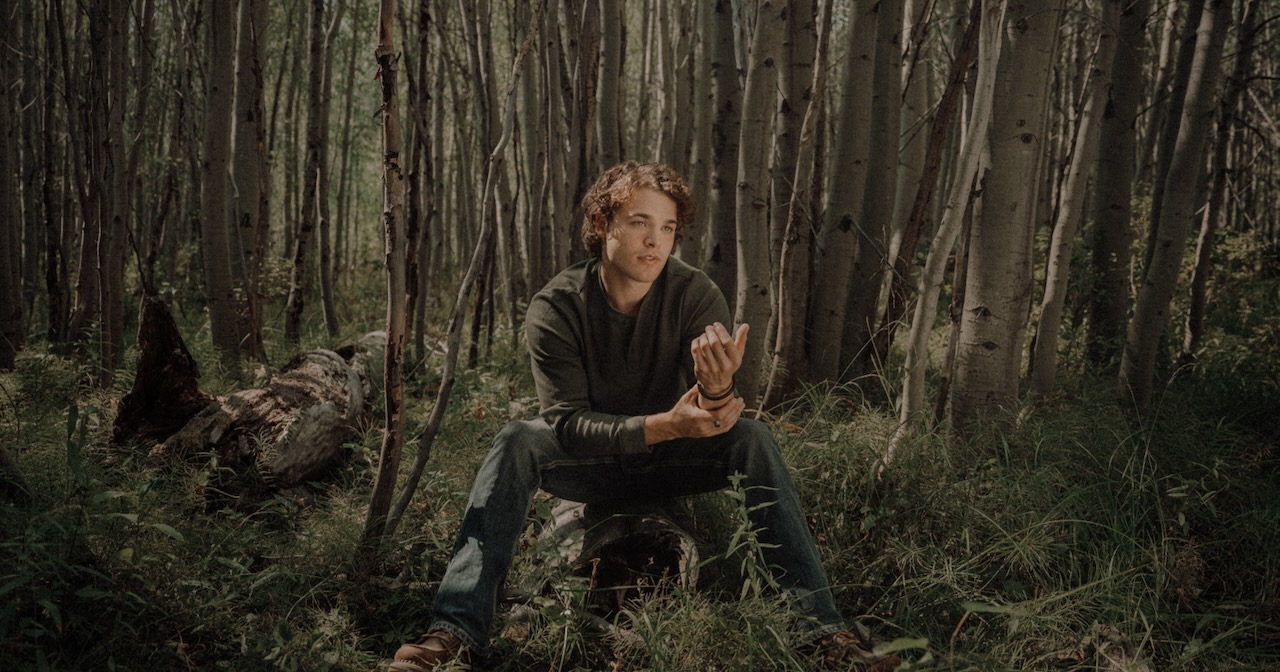
(Editor’s Note: Indie-folk singer-songwriter Max McNown released his anticipated new album, Night Diving, on January 24. Only 23 years old, McNown is a bit of a social media sensation, his energetic and passionate songs having already garnered millions of streams, fans, and listeners. To celebrate Night Diving, he has curated a Mixtape for BGS that pays tribute to the beautiful natural locales of his Oregon and Pacific Northwest homelands. Enjoy a playlist adventure into the Northwestern Woods with Max McNown.)

These are the songs that inspired me to go on late night drives to the Oregon coast with the windows down, feeling the breeze funnel across my face while I sing every word at the top of my lungs. – Max McNown

“The Stable Song” – Gregory Alan Isakov

I first heard this in the movie The Peanut Butter Falcon. The song, coupled with the adventurous feel to the movie, makes it one of my favorite camping songs.

“By and By” – Caamp

Due to similar vocal tone, this song is one I feel confident belting with the volume high on a late night drive.

“Vagabond” – Caamp

The folky nature of this song fits perfectly with the Mount Hood National Forest scenery.

“Flowers In Your Hair” – The Lumineers

When I discovered this song, I had just found a path I could drive down to reach the coast, directly onto the sand. This song will forever remind me of the sunset that evening.

“Big Black Car” – Gregory Alan Isakov

I play this song on repeat when hiking on the Columbia River Gorge.

“Angela” – The Lumineers

This is one of the first songs I’ve ever tired learning on the guitar & will always remind me of my parents’ place in Oregon.

“Amsterdam” – Gregory Alan Isakov

One of the many songs by Gregory Alan Isakov that makes me feel like I’m in the Northwestern woods when I feel homesick.

“Late to the Fire” – Sam Burchfield

Sam Burchfield, in my opinion, is one of the most underrated artists on the scene. There aren’t many other songs filled with as much nostalgia for my younger years than this one.

“Forever” – Noah Kahan

“Forever” is the most influential song in my songwriting journey. Noah’s folkiness and Northeastern upbringing fits the theme well.

“Northern Attitude” – Noah Kahan

I’ve experienced the northern attitude on the other side of the country, and found this song to be very relatable to me and inspirational.


Photo Credit: Benjamin Edwards

BGS 5+5: Kendl Winter

Artist: Kendl Winter
Hometown: Olympia, Washington
Latest Album: Banjo Mantras
Personal nicknames (or rejected band names): “Lower half of The Lowest Pair”

What other art forms – literature, film, dance, painting, etc. – inform your music?

I like this question, because I think everything you do, witness, consume, walk by, dance with, or touch informs your (my) music. Most books I’m reading make their way into my lyrics directly or indirectly. I know I’ve quoted or misquoted from E.E. Cummings, Richard Brautigan, Hafiz, Ursula K. Le Guin, Octavia Butler, Rumi, Rebecca Solnit, Thich Nhat Hanh, and probably so many others. All the authors and poets and spiritual leaders I’ve read or listened to and been moved by have woven their ponderings into mine and in turn the tumble of words that spill out onto my morning pages is often informed by those thoughts.

I watch a lot of film and I love movement. I go for long runs in the Northwest – or wherever I currently am – and the landscape informs my music, or the highway does, or the venue. I’m (we) are so porous and regularly trying to make sense of the cocktail of experience I’ve been sipping on. That said, this is an instrumental record, so for me it’s a new kind of transcription or interpretation of the collage of experiences in my head.

What was the first moment that you knew you wanted to be a musician?

My Hebrew school teacher back in Arkansas said he had a video of me as a 5 year-old singing to a stick of butter. In second grade, I wrote a song about landfills and saving the birds. My folks were both classically trained musicians, one a high school string teacher, and the other a low brass professor, so I had music and the example of disciplined musicians practicing around me all the time. As kids, my sister and I were often crawling through the orchestra pit in the Arkansas Symphony or falling asleep in the balcony.

I loved punk music and dabbled with guitar and drums though high school, although I don’t think I actually knew I wanted to be a musician until my early 20s, when I had just moved to Olympia. In the Little Rock area of Arkansas and in Olympia, Washington there was/is such a vibrant DIY scene for music. Some of my first attempts at performing were in Olympia and I had only written half-songs, so they were very short and with a lot of apologies.

What’s the toughest time you ever had writing a song?

I would say lately has been the toughest time for me, writing lyrics at least. Maybe that’s why I’ve been enjoying the spaciousness of instrumentals for a while with the Banjo Mantras. It’s felt less exacting to let my art be more ethereal and open to interpretation. Something about the last five years has made me feel less sure about what to share, in terms of my own verbal songwriting. I think I’m more self conscious or potentially private and maybe more aware of my voice in a way that makes me feel a bit uncertain of what more can be said from my vantage. Songwriting has always been such a huge piece of how I interpret life, though, and it’s an integral piece of my personal process. So I’m still writing, just having a more difficult time sharing it.

If you had to write a mission statement for your career, what would it be?

If I had to write a mission statement for my career, I guess it would be to let curiosity and interest/passion lead me. My music has never been easy to put in a genre and my voice and songwriting has changed over the years. It’s been great to work in the Lowest Pair, because my bandmate Palmer T. Lee is similar in that his sound is difficult to box in, and that both of us have roots and interest in traditional sounds, but are always curious about expanding upon the subject matter and textures in our duo. The Banjo Mantras are just an expansion of that I think. I love the sound of a solo banjo and wanted to share some of the meanderings I found in various tunings and grooves. But yeah, I think my mission statement would involve personal growth, following curiosity and passion, a focus on heart-centric themes, and a goal for connection.

Which elements of nature do you spend the most time with and how do those impact your work?

I spend at least an hour most days going outside for a run or walk. I live in one of the most beautiful places, the PNW, so a short jaunt from my house and I’m next to the Puget Sound inlet full of kingfishers, seagulls, blue herons, and mergansers depending on the season. Low tides and high tides, I see and hear eagles swooping about and on a rare sunny horizon I can see the Olympic Mountains. The other day, I came home with a sticky pocket full of cottonwood buds for my housemate to make a salve with. The nettles have just begun showing this spring. I go for regular wanderings and collect pictures and sounds and try to make a regular practice of noticing things. Less like a practice, and more like just the way my days are, but I recognize it as an integral part of my centering practice.


Photo Credit: Molley Gillispie

WATCH: The Dales, “Homesick Summertime Anthem”

Artist: The Dales
Hometown: Los Angeles, California
Song: “Homesick Summertime Anthem”
Album: Easy Times
Release Date: January 10, 2010

In Their Words: “It’s a song about wishing you had more time to spend with the ones you love. I wrote it from the perspective of our friends and family in the Pacific Northwest. Every year my family and I spend the summer up there. We’ve got friends that we’ve known since first grade. They’re always asking us when we’re moving back… and if you’ve ever been in that area — it’s hard not to take them up on their offer.

“The concept for the video was to have the band surrounded by friends and family. Our videographer, Pat Carew, had the idea and enlisted us to round up friends and neighbors to be in the audience. Funny what happens when you tell folks there will be free wine and cheese… they show up! It was shot in my backyard in Woodland Hills, California. The fire shots and the vintage Rhodes keyboard helped foster the warm, analog vibe we were looking for. We almost had an incident with Jackie’s hair and a tiki torch…” — Drew Lawrence, The Dales


Photo credit: Patrick Carew

Brandi Carlile: An Interview from Doc Watson’s Dressing Room

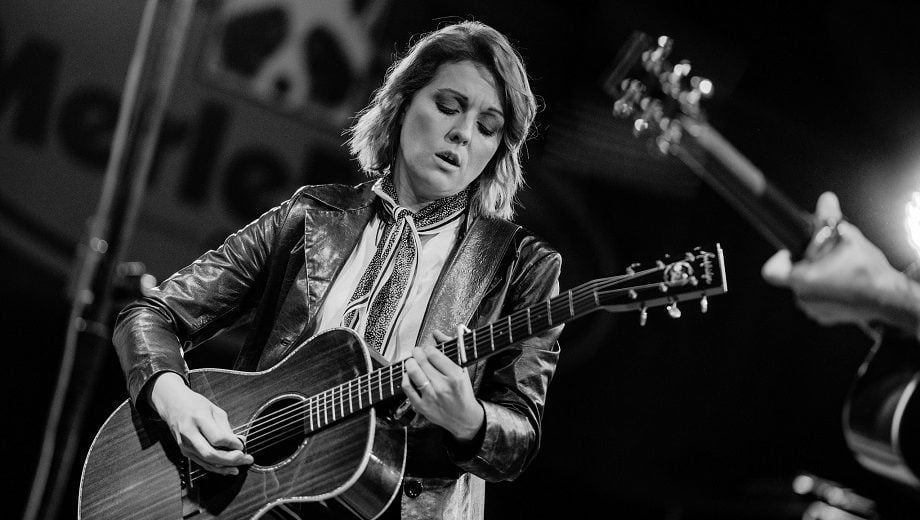
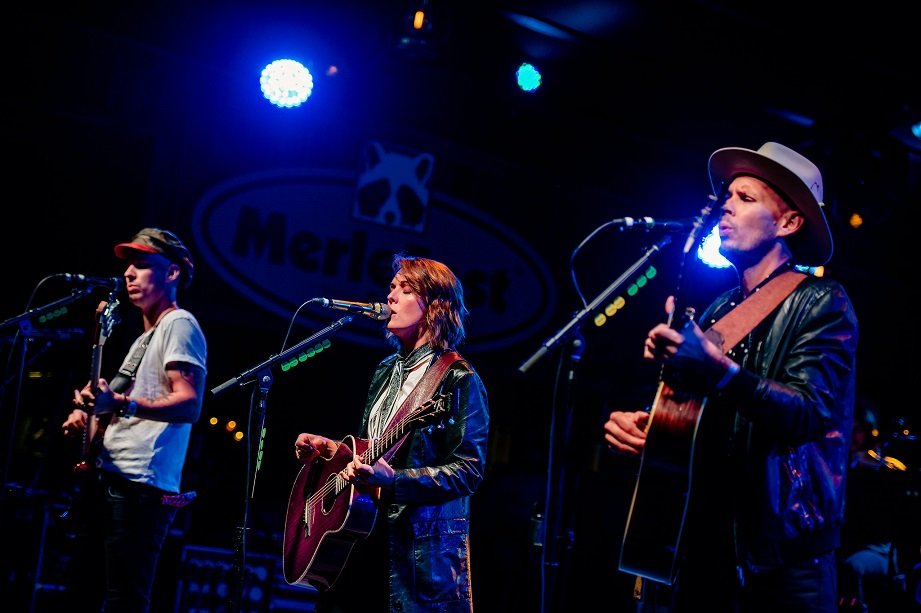
Give or take, it’s about 2,800 miles from Brandi Carlile’s native Seattle, Washington, to Wilkesboro, North Carolina, home to the renowned music gathering known as MerleFest. (See photos.) And as the Saturday night headliner this year, the award-winning singer-songwriter took to the Watson Stage during the 32nd annual MerleFest, surrounded by the Blue Ridge Mountains and an overzealous audience in the neighborhood of 30,000.

Backed by her rollicking Americana/indie-rock band, which includes founding members Phil and Tim Hanseroth (aka: “The Twins”), Carlile held court during an unforgettable performance that led to one of the festival’s finest moments — Carlile around a single microphone with North Carolinians Seth and Scott Avett for an encore of the Avett Brothers’ “Murder in the City.”

But a few hours before that performance, Carlile found herself standing backstage alone in the dressing room of the late Doc Watson, the guitar master who founded MerleFest. Gazing around the small square space, she looked at old photos of Watson and other legendary Americana and bluegrass performers that have played MerleFest over the years: Earl Scruggs, Alison Krauss, Peter Rowan, Rhonda Vincent, Tony Rice, and so forth.

Carlile smiled to herself in silence, truly feeling humbled in her craft and taking a moment to reflect on her wild and wondrous journey thus far, all while possessing a once-in-a-generation talent — something broadcasted across the world during her staggering performance of “The Joke” in February at the Grammys, and amid a standing ovation from the music industry. Remarkably she also picked up all three Grammys in the American Roots Music categories.

We met Carlile in Watson’s dressing room before the show for our interview and surveyed the steps she’s taken from Seattle to the MerleFest stage.

BGS: It seems as big as your career has gotten, the humble nature of where you came from still remains within you, as a headlining performer now.

Carlile: It does. Part of that reason why I feel that is part of who I am is because of the people that I’ve surrounded myself with — The Twins, our families, our kids, and our folks. They’re not going to let anybody get too heady or too ahead of themselves. Everybody puts you right back in your station if you’re getting there.

Growing up around Seattle, was Kurt Cobain’s songwriting or specifically the Unplugged in New York album by Nirvana ever a big influence on you as a performer?

It was later in life. It’s so funny, like when you live in the [Pacific] Northwest, the intensity that was directed towards country music for me was big because I didn’t have proximity to it. I was so far away from it. People in the South, I think so often they love country and western roots music, bluegrass, folk, and Americana music. It’s not that they take it for granted, but they don’t realize sometimes that they’re so close to it — it’s right here. And we don’t have that proximity, so I think we love it a little more intensely in the Northwest.

Because you’re seeking it out maybe?

Yeah. And [it’s] even more concentrated in the [United Kingdom]. I mean, if you want to meet some of the most potent country music fans, you go to the UK. And Seattle is kind of that same vibe. So, when I discovered grunge music and rock ‘n’ roll music, it was after it had already happened in my city, which had its own grief period with it, but also kind of an intense celebratory thing because I had missed it. I wanted to know everything about what happened in my city. And what I came away with was realizing we came up with something new. We didn’t repeat anything. We didn’t throw back to an era. We didn’t put on a Halloween costume. We did something brand new.

So, how does that apply to where you are today, in terms of what you want to create with your art?

I’m kind of a hybrid thinker, in general. I like putting ideas together and posing thoughts, things like that. I’ve never really been a great or very successful genre person.

You don’t want to be pigeon-holed…

It’s not that I don’t want to be pigeon-holed, it’s just that I don’t know if I’m able to be. Unfortunately I’ve always wanted to fit in, but I don’t know if I ever will.

Well, to that point, this last year, at least from an outsider’s perspective, has seemed like a whirlwind in your career, with the trajectory it’s on now. Has it been a slow burn to this point or is this a whirlwind, and how are you dealing with all of that?

That’s a good question. It’s both. It’s been a slow burn to this point. I’ve been working for a long time. But it was a really big change. That Grammy moment changed my life, and in a really, really big way. I can’t even catch up to it yet — I don’t even know how to catch up to it yet.

Or if you even want to embrace it. I mean, how do even wrap your head around something like that?

No, dude, I want to embrace it — I love it. I’ve always loved everything about music and the music business since I was such a little girl. I sat in my room wanting the biggest and the best of opportunities for myself, my family, and my friends. And so I’ll find a way to embrace it. And I want to — I’m really insanely grateful for it.

What do you remember from that moment? I was thinking, the stunning way your voice and the energy was going up and down, any frustration, any love or sadness you’ve experienced was put out through that microphone at that moment…

Yeah. I think I’m going to live to be 100 because that is how I do it, you know? I just let it all out. And in that moment, I don’t know — I was just so ready for it. I’m 38. I’m not a kid anymore. I’m not going to get too nervous or too excited and come undone. But, I am going to enjoy it while it’s happening. Like so many big things in your life you don’t really get to enjoy it.

Or maybe in hindsight you realize how important it was…

Yeah, man. Like loving everything in retrospect, enjoying everything in retrospect. And I was just so right there, right in the moment at the time — more so than maybe ever before while performing.

So, does that mean you subscribe to the idea of “the now,” to learn to be present, rather than worry about what was and what could be?

Yeah, but I’m horrible at it. But for some reason, that day I was able to get there. And I think it’s because I had been so nervous and then I won those three [Grammys]. I was like, “What do I got to lose? I’m just going to do this. I’m just going to show everybody [who I am].”

What is the role of the songwriter in the digital age, in all this chaos that is the 21st century?

To try to be as permanent as you can in a temporary environment.

In all the years you’ve created and performed music, traveling the world and meeting people from all walks of life, what has it taught you about what it means to be a human being?

Well, it’s taught me so much. I think you need to travel, in general, in life. You cannot stay put and not see the way that people live and then try and create an assumption about the way the world works. Travel, in general, has taught me so much about social justice and empathy. It’s enhanced me spiritually as a person, and that’s the thing I think I’ve garnered the most out of it. But I’ve met some really wise and special people as well. And to get to meet your heroes, people that you’ve admired – to find out if you were completely wrong about how much you admire them or being completely right — has been so enlightening.

And what about being in Doc Watson’s dressing right now, being at Merlefest?

Being in Doc Watson’s dressing room is really moving. I’ve been looking around at the pictures and the gravity of it. And when you’re here at this festival, you feel the reverence and you understand what it’s all about. And it’s something I’m coming to later in life. Just like I missed the greatest rock ‘n’ roll genre of all-time — grunge — in my very own city, I missed this experience, too — and I’m looking forward to diving in with both feet.


All photos: Michael Freas

Woody Rolls On: Cahalen Morrison in Conversation with Jon Neufeld

The Great Depression was just sputtering to a close, Europe was a mess, and the attack on Pearl Harbor was still several months away when Woody Guthrie moved his family from New York City to Portland, Oregon. He’d been hired by the Bonneville Power Administration to pen a series of songs for a documentary film about various engineering projects in the Pacific Northwest — namely, the Grand Coulee Dam in Washington State and the Bonneville Dam across the Columbia River. Spearheaded by the Public Works Administration and the U.S. Army Corps of Engineers, these feats of American ingenuity would bring water and power to areas that had previously seemed uninhabitable or unfarmable.

The film was never completed, but during the month he and his family lived in the Pacific Northwest, Guthrie wrote 26 songs — which itself seemed a feat of American ingenuity. The populist folkie extolled the achievements of industry, as well as the heroic fortitude of the common American worker. Some of the lyrics never made it off the page of his notebook, while others became … well, Guthrie never had what you might call hits, but “Pastures of Plenty” and “Grand Coulee Dam” and even “Roll, Columbia” became popular tunes within his catalog.

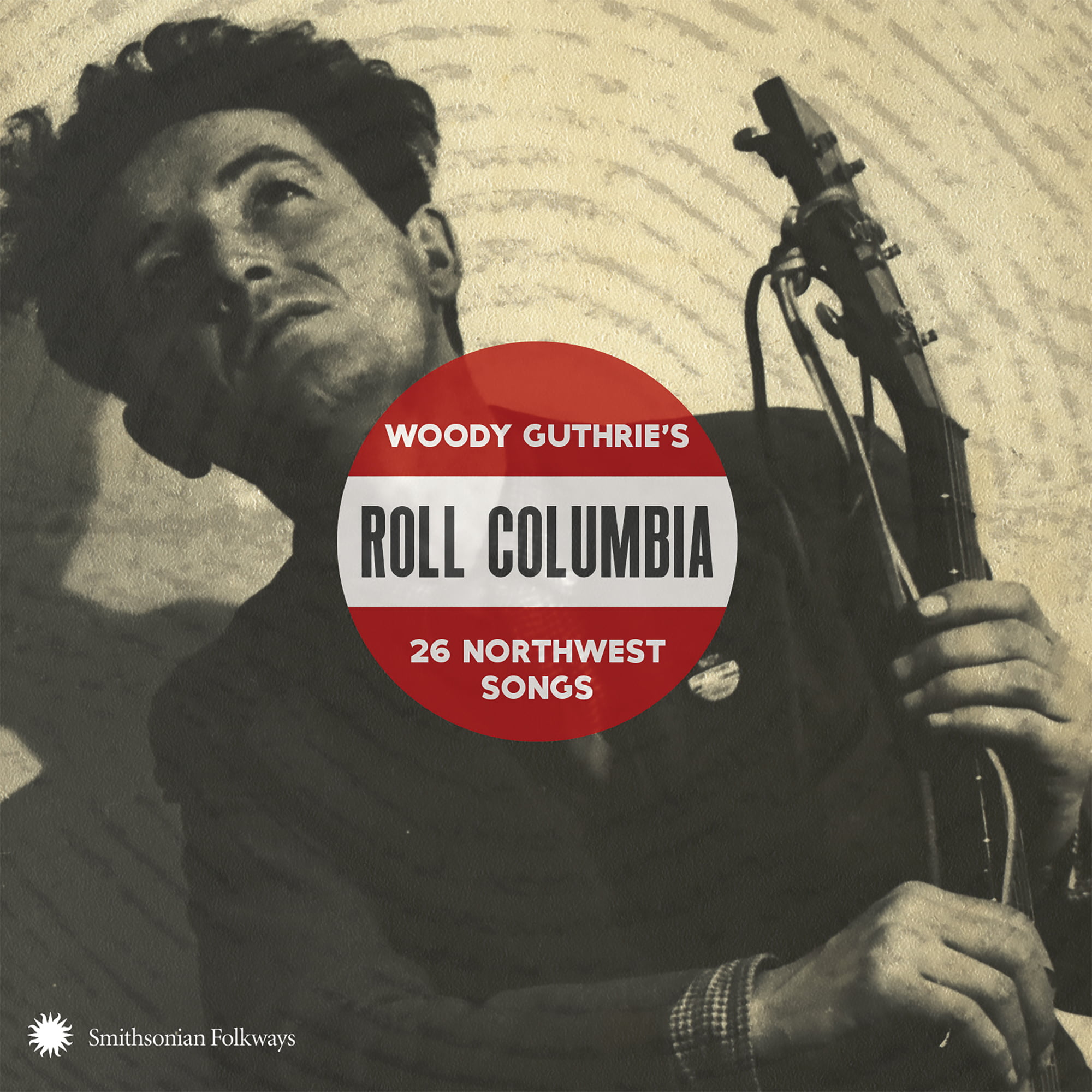
To mark the 75th anniversary of Guthrie’s short but productive tenure with Bonneville, Smithsonian Folkways is releasing a rambunctious double album of new covers called Roll Columbia: Woody Guthrie’s 26 Northwest Songs, featuring mostly musicians based in the Pacific Northwest and still affected by these engineering projects. Contributing their own interpretations of these tunes are members of the Decemberists, R.E.M., the Minus Five, Timberbound, and Dolorean, along with Orville Johnson, Martha Scanlan, David Grisman, and Michael Hurley, among others.

(The album follows the excellent book, 26 Songs in 30 Days: Woody Guthrie’s Columbia River Songs and the Planned Promised Land in the Pacific Northwest, by KEXP radio DJ Greg Vandy and journalist Daniel Person.)

While neither Jon Neufeld nor Cahalen Morrison are Pacific Northwest natives, they both have lived there long enough to call the region home and have been active in the Portland and Seattle folk scenes, respectively. A veteran of Dolorean and Black Prairie, Neufeld oversaw nearly every aspect of Roll Columbia, while Morrison covers two songs: the rip-roaring industrial cautionary tale “Lumber Is King” and the majestic “Ballad of Jackhammer John,” which rolls along like the Columbia itself.

What is your experience with Guthrie’s Columbia songs? How familiar were you with them before you started this project?

Jon Neufeld: Well, my initial experience was, “Oh, I recognize some of these songs.” Nothing further than that. I didn’t recognize them as being songs that he wrote after he was hired by the Bonneville Power Administration or any of the specific history that goes along with it. My dad’s a folk singer, so I grew up on Woody Guthrie, Bob Dylan, Simon & Garfunkel, and all that classic folk music — a lot of the peace-and-justice songs. A lot of Guthrie’s songs were familiar to me, but when [executive co-producer] Joe Seamons approached me about doing the project, I started listening further and could see a thread through these songs that had been somewhat invisible to me. That made me think about the music a little differently because it seemed so obvious, in retrospect, that they were all connected.

Cahalen Morrison: I had a similar introduction, I guess, in that I was familiar with a handful of the songs, the more well-known ones — “Pastures of Plenty” and things like that. But I wasn’t familiar with the majority of it. I’ve never been a huge Woody-head or anything like that. Joe approached me, as well, and offered me the gig, which turned out to be fantastic. I’m not originally from the Northwest, but I’ve been living here for quite a while now. It was fun to hear all this music written so specifically for the area. I’ve done a lot of touring and traveling around, so I’m familiar with the countryside around it and really enjoyed digging into these songs and seeing how they represented this part of the world. That it was all bought and paid for by Bonneville was a funny thing to discover, but it didn’t make it any less cool or discredit the songs in any way. I find it impressive that he did what he did.

JN: Twenty-six songs in 30 days is a lot.

CM: I’m a songwriter and a fairly prolific one, I suppose, but that is pretty insane. I can’t even fathom that.

Did this project change the way you see this area that you both moved to?

JN: I’ve lived here for 20 years now, longer than I’ve lived anywhere else, and these songs described the area pretty much to a tee. They reminded me of the beauty that’s around here, but also of this issue of self-sufficiency. You want to provide your own electricity and jobs, but at what cost? Harnessing the environment around you, in order to derive your own power initially seems like a good idea, because you can be self-sufficient. You can have light and power and jobs and you don’t have to borrow them anybody else. It’s right here in this rushing river, and the feats of engineering were really celebrated at the time. But you end up losing sacred land of the Native Americans. You have erosion in places that never had it before. But you also have water coming to places that were never able to grow wheat before. Basically, you’re changing the landscape and, at first, I think that was seen as a good thing. For some places, it certainly is. But overall, maybe not so much.

CM: You can look at it from both an environmental perspective and from a social or humanistic perspective, and it’s a double-edged sword. It does give water to places that weren’t getting water, which allows people to grow food and attract jobs. But, at the same time, it does take away from the natural beauty of the area and it does completely change the habitat for people and for wildlife. So you can look at it as thing that was great for humans and culture and society, at that point in time, but it has swung the other way now. Now we’re trying to get rid of dams.

JN: We’re still discussing these same issues right now in the same places, but back then it must have seemed like uncharted waters. They were a lot more excited about it then; these are songs of hope. They’re historical documents about that time.

CM: I had a similar experience. The songs sound really accurate and contemporary even though, at this point, they’re historical documents. None of these issues have changed. In fact, I feel like it’s only gotten more severe, so maybe it’s even more poignant now than it was then. Guthrie is more famous now than he was then, but I don’t feel like he has the reach he had then and the gusto that came along with being a current icon. Now, people are more able to write off historical songs like these as some cute thing that happened long ago and don’t really apply to anything going on right now.

That was one thing that struck me about Roll Columbia. It walks a fine line between celebrating these songs and exploring the consequences of the Bonneville Power Administration.

JN: I strongly believe that, if Woody were alive today, he could still sing these songs. He might have to change a word or a turn of phrase here and there. I recently read a biography of him and, during this time in his life, he was looking for work. He had a family, three kids, and he would go back and forth between being completely broke and having a job. So this place wants to hire me to write these songs and move the family up there and I’ll have work for a month? Sure. In some ways it was just another gig for him, but just another gig for an artist with his perspective turned out to be another batch of great songs. I think the beauty of the Northwest really overtook him and was the catalyst for these songs, but it’s interesting when you look at it in the context of his life: This was only 30 days out of all those years.

Cahalen, you address some of these issues in your version of “Lumber Is King.” What drew you to that song?

CM: Lyrically I thought that song was fantastic. I love the lyrics. It goes back to what I was saying about the double-edged sword. It’s all about these booming lumber towns that were making all this money. People were happy and prosperous. But then it all dries up and everything is gone: the jobs, the money, the land. It just destroys everything. As a piece of art and as a political statement, I thought “Lumber Is King” was really powerful. Woody did a great job on that one.

That was a set of lyrics that he had never set to music, much less recorded. What was it like taking it that next step?

CM: I did that for both of the songs I sing on here. It’s another reason why I chose them, because they didn’t have music. Being a songwriter, I thought it would be a fun thing to take a whack at. For “Lumber Is King,” I wrote this romping bluegrass waltz sort of thing, and I was inspired by a town called Darrington, up north of Seattle. It has a big Tarheel population, from when people relocated from North Carolina for logging. There’s a big bluegrass festival there now and there’s a funny pocket of bluegrass culture there. I liked the continuity of arranging this song in a fast bluegrass style. It felt natural to me, even though — and I don’t mean this in a negative way — it was written in a very obvious cadence that fits well within whatever kind of tune you wanted to write to it.

And you both worked on your other song, “The Ballad of Jackhammer John.”

JN: There’s a funny story behind that one. Some of Woody’s titles are really similar, and I was in the studio with [Montana-based singer-songwriter] Martha Scanlan and Joe Seamons working on a song together. I thought, “Wow, this is really working. It sounds great.” Totally different song than the one we were supposed to be doing. It wasn’t “The Ballad of Jackhammer John,” but “Jackhammer Blues (Jackhammer John).” Completely different song. I got a call at 8 o’clock the next morning, about an hour before we were supposed to start the next day’s session. It was Joe saying we had a problem. Martha had recorded a song that we had already recorded with another artist [Orville Johnson]. Well, that is a problem because Martha just left for the airport. We had to figure something out. Was it your idea, Cahalen, to record it yourself?

CM: It was not my idea, no. I remember the initial idea was that we were going to trying to get everybody to sing a verse, but we were still trying to figure out the lyrics. Talk about not an easy cadence! With that one, I felt like Woody was like, “I gotta get 17 more verses,” so he just sat down and pounded them out. There’s some really awkward phrasing and strange words in there. So I sat down right before I left, figured out how to sing all those verses, and recorded myself reading off the lyrics sheet. It was just to have a blueprint for everybody to follow, but later I found out it’s just me on the final recording!

JN: I don’t remember how we came up with it, but it was Joe Seamons playing banjo and I was playing a guitar. It’s an eight-minute song and we didn’t have any vocals to play to, so he had to develop a system of signals for when we would change. Joe would turn his head to the left, and we would switch to the minor chord. If he put his head down, we went to the 5-chord. We did it all in one take — about nine minutes’ worth of playing. Then Cahalen went in there and did all the verses in one take. After he had gone home, I remember listening to it and thinking, “Hey, this really works!” The song is this eight-minute monster with all these complicated verses, but it ended up being the simplest one of them all.

When did you find out that they were using your take, Cahalen?

CM: I don’t remember. I think it was when the mixes came. “Oh, okay, I guess we’re doing it that way.” I would have done another take or two to get some of that squirrelly stuff figured out, but hey, at least it was organic.

JN: That was one of the things I was aware of most during the production. There was zero polish on Woody’s songs, so I felt we should lean toward grittier takes. That seemed to reflect where the songs came from. And “The Ballad of Jackhammer John” is a perfect example of knowing how you’re going to do it and just doing it.

At what point in the process did you decide that you wanted to emphasize regional musicians?

JN: That was from the very beginning, the first conversation we had. The songs are about the Pacific Northwest, and there are a lot of great musicians in the Pacific Northwest, so let’s do that. It’s not like we were only going to use musicians from this area; if we thought someone on the East Coast could be great, or from the South, or from wherever, we’d consider them. But when you live out here or on the West Coast, in general, there are just so many great musicians that you meet but never get to hang out with until there’s a project to do. So it becomes a perfect reason to reach out and say hello. I met Pharis and Jason Romero when I was on Vancouver Island touring with my friend Kristin Andreassen, so I thought of them for this project. They recorded all the way up in Horsefly, which is way up there in northern British Columbia, and they sent the tracks back to me. There are all these little connections between different people, even though it’s a big area up here. It starts to seem pretty small when you tour for a long time.

CM: That’s true. It’s good to hang with people you don’t get to see very often. When you hear other people’s takes on their tunes, even though I didn’t get to see them, it can have a nice effect and make it seem like a community project. It’s good to have friend along for the ride.

That’s an enormous amount of territory to seem like a small community.

JN: The Pacific Northwest is Montana all the way down diagonally to California and up into Canada. It’s all different kinds of music, too. Not just folk or old-time or bluegrass, although those are some of the most tight-knit communities I’ve ever seen. I don’t know why there is so much music out here. It may have a lot to do with the land because, when I go out to the East Coast, it feels very different. There are tight-knit communities in certain boroughs of New York, but those people wouldn’t necessarily be tight with people in Boston, even though that’s the equivalent of us going to southern Oregon. On the East Coast, though, you cross a couple of states. So I think it has a lot to do with landscape.

How does the landscape inform the music you make?

JN: Cahalen, do you find yourself pulling from the things around you that are outside the realm of relationships?

CM: I would say it’s equally inspiring, even if it just reminds you of your relationships and experiences with people. Not to sound cheesy, but being out there in the wilderness and seeing those big vistas really does open your mind up. It has a very strong effect on me, and that’s mostly what draws people to the West. You get a lot of likeminded people who have chosen to be here. Outside the West, I think people just live where they live because they live there. It’s maybe not as intentional. I know there are communities like that outside of the West, but I would say it’s a prevailing thing that the West has in common with the Southwest, which is where I’m from. People move to New Mexico because they want to live in New Mexico.


Photos courtesy of the artists.