MIXTAPE: Greg Vandy’s Post-Modern Americana

There’s an exciting new scene of American pickers rooted in tradition who identify more with experimentation and rock ’n’ roll than with simple revivalism. These 15 tracks are representative and songs that I’ve been playing on the radio for some time now. To me, it’s the new breed of roots music. Clearly not interested in genre labeling and especially cringe at the notion of “Americana,” these (mostly) young artists and bands seek the next frontier of American music by adding a new lyricism and psych elements to their music. As Laura Snapes described in a recent article in The Guardian, this “new cosmic Americana” scene contains “a web of fellow travellers recontextualizing American folk music.” What’s most interesting about these artists, and whatever scene they actually inhabit, is that they reject the present and it’s disconnectedness by looking to the past. Drawing inspiration and influence from what came before to create something timeless for now — referencing the old to make new. It’s really always been that way, I suppose. — Greg Vandy, The Roadhouse

Jack Rose — “Sunflower Blues”

The silent father figure to many of these artists, Jack Rose passed away of heart failure in 2009. He was 38. Considered to be our generation’s John Fahey, he was a monster player just beginning his ascent in mastering new interpretations of American traditional forms. This is his take on Fahey’s “Sunflower River Blues.”

Michael Chapman — “Fahey’s Flag”

Another influence to most of the younger players represented here, Chapman is a self-taught elder statesman with an innovative style that was too ahead of it’s time. He’s enjoying late success and more fan admiration than ever. Here is his tribute to Fahey.

Jake Xerxes Fussell — “Have You Ever Seen Peaches Growing on a Sweet Potato Vine?”

A true student of tradition who apprenticed and played with some real old-time greats, Jake’s bluesy folk tunes turn into vibey cosmic laments and crooked rambles. Jake Xerxes (yes, that’s his real middle name, after Georgia potter D.X. Gordy) grew up in Columbus, Georgia, son of Fred C. Fussell, a folklorist, curator, and photographer. This one is from his brand new record on leading North Carolina label, Paradise of Bachelors.

Steve Gunn — “Milly’s Garden”

Gunn is not interested in “Americana,” but instead processes his inspirations into a singular, virtuosic stream of lyrical guitar melody. Hands down, my favorite player who’s developed into a good singer who sounds a bit like Beck. Once in Kurt Vile’s band, the Violators, he produced Michael Chapman’s latest record, 50. This is from his 2014 masterpiece, Way Out Weather.

Luke Roberts — “Silver Chain”

A bit of a vagabond, Roberts started writing his album, Sunlit Cross, in Kenya. Referred to as “redemptive blues,” his music is wide in scope yet spare in structure. This song also features Kurt Vile on banjo.

Joan Shelley — “Brighter than the Blues”

A beautiful singer, Shelley has an ace-in-the-hole on this one: guitarist and curator of the Alan Lomax Archive, Nathan Salsburg. Together, they are magic. According to Catherine Irwin of Freakwater, “Joan lands on a note like a laser beam on a diamond. Colors fly around the room, and her voice bends between them. People say her voice reminds them of Sandy Denny. It’s more than the vocal range. It’s a quiet power that draws you in.” Will Oldham is also on the record.

Marisa Anderson — “Deep Gap”

Marisa Anderson channels the history of the guitar and stretches the boundaries of tradition. Her playing is fluid, emotional, and masterful. This instrumental is an example of how her compositions improvise and re-imagine the landscape of American music.

Ryley Walker — “The Roundabout”

Continuing his amazing development as both a player and singer, Walker’s clear British folk influences have grown into a more baroque folk style on his latest record, which is easily the best thing he’s ever done. Robert Plant is a fan.

Promised Land Sound — “Through the Seasons”

One of my favorite bands, PLS pit harmonies and distortion against meandering folk riffs, resulting in a sound that’s part Lauren Canyon, part gauzy Brit-rock — all held together by firm Tennessee roots. These guys are young and proof that there really is something happening in East Nashville, and it’s great.

William Tyler — “We Can’t Go Home Again” (Lost Colony EP version)

As an artist, guitarist, and producer, Tyler has collaborated with many of the artists mentioned here and is another Nashville cat. Tyler creates cathedral-like psychedelic hymns one minute and pastoral folk and blues melodies the next. A former member of several bands, including Lambchop and the Silver Jews.

Kacy & Clayton — “Seven Yellow Gypsies” 

Some of you may have heard these first-cousins on my KEXP radio show a few years back. Kacy & Clayton were first revealed to me when I was tipped by Ryan Boldt of Deep Dark Woods to check them at Folk Alliance in Toronto — “They’ll blow yer mind,” he texted. They were teenagers fully immersed in the British folk revival and, between Clayton’s precise playing and Kacy’s ethereal voice, I was, indeed, blowm away in that small hotel room. Now recording with a band and expanding their sound with more originals, the future is bright for these Saskatoonans. And, apparently, Jeff Tweedy is onto them. This one is from their latest album, Strange Country.

Itasca — “Buddy”

Itasca is the musical identity of Los Angeles-based guitarist, singer, and songwriter Kayla Cohen. She brings an airy but mysterious late-’60s/early-’70s psych-folk feel to this one, her first record with a full band.

Daniel  Bachman — “Levee”

Often lumped into the American Primitive and drone scene of guitar nerdom, Bachman is certainly an amazing player who first came to my attention via Josh Rosenthal of Tompkins Square Records, who has had a hand in the development of many of the artists listed here. Bachman’s version of “Levee” can’t get much better and displays his command of his instrument.

Nathan Bowles — “Sleepy Lake Bike Club”

A member of Black Twig Pickers with Jack Rose back in the day and a collaborator with Steve Gunn and others, Bowles is an accomplished solo artist exploring the rugged country between Appalachian old-time traditions and ecstatic, minimalist drone. At first a percussionist, his meditative clawhammer banjo on this one is hard to deny.

Kurt Vile — “Wakin’ on a Pretty Day”

Kurt Vile ends it with this favorite about wakin’ and bakin’ … it’s a lifestyle.


Photo credit: kait jarbeau is in love with you via Foter.com / CC BY
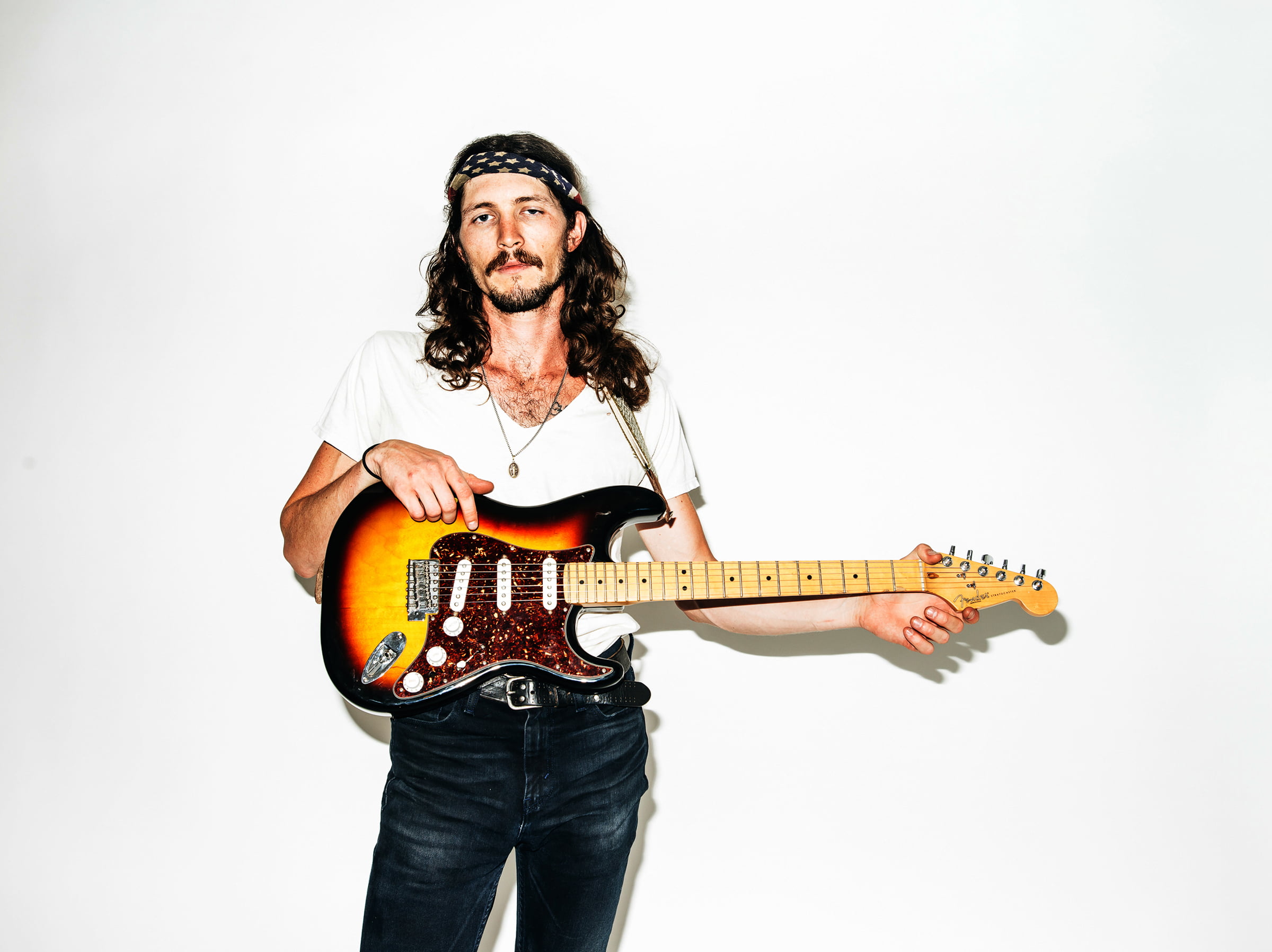
LISTEN: The Ferdy Mayne, ‘Slipping on Dimes’

Artist: The Ferdy Mayne
Hometown: Los Angeles, CA
Song: “Slipping on Dimes”
Album: The Ferdy Mayne
Release Date: March 24, 2017
Label: Greater Peaks Records

In Their Words: “This song was conceived out of a long lost Ferdy track from around 2010 entitled ‘Perestroika.’ It’s also a song with more of a character voice, unlike the others where I was really trying to communicate on a deeper level outside of narrative. The main character is an alcoholic illegal immigrant. A lot of things were happenstance in the writing, like mentioning Highway 51, which runs very close to the Mississippi. I wrote this down sporadically, and it created the other spaces in my mind for what kind of landscape the character was surrounded by, mostly imagined in the South. The character is paranoid and lost.

This is one of two songs on the record that did not involve a drummer. Harris [Karlin] and I took turns layering floor tom beats. All of that was sporadic; I initially did not want any percussion aside from shakers and tambourine on this track. The result actually made a lot of the song work harder and frames it. This is also one of the few tracks where I performed all of the guitar parts, as well.” — Shane O’Malley Firek


Photo credit: Alexander Harris

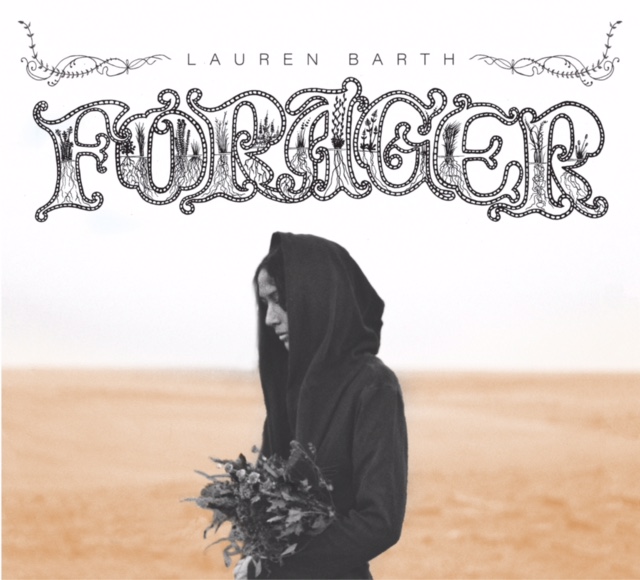
Lauren Barth, ‘Mama Don’t Cry’

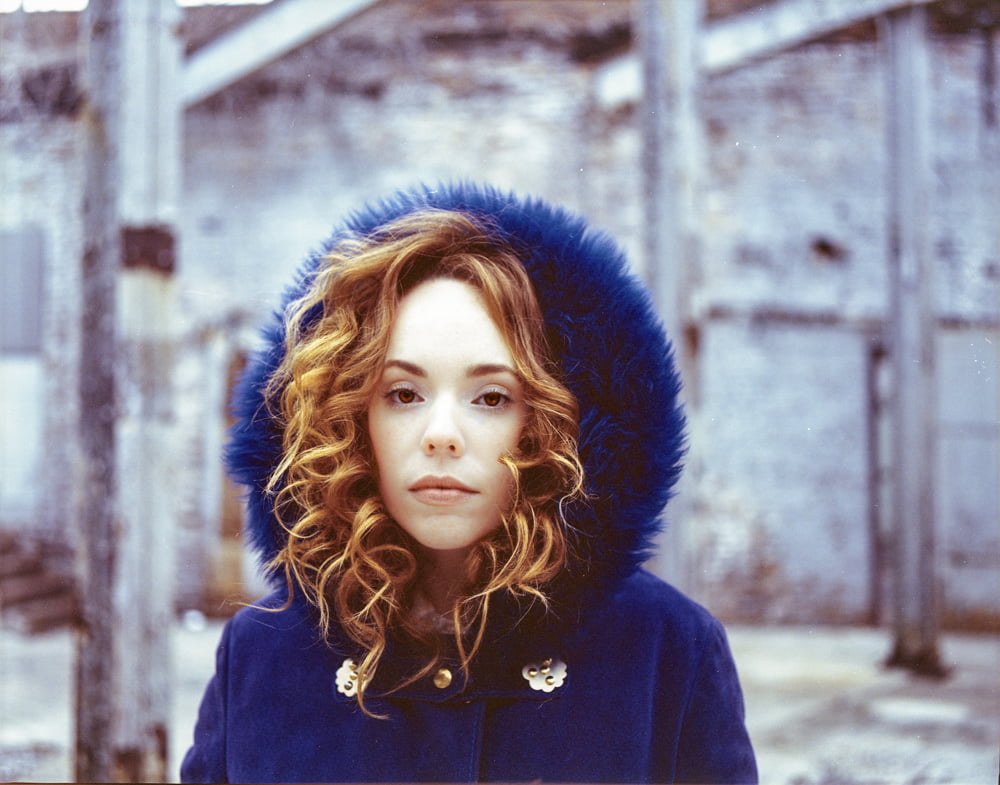
“It ain’t easy to be a girl in the USA,” sings Lauren Barth on “Mama Don’t Cry,” the first release off of her debut album Forager, the video for which is premiering exclusively on the BGS. And you know what? It ain’t. As Barth sings on “Mama,” the American story — unless you’re like our president (aka a white man with a big bank account and a bigger ego) — is often a harsh and difficult one, not filled with dogs and dreams but violence and broken hearts. Born in California but now living in Tulsa, Barth drinks from the well that nurtures Oklahoma’s other modern folk treasures, like John Moreland and John Fullbright, who tap easily and steadily into the human condition. For Barth, it’s the musical heroes — “gods inside the radio,” as she sings — who keep us steady in a world that would rather dust the imperfect and uncomfortable under the rug than confront it head on.

Barth tackles a lot of these imperfect and uncomfortable ideas on “Mama Don’t Cry” and in the video that accompanies it with its spiraling, psychedelic twist: far too many guns, one too many funerals, people who belong in their mother’s arms, not jail cells. “Gimme a break,” she sings with the folk steadiness of Lucinda Williams and the slack sly of Liz Phair. We all want a break … from oppression, prejudice, and hate, to name a few. Sometimes, it just feels like it all keeps rising instead of receding. Luckily, folk music is stepping up to the plate not to dry our tears, but to give us hope that at least someone, anyone, is listening to us wail.

LISTEN: Elli Perry, ‘Love Is a Ship’

Artist: Elli Perry
Hometown: Northern Georgia
Song: “Love Is a Ship”
Album: Little Thieves
Release Date: March 31, 2017

In Their Words: “I spent almost three years working on this album, slowly chipping away at most of its songs over that time. ‘Love Is a Ship’ was the first song I wrote for it, and was one of the only ones that emerged quickly and fully formed. I think, in a lot of ways, it set the tone for the rest of the album as it gradually took shape.” — Elli Perry


Photo credit: K Phillips

LISTEN: Jessie Smith, ‘In the Morning’

Artist: Jessie Smith
Hometown: Warner Robins, GA
Song: “In the Morning”
Album: Like the Sun
Release Date: March 24, 2017

In Their Words: “I wrote ‘In the Morning’ because I wanted a motivating battle cry when I wake up in the morning — something to get me moving. Inspiration is something I need every day, and I figured, surely, someone out there needs it, too.” — Jessie Smith


Photo credit: Jim Cook, SheHeWe Photography

LISTEN: Mark McKinney, ‘Bridge’

Artist: Mark McKinney
Hometown: Austin, TX
Song: ”Bridge”
Album: World in Between
Release Date: February 24, 2017
Label: Texas Evolution

In Their Words: “I quit throwing matches on the bridge we burned” … “I had the melody for this song since my last album, but could never find the lyrics to fit the haunting ‘minor key vibe’ it had created. Then my wife Cassie and I collaborated on it and finished it together. It’s a song about making the most of every situation, and about letting go, and moving on from those toxic and dead-end relationships in life.” — Mark McKinney


Photo credit: Lindsey Thorne

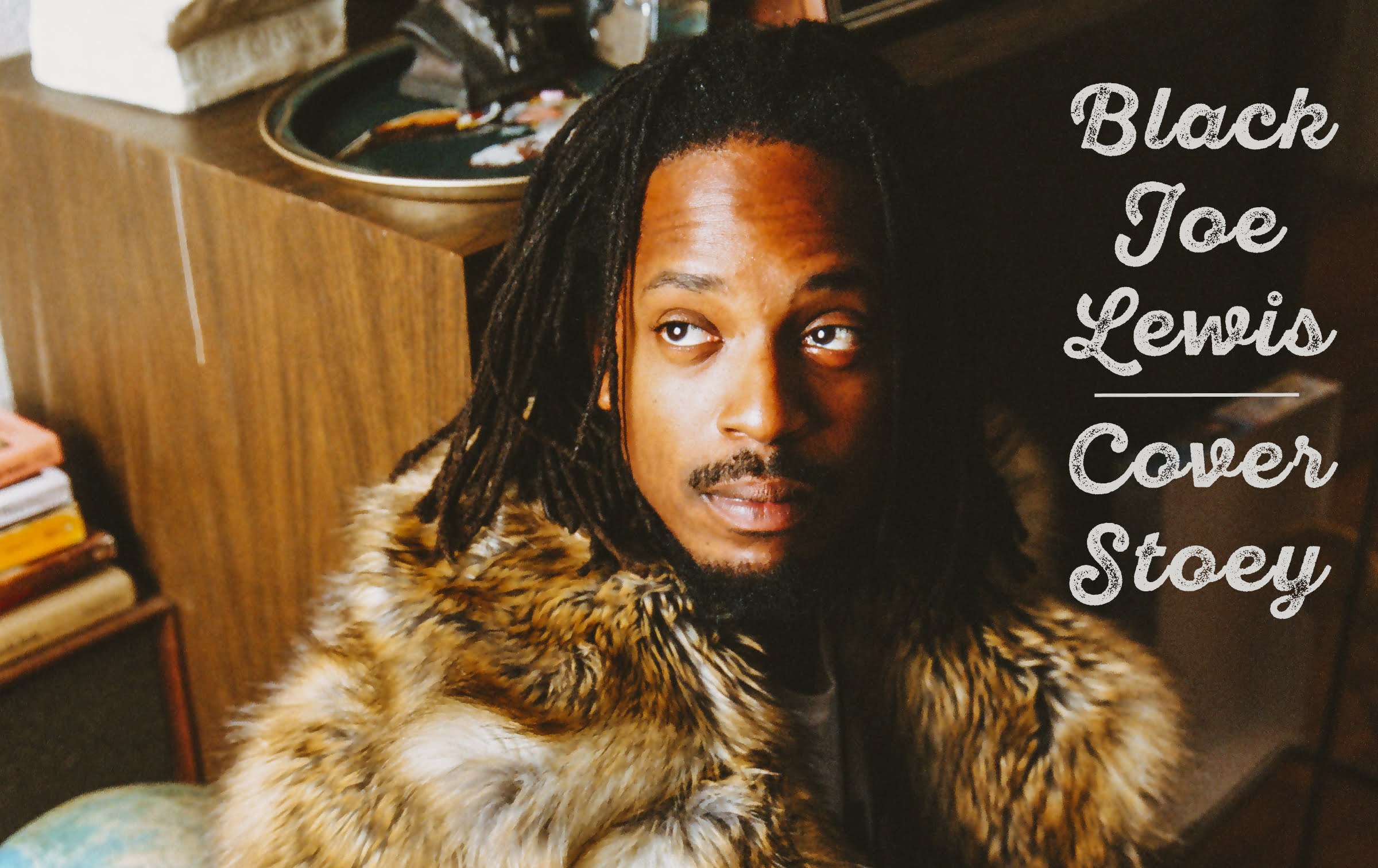
Rock ‘n’ Roll Isn’t Dead: A Conversation with Black Joe Lewis

The acronym, as unsexy of a word it might be, has been the base of hundreds of great songs: Michael Jackson’s “P.Y.T,” Kanye West and Jay-Z’s “H.A.M,” Grand Funk Railroad’s “T.N.U.C.” Part of the mystique is often figuring out what the hell those letters actually stand for and why they’re even important to begin with. Or, sometimes, it’s because the result is simply N.S.F.W. (not safe for work). “PTP,” from Black Joe Lewis & the Honeybears‘ new LP, Backlash, is a little bit of all of that. The track, deliciously raucous with unpredictable spirals of guitar and crunched aggression, stands for “Power to the Pussy,” a bit of a calling card he picked up from his cousin Tiffany. It’s a chant about female sexual freedom that seems even more topical in the Trump era, with pink pussy hats marching everywhere from Main Street America to Washington, D.C. There’s a lot of forecasting on Backlash, the band’s fourth album, which even has some Russian lettering on the album art (a covert way to mention, in another language, that he’s back with the Honeybears).

Lewis isn’t a spy for the Kremlin, but he is quite good at taking elements of American sonic lore — classic soul, R&B, and blues — and mixing them with full-throttle rock ‘n’ roll. Though some might tag him “throwback,” it’s really anything but: The urgent grooves of “Sexual Tension,” the blast of horns that ends “Lips of a Loser,” and the punk energy of “Shadow People” are all as modern as anyone who might choose a Big Muff over synth keys.

Backlash is the Austin-based Lewis’s first album in three-and-a-half years — the longest break of his recording career, and a product mostly of a careful, thoughtful process that took a little longer than the normal recording cycle tends to allow.

Backlash has an incredibly strong rock ‘n’ roll spirit, beneath all of the soul references. Does it bother you to constantly be referred to as throwback?

It doesn’t bother me really. You have to have a way to classify stuff. That’s just what people do. I’m more annoyed with how, nowadays, people won’t find out about you unless they’re told by a blog that it’s something good versus actually checking it out. It’s gotten so cheapened.

Do you feel like rock ‘n’ roll, itself, gets a fair shake in the scheme of things? And on those blogs?

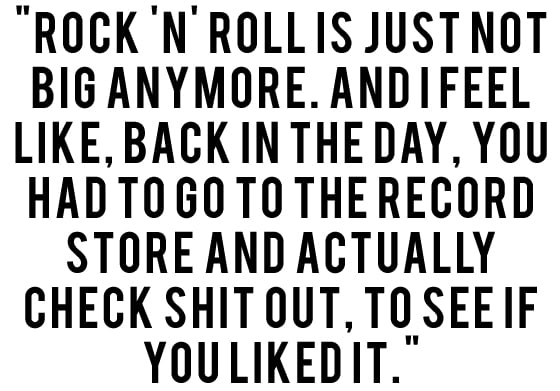
In popular music, it’s tougher: Rock ‘n’ roll is just not big anymore. And I feel like, back in the day, you had to go to the record store and actually check shit out, to see if you liked it. There was a word of mouth, but now people need to be told.

So is the live show even more essential these days because of that?

Yeah, with the way that stuff is now, it’s the best way to get the music out. You gotta prove the hype versus what you actually are.

These days, a lot of soul music doesn’t always fall under the umbrella of “Americana,” maybe limiting how much the music is found from those very audiences. Do you think soul and R&B should have more of a table in Americana?

Yeah, dude, for sure. I think blues is; but I would say Americana is traditional American music, if you ask me. And this is classic stuff.

You’ve been outspoken on your Twitter page about the Trump administration. Do you think artists have an obligation to speak out on social and political issues?

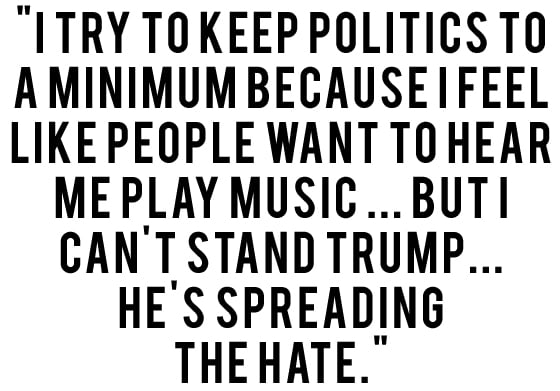
I try to keep politics to a minimum because I feel like people want to hear me play music. I think it’s better to say things through your music. Social media is not real life, and I don’t think you can judge a person on social media. I put crazy shit up. But I can’t stand Trump. I fucking hate him and I don’t feel like he’s making people feel like they are welcome in this country. He’s spreading the hate.

Do you think all the resistance and reaction to Trump’s reign will breed music that’s activist at its core?

Yeah, I hope he’ll spark a wave, like in the ’70s or ’80s with angry punk rock stuff. Or the ’60s — you had war and all that shit inspiring music. We’ll see what the youth has, what they’re going to say.

Do you think you’ll react politically in your music?

We’ll see. I think eventually. I try to let the songs go where they want to go, and there will probably be a song.

There’s some Russian lettering on the cover art of Backlash. You sure you’re not trying to send a message to Putin?

I did that before that shit even happened. It’s kind of crazy. That was the Honeybears thing. We tried to drop the name and everyone got confused. I figured, if I had to put the name [of the band] on there, it might as well look cool. People just don’t like to do the research, I don’t think. It was always the same band, but different dudes. It’s kind of weird that stuff is like that now. It blows.

“Power to the Pussy” could be an anthem from the Women’s March, so that’s probably more evidence that you aren’t spying for Russia.

It’s the power of the pussy, dude! My cousin coined the term. It kind of falls into what’s going on — we’ll see if I get it to be in the next march.

A grand marshal role, maybe?

[Laughs] Yeah! We’ll see what’s up.

Where did the phrase “Flash Eyed,” the album’s opener, come from?

That’s from Amos Tutuola, a Nigerian folk dude. He has a story about being lost in a jungle with all these different ghosts and one is “flash-eyed.”

It seems like you take inspiration from all kinds of places — Nigerian folk stories, your cousin, and everything in between.

I take inspiration from life, I guess. I like to read, and I’ll read a cool story about someone and go with that. Life in general — anything I see around me — it ends up coming out in the songwriting. I like having a cleaner vocal sound so you can understand what’s going on lyrically.

What are you reading right now? Do you feel like the value of literature has decreased in the social media era?

Overall, people read less with all the stuff that we have out there, though not artists, I don’t think. I’m reading [Russian writer] Maxim Gorky. I’ve been reading all his stuff lately. One’s about this spoiled rich dude, the Russian version of There Will Be Blood. The kid grows up and is an asshole.

Like Trump?

[Laughs] Kinda. Yeah.