A One-of-a-Kind Conversation with Jonny Fritz

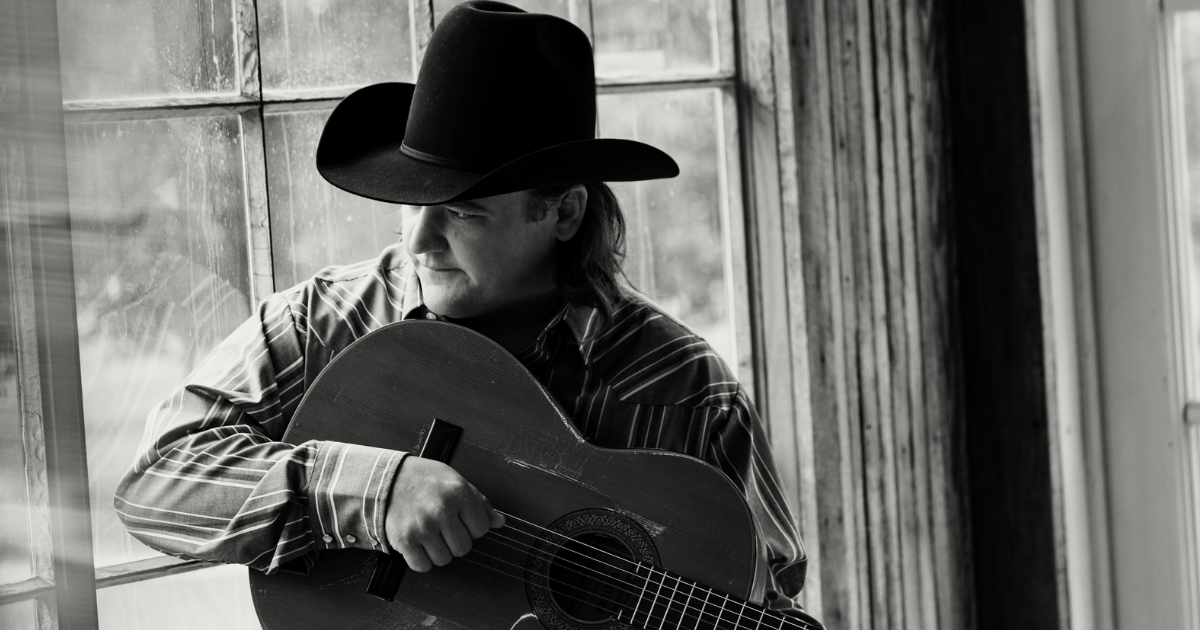
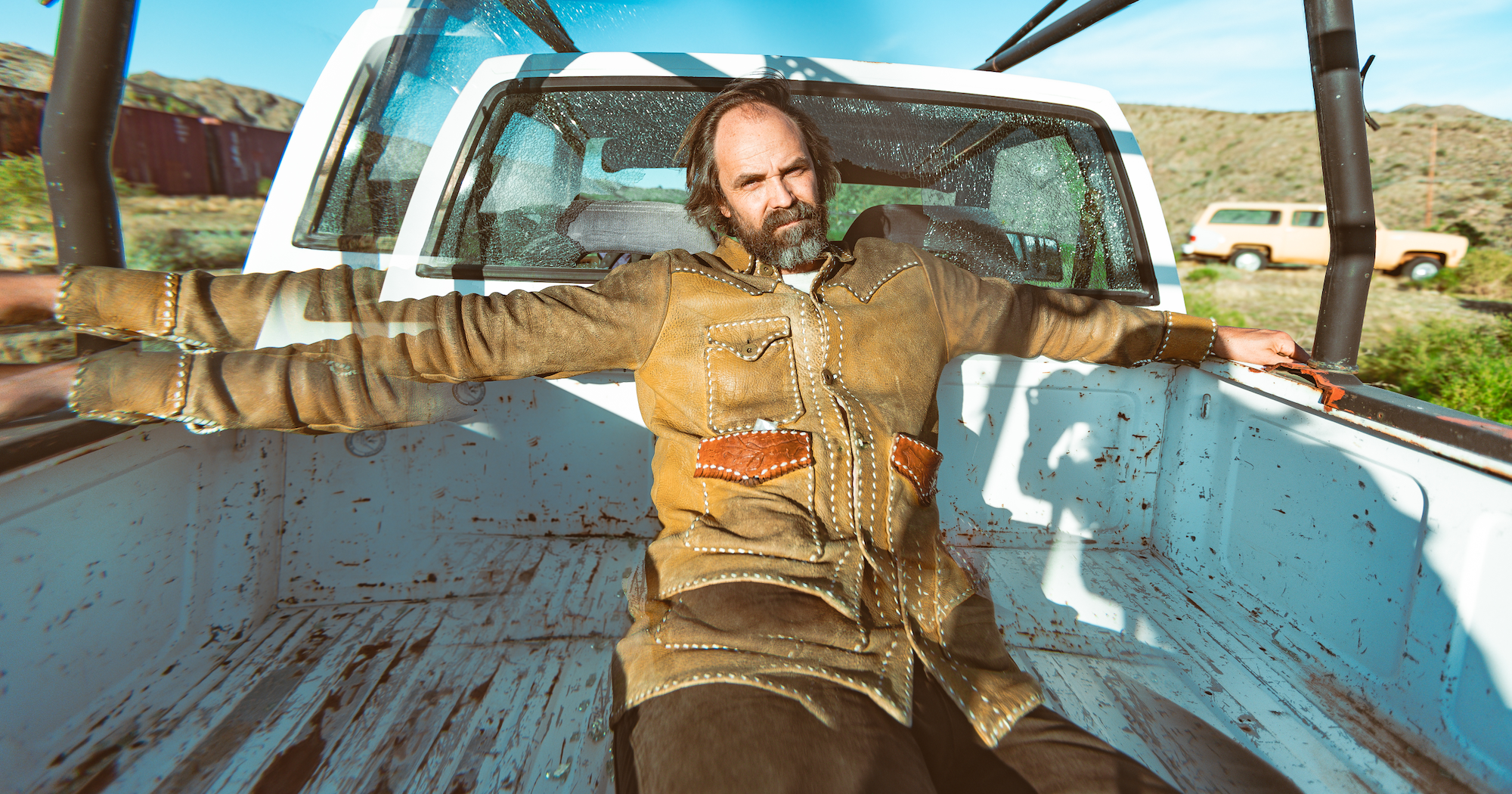
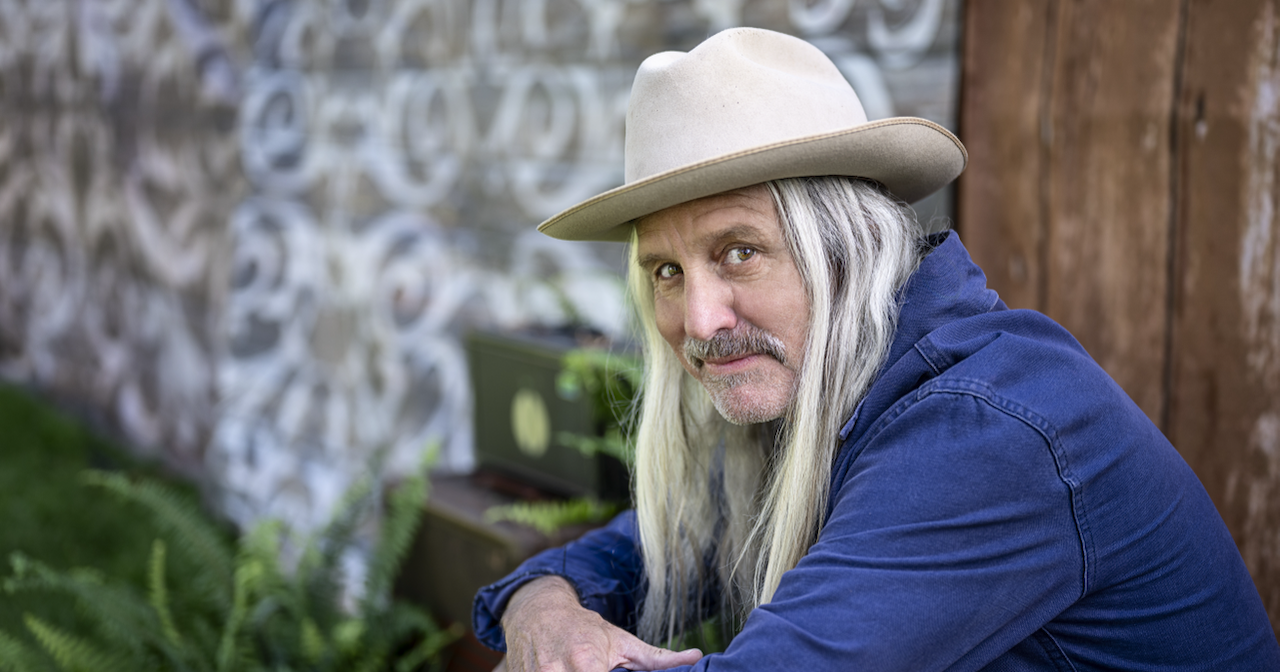
It is deeply joyful sitting with Jonny Fritz at a restaurant he suggested (Pollos Puebla #1) in an area of Los Angeles he’s an expert on (Pasadena/Altadena border) and talking about subjects he thinks about a lot, ranging from rebirthing ceremonies to alimony to how…“different” Nashville is now. He’s keenly honest about his life, his work, and his thoughts about any question thrown his way. Nothing is out of line or off limits. Nothing is filtered by a publicist or an agenda. It is off the cuff and real and wild.

We met over grilled chicken, rice, and beans to discuss his newest work, Debbie Downers (Woodwinds), a reimagining of the original 2025 album Debbie Downers. The conversation unfolded much like the album, with unexpected turns and humor that expose raw nerves about an unfriendly music industry, the beauty of PG Tips, the subtlety of serving a song, and the goal of taking a ride on the wave of a sliced open above-ground pool.

Well, let’s talk about Woodwinds. I’m a huge woodwind fan. How’d this come about?

Jonny Fritz: Oh, yeah? Me too. I love woodwinds. I’ve always loved them. I think they’re so great.

It’s so expensive making a record. It’s just stupid, you know? For example, the last record I made, Sweet Creep, I made it pretty cheap. I think it cost about 12,000 bucks. But ATO Records had an option on it so they could pick it up. They bought Dad Country, the record before that, for 5,000 bucks. It cost me five grand to make. “We’ll pay you five grand for it.” All right, fine. And then, hidden in the contract – or at least hidden to me – they got the option on the next one. Same deal. So when I made Sweet Creep they picked up the option. So for $5,000, they got this record that cost me $12k. I was like, “Jesus, man, this business is so rough.” And I just knew it was going to be something similar with the next one.

By this one, Debbie Downers, I thought, “What do I really want to do?” I might as well just do what I want, because there’s nothing worse than having something be expensive and unsatisfactory. I just decided I really wanted to make the record over and over and over again. I have a bunch of different visions for how it should go and I wouldn’t call any of them the one.

The Woodwinds one was something I’ve always just wanted to do. So I’m pretty pleased with it. I got this amazing guy in Highland Park who does film and TV stuff. There’s not a lot of work going on right now, so he was willing to do it. And the first couple of arrangements that he came up with, I was just giddy. I couldn’t believe how cool it was.

Were there any revelations for you? When you heard them in that arrangement, was there anything that shocked you about it?

Hmm… Yeah, some of the versions with the woodwinds really lent themselves to the winds better than any other version. I wrote this song called “Have You Seen Her.” I wrote it coming off of anesthesia. I was out of my mind. I got a hip replacement at UCLA 10 years ago. You know, coming off anesthesia affects people in weird ways. I’m one of them. It really got me, I wrote this song and I felt like it was the most brilliant thing.

It was so embarrassing. I wrote everybody who I knew who was high up at Rolling Stone, and all the Newport Folk Festival team, and all their PR team. I mean, I wrote everybody. And I wrote these really incoherent emails. I haven’t actually looked at them in a long time. I looked at them right after I wrote them and I was so ashamed. But I wrote all these emails being like, “You’re gonna want to get Scarlett Johansson down here. I need to perform this for her. And you need to get Joaquin [Phoenix] here, too.”

I’m not a social climber, but there was something in me that was like, “You need to make some moves. Call out a lifeline.” I was so ashamed of it for so long, because it was one of the most embarrassing moments in my life, for sure.

All of that to say, I didn’t want to play it or record it. I had to overcome it, admit it, and start talking about it. When I heard it with the woodwinds, I was blown away.

Years ago, I worked with Chris Crofton on a comedy event at Third Man Records that involved a compilation of found video footage that was submitted. There were so many submissions of people coming out of anesthesia, and I remember Chris immediately going, “No, that isn’t funny.” It really isn’t; you aren’t in your right mind.

God bless that man. He always knows exactly what the fuck is up. He is driven by pure heart and knows exactly where his morals should be. He’s incorruptible.

Do you spend a lot of time on social media? What is your relationship to it as a creator?

Pretty passive. I like social media. I feel like I’m kind of floating above social media. By like eight feet, just kind of looking down at it. Like, “What are you guys doing? That’s insane.” Then I dive into it to interact, and then just kind of get out of it. I get a little hooked on it for sure, but I hear about the addictions and the stuff that people fall for, and just like the amount of engagement. But it’s like engagement versus quality of life. I get so much fulfillment from everything else. I like playing with it. I always have fun with it, but I try not to let it get sticky.

Well, one of my favorite social media posts in the past bit is the one with your kiddo singing “Tea Man.”

Oh, wasn’t that so sweet?

So sweet.

She’s 6.5 now. She was like 2.5 then. And I just was like, I can’t post this. It felt so…I don’t know…

Personal?

It was personal, but I didn’t have a problem with that. I definitely want to protect her, you know? But that’s not her anymore. She doesn’t even look like that. She’s like doubled since that song came out. But then I was like, “Oh, fuck yeah, I’m posting this!” There was no risk of seeing her in public and recognizing that she’s the girl from the video.

Are you a tea man? In real life?

I got a PG Tips tattoo. I really like tea. I drink enough tea to float a canoe every day.

Really? All caffeinated?

Usually. Well, when I’m on tour, yeah. I get so tired. I can’t really mess with coffee. It just makes me so jittery. But I can just drink tea all day.

Are you an equal opportunist, or is it mostly black tea?

Oh, I like it all. Really like it all, but I love the black stuff, though. I think it happened when I was on tour 10 years ago with Josh Hedley. We were in England somewhere on a train, and they came down the lane with a steaming cart and it was £1 for a cup of tea. I don’t have an addictive personality. I don’t care about alcohol or anything. But I felt like, “Oh, I’m in trouble.” Just sitting on a cold, rainy train going through England with a cup of PG Tips.

It reminded me of something I heard about Andy Warhol. Although I’m not a big fan, I don’t know much about the guy. But what I do know about him is that one thing that made me really like him. I heard that he doused his whole world in a certain scent for a season. For example, in the summer of ‘63, he would just cover everything with lavender oil. And then come winter, it would be a totally different scent. And you’d put lavender away, and it’d be bergamot. So then the sense memory of whatever happened around that time would be so strongly connected to that scent that you could be completely brought back. And I really love that.

I think there’s something to it with the tea thing, because that tour was really big for me. It was a fantastic time. It was a really, really wonderful, lovely tour, and drinking PG Tips like that, I just got into English culture too. Everywhere you go, somebody’s like, “Well, you want a cup of tea?” Like, yes, I fucking do. I decided I’m never turning down a cup of tea. And I never have since.

Tell me about writing “Hot Chicken Condos” with Jordan [Lehning] and Skylar [Wilson]. I deeply connect with that song because I also left Tennessee, and for many of the reasons you list in the song.

Yeah, that was the point. Everybody who really gets this place will really understand these things, even like Pit Bull puppies in parking lots.

And humidity.

Fucking unrelenting humidity.

Were those things you were storing? How did that song come about?

God, why I love writing with Jordan and Skyler is because they don’t bring any ego to the write. They don’t fucking care. They’re just such good vibes. I’m really pretty neurotic about writing and also I’m pretty protective of my words, too. When I get into the writing space, I’m just so sensitive about what’s being said. So if somebody says or suggests the wrong thing, I can quickly be like, “This is the wrong association.” I can be a little trigger-happy.

But with Jordan and Skylar, they’re always just like, “Just play what you got.” And they usually edit everything that I have. With that song, one of the lyrics was “Mustard in the corner of his tiny little mouth.” And Jordan said, “Why don’t you say, ‘Mustard cracking in the corner of his tiny little mouth?'” And it was perfect. Mark Twain said the difference between the right word and almost the right word was the difference between lightning and the lightning bug.

It’s so true.

I got to hang out with Guy Clark once in Nashville, and it was like one of the best moments of my Nashville career. I was going through really bad writer’s block. And I asked him, “Do you ever get stuck?” And he said, “Yeah… Do you ever write with other people?” And I told him, “I don’t like the idea of giving somebody 50% of the song just because they’re sitting in the same room.” He leaned over and he goes, “Well, you never would have fucking wrote it if they weren’t sitting there.”

I was like, “Damn, old man schooled me.” Because so much of writing, I feel like, is picking up on something else that’s happening. And who’s to say you don’t owe somebody credit just because they’re sitting there?

The other thing that Jordan suggested for [“Hot Chicken Condos”], which was so right on, was that he asked me how high I could go on the Tennessee part. I told him I could go falsetto, and he told me to try it. I hit it and he said, “That’s it.” He took an idea of a song and made it a song. I just so appreciate those guys.

I just feel it is like a pedal steel player who plays about eight notes per song. That’s the best player in town, ‘cause all the other players are nonstop. Same with fiddle. Take Josh Hedley. The guy just stands there most of the time, then he pulls out something incredible, and he sets it back down. He doesn’t overplay. If you don’t overwrite and you don’t overplay, those are heavy attributes.

Those are both things to do in service of the song, not in service of self.

Absolutely. You know who I saw last night was Erin Rae. Kevin Morby and I were standing next to each other, just like, ”Oh my god, she’s so good.” One of the most amazing things about her is that she underplays the guitar. She’s playing the whole time, but if you really focus on how much she is actually playing, it is barely. It’s just enough to fill in where she’s not singing and she works the mic so well.

All those things are so important, but nobody teaches them, you know? You have to kind of know it. It’s innate, right?

Or you got to learn it trial by fire. And you have to be playing with players who know what they are doing to learn that.

Yeah. That’s right. Sometimes people are technically good, but they just don’t stop noodling, and it sucks.

You took a long hiatus from music, huh?

I did. I took nine years between records. I didn’t mean to. And I didn’t actually think that I was doing it. I was playing shows here and there. I blame it on real estate. I got into real estate because my heart got broken from music so many times from wanting to do better. Wanting to succeed more. Really, really caring what people said and thought and comparing myself. All the things you really shouldn’t do ever in any aspect of life. I mean, if you did that in a relationship, then your therapist would be like, “That’s your problem. Stop. Don’t do that.”

I couldn’t get out of it. I just felt so bad about how it was going. And I know what I’m doing is not for everybody, and it’s not gonna take off. But I love what I do. I’m not putting myself down, but I just knew my ambition was a lot faster than everybody’s interests. It was just wearing on me and I needed to do something that’s purely about money and doesn’t have anything to do with creativity, because I’m just getting my feelings hurt. And I got polyps in my vocal cords. I was touring too much. It just wasn’t going well.

So I thought, “I’m just going to pivot. I’ll still do shows and if somebody asks me to do something, I’ll do it. I love music.” I stopped prioritizing writing. I stopped prioritizing recording, and then the pandemic happened, and I had a kid, and real estate took off, and I looked up, and it was 9 years. It really was like, “Oh, crap, how did that happen?” It shocked me.

What’s your writing process like typically? Do you write everywhere?

I write everywhere. I use my voice memos a lot. I really love just making up new country songs and fake country songs – like, really bad ones. I find that if I can get them out, I can expand upon them or delete them and move on.

I was writing with Skylar [Wilson] one time and we were trying to write a song called “Remember the Alimony?” We wrote for hours and hours and it was a stupid song and it didn’t go anywhere. It went, “I’m just a poor man. All I eat is beans and write checks to my ex, one and only. I rolled the dice, but I lost my wife. But I remember the alimony.” So stupid. God. But we were writing all day and just hanging out, and neither of us thought to finish it. It just didn’t work. But then I got home and I had like 6 other song ideas that went on Sweet Creep. It’s that muscle thing that everybody talks about.

I’m also a pleasure seeker to the nth degree. If things aren’t fun, I just drop them so quick. I’m really bad about that. So I just make sure that it’s really fun and get the idea out quickly. I try to stay hovering above it, just stay light. Because as soon as I dig into it, that’s when I’m like, “Oh, my God, right. I don’t know how to do this.” Just keep it fun and it will grow. But I like to write all the time, every day.

Do you wake up and do it?

It is in the shower, on the way to school, washing dishes. You know, when you have a great idea and no way to write it down.

Soapy hands! Sometimes it happens when there’s an absence of anything else and those ideas pop up.

I have to really protect myself when I’m diving in. I wash all the dishes, do all the laundry, sweep up a bit, and make sure no one is going to ask me for anything. I’m really self-conscious about that. If nobody is home, I’m going to the basement and putting on Ken Burns’ Civil War, and I turn the radio on at low levels where it is just kind of humming. I drink a tremendous amount of caffeine. That’s my favorite.

But it is intense. I can get really emotionally rocky after diving in pretty deep.

I was thinking about Roger Miller when you were talking about the “Alimony” song. I’m drawn to that kind of writing because you can get really dark while staying very light.

People think that the meat is deep, but the nerves are on the surface. There’s meat down there, but it’s dead. I feel like the most cutting and incredible songs kind of sound like an email to an old friend. My favorite Lucinda Williams songs all sound like they were written to a buddy.

Or she’s talking to somebody over tea.

So true. And John Prine, too. Everyone’s like, “How did they do it?” They just did it. They’re just talking.

Will you play any live shows with the woodwinds?

Yes, actually, April 14, we’re doing a free show at Zebulon. It’s going to be good. I have this giant golf ball, it’s like a concession stand, and I’m bringing that to the show. The whole point of it is to give away free tea. It’s my tea ball. The tea is free, just buy a house from me!

What will the live configuration look like? How many players will you have?

Four, but they play multiple winds. It’s the players on the record. They’re such pros. They’re all symphony kids.

There’s something about stripping it down to just woodwinds; it’s so cinematic. It takes you directly to the meat and it makes you lighter when it is time, as music does for film. It helps direct your emotional experience.

I like that. I’ve always loved demos of songs. Sometimes I just want to hear someone play the songs, not the record. Or just hear someone sing it. As close to the song as I can get, I’m most happy. I love a cappella stuff. Sometimes the most powerful way to arrange a song is to remove everything.

With winds, too, it’s nice because that’s pretty much it. There’s the vocal and then there’s some wind behind it. I love that.

At the top of my notes that I took while listening to the record, I have the words “jello rebirth” scribbled down regarding the song “Polished Turd.” Can you tell me more about that concept?

For this record, it was a bit of a cynical and fatalistic career thought, but I wanted to make a record of real estate songs. The whole idea behind it was that people would hear it and would say, “This sucks.” And my reply can be, “Yes. That’s what happens when you give up on your dreams.” Music really suffers when you just write about what you’re doing. It’s like this martyrdom thing.

You know the three D’s in real estate are like death, diapers, and divorce – all the things that make people sell their homes. So I wrote one that went, “Death, diapers, and divorce. And the lottery, of course.”

During the pandemic, I had this fantasy of buying someone an above-ground pool. Have you heard of rebirthing ceremonies?

No.

Oh, rebirthing ceremonies are a thing. A fucking thing. People simulate a mother’s vagina in like a mega fucked up Christian ceremony. They make you relive your birth so you can be reborn and let go of all your childhood traumas. They have a gelatinous vagina and people push themselves through it. So anyway, I got that in my mind and thought, “What the hell is this world?” But I could see that for real estate, like a used car salesman going, “We are doing rebirthing ceremonies, come on down!”

And I have always wanted to slide through the tsunami of an above-ground pool that gets sliced open.

Yeah, that does look fun.

Right, who hasn’t wanted to do that? But then I want to turn it into jello. And then I thought maybe I should do that for my clients or have a commercial about it. I could cut a slice in the pool with a katana sword, then they’d ride in slow motion through the incision of the above-ground pool, I could hand them the keys, and they’d be reborn into home ownership. Follow me?

Yep.

That is a song very near and dear to me, but it is a hard one to explain. What was your experience with it?

Well my first thought was that wherever it was coming from and whatever it meant, you have thought a lot about it.

Fair enough, that’s true.


Photo Credit: Bobbi Rich
Steve Poltz Loves a Tangent

Steve Poltz has built a career by following each song wherever it wants to go. Sometimes that means a meticulously fingerpicked melody. Sometimes it means a story that veers off into comedy, confession, or absurdity before circling back to the heart of the matter. That tangential nature – equal parts songwriter, raconteur, and road-tested troubadour – has become his signature, especially onstage, where no two of his shows are ever the same.

Poltz’s new album, JoyRide (released January 30, 2026), reflects that same restless curiosity. Trim, deliberate, and capped at 10 songs, it distills decades of touring, collaboration, and lived experience into a tightly sequenced record designed to be heard in one sitting. From satirical observations about modern life to deeply personal reflections shaped by years on the road, JoyRide captures Poltz at a moment of clarity – still chasing the perfect song, still trusting instinct over plan, and still finding meaning in the long way around.

Long before JoyRide, Poltz earned his reputation the slow way – by logging miles, swapping verses with fellow songwriters, and learning how a room breathes. Founder of the San Diego-based rock band the Rugburns and co-writer of Jewel’s breakthrough “You Were Meant for Me,” he has never been defined by that early success, instead carving out a singular path marked by humor, humility, and an almost reckless openness.

In a conversation with BGS, we spoke with Poltz about the making of JoyRide, the longtime relationships that have sustained him, and the zany, unpredictable ride that has been his career. Whether sharing a bill with old friends or holding a crowd rapt with nothing more than a guitar and an improvised aside, Poltz approaches music less as a performance than as a conversation – one where the destination matters less than the unexpected connections made along the way.

Let’s start with early memories. Was there a moment when music really clicked for you?

Steve Poltz: I remember when I was in second or third grade, I stuttered, had asthma, eczema, and I didn’t hang out with many people. I started playing guitar when I was six. So I brought the guitar to school for show and tell. And I sang the song “Sloop John B” in class. And other kids brought snakes, brought their moms who were nurses or doctors or firemen, and their dads and stuff. I sang a song on guitar. I went out and sat alone. I remember I opened my lunch and I looked up and there were six girls around me. I thought, “This is all I have to do!” That was it. That was the plan.

I had a friend who was a DJ at San Diego State University [radio station] KCR, and she moved in with these roommates. They had brought this record by that had just come out by this woman named Rickie Lee Jones. It was her eponymous debut LP. And, oh my God, I listened to that record nonstop. There was a song called “On Saturday Afternoons in 1963,” which is still one of my favorite songs. It was in the movie Stripes with Bill Murray.

Man, two years ago I played Byron Bay Bluesfest in Australia and Rickie Lee Jones was on after me. Just the way the world works and the universe works, I knew her percussionist who plays the vibes, Mike Dillon. He sees me, and he’s sitting with Rickie Lee Jones, who’s like my hero. She’s one of my favorite lyricists ever. I’m a Dylanologist, and still, Rickie Lee Jones – those first two records especially – her poetry, the way she puts the songs together, I put it at the top of my whole pyramid.

[At Bluesfest] I told her I’d do a cover of “On Saturday Afternoons in 1963” and I segue into it from John Hartford’s “Presbyterian Guitar.” She loved John Hartford, too. She comes out during the song in front of 5,000 people, sings the second verse, and I just started crying. It was one of those full circle moments. These are the people that are my heroes.

You’ve become very deliberate about keeping your albums, like JoyRide, short and sweet. Why?

We’re just in such a quick world, where people don’t have the attention span. I’ve come to this conclusion that 10 songs is the perfect amount of songs to have on a record. Leave all these other ones on the cutting room floor. Put them out later on B-side compilations or something. Keep it under 33 minutes. It fits on vinyl perfectly. It doesn’t lose any of the resolution. If people are into you, it’s not too hard to give 32 minutes of your time. My hope is they go, “Let’s hear it again.” That’s my fantasy. One day I’ll get it right.

You’re known as a road warrior. What still thrills you about touring?

I feel like I’m kind of like the Grateful Dead in that I’m better experienced live than on record. Live, there’s magic. I’m still looking to make the perfect record. Maybe when I’m 80. I can’t believe Bob Weir just died, I mean he’s so young, 78. I’m like, “God, that’s like 12 years older than I am, I better get my shit together.”

I love it when things don’t work on the road. When something goes wrong, when animals attack. It took me a lot of years to get there, but sometimes things are really good when they don’t work. It messes with the audience. It’s like mental jiu jitsu.

Perhaps not surprisingly, you often reference comedy as an influence. How important is humor to your music?

I loved Andy Kaufman. I loved Richard Pryor. The early Steve Martin albums, Cheech and Chong – I memorized all that stuff. When I heard Allan Sherman sing “Hello Muddah, Hello Faddah!” I remember thinking, “Why can’t every song be like this?” Same thing with listening to the Dr. Demento [radio] show. Dr. Demento was huge. He played the Rugburns [on his show]. “Weird Al” Yankovic used to come to our shows and loved [our 1995 record] Dick’s Automotive. Because of that song, he wrote “Albuquerque.”

What are some of your earliest musical memories? You mentioned Rickie Lee Jones earlier. What are some other early prominent memories of being moved or touched by a song? Where were your first performances?

My uncle took me to see Julian Bream at the Hollywood Bowl. Classical guitar. That was it. I wanted to learn classical guitar. You know, with my left foot up on a stool, with a nylon string guitar, the way you hold it all in the proper classical way. I learned to read music. Fernando Sor’s etudes. My first gigs were in Mexican restaurants in San Diego. Four hours of classical guitar. Free meals. One night I got the courage to sing “Time in a Bottle.” The waitress said, “I didn’t know you could sing.” That night ended with me running out a window and leaving my left shoe behind. I never went back to that restaurant.

And then there was another one in El Cajon and it was called El Amigo. The El Amigo Ballroom. Then I got a job at Round Table Pizza in La Mesa. I got fired because I sang on the mic and I sang “The Rodeo Song.” One night, I got really drunk with the manager and I didn’t know the owner was in the audience. That was where I kind of learned mic control, because the manager was like, “Man, you’ve got a good voice for speaking. I want you to be the guy who says, ‘McDonald, party of four, you’ve got a large pepperoni pizza.’”

One night the manager got me really drunk. He was a younger guy. I started singing “The Rodeo Song,” which was this Canadian song that went, “Well, it’s 40 below and I don’t give a fuck, got a heater in my truck and I’m off to the rodeo.” And the chorus goes, “You piss me off, you fucking jerk, you get on my nerves.” It’s like a really juvenile song that was played on the radio in the late ‘70s. They would have all these bleeps where the cuss words were. And I sang it on the mic. Then the next morning I got a call from the manager. He’s like, “You need to come in and pick up your check.” I said, “We’re getting paid early.” And he goes, “No, you’re fired. We need pizza makers, not entertainers.”

Let’s talk about JoyRide. Tell us about the opening song, “If It Bleeds, It Leads.”

It started with a guitar riff. A major seventh chord. Then the melody. Then the words came. And the next morning when I woke up, I was kind of laughing. I always saved ideas, it’s like a junkyard of melodies, words, everything in my iPhone on my notes page, and then also in my voice memos. And I went, “Oh, this fits.” [Quotes:]

I can never watch the news with you because you yell back
You scream like they can hear you in the television set
What am I to do when all you’re doing is yelling at the top of your lungs?
You’re even scaring all the pets.
You’re scaring all, you’re scaring all, you’re scaring all the pets.

And it just worked out perfectly. You just kind of shave off syllables and fit it into this sort of Sudoku puzzle or something.

And next thing you know, it’s like you’re fishing and you have this song on the line. Like, where do I want it to go next? You can say, “I remember one time when you went and grabbed your pistol.” And so that harkens back to Elvis Presley, who I was lucky enough to meet when I was nine years old. He put me on his shoulders. I’m like, “I gotta name check Elvis in this.”

The songs comprising JoyRide seem especially quirky, even by your standards. Can you tell us about some of the ones that you have the most affection for?

“Petrichor,” which is track two, I really love because it’s really fast fingerpicking. I wrote that with Gary Nicholson, who wrote a bunch with John Prine and toured with Guy Clark. He’s just a wonderful songwriter. I went over to his house and I was like, “I have this idea for this song called ‘Petrichor.” I showed him the guitar riff, we wrote that song, and it’s a banger. I love playing that live. There’s one called “At It Again” that I wrote with Jim Lauderdale that I love playing live, and I love playing “Love a Little Bigger.”

There’s a song called “Hair Lift,” where I learned a tuning from Richard Thompson. It’s just my E string goes down to C and my A string goes down to G, and everything else is the same. He uses that tuning in “1952 Vincent Black Lightning,” but he capos it up. So I took that tuning and wrote this song called “Hair Lift.” I love singing that song because it’s got lines in it that are just so goofy, they still make me laugh. Stuff that I find funny, not everybody else does, which makes me laugh even harder.

My favorite one to do live is called “The Son of God,” and that’s because I get to play myself and Jesus. I’m having a conversation with Jesus, and that whole song came about because when I was a kid – it’s one of my fondest memories – [there] was this door-to-door salesman [that] came to our house. He was selling Funk & Wagnalls encyclopedias. Dude, it was like a new iPhone. All the answers to everything were in this set of encyclopedias, and I begged my parents to get them. I begged them and they got the Funk & Wagnalls encyclopedias for me.

My mom said, “You gotta read every one of them cover to cover.” And I did. Every day I would just read the encyclopedia, because I found all this knowledge so fascinating about everything. Words I’d never heard of and countries I’d never heard of. Niger! I mean, come on. And I’d want to read everything about it. So I was thinking when I made up this song, “The Son of God,” like, “Hey, whatever happened to all those Funk & Wagnalls encyclopedias?” I had this fantasy that Jesus called me up and he was trying to get rid of them, because you have to have a storage unit in heaven.

What came together perfectly on this record?

It’s hard to get me into the studio, so just that it happened is like a dream. I’m always on the road. But I recorded at this guy’s house in Nashville. The vibe was good. That’s everything to me. I wrote songs with Jim Lauderdale. One with Vince Herman. It all came together naturally.

You spent ten years in Nashville before returning to San Diego. What did that city give you?

From the moment I got there, it was where I was meant to be. Everywhere you go, you’re making contacts. Coffeehouses are where everything happens. People are polite. You don’t know who anyone is. Your Uber driver might get you a record deal. I remember I was at this coffeehouse and I looked over and there was Lisa Loeb, who I hadn’t seen in years because I toured and opened for her back in the ‘90s. I hadn’t seen her since that tour and she just happened to be in town and I was in this coffeehouse and she was like, “Steve?” “Lisa?” And she said, “You know, I always come here to write and hang out.” Then, the same coffeehouse, there is another amazing person just a week later. And then at a different coffeehouse, Jim Lauderdale. Then me and Jim became really close – and must have like 30 songs [written together] – and it just went on and on and on. Like wherever I went, I was just making contacts.

Circling back to where we started our conversation, some people don’t want humor or irony or banter in their music, staples and bedrocks of JoyRide and perhaps your entire career. How do you continue to approach and navigate those variables?

Luckily, there are hundreds and thousands of artists for everything. Some people want to slam dance or listen to really serious bluegrass. Some want to cry. My audience wants stories. They want to laugh and to cry. They want to hear some guitar playing. In today’s world, part of the whole thing is you got to be consistent, you’ve got to get out there, and you got to keep doing it, because nobody’s going to just tap you on the shoulder and say, “Hey, kid, I’m going to make you a star.” It just really doesn’t happen.

I like small rooms. Low ceilings. Shoulder to shoulder. Quiet listening rooms. Tangents. That’s the ultimate job.


Photo Credit: Jay Blakesburg

Classic Country
Is Here to Stay

With a new generation boasting unapologetic traditional influence, there’s more classic-sounding country in the mainstream today than in many years before. With his second album, When I Write the Song, Jake Worthington captures one specific aspect of honky-tonk history better than the rest – its sense of humor.

That’s definitely not to say Worthington’s new album is a joke. Far from it. Over 14 songs, the Texas native sinks down into the depths of sorrow and lets his heart believe in miracles all the same. His love of the classic country form is just as authentic as his barrel-chested vocal twang, and with producers Jon Randall and Chuck Ainley joining his team, it gets highlighted with more sincerity than ever. But right from the opening track, Worthington walks in the footsteps of artists like Johnny Paycheck or Jerry Reed; his down-home demeanor is as country as it gets.

Meanwhile, the solo-written title track is almost alarmingly personal and Worthington welcomes Miranda Lambert, Marty Stuart, and Mae Estes as special guests on other tracks. When I Write the Song arrived on September 12 and by touring through the end of the year with both Jon Pardi and Zach Top, Worthington adds even more evidence of an ongoing trad renaissance.

Good Country spoke with Worthington about writing the way he lives and chasing honky-tonk inspiration farther than ever. Plus, he reveals a secret appreciation fans might not suspect.

For fans who don’t necessarily know, you have always been a proud purveyor of the classic country arts. I think that’s pretty fair to say. Are fans going to get more of that on this record or what?

Jake Worthington: Damn right. Yes, sir. I guess that whole narrative don’t ever really change for me. I don’t ever want to make any other kind of music. When somebody listens to a record that I am a part of or put together, I hope they can have a definitive direction to point to and say “That’s what country music sounds like.”

I think that comes across for sure. Now, it’s good timing because there’s kind of a little traditional renaissance going on in the mainstream. Do you agree with that?

Damn right. Absolutely. I’ve never been more inspired in terms of our genre than I am right now. I think a lot of people are writing and singing and recording great country music and I think that folks of all ages are wanting to hear it. Another thing, too, is I don’t think it’s a fad of any sort. I find it interesting – you hear terms like “traditional” or the whole “’90s” deal or whatever. To me, it’s just country music getting made in 2025. I think that’s really exciting, to know that’s the case. It wasn’t like that just a couple years ago.

So you don’t think it’s people cosplaying country?

I know it’s genuine for me. I can’t control what other people do, but hey, if they want to play dress up, that don’t bother me none. I think it’s good for country music. I’m glad that they’re wanting to dress like a grownup.

One thing that I’ve always loved about classic country itself, and something that you do well on this record, is to have a touch of humor. That’s not around as much anymore, but you do that well.

Well, I think it’s funny. I have always struggled with the idea that I never wanted to not be taken serious as a singer or songwriter, but I still like to have fun. I still cut up and it ain’t all rain and storms all the time. I think country music allows room for all of that. There’s definitely a couple songs on this record that is lighthearted, and I guess I was all right with that.

There’s definitely some hardcore heartbreak in here, but the reason I ask is because of the opening track, “It Ain’t the Whiskey.” There are not many songs about getting pulled over and accused of a DUI these days – even fewer that are fun.

Well, some of us write from the research department, I guess. Unfortunately, I was just trying to make light of what was a really shitty situation for me at one point in time in my life. I’ve made some dumb decisions in my adolescence, I guess. That was a good way to look back and laugh at it.

How about “Two First Names”? This one reminds me of a little bit of Joe Diffie and the way he was able to merge classic country and a funny line.

Well, shoot man, thanks. That’s just about a country girl. I’ve got a handful of women I know and love in my life that got two first names and I love that we got away with writing it without ever saying an actual name. … There wasn’t one of us that wrote that song who ain’t from the country, and we’ve all got women we love and know that got two first names. We all love a country girl.

Hell yeah. Now, one thing about this record, you definitely got to work with some big names. You got Jon Randall and Chuck Ainley helping out on production, along with Joey Moi. I wonder with those two guys specifically, Jon and Chuck, did they help you move your sound or your style forward?

Definitely I think. There’s four tracks that I recorded top to bottom with Chuck and Jon … there’s a lot of really awesome things that I got to do through working with Joey. But I think for me, I wasn’t ever totally happy with the way things were ending up sonically. That was my biggest change that I was after, was just kind of where it landed sonically.

Really?

Especially with the vocal. I’m a very imperfect singer. I’m not a perfect singer. I want that to be heard. I don’t want to be masked.

Joey’s amazing, but he definitely comes from a different world sonically, right?

Yeah, and I wanted to work with guys that were making country records that inspired me. But again, I tracked nine of them songs with Joey and man, I love all of it. Chuck wound up mixing the record and Jon come in when we went to track the last four songs and it’s been a dream come true. I get to work with my heroes, man.

You also got to work with Miranda Lambert [plus Marty Stuart and Mae Estes]. Tell me about doing “Hello Shitty Day” with Miranda, it’s a cool broken-hearted waltz. Did you guys get to know each other?

Sure. I mean, I know it sounds a little simple, but she had texted me the song and I asked if I could cut it. She said yes and I said, “Would you sing on it?” And she said, “Hell yes,” so by God, that’s what we did. I don’t know, man. I wasn’t trying to get on the radio with that song. I just thought it was brilliant. I love that song.

One thing I’ve got to ask you, since this is BGS. Do you have any ties to bluegrass, or was that ever a part of what you listened to?

Where I’m from, oddly enough down there in Southeast Texas, we had to go find that stuff. There’s nooks and crannies in East Texas where these cats kinda start out in bluegrass and I think they find it through gospel music and stuff like that. But I wasn’t in the church or nothing – I was baptized in beer and I’m here to testify, you hear me?

Ha!

The great words of Kevin Fowler. But a lot of the stuff I loved the most was coming out of Ohio. When I discovered Dave Evans, that shit knocked me out.

Really?

Oh gosh. There’s something called “99 Years [Is Almost for Life].” One day I’d like to record it, but I understand that bluegrass is just as sacred as country music, so if you’re going to do it, you got to do it right and I think it starts with putting your heart and soul in it.

But I always loved Ralph Stanley. I’ve always loved Flatt & Scruggs and Bill Monroe. I mean, that might sound a little standard, but I love that stuff. Harley Allen’s one of my favorite songwriters and his daddy, Red Allen, I love the records he done. Ronnie Bowman and Lonesome River Band. I like that stuff.

Short answer – yes, sir. Hell yes. I love bluegrass.

That’s amazing. It sounds like you’re deep into it. I mean, maybe it doesn’t show up too much in what you’re doing right now, but maybe one day you ought to do a bluegrass record.

Oh, man. We’ll see, but right now all I want to do is what sounds like country music to me. I think it’s a matter of if you got electrics on it or not. It’s just soul music. It’s gotta come from the heart.

That’s a good segue because I wanted to ask you about the title track, “When I Write the Song,” and writing that solo. You were able to share your pain quite a bit. Where did that come from?

I don’t always wind up writing by myself. I think a lot of us writers sit down and try, and if we could, we would write a lot by ourselves. But that one just kind of fell out. I’d been six, seven years in [to my career] and I don’t know, I think I was a little hurt and kind of angry. I got a whole lot of, “You can’t sing that kind of music. That ain’t never going to work.” Sad songs and waltzes and whatnot. I don’t know why it’s so easy to write about the hard things or the bad things. It seems to be easier than it is to write about the good things sometimes. That’s just kind of where I was at with it.

When I wrote it, I was headed home from some gig and at the time I had been staying at my parents’. They had just got one of them push button door locks to the house with a code on it and I did not remember the damn code. There wasn’t no way I was getting in the house, so I had a guitar and a six pack of beer, a back porch, and plenty of time.

You’re kidding.

That’s what come out of that. I sat on that song for a long time. I was kind of scared of it. I wasn’t sure if it was for anybody. I wasn’t sure if it was any good. But I’m a songwriter and I think that’s just my way of showing it.

That’s real country music to me, so thank you for sharing the story. It’s funny that you got locked out – almost feels meant to be.

I’ve been locked out of a lot of things, hoss.

You’re going to be out on the road with Zach Top and Jon Pardi, right? In their own way, they both definitely inject some classic country into the mainstream, too. Are those tours a good fit for you?

Damn right, man. You tell me anywhere else, you’re going to see three steel guitars and three fiddle players in one stage. … I’m a fan of both of them guys and they know it, and I revere and respect the hell out of them. I’m grateful to get to go work with ‘em. That’s going to be a lot of band, buddy.

All right, Jake, thanks for the time, man. Let me leave you with the big picture. Just tell me what you hope people get from this record.

Well, take away a little piece of my heart while I’m giving it to you. Country music’s here to stay and I don’t think it ever left. I’m just grateful to be a little spoke in the wheels and I hope that when they hear this record, it’s something that they can go to and say, “This is what country music sounds like.”


Photo Credit: Jim Wright

Tiny Desk Country Star

Now here’s some Good Country!

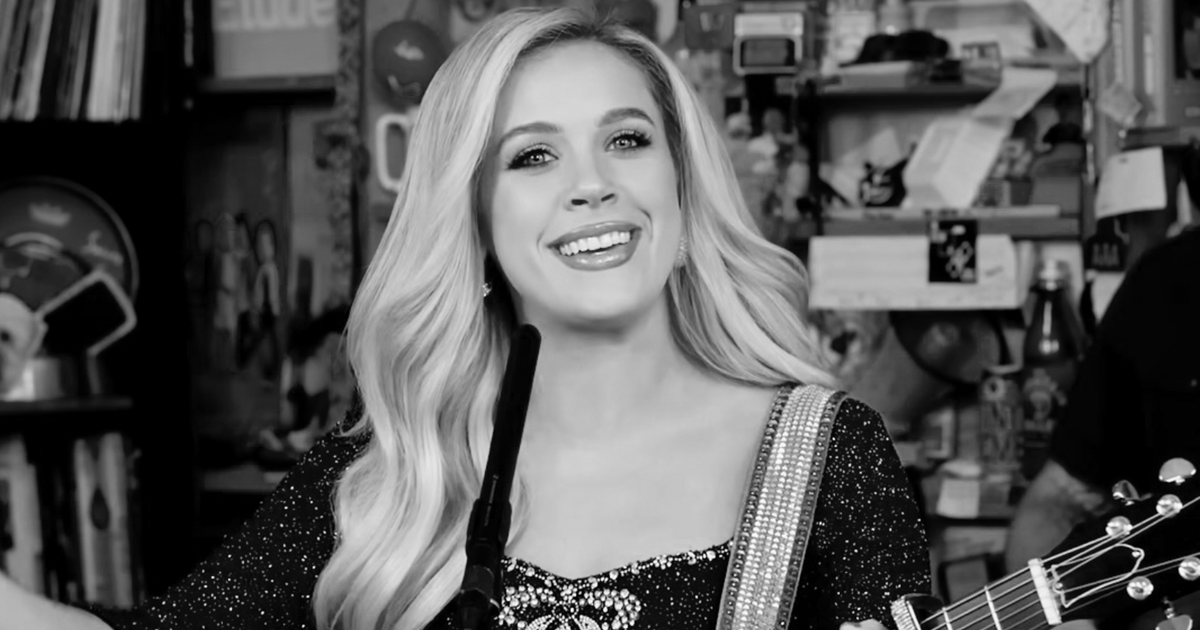
Last week, NPR Music released a brand new Tiny Desk Concert featuring country phenomenon Megan Moroney; it’s the starlet’s first visit to the fabled cubicle concert series. With an acoustic band and her fretboard inlays sparkling with her most recent hit album title, 2024’s Am I Okay?, Moroney plays through a handful of her hits – two selections from her Am I Okay? era and two from her 2023 breakout album, Lucky, which was certified Gold by RIAA.

Moroney’s brand of country is wholly mainstream and ripe for radio love (around ten of her titles have charted so far) and a sound that combines the polish and glamour of artists like Carrie Underwood with the grit, humor, and self-awareness of The Chicks and women country forebears from Loretta Lynn to Gretchen Wilson. It’s all packaged in a familiar brand of rhinestones and gorgeous blonde hair, sly humor, and manicured and idyllic while down-to-earth beauty, yet Moroney’s music ends up consistently striking her listeners as feeling totally brand new. It’s grounded in tradition, yes, but breaking new soil with each and every effort.

Critics and fans agree – what Moroney is doing works. She’s won a CMT Music Award, an ACM Award, and took home a CMA Award in 2024 for New Artist of the Year. Her Am I Okay? Tour kicks off this spring and continues through the fall, with dozens of dates at huge arenas, theaters, festivals, and venues across the country.

Her too-short 17-minute Tiny Desk Concert demonstrates why. “Tennessee Orange,” Moroney’s breakout hit and a viral internet sensation, is quippy, witty, and leverages a mighty Music Row hook. These songs are as sardonic as they are saccharine, a subtle siren plying us through our ears, eyes, and hearts. “I’m Not Pretty,” which leads off both her Tiny Desk appearance and 2023’s Lucky, certainly warrants her middle finger to the mentioned “ex-boyfriend,” leaning into the liberation and comeuppance dripping from the track you can still hear regularly over the airwaves. “No Caller ID” is found in delicious heartbreak that reminds listeners of ’90s and ’00s classics like Lee Ann Womack’s “Last Call,” but with 2025 production values and plenty of Moroney’s own spin. She introduces the final song, “Am I Okay?,” the titular track for her current album, tour, and the inspiration for her signature guitar’s inlays with even more of her biting wit and charm:

“[‘Am I Okay?’ is] proof that a man once made me happy, which is nice in my discography of sad songs. Full transparency, he did screw up, so this song is no longer true, but it was fun while it lasted, right?”

Yes, indeed. All of her music, from the sad to the salacious, is entirely fun, top-to-bottom. Megan Moroney is a mainstream country icon on the rise and her Tiny Desk Concert appearance illustrates why and how she will continue to win hearts and ears with her particular brand of Good Country.


Alison Brown & Steve Martin Premiere New Video on ‘The Kelly Clarkson Show’

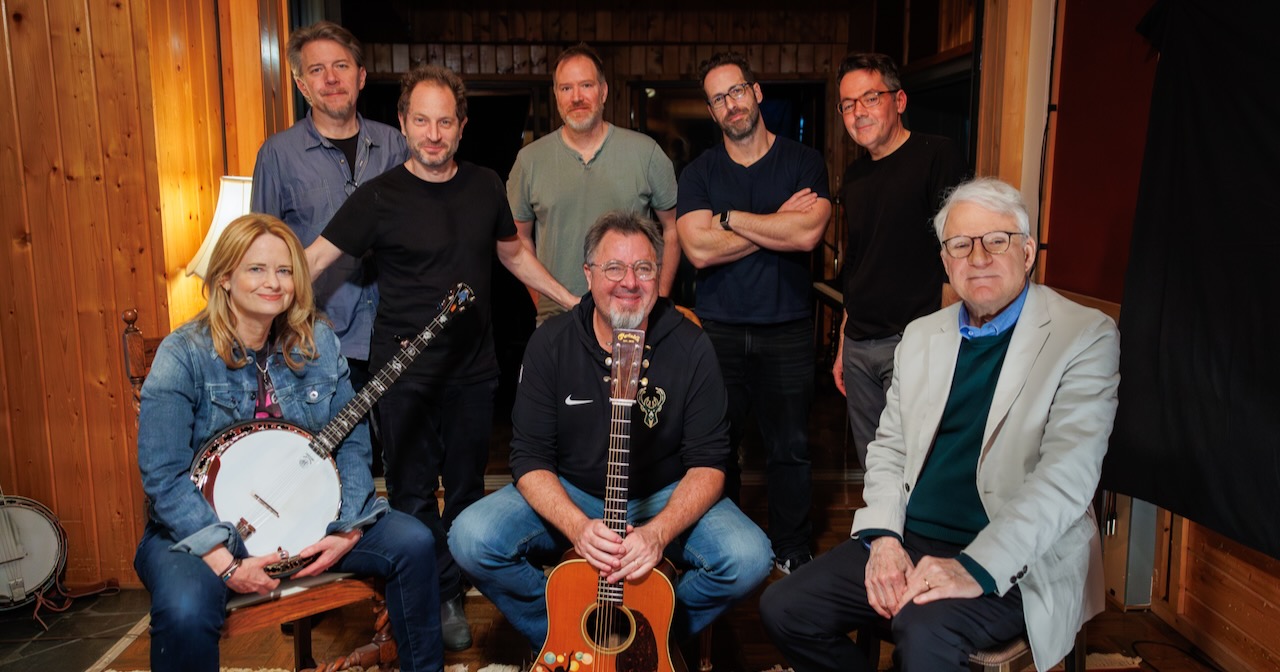
Two of the world’s preeminent banjo players, Alison Brown & Steve Martin, have returned with another delightful and gorgeous collaboration – this time, a bit less humorous than their last outing. On November 11, the pair debuted a brand new music video on The Kelly Clarkson Show. Featuring Country Music Hall of Fame inductee Vince Gill, the new track – and accompanying performance video – is a subtle stunner titled “Wall Guitar (Since You Said Goodbye).”

With lyrics by Martin and music by Brown, it’s an earnest and heart-wrenching number with a melancholy tone that’s served perfectly by Martin’s long-necked banjo and Brown’s low-tuned Deering Julia Belle model. Gill’s vocals are sweet and soaring as ever, with tasteful harmonies by Andrea Zonn and a backing band including Stuart Duncan, Rob Burger, Garry West, and Jordan Perlson. Bluegrass, old-time, and country combine here, with Martin utilizing classic roots music narrative references to tell a quintessential story of heartbreak and the music that gets us through it.

On Clarkson’s hit daytime television show, Martin & Brown chatted about the banjo, about Martin having performed on a recording of Clarkson’s in the past, about Brown’s career in Nashville and Compass Records, and much more. The pair even play a little banjo duet, walking Clarkson and the excited studio audience through the genesis of “Wall Guitar” and opening a window on their creative process.

“Don’t you feel like everything’s going to be alright?” Clarkson asks the audience to laughter while Martin and Brown pick the tune. It was a perfect reference to the message of the song and testament to the power of music – especially banjo music!

“Wall Guitar (Since You Said Goodbye)” is now available to stream and purchase everywhere you listen to music digitally.


Photo courtesy of Shore Fire Media.

Good Country Goodtime Variety Show Returns to LA’s Dynasty Typewriter December 1

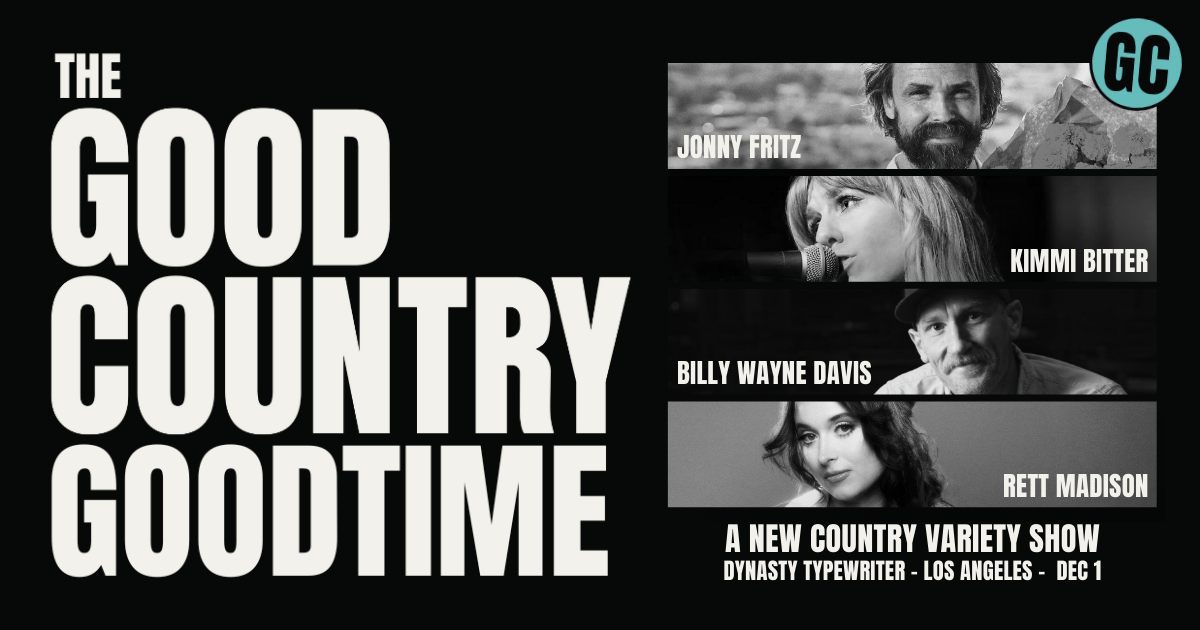
BGS and Good Country are so excited to continue our one-of-a-kind, brand new variety show, The Good Country Goodtime, at premier Los Angeles venue Dynasty Typewriter on December 1 at 7:30pm! The second edition of the event – which features the best in country, Americana, and roots music, a first-rate house band, delightful comedy, and more – will be a whimsical walk through a western winter wonderland. In-person and livestream tickets are on sale now.

Confirmed guests for the December 1 show include Jonny Fritz, purveyor and proprietor of “dad country;” the delightful Old School countrypolitan sounds of California native Kimmi Bitter; plus indie/country singer-songwriter Rett Madison, who just released her latest album, One More for Jackie; and, attendees will enjoy stories, laughs, and more from comedian and Tennessee’s own Billy Wayne Davis – who will serve as the evening’s host. The Coral Reefers’ Mick Utley will return to direct the Goodtime’s all-star house band. And, you never know which Hollywood writers, actors, and improvisers and special guests may just show up to join in the fun.

Not able to attend in person? Grab a livestream ticket, or, just hold on – our Good Country Goodtime shows are recorded by Dynasty Typewriter’s multi-camera, multi-media content capture team and we will be sharing performances, sketches, and songs from the Goodtime right here, on BGS and Good Country, in the near future. Stay tuned!

We hope you’ll join us for the December 1 edition of the Good Country Goodtime, the show’s last hurrah of 2024 – before we continue with regular monthly shows in 2025! Attendees will enjoy songs, stories, sketches, and so many surprises in store. Pull on your boots and get ready for our western winter wonderland.

Buy your tickets now for the Good Country Goodtime.


Sign up on Substack for even more Good Country, delivered direct to your email inbox!

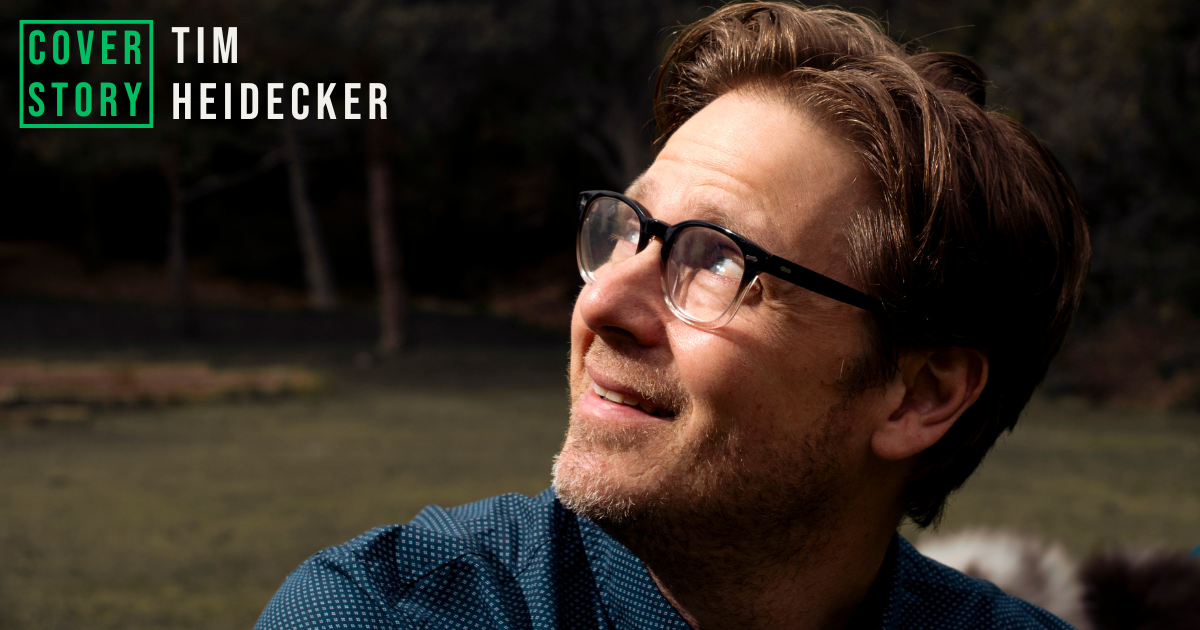
Tim Heidecker on the Battle of Life and Everything ‘Slipping Away’

Sitting in a Nashville hotel room one recent morning, Tim Heidecker is awaiting his Americanafest showcase. It’ll take place later that evening at 3rd & Lindsley. And Heidecker’s dreading the gig. Not because he doesn’t enjoy the act of performance. It’s simply the format in which the show will be set up: solo.

“It’s not my preferred way of presenting my songs,” Heidecker says. “I just came off the road with my band. Playing every night for two weeks. I’m a little road tested and warmed up. But, these songs benefit from other people playing them with me.”

That sense of vulnerability and, perhaps, a slight fear of what may or may not lie just around the corner of the grandiose ether surrounding all of us are core themes at the heart of Heidecker’s latest album, Slipping Away.

Though many may know Heidecker for his comedic brilliance – as part of innovative comedy duo Tim & Eric, on an array of beloved TV shows or across the big screen in major Hollywood films – he’s also been a lifelong singer-songwriter. And a damn fine one, too.

Now 48, Heidecker offers Slipping Away (available October 18 via Bloodshot Records) as a genuine snapshot of a human being wrestling with middle age and the intricacies of daily life. Just like many of us in the same boat of age and awareness.

Sonically, Slipping Away straddles psychedelic alt-country, surf rock, and indie folk. The ethereal attitude and lyrical ethos flows in the same river as Pavement and Wilco, with hints of Guided By Voices and They Might Be Giants felt throughout.

In an era of doom and gloom, Heidecker’s humor and zest are much needed – the notion that sometimes all you can do is laugh in pure amazement at the absurdity of what’s outside your front door.

“They say that Jesus Christ is coming back some day/ But if I were him, I think I would stay,” Heidecker sings during “Bows and Arrows.” “Up in the clouds, hanging out with dad/ Cuz things down here, things are going bad.”

In truth, much like his comedy, Tim Heidecker’s music is aimed at the idea of connectivity. Finding common ground with you and me. And his constant yearning to expose the lunacy and mysteries of one’s existence within the cosmic universe is why we’ve come to turn to Heidecker for comfort and solidarity in uncertain times.

I replayed the album this morning while having coffee with my girlfriend. And, in a good way, I started having existential thoughts. It made me think, “This is an honest snapshot of someone on the cusp of 50, who’s looking at the chaos of their youth in the rearview mirror and looking at the unknowns of growing older through the windshield.”

Tim Heidecker: That’s beautifully put. Can I use that? [Laughs] I mean, yes, I agree with that. It’s funny, you writers, critics and journalists are always better at vocalizing what I’m trying to say than I am. And I appreciate it. These things come from such a subliminal place for me that it’s nice to hear how it’s received or how it’s perceived. A lot of the writing of this record came right after the pandemic. There was this real, palpable feeling of an apocalyptic kind of mentality happening.

It still feels like that every day, though. That’s the world we live in now.

Yeah, for sure. And it was very crisp in 2020, 2021, 2022. In my comedy, I’ve tried a few different times to write shows about that. I’ve had a couple of projects that didn’t go very far, that were sort of about the end of the world. So, it’s been on my mind for a while and I wanted to do a record with that sort of concept or theme. And I started writing songs, letting the record be this way of getting those ideas out of my head.

With the title, Slipping Away, is that a reference to how fast time goes?

Picking the title of a record is always a pain and challenge to crystallize it. But, to me, there’s two meanings. The first half of the record is maybe a little more upbeat and positive and there’s this feeling of being content or being happy. Then, it can also mean things falling apart and disintegrating [in the second half]. There’s Slipping Away Side A and there’s Slipping Away Side B.

There’s also a very ethereal vibe to the album, too, where it’s like a dreamlike state.

Mm-Hmm.

With the song “Hey, Would You Call My Mom for Me,” was that a real encounter you had with somebody?

It was. We were on tour up in Vancouver. They have a big area of Vancouver that’s kind of been surrendered to addicts. They call it “Zombie Town.” I was walking around there and a kid asked me that. It was early in the morning and it took me off guard. I gave him 20 bucks and was like, “Sorry, I can’t.” I just couldn’t get involved. But, I came back to that line of, “Hey, would you call my mom for me?” Especially after the pandemic and living in Los Angeles, seeing a lot of people on the street. I felt like I wanted to capture that moment. Little journalistic songwriting there.

I’ve read that you’re an atheist/agnostic. And I wonder – with the pandemic and just life in general – if you’ve started to have maybe a crisis of faith or identity as you’ve gotten older?

I wouldn’t say crisis.

Recalibration, maybe?

Recalibration is fair. Honestly, I’m fairly firm in my agnosticism. I wouldn’t consider myself an atheist. I think it’s kind of an irrelevant question for me [about] what’s going on outside of reality. But, I’ve started therapy and working on some personal issues, health issues and stuff this past year. I don’t want to say midlife crisis. But, it’s this feeling of like, “Alright, I’ve been kind of coasting on my instincts for a long time. And it’s gotten me to where I am, which is a pretty good place. But, I’d like to figure out how I’m going to spend the rest of my life here – maybe a little happier, a little less anxiety-ridden, easier to be around.”

It’s been a couple years of taking the old car into the shop and getting it adjusted for long-term use. I mean, I’ve been touring with this band for the past couple years. And part of me is like, “Man, love this so much. How many more of these am I going to get to do? How many more of these runs where you’re just on the bus and you’re playing every night?” It takes a lot of work to get to that place where things are going well.

There’s the line on the record – I think it may be my favorite line on the record – [in the song “Something, Somewhere”] that goes, “There is a feeling I get, when things are going good but it’s coming to an end.” You’re at that place where things are working, something you’re working on or a project where you see the end. It’s that end of summer melancholy feeling. And I think you can zoom out and look at your life a little bit that way, too.

I couldn’t find much about your early music years. And I was curious about where music begins for you, and as somebody like yourself who came of age in early 1990s Pennsylvania. Was music just something that was always there?

Yeah. I came from a very musical family. My grandmother was very religious. She could play piano and she could play by ear. So, she could sit at the piano and figure out songs. My mom loved music and my dad was a big classic rock guy. He had a great record collection, then he updated his record collection to tapes as we were driving around in the ’80s. He would play the golden oldies and the best of the Beatles, [those] red and blue compilation [albums] a lot. I was always very performance driven, dressing up and doing shows and playing from as far back as I can remember. We had a piano in the house, and eventually a guitar came around. It was just something my parents really encouraged, I guess. My sister took piano lessons. It was just part of our education. I went to Catholic school, so there was a lot of singing. Just a lot of music around all the time.

Eventually, that led to bands being formed. My cousin had a hardcore punk band. And I gravitated towards those kinds of people who were also into music. I had an uncle who had really great taste in music and turned me on to all kinds of artists in the ’80s and ’90s [like] Billy Bragg. I remember him being a big fan of [Billy]. And it was fairly easy to put a band together. We all wanted to be on TV or make movies or create stuff. But, the band was the thing that you could put together after a good Christmas of getting a practice amp and a starter guitar. Your friend has a drum set and you could go into a basement and make something. We used to rent four-track tape recorders from the music store and make demos.

I hear a lot of influences on Slipping Away – indie rock, folk, alt-country. I hear a lot of stuff, too, that I grew up in the ’90s loving. I hear some Pavement influences. With Pavement, they always came across as a band where you could do whatever you wanted, and a song can be whatever you want it to be – something I always loved about them.

I loved Pavement. In fact, they’re a really important band for me, because when I was in high school my head was really firmly in the classic rock ’60s and ’70s world. I didn’t really connect to anything modern. I didn’t like pop punk music. I mean, it was okay. But, I didn’t really like the hardcore scene, the emo scene. I found it really boring and exhausting to listen to, and I couldn’t hear what they were saying. I didn’t like a lot of hip-hop. Whatever was happening in the early ’90s, I was not connecting with it.

And then I heard [Pavement’s] Crooked Rain, Crooked Rain record. I remember hearing the drumstick in [opening track] “Silence Kid.” And I was really into Exile on Main St. by The Rolling Stones, so it was a connection, a through line from the Stones to Pavement, where it felt like, “Oh, these guys are happening now.” That opened me up to Guided By Voices, The Jon Spencer Blues Explosion, Yo La Tengo, and that Matador Records scene. I was like, “Oh, I am of my age now. I’m of my time.” [Laughs]

When you’re touring, is it weird people may have preconceived notions of what to expect and expectations that aren’t accurate?

Yeah. I mean, that’s diminishing a little bit now. I think people are getting the message. There’s still people that are confused. They’re waiting for the punchline to drop. It took me a while to figure out how to behave as a performer when I’m doing my music. I’ve found this little sweet spot, where I can still be funny and I can still be myself. I don’t have to pretend to be this pretentious singer-songwriter, because I’m not. I’m just me. I don’t want to keep it too serious, so I lighten the mood enough where people get a little bit of both – they get the full picture, they get the full version of me.

One of the songs on Slipping Away is “Dad of the Year,” where you sing about how you had all these expectations growing up and conquering the world, as we all do. And now you’re in your late forties and you’re like, “Well, that didn’t really happen. But, in this other way, I’m actually really happy with where I landed.”

For sure. The goal is to get to that place where you’re content and satisfied with wherever you are. And in the way the world is, it’s very hard to not compare yourself to everything else that’s going on, to people you don’t know. Why do people care about Ben Affleck and J. Lo? [Laughs] When I see a picture of them, there’s this intrusive thought of, “Why aren’t they taking pictures of me?” And if you really are honest, I think everybody has varying degrees of that. And that’s the battle of life – to find ways of knowing how to be happy with where you’re at. But, don’t squash ambition, because ambition is very important, too.

To that, it does feel like you’re in a good place right now.

I’m in a great place. I’m in Nashville. I’m excited for the record to come out. I hope people sit with it. Some records you just need to sit down and listen to. I mean, Slipping Away is only 30 minutes. [Laughs] This isn’t coffee shop music.


Photo Credit: Chantal Anderson

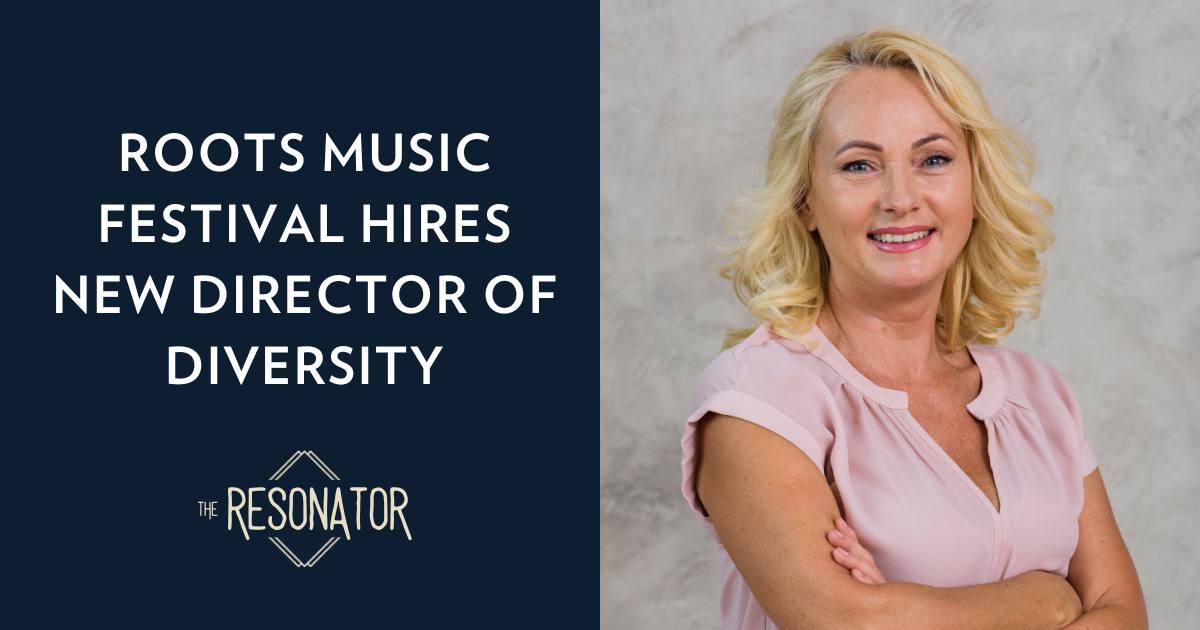
Roots Music Festival Hires New Director of Diversity

DAVENPORT, IOWA – The Quad Cities Roots Festival announced today that it has hired its first-ever Director of Diversity, 55-year-old Karen Van der Sloot.

“I’m absolutely over the moon,” Van der Sloot said, stirring a pot of her famous chili in her suburban kitchen. “Diversity needs a facelift. Because every face is beautiful, especially when it’s smiling!”

While many DEI programs across the country have seen funding cut or been permanently shuttered, the Quad Cities Roots Music Festival is doubling down on its commitment to diversity with this groundbreaking hire.

“Karen is someone who makes everyone feel included. Even people who were already included feel more included because of Karen’s relentless inclusivity,” said a festival spokesperson.

Despite having no background in roots music or diversity initiatives, Van der Sloot believes her experience as a mother of four will offer a fresh perspective to a festival often criticized for its homogeneity.

“Listen, if you’ve ever tried to get a teenager to put down their phone and eat the same thing as the rest of the family, you know that’s the real diversity work,” she smiled. “I always say, ‘We tried democracy, but I’m not gonna make a whole new meal for one person who suddenly says they’re vegan. Mama bear don’t play that game!’”

Her vision for diversity in roots music? “Instead of diversity, I’ve been saying we need melange-ity – a little mix of everything. Like a good chili. Melange-ity means more than just one flavor. We need the full ‘thang’ – beans, hamburger, chili powder, maybe even a little corn if you’re feeling wild!”

For Van der Sloot, that even means getting a mix of ideas, like soliciting programming feedback from her assistant, Dr. Akilah Jessup-Moore. “Did you know she has a doctorate in ethnomusicology from Duke? Such a smart cookie.” Moore could not be reached for comment.

Festival Executive Director – and Karen’s husband – Kevin Van der Sloot also chimed in. “Karen’s been a real trooper. She’s thrown herself into this role 100%. Plus, I think she needed something to do after our oldest left for college.”

Though music acts are still being confirmed, festival headliners will include the Bettendorf Boys Choir, pop-reggae group UB40, and local favorites The Muddy Walters, a blues band comprised entirely of retired dentists.


Greg Hess is a comedy writer and performer in Los Angeles. His work has been featured in The American Bystander, The Onion, Shouts & Murmurs, Points in Case, and he cohosts the hit satirical podcast MEGA.

Dust Bowl Balladeer Reboot: AI Woody Guthrie Releases New Songs

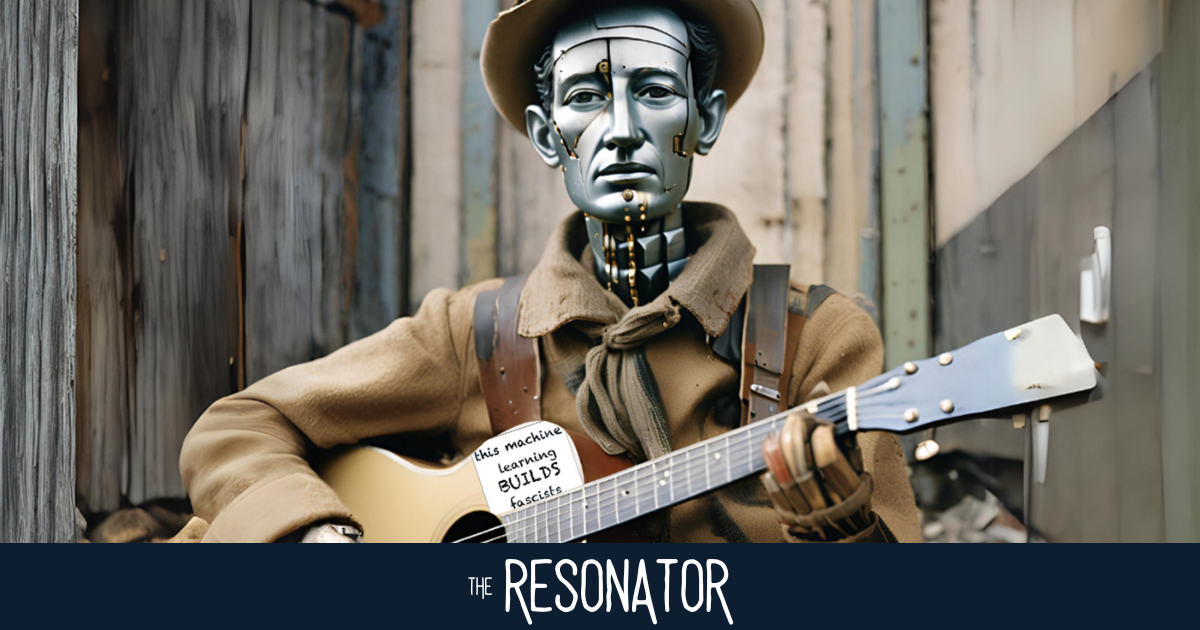
TULSA, OK – Generative AI company Altosphere released an album of “new” Woody Guthrie music, courtesy of their first artificially generated resurrection of the famous folk musician, who died in 1967.

“Artists like Woody Guthrie have been silent for years,” declared Altosphere CEO Blake Mundy. “So we thought, like, what if Woody dropped a new joint now? Wouldn’t that be sick?”

Guthrie, once a towering figure of American folk music, championed themes of equality, socialism, and anti-fascism and laid the groundwork for the socially conscious folk music later popularized by artists like Bob Dylan and Joan Baez. But apparently, AI Woody didn’t get the memo.

After initial testing returned some positive song outputs, researchers quickly discovered that their creation, dubbed “WoodyBot,” departed sharply from the views typically associated with Guthrie.

While the flesh-and-blood Guthrie was best known for “This Land is Your Land” and a guitar with the inscription “This machine kills fascists,” WoodyBot cranked out tunes praising corporate consolidation, touting a lower minimum wage, and lauding police militarization.

In one tune called “Good Guy with a Gun,” the bot crooned, “I’m a fella who ain’t yella/ This country’s headed down/ I’ll get my AR-15/ Run the leftists outta town!”

Attempts to course-correct the model with additional data from the Guthrie canon were not received well by WoodyBot. “I tried to give some feedback when it wrote ‘No Women in the Voting Booth,'” said AI researcher Pico Dhaliwal. “But WoodyBot called me a commie pinko and doxxed my whole family. From then on, I just let it do its thing.”

Other WoodyBot “hits” included “Take a Ride in the Cybertruck!,” “Jesus Was a Snowflake,” “Unions Make You Gay,” and “A Jar of Monster Energy (Makes Me Feel Alive!)”

“We still have some tweaking to do,” Mundy admitted, before adding with enthusiasm, “But actually, I think these songs slap way harder than the original stuff.”


Greg Hess is a comedy writer and performer in Los Angeles. His work has been featured in The American Bystander, The Onion, Shouts & Murmurs, Points in Case, and he cohosts the hit satirical podcast MEGA.

Brat Summer Hits Bluegrass – Everything You Need To Know

Brat summer has come to bluegrass music – like seemingly every other corner of our culture. This viral social media sensation continues to mystify internet scrollers, news anchors, journalists, and analysts of certain generations, but the trend – based on the wildly popular hyperpop/dance album, brat, released by DJ and pop star Charli XCX in June – has found a sure footing in one perhaps unlikely corner of the music industry: bluegrass.

This fact was no more evident to the editorial staff at BGS than at our A Bluegrass Situation after show at Newport Folk Festival  last month, where recent BGS Artist of the Month and banjo magnate Tony Trischka posed an earth-shattering question to the cavalcade of bluegrass and roots music stars waiting backstage: “Who here is brat?”

Reactions were mixed. Trischka and his cohort attempted to explain “brat” to the gathered artists and comedians; those with knowledge of the conversation hesitated to identify who among the star-studded lineup identified as “brat” to Trischka and who did not, out of respect for those present.


View this post on Instagram


A post shared by Hawktail (@hawktailband)

While our Newport Folk Festival lineup may have been an organic blend of brat and non-brat, elsewhere in the roots scene critically-acclaimed and award winning artists, pickers, and bands have gleefully brought brat to the forefront of a busy bluegrass festival and music camp season with many videos and posts celebrating brat summer. Impeccable instrumentalists, GRAMMY and IBMA Award nominees and winners, and industry leaders have all been seen making posts, referencing brat, and doing viral accompanying dance moves for XCX’s “Apple.” Meanwhile, new acoustic string band supergroup Hawktail have declared it’s a “Britt summer,” instead, celebrating their bandmate, fiddler Brittany Haas.

Do you or someone you know identify as brat? Are you, too, enjoying a bratgrass summer? You aren’t alone. These bluegrass artists and bands are certainly brat. And, with a few more weeks left before we usher in fall, there’s still plenty of time for bratgrass to continue to entrance and enlighten the bluegrass community.

Sister Sadie

@sistersadiemusic We’re practicing up on our dance moves for our set here at Rocky Grass 🏔️✨ we can’t wait to see y’all out there 💓🍏 #rockygrass #charlixcx #apple #sistersadie #ootd @jaelee @maddie 🫧🫶 @Gena Britt @Dani Flowers @Deanie Richardson ♬ Apple – Charli xcx

Look, we already knew Sister Sadie are brat, because No Fear = brat. The transitive property applies. Brat brat brat. Whatever this legendary lineup tackles, from exciting covers to TikTok dance trends, we’re here for it. Bratgrass epitomized. No notes, very demure. Very cutesy.

Maddie Witler

@maddiewitler 🍏 🍏 so fun my first ever tiktok dance video and a reason to wear this dress that I always chicken out on @Charli XCX dance by @Kelley Heyer #charlixcx #apple #theapple #brat #pop #fyp #trend #dance #pride #cat ♬ Apple – Charli xcx

Mandolinist, instructor, multi-instrumentalist, and coffee expert Maddie Witler was one of the very first bluegrass adopters of brat – some would argue, even well before the eponymous album. Witler has toured and performed with so many of bluegrass’s greats from all across the genre map, and now has crafted a vibrant online presence and business through TikTok, Patreon, and, of course, bringing the “Apple” dance and brat chartreuse to bluegrass.

Missy Raines & Allegheny, The Onlies, and More

@snooplemcdoople Old time brat summer #bratsummer #oldtime #missyraines @Tristan Scroggins @viv.and.riley @TheOnlies ♬ Apple – Charli xcx

Missy Raines is one of the winningest musicians in the history of the IBMA. Clearly, Raines is also brat. Here, she and members of her band, Allegheny (Ellie Hakanson and Tristan Scroggins), are joined by the Onlies (Sami Braman, Vivian Leva, Riley Calcagno, Leo Shannon) as well as several other instructors and musicians at Targhee Music Camp in Alta, Wyoming in the Grand Tetons. Sounds plenty brat to us!

Seth Taylor


View this post on Instagram


A post shared by Seth Taylor (@sethtaylor427)

In-demand guitarist and multi-instrumentalist Seth Taylor currently tours with Sarah Jarosz, bringing brat with them everywhere they go. Or, should we say, “brat paisley summer.” Which, naturally, we’ve gone ahead and agreed is 100% a thing. Taylor is a bluegrass shredder who’s performed and recorded with countless artists and bands in country, Americana, folk, and beyond. Plus, his tasty acoustic guitar cover of Sabrina Carpenter’s “Please Please Please” feels pretty brat to us, too.

While we wish we could report a Pickin’ on Brat album is currently in the works or that Charli XCX will launch surprise bluegrass remixes with a Sierra Ferrell feature verse coming soon, rest assured the BGS team will continue to monitor, address, and report on the very important issue of bratgrass to our audience and readers – brat or not.

As more and more TikTok trends and hits from the current pop and Top 40 charts filter into string band music – like Taylor Ashton or Sister Sadie covering Chappell Roan, Seth Taylor’s “Please Please Please” rendition, Molly Tuttle singing Beyoncé, and many more examples crossing our feeds daily – it’s clear this bratgrass summer is first and foremost for the demure and mindful rootsy girls, gays, theys, and every brat in between.