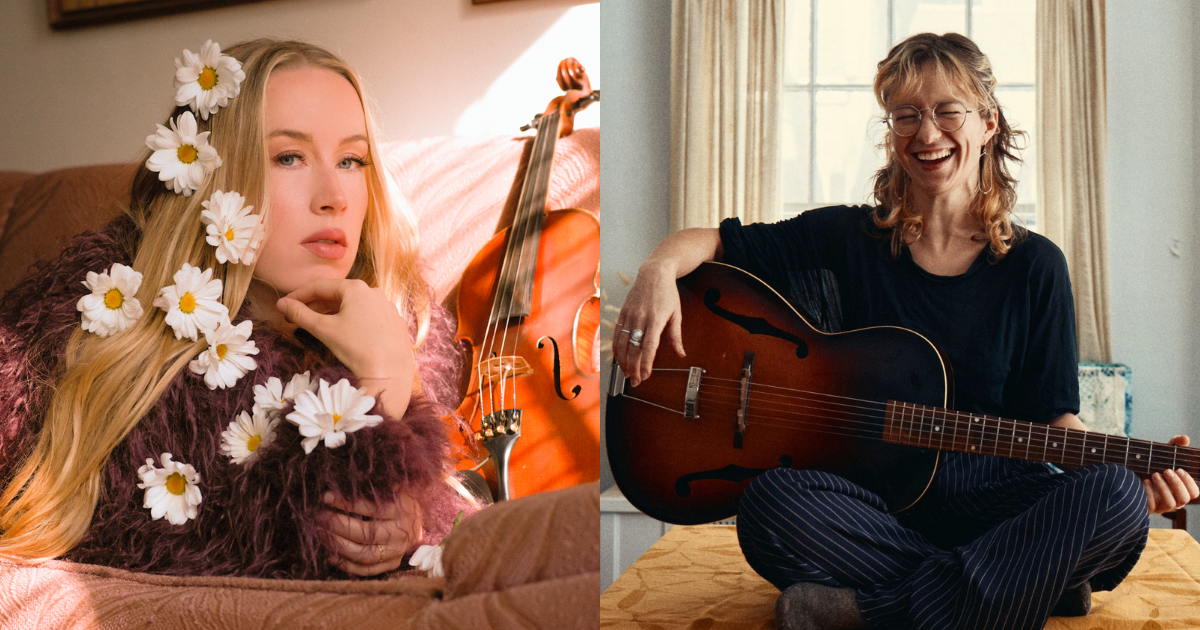
Steep Canyon Rangers Are “A String Band Again”

Twenty-six years into its life as a band, the Steep Canyon Rangers get back to basics on Next Act, unplugging their amps and instruments in favor of an acoustic setup with minimal percussion. It marks a return to the foundations that first set the group up for success.

Releasing May 22, Next Act is the second studio effort to feature guitarist and vocalist Aaron Burdett, who joined the Rangers in 2022 following the departure of founding member Woody Platt. In addition to appearing on their 2023 album, Morning Shift, Burdett is part of the Rangers’ 2024 live record, which features several of his own compositions, too.

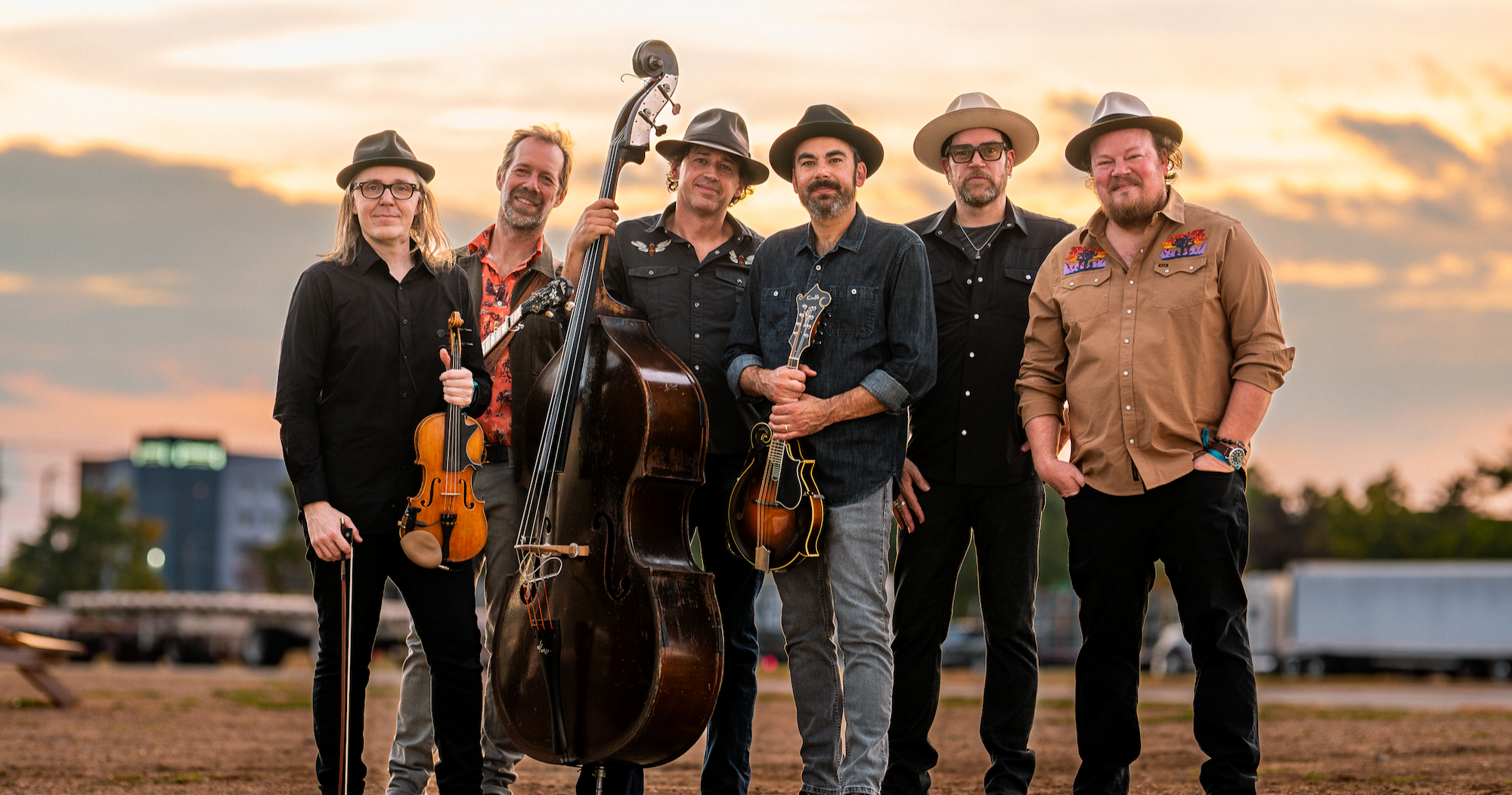
Alongside the band’s other members – Graham Sharp (banjo), Mike Guggino (mandolin), Nicky Sanders (fiddle), Mike Ashworth (percussion, Dobro), and Barrett Smith (bass) – Next Act brings Burdett into the fold even more, with six tracks written or co-written by him. “Roll of the Dice” catalogs Burdett’s early days traveling with the band and “Hard Times” finds him reflecting on adversity and how moments that once felt overwhelming can later soften in memories.

According to Ashworth, the growing role of Burdett in the band is simply a carryover of having multiple voices contributing to their songwriting over the past decade, with Sharp being the other primary force of late.

“Aaron came into that role really well with a bunch of his own material while also taking lead on some of the stuff Graham had written as well,” Ashworth explains. “After incorporating more of his own stuff on that live record, the next step was to up the ante even more on this album by bringing even more of his older work into the studio.”

Steep Canyon Rangers’ Mike Ashworth and Barrett Smith caught up with BGS to delve into how books inspired two of the album’s songs, how a road trip instigated “Halfway To Reno” featuring Edie Brickell, what remains on the group’s bucket list, and more.

How did Aaron’s level of involvement on this record grow compared to Morning Shift?

Barrett Smith: It feels like Aaron has always been here – he just fits with us so well. He’s become such a close friend and a great person to work and make art with. We’re just excited with everything having to do with the band right now, and Aaron is a big part of that. Things went well when we worked together on Morning Shift, even though we were considerably less worn-in and stable than we are now on this album. We’re really cooking right now and feel great together as a group.

Mike Ashworth: From a relationship standpoint, things have gelled much further than I’d ever hoped. It does feel like Aaron’s been a member for more like 10 years, not three. On this record you can see the band in more of a way that feels like a group that’s sure of itself. The last time we were in the studio we arranged in more of a rock ‘n’ roll style where everybody reinforces the same rhythms, but on Next Act we gave everyone a lot more room to explore their own parts. It’s indicative of how much we trust each other now and how much growth artistically the band has seen in the last few years.

BS: Another good indicator of the growth is that on Morning Shift we worked with a producer, Darrell Scott, even though we enjoy and produce ourselves really well. But then when Next Act came along, we felt like we had enough chemistry together that we could move forward without an outside producer this time. Doing that allows us more space to bounce ideas around and feed off each other, which we feel like is our greatest superpower as a band.

As well as y’all work together, it’s hard to pass up a collaboration with someone like Darrell Scott when it presents itself!

MA: I imagine it’d be hard to come into a band like this and produce, because oftentimes we have to be careful to not already be done with everything. As a result, we intentionally leave certain things unarranged or on the table to give them something to do or else we’ll just wind up taking everything away from them.

BS: I remember Darrell, a number of times, looking around and saying, “Y’all are pretty weird with how you do things.” One time when we were recording, I remember him stopping and asking us if we always had so many opinions about each song that we communicated to each other. Eventually he started telling us to just “shut up and play” – that was one of the catchphrases of our studio time together. [Laughs] If you have an idea, we want you to be confident that it’s going to be heard. There’s a lot of trust in the whole system.

MA: Another thing Darrell pointed out was, “Y’all really care so much about the story.” He’d never heard an entire band comment on the lyrics and stories behind each song like we do – whether it’s where to punch things up or down or when to add harmonies.

That’s the cool thing about this new record. It delves even more into that exploratory realm of the band trying to sell the story – and the whole band, not just one singer, absorbing what it’s all about.

Tell me about naming the album Next Act. Is that a nod to this full circle journey that’s brought you back to being more of a traditional string band?

MA: The intention was twofold, but that was definitely a part of it. As the title of the song, it’s about picking yourself up, moving into a new phase of life, and embracing change. However, Next Act for the band is us reflecting on our change and growth and the ability to reveal what our potential is at any given moment. Because of that it became a pretty conscious decision to make it the title of the record.

BS: On Arm In Arm [in 2020], it was fun getting to mess around in the studio with organs, electric guitars and all these special guests – it was like our own mini-Brian-Wilson-like experience. But on this record, we wanted to bring it back home and return to being a string band again. Because of that, this new record doesn’t have any electric instruments on it. There is percussion, but it’s not a full drum set. We’ve been doing a lot more stuff around one mic at our live shows recently and feel like these new songs are very representative of that.

MA: We’ve all had amps and drums buzzing around our heads for years, so we wanted to remind ourselves that this thing still starts around a campfire and can always come back to that. I don’t think fans will know what to call what we’re going to do on any given night, because even we won’t [know] until we see the room and start to feel the vibe of the city and people there. Doing this record has allowed us to rediscover the foundation of what we are when you strip everything away. That’s been a really cool and unnerving process to get out from behind all the extra noise and see that when you take those things away, the art is still really good.

There’s a couple songs on this record – “Back of Beyond” and “Circling the Drain” – that were inspired by books, Barbara Kingsolver’s Demon Copperhead and Horace Kephart’s Our Southern Highlanders, respectively. With that in mind, how would you say literature informs the band’s songwriting, not only with this record, but overall as well?

MA: Graham actually wrote both those songs, but I do want to speak about Demon Copperhead, because we all just absolutely loved that book. We’re not just a band, we’re also a close circle of friends, and with that comes shared mutual interests, like books. I’m so glad that Graham is my friend, because he can write things that I wish I had the ability to say. But once something is written, whether it be a book or a song, it doesn’t belong to [the writer] anymore, it belongs to you, [the reader/listener]. That’s the really cool thing about art.

I love that Graham is a voracious reader because we wind up getting a lot of great songs out of it, like these two. Damon [Demon Copperhead’s protagonist] is such a wonderful, resilient character that reminds me so much of people I grew up with – and I’m sure Barrett would agree.

BS: As a writer, artist, and creator, I think it’s a good habit to have different areas you pull inspiration from to keep you out of a rut. For Graham a big one is literature. Demon Copperhead threw all of us for a loop as it was getting passed around the bus. When we found out he was basing a song off it we jumped right on it.

As for “Back of Beyond” and Our Southern Highlanders, I think that book is essential reading for any Western North Carolinian. “Back of Beyond” was simply a term that came from meaning the middle of nowhere out in the country, in a place where you can go for days without seeing anyone or speaking a word.

“Back of Beyond” is a song that’s been lingering with y’all for several albums before finally getting recorded now. What made Next Act the right spot for it to land?

BS: During my time in the band, I would say that “Back of Beyond” is the biggest survivor, in terms of songs that have stuck around and taken on many different forms before finally making it onto a record. We actually wanted to include it on Morning Shift, but Darrell Scott didn’t think it would be a good fit, so we didn’t. We may have even called that album “Back of Beyond” if it had been on it. But when that happened, we knew it would reappear on our next record. After it missed the cut we all really wanted it for this one, which is why we call it a survivor.

I was also curious about the song “Halfway to Reno,” which came from a roadtrip you [Mike] had with Aaron from California to a gig in Reno, Nevada. Is that right?

MA: That’s right. I think Aaron was behind the wheel that day. From my view, he’s someone that is more influenced by an experience or feeling than anything else, which he can then take like putty and mold into a piece of art. That’s the beauty of being in this band, these guys will come up with these nuggets – and if it hits the Steep Canyon grinder and comes out the other end still in one piece, then they’ll take it and finish writing it.

Then when we were mixing that song we kept envisioning a high voice on it, but couldn’t figure out exactly who to ask to fill the role. Then we sent it to our dear friend Edie Brickell and she ended up putting the icing on the cake. The song is about one lover trying to get back to the other and the little things that you carry through your day – especially when you’re separated by distance – that keep you tied to home. She really understood the assignment and put this beautiful piece on top of the tune that I absolutely love.

How did the opportunity to work with Edie on the tune come about?

MA: We first met her over a decade ago through Steve Martin. He would send her banjo ideas and she’d send them back to him with lyrics over them. That quickly evolved into a fantastic record produced by Peter Asher called Love Has Come For You in 2013. But touring together is where we really befriended her, during late nights on the bus and in the dressing room. I remember being drawn in by her spontaneity and creativity and the way that she can write a song in the moment about that moment. It’s almost like a fortune teller.

Since that first encounter we’ve recorded many times together through the years and she’s become not just one of my favorite female artists, but one of my favorite artists, period. She’s just so heartfelt every time she adds to something. It comes from a real place and that’s harder and harder to find these days.

Speaking of Steve, what did it mean to have him featured with you on “Heart’s the Only Compass”? I think this is his first time on an album or single with you since 2020’s “California.”

BS: It’s always a huge honor any time we’re able to work with Steve. He’s an iconic American art figure, so to have the opportunity to create with him is a treat. When we decided we wanted clawhammer banjo on that tune we tossed a few other names around first, but it all came back to Steve, because the prowess he has on the instrument is second to none.

From what I understand, you reconstructed “The Kindest Thing” in the studio at the behest of Nicky. Tell me about that process and how the final song differs from what you were initially going for?

BS: That song took on a bunch of different forms in the studio, as our songs often do. At one point it had this Don Williams, cool country kind of feel and Nicky heard that pretty late in the game, but didn’t care for it. Instead he kept talking about “Going to California” by Led Zeppelin, which led to Mike Guggino kicking off this riff similar to the one in that song that wound up setting the foundation for what the song eventually turned into. Ultimately, it was a good decision on Nicky’s part.

Steep Canyon has been together for 26 years now. With that in mind, is there anything that remains on your musical bucket list?

BS: The band hasn’t won a GRAMMY since I’ve been a part of it, so I’d love to see that happen – maybe even with this album. [Laughs] Aside from that, it’s hard to think of specific venues, not that there aren’t any, but because we’ve gotten to play so many of our dream places already. My bucket list is mainly just keeping on and continuing to discover and hone my role in this band.

What has bringing this album to life taught you about yourselves?

MA: I thought I’d become more patient as I became older, but I actually think I’m becoming less. [Laughs] In all seriousness, this session taught me to slow down again. I kept wanting to schedule and have it done sooner rather than later, but instead, the cycle for this record was one of the longest we’ve ever endured. In the end I think it’s exactly what it wanted and I’m grateful for how it got me to take it easy and be more in the moment.

BS: Even though we’ve been playing together for so long, working on this record brought me a new level of comfort and trust with the band. I have more faith in the people in the band, what we’re doing and my place in it than ever before, which is such a good feeling. I’m really enjoying where we are right now and am excited to see how we keep building upon it.


Photo Credit: Jay Strausser

Our Jamgrass column is brought to you in partnership with Preston Thompson Guitars.

35 Songs That Hate Nashville

Hating on Nashville – whether Music City, Music Row, Lower Broadway, the tourists, the industry, the traffic, or almost anything and everything else – is a trope and tradition essential to country itself. As long as this town has been a roots music mecca it’s been a curse, too. It’s a maker and breaker of dreams that’s all at once exactly what it is and what it looks like, and a figment of your imagination, too.

On the roots songwriter’s map, it might be the capital city. Flanked by Memphis and “Carolina” and Los Angeles and Malibu and the bluegrass of Kentucky and the “concrete jungle where dreams are made of,” all familiar locales to songsters of all genres referencing places and cities. Places are excellent characters in songs, and we return to our favorite destinations over and over as we relish tracks like “Dublin Blues,” “Eight More Miles to Louisville,” “Big Ball in Brooklyn,” “Take Me Home Country Roads,” and so many more.

But isn’t there just something special about songs that hate Nashville? As a motif, it stands out among songs about places or among places as a trope, in country and outside of it. Songs that hate Nashville can ooze pain or vengeance. They can be aspirational or giving up all hope. But perhaps their real unifier, besides Music City itself, is that each and every song that offers a variation on this theme is really, at its core, declaring a deep love for the town.

In March, country artist, singer, and songwriter Ashley Monroe surprise released an eight-track original album, Dear Nashville. Not quite a concept album – perhaps rather having a concept at its core, instead of as its entirety – it’s an incisive and vulnerable demonstration of Monroe’s love… and hatred of Music City. “I Hate Nashville” opens the album with gauzy pads and a forward-leaning train beat as Monroe sings words that clearly haunt her, and so many like her. Lyrics often uttered by the gatekeepers of the world, the holders of the keys to this city. “They can’t make you a star,” “somethin’ ain’t stickin’,” “pay your dues.”

The rest of the song, though, is something different. It’s exasperated and exhausted, yes. Defeated, almost. But it’s not a hate letter Monroe is writing to her hometown of decades. She sings on the chorus:

Country music
Is the reason I’m alive
Paul Franklin playin’ steel
God knows I love Vince Gill
But I hate Nashville

And wouldn’t you know it, that mournful, heart-wrenching pedal steel singing along with Monroe’s beautiful, East Tennessee voice is played by Paul Franklin himself. Because that’s what Nashville is capable of. That’s what it does best. It makes dreams reality, it makes friends of idols. It can be everything you pictured, but wouldn’t let yourself believe is possible.

Wrote a lot of songs
Made a lot of friends
And if I’m being honest
I’d do it all again
I remember the first time
I saw the skyline shining
Sometimes the road to the top’s
A lot of downhill climbin’

Verse two captures the duality of songs that hate Nashville perfectly. Monroe is displeased with the industry, with the machinations of a community designed to reap profits and profits and profits, and that isn’t so concerned with art or country anymore. But her dreams have come true. She has paid her dues – and then some – and she’s made records and sung songs with Franklin, Vince Gill, Miranda Lambert, and so many more name-droppable peers, heroes, legends, and virtuosos. And, if she’s being honest, she’d “do it all again.” Who wouldn’t?

In each of these 35 songs, you’ll find artists just like Monroe, from across generations and from a variety of backgrounds and origin points inside and outside Music City. Each grapples with these same essential questions of this place. Of Nashville, Tennessee. Struggling with the industry, or Music Row, or the politics of each. Some demonstrate internal battles, others are so external they itch. There are songs that decry capitalism and that long for acceptance by it. There are songs of love lost and romantic haunts turned sour. You may hear someone writing on the outside looking in, or the inside looking out. It’s all compelling, the same but different.

Whatever you hear across these songs that hate Nashville, you’ll hear excellent music and a country tradition so essential to the format it belongs right next to losing your love, your truck, your dog, your house, your job, your… dream of making it in Nashville. Three chords, the truth, and hating Nashville. It’s as country as it gets.

“Heartbreak Town” – The Chicks

“Square people in a world that’s round.” That’s an indictment, for sure, written as only Darrell Scott could. Scott is well-practiced in songs that hate Nashville whether this magnificent track made even more delicious by the Chicks or “Long Time Gone,” also cut by the Chicks and included on this playlist, or even “Hopkinsville,” a Scott original inspired by longing to be done working on the Shelby Street bridge downtown. The Chicks sold the true heartbreak of Nashville on this number even before the city’s central machine turned its ire toward them. As we all know, they survived being on the receiving end of Music City’s ire more than once – and made millions doing it.

“Kay” – John Wesley Ryles

A story song for the ages, and about Nashville, to boot. “Kay” is sung from the perspective of a depressed taxi driver, “I’m living and I’m dying, staring out at Music City, from my cab.” The singer moved his love, Kay, to town to give her a shot at making it big. He’s hearing her record on the jukebox – it “don’t sound bad.” Woof. Gut punch. (At least if she’s gonna be famous, let her sound bad!) The perspective in the song is dynamic and surprising in a modern context, but reminds of how literary and poetic country story songs in the ‘60s and ‘70s could be. And how narratively dense. “Kay” peaked at No. 9 in the U.S. and is Ryles’ best-known record.

“Nashville Blues” – Billy Strings, Bryan Sutton

Out of so many versions to choose from, we chose this one. Can you blame us? Perhaps Bryan Sutton’s joke at the top is the real reason it belongs on this playlist. He introduces “Nashville Blues,” a classic in the bluegrass and old-time canon, thusly, “Here’s a song about Nashville that Billy wrote on the way here stuck in traffic.” The crowd cheers at the joke and a man can be heard responding, “That’s gonna be a long song.” Everybody at the sold-out American Legion neighboring the famous, coveted 37206 zip code laughs. Hating Nashville unites us.

“Ten Year Town” – Hailey Whitters

Speaking of dues, Ashley Monroe’s “I Hate Nashville” immediately brings to mind Hailey Whitters’ “Ten Year Town.” Released in 2020 on The Dream, it drives to the heart of the strange but usual expectations projected by others and ourselves – onto Nashville, careers, dreams, and music- and art-making. What Whitters is really singing about – and Monroe, too, to a degree – is that country music is a trade. Whitters is asking what else she could do besides this, while noting all she’s had to do besides make music in order to make music her trade. But if, like Monroe and Whitters, the trade you’ve plied your whole life or for decades can’t make you a living, what good is paying dues? In investing 12 years in a “ten year town”?

“Nashville Without You” – Tim McGraw

You know what else is country AF? Referencing country songs in a country song. If roots music is going to be one thing, it’s going to be self-referential. All songs about Nashville do this to a degree, but Tim McGraw’s “Nashville Without You” does it remarkably well. Especially for highly stylized mainstream radio country such as this. As a bonus, this is also an “I Left My Heart in San Francisco” sort of love song, where one’s relationship to a place is entirely colored by another person and your shared connection to that place. Ryles’ “Kay” in another generation!

“Nashville” – Indigo Girls

Let’s not forget the folks who have the most reason to hate Nashville – in the music industry and outside of it – have always been women, queer folks, Black and Brown folks, and disabled folks. That’s certainly part of why so many women have written such excellent songs panning Music City. There’s an added layer of truth, an extra heaping helping of grit. 70 cents on the dollar, 12 years to equal the ten-year town requirement.

As an extension of that theory then, being both women and queer as alt-country indie folk artists in the ‘90s is a huge part of what imbues the Indigo Girls’ “Nashville” with honesty and resonance. It’s artful in its lyricism and for painting as much with absence as presence, fleshing out the story by leaving it out here and there. But it’s the perfect song to leave off with, as you continue your listening to the full 35-song playlist below.

Emily Saliers and Amy Ray touch yet again on the maelstrom of mixed feelings musicians and creatives feel about this place, reminding of the central existential love/hate in Monroe’s “I Hate Nashville.” Saliers sings:

I’m leaving
I’ve got all these debts to pay
You know we all have our dues
I’ll pay ’em some other place
I never ask that you pay me back
We all arrive with more
I left with less than I had

The song is so seemingly over-and-done-with Nashville and yet, there’s a crack under the door. The window is not quite latched. A pathway however slight to wiggle back in. You can see it again elsewhere in the song, “I can’t place no blame/ But if you forget my face/ I’ll never call your name again.” Are they singing to a person? To the industry? To Nashville? To all of the above?

One thing we know for sure, they hate (love) Nashville. Just like Monroe. Because how does she close her album, Dear Nashville? It’s how we decided to close our playlist, too. With “Quittin’.” Another song co-written by Monroe with co-producer Luke Laird. It ends:

So much for quitting
I guess I’ll stay on the ride
‘Til the day that I die

We should hope so. There are so many more songs about hating Nashville to write and to enjoy!

Below, sample many more songs that hate Nashville from artists like Marty Stuart, John Anderson, John Hartford, Margo Price, Donovan Woods, Lindi Ortega, Kacey Musgraves, Steve Earle, Kris Kristofferson, Charley Crockett, Dale Watson, Waylon Jennings, and many more.


Additional contributions and curation by Shelby Williamson. 

Photo Credit: Ashley Monroe by Becky Fluke.

Brit Taylor’s Roots Are Planted in the Land Of The Forgotten

After writing with Dan Auerbach for her 2021 debut, Real Me, and with Sturgill Simpson on 2023’s Kentucky Blue, Brit Taylor instead looked in-house to bring her latest effort, Land Of The Forgotten, to life.

Cue up her husband, Adam Chaffins. Taylor not only co-wrote seven of the album’s 11 songs with Chaffins, but asked him to produce the record, as well – his second straight after doing the same for Kentucky Bluegrassed (2024) as well. Together the two homed in on tunes rich in working class and Appalachian themes that push back and occasionally lean into narratives about the region and its people.

From the hillbilly manifestations of “Broke No More” to throwing all your ex’s possessions out on the curb (“All For Sale”), to the resilience of mountain folk (“Land Of The Forgotten”) and infidelity with the bottle (“Warning You Whiskey”), Taylor shows that Appalachia is much more than just a footnote or only worth mentioning when things go sideways.

“It puts a lighthearted spin on some of the tougher things about life,” says Taylor. “Not to make light of difficult times, but to remind us two things can exist at one time. And, [remind us] not to forget to take a look at the bright side too, and to not take it all so seriously.

“There’s a lot of awful things happening in the world that we need to be aware of and need to do what we can to change, but dwelling on it and ignoring all the good things around us in the process doesn’t help anyone.”

On the eve of the album’s March 6 release, Taylor spoke with BGS about motherhood, outsider perceptions of Appalachia, black sheep, and more.

Leading up to Land Of The Forgotten’s release you mentioned achieving a sound with this project that you’ve been trying to attain since first moving to Nashville in 2007. What was it you captured and how were you able to do it?

Brit Taylor: Just that bluegrass influence on country, particularly the late ‘80s sound of The Judds, Ricky Skaggs, and Patty Loveless. When I go back and listen to those things I noticed they’re all very acoustic driven. At some point all of that became really unpopular – fiddle, steel, and mandolin all went out of style for a while. We had a lot of fiddle on the last record, but [we’re] incorporating those instruments more than ever before on this album, which gave it a very “back to my roots” feel.

Everything, down to how this record is mixed, turned out just the way I wanted it to. A lot of it’s because Adam grew up [just over an hour away] in Louisa, [Kentucky] – so we listened to the same radio stations and the same types of Appalachian country music. Us understanding each other so well musically is what made this all click.

I know that most of the album wasn’t written with bluegrass in mind, but I find it interesting that you say this album is more bluegrass-y than Kentucky Bluegrassed. Are there any key differences between the two?

Even those bluegrassed versions weren’t “actual” bluegrass songs, because they still had drums on them. We made that record to showcase bluegrass versions of those country songs. We weren’t really shooting for a country record with that one, but the goal with Land Of The Forgotten has very much been to make a country record, but one that’s heavily influenced by bluegrass instrumentation similar to anything from Patty Loveless to Lee Ann Womack when she sings “Does My Ring Burn Your Finger.” On those songs you could strip the drums out and they would feel right at home as bluegrass songs even though they all come from country-leaning records.

You just touched on Patty Loveless (Emory Gordy) and Lee Ann Womack (Frank Liddell), both of whom recorded frequently with their husbands as producers as well. Tell me about that connection, both with them and your husband Adam, and how each informed the project?

It started out with me just making a giant playlist of songs I love that were all over the map with no goal in mind. But as I started listening to it I began noticing a lot of similarities between the songs on it, whether they were from Willie Nelson, Ricky Skaggs, Dwight [Yoakam], Patty [Loveless], or Lee Ann Womack. Then I noticed that a lot of them were produced by Emory Gordy or Frank Liddell, whether it was Lee Ann Womack or the Pistol Annies.

From there, I went to Adam and told him, “These are the things that I love – I need you to be my Frank and Emory.” [Laughs] They’re two of my favorites, and just so happened to have worked with their wives, so it made so much sense for me to do the same. Adam knows me better than anybody else and hears me sing in a billion different places. He just knows me, just like [Emory and Frank] knew their wives and knew what they wanted and how to get it as well as pushing and encouraging them at the same time.

Another family tie to this record is that it’s released only a few months after the birth of your first child, Beulah. What was it like bringing this project to market while also going through that experience?

We cut the record last January, and at that point I was not pregnant yet. We’d been talking about wanting a kid for a really long time, and this record came out exactly the way I wanted it to. When we found out about the pregnancy I was like, “I need to be as fearless about the personal decisions in my life as I am about music, and stop letting the stigmas about what the industry thinks of women with kids dictate the way that I live my life.” Or else I’m going to run out of time to get the things done that I want. So we just decided to take a leap of faith and it’s all worked out, as it often does when you trust the universe, that it has your back, and that everything’s going to be okay.

It was so much fun starting out the year cutting that record and then going on tour with the Nitty Gritty Dirt Band and Adam was with me. It was while in St. Augustine, Florida, doing that when we found out we were pregnant. I started back with them on another leg of the tour in July and showed up with a big belly, and it was so fun! I did that entire tour with no shoes. Jeff Hanna was always cracking up because I was just barefoot and pregnant on tour. [Laughs] It’s been really empowering to know that you can have it all, you just have to be brave and stop listening to the limitations that other people would like to put on you all the time.

Of all your albums so far, Land Of The Forgotten has some of my favorite wordplay. A prime example is “Warning You Whiskey,” a drinking song disguised as a ballad about an unfaithful lover. How did the idea for that one come about?

I love when songs have a twist or they’re not quite what you think they are. I also love a good story, so when my husband and I sat down with Adam Wright and he started telling us about this idea for a song called “Warning You Whiskey,” that sounds like you’re talking about a woman at first. I loved it from the beginning. We worked out the music and got that first verse and chorus written so fast that it wrote itself.

When we got to the second verse, I remember sitting there looking at both of them saying, “Man, I really want to kick this whiskey bottle’s butt!” [Laughs] Then my husband blurted out, “I’ll grip my hand around your long, skinny neck” and I just lost it. I jumped out of my chair because I was laughing so hard. Then Adam Wright popped out a line, I did the next, and within five minutes we had the entire thing written.

It reminded me so much of something Loretta Lynn would write and makes me think of women in my family that I’ve observed growing up. My mamaw really fought hard in the beginning of her relationship with my papaw, with him drinking, and she stuck by his side. Sometimes all he needed was a butt whoopin’. She’d just stand by his side and helped him through everything.

In the past you also haven’t hesitated to write a catchy song about getting through the daily grind, like “Rich Little Girls.” This album has two: “Lately I’ve Been Thinkin’” and “Around and Around.” Is there anything beyond that ties the ones on this record together?

“Around and Around” is just about life in general. It’s funny because everybody expected us to tie a really pretty bow on it in the bridge, but we just didn’t, because sometimes that’s how life is – we just keep spinning and spinning. Sometimes we figure out how to get out of the rat race and sometimes we don’t. The song is an observation of this girl who is finally becoming self-aware enough of her circumstances to stand outside of them and decide if she wants to change them or not.

As for “Lately I’ve Been Thinkin’,” it’s definitely inspired by the music industry. We were actually writing a different song that’s going to be on Adam’s record, but in the middle of writing [we] began talking about one of the award shows taking place that week, how much we hated it and all of the butt-kissing that goes on at them. Then [my husband] said, “Lately I’ve been thinking, I don’t like much stuff” and Adam Wright started cracking up. It was so funny because it all just started from a conversation. By the end of it, we all were like, “Well, it’s really not that bad. We get to sit here and write songs. We actually have it pretty good.”

It seems like many of the songs on Land Of The Forgotten originated from spontaneous writing moments. Is that a regular occurrence for you?

Those are my favorite songs. When the three of us write, we never sit down and think we’re gonna write a song for a specific person today. We just write what’s in the room, what’s moving us, and what we’re feeling. That usually ends up being something out of conversation and is oftentimes funny, because the three of us have the same sense of humor and [same] kind of outlook on life. I know a lot of people can get a bad taste in their mouth about co-writing and how like “white-coat” it can be, but when you find your tribe and you find your people, it’s awesome. It’s so much fun.

Earlier you discussed how distinctly Appalachian this record is. In my opinion, one of the best embodiments of that is the title track, “Land Of The Forgotten.” Was there a specific moment or place that inspired it?

I don’t remember if I wrote the song around when the floods happened, but I remember writing the hook down when all the floods happened back in my native Knott County in 2022. I feel like that’s the only time that we’re remembered, when tragedy strikes, and then we’re just kind of forgotten again until somebody can make fun of us. A lot of people have negative perceptions of what they think Eastern Kentucky or what hillbilly is, but it’s nothing like what people think. It’s about resilience, and strength, and honor, and family, and beauty, and folklore. Appalachia is so beautiful and so misunderstood.

I’ll spend the rest of my life trying to write a song as good as Darrell Scott’s “You’ll Never Leave Harlan Alive.” I don’t know if I did that with this song by any means, but that’s always the goal when trying to write about home. I think that’s probably why I’ve never had a song about Appalachia. I’ve had a song about Kentucky in general, but it was more of a love story. I’ve tried to write it a million times, but I finally did one that I’m proud of, and that’s “Land Of The Forgotten.” When we put all these songs together, it quickly became a lot of stories about blue-collar life, surviving, and just how hard it is right now in this economy. Through that, “Land Of The Forgotten” became the theme of the record without even trying.

One of the album’s more lighthearted moments comes on “Crazy Leaf,” which sees you ruminating on that one black sheep we all have in our family. How did that one come to be?

When we sat down to write that – my husband, Jeremy Bussey and I – we started talking about all the crazy people we had in our families. It was Bussey who had the idea for the title, “Crazy Leaf,” which is a combination of these characters from our families into one song. But we didn’t want to pick on anybody too hard or put too much truth in there that you hurt somebody’s feelings.

My favorite thing was when I played it for my mom, and there’s that baptism line – “He got baptized for the fifth time, because the first four didn’t work” – where my mom said, “Your mammy used to say that if the water was too cold in the creek, the baptism wouldn’t take.” [Laughs] But in all honesty, it’s probably me – I’m the crazy leaf in my family.

From “Crazy Leaf” to motherhood and bringing this album to life with your husband as producer, Land Of The Forgotten has a whole lot to do with family. That won’t change anytime soon either with you and Adam going on a co-headlining tour together this spring. What are you most excited for about that?

I could not be more excited to be able to travel with Adam and for both of us to be able to do our own sets. We both work together a lot, but we’re still two individual artists as well, which I think confuses people sometimes. People will ask, “What’s your band name?” I’ll have to say, “No, I’m Brit Taylor and this is Adam Chaffins.” Maybe we’ll do a band thing eventually.

I’m also nervous because we’ll have the baby on the road for the first time, but that’ll also be really fun too. I can’t wait to show her pictures one day. I’ll be taking her on tour with me this summer out west with Nitty Gritty Dirt Band, too. She was in my belly through all those tours last year, so it’s gonna be so fun to have her on the road this time. My goal is to one day be touring bigger venues on a bus with my entire family there so we can travel the world together – that’s the dream.

What has the process of bringing Land Of The Forgotten to life taught you about yourself?

It’s a continuation of what everything keeps teaching me, which is that I just need to trust my gut and stop second-guessing things all the time. Adam has been a huge help with that. I feel like I can be hard on myself and always assume that somebody else knows better than me because they’ve got more experience. I don’t know if the creative process works that way. I think it only works when you’re true to yourself, and that’s something that isn’t always easy for me as a people pleaser and somebody that doubts herself a lot. So just learning to stand in my own truth and stand in my power and be confident in myself.


Photo Credit: Sammy Hearn

Country Stars
Country Songwriters

While every country star knows how to tell a good story, it takes a particular strain of excellence to also be able to write one.

Songwriting is the gravitational center around which Good Country orbits. Lyrics that strike at the oceanic spread of human existence, chords that evoke its sprawling underbelly – the songwriter weaves both words and notes together, using each as a tool to explore the other.

Uniquely attuned to the value in lyrical narrative and authenticity, country music self-selects its fair share of multi-hyphenate talents who, beyond their performative prowess or instrumental skills, have a knack for setting pen to paper. From Willie Nelson to Kacey Musgraves, country carries an extensive lineage of talented songsmiths. The following collection merely scrapes the surface of the best country star songwriters. Unsurprisingly, this list is a tangled web with many superb songwriters covering, popularizing, and collaborating on one another’s songs in true communal country fashion.

Willie Nelson

With over 300 songwriting credits to his name, Willie Nelson is indubitably one of the most prolific songwriters of all time – not just in country. Having written his first poem at the age of six, Nelson has nearly nine decades of steadfast dedication to the craft under his belt. Patsy Cline’s 1961 recording of “Crazy” lifted his songwriting further into the limelight. His pen went on to produce such potency that it helped define an entire new subgenre in the ‘70s— “outlaw country.”

Prized for his rebellious and forthright lyrical attitude, Nelson values raw emotion over placative commercial appeal, ironically earning him one of the most successful careers in country history. Over the years, Nelson has delivered a seemingly endless stream of hits performed by both himself and countless other musical giants, including Loretta Lynn, Merle Haggard, and Dolly Parton, just to name a few.

Bobbie Gentry

Bobbie Gentry is the keeper of a robust legacy of composing and performing. Having written her first song at age 7, Gentry taught herself to play a slew of instruments throughout her youth. When she attended college at UCLA, she began performing her songs out at the occasional nightclub, signing to Capitol Records some years later as an aspiring songwriter. In 1967, Capitol Records released “Ode to Billie Joe,” a song that Gentry had written and recorded herself. Gentry told The Washington Post that despite wanting to write songs for other artists, she only sang “Ode to Billie Joe” herself because it was cheaper than hiring another singer.

Despite her previous obscurity and the song’s dark tenor, “Ode” crept up the charts, surpassing the likes of Aretha Franklin and The Doors until it eventually pushed “All You Need is Love” out of the No. 1 spot. This astronomical success marked only the beginning of an industrious career for Gentry; she would go on to write and perform several other smash hits in addition to becoming the first woman to host a variety show on the BBC. She would later produce, choreograph, and write the music for her own nightclub revue in Las Vegas prior to retiring from show business.

Roger Miller

The King of the Road had range! Roger Miller’s songwriting legacy entailed chart-topping hits he wrote and performed himself, such as (of course) “King of the Road,” “Dang Me,” and “England Swings,” in addition to many that he wrote for other artists, such as “Billy Bayou” for Jim Reeves and Ray Price’s “Invitation to the Blues.”

His imaginative impulse made him uniquely qualified for the projects he took on later in life, including writing the music and lyrics for several songs in the 1973  animated Disney film Robin Hood, in which he also voiced Alan-a-Dale, the film’s rooster narrator. His acting career was even furthered by another musical project – Miller wrote the entire score for Big River, a Broadway musical based on Mark Twain’s The Adventures of Huckleberry Finn. The musical premiered in 1985 and earned a total of seven Tony Awards, including Best Score. Miller even played the part of Pap (Huck Finn’s father) onstage for three months following the original cast member’s departure for Hollywood.

Kacey Musgraves

One of the most influential women in today’s country sphere, Kacey Musgraves has sculpted a name for herself for both her instrumental/vocal prowess and her impactful songwriting capabilities. Her solo catalog is chock-full of compelling songs that explore the “nuances of being a human, alive and experiencing consciousness,” as she told The Cut. The thoughtful universality of her songwriting has attracted a distinguished array of performers, with Musgraves contributing her skills to songs performed and recorded by Martina McBride, Miranda Lambert, and Deana Carter, among others.

Kris Kristofferson

This September marked a year since his passing, but Kris Kristofferson’s legacy continues to burn bright. His songs maintain a rugged, raw quality without sacrificing any of their vibrance. Though Kristofferson only landed one No. 1 hit on Billboard’s Hot Country Songs chart performing his own original material, his songs were platformed by many others featured on this list, including “Help Me Through the Night,” which Sammi Smith, Loretta Lynn and Willie Nelson recorded, and “For the Good Times,” a tune made famous by Ray Price that was later recorded by Dolly Parton, Merle Haggard, Willie Nelson, and more. Kristofferson also penned a fair number of tunes for The Highwaymen, the country supergroup composed of Waylon Jennings, Willie Nelson, Johnny Cash, and Kristofferson himself, including their titular hit, “Highwayman.”

Trisha Yearwood

Author, singer, chef, Food Network television show host – just when we thought Trisha Yearwood had done it all, her 16th studio album, The Mirror, arrived this past July to showcase yet another talent you may not know that she held all along: songwriting. In an interview with Billboard, Yearwood recounts that discouragement during her college years largely held her back from incorporating songwriting into her career over the past three-plus decades. “It made me think I wasn’t a songwriter and I just always downplayed it,” she says.

The Mirror boasts powerful co-writes with many songwriters who’ve contributed to Yearwood’s earlier albums, including Rebecca Lynn Howard (“I Don’t Paint Myself into Corners”) and Maia Sharp (“Standing Out in a Crowd”). Of homing in on her songwriting craft, Yearwood shares, “It was really something that clicked a couple of years ago. I started writing and it was really kind of therapeutic and really evolved naturally out of something I felt like I needed to do and I’m so happy with how it came out.”

Merle Haggard

Widely recognized as one of the most legendary singer-songwriters of the country canon, Merle Haggard was a staunch believer in writing from his own experiences – of which he had many worth writing about. After losing his father at age nine, Haggard wound up in all sorts of trouble, from several stints in juvenile detention to developing a strong hitchhiking and train hopping habit. His rambunctious tendencies followed him into adulthood and eventually landed him in prison after an attempted robbery and subsequent failed jailbreak.

In 1960, Haggard’s life changed forever upon attending a Johnny Cash concert while incarcerated at San Quentin State Prison, which deeply inspired him. Upon his release later that year, Haggard set out to forge his own country career, garnering unspeakable success. From “Workin’ Man’s Blues” (co-written with Roy Edward Burris) to “The Bottle Let Me Down,” many of Haggard’s songs have become perennial classics.

Jimmy Buffett

Of all the narrative-focused songwriters, Jimmy Buffet undoubtedly took the premise of “world-building” the most literally. “Margaritaville,” the hit song which Buffett claimed took him only six minutes to write, has a transcendent legacy. From hotels to casinos to Broadway musicals, Buffett’s profoundly popular songwriting grew an empire. Of course, “Margaritaville” was certainly neither the beginning nor the end of Buffett’s extensive songwriting career; having released 30 albums (8 of which are certified gold and 9 of which are certified platinum or multi-platinum by the RIAA), Buffett was credited on upwards of 350 songs over the course of his life.

Don Gibson

Responsible for the songwriting behind some of the most famous songs in country history, Shelby, North Carolina, native Don Gibson was such a force that he, in fact, penned two of his most influential songs in the same day. “Oh Lonesome Me” and “I Can’t Stop Loving You” – which would go on to be recorded over 700 times by other artists including Ray Charles, Kitty Wells, and Loretta Lynn – were both conceived in a trailer park north of Knoxville, Tennessee, in 1957.

Bonnie Raitt

In addition to being the utter powerhouse musician that she is, Bonnie Raitt also knows her way around some lyrics. Having written most of her own music and with artists like Stevie Nicks and The Chicks covering her songs, Raitt’s songwriting has left an indelible mark on the blues, country, and Americana scenes. She’s known for her thoughtful and emotionally dynamic posture; for instance, her song “Down the Road” was inspired by a New York Times article Raitt read about a prison hospice program. Another, “Just Like That,” earned her a GRAMMY for Song of the Year and was inspired by a news segment featuring two families experiencing either end of an organ donation. Written from heartful depths, Raitt’s lyrics are both inspired and inspiring.

Cam

Best-known for her Grammy-nominated 2015 hit, “Burning House,” Cam (AKA Camaron Ochs) is one of the most prominent songwriters in the contemporary country scene. Another star and composer, in addition to her own four studio albums, Cam has writing credits featured on work from some of the largest industry giants in any genres. She has composed material for artists from Sam Smith to Miley Cyrus and 2024 saw her songwriting, backing vocals, and production lending a hand in several songs off of Beyonce’s chart-topping, culture-shifting country release, Cowboy Carter.

John Hartford

John Hartford’s talents truly knew no bounds. In addition to his multi-instrumental expertise, he was a fleet-footed clogger who could tear up a rug while he played. And he sure did know how to write a song. His most successful songwriting credit, “Gentle on My Mind,” (popularized by Glen Campbell and henceforth covered over and over again) earned him three GRAMMY awards and a listing among BMI’s Top 100 Songs of the Century. With covers from folks like Loretta Lynn, Willie Nelson, Dolly Parton, Merle Haggard, and many more, it’s safe to say Hartford was one of the most respected – and most recorded and most covered – roots songwriters of his time. And of our time, too, as evidenced by this I’m With Her performance of “Long Hot Summer Days,” a Hartford original fiddler Sara Watkins once recorded on her own solo project.

Chris Stapleton

A fav of Good Country and our audience alike, Chris Stapleton has had a tremendously successful performing career in both bluegrass (via The SteelDrivers) and country (as a solo artist). His guitar prowess and smoky vocals aren’t his only claims to fame; even before his rise to stardom, Stapleton had written songs for some of the most commercially successful names in country and beyond. He’s been the pen-power behind songs for industry giants such as Luke Bryan, Kenny Chesney, Darius Rucker, George Strait, Lee Ann Womack, and more. Adele even recognized the potency of Stapleton’s powers back in 2011, having recorded a version of his smash hit SteelDrivers song “If It Hadn’t Been for Love” on a deluxe version of her album 21.

Dolly Parton

They don’t call Dolly Parton the queen of country for nothing! Illustrious and industrious, Parton estimates that she’s composed nearly 3,000 songs in her lifetime, with somewhere around 450 of them recorded. Her ability to world-build through dynamic characters and narratives has set the modern country standard for story-songs, with “Coat of Many Colors,” “9 to 5,” and, of course, “Jolene” being just some of her most chart-topping successes. She’s also written plenty for other artists – think Merle Haggard, Kenny Rodgers, Hank Williams Jr., Waylon Jennings, Emmylou Harris, and Tina Turner, just to name a few. And of course, we’d be remiss not to mention that Parton penned the biggest hit of Whitney Houston’s career!

Darrell Scott

In 2007 Darrell Scott was named the Americana Music Association’s Songwriter of the Year, and this year, 2025, he received a Lifetime Achievement Award from the organization, too. In short, Darrell Scott is a songwriting powerhouse – in addition to his status as one of Nashville’s premiere session musicians.

Similarly to many other artists on this list, albeit with his own stylistic flares, Scott champions the narrative song, writing tunes full of dynamic characters and story arcs that mesmerize. Outside of his own successful solo work, songwriting for others is the bedrock of Scott’s career. Among countless other contributions, Scott wrote the Chicks’ “Long Time Gone” (later to be sampled in Beyoncé’s “Daddy Lessons”), Travis Tritt’s hit song, “It’s a Great Day to Be Alive,” and the ever-relevant “You’ll Never Leave Harlan Alive,” which has been covered by Patty Loveless, Brad Paisley, Chris Stapleton, Kathy Mattea, Luke Combs, and many more.


Want more Good Country? Sign up to receive our monthly email newsletter – and much more music! – direct to your inbox.

Photo Credit: Kelly Christine Sutton

The Winners and Recipients of the 2025 Americana Honors & Awards

Last night, the Americana Music Association held their 24th Annual Americana Honors & Awards at the Ryman Auditorium in Nashville, Tennessee. The star-studded show, which packed plenty of magical moments into its three-hour-plus runtime, was hosted by actor/comedian/musician John C. Reilly and featured performances by John Fogerty, Emmylou Harris, Joy Oladokun, I’m With Her, S.G. Goodman, and many, many more.

Fiddler Alex Hargreaves, currently touring and recording with Billy Strings, won the first award of the evening, Instrumentalist of the Year, while Appalachian “heavy petal music” starlet-pixie Sierra Ferrell was awarded Artist of the Year. Nathaniel Rateliff & the Night Sweats’ latest LP, 2024’s South of Here, won Album of the Year and Gillian Welch & David Rawlings took home a trophy each for Duo/Group of the Year.

Nashville singer-songwriter, session playing stalwart, and community leader Buddy Miller returned yet again as the musical director of the Americana All-Star Band – including Don Was, The McCrary Sisters, Fred Eltringham, Jen Gunderman, Jim Hoke, and Larry Campbell – to supply the evening’s first-class music. Plus, the McCrary Sisters were honored by AMA and the National Museum of African American Music with the Legacy of Americana Award.

There were many more noteworthy moments, performances, and appearances throughout the proceedings, which were livestreamed via NPR Music – watch here to see all that you may have missed. Below, you’ll find a full list of the winners and honorees – with “Of the Year” awardees marked in bold. Americanafest continues through the rest of the week in Nashville, promising even more roots music magic all across Music City.

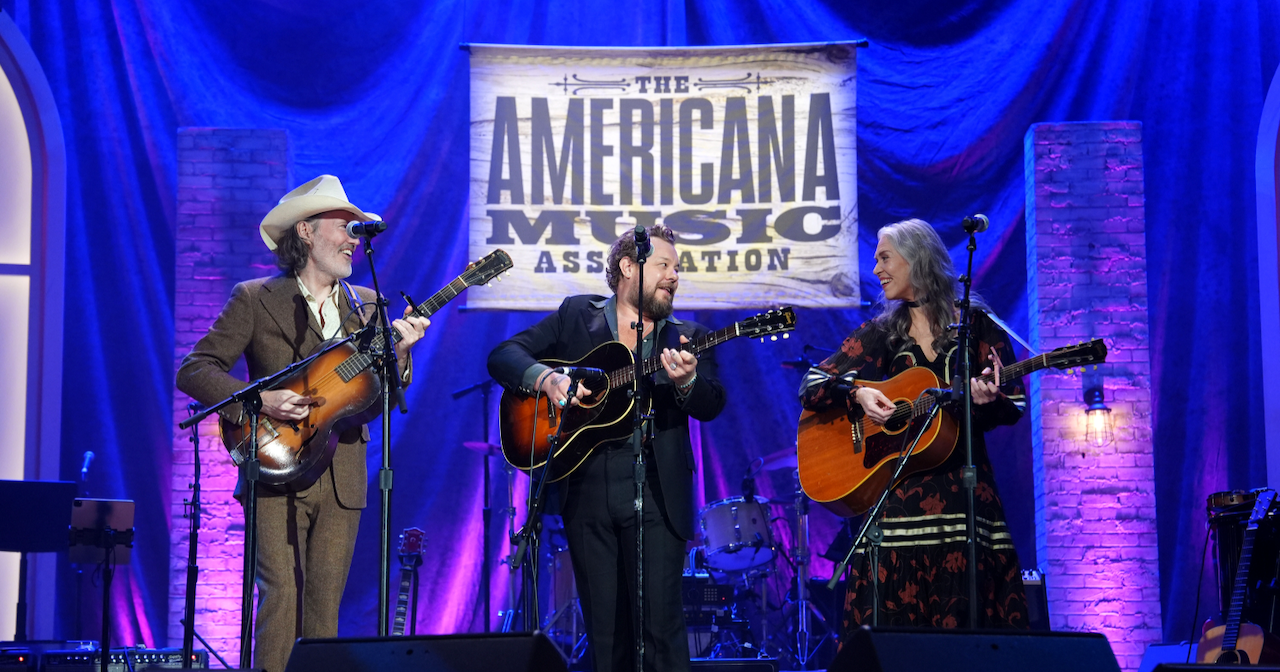
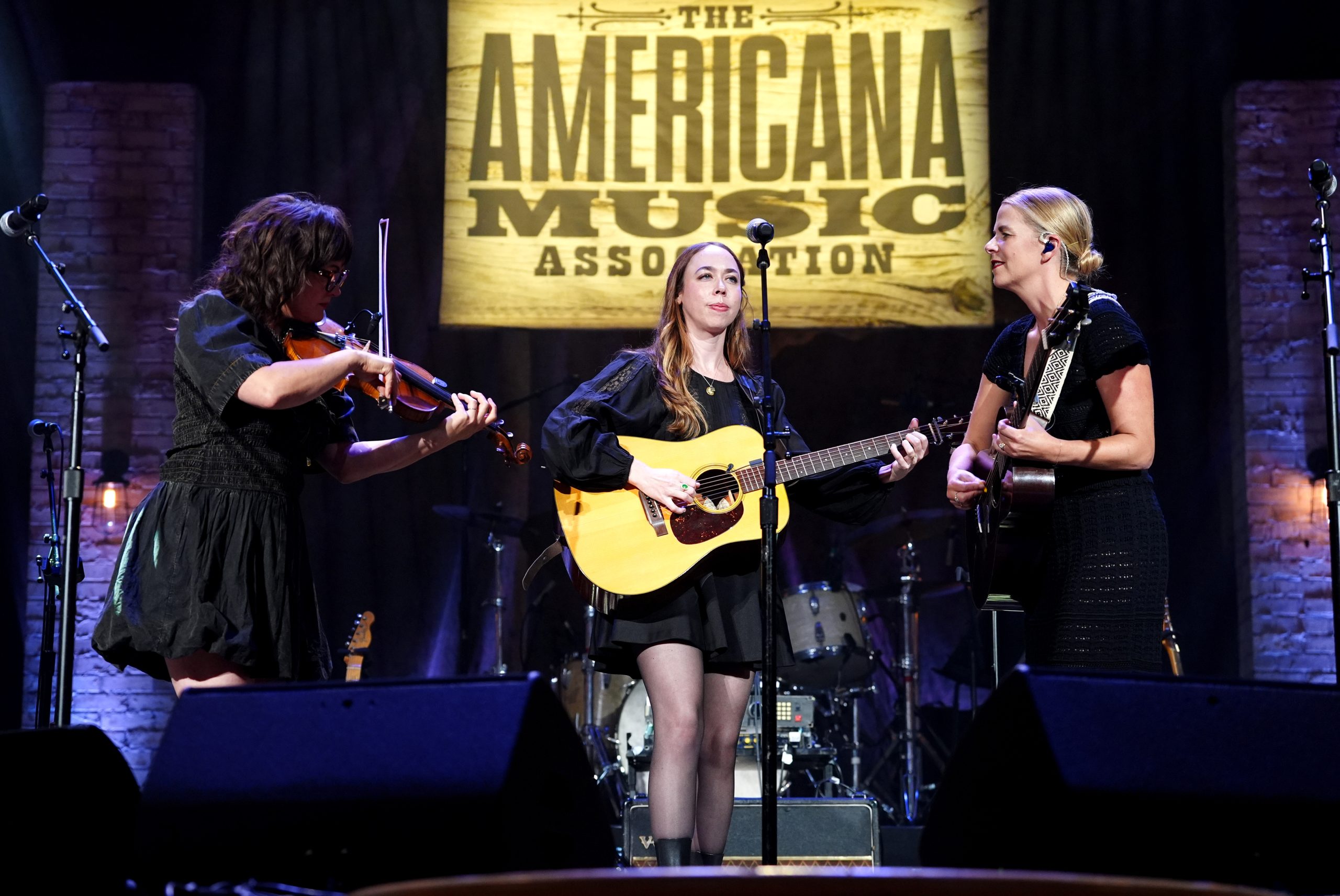
I’m With Her – Sara Watkins, Sarah Jarosz and Aoife O’Donovan – perform during the Americana Honors & Awards at which they won Song of the Year. (Photo by Erika Goldring/Getty Images for Americana Music Association.)

ALBUM OF THE YEAR

Lonesome Drifter, Charley Crockett; Produced by Charley Crockett & Shooter Jennings

Foxes in the Snow, Jason Isbell; Produced by Jason Isbell & Gena Johnson

Manning Fireworks, MJ Lenderman; Produced by Alex Farrar & MJ Lenderman

South of Here, Nathaniel Rateliff & The Night Sweats; Produced by Brad Cook

Woodland, Gillian Welch & David Rawlings; Produced by David Rawlings

ARTIST OF THE YEAR

Charley Crockett
Sierra Ferrell
Joy Oladokun
Billy Strings
Waxahatchee

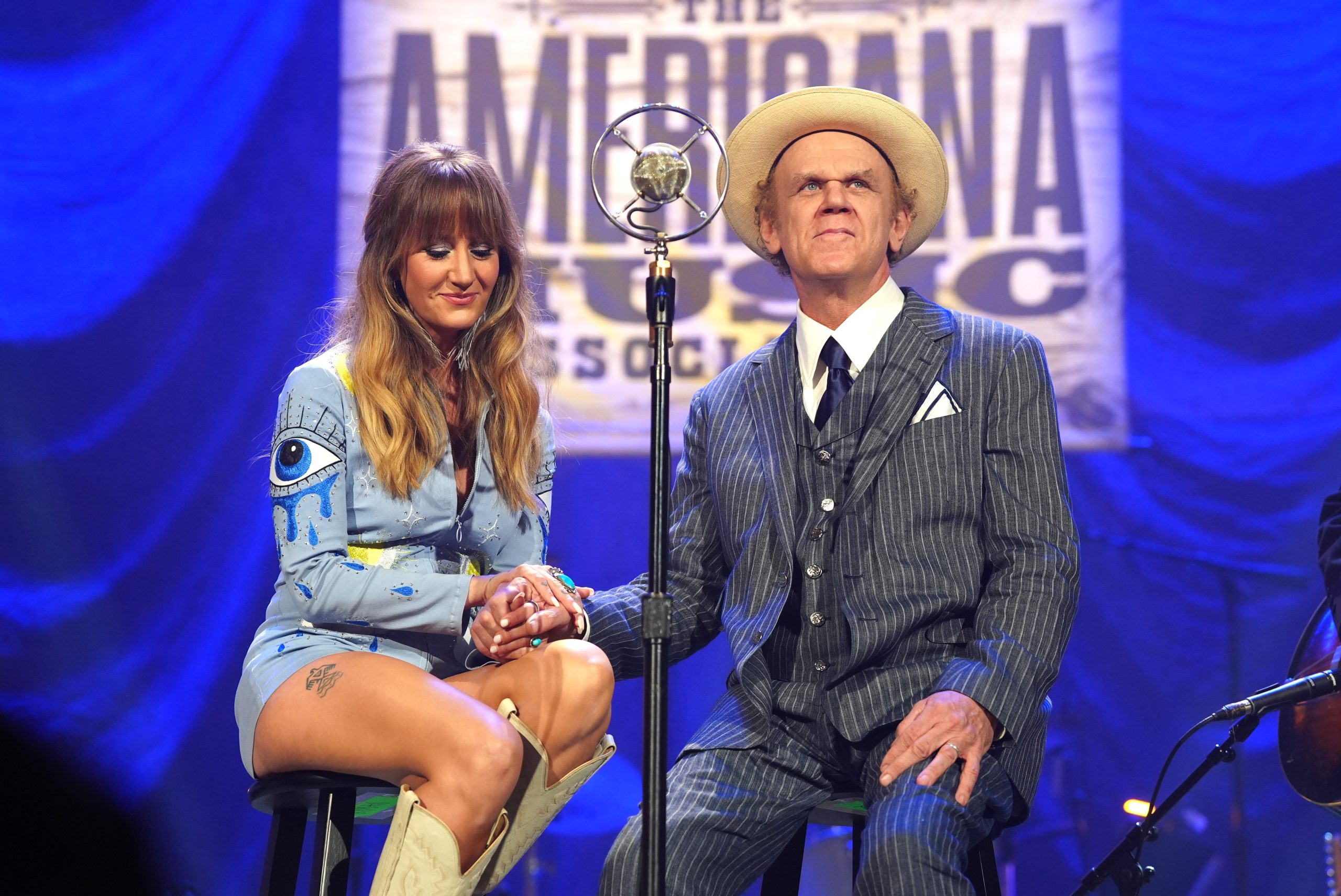
Margo Price and host John C. Reilly center stage at the Americana Honors & Awards. (Photo by Erika Goldring/Getty Images for Americana Music Association.)

DUO/GROUP OF THE YEAR

Julien Baker & TORRES
Dawes
Larkin Poe
The Mavericks
Gillian Welch & David Rawlings

EMERGING ACT OF THE YEAR

Noeline Hofmann
MJ Lenderman
Medium Build
Maggie Rose
Jesse Welles

INSTRUMENTALIST OF THE YEAR

Fred Eltringham
Alex Hargreaves
Megan Jane
Kaitlyn Raitz
Seth Taylor

SONG OF THE YEAR

“Johnny Moonshine,” Maggie Antone; Written by Maggie Antone, Natalie Hemby & Aaron Raitiere

“Ancient Light,” I’m With Her; Written by Sarah Jarosz, Aoife O’Donovan & Sara Watkins

“Wristwatch,” MJ Lenderman; Written by MJ Lenderman

“Sunshine Getaway,” JD McPherson; Written by Page Burkum, JD McPherson & Jack Torrey

“Heartless,” Nathaniel Rateliff & The Night Sweats; Written by Nathaniel Rateliff

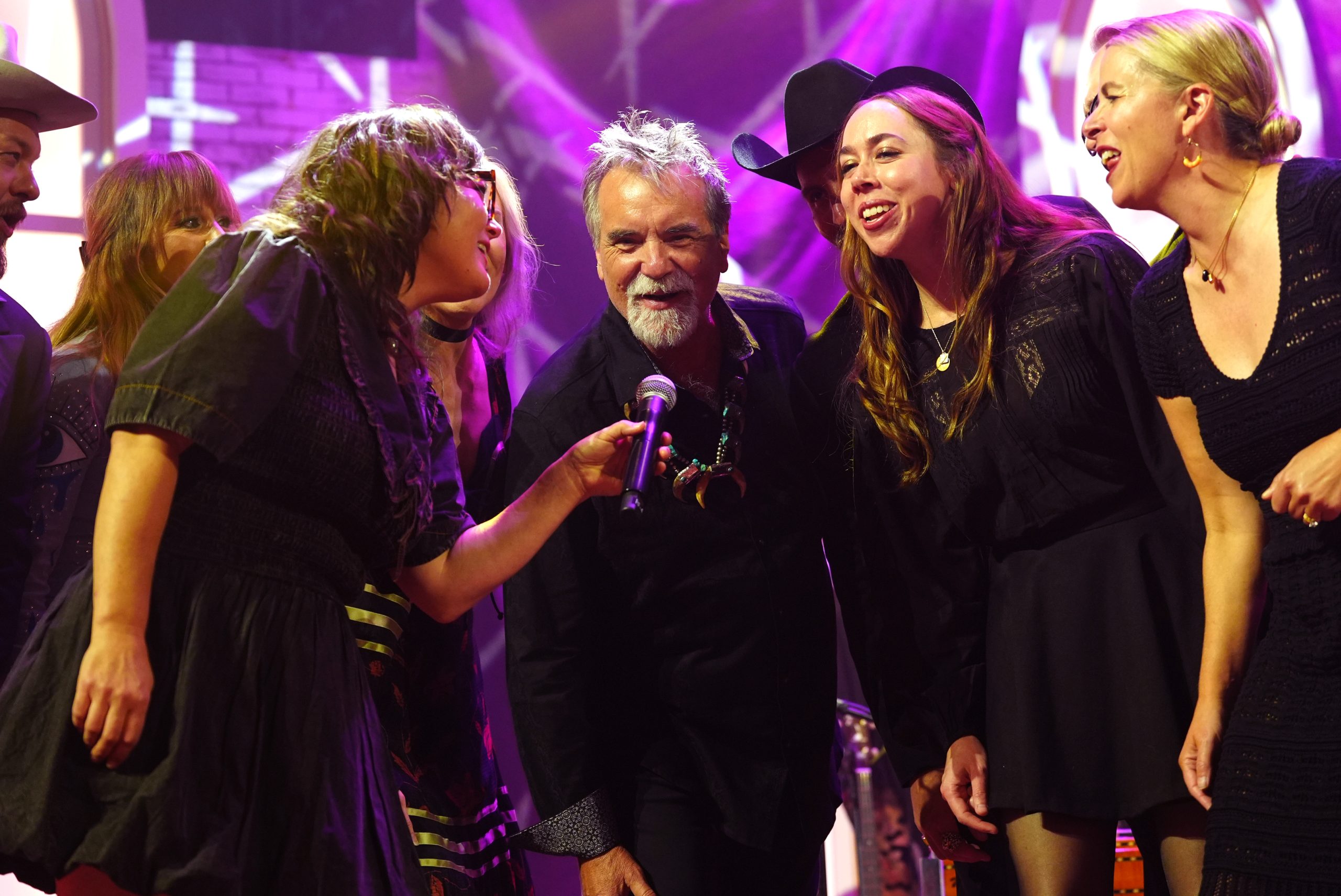
Darrell Scott sings with I’m With Her – Sara Watkins, Sarah Jarosz, and Aoife O’Donovan – at the Americana Honors & Awards. (Photo by Erika Goldring/Getty Images for Americana Music Association.)

AMERICANA LIFETIME ACHIEVEMENT HONOREES

Joe Henry
Darrell Scott
Old 97’s

LEGACY OF AMERICANA AWARD

(co-presented with the National Museum of African American Music)

The McCrary Sisters

SPIRIT OF AMERICANA FREE SPEECH IN MUSIC AWARD

Jesse Welles


All photos via Getty Images for Americana Music Association, credits as noted.

Lead image: David Rawlings, Nathaniel Rateliff, and Gillian Welch perform during the Americana Honors & Awards; by Erika Goldring.
Alternate images: David Rawlings & Gillian Welch pose backstage with their award for Duo/Group of the year; by Terry Wyatt.

Lend an Ear to
Hailey Whitters

Fueled by a strong Midwestern work ethic, Hailey Whitters played the long game to earn her well-deserved spot in country music. From the time she moved to Nashville from Iowa in 2007, Whitters immersed herself in the city’s songwriting community while chipping away at her dream of being a recording artist.

It took about a decade, but her own songs found their way to Alan Jackson, Little Big Town, and Martina McBride, and she earned a GRAMMY nomination for Song of the Year as a co-writer on Alicia Keys and Brandi Carlile’s “A Beautiful Noise.” But her true breakthrough arrived in 2022 and 2023, when her platinum single “Everything She Ain’t” charmed small-town fans and country radio programmers alike.

After “Everything She Ain’t” eased off the charts, Whitters forged ahead on the road and returned to the studio to create Corn Queen, her first new album in three years. In a call with Good Country, Whitters chatted about working with Molly Tuttle on “Prodigal Daughter,” the influence of the Chicks, and how a childhood diary set the foundation for her as a songwriter.

Corn Queen kicks off with a song called “High on the Hog.” which seems like it’s based on a true story. What was on your mind as you were writing that?

Good lord. I mean, it feels pretty literal to me. I was in the middle of just burnout, probably. I was thick in heavy, heavy touring, sometimes being in the airport three times a day. I was watching my [follow-up] single at country radio fail miserably. It was such a whirlwind, but I remember just taking a minute to be like, “What on earth is going on here?” and having a moment of clarity. I’ve been in Nashville for 17 years now, and I’ve been on the road for over a decade. I got my first bus last year. It was this funny juxtaposition where everyone was thinking that I’d made it. I’d had this big single, and my whole family thought I was so famous! But if you saw that I slept on an airport floor last night and got ready in a gas station bathroom, you would be shocked by what is behind this curtain. I wanted to show that with this song. Outsiders might think this business and this job are really romantic. And I think it’s a grand illusion!

There’s a silver lining in that song, I think. Do you consider yourself an optimistic person?

I always say I’m a negligent optimist. I’m optimistic to a fault! I’ve really had to put on some reality glasses the last few years because I will always choose “glass half full.” I’m always going to look for the brighter side of things. But yeah, I got some good kicks in the rear end the last few years, and that shook me up a little bit. So wait, what’s the silver lining, though? I’m curious, the “high on the hog” line?

Yeah, I took it as, “Hey, despite everything, I’m still out here doing this thing.”

And that’s true, too. In the bigger picture, when I’m not pulling graveyard shifts in driving the van and breaking down and having my audio engineer leave at the border in Canada and getting thrown to the wind before opening for Tyler Childers… I think it’s a silver lining. It’s also a little like sarcasm. Like, I know I’m not supposed to complain, but I’m high on the hog out here! But ultimately, there’s been some really great moments and some really cool things that I’ve dreamt about my whole life. So, at the end of the day, this gig ain’t that bad.

Molly Tuttle is on this record, too, on “Prodigal Daughter.” How did you cross paths with her?

I think one of the first times we ever met each other, I want to say we were both singing at a Tim McGraw tribute show. I may have made that up, but we were both on the bill, and it was Basement East. I remember meeting her backstage and hearing her, and she’s phenomenal! She’s absolutely incredible. And we got set up to write during the pandemic. It was me, her and Lori McKenna, and we wrote maybe two or three songs. And I really, really loved it.

I listened to her and I listened to Billy Strings a ton during the pandemic. I always thought it would be cool to do something with her someday. She’s just an insane talent. Then I wrote this song, “Prodigal Daughter,” and it felt like more of a bluegrass, rootsy kind of vibe. And I thought, “I would love for Molly to do some picking and sing on this one.” And yeah, she played clawhammer! We went over to my engineer’s studio and it was freaking insane. She just blows my mind.

At what point did you become a bluegrass fan?

I think I always liked bluegrass. Bluegrass fans might think this is crazy, but probably my gateway drug was when the Chicks made the Home album, which was more of a bluegrass record. Then that turned me on to Alison Krauss & Union Station, and the early stuff from Ricky Skaggs and Keith Whitley. I have so much respect for that music. They’re so talented and I’m in complete awe. I feel like they come out as babies with an instrument in their hand and just know it up and down. To be so dedicated and devoted to your instrument like that, it really blows my mind.

Home was a landmark record for me, too. Living in Nashville this long, I think about that song “Heartbreak Town,” and how that really shows the way the music industry is here.

So good! [Written by] Darrell Scott, another great musician. And that record was the first time I got turned on to Patty Griffin, too, because of “Top of the World” and “Truth #2.” I grew up in a cornfield in the Midwest. There was no musical influence around me. My family is super blue-collar. Everyone’s digging dirt, or farming, and women are raising babies. The only musical influence I had was what I was hearing on the radio. I was a big country radio kid, and I remember when the Chicks put out that record. That’s the first time I thought, “I need to scratch the surface and dig a little deeper into some of these influences.”

If there’s one song from Home that you think somebody has to hear, which one would you pick?

If you’re wanting to be a songwriter or an artist in country music, I would probably say “Travelin’ Soldier.” That song is so well-written. Anyone can hear that and feel something. Bruce Robison wrote that song. There’s a certain magic to a songwriter who can sit down and write a song by himself. If you want to go deep, “Top of the World.” Even when I was a senior in high school, I was so blown away by that song. It really makes you reflect and think about your life. I remember seeing a Patty Griffin show at the Ryman a few years back, and I just sobbed in the pew to that song! It was a spiritual experience for me.

How did you pick up guitar? How did you learn how to play?

It’s funny, I got a diary one Christmas in 1994. I would have been five years old, barely knew how to write at that point, and I kept a diary. So I always wrote, for my whole life. In elementary school, my guidance counselor asked me what I wanted to do when I grow up. I was like, “I want to sing country music.” And he asked me, “Well, who are some of your favorite artists?” And I said, “The Chicks.” And he was like, “You know they write their own music, right?” And I said, “No! How do you do that?” And he told me, “You’ve got to get a guitar, you’ve got to learn some chords, and you’ve got to write some songs.” So that was when I started doing all that.

How did you make friends when you got to Nashville?

Actually I’m just leaving a breakfast with three of the first people I ever met in Nashville. We met back in 2007, and still to this day, they’re some of my closest friends. When I moved here, I went to Belmont University, and I met them there. We were all Miranda Lambert fans, and she was playing a show, so we all were talking about going to the show. We just always loved country music together. Especially when we first moved to town, we were so completely enamored by Nashville and the songwriting scene. Back when Nashville had showcases, we would go to three showcases a night. It was like, get out of class, get in my friend Lauren’s car, and go hit shows all night long.

On this record, I especially enjoyed “Hearsay.” It’s a love song, it’s funny, it’s got attitude, and a great hook, of course. Are there any moments or memories that stand out for you as that song was taking shape?

That song is about the Black Squirrel in my hometown, which is this little townie bar that’s been around forever. I remember going to see bands there, and they literally had chicken wire up to protect the bands. It’s that bar where you walk in with somebody that you’re not supposed to be with, and the whole town is going to be talking about it, and everyone’s going to know within an hour.

The song “DanceMor” is inspired by a place in your hometown, too, right?

DanceMor is the dance hall across the street from the Black Squirrel. It’s been around since the 1930s. My dad grew up going into it, my aunts and uncles, generations grew up throwing their boots on to go out line dancing and listening to country music. I always thought it was so cool. It closed for a minute when I was in high school, when it was undergoing different ownership, but I’d always wanted to go back and play it. It’s literally an eight-minute drive from my parents’ house. Everyone packs it out. We drank them out of beer last time. And everyone actually went across the street and started buying buckets and came back across the street and kept drinking. It’s such a sweet spot. I’m a big fan of old shit and protecting it and keeping it alive. There’s energy in those kinds of places that you can’t get in a new, polished venue. It’s kind of our little love song to the old dance floor ballroom.

I loved to hear the Wilder Blue singing on there. What did those guys add to the feel of that track?

I think they made the track. It needed those stacked harmonies, and they bring so much texture to all the different vocals and whatnot. They seemed to be a great fit for that. I met them on the Luke Combs tour last year, and they were so fun, and felt like brothers on the road. I listened to the record they did with Brent Cobb and I thought it was phenomenal. Then we got to tour together and play stadiums last year, and me and them, we’re at the bottom of the bill! We always went on early, then we went out in the parking lot and set up cornhole and made pickle margaritas and drank tequila and smoked cigs and played cornhole all night. I just hit it off with those guys.

There’s a message of encouragement in that song, too. You must have met a lot of little girls who look up to you. What do you like about having young fans?

It’s really cute. I mean, I used to be that girl. I remember getting on my dad’s shoulders in a cowboy hat and cowboy boots, reaching out and touching Ronnie Dunn’s hand when he’s on stage. I blame those early country concerts, because those were the moments where it felt larger than life, and you’re like, “I want to do that one day.” That’s really special to see girls like that holding up posters, or with the cowboy boots on, or wanting to get up and sing “Everything She Ain’t” with me. I egg it on. I think it’s great! And they can blame me when they’re twenty years into a ten-year town one day!


Lead Image: Harper Smith

Jason Carter & Michael Cleveland’s New Album is a Fantastic Twin Fiddle Workshop

Following more than 30 years since first meeting and countless times sharing the stage during festivals, the two most accomplished fiddlers in International Bluegrass Music Association history have finally teamed up for their debut album together.

Released March 14 via Fiddle Man Records, the aptly titled Carter & Cleveland sees the combined 18-time IBMA Fiddle Players of the Year Jason Carter and Michael Cleveland flexing their bluegrass muscles on compositions from some of the most prolific songwriters around – like Darrell Scott, John Hartford, Tim O’Brien, and Del McCoury.

Coincidentally, it was with McCoury and his sons’ band, the Travelin’ McCourys, with whom Carter spent the last 33 years playing until the February announcement that he’d be stepping away from the groups to focus on his solo material and collaborative projects, like this one with Cleveland.

“I just thought it was time to start pursuing other things, like my own career,” explains Carter about his decision to leave the bands. “That being said, I never thought I’d be leaving the [Del McCoury] Band. I recently gave a fiddle lesson and the person I was teaching told me he was surprised I left the band and I remember telling him, ‘I’m kind of surprised too.’ [Laughs] But it’s so rewarding to be doing something new with my own band along with getting to play with Mike.

“I’m also really excited to see the McCourys play with their new mandolin player, Christian Ward,” he continues. “There’s no bigger fan of Del or the Travelin’ McCourys than me. This will be the first time since I was 18 years old that I’ll be able to sit out in the audience and watch his show. I can’t wait!”

It was also with McCoury where Cleveland, then 13, first met Carter back in the early ’90s during one of Carter’s (then 19) first gigs with him.

“[The Del McCoury Band] has always had the players that I aspire to be like,” says Cleveland. “I remember going to and recording the band’s shows from the soundboard when Jason was just starting out with them. Then I’d go home and try to play guitar over the recordings to best imitate each part. They quickly became some of my biggest influences in this music, and still are.”

Ahead of the album’s release, BGS spoke with Carter & Cleveland over the phone to discuss the duo’s years-long partnership, the process of bringing this record to life, and their thoughts on the history of duo records in bluegrass music.

You have tunes from Del McCoury, Darrell Scott, John Hartford, Bill Monroe, Buck Owens and other roots music legends on this project, but no originals. What was behind that decision?

Jason Carter: Well, for me, I didn’t have any original tunes at the time we started doing this, so I just started throwing out songs I liked. Then I called some songwriters – Tim O’Brien, Terry Herd, Darrell Scott, and others – and the songs I liked most of what they sent I then played for Mike. I’ve only written one fiddle tune so far, but actually have four or five writing sessions lined up this week, so maybe if there’s a Carter & Cleveland Volume II, I could have a cut on there.

Michael Cleveland: We’ve talked about needing to sit down and write together, it just hasn’t come to fruition yet. When I’ve sat in with Del or Jason in the past we never had time to rehearse, which is similar to how these songs came together. We were able to talk about material and send things back and forth, but we didn’t have much time to sit down and rehearse before recording because we’re both so busy. I hope we get to do that someday, but at the same time songwriting isn’t the main focus for me. I know folks that’ll write a tune every day, but for me that only happens once in a while; when it does I make sure to run with it.

What are some standout songs for y’all on this project?

JC: That’s tough, because I like all the songs on the record. At any given time I could have a different favorite. There’s also some that didn’t make the record we still have in the can and might put out later that could actually be my favorite songs. That being said, I really like the part of “With a Vamp in the Middle” where [Mike] finger picks the fiddle while I’m strumming…

MC: That was your idea!

JC: I heard you play something that sparked that. [Laughs] When you’re in the room as a fiddle player and you hear Michael Cleveland play, it’s all special. He [is] leagues above everyone else.

MC: It’s hardly ever a problem that you have too many good songs, but that was definitely the case when we went in to record. As soon as we put the word out about it we had a bunch of our musical heroes sending us songs to record and they were all great! When I first heard the demo of “Give It Away” from Tim O’Brien I liked the song immediately. Tim was playing old-time banjo on it in the key of D while singing, but once I heard Jason sing it in the key of B I knew it was meant to be a hard-driving bluegrass song.

I also really enjoy “Kern County Breakdown.” The only time I’d ever heard that – which made me want to record it – was from Alison Krauss. She used to play it as a fiddle instrumental and I always wish she recorded it. I don’t know if it’ll happen, but I’m still holding out hope that she’ll put out a fiddle album one day.

She does have her first album in 10 years dropping later this month, so you never know!

Throughout the history of bluegrass music there have been many timeless duo records from the likes of Ralph Stanley & Jimmy Martin to Ricky Skaggs & Tony Rice to Bill Monroe & Doc Watson. What are your thoughts on being the next chapter in that series of collaborations?

JC: I hadn’t really thought of it like that before…

MC: If this album is mentioned in the same breath as any of those, that would be great! We also talk a lot about our favorite twin fiddle albums, which this seems to be more of, and have tossed around the idea of doing this project for 15 years. There’s albums from Kenny Baker and Bobby Hicks, Buddy Spicher and Benny Martin, Buddy and Vassar Clements, and so many more, but there hasn’t been one for a long time now. That’s what originally inspired us to do this. In the last few years people have also finally figured out what a great singer Jason is, which afforded us a lot more room to experiment than if it were a twin fiddle instrumental album.

JC: Mike just has such a good ear. I remember sending him a couple versions of demos I played and sang on and he’d immediately get back to me with suggestions like adding a fiddle lick at the beginning, like on “Outrun The Rain.” He thought it would be great for a high harmony thing two above the lead. As soon as he heard this stuff he had ideas. It was really cool to see how that all came together.

Mike just mentioned the idea for this album has been floating around for 15 years. When did y’all eventually get to work on it?

JC: We started recording a couple years ago. The first session we recorded we actually did at [guitarist] Cody Kilby’s house during COVID, then it was another year or so after that until we got working on it again. Because we didn’t have any rehearsal time, I remember sending voice memos of myself playing fiddle, guitar, and/or singing to Mike to listen to and send suggestions back. I remember being at a show with Del tucked away in the dressing room by myself trying to record versions of these songs or trying to run through an arrangement before sending it to Mike through text message.

MC: I had a great run with the label I was previously involved with, Compass Records, but they weren’t really interested in collaboration albums. With all of my projects and Jason as busy as he is, we were always just in the middle of other things until Jason put out [2022’s Lowdown Hoedown] and I completed [2023’s Lovin’ Of The Game]. It was around that time we decided to take the leap and finally start working on this.

Speaking of taking a leap, I know y’all co-produced this record too. What was your motivation behind that?

MC: We had talked about bringing somebody in. I’ve worked with Jeff White for years on my albums. In a way he helped to produce this one too, which is fitting because I always felt like we co-produced my albums together. For this record there were people we’d send stuff to listen to, even down to the final mixes, just because we respect their opinions, but the final calls were all us.

JC: Even when you’ve got someone like Bryan Sutton in the studio for tracking, he may have an idea he throws out that becomes a big help as well. That could come from anyone involved in the session, even engineer Sean Sullivan, who we leaned on heavily as well because they do this every day. These people are here for a good reason, because they’re super talented and play some of our favorite music. And when it comes to Cleve, I’m all ears. He always has good advice.

MC: When you first start recording, you don’t always know what sounds good. It’s like with playing, singing, or anything else, the more you put yourself in those situations the more you understand what you want to hear and how to achieve it. Working with Jeff in the past, we’d be together during the day when all of the sudden he’d say, “Hey Mike, I gotta take off for a few hours, produce for a while.” It freaked me out the first time he did that, but it forced me to get comfortable in the situation and forced me to trust my ear more. Jeff having that faith in me also gave me a little more confidence in myself that I was making the correct decisions and to continue trusting my instincts.

JC: With the Travelin’ McCourys, all of those records were produced by the band along with most of the stuff we did with Del, too. I did produce my solo record, Lowdown Hoedown, though. But even on that, when we were recording Sam [Bush] and Jerry Douglas were there. I remember Jerry – who produced a lot of the McCourys’ stuff early on – always had great ideas on arrangements and different things to put in when he spoke up, which was a huge help. Getting to be in the studio with him is an education you can’t get anywhere else.

Jason, you briefly spoke of a few of the album’s players there. But they’re far from the only top-notch pickers you have on this record, with the likes of Vince Gill, Charlie Worsham, and Sierra Hull, among others. How’d y’all go about deciding who to bring into the fold?

JC: We just tried to think of who would best fit with the songs as we listened to demos for each.

MC: It also came down to who was available at certain times. Guys like Bryan Sutton, Cory Walker, and Alan Bartram played on most of it. I remember days where Sam Bush was available on mandolin and others where Harry Clark filled in. Some of the first sessions we did after the pandemic were with Cody Kilby and Casey Campbell followed by David Grier and Dominick [Leslie].

And going back to something Jason said earlier, I also leaned on Bryan a lot, specifically about what songs he thought it would be good to have Sam on, which led to his inclusion on “Middle of Middle Tennessee” and a few others.

What has music, specifically the process of bringing this record to life, taught you about yourselves?

MC: This was one of the first things I’ve done without a producer being there. Most of the time we would agree on decisions, but other times you don’t know what the right thing is and somebody has to make the call, because that’s typically something a producer would do. When it’s just you there’s no question, but when you’re working with somebody you want to make sure it’s a collaboration and not one person running the ship. Recording this album has taught me to be more aware of that.

JC: The singing part of this too, that’s still pretty new to me. I’ve sung on other people’s records, my solo album and with the Travelin’ McCourys, but being the lead singer throughout is a new venture for me and something I really enjoyed getting to do with Michael.

What do the two of you appreciate most about one another as both musicians and people?

JC: Everything about Mike’s playing, he’s just on another planet right now, and as a person he’s the same way. I recently got married and Mike was my best man, because no matter what he does he is the best man!

MC: Hearing Jason play with Del, he’s always been the fiddler I’ve wanted to be. We’re both into the same stuff, which is why I think we work together so well. It’s why we’re able to jump on stage and play twin fiddles without rehearsing, which is usually a mess when you do that. Getting to work with him on this album has been a dream come true for me.


Photo Credit: Lead image by Sam Wiseman. Square image by Emma McCoury.

The Herculean Story Behind Andrea Zonn and John Cowan Becoming The HercuLeons

Andrea Zonn and John Cowan have been among the hardest-working musicians around Nashville for the past few decades. Zonn has done tons of sessions both for her violin and vocal prowess as well as touring with superstars like Vince Gill, Lyle Lovett, and James Taylor. Cowan, a longtime member of the legendary New Grass Revival, also was a founding member of the country-rock supergroup The Sky Kings, has done solo projects, and currently tours as the Doobie Brothers’ bassist. However, they only really started playing together due to the pandemic. Their collaboration resulted in a band called The HercuLeons, whose debut album Andrea Zonn & John Cowan Are The HercuLeons arrives March 21 on True Lonesome Records.

Darrell Scott, Tom Britt, Greg Morrow, Abraham Parker, Gary Prim, and Reese Wynans represent the primary HercuLeons on the album, while Billy Payne, Michael McDonald, Jonell Mosser, John Hall, and John McFee number among the special guests.

Zonn and Cowan spoke separately to BGS for our feature interview all about their unique collaboration, becoming a band, and the debut album.

When did you two first meet?

Andrea Zonn: I moved to Nashville in 1986 and John I think got here two, three, four years before that. I was already a fan of his, but we met and our paths crossed over the years. Then at some point we got called to sing on a session together. I just love singing with him. We became friends and have been great friends. He’s like a brother to me, actually.

John Cowan: Our lives have been continually entwined because of our musical interests, our mutual respect for each other, and because we would get hired to do backing vocal sessions.

How did this particular collaboration come to be?

JC: Right during the pandemic, Andrea and I had gotten solicited to play on a custom project. It was like, “We’ve got three songs for you.” And we’re like, “Okay.” Well, it turns out they had like nine songs for us and we basically just went from the top of the list all the way to the bottom; we were there like 10 hours.

AZ: Then I was just about to call him on my way home, when he called me and we were both about to say the same thing, which is “God, I love singing with you.” We just decided to sort of become each other’s creative bubble during the pandemic. We were thinking we would do something sort of bluegrass-y with [mandolinist] Ashby Frank, [guitarist] Seth Taylor, and [banjo player] Matt Menefee, which was a blast. So, we did a couple of Facebook Live concerts, which is hysterical because we were playing just to the camera.

JC: These kind of young guns guys – Ashby and Seth and Matt – they’re at that time of their lives where they’re just running full speed. They’re just so impassioned and so full of music that you really can’t get somebody like that to commit to, “Hey, let’s be in a band.” By the time we got around to making this record, the personnel had just switched to basically me and Andrea and then we chose the band that we wanted to make the record with.

How did the record come about?

JC: It happened pretty organically. We were talking about making this record. We weren’t even as far as who’s playing on it, or who’s producing or what it is. But I was driving home from my sister’s house in Indiana back to Nashville one day and I heard Claire Lynch doing this song called “Barbed Wire Boys” and I literally pulled my car over because I thought to myself: “Am I hearing what I [think I’m hearing]?” The words were so unbelievably well-written. It was just stunning. I played it for Andrea and I said, “What do you think of this song? Are you just as stunned by the words as I am?” She said, “Absolutely!”

AZ: It just felt like such a timely message in this song, which is that there’s this generation of strong, stoic men who have this really soft underbelly. It feels like there’s not a place for that right now and there’s a real wistful longing for this gentle strength. We were listening to the song going, “What could we do with this?” We were just looking at it as this single standalone thing. Let’s just record this because we love it. We’ve got time on our hands. And the idea just kept growing. It’s like, “Let’s just figure out a way to make a record like this.” Also, with the pandemic [it was] a weird time to make long-term plans

Wendy Waldman produced the album – how did she get involved?

JC: We got a hold of Wendy Waldman, who’s one of my oldest friends and produced many things I’m involved with. Andrea and I made a vocal guitar demo and sent it to her.

AZ: We decided we wanted to slow down [the song], break it down, and make it more of what Wendy calls, “The prairie orchestra sort of thing.”

JC: She worked on it for us – it’s like she went away in a little hobbit in a village of stuff, she came back to us, and she’d written the most beautiful layers of mandolins and acoustic guitar tuned down low.

AZ: She’s like a shaman the way she creates. It’s like you just see glowing aura is coming out of her when she’s in that space.

The idea to do an album grew from there?

JC: That was the beginning of the record. We had that song and we started pursuing it and it would be about sharing tracks and files back and forth from California, which is where Wendy lived, and that was going swimmingly well.

AZ: Exactly. It was like, “Let’s put something beautiful in the world, because I feel like that’s our responsibility as artists.” Especially during these times we’re living in are so full of devastation and difficult things and people need healing. They need beauty. They need that balance. And so that’s where we come in. So, it just started as just this yearning to create something beautiful. And then it was just so much fun, and the chemistry was there.

The album features only 11 songs and those are mainly covers. Was it hard to decide what songs to record?

AZ: It was brutal actually picking songs, because there are so many beautiful and great songs and we weren’t really all that concerned with where the genre markers are. We just were like, let’s just do stuff we love. We’ve just been feeling our way through it. Things that we really felt like we could sing well together were sort of a consideration. It was such an organic process, and it was not a quick process.

JC: I think we got up to 30 songs that we wanted to have a stab at. We kept culling it down. So, this bushel of songs started to reveal itself to us. We opened it up a lot [like] a basket of fruit and you could see which one was going to make it and which ones might get a little too ripe.

One of the things that immediately stands out is the amazing way you two sing together

AZ: We have a lot of the same influences. You know, I call him “The Powerhouse” and I’m sort of a “Powder Puff” so [we] complement each other. He’s just so intuitive and such a great musician, such a beautiful sense of phrasing, and it’s just very easy to fall into place with him

JC: We know each other’s voice, so there’s some kind of internal resonance that’s going on there that you can’t see or feel or touch… You can’t necessarily write it out on a piece of paper. When two singers sing together like that it’s like Baez and Dylan.

The music is remarkably diverse – a vibrant mix of rock, soul, blues, country, funk, and bluegrass – but the album holds a real cohesiveness. There’s a sense of humanism and empathy that flows through the songs you picked.

JC: That’s just who we are. Andrea and I are the same. We’re the perennial man looking for a spirit greater than all of us to bond us to human beings in the world.

That seems to be spotlighted using your single “Face of Appalachia” (an old Lowell George/John Sebastian tune that Valerie Carter had on her 1977 debut album) to raise awareness for victims of Hurricane Helene. It’s a song that has many connections with both of you, right?

JC: Both Andrea and I became or were friends with Valerie before she passed a couple of years, so there’s a huge emotional connection for both of us.

AZ: We just love the song and we wanted to kind of do our little spin on it. Then when the hurricane hit, it’s like we all felt so powerless to help, so we wanted to raise awareness and direct people to organizations that are actually on the ground doing good work. I mean, John and I love the people, the region, the music that comes from there. It’s just such a meaningful place, you know, and your heart just breaks for what people are going through.

If you had to choose a song that’s a good entry point for listeners, what would it be?

AZ: You have to listen to the whole thing. You just have to suck it up and suffer through it, it’s only 11 songs! “Straight Up” would get their attention. Let’s say that it’s short and sweet and it’s just full of a lot of what we do, except for the slow pretty stuff and there’s a great message in that song.

JC: I might say “Face of Appalachia,” because there are two beautiful lead vocals on there, but they don’t appear to be lead vocals. They just appear as these two people singing together. … There’s so much about that track. How the words fit so well with the arrangement. It has shadows and light as well, but a lot of pathos.

The Gregory Porter song we do called “Take Me to the Alley,” I just think it’s a staggering song. It’s basically talking about how people are lining up all these shining things in front of their houses waiting for God to return and then he shows up and he’s like, “I don’t want to see any of this, take me to the alley, take me where the desperate ones are.”


Photo Credit: Courtesy of the HercuLeons.

You Gotta Hear This: New Music From Andy Leftwich, Carter & Cleveland, and More

Okay but really, You Gotta Hear This! Our weekly premiere and new music roundup is simply packed with entirely legendary bluegrass in this edition of the column.

Kicking us off, award-winning husband-and-wife duo Benson – made up of Kristin Scott Benson and Wayne Benson – offer their rendition of a Harley Allen song, “Things Have Changed,” with Dustin Pyrtle lending a perfect lead vocal to the track. The Seldom Scene, an iconic bluegrass band for now more than 50 years, release their brand new album today. We’re celebrating Remains to Be Scene by highlighting “Hard Travelin’,” a Woody Guthrie-written number that you, like Ron Stewart, may recognize from Flatt & Scruggs’s discography.

Fiddle is represented in force this week, too, with fiddler and multi-instrumentalist Andy Leftwich racing through an original, “Highland Rim,” with Cody Kilby, Matt Menefee, and Byron House along for the ride. Jason Carter & Michael Cleveland are releasing their debut duo album today as well, so we’ve cued up “In the Middle of Middle Tennessee” from that stellar project. Written by Darrell Scott, it features Carter’s tasty baritone and country star Charlie Worsham (who has strong bluegrass roots) on harmony.

To round out our collection this week, Joe Mullins & the Radio Ramblers preview their new bluegrass gospel album, Thankful and Blessed, set for release next week on March 21. “He Sees the Little Sparrow Fall” is a superlative example of the gospel and sacred traditions in bluegrass, a little concentrated dose of Friday revival for the end of your work week.

Every single track herein is bluegrass of the highest quality, so you know what we’re going to say… You Gotta Hear This!

Benson, “Things Have Changed”

Artist: Benson
Hometown: Boiling Springs, South Carolina
Song: “Things Have Changed”
Release Date: March 14, 2025
Label: Mountain Home Music Company

In Their Words: “We’re excited for this song to finally come out. We love the lead vocal by Dustin Pyrtle and the sentiment of ‘Things Have Changed’ is universal. It seems things do change so fast these days. Downtown Nashville is different every time I go! But even in small towns, you feel it, both physically and relationally with the people who live there. I love the line, ‘I’m sort of glad that Mom and Dad ain’t around.’ That melancholy embodies the mood of this guy who goes back home and feels an overall sense of loss. Wayne and I love to play this slower tempo on mandolin and banjo. He gets to tremolo and I get to play fun chord-based banjo. I always enjoy playing this kind of banjo backup.” – Kristin Scott Benson

“I’ve always loved Harley Allen and certainly do love this song. Dustin Pyrtle seemed like the perfect singer to reach out to and man did he ever deliver the goods on this one!” – Wayne Benson

Track Credits:
Wayne Benson – Mandolin
Kristin Scott Benson – Banjo
Cody Kilby – Acoustic
Tony Creasman – Drums
Kevin McKinnon – Bass
Dustin Pyrtle – Vocal


Carter & Cleveland, “In the Middle of Middle Tennessee”

Artist: Jason Carter & Michael Cleveland
Hometown: Nashville, Tennessee (Jason); Charlestown, Indiana (Michael)
Song: “In the Middle of Middle Tennessee”
Album: Carter & Cleveland
Release Date: March 14, 2025
Label: Fiddle Man Records

In Their Words: “This is a fun song that transports me to a place in my mind where I’d love to be – stuck in the middle of Middle Tennessee. Special thanks to Charlie Worsham for singing with me on this track. It’s one of the highlights of the entire record for me! I never had the chance to meet Darrell Scott’s cat, Bobtail, but somehow, I feel like I’ve seen him before. Thank you, Darrell, for writing this song about him!” – Jason Carter

Track Credits:
Jason Carter – Lead vocal, fiddle
Michael Cleveland – Fiddle
Charlie Worsham – Harmony vocal
Sam Bush – Mandolin
Jerry Douglas – Dobro
Bryan Sutton – Guitar
Cory Walker – Banjo
Alan Bartram – Bass


Andy Leftwich, “Highland Rim”

Artist: Andy Leftwich
Hometown: Carthage, Tennessee
Song: “Highland Rim”
Release Date: March 14, 2025
Label: Mountain Home Music Company

In Their Words: “I’ve always loved the intensity of a fast-paced instrumental and we hold nothing back on this one. Named after a raceway close to home where I grew up, I thought this one perfectly described the rush that you get from going fast. I wanted a song on this new project where we can go absolutely bananas and I feel like we captured it on this one!” – Andy Leftwich

Track Credits:
Andy Leftwich – Fiddle, mandolin
Byron House – Upright bass
Cody Kilby – Acoustic guitar
Matt Menefee – Banjo


Joe Mullins & the Radio Ramblers, “He Sees the Little Sparrow Fall”

Artist: Joe Mullins & The Radio Ramblers
Hometown: Xenia, Ohio
Song: “He Sees The Little Sparrow Fall”
Album: Thankful and Blessed
Release Date: March 21, 2025
Label: Billy Blue Records

In Their Words: “It’s so easy to sing a song of gratitude and celebration when we consider the beauty of creation. Our friend, songwriter Conrad Fisher, lives in a gorgeous valley surrounded by the mountains of Pennsylvania. No matter where we look around the world, seeing God’s magnificent beauty in creation is easy and worthy of our praise. A new song with an old-time flavor and a universal message opens our new album, ‘He Sees the Little Sparrows Fall.’” – Joe Mullins

Track Credits:
Joe Mullins – Vocal, banjo
Adam McIntosh – Lead vocal, guitar
Chris Davis – Vocal, mandolin
Jason Barie – Fiddle
Zach Collier – Bass


The Seldom Scene, “Hard Travelin'”

Artist: The Seldom Scene
Hometown: Bethesda, Maryland
Song: “Hard Travelin'”
Album: Remains to be Scene
Release Date: March 14, 2025
Label: Smithsonian Folkways

In Their Words: “This song comes from a Flatt & Scruggs album of the same title, circa 1963. Written by Woody Guthrie, the song was first recorded in 1947. Anyone who knows me knows how much I love Flatt & Scruggs and this is one of my favorites from the early 1960s when they were still plowing bluegrass, but using material from a broad range of writers.” – Ron Stewart


Photo Credit: Andy Leftwich by Erick Anderson; Carter & Cleveland by Emma McCoury.

WATCH: Carter & Cleveland, “With A Vamp In The Middle”

(Editor’s Note: Today, award winning fiddlers Jason Carter and Michael Cleveland announce their upcoming debut duo album, Carter & Cleveland, out March 14. To celebrate the announcement and the project’s lead single, we’re premiering a special live performance of the track, “With A Vamp In The Middle,” from the fabled stage of the Grand Ole Opry.)

Artist: Jason Carter & Michael Cleveland
Hometown: Nashville, Tennessee and Charlestown, Indiana
Song: “With A Vamp In The Middle”
Album: Carter & Cleveland
Release Date: February 5, 2025 (single); March 14, 2025 (album)
Label: Fiddle Man Records

In Their Words: “This song has always felt like a national anthem for fiddle players and it’s our tribute to the legendary John Hartford and Vassar Clements. It’s long been a favorite for Michael and me to jam on – perfect for twin fiddles and a blast to improvise and trade licks on. Having Darrell Scott’s harmony vocals on [the studio version of] this track was an absolute honor, and his contribution took it to another level. I hope y’all enjoy it!” – Jason Carter

Credits:
Jason Carter – Fiddle, vocals
Michael Cleveland – Fiddle
Alan Bartram – Bass, harmony vocals
Cory Walker – Banjo
Bryan Sutton – Guitar
Harry Clark – Mandolin


Photo Credit: Sam Wiseman