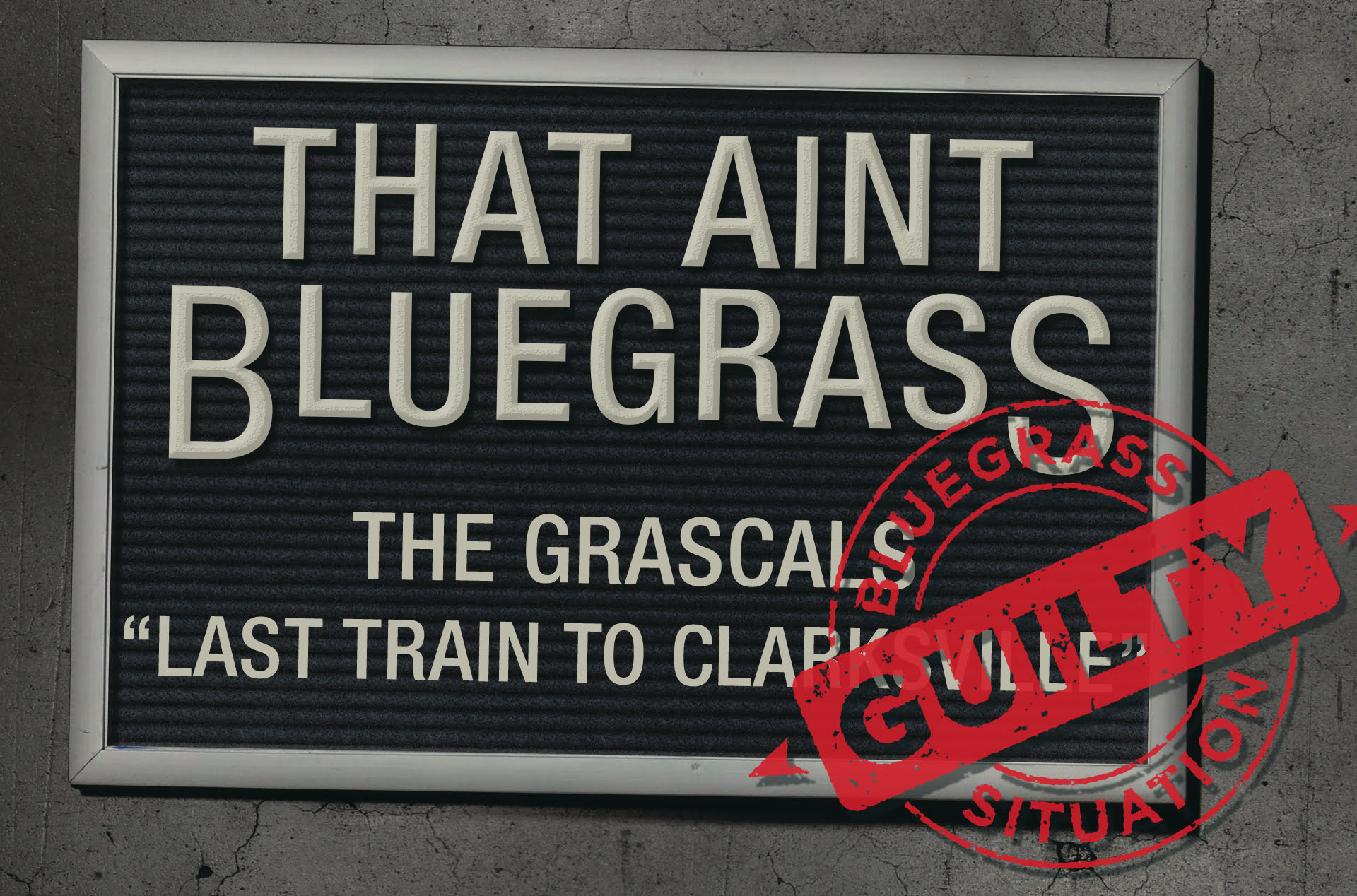
That Ain’t Bluegrass: The Grascals

Artist: The Grascals
Song: “Last Train to Clarksville” (originally by the Monkees)
Album: The Famous Lefty Flynn’s

Where did you all first hear the song?

Danny Roberts: The Monkees. [Laughs] Of course, all of the guys in the Grascals were big Monkees fans when we started the band. It’s just one of those things: The first record we did, we covered Elvis with “Viva Las Vegas” and we’ve done several of those types of things, we did Elvis’s “Mystery Train.” We decided we’d do the Monkees’ song on there and, when we started playing it, it made such a great bluegrass cut. It was a no-brainer. At the time we did it, I didn’t realize that Jim & Jesse cut it way back in the day. None of us had ever heard their cut of it; we didn’t even realize they had done it. We just loved the song and decided to cut it and, boy, it came out so nicely. We were happy with the way it worked out. It made a really strong music video — the people that did the video wanted to make it like the Monkees did — the way they did the video with that sped-up film looking thing. We just had a blast doing that, too. That song has been really good for us. It’s still probably one of our most-requested songs at shows.

What, in particular, made you think it could be a good bluegrass song?

Well, the tempo of the song. A lot of times, when we did a cover, we didn’t want to do something that you had to double-time the tempo. Like “Viva Las Vegas,” the tempo of that fit to play it bluegrass-style at the same tempo that they cut it. It was the same thing — the tempo just fit perfectly, locked right in for the bluegrass instruments. The banjo roll fit it perfectly and the mandolin chop, too. The second we started playing it we were like, “Hey, this one’s gonna work.” As soon as you get playing it, you pretty well know with just a run through a time or two if it’s going to work out. That one felt natural from the get-go. We knew we were going to have to work it up. Fortunately, everybody else liked it, too!

Bluegrass artists — for instance, you mentioned Jim & Jesse covered this song in the past — have this tradition of taking pop songs and turning them into bluegrass covers. Why do you think that is?

I think when Jim & Jesse started doing it, they were trying to push the envelope, trying to get their music heard by more people and outstretch. I think for us, rather than trying to push the envelope, it was more of a nostalgia thing. With the Elvis songs and the Monkees, it was stuff we grew up hearing as kids, music that we liked. The Grascals, when we started the band, we never looked at it as, “We’re going to try to do a certain type of music. We only cut this type of song.” We said from the very beginning, when we cut songs, we just want to cut songs that we like, music that the band as a collective enjoys. That’s basically what we’ve always done. Of course at that time, myself, Jimmy Mattingly, David Talbot, and all of us guys had grown up hearing the Elvis stuff and most of us had watched the Monkees’ television show. We feel like, if it brings that nostalgia back to our minds, it will put a smile on a lot of people’s faces when they hear it. All the bluegrass fans, pretty much, listened to that stuff when they were younger, too. I think it gives everybody a feeling of fun. That’s one of the things we enjoy: When you come to a Grascals show, we want you to have a good time. Hopefully we’re going to do material that hits all of the corners and lets people enjoy the ride we’re giving.

Now you know that ain’t bluegrass, right?

[Laughs] Well, it’s bluegrass, if we’re doing it bluegrass! What is bluegrass? [Laughs] I’ve heard that so many times. It’s so funny. We’ve done so many things with country artists. When we opened for Dolly, Hank Jr, and different folks, we would say, “How many folks out there have heard bluegrass?” It’s amazing how very few people would raise their hands. Afterward, we always would go out — the big stars never went out — and sign autographs and talk with people. Person after person would come up and say, “You know, I don’t like bluegrass, but I love what you guys are doing.” And we’d say, “Guess what? You just heard a bluegrass set! You do like bluegrass!” That’s what we are and we’re pretty darn traditional, too. We’re not one of the jam band-type things. We’re fairly down-the-line traditional ‘grass. People just loved it. If people would give it a chance, it’s infectious. You know that’s how we all fell in love with it.

STREAM: Twisted Pine, ‘Twisted Pine’

Artist: Twisted Pine
Hometown: Boston, MA
Album: Twisted Pine
Release Date: July 14, 2017
Label: Signature Sounds

In Their Words: “With this album, we dove head-first into writing our own original music and, in the process, we learned a lot about ourselves as individual writers and as a band. The four of us come from completely different musical backgrounds, and it was satisfying to hear those personal influences coming out on the record. There’s pop, there’s funk, there are fiddle tunes, and there’s some very personal and heartfelt songwriting.

This band first formed around a shared love of bluegrass and we still love playing bluegrass together. We weren’t consciously trying to move in any particular musical direction; the sound arose organically and feels natural and right to us. It’s fitting and exciting to have our debut record out on Signature Sounds, as in a lot of ways it follows in the footsteps of bands we really admire like Crooked Still and Joy Kills Sorrow.” — Dan Bui

Rachel Baiman: Ain’t No Shame

The night before Rachel Baiman and I spoke about her new record, Shame, she played her Nashville album release show at the Station Inn, dressed in a Little House on the Prairie-esque dress she also wears on the album’s cover. She sang about “old white men” looking happily down on others, about sexual abuse, and about preferring jazz over heaven as a final destination after life — all unusual themes among the typical messaging of folky bluegrass-influenced songs such as hers.

The night after we spoke, she played in Chicago, Illinois. After the show, she followed up on our conversation with this message:

“During a quiet moment, someone yelled at me, ‘We don’t want your politics, just play music!’ Here’s the thing: Music doesn’t exist in a vacuum; it’s born of human experience. My experience right now is waking up each day worried about how I will afford healthcare, worried about what is happening to our planet as the temperature rises, and worried about the hateful rhetoric against women that our president has managed to normalize. And as much as some might enjoy the luxury of not having to think about these things, I don’t have the luxury of not being affected by these political decisions. For me, politics is personal and the personal is musical, therefore, the music is political. No, you can’t just have the music and not the politics.”

With Baiman, you know you’re going to get a healthy dose of fiery fiddling, thoughtful songwriting, and music with politics, but you won’t get a single ounce of shame.

Bluegrass, Americana … these roots music genres that are so close to all of our hearts, that we all have such strong opinions about, we end up — whether intentionally or not — shaming people for how they create their own music or how they express themselves through their music. I know there are the moral, political, and social aspects of shame that you’re calling out, but how does musical shame play into your identity as a musician and the aesthetic of your record?

Being female and not being from the South, there was sort of a decision that I made with the writing and the recording of this album to not worry about anything — to not give any fucks, essentially, about other people’s expectations or opinions or concerns. I think the reason I was able to do that is because it was such an open-ended project, because I was writing and recording purely for the sake of doing it. I wanted to see what would come about. As a result, there was a feeling of liberation behind the project and that became part of the whole concept of not being ashamed of anything, of being completely comfortable with who I am and what I have to say. There were some risks I was willing to take with this project that were sort of new for me, because of the way it all came about — the way I was feeling during the creation of it and the lack of confines around what it was supposed to be. In that respect, the idea of shame, or lack thereof, really did become a bit of a rallying cry around the whole project.

I can feel that listening to the record. Through the voice of the speaker, as it changes song to song, through the production, through the songwriting, it feels like you’re somewhat lovingly flipping off all of these presuppositions that listeners have about a record like this. I know that you have these traditional roots — you’ve studied these forms of fiddling that come from deep within the “tradition.” Where did you get that gumption?

[Laughs] It’s come full circle, in some ways. I grew up with a super-political background in my family. I was maybe brought up to be a little bit rebellious, in terms of my political, social opinions. I didn’t really embrace that for a lot of my adult life. I went down this road of playing music, studying music, and trying to learn those traditions, which I think is important. You can’t just walk in and push the envelope before you know what the envelope is. So I went down that path of trying to learn these amazing musical traditions and being a student of that.

When I was writing for this album, a lot of the writing and recording process was happening during the presidential campaign, the primaries, and continued all the way up until the general election. All of a sudden, there was this kind of reckoning between the person that I was brought up to be and the person that I was in high school, when I was more of an activist and really concerned with social justice and politics. I think, because of the state of the country right now, it came into focus for me that it was a huge priority in my life, that these things are incredibly important to me, and I needed to find a way to address them. Somehow, in this project, those two aspects of my life collided, musically, maybe for the first time.

People sometimes bristle when there are conversations about “women in bluegrass” and “women in roots music,” because their immediate response is to rattle off the names of famous female musicians as proof that women aren’t being marginalized. What is your response to those people when they truly don’t believe that these genres are not equal opportunity spaces for women?

Success stories are not an indication that there has not been an extreme challenge there. If you were to ask any of those famous female musicians about their experiences, I’m sure they’d have a lot to say about it. It’s also about giving voice to women’s issues beyond women’s issues in music. There have been many amazing female songwriters who talk about these things, but that doesn’t mean it’s not still an issue to be tackled.

One of the tough things about the bluegrass scene, specifically, is that it’s very much an instrumentalist scene. That’s an area where women haven’t seen as much success and find it much harder to break in. I don’t know why that assumption exists, but it seems like there’s acceptance and embrace of the female singer. But, for instance, even though Alison Krauss is a fantastic fiddle player, her success was about her vocals. I think that’s often the way it goes. There’s nothing wrong with a successful vocal artist, but there’s still a lot of difficulty for women who are trying to be instrumentalists.

There seems to be this strange phenomenon where people think that, if a woman writes heartbreak songs, she’s undermining the validity of her voice. Did you feel an inclination to keep the political material and the heartbreak material separate? Did you worry that writing a fluffy heartbreak song would make the activist themes less strong?

I didn’t worry about it too much, in the process. I was just writing what I wanted to write about and what felt valid and interesting to me, at the time. I did have a review come out the other day that was hilarious. It said, “Unsurprisingly, this an album of almost completely break up songs.” And I was like, “No! It’s not!” [Laughs] I think that people are hilarious with lyrics, because often they don’t listen to the lyrics. For instance, the song “Take a Stand” is not a break up song, but I would imagine that this guy listened and thought, “Ah. This is a sad love song.” It’s a song about inappropriate mentor relationships with young women, not a break up song! There are a few songs that I can see that, if you weren’t really checked in, you might think they were just break up songs.

We’ve seen this happen before, like in this review of Miranda Lambert’s most recent record where the reviewer said the record is clearly intended to be enjoyed more by women than by men.

What the heck is that?!

At the same time, people think there isn’t sexism in this music, because there are artists like Miranda Lambert putting records out. How do you unpack that for somebody who might be reading this column thinking, “But … heartbreak songs are for women.”

You can’t write music for the benefit of other people. If you start to worry about people’s perception, if you’re sitting there going “I wanna write a song, but I don’t want to write a love song because I’m a girl and people will expect that” — if you feel naturally inclined, if that feels like the most genuine thing you want to write about, that’s what you should do. All you can do for people is to point out the reality of what you’re doing. I try to tell the audience what the songs are about when I’m playing them, so people know what’s important to me. There are so many ways that your music can be construed, not only with societal constructs, but with weird music “things” we all decide to put on it. [Laughs] I’ve been pretty lucky with some of the press really understanding the idea and the feeling behind the album. I’m glad that’s been more of the narrative than the “an album of break up songs.”

I also wanted to ask you about “Let Them Go to Heaven.” The ubiquitous, Judeo-Christian themes through roots music can be exclusive to people of different walks of faith or spirituality. When I listen to this song, I feel like I’m hearing you, rather than just the character of the speaker of the song, telling these more traditional, more Christian fans and musicians that they can go to heaven, but you’d rather go to jazz yourself. Is that how you feel with this song?

Absolutely. I got this idea from an Ishmael Reed poem. I love the concept of music as a spiritual or religious experience. There is this tradition of Judeo-Christian religious threads going through these music traditions and that’s just part of the tradition. I think it’s something really beautiful. I love a lot of the old gospel music and bluegrass, but it is important that this music is for everybody and inclusive of whatever belief one might embody. For me, that is a lack of belief. I’m not a religious person, I struggle a lot with religion, in general — conceptually, no matter what religion. I guess I have more experience being an “outsider,” not having belief, living in the South and not having bought into the general religious consensus that exists in the South. I honestly think that it can affect your hire-ability in certain bands. It’s an expectation that you’re going to be bought in, or people take that as an indication of your moral standing or your ability to be a good person or a good person to work with.

For a lot of people, whether or not you are religious in any way, music and art are things people do for no practical reason. These are things that exist beyond the reasonable, rational fear of human thought. In that way, they’re kind of on that religious plane. You can’t really explain to someone why music affects you the way it does or why it means what it does to you. That’s my way of saying, “I’m not religious. I don’t get it. But here’s what I get and I think you get this, too. I can understand what you talk about when you’re talking about God, because I have this experience. Here’s where we can meet and talk about things that aren’t reasonable, rational, scientific phenomena.”


Photo credit: Gina Binkley

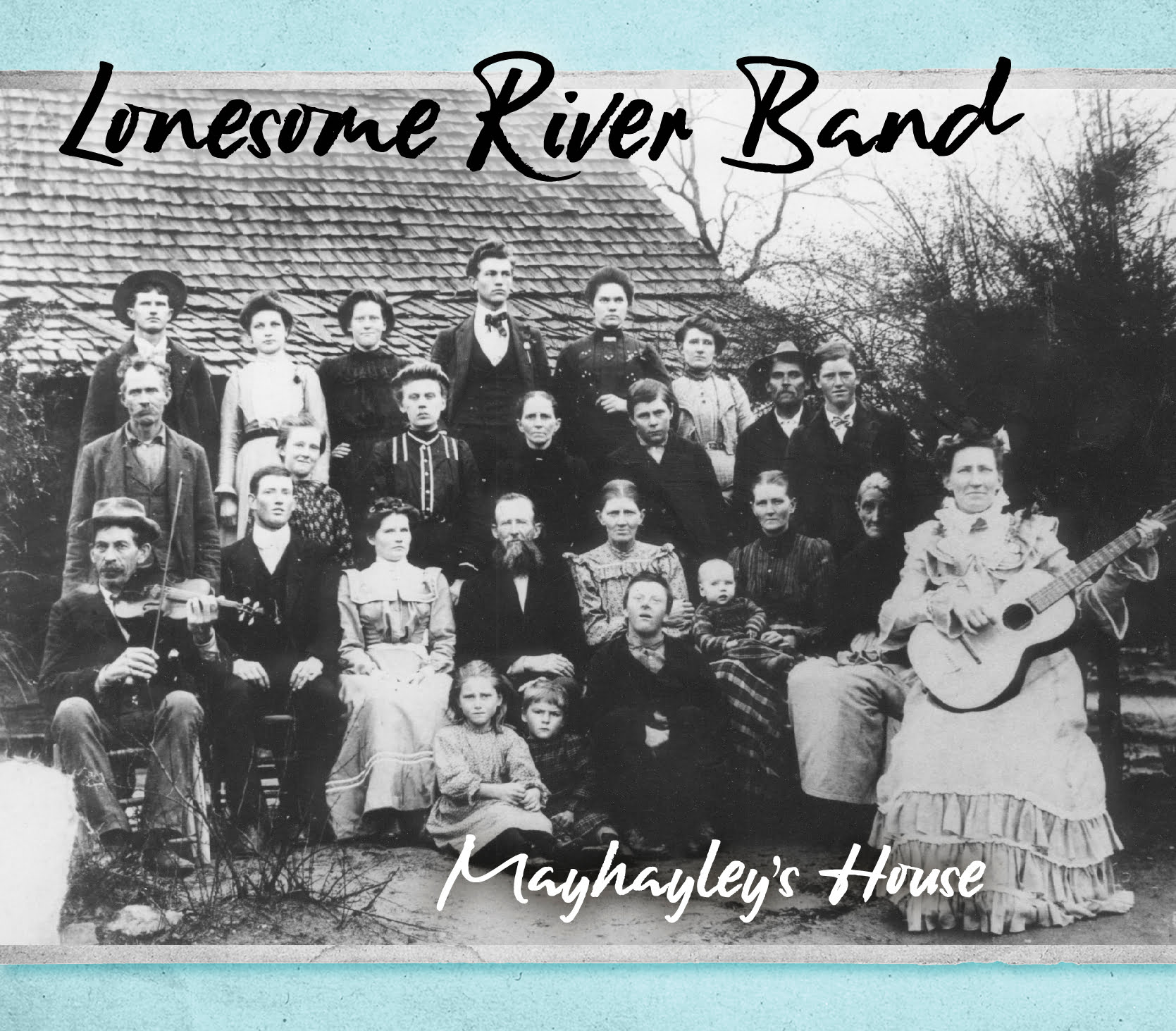
STREAM: Lonesome River Band, ‘Mayhayley’s House’

Artist: Lonesome River Band
Hometown: Floyd, VA
Album: Mayhayley’s House
Release Date: June 23, 2017
Label: Mountain Home Music Co.

In Their Words: “Continuing a series of projects of doing songs that we love, Mayhayley’s House is a set of songs that we collected from our favorite writers. Bordering on acoustic country with an Appalachian feel, we hope everyone will enjoy hearing these as much as we enjoyed doing them.” —  Sammy Shelor

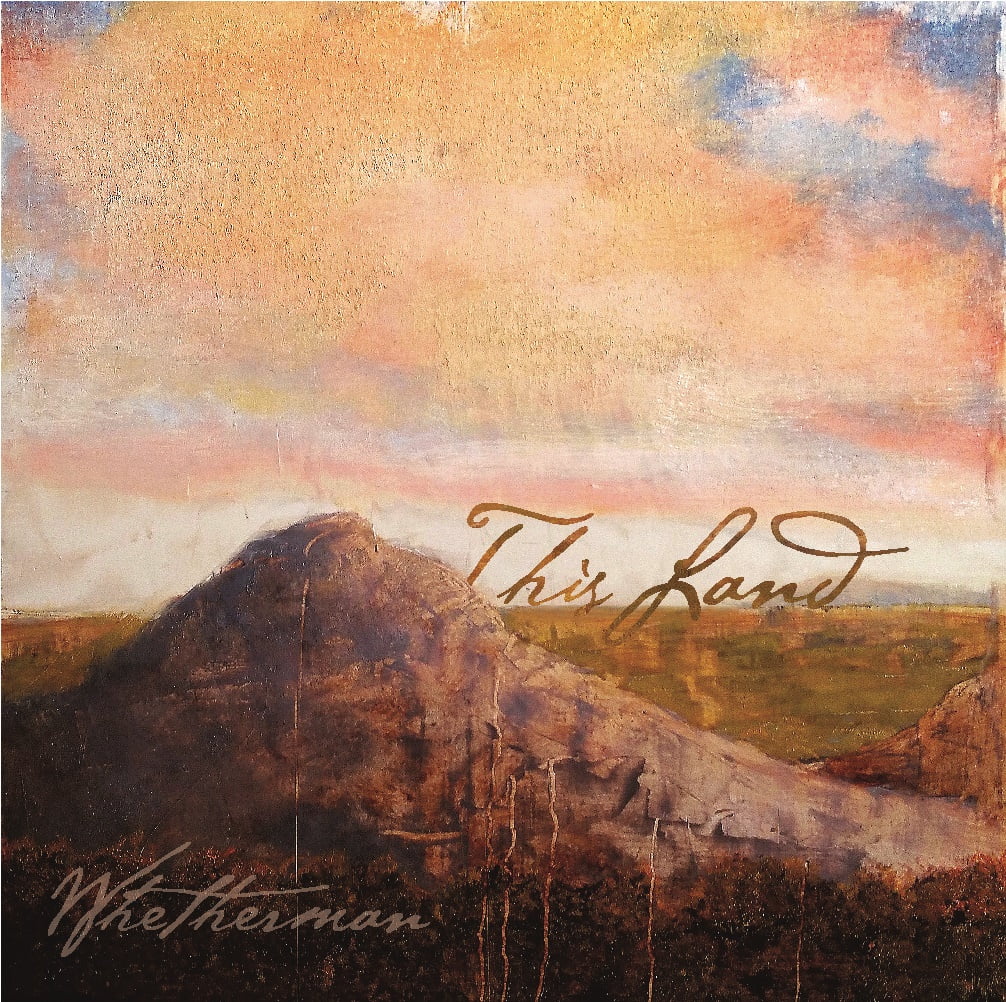
STREAM: Whetherman, ‘This Land’

Artist: Whetherman
Hometown: The Open Road
Album: This Land
Release Date: June 16, 2017

In Their Words: “This record came about because of many musical interests. Through many miles traveled, my sound has become a blend of American-made music spanning folk, blues, soul, country, and bluegrass. It represents the beautifully different aspects of our culture, the current political and social climate, and conserving the amazing landscapes across this great nation, with respect to the message of Woody Guthrie and Pete Seeger in ‘This Land was made for you and me.’” — Nicholas Williams

San Francisco Shows Off Its Bluegrass Pride

This year, for the first time ever, the California Bluegrass Association (CBA) is sponsoring a float in San Francisco’s Pride parade. The initiative is being lead by CBA’s San Francisco area vice president, Ted Kuster, in an effort to broaden the audience for bluegrass and roots music — SF Pride draws 30,000 marchers and more than 100,000 spectators, annually — while celebrating the growing, diverse community that is built around this music we all cherish. The float will feature three live bluegrass and old-time bands, with appearances by acclaimed bluegrassers Laurie Lewis, Tom Rozum, and Bill Evans, as well as gay fiddler Brandon Godman.

“Once the Bluegrass Pride initiative got rolling, there was a lot of excitement around all the possibilities at hand,” Godman says. “My mind was full of ideas, but doing a bluegrass cover of Whitney Houston’s ‘I Wanna Dance With Somebody’ was a must. After mentioning the idea to Melody Walker of Front Country, it all just fell into place. It was such a fun time to record this and experience a community coming together.”

BGS is proud to support the CBA and Bluegrass Pride. Check out their site to get some stylish swag, sign up to march with the CBA float on June 25, and get information on all the Bluegrass Pride events happening the week of San Francisco Pride. See you there!

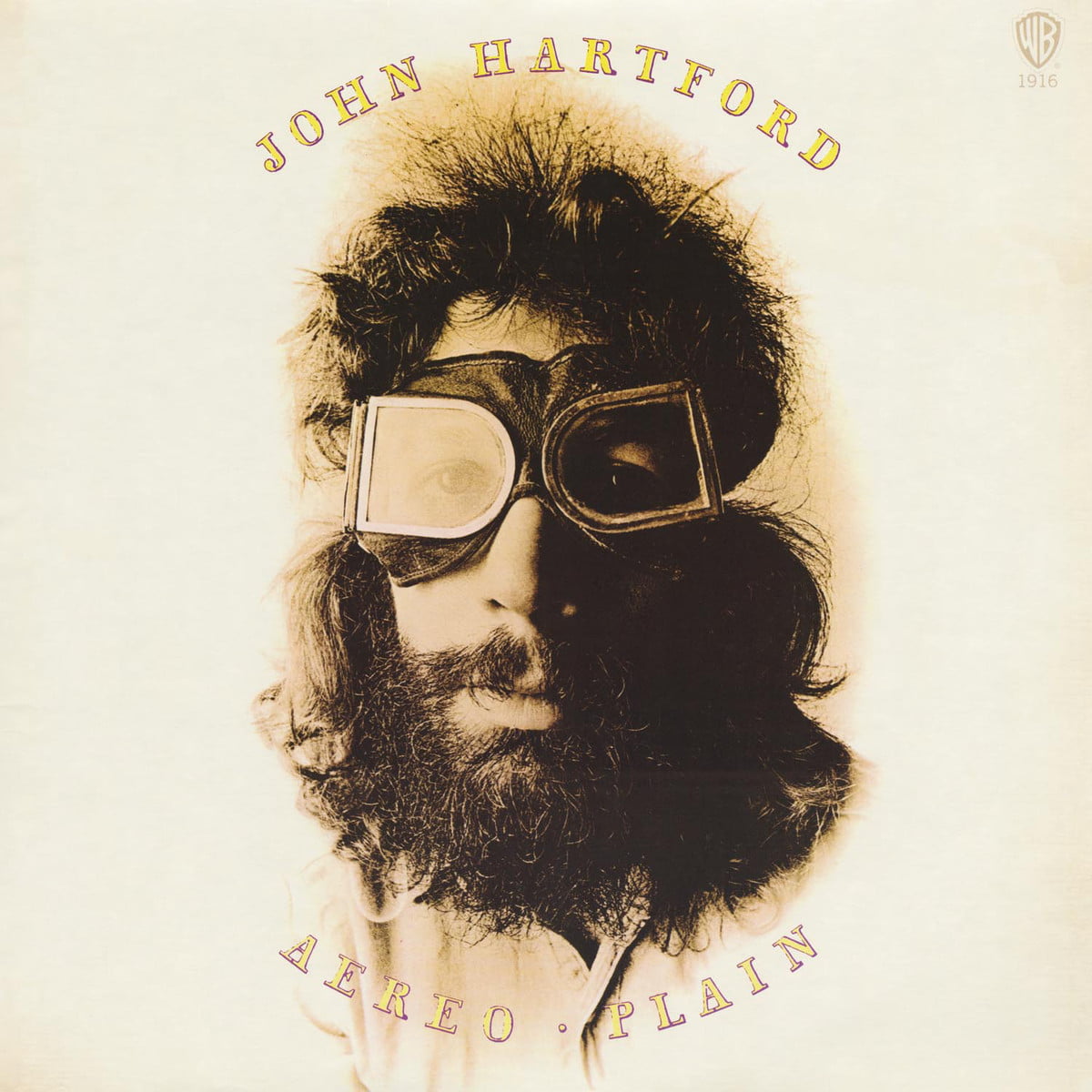
Canon Fodder: John Hartford, ‘Aereo-Plain’

In September 2016, I did an interview with banjo player and producer Alison Brown for the now-dormant Producers column, and she told me a little bit about her studio in Nashville. Compass Records is headquartered there now, but 40 years ago, it was known as Hillbilly Central, where numerous outlaw and outlier country albums were recorded. “If I’d known John Hartford recorded Aereo Plain here, I would have been even more intimidated than I already was,” she confessed. “You could set the bar so high for yourself thinking about the other music that’s been recorded in the room, but, at the end of the day, you just have to look at it as there’s great energy in the room, great vibes in the walls, and you have to tap into that.”

I had to admit I didn’t know the album or much about the man. I knew the name, but that had more to do with the namesake music festival near my home than with any of his actual music. With minimal research, I learned that he was most famous for writing the song “Gentle on My Mind,” a late ’60s hit for Glen Campbell that was covered by everyone from Dean Martin to Aretha Franklin to R.E.M. to (most recently) Alison Krauss to (most strangely) Leonard Nimoy. I learned that Hartford was influential in the Newgrass trend of the ‘70s, and I learned that two of his songs had been included on the O Brother, Where Art Thou? soundtrack, the Big Bang of roots music in the 21st century. I learned that he was an accomplished multi-instrumentalist who clashed with celebrity of any kind. He died of non-Hodgkin lymphoma in 2001.

It’s always instructive to fill in these odd gaps in your musical knowledge, and the experience got me thinking about the roots canon, if there is such a thing. It’s a broad term that covers a wide range of styles and traditions and formats, from old-time field recordings to blues and gospel performances to the latest folk and country album releases to bluegrass classes in Appalachia. It’s almost impossible to connect all the dots, but it’s interesting to think about: Which record should every roots fan know about? What would a canon tell us about roots music in the 21st century? What would it say about American traditional music at a time when the entire notion of America is up for grabs?

Those questions became the foundation for this new column called Canon Fodder, so named because I like obvious puns. Each month we’ll examine a new album by an influential artist and explore its impact across generations. Hopefully this will allow us to approach some old artists in new ways, to hear familiar songs with fresh ears. If you have any nominations for albums to consider in this column, please leave them in the comments section below. I can’t promise we’ll get to each and every one of them, but I’ll definitely add it to the list.

In the meantime, it seems worthwhile to kick things off with Aereo-Plain. Brown is right: It does sound intimidatingly magnificent. There are only a few instruments on these songs, but they’re mic’d beautifully to capture the minute grain of Hartford’s banjo and the vibrations of every string on the strummed guitar. Even the goofball vocals at the end of “Boogie” — sung low and phlegmatic, as though making fun of the song that just played — are recorded lovingly and carefully, as though every mucus rumble were important. What makes the album remarkable isn’t so much the sound of the instruments, but the way they interact with one another. They’re alternately genial and hostile toward one another, supportive and undermining. The banjo plays a practical joke on the guitar; the guitar reciprocates. Especially on “Symphony Hall Rag” Hartford evokes a parallax quality in the production, with the rhythm guitar so deep in the background of the song that it sounds out of focus, which makes the song sound slightly askew.

Actually, all of Aereo-Plain sounds slightly askew … most of all Hartford himself. He comes across as something of a mad hatter on these songs — a Frank Zappa parodist for the roots set, pushing bluegrass as a countercultural force. He understands there’s power in wackiness and, even more than Pete Seeger, he believes the banjo can be a weapon against capitalism, complacency, the mainstream, the music industry, electrified instruments, or even conventional song structures. “With a Vamp in the Middle” is a meta song about itself: “I wrote this song with a vamp in the middle,” Hartford declares, but he never really gets to that vamp. He just keeps playing and singing.

If loneliness pervades these songs, it’s largely an effect of the times, an inescapable by-product of living in America during the early 1970s, when the hippie dream was curdling into something of a nightmare of violence and regress. Nixon was already a crook, but hadn’t been impeached yet. Altamont had killed the ‘60s, but the ‘70s hadn’t quite defined itself yet (at least not in America; in England, glam was already starting to define the era). Singer/songwriters like James Taylor and Cat Stevens were starting to make inroads into the mainstream, but no sound or movement defined the pop or country landscape.

Hartford sees not a land of promise or possibility, but a society gone to seed, eaten alive by progress: “It looks like an electric shaver now where the courthouse used to be,” he sings on “Steamboat Whistle Blues.” “The grass is all synthetic, and we don’t know for sure about the food.” It’s not that he wasn’t made for these times; it’s that the times aren’t made for human beings. “We’ll all sit down at the city dump and talk about the good old days,” but it’s the way he sings “city dump” that makes you think the phrase is redundant. He may decry the commodification of country & western on “Tear Down the Grand Ole Opry,” but Hartford understands that music may be our last connection to a more fulfilling past, and Hartford is content to sit down there among the refuse just pickin’ and strummin’ and singin’ and fiddlin’ while Rome burns.

These songs long for a return to the American pastoral, an escape from the pressures of progress and politics to a pre-industrial ideal and, for that reason, the album sounds alarmingly current. “Sittin’ on a 747 just a-watchin’ them clouds roll by. Can’t tell if it’s sunshine or if it’s rain, rain, rain,” he sings on the title track, his voice rising into a comical falsetto. “Rather be a-sittin’ in a deck chair high up over Kansas City on a genuine ol’ fashioned authentic steam-powered aereo plane.” It’s a dream and a mission statement — one that knows the very idea is an innocent impossibility.

Perhaps Hartford knew, or perhaps he didn’t know, that tinkerers and inventors had been trying to build such a contraption since the 1840s, when an aerial steam carriage was patented by the British inventors William Samuel Henson and John Stringfellow. Even before the Wright Brothers went airborne at Kitty Hawk, they had managed to fly a small craft on a steam engine, but they couldn’t reconcile the power of the steam with the weight of the engine. It was folly, and maybe that’s why Hartford longs for the freedom of such a fantastical vehicle. There’s power in folly, an unbridled joy in whimsy that sounds like an intense form of dissidence and defiance.

WATCH: Molly Tuttle, ‘Good Enough’

Artist: Molly Tuttle
Hometown: Palo Alto, CA (currently living in Nashville, TN)
Song: “Good Enough”
Album: Rise
Release Date: June 2, 2017

In Their Words: “The song ‘Good Enough’ came out of a feeling of dissatisfaction that I struggle with from time to time. I think that the tendency to feel like something’s missing — whether it be from life, a relationship, a career, you name it — is pretty prevalent in this day and age. The song is about keeping those thoughts in check, finding the good in what we have, and acknowledging that it’s enough.

It was a lot of fun to film this with Bill Filipiak on his back porch with Hasee, Wes, and Eli playing along. Bill timed it perfectly so the sun was just starting to go down and everything looked golden. He has a bunch of cute dogs who really wanted to be in the video, as well. Maybe next time!” — Molly Tuttle


Photo credit: Anthony Scarlati

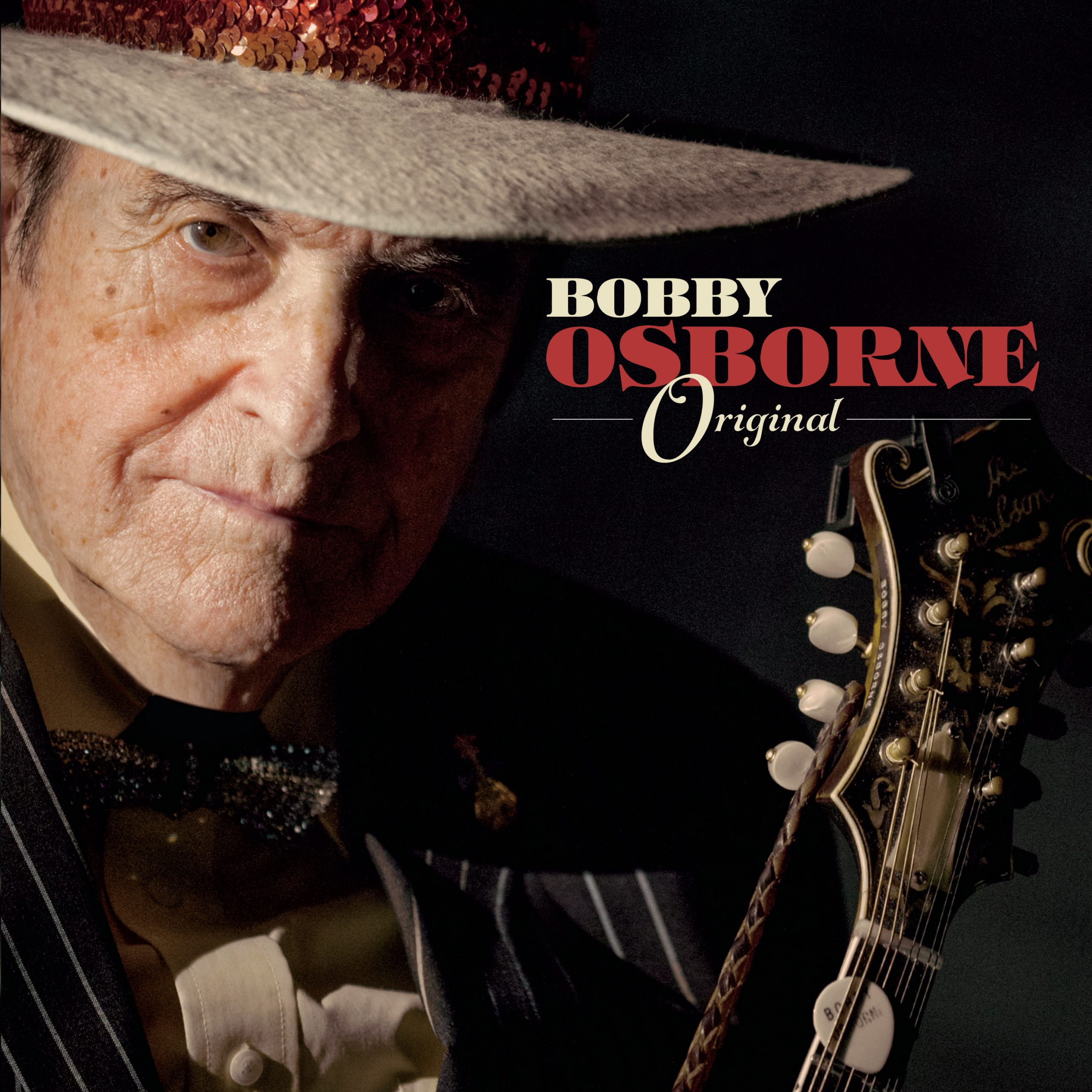
STREAM: Bobby Osborne, ‘Original’

Artist: Bobby Osborne
Hometown: Hyden, KY
Album: Original
Release Date: June 2, 2017
Label: Compass Records

In Their Words: “Hi everyone, Bobby Osborne here. I want to thank the Bluegrass Situation for premiering my new album, titled Original, on Compass Records. Alison Brown and her staff of personnel and pickers truly made this one of my all-time greatest CDs.
Best wishes,
Bobby Osborne”

In Countering Melodies: Molly Tuttle in Conversation with James Elkington

As soon as I get Molly Tuttle and James Elkington on the phone, the conversation immediately turns to who is the better guitar player. There’s no showboating or bragging. On the contrary, each insists the other is much more accomplished, much more refined in their technique. “I hadn’t actually heard much of your music until a couple of days ago,” Elkington admits, “but I have to say that you are the far superior guitar player.”

“No way!” Tuttle insists. “I love your guitar playing.”

Their mutual demurrals stem partly from modesty, but also from the fact that both Tuttle and Elkington practice such different folk traditions that there’s very little overlap in their playing styles. A bluegrass picker who grew up in California and made her stage debut at 11 years old, Tuttle attended the prestigious Berklee School of Music in Boston and formed the Good-Bye Girls. On her solo debut, an EP titled Rise, her playing is rhythmically complex, technically precise, and remarkably fleet, as though there are two sets of hands running up and down the frets, yet the guitar remains secondary to her evocative songwriting.

Elkington, who originally hails from a small village outside of London but currently lives in Chicago, is a self-taught guitarist with a background in indie rock, most notably with the Zincs, the Horse’s Ha (featuring members of Eleventh Dream Day and Freakwater), and Wilco. However, his new solo debut, Wintres Woma, leans more toward folk music — specifically, the British folk revival of the 1960s, when players like Davey Graham, Bert Jansch, and Richard Thompson were melding early music, rural folk, jazz, and rock.

Their albums couldn’t sound more different, despite the shared combination of voice and guitar, yet both bluegrass and folk music value technique in service of interpretation; more important than the fluidity of notes or the deftness of picking is how the artist updates, refines, and furthers the musical ideas of the past.

One of the reasons I wanted to get you two on the phone is because I’m fascinated by the very different strains of folk music that you represent. Both of your albums strike me as using something — bluegrass or British folk revival — as a jumping-off point for something very different, very current, and very personal.

James Elkington: I didn’t really grow up in much of a folk tradition, outside of the fact that we sang those songs at school and they always seemed to be around. It seems like it’s probably part of my DNA. When I started writing my own songs, which was comparatively late, other people told me that I sounded like that. I didn’t really know that it was in there, and it’s one of those things that I’ve subsequently found I have quite a deep connection to. But that’s why I don’t perform an awful lot of traditional music, although subsequently I have gone back and arranged those tunes just because I love playing them. Now it’s part of what I do. That’s where I’m coming from.

Molly Tuttle: I grew up listening to a lot of bluegrass. My dad is a bluegrass music teacher who teaches all the bluegrass instruments, so I always heard him playing traditional songs. They seeped into my brain, I think, so that when I started playing, I was learning all these bluegrass songs and old traditionals. That was my background and, as I got older, I started listening to other genres and styles. I started writing songs and still had the bluegrass form in my head, so it was definitely a starting point for me.

JE: You know, funny thing that I’ve found actually … I find that somehow the physicality of playing folk music demands a certain technical ability. It feels good to play, as well as sounding good, and when I started writing my own songs, I wanted that to factor in somehow. In some ways, it adds not a limitation exactly, but something like that. It sets up a nice boundary to work within, if you use those traditional forms as a jumping-off point.

MT: It does make it accessible for other people to learn the songs and join in, too.

JE: And to actually know where you’re coming from.

What other music informs what you do?

MT: A lot of singer/songwriters, actually. I listened to a lot of Bob Dylan, when I was starting to write songs. Before that, I had heard a lot of bluegrass songs and felt limited by that. But when I heard Dylan, lyrically and musically, he was just breaking so many boundaries and that opened up my songwriting a little bit. I was just really inspired by that. Joni Mitchell and Gillian Welch are big heroes of mine, too, and Dave Rawlings, who plays with Gillian Welch.

JE: He always plays the right thing at the right time. The way he thinks of arrangements is …

MT: Yeah, he’s doing a counter-melody sometimes, just always putting the perfect piece in. What about you? I’m interested to hear about where your playing style comes from.

JE: I started playing guitar when I was about 10. There are vaguely musical people in my family, but no one who really plays anything. And the guitar was something that was just for me — something I could do privately, sort of like my own private little island to go and visit. And when I started out, I was just really into chords. This was in England in the 1980s. I don’t know if you can have any conception of what that was like, but it was a lot of really jangly guitar bands. It was like this Renaissance of underground bands, like the Smiths and the Cure. When I was learning the guitar, I was really into those groups — particularly Johnny Marr, who was the Smiths’ guitar player.

MT: He’s one of my favorites.

JE: That’s great to hear, because he’s like really the last great British guitar hero. His guitar playing on those records is amazing. The strange thing about it is that I found out subsequently that a lot of what he does, in terms of using other tunings and his approach to finger-style guitar, is really from people like Bert Jansch, Martin Carthy, and Joni Mitchell — all this stuff that I didn’t grow up listening to, but somehow it filtered through him in a way.

MT: I listened to the Smiths so much in high school. I was obsessed with Morrissey’s lyrics, and then the guitar playing was a second thing that I got really into, but I’ve never tried to learn any of his parts to figure out what he was doing.

JE: When I was a kid, I thought that’s really how you had to play the guitar. What changed me was that, when I was in my late teens, I started working in a music store, and there was a guy there who was really into bluegrass. He wanted me to come and play tunes with him, and for some reason, I had no interest in playing the guitar in that setting. But I had this strange attraction to the five-string banjo. I never got very good at it, but I learned the basic rules. Then, when I’d been doing it long enough to realize that I couldn’t play it well, I just applied all of that to the guitar, and that was the start of me doing finger-style stuff.

MT: I play three-finger banjo, so when I play finger-style guitar, I feel like I’m using some banjo stuff, as well.

JE: So you play banjo and guitar? Do you play anything else? Any fiddle or anything like that?

MT: I’ve tried to play fiddle, but I can’t get the hang of it. I play a little bit of mandolin, but not very well. I saw that you play a lot of different instruments.

JE: To a medium-low standard, I would say. I started out playing drums, which I loved. The drums are my favorite instrument, but I didn’t ever seem to get any better at it. For some reason, guitar is somehow easier for me to play. I do play some other things, but it’s not to the point where I could actually say, “I’ve really got this down.” I think I have a really short attention span, is what it is. I tend to move around a lot.

But you played most of the instruments on your album, right?

JE: Yes, but the arrangements are pretty sparse. My friend Nick Macri plays all the upright bass on it. I’ve been playing on and off with him for a long time. And I have some string players who are part of the jazz and new music scene here in Chicago. But mostly it was just me. It’s some fairly simple stuff. I’m mostly self-taught on most instruments. I really took the slow way round. I learned mainly just from trying to play along with the record. Molly, I saw some footage of your band playing, and they all seem equally amazing. Where did you meet those people? Do you always play with the same people?

MT: It’s a little bit of a rotating cast. For the most part, I’ve been playing with Wes Corbett, who’s a banjo player I met in Boston when I was studying at Berklee College of Music. He was teaching there, and we started playing together after I graduated. Right now, I’m on the road with Joe Walsh, who’s also currently teaching at Berklee. He’s an amazing mandolin player and singer. And then Hasee Ciaccio is playing bass with me right now for the summer and fall, and she’s a great upright bass player who lives in Nashville. We’re actually neighbors. What made you gravitate toward Chicago?

JE: It was a few different things. When I was in my later teens and early 20s, all my favorite music was coming out of Chicago — the underground and experimental rock stuff. I had a chance to come and visit here with friends, and I found that it was almost exactly what I wanted it to be. I’m sure, when you moved to Nashville, it was because you wanted to be around that music and be part of that community. I felt exactly the same thing with Chicago. I felt immediately at home here, like this was the place where I wanted to be. It actually all worked out, too. I really did end up playing music with people whose records I had. It’s really a “Hey, let’s all pull together and make something” type of place. I lived in London before, and I never really felt like that there.

MT: That’s how I feel about Nashville.

JE: Did you make your record in Nashville?

MT: I did. It’s my first solo release, so it’s all original stuff that I’ve been working on for years. I did it in Nashville with producer Kai Welch. It has some of my favorite musicians on it. It was great to finally make something of my own, because I’ve done stuff with other bands before but never released anything under my own name.

JE: That’s something I wanted to ask you: Have you played in other people’s bands a lot? Have you ever been just a guitar player in someone’s band?

MT: A little bit, with different bluegrass people. When I was living on the East Coast, I used to play a little bit with this banjo player Tony Trischka, who is like a great …

JE: Oh my God! Really?

MT: You know him?

JE: Let’s briefly go back to 1989 here. When I thought I was going to be this banjo ripper, Tony Trischka wrote THE best books. This friend of mine was really into that resurgence of bluegrass that Rounder Records were putting out — Tony Rice, Hot Rize. He would give me all these records — Béla Fleck records, stuff like that — and Tony Trischka was one of two people who had written sensible, up-to-date books on how to approach the five-string banjo. So you used to play with him?

MT: I did a few tours with him. I always have a lot of fun playing in someone else’s band and being more of a sideperson. I find that a really fun role. And I have another band called the Good-Bye Girls that I play with. It’s all people I met when I was in Boston. We do a couple of tours a year, but that feels more like less of a lead role to me. I like stepping into different roles and not always doing stuff where I’m the lead.

JE: I’ve found exactly the same thing. I’ve found that actually being able to play in different bands and have the focus be different each time means I never need to take a vacation from it, because it’s different enough each time. If I was just a singer, I think I would need to take a break from time to time. But I never really feel like that, and I think it’s because I have enough plate-spinning that I’m always mixing it up. I can tell from the way that you play that you have a deep knowledge of the bluegrass songbook, that when people call tunes, you can just play them — which is not something that I can do. I can’t even play my own songs sometimes when someone asks me to do that. That’s always something I admire in other people.

MT: Oh, thanks. It’s a really nice tradition, because once you have learned enough bluegrass songs, you can make it through most of the standards, even if you don’t know them. A lot of the songs have similarities, and you can jump in, which makes it fun. Even people who are new to the genre can jump into jams and find their way through songs they don’t know very well.

JE: I stopped listening to bluegrass for a while, but then, a few years ago, a friend of mine who has a band called Freakwater was doing a tour to celebrate an album that came out 20 years ago [Old Paint]. This album had a lot of dobro on it, and they wanted me to play dobro. I play a little bit of lap steel, but I’ve never really played dobro before. So I bought a cheap dobro and really got into it! It totally took over for about a year. That’s all I was doing. But now I don’t get asked to play it very much. I played it a little bit on my own record and I’m planning on playing it more, but I think you actually have throw yourself more into the bluegrass community.

MT: Was it a steep learning curve for you, or did you find it similar to lap steel?

JE: It was not too bad. I could already play some lap steel, and I’ve played bottleneck slide, so I had a little bit of understanding. But I had to watch a lot of Jerry Douglas YouTubes! You don’t even think some of that stuff is possible unless you actually see and hear and do it.

MT: Is this your first solo album?