WATCH: Rachel Baiman, ‘I Could’ve Been Your Lover Too’

Artist: Rachel Baiman
Hometown: Chicago, IL
Song: “I Could’ve Been Your Lover Too”
Album: Shame
Release Date: June 2, 2017
Label: Free Dirt

In Their Words: “This song is about lust, pure and simple. The feeling of wanting someone you can’t have, and knowing that it’s wrong to feel the way you do. It’s perhaps one of the most powerful feelings in the world and can make you do some crazy things. The lyrics of the chorus are ‘A man in love ain’t mine for the taking, but if he comes my way, Lord, I’m … gonna shake him.’ Although we never discussed the subject matter of the songs, in the studio, Andrew Marlin (who produced the album) kept changing the words of this song to ‘That chicken’s ripe for the pluckin … and if he comes my way, Lord, I’m … gonna …’ which resulted in a lot of takes being interrupted by fits of laughter.” — Rachel Baiman


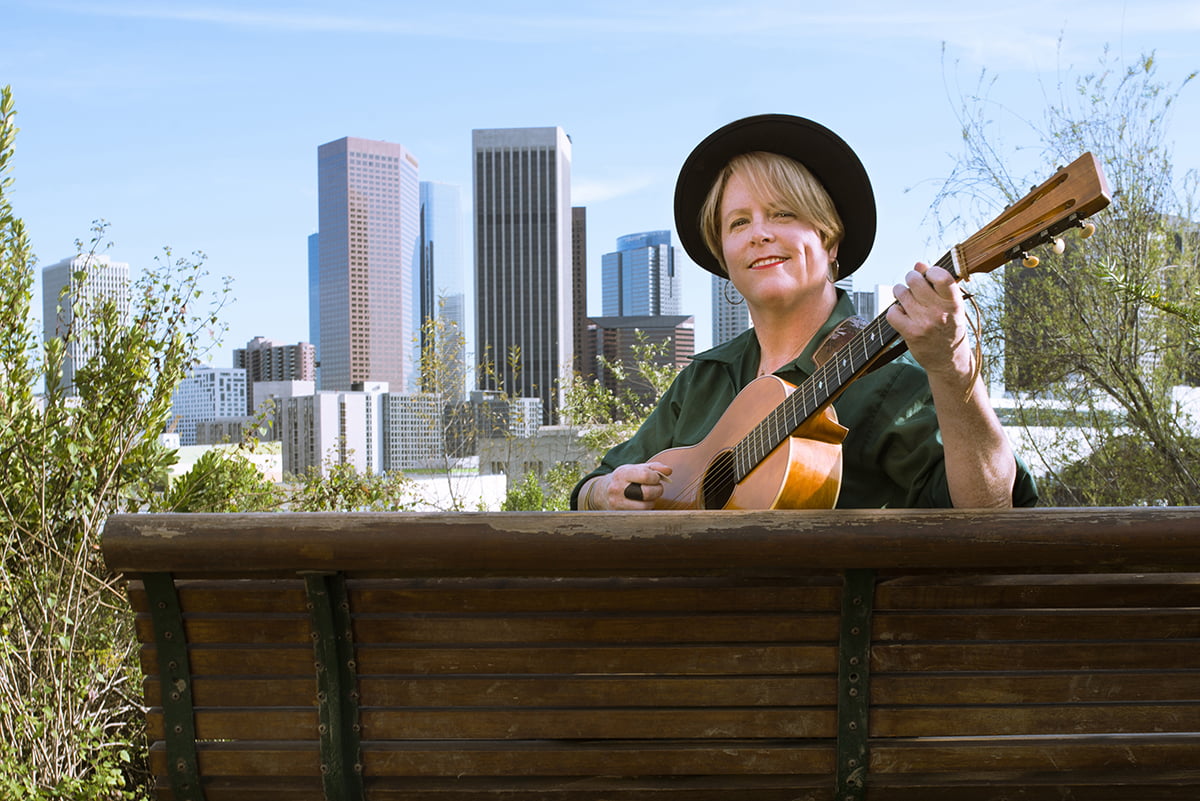
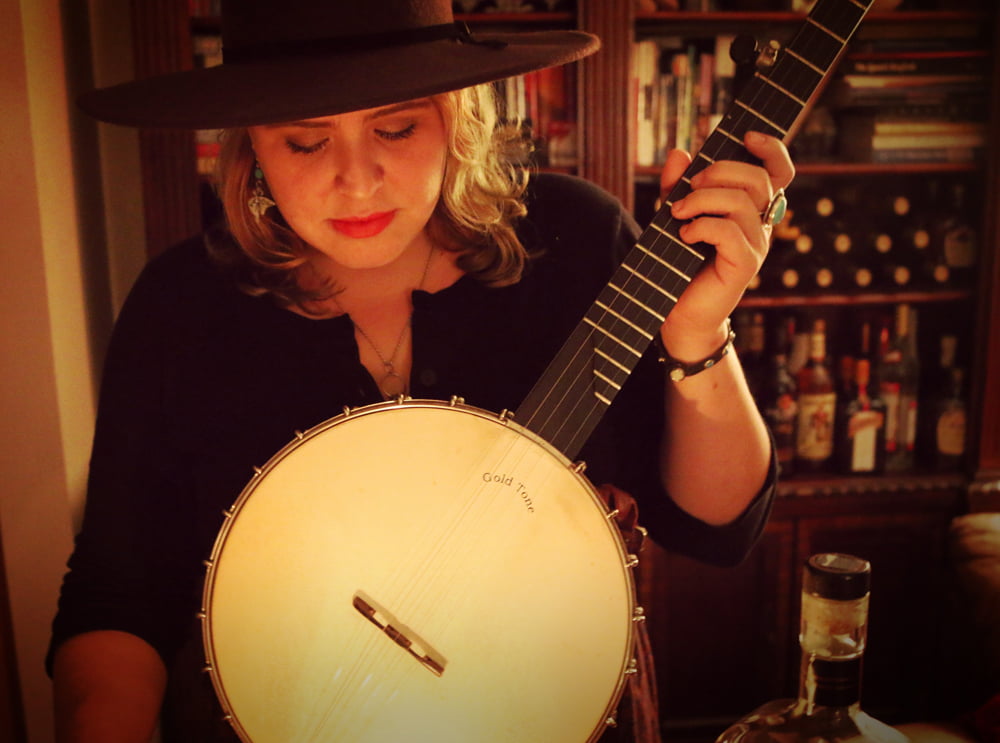
Photo credit: Gina R. Binkley

The Unbroken Circle: An Interview with Tim O’Brien

Let’s say your banjo-obsessed buddy asks you to join him at the local Tuesday night bluegrass jam. Bluegrass. Sure, you’re aware of the term. You loved that George Clooney movie. You’ve got a couple verses of “Wagon Wheel” up your sleeve for wedding receptions. Plus, you’ve been wondering how Garrison Keillor suddenly got so good at the mandolin. Why not dive a little deeper?

As a newcomer to the strange pastime of standing in a circle with fiddles, banjos, and mandolins, you will be perfectly positioned to ask a really good question: “Where did all of these songs come from?” Your banjo friend might try to satisfy you by calling the songs “traditional,” but that’s just evading the question. Sure, some common tunes arrived in America on boats from Europe, and some of them were “collected” by folklorists like John and Alan Lomax who combed through rural America in the early 20th century, but the bigger-picture truth is that the bluegrass canon has been alive and evolving throughout its history. Even before bluegrass’s inception in the 1940s, the story of folk music in the 20th century is one of surprising re-discovery, unorthodox re-interpretation, and, yes, the addition of songs that happen to be brand new. Right up there alongside the other great writers and re-interpreters — A.P. Carter, Bill Monroe, the Stanley Brothers, and many others — there’s a whipper-snapper (by “traditional” music standards) named Tim O’Brien.

Tim’s band, Hot Rize, emerged in the late ’70s as part of a neo-traditional reaction to New Grass Revival and David Grisman’s no-holds-barred hippie bluegrass boom of the early ’70s. There was a back-to-basics element to Hot Rize’s chemistry — led by O’Brien’s distinctive tenor and mandolin playing — but bassist Nick Forster played an electric bass, banjo player Pete Wernick occasionally played through a trippy phase-shifter effect, and they all wore obnoxiously ugly ties with their formal wear. (Traditional Ties was one tongue-in-cheek album title.) In other words, in a world of stiff suits and tall Stetsons, they injected a playfulness that both revitalized the tradition and reminded it not to take itself too seriously. In that way, they weren’t a reaction to New Grass Revival so much as their fraternal twin. Both bands effectively proved the point: Long-haired kids can play their own kind of bluegrass.

Tim’s original songs “Nellie Cane” and “Ninety Nine Years” share the rare double distinction of being staples of many local jams and also popular covers in the repertoires of Phish and the Punch Brothers, respectively. He’s also re-energized old songs like “Blue Night,” “Pretty Fair Maid,” and “Look Down that Lonesome Road,” bringing them and many others into popular bluegrass rotation.

Before all that, O’Brien was just a kid from West Virginia listening to the Beatles on the radio and playing wedding gigs with his talented sister, Mollie O’Brien. This month, he released a record, Where the River Meets the Road, that returns him to his West Virginia roots. True to form, he uses the opportunity to try his hand at old gems like “Little Annie” and to bring to life surprising re-interpretations of other West Virginians’ songs, like Bill Withers’ “Grandma’s Hands.” We talked about the new record as well as his many decades spent nudging the folk tradition forward. 

The band on Where the River Meets the Road is killer. They really move together like a tight band, rather than just background studio musicians. Some of them are familiar folks from the bluegrass world like Stuart Duncan and Noam Pikelny. How’d you end up incorporating Chris Stapleton?

I’ve known Chris for a good while. When he first moved to Nashville, Bryan Sutton was hired to produce demos of his. I went and played and sang on his demos, and I was really impressed. We wrote together a little bit, messed around. We stayed in touch. He sang on a record I made called Chicken and Egg. I was really pleased he was able to sing on this one.

That’s a great duet. Your voices are totally different, but the harmony is kind of striking. It really works.

He came in there and nailed that thing. I have to say, that track was good before he sang. You know how it can get in the studio. It’s pretty mellow listening to the same track over and over. Then he came in, started singing, and we all shot up straight in our chairs. Our spines straightened and our hair stood up on the back of our necks. I said, “Yeah, more of that!” It was really wonderful.

I saw on your schedule that you’re headed to Wheeling, West Virginia, tonight.

Yeah, that’s right. I’m playing my hometown tonight. It’s really exciting and terrifying at the same time. I haven’t played there in so long, and I think most of the people who bought tickets in advance are friends of mine, so you’re kind of on display. But I’m excited about seeing the old hometown.

Have you spent much time there since you left home many years ago?

No. You know, my dad died in 2011, and my mom had died before. I have a few cousins there, but I’m not close to them. I’ve only just sort of passed through a couple of times. I played with the Wheeling Symphony a couple of years ago and that was fun. My sister and her husband and my partner Jan and I sang.

Wheeling has a symphony?

Wheeling was the biggest city in the state for a long time. It was the only symphony in the state before they ever had one in Charleston. Yeah, Wheeling was a rich town with a steel mill at one point. People dressed in finery, you know. It’s a faded town now, but it has surprising culture. [Laughs]

And it had a great radio station that you grew up listening to, right? WVA?

WVA was a great resource. I was into pop music and stuff at the time, but WVA was a place you could actually see live performers on a Saturday night. I enjoyed listening to the radio, as well, but I liked going down to the Saturday night show and seeing the pros play their guitars.

But you were just a kid mostly listening to pop radio and Beatles records. So, in other words, you weren’t from a traditional music family on an inevitable path toward a folk career?

No. Not at all. My parents loved music, but it was just on the sidelines. They liked the music of their era — Glen Miller and Benny Goodman and stuff like that. When my sister and I got into music, they encouraged us. They tried to steer us toward a well-rounded experience growing up, so we could choose what we wanted to do.

Did you and Mollie sing together and learn from each other growing up?

Well, she was playing the piano and I started playing guitar. By the time she was in high school, she was studying voice there, so, yeah, we would get some little gigs — school plays, different things. We would play at weddings, sing a few Peter, Paul, & Mary songs, Beatles songs, or whatever.

Then you left college to move west and pursue music. Did your parents think you were crazy?

Well, I was the youngest of five. Being the youngest, my parents cut me a lot of slack, I’d say. They had been through it with the rest of them. Also, you know, I was determined. They wanted me to stay in college, but I just wasn’t going to respond. So they said okay. I think they were holding their breath for about three years. Then I put out a record on a little label — I think it was ’77 or ’78 — and that’s when they finally said, “Oh, maybe this will lead to something.” They developed a more open mind. Then my parents became big fans of whatever I was doing and supported it. So it was a gradual thing, kind of a wait and see. They lightly steered me, but they knew they couldn’t do the final job, you know? I’m lucky I had that background with them.

So after growing up in West Virginia, you moved out west to Colorado to get your career started. Why did you feel like you had to leave the south to play bluegrass music?

My dad said, “You just want to go as far away as you can, don’t you?” I said, “Well, sort of.” [Laughs] Really, I was going out there because I loved the weather and the scenery, the lifestyle out west. I thought in a ski area, maybe I could play music and ski — both things I was excited about. So I went to Jackson Hole. Some other friends that had worked at summer camp with me were going to spend a winter there, so I went out and joined them and scuffled around for the winter. I ended up looking for a more active music scene and I ended up in Boulder. I guess I could’ve moved to a college town in West Virginia, but I wanted to see the rest of the country.

It’s funny — when I sing the song, “High Flying Bird,” from this record, I realize it’s symbolic of what I wanted to do when I was young. I wanted to get the heck out of there. I didn’t want to be rooted and tied down in West Virginia. I wanted to see the rest of the country, the rest of the world. And I didn’t realize that song was from West Virginia until now. You get away and you find perspective on where you left. You can see it from a longer view. The music provided a connection to West Virginia, as well as my family, so I kept going back. I realized it was a valuable base to have started from, and I continue to value that.

What is it that’s made you interested in reconnecting with your West Virginia heritage? Why now?

I feel like I’ve been given a gift of this music and this background. I got involved with the West Virginia Music Hall of Fame when they wanted to start that about 12 years ago. Meeting all these people as they come through to be inducted was really wonderful. You learn that a lot of people you knew about and music that you’d heard came from West Virginia.

Until I heard your record, I had no idea Bill Withers was from West Virginia.

Yeah, and that’s the thing. Part of the aim of the Hall of Fame is to connect those dots. We’re doing it for the public, but as it turns out, the members of the board and the members of the Hall of Fame are learning about the rest of the scene and connecting dots themselves. I think why I did this project now is, well, I needed to put a record together! [Laughs] I originally wanted to do a record of all original material, but I didn’t think I could pull that off for another year. I’d been thinking about a West Virginia record for a while, and I didn’t realize how much work I’d already done organizing it, making lists of songs, brainstorming on it. I’d already done a lot of that. So it came together really fast. It felt right.

One big part of your story is that you’ve made so many different types of music, so many types of records over the past nearly four decades. Do you have to keep exposing yourself to new songs and new sounds to keep your ideas fresh? How do you do that?

You just keep looking. You go to the record store. Nowadays, I get online — YouTube or Spotify. Then back to my own old record collection. My huge CD wall. Every year, I clean a lot of stuff out of it, give it away, put it in the free box at the Station Inn or something. Then there’s a lot of stuff that always stays there — the first generation of bluegrass masters, or the Lomax field recordings, or classic songwriters like Randy Newman or whatever. Then my friends around me are always writing new stuff, and I’m trying to keep up with their stuff. It’s a constant search, and I always feel the need to refresh the palate. But it’s funny — even by going back to the same stuff you’d passed over, you’ll hear new things and learn. So I’m always combing. Part of the week’s work is to comb for new music.

I like that — it’s part of the week’s job. It’s what you do when you wake up. Reminds me of the first time I saw you solo, at Grey Fox in 2012, when you did a solo guitar tribute to Doc Watson. I’m a North Carolinian and I know Doc’s stuff pretty well, but you put a new stamp on those tunes. It was like rediscovering Doc. So, for me, it was a sort of revelation, but I heard a guy next to me say, “Wish he’d brought his mandolin …” I can imagine for you that must be frustrating. Do you have to put effort into not being pigeonholed?

Yeah, you do get pigeonholed in bluegrass. I think back when I was starting, if you did bluegrass, you couldn’t do anything else. People wrote you off. When Pete Wernick called me [in 1978] and said, “Hey, why don’t we get a band together?” — our solo records were both coming out around the same time in ’78 — I said, “Yeah, that would be great.” I told him I wanted to play some traditional bluegrass, for sure, but I also wanted to do some country music and different things. I asked him if he played dobro so we could get away from the traditional thing.

Nowadays, the rock ‘n’ roll and country players, even the jazz players, are respectful of bluegrass. They understand it’s a training ground, that there’s a certain amount of woodshedding you have to do to even try to play bluegrass. So, yeah, I didn’t want to be pigeonholed. But I am pigeonholed. I’m always referred to as a bluegrass artist — and I’m glad to have a handle to carry it around on. Bluegrass music is Bill Monroe’s music, but then the bluegrass audience is a separate thing. There’s the genre as defined by the history, the classic examples. Then there’s the genre as defined by the audience — though it may only be a small part of what that audience listens to. So, in a way, I’m lucky to have been labeled a bluegrass artist while still sneaking in this other stuff. If I play something on acoustic instruments, they tend to accept it. Bluegrass fans are a very tenacious, very loyal bunch. They keep giving you another chance.

Can’t they be a pretty judgmental bunch, too?

I’m sure there’s judgmental stuff going on, but I don’t really look for that or worry too much about that. I just go my way and hope things will work out. And they have. I tried to get on a major label — I sort of glanced at the big time there. It didn’t take. I thought maybe I’d get the big publicity for a while and then I’d be on my way. Instead, I dug into the trenches of the folk and bluegrass worlds and developed an audience slowly but surely. You’re a product of what you do, so if my output has been eclectic, the audience that has remained has been willing to accept that. There’s enough of them out there to make a career.

Back in the Hot Rize days, and also what you do now, your music was right on that line between the traditional and the progressive — or neo-traditionalist, as people called Hot Rize. Did you ever feel any tension between those two camps? Or was the general attitude different in Colorado?

With Hot Rize, it was interesting. West of the Mississippi, we represented a traditional bluegrass band, but east of the Mississippi, we were these wild card guys. Our hair was too big and our ties were wrong and we had an electric bass.

But you guys had a sense of humor about it, too.

Yeah, we did. I mean, you’ve probably been at a bluegrass jam where people play a tune and, when it’s done someone, will say, “Well, that’s not bluegrass,” and everyone will laugh. Bluegrassers are always referring to their relationship with Bill Monroe’s music. They’re always measuring that. It’s part of our thing.

Sort of a self-conscious conversation we’re always having.

Yeah. And there is a tension. I’ll say this: There are a couple of places where we couldn’t get booked because Pete [Wernick] is Jewish. But, like I said, we took it where we could. Luckily, we came along at a time when people like New Grass Revival and David Grisman had broken a lot of ground. There was a hippie element that supported an alternative to the music. We were on a wave that was returning back to a traditional sound — the Johnson Mountain Boys, Nashville Bluegrass Band, Doyle Lawson & Quicksilver were starting out at about the same time. They were hip and innovative in the way they were presenting traditional music, but they weren’t breaking the walls down like New Grass Revival did. This was viewed by a lot of people as a refreshing return to form. We enjoyed that. You know, we tried to play the kind of no-boundaries music when we started, and it just didn’t work out. Charles [Sawtelle] was playing bass at first, and we had a different guitarist. When Charles started playing guitar, he was much better at the traditional stuff. And we felt better playing it. You’ve just got to find your feet in whatever situation you’re in. That seemed to be the way to go, so we kept going there.

Since then there have been many ups and downs in terms of bluegrass’s broader popularity, the general awareness among the public. Is there anything that surprises you now about what the scene is like or feels particularly different about the 2017 bluegrass world?

The biggest draws in bluegrass now are the jam bands. Again, if you defined it in terms of Bill Monroe’s music, they’re not bluegrass. But they’re playing banjo and bluegrass and they’ve got a lot of attention. There’s a crowd that will get interested in that and look behind it for their influences. They might get into Widespread Panic or the Grateful Dead — or they might go to Doc Watson and the people that he learned from. The thing about bluegrass — even with the ebbs and flows of it — it’s always been growing. With O Brother, Where Art Thou, or with Alison Krauss crossing over into country, or with String Cheese Incident becoming a big draw — there might be a surge related to those things. But mostly the genre grows slowly like a tree. It’s healthy. The roots are growing, as well as the branches.

From those days starting out with Hot Rize in ’78, it just seems to keep growing. That’s the overall trend. Young kids are going back to the old stuff and remaking it. Even if you do something that’s been done before, your version of it will appeal to someone in a new way. It’s heartwarming to see it. Evolution is part of the definition of tradition. Each musician is a link in the chain and, whether you like it or not, you’re part of a tradition. You’re not going to do it exactly like the old folks did it, and you’re not going to do something completely original. You might as well get used to it.

In the same vein, you’re circling back to Wheeling tonight.

Yeah, it’s really exciting. I’m playing a little restaurant bar! [Laughs] Almost everyone there will be my friend, so that’s a little intimidating. But it’ll be fun. I just want to go out and walk the streets a little bit.

LISTEN: Kelly Marie Martin, ‘Your Rockin’ Bow Don’t Roll No More’

Artist: Kelly Marie Martin
Hometown: Los Angeles, CA
Song: “Your Rockin’ Bow Don’t Roll No More”
Album: The Last Kind Word
Release Date: May 23, 2017
Label: Questionable Records

In Their Words: “This song is from upcoming solo album, The Last Kind Word. The 15 original songs and sound interludes are a reflection of what happens when a broken-hearted girl who used to write songs but has been playing old-time back-up guitar and clawhammer banjo for some years, meets back up with her songwriting and sound design self. A little folky, old-time string trio; a little blue, strange travel sounds and beats; some spoken word; and, like the song here, a good ol’ heartbreak honky-tonk!” — Kelly Marie Martin


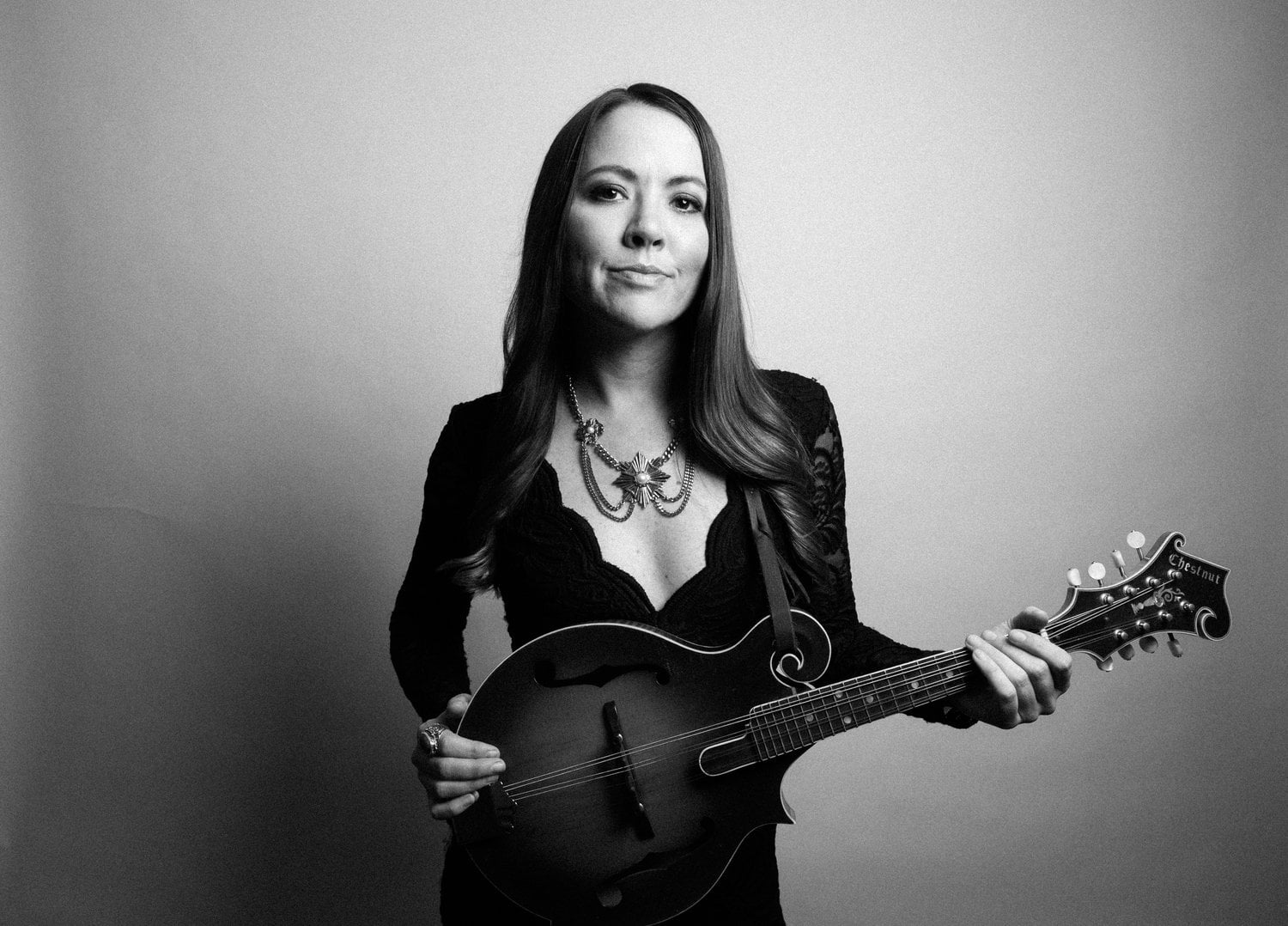
Photo credit: Jessie Gentry

Counsel of Elders: John Cohen on Never Giving Up the Search

In 1959, John Cohen went searching for something. Were you to ask him at the time, before he headed south toward Kentucky from New York by way of bus, he might’ve responded that it had to do with a sound. But underneath that sonic exploration lay an interest in weightier connections beyond what he’d heard pour out of his family’s speakers when his mother or his father dropped the needle on a new Frank Sinatra LP. Cohen was looking for a connection.

Over the course of his long and varied career, Cohen has been a musician, a filmmaker, a photographer, and more, but at the heart of those titles — and the identities they color — exists a desire to cull the past for its most earnest and forgotten correspondences. As if the banjo playing of Roscoe Holcomb or the traditional songs Cohen performed with his band the New Lost City Ramblers in the 1950s and 1960s, and more recently with the Down Hill Strugglers, contained an integral message to be cared for and passed on. It’s an appreciation for the past that has led some to describe him as a documentarian or a historian or even a preservationist, but any such qualifier only strikes Cohen as being too stiff for the living things they contain.

Cohen will be performing with the Brooklyn-based old-time string band the Down Hill Strugglers at the Brooklyn Folk Festival beginning April 28. He joins a host of traditional and world sounds that have shaped him and continue to inform his listening aesthetic to this day. The search, after all, is never finished.

You’ve mentioned before how you wanted to differentiate yourself from your parents and the standards they listened to at the time — like Frank Sinatra — and, later, the collegiate trend within the folk revival. How did class factor into your taste?

My grandparents were immigrants. My parents were children of immigrants in New York City and, in the process of distancing themselves from their parents’ orthodox Russian Jewish background, they let us kids run wild in American culture. We lived in working class Queens, a place called Sunnyside, but around my 10th birthday, they changed classes and went down to the suburbs and took me with them. And I became middle-class.

By the end of my years in high school, I felt something was wrong and I became an open revolt against that. Music was an important part of my realization of what a cocoon the suburbs were. When I heard Woody Guthrie — this is 1948 I’m talking about — and the Carter Family and Uncle Dave Macon, well, it just opened my horizons. It showed me things about America that I had never even heard of. Here I was listening to Lead Belly when I came home from high school, while everyone else was listening to Frank Sinatra. I was on a very different track, and it’s been that for the next 70 years.

Authenticity is such a loaded word, and yet it seems like you were turned off of the pageantry and production that surrounded popular music at the time. What were you pursuing in this kind of sound?

It completed the picture. The middle class, the Frank Sinatra, the comfortable life, and even the things around rock ‘n’ roll, which are really beautiful and exciting but pretty safe … and then suddenly to see this other side to things. That put the two together and made a much bigger picture. I spent many years making films and photographs in Peru, and it’s even more profound there because the culture is so different. Everything is so different than what we’re raised on here in America. I’m not a universal man, but I have this sense of seeing things from many sides at once. I’m satisfied that I got to that place.

Now we have the Internet and infinite discovery at our fingertips, but you really had to go searching, especially with regards to music.

Eli Smith, a dear friend of mine who presents the Brooklyn Folk Festival, gave me an iPod a couple of years ago loaded with 15,000 tunes, but they’re mostly old blues, old hillbilly music, traditional music, and music from all around the world. I just can’t believe how much joy it gives me, and it’s not exactly “joy” because I put it on shuffle. One moment I’m listening to a Ukrainian orchestra and then, in the next moment, an old bluegrass band. In my mind, I’m constantly asking, “What is it about this music that can make me feel so good about each of them, or what do they have in common?” There’s a certain age to the music, to the singing, a certain vigor that you don’t find in every day life.

A certain connectivity?

Yeah, I mean I could go into ethnomusicology terms, but that’s just a structure around it. It’s a feeling, an intensity. There’s a wonderful writer and musician named Julius Lester and, during the Vietnam War, he went up to North Vietnam and said at midnight they were at the edge of the river waiting for a ferryboat to come and get them across. A ferryboat was just one man in a little boat with an oar, and [Lester] said that man was singing and it sounded just like Clarence Ashley, who was an Appalachian singer from the 1920s. To hear that, it explains it. The same feeling, the same ache to the voice, the same explanation of a life.

These subjects are universal. You’ve described yourself as an artist not a documentarian, and — as a thought experiment — if you put those two identities on the same spectrum, I wonder if you won’t fall somewhere in the middle, like a preservationist, if that’s not too staunch of a term.

It is. It reminds me of formaldehyde. Walter Evans, a wonderful photographer, he used the phrase, “Well, I work in a documentary style,” which means it looks like what people think a documentary is, but that doesn’t mean that it really is. The other thing that I find all over the place is that the word “interpretation” comes in more. I look objectively. I take a photograph: It’s a lens, it’s a film, it’s a fact. But by the time I finish with it, it’s an interpretation. In a way, it holds true for my music, too. I don’t consider myself to be an original musician. The origins are somewhere else, and I’m constantly interpreting those origins. That’s the way I have to look at it.

Yes, but you’re also interested in sticking to the instrumental and melodic foundation. There’s an inclination to preserve there.

I use that as the tools with which I work, but I admire so much and I’m so moved by some of the inventive old sounds that it’s my attempt to get at that. Of course, I can never be them — I can never be Clarence Ashley — but I can reach for it, as long as I don’t lose sight of the original. And very often when I sing or perform, I’ll refer to the source … and it’s not for historical reasons or anything; it just helps me get through the song.

A seeking instinct led you to Kentucky, and the idea of seeking has shifted in recent decades. Have we lost anything?

With the Internet and a lot of phonograph records, you can get the illusion that you’re with someone else and still be sitting on your sofa. But the real trick is to get up off the sofa and get out the door and go somewhere else. And don’t go as a tourist. Tourism is one of the biggest industries in the whole world right now, but that’s because people are looking for something beyond themselves. They don’t know how to approach it. I mean, I went down looking for banjo recordings.

Door-to-door, no less.

More gas station to gas station. And once the folks start retuning the banjo, it opens up their memories of songs they hadn’t played in years or sounds that they don’t play regularly. It’s like a continual opening up of very special things when you have something that you’re after.

New Lost City Ramblers at Newport Folk Festival

I look at the Internet and obviously someone could “seek” by searching, but you lose that face-to-face connectivity.

Oh yeah, and all the questions like, “Where am I going to eat?” When you go somewhere else, you gotta ask those questions yourself, unless you stay on the main path all the time. One of the things about my approach to music — and it’s not just me alone — is when you hear something that you wanna get at and you try to play it, you’re engaging in a very different way. You have to listen again; you have to listen closely. That’s another form of engagement. I guess it’s about seeking the experience of making music or participating in it rather than just listening to it.

What excites you about the Brooklyn Folk Festival?

It’s a reflection of all the things I’ve been talking about. It’s a great opportunity to see these people in person and hear the music in person, but again, you’re not sitting in your living room with your headphones on. You’re there.

Like you said, opening up the experience.

Yeah, the depth of variety of music … it’s like that iPod. It’s loaded with stuff from all over the place and strong because it’s been curated: They selected one group rather than another. And it goes back in time, as well as being contemporary.

Years ago, in 1961, we formed an organization called the Friends of Old-Time Music and our purpose, for the first time, was to bring traditional performers from the countryside into the city and give them solo concerts. It was the first time we had tried that. Very often, you have a traditional American singer come and be a guest on a Pete Seeger show or a festival or something. Here we were putting on full concerts and that kind of set things in motion in this direction.

Nowadays we’re enjoying the culmination of that exposure.

When my band the New Lost City Ramblers started in 1958, we tried to get at that music: The music that wasn’t being heard, we tried to perform it. We were showing that city kids or urban kids or kids from another tradition could really involve themselves in performing this music, and I’m so proud, after all these years, to see the size of the string bands. There’re festivals and there’re gatherings; it’s all over the place. How many young men and young women study violin and then they change their mind and they play fiddle music? They’re off and running.


Lede photo: John Cohen with Doc Watson and Mississippi John Hurt. All photos courtesy of John Cohen.

LISTEN: Ashleigh Caudill, ‘Polly Andry’

Artist: Ashleigh Caudill
Hometown: Nashville, TN (by way of Montrose, Colorado)
Song: “Polly Andry”
Album: Winter Blues: Songwriter Sessions Volume I
Release Date: June 9, 2017

In Their Words: “I was having a beer with my friend, Jodi Harbin, in Colorado some time ago. Out of nowhere she says to me, ‘Do you know what the opposite of polygamy is?’ I was thinking that, if polygamy is a man with many wives, then the opposite would be a dude with no wives at all — a bachelor. She wasn’t talking about bachelors. She was talking about polyandry. Polyandry is where a woman has multiple husbands. Jodi is great with random facts. I responded, ‘Sounds like a lady’s name in an old-time song.’ And ‘Polly Andry’ was born. We approached the narrative from the whispered gossip of women who were envious of her beauty and bold behavior.” — Ashleigh Caudill


Photo credit: Jess Ross

LISTEN: Scroggins & Rose, ‘Eagle’s Nest’

Artist: Scroggins & Rose
Hometown: Denver, CO / San Francisco, CA
Song: “Eagle’s Nest”
Album: GRANA
Release Date: May 23, 2017

In Their Words: “This was one of the first tunes that Alisa and I worked up as a duo. I had written this long before we started playing together and had a full band in mind for it. After playing it a few times and feeling how easy it was for us to play textures over each other’s interpretations, I knew we’d have no problem filling up the same space, sonically, even without a whole band.” — Tristan Scroggins

WATCH: Jenni Lyn, ‘Are You Ok Alone?’

Artist: Jenni Lyn
Hometown: Nashville, TN
Song: “Are You Ok Alone?”
Album: Burn Another Candle
Release Date: April 7, 2017
Label: Katherine Street Records

In Their Words: “I was watching an episode of Twin Peaks when the idea for the video came to me. There is this scene where a white horse appears in a living room with nothing but a spot light on it. The thought of spotlighting a person alone in a bedroom, trying to get someone off their mind popped in to my head, and I started humming ‘Are You Ok Alone?’ I think most people can relate, especially the ladies. I shared the idea with producer Dycee Wildman and she brought the vision to life.” — Jenni Lyn


Photo credit: Dycee Wildman

The Mile Markers of Music: A Conversation with Ketch Secor

It’s not a stretch to say that Old Crow Medicine Show is intrinsically linked to Bob Dylan. The country-roots band has never shied away from voicing their admiration for the seminal singer/songwriter, and the story behind the infamous “Wagon Wheel” is common musical fodder at this point: Old Crow’s Ketch Secor filled in the verses to an incomplete track titled “Rock Me Mama” from a Bob Dylan bootleg his bandmate Critter Fuqua found during a trip to London. After Darius Rucker’s cover of “Wagon Wheel” hit number one on the Billboard chart in 2013, Dylan’s camp reached out to Old Crow. They offered another song fragment Dylan dreamed up around the same time as “Rock Me Mama,” and wanted to see what Old Crow could do with it. Old Crow cut the track and after incorporating a couple of suggestions from Dylan himself, “Sweet Amarillo” became the first single from the band’s 2014 release, Remedy.

Now, Old Crow Medicine Show is paying homage to Bob Dylan with the release of 50 Years of Blonde on Blonde, celebrating the 50th anniversary of Dylan’s first Nashville record. The live album features Old Crow’s performance of Blonde on Blonde in its entirety, recorded last May at the CMA Theater, located in the Country Music Hall of Fame.

“As somebody with such deep respect for Bob Dylan, I hope that he likes what we did with the songs,” Secor says. “We really tried to go, ‘What if the Memphis Jug Band had come up with “Leopard-Skin Pill-Box Hat?” What if the Mississippi Sheiks had figured out how to write a song like “Visions of Johanna?” And what would it sound like if they did?’”

As Secor puts it, Blonde on Blonde was “the shot heard ‘round the world” – the record that changed the landscape of country music and split Nashville’s sound wide open.

Do you remember the first time you listened to Blonde on Blonde ?

The first time I heard Blonde on Blonde, I was probably 14, 15 years old and I was headed down a sweeping Bob Dylan kick and ingesting as much Bob as I could like it was water or wine.

Dylan has such a vast catalog. What was it about Blonde on Blonde that made the band want to take this particular record on? Why did you pick this record to celebrate for the 50th anniversary?

Well, it’s true we could have picked any of Bob’s records ’cause we’re at that point in a lot of history where we’re at milestone marks for many of the seminal musical efforts of the past 50 years and more. This one made a lot of sense because it was made in Nashville and it’s the first of Bob’s Nashville records. And this was also recorded at a time when Nashville had yet to have a rock ‘n’ roll record. This was kind of the very beginning of the ever-expanding Nashville sound, so it’s a real milestone in that regard and, with it, in the wake of Bob Dylan’s trip to Nashville, everybody from Leonard Cohen to Joan Baez to Ringo Starr and Neil Young were in Nashville in the next five years making their own records.

In recording and releasing this project, what are you hoping to communicate about the Nashville sound? Are you hoping to preserve that Dylan and post-Dylan time? Or how do you see Nashville as changing or staying the same in the last 50 years?

Well, one of the sentiments that seems active here in Nashville right now is this feeling of, “Wow, everything is changing.” You look at the skyline and there’s something new going up every day; it’s full of cranes and boom shafts and towers. So much development, so many people moving to town. So I think it’s easy for Nashvillians to think, “Wow, things sure are getting different.” My argument, with this record, is that 50 years ago is really when things started getting different, and that’s the shot heard ’round the world that the Nashville music community and its spectrum of sound became so much wider beginning with the making of Blonde on Blonde and that it’s very wide today.

Now, with country music, as it’s heard on the radio and viewed upon the charts, that has actually become very, very narrow in its scope. So I think, with a record like this, we’re hoping to kind of shine a light on a time in which that very thing was happening and somebody like Bob Dylan came in and said, “Hey, I belong to country music, too! I’m from a mining town just like Loretta Lynn. I’m the fringe of America, just like Charley Pride. And I’m an outsider.” So to make an outsider record in Nashville at that time was a really powerful turning point for our state.

Can you walk me through the prep for this project? How long did you all work on learning these songs or what did you do with the arrangements to make them your own? What was your approach?

We started this project about two months before we went in and recorded it — maybe two or three months — and just started learning the songs. That was the biggest challenge — getting all the lyrics down. This is probably Bob’s most intensely lyrical album in well over 50 years of record-making. So to be able to recite it was a real challenge. It’s such a kaleidoscopic collection of lyrics, so the real challenge is being able to differentiate at every moment in live performance whether you’re supposed to sing about the “sheet metal memories of Cannery Row” or the “sheet-like metal and the belt-like lace.” You know, it’s all this impressionistic poetry or Beat poetry or whatever it is, post-modernism or something, and trying to be able to find form and meter in it when Bob so deliberately created it to be formless and without meter.

I watched a promo video for this project — it was an interview with you in the studio where Bob recorded this album and you said something I loved: “These songs, Bob wrote them, but they belong to all of us.” I was wondering if you could expand on that sentiment?

Well, I think we all know what folk music is and I think we all know the term public domain or the idea of a statute of limitations by which copyrights run out and they become part of a common vernacular. I think it’s less obvious to apply that to something that’s so clearly Bob Dylan’s. But my argument is that “Will the Circle Be Unbroken” belongs to America, no matter who wrote it. And that’s the same … like Elizabeth Cotten wrote “Freight Train,” but I didn’t learn that song from Elizabeth Cotten. I learned it from my mother. And when music becomes the property of everybody, when it’s on everybody’s tongue and when it’s streaming out of a guitar instead of out of your little pocket telephone, computer, when the folk music muscle takes hold, that’s when songs cease to become so much about their origins and rather about them existing on their own. I really think it’s all folk music, everything — Beyonce’s Lemonade.

I think a better example of how pop music can be everybody’s is, you listen to the opening lines of “Beat It” or “Billie Jean.” “Billie Jean,” I mean, that’s basically “Knoxville Girl” without the murder. It has all the same intensity. Or like on our album, or on Blonde on Blonde, “4th Time Around,” the sort of lover’s duet. These are songs that are archetypal and they belong to whoever the singer is singing ’em. So, when you think about bluegrass music … bluegrass music is always exploring between the public domain or contemporary bluegrass songwriters. You know, Blonde on Blonde makes for pretty good bluegrass music, too.

You all also released a Best Of album earlier this year and, if I’m doing my math right, next year — 2018 — will mark 20 years as a band for Old Crow Medicine Show. What does it feel like to hit that milestone?

You know, it’s been a little while. About half of my life now, I’ve been signed up playing music for the Old Crow Medicine Show. I kind of feel like … well, the Yankees wouldn’t be a good metaphor because I don’t actually like the Yankees. I’m more of a BoSox fan. I kind of feel like Carl Yastrzemski — like a guy that has come to personify the Red Sox as much as the Red Sox themselves. You’ve gotta do things to keep it fresh and that means musical exploration can never cease. You can never get too good. Fortunately, for our band, when we started out, we could barely play our instruments. I mean, I remember when I learned to play the fiddle. I had been playing for two weeks before I was playing on the street corner with the one tune I figured out how to play. And I just played for 10 minutes and then I’d take a break, and play for another 10 minutes.

So the vista for Old Crow has been sort of endless because we started out at the very beginning of the trail. We started on street corners and we weren’t trying to get that much bigger. We were just having a good time doing it, and then the trail just kept unfolding and we just kept hiking up it. So, I think the 20-year mark, it hasn’t really sunk in yet because we’re still very much in 19, but you don’t really think about. When I think about 20 years, that kind of scares me, moreso than celebrates it. I think about this: When Blonde on Blonde was 20 years old, it was 1986, and I was a kid listening to Michael Jackson and was about to discover Bob Dylan about a year later. It’s funny the way that you find yourself being a part of the very time that you would celebrate. You know, 50 years of Bob Dylan’s Blonde on Blonde … that’s about 38 years of my life, too.


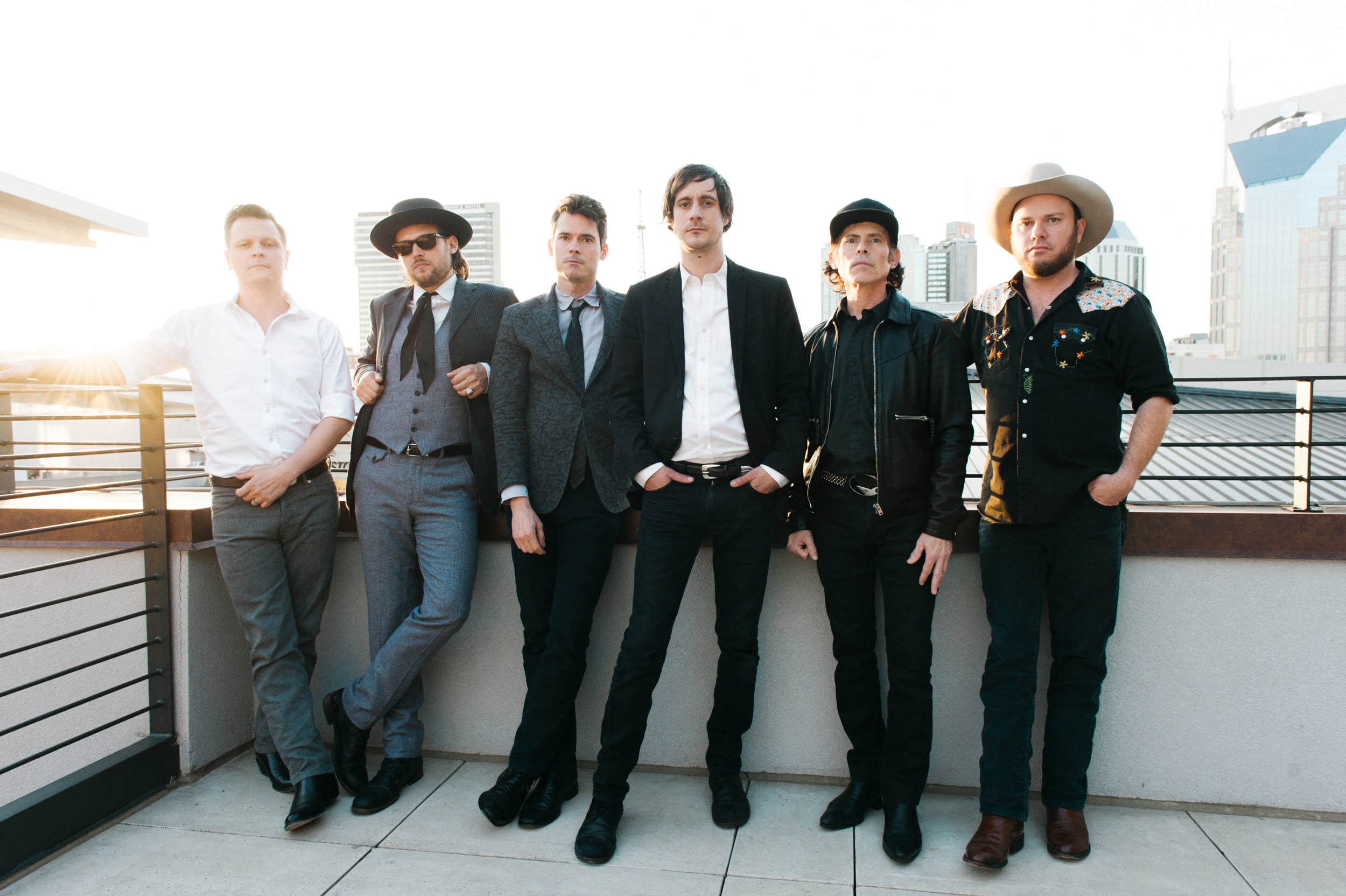
Photo credit: Laura E. Partain

8 Legendary Artists on Our Bluegrass Bucket List

It was 2012 which taught me that, even though bluegrass is a relatively young genre, I was taking that young age for granted. In just a few months, both Earl Scruggs and Doc Watson passed away before I had gotten the chance to see either of them live in concert. Being a banjo player, I was especially broken-hearted over never having met Earl and thanked him for everything he gave me, indirectly, via the banjo. Even though I resolved to catch shows by as many living legends as possible after that particularly devastating year, I have not done well enough. In order to learn from my personal shortcomings, here’s a list of the legends that we all simply must see and hear as much as we possibly can. There’s no time like the present.

Curly Seckler

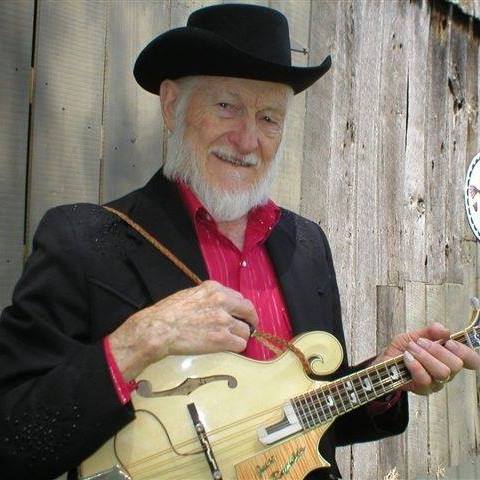
Chances are, if you’re listening to a recording of Flatt & Scruggs, you’re hearing Curly Seckler sing the tenor. His singing and mandolin graced more than 100 songs during his tenure with the Foggy Mountain Boys. In the ’70s, he joined Lester Flatt’s Nashville Grass and inherited the act after Lester passed on. After retiring more than 20 years ago, he continued to release albums and appear as a guest with nearly every bluegrass band of note, on stage and in the studio. He’s a Bluegrass Hall of Famer, an IBMA Award Nominee, and one of the last surviving members of the first generation of bluegrass.

Mac Wiseman

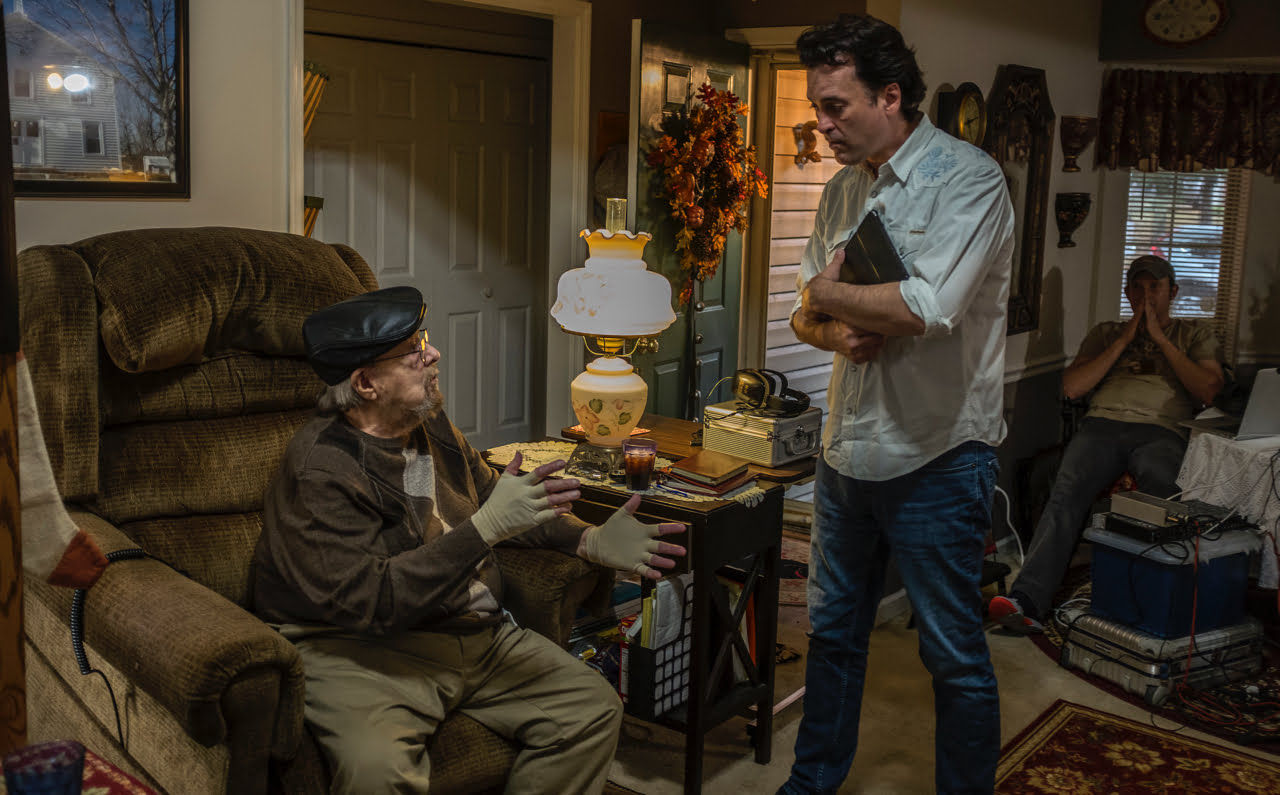
AKA “the Voice with a Heart,” Mac Wiseman got his start with Flatt & Scruggs and the Foggy Mountain Boys, and went on to join Bill Monroe’s Blue Grass Boys before setting out on his own, carving out a solo career that continues to this day. Though he’s currently 91 years old, he just released a musical memoir, I Sang the Song (Life of the Voice with a Heart), on Mountain Fever Records and he has hundreds more songs backlogged for future release. The Country Music Hall of Fame and Bluegrass Hall of Fame inductee rarely performs these days, but musicians, writers, and fans continue to make the pilgrimage to his home just outside of Nashville where he holds court from his armchair — and still does his own vacuuming.

Jesse McReynolds

With his brother Jim, Jesse McReynolds toured and recorded some of the best brother duo bluegrass music ever created. A tireless innovator, Jesse has recorded an album of Chuck Berry covers, a Grateful Dead tribute album, and even appeared on the Doors’ Soft Parade. Lucky for all of us, Jesse still tours, playing festivals and concerts around the Southeast. He also performs quite frequently on the Grand Ole Opry and is the Opry’s oldest member. At 87 years old, he’s still got it — and you need not take our word for it, just catch him tearing through “El Cumbanchero.”

Eddie Adcock

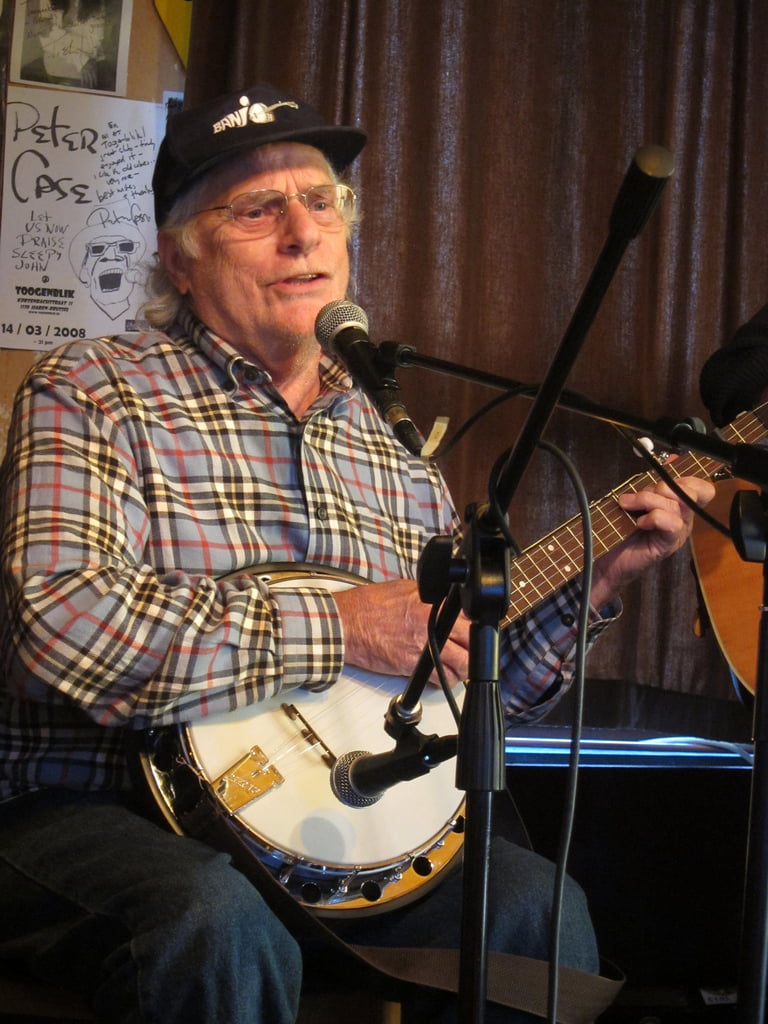
Eddie Adcock is one of the wackiest, most joyful, ingenious banjo players to have graced bluegrass music with his playing. He, too, spent a stint playing with the Blue Grass Boys and went on to join the Country Gentlemen. He toured as a solo act with his wife, Martha, for many years. Their annual benefit concert for Room in the Inn, a homeless shelter network in Nashville, is always a highlight of the Christmas season. It’s worth attending just to catch Eddie, but the lineup is usually brilliantly star-studded. Interesting tidbit: Eddie had brain surgery to correct debilitating hand tremors and was kept awake during the surgery so he could play banjo and the doctors could determine to what extent they could eliminate the tremors. There’s video of this. Go find it.

Bobby Osborne

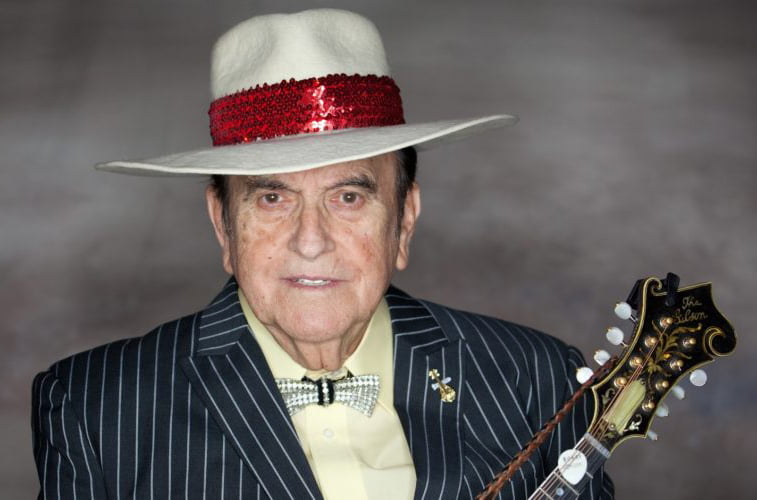
At 85 years old and after more than 60 years of performing professionally, Bobby Osborne filmed his first music video for “I’ve Gotta Get a Message to You,” the single off his brand new record, Original. That’s right, it’s a bluegrass Bee Gees cover. And it isn’t the only surprising cut on the new record, either. There’s “They Call the Wind Maria” from the Broadway musical Paint Your Wagon and Elvis’s “Don’t Be Cruel.” The record plays like a walk back through Bobby’s — and the Osborne Brothers’ — highly influential career in bluegrass, country, and the folk revival. You can catch Bobby touring across the country with the Rocky Top X-press and on the Grand Ole Opry. It might be the only context in which you hear Rocky Top without being mad about it.

Larry Sparks

Larry Sparks got his start with the Stanley Brothers in the early 1960s and, after Carter Stanley passed away, he became lead vocalist, singing some of Ralph Stanley and the Clinch Mountain Boys’ most iconic songs. His own band, the Lonesome Ramblers, continues to carry the torch for traditional, straight-ahead, no-nonsense bluegrass music, but without the hubris and self-righteousness that these uncompromising bands sometimes espouse. Larry was inducted into the Bluegrass Hall of Fame in 2015 and he is a two-time winner of IBMA’s Male Vocalist of the Year award. He’s still going strong with nary a sign of stopping. You need to do yourself a favor and see him live.

Roland White

Too often eclipsed by the fame and influence of his late brother, Clarence, Roland White is the quintessential bluegrass living legend. He appeared on the Andy Griffith Show with his brothers in its first season, he performed with the Kentucky Colonels, the Country Gazette, and the Nashville Bluegrass Band, and he founded the Roland White Band in 2000, after nearly 60 years in the industry. He recently turned 79, but he still teaches at camps and workshops, tours across the country, and plays monthly at the World Famous Station Inn in Nashville. Over the past few years, he’s re-released two live albums by the New Kentucky Colonels: Live in Sweden 1973 and Live in Holland 1973. These recordings should be required listening. Go get them.

Norman Blake

Do you know what Johnny Cash, Bob Dylan, Kris Kristofferson, Joan Baez, John Hartford, Nitty Gritty Dirt Band, Tony Rice, O Brother Where Art Thou?, Alison Krauss and Robert Plant, and Inside Llewyn Davis have in common? Norman. Blake. To call his guitar playing “iconic” would be sorely understating it. His influence reaches beyond bluegrass to almost any player who has ever picked up a flat-top box, whether those players know it or not. His latest record is Brushwood (Songs & Stories), recorded with his wife and longtime musical partner, Nancy. It’s a folk album that channels the roots of the music, but with a political bent that’s as unapologetic as it is classically folk.


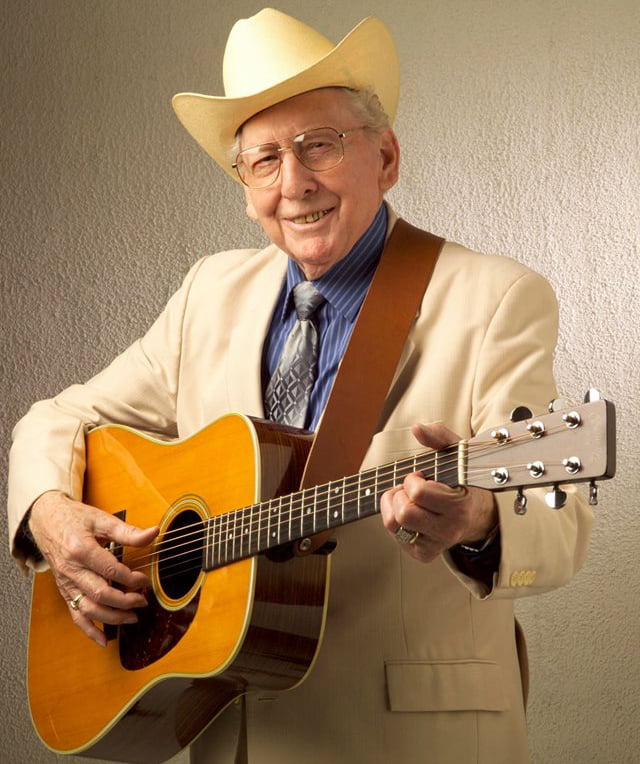
Eddie Adcock photo by Eddie Janssens. All photos courtesy of the artists.

Playing with Purpose: An Interview with Leigh Gibson

The Gibson Brothers are one of the tried-and-true mainstays of the contemporary bluegrass scene, and it’s no wonder why: With masterful, Monroe-style instrumentation and suits to match, they’re the picture of a sharp-dressed, classic bluegrass band. But their background — in the world of traditional bluegrass music, anyway — could hardly be more unorthodox.

Eric and Leigh Gibson grew up on a dairy farm in Upstate New York just a couple miles from the Canadian border. Gritty, mid-’80s New York City was only a few hours South, but they felt like outsiders in their home state’s cultural capital. They were raised on their father’s regimen of classic country music and daily farm labor. Their farmhouse got Canadian public access channels instead of MTV — Gordon Lightfoot instead of Michael Jackson, with a healthy dose of French Canadian fiddle music thrown in. Turns out the Stanley Brothers and Lester Flatt’s stories of rural life made them feel right at home. They didn’t miss the mainstream stuff.

But when they traveled South, they felt like outsiders all over again. At some traditional bluegrass festivals — places where “drink” and “bank” make a tidy rhyme, and the stars and stripes may be the second-most common red, white, and blue flag — they represented a special subset of foreigners called “Yankees.” Even there, they quickly gained respect. A boatload of IBMA Awards soon added the exclamation point. Their bluegrass success is a testament to their farm-style hard work and that timeless synergy of two brothers singing close harmonies. Also — sorry to bury the lede here — they write really good original songs. That probably has something to do with it.

I planned my conversation with Leigh Gibson expecting to talk about traditional bluegrass. Based on their appearance and the festivals they play — and, yes, their reverence for old bluegrass music — they’ve been neatly pre-categorized as “traditional” bluegrass. But when I listened to their record I had to remind myself: The easy distinction between traditionalists and progressives is as convenient as it is misleading. Like the Steep Canyon Rangers or Balsam Range or, for that matter, the Del McCoury Band, the Gibson Brothers only look the part of rigid traditionalists. They write songs reminiscent of Robbie Robertson or Bruce Springsteen just as often as the Stanley Brothers. Sure, they have a banjo in the band, but the interesting part is what they’re doing to expand the vocabulary of their chosen form.

Being a bluegrass band doesn’t make them just a bluegrass band. The Gibson Brothers are a good reminder that some folks with mandolins and banjos should be considered, first, as a great band, regardless of genre. Then you can call them bluegrass.

Let’s talk about In the Ground. I’ve been jamming to this for the last few days. It’s a great record. This is the first album of original tunes since 2011, right?

Right. And it’s the first one that’s all original. Eric and I, early on, were covering Stanley Brothers and Bill Monroe, plus doing songs of the popular bands of the day, just trying to figure it out. As a really young picker — I don’t know if this is true for everybody — I didn’t have as much to say. I’d write a little bit, but it wasn’t the same thing it is today, where you feel like you have something to say and you can stand behind it after you say it.

So how did you make that process happen? How did you graduate from playing classic songs and learning to play other people’s licks to having your own sound and something to say?

As far as the sound goes, we were so far removed geographically from the center of things. Growing up in northern New York State, there wasn’t really a template. We didn’t come up in someone else’s band and then start our own band. I don’t want to call it peer pressure, because that’s not what it is — but we weren’t as affected by the question of what is bluegrass, what is the contemporary sound of bluegrass, because we weren’t picking with anybody who had any idea what that meant. We were mostly playing with French Canadians at fiddle contests who liked the banjo. We would go into Quebec into these jam sessions at someone’s house — some of these folks didn’t even speak English. It was a different sort of gateway into the music profession, for sure. But it was really cool sitting there singing old country songs, classic country from the ’50s and early ’60s. So we went North first before we went South.

I hadn’t thought of the geographic closeness of French Canada and the fiddle tradition there, but that makes a lot of sense.

We were exposed to Canadian television and radio because we grew up in such close proximity to the border. We were just two miles away. Behind our family farm, which started in 1860, there was nothing but woods and then the border. So we grew up watching Canadian television and we were exposed to a lot of Canadian artists — Gordon Lightfoot and others. And we might see some Opry stars on Canadian television, like Charlie Louvin or the Osborne Brothers, who had a bluegrass pedigree.

So this was the mid-’80s. What else was in the air at the time? Was it Michael Jackson and Cyndi Lauper? Were you exposed to that mainstream stuff, too?

Growing up like we did where we did, we didn’t have MTV. My wife is just a year-and-a-half younger than me and she grew up in downstate New York. She was totally influenced by MTV and that part of the culture. But not us. What I was hearing for rock ‘n’ roll was coming out of Montreal.

So for a lot of people your age — growing up on MTV — bluegrass might have felt exotic and old fashioned. But it sounds like it was closer to what you’d been exposed to as a kid, with the Canadian fiddle music, Canadian radio, and old country music.

Yeah, I didn’t feel so much like an oddball in bluegrass. At that point in time, if you were listening to country radio as we were, just when we were getting into the music — that’s when [Ricky] Skaggs was breaking out. All those influences from his bluegrass pedigree came into his country songs. It was a validation happening, in my mind, for what we were trying to do with these instruments — learning banjo and guitar and singing Flatt & Scruggs and Monroe. So I wasn’t missing the Cyndi Lauper stuff.

So even though you were in the same state as New York City, this cultural capitol of the world producing all these big modern stars, you felt closer to Canadian fiddle music and old country music. But then bluegrass was composed of mostly Southerners, so you were kind of both culturally inside and outside.

Yeah, that’s a good way to put it. At the time, I didn’t feel like we were outside. You have to remember, we were living on a dairy farm. My father worked that farm 365 days a year, so we didn’t travel much. We’d find bluegrass radio stations — it was back in the cassette days. We would record a Sunday night radio broadcast out of Ottawa. We didn’t get the station really well, but at night in the summertime you could get it. So we’d hit record and listen to those shows throughout the week on that cassette.

That reminds me of stories you hear old bluegrass musicians tell. Folks would gather around the family radio in the living room and listen to the Grand Ole Opry. Why do you think y’all were drawn to country and bluegrass radio?

Once you get up above Poughkeepsie, New York gets really country. We were six hours north of New York City. They’re country people up there. There are mining communities. I think it’s more closely related to Appalachia than people would think.

So the North/South divide is the wrong spectrum to think about. It’s more the urban/rural divide?

I think so. I was never apprehensive about going to the South, but every time I cross the George Washington Bridge, I still get a tightness in my chest, like, “Oh, boy! Here we go!”

[Laughs] Even as a native New Yorker.

New York is exciting if you’re not bringing a car, but I still feel that way. Like that is a different world.

Sure, but thinking of that North/South divide, I mean, if I took a friend from New York City to a rural North Carolina bluegrass festival with funnel cake and chewing tobacco and banjo music, they would be like, “Where the hell am I?”

True, true. And I sometimes forget because I’ve been to so many of those things. I do remember the first couple Southern Virginia festivals we played. You just couldn’t feel like you fit in, because — it was our first time being around Confederate flags flying at every campsite, and the only compliment you’d get is, “You guys are okay. For Yankees.”

Well, I guess that’s a really high compliment for some people!

[Laughs] Yeah, and they meant it! You know, the second or third time they’d see you they would come up and say, “Tell me true, now, you’re mama is from down here, right?”

That’s awesome. So, in other words, you passed the test. You weren’t dismissed for being Yankees because you got the music.

And when we first started, we were paying tribute to their music more than our own. Obviously we’d sing a little different, since we grew up talking around different people, learning how to speak and sing from different people. But we were singing Bill Monroe or Stanley Brothers or Jim & Jesse, so we didn’t introduce ourselves to them immediately. We didn’t know who we were at the time.

So, at that point, you started developing as a bluegrass band by hanging around bluegrass bands in the South? That’s how you developed your sound, too?

I think it was unavoidable that the rhythmic feel of, say, the Lonesome River Band or Nashville Bluegrass Band would creep into my guitar playing or Mike Barber’s bass playing. We listened to Sam Bush a lot. Of course, New Grass Revival was on country radio in the late ’80s. And Peter Rowan was a big one. Every one of those bands have great vocals, great songs, and can play. We were trying to figure it out like anybody would. Like when a rock band first hears the Beatles. They’re going to try and emulate that sound. So we did the same thing.

What are you listening for when you hear a great bluegrass band? Or, rather, what is it that makes a great bluegrass band great?

I guess the same could be said for any kind of music, what I’d listen for. It’s almost like you’re listening for purpose. There are people with great voices, but you still can’t stay engaged with what they’re singing about or what they’re saying. It doesn’t feel like it demands to be listened to. But look at Willie Nelson. He’s not the best singer in the world, but he makes you believe it. Del McCoury has that. There’s purpose there. You believe what they’re singing about.

Is it a question of authenticity?

Yeah, maybe. They’re authentic for sure. And the band doesn’t have to be full of the best pickers on each instrument, if it has that collective thing that makes you sit up and take notice.

Where do you think the Gibson Brothers’ sounds fits into the full picture of modern bluegrass?

I think we’re seen by most people as being traditional bluegrass. It has something to do with our configuration — we have mandolin, fiddle, guitar, banjo, and upright bass. That’s the instrumentation we’ve chosen, and the people we’re surrounded by, but I still don’t really approach it like a bluegrass band. It’s become more about us and our story. More about the catalogue of songs we’ve written and play at shows. I think those songs would still hold up if we had different instrumentation, because we believe in the songs so much.

So you’re saying that a bluegrass band is chasing after something authentic and honest, like any kind of band. They just happen to have fiddles and mandolins and banjos.

It’s true. Because those are the instruments we learned. What if my father had had a trumpet under the bed instead of a banjo that we could’ve learned on? It was a mix of timing and location that put us where we are today.

Why did a northern New York dairy farmer have a banjo?

He wanted to learn to play. He liked a lot of kinds of music — he had Mac Wiseman and Lester Flatt records. You know, that old stuff like, “’Tis Sweet to Be Remembered.” Classic stuff. He liked Celtic music a lot, too. At some point, the dairy farmer who was enjoying Celtic music and a little bit of country decided he was going to order a banjo from Montgomery Ward. So he did.

I noticed one of the songs on the new record, “Everywhere I Go,” was co-written with Eric’s son, Kelly, so it seems like he’s maybe following in your footsteps. Would you encourage your kids to become working musicians?

If it would make them happy, I wouldn’t discourage them. Let me put it that way. It would please me if I could make music with my children. But here’s the father in me — only if they approached it like a professional and worked hard, not just because they want to sleep in until noon. The way we grew up on the farm, it was hard work every day. They’re not learning that first hand, exactly — I mean, we’re not splitting wood to heat the house — but I think about how to show them what hard work can do for you. Hopefully they recognize that example in our career, that it’s hard work and it pays off.

I’m thinking of the title track, “In the Ground,” where you’re lamenting the loss of the family farm. That family farm seems like a big part of your story, going way back to your grandparents and great-grandparents, etc. Is that what you miss about that lifestyle, the ethic of hard work that came along with it?

For sure. The farm teaches you that hard work doesn’t guarantee success. You can’t control the weather. The music industry is like that. There are things you can’t control. But if you don’t do the work, you won’t have any success. That’s the best thing our dad gave us, a really strong work ethic …

When the farm was still there and my father was still working it, it was fresh in my mind. That life was still there to me. Then my father passed away, so that connection was frayed, and then you feel more and more disconnected from that life. Suddenly you start looking for it, and you’re a couple of decades removed from what was already a bygone era that we were living. Now I can’t find that connection. I don’t miss having to do it every day, 365 days a year, but I wouldn’t trade it for the world.

Seems like that feeling really connects you to a tradition in bluegrass songs. You know, longing for the old cabin home, reminiscing about Uncle Pen — or a newer song like “Old Home Place” written in the ’70s. Mourning that connection to the land and to tradition that’s been lost.

Yeah, you think about Monroe writing “On My Way Back to the Old Home,” missing home when he was in Chicago living a different life. That’s kind of what I’m doing. If that farm in that same location still could’ve provided a living for the next generation, one of us probably would’ve taken it over. There’d be no Gibson Brothers. So it’s not a lifestyle I would’ve run away from, if my father hadn’t told us from an early age that it wasn’t going to happen.

Why wasn’t it possible anymore?

Back in the day, you could have three cows and consider yourself a dairy farmer, if you were selling a little bit of milk. You didn’t need much land. But in the ’80s and ’90s, the milk prices were falling as costs were going up. In order to stay in business, a farmer had to grow and grow, adding hundreds of cows. Then you’re deeper in with the bank and milk prices drop again, so what do you do? … When my father came along, he had come to the end of the line of what was productive and profitable. It’s nobody’s fault. It’s just the way it happened. Sorry, I didn’t mean for this to become a lesson in the dairy industry …

No, it seems like important background. It strikes me that you’re almost telling the quintessential story of the American South and the way it was defined by change in the middle of the 20th century — but you grew up on the Canadian border in the 1980s. That’s wild.

True, yeah. That’s probably true. I think we have a lot in common with Appalachia historically.

Thinking of that track, “In the Ground,” and the tradition in bluegrass music of longing for an earlier time, I can imagine some kid from New York City or California who doesn’t know about bluegrass hearing that nostalgia for a better, bygone American era and being reminded of hateful, exclusive political rhetoric that also talks about getting back to a golden era. How do you convince them that’s not what you’re talking about?

I feel like our music … yes, it’s about the good old days and, yes, it has some nostalgia, but it’s our nostalgia. Although it has some common ground with traditional bluegrass, we really do sing about us. But how would I convince some 22-year-old kid in New York City? That’s a good question.

So you’re telling an honest story that comes from your own life. Maybe that’s all we can ask of any artist.

Yeah, that’s what we’ve grown into. Being our age, in our mid 40s now, we’re looking back and realizing what we’ve lost. That comes later when you get older and have children. Earlier, when you asked about the acts we love in bluegrass, it was about feeling like their songs meant something to them, that they were being authentic. That’s what I hope we’re being. We’ve spent a long time becoming us. It’s all we really know how to do.