ANNOUNCING: Sierra Hull, Dan Tyminski to Host 2016 IBMA Awards

Each year, the International Bluegrass Music Awards honor major talent in bluegrass music. Between recognizing major accomplishments — like albums and songs — the ceremony also inducts new members into the Hall of Fame. It is, quite simply, bluegrass music’s biggest night. And for good reason.

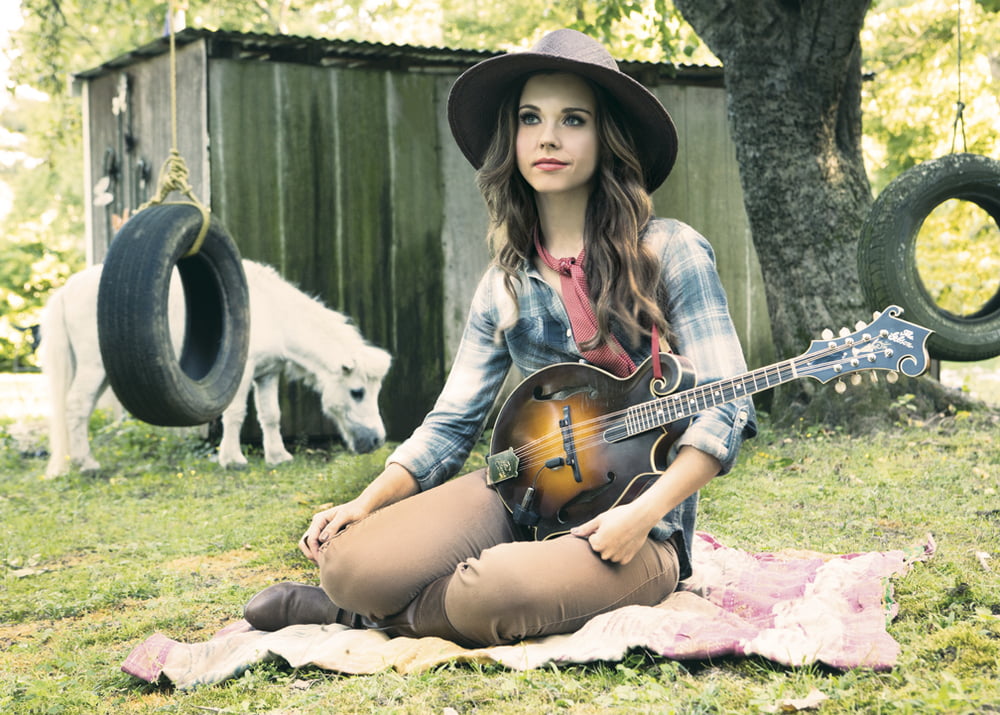
For its 2016 ceremony, the IMBAs invited singer/songwriter and mandolin virtuoso Sierra Hull and four-time male vocalist winner Dan Tyminski to co-host the event. In pairing the musicians, it seems as though the IBMAs have taken a page out of the Country Music Awards’ book. Mainstream country artists Brad Paisley and Carrie Underwood made such fun co-hosts nine years ago that the CMAs have continued to tap their undeniable chemistry ever since. That’s not to say this marks the beginning of a long stretch wherein Hull and Tyminski return to lead the ceremony for years to come, but having them host together presents viewers with (like Paisley and Underwood in country) two different colors from the bluegrass music spectrum. As such, the night promises an added charm to an already special evening.

Hull and Tyminski — at 24 and 49 years old, respectively — might seem like they come from different places, in terms of their lives and their careers, because they do. Each represents a distinct approach to bluegrass, which is what makes their participation as co-hosts so compelling. Where Hull adds a fresh, youthful style to the genre, Tyminski represents a more traditional and regional take.

They are two sides of a coin — a lucky penny for the IBMAs.

Though Hull may be younger, that doesn’t mean she’s any less accomplished, having picked up the mandolin at 11 and, at the ripe old age of 13, landing a recording contract. Her newest album, Weighted Mind, finds her at a crossroads between the girl she’s long been and the woman she’s becoming. The album’s opening song, “Stranded,” exudes a melodically meditative quality, as Hull’s mandolin does much of the ruminating she can’t quite put into words. When her voice does break in, repeating the phrase “Dear 22” here and there, an ellipsis interrupts before she can finalize her thought. Hull fails to find what she wants to say because she is, as the song title suggests, “stranded.” Perhaps it’s reductive to describe her as the Taylor Swift of bluegrass, because her songwriting far exceeds the light pop fare Swift pens, but she feels like a necessary perspective for young girls and young women who don’t find themselves reflected in mainstream music.

Besides co-hosting the IBMAs, Hull will also be competing in three of its categories. Weighted Mind earned her nominations for Album of the Year and Song of the Year (for “Black River”), as well as Mandolin Player of the Year. "I have been to the IBMA convention since I was nine years old, so it's a very special event to me for many reasons," Hull notes. "To be asked to host the Awards show this year is quite an honor. Dan and I are going to have a blast."

Partner Hull with Tyminski, who offers a more established name and repertoire, and it feels as though the IBMAs have struck upon a combination sure to delight not only audiences, but those attending the ceremony, as well. Tyminski, especially, is an apt addition considering the theme, "Bluegrass on Screen." He lent his voice to the 2000 film O Brother, Where Art Thou by being George Clooney’s singing double. The film's hit single, “I Am a Man of Constant Sorrow,” would go on to reinvigorate people’s love and appreciation for bluegrass music across the country. The soundtrack alone went on to win the IBMA and Grammy Award for Album of the Year, and “Man of Constant Sorrow” took the CMA Award for Best Single. But besides his onscreen work, Tyminski is a formidable presence in bluegrass, finding ways to draw on the genre’s regional connections in his own work. And he’s been well recognized for his efforts. His 2008 album, Wheels, earned IBMA’s Album of the Year and a Grammy nomination. Even while he’s a storied name in bluegrass, listeners might know him best for the 22 years he’s put in as a member of Alison Krauss's Union Station. He said about co-hosting this year, “The IBMA Awards show is a highlight in the year. I look forward to this year's show and feel honored to participate.”

With each exhibiting a sense of good humor, appreciation, and respect for the work they do — plus the added bonus of approaching bluegrass from two different but necessary perspectives — Hull and Tyminski promise an exciting evening that honors everything exceptional about bluegrass.

The IMBAs are part of the International Bluegrass Music Association, and will take place in Raleigh, North Carolina, on September 29. Tickets can be purchased through the IBMA website.


Photos courtesy of the artists

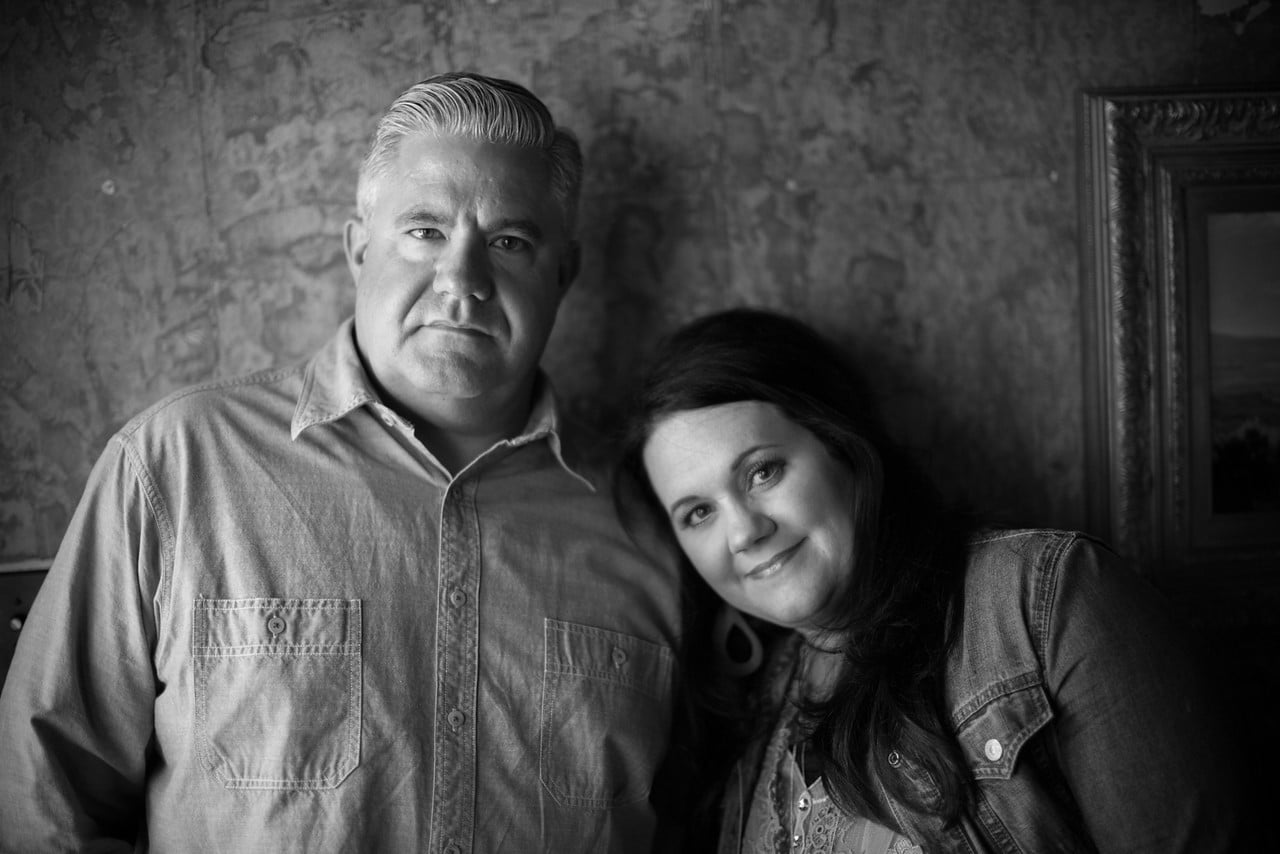
LISTEN: Kenny & Amanda Smith, ‘You Know That I Would’

Artist: Kenny & Amanda Smith
Hometown: Lebanon, TN
Song: “You Know That I Would”
Album: Unbound
Release Date: September 23
Label: Farm Boy Records

In Their Words: "This is our seventh album and it’s very special to us. We spent a great deal of time selecting songs and paring down the list to one that really moves us, musically and emotionally. We’re very proud of the arrangements and so grateful to the players who brought everything to life. There’s a lot of heart in this album, as we really love the message of this particular song, ‘You Know That I Would.’” — Amanda Smith


Photo crourtesy of Laughing Penguin Publicity

Traveler: Your Guide to Unique Music Museums

When it comes to visiting music museums, there are the usual suspects: The Country Music Hall of Fame and Museum, the Birthplace of Country Music Museum, the Grammy Museum, and the International Bluegrass Music Museum. While they are definitely fine institutions, there are also a number of lesser-known collections that are slightly off the beaten path but worth discovering.

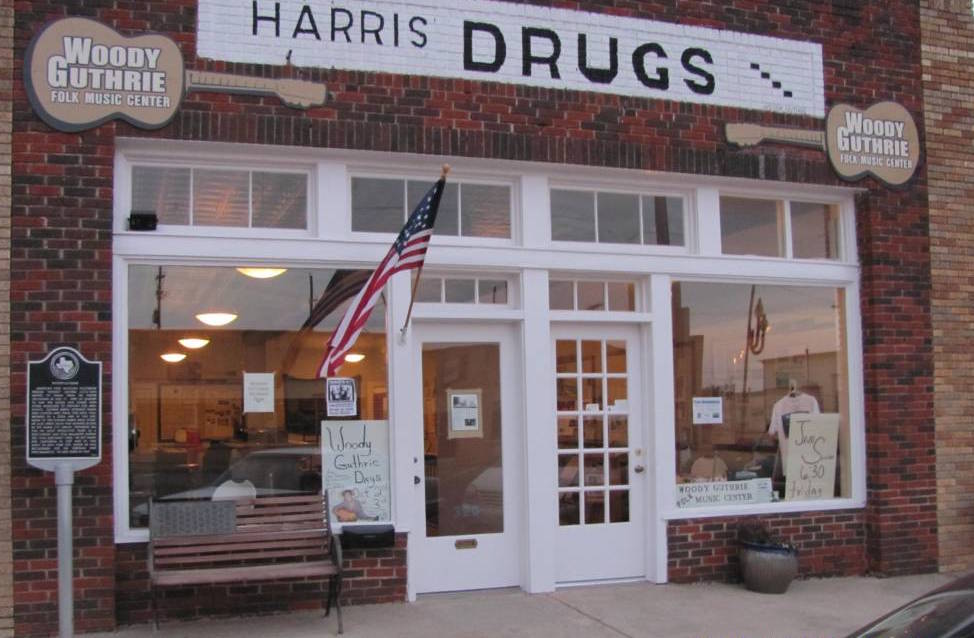
Woody Guthrie Folk Music Center

Photo courtesy of the Woody Guthrie Folk Music Center

Though Pampa is a small town in the Texas Panhandle, far from the state’s music centers, it holds an important spot in American music history because it is the place that Woody Guthrie moved to as a teenager and where he got in his first guitar. In 1991, several community leaders created the Woody Guthrie Folk Music Center, which is located in the old Harris Drug Store where Guthrie worked as a youth. While not as fancy as Tulsa’s recently opened Woody Guthrie Center, Pampa’s museum — currently open by appointment only — has a homespun charm that reflects Guthrie’s common man values. On display are Guthrie-related newspaper articles, old photos, and even an over-sized version of his “This Guitar Kills Fascists” guitar. Michael Sinks, the Center’s director, says Nora Guthrie is working on an exhibit for them. They also promote Guthrie’s legacy through public song circles on Friday nights and an annual concert in October (to mark Woody’s passing) that cowboy balladeer Don Edwards is headlining this year.

Woody Guthrie Folk Music Center
320 S. Cuyler, Pampa, TX, 79065
Free admission; donations welcome
Open by appointment only. Call 806-664-0824 or email [email protected]

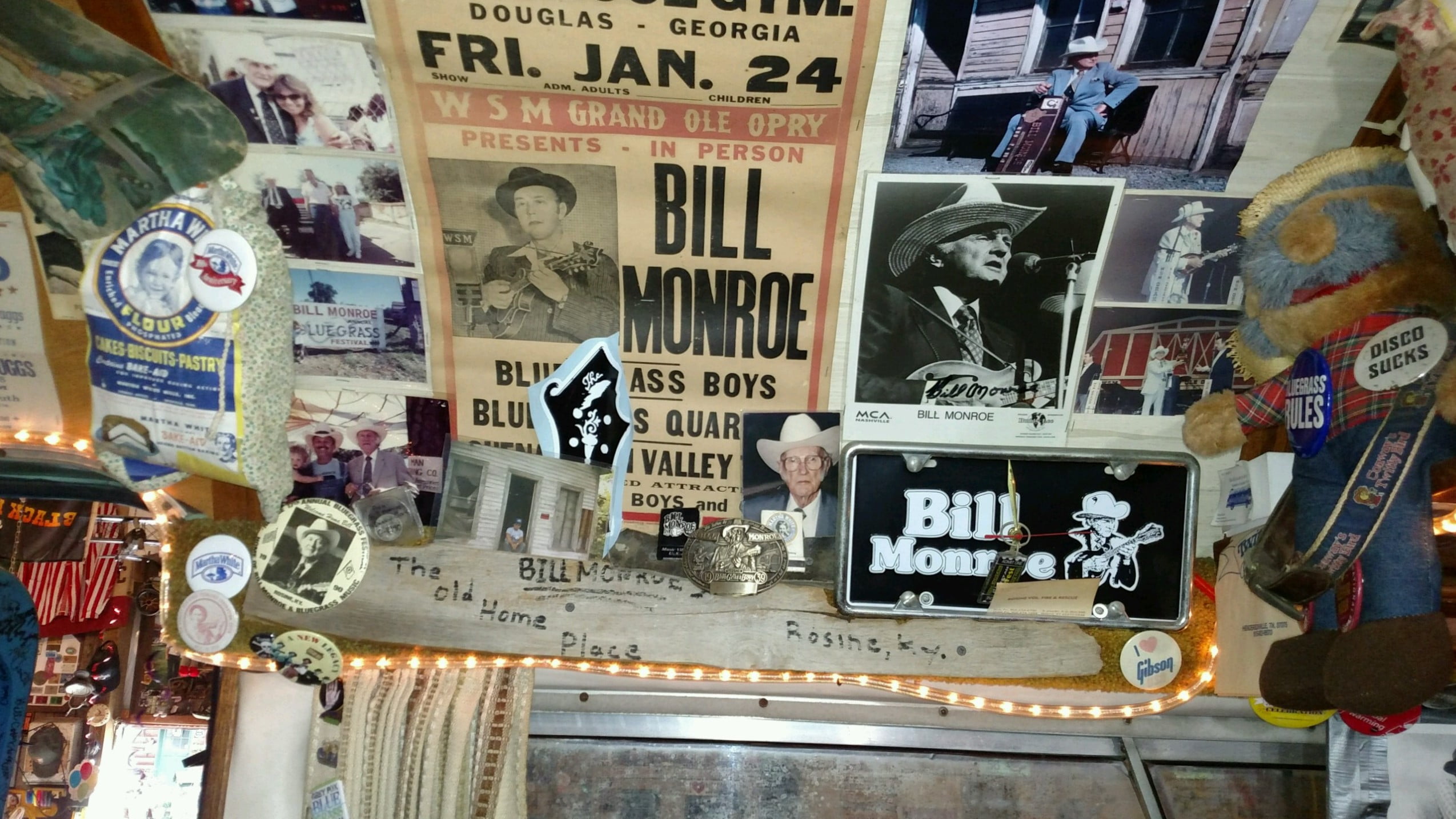
The Bluegrass Bus Museum

Photo courtesy of Danny Clark

After seeing Flatt & Scruggs perform on the Beverly Hillbillies, a young Don Clark became a lifelong bluegrass fan and dreamed about having a Martha White touring bus like Flatt & Scruggs had. After buying a bus like the duo’s, Clark filled it with his various bluegrass and country mementos and created the Bluegrass Bus Museum in the early 1990s. When you step inside the bus, you’ll be walking on vintage Grand Ole Opry carpeting. Clark’s eclectic array of Americana includes Lester Flatt’s old mailbox sign, antique Martha White mic stands, and a Bill Monroe’s stage suit. A centerpiece is the bus door that is covered with autographs from hundreds of musicians. After years of traveling all across America, the aging bus now only hits the road 5-10 times a year around the Nashville area, where Clark and his son Danny now reside. If you want to check out the museum, you can contact Danny through their website to arrange a visit. He is also keeping bluegrass history alive by posting on their YouTube channel a number of archival live performances that his father videotaped at festivals back in the day.

Bluegrass Bus Museum
To make an appointment, email [email protected] or phone 615-497-6731

Fur Peace Ranch

Photo credit: Scotty Hall

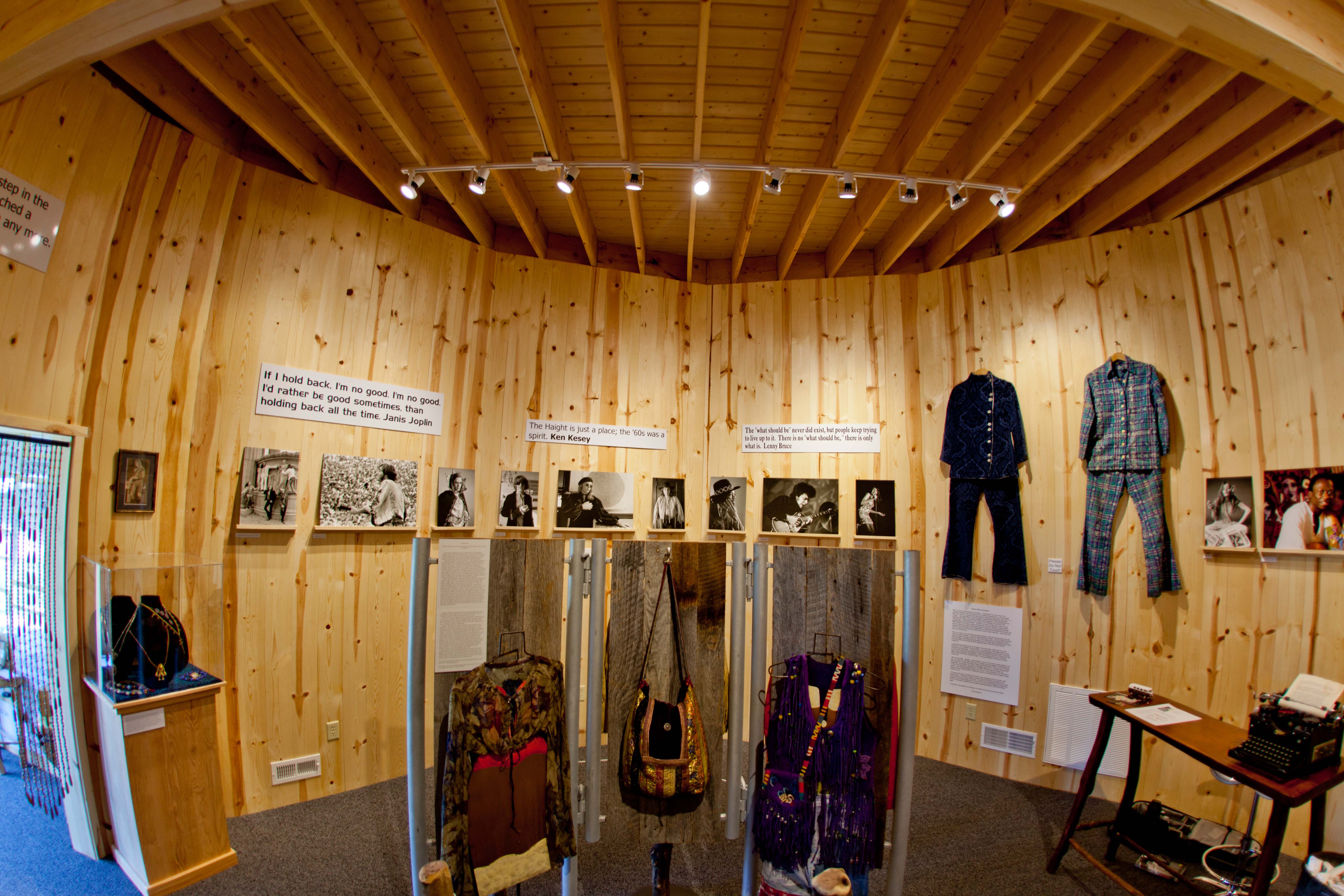
Why can you find a treasure trove of memorabilia for Haight-Ashbury’s golden age some 2,000 miles from San Francisco in southeastern Ohio’s rural countryside? Because this is where is Jorma Kaukonen (of Jefferson Airplane and Hot Tuna fame) and his wife Vanessa have their Fur Peace Ranch. Their ranch is best known for its long-running guitar camp and popular concert series, but Jorma and Vanessa decided a few years ago to transform an old silo into a '60s-centric museum named the Psylodelic Gallery as a way to share the many items he saved — along with offering a personal look into that historic era. Kaukonen’s original Fillmore posters adorn the walls. The typewriter heard on his famous bootleg recording with Janis Joplin is on display, as are period outfits like the one his bandmate Jack Casady wore at Woodstock. The gallery also hosts temporary exhibits, with the most recent one presenting Jerry Garcia paintings. If that isn’t enough of a flashback for you, there’s a Brotherhood of Light-designed liquid light show to further enhance the '60s vibe.

Fur Peace Ranch
39495 St. Clair Rd., Pomeroy, Ohio 45769
1 pm – 5 pm, Wednesday-Friday and during concerts
Free admission; donations welcome

Stephen Foster Folk Culture Center State Park

Photo credit: John Fletcher

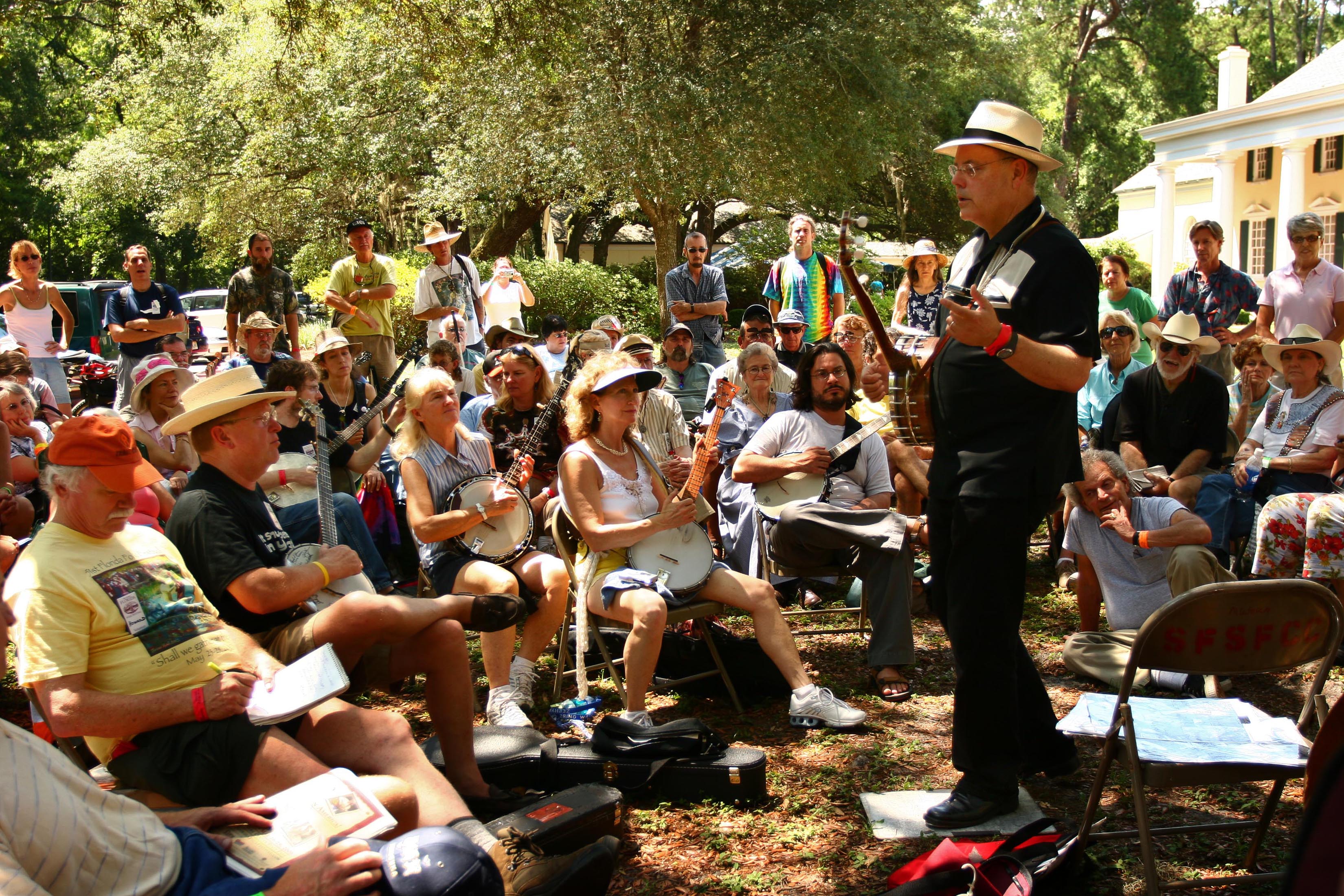
Way down along the Suwannee River is a natural place to find a memorial to the man who penned the famous lyric: “way down upon the Swanee River.” (He took spelling liberties to suit his melody.) Located about an hour west of Jacksonville, in White Springs, Florida, this museum salutes the Pennsylvania-born songwriter, who apparently never actually visited the Suwannee River. On view are eight original dioramas inspired by Foster’s songs, along with a number of 19th-century pianos, including the one that he played. It’s hard to miss another main attraction — the 97-tubular bell carillon tower that plays Foster’s music throughout the day. The park, which also serves as Florida's official folk culture center, hosts the annual Florida Folk Festival and the Stephen Foster Old-Time Music Weekend. Sadly, the replica paddle steamers no longer travel the river as they once did.

Stephen Foster Folk Culture Center
11016 Lillian Saunders Drive / US HWY 41 North
White Springs, FL 32096
Park is open from 8 am to sunset
Museum and Tower are open 9 am – 5 pm daily
Admission Fee: $5 per vehicle. Limit 2-8 people per vehicle.
$4 Single Occupant Vehicle.
386-397-4331 / 386-397-4408 for tours

U.S. 23 Country Music Highway Museum

Photo courtesy of Paintsville Tourism Commission

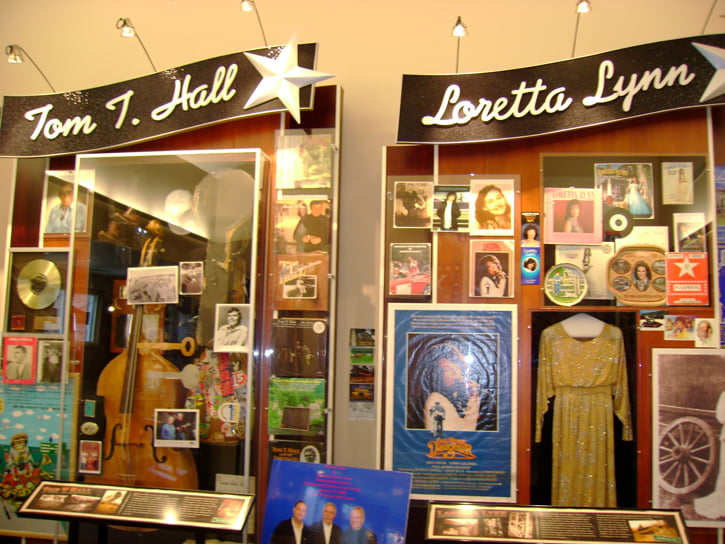
While U.S. Route 23 stretches nearly 1,500 miles from Michigan to Florida, it is the 150 or so miles that runs through eastern Kentucky that has contributed so much to the music world that it has been officially named “The Country Music Highway.” Loretta Lynn, Tom T. Hall, Ricky Skaggs, the Judds, Billy Ray Cyrus, Dwight Yoakam, and Chris Stapleton — who have all called this area home — are among those honored at the U.S. 23 Country Music Highway Museum in Paintsville, Kentucky. Each of the 13 inductees have their individual exhibit, displaying personal items, such as a couple of Loretta dresses, a vintage Skaggs guitar, and a pair of Stapleton’s boots. As Paintsville’s executive director of tourism, Jeremiah Parsons, notes, all of these performers haven’t been afraid to be different and create their own unique style. If you visit on a Thursday, stick around for their Front Porch Picking night; maybe some of the region’s musical magic will rub off on you.

US 23 Country Music Highway Museum‬
100 Stave Branch Road, Paintsville, KY 41256
9 am – 5 pm Monday-Saturday; 12:30 pm – 5 pm Sunday
Admission: $4
606-297-1469‬

The Big House

Photo courtesy of the Big House Museum

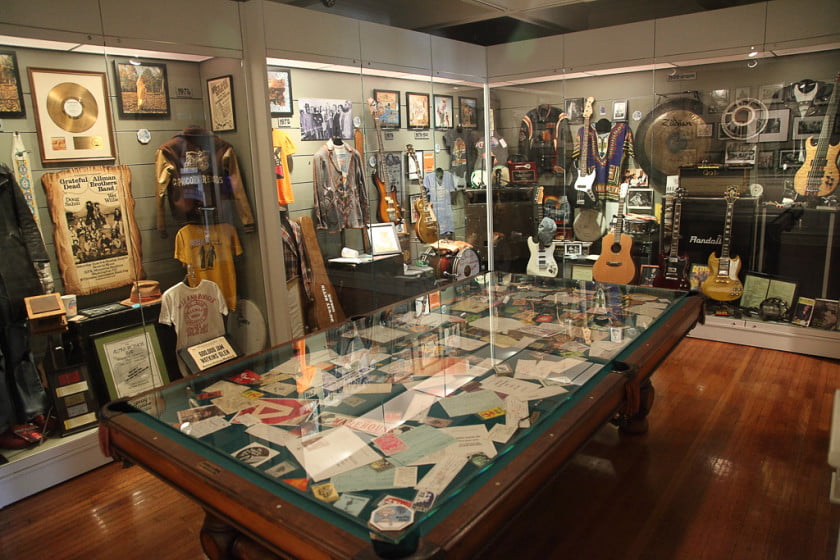
Mention “The Big House” in Macon, Georgia, and it means only one thing — the place where the Allman Brothers called home in the early ‘70s as they rose to stardom. In 2009, the old Grand Tudor mansion opened as the Allman Brothers Band Museum. Visiting it is like walking through the coolest music-themed house ever. Some rooms, like Duane’s Room and the “Casbah” Music Room, resemble how they looked when the band lived there. The Living Room and Old Dining Room, meanwhile, now present a wealth of Allman artifacts — Where else will you see Cher and Gregg Allman’s pool table? — and the walk-in closet is lined with posters and photos instead of clothes. The “Fillmore East Room,” where the group used to jam, is stocked quite appropriately with their old instruments. There’s even a room that salutes their roadies! Besides its central role in Allman Brothers history, the Big House also is where latter-day Allmans Warren Haynes and Allen Woody lived in 1994 when they put together their own band Gov’t Mule.

The Big House Museum
2321 Vineville Ave, Macon, GA 31204
11 am – 6 pm Thursday through Sunday
Admission: $10 adults, $4 children 3-10
478-741-5551


Lede photo courtesy of the Big House Museum

3×3: Mason Porter on Time Travel, Self-Confidence, and the Best Brothers

Artist: Mason Porter
Hometown: MoGreena, PA
Latest Album: Heart of the Mountains
Personal Nickname: Tim has enough nicknames for all of us the Chef, Chefelo, Rev. TC, Sassy C,Timmy the C


@ardmoremusichall 6/3/16 by @karlmcw

A photo posted by Mason Porter (@masonporterband) on

Which decade do you think of as the "golden age" of music?
Smoker: 1760s
Joe: 19th century
Tim: Roaring '20s
Sarah: 1940s

If you could have a superpower, what would you choose?
Smoker: Time travel
Tim: Teleportation
Sarah: The ability to boost the confidence of little girls everywhere
Joe: If I could just keep my mandolin in tune …

If you were in a high school marching band, which instrument would you want to play?
Paul: Cello. Like Woody Allen in Take the Money and Run


Beautiful afternoon in NYC. We did an acoustic session today at @relixmag #relixmagazine #stainedglassjerry

A photo posted by Mason Porter (@masonporterband) on

What's your go-to road food?
Paul: Two cheese sticks and a coffee
Sarah: Beef jerky
Joe: Coffee, water, IPA

Who was the best teacher you ever had — and why?
Sarah: My mom — for 10 years straight, she played music with me every day.

What's your favorite culinary spice?
Cumin, unanimous

Boots or sneakers?
Boots all around

Which brothers do you prefer — Avett, Wood, Landreth, or Osborne?
Smoker: The Blues Brothers
Sarah: The Stanley Brothers. What about a sisters group?
Joe: The Allman Brothers

Canada or Mexico?
Smoker: Canada
Tim: Mexico

ANNOUNCING: 2016 IBMA Award Nominations

Nominees for the 2016 International Bluegrass Music Association awards were announced this morning. Judging by the list, modern bluegrass is alive and very, very well. From Sam Bush to Sierra Hull, so many artists we love got tapped. And, of course, it's no surprise that the Earls of Leicester and Del McCoury racked up a bunch of nods. Hats off to you all!

Entertainer of the Year
Balsam Range
The Del McCoury Band
The Earls of Leicester
Flatt Lonesome
The Gibson Brothers

Vocal Group of the Year
Balsam Range
Doyle Lawson & Quicksilver
The Earls of Leicester
Flatt Lonesome
The Gibson Brothers

Instrumental Group of the Year
The Earls of Leicester
Frank Solivan & Dirty Kitchen
Punch Brothers
Sam Bush Band
The Travelin’ McCourys

Song of the Year
“Black River” — Sierra Hull (artist and songwriter)
“Long Way Down” — the SteelDrivers (artist), Elizabeth Mala Hengber, Tammy Rogers King, Jerry Salley (songwriters)
“Radio” — Steep Canyon Rangers (artist), Graham Paul Sharp (songwriter)
“Thunder & Lightning” — Lonesome River Band (artist), Adam Wright (songwriter)
“You’re the One” — Flatt Lonesome (artist), Dwight Yoakam (songwriter)

Album of the Year
Bridging the Tradition — Lonesome River Band
It’s About Tyme — Russell Moore & IIIrd Tyme Out
Runaway Train — Flatt Lonesome
The Muscle Shoals Recordings — the SteelDrivers
Weighted Mind — Sierra Hull

Gospel Recorded Performance
“All Dressed Up” — Joe Mullins & the Radio Ramblers
“In The Heat of the Fire” — Flatt Lonesome
“Rocking of the Cradle” — Lonesome River Band
“The Savior Is Born” — Becky Buller
“Won’t You Come and Sing for Me” — Laurie Lewis & the Right Hands

Instrumental Recorded Performance
“Cazenovia Casanova” — Frank Solivan with Sam Bush and Jerry Douglas
“Fireball” — Special Consensus featuring Rob Ickes, Trey Hensley, and Alison Brown
“Hogan’s Goat” — the Boxcars
“Hogan’s House of Music” — Ron Block
“Smartville” — Ron Block

Emerging Artist
Band of Ruhks
The Lonely Heartstring Band
Mountain Faith
Sister Sadie
Steve Gulley & New Pinnacle
Town Mountain

Recorded Event
“Fireball” — Special Consensus featuring Rob Ickes, Trey Hensley, and Alison Brown
“Highway 40 Blues” — Special Consensus with Della Mae
“In the Pines” — Carl Jackson and Brad Paisley
“Longneck Blues” — Junior Sisk and Ronnie Bowman
“Pretty Woman” — Frank Solivan with Del McCoury

Male Vocalist
Shawn Camp
Del McCoury
Buddy Melton
Tim O’Brien
Danny Paisley

Female Vocalist
Becky Buller
Dale Ann Bradley
Claire Lynch
Amanda Smith
Rhonda Vincent

Banjo Player
Charlie Cushman
Jens Kruger
Mike Munford
Noam Pikelny
Sammy Shelor

Bass Player
Barry Bales
Alan Bartram
Mike Bub
Missy Raines
Mark Schatz

Fiddle Player
Becky Buller
Jason Carter
Michael Cleveland
Stuart Duncan
Ron Stewart

Dobro Player
Jerry Douglas
Andy Hall
Rob Ickes
Phil Leadbetter
Josh Swift

Guitar Player
Chris Eldridge
Jim Hurst
Kenny Smith
Bryan Sutton
Josh Williams

Mandolin Player
Jesse Brock
Sam Bush
Sierra Hull
Frank Solivan
Adam Steffey

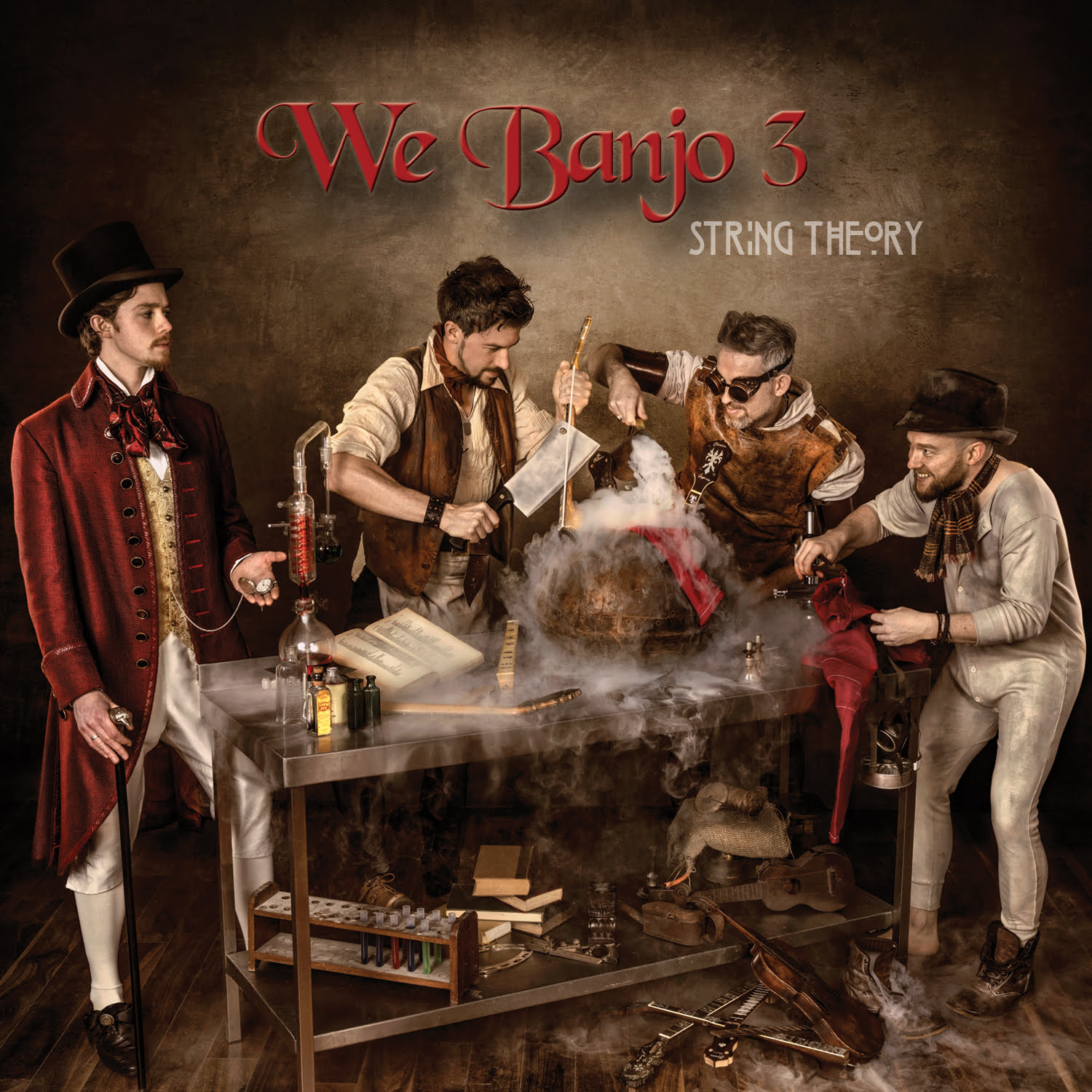
STREAM: We Banjo 3, ‘String Theory’

Artist: We Banjo 3
Hometown: Galway, Ireland
Album: String Theory
Release Date: July 30

In Their Words: "Our music playfully explores the deep tapestries and intertwined cultures of Irish, bluegrass, and American folk. Our new album, String Theory, is a journey along that path — it's virtuosic, technical, joyous, and full of heart." — Martin Howley

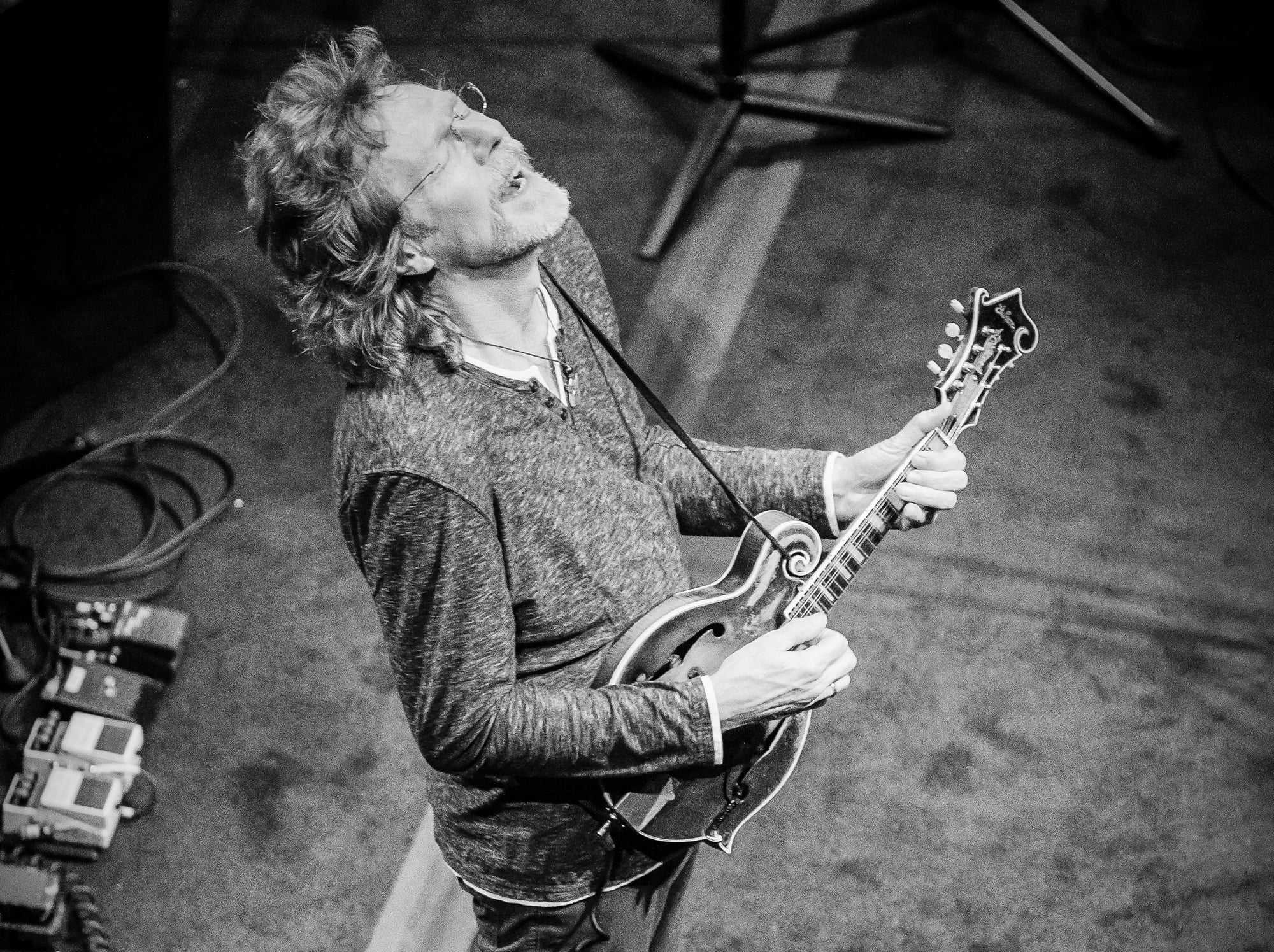
Old, New, Borrowed, and Blue: A Conversation with Sam Bush

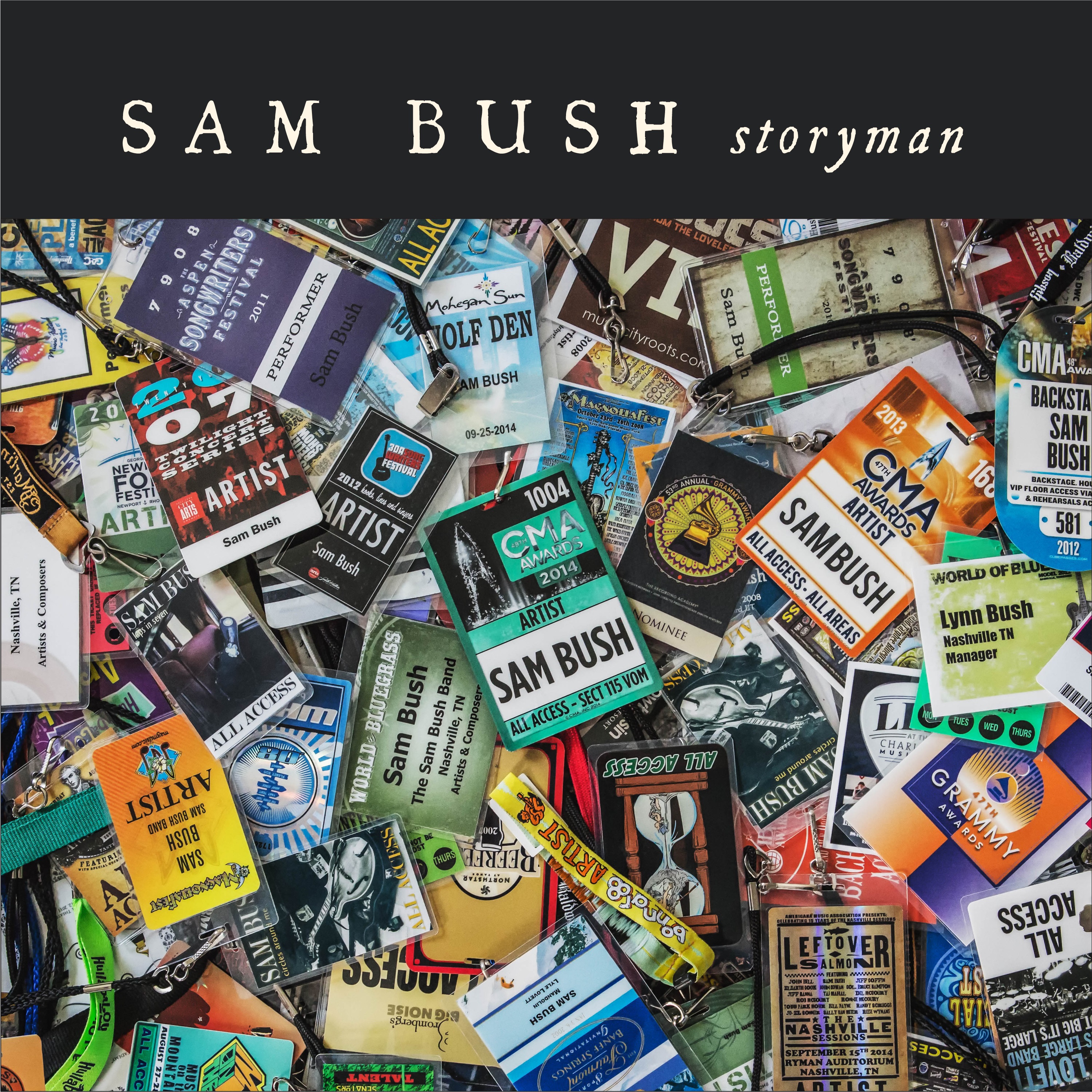
I first heard Sam Bush in the early 2000s — I was 11 or 12, probably — when my dad brought home Glamour & Grits. The CD jacket was a minor epiphany. Here was this wildcat-looking guy wearing big, black shades and a cheetah print headband. In his hand was a busted old Gibson mandolin. Not a Les Paul. Not a Strat. A mandolin. Something in my tiny little music-obsessed mind said "DOES NOT COMPUTE."

From there, I found New Grass Revival, the genre-expanding string band founded in the early '70s. I started with On the Boulevard, featuring R&B expatriate John Cowan and a very cute-looking banjo player named Béla Fleck, and moved on to Fly Through the Country, where Sam’s Duane Allman-inflected slide mandolin solos gave my pubescent mind something else to struggle to categorize. Through my teenage years spent banging on guitars in garage bands, it was Sam Bush who kept me holding out hope that there could be something interesting — something cool — in the otherwise hokey genre my dad loved called bluegrass.

Though I wasn't around to witness the string band world of the '70s, I’ve learned to revere those heady days. All my heroes were buddies: There was John Hartford, the hip eccentric with steamboat stories; Norman Blake was the traditionalist who looked more like a train conductor with his wire-rimmed glasses and worn-out shoes; and Tony Rice landed somewhere near Richard Petty on the redneck scale and mostly dressed like a lounge singer, but he and David Grisman had dominant 9th chords, goddammit, and they weren’t afraid to use them. Sam Bush, on the other hand — Kentucky-born mandolin-toter though he may have been — was cut from a different cloth. He was rock 'n' roll, 100 proof, who managed both to piss off Bill Monroe (“Stick to the fiddle, son”) and to introduce the Big Mon’s licks to a new generation.

I got to talk with Sam this week about his new record, Storyman. We touched on his songwriting process, festivals in the 1970s, and the future of his instrument of choice: the mandolin. These days, 46 years into his career, he’s often praised with patriarchal titles — Father of Newgrass, King of Telluride — but while he embraces his role as elder statesman, I got the sense that he mostly thinks about playing music, discovering new records, and writing songs with new friends or old heroes — for a man in his fifth decade of professional music making, he still brings to the stage a surprisingly joyful, boyish energy. In fact, if you see him off stage at a festival, he’s probably jogging to another set, mandolin case in hand, floppy curls bouncing above his unmistakable grin. He’s still loving it, even after all these years.

I’m struck that Storyman really showcases a band. It’s not just a backing band, but a band band.

Absolutely, yep. And that’s my love. That was my first wish as I tried to accomplish this singer/songwriter record. Really, my favorite musicians I get to play with are those four guys. We’re all in a band together.

That’s cool. It’s a pretty eclectic batch of tunes.

We did a couple of different treatments on this one, with an out-and-out country shuffle song on the duet with Emmylou [Harris], and then a Jimmie Rodgers kind of song with the one Guy [Clark] and I wrote, "Carcinoma Blues." Within our group, keeping it all acoustic, that seemed to be another thread to follow. Because I love to play electric music and to mix the two, but these songs were all definitely acoustic-style songs to me, so in that way, the obvious choice was our band.

Guy Clark and Emmylou Harris are a couple of my favorite songwriters. What was it like writing songs with those two?

Guy was the most masterful songwriter I’d ever worked with. With Guy, it’s kind of like the way he made his guitars: simple, to the point, not one wasted chisel. He liked his guitars plain and unadorned, just like his songs. And with Emmylou, you know, I played in her band for five years, so she’s taken on the role of big sister for me. For us to write together and sing together, it’s really a comforting feeling.

So there’s the country-style song, “Handmics Killed Country Music,” with Emmylou, and there’s even a little reggae thrown in there on “Everything Is Possible.”

Yeah, that tune with Deborah Holland! Steward Copeland and Stanley Clark and Deborah Holland, the three of them were in a band called Animal Logic. She’s a tremendous talent. So Deborah and I wrote this tune a number of years ago, and she had these real positive lyrics already going, so we said, we need to make this a Bob Marley-sounding song. So we put it together.

Funny you mention Bob Marley. When I was a kid, my dad’s two favorite bands were New Grass Revival and the Wailers. And you guys played Marley tunes, so I grew up thinking that combination of newgrass and reggae wasn’t weird at all. But sometimes people talk about you as if you dip your toes into separate styles — a little bit of reggae, a little bit of country, a little bluegrass — as if the genres are a buffet line. Do you think of those divisions when you’re arranging or writing a tune?

I don’t think about the genre divisions when we’re actually sitting and arranging. And that’s fine with our band, because there are different areas we can play in, so we’re fortunate that we can just think about the song. The way these songs were written kind of dictated the arrangements.

How was the recording process?

Really, we just went into the studio down in Florida, and the way the banjo and mandolin solos sound, that’s the way we played it that day. Boy, when you think of it, Scott Vestal is kind of the star of the record to me. He just plays so beautifully. His parts, his banjo picking is just perfect to me. I never suggest anything for him to play, and Stephen Mougin the same way. As Stephen and I were writing “Play by Your Own Rules,” we were trying to find a little fiddle tune-style melody to go with the lyrics. Those kinds of songs really turn me on. I guess we’ve got a couple of those on the record, that one and the one called “Bowling Green.”

Your hometown, right? Tell me about that one, “Bowling Green.”

On that one, Jon Randall came over to the house one day and he already had most of the first verse written, which was about my mom and dad, of all things. [Laughs] He had me and Lynn in tears. I said, "Well, hell, let’s finish that one." In that one, we specifically mention a couple of fiddle tunes. My dad, man, he loved the fiddle. God, he couldn’t have enough fiddle. His favorite tune in life was "Tennessee Wagner" and he just called it “The Wagner.” He loved fiddle contests, and all the Texans would come up to the fiddle contests and they would add an extra chord to the song. So my dad would say, “I don’t want to hear that 'Texas Wagner.' I want to hear the one from Tennessee!” So that’s why the song says, “He loved to saw 'the Wagner' / The one from Tennessee.”

That’s cool that it’s an homage, not just to those fiddle tunes, but to the music in your family.

Yeah, and that song’s true, you know. We would work in the tobacco fields and come in for the midday meal, which wasn’t lunch — it was dinner. And then at night, it wasn’t dinner — it was …

Supper!

[Laughs] Supper, that’s right. So we’d come in for dinner and we’d play a tune or two. It’s all true. Then we’d listen to the Opry. It’s just like the scene out of Coal Miner’s Daughter. We’d sit around and listen to the Opry on Friday and Saturday nights, gathered around that radio. My dad would just sit and wait for somebody to play a fiddle tune.

You know, I grew up with a lot of music, including some bluegrass, but I’m still pretty new to the insider’s bluegrass world. I’ve been to the last few IBMAs, since they’ve been held in Raleigh, and it’s always cool to see the mix of bluegrass communities that come out of the woodwork. From the real dyed-in-the-wool traditionalists from Southwest Virginia, to the Colorado folks with Grateful Dead T-shirts on …

Yeah, and that’s been true for all of my professional life, which started in 1970 when I got out of high school. That Spring, before I graduated, I went to the Union Grove Fiddle Festival, and that was the first time I found hippies out in the field playing. They were called the New Deal String Band from Chapel Hill. They were a little older than me, and I made pals with them. Of course, there were old-time traditionalists. You had the hippies and rednecks, the young people and old people. And that’s the great thing about acoustic music, bluegrass, old-time, folk music — the music was the tie-in. It isn’t just for one age group. I’m hoping this record is that way, too. It’s not for one age group.

I’ve heard Union Grove was a wild time back then. A lot of folks think of ’71 at Camp Springs, too, as a real watershed moment when you and Tony played with the Bluegrass Alliance. Now it’s been 45 years. Did you know it was a big deal at the time?

No, we were just trying to stay in tune! Camp Springs in ’71 — now looking back I know that, right around that very weekend, a lot of things turned around in bluegrass. Tony Rice’s last performance with the Bluegrass Alliance was that weekend. Tony was leaving our band to join J.D. Crowe’s band. That was a big turnaround in bluegrass music when Tony went on with Crowe. And the reason J.D. Crowe’s band had a vacancy is cause Doyle Lawson left Crowe to join the Country Gentlemen. And the reason there was a vacancy in that band was because Jimmy Gaudreau left the Country Gentlemen to form the Second Generation with Eddie Adcock. I mean, four bands turned around within a month.

And then, within two months, the Bluegrass Alliance became Newgrass Revival. Probably within the next year, they started getting the Seldom Scene going in D.C. And you still had the New Deal String Band over in Chapel Hill. And the Osborne Brothers, to me, were just outrageously great then. They were totally the kings of progressive bluegrass-style music. So those early '70s were really important. But right off the bat, it was obvious to me that bluegrass-style music wasn’t for one age group. It wasn’t for one type of person. And it doesn’t revolve around trends. It revolves around people learning to play and sing.

Talking about trends and tradition reminds me of Nick Forster’s speech at IBMA last year, where he said something like, “I love the Earls of Leicester, but we should realize that we gave our Grammy to a cover band …” What do you think about that? Too much homage being paid to the traditional stuff?

You know, I think bluegrass-style music has been in a good spot for a while now. Unfortunately, we just lost Ralph Stanley. I was privileged to see the Stanley Brothers in ’65, and, when I first saw Ralph, I knew I was seeing an incredible musical force, and he always has been. And he sure will be missed. But we still have some of the greats. The next great king of bluegrass for me is Del McCoury, and boy is it resting in great hands. And, of course, the Travelin' McCourys are a force — and then you think of Sierra Hull, and way on the top of the scale, the Punch Brothers, and then over on the West Coast, David Grisman has the David Grisman sextet, and then on the rock 'n' roll side, you’ve got the Sam Bush Band. We all give a nod to old-time bluegrass all the time. Too numerous to name them all because they’re all great — and anybody younger than 50, I think of them as the young bands! Within the world of bluegrass, the variety is pretty healthy I think.

I just saw Sierra play with the McCourys at DelFest, and, man, she’s great. I’ve seen you a few times now at Tony Williamson’s Mando Mania workshop at Merlefest. I take it you’re feeling good about the future of the mandolin?

Oh, the future of the mandolin is really rolling right along. Tony Williamson does such a great job with Mando Mania because, every year, he introduces me to a new, young player that I haven’t met. So Tony’s the one out there with his ear to the ground paying attention to all the young mandolin pickers, and, once again, he brings someone new that I haven’t met before that I’m always knocked out with.

As far as mandolin itself, I hesitate to start naming mandolin players because I’m a fan of all the young pickers. Now, with the advancement of people like Adam Steffey and Chris Thile, and now Sierra Hull — I see her as kind of having learned from Chris and Adam — the bar is being raised. I’m fascinated by the things they can play. I’m just glad to be in there somewhere!

You think [Bill] Monroe’s style is going to stick around alongside all the modern stuff?

As far as Monroe style, you know, that’s alive and well very much in the hands of Ronnie McCoury, Roland White, and especially Mike Compton. I really believe there will be people that always will want to play like Bill Monroe. Actually, it’ll be interesting: I think in the next 20 years we may see more people playing like Monroe than we have lately. The same way that guitarists love to dig up stuff from Muddy Waters and Elmore James and Skip James, you know, Freddy King and Albert and B.B. King. The way guitarists are honoring them, I have wondered if there might be a resurgence in Bill’s style, the same way that all banjo players want to play like Earl Scruggs.

Thinking of all the distinct styles of heroes like Scruggs or Monroe — you know, the first name guys, Doc [Watson], J.D. [Crowe], Clarence [White] — they sound now like they came up with their own style out of whole cloth.

Yeah, true.

A lot of young folks nowadays — and I mean friends of mine, great pickers — are coming out of programs like Berklee. Do you think there’s anything lost with the more conservatory-style instruction?

No, I think it’s just a different way to look at it. Once again, it sure hasn’t hurt Sierra Hull to go to Berklee for a couple years. You know what, great musicians come from both areas, whether you were schooled or simply learned by ear and are following the traditions. What’s the old joke? “Can you read music?" "No, not enough to hurt my playing.” Or, "How do you get an electric guitar player to shut up in the studio?"

Show him some sheet music?

[Laughs] To me, I mean, I chose to start playing after graduating from high school. I chose to move to Louisville from Bowling Green, Kentucky, and I started playing five or six nights a week in a bluegrass band. I was either going to go to college and play violin or do that. And I chose the more improvisational side. Of course, they’re both valid, but for myself, I believe I chose correctly. I tell you what — nothing will make you tighter than five nights a week playing in a bluegrass band. You spend a number of months in the wintertime doing that, when you hit your first festival, you are ready. You have done your homework. It was that way with New Grass Revival. When we recorded our first album, we were playing so much that, when we hit the studio for our first record, I know we did the whole thing in three days. We knew those songs — bam! — like the back of our hands. We were ready to go.

Any new stuff outside of bluegrass you’re digging these days?

You know, my listening tastes are pretty eclectic, I guess. Let’s see, what am I into these days? John McLaughlin’s new record called Black Light. The new Eric Clapton record called I Still Do has got some really great stuff on it. There’s a record called D-Stringz, and it’s Stanley Clarke on bass, Biréli Lagrène on guitar, and Jean-Luc Ponty on violin. And then, on the other side of the coin, I’ve been looking for this Country Gentlemen record on Mercury called Folk Session Inside forever … for I don’t know how long. Lynn and I walked in a great record store in Louisville, Kentucky, called Matt Anthony Records, and there it was — for eight dollars. [Laughs]

Man, that’s a good feeling.

So I finally just got Folk Session Inside — I’d had a tape of it, of course, but I’d never owned the record. Just when I least expected it, I was walking out of the store with that Country Gentlemen record and I was totally thrilled.


Photo credit: Shelley Swanger

Different Strokes: Kaia Kater in Conversation with Nefesh Mountain

The cultural contrasts between Kaia Kater — the singing, Canadian, clawhammer banjo player of Afro-Caribbean descent — and Nefesh Mountain — a northeastern, husband-and-wife bluegrass duo made up of Jewish musicians Eric Lindberg and Doni Zasloff — are immediately obvious. But once you get them all on the phone together and begin to wade into the favorite topic of virtually every artist — music-makers they admire — commonalities quickly emerge.

For starters, Kater and Lindberg, who also plays banjo, share a deep admiration for the musical curiosity of Béla Fleck. Kater was captivated by watching Fleck mix it up with his peers on the Banjo Masters stage at Grey Fox, hold his own with Questlove during a one-of-a-kind live jam, and retrace the banjo’s roots to West Africa in the documentary Throw Down Your Heart, while Lindberg has closely followed Fleck’s virtuosic pivots from progressive bluegrass to jazz fusion, classical, and a dizzying array of other stylistic territory. Fleck could easily “coast on how well he’s doing,” Kater marveled, “but I feel like he’s always into new things and discovering different parts of the instrument or its history.” “That, for me, has broken down any mental barriers that I’ve had,” Lindberg concured, “and maybe in some ways has helped me say, ‘It’s okay to do this,’ and kinda be fearless in it.”

They bonded, too, over their encounters with upright bassist Mark Schatz, who played on Nefesh Mountain’s recently released self-titled debut. “Did Mark show you any of his hambone?” Kater wanted to know. “Oh yeah!” Zasloff enthused. “He clogged and hamboned on the record.”

Kater’s latest album, Nine Pin, also has a track featuring percussive dance. But that’s hardly the most significant similarity between her output and Nefesh’s. Both artists are incorporating their multi-faceted identities and voices into string band music in compelling ways, and they had plenty to say about what it takes to win over an audience when you're coming from an unexpected vantage point.

Doni and Eric, meet Kaia. Kaia, meet Doni and Eric. I presume you’re new to each other’s music.

Eric Lindberg: Nice to meet you.

Kaia Kater: I just checked you guys out. You sound amazing. I just love it.

EL: Thanks! You, too.

Doni Zasloff: Likewise.

Let’s start with your encounters with preconceived notions about bluegrass music — who makes it, who it’s for, what it sounds like. My understanding, Kaia, is that, at some point after you picked up the banjo, you came to recognize that women of color are not well-represented in bluegrass. How did that shape your decision about what direction to take your banjo playing?

KK: I started playing the banjo, I think, at a time when it wasn’t very popular, so I didn’t tell many people. I started when I was maybe 12. I grew up going to bluegrass festivals. Like, I went to Grey Fox for a long time. I mean, that was before even the Chocolate Drops [were well known]. I sort of thought that it was a white instrument, and I just really liked it, which is why I picked it up.

I distinctly remember the Chocolate Drops showcasing at Folk Alliance and, at that point, they were just a bunch of rag-tag college kids who met their mentor, Joe Thompson, and realized the importance of bringing Black string band music into the musical dialogue. So I was obviously very inspired by what they were doing. Over the last 10 years, I [found] Valerie June — she’s a Black artist in string band and old-time music — and Leyla McCalla, who plays string band music.

McCalla’s collaborated with the Chocolate Drops at times.

KK: Yeah. So I think in terms of Black women playing old-time string band music, there’s never been a better time. I feel like we have critical mass now, which is a funny thing to say, but it feels good.

For a long time, I didn’t really wanna bring race into my music. I didn’t really brand myself as any type of Black music. I had a lot of influences who were Black women … like Nina Simone and Lauryn Hill were great influences of mine. I’m still coming to terms with what it means to me. I was talking to Leyla about it: There’s this understanding that the music you play is largely for white audiences. My cousins, they listen to Fetty Wap. They don’t listen to Abigail Washburn or anything like that. So, at a young age, I knew that my musical interests were a little bit different. I think I’m still trying to find my place within that and who I want to be and what I want to say.

Doni and Eric, you’ve pointed out that bluegrass typically exists in non-Jewish contexts. And I would add that there’s often been a perceived connection between bluegrass and white, protestant, Christian gospel traditions, as seen in the repertoires of Ralph Stanley, Doyle Lawson, Ricky Skaggs, Dailey & Vincent, and others. What made pushing against that perception appealing?

DZ: I would just start by saying, because it’s always been a vehicle for spirituality, it felt almost natural. We loved this music always. From our background, it was like, “Of course it’s gonna make sense for this.” It’s always been that vehicle in a lot of ways.

EL: I’ve loved everyone you just mentioned deeply since I was a kid, especiall Ricky Skaggs & the Kentucky Thunder Band and Ralph Stanley. If you’re going to put genres on it — which we all kind of hate using genres these days, because it’s all so cross-cultural — it was never religious music, per se. To me, it was just American music, but it always had this Christian undertone, which is not a bad thing in the slightest. But it just wasn’t one that I connected to in Brooklyn growing up. So it was just a little inward struggle. I felt so powerfully connected to my American heritage through bluegrass and old-time.

Our band and our music is very much by accident. We both are huge bluegrass fans, and when we were writing our music, this is what came out. It wasn’t like a purposeful endeavor to try to go out and blend stuff. As an artist, it really makes me feel good to try to follow my truth. And Kaia, we have some common ground here, where it’s not the norm; it’s not what people would think.

We’re on the road now. Whenever we’re traveling in airports — this just happened, like, two days ago: Someone came up to me and saw a banjo and said, “What do you do?” “Oh, we play bluegrass.” “What kind of bluegrass?” “We play Jewish bluegrass.” And then there’s a roar of laughter.

DZ: They can’t control it. They laugh.

EL: Like it’s a joke. Of course, you’ve gotta kinda look at it like that. Mel Brooks kind of set a tone for Jews being funny in the Old West and stuff like that.

DZ: But that’s not what we’re doing at all. It’s very soulful and it’s very authentic. I would say a preconceived notion is definitely something we face. But the minute people hear us and see where we’re coming from — and it’s this really authentic and spiritual place — they get it. But it does take a little bit of laughter and, “Wait. You’re doing what?”

You’ve pointed out an overlap between the instrumentation of bluegrass and Klezmer music.

EL: Yeah. Obviously, all over the world, the violin is played pretty commonly, especially in Klezmer. You have guys like Andy Statman, who can do the cross-pollination of taking a mandolin and playing Bill Monroe tunes and also play in a Klezmer context. Beyond the instrumentation, the overall feeling and drive of bluegrass, like a slight bit ahead of the beat, [is shared by] bluegrass and Klezmer. The same thing that makes Jews get up and dance the Hora [makes people] dance in the round to old-time fiddle tunes.

DZ: We actually experience that when we do these concerts. A lot of the audiences may not have had experience with bluegrass, some of the Jewish audiences. And the minute we start playing this music — there’s a Hebrew word called “ruach” which means spirit, and that spirit is in Klezmer that a lot of the Jewish community has felt — and they absolutely feel it the minute the bluegrass starts.

You’ve all made conscious choices about how you want to present yourselves as musicians, how you want to frame what you’re doing. Kaia, you straddle trad performer and singer/songwriter territory. Why is it important to you to do both, and emphasize that you do both?

KK: I think it comes with what Eric was saying about genres and how sometimes it is easy to get stuck in a genre. I think you can be and do whatever you wanna do. But for obvious reasons — for marketing reasons — people tend to categorize. You were talking about people asking you in the airport, "What do you do?" You get that question so often, and it’s a frustrating question.

I’ve always been drawn to the lyrical side of things, and I think it’s what keeps it interesting for me. It’s a way that I feel like I can grow. It’s been a little bit challenging to [step forward] more as a songwriter, because my first album was very heavy on the trad stuff. [For Nine Pin] I wrote a song called “Rising Down,” which was about the Black Lives Matter movement, and I had a little bit of apprehension: “How are people gonna take this?" Maybe people just want me to be a trad artist that plays West Virginia music or something. But it’s been really well received, which I’m really thankful for.

So this airport encounter that’s come up twice now … that’s a moment when you introduced yourselves explicitly as a Jewish bluegrass duo. What, to you, is the difference between placing the Jewish descriptor right out front like that and calling yourselves a bluegrass duo made up of two people who are Jewish?

EL: That’s a good question. I don’t present it that way. I don’t come out and say, “Jewish bluegrass.” Usually what I say is, “We play bluegrass.” We’ll show up in Denver and someone goes, “Oh, you’re in Denver. Are you playing [this or that venue]?” And we’re like, “No, we’re actually playing at a synagogue.” And then they go, “Huh?” And I go, “Well, we play Jewish bluegrass, and we’re leading a bluegrass Shabbat service tonight with a congregation, and then we have a big community-wide concert the next day.” And they’re still like, “So you’re not playing at Red Rocks?”

When Doni and I set out to make this record, I think we both felt really strongly that we wanted to make a bluegrass record from the perspective of two Jewish Americans.

DZ: One thing we’ve definitely come up against is the word “Jewgrass.” We don’t have a problem with it, but again it’s this question of, “What does Jewgrass imply?” So actually, I love saying “Jewish bluegrass.” I love to say it, because that’s what we’re doing. It’s just a matter of being authentic and owning who you are and celebrating your background, our background. I don’t know the best way to say it — I guess I’m just trying to be it. I’m not really sure of the language yet.

Kaia, your mother has been involved in organizing folk festivals for years, and you grew up attending them. I know you’ve also pursued formal studies in Appalachian music and, in fact, just completed your degree. Moving through those contexts, how have you made space for yourself?

KK: Doni, I really liked what you were saying about past all the labels “Is this Appalachian? Or is this bluegrass? What is it?” I feel the same. I think, at the end of the day, you just want people to hear your music for what it is. It can be many different things — things that, to a lot of people, seem contradictory or just not the norm.

Just speaking from a very recent experience, I spent four years in West Virginia going to school. There were a lot of experiences for me as a Black person going to West Virginia, which is not really Southern, but I think a lot of West Virginians think of themselves as aligning more with a Southern sort of mentality. There was so much richness there, and I learned an incredible amount, spending four years in a community and meeting people and going to square dances. You know, there are a lot of old timers that are pushing 80 who won’t be with us much longer, and them being willing to impart traditions on a Black Canadian, which I was very thankful for. There was a lot of beauty in moving to a region whose music I’d admired for such a long time.

If 70 or 75 percent of the time it was a wonderful experience, there was also that other part of the experience where I did encounter some racism, or I witnessed racism. I felt the racial divide very strongly, more so than in Canada. … I toured with a string band and a percussive dance team, clogging and flatfooting and Appalachian dance styles. I was with 15 other people from the school. It was myself and a Black tap dancer named Katharine Manor. We performed and then we were standing together at intermission. Nobody came up and talked to us. Like, nobody. And we would even try and talk to people. They weren’t really responding to us. We looked around and our friends, our dear friends, who are white, were getting such positive responses from some of these people. It didn’t cut us deeply, but the tension as palpable. At that point, I realized, “Yeah, you’re gonna perform for people that won’t get it, or that don’t understand your place in this type of music. That’s okay, because the majority will.”

When I’ve poured my heart and soul out for 45 minutes and I’m not getting any sort of response, at that point, you just have to do it for yourself. You have to understand that, some people’s hearts, you can’t change. Coming back from that experience, I think I’m much more Zen about the whole thing. I will try to change to change hearts where I can, but it’s not my problem if people aren’t open to what I do or what I have to say.

Eric and Doni, what does your performing life tend to look like? How often are you playing to an audience who shares a religious and cultural identity with you but is unfamiliar with bluegrass?

EL: Our shows are all over the map. We play for only-Jewish audiences sometimes, and for everybody. The gig changes from day to day.

One really bright note since we’ve launched the record and started to hear back from people [is] how many Jews love bluegrass. This is something I’m really proud to say I think people needed. It’s so gratifying to get an email from someone that says, “I’m a Jew who lives in Memphis, and I never thought this could be done.” Jewish audiences are really receptive to it, as well as non-Jewish audiences, who are really eager to learn about how Jews consider their spirituality. There are so many universal themes in what we write about. When we sing to non-Jewish audiences, there are so many themes that everyone can hold onto.

DZ: It does feel like an equalizer and a connector. We were just in Idaho and it was a mixed audience. I’m sure there were some Jews in the audience, there were some non — lots of different backgrounds. It’s like we get on the stage and just sing and be us. What was amazing was, by the end of the show, everybody’s up and dancing and celebrating together. It’s so beautiful, really.

You’re uniquely positioned to be able to play at a Shabbat service or a folk festival or other kinds of venues. What’s different about what you bring to the context of a Shabbat service, where people aren’t expecting to be passive members of a concert audience so much as participants?

EL: When we do a Shabbat service, it’s interesting because everyone in the Shabbat service generally knows the prayers that we’re singing — although we’ve written our own melodies and arrangements, the whole song behind these age-old Jewish prayers. But what we can lean on and make people aware of is the genre of bluegrass, spreading the love of the music, playing banjo, and having our fiddle player Gary and our bassist Tim — whose last name is Kaia, incidentally. It’s really thrilling to help people feel that lonesome Appalachian sound through connecting our worlds. We play in American Jewish synagogues and we’re playing American Jewish music.

You were saying, Kaia, that for a long time you weren’t sure if you wanted to bring race into your music, or how you would do it. You mentioned your song “Rising Down,” and there’s another on your new album called “Harlem’s Little Blackbird.” How did you move into telling stories in your songwriting that speak to experiences of people of color?

KK: Going back to what Eric and Doni were saying, I think most of us don’t go into trying to write an album or song by being like, “Oh, I’m gonna write a song about the Black experience in America.” You draw on your life or you feel inspired by something and it comes out. The songs that I put on the record were taken from moments of inspiration, rather than just trying to grind out a song because I’m Black and I should write a song about being Black.

I mentioned Katharine Manor, the tap dancer. Because we were the only two Black arts students at the school, I think the dance and music department decided to commission a piece from both of us, and also our professor. We were asked to get together every Wednesday night and try to come up with a piece about the Black experience [Laughs] which is, like, the opposite of what you want to do. It was like, “Great, we have to do this now, because someone said that we had to.” Our inspiration came from looking at the news and talking about what was happening. We ended up talking a lot about state violence and state racism. … Then, in December of 2014, Tamir Rice was shot in Cleveland, and I remember going into class the Wednesday after that happened and we were talking about it and we just broke down, because he was 12 years old. It was horrifying. … So I sat down and thought about what I was feeling, and then I came back with the lyric, “Your gun, it’s always at my temple.” I worked off of that and I wrote “Rising Down.” So we created a dance piece around that.

It’s been a very long process for me to work up the courage to talk about it, and it’s not something I take lightly. Actually, I’ve only presented the song live in my own shows about twice. I don’t know if you guys experience this, Eric and Doni, but when you start talking about things that are really close to your heart with an audience, it’s a very intimate bond that you create. And it is very hard as a performer to put that out into the world, into the audience, and let them catch you. You’re not doing something that’s part of the majority — it’s not Christian; it’s not white; it’s something that talks about hurt. I’m still trying to figure that out: How do you create that bond with your audiences?

EL: I love that image of a musical trust fall, kind of going out on a limb and just jumping off, hoping that the world is good enough to catch you. I think that what you’re talking about, Kaia, in racial issues and religious differences and all of these things that put up dividers between all of us, are hard things for people to deal with, but they’re also real things. You’re singing about real things, and we’re singing about real things. Your stuff sounds great. It feels like you. And our hope is that ours sounds like us. The best compliment that anyone could give us after a show is, “You really sound like you mean it.”

DZ: That goes a long way, being authentic. That’s all we’ve got, really.

Kaia, some years back you made a far more obscure recording called “Rappin’ Shady Grove,” a hip hop-style tweaking of a traditional number. Was that an early experiment with how you might bring disparate stylistic elements together?

KK: That was my very first EP recording. I think I was 17, and Drake was just coming out. Toronto was really proud. I was listening to a lot of Drake, and he was just telling his story. I just admired what he was doing. So I was thinking, “What’s my story?” I just decided to rap, but I think it was more like spoken word. I have listened to a lot of hip hop and rap, and that’s where I get a lot of my inspiration. So I just did it and put it out there and I felt like, “Okay, I’ve told my story in a way that feels authentic to me.” And I haven’t felt the need to do it again. But maybe in the future. Who knows?

EL: Within the last year, we’ve been playing a combination of songs live. It’s not on the record. A Nigun is a melody that you just kind of “Yaida dai.”

DZ: You repeat.

EL: [It’s that combined] with “Shady Grove.”

KK: That’s awesome.

DZ: Sort of mixed the two together.

EL: We kind of weave in and out of them. We put them in the same key. It’s an old Jewish melody. If you play it with Jewish instrumentation, then it might sound more Klezmer-y or maybe more Eastern European, but if you play it with clawhammer banjo, which is how I choose to play it, it had a really lonesome, haunting “Shady Grove” kind of sound.

Doni, I know you recorded “Singin’ Jewish Girl” — your version of Lily May Ledford’s “Banjo Pickin’ Girl” — which I first heard from Abigail Washburn. Was that a way of owning your musical space, placing yourself at the center of your musical story?

DZ: That’s exactly what I feel when I sing that song. Not to over-share, but you know, Eric and I fell in love writing this music together. So Eric actually wrote that song for me. When you meet somebody who really understands you and celebrates who you are, it’s just an amazing gift. Singing that song, not only do I feel I’m being authentic and being myself, but I feel this connection with him and this love of the music that we play.

I listened to some recordings that you made with your other group, the Mama Doni Band, and they’re very playful, funny, and kid-friendly. Bluegrass was one of many styles in the mix — along with reggae, disco, and lots of other stuff. You mentioned that you naturally went in a bluegrass direction with this songwriting. Have you reflected on how or why it became an outlet for more serious expression from you?

DZ: I think as a person, as an artist, and as a woman, you grow, you change, and you evolve. I’m continuing to find myself in my story and my life with my voice. I started out sharing Jewish culture with kids, and I wanted to share it, as you said, in a playful and fun way. That’s how it was expressed. I think as we wanted to go deeper with it, that’s where the bluegrass came in. When Eric and I came together was really when Nefesh Mountain came out. Again, it wasn’t planned. It’s just kind of what happened to us together. Bluegrass has the most pure and honest sound.

There are some fine pickers in the Northeast. Why was it important to you to come to Nashville and get A-list musicians like Rob Ickes, Scott Vestal, Sam Bush, and Mark Schatz?

EL: So much of what happened with the record, I feel like we’re still catching up to why it all happened the way that it did. It’s almost like we were being told by the universe what to do. Those guys are our heroes, so to play with Sam and Rob and Mark Schatz and Scott Vestal and our friend Gary, who played with us, was really the thrill of a lifetime, being northeastern Jews from the New York area who wanted to come down. I really wanted to make a bluegrass record that had the sound of a bluegrass record — not just people picking. If I could have Sam Bush play mandolin, that’s the sound of bluegrass. I mean there are a ton of people, now more than ever, who are playing in the New York area and New Jersey, but it really meant something to me to have some of these guys who, themselves, have redefined the genre. So it was important to me to have them help craft this sound and put a stamp on it. This is an American record; this is a Jewish record; this is something that has that sound, what they bring.

KK: Mark Schatz is awesome, and so is Sam Bush. Stellar lineup of musicians there. Nice work.

Kaia, how did you assemble your circle of collaborators?

KK: I have recorded only in Canada. Mostly because the Canadian government offers pretty generous grants to musicians — Canadian musicians — to record albums. You are eligible for more money if you record in Canada, which makes sense because they want to keep the economic growth within the country. You can work with a U.S. producer, but you have to fly them in.

I think what was important to me was to have some instruments on the record that were maybe not typically considered to be old-time instruments. I felt, because my lyrics are different and my songs are different, it would be fun to give them a different feel. So we brought in a trumpet and flugelhorn player, Caleb Hamilton, and a bass player, Brian Kobayakawa, and my producer Chris Bartos plays five-string fiddle and baritone electric guitar. I played banjo and a little bit of piano on the album, too. We also put in a little bit of Moog. I was interested in doing something a little different. I think, like Eric said, you want to keep the music exciting to you.

Is there any chance you all might be playing the same festival sometime this year?

KK: Are you guys going to IBMA?

DZ: Yep.

KK: Cool! Well there’s one.

EL: Are you playing?

KK: Yeah, I’ll be there.

EL: We should hang.

KK: Totally, totally.


Illustration by Abby McMillen. Photos courtesy of the artists.
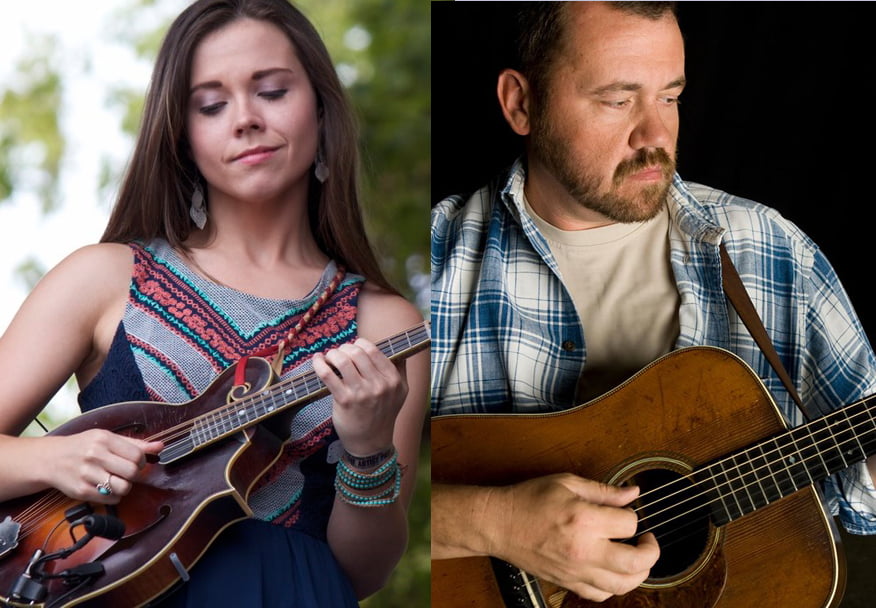
Traditionally Speaking: Shawn Camp in Conversation with Trey Hensley

“We’re probably just blocks from each other in Nashville,” Shawn Camp tells Trey Hensley once they’ve both joined the conference call line. We can hear the faint sounds of Camp going about his morning routine, rustling around in a kitchen cabinet, and pouring himself a cup of coffee.

Hensley gently corrects the assumption: “I’m actually out in L.A. today. We’re playing tonight at a festival. So I’m just getting around this morning, too.”

Even from halfway across the country, the two pickers, singers, and songwriters share close proximity in their musical backgrounds. Camp, the older and more decorated of the two, and Hensley, the promising 20-something, were youthful devotees of some of the same old country and bluegrass records, and their listening provoked the same response: the urge to pick up an instrument and learn the stuff. Having a firm yet flexible grasp on tradition readied them for the variety of musical situations they've found themselves in since — including Camp's Flatt & Scruggs-conjuring supergroup the Earls of Leicester and Hensley's wide-ranging roots duo with dobro master Rob Ickes, both of which have recorded new albums.

On the phone, it takes no time at all for Hensley and Camp to start trading mutual admiration with the modesty of a couple of small-town Southern boys.

You each currently count one of the world’s leading dobro players as a band mate. I’m, of course, talking about Jerry Douglas in the Earls of Leicester and Trey’s duo partner, Rob Ickes. And those two guys have even made all-dobro albums together. Is this is first time your paths have really crossed?

Shawn Camp: I met you at the Station Inn, Trey. Rob sent out an invitation when you guys played over there for the first time, and that’s the first time I ever heard you. Evidently, you’ve been around a lot longer than that. You’re really a talent. Man, I was blown away by your pickin’ and your singin’.

Trey Hensley: Aw, shoot. I sure appreciate it. I remember the night meeting you out there. I’ve been a fan of yours for a long time.

SC: Are you on tour out there with Rob?

TH: Yeah, we’re playing a few gigs out here in California this weekend.

SC: Well, hey I wanted to ask you, did you write “My Way Is the Highway”?

TH: Yeah, I sure did.

SC: Good song, man.

TH: Thanks. I appreciate that very much. I’ve not written a whole lot, but I’m trying.

SC: Did you write it by yourself?

TH: Yeah, I sure did. I wrote it several years ago and just kind of threw it out there to Rob one day.

When you were both young and green, you got a taste of what it was like to be welcomed into the lineage of bluegrass tradition by first generation bluegrassers. Trey, you were just a kid when Marty Stuart brought you on the Opry to do a Flatt & Scruggs number, and Earl Scruggs showed up . There’s YouTube evidence of that. And Shawn, you originally came to Nashville for a sideman gig with the Osborne Brothers. I was unable to find YouTube evidence of you playing with them, but I don’t doubt that it’s true.

SC: There’s probably some evidence out there floatin’ around. We played on a Hee Haw episode, and I think we did a few little TV shows when I was with ‘em. I was only with ‘em about six months. I was just a green cushion fiddler between Blaine Sprouse and Glen Duncan, who they wanted when they hired me, I think. I was 20 years old when I moved to town from Arkansas. They heard me out on the road. I was working with a band called Signal Mountain, a bluegrass band out of McAlester, Oklahoma. They saw me playing and wanted me to join them for a while. So that’s how I kinda got my foot in the door in Nashville.

What did receiving that little bit of approval from first-gen legends do for you?

SC: It was an amazing little trip. I’d been growing up listening to their Decca records from the early ‘60s that my dad had. They were of the caliber of Merle Haggard or somebody, at the time. In my mind, they were at that level. So, for just a green kid dropped in the middle of ‘em, all the sudden I’m in overdrive and we’re flying down the interstate. It was exciting for me.

Since you brought up Merle Haggard … Trey, when you were a kid playing around East Tennessee, you went from playing bluegrass to playing Haggard songs with string band instrumentation to plugging in your Tele. You kept shifting in style and material. What did you learn about blending different strains of tradition?

TH: Everything that I was doing was reflective of what I was listening to. The first records I took my own money and bought were Flatt & Scruggs at Carnegie Hall! and Flatt & Scruggs did the Songs of the Famous Carter Family. For the first probably four or five years that I played music, that was mainly what I did — traditional bluegrass music. And yeah, I had the opportunity to play with Marty and Earl and do a song off of the Carter Family album on the Opry not long after I got started. I drew influence from Flatt & Scruggs at the end [of their partnership], which was not one of their most popular eras. They were doing Dylan stuff and everything else. So there was always the influence of kind of breaking out [of the traditional mold].

But there are these definitive moments, like a Merle Haggard record — I kinda knew that that’s what I wanted to do, at that point. So I started doing more country stuff. And then I got the Buck Owens record Carnegie Hall Concert and, that first guitar solo on “Act Naturally,” as soon as I heard that, I went out and bought a Tele and started working on that. When I was playing around where I grew up, a lot of people had grown accustomed to hearing a bluegrass band. It was never like I was doing anything totally different, but going from acoustic to electric did kinda jar a few people’s musical taste. I guess 2008, that’s when I started playing more electric stuff and opened up for Charlie Daniels. I liked doing electric stuff, but I like doing the acoustic stuff maybe a little more.

Shawn, you were talking about your earliest years in Nashville. You’ve ranged far and wide since then in your songwriting and performing careers, from a rockabilly bluegrass duo to the roots supergroup World Famous Headliners and the Earls of Leicester. What was appealing to you about the idea of reviving the Flatt & Scruggs repertoire with this band?

SC: It just had always been in my soul, really. I listened to [Flatt & Scruggs] Live at Carnegie Hall!, too, and had several other Flatt & Scruggs records when I was a kid. I grew up with bluegrass. I just loved Flatt & Scruggs, and it just seemed like it would be a fit. Jerry Douglas called me, and he’d been doing some stuff with Johnny Warren and Charlie Cushman, making banjo and fiddle records with them. He said they were doing a Flatt & Scruggs band and wanted to know if I wanted to be Lester. And I said [goes into his lazily drawling Lester Flatt imitation], “Well, ah, absolutely.”

[Laughter]

SC: So I did. I jumped in there. It’s been fun.

You have a distinct vocal sound. People can easily recognize Shawn Camp’s voice. So what does it require of you to play Lester Flatt?

SC: I just to try to bend the notes the way he did. It kinda adds to the sound. The whole band kinda works off of that tension of those notes being bent. I try to get the phrasing as close to the way that Lester did as possible, but I’m never gonna sound exactly like him. I’d love to, for this show, but it’s never gonna happen. But everybody’s trying their best to fill the shoes of the man that was in the Foggy Mountain Boys, so if I didn’t do that, I wouldn’t be doing my part, I don’t think.

I’ve seen you perform in a lot of different kinds of contexts, but I don’t think I’d ever seen you more dressed up than when I caught an Earls show at the Ryman. Was that part of it a hard sell for you? Why is the look essential to doing this stuff?

SC: Actually, I’m probably the one that kept at everybody, saying, “You know, if we’re gonna do this, we’ve gotta look the part.” You can’t do it without the ties. You can’t do it without, at least, the suit. Flatt & Scruggs wore suit jackets. It looked like a good uniform. There was just a little bit of legitimacy to ‘em, you know?

About 25 years ago, I bought an old string tie — a Colonel Sanders tie — at a junk store, still in the package. It had rhinestones on it. When I bought it, I thought, “Man, one of these days, maybe I’ll be in a band that I can actually wear this old thing.” So last year at IBMA, when we were up for several awards, I took that thing out of the package for the first time.

Trey, in your duo with Rob, there’s no set stage wear, although I did notice that the cover of your first album depicted you in a rootsy, rural scene, both of you leaning up against a rusty old truck.

TH: [Chuckles] Yeah, it kinda varies. But I love what you guys are doing, Shawn, from the look on down. It’s awesome.

SC: Well thank you, man. It’s easy to do it when everybody’s playing the part. If one spoke fell out of the wheel, we’d be in trouble.

Trey, you’d been a solo front man leading your own band for years. For just the past couple of years, you’ve been paired with a world-renowned musician. I imagine that, on some of the first tour dates you played with Rob, he was the draw and you were the unknown quantity. Is that pretty much what it felt like?

TH: Oh yeah, absolutely. My wife and I had talked about moving to Nashville for a few years. She was looking at some jobs in Nashville. Right after I’d recorded on the Blue Highway album, I had this conversation with Rob. … Rob called me up and was very nice, complimenting what I was doing and said if I ever wanted to move to Nashville and pick some, that would be great. So that just kinda gave me enough courage. It’s still cool to go to the gigs. There’s people there that know Rob, and it’s nice to play in front of fresh ears.

Shawn, you’ve been most consistently recognized for your songwriting, since you’ve had such success in that arena. What does a celebrated songwriter bring to material that’s much older than him, to songs like “The Train That Carried My Girl from Town,” “Just Ain’t,” and “I’m Working on a Road”?

SC: All I know is, it’s a nice thing to do, for me, as far as I don’t feel the pressure of doing my material. I think the ego kind of disappears, to a degree, within the band. It’s like everybody’s just trying to do something somebody else did the best that they can do. It’s just more fun. It takes a little bit of the alpha dog pressure off of your shoulders. You don’t have to lead the pack so much as just try to be a part of the thing.

A lot of times, when everything’s hinging on the words that you’ve come up with, the show is all leaning on that. You kinda feel like you’re an old rooster on a chopping block: You’re about to get it. You never know if it’s gonna work or not, so you’re kind of vulnerable.

These songs, this material, it’s been tried and true, and you can feel the power of those old songs. It’s a departure from the same old, same old that I’ve had to do here in Nashville. But I’m not done doing that. I want to come back to it and make a regular record soon.

Trey, you and Rob aren’t performing an established canon. You’re casting a fairly broad net with the material you’re assembling alongside your originals. On The Country Blues, you cover Elton John, Ray Charles, and Sonny Boy Williamson along with Merle Haggard and Charlie Daniels. What appeals to you about reuniting these parallel, rooted traditions of country, blues, and R&B?

TH: Even though there’s a lot of different material on the record, I don’t really feel like any of it feels misplaced or anything. When we’re picking songs, even just for a jam session, it all kinda fits — and, if it doesn’t fit, we can recognize that pretty quick. That Elton John song is from Tumbleweed Connection, which has always been one of my favorite records. I kinda threw it out there one day when we were picking, and it pretty much fell into place the way we recorded it.

I’m a big fan of so many different kinds of music. And a lot of the songs, even though they’re by well-known people, it’s kind of important to go on the more obscure side of things. If we’re doing an Elton John song, we sure don’t want to cover “Rocket Man.” Well, there are a few exceptions. We did “Friend of the Devil,” the Grateful Dead song, which is pretty popular, but there’s a totally different spin on it.

SC: You guys sound like a band. I mean, just the two of y’all playing together, it sounds like a band. You guys are so tight. And Rob’s playing these harmony notes against you. It’s a really full sound. I wanna just tell you that. I know you know that, but I want you to know that I know that. You know what I mean?

TH: [Laughs] I sure appreciate that. That is very nice of you to say. This record’s primarily a band, but playing in this duo thing, it’s kinda fun to jump on the bass part or to be able to play something that sounds like a drum, just fill it up the best that we can.

The new album feels very contemporary and jammy, like you were experimenting with guitar tones and effects. Is that what the recording process was like?

TH: Yeah, that’s exactly how it was. We did three or four takes of each song and, for the most part, there would be a whole take that we’d use on the record, but there might be a guitar part from a different take thrown in. We all played something different each time, because there was really no written script. We went in with no charts, no anything — just four main guys, and we had a couple different fiddle players and Ron Block played banjo on a tune. I think that came across: that we were just playing music. Although we were working on an album, it didn’t come across like we were working on an album. We were just kinda having fun.

I think it could work at a jam band festival.

TH: I’m a big Grateful Dead fan. A lot of the jam stuff from my angle comes from that. It was just us kinda jamming on what we like.

Shawn, I’ve seen the Earls circle up around one mic to perform live, like the Foggy Mountain Boys did. How does your approach to recording compare to what they did? Are you using vintage gear and production techniques?

SC: We’re recording just about the same — exactly as they would’ve done it. We’re using old Neumann mics from the ‘40s. On this new album, we used an RCA 77, which once was Earl Scruggs’ banjo mic, that I bought last year. We’re using old, vintage equipment. We kinda cut in a line with the mics kinda set up the same as we work ‘em on stage. The guys on the outside of the line may have, at times, used headphones, but mostly we’re not using headphones. We wanna hear each other naturally around the mics. And there are no overdubs. We didn’t fix anything. So if you hear anything on that record, that’s just the way we played it. It’s not, like, Pro Tools edits and stuff like that going on.

Shawn, you’re a couple of decades further down the musical path than Trey is. Got any good advice for him? Or any bad advice?

SC: I really don’t know what to tell anybody these days. I know the music business has gotten really weird in Nashville. I know that nobody’s making much money. Somebody ran up to Roger Miller one time in an airport and said, “Hey, you got any advice for an up-and-coming songwriter in Nashville?” He said, “Yeah. Keep your change in one pocket and your pills in the other, because I just took my last 37 cents.”

[Laughter]

SC: That was probably good advice. I think Trey just needs to keep doing what he’s doing. You’re doing great, brother. I’m glad you’re doing it. I’d love to hear y’all over the radio every time I turn it on. You’ve got a great voice, reminiscent of Keith Whitley or somebody. I’d love to hear more of it. Love your songwriting, too. Just keep up the good work. That would be my advice.

TH: Man, I sure appreciate it. I’m looking forward to hearing y’all’s new record. The first one, it’s been in my truck since it came out. So I’ll have to head down to the store and pick up the new one, as soon as it comes out.

SC: Let me know when you’re ready to visit one of these days here in Nashville, and we’ll see if we can’t come up with a song together.


Illustration by Abby McMillen. Rob Ickes and Trey Hensley photo by Stacie Huckeba. The Earls of Leicester photo by Anthony Scarlati.

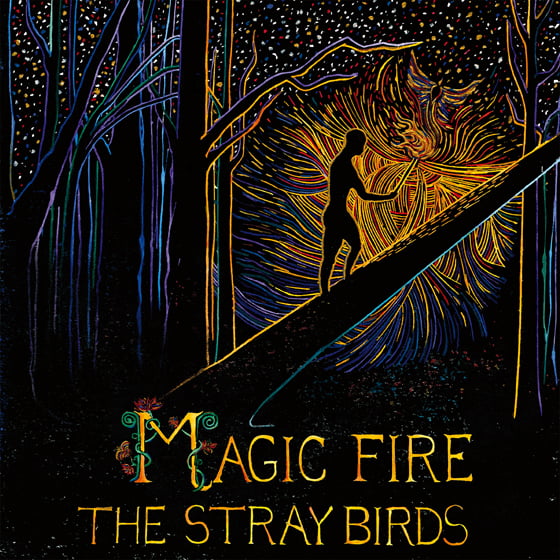
Painting Sounds, Building Bridges, Eating Nachos: A Conversation with the Stray Birds

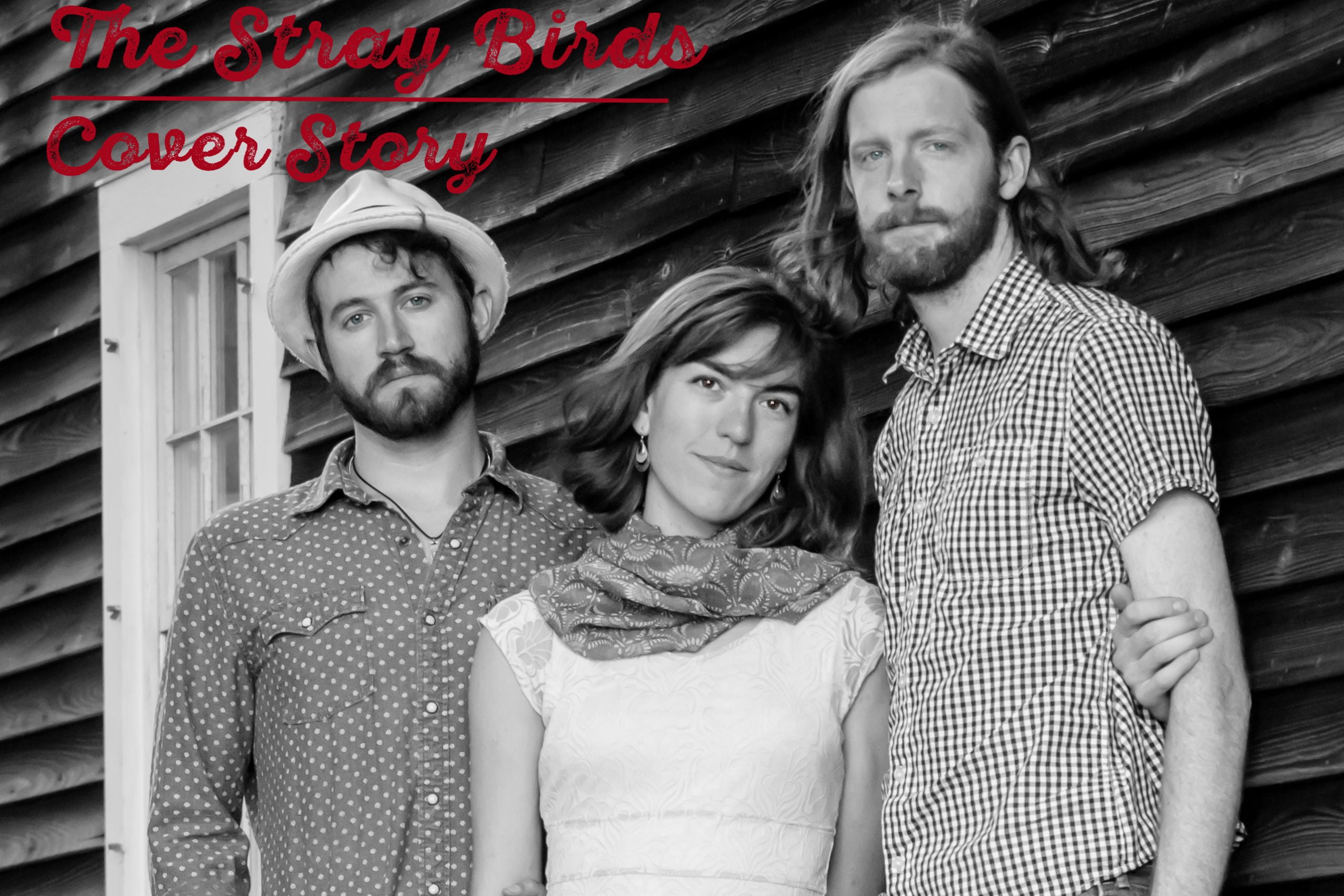
The Stray Birds could have kept everything the same about their sound and their process and still have made an incredible record. The band — which revolves around members Maya de Vitry, Oliver Craven, and Charles Muench — had already hit number two on the Billboard bluegrass charts with their YepRoc debut, Best Medicine, in 2014, garnering praise for their rich harmonies and swift picking while building a name as songwriters, too.

But for the forthcoming Magic Fire, the Pennsylvania-based group willfully took steps in a different direction — not toward a different sound, but rather a growth from the straight-up string band they started with. Dabbling with a new percussionist and collaborating on songwriting in a new way, the band brought in Larry Campbell, the genre-jumping instrumentalist whose work specifically with Levon Helm and Bob Dylan made him the Stray Birds’ top choice for their first record with an outside producer. What resulted was a 12-song collection of commanding vocals led forward by a deftness on the strings that can only come from a tight-knit group that loves to play together. 

This album was a new experience for you guys in terms of the way it was recorded. Tell me about the decision-making when you were gearing up for this album. Did you have any specific goals in mind?

Maya de Vitry: We have always been a trio, a string band, trying to explore playing songs with string instruments. That’s the texture that we started out with — it’s what we were comfortable with, it’s what we knew. But it’s not the only sound that we love, and it’s not the only music we listen to; that has certainly never been limited to string bands, and certainly never been limited to those textures. When we started to get the songs together for this new record, it overlapped with us finding a percussionist who we were interested in recording with for the first time. We were never sure what instrument it would be that would pull us in the next direction, or who that person might be, or what the sound would be. But we met Shane [Leonard] and, as we were putting this new record together, we started to think about having drums on it — a more electric sound.

So we started putting those songs together and thinking about the person who might help us build that bridge. We thought that it would be somebody like Larry Campbell. I’d seen him perform a few times with Levon Helm’s band — he was the musical director for that — and I was familiar with some of [Campbell’s] work with [Bob] Dylan. Always it seemed like he was arranging music to really fit the song and to really communicate. Larry could live in all kinds of musical worlds, and we were excited to see what he thought. There were no limitations with what kinds of sounds we could paint with these songs.

Is there anything in particular that you’re most proud of now that you've tried something new?

I think this was our best singing on an album. I think we were relaxed, and we were inspired by Larry’s presence. We felt comfortable with him, and our singing, in particular — some of the phrasing, the tone, and the inflection that we have — I’m really proud of. It’s more free than it’s been in the past, and I’m really excited about that.

I’m really proud of the song “Mississippi Pearl.” It’s kind of tucked into the back of the record, and it’s the only waltz. But it didn’t start out as a waltz. It was in 4/4 time, and a totally different feel as a song. I was never totally in love with it, but I had the words and I had the melody and the chorus, so I had it on the table as a song that was possible to record. I wanted a waltz on the record and we didn’t have any, so Oliver suggested we turn that one into a waltz. Larry heard something in the melody of the song, the way that it opened up. It became much more spacious as a waltz. The story of the song fit better in that new feel. Larry heard something in the melody and wrote this whole melodic hook, this instrumental thing, and he just wrote this whole new part of the song, an instrumental bridge, right there in the studio in front of me. It was a new experience for me, to be open: to have this thing, and I don’t love it — yet — and for him to hear it and be like, "This thing that you don’t love yet? Listen to this idea." So Larry was my co-writer on that song and, in that moment, it was so inspiring. It’s like something cracked open — all of the ideas were available. The song lives as a waltz, and that’s the way it was meant to be. I couldn’t find that on my own.

You said something earlier about painting sounds, which brings me to another question I had about the album art. What inspired you to create that yourself?

I had no plan to do the artwork up until we got into the studio and we got inside of these songs. We naturally started talking about what we could possibly call the record. We wanted to find some words that captured the spirit of it without lifting them specifically from a single song. We didn’t want to have a title track; we just wanted to have a concept of a title. I sort of started dropping the idea to people that I might want to do a painting or some kind of cover art, but I really didn’t know how far into it I wanted to get, at that point. We were basically trying to find something to represent this music other than the three people who wrote it. [Laughs]

We finally came up with the name, which really drove the art forward, when Oliver and I were hanging out with his dad back in Pennsylvania, right after we had finished recording. We were just up late making nachos one night, and he was joking about how all you need to do to make nachos is to wave the magic fire stick around. My ears had been totally open for any word that someone was saying that could possibly fit for the title of this record — I wanted it to feel like it was kind of out on a limb, like it was up to the listener to build a bridge between the songs and the title. So we put the music on right away, the super-rough mixes, and we just listened to the whole thing in the kitchen.

We started drawing our own connections from those words, “magic fire,” to each individual song: “Oh, in this song the fire is love — it’s chemistry.” “In this song, it’s literal fire.” We’d find different meanings in each song that could be connected to it. If not just fire, at least connected to something with the elements, or something very old. We liked the idea of that because this whole record is something very new for us, and it’s nice to feel that juxtaposition. For me, where I started to love music was sitting around a campfire and sharing songs with people. Today, the way that most people have their musical intake is through their phone or computer or the soundtrack in a movie or on the radio. Still, for me, the most alive that I feel is often around a campfire with people. I think it’s less and less about the audience, but about taking things away and remembering what you liked to do as a kid and remembering how fun it is to build a fire and to do new things. That’s kind of what we were doing with this record: playing with fire.

So you had all of these songs before the concept brought them together?

We had it all written and recorded. We had these mixes, and we wondered what could possibly capture them. Then, it became a question of what visual thing could represent these words. Some of them were written collaboratively, but some of them were written individually — in many different settings and times and frames of mind. It wasn’t written as a concept album, but I do think that the inevitability of change is a theme that is there. From the first track to the last track, it’s a theme on the record.

Speaking of the writing, together and separately, tell me about how all of that began.

We started playing music together in 2010. Oliver and I got started at open mics, and also we would play at the farmers' market here. We would go in, and there’s a market master who we would get permission from to play at one of the empty stands at the market. We’d just play for tips, buy a couple of Italian subs, and call it a day.

That was how I started feeling comfortable singing my own songs and coming out of that shell. I had been a fiddle player for a long time, but would not have called myself a songwriter much earlier than those moments, so that was a pretty recent thing for me. Charlie and Oliver had been playing together a little bit in a band, a bluegrass band. I would go and see those shows and see those guys play, it was like four guys playing bluegrass and some original songs of Oliver’s. When that band parted ways, we became a duo and got Charlie, who was in River Wheel also.

It started as just a collection of songs we were doing. The harmonies sounded pretty good to us, so [we thought] maybe other people should hear them. Maybe we could have a CD release show in an art gallery in our hometown. It was not a very sculpted vision.

But we played a festival. We went up to Michigan, to Bliss Fest. It was the first thing. Jim Gillespie, who runs Bliss Fest, heard our little EP of five songs that Oliver and I had made back in 2010, and he hired us to come play Bliss Fest. So we said, “Charlie, do you want to go with us?” So we tried to scrape together enough songs to have another couple sets of songs that we could play throughout the weekend. We just drove to Michigan and we got to play on all of these stages in this beautiful festival. We met so many nice people, and we started loving life and thinking, "Maybe we should be a band. We should play more festivals." I think that experience — leaving home, playing for strangers in this beautiful new setting — was intoxicating. We thought, "We could do this together." Bliss Fest was the moment.

You mentioned something that I’m always curious about: that transition from being a musician, someone who’s comfortable performing, to being comfortable with playing your own music. Was that an immediate switch for you?

I think it was just a moment. I think I was so terrified that people would ask me to explain where exactly the song came from or what I was thinking or who the song was about. Not that I was afraid to answer or didn’t want to answer — I didn’t even know if I could answer that. Songwriting, to me … I was figuring out that it was this really mysterious and really kind of unexplainable thing. It kind of felt like magic!

And I didn’t want to explain it. I just wanted the song to be there and for people to take it or leave it and just listen to it and live in it with me for a couple of minutes, and have as their own. I think that was my fear, though: that I would have to explain something that I didn’t know. When I started actually playing my songs, I realized that people didn’t necessarily ask. That wasn’t a part of the job. I was scared of something that I didn’t have to be scared of, and I could just let the song be its own thing. [I realized] that it was okay for the inspiration to be from my dreams and my experiences and multiple people. It didn’t have to all come from a traceable point, and that was the huge earth-shattering realization for me.