Darren Nicholson Wants His Style of Bluegrass to Sound Different

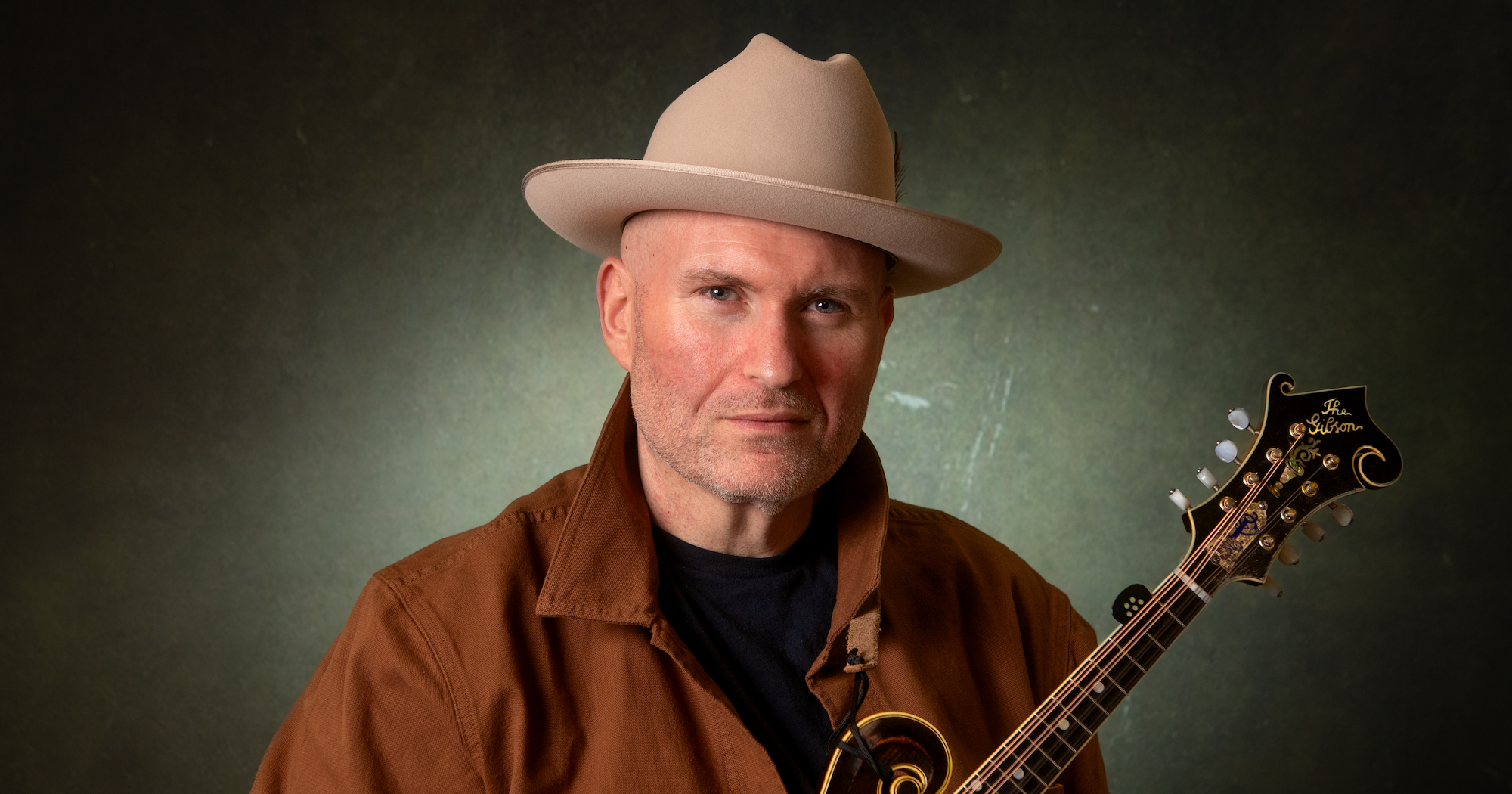
Over the past twenty-some years, Darren Nicholson has played mandolin all over the world – whether with Alecia Nugent, as a member of Balsam Range (a group he co-founded), or on his own (with or without a band). No matter where he traveled, you can be sure that Nicholson was bringing Western North Carolina with him. Nicholson was born, raised, and still lives in the area.

When BGS caught up with Nicholson, he was home in Canton, N.C., a town about 20 miles west of Asheville. It’s a region that he feels has been a bit overlooked in music history. “The oldest folk festival in the country [Mountain Dance and Folk Festival] is held in Asheville,” he shares. “There were recordings that happened in Asheville before the Bristol Sessions.”

The area he pointed out, despite its remoteness, also has been home to many significant musicians – as well as developing a dance-friendly style of bluegrass that drew from many different styles.

Nicholson’s love for the area has led to a rather unique sponsorship for his tour van and trailer. Through a friend he met with representatives of the Avalon Mountain Community, a private mountaintop neighborhood and development in the hills of Western Carolina. Nicholson calls it a “win-win” situation as he receives some financial support for touring expenses while Avalon now has a “rolling billboard.” “I even wrote a jingle for them,” he states.

Nicholson will be traveling around this year touring a fine new album, Lonesome Trails and Tall Tales. He counts it as either his fourth or sixth solo effort, depending on whether you factor in two EPs. Lonesome Trails and Tall Tales arrives after several particularly eventful years for Nicholson, including leaving his longtime band Balsam Range, getting sober, and acquiring a prized 1923 Lloyd Loar mandolin – all among the topics that he was more than willing to talk about with BGS.

How does your new album Lonesome Trails and Tall Tales tie in with your earlier albums?

Darren Nicholson: My records have a sound, you know. I’ve always been pretty much consistent – besides an electric country EP – doing the music that I consider my style of bluegrass or the bluegrass that I grew up on, which is to me the traditional bluegrass of the ’60s. Having a producer like Carl Jackson in the early days influenced how I made records, because Carl had played with Jim & Jesse and he came out of [when] an entire bluegrass movement had almost a country kind of feel to it. I love the sound of those records. And it was partly because I grew up in Western North Carolina and there’s a huge dance element here – the square dance music.

The old-timey driving style of rhythm with that light percussion – like Jimmy Martin, Flatt & Scruggs, the Osbornes – that really fits in with people who danced. And the modern kind of bluegrass – like the Alison Krauss style of bluegrass, which is amazing – does not lend itself to dancing. The modern style of bluegrass that was really kind of heavy on the one and three beat, and then the older style of bluegrass, which was very much more even, rhythmically.

And how does the new album differ from your prior ones?

What separated this particular recording from the others is just my growth as a songwriter… I was picking what I thought were the best songs I had or songs that were different from each other. A lot of times… [with] the way things are being mass produced now, if Nashville finds one song that’s a hit, they’ll write 10 more just like it for all the other artists. So they all start sounding the same.

To me, all the great artists of yesteryear, all their material was different. Their sound was different. Instead of just finding something you could mass produce, make a buck on, and then hop on to the next thing, they were actually creating art and trying to artistically be different. That was what was good about it.

So [in] the same way, I try to pick songs in my set. I don’t want to play five songs in a row that sound the same. Otherwise, it’s boring – I see bands do it all the time. They kick off in [the key of] B and they play five songs that could basically be the same song, you know? I understand why people who are non-bluegrass fans will go, “You know, all bluegrass sounds the same.”

I tried to pick six songs that were completely opposite from each other, so when you go down track by track, it’s a different journey and it doesn’t bore the listener. Every song is a different tempo, it’s a different groove, it’s a different key, it’s a different vibe, and so that’s how I put records together.

Were these songs ones that you’ve accumulated over the last couple years or are they all a recent crop of songs?

A few of them were really old and a few of them were really new. “Big Sky” has been around for a few years and I wrote it with Charles Humphrey. I thought it was “okay,” and this shows you how off-base I can be sometimes.

I’m driving to a gig one day with my buddy Kevin [Sluder]. He plays bass with us. It was a solo gig, but he was just riding with me. We’re listening to songs and Kevin goes, “That song is amazing. You’re an idiot if you don’t cut that song.” I was like, “That song? It’s okay.” He goes, “No, that song’s more than okay. That song is special. You need to cut that.” I took this batch of songs to Jeff Collins, who produced the record, and that was one of the first ones he picked. And sure enough, radio played it. Banjo Radio wore that song out. If it were up to me, I would have probably left that one on the pile of demos.

One of the newer ones was “Eager Overachiever.” I’d just written that song with Andrew Blythe. It was so fun. Every time I would sing it for somebody, they loved it. It’s a funny song about addiction.

It made me laugh, and the song also shows a lot of personality.

That’s the point, you know. That song has personality. One of my favorite artists [growing up] was Roger Miller and he would sometimes do these spoken pieces. Especially in country music, sometimes there would be recitations or things would set up songs. It was interesting and just funny, you know.

Can you talk a little about the music traditions of Western North Carolina where you grew up?

There’s a definite style. If you go across the country, there’s little pockets of bluegrass that have their own sound, for sure. But Western North Carolina and this region was so rural and cut off… If it’s 120 years ago and you’re in the mountains of Western North Carolina, people would walk for 10 miles to get to a barn dance or some place on Saturday night. And the band would be whoever showed up. It might be a banjo and guitar. It might be fiddle and banjo. But it changed the way you played. When Doc Watson plays his leads, he also plays his rhythm; he’s playing lead and rhythm at the same time. Where modern players who have a whole band behind them, they’re like playing rhythm and then when it comes time to take their solo, it’s a whole different mindset.

As [the area] grew and people got together more and more, they still played the same way. They passed it down from generation to generation, that strong sense of rhythm and timing that is a trademark for Western North Carolina. Look at Marc Pruitt and Steve Sutton; you know, Jason Burleson is from Western North Carolina. Doc Watson, Earl Scruggs, Mark Kuykendall, Tom McKinney, Mike Hunter – all of these amazing players are from Western North Carolina. Randy Davis – Bill Monroe introduced him every night for five years: “He’s the man from Asheville, North Carolina; he’s the man with perfect timing.”

At these musical gatherings in Western North Carolina, you’re describing how people frequently would bring whatever instruments they had – acoustic or electric. And it wasn’t doctrinaire about what a bluegrass instrument had to be.

Yeah, it was community. And I’m going to say this, and I don’t care to say this because I’m from here and I’m from generations and generations of people who play this music. It’s always somebody who got into bluegrass in college or they got into it older, and they’re not even from this area. It’s somebody that’s from New York or from California or from Oregon. They write articles, and they become self-proclaimed experts of bluegrass. And they say, “Well, this is bluegrass and this isn’t bluegrass.”

They didn’t come from generations of this music. They don’t know. They’re not at the epicenter of where it came from and how it started, but they’re always the ones who try to dictate. And then most of the time, they don’t even play. But that’s their way of being involved in the music somehow. It really hurts the music because any time you start segregating something, you’re just keeping somebody [out]. That’s not how this music started.

Do you think Earl Scruggs said, “I’m not going to play if there’s an electric bass here”? You know what I mean? Look at the people who created the music: Earl Scruggs, the Osborne Brothers – they had electric bass. They had drums. But there’s somebody, who’s basically a yuppie, who is trying to tell us what the music is. I do take offense to that.

That’s why the Gibson Brothers have that song called “They Called It Music.” That’s great. I love that because that’s what it was. It’s like, they just called it music. We got together and made music and everybody was welcome. And it sounded like bluegrass. It sounded like country. It sounded like old-time. And it’s just sad. It’s like bluegrass has almost tried to put too fine a point on itself. And it’s almost made itself smaller because of that.

To me, sometimes it feels like the more I write or listen to music, the less I know, in a sense – or, the more I learn, to say it another way.

That’s how we all should be. We should remain a green tomato. If we’re red, we’re done, right?

If I moved out to Seattle – I really enjoy grunge. And if after five years, I read about grunge as much as I could, all of a sudden I know more than the people who created it? But I see that happen [with bluegrass], you know. It’s almost like someone is such a fan or likes this so much that they take ownership to a point where they’re hurting it. It’s like a pet. They’re holding it and petting it so much that they’re actually hurting it.

Bluegrass can look like a lot of different things and so there’s different styles depending on the regions, too.

I was wondering who are the main musicians that have influenced your mandolin playing?

Basically, there are four guys who are on my Mount Rushmore of mandolin. Country music or bluegrass or whatever in roots music – and that’s Bill Monroe, Jesse McReynolds, Bobby Osborne, and Jethro Burns.

Every modern style has come out of those four guys or a combination of those guys. That’s where David Grisman, Ricky Skaggs, Doyle Lawson, Sam Bush, [were all] influenced by those. So, there are some songs that I try to sound like Bill Monroe and there’s some songs I cross-pick like Jesse. Then there’re some songs I play more fiddle-note stuff like Bobby and then there’re some songs that get a little swingy and jazzy and I’m channeling my Jethro, you know?

Those guys kind of set the landscape. My big influence, as far as players that I got to see and got close to, is Mike Hunter in Western North Carolina. He was a huge, huge influence. He was an incredible mandolinist.

You have said you tend to let the song guide you and not to impose a style on it. Did this approach come from someone’s advice or was it something you learned along the way?

I had a mentor named Steve Sutton. I started playing with Alecia Nugent in 2004 and Steve was the bandleader. He got me that job. During that time, musicians would come through in little waves, like in five-year clusters. A lot of my peers were Aaron Ramsey, Ashby Frank, Andy Ball, Jesse Cobb, and so there were a bunch of guys during that time. Not all of them are Adam Steffey clones, but a lot of my peers were influenced heavily by Adam Steffey.

It’s like, who can play like Adam Steffey? You can get close, but you’re not going to beat the guy. So, my mentor told me, “All of these other people are in that vein. You would be way ahead to do your own thing and just sound like yourself. You won’t mess up as much either, because instead of thinking about what somebody else did, you’re actually thinking about what you’re doing. So, your brain is actually in the moment with your hands.… Try to play what fits the song and instead of trying to settle into a style – just play what the song or the band needs.”

And, you know, I just never turned back from that. He really helped me with that. Then, all of the sudden, too, if you sound like yourself and everybody else is going after this other thing, then you’re a peacock in a room full of chickens.

A couple years back, you acquired a rare 1923 Lloyd Loar mandolin. How are you enjoying it?

Oh, it sounds incredible. It’s a hundred-year-old wood. You can’t replicate that. Ferdinand [named after the mandolin’s original owner] hadn’t really been played until I got it, but I’ve played it quite a bit. You can play that thing for just a few minutes and it’s just singing. It’s just unreal.

It gets better and better every minute that you play it. It’s balanced. It’s loud, but it’s also got these real pretty, sweet tones in it. It’s just a pretty magical instrument. It’s a life-changing instrument, for sure. It’s a rare bird amongst rare birds.

Early in the pandemic you got sober, which you’ve been quite open about. How has this changed your life?

Getting sober, I had all this time on my hands and I started getting productive. I started recording, writing songs, and all of a sudden, after all these years, I felt my creativity. I started throwing all my time into healthy things… I had my life back. I had my time. I had my energy. I had my mind, my spirit – all that came back because of sobriety.

So, I talk about it because I think talking about it is a great way to maybe touch someone who’s maybe struggling with it out there, you know? Give them a little shot in the arm and say, “You know what? If that poor bastard can do it, I can do it too.”

That was around the time you left Balsam Range too?

When I left that band, people were like, “Why would you leave a high-profile band?” And it’s like, there’s more growth over here [going solo]. The last year I was with them, we went on about 20 dates and I did about 160 dates on my own. I wasn’t stagnant anymore. A band has been together for a long time, people request the same songs and you’re playing the same songs all the time.

The pandemic also resulted in you having something of a revelation about performing music, right?

I found myself doing house concerts for 20 people, and they’re people who saw me on huge stages with Balsam Range. They would cry because they’d never experienced bluegrass like this. I’m like, “Well, this was how it was intended.” This was how it was created in these houses a hundred years ago in the mountains of Western North Carolina — community people entertaining each other.

So, there’s that. Then there’s sobriety. And then there’s like, “Wait a minute, am I doing this for my ego to get famous or am I doing this to be healthy and be part of a community?” It all goes together. Like, I talk about my sobriety to help others. I want to use my music to impact others.

If we do it with a good heart and the right intentions, all that other stuff will fall into place. We want to play anywhere. We’ll go and we’re ready. We’re road ready. We’ve got original music; we can do covers; square dances… I want to be the Bob Wills of Bluegrass.


Photo courtesy of the artist.

Two Decades of ‘Dusters Discography

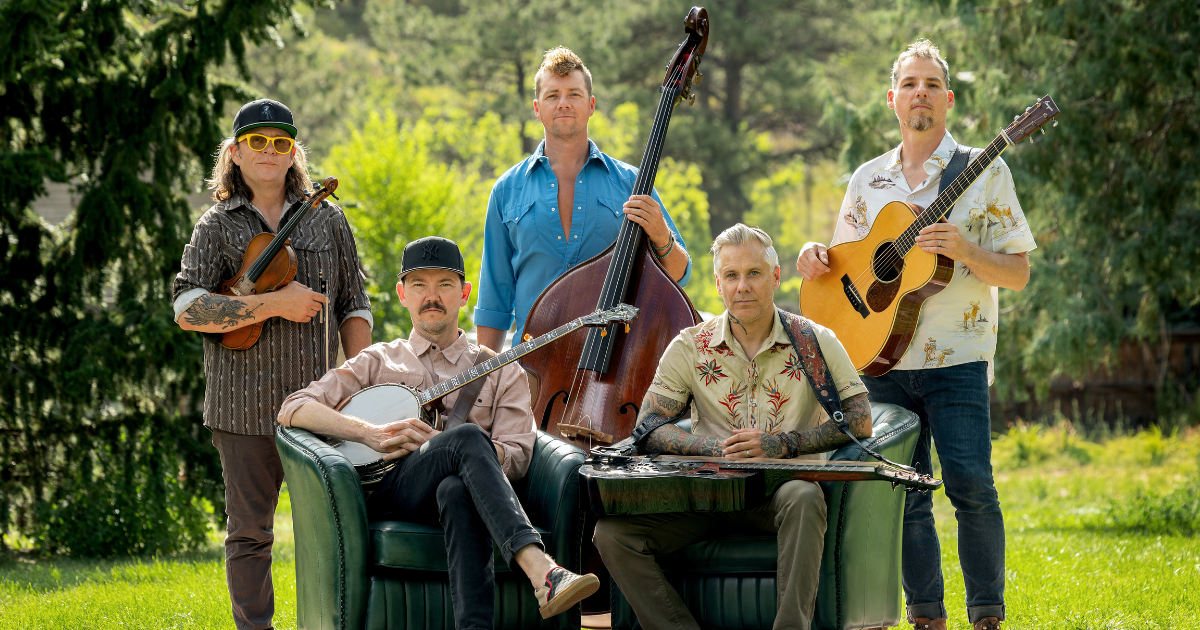
With over a dozen studio credits and even more EPs and live albums to their name, the Infamous Stringdusters have been one of the most persistent forces in bluegrass and roots music ever since staking their claim with 2007’s Fork In The Road.

Even as members changed in those early years, the band quickly found its core – Andy Hall (Dobro), Andy Falco (guitar), Jeremy Garrett (fiddle), Chris Pandolfi (banjo) and Travis Book (bass) – and rapidly began homing in on a sound that’s equal parts traditional and progressive bluegrass with a touch of country, jam, and other influences along the way. That variance has led to each of the band’s recordings having a distinctly different flavor than its predecessors, from the harmonious bluegrass symphony of Silver Sky to the feature-rich Ladies & Gentlemen, hope-fueled Laws of Gravity and Rise Sun to the somber Toward the Fray.

“Making a record that sounds like the Stringdusters isn’t the challenge,” Book told me in 2022 for No Depression. “The challenge is seeing just how deep we can get on each song in order to make it the best, most authentic version of itself it can be. This requires us all setting aside our egos, being open to suggestions, and trusting one another to create the best music as possible.”

In celebration of our Artist of the Month, we take a look back on the Stringdusters’ sonic evolution and essential tracks from their two decades in service of bluegrass and the song.

“Fork In The Road” – Fork In The Road (2007)

On their emphatic 2007 debut, Fork In The Road, the band – then comprised of eventual Punch Brother Chris Eldridge (guitar) and Jesse Cobb (mandolin) alongside Book, Garrett, Hall, and Pandolfi – quickly struck a chord with bluegrass aficionados on songs like “No More to Leave You Behind” and the album’s title track. The latter of which positions the band’s fiddle maestro front and center as his high-pitch croon carries the weight of being at a crossroads. Whether it’s a hypothetical take or one rooted in the group’s own musical experiences, it’s safe to say the path the ‘Dusters have taken since has more than paid off with a legacy 20 years strong and counting.

“Magic #9” – Things That Fly (2010)

The band show off their picking prowess on the whimsical “Magic #9,” a track that resulted in their first-ever GRAMMY nomination at the 53rd annual awards in 2011. While the ‘Dusters can thrash and sing bluegrass harmonies with the best of them, songs like this also showcase the group’s knack for crafting their own instrumental compositions. Their tunes pack just as much story and emotion – if not more – into a three-and-a-half minute burst than most of their counterparts with vocalized accompaniment. Coincidentally, the GRAMMY the song was up for was not in a bluegrass category, but rather for Best Country Instrumental Performance. Given the band’s penchant for string music, unreal levels of improvisation, and the consistently inconsistent award nominations process, it’s the least bit surprising, if not even a bit fitting.

“Rockets” – Silver Sky (2012)

The song that first unlocked my captivation for the Infamous Stringdusters (and still my favorite to this day) is “Rockets.” It was around the time the album it’s included on, Silver Sky, dropped that I began seeing the band in concert for the first time and this song was always a staple. The uplifting temperament and optimistic nature of Book’s vocals combined with the meticulous instrumental timing – from Garrett’s fiddle interjections to Pandolfi’s hard-driving banjo backbeat and Hall’s slick Dobro tones – culminate in a joyous, borderline spiritual experience every time I hear it.

Because of this and other tracks on Silver Sky like “Fire,” “Night On The River” and “Walking On The Moon” I consider the record without a doubt their most essential project to date. Although, as you’ll see, the great tunes haven’t slowed down in the years since.

“Still the One” (featuring Nicki Bluhm) – Ladies & Gentlemen (2016)

The ‘Dusters’ 2016 effort Ladies & Gentlemen stood out for many reasons – most notably its more folk-leaning bluegrass numbers and star-studded list of collaborators ranging from Mary Chapin Carpenter and Lee Ann Womack to Sara Watkins and Jennifer Hartswick (Trey Anastasio Band). However, the most frequent collaborator from the record was Nicki Bluhm. Her contribution on “Still The One” blossomed into frequent support songs on the road performing not only that track, but several other cuts from the breakthrough album. It wound up taking the band’s already spectacular knack for partnering with others to another level. As for the song itself, “Still the One” is a powerful rallying cry about a love that persists even when heavy rain, or life’s difficult moments, try to get in between and tear you apart.

“Gravity” – Laws Of Gravity (2017)

After a decade of slinging bluegrass, country, and roots-adjacent bangers, the ‘Dusters finally reached the musical mountaintop with their 2017 album, Laws of Gravity, which earned them their second GRAMMY nomination and first-ever win for Best Bluegrass Album. Central to that accomplishment was the album’s de facto title track “Gravity,” an anthemic adventure.

Similar to the aforementioned “Still the One,” the song focuses on the story of two inseparable lovebirds charting out a future life of memories together, even if they don’t know exactly when, how or why it will all happen. Most important to them though is the memories being made in the current moment, whether that be together, at a Stringdusters show, or something entirely different.

“Rise Sun” – Rise Sun (2019)

With the lead and title track to their 2019 album Rise Sun, the Infamous Stringdusters make a late entry to folk music’s stomp-clap party, combining the early 2010s trend with heated string music like few 2010s contemporaries could muster. The track also features a noticeably hopeful hue set in motion by the metaphor of a rising sun not only spawning a new day, but bringing change and the opportunity for a fresh start, as well. In that sense, the band had no idea how much hope people would need the following year, when COVID shut down the world. The result of which inspired the band’s next original entry to this list. But first, the ‘Dusters pay homage to the father of bluegrass…

“My Sweet Blue Eyed Darling” – A Tribute to Bill Monroe (2021)

The bluegrass ballad in pole position on Bill Monroe’s 1977 album Sings Bluegrass, Body And Soul, was “My Sweet Blue Eyed Darling,” a track that holds the same spot on the Stringdusters’ 2021 recording, A Tribute to Bill Monroe. On it, Pandolfi leads the way with his steady, blistering banjo while Garrett and the others hit home on the signature high and lonesome harmonies that Monroe is legendary for.

Fittingly, this collective album honoring the bluegrass legend wound up earning the ‘Dusters their third GRAMMY nomination in 2022, though they came up short to Béla Fleck’s My Bluegrass Heart. Their foray into recording covers isn’t anything new for the band, who later went on to record a Flatt & Scruggs tribute along with a series of Undercover EPs (more on that later) in addition to weaving other folks’ material into their live sets on a nightly basis.

“Pearl Of Carolina” – Toward the Fray (2022)

While the Stringdusters’ members call many places home, there may not be a more appropriate individual place with which to associate the band than Western North Carolina. Touching on that connection to the Old North State, Book sings about love and longing to return home on “Pearl of Carolina.” The song’s title stems from an intro script he was crafting for his musical talk show podcast, The Travis Book Happy Hour, as a way to describe the region.

In addition to being grounded in a person or place, similar to “Gravity” or “Still the One,” “Pearl of Carolina” is also a reminder to search for the places and small things in life that bring you joy. While much of Toward the Fray takes on a darker tone, “Pearl” stands out as a burst of much-needed normalcy on a project otherwise finding inspiration in a world of disarray.

“Touch Of Grey” – Undercover, Vol. 3 EP (2024)

The band has covered a bevy of artists on their Undercover series of EPs, from Tom Petty to The Highwaymen, The Cure, and ZZ Top, but none fit the band’s style and sound (with the exception of the Monroe and Flatt & Scruggs stuff, perhaps) than their rendition of The Grateful Dead’s “Touch of Grey” on Undercover, Vol. 3. Released in 2024, the ‘Dusters’ take on the Dead’s most commercially successful hit combines the best of both groups, further adding to the song’s timeless nature – a message that, 40 years after its original release, feels just as relatable and relevant as ever.

“Working Man Blues” – 20/20 (2026)

Much of the Infamous Stringdusters’ journey over the past two decades has been inhabiting the role of blue-collar road warriors playing anywhere for anyone who would have them. With that in mind, there’s no more fitting song to kick off their next album, 20/20, than “Working Man Blues.” The band sings about a man clocking in before sunrise and doing hard labor all day before clocking out and heading to the bar in search of fun. It’s a combination of rugged, resistant, and rowdy that embodies the Stringdusters’ entire sound and ethos for 20 years now – and, if we’re lucky, will continue for another 20 more (and then some).


Continue exploring our Artist of the Month coverage of the Infamous Stringdusters here.

Photo Credit: Daniel Milchev

Larry Sparks Is a Surprisingly Zen Bluegrass Star

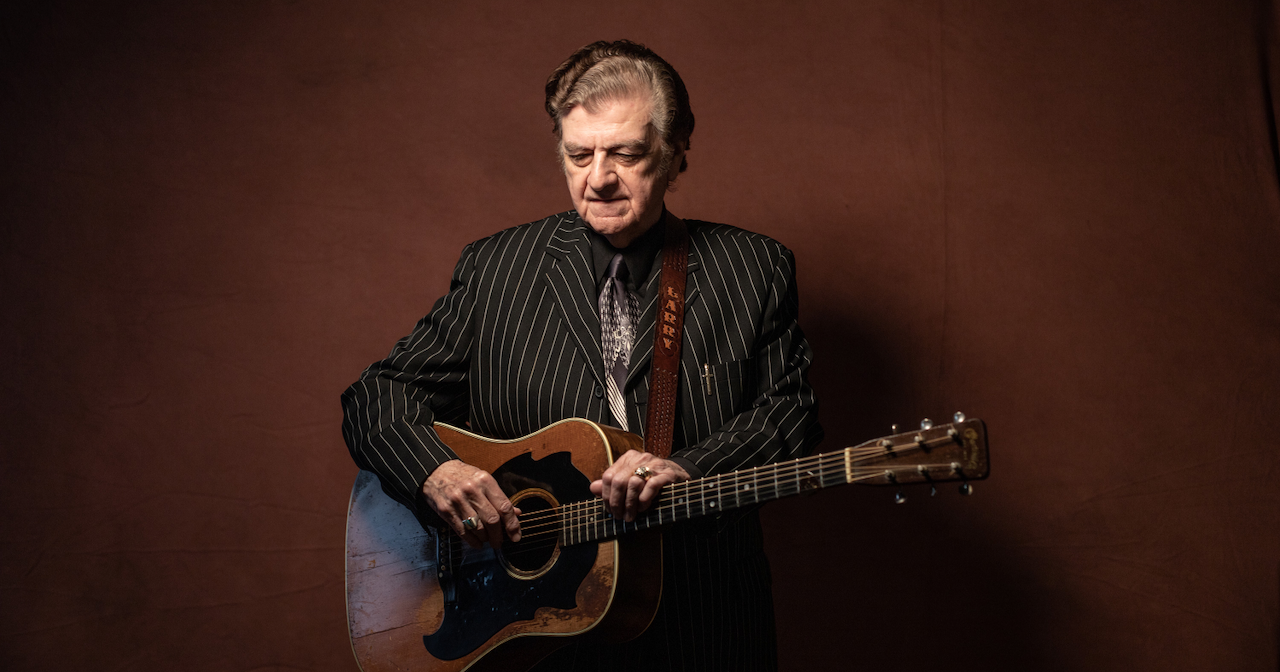
Speaking to Bluegrass Music Hall of Fame inductee and IBMA Award winner Larry Sparks over the phone, you might never guess you’re conversing with a living legend. He’s remarkably humble, down to earth, and plainspoken. And his approach to making bluegrass – as he has professionally for more than 60 years – is surprisingly zen.

His latest album, Way Back When, was released in late October 2025 and the project finds Sparks in exactly the same sonic space as any of his excellent LPs from the last six decades. If you were to take a short audio sample of Way Back When, it would be genuinely difficult to identify from which era of his lauded career it came. The project is warm, lively, and resonant, sounding like you’ve been dropped into a cozy living room with perfect acoustics and a superlative bluegrass string band.

The songs, as well, are timeless and classic, whether fresh tracks, iconic covers, or an old-timey instrumental fiddle tune with familial origins. Like his vocal style, guitar picking, and production preferences, Sparks’ song curation also feels like an intuitive extension of his personality. When he describes how he accomplishes this consistency across eras and executes the timelessness of his albums, it seems as though he becomes a sort of bluegrass guru.

“When songs touch me, they touch my feelings,” he explained to BGS . “When the song touches me, it’s saying something. I’ll take that and see what I can work with, and make it my song.

“The song’s me and I’m the song. And that’s the way that they did it back in the day. They become that song – the older singers, they became those songs. That’s the way that I do it, I try to make that song me and me the song.”

It’s a secret ingredient lacking from too many bluegrass records out there today. Not just his inhabitation of songs so that they can inhabit him, but also treating bluegrass like the forebears of this music did. As a living, breathing, cutting-edge thing that doesn’t need to be built on a foundation of regurgitation and emulation and litmus testing. Like Sparks puts it so simply – and eloquently – in our conversation, bluegrass has mainstream appeal. It requires heart, soul, and being present – becoming the music and becoming each song.

That right there is exactly how Sparks became a Bluegrass Music Hall of Famer and a hero to many – Alison Krauss, Billy Strings, and this writer included. It’s also how he’s maintained a consistent (never boring, stale, or regressive) sound over the course of his 62-year career. And, it’s what keeps him motivated to continue looking forward while inspiring all of us and reaching new audiences.

Let’s start by talking about your excellent new album, Way Back When. When I first listened to it in the fall, when it was released, I was struck by how old-school it sounds. The production style sounds so timeless, it sounds so warm and live – like real bluegrass. It also feels like it could have been pulled from almost any era of your career. with the way that it’s produced and the way that it stands out sonically. I wondered how you accomplished that?

Larry Sparks: I try to do things normal and just go for it. And all of the band– you just feel what you’re doing. You make it real. It’s hard to explain. It’s just, I sing and play from my heart, soul, and mind. Some songs you don’t have to do that, you just – like the old saying – rear back and let it go.

But some songs need attention, and you have to become that song and the song becomes you. That’s the way that I think probably all these songs are, everything I sing is pretty much that way. But, I don’t know, the feel just comes out natural. It’s more of an older feel, the real feel. That’s the way I like things. So much [that’s] added in today’s recording and music and everything, it’s okay – I’m not saying anything about it! But myself, I’d rather keep it pretty real, just like it used to be.

Are you tracking in isolation booths? Or are y’all tracking in the same room and live? It doesn’t sound like you’re putting the music under the microscope, as it were.

No, I don’t like that. You have to [sometimes], but I’d rather [not]. It’s [an] all in the same room deal. Sometimes you’ve gotta do an overdub break or something. You miss your hot lick, you gotta do it over again. Overdubs are good to use, but I don’t like to depend on them. I’d rather do it straight down the line, and if you make a mistake you do it over, you can overdub a spot or something.

Something else that stood out to me listening to the album is how consistent your sound has been over the decades. You have your own way of singing, you have a style that’s really consistent – as well how you pick the songs that go on your recordings. And you certainly have your own guitar-picking style. Almost no one picks like you these days. How do you think it is true, across 60 years in music, that when you listen to Larry Sparks, you know you’re hearing Larry Sparks and Larry Sparks alone?

It’s a natural style for me. I respect the older songs an awful lot. The older music and the older singers, that came along before I did, in the ‘30s, ‘40s, and ‘50s. I was a kid, but I remember the music mighty, mighty well in the ‘60s. All the older country singers were embedded in me, too. Some of the people just stayed in me. They were good singers and their music, their singing was real. It embedded in me.

I still had my own way of singing and playing. I never did wanna copy someone else. And although I respected what they did very much, the older music and the older country and bluegrass [artists] and whatever else – there is other music, too. It just became natural for me to have my own style of singing and playing, and I never really worked on it to do that. It’s just me, and the band pretty well feels what I’m doing.

The whole thing, you gotta keep it natural, real, and feel what you’re doing, from your heart and soul. That’s the way I do it. It’s nothing I plan to do. It just comes out that way.

I think that’s why it works and is so consistent across your entire career, because it’s not a costume that you put on, it’s not affectation, it’s not a target that you’re trying to hit. It’s just you being you.

People can feel that, too. The audience can feel what you feel. Most of ’em, they can feel exactly what you feel, what you do.

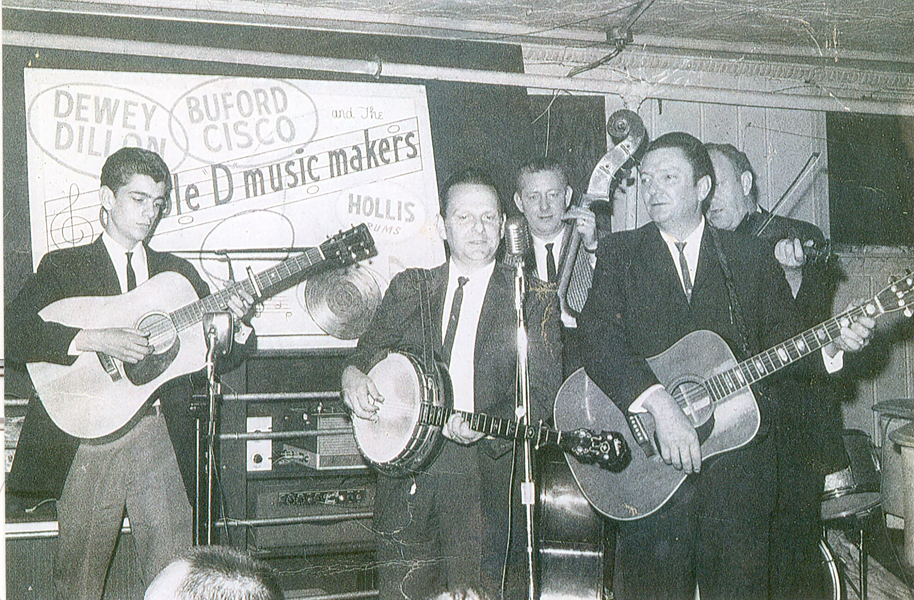
Larry Sparks (far left) performs with the Stanley Brothers before Carter Stanley’s death. Circa 1964. Image courtesy of Rebel Records.

I so appreciate that you bring up heart and soul, because I think people make the assumption that bluegrass is not a music that’s based on heart and based on soul. Especially when you listen to some barn burning, shredding bluegrass or jamgrass.

But for me, this music has always been as much about the stories, the heart, and the soul – and the feeling of it. And that’s clearly such an important part of it for you, too, and the storytelling. I think a lot of people don’t realize heart and soul are an important part of the tradition of bluegrass.

Yeah, sure it is. I’ve worked under the bluegrass name for years. Bluegrass is about 80 years old now, and I have been into it 62 of those years.

Wow.

I can’t believe I’ve been into it that long under the bluegrass name. My music is considered bluegrass, but actually a lot of my stuff could go either way. I’m considered bluegrass and that’s fine. I appreciate it. I’m honored, but a lot of my stuff can go into country or some other direction, too.

I just hold to what I’m doing and [what has] been a good business for me over the years. But you have to make it work and look ahead. The music is music, but you gotta make a business out of it. If you don’t, it’s not gonna work. And that’s what I did. It’s worked out for me. A lot of the bluegrass [industry] is not easy. It’s not one of the easiest forms of music to “make it” in.

And, it’s always been set behind [other] forms of music. I’d really like to see it be possible for bluegrass to be played on all stations. To play it [alongside] new country, modern country, rock and roll. Whatever it is, mix it up. But get bluegrass to program directors. If it ever could get played on other stations, with the right songs and the right artist – put in with everything else they’re doing – it would work. I don’t know if it’ll ever come to that or not, but that’s what it’s always been. We’ve always – like the old saying – took the backseat to the other forms of music.

But we got enough fans and that keeps it [going]. … I’m honored and I’m thankful for it. But it takes a lot of years, a lot of hard work. It’s not easy. I’ve done it all myself. I’ve done my own management, my own booking, my own phone calls, my own writing. This, that, this, that, this, that. I’ve done it all. Like I said, I’m gonna keep doing it, it’s working. It’s fine.

Like you mention, these songs really could go both ways. I love how much country is on this album, and you do such a great job of illustrating that bluegrass and country will always be related and that they cross-pollinate.

And I totally agree, bluegrass has mainstream appeal. And always has! I don’t know why we pretend like it doesn’t.

Yeah, we need more promotion on bluegrass. I wanna keep doing everything I can for it, because I respect it very much. Bill Monroe, the Stanley Brothers, and Flatt & Scruggs – these three names put [bluegrass] on the path and all that played bluegrass come after those three names.

Those three names are in you. I never did want to actually copy any one of those three names, but you take those three names – just to give you an idea. Take those three names I said and you put the Osborne Brothers with ‘em. Put Jim & Jesse with ‘em. Put Jimmy Martin, Mac Wiseman and others – and Larry Sparks – all those names. Every one of ’em are different sounds, different style. But they’re still on the same path. That’s what you gotta have. That’s what I knew, “I better stick to that and not be a copy.”

Let’s talk a little bit about your guitar playing style, because I think you’re carrying on a tradition of a particular kind of guitar picking in bluegrass that is rarer and rarer today. So few people who still make records and perform shows pick like you do. I love how front-and-center your guitar is on this album. Could you talk a little bit about your picking style and maybe who your influences were or how you came up in that type of picking?

Other guitar players are really good and there are a few players out there that can. But the way I do things, my playing is like my singing. I play the melody. And I don’t play over the melody. There’s less notes than normal guitar, it’s more of a feel. It’s hard to explain, but I just play the feel of the song and the melody. I try not to overdo it. I play it and when I hit a note or a slide or a backward– or whatever I do, a pull-off, I want it to come from me. I want it to be me and I wanna feel that note I’m doing, feel that slide I’m doing, whatever I’m doing. And [I want to] keep it that way and not overplay the song.

I also wanted to talk about the instrumental on the album, “Sleepin’ Lula.” Speaking of things that are rarer and rarer in bluegrass, having the clawhammer banjo on it is excellent. It feels like no one flogs the banjo anymore. There’s a lot of old-time players, a lot of clawhammer players, but it doesn’t really seem like anybody’s flogging it anymore. Hearing the instrumental, when the clawhammer kicks in, it was reminding me of that era of early bluegrass when you were just as likely to hear frailing banjo as a three-finger in a bluegrass band.

That’s great. Yeah, I thought it turned out pretty good. I was pleased with it. That’s an old tune. My grandpa, I got a recording of him playing that in 1953. Him and some guys, and he’s from Jackson County, Kentucky. Very good fiddle player. Very good. He was one of the best, he could’ve done something with his talent. He was born in 1877. Back in those days, up to the turn of the century, ‘20s, ‘30s, ‘40s, and ‘50s, he just played square dances around locally and stuff. He never did really go out. Stringbean asked him to go out with him some, but he never wanted to leave or go ‘round traveling and stuff. But he could have filled the bill for anything. He was that good.

I heard the tune from him. And I had never heard it before. “Sleepin’ Lula” – that was my grandma’s name, his wife’s name. She died in 1910 in childbirth and I never got to see her, of course. But her name was Lula, and so he recorded that “Sleepin’ Lula.” And I don’t know, I’m not going to say for sure if he wrote it. There’s a couple other fiddle players I heard play that from back in the ‘20s or ‘30s. But all respect to him. There wasn’t a player like my grandpa.

I don’t know who it came from. I don’t know if it came from my grandpa and he put it together because his wife’s name is Lula. Or if “Sleepin’ Lula” was the name [he gave another tune.] Someday I may try to trace that out a little further.

The other fiddlers that you know played it, did they use the same title for it, too?

Yeah!

Interesting. That’s so cool!

Yeah, it’s something else.

You’re a famous bluegrasser. You’ve been famous to me, for instance, my whole life. I was honestly nervous and a little starstruck to have this conversation. [Laughs] But you’re also becoming more famous at this moment, because two of the biggest bluegrass names to ever come out of the genre – Alison Krauss and Billy Strings – they’re such big fans of yours. I feel like both Alison and Billy see your legacy, they see how important it is, and they are translating that importance to people that maybe don’t know who you are or are just learning about you for the first time.

So I’ve just been curious to ask you, how do you feel about having these prominent “fans” – and it’s not just Alison and Billy, obviously. What does it mean to you to be part of that constellation of people that they look to as influences? And, what does it mean to you to see your music reach new audiences thanks to them and others?

It’s a new world. It’s a different world than what I’m used to. Which, there’s nothing wrong with it. I’m very honored that they stand behind what I do and my music. And, for the music, I’m very honored and thankful that they like it and that they maybe have it in their shows sometime or whatever.

But yeah, the new crowds in bluegrass – we have a very good crowd, but it’s bigger than it ever has been, now, bluegrass music is. But we still have that limited crowd [coming] from other forms of music. And that’s why I said, if it ever got to play on the big stations, give us a little room and respect for the bluegrass. It’s very important music and if the big country stations would give us some respect and get bluegrass to their program directors…

Don’t just [throw it out there]. You gotta be careful. Give it the right thing, the right artists, the right songs, and it would really help our music. It really would help.

But if it never happens, we still got a good crowd and we get more people all the time coming in. It’s a kind of a new crowd coming in, a new age group coming in. We still have a lot of the older people, but the younger people are coming into it. Teens to 20 years old, I’m seeing that happen more. That’s good. Bluegrass, it needs more push, it needs more promotion.

Do you see what Billy Strings is doing as that push or as that promotion? Can you tell, with younger fans coming in, that they started as Billy Strings fans and found you that way? I wonder, is there any way you’re measuring the impact of people talking about you and pushing your music?

I can’t really tell on that, for sure. I can’t. I’m just seeing people that’s young – teenagers and stuff – that wants to learn to play the music and are trying to play. And then that age group I was telling you about is. It’s coming in stronger all the time.

I’ll be honest with you. I don’t listen to other music. I don’t listen to anything hardly, music-wise. You gotta keep yourself fresh. But I respect other music. I respect it. All forms of music. I don’t have anything against the big bands and all the new names. But I like that old stuff. Of course, bluegrass and old country. And other things, blues, I like a lot of that.

You seem remarkably humble and so down to earth. You follow the songs, you put heart and soul into ‘em. But you’re literally a Hall of Famer and you’re one of the last of the first big generation of bluegrass makers that are still doing it today. You’re a legend to all of us. Does it feel like you’re a legend? To you, on the inside? Or no?

I would be to a lot of people, a legend, and to a lot of people I would be famous, I would be a star. But when I went into this business, went into music in my teens, I never looked at it as wanting to be a star or to be famous. I never looked at those two things. I wanted to take what talent I had. I knew I had something to offer. I had to put it together and see what I could do [to] make it work.

I don’t know if I’m a star or famous to people. I hope so, because that’d be nice. I’m pretty honored.


Photo Credit: Images courtesy of Rebel Records. Lead image by Michael Wilson.

The Man That Made All of Us Play the Banjo

(Editor’s Note: For Earl Scruggs’s birthday, Thomas Goldsmith revisits a star-studded bluegrass festival tribute to the banjo legend from 1971 in Camp Springs, North Carolina. The 102nd anniversary of Scruggs’s 1924 birth in Flint Hill, North Carolina, is January 6, 2026.)

Like speakers at a testimonial dinner, each musician strode to the microphone in turn.

But instead of heaping on words of praise, a stage full of well-known pickers and up-and-comers used banjos to pay a lively tribute to Earl Scruggs.

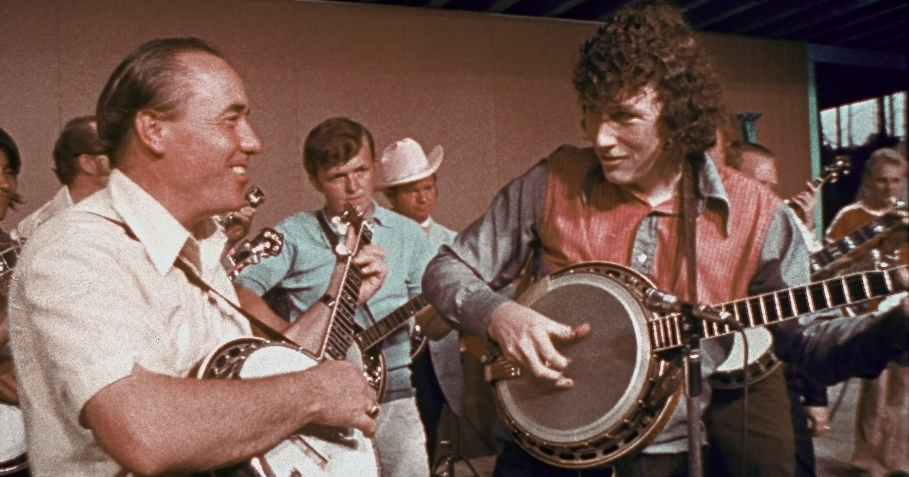
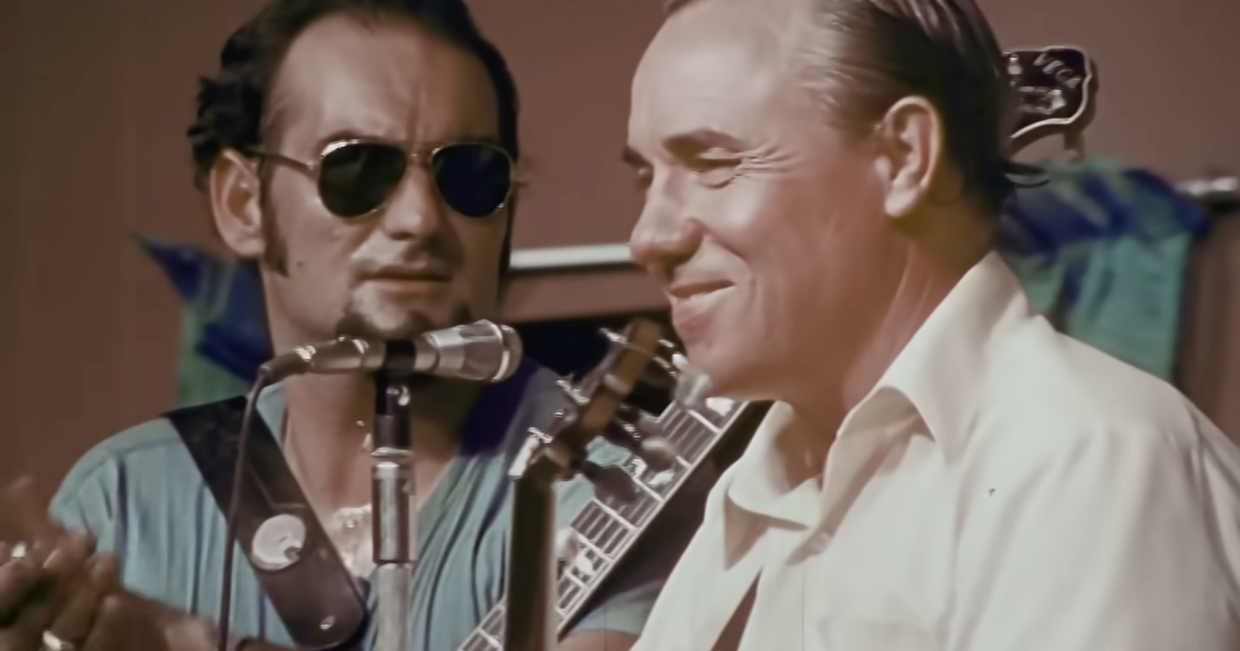
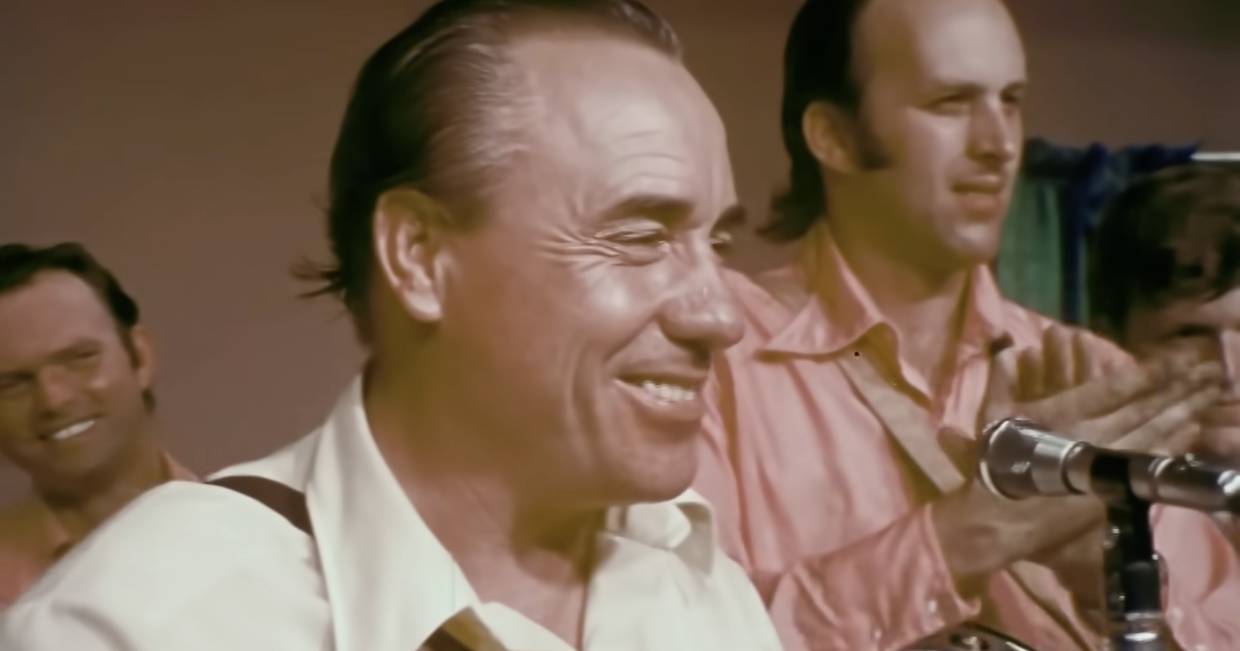
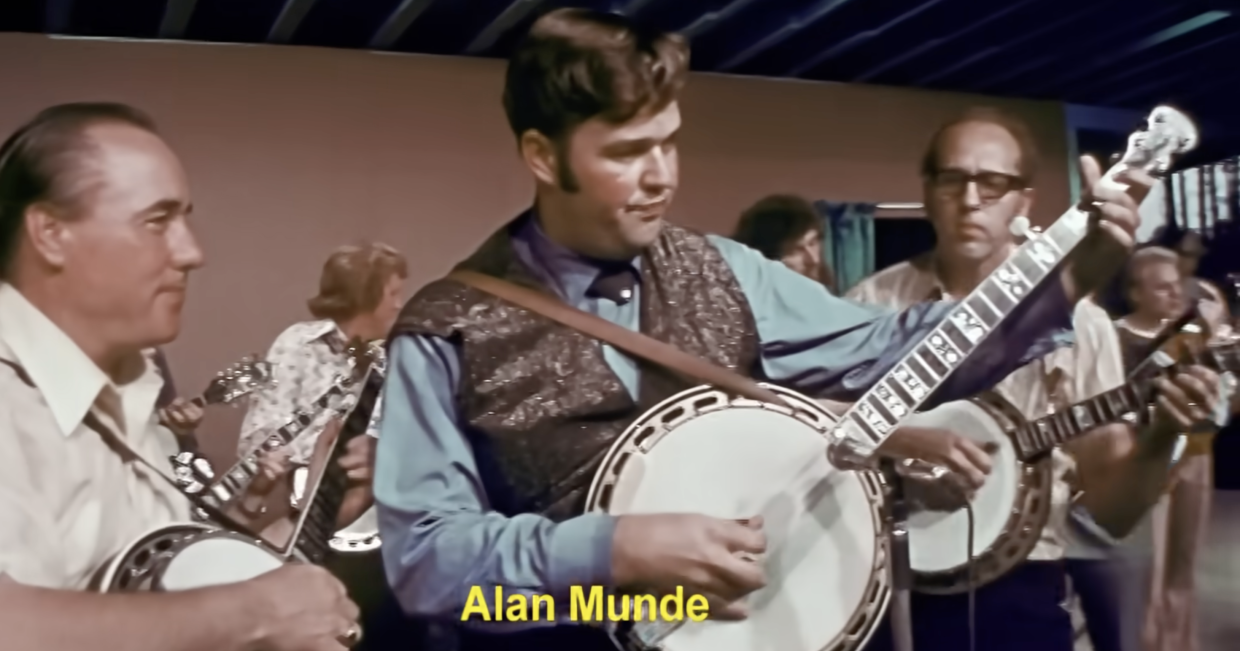
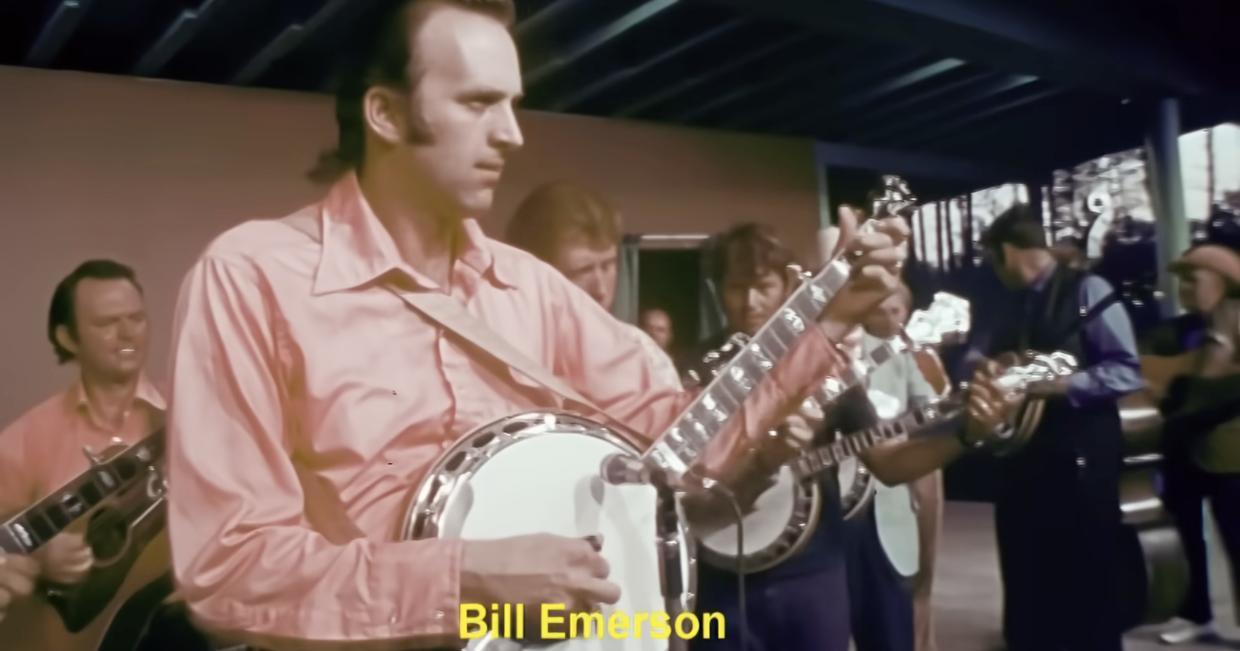
The scene was the 1971 Labor Day weekend bluegrass festival in Camp Springs, North Carolina, at a performance where some of the best banjo players around joined Scruggs on stage. Led by the five-string king himself, banjoists including Sonny Osborne, J.D. Crowe, Bill Emerson, and Alan Munde jointly played Scruggs’s signature tune “Foggy Mountain Breakdown,” some 22 years after its first recording.

The performance is a highlight of the 1972 documentary Bluegrass Country Soul, which enjoyed a 50-year deluxe re-release five years ago. Watch the clip here.


Sonny Osborne (left) gets emotional onstage after introducing Earl Scruggs (right). Screenshot from clip courtesy of Bluegrass Country Soul, Inc.

Promoter Carlton Haney invited more than a dozen banjo players on the festival schedule to play along with Scruggs, who was then 47. (A second group performance, of “Dear Old Dixie,” doesn’t appear in the film. And a couple of the “Foggy Mountain Breakdown” performers didn’t make it to the screen.)

Millions of viewers have seen the clip as part of the movie or on YouTube, with Osborne bringing Scruggs on with an introduction that sounds starstruck.

“(It’d) be only right to call out probably the man that has made all of us guys up here play the banjo, or either has been a great influence, as he has in my complete life,” Osborne said. “In my whole banjo-playing ability … I could probably credit to this one man.

“Let’s all give a tremendous welcome to probably the best in the world, Earl Scruggs!”

Scruggs seemed overwhelmed by the audience’s ovation. The cheering feels as though it lasts forever, but took only a minute and a few seconds.

“That really fills my heart with joy,” Scruggs said after Osborne introduced him. “I did want to say one thing: Thank you, and guys like this is what keeps me going, my boys who works with me and you people who keep preaching music.

“I just don’t know what to say, except I’m picking with some guys that plays a tremendous amount of banjo. Don’t underestimate anybody up here. Man, they’re great.”

Earl at a Crossroads

In 1971, Scruggs had only broken up with his longtime duet partner Lester Flatt less than two years earlier. Not even a month before Camp Springs he had recorded along with other greats for Nitty Gritty Dirt Band’s country-roots-popularizing Will the Circle Be Unbroken set. He was venturing into a country-rock sound with his band the Earl Scruggs Revue, along with his sons Randy, Gary, and Steve.

However, Scruggs’s work as a musical innovator remained – and remains – fundamental to the way a large share of bluegrass banjo players address the instrument. That’s true despite the introduction of a single-note style most associated with Don Reno and a chromatic or melodic approach heard in the playing of Bill Keith and Bobby Thompson.

Most of the pickers in the 1971 “Foggy Mountain Breakdown” performance used the three-finger picking style Scruggs introduced in a band with Bill Monroe and Flatt on the Grand Ole Opry in 1945. The exception among the Camp Springs pickers, Rick Riman of the New Deal String Band, caused something of a stir with his chromatic rendition of the tune, not to mention his long hair, full beard, and striped shirt and pants.

How did Riman, who had also studied Scruggs style closely, decide to use the flowing melodic style for “Foggy Mountain Breakdown”?

“I just thought, “OK, let’s see if I can make this work,’” Riman, 83, said on the phone from Denver, Colorado, speaking to BGS in January 2026. “Because I had not prepared anything, and I didn’t even know what was on the program. They just said they want all the banjo players up there to pay tribute to Earl. And I said, ‘OK, I’ll get up there and do it.’”

And what has the reaction been?

“Mostly negative,” he said, with a touch of humor.

“One person said they were really glad to see somebody step out of the standardized [method], and that felt very, very good. Somebody else said, ‘You won’t believe how many people thought that you shouldn’t have been on stage at all.’

“And I get that a lot. That’s mostly the reaction I get, that I shouldn’t have been on stage. I shouldn’t have even been in the parking lot, like the least talented person on the stage and probably the least talented person in the whole park.”

The chromatic style remains one effective tool in the hands of players such as Béla Fleck and Noam Pikelny, but Riman, 28 that day in 1971, has gotten a load of grief over his choice to add some variety to the line of Scruggs-style players. “I would say, over the years, it’s pretty much been like 50-plus years of derision,” he said.

Riman has had one regret. “I should have practiced more,” he said. “I should have been better, but I had no idea.”

Although at Camp Springs he performed in the more recently created melodic and chromatic styles, like everyone on the stage that day in North Carolina, Riman was schooled in the style of the man honored beside them.

“I was really fascinated by Earl and anybody else who played his style pretty well,” he said.


Earl Scruggs reacts to his introduction and audience ovation and applause onstage in 1971 in Camp Springs, NC. Screenshot from clip courtesy of Bluegrass Country Soul, Inc.


“Everybody Headed for the Stage”

We were fortunate to reach three of the banjo warriors who performed that day. Sadly, most of the players heard then have since died. Eddie Hoyle, then 14, the youngest of the Camp Springs lineup, is among the survivors and is still actively performing. He talked to BGS on the phone in December from his home in Georgia.

“I was up there playing with Curtis Blackwell and the Dixie Bluegrass Boys and I just remember them telling me that Carlton wanted all the banjo players to come down on the stage and play a tune with Earl,” said Hoyle, now 68. “So I got my banjo out, and everybody headed for the stage.

“I didn’t know if I’d get to take a break or not, but somebody got me in the line that was walking up to the mic. So it was pretty cool. And I remember I was not nervous; OK, probably didn’t know enough to be nervous.”

Most of the players that day stuck fairly close to Scruggs’s own licks on “Foggy Mountain Breakdown,” but Hoyle and others ventured a bit from the classic performance.

“I always tried to learn the right way, as Dad told us to do, but then I would try to put my own twist on it,” Hoyle said.

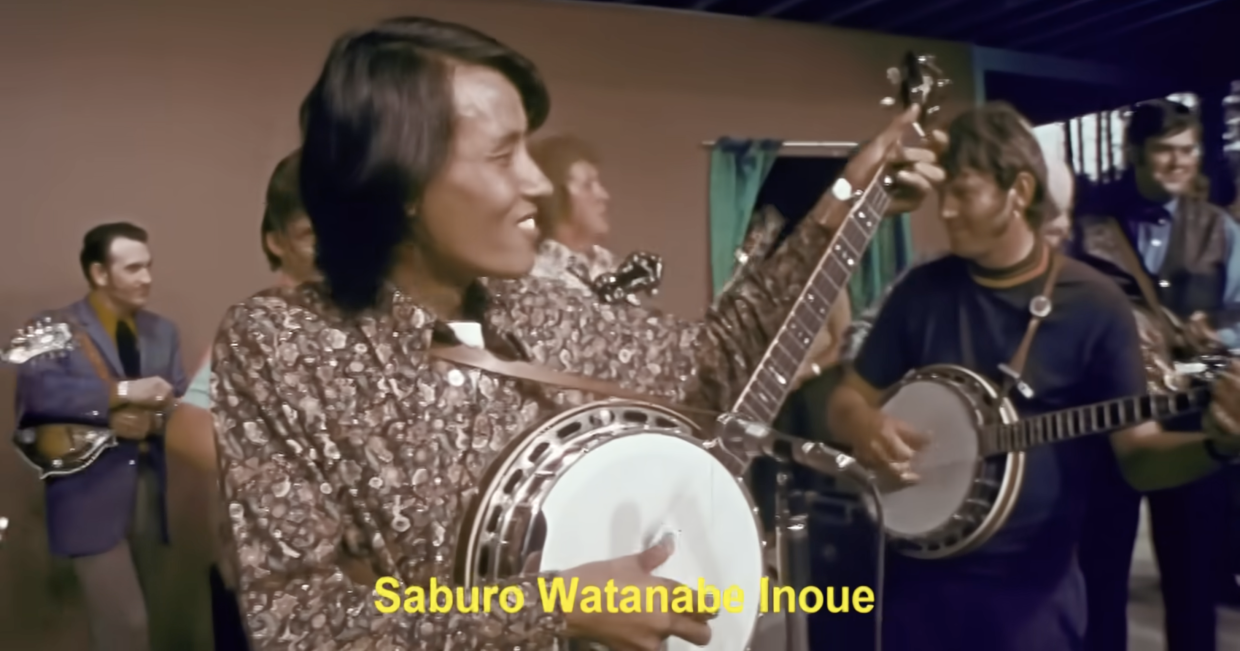
Nearly half the banjo players that day have been inducted into the Bluegrass Music Hall of Fame. They include Scruggs himself, of course, as well as J.D. Crowe, Bill Emerson, Alan Munde, Sonny Osborne, and Don Stover. Another banjo picker, Saburo Watanabe Inoue, founder of the pioneering Japanese band Bluegrass 45, won the IBMA’s Distinguished Achievement award along with his brother Toshio, in 1995.


Sab Watanabe (who passed away in 2019) of the legendary Japanese band, Bluegrass 45, takes his turn at the mic. Screenshot from clip courtesy of Bluegrass Country Soul, Inc.


Alan Munde Remembers it Well

Munde, 79, still a player and teacher, also spoke to BGS about the experience from his home in Springfield, Missouri. He recalled that he was playing with Jimmy Martin and the Sunny Mountain Boys at the festival and took part in the group performance because Martin wanted him to.

“Thinking back on it and also remembering at the time, I didn’t really want to be a part of it, just because, then and now, I thought I would be so unworthy,” Munde said. “But I think Jimmy wanted me to do it, and you notice he’s there [in the film.] He thought I needed to be there, so I did it.”

Munde remembers the day as a landmark for him, the only time he heard Scruggs play live. Given all the great banjoists and backing musicians including Martin and Charlie Waller, it was an enchanting moment from the sound of Scruggs’s first lick.

“The thing that I remember so much about it is … we’re all standing there and Earl’s talking, and then he’s going to start to play,” he said. “And he, I always call this his ‘chang,’ where he just plays the first, third, and fifth string together and starts into the tune.

“As soon as he did that, I thought, ‘Oh my God, there’s that sound.’ It just was immediately apparent that he was the one.”


Alan Munde (right) is flanked by Earl Scruggs during the all-banjos jam of “Foggy Mountain Breakdown.” Screenshot from clip courtesy of Bluegrass Country Soul, Inc.

Like the first players to tune into Scruggs’s playing in 1945 and like players from Béla Fleck on, Munde appreciates Scruggs’s sound in a way that seems almost mystical. Scruggs produced something that no other banjo player could.

Jimmy Martin, Munde’s boss at the time, used to tell a story involving the great banjo man Vic Jordan to illustrate the way Scruggs’s beautifully nuanced playing and full tone stood above the crowd of his followers.

“Jimmy was kind of down on Vic Jordan a little bit,” Munde said. “And he would tell this story to show that Vic didn’t know the right way. He said when Vic met Earl, he asked him what kind of microphone he used.

“And Earl said, ‘Sometimes I use those little bitty ones, and sometimes I use those real big ones.’

“And Jimmy’s point was that, in his mind, Vic was asking because he thought it was the microphone. But it didn’t matter. It all sounded like Earl every time.”

And hearing Scruggs’s sound that day at Camp Springs, not through a mic, not on a record, but right there next to him on stage, made Munde think the whole exercise was somehow wrong.

“When he did that pinch, I thought, ‘Oh, God, I don’t want to be a part of this.’ What we should have done is just stood back and listened to him, and then said, ‘Do it again.’”

Despite his misgivings at the time, Munde has wound up glad that he took part in the Earl-fest that day.

“Looking back on it, it’s been nothing but good for me, that I got to be there,” he said. “Here it is, 50 years later, people still bring it up. It’s helped get me a little legacy recognition, that I was there, so that’s been real good.”

A Star-Studded Lineup

The career of Sonny Osborne has been well documented, but Bluegrass Country Soul makes clear his admiration and friendship with Scruggs. During the tumult of applause following his introduction, Scruggs asked if he could say something, and Osborne appears to grin and say, “Not yet.” And Osborne cracks up when Scruggs uses his up-the-neck solo from “Foggy Mountain Breakdown” during the last time around for the tune.

Bill Emerson, whose long career included membership in the Country Gentlemen and much more, was interviewed at the time of the re-release of Bluegrass Country Soul. He talked about the pantheon of great banjo players.

“Don Reno, he had his style on the banjo; Earl Scruggs, he had his style on the banjo; Ralph Stanley, he had a style on the banjo,” Emerson said in the set’s booklet. “And on the radio, I could listen to any of them, just the first few notes of an intro, and tell you who was playing. Just by the style that they were playing, the tone that they had, and the timbre. Most people, when they started out playing the banjo back then, they got a bunch of Earl Scruggs’s records and sat down and tried to learn to play like Earl. But it’s mighty hard to sound like Earl, I can tell you. I was never able to do that, so I just tried to sound like Bill Emerson.”


Bill Emerson takes his turn playing a solo on “Foggy Mountain Breakdown.” Screenshot from clip courtesy of Bluegrass Country Soul, Inc.

Also on the show was multi-instrumentalist Jimmy Arnold (1952-1992), whose career was one of a kind, including excursions into Southern rock and solo albums on guitar and banjo as well as stints with Cliff Waldron, Charlie Moore, and the New Tradition, according to a 1983 Bluegrass Unlimited story. The article, by Chris Wathen, quoted Arnold on Scruggs: “When you learn all of what you think is hard stuff and then go back and try to play one of his tunes, you find out what the hard stuff really is. It’s his stuff. To play with that much power and volume, you’ve really got to be on top of things.”

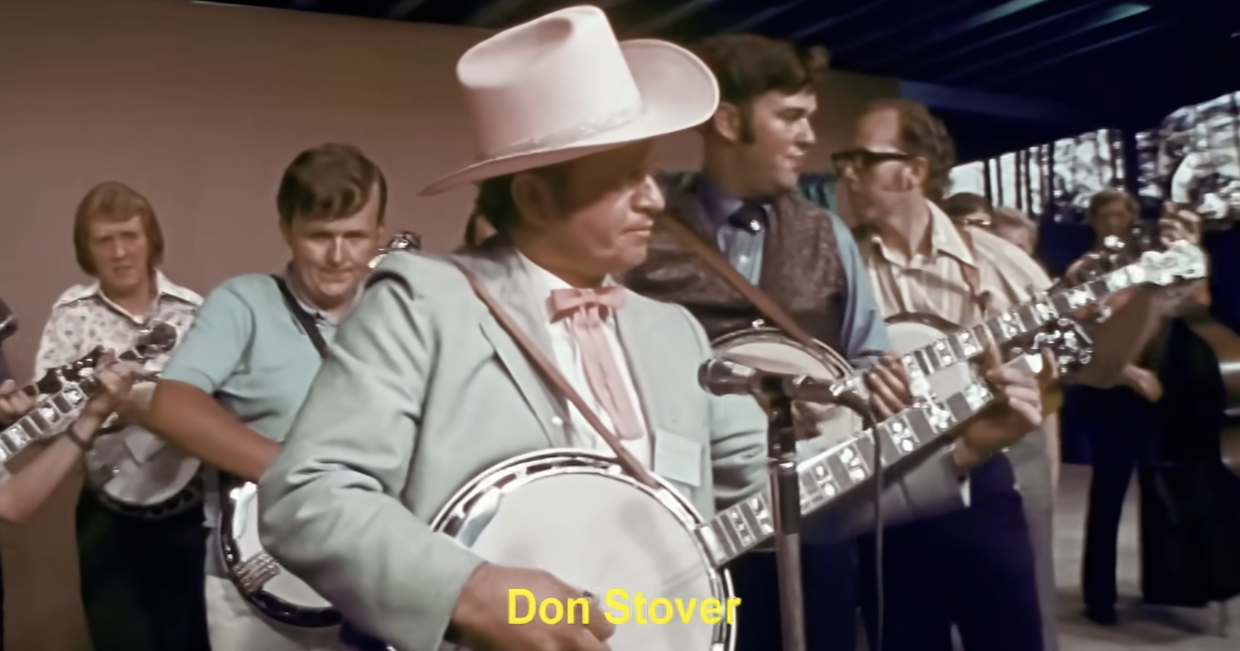
Another of the clip’s well-known pickers, Don Stover (1928-1996), had been an early convert to Scruggs style, learning it not long after Scruggs’s first performances with Monroe, according to the Bluegrass Music Hall of Fame.

Stover was known for his work with brothers Bea and Everett Lilly during many years of performances in Boston. He played and recorded as a member of Bill Monroe’s Blue Grass Boys in 1957, even contributing harmony vocals to “In Despair.”

Earl’s son Randy, who appears playing an archtop banjo just before the end of the clip, went on to a distinguished career as a musician, songwriter, and producer.

Doing Their Times

The 55th anniversary of this notable moment in bluegrass will arrive in September. Looking back, the picking ranges from respectable to spectacular, but doesn’t maintain the dead-even tempo that’s supposed to prevail in bluegrass music. Fans remember the story that Earl and brother Horace Scruggs, as boys, used to start playing a tune, then separate to walk around their Flint Hill house in opposite directions. The idea was to check if they were still in time with each other after being out of earshot.

The dozen players on the Camp Springs group number would not have passed this test, based on a stopwatch run-through. While Scruggs’s December 1949 original recording had consistent solos of right at 11 seconds, he started the round robin at about 12.69 seconds and tempos wavered from there.

By the start of Riman’s melodic solo, near the end, the time was more than half a second slower. Randy and Earl Scruggs wrapped things up at roughly the same tempo.

But that’s just a quibble.


A contemporary of Earl Scruggs, Don Stover also performed a rendition of “Foggy Mountain Breakdown” during the jam. Screenshot from clip courtesy of Bluegrass Country Soul, Inc.


Remembering Earl

Bluegrass Country Soul director Albert Ihde did bluegrass lovers a real service by capturing these moments and others at the Camp Springs festival. And promoter Haney had another brainstorm resembling the story, pronounced “stoah-ry,” that he recreated of Bill Monroe and former band members six years earlier at Fincastle, Virginia.

Viewers will keep calling up the video for its closeups of Earl, smiling and even bobbing up and down for his breaks, and for the scenes of several of his outstanding followers, appreciating their moments on stage as they rolled their way through “Foggy Mountain Breakdown.”

Many videos of Flatt & Scruggs can be found on the web that illustrate Earl Scruggs’s unmatched musicianship. In the Bluegrass Country Soul segment viewers can also see a strong memorial to Earl Eugene Scruggs the person, his warmth, humor, and unselfishness as well as his brilliance as a musician.


Thomas Goldsmith is an award-winning journalist based in Tennessee and North Carolina. In addition to producing many hundreds of articles for newspapers and magazines, he edited The Bluegrass Reader and authored Earl Scruggs and Foggy Mountain Breakdown: The Making of an American Classic, both books for the University of Illinois Press.

Learn more about Bluegrass Country Soul and purchase a Golden Anniversary Legacy Edition box set of the film here. Read more about the box set and the making of the film here.

All photos courtesy of Albert Ihde, Ellen Pasternack, and Bluegrass Country Soul, Inc. Lead image: Earl Scruggs (left) and son, Randy Scruggs (right), perform “Foggy Mountain Breakdown” flanked by bluegrass banjo stars of 1971.

Alison Brown Carries on the Legacy of Louise Scruggs

Alison Brown heard Earl Scruggs playing on the Foggy Mountain Banjo album when she was 10 years old – and it changed the course of her life. More than 50 years later, Brown is the newest honoree at the Country Music Hall of Fame and Museum’s Louise Scruggs Memorial Forum.

Yes, the circle really is unbroken.

Brown has received countless awards throughout her career as a groundbreaking banjo player. This time, however, she will be recognized for her many contributions to the business side of music.

The museum states that “The Louise Scruggs Memorial Forum recognizes a music industry leader who continues the legacy of trailblazer Louise Scruggs, a formidable businesswoman who set new professional standards in artist management.”

Michael McCall, CMHOF’s Associate Director of Editorial, said, “We always try to look at the people who are important in country music, but who the public may not know about.”

The forum began in 2007 with a mission to acknowledge Louise Scruggs’ remarkable contributions in light of the fact that “women don’t always get the recognition they should,” McCall said. “The forum is a way to shine lights where they don’t always shine.” Brown is the 17th honoree.

Default icon

Marty Stuart once told writer Jon Weisberger that Louise Scruggs “was to the business what Lester and Earl were to the music.” While performing with Bill Monroe, the “Father of Bluegrass Music,” Earl Scruggs introduced audiences to the three-finger style that we now think of as bluegrass banjo. That driving syncopation was one, possibly the primary, feature that separated bluegrass from the other forms of what was then called “hillbilly music.”

Decades later, bluegrass banjo players, almost without exception, cite Earl Scruggs as a primary influence.

While Louise’s impact isn’t as widely known, she was an equal force in the music industry. She turned the management of bluegrass artists from a casual afterthought to a profession. And her instincts and cultural awareness started ripples that are still expanding today as bluegrass, folk, and country meet in the land of Americana.

Louise was born in 1927. Shortly before she died in 2006, she told The Tennessean, “My mother worked her fingers to the bone, and my daddy did, too, and I didn’t want to go out in a field chopping corn.”

She developed office skills to fulfill a desperate determination established during the Great Depression to escape farm life. Those abilities set her on a path that in some ways changed the trajectory of bluegrass music. At the time, the bluegrass world was totally male-dominated on both the entertainment and business sides.

“But Louise was so good at what she did,” McCall said, that she was a total success. She overcame any resistance with her “integrity, and by being both hard and fair in business.”

Earl Scruggs and Lester Flatt started an immensely successful band in 1948. But it wasn’t just Lester’s voice and Earl’s banjo that made Flatt & Scruggs household names. It was Louise.

Louise had been working as a bookkeeper when she fell for Earl Scruggs, seeing him on stage as a member of Bill Monroe’s Blue Grass Boys. After marrying Earl, Louise initially stayed home to raise their three children. In 1955, she took over management of Flatt & Scruggs, becoming the first female manager and booking agent in the music industry.

In addition to excelling at contract negotiation and other financial aspects of talent management, Louise was a visionary. She pursued the potential of various media previously untapped by bluegrass, as well as navigating shifting cultural trends.

When Louise negotiated with CBS for use of “The Ballad of Jed Clampett” and appearances on The Beverly Hillbillies, the sound of bluegrass banjo was heard in living rooms across the nation – well beyond the coverage of the Grand Ole Opry. The theme song to Petticoat Junction kept the momentum going.

With “Foggy Mountain Breakdown” featured in the popular film Bonnie & Clyde, banjo teachers were inundated with requests to take new students.

Louise established Earl as part of the folk revival when she booked him into the first Newport Folk Festival. New York City audiences opened their ears and hearts to Flatt & Scruggs when the band appeared at Carnegie Hall. Louise also encouraged these revered bluegrass musicians to incorporate songs written by contemporaries like Bob Dylan and Johnny Cash; Earl even made some recordings with saxophonist King Curtis.

Flatt didn’t appreciate the expanded repertoire and he split from Earl in 1969. Louise quickly helped form the Earl Scruggs Revue with their sons, a “beyond-bluegrass” ensemble enthusiastically received on college campuses and at festivals. They performed with acts like Steppenwolf and The Byrds and they appeared at a major anti-Vietnam War demonstration in Washington, D.C., in 1969.

Default icon

The Country Music Association’s CEO Sarah Trahern said of Louise, “She was blessed with charm, intelligence, a puritan work ethic, and a wonderful sense of humor.”

The same can be said about Alison Brown, the 2025 honoree. To say Alison Brown is admired as a banjo player hardly touches the music community’s regard for her talents.

Once she heard Earl play at age 10, Brown never let up on the banjo, winning contests at a young age and working across her entire career to expand the banjo’s role in acoustic music.

She was the first woman to receive an Instrumentalist of the Year award from the International Bluegrass Music Association on any instrument. She has won GRAMMYs and has been nominated for others and she is in the Banjo Hall of Fame.

Kristen Scott Benson, six-time IBMA Banjo Player of the Year – the second woman to receive the honor – recalls hearing Brown’s Simple Pleasures CD. “It was the first time I had ever heard any banjo playing outside the bluegrass realm. I was completely fascinated and my ears were opened to a whole new world of writing and playing.”

These days Brown frequently writes and performs with fellow banjo player Steve Martin and receives rave reviews for numerous other collaborations.

When Brown graduated Harvard with a history degree, she faced the question of what to do next. Realizing that neither the humanities nor banjo playing were money makers, she adopted the attitude of, “A girl’s gotta eat, right?”

She was accepted into UCLA business school and spent three years in investment banking. Then Alison Krauss beckoned her back to professional banjo in the early days of Union Station.

This eventually led her to performing with Michelle Shocked and to meeting her husband-to-be, Garry West. Cut to an Alison and Garry discussion in a Stockholm café about the elements of a good life. They still have the napkin on which they jotted words like performing, recording, having a label, a studio, publishing – and family. That was how the idea for an independent record label was born.

Small World Music began with the goal of distributing music by little-known artists they heard while on tour. Initially, they worked with a tiny Australian company, promoting six products in their catalogue.

“There was a video called ‘Coral Sea Dreaming’ that was visual music – beautiful scenes of coral reefs, set to a new age soundtrack,” Brown described. She and West thought it would be perfect for the Nature Store chain, but the buyer ignored their overtures.

So, Brown said, “We started calling Nature Stores and saying that we’d heard about this amazing video called ‘Coral Sea Dreaming’ – did they have it in stock?” And a few days later, the buyer called them.

“That was one of the first big things that helped our cash flow, leading to the launch of Compass.”

While she had been happy to leave the dry work of entry-level investment banking, she appreciates the knowledge she acquired there and in business school. “Like how to put together a business plan and the financial projections to support it. It also gave me paper credibility,” with investors.

Compass Records has evolved to become one of the most respected independent labels in the industry, specializing in niche markets like Celtic, folk, bluegrass, Americana, jazz and many varieties of roots music.

Default icon

The business environment Brown entered when she started Compass Records in 1995 was a far cry from the all-male world that Louise Scruggs operated in.

“I’m a firm believer that we all stand on the shoulders of the people who have come before us. And that’s incredibly true for me as a woman in business. I’ve never had to deal with those kinds of challenges [being undervalued or ignored] as a female.”

Brown and West planned their lives so they could start a business, support their love of music, and raise two children – building in the resources they needed for balance and family time. Technology and changing gender roles made all that possible in a way that wasn’t available in the 1950s. But while she didn’t encounter the same challenges as Louise Scruggs, she finds herself facing more profound obstacles.

“The digital transformation has changed the music business, maybe more than any other industry,” she said. “How do you exist in an ecosystem where you’re creating music and having to give it away for free?”

Brown was recently elected president of the Nashville Chapter of the Recording Academy. She has assumed a leadership role in promoting the rights of artists and labels and she is a determined advocate for equality of broadcast royalties – more important than ever when “streaming pays a third of a penny per stream.”

“That’s a rate conceived by the Copyright Board before people knew that a stream wasn’t a small river,” she said. “I feel like this is a critical time for creators, and I fear that, with so many people in Washington in the pocket of big tech, creators’ interests could very easily become marginalized in this race for AI.

“It’s a precarious moment, but at the same time, I feel like some of the best roots music and bluegrass music that’s ever been made is being made now, and I think it will stand the test of time.

“I think that cultivating your community is the key to succeeding – knowing who your fans and supporters are and making sure they know who you are. And now we have the tools to connect directly with our audience, which we didn’t have when we started 30 years ago,” Brown said.

She also reminds fans that, “If you want to support the artists, buy physical product. That’s still where the artists can make some money.”

Default icon

Marian Leighton Levy, who started Rounder Records in the 1970s along with two partners, knows the challenges of an independent label. And she is well aware of how much more competitive the industry has become in the face of consolidation; artists’ ability to produce their own product; and the devastating effect of streaming on creators’ incomes.

Levy said of Brown, “She’s one of the few people who’s been a top-level musician, someone who knows her way around the studio as an engineer and a producer, has started and been running a record company with Garry and somehow or other had as balanced a life as one can have while doing all of those things. And she’s been doing remarkably well for a very long time – it is just incredible what she’s accomplished.”

At the Hall, McCall lauds Brown not only for her success with Compass, but with all the ways she contributes to the industry – from participating in IBMA to the Recording Academy to the Country Music Hall of Fame and Museum itself.

Brown feels deeply honored to be recognized at the Louise Scruggs Memorial Forum, “having been called Girl Scruggs for so much of my childhood.”

“Louise was such a wonderful, influential force in roots music, being acknowledged as following in her footsteps is incredibly meaningful.”

She sees the forum as a great contribution to the business of music by acknowledging how far the industry has come.

“One of the things that I think is so exciting about the moment that we’re living in is that women are peppered throughout the ecosystem in a way that wasn’t the case 50 years ago. We have women promoters, artists, DJs, running record labels. Now we have this golden opportunity to create the reality that we want to live in, and we can do that by supporting each other.”


Photo courtesy of the Country Music Hall of Fame & Museum.

The SteelDrivers Celebrate 20 Years, Usher in New Chapter With ‘Outrun’

With four lead vocalists, seven studio albums, one GRAMMY Award to their name, and countless fans won over, The SteelDrivers have been one of this century’s most consistent and trailblazing bluegrass bands. That longevity can be credited to three things – the strength of their catalog of all-original songs, their collective precision picking, and the family atmosphere the band has cultivated together since forming in 2005.

Despite not joining forces until then, banjoist Richard Bailey says he’s known bandmates Tammy Rogers (fiddle) and Brent Truitt (mandolin from 2012 to present) since they were teenagers. His first run in with Mike Fleming (bass) and Mike Henderson (mandolin 2007 to 2011) came not long after during a college ski trip, with the group remaining close ever since. In the early 2000s Bailey relocated to Nashville from Memphis and reconnected with Henderson, regularly joining him at the Station Inn during Sunday night bluegrass jams and setting the foundation for what would eventually become The SteelDrivers. Then one day Henderson rang him up and was glowing about a young kid he’d just started writing with named Chris Stapleton who was wanting to play a little bluegrass.

“We eventually got together at his house and nobody knew Chris except for Henderson,” Bailey tells BGS. “We rehearsed a few bluegrass standards and then Chris began singing and Tammy, Mike, and I all looked at each other and went, ‘damn!’ I remember asking if the song he sang was an old Stanley Brothers tune and he said that it was actually one that he wrote.”

By that point, Henderson and Stapleton had already been penning songs together for a few years, with one of their most notable co-writes to that point being “Higher Than The Wall” from Patty Loveless on 2003’s On Your Way Home – a full seven years before The SteelDrivers eventually cut it on 2010’s Reckless. With their songwriting prowess already well established, the band opted to lean all the way in, keeping to the pattern of only recording songs crafted by them. Early on that mostly consisted of songs from Stapleton and Henderson, but has extended to all of the band in the years that followed, with Rogers writing the entirety of 2020’s Bad For You and the band’s newest member, Matt Dame, contributing songs for the first time ever on the group’s latest effort, Outrun.

“Starting with our very first record we determined that we were only going to play original music and we’ve never wavered from that,” explains Rogers. “It’s always been when you come to see The SteelDrivers that you’re not going to hear an updated version of ‘Little Cabin Home On The Hill’ or a modern country song done bluegrass style. There’s nothing wrong with any of that, but the whole point of the band originally was two songwriters coming together – Chris Stapleton and Mike Henderson – and everything else grew around that.”

That persistence of sticking with original material doesn’t only extend to The SteelDrivers recorded catalog, though. As Rogers points out, you’ll also be hard-pressed to hear any covers during the band’s live show. Per Bailey, the only such instance came during their televised Grand Ole Opry debut in 2008 when Charlie Daniels joined them on stage for a sing along to Flatt & Scruggs’ “I’m Gonna Sleep With One Eye Open.”

However, the band has regularly employed and worked with writers outside the group to craft songs centered around what Fleming describes as “uneasy listening music where bad things happen to good people.” This includes the likes of the venerable Verlon Thompson (“Booze And Cigarettes”), George Strait, Martina McBride, and Pam Tillis collaborator Leslie Satcher (“Outrun,” “Bad For You”); and German-born Thomm Jutz (“I Choose You,” “Cut You Down”), with whom Rogers has written over 140 songs (and counting).

“We’re fortunate to have always had wonderful songwriters in the band no matter who the membership was,” clarifies Fleming. “As it’s morphed through different CDs and personnel the strength of the songwriting has never wavered. Our goal has always been to serve the song, no matter who is singing it.”

Regardless of who’s been writing – or singing the songs for that matter – the band’s impeccable storytelling and bluesy grit has never faltered, even when lineup changes shook the band to its core. The first of those came in 2010 when Stapleton left to begin pursuing his solo career – a move that has resulted in him becoming not just one of the most well known country singers, but one of the most renowned vocalists of any genre globally. Henderson followed a year later, with Gary Nichols and Truitt stepping in to fill each of their shoes, respectively.

“I would’ve loved it had Stapleton never left the band – I mean who doesn’t want to be in a band with Chris Stapleton?” Rogers continues, “But when he left we had to make the decision of do we keep going or do we stop, because it wasn’t going to continue the same way that it had before. It wasn’t even a choice to me, though – I wanted to keep playing. To me that was better than no SteelDrivers at all.”

With two of their founding members gone, the band set out to prove they could still create bluegrass bangers and it didn’t take long for their efforts to pay off. Five years into their new look lineup The SteelDrivers won their first GRAMMY Award, taking home the honor for Best Bluegrass Album with The Muscle Shoals Recordings at the Academy’s 58th annual gathering in 2015. According to Rogers, the GRAMMY completely changed the band’s trajectory and continues to have a positive impact over a decade later.

“There’s been a lot of discussion in recent years about the validity of the GRAMMYs, but for us the recognition from the Academy has been a game changer,” states Rogers. “There’s a huge difference between being GRAMMY-nominated and a GRAMMY winner. For us, we were suddenly validated and were able to play bigger shows and venues that wouldn’t have considered or booked us prior to winning.”

In addition to validating their decision to keep pushing on, the band’s success post-Stapleton has also proven that they excel at finding new vocalists with their own distinct styles and vibrant storytelling to fill the void. First it was the funky, bluesy, and soulful sensibilities of Nichols. After him came the rock ‘n’ roll energy and piercing holler of Kelvin Damrell – who Rogers described as “the highest pitched singer of anyone we’ve had in the band.” He’s the only Kentuckian other than Stapleton to ever be in the band and sang lead for over three years – including on 2020’s Bad For You – prior to stepping aside in the summer of 2021.

It was then that the band recruited Matt Dame, solidifying the lineup they still have today. While each of the four singers have their own sounds, Rogers says there’s also plenty of characteristics that tie each of their eras together. “We figured out early on that it’s not about finding someone who sounds like Chris, but finding someone with a soulful, gravely, raspy and bluesy quality and letting them put their own spin on things,” says Rogers. “Aside from looking for those attributes we’ve never asked anyone to sing a certain way. Even though they sound similar, within two seconds of listening to a song I can tell whether it’s Kelvin, Chris, Gary, or Matt singing. They’re all distinct in my mind.”

Arguably even more impressive than the band’s success and consistency in sound through its different chapters has been their knack for continuing to make cutting edge bluegrass music with singers not steeped in bluegrass history with voices that generally “don’t fit” the traditional blueprint. From Stapleton on, the band has gravitated toward gritty blues and southern rock more than anything else. They’re comfortable at the confluence of electric and acoustic sounds, with one foot firmly planted in the past and the other stirring up dust and turning heads as it propels string band music into a completely new dimension.

“Chris Stapleton was not a bluegrass singer,” insists Fleming. “He was more of a blues singer, but the arrangements were always with bluegrass instruments. As a result, our propensity was to go toward playing bluegrass, but we never shied away from a song we thought we might not be able to play. For instance, ‘Midnight Train To Memphis’ from our first album was a bluesy rock ‘n’ roll number that Richard Bailey messed around on with on banjo one day. We have these bluegrass instruments, but we’re not confined to exclusively playing that way as long as we’re serving the song.”

Much like they’ve always served the song, The SteelDrivers’ fans have served them well in return, sticking by their side and continuing to buy tickets and albums through the years as the group has weathered changes in their lineup and sound. It’s led to an unprecedented run of success that Rogers jokingly compared to another bluegrass great.

“It’s almost the Ralph Stanley model,” she jokes. “After Carter [Stanley] passed away he had Larry Sparks, Roy Lee Centers, and Keith Whitley join him. It was a great line of singers that followed, all of whom embodied that Carter Stanley sound. We’ve also had several incredible vocalists with their own styles come through the band that we’ve been able to have success with by honing in on a singular sound together.”

The latest person the band brought in to hone in on that sound, Matt Dame, is a longtime Nashville songwriter and session player who joined in 2021 after a referral by friend and esteemed writer Gary Baker (John Michael Montgomery, Alabama, Lonestar). A couple rehearsals followed and by the end of July he was out on the road playing his first shows with the group. Having worked behind the scenes in the music industry for nearly as long as The SteelDrivers had been around, the move to performing in front of large crowds night in and night out was a big adjustment for Dame, but one he quickly found himself falling in love with.

“You do anything for 15 or 20 years and it becomes your comfort zone,” admits Dame. “I really enjoyed the session world, but it’s a lot different. Now I get a realtime reaction to what I do – there’s no stopping to go live again because you were flat. What I’ve loved most from our shows is the crowd singing the songs back to us, which can really carry you along.”

“There’s never a spot where you lose the audience or feel the need to kick into ‘Wagon Wheel’ to get everyone singing again, because the body of original work is so strong. It stands tall on its own,” he continues. “That speaks more to the power of the song than of any one vocalist, which says a lot because the band has had some incredible singers through the years. I’m just hanging on and trying to put my own spin on things.

“We’re all different, but one way we’re all the same is we all can deliver the songs in our own way that’s very believable. It sounds like somebody’s really living what they’re singing, not just going through the motions.” Even having been on the outside looking in for so long, Dame says that it’s hard to ignore the formidable nature of The SteelDrivers’ songwriting catalog, one that he’s thrilled to finally be a part of on Outrun – the band’s first project on the famed Sun Records (and also the label’s first bluegrass album). The record is his second with the band following 2023’s gospel project, Tougher Than Nails, that saw him only singing and playing guitar. Now, on his second go-round, he integrates himself even further, helping to write the songs “On My Way,” “Emma Lee,” and “Rosanna.”

“It was a really cool feather in my hat to be able to write some songs for this album and getting to do it on Sun Records is like the icing on the cake,” he exclaims. “I’m a huge Elvis fan and growing up in Arkansas listened to Johnny Cash all the time, so my eyes lit up when I heard we’d be their first bluegrass album ever.”

In addition to featuring the co-writes from Dame, Outrun also sees the band paying tribute to Henderson, who died unexpectedly from a pulmonary embolism in September 2023 – mere weeks after the release of Tougher Than Nails – with cuts of his songs “Prisoner’s Tears” and “Painted And Poison.” Although he hadn’t played with The SteelDrivers since 2011, his loss shook the band, which Rogers calls him the architect of, along with the entire bluegrass and country worlds.

“We knew we wanted to honor him in some way, which is what kickstarted talks for this new record and led to our shortest cycle between records yet,” confides Rogers. “In addition to recording two of his songs on it we’re also planning to have a slideshow commemorating him and 20 years of the band on some of our tour dates later this year.”

It’s tough enough to survive as a band for two decades when everything is going right, so it speaks volumes for The SteelDrivers making it as long as they have with all the obstacles that have gotten in their way. At the same time, the group’s unrivaled level of talent – both on their respective instruments and with their insatiable songwriting – have more than cemented their place in the bluegrass and American roots music zeitgeist for generations to come. For Dame, it’s a legacy that’s equally intimidating and exciting to be a part of.

“Professionally I’ve grown, because I’m doing something that’s new to me, but also because I’m doing it surrounded by a band where everybody does their parts with excellence,” he reflects. “If you don’t carry your weight it’s really going to be noticeable, which has pushed me to be better with everything that I bring to the group.”


Photo Credit: Glenn Rose

BGS 5+5: Thompson the Fox

Artist: Thompson the Fox
Hometown:
Tokyo, Japan
Latest Album: The Fox In Tiger’s Clothing, vol.1: FOX

Which artist has influenced you the most – and how?

Takero Sekijima. I first encountered his music about 15 years ago, back when I was playing marimba and aiming to become a classical performer. At the time, I was unsure whether to continue pursuing that path. Until then, I had mostly performed solo, but his music taught me how powerful it can be to create music with others. After discovering his work, I came to believe that simple, warm music has the ability to speak directly to the heart. – Rie Koyama, xylophone

Earl Scruggs. When I started playing banjo at age 11, I was blown away by Foggy Mountain Jamboree by Flatt & Scruggs. I couldn’t read English at the time, but I began studying banjo on my own using Earl’s instruction book that my parents bought for me. He’s the most creative figure in the history of the banjo and he has always been the player I respect the most. – Takumi Kodera, banjo

Dennis Crouch. His bass lines are precise and never excessive, and the tone he creates with gut strings is truly unique. – Akihide Teshima, bass

Paul Motian. As a drummer, his playing opened my eyes to the idea that rhythm can have a three-dimensional structure – almost like cubism in sound. He also composed many brilliant pieces and constantly explored new musical possibilities through innovative work in trios and combos. – Tomohito Yoshijima, drums

What’s the toughest time you ever had writing a song?

There was a time when a tune I came up with seemed to call for many different characters or voices and I felt that Thompson the Fox alone didn’t have enough sound to fully express it. That was a real challenge. On our new album, we layered toy piano and percussion to expand the sound. For live shows, we do our best to recreate that lively atmosphere by ourselves. – RK

My goal in composing and arranging is to make the most of each member’s abilities through the ensemble. Writing for a band like ours – with its unusual and unprecedented instrumentation – is always challenging, but deeply rewarding. Since there’s no model to follow, I try to understand each instrument’s unique qualities as well as each member’s playing style. – TK

For me, every tune needs a story – like a short piece of fiction. The hardest part is crafting a story that’s compelling on its own, then figuring out how to express it through music in a way that evokes that narrative. Communicating that idea clearly to the other members is also part of the challenge. – TY

Genre is dead (long live genre!), but how would you describe the genres and styles your music inhabits?

I’ve always approached music freely, without confining myself to specific genres. It’s all about expressing myself authentically. – AT

Rie comes from a background of classical and contemporary music, Tomohito from jazz, and Akihide and I from bluegrass. We’re a band made up of four people with completely different musical backgrounds. We’ve been searching for the common ground between us and expanding on that as we create music. As a result, I believe we naturally developed a unique sound that’s difficult to categorize into any specific genre. – TK

Since food and music go so well together, what is your dream pairing of a meal and a musician?

Grilled samma (Pacific saury) with Bones Jugs. – RK

On a cold winter day, sipping hot sake and enjoying oden at a cozy izakaya while listening to Amos Milburn. – TK

Yakitori with modern jazz. – AT

Spicy food so hot it makes you sweat, paired with Miles Davis’ Bitches Brew. – TY

What would a perfect day as an artist and creator look like to you?

A day with no urgent deadlines. I’d practice the xylophone, take a nap, go for a run, drink some beer, eat fish, read a sci-fi book in the bath, and go to bed. – RK

A day when I can play the banjo not to prepare for anything, but purely out of interest and curiosity. – TK

A day when I can play without mistakes and enjoy a drink afterward. – AT

A day when I can spend as long as I want trying to beat an insanely difficult video game. – TY


Photo Credit: Koichi Wakui

Celebrating Women’s History Month: Emmylou Harris, Mother Maybelle, and More

Our partnership with our friends at Real Roots Radio in Southwestern Ohio continues as we celebrate Women’s History Month. We’re proud to bring you weekly collections of a variety of powerful women in bluegrass, country, Americana, folk, and elsewhere who have been featured on Real Roots Radio’s airwaves each weekday in March, highlighting the outsized impact women have on American roots music. You can listen to Real Roots Radio online 24/7 or via their FREE app for smartphones or tablets. If you’re based in Ohio, tune in via 100.3 (Xenia, Dayton, Springfield), 106.7 (Wilmington), or 105.5 (Eaton).

American roots music, historically and currently, has often been regarded as a male-dominated space. It’s certainly true of the music industry in general and these more down-home musics are no exception. Thankfully, American roots music and its many offshoots, branches, and associated folkways include hundreds and thousands of women who have greatly impacted these art forms, altering the courses of roots music history. Some are relatively unknown – or under-appreciated or undersung – and others are global phenomena or household names.

Over the last few weeks, radio host Daniel Mullins, who together with BGS and Good Country staff has curated the series, has brought you just a few examples of women in roots music from all levels of notoriety and stature. Week one featured Dottie West, Gail Davies, and more. Week two shone a spotlight on Big Mama Thornton, Crystal Gayle, Rose Maddox, and more. This week, we’ll pay tribute to Emmylou Harris, Wild Rose, Goldie Hill, Jenee Fleenor, and Mother Maybelle Carter. We’ll return next week for the final installment of the series – with even more examples of women who blazed a trail in roots music.

Plus, you can find two playlists below – one centered on bluegrass, the other on country – with dozens of songs from countless women artists, performers, songwriters, and instrumentalists who effortlessly demonstrate how none of these roots genres would exist without women.

Emmylou Harris (b. 1947)

Let’s spotlight a true legend of American music: Emmylou Harris. Born on April 2, 1947, in Birmingham, Alabama, Emmylou Harris grew up in a military family, moving frequently across the South. A straight-A student and class valedictorian, she initially pursued drama at the University of North Carolina. However, her passion for music led her to the vibrant folk scene of Greenwich Village in the late 1960s.

Her big break came when she collaborated with Gram Parsons, contributing to the birth of country rock as a genre. After Parsons’ untimely death, Harris embarked on a solo career, releasing her acclaimed album Pieces of the Sky in 1975. Over the next four decades, Harris became a musical chameleon, effortlessly blending folk, country, and rock. Her collaborations read like a who’s-who of music legends, including Rodney Crowell, Mark Knopfler, Ricky Skaggs, and as one third of “Trio” alongside Dolly Parton and Linda Ronstadt.

In 1992, Harris recorded an acoustic album at the Mother Church of Country Music. The historic building had been practically abandoned and nearly condemned, but the success of Emmylou’s live project At The Ryman is largely viewed as responsible for saving the historic landmark. Her 1995 album, Wrecking Ball, is also significant for Emmylou, as she leaned into more of an alt-country space, creating a landmark record for what is now referred to as Americana.

With over 25 albums and 14 GRAMMY Awards to her name, Emmylou Harris was inducted into the Country Music Hall of Fame in 2008 and received a GRAMMY Lifetime Achievement Award in 2018, cementing her legacy as one of the most influential artists in contemporary music. ​Her distinctive voice and heartfelt songwriting continue to inspire artists and captivate audiences worldwide. Whether revisiting traditional tunes or exploring new sonic landscapes, Emmylou Harris remains a beacon of authenticity and artistry in the music world.​

Suggested Listening:
Roses In The Snow
Guitar Town” [Live At the Ryman]
All My Tears

Wild Rose (active 1988 – 1991)

A groundbreaking band in country history, do you remember Wild Rose? Founded by several veteran musicians in 1988, Wild Rose proved that a band with girl power can bring some serious fire power, too.

The group featured Pam Gadd (banjo/guitar) and Pam Perry (mandolin), who had cut their teeth in bluegrass as members of the New Coon Creek Girls, plus Wanda Vick (guitar/fiddle) and Nancy Given (drums) who had worked on the road with Porter Wagoner, and Kathy Mac (bass). Originally known as Miss Behavin’, they would change their name to Wild Rose. Combining country-rock, bluegrass, and more, they were full of energy and sass.

The title track of their debut album, Breaking New Ground, was written by Carl Jackson and Jerry Salley and would be a Top 15 Country Hit in 1989 (and a kickin’ music video as well). Their first album would also include the Top 40 Texas-flavored follow-up single “Go Down Swingin’” and the GRAMMY-nominated instrumental track, “Wild Rose.” With their tight harmonies and hot pickin’, Wild Rose was nominated for Top New Vocal Group or Duet at the 1990 ACM Awards. Their lively stage presence would earn them television appearances on Hee Haw, Nashville Now, and more. The band would release two more albums, Straight and Narrow and Listen to Your Heart, before disbanding in 1991. Many of the gals would continue to work in traditional music as session musicians, songwriters, and more. Although their time together was short-lived, their country-grass sound made waves and made history during country’s new traditionalist era.

Suggested Listening:
If Hearts Could Talk
Go Down Swingin’
Wild Rose

Goldie Hill (1933 – 2005)

Goldie Hill is one of country’s unsung legends. Born in 1933, Goldie was a trailblazer and a shining star in the early days of Nashville. She wasn’t just a pretty face–she was a powerhouse vocalist with a heart full of soul.

Goldie’s breakout hit, “I Let the Stars Get in My Eyes,” soared to the top of the charts in 1953. It was an answer song to “Don’t Let the Stars Get in Your Eyes,” so popular in 1952 that Perry Como, Sketch McDonald, and Ray Price all had separate hit renditions. “I Let the Stars Get in My Eyes” made her only the second female country artist to have a Number One hit song.

Goldie Hill would entertain audiences on radio airwaves through the Grand Ole Opry and the Louisiana Hayride and on television screens through the Ozark Jubilee. With a voice that blended sweetness and grit, she became a favorite of fans and fellow musicians alike. She would go on to have several hit duet recordings with Red Sovine and Justin Tubb. She married fellow country star Carl Smith in the late ’50s, releasing some albums under the name Goldie Hill Smith in the ’60s. Goldie largely retired from the music business by the end of that decade. She and Carl Smith were married for 47 years before Goldie’s passing in 2005. Along with her peers such as Kitty Wells and Jean Shepard, Goldie Hill helped open doors for women in country.

Suggested Listening:
Looking Back To See” with Justin Tubb
Blue Lonely Winter

Jenee Fleenor

When you think of today’s great country fiddlers, one name has to be a part of the conversation – Jenee Fleenor! Born and raised in Arkansas, Jenee picked up the fiddle as a kid after she heard Bob Wills’ “Faded Love” and never looked back. She dropped out of college when she landed her first professional gig playing bluegrass music with Larry Cordle & Lonesome Standard Time.

Since then, she has toured with some of the biggest names in country, including Blake Shelton, Terri Clark, Martina McBride, and George Strait, while also doing session work in Nashville, playing fiddle, mandolin, and guitar on all sorts of hit records – such as Jon Pardi’s fiddle-laden “Heartache Medication.” She’s the first-ever female to be named a CMA Musician of the Year – taking home the honors a whopping four years in a row.

Not only is Fleenor a top-tier musician, but she’s also a talented songwriter, penning hits for artists like Miranda Lambert, Blake Shelton, Darin & Brooke Aldridge, Del McCoury, Adam McIntosh, Rebecca Lynn Howard, Kathy Mattea, and more. Recently, she helped form the hit bluegrass and roots band, Wood Box Heroes, where she lends her talents as a picker, songwriter, and vocalist — a true triple threat! Her skills are shaping the sound of modern country and roots music.

Suggested Listening:
This Train” with Wood Box Heroes
Fiddle and Steel

Mother Maybelle Carter (1909 – 1978)

Referred to as the “Mother of Country Music,” there was only one Maybelle Carter. Born in 1909 in the hills of Virginia, Maybelle Carter didn’t just play the guitar – she changed the way it was played. With her signature “Carter Scratch,” she made the guitar a lead instrument, blending melody and rhythm like nobody had before.

Maybelle, Sara, and A.P. Carter formed the original Carter Family. Maybelle was eight months pregnant in August 1927 when the trio made the trek to Bristol, Tennessee/Virginia, to audition for RCA Victor’s Ralph Peer, part of what we now refer to as the “Big Bang of Country Music.” Peer immediately knew the Carter Family were stars.

The Carter Family’s music captured the heart of America – from “Keep on the Sunny Side” to “Wildwood Flower.” Epitomizing the “Sunday morning” aspect of country’s Saturday night/Sunday morning dichotomy, their songs of hearth and home told stories of love, loss, and life in the Appalachian mountains and became part of the bedrock of country, folk, and even rock and roll.

After Maybelle’s cousin Sara Carter divorced A.P. Carter, the original Carter Family went their separate ways by 1944, with Maybelle taking on a matriarchal role – literally! With her daughters Anita, June, and Helen, “The Carter Sisters and Mother Maybelle” began making waves on radio throughout the southeast, even hiring a young guitarist by the name of Chet Atkins as a part of their show in 1949 and bringing him with them to Nashville when they were made members of the Grand Ole Opry in 1950.

By the latter half of the 20th century, Mother Maybelle was a revered figure in American roots music. She would be a special guest of Flatt & Scruggs on their 1961 salute to the Carter Family. Maybelle and her daughters would frequently tour and collaborate with her future son-in-law Johnny Cash, and would find an enthusiastic new generation of fans thanks to the Folk Revival. In 1972, she would appear alongside other musical pioneers as featured guests on the Nitty Gritty Dirt Band’s platinum-selling Will the Circle Be Unbroken, shortly before her passing in 1978. Mother Maybelle’s influence still echoes today in every twang, every strum, and every song that dares to tell a story.

Suggested Listening:
Keep On The Sunny Side” the Carter Family with Johnny Cash
The Storms Are On The Ocean” with Flatt & Scruggs
Will The Circle Be Unbroken” with the Nitty Gritty Dirt Band


Photo Credit: Emmylou Harris by Paul Natkin/Getty Images; Jenee Fleenor by Katie Kauss; Mother Maybelle Carter via the Southern Folklife Collection at UNC.

You Gotta Hear This: New Music From Andy Leftwich, Carter & Cleveland, and More

Okay but really, You Gotta Hear This! Our weekly premiere and new music roundup is simply packed with entirely legendary bluegrass in this edition of the column.

Kicking us off, award-winning husband-and-wife duo Benson – made up of Kristin Scott Benson and Wayne Benson – offer their rendition of a Harley Allen song, “Things Have Changed,” with Dustin Pyrtle lending a perfect lead vocal to the track. The Seldom Scene, an iconic bluegrass band for now more than 50 years, release their brand new album today. We’re celebrating Remains to Be Scene by highlighting “Hard Travelin’,” a Woody Guthrie-written number that you, like Ron Stewart, may recognize from Flatt & Scruggs’s discography.

Fiddle is represented in force this week, too, with fiddler and multi-instrumentalist Andy Leftwich racing through an original, “Highland Rim,” with Cody Kilby, Matt Menefee, and Byron House along for the ride. Jason Carter & Michael Cleveland are releasing their debut duo album today as well, so we’ve cued up “In the Middle of Middle Tennessee” from that stellar project. Written by Darrell Scott, it features Carter’s tasty baritone and country star Charlie Worsham (who has strong bluegrass roots) on harmony.

To round out our collection this week, Joe Mullins & the Radio Ramblers preview their new bluegrass gospel album, Thankful and Blessed, set for release next week on March 21. “He Sees the Little Sparrow Fall” is a superlative example of the gospel and sacred traditions in bluegrass, a little concentrated dose of Friday revival for the end of your work week.

Every single track herein is bluegrass of the highest quality, so you know what we’re going to say… You Gotta Hear This!

Benson, “Things Have Changed”

Artist: Benson
Hometown: Boiling Springs, South Carolina
Song: “Things Have Changed”
Release Date: March 14, 2025
Label: Mountain Home Music Company

In Their Words: “We’re excited for this song to finally come out. We love the lead vocal by Dustin Pyrtle and the sentiment of ‘Things Have Changed’ is universal. It seems things do change so fast these days. Downtown Nashville is different every time I go! But even in small towns, you feel it, both physically and relationally with the people who live there. I love the line, ‘I’m sort of glad that Mom and Dad ain’t around.’ That melancholy embodies the mood of this guy who goes back home and feels an overall sense of loss. Wayne and I love to play this slower tempo on mandolin and banjo. He gets to tremolo and I get to play fun chord-based banjo. I always enjoy playing this kind of banjo backup.” – Kristin Scott Benson

“I’ve always loved Harley Allen and certainly do love this song. Dustin Pyrtle seemed like the perfect singer to reach out to and man did he ever deliver the goods on this one!” – Wayne Benson

Track Credits:
Wayne Benson – Mandolin
Kristin Scott Benson – Banjo
Cody Kilby – Acoustic
Tony Creasman – Drums
Kevin McKinnon – Bass
Dustin Pyrtle – Vocal


Carter & Cleveland, “In the Middle of Middle Tennessee”

Artist: Jason Carter & Michael Cleveland
Hometown: Nashville, Tennessee (Jason); Charlestown, Indiana (Michael)
Song: “In the Middle of Middle Tennessee”
Album: Carter & Cleveland
Release Date: March 14, 2025
Label: Fiddle Man Records

In Their Words: “This is a fun song that transports me to a place in my mind where I’d love to be – stuck in the middle of Middle Tennessee. Special thanks to Charlie Worsham for singing with me on this track. It’s one of the highlights of the entire record for me! I never had the chance to meet Darrell Scott’s cat, Bobtail, but somehow, I feel like I’ve seen him before. Thank you, Darrell, for writing this song about him!” – Jason Carter

Track Credits:
Jason Carter – Lead vocal, fiddle
Michael Cleveland – Fiddle
Charlie Worsham – Harmony vocal
Sam Bush – Mandolin
Jerry Douglas – Dobro
Bryan Sutton – Guitar
Cory Walker – Banjo
Alan Bartram – Bass


Andy Leftwich, “Highland Rim”

Artist: Andy Leftwich
Hometown: Carthage, Tennessee
Song: “Highland Rim”
Release Date: March 14, 2025
Label: Mountain Home Music Company

In Their Words: “I’ve always loved the intensity of a fast-paced instrumental and we hold nothing back on this one. Named after a raceway close to home where I grew up, I thought this one perfectly described the rush that you get from going fast. I wanted a song on this new project where we can go absolutely bananas and I feel like we captured it on this one!” – Andy Leftwich

Track Credits:
Andy Leftwich – Fiddle, mandolin
Byron House – Upright bass
Cody Kilby – Acoustic guitar
Matt Menefee – Banjo


Joe Mullins & the Radio Ramblers, “He Sees the Little Sparrow Fall”

Artist: Joe Mullins & The Radio Ramblers
Hometown: Xenia, Ohio
Song: “He Sees The Little Sparrow Fall”
Album: Thankful and Blessed
Release Date: March 21, 2025
Label: Billy Blue Records

In Their Words: “It’s so easy to sing a song of gratitude and celebration when we consider the beauty of creation. Our friend, songwriter Conrad Fisher, lives in a gorgeous valley surrounded by the mountains of Pennsylvania. No matter where we look around the world, seeing God’s magnificent beauty in creation is easy and worthy of our praise. A new song with an old-time flavor and a universal message opens our new album, ‘He Sees the Little Sparrows Fall.’” – Joe Mullins

Track Credits:
Joe Mullins – Vocal, banjo
Adam McIntosh – Lead vocal, guitar
Chris Davis – Vocal, mandolin
Jason Barie – Fiddle
Zach Collier – Bass


The Seldom Scene, “Hard Travelin'”

Artist: The Seldom Scene
Hometown: Bethesda, Maryland
Song: “Hard Travelin'”
Album: Remains to be Scene
Release Date: March 14, 2025
Label: Smithsonian Folkways

In Their Words: “This song comes from a Flatt & Scruggs album of the same title, circa 1963. Written by Woody Guthrie, the song was first recorded in 1947. Anyone who knows me knows how much I love Flatt & Scruggs and this is one of my favorites from the early 1960s when they were still plowing bluegrass, but using material from a broad range of writers.” – Ron Stewart


Photo Credit: Andy Leftwich by Erick Anderson; Carter & Cleveland by Emma McCoury.

Cheatin’, Betrayal, and Heartbreak

It’s Valentine’s Day again, which means we’re all wading through a saccharine sea of pink-and-red grocery store displays, sentimental commercials for overpriced jewelry, and unsolicited reminders of how dreamy love is supposed to feel. But country doesn’t shy away from the gritty, painful sides of love – and neither do we. So, if you need an escape from the nausea-inducing love parade this year, we’ve got you covered.

From classic pleas like Dolly Parton’s “Jolene” to rage-filled revenge ballads like Miranda Lambert’s “Gunpowder & Lead,” this Good Country playlist is packed full of songs about betrayal, heartbreak, regret, and unfaithful partners. Whether you’re recovering from a recent stab in the back or staving off memories of a long-lost love, these songs will ride with you through the pain and see you to the other side of another gruelling Valentine’s Day season.

Check out a few of our favorites and below you’ll find over four hours of cheatin’ songs on our Good Country playlist on Spotify.

“Does My Ring Hurt Your Finger” – Charley Pride

Jerry Crutchfield and Don Robertson mastered the art of the gentle-yet-cutting callout when they wrote this song for Charley Pride back in 1967. Released on Pride’s third album, The Country Way, “Does My Ring Hurt Your Finger” tells the story of a kind and understanding husband whose wife just can’t seem to keep her wedding ring on when she goes out on the town.

Unlike a lot of cheating songs that devolve (understandably) into anger and spite, this one holds a certain gentleness that we can really appreciate. Pride’s voice is booming and rich, but it’s also tender and emotive as he essentially says, “Hey, not to step on any toes here, but would you mind not pretending you’re single every time you go out? Thanks.”


“Whispering Waltz” – Sierra Ferrell

Sierra Ferrell’s “Whispering Waltz” is an earnest and sorrowful song of surrender. Showcasing the clear, subtle qualities of Ferrell’s voice, this short and sweet waltz holds no anger or contempt – just simple sadness and the acceptance of having been betrayed.

While much of Ferrell’s music highlights her skill as a belter and larger-than-life performer, this tune underlines her talent as a songwriter. But the recent four-time GRAMMY winner is no stranger to writing mic-drop-worthy cheating songs. One of her earliest hits, “Rosemary” (which originally garnered attention as a Gems on VHS field recording on YouTube) tells a time-tested and brutal tale of a woman who murders her disloyal partner’s mistress and buries her under a flower bush.

While of course we absolutely do not condone this kind of unhinged behavior, both “Rosemary” and “Whispering Waltz” are some of the best country songs about cheating and betrayal penned and performed in recent decades. And murder ballads, after all, have been a country tradition since time immemorial.


“Your Cheatin’ Heart” – Hank Williams

It may seem like too obvious a choice, but this list just wouldn’t feel complete without a nod to one of Hank Williams’ most famous songs – and one of the most well-known country cheatin’ songs ever recorded.

Written nearly 75 years ago, “Your Cheatin’ Heart” has been resonating with scorned lovers everywhere since its release in 1952. A great example of Williams’ knack for timeless storytelling and a brilliantly simple song structure, this country classic won’t make your heartbreak go away, but it might make it just a little easier to bear (at least for two minutes and 41 seconds).


“Gaslighter” – The Chicks

This fiery 2020 release from country superstars The Chicks is electrifying from its first belted notes to its last. An extremely personal song written by the band’s longtime frontperson, Natalie Maines, “Gaslighter” is direct, confronting, and does not mince words. We won’t name any names, but we wouldn’t have wanted to be in Maines’s ex-husband’s shoes when this banger first dropped.

For anyone out there who’s ever been cheated on, lied to, or misled by a long-term partner, “Gaslighter” offers an empowering boost of righteous redemption and brutal-yet-necessary honesty. In the words of one anonymous commenter on YouTube, “If you can’t afford therapy, listening to this song about 20 times on repeat works.”


“I’m Gonna Sleep with One Eye Open” – Dolly Parton

Written by Lester Flatt and first recorded by Flatt & Scruggs in 1955, “I’m Gonna Sleep With One Eye Open” is an irresistible bluegrass take on the classic cheatin’ song. Dolly Parton’s version, recorded for her 1999 album, The Grass Is Blue, might help cheer you up if you’re feeling down and out this Valentine’s Day. (Because really, who can be in a bad mood while listening to Dolly Parton?)

Of course, Dolly’s better known for a different song about jealousy and the risk of betrayal – her 1973 megahit, “Jolene,” which is quite possibly the most well-loved and well-known country song to ever hit the airwaves. In 2024, Rolling Stone named “Jolene” the greatest country song of all time, calling it “the ultimate country heartbreak song” – and we won’t dare disagree.


“Fist City” – Loretta Lynn

Before Dolly Parton’s “Jolene” there was Loretta Lynn’s “Fist City.” With both dukes up, Lynn wrote this iconic country diss track in 1968, allegedly inspired by her real-life husband’s habit of cavorting with other women. But while the song quickly reached number one on the Billboard Hot Country Singles chart after its release, it was soon banned by most major radio stations for its controversial theme. (That is, Lynn threatening to beat people up for hitting on her husband).

Lynn went on to have upwards of a dozen songs banned from various radio stations throughout her career, because they often addressed feminist themes (though Lynn herself didn’t identify as a feminist). In fact, some radio stations still won’t play Lynn’s song “The Pill,” a single released in 1975 about birth control and sexual freedom. This Valentine’s Day, we’ll be blasting “Fist City” in honor of Lynn, who passed in 2022, and in honor of everyone else who’s ever been wronged by someone who made promises they weren’t prepared to keep.


Want more Good Country? Sign up on Substack to receive our monthly email newsletter – and much more music! – direct to your inbox.

Lead Image: Audrey & Hank Williams by Henry Schofield (1951), courtesy of the Country Music Hall of Fame.