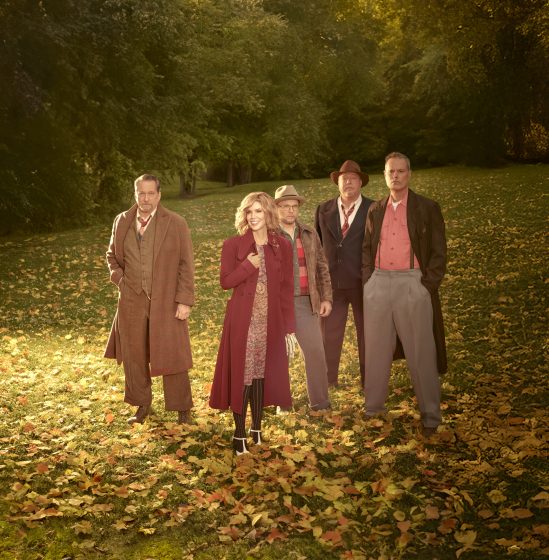
Larry Sparks Is a Surprisingly Zen Bluegrass Star

Speaking to Bluegrass Music Hall of Fame inductee and IBMA Award winner Larry Sparks over the phone, you might never guess you’re conversing with a living legend. He’s remarkably humble, down to earth, and plainspoken. And his approach to making bluegrass – as he has professionally for more than 60 years – is surprisingly zen.

His latest album, Way Back When, was released in late October 2025 and the project finds Sparks in exactly the same sonic space as any of his excellent LPs from the last six decades. If you were to take a short audio sample of Way Back When, it would be genuinely difficult to identify from which era of his lauded career it came. The project is warm, lively, and resonant, sounding like you’ve been dropped into a cozy living room with perfect acoustics and a superlative bluegrass string band.

The songs, as well, are timeless and classic, whether fresh tracks, iconic covers, or an old-timey instrumental fiddle tune with familial origins. Like his vocal style, guitar picking, and production preferences, Sparks’ song curation also feels like an intuitive extension of his personality. When he describes how he accomplishes this consistency across eras and executes the timelessness of his albums, it seems as though he becomes a sort of bluegrass guru.

“When songs touch me, they touch my feelings,” he explained to BGS . “When the song touches me, it’s saying something. I’ll take that and see what I can work with, and make it my song.

“The song’s me and I’m the song. And that’s the way that they did it back in the day. They become that song – the older singers, they became those songs. That’s the way that I do it, I try to make that song me and me the song.”

It’s a secret ingredient lacking from too many bluegrass records out there today. Not just his inhabitation of songs so that they can inhabit him, but also treating bluegrass like the forebears of this music did. As a living, breathing, cutting-edge thing that doesn’t need to be built on a foundation of regurgitation and emulation and litmus testing. Like Sparks puts it so simply – and eloquently – in our conversation, bluegrass has mainstream appeal. It requires heart, soul, and being present – becoming the music and becoming each song.

That right there is exactly how Sparks became a Bluegrass Music Hall of Famer and a hero to many – Alison Krauss, Billy Strings, and this writer included. It’s also how he’s maintained a consistent (never boring, stale, or regressive) sound over the course of his 62-year career. And, it’s what keeps him motivated to continue looking forward while inspiring all of us and reaching new audiences.

Let’s start by talking about your excellent new album, Way Back When. When I first listened to it in the fall, when it was released, I was struck by how old-school it sounds. The production style sounds so timeless, it sounds so warm and live – like real bluegrass. It also feels like it could have been pulled from almost any era of your career. with the way that it’s produced and the way that it stands out sonically. I wondered how you accomplished that?

Larry Sparks: I try to do things normal and just go for it. And all of the band– you just feel what you’re doing. You make it real. It’s hard to explain. It’s just, I sing and play from my heart, soul, and mind. Some songs you don’t have to do that, you just – like the old saying – rear back and let it go.

But some songs need attention, and you have to become that song and the song becomes you. That’s the way that I think probably all these songs are, everything I sing is pretty much that way. But, I don’t know, the feel just comes out natural. It’s more of an older feel, the real feel. That’s the way I like things. So much [that’s] added in today’s recording and music and everything, it’s okay – I’m not saying anything about it! But myself, I’d rather keep it pretty real, just like it used to be.

Are you tracking in isolation booths? Or are y’all tracking in the same room and live? It doesn’t sound like you’re putting the music under the microscope, as it were.

No, I don’t like that. You have to [sometimes], but I’d rather [not]. It’s [an] all in the same room deal. Sometimes you’ve gotta do an overdub break or something. You miss your hot lick, you gotta do it over again. Overdubs are good to use, but I don’t like to depend on them. I’d rather do it straight down the line, and if you make a mistake you do it over, you can overdub a spot or something.

Something else that stood out to me listening to the album is how consistent your sound has been over the decades. You have your own way of singing, you have a style that’s really consistent – as well how you pick the songs that go on your recordings. And you certainly have your own guitar-picking style. Almost no one picks like you these days. How do you think it is true, across 60 years in music, that when you listen to Larry Sparks, you know you’re hearing Larry Sparks and Larry Sparks alone?

It’s a natural style for me. I respect the older songs an awful lot. The older music and the older singers, that came along before I did, in the ‘30s, ‘40s, and ‘50s. I was a kid, but I remember the music mighty, mighty well in the ‘60s. All the older country singers were embedded in me, too. Some of the people just stayed in me. They were good singers and their music, their singing was real. It embedded in me.

I still had my own way of singing and playing. I never did wanna copy someone else. And although I respected what they did very much, the older music and the older country and bluegrass [artists] and whatever else – there is other music, too. It just became natural for me to have my own style of singing and playing, and I never really worked on it to do that. It’s just me, and the band pretty well feels what I’m doing.

The whole thing, you gotta keep it natural, real, and feel what you’re doing, from your heart and soul. That’s the way I do it. It’s nothing I plan to do. It just comes out that way.

I think that’s why it works and is so consistent across your entire career, because it’s not a costume that you put on, it’s not affectation, it’s not a target that you’re trying to hit. It’s just you being you.

People can feel that, too. The audience can feel what you feel. Most of ’em, they can feel exactly what you feel, what you do.
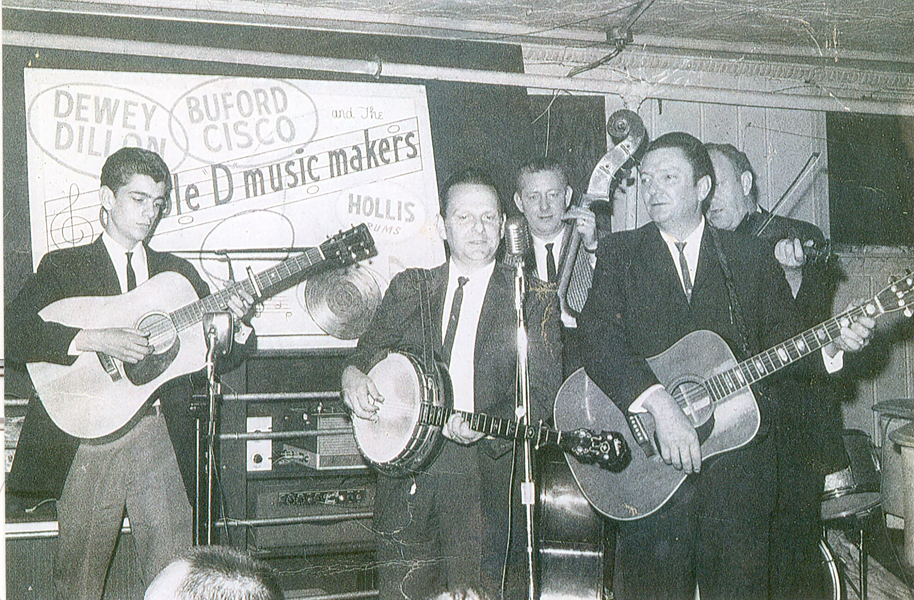
Larry Sparks (far left) performs with the Stanley Brothers before Carter Stanley’s death. Circa 1964. Image courtesy of Rebel Records.

I so appreciate that you bring up heart and soul, because I think people make the assumption that bluegrass is not a music that’s based on heart and based on soul. Especially when you listen to some barn burning, shredding bluegrass or jamgrass.

But for me, this music has always been as much about the stories, the heart, and the soul – and the feeling of it. And that’s clearly such an important part of it for you, too, and the storytelling. I think a lot of people don’t realize heart and soul are an important part of the tradition of bluegrass.

Yeah, sure it is. I’ve worked under the bluegrass name for years. Bluegrass is about 80 years old now, and I have been into it 62 of those years.

Wow.

I can’t believe I’ve been into it that long under the bluegrass name. My music is considered bluegrass, but actually a lot of my stuff could go either way. I’m considered bluegrass and that’s fine. I appreciate it. I’m honored, but a lot of my stuff can go into country or some other direction, too.

I just hold to what I’m doing and [what has] been a good business for me over the years. But you have to make it work and look ahead. The music is music, but you gotta make a business out of it. If you don’t, it’s not gonna work. And that’s what I did. It’s worked out for me. A lot of the bluegrass [industry] is not easy. It’s not one of the easiest forms of music to “make it” in.

And, it’s always been set behind [other] forms of music. I’d really like to see it be possible for bluegrass to be played on all stations. To play it [alongside] new country, modern country, rock and roll. Whatever it is, mix it up. But get bluegrass to program directors. If it ever could get played on other stations, with the right songs and the right artist – put in with everything else they’re doing – it would work. I don’t know if it’ll ever come to that or not, but that’s what it’s always been. We’ve always – like the old saying – took the backseat to the other forms of music.

But we got enough fans and that keeps it [going]. … I’m honored and I’m thankful for it. But it takes a lot of years, a lot of hard work. It’s not easy. I’ve done it all myself. I’ve done my own management, my own booking, my own phone calls, my own writing. This, that, this, that, this, that. I’ve done it all. Like I said, I’m gonna keep doing it, it’s working. It’s fine.

Like you mention, these songs really could go both ways. I love how much country is on this album, and you do such a great job of illustrating that bluegrass and country will always be related and that they cross-pollinate.

And I totally agree, bluegrass has mainstream appeal. And always has! I don’t know why we pretend like it doesn’t.

Yeah, we need more promotion on bluegrass. I wanna keep doing everything I can for it, because I respect it very much. Bill Monroe, the Stanley Brothers, and Flatt & Scruggs – these three names put [bluegrass] on the path and all that played bluegrass come after those three names.

Those three names are in you. I never did want to actually copy any one of those three names, but you take those three names – just to give you an idea. Take those three names I said and you put the Osborne Brothers with ‘em. Put Jim & Jesse with ‘em. Put Jimmy Martin, Mac Wiseman and others – and Larry Sparks – all those names. Every one of ’em are different sounds, different style. But they’re still on the same path. That’s what you gotta have. That’s what I knew, “I better stick to that and not be a copy.”

Let’s talk a little bit about your guitar playing style, because I think you’re carrying on a tradition of a particular kind of guitar picking in bluegrass that is rarer and rarer today. So few people who still make records and perform shows pick like you do. I love how front-and-center your guitar is on this album. Could you talk a little bit about your picking style and maybe who your influences were or how you came up in that type of picking?

Other guitar players are really good and there are a few players out there that can. But the way I do things, my playing is like my singing. I play the melody. And I don’t play over the melody. There’s less notes than normal guitar, it’s more of a feel. It’s hard to explain, but I just play the feel of the song and the melody. I try not to overdo it. I play it and when I hit a note or a slide or a backward– or whatever I do, a pull-off, I want it to come from me. I want it to be me and I wanna feel that note I’m doing, feel that slide I’m doing, whatever I’m doing. And [I want to] keep it that way and not overplay the song.

I also wanted to talk about the instrumental on the album, “Sleepin’ Lula.” Speaking of things that are rarer and rarer in bluegrass, having the clawhammer banjo on it is excellent. It feels like no one flogs the banjo anymore. There’s a lot of old-time players, a lot of clawhammer players, but it doesn’t really seem like anybody’s flogging it anymore. Hearing the instrumental, when the clawhammer kicks in, it was reminding me of that era of early bluegrass when you were just as likely to hear frailing banjo as a three-finger in a bluegrass band.

That’s great. Yeah, I thought it turned out pretty good. I was pleased with it. That’s an old tune. My grandpa, I got a recording of him playing that in 1953. Him and some guys, and he’s from Jackson County, Kentucky. Very good fiddle player. Very good. He was one of the best, he could’ve done something with his talent. He was born in 1877. Back in those days, up to the turn of the century, ‘20s, ‘30s, ‘40s, and ‘50s, he just played square dances around locally and stuff. He never did really go out. Stringbean asked him to go out with him some, but he never wanted to leave or go ‘round traveling and stuff. But he could have filled the bill for anything. He was that good.

I heard the tune from him. And I had never heard it before. “Sleepin’ Lula” – that was my grandma’s name, his wife’s name. She died in 1910 in childbirth and I never got to see her, of course. But her name was Lula, and so he recorded that “Sleepin’ Lula.” And I don’t know, I’m not going to say for sure if he wrote it. There’s a couple other fiddle players I heard play that from back in the ‘20s or ‘30s. But all respect to him. There wasn’t a player like my grandpa.

I don’t know who it came from. I don’t know if it came from my grandpa and he put it together because his wife’s name is Lula. Or if “Sleepin’ Lula” was the name [he gave another tune.] Someday I may try to trace that out a little further.

The other fiddlers that you know played it, did they use the same title for it, too?

Yeah!

Interesting. That’s so cool!

Yeah, it’s something else.

You’re a famous bluegrasser. You’ve been famous to me, for instance, my whole life. I was honestly nervous and a little starstruck to have this conversation. [Laughs] But you’re also becoming more famous at this moment, because two of the biggest bluegrass names to ever come out of the genre – Alison Krauss and Billy Strings – they’re such big fans of yours. I feel like both Alison and Billy see your legacy, they see how important it is, and they are translating that importance to people that maybe don’t know who you are or are just learning about you for the first time.

So I’ve just been curious to ask you, how do you feel about having these prominent “fans” – and it’s not just Alison and Billy, obviously. What does it mean to you to be part of that constellation of people that they look to as influences? And, what does it mean to you to see your music reach new audiences thanks to them and others?

It’s a new world. It’s a different world than what I’m used to. Which, there’s nothing wrong with it. I’m very honored that they stand behind what I do and my music. And, for the music, I’m very honored and thankful that they like it and that they maybe have it in their shows sometime or whatever.

But yeah, the new crowds in bluegrass – we have a very good crowd, but it’s bigger than it ever has been, now, bluegrass music is. But we still have that limited crowd [coming] from other forms of music. And that’s why I said, if it ever got to play on the big stations, give us a little room and respect for the bluegrass. It’s very important music and if the big country stations would give us some respect and get bluegrass to their program directors…

Don’t just [throw it out there]. You gotta be careful. Give it the right thing, the right artists, the right songs, and it would really help our music. It really would help.

But if it never happens, we still got a good crowd and we get more people all the time coming in. It’s a kind of a new crowd coming in, a new age group coming in. We still have a lot of the older people, but the younger people are coming into it. Teens to 20 years old, I’m seeing that happen more. That’s good. Bluegrass, it needs more push, it needs more promotion.

Do you see what Billy Strings is doing as that push or as that promotion? Can you tell, with younger fans coming in, that they started as Billy Strings fans and found you that way? I wonder, is there any way you’re measuring the impact of people talking about you and pushing your music?

I can’t really tell on that, for sure. I can’t. I’m just seeing people that’s young – teenagers and stuff – that wants to learn to play the music and are trying to play. And then that age group I was telling you about is. It’s coming in stronger all the time.

I’ll be honest with you. I don’t listen to other music. I don’t listen to anything hardly, music-wise. You gotta keep yourself fresh. But I respect other music. I respect it. All forms of music. I don’t have anything against the big bands and all the new names. But I like that old stuff. Of course, bluegrass and old country. And other things, blues, I like a lot of that.

You seem remarkably humble and so down to earth. You follow the songs, you put heart and soul into ‘em. But you’re literally a Hall of Famer and you’re one of the last of the first big generation of bluegrass makers that are still doing it today. You’re a legend to all of us. Does it feel like you’re a legend? To you, on the inside? Or no?

I would be to a lot of people, a legend, and to a lot of people I would be famous, I would be a star. But when I went into this business, went into music in my teens, I never looked at it as wanting to be a star or to be famous. I never looked at those two things. I wanted to take what talent I had. I knew I had something to offer. I had to put it together and see what I could do [to] make it work.

I don’t know if I’m a star or famous to people. I hope so, because that’d be nice. I’m pretty honored.


Photo Credit: Images courtesy of Rebel Records. Lead image by Michael Wilson.

“Not Easy Shoes to Fill” – Russell Moore Gets the Gig of a Lifetime: Alison Krauss & Union Station

Russell Moore has been a professional musician and bandleader for 40 years and, though he wouldn’t describe himself as complacent, he does readily admit he generally knows what he can expect from that job.

“It’s almost like, ‘Okay, I know what this week is going to bring and what next week is going to bring,’” he shares over the phone. “It’s the same thing, even though you try to explore different opportunities … I never would have thought that at this point in my career that this opportunity would arise.”

Back in early December 2024, Alison Krauss & Union Station announced their first headline tour in nearly ten years and, with that announcement, that Moore himself would be joining the band. The bluegrass community responded with an outpouring of love for Moore, his talent, and his iconic, long-running bluegrass band IIIrd Tyme Out while marveling at how perfectly he and his voice would fit into one of the most prominent, best-loved, and best-selling string bands in music history.

Once fears of IIIrd Tyme Out being benched were totally allayed – the band has lasted 34 years so far and has no plans to curtail their efforts with Moore’s new gig – the ‘grass community set their sights on the next announcement from AKUS, which came in January: Arcadia, their first album since 2011’s Paper Airplane, will release March 28.

Arcadia will be the starting pistol for a breakneck six-month tour that will find Alison Krauss & Union Station (and their newest member, Moore) criss-crossing the continent to perform at some of the most notable venues and festivals in the scene. Many of which Moore will find himself checking off his bucket list for the very first time.

To mark the occasion, and as we anxiously count down the weeks to Arcadia and the Arcadia Tour, we sat down with Russell Moore to chat about his career, his plans for IIIrd Tyme Out, and how energized and excited he is by this once-in-a-lifetime chance. As he puts it, he has very big shoes to fill – but perhaps he is the only one concerned about having the chops to fill them.

You’ve been leading your own band for so long and you’ve been the person to “make the call” – hiring a sideman, or hiring someone to fill in, or finding a new band member. So how does it feel at this stage in your career to get this kind of call to join a band like Allison Krauss & Union Station? How does it feel to be on the receiving end for a change?

Russell Moore: What a blessing. It’s definitely the other side of the fence! For 34 years I’ve been running IIIrd Tyme Out and making the decisions or helping make the decisions. That’s a job in itself. You wear many different hats when you’re doing that.

The last time that I was in a situation like I’m going into with AKUS was back when I was with Doyle Lawson & Quicksilver. That was basically, “I’m the guy that plays guitar and I sing” and everything else was pretty much taken care of. Since then, up ‘til now with IIIrd Tyme Out, I’ve been heavily involved with all the decisions and making things happen, which like I said, it requires several different hats to wear day-in and day-out.

This is going back to that time, before IIIrd Tyme Out. And I’m excited about it. It really gives me the opportunity to focus totally on the music and my part in the band, rather than anything else that goes along with running a band. That’s exciting in itself. I will say, it’s going to take some getting used to, because I know that I’m going to be saying, “Oh, what can I do today to help this thing out?” That’s going to be a change of pace for me!

But I’m looking forward to it. Honestly, I’m looking forward to not having to worry about anything else other than my position in AKUS and just doing my job to the best of my ability and that’s it. That’s gonna be pretty cool. I guess you would say a little weight off of my shoulders.

You can set down the CEO hat and pick up the “being an instrumentalist and a vocalist and a technician” hat. Of course it’s got to feel exciting in some ways to get to step back into that role of being an equal part collaborator in a band instead of having to wear so many hats and having to be a lightning rod for everything.

RM: It is. It definitely is. I did experience just a little bit of this a few years ago. Jerry Douglas called and asked if I could go out for a few days with the Earls of Leicester, which I did and it was the same thing. I played mandolin and I sang my harmony parts with Shawn [Camp]. And I didn’t have to do anything else. That was all I had to do. For a few days there, I got to relieve myself of all the responsibilities of running a touring band on the road, and it was cool. I enjoyed it. I really did.

I’m not going to lie, I’m not saying that I don’t enjoy running a band, I’m not saying that whatsoever! But it was nice to step back for a few days and just be that. So I see this, for the six months between April and September, being sort of in the same picture. I wanna focus everything I can, all the time I’ve got, on playing the music, being in the position that I’m in, and doing the best I can. Just focusing on that. That’s going to be cool. I’m not going to have to worry about, “Did the bus get there on time? Is there something wrong with the bus?”

I know I’m not the only one who was super excited to hear this news and also thought immediately, “I never would have connected these dots myself, but who else has a better voice for that gig?” You think of Dan Tyminski, of Adam Steffey, the guys who have been singing vocals in this band, they have that sort of warm, honeyed, Mac Wiseman-like bluegrass voice – less of the high lonesome and piercing, even though you have the range and you can get up there, too.

So many people’s reaction to the announcement was that you have a voice that’s perfect for this gig and for what we all come to expect as the AKUS sound. Did you have that realization too? Did you think, “Oh yeah, this is perfect for my voice”? Or did you feel like, “I’m going to have to work at this.”

What was your general reaction, musically, to coming into this? Not just as a guitarist, but also as a vocalist – and then, I assume you’ll be playing some mandolin too, like you said you were doing with Earls of Leicester. So how are you approaching it musically?

RM: I will be playing a little bit of mandolin, not a whole lot, but my main gig I guess you’d say would be playing guitar and vocals – harmony vocals and some lead vocals as well. I’ll be honest with you, Justin, I was concerned about some of the harmony singing. That’s the biggest thing.

It’s really intricate.

RM: It is very intricate! It’s not in the same breath that I usually sing at. I tend to sing very full throated. For lack of a better term, it’s a male voice trying to sing very high. I do it in a robust way. I do have subtleties that I use as well, but this application of trying to blend with Alison’s voice is a different place to be, for me, for sure.

I do sing harmony and I have for years, here and there, but still my vocal technique has always been full throated and far more harsh, a male vocalist trying to sing very high. This is a different application. I tried to do that on all the songs that I’m going to be singing harmony on with Alison, it would be too abrasive. I’m learning how to make it work with my voice and her voice. That is a really nice combination, [you don’t want] me standing out because of my approach to the harmony.

Of course, I do have songs that I’ll be singing lead on. Those, I’m just back to my old self doing my thing. But when it comes to the harmony stuff, most of the time I’m having to really listen and focus on how to project my voice to make her sound as best as she can and not interfere.

Are you going to be singing lead on some of your own music with AKUS?

RM: No. There might be one song, and I’m not going to give away any of the stuff that she has planned for the set list, but there might be one song that people recognize from IIIrd Tyme Out during the performance. For the most part, this is Union Station. We’re not trying to bring in Russell Moore and IIIrd Tyme Out into the project whatsoever. We’re still around, we’re going to be performing when I’m not on the road with AKUS. There might be a small ode to IIIrd Tyme Out during the show, but it will be very small.

I’m not here to promote IIIrd Tyme Out with Alison Krauss. I’m here to promote Alison Krauss & Union Station and to be a part of that group and promote what this record release is and the stage show. I am a team player and I told them all, “You’ll never find anybody that’s more of a team player than I am, because I understand what that means.”

You’ve seen it on both sides. I’m glad you mentioned IIIrd Tyme Out continuing, because I think a lot of people’s natural reaction to the news was, “What about IIIrd Tyme Out!?” Of course IIIrd Tyme Out’s been going for so long, they’re gonna keep going.

RM: IIIrd Tyme Out is here to stay. When the conversations started about my being a part of Union Station going forward, I had a lot of questions. Can I do this? Should I do this? And that was one of them: “Will my band support me in this decision, or if I say yes, will they support me?”

[I consulted] my family, my wife, and everybody around me – it wasn’t a decision that was made quickly. I had to talk to people. Once I talked to my band members and I got their total support and thumbs-up affirmation – along with my wife, family, and friends – it was just like, “Okay, I have no reason not to do this. Everybody says I should and it’s a great opportunity.” At that point, I said yes.

Hopefully I can fulfill the position, because it’s not easy shoes to fill. I can tell you that right now I’m a huge Dan Tyminski fan. I have been since he came onto the scene way back – we’re talking Lonesome River Band days. He is so unique and his position with Union Station, until recently with his own band, that was the epitome of his career in my opinion.

Then, of course, he gets the head nod for Oh Brother, Where Art Thou? And the Stanley Brothers song, “Man of Constant Sorrow,” it’s still incorporated into his shows. I love the Stanley Brothers’ [version of the] song. I really do. But when I think about that song, I think about Dan Tyminski.

I guess the point is I’m a huge fan of Dan and his work. He is such an intricate part of what Union Station has been up to now. I think that those are big shoes to fill. I just hope I can facilitate that to everybody’s liking. I know there’s going to be some people that say, “No, it’s not Dan, it’s just not the same.” But I do want to say there are [many] eras of Union Station that were awesome, as well. You go back to when other people were in the group. Adam Steffey–

I’m partial to the Alison Brown era, too.

RM: Alison Brown! Oh, gosh, yes. Tim Stafford along that same time. I can’t say there’s been a bad ensemble for AKUS. It’s just evolved. And the fact that Dan was there for so long, that kind of solidifies that is the sound that most people – especially younger people who didn’t really start listening to AKUS until let’s say 20 years ago – are hearing. What they’re hearing is Dan Tyminski on guitar, singing harmony, and singing lead. That’s what they’re used to. That’s what they realize is AKUS music, and here’s this Texas guy coming in here trying to fill those shoes. I just hope I can satisfy everybody. I’ll do the best I can.

Alison Krauss & Union Station shot by Randee St. Nicholas with Russell Moore second from right.

It’s gotta feel exciting, especially after having done something like this your whole entire life, to have that sort of childlike wonder at it feeling so brand new and so fresh. Even after you have done literally exactly this for so long, there are still things that you’re excited to accomplish and new territory you’re excited to explore. That sounds really energizing and really positive.

RM: It is energizing. I’ll be honest, Justin, I’ve been playing music full time for a good 40 years. That’s awesome. And at this point, after 34 years of IIIrd Tyme Out – I’m not going to say I’ve become complacent, but it’s almost like, “Okay, I know what this week is going to bring and what next week is going to bring.” It’s the same thing, even though you try to explore different opportunities and things that come within that.

But this, I never would have thought that at this point in my career that this opportunity would arise and I’d get to do something like this. Because, like I said, I’m not so much complacent, but I know what’s ahead. When the phone call was made and we talked, I had no idea that I had another option, another fork in the road. This is absolutely surreal, in a lot of ways, for me to get this opportunity and without giving up IIIrd Tyme Out. All the support from everybody that I know, like I said, there was no reason to say no.

Another part of this that I’m really excited about [is being] able to experience some of these places, these venues, these shows that I’ve never been to before. Just being able to experience it – like playing Red Rocks Amphitheatre – and just so many places that I’ve always wanted to go to and perform at. I’m going to get to do that!

Checking them off the bucket list.

RM: There you go. It wouldn’t be possible, I don’t believe, with IIIrd Tyme Out. I was always exploring new opportunities and things like that, but I don’t think it would have been possible to perform at some of these places without being a part of AKUS.

To me, “Looks Like the End of the Road,” the first single from the upcoming album, feels like classic AKUS. The So Long, So Wrong era is what it reminded me of first. You still have those tinges of adult contemporary, you have the pads and the synth-y sound bed underneath it, and it almost feels transatlantic a bit here and there. Overall, it sounds like classic, iconic Allison Krauss & Union Station. What are your thoughts or feelings on the single or what can you tell us about that first track?

RM: I think that the song is a great representation of what is coming out with the full album release, Arcadia. It is a great nod to Alison Krauss & Union Station music over the last several years and the last several recordings.

I think that the song itself is just well written and perfect for Alison to sing. There’s a small part of harmony vocals – and what I love about the way she constructs her arrangements is that it’s not overdone with harmonies. This is Alison Krauss & Union Station, it’s not just Union Station. So the focus is on Alison and her vocals. In my opinion, that’s the way it should be. This song doesn’t come out from the get go with a five-string banjo just blasting off. It’s a great construction of the arrangement and the vocals.I think it was perfect.

The only thing that people have said is that the title itself made them think that this was the end of Allison Krauss & Union Station! Which is so far detached from the truth. It was just the first single that was released. It’s a beautifully constructed song.
I will say, this song is just a piece of the puzzle to the rest of the recording. It just paints a beautiful picture and a wonderful listening experience. When people get to hear the full album, they’ll understand what I’m talking about. It’s just awesome. It’s just, it’s a piece of the puzzle.

You’re going to be blown away. Absolutely blown away, as I was. I had my headphones on. I can’t tell you how many nights before I’d go to sleep, I’d have my headphones on [listening]. I listened to it two, three times a night, just because it was so enjoyable. It was just that good. I know that everybody else is gonna feel the same way when they hear the whole project.


Photo Credit: Matt Morrison

Larry Sparks – Toy Heart: A Podcast About Bluegrass

The legendary Larry Sparks, a prominent player in bluegrass for over six decades and a Bluegrass Hall of Fame inductee, joins host Tom Power for this episode of Toy Heart. Sparks shares insightful anecdotes from his early years, touring and performing with the Stanley Brothers and from his tenure with Ralph Stanley & the Clinch Mountain Boys. From traveling in a ‘67 station wagon to the challenges of navigating the music industry over so many decades, Sparks reflects on his particular journey through bluegrass, old-time, and country music. We explore his musical influences, his unique approach to bluegrass guitar playing, and the profound impact of gospel songs on his own soulful, down home sound.

LISTEN: APPLE PODCASTSSPOTIFYMP3

Sparks also offers a glimpse into his Nashville days, highlighting the unique challenges he faced in Music City. His stories reveal a dedication to preserving the essence of bluegrass and his commitment to honest storytelling. Hear Sparks describe making hits like “John Deere Tractor” as well as speaking to the spiritual resonance of gospel music. He paints a vivid picture of a musical legacy that spans more than 60 years, leaving an indelible mark on the heart and soul of the bluegrass community.


Photo Credit: Michael Wilson

One to Watch: AJ Lee & Blue Summit

With citrusy melodies full of zest and spark, AJ Lee & Blue Summit demonstrate that California bluegrass is alive and well. Based in the Bay Area, they first took to the stage in 2015. Though the group has morphed in shape and size over time, they have delivered musical excellence for nearly a decade.

Currently, the band is composed of four tremendous musicians – AJ Lee (vocals and mandolin), Scott Gates (guitar and vocals), Sullivan Tuttle (guitar and vocals), and Jan Purat (fiddle) with a couple of rotating bassists. AJ’s velvety vocals blend seamlessly atop the many textures and tones this uncommon instrumental lineup can accomplish.

With their third studio album set to be released sometime this year, AJ Lee & Blue Summit set sail for their tour across North America earlier this month. Their emotive, erudite songwriting is brought to life by the band’s natural compatibility.

What is the nature of your musical chemistry? How would you describe it?

Scott Gates: Well, we all grew up going to California bluegrass festivals, and that gives us kind of a through-line. We all grew up with similar mentors and similar principles, so we all have similar ideas of what bluegrass is and what it isn’t, and how to bend those boundaries.

What do you think makes the bluegrass scene in the Bay Area distinct from other bluegrass scenes?

SG: Yeah, I think that there’s more homogeneity in a lot of other bluegrass associations across the country. You know, Tennessee is known for its singers. North Carolina is known for its banjo players, and they turn out some serious musicians. But something I’ve noticed with a lot of Tennessee singers is that many of them sound the same. And it allows for incredible blend and unity in sound, but California tends to reward individual individuality. When somebody has a really unique voice, they’re exalted.

Jan Purat: In the Bay Area scene, there’s a surprisingly large interest in bluegrass that dates back a long time. There’s this really thriving jam scene with lots going on. People in California as a whole tend to really nerd out on bluegrass from from the mid ’40s to the ’60s, that era of the Stanley Brothers, Bill Monroe, Flatt & Scruggs, and such. A lot of reverence for traditional sound and energy, I think, is a big part of why people really gravitate towards it. And in California, trying to channel that kind of fiery energy that you find in the more traditional stuff is definitely part of the sound, as opposed to more of the second gen and third gen newgrass circuit.

A pretty cool aspect of the California scene has been discovering that amazing lexicon of music, especially as the one band member that got into bluegrass a little bit later. I came into it during my college years, but the rest of these guys all grew up together. I met Scott busking when he was like 19, and I met AJ and Sully shortly after I first started going up to Grass Valley, around when I was 22. I started out with second-generation exposure to bluegrass, like John Hartford and similar acts, but going to the festivals and getting turned onto all this amazing music from earlier definitely feels like a big part of why I fell in love with the California bluegrass scene.

So you all share similar roots – on the flip side, what would you say the biggest difference in your respective musicianship is?

AJ Lee: Well, we all like to listen to different things, even though we’re in the same band and we unify on bluegrass. I listen to a lot of indie punk on Spotify, and I know Sully listens to some dark metal. Jan is a little bit more cultured, and Scott likes hip hop. So, there are a lot of bases covered, but we also can all appreciate what the others listen to, which is also unifying in a way.

JP: Yeah, although we love bluegrass, after a certain point we play it so much, but we don’t always listen to it that much.

AJ: I don’t think I’ve actually had a listening session of bluegrass for maybe five years.

Fair enough! What is your collaboration process like with songwriting and figuring out arrangements?

AJ: Since the early days, I’ve been the primary songwriter. I do a lot of my own original material, but since Scott’s joined, he’s brought a lot of his original material to the table as well. And I think nowadays, the songwriting process is more like a collective band arrangement. I’ll bring an unfinished song to the band and someone will say something like, “There’s a part here that I’m not really too sure about. I think it needs this,” and then together we’ll come up with something. Unlike before, when we would mostly just play all of my finished songs, now it’s more of a collective Blue Summit songwriting style.

SG: And we’ve got to give credit to the original guitar player, Jesse Fichman, who definitely helped arrange and put together some serious parts for AJ’s earlier originals.

AJ: Yeah, for a while Jesse was really the only one that I would ever write with. So he had a lot of hand in the first album.

So the first two albums are pretty different in style and tone. Can you talk about what we should expect for your third?

Sullivan Tuttle: Well, the first one had a lot of electric and a lot of drums, basically on half of the songs. And then the second one was all acoustic, all the way through. This one’s maybe somewhere in between. It’s mostly acoustic, but with a little pinch of other things.

JP: Yeah, Lech Wierzynski from the California Honeydrops produced it, so there’s definitely some of his influence. He brought in a cover for AJ to sing and it ended up being really successful and a really good choice. It’s a bluegrass instrumentation take on an old school soul song – some new territory that I haven’t really heard too many bands do. So it’s pretty exciting. And it’s just super nice working with a producer for the first time. He’s also an amazing hang, and one of the funniest people and a great buddy. It was awesome to work with him.

SG: I would say that variety is the main name of the game. When we craft a set list for a show, our goal is to bring as much to the table as possible, so that we don’t have songs that sound similar or the same over and over and we’re not fighting ear fatigue at all times. So we try to bring as many different sounds and approaches and genres together as possible. And I think this album reflects that, more so than any of the others.

Okay, here’s a silly question for you. If we were in an alternate universe, and you guys were all still a group of some sort, but it wasn’t a musical group – you’re connected by some other thing, premise interest, etc. – what would it be?

ST: Could see like a Scooby-Doo type of scenario where we all investigate things together. [AJ, Jan, and Scott emphatically agree.]

JT: We’ve got our next Halloween costume now! I know I have to be Shaggy, it’s fine.

[Laughs] I can definitely see it. I’ve heard that you have famously had to navigate some tricky traveling situations. What’s your favorite one to tell people about?

JT: Rockygrass is a good one to talk about, because it was the second time that we had to do an all-night drive from somewhere like New York City or Boston to an entirely different city like six hours away. Our Boston flight kept getting delayed, so we drove all the way to Philly overnight and got the last flight out. It was brutal. We did not sleep a wink and barely got to Rockygrass in time to play our set on the main stage. And it was our first time playing the main stage there. We were just so haggard, but apparently it was good! I had no perspective because I was so sleepy, but people liked it!

ST: I think that was my favorite, because we actually made it. Other ones didn’t have a happy ending.

Wow. You all must be really great traveling companions.

AJ: Well, we have the perfect travel attire that a lot of people tend to notice.

What is it??

AJ: I think Scott is gonna take the lead on this one. [Scott dons an incomprehensibly fashionable and utilitarian navy blue robe.]

SG: It’s a towel. It’s a blanket. It’s a robe. It’s a pillow. It’s everything that you might possibly need on the road. It keeps you warm. It keeps you dry. You can sleep at noon facing the sun.

AJ: We all have one. And everyone is always asking, hey did you guys come from a pajama party?

Okay, I feel like the Scooby-Doo thing is making more and more sense. You’re coordinating and you’re tackling obstacles!

So the two guitars situation – how did that come to be? And how do you go about arranging with two guitars?

ST: We just formed the band with two guitars – me and Jesse Fichman. When we started, I was already used to playing with two guitars because I played in the family band with my sister, [Molly Tuttle], and we usually had two guitars for that, other than when she played banjo. So it felt pretty natural, to me at least. And then when Jesse left, Scott joined, and we already had all the parts arranged for two guitars. We wanted to keep him on guitar even though he also plays mandolin. When one guitar solos you still have the rhythm guitar behind it. And as long as we’re not both just slamming away on rhythm the whole time, it works out.

It does! No complaints here. So do you guys hate banjos?

AJ: No, we actually really like banjo! Just not in our band.

SG: It’s kind of nice having it this way, because it means that when we’re at a festival, and we have a buddy that plays banjo, then we can just invite them up to play with us. There’s definitely a banjo slot for certain songs, and we can interchange that whenever we want.

AJ: I would also say that when seeing other bluegrass bands without banjo, it feels kind of refreshing to not have that sonic space filled. It gives the music opportunities to go other directions if you wanted to. And the banjo can scratch an itch, for sure, but you can’t scratch for too long or it’s going to make a rash!

So you’re our One to Watch, but who are you watching? Are there any artists, creatives, musicians, etc. that you’re appreciating especially right now?

AJ: Crying Uncle!

SG: Yeah, best band at IBMA. Hands down!

AJ: Yes, definitely the best thing I saw at IBMA. Also, another young band that’s great is Broken Compass Bluegrass. They’re up and coming as well.

JT: I like Viv & Riley – really great music. And their old time band, The Onlies, is great as well. I hope that project continues.


Photo Credit: Natia Cinco

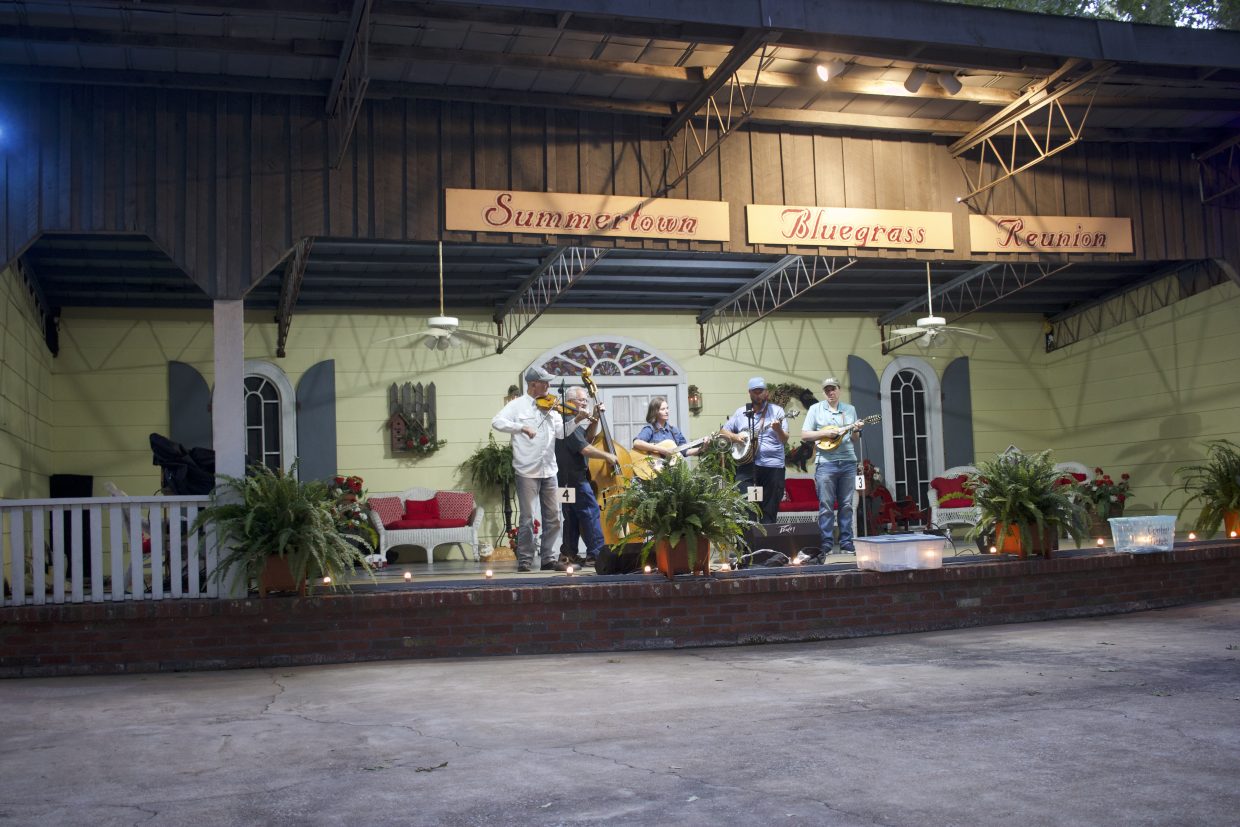
Pickers and Dancers Gather for Tennessee’s Summertown Bluegrass Reunion

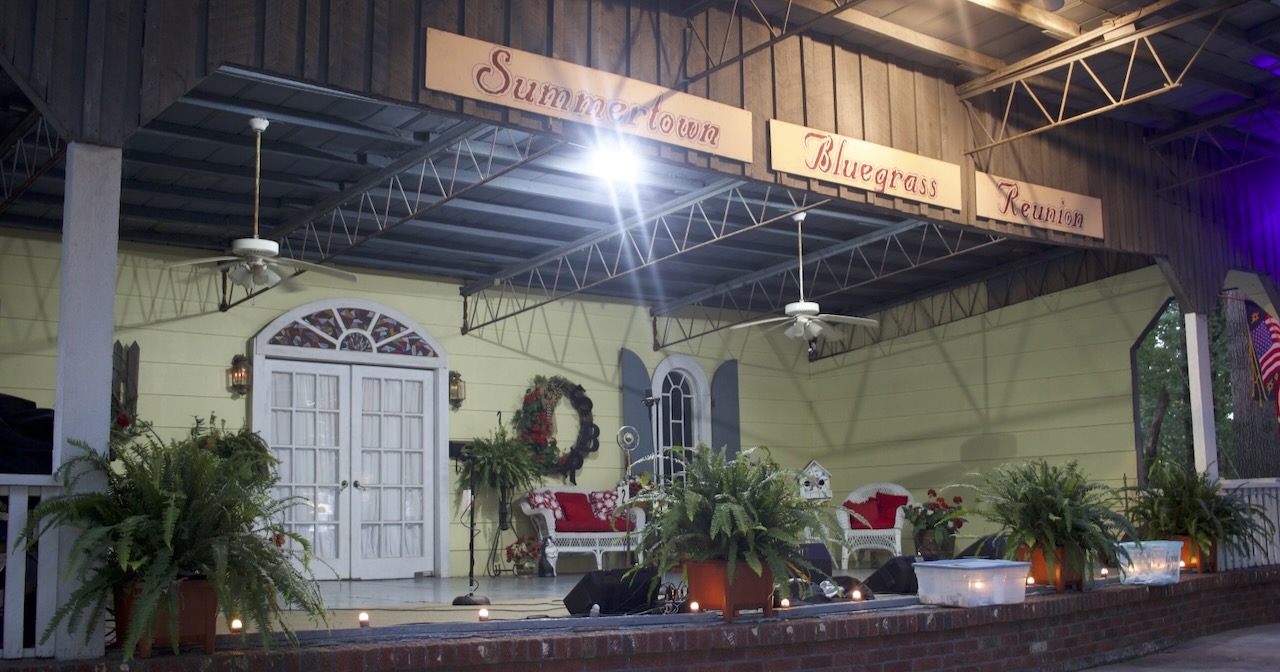
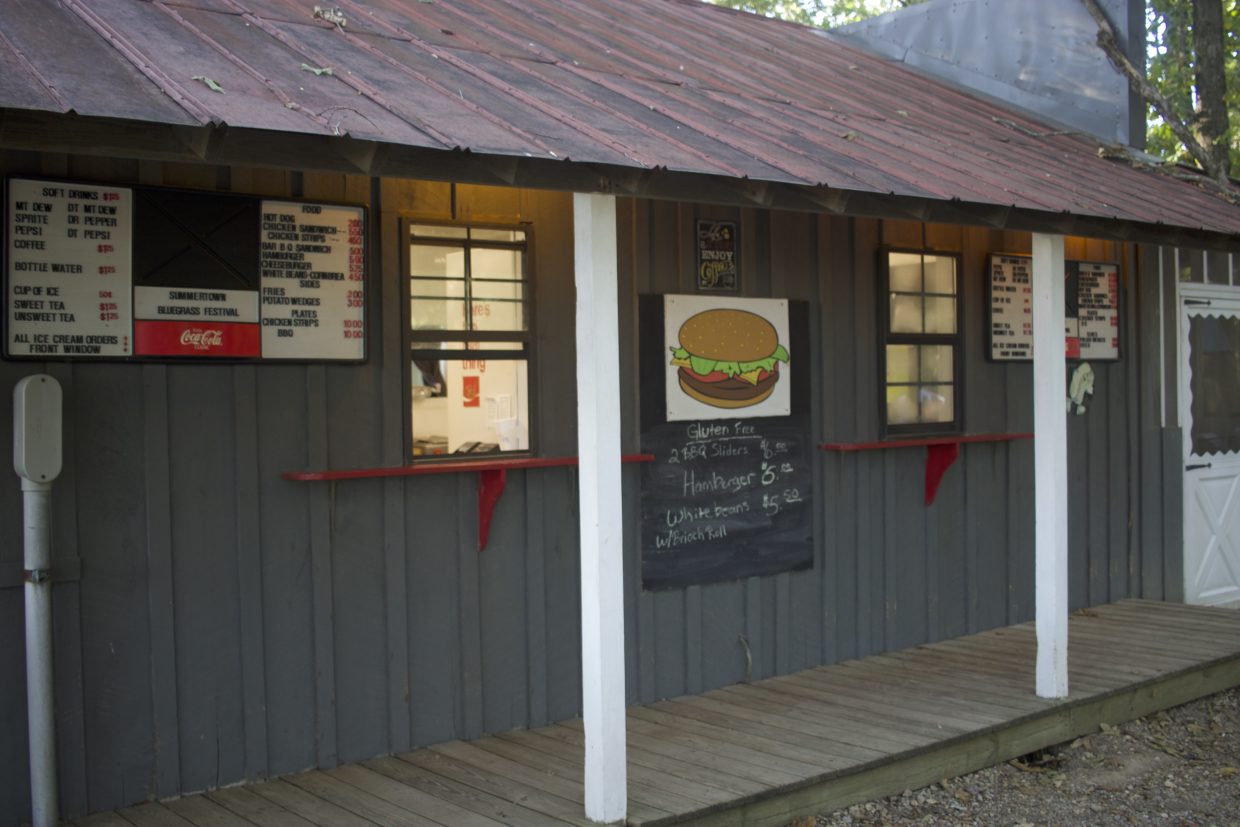
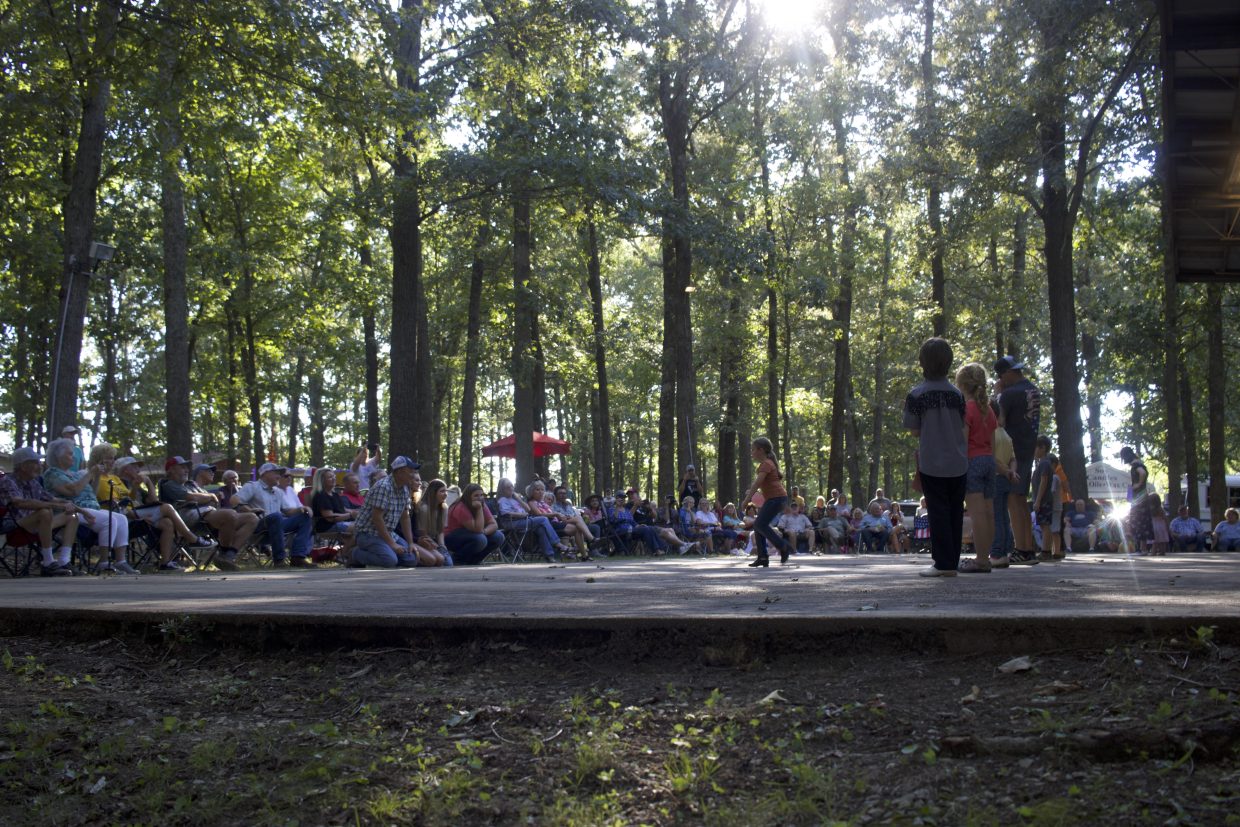
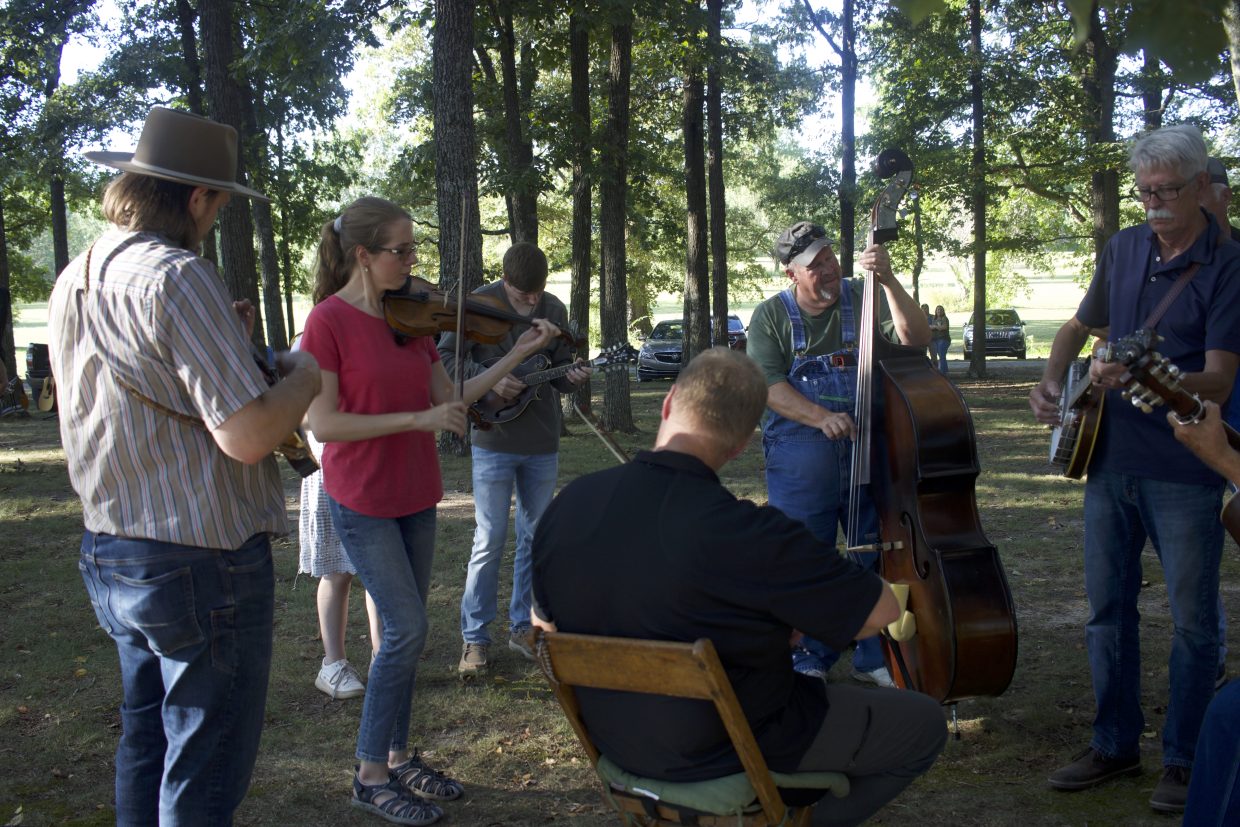
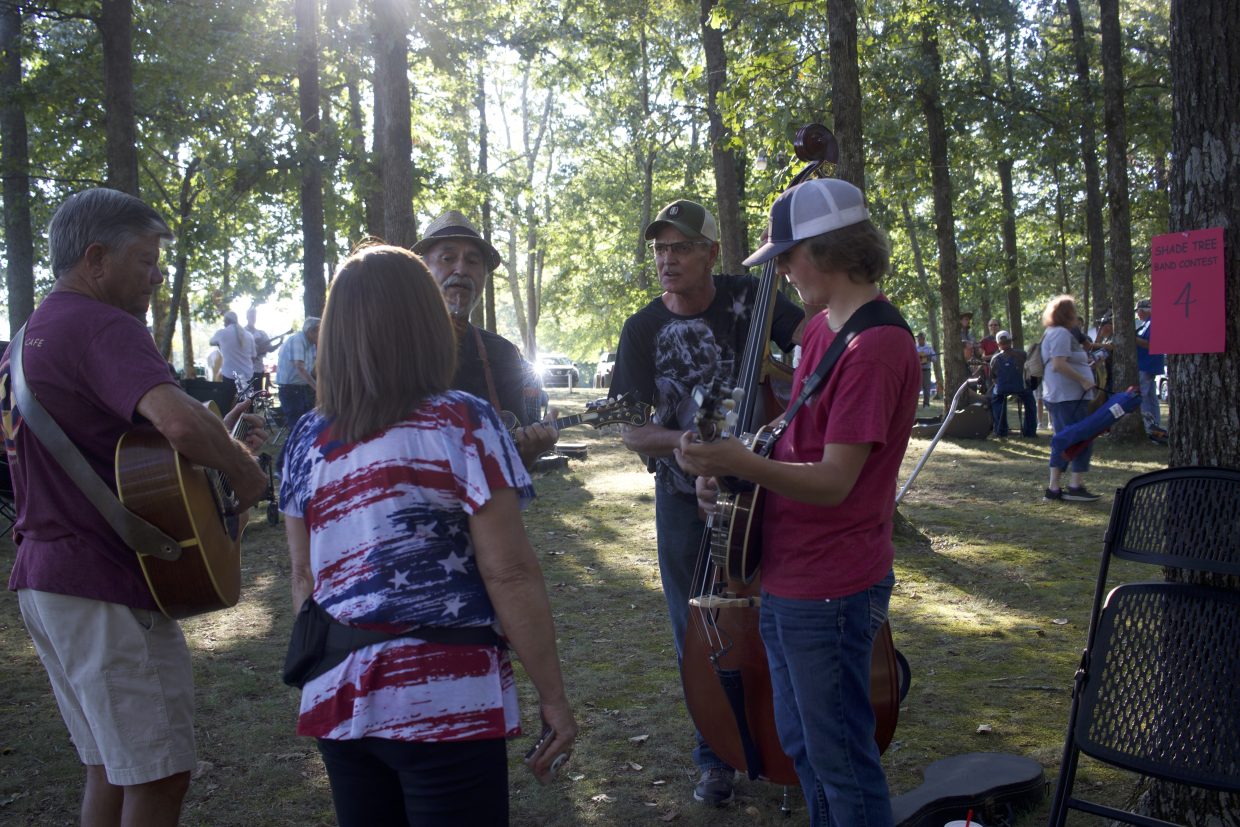
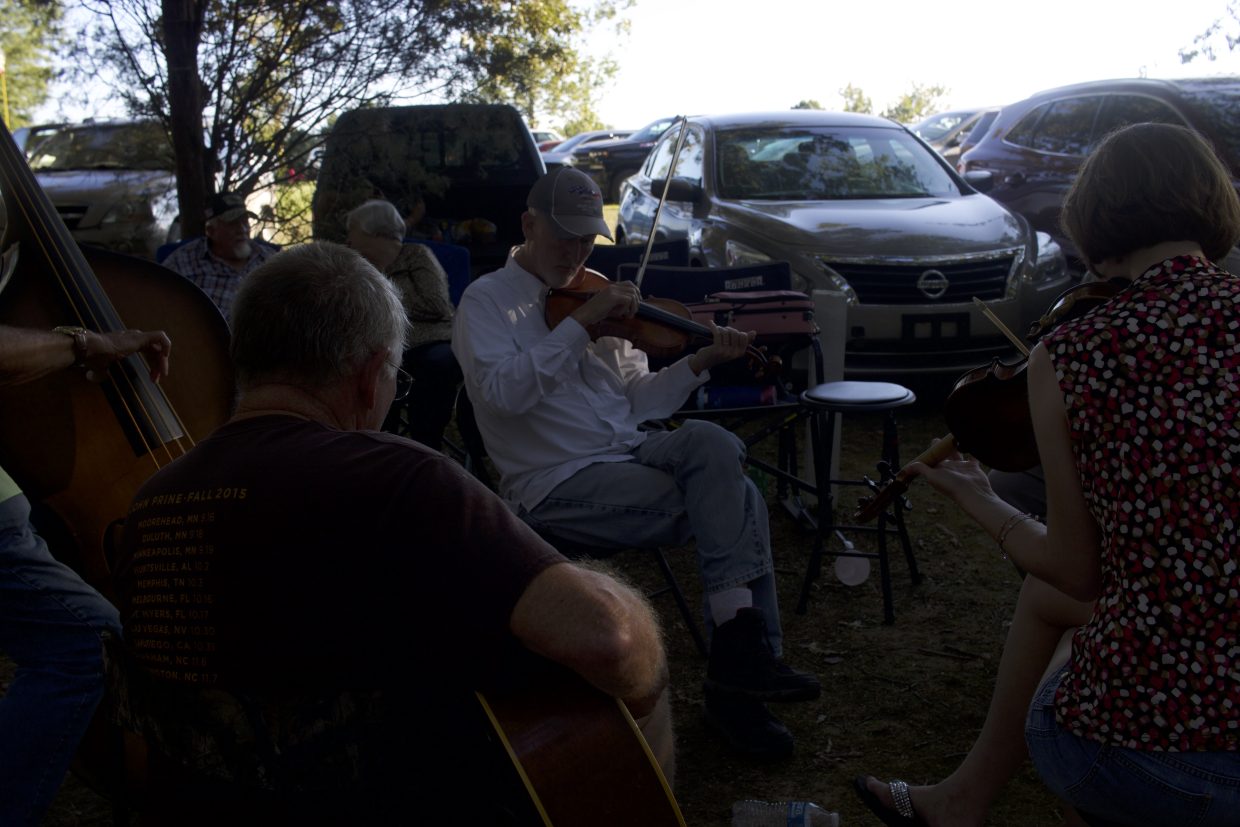
The annual Summertown Bluegrass Reunion brought together local pickers and dancers of all ages in Summertown, Tennessee, over Labor Day weekend. Located just off Highway 64 in a forested Middle Tennessee field flanked by wooden fencing, pasture, and brightly colored bunting, the festival hosted a dance competition, shade tree band competition, and a main stage with open dancing for music lovers, as well as a snack shack slinging their famous white beans.

The Summertown Bluegrass Reunion snack shack, serving famous white beans and more.

Saturday afternoon, Grand Ole Opry dancer Sarah Harris and her band took the stage, performing Stanley Brothers tunes like “I Think I’ll Just Go Away” and Flatt and Scruggs’ “Head Over Heels.” 

Saturday evening saw several hundred campers and ticket holders pour into the rural festival while event organizer and founder Terry Pierce wandered through the crowd to catch up with old friends and ensure everyone was having a great time. The fest has been a staple for more than two decades, and it’s always a hub for local musicians to gather.

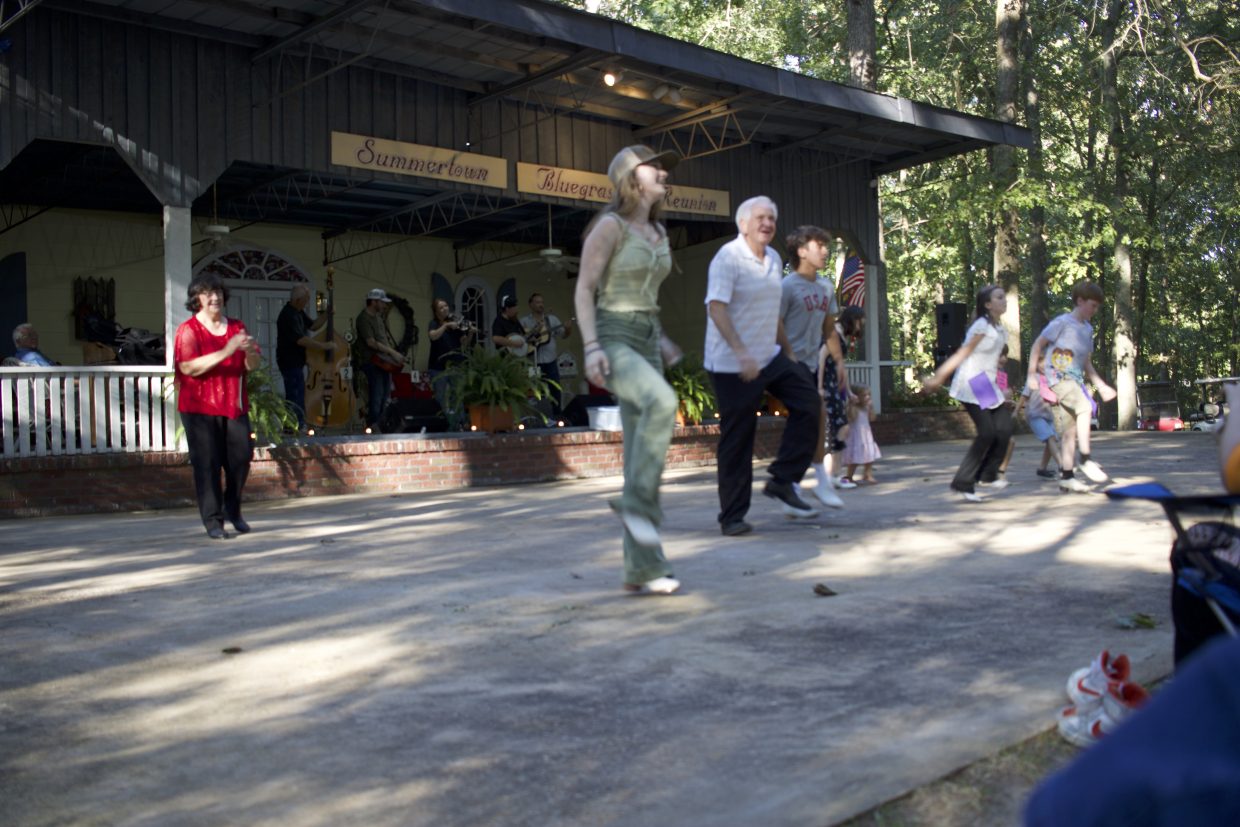
An open dance at the Summertown Bluegrass Reunion’s main stage.

Dancers from Tennessee and Alabama joined in the buck dancing competition as well, with some so young they needed a little assistance from a parent. Other youngsters held their own, showing off kicks, heel clicks and other moves. Two seniors competed as well. Flatfoot legend and 2017 NEA National Heritage Fellow Thomas Maupin attended, although he didn’t perform. Afterwards, guests were encouraged to take a dinner break and listen to the shade tree bands as they competed under the property’s canopy.

The “Lil Doll” (age 10 and younger) dance competition.
A band performs during the Shade Tree Band Competition.
Another local bluegrass band performs in the Shade Tree Band competition.

During the evening’s main show, Lawrenceburg, Tennessee, fiddle teacher Andy Spearman and his band, Wildcat Ridge, took the stage, and the crowd was treated to a performance by Tommy Jackson’s Rocky Top Revue, an award-winning square dancing team based in Franklin, Tennessee.

Fiddler Andy Spearman jams during the Summertown Bluegrass Reunion.
Fiddler Andy Spearman and band, Wildcat Ridge, perform on the Summertown Bluegrass Reunion main stage.

While Summertown Bluegrass Reunion may not be the largest festival in the state, it’s full of homegrown music that fans have loved for generations, and they continue to turn out each year for the good tunes and fun times.


All photos by Lonnie Lee Hood.

Growing Up in Bluegrass, Carly Pearce and Sonya Isaacs Come Full Circle

Carly Pearce and Sonya Isaacs can both trace their musical roots back to bluegrass, even as their individual careers have introduced them to fans beyond that genre. A rising country star, Pearce is a native of Taylor Mill, Kentucky, who just released her third album, 29: Written in Stone. She cites Isaacs — a sterling vocalist and instrumentalist in the gospel group The Isaacs — as one of her biggest vocal influences. Meanwhile, the Isaacs salute some of their own favorite songs with The American Face, a new album blending new material and well-chosen covers. These artists’ professional paths converged this fall when Pearce and, later, The Isaacs, were welcomed into the cast of the Grand Ole Opry.

Calling in to BGS, Carly Pearce and Sonya Isaacs converse about their formative years as musicians, their education in bluegrass harmony, and their immediate response to “Easy Going,” a cool collaborative cut on 29: Written in Stone.

BGS: Let’s start by talking about “Easy Going.” Carly, what was it about the song that made you want to bring in Sonya and Ben Isaacs to sing with you?

Pearce: When I was writing this song, I could hear the harmony. I grew up loving music and harmony and all of those things. As soon as we finished writing it and knew that we wanted it to be on the project I just heard The Isaacs. I grew up loving them and loving their harmonies. Nobody sings harmony better than the Isaacs family, so I asked Sonya.

Sonya, what did you think when you first heard the song?

Isaacs: I love Carly’s voice, too, and I was like, “Well, I’m sure anything that she wants us to sing on will be amazing. And knowing how she loves harmony singing, I thought, “This is gonna be really fun.” Of course, she’s one of the most incredible female vocalists of all time, I think. So, when she played us the song, I flipped out over it. I absolutely loved the song, and I was like, “I can’t wait to get in the studio!” … It was a good a vocal exercise, a good stretch! [Laughs] And it was a challenge because she’s so good, but that’s my favorite kind of session. We had a blast and I love the song.

I like the arrangement because you’re giving the musicians a chance to step out and do what they do best. It feels like a band record in some ways.

Pearce: Yeah! They were all so inspired in the studio by the song and I remember telling Shane McAnally and Josh Osborne, my producers, “Hang on, hang on, and let them do their thing.” I love instrumental bluegrass music, so I wanted to have that element and that feel in the song.

I do want to explore the bluegrass background that you both have. Sonya, can you kind of tell me how bluegrass fits into your overall musical direction?

Isaacs: Yeah. Our dad has been playing bluegrass all of his life. He’s 74 now and he grew up loving bluegrass. The Stanley Brothers, Bill Monroe, all of the legends of bluegrass. Dad loved it first, and when Carter Stanley passed away, my dad actually filled in for him with Ralph for a while and sang Carter’s part. He really fit that style. Dad always instilled a love for bluegrass music, especially traditional bluegrass music, into us kids. He taught us how to play our instruments. He was very key in teaching us the first things we ever learned. Over the years, with our own writing and different influences and artists that we’ve discovered along the way that had a little more of a contemporary sound, our style morphed and changed a little bit away from the more traditional bluegrass sound, but it’s always been the root of everything that we’ve ever loved.

Let’s talk about your dad a bit because the Isaacs just won an IBMA Award for a recording of “Garden Tomb,” which he wrote. I’m curious how that song came back into the forefront.

Isaacs: Dad moved to Kentucky about 20 years ago after he and Mom divorced. He hasn’t really traveled with us or been in the recording part of what we do for all those years. But, of course, he made pop-up appearances when we were around. So, Joe Mullins reached out to us — we love Joe Mullins and the whole Mullins family — because he was doing this project called Industrial Strength Bluegrass and wanted the Isaacs to be a part of it. [The project was named IBMA Album of the Year in September.] Joe has always loved the song “Garden Tomb” that my dad wrote many, many years ago. It was one of our earlier hits that we had many years ago. So, we thought it would be a good idea to do that song.

Our dad is, to me, one of the most underrated legends of bluegrass music. Mainly I think because he chose to do gospel instead of mainstream bluegrass, he was overlooked a lot. So we said, “We’ve got to get Dad in here to sing on this.” And then we decided to add the Oak Ridge Boys, to give it even more of an inclusive feeling. They agreed to come in and they were so proud of it. And my dad felt so honored that it was his song that was on this project. We’re very proud of this whole album — and to be from Ohio. This whole album is artists that are from Ohio or lived in Southern Ohio. It was a full-circle thing for us.

Carly, I know you joined a bluegrass band around the age of 11, right?

Pearce: I did, yeah. I sang in a bluegrass gospel band. That’s how I got my start on stage, outside of the childhood talent shows and things like that. I fell in love with it and feel like I understood what it meant to really be able to sing. I learned a lot of things in those years I was in that band, traveling around and watching bands like the Isaacs. There is no faking that harmony in that music! I think it made me a better singer today because of it.

You’re both known now for singing with other people. Carly, you’ve had a couple of hit duets, and Sonya, you’ve been singing with your family for a long time. Did bluegrass help you build that foundation, in terms of being able to blend your voice with another voice?

Isaacs: Absolutely. Anybody that can sing the third part with the Louvin Brothers, or with Ralph and Carter Stanley, it really teaches you to sing harmony and to find the part. You can listen to a Ralph Stanley song and hear all his vocal licks, and you can compare it to a Mariah Carey vocal lick. Even though they’re completely different styles, they’re both working their vocal cords and it takes a great skill and talent to be able to do the runs and licks that they do. So, absolutely, growing up singing along with those old records and finding that third part was very instrumental in me learning to sing harmony.

Pearce: For sure. The joy, for me, of singing is sometimes getting to collaborate with other vocalists and people that I love and adore. I’m such a fan of their voices. Sonya knows this, but so much of what I feel like people know my voice could be — kind of the flip into my head voice — is because I was trying to emulate Sonya’s voice when I was growing up, going to watch her sing. That’s why singing with her is so special for me.

Isaacs: Aww. It’s crazy because… how old are you Carly?

Pearce: I’m 31.

Isaacs: So, I’m 16 years older than her. It’s so funny for me to hear her say that she grew up listening to the Isaacs, and emulating me, because I don’t feel like I’m that much older, but I am. I’m just in denial, I guess, but I am so honored that she would say that! [Laughs]

Speaking of influences, Carly, you have Patty Loveless on your record, singing with you on “Dear Miss Loretta.” What was going through your mind when you heard her voice come in on that song?

Pearce: Oh, I sat in my car and bawled my eyes out. Patty and Sonya are two of my biggest influences and to have them be so gracious to be a part of my album, it’s something you dream of.

And it’s a song about Loretta Lynn no less. You really went for it, making Kentucky proud. Growing up, were you pretty well aware of the bluegrass history in Kentucky?

Pearce: Oh, for sure. My grandpa played clawhammer banjo and I grew up listening to Flatt & Scruggs and Bill Monroe and Ralph Stanley. I definitely understood how many people come out of the state of Kentucky, like the Judds. I think that’s where I really started to fall in love with music — by listening to people who came from Kentucky.

Sonya, on The American Face record, you have six songs from the past and an equal number of new songs. Are there any of those that you’d want a bluegrass fan to check out?

Isaacs: The instrumentation on this record, and that we’ve always done, leans toward that contemporary acoustic sound with the addition of a few extra instruments like piano. But our roots are always going to be that acoustic sound, and that’s how we are live. But I think “We Can Work It Out” — the Beatles cover that we did — is very acoustic and fun. We have a song “More Than Words” that was originally recorded 30 years ago by a rock ‘n’ roll group called Extreme. We did that stripped down with just upright bass, some snaps and vocals. I guess it’s not really considered a bluegrass song but the vocals are definitely influenced by that. There are quite a few songs on here that the bluegrass fans would really, really like.

It feels like you’re both having this moment, where you received an invitation to join the Grand Ole Opry and you’re winning industry awards. People are really noticing both of you right now. What are you enjoying the most about this time in your career?

Pearce: I’m sure that Sonya would say the same thing, but moments like becoming a member of the Grand Ole Opry — that’s something that I wanted and dreamed of and hoped for my whole entire life. And now to say that I am a part of that family is so surreal for me. All of these things, the childhood dreams, are coming true. You hope that when you’re writing music and singing and doing all of these things that it’s impactful and that people are going to care. And the fact that I feel like people care is so special.

Isaacs: Ditto to that. That’s a great answer. Again, it goes back to growing up. Dad instilled a great love for bluegrass music but hand-in-hand with that is that old classic country sound. I think nowadays, the classic country would fall more into a bluegrass category than even current country, because it’s changed and evolved so much since those days. Dad always instilled in us in love for the Grand Ole Opry as well, so it was full-circle again to be inducted and to be an Opry sister with Carly. We’ve known her for years and we’ve written together and we go way back. It is a really neat time to get to share these moments.


Photo credit: Nicole Sherwood

The BGS Radio Hour – Bluegrass Duets, New & Old

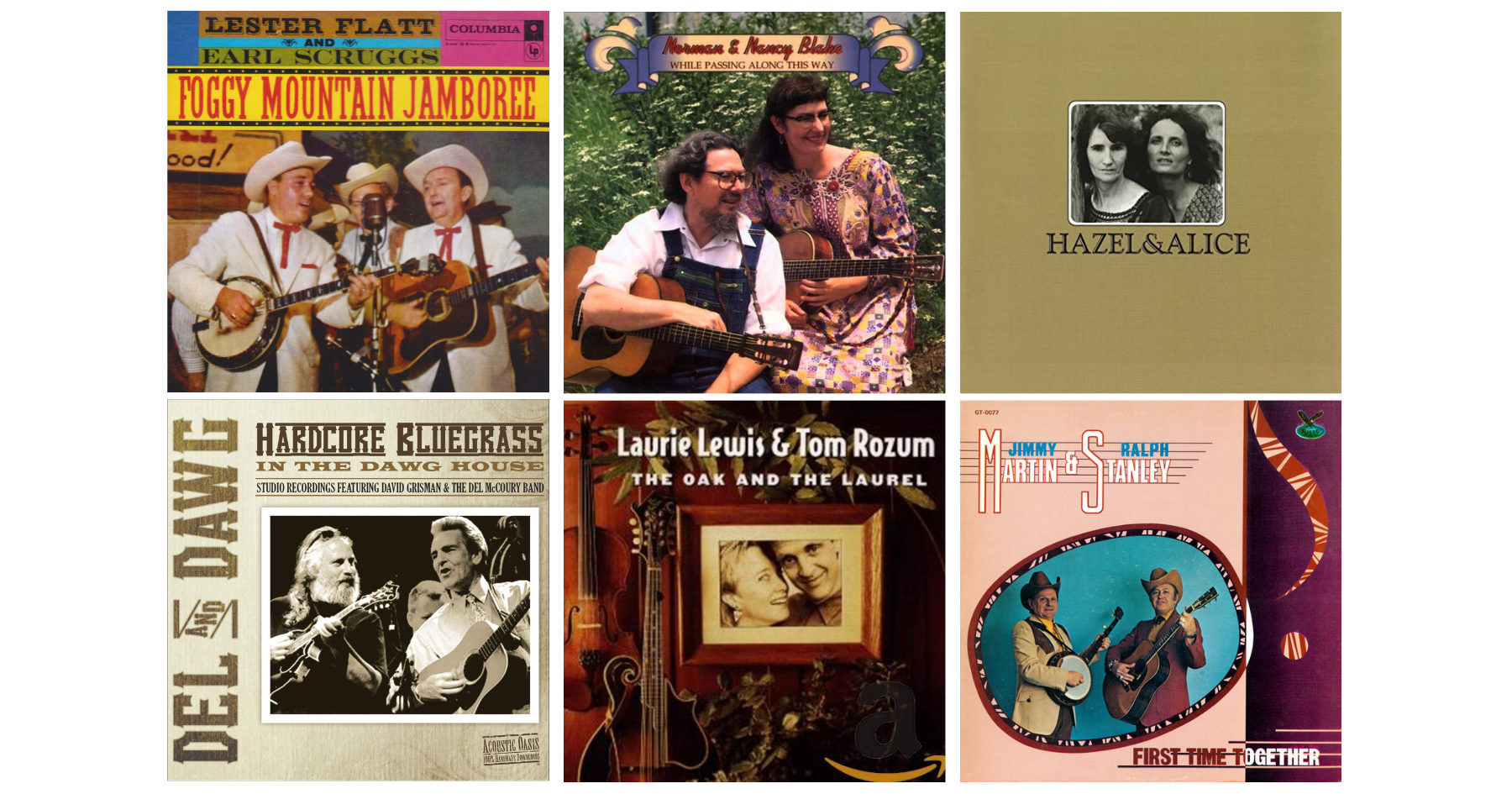
Every week for the past few years, we’ve brought you a radio show, and now podcast, revisiting all the great music recently featured on the pages of BGS. This week, we bring you a special episode for our Duos of Summer series — a musical recap of our 2019 collection of the 22 Best Bluegrass Duos.

APPLE PODCASTS, SPOTIFY

We’re listening to some of these classic duos, and exploring bluegrass’ longstanding and continuing tradition of wonderful duet harmony, be it sibling or otherwise. And while most fans of the genre may recognize names like Flatt & Scruggs or the Monroe Brothers, here you’ll also find newer acts that are following the path laid by those hall-of-famers.

Head to the original story to explore the full list while you listen!

Danny Paisley & Southern Grass Find a Family Blend on ‘Bluegrass Troubadour’

After nearly 50 years in bluegrass, Danny Paisley has reached something of a breakout moment. He won Male Vocalist of the Year honors at the 2020 IBMA Bluegrass Music Awards — his second time in the past five years and his third IBMA trophy overall.

Paisley started performing bluegrass music as a teenager when he joined the Southern Mountain Boys, a band his father Bob co-founded with Ted Lundy. Lundy’s sons, TJ and Bobby, played in that group too, and now are in Southern Grass, the band Danny now leads. The lineup also features his son, Ryan, giving this traditional bluegrass group a unique two-family, three-generation legacy. Earlier this month, the band released Bluegrass Troubadour, their first album for Pinecastle Records. They recorded it last fall with producer Wes Easter, whom Paisley praises for his good ideas and good vibes, sharing that “after every session we were just happy and couldn’t wait to go back the next day.”

Speaking to BGS from his home in Landenberg, the southeastern Pennsylvania town where the singer-guitarist grew up, Paisley talks about how his not-strictly-traditional sound was shaped by that area’s rich musical history and how the new generation is rethinkng bluegrass.

BGS: You’ve been a bluegrass professional almost your entire life. When did you join your father’s band?

Paisley: I started playing with my father and traveling the rooms around 1974-75. Ted Lundy and my dad had a band for years. Ted’s sons, TJ and Bobby, started playing and I started playing, so we became a family group within the two families. Totally like a big family. Their mom is like my mom. And they call my mom “mom.” We grew up together. Basically all our lives we’ve been playing music together. That pretty much carried all the way through, because the Lundy brothers are back playing with me.

How was it being in a band where your dad was the boss?

Sometimes I would say to my dad, “I have this great idea.” Ever patient as he was, he always knew how to handle every situation. He’d always look at you and go: “That’s great, that’s great, when you get your own band you can try that.” To this day, I laugh about that. And I use that, too, on my son.

Now you have a similar situation with your son Ryan in Southern Grass. Does he bring a different generational perspective?

He wants to do more things [with technology], where I’m still old school and like to do things my way. He has good ideas and it makes me have to rethink… Young minds are sometimes way better than old minds. It’s hard for the younger generation today — for the third generation of bluegrassers to relate to the “Blue Ridge Cabin Home on the Hill.” They love the song, but not that theme of the cabin on the hill and things like that from the old days. I have heard of that from my grandparents. Now with the next generation, it is washed down even more.

The area where you grew up seems to have been a great musical influence.

I was very lucky. I grew up in a place here where there was a country music park, Sunset Park. On Sundays, they would have a major country or bluegrass artist… Bill Monroe, Mac Wiseman, Osborne Brothers… I got to see all of my heroes within five miles of my house. Down the road about 15-20 miles was another park called New River Ranch. It had the Stanley Brothers, Jim & Jesse, Reno & Smiley. Any given Sunday within 20 miles, you could go somewhere and hear some incredible music.

When I was very young, Flatt & Scruggs came and everyone was there to see Earl Scruggs. He was god to every banjo player and rightfully so. I remember that day leaving with this impression of Lester Flatt — just how calm he was and how he talked from the stage. He was in control of the whole thing so easily. … Del McCoury lived the next county over from me, so we often played shows with him. I loved his rhythm guitar playing and his voice. He could play that rhythm guitar and keep that band in time – he’d drive that band with that guitar. There was nothing like hearing him live.

Your music has been associated with “Baltimore Barroom Bluegrass” What was that scene like?

When I got older, there were all these bars and clubs in Baltimore, which is about 30 miles from home. I ended up playing in these clubs, four or five nights a week… you’d played from 9 p.m. to 2 a.m., sometimes four or five sets. You got your chops in. You had a broad repertoire and you were playing to people who knew the music because Baltimore became a hub for Southerners who moved up from Virginia, West Virginia, and Kentucky for work. They were hard-living, hard-drinking, and hard-driving bluegrass fans. There’d be fights. There’d be carrying on, but boy you could have fun!

And another regional musical influence on you was the Galax sound, right?

Galax is a town in southern Virginia, on the state line of North Carolina and Virginia, and the Old Fiddlers Convention there draws thousands from all over the world. The Galax sound features a lot of fiddle — maybe not your standard bluegrass fiddle tunes, but a lot of different fiddle tunes that made their way into bluegrass music. …

Their banjo players had a certain sound to their playing. Ted Lundy had it. He came from Galax and my dad’s family came from over the state line in Ashe County, North Carolina. So naturally they would be drawn together when they got up here. Ola Belle Reed, who wrote “High on a Mountain,” lived a few miles from where I’m at here. She was from that same region. The driving banjo — there is a certain style in their hands and in their noting. You can tell they are from the Galax area. I play [guitar] with a thumb pick where a lot of the bluegrass guys play with a flat pick. That was from my dad also.

So Southern Grass’ driving rhythms are like a handed-down legacy?

Yes, of that area and of our fathers. We keep the rhythm sort of pumping, but you’ve got to play to each song. We’ll work the song. As the singer eases off singing, the rhythm will pull back, too, and then you can build back up. We do a lot of stuff like that dynamic. That’s what I like about my style of music, knowing and feeling the song.

Bobby Lundy used to play the banjo in the band and decided he needed some time off. When he said he was able to play, I needed a bass player. I call him my utility man of bluegrass, like he could play any position on a baseball team — he’s that talented. Because he has known me for so long, he knows what I am going to do on a guitar. He knows what I am going to do singing. He can walk me right into the singing with his bass. He can lead me right into the voice. He can just push the band and keep that timing from not going too fast or too slow. He can just keep it rock steady.

How did you pick songs for your new album?

Two of them [“He Can’t Own Them” and “I Never Was Too Much”] were written by Eric Gibson of the Gibson Brothers. He’s always one of my favorite writers. He sent a gang of songs he had not recorded. Every one of them was a great song. Those were the two that fit my style. Brink Brinkman — another excellent bluegrass songwriter — told me, “I have a song that I’d like you to hear.” As soon as I heard it [“Date With an Angel”], I wrote back: “I want it!”

“May I Sleep in Your Barn, Mister,” I learned from a guy named Cullen Galyean, a banjo picker and a great mountain singer from down in the Galax, Virginia, area. “Eat at the Welcome Table” is an old-timey spiritual song. When my dad moved up here to Pennsylvania, his neighbors were an African-American farming family. They had an old-timey string band and played gospel songs. They would sing that song. We put our own spin on it.

The album has an interesting mix of songs that come from different styles and influences.

That’s how music generally works for me. I love it all, and then I make it my own. My band is rooted in traditional music and traditional ways, but that shouldn’t hamper or restrict you. So, I keep my ears open to all kinds of things. You can sometimes take an idea from a non-bluegrass artist and use it in bluegrass.

It’s that way with my singing. I listen to everything from George Jones, Jerry Lee Lewis and Vince Gill to opera singers like Pavarotti – these guys all amaze me. How they control their voice and present it with such tone. For me that was lacking in my singing and I had to work at that… I learned to sing a little different as I got older – to take the edge off the high tenor part a bit. Things like that, and I noticed that people were responding better.

Congratulations on winning your second IBMA Male Vocalist of the Year win. Was the victory sweeter the second time around?

The first time I was so shocked. Any category when you are up there with Russell Moore, Del McCoury — all these guys that I enjoy. You’re shocked that people would appreciate what you do. The second time, it was like, “Oh my goodness.” It didn’t really set in until the next day or so. I love to go out and play to make people happy. I never thought of being something like Male Vocalist of the Year. It’s always the dream for everybody. It’s always a dream to play the Grand Ole Opry, but you’ve got to keep it realistic. A life lesson early on that I got from my dad: never get to where you think you’re better than anybody else. Because as soon as you do that, you’ll realize that you’re not.


Photo of Danny Paisley and Ryan Paisley courtesy of Pinecastle Records.

Bluegrass Memoirs: Mayne Smith & Alice Gerrard

Tom Power’s recent Toy Heart episode with Alice Gerrard, whom I first knew as Alice Foster, reminded me of a 1959 visit several of us Oberlin College folkies made to Antioch College. In 2009, doing research on my early bluegrass experiences, I sent my friend Mayne Smith an email asking about his experiences when he met Alice and her late husband Jeremy Foster during that visit. 

Mayne and I are the same age and have known each other since 1953. We got into folk music as teens in Berkeley, California, and discovered bluegrass together from 1957 to 1959 while in Oberlin, Ohio. We first heard it on records and radio, and at this time had seen it live only once, when we met banjoists Eric Weissberg and Marshall Brickman at a 1958 spring vacation homecoming party in New York City. We had begun trying to play bluegrass with a circle of Oberlin classmates, folk music enthusiasts learning new music and working on new instruments. 

In the introduction to my memoir, Bluegrass Generation, I mention our trips to Antioch as undergrads, where we met the Fosters. 

Antioch was, like Oberlin, a liberal arts college that drew students from all over the country and beyond. At the time, its co-op system, which placed students in jobs every second semester or so, was thought to be radical. Unlike Oberlin, which still drew on a pious abolitionist point of view about many things, it tended to be a more socially relaxed place. A Fun Place to Party. 

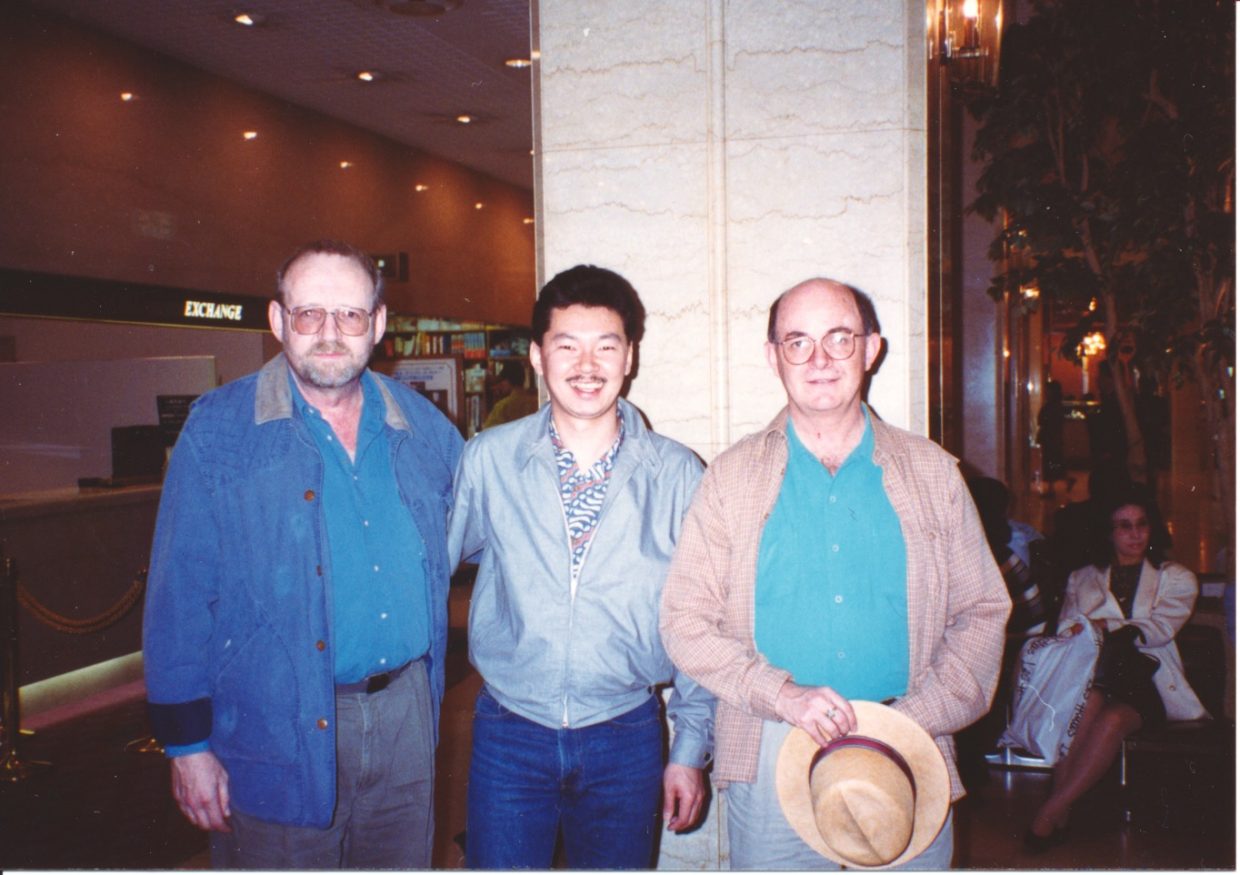
Mayne Smith, Kaz Inaba, and Neil Rosenberg after a morning of jamming at the Hotel New Hankyu in Osaka, Japan. April 31, 1991.

Mayne was the first of our Oberlin bluegrass circle to meet the Fosters during one of these trips. This music was still a new and distant thing to us; we didn’t own tape recorders. In my email I asked Mayne: 

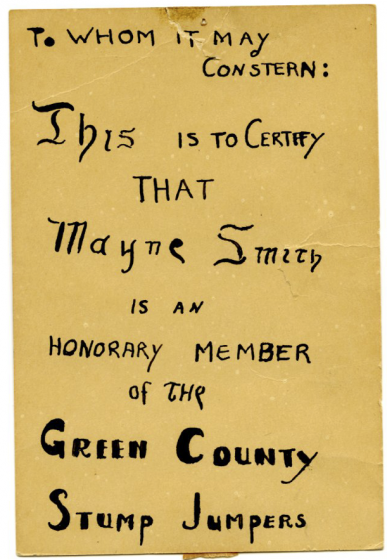
What memories do you have of visiting Antioch and meeting Alice and Jeremy? I went there several times and recall you being there, but don’t have any documents like tapes or photos that include you. Any recollections, however hazy, would be welcome. I remember that you had some kind of document from the Fosters giving you honorary membership in [their band] the Green County Stump Jumpers — do you still have that, was it dated? 

Mayne answered the next day: 

Neil, I have (for me) unusually vivid memories of our first visit to Antioch and hanging out at the Fosters’ place because it was there that I contracted the Stanley Brothers virus. I think it must have been in the spring of 1959 because I had already heard Flatt & Scruggs and understood that this was called bluegrass music. 

But first, Jeremy’s hand-drawn certificate (on a 4×6 card) is undated, but it reads: 

I also vaguely remember showing Marge [Ostrow] (later married to Mike Seeger for a while) how I played Carter Family style guitar. I think I got it from Dave Fredrickson — using the thumb to pick melody, then the index finger brushing down/up. I heard later that Mike was impressed by the fact that Marge had adopted this approach, and asked her where she learned it. 

But about the Stanley Brothers. I recall a thinly carpeted living room with expansive white bookshelves along the wall opposite the windows. At some point, in an afternoon I think, Jeremy put on a tape of the Stanley Brothers in live performance — my gut tells me it was one of the ones Mike Seeger had recorded at New River Ranch in like 1957. As soon as I heard that totally live, undoctored sound I was captivated, and I believe I sat and lay on that hard floor listening to live Stanley Brothers shows (several sets, at least) for hours. My mind was blown. Knowing it was totally live and without studio gimmicks and buried background effects, it came home to me how the fluctuating balance of instruments and voices was accomplished by movement in relation to the microphone and each other, how at times there were lovely breathing spaces in the sound while people shifted from instrumental breaks to solo vocals to harmony vocals. How nobody was using a lot of physical effort to project the sound, yet it penetrated, flowed, darted ahead, waxed and waned like the mating dance of a single complex organism — and how comfortable and familiar the musicians were with what they were singing and playing. 

I was learning not only about how bluegrass fits together, but also about what a band can be like when it’s been playing constantly together, day in and day out, for weeks — for years. 

I don’t believe I’ve ever had a more intense listening and learning experience, nor one that had such a profound effect on my life. 

I should also mention that this was partly possible because I could tell that [Jeremy] and Alice understood what I was going through and supported me by staying out of the way. I felt toward them the way a bridegroom feels about the best man and maid of honor: I could give myself over to the intensity of the music in a nurturing environment. (In retrospect, it was kind of like having a trusted support team when you first get stoned on something very strong.) 

I will always be grateful to them both. 

If you were around when this happened, I don’t remember it. I just blanked on everything else but those sounds. 

I wasn’t at the Fosters when this happened, which was not in the spring of 1959 as Mayne recalled, but a few months earlier, during the January break between semesters. While he visited them, I was off jamming with Guy Carawan, who’d given a concert at Antioch that weekend. I didn’t meet Alice and Jeremy until they brought the Green County Stump Jumpers to an Oberlin Hootenanny a year later. 

In May 1959, our old Berkeley folk scene friend Sandy Paton (co-founder of Folk Legacy records) was the headliner at the annual Oberlin Folk Festival. By then our circle had become The Lorain County String Band. Sandy heard our festival set and said he knew a British folk record company producer who was looking for American bluegrass and old-timey. He suggested we make a demo he could send to his friend. We cut it at the student radio station, but it was never sent. 

That summer, back home in Berkeley, we started The Redwood Canyon Ramblers, Northern California’s first bluegrass band. The story of that band, and of Mayne’s subsequent career as a singer/songwriter and steel guitarist with continuing excursions into bluegrass, is told well at Mayne’s website.

But it does not include an important detail — his groundbreaking work as a scholar. His Master’s Thesis, “Bluegrass Music and Musicians” (Indiana U., 1964) and the article he developed from it, “An Introduction to Bluegrass” (Journal of American Folklore, 1965) opened the door to the serious study of this music. His transcendent aural immersion at the Fosters was the seed that gave him the vision to accomplish this work. I and the many who have followed are indebted to Mayne Smith for blazing the trail.


Neil V. Rosenberg is an author, scholar, historian, banjo player, and Bluegrass Music Hall of Fame inductee.

Photo of Neil V. Rosenberg: Terri Thomson Rosenberg
Photo of Mayne Smith, Kaz Inaba, and Neil Rosenberg: Ed Neff

BGS Long Reads of the Week // June 5

Welcome to another conglomeration of diverting, entertaining, and engaging long reads! The BGS archives never disappoint. As we share our favorite longer, more in-depth articles, stories, and features to help you pass the time, you should follow us on social media [on FacebookTwitter, and Instagram] so you don’t miss a single #longreadoftheday pick! But, as always, we’ll put them all together right here at the end of each week if you happen to let one sneak by you, too.

This week’s long reads are educational, meandering, inspiring, and much more. Read on:

On New Duet Album, Laurie Lewis Gathers Old Friends and Close Companions

May went by in a blink of an eye (how did this happen!?) and we had to say goodbye to our Artist of the Month, Grammy and IBMA award-winning multi-instrumentalist and songwriter Laurie Lewis. In our two-part May AOTM interview, Lewis gave us insight into the making of her new duet album, and Laurie Lewis, and talks a little bit about wanting to measure up to others’ view that she’s a trailblazer and role model in bluegrass. [Read more]


For First Solo Album, Sam Doores Opens the Map of Musical Influences

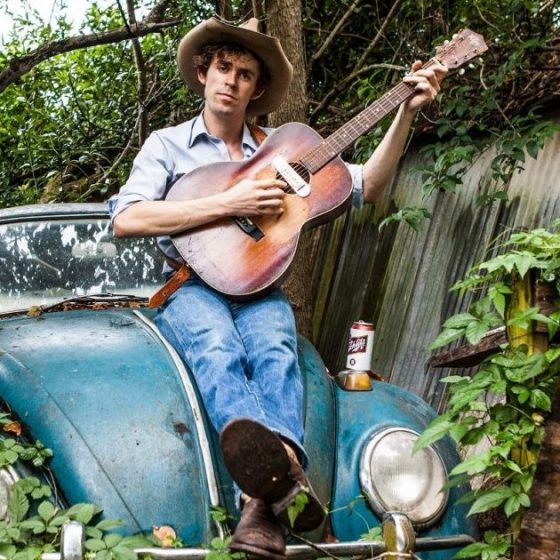
In a meandering feature we follow singer/songwriter and lifelong troubadour Sam Doores from the Bay Area to New Orleans to Berlin to his first solo album, which is filled with echoes of everything from Tin Pan Alley to the Mississippi hill country, from jazz to psychedelic-folk-rock. The Hurray for the Riff Raff alumnus has co-created some of the last decade’s most arresting socially-conscious anthems with HFTRR, and he’s also made sparkling folk- and country-derived excursions with his own band, the Deslondes. [Read more]


The Ebony Hillbillies: Becoming Part of the Music

In 2017, Henrique Prince and Gloria Thomas Gassaway — of the legendary and long-running New York-based, Black string band, the Ebony Hillbillies — gave us an excellent primer on how Black folks ostensibly invented bluegrass music. We could all use a reminder of this fact, given how Black contributions to old-time, bluegrass, and string band musics are more often than not erased — and this true, more fleshed out narrative enables us, the roots music community, to unabashedly lift up Black stories and Black lives in full voice at this current moment of crisis. [Read the interview]


7 Bluegrass Family Bands You Need to Know

Bluegrass Bands

From the Monroe Brothers and the Stanley Brothers to Cherryholmes and Flatt Lonesome, the matching outfits, tight harmonies, and long-lasting careers of family bands are an integral part of what makes bluegrass bluegrass. Here are a few lesser-known, underrated, or too-often-forgotten family bands that you ought to spend some quality time with — a classic from the BGS archives. [See the list]


Canon Fodder: Tracy Chapman, Tracy Chapman

Tracy Chapman’s music is ceaselessly relevant, it’s true. Still, her self-titled, 1988 album has a much more broad, eclectic musical palette than we often give it credit for. Its themes surrounding her Blackness continue to distinguish her from her peers and most common comparisons, demanding a more nuanced approach to considering the ongoing impact of Tracy Chapman. [Read our archived edition of Canon Fodder]