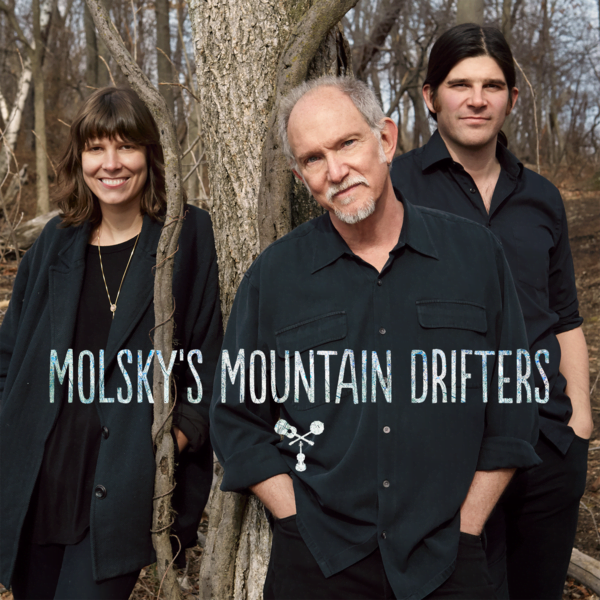
STREAM: Molsky’s Mountain Drifters, ‘Molsky’s Mountain Drifters’

Artist: Molsky’s Mountain Drifters
Hometown: Boston, MA and Beacon, NY
Album: Molsky’s Mountain Drifters
Release Date: September 9
Label: Frog Tree Music

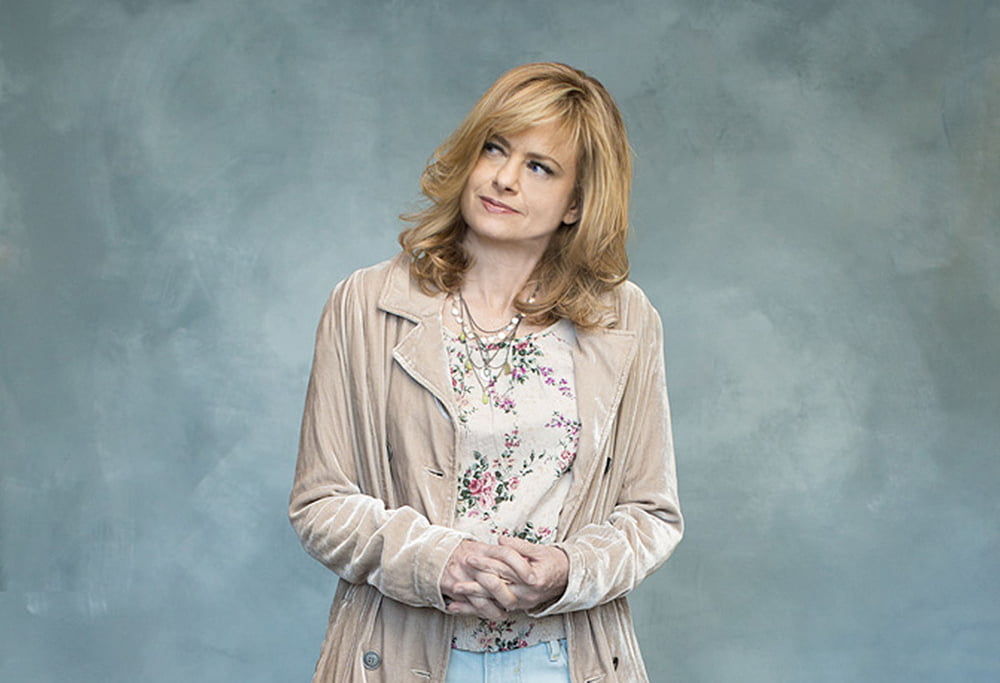
In Their Words: "Bruce Molsky has long been one of my musical heroes, and it is such a joy to hear him in this configuration with the Molsky Mountain Drifters, featuring two of my good friends — Stash Wyslouch and Allison de Groot — accompanying him seamlessly on guitar and banjo. Together, they are a force to be reckoned with and are creating some of the most soul-stirring music out there today. It's hard to believe they are a new trio since the sounds they create together instantly feel so at home. The effortlessness and ease with which Bruce plays and sings has always been something I've deeply admired, and that is only highlighted alongside Stash and Allison. It is a rarity to hear music that lacks ego and puts soulfulness and a respect for tradition at the forefront. Bruce is simply one of the greatest musicians there is, period." — Sarah Jarosz


Photo credit: Kate Orne

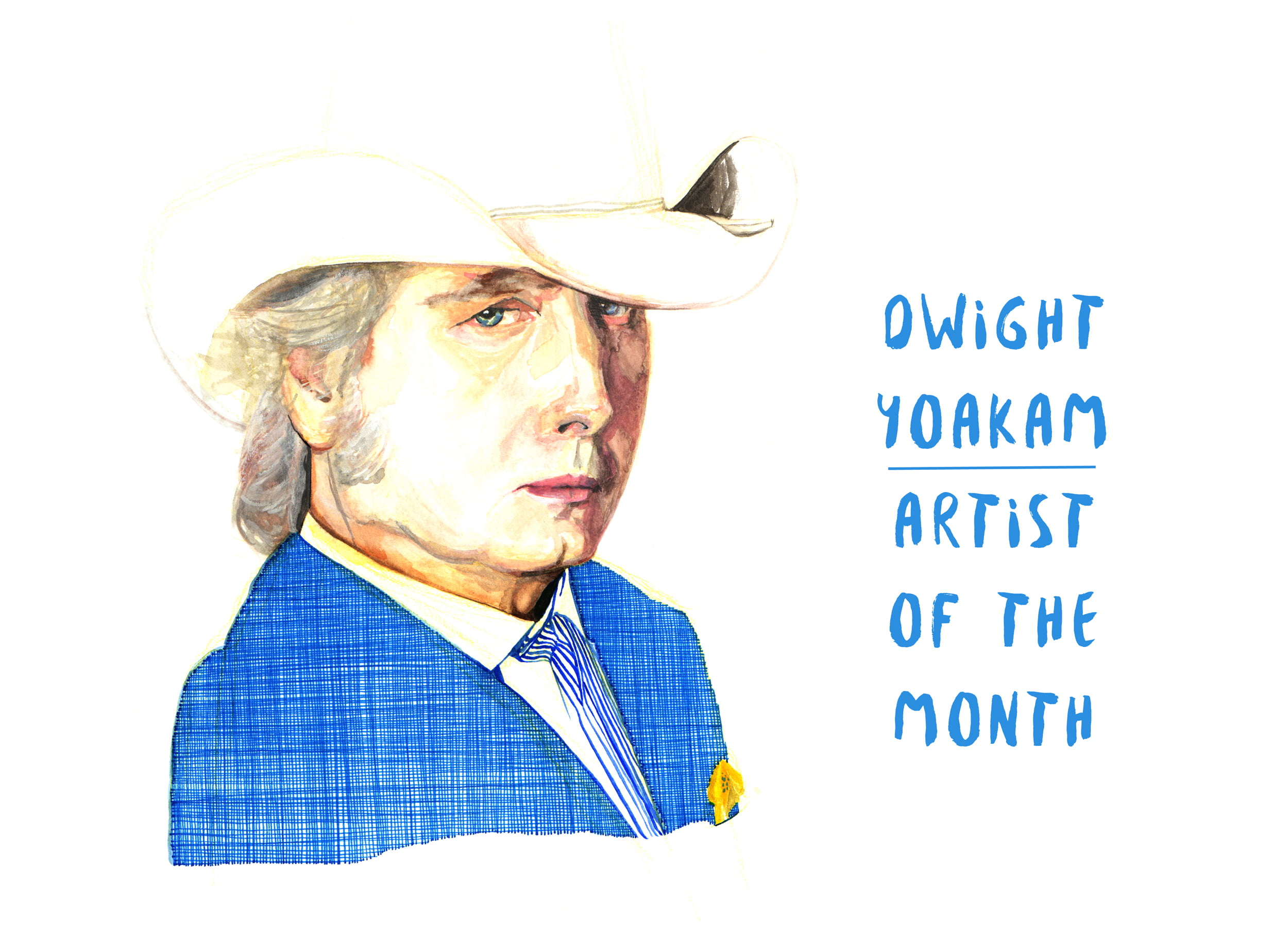
Dwight Yoakam: The Kentucky Son’s Bluegrass Birthright

Country music got to know Dwight Yoakam through radio stations and multi-platinum records, witnessing his distinctive style cut through the Nashville machine in a way that was nearly impossible to ignore. He debuted with 1986’s Guitars, Cadillacs, Etc., Etc., landing the first of three consecutive number one country albums and, over the course of his genre-pioneering career, Yoakam has sold more than 25 million records, charted 22 Top 20 singles in Hot Country Songs, won two Grammy Awards (and been nominated for 19 more), and landed nine platinum or multi-platinum albums.

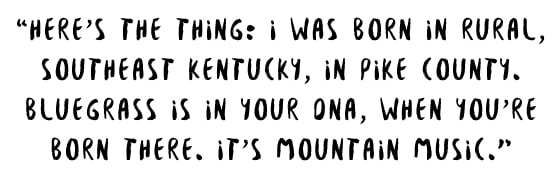
But Yoakam’s introduction to country came up through hollers and Kentucky living rooms rather than with splashy records or big best-sellers. “Here's the thing: I was born in rural, southeast Kentucky, in Pike County. Bluegrass is in your DNA, when you're born there. It's mountain music,” he says. His earliest memory of music doesn’t involve old records or radio shows, but rather Yoakam remembers traipsing up the mountain with his grandfather on Sundays after church and listening to music made alongside ‘coon hunting. “It looked like it might have been an abandoned mining site — a coal mine site that had been left to flood back into a fairly good-sized lake. There were guys walking around with their guitars, banjos, mandolins, playing in small groups, just walking up to one another and just starting to pick. They were out there playing bluegrass face to face with one another. I had exposure to that very young in an absolutely pure way.”

Yoakam’s background in traditional bluegrass and an early affinity for the classics led him to a few starstruck moments throughout the course of his career, some of which hinted that he might be suited to embrace a bit more twang in his regular rotation. Most notably, he recalls recording with Earl Scruggs on 2001’s Earl Scruggs and Friends.

“I was there in the studio in L.A., with Earl and the band were just warming up. Earl and I were playing back and forth and I started playing a melody that came to my head. Earl started answering me on the banjo. Here I am, sitting close to the Jimi Hendrix, if you will, of bluegrass banjo, right? The godfather of modern bluegrass banjo,” he says. They’d originally sat down to record a platinum Scruggs single Yoakam frequently covered, "Down the Road.” But Louise Scruggs came into the studio when they were still fiddling around with Yoakam’s melody of the moment.

“She said, ‘I believe you need to record this.’ I said, 'Louise, it's not really a song.' She goes, ‘Well we need to record it.’ By that point, I was singing some consonants and vowels, which is what I do as a writer when I sneak up on a song. It became the song, ‘Borrowed Love.’ Louise and Earl Scruggs looked at me and said, ‘Well, you're just a bluegrass singer in disguise.’ I said, ‘Probably so.’”

For a man with bluegrass in his bloodline, it’s surprising to hear Yoakam say so emphatically that his forthcoming record, Swimmin' Pools, Movie Stars — a full-length that re-imagines many of his commercial country songs as bluegrass tunes — wasn’t really his idea. It was Kevin Welk — owner of Vanguard and Sugarhill Records and eventual executive producer on Swimmin’ Pools, Movie Stars — who approached Yoakam’s team with the concept. Label obligations and release schedules got in the way, but when the timing was finally right, the label was ready: Americana super-producer Gary Paczosa and producer/songwriter Jon Randall Stewart committed to the project and had hand-picked an all-star lineup of a band to back Yoakam, too. Award-winning players like guitarist Bryan Sutton, banjo and fiddle player Stuart Duncan, bassist Barry Bales, and banjoist Scott Vestal make a convincing lineup alone and, with Yoakam on lead, the project was bound to go somewhere special. But the producers had landed on something Yoakam hadn’t planned — to re-record his old songs with a new twist.

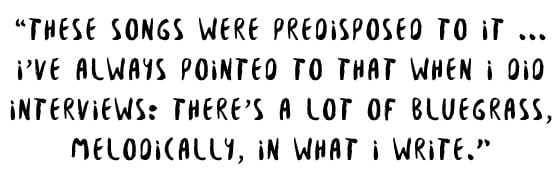
“Melodically, these songs were predisposed to it — that's what I think Gary and Jon thought,” says Yoakam. “And I've always pointed to that when I did interviews: There's a lot of bluegrass, melodically, in what I write."

Those traditional bluegrass sensibilities were just waiting to bubble to the surface, and they lend a new life to lesser-known singles like “Free to Go” and “Home for Sale.” Even casual fans of Yoakam will delight in more popular numbers like “These Arms” and “Guitars, Cadillacs” with their old-fashioned harmonies and quick instrumentals. Nuances in the vocals on Swimmin’ Pools, Movie Stars are a giveaway that Yoakam isn’t just dabbling in tradition: This is an album he was meant to record. Varying his inflection on old lyrics, his performance feels warm and complementary — at times even reverent — to the harmonies beside him and the deft picking in the backdrop. What gets Yoakam talking fastest about bluegrass music and the “bluegrass way” of doing things, though, isn’t one of his own songs — it’s the record’s album closer and lone cover, a rendition of Prince’s “Purple Rain.”

“We tracked 13 tracks in four days,” he says. “The third day of tracking, I went in and, that morning, when I was getting ready to leave to go to the studio, CNN had breaking news. I happened to look over at the TV and I was in the hotel in Nashville and saw the awful unfolding of the news that Prince had died so suddenly and so tragically, so alone.”

Get a bunch of musicians mourning a genius in one room, and you’re going to come away with some good listening. They worked through “Purple Rain” right there, testing it out and ultimately tracking it live before setting the recording aside.

“Just the moment — it was just the emotion from everybody in the room. I didn't touch the song again for about three weeks,” Yoakam says. “I didn't listen to it. I thought, ‘We're probably not going to put it on the record. It was nice to do.’”

Prodding soon came from Paczosa and Stewart, who had left Nashville before the final day of recording and simply saw the raw recording among the other audio files for the upcoming album. The two producers asked Yoakam if they could try listening to the track for the record. “We played it, put it on, and it was what it is, what you hear [on the record]. In fact, I left the scratch vocal on it. I did a harmony. It's exactly as we played it that day about four hours after everybody heard he died,” Yoakam says. “I think, because of that, it had an emotional expression that you couldn't have in any other moment.”

Many of the moments that foreshadowed Swimmin’ Pools, Movie Stars were similarly off-the-cuff experiments in the studio over the years. As Yoakam verbally picks apart the hours that built up to the “Purple Rain” cover that eventually made the album, it grows clearer that this album fusing his songs with the traditions and the twang that built him was more about him and his roots than he first implied.

“One of the things that probably seeded that moment in my mind was Ralph Stanley,” Yoakam notes. “He cut one of my songs, 'Miner's Prayer,' and I recorded one of his songs, 'Down Where the River Bends.' I had always been a fan of the Stanley Brothers. We cut it, as he would say, ‘in the mountain way,’ with Curly Rae Kline on fiddle. It was done around the microphone with a live band in a circle, playing those songs. They looked at me and said, ‘Dwight, I believe you might be a bluegrass singer.’ I said, ‘Well I guess it's somewhere in my birthright.’”


For more Artist of the Month coverage, read Dacey's profile of bluegrass phenom Sierra Hull.


Lede illustration by Cat Ferraz.

The Producers: Alison Brown

Forget, just for a moment or two, the fact that Alison Brown is one of the best banjo players alive. Put aside that she’s been playing all her life and has released 11 solo albums and many, many more with various duos and groups. Never mind that she left a lucrative career at Smith Barney to co-found Compass Records and has been honored by the International Bluegrass Music Association with a Distinguished Achievement Award.

Instead, let’s think about Alison Brown strictly as a producer. She has quietly established herself as a creative force on “the other side of the glass,” as she says, forging a style that is precise yet imaginative, grounded in tradition yet anchored in the artist’s own distinctive personality and style. In the last 10 years, she has produced albums by some of the best musicians in bluegrass — young and old alike — starting with Dale Ann Bradley’s Catch Tomorrow in 2006 and following it up with projects by Peter Rowan, the Special Consensus, Susan Greenbaum, Claire Lynch, and — most recently — Quiles & Cloud.

This year she is nominated for two IBMAs — Instrumental Recorded Performance of the Year and Recorded Event of the Year — for her work on the Special Consensus’s “Fireball,” from their recent Brown-helmed album, Long I Ride. A wildly inventive and rambunctiously paced bluegrass jam featuring twin banjos and twin mandolins, the song threatens to fly off the rail with every note, but somehow she and the band manage to keep it all on track.

How did you move from being an artist in the studio to being a producer?

It happened very organically. When we moved home for Compass Records, we bought the Glaser brothers’ former office space. The Glaser brothers were, of course, part of the outlaw movement in country music and they had a legacy studio that was known to the press as Hillbilly Central. It’s where part of the first platinum-selling record in country music was cut and a lot of others, like Waylon Jennings’ Dreaming My Dreams and John Hartford’s Aereo Plain.

All of a sudden, we had this office space that had this legacy studio in it. I think the first record I produced was for Dale Ann Bradley, who is an amazing bluegrass artist from Kentucky, and she just asked if I could do it. I had never really thought too much about producing. I’d always had someone else produce my records, but I agreed to do it. In the process, I really learned that I had learned a lot on the other side of the glass that I could share with somebody else. It was a result of having that space and then realizing that I knew more about the process than I thought I did.

So you’re running Compass out of that building, along with the studio?

Conceptually, it’s the perfect example of vertical integration. The studio is upstairs, and most of the offices are downstairs, except for my office and Garry West’s office. We co-founded the label together. There’s this idea that we could record a track from 10 in the morning to one in the morning, and it could be mixed and up for sale on iTunes by the end of the business day. We can really do the whole thing, starting off with pre-production through getting the record off to mastering. We’ve got someone doing package design. We’re doing publicity, promotions, social media, marketing … with the team downstairs. So it is a soup-to-nuts operation.

What do you remember from those first sessions you produced for Dale Ann Bradley?

I guess I remember two things. First of all, in part, I feel a producer’s job is to make the artist — and, in this case, it was her band, too — as comfortable in the space and as able to do their best work. For people who aren’t used to being in the studio, it can be hard being under the microscope, especially if you’re not doing that every day. I think that’s there’s an aspect of psychology to the job: figuring out what everybody’s fears are, their point of discomfort, what they’re most nervous about having to do, and trying not to put them in that position.

The other thing I remember is that I’ve been fortunate to have my own records produce by some really talented people. David Grisman produced my first record, and I’ve worked with Mike Marshall a bunch, too. I feel like I took a lot of lessons from them, especially the way I look at song structure and the little things you can do to make the recorded version of a song something that bears repeated listening — the little twists and turns and corners of an arrangement. I came to realize that I had learned that lesson and that was something I could bring to bluegrass music, which can, at points, be repetitive. I wanted to try to think about arranging it so that it’s something that people are going to want to come back to over and over and, when they do, hopefully they’ll hear something a little different each time.

People always ask artists about their influences, but I’m always curious to hear about where producers go for inspiration or examples.

I feel like my biggest influence, as a producer, has been the work I got to do with Mike Marshall. He’s one of these prodigy guys who came out of Florida playing mandolin, fiddle, and guitar. He was in the David Grisman Quintet in the ‘80s and had a band on Windham Hill called Montreux. He’s done a lot of stuff with Darol Anger and Chris Thile. He produced a bunch of stuff for me early in my career, and I got to work with him in a band called NewGrange. He’s a remarkable musician, but he’s a great producer, as well. Seeing how he approaches arranging music and getting the most out of instrumental music, I feel Mike’s guiding hand in what I do. I learned so much by the ways he thinks about how to structure songs, which instrument to put on it.

You mentioned the psychological aspect of producing. Can you elaborate on that?

Unless you’re hiring the Nashville Cats, then you can be working with people who are in the studio only once every 18 or 24 months, or maybe it’s only their first or second time. When I go into that situation with a band and I don’t know the guys yet, one of the first things that I’m trying to glean from the situation is that dynamic. I really think that’s important, because we all have things that we’re afraid we can’t deliver the first time: "What’s it going to be like if I can’t nail that solo? Or that vocal take? Or whatever?" I’m always thinking about that. I don’t know if my perspective stems from being female, but I think women approach situations differently. Not that one’s better than the other, but that’s just my approach.

Most of the time I’m playing music, I’m playing with all guys — although things are changing a little bit. When I’ve been in a situation where it’s all women — an all-female band — the approach to building consensus and working together is completely different. It’s a different energy. I don’t know if my approach is gender-specific. When Garry West produces an album, he’s not thinking about what’s in the fridge or on the coffee table for people to eat and drink. But that’s something that’s really important. If you’re going to create, you need to have good snacks. I don’t know what it is about being in the studio, but it makes me think about food. I love to show up to a session with warm banana bread. Something like that really adds to the experience and I think it makes people more comfortable. They’re able to let their guard down and feel like it’s a safe place.

It seems like a crucial tactic, especially in a studio that has such a legacy. I could imagine any musician being intimidated.

Absolutely. If I’d known John Hartford recorded Aereo Plain here, I would have been even more intimidated than I already was. You could set the bar so high for yourself thinking about the other music that’s been recorded in the room, but, at the end of the day, you just have to look at it as there’s great energy in the room, great vibes in the walls, and you have to tap into that. You have to find the joy in making music, because to make music is a real privilege. To the extent that I can make people see that, that’s a really important aspect of my job as a producer.

How do you balance that strategy with challenging people and making sure they can get out of their comfort zone?

I feel like I’m always mixing stuff up on people, and sometimes I worry that I’m doing it too much. One of the ways I really feel like I can add value is, when we start a new tune during pre-production, we’ll just sit around the coffee table and I’ll write out a chart and start to think about how to change things up. I’m always changing chords and throwing out ideas and left turns for people. There’s always an element of change and challenge, but you want to make sure to create a safety net so people aren’t afraid to try. You get people out of their comfort zone of what they’ve practiced and what they’ve prepared to do, but you have to get them comfortable enough to reach for that next thing and know they’re not going to fall off the high wire. There has to be a net there so we can feel encouraged to experiment. It’s always part of the process of making a record, at least for me, where you really grow. Hopefully, you’ve created something that’s better than you are.

So this process not only creates this thing — this song or this album — but it changes you as an artist.

Absolutely. I see the whole act of creation as a real process of self-discovery. You write something you didn’t know you had in you, you come up with an idea and you’re not exactly sure where it came from, and you learn something about yourself in the process. That’s been true for me as a producer, too. I didn’t know that I had that skill in me, but working with the people I’ve gotten to work with and being in the producer’s chair has really helped me discover a different part of myself, too. I really owe those artists a debt of gratitude.

You were talking about making sure songs would have something that would make you want to listen to them again and again. That doesn’t seem like an easy task, especially with a lot of acoustic music, where the arrangements might be pretty spare.

That’s something I think about a lot, because we live in a consumption environment. We listen to music like Ms. Pac-Man. We gobble it up and then we’re on to the next thing to gobble up. In a way, your live performances on YouTube are competing with the recorded versions of the songs you’ve slaved over and spent thousands of dollars to get just right. Why is the consumer seemingly so happy to listen to just some live version at some festival on a Saturday afternoon? What is there to make somebody want to buy the recorded version of it — not just stream it, but own it and have it be something they come back to again and again?

When I look at a chart for a song, what I’m really trying to figure out is how to make a little something happen in this one spot. Maybe you don’t hear it the first time. Maybe you didn’t realize that Kenny Malone was reacting to that lyric the first time you hear it, but when you do catch it, it’s so cool. I’m trying to get the most out of this that I can.

That seems to inform the diversity of your production work, which borrows from a lot of different styles at once. In particular, that song “Empty Train” from Claire Lynch’s new record, sounds like a rock song played on acoustic instruments.

In some ways, that song is an outlier on the record because it’s more jam-oriented. Getting Jerry Douglas in to play the way Jerry Douglas plays opened up a lot of space for the instruments to have something to say and made it different from the other tracks on the record. That was a challenge, and I wasn’t sure, at first, if putting a Celtic tune in there would make sense. But it actually does. It roots the music back to that tradition and serves as a jumping-off point. I guess I do think about how something like that is going to fit within the world of the record.

When I’m thinking about my role as a producer, I’m also thinking about designing an outcome. That comes from being on the business side of it, too. When I start a project, I encourage the artist to think about what kind of outcome they want. Fast-forward 12 months and the record is out there: What are the things you want to see with this record? Do you want a shot at non-comm Triple A radio or a certain bluegrass music awards category? Do you want attention from a certain media outlet? Then you’ve got to make sure you have those ingredients in the project. The worse case is that you don’t think about that ahead of time and then you deliver a record that doesn’t do what you want it to do. Maybe you want to have a shot at an interview with Terry Gross on Fresh Air, but you didn’t create the talking points in the music. So think forward to what you’re trying to accomplish and make sure you incorporate those things into the record.

With Claire’s record, I was definitely thinking about the different radio formats where different tracks could land. There are a couple of tracks with Béla Fleck playing banjo or Stuart Duncan playing fiddle, so those are well-suited for bluegrass stations. But Claire’s music goes in other directions, too. Having Jerry Douglas or Kenny Malone makes it suited for non-comm Triple A. Those are definitely formats where she needs to be.

Bluegrass is a genre that really prizes technical skill. Especially on a record like your own, The Song of the Banjo, how do you make sure that the technical side of the musicianship doesn’t overwhelm the aesthetic aspect of the song?

I’m glad you asked that because that’s something that I was thinking about with that record. What I was trying to do was say, "Hey, the banjo is a beautiful, very lyrical instrument and it can do all this fancy stuff." But I really wanted to serve the melodies, whether they were cover tunes like “Time After Time” or an original tune like “Song of the Banjo.” I didn’t want it to be just about fancy picking as much as just showcasing the lyrical side of the banjo. Don’t do something flashy just because you can. Just because you can doesn’t mean you should. The flashy side of the banjo wasn’t as important as the beautiful side of the banjo. If something was flashy but not beautiful, I would have to question why it belonged on the record.

That seems like an idea that comes into play on “Fireball,” off the new Special Consensus record. It’s a rollercoaster of a song, but it never sounds like it’s just a props-for-chops showcase.

I’ve been playing bluegrass for so long, and I’ve spent so many hours listening to it and thinking about it, so I have pretty strong opinions about whether something is tasteful or not. Fortunately, the guys in the Special Consensus all share my opinions. Nobody’s instinct is just to play some licks. Maybe part of that is making sure you have the right guys and girls in the room, too. Part of being a good producer is knowing who to have in the room. When you call Rob Ickes or Stuart Duncan, you’re going to get some great playing, but nothing is going to be inappropriate.

I guess this is my third record for Special Consensus. In some ways, they’re like family, even though the members of the band have changed. The core is pretty much the same on all three records. I know those guys pretty well at this point, and they’re so open to my suggestions and so trusting of my input. Because of that, they’ve helped me grow as a producer. When we were trying to think of a tune to do, I suggested doing “Fireball” with all these twin tuners on the banjo. I’m grateful for them giving it a go. When we sat down to track the thing, we heard that click track and we just all burst out laughing. It does go by lickety-split.

Was that an idea you had specifically for them or something you had been thinking about more generally?

It was neither, really. There’s something that happens when you get into the zone on a project and the people around you are very willing cohorts; it just opens up your mind to good ideas. I just grabbed that tune out of the air. It’s one I’ve always liked, and I thought it would be cool with twin tuners on the banjos, the Scruggs pegs. I wasn’t aware of anyone ever trying to harmonize Scruggs pegs. So the idea popped into my head and, of course, we had to have twin mandolins, too. When you have positive energy in the studio, it really opens to door for some good ideas.

That seems to push the genre forward a bit and show how expansive it can be, rather than just going with what’s traditional or expected.

I completely agree. I’m all for trying to blur the edges a little bit. A band like Special Consensus might seem like a pretty middle-of-the-road bluegrass band in many ways, but in terms of their song selection, they’re definitely open to lyrics that are a little bit different. The title track was written by Robbie Fulks. It’s a great song and it fits the genre, but lyrically it’s a little bit outside the box, which I think is cool. I love traditional bluegrass music, but I’m definitely one who believes it has to evolve to live.

One of the great things about doing a third record with a band is that you’ve been through the process together and you know everybody’s sensitive points and what their strengths and weaknesses are. We’ve made two really good records together, so everybody’s wide open. But it is different when you get a band you’ve never worked with.

As part of the FreshGrass Festival in North Adams, Massachusetts, they have these band contests and duo constests. We’re sponsors with the organizers, and one of the suggestions we made early on was to have contests, because that was such a big part of the scene when I was growing up and I feel it’s a bit missing in what’s going on these days. As part of the prize, the winner gets a session in our studio — with my production guidance, if they want it. As a result, I’ve had a chance to do a couple of projects with people who didn’t know me. That’s a very different dynamic because you have a day and you have a track and it’s all happening on a much faster timeline. It’s a different situation, but it can still yield great results.

How many of those sessions have you done?

We did a session with Quiles & Cloud, who are a great duo. The record was made as a trio, but Maria Quiles and Rory Cloud are the core. They decided to make a full record; they had one day and they added on three more. We recorded them basically live, and the two of them sing such tight, beautiful harmonies. We recorded them facing each other, so close they're touching. That’s how we recorded — playing and singing at the same time. Then I did a session with the guys from Old Salt Union back in the Spring. They had a new song, so they hadn’t really set their arrangement in stone and were open to input. They had this great jam session in the middle, which was fun for all of us and fun to hear them execute it.

What kinds of projects do you have coming up, if you don’t mind me asking?

Let’s see, what am I working on? I’m working on a Bobby Osborne project. He’s 84 years old now. I had him in the studio on a Peter Rowan record that I produced. He was singing and playing great, and he made this comment to me that he didn’t think he was going to get to make another record. I started thinking about that and trying to figure out a way to make that happen. One of the things bluegrass does so well is to honor its elders and, to me, the ultimate way to honor somebody is to give them an opportunity that they didn’t think they were going to get again. That’s the next thing I’m doing, probably this Fall.

I’m also working on a record with Stuart Duncan, who is the best fiddle player in the world. He and I grew up together playing bluegrass in Southern California, and we made a record together when we were teenagers called Pre-Sequel. We’ve had the title for our next record for a long time, and we ‘ve been thinking that we should finally make it. So we’re working on Sequel.


For more IBMA Award nominees, read Joseph Terrell's conversation with Sam Bush.
The Bluegrass Zodiac: September Horoscopes

Singer: Your thesaurus is a great songwriting tool so you will be confused when country radio doesn’t pick up sure-fire hits like “Scuz Street,” “Crossroads of Crud,” and “Dust Bunny Boulevard.”

Guitar: Because of the continuing conflation of politics and entertainment, your anti-CMA song will lead to a surprise write-in Congressional seat win in November.

Ukulele: Though we don’t believe anything it says, Uranus claims to have nothing to do with the annular “Ring of Fire” eclipse on Thursday.

Pedal Steel: Labor Day means back to school, end of summer, and more of your dad yelling about Obummer’s communist agenda on your music page.

Banjo: You know what they say … when God doesn’t give you money at the door, there’s always Concert Window.

Fiddle: The new moon will bring insightful interview questions focusing on the substance of your record rather than your clothing, hair, and relationship status. Lol j/k.

Bass: Steer clear of Mercury retrograde by continuing to learn alternate tunings to obscure Dead b-sides in your parents’ basement for a few more years.

Accordion: This month, make sure to catch the AmericanaFest showcase of the Woodstock-era hippie wearing only scarves and bracelets; she is Steven Tyler.

Dobro: Your smile is important! The stars recommend using your capo as a mouth guard at the merch table for all that don’t-call-me-honey-just-buy-something teeth gnashing you’ve been doing.

Mandolin: You’ll question your entire perception of reality when you’re told that the Allen wrench was not, in fact, conceived in a Ginsburg poem.

Drums: Wearing fashionable, faded, tight pants for the upcoming Fall tour will be easy considering you’re overweight and poor.

Harmonica: Stopping on a street corner to hear the kid with the guitar play will be a soothing respite from your day, until he starts to crawl into traffic.


The above is a work of satire. Any resemblance to actual persons, living or dead, or actual events is purely coincidental … although entirely likely.

Illustration by Abby McMillen

Counsel of Elders: Alice Gerrard on Growing with Your Voice

Some voices create passages to the past, as if they were secret wardrobes through which listeners can crawl and enter their own private Narnia. It’s not just what these voices sing about, but rather their color, tone, and timbre that conduct audiences to times gone by. Alice Gerrard has one such voice. She rose to fame in the 1960s and 1970s singing traditional bluegrass songs with her Appalachian music partner, Hazel Dickens. Their voices provided a juxtaposing force against one another, generating instinctive harmonies that felt closer to a familial note than any born from two unrelated musicians. Simply put, they raised the hairs on your neck.

Gerrard’s voice soars with Dickens, but it’s equally capable of standing alone, as sure-footed and earthy as the land that produced it. In 2015, she released her latest album Follow the Music, which she recorded with M.C. Taylor of Hiss Golden Messenger. The two met when he was a grad student and she a visiting instructor at the University of North Carolina. The project would go on to earn a Grammy nomination for Best Folk Album, and it’s easy to see why … or, rather, to hear. Her interpretations of classics like “Wedding Dress” and “Boll Weevil” pit her voice against the fiddle, the two rising to meet each other and fueling a thicker melody as a result. At 82 years old, Gerrard’s voice has aged, but it hasn’t withered. With over 50 years in the business under her belt, and a staunch determination to fight for traditional sounds, she proves how the past endures, offering its voice to any willing to listen.

What quality would you say age has brought to your voice?

That’s a hard question for me to answer. It’s probably better answered by people who have heard me. I don’t find that it’s diminished. I do find that it takes longer to get back into singing, if I’ve not been singing for a while. I think you do have to exercise it more as a muscle and it’s more important to do that when you get older. I find if I don’t do it for a while, it’s like “I’m not going to be able to hit that note so easily,” or little glitches come into your voice and you have to sing through a bunch of stuff and, eventually, it sort of comes back.

Male-male and male-female harmonies tend to be popular in bluegrass and alt-country. Female-female harmonies exist, but not to the same extent. What do you consider important about that kind of singing?

It’s pretty amazing when you get two or more women who can actually sing together. It doesn’t always work. You might love to sing with somebody, but maybe your voices are too much in the same range and it’s hard to harmonize, or something like that. To me, any harmony — whether it’s female-male, male-male — it’s all about the blend that you get with the other voice. There are many different harmony sounds. To me, it’s a sort of a special sound; it’s the same as if you had two brothers. It’s a well-known fact that within families, two sisters or two brothers, they have a family blend that’s unique, that you have to really work to capture, if you’re not a family member.

I was just listening the other day to Mountain Man — they don’t exist anymore — but it was three women, and they had beautiful harmonies. It had such a great blend. My feeling is that, no matter what the combination is, what you’re going for is that special kind of blend. Everybody has a unique voice, and the trick is to make your voice work with the other voice, and sometimes that just takes singing together a lot. When you sing together a lot, you tend to feel the other person’s energy and how they use their voice, but I think it applies to women and to men. I don’t see it as strictly a woman thing. But it’s always great to hear women harmonizing, when it’s a good harmony sound.

How long did it take you and Hazel to hit upon that blend?

Well, we sang together for a long time, and I think you have to pay attention to what the other person is doing. When you hang out with somebody a lot, it’s easier to sort of internalize some of the characteristics of their singing with your vocal sound. It’s like talking. When you grow up learning to talk as a child, you repeat whatever you hear around you, and it’s the same with singing. I was really listening to her. It’s not just two separate voices following their own path; it’s two voices listening to each other and bending and moving together. It becomes one voice.

It’s very interesting because I’ve been in a studio where they would track the lead vocals and then they track the harmony vocals. As you’re singing harmony to the lead vocals, you’re listening to it and you’re matching it, but then when they play your separate track — this happens to more people — you listen back to your track by itself and it’s like “Whoa!” It sounds terrible. Maybe it’s a little flat here, maybe it’s a teeny bit sharp there, that pronunciation is a little weird. But you put the two together and you realize what you’ve done is bent and accommodated to the other voice, and they’ve done it, too. But together it works, and that’s what it’s all about.

You’ve used the word “spare” to describe the photo that graces Hazel and Alice ’s album cover, as well as some of the more traditional songs. What does spare music offer that much of today’s overly produced music might not?

I can remember the days when you’d flip through the radio dial and you could immediately pick out the country station, and now you can’t. It all sounds like mass-produced pop music. To me, I always prefer — I like to listen to a lot of different kinds of music — but the American Idol over-production sound does not appeal to me. But I think people have gotten used to that in the mass market, so their ears are attuned to that over-produced, auto-corrected perfection. When stuff comes along that has a little more edge — a slight pitchiness or something that’s very simple — it can be a beautiful sound, but I think that a lot of people just don’t get it because they’re so used to the over-produced quality of most pop recordings. I know that that’s not my niche anyway, so who cares! There’s plenty of other stuff out there, and there’s a lot of really great stuff going on, so I don’t have to listen to that other stuff, if I don’t want to.

You’ve mentioned before, prior to releasing Follow the Angel, that happier songs don’t resonate the same way with you. Why is that?

You mean Follow the Music, not Follow the Angel. Woo hoo! Where’s that coming from? I might have to use that in a song.

You’re more than welcome to my mistake! What a slip.

I do not know. You could consult a psychiatrist, but I’ve always been drawn — there’s a kind of a melancholy side to me — and I’ve always been drawn to the darker, more melancholy side to country music. I love the dance tunes, too, but the things that really get my goosebumps up are the more melancholy sounds, and the sadder songs, and other kinds of stuff. I don’t know why that is true, but I’ve heard a lot of people — I’m not alone — say, “The sad songs are the best songs” or “Oh, man, I like those old mournful songs.” I think there’s something that raises the hairs on the back of your neck sometimes about some of them. I’m sure that there are people who prefer happier songs. This is probably an over generalization, but I don’t think too many people who are in the middle of, say, a bad breakup want to listen to happy music. They want to go and wallow around in slow George Jones or Merle Haggard or somebody like that.

They want that company.

Yeah, it’s very cathartic in some ways.

I’m not sure if you do this, but even when I’m at my happiest I really love listening to the saddest songs. It’s that idea of the sublime: watching something fearful from a distance.

There’s this saying, and I can’t remember who told me this, “The sadder the song, the happier I feel.” That can be true at times.

Bluegrass has come a long way since you first started singing. Is there anything about the way bluegrass has evolved that really excites you?

My heart is with early bluegrass, pretty much. I feel totally as though there’s room for all of it and I’m glad that some people hold the line and I’m glad that other people are experimenting. But my soul is much more in the Stanley Brothers and Bill Monroe. I feel like there’re some amazing musicians and they can do anything; they’re just really really talented musicians. Sometimes I feel like there’s too much emphasis on the technicality, rather than the soulfulness of the music. I have this sort of theory that, in this digital age where everything is very technical — you know there are computers and iPads and you can make everything perfect in a studio — there’s a huge emphasis on technical, so that I sometimes feel that people’s ears get used to what they think of as perfection: the perfect note, the perfect tone, the perfect blah. And, to me, that gets really boring. But there is so much good music out there. I think that’s what it’s all about.

Everyone finding their space.

Yeah, and there’s room enough for it all.

Do you have any advice for those interested in taking up the mantle of bluegrass?

I really feel like you have to follow your own path, and I always feel like, if what you’re doing musically has some basis in tradition, it will be more meaningful and have more soul, perhaps. That’s just my point of view. Songwriting is a very personal thing and people … there are factories that churn them out, for sure, but then there are people who don’t, who write really good songs, some of which will never ever get heard in this lifetime. And then there are people who write a lot of really bad songs, too. But I think you have to follow your path, and if you feel called by a certain direction, you have to try that path, see where it takes you. Get the editor out of your head.


Catch Alice Gerrard performing with Laurie Lewis at World of Bluegrass in Raleigh next month. To hear from another another bluegrass elder, check out our conversation with Del McCoury.


Photo credit: Irene Young

WATCH: The High Bar Gang, ‘I Still Miss Someone’

Artist: The High Bar Gang
Hometown: Vancouver, BC
Song: "I Still Miss Someone"
Album: Someday the Heart Will Trouble the Mind
Label: True North Records

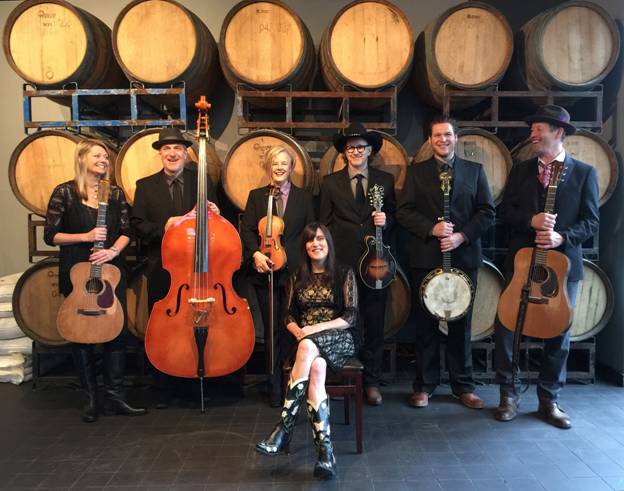
In Their Words: "For our sophomore record, Someday the Heart Will Trouble the Mind, on True North Records, we chose ‘Cheatin and Hurtin’ as the loose overall theme. Shari does a beautiful job of re-interpretting Dolly Parton’s version of the Johnny Cash classic, 'I Still Miss Someone.' The perfect last sad song on our CD." — Colin Nairne (mandolin)

"I love singing this beautiful Johnny Cash / Dolly Parton classic. There likely isn’t a soul who doesn’t relate to this song. And being surrounded by this remarkable gang of musicians, singers, and friends capturing the live performance is, to my mind, doing it the way it was meant to be done." — Shari Ulrich (fiddle and vocals)


Photo credit: Karen Walker Chamberlin

WATCH: Parsonsfield, ‘Barbed Wire’

Artist: Parsonsfield
Hometown: Leverett, MA
Song: "Barbed Wire"
Album: Blooming through the Black
Release Date: September 9
Label: Signature Sounds

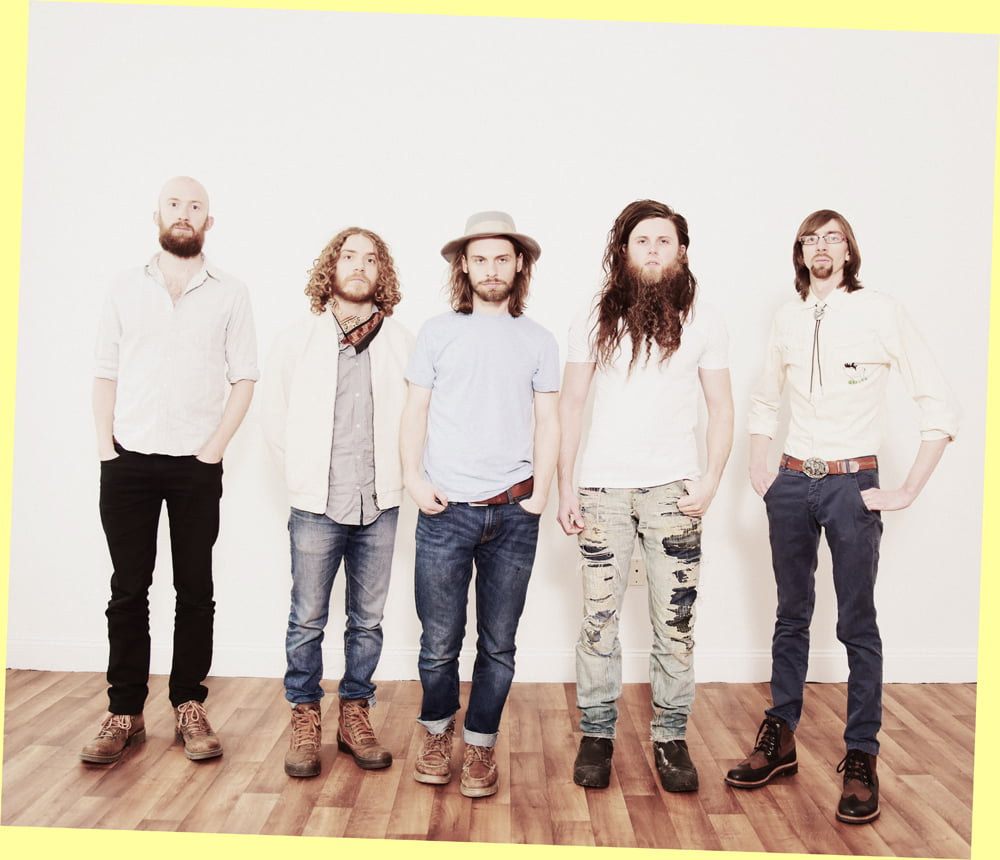
In Their Words: "We went into the studio with vague fragments. We were coming off our first tour through Wyoming and Montana, and the news was buzzing about building a wall across the Mexico border. The whole country was fragmented politically while we were, literally, in some very isolated places. It's easy to see how isolation can lead to fear and intolerance. That's sort of what shaped the song, lyrically. Meanwhile, Sam [Kassirer] helped us build the connective tissue needed to turn these vague notions and musical ideas to make one of our most experimental arrangements yet.” — Chris Freeman


Photo credit Shervin Lainez

LISTEN: 3hattrio, ‘Texas Time Traveler’

Artist: 3hattrio
Hometown: Southwest Utah
Song: "Texas Time Traveler"
Album: Solitare
Release Date: September 9

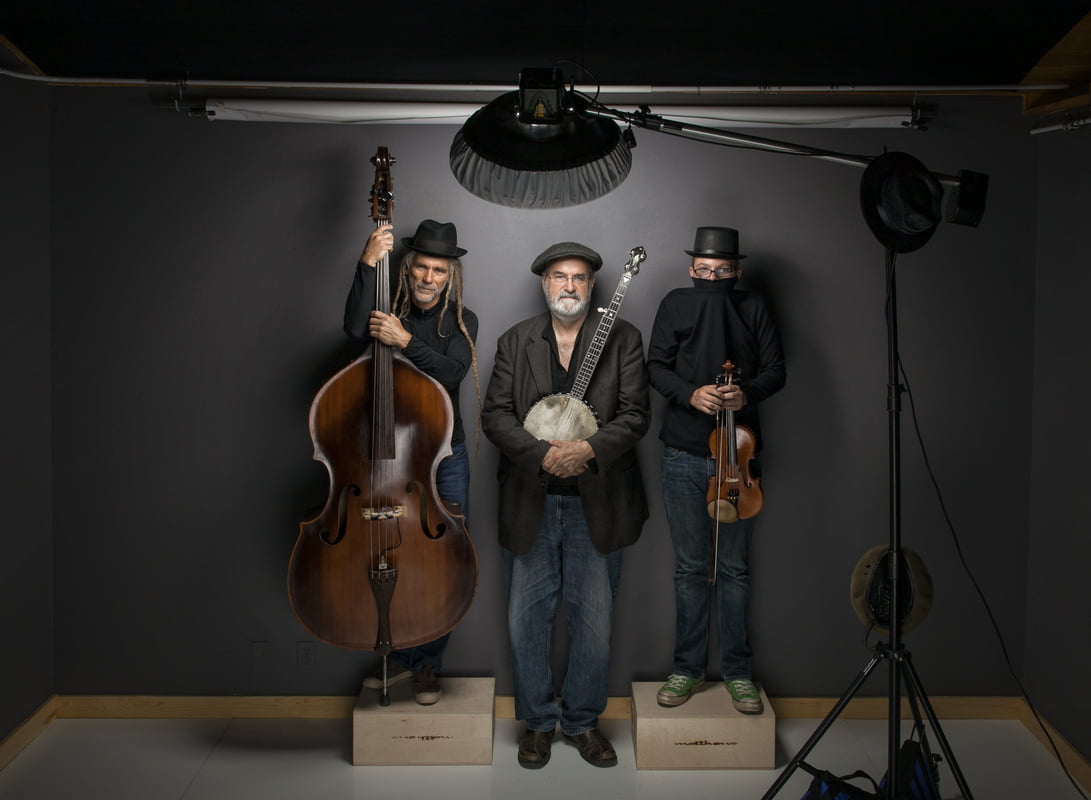
In Their Words: "'Texas Traveler' is a traditional, Black string-band tune that I’ve always loved. The simple words, 'Oh, early in the morning,' slay me. They fit so perfectly. I’ve played it on the banjo for years. It was really from that traditional launch pad the Eli and Greg took the tune into the realm of time travel. Each time we play it, I feel like we get going down the runway then lift off to another time.” — Hal Cannon (banjo, guitar, vocals)


Photo credit: Regina Pagles

Methjaw County Gazette: August Addition

ELECTION SEASON HEATS UP
The elections is heating up here in Methjaw County, and the race for Road Commissioner is the talk of the town.

After serving two tomulchulous terms in office, enacting sweeping mailbox right of way variance reforms and surviving three assassination attempts, current Road Commissioner Lulu Thompson is stepping down out of her office to go sell Mary Kay Products in Johnson City. The two candidates to replace her offer very different platforms for the voters. Candidate Clark Buckhannon is a self-employed roller skate repairman, lifelong county resident, and current Vice President of the Methjaw Valley Neil McCoy Fan Club. We spoke to him on the phone today and he said, "I'm tired of the out of control traffic, and I aim to do something about it. We have too many cars on the roads, which means we have too many roads. If you get rid of the roads, you get rid of the cars, and SHAZAM … no more traffic! There you go. It's that easy." He proposes a 25 percent reduction in county roads and road capacity by the year 2024. Buckhannon continued by saying, "I also think we should look at eliminating the town square and the intersection of Main and Broad. If people caint get to the other side of town, they won't leave their house so damn much."

Opposing Buckhannon in the election is local Beer Delivery Truck Driver Julio Suarez Santos. Santos said he sees a different vision for the county's road system. He spoke this morning to the Bitter End Chapter of the Sweet Little Old Ladies Tea Club that meets down at the Shoney's every Tuesday, and here's part of what he said: "We need more roads, not less. That Buckhannon guy is batshit crazy, man. More roads, and more lanes. You old people go drivin so slow, man. I got places to go. Also, I think we need a separate lane where you can text at your own risk and not get no tickets, man."

We will continue to update you about this race and others as Election Day approaches.

TRADING POST
Our Great Aint, Geneva Brothers, has totally blowed out her hip in the limbo contest down at the Methjaw County Senior Center and now is looking for a trailer and hitch for a Hoverround Scooter that will fit on to her 88 Plymouth Voyager Van. She bought one of them non-refundabul trips to the Grand Canyon with her friends Joy and Bernice and she ain't gonna be able to ride the bus cause they don't stop enough for her to stretch herself out. She still wants to at least get there for the mule ride down to the bottom and that's what she needs the hoverround for. If y'all have one of them, please let us know. Also, she has 25 quarts of her famous pickled grape bubblegum for sale or swap.

Editorial: INTERNATIONAL BLUEGRASS COMMUNIST AWARDS MAFIA EXPOSED
Hundreds of you'uns spoke out and signed the petition but the IBMA didn't listen. Instead of hiring the BIGGEST Appalachian-American celebrities — THE DARRELL BROTHERS — to host the awards show, they hired some young girl and a feller that's famous for sounding like George Clooney and singing with that Aveechy disco group. That ain't bluegrass one bit! They ought to change the name of their organization to International Communist Bluegrass Secret Society Establishment Mafia and call themselves A.L.B.I.N.O.s … Anything Like Bluegrass In Name Only. Why is it illegal to be famous for bluegrass in bluegrass music? We're way more famouser than them, by far, and the biggest name group in this entire gender of music. It's time to legalize the Darrell Brothers!!! We are in the planning stages of a demonstration at the IBMA and will let y'all know more about it soon.

Thanks for reading and remember to keep up with us here on the Bluegrass Situation and on Facebook and Twitters for more news from Methjaw County!

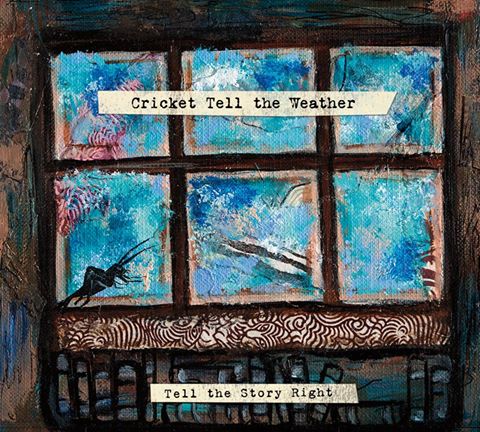
STREAM: Cricket Tell the Weather, ‘Tell the Story Right’

Artist: Cricket Tell the Weather
Hometown: Brooklyn, NY
Album: Tell the Story Right
Release Date: September 6

In Their Words: "The songs I want to write are the same songs I want to sing — the ones that feel true. This album is a compilation of songs I've written or heard that feel reflective of a particular moment or sentiment that has resonated with me over the past few years. I've been inspired by the myths we make for ourselves to help make sense of things — from our own personal narratives, to stories about and for our friends, to ancient Biblical stories and the re-imagining of them.

There's a lot of American traditional music referenced on this album, which reminds us of our country's oral history. I wanted to use that tradition to help us tell our own stories, going on right here and now, as true as we have the bravery to tell them. These songs are all brought to life by a collaborative of musicians and friends that have put a lot of time, talent, and heart into this album, and I'm incredibly grateful and honored to work with them — Doug Goldstein (banjo), Jeff Picker (guitar), Mike Robinson (guitar), Dave Speranza (bass), Sam Weber (bass), Eric Ritter (engineering), and Jason Borisoff (engineering/mixing/production)." — Andrea Asprelli


Photo credit: Brian Geltner