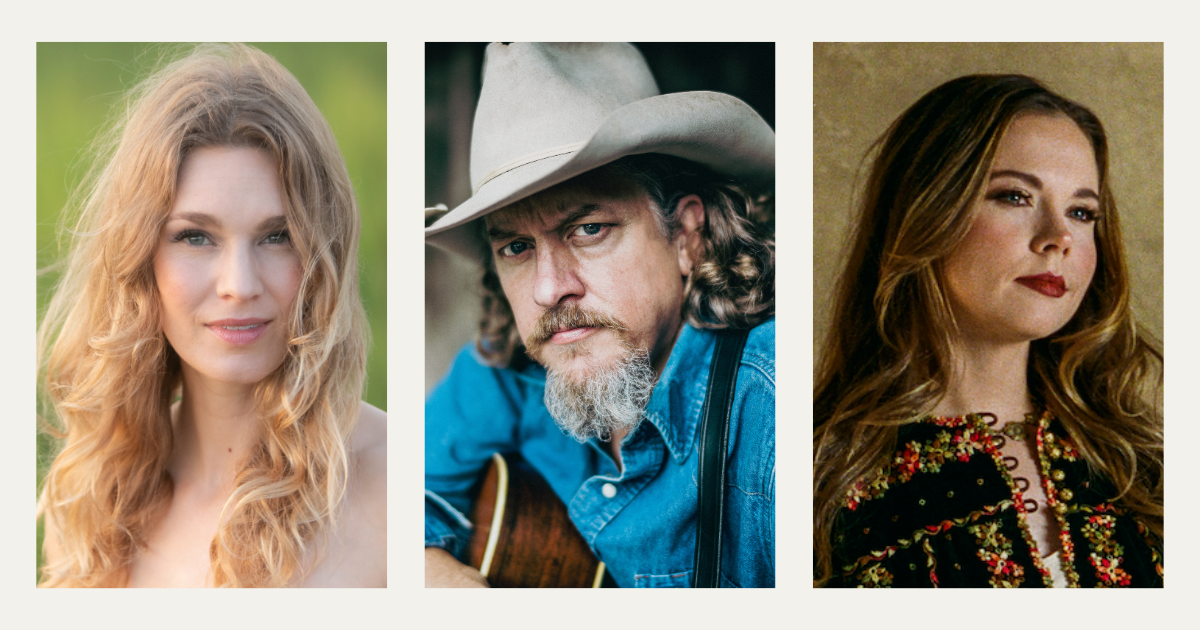
BGS Class of 2025: Best in Bluegrass

If you’re looking for a definitive, qualitative, and deliberate ranking; a firm and scientific rubric; or an unbiased, sterile reckoning of the best albums made in bluegrass this year, this roundup may not be for you.

Truthfully, as someone who’s worked, been acquainted, and become friends with many of the artists on this list in various capacities – from bio writing to onstage performances to media coverage to pickin’ parties to recordings and beyond – objectivity isn’t something I, personally, could establish anyway. And such year-end or other merit-based lists and collections aren’t all that interesting, are they, if not just to argue with their curation and selections.

I would not even attempt such things, because to me – to many of us – that’s not what bluegrass is about anyway. Bluegrass is about a feeling. It’s about innovation. It’s about virtuosity. It’s about tradition, loving it or retooling it or coaxing it or turning it upside down. It’s about adrenaline and a high pulse – and passing a mason jar around. It’s about feeling downtrodden or alone, shedding tears into that very ‘shine, and wailing along with the high lonesome sound. It’s folk music as much as it’s abject commercial country in “poor people drag.” It’s endlessly interesting and complex, but pretty damn simple, too.

Anyone with even an ounce of sense knows and understands that bluegrass can’t ever be objective. So indeed, why try? Why not acknowledge that bluegrass is always a matter of taste, of preference, of whimsical or capricious or convicted opinion? Bluegrass is always debatable, because, after all, bluegrass is always in the eye of the beholder.

In the eyes – and especially ears – of this particular beholder, these albums released in 2025 were the best, the most memorable, the most engaging. These collections stick to ribs like ham hocks, or stick in your throat like the tastiest clod of emotional peanut butter. They each advance, subvert, perpetuate, or wrinkle our core ideas of what bluegrass is – and what it can be.

Are each and every one of these LPs the best in bluegrass from 2025? Perhaps not… But also definitely yes.

Big Richard, Girl Dinner

In January, we gobbled down a heaping helping of Big Richard energy with the nourishing and nutritious Girl Dinner. The project may have been the band’s album debut, but this Colorado all-women quartet had already been making remarkable waves in the bluegrass, jamgrass, and string band scenes – and each of the members had extensive and glitzy musical resumés before they even convened. With a new album, Pet, on the horizon for February 2026, a signing with Signature Sounds, and an upcoming co-bill tour with fellow femme outfit Della Mae, we can tell this Girl Dinner is set to become an ongoing traveling feast.

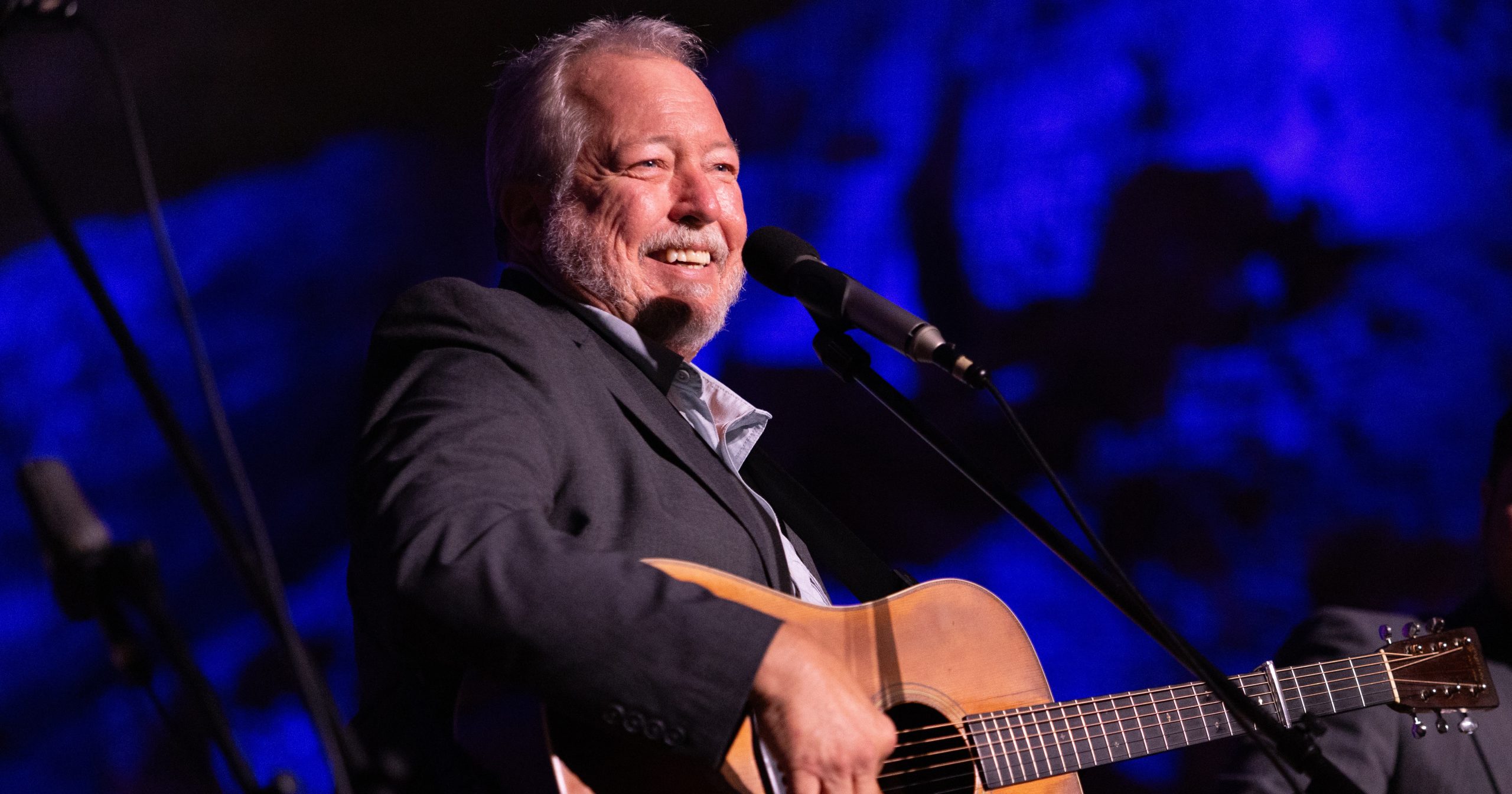
Shawn Camp, The Ghost of Sis Draper

I remember attending Station Inn shows in Nashville in the early 2010s and sitting with rapt attention – like Martha’s sister Mary at the feet of Jesus – as Shawn Camp performed his suite of Sis Draper songs with his star-studded bluegrass bands. Often you’d hear just “Magnolia Wind” or just “Sis Draper.” Sometimes he would perform a more complete handful of the tracks he had written, individually and with his hero and mentor Guy Clark, about the mythical roots music figure from his home state of Arkansas. Now, he’s collected the slate of material – what could easily become a musical or multi-disciplinary theatre work of some kind – into one commanding, lovely, and visceral album. These are timeless songs, written and rendered as only Camp could.

Jason Carter & Michael Cleveland, Carter & Cleveland

Every now and again a new collaborative duo album comes along and makes you think, “Oh! This must have been what it felt like when Skaggs & Rice was released.” Or Tone Poems. Or Ralph Stanley and Jimmy Martin’s First Time Together. A monumental occasion, captured for posterity’s sake in the studio. When fiddlers Jason Carter & Michael Cleveland released their duo debut, that was the feeling. History made in the present, a work that will be regarded as seminal ages into the future being enjoyed in real time. Carter and Cleveland have collaborated quite a bit over the decades they’ve known each other, but what a gift to have that musical friendship ensconced forever on this album. We hope there is more to come.

Wes Corbett, Drift

Look, if all modernist banjo players sounded like Béla Fleck and Noam Pikelny, that would certainly be great. But thankfully there are dozens of five-string pickers continuing to expand on the Fleck (and Pikelny and Munde and Keith and Trischka) school of Scruggs-style, each in their own veins. Corbett is one of the best. Though he blends effortlessly into Scott Vestal’s former role in Sam Bush’s band – or into any number of recordings and one-off pick-up bands that boast his playing in newgrass and bluegrass and beyond – Corbett is a true idiosyncratic banjo player and composer. Drift, his latest, often employs traditional techniques as tools for innovation and contemporary tunesmithing. He recalls the great melodic pickers while always sounding first and foremost like himself.

East Nash Grass, All God’s Children

A few years ago, if you had told me the ragamuffin band holding down Monday nights at Dee’s Country Cocktail Lounge in Madison, Tennessee, would in 2025 release an album you’d describe as “heartfelt, contemplative, and intentional,” I would have probably laughed. East Nash Grass were just as jaw-dropping good then as they are now, but with that down-home silliness and clumsy charm all the great bluegrass bands born of indentured residencies have had. All God’s Children finds the band all the way grown up (but not really), and they never forsake their banter-rich, never-know-what-you’re-gonna-get roots. That overlap – of silly and heartfelt and virtuosic and not too serious – is where most (if not all) of the best bluegrass is born, anyway.

Sierra Hull, A Tip Toe High Wire

Every single time Sierra Hull releases a new album, journalists and critics love to talk about how she’s now “found herself” and “found her sound.” This writer, however, disagrees. I first saw Hull perform when we were both in our mid-teens and then as now I knew, wholeheartedly, this is someone who knows who they are. Granted, Hull has done plenty of finding herself along the way, as we all do, but the songs and tunes of A Tip Toe High Wire were obviously not born of someone just locating her voice, musically or otherwise. They don’t feel experimental or out on a limb, they are each solidly in her wheelhouse. They do still push the envelope, though, and they all tell personal stories, draw on individual experiences, and chase those treasured Hull-ian melodies wherever they lead.

I’m With Her, Wild and Clear and Blue

Perhaps all future I’m With Her albums should be made while basking in the “Ancient Light” of a total solar eclipse, given the striking sonic successes of Wild and Clear and Blue. Is that cosmic magic why their second full-length release feels so distinct and metamorphosed from their debut? Is it all the years and personal growth in between recordings? It’s not like they reinvented the wheel, they’re the exact same band – but something feels different here. Whatever the special sauce may be, all of I’m With Her’s offerings over the course of the band’s lifespan have been stellar, but this latest full-length project stands apart. As long as Jarosz, O’Donovan, and Watkins are making music together, we will be unendingly grateful they offer us these recorded windows into their creativity.

Kissing Other ppl, Kissing Other ppl

Bluegrass and old-time birth new projects, bands, and collaborations all the time. Some are purposefully momentary, some are unintentional flashes in the pan, some are such long strings of last names ampersand-ed together you know there’s no future for them. We hope Kissing Other ppl are here to stay. Rachel Baiman and Viv & Riley joined forces on the album – and band – turning mainstream and pop songs into bluegrassy and old-timey string band arrangements that positively vibrate with passion and life. “Sad boi” covers these are not, though you may at times find them subdued or tender or mild. Long may this old-time Americana musical polycule reign.

Cameron Knowler, CRK

If you’ve been craving a contemporary storyteller and poet who utilizes the guitar as their medium – like Norman Blake or Doc Watson or Tony Rice or so many others – I am so pleased to step onto my soapbox to tell you about Cameron Knowler. Also a writer (at times for BGS), archivist, photographer, and visual artist, Knowler’s guitar-centered album, CRK, is almost anything but a “guitar album,” despite each and every composition centering on the instrument. The LP paints vivid and haunting musical portraits of a place Knowler loves, longs for – and despises or begrudges, too – Yuma, Arizona. Knowler wouldn’t even pretend to compare himself to Norman Blake or state that he’s deliberately taking up Blake’s heavy, heavy mantle in the 2020s, but I’m saying he is. Thank goodness.

Bryan McDowell, Bryan McDowell

You may recognize multi-instrumentalist Bryan McDowell from his time performing, recording, and touring with artists like Claire Lynch, Sierra Hull, Molly Tuttle, Alison Brown, and many, many more. He’s an incredibly talented sideman and session player, so when I first received his new self-titled solo album, I imagined the sort of formless instrumental project most pickers with similar resumés create. What a pleasant surprise to find a fully fledged, well-rounded, complete song sequence chocked full of original songs and McDowell’s lovely, honeyed singing voice. (I know Bryan and I didn’t know he sang like this!) It’s on me, really – I shouldn’t have been surprised at all – but McDowell’s skill set is clearly no longer just geared towards backing others up. I am looking forward to seeing what’s next.

Shelby Means, Shelby Means

Speaking of artists ready to step out of the role of sideperson or session musician. Bassist, singer, and songwriter Shelby Means’ debut solo album is fantastic. Since departing Molly Tuttle’s Golden Highway, Means has already built striking momentum as an artist unto herself, and the quick success of her album has played a huge role in that. With originals, tasteful (and surprising) covers, and a star-studded roster of pickers – Tuttle, Ron Block, Michael Cleveland, and more – the project certainly doesn’t feel like a debut. And it shouldn’t, Means has crisscrossed the country and the globe for decades, she’s more than ready to step to the center of the stage. She’s done it before, she’s doing it again – and now a lot more frequently, I’d bet.

The Onlies, You Climb the Mountain

All the best bluegrass is old-time these days. (I say that over and over again, here’s what it means.) While mainstream bluegrass sounds more like ‘90s country played by a bluegrass string band, or jamgrass, or “MASH” – all of which depart greatly from the 1945/1946 sound of its origin – modern old-time becomes more and more of an audio swatch of essential parts of what bluegrass used to sound like and used to include. One album this year that epitomizes this phenomenon is the Onlies’ You Climb the Mountain. Is it phenotypical bluegrass? Oh, no. It’s not. But it also has plenty of textures and tones endemic to original bluegrass that are becoming increasingly rare in its modern forms. I shouldn’t sell the Onlies short, though, they aren’t here because they’re “better bluegrass” than bluegrass, or more authentic, or more “real.” They’re here because this album is excellent, on its own terms.

Danny Paisley, Bluegrass State of Mind

Danny Paisley is celebrating 50 years of bluegrass with his latest album, Bluegrass State of Mind. Still looking for new challenges and trying to add fresh sparkle to his dyed-in-the-wool traditional sound, the new LP includes Dobro (for the first time), drums (sacrilege!), and a bit of an Americana lean. (Don’t you dare call it “grassicana.”) To BGS readers, the project will most likely sound like straight down the middle bluegrass of the highest order. Longtime fans of Paisley & the Southern Grass, though, may notice that very sparkle Danny has been chasing, as he targets new audiences and still sets new goals, five decades into his career as a bluegrass tradesman. It’s the family business.

Missy Raines & Allegheny, Love & Trouble

Missy Raines is one of the winningest musicians in the history of IBMA, amassing 10 Bass Player of the Year trophies over the years and and a handful of honors in other categories, as well. She may have won her biggest prize, though, when she landed on her latest band lineup, Missy Raines & Allegheny, a few years ago now. Her second album with the group, Love & Trouble, continues building upon the chemistry and collaboration that dripped from 2024’s Highlander. They often rise to the occasion of my preferred nickname for them, Mashy Raines & Allegheny, but they remain a consistently dynamic group capable of gritty, barn-burning bluegrass and contemplative and emotive slow burners, just the same.

Red Camel Collective, Red Camel Collective

They began as Junior Sisk’s backing band, and like many of the great “spinoff” bluegrass bands of yore – Quicksilver (Authentic Unlimited), the New South (American Drive), and many more – Red Camel Collective have quickly shown they’ve got the chops to take the same route. Their debut self-titled album was released earlier this year and was made at Sisk’s suggestion – and with his blessing. (He regularly steps off the stage at his own shows to spotlight the Collective and their music, as well.) This band of lifelong pickers have clocked so many miles playing bluegrass and executing the visions of others that, when charting their own course as Red Camel Collective, they’re able to sound exactly like themselves. It’s tough to sound singular in modern, radio-inclined bluegrass. But Red Camel Collective do. Is that why they won New Artist of the Year at the IBMA Awards this fall? It sure ain’t coincidence.

Sister Sadie, All Will Be Well

Sister Sadie’s All Will Be Well is like dropping the needle on a 45-minute bluegrass therapy session. I don’t say it flippantly or sarcastically; it is indeed shocking the level of earnest contemplation, processing, emoting, and growth evident in the songs on this album. At the same time, when you hear the tracks played down at a bustling bluegrass festival or a packed rock club or a subdued listening room, they never feel twee or try-hard or sodden with greeting-card level sentiments. They never feel heavy, actually – this is fun, often hilarious, party-ready music. Dance-along music. Shout-along songs. You’ll laugh, you’ll cry. (At the vocals alone.) These are real human ideas, thoughts, and feelings set to bluegrass. Imagine.

Larry Sparks, Way Back When

How does this album seem like it could have been pulled from any year, any decade of Bluegrass Hall of Famer Larry Spark’s sceptered career? Because it could have been, damnit. He’s Larry Sparks. Way Back When sounds warm and live, like listening to tape or vinyl over earbuds or cell phone speakers. Like being in the room with that resonant, vibrant, and patinated voice. The material is timeless, but never tired or lost in retrospection. Sparks is obviously making bluegrass in the present, as he always has. He just sounds exactly like this. And the way he talks about making music – as he did in a BGS interview set for publish in January 2026 – you can tell, for him, it’s essential to inhabit the present and inhabit the song. Bluegrass really is his calling, and we’re all all the better for it.

Billy Strings & Bryan Sutton, Live At The Legion

One of the best bluegrass albums of the year? Of course. One of the best live shows and tours of the year? Doubly, triply, quadruply of course. You’d think it would be brain-melting to listen to hours of two acoustic guitars and an electric bass pick through bluegrass, fiddle tunes, and Doc Watson classics, but it was divine. Trance-like – not with eyes glazed over, but on the edge of your seat. I wasn’t at that show at the Legion when they tracked the album, but was lucky enough to catch their show this fall at the Ryman in Nashville. If you weren’t so fortunate, don’t worry, ‘cause this isn’t an incredibly exclusive club. This record really does capture all that’s ineffable of being “in the room.” (No one is surprised.) Turns out, you can actually bottle and sell it, if you’re these two. Now if only you could buy the skillset, too…

Thompson the Fox, The Fox in Tiger’s Clothing, vol. 1 & vol. 2

Maybe once a year I trip over or into a new music discovery that gets me so excited I start getting annoyed with myself from having to hear me recommend them over and over again. With Thompson the Fox, it never got annoying (not to me, at least) and the excitement of turning folks onto their music still hasn’t worn off. So here we are, again. If this is your initiation, don’t thank me, thank the people who sent Thompson the Fox my way. Jazz, newgrass, bluegrass, bebop, ragtime, and oh-so-many more styles and textures combine in a completely fresh and distinctive form. I’ve never heard new acoustic music quite like this, yet it’s clearly rooted in that tradition. The simple math of xylophone, banjo, bass, and drums doesn’t quite math, but this group sounds resplendent, rich, and fascinating. Takumi Kodera on banjo is a revelation and Rie Koyama (xylophone), Akihide Teshima (bass), and Tomohito Yoshijima (drums) complete the Tokyo-based ensemble.

Cristina Vane, Hear My Call

Cristina Vane exists at an intersection of roots music that far too few inhabit, because very few can manage there. Vane can. She does blues, bluegrass, old-time, country, and Americana. Sometimes blended, sometimes compartmentalized. She’s got short-form, short-attention-span, vertical-video appeal for days, but her songs are never vapid or playing to any kind of commercial common denominator. Her instrumental skills and the passion for learning and song collection across roots and folk genres that she exhibits bring it all together. I’d not want to subject either woman to the corniness of comparing one to the other, but for folks who love Sierra Ferrell and are looking for more artists in a similar roots-meets-mainstream space, Cristina Vane can do it. She is doing it.

Vickie Vaughn, Travel On

Vickie Vaughn has won IBMA Bass Player of the Year for three years in a row and on the heels of that remarkable accomplishment, she’s released her debut full-length solo album, Travel On. Produced by Deanie Richardson of Sister Sadie, it’s Vaughn’s first recording under her own name released in 10 years. Original songs and covers are packaged in a sound that’s always trad bluegrass, but often infused with a dash of Osborne Brothers from the ‘80s or Jim & Jesse with a drum kit. It’s an Earl Scruggs Revue sort of flair, troubadour-steeped bluegrass-country. And it’s divine.

To conclude this long yet non-exhaustive and surely myopic list of the best bluegrass albums of 2025, let me leave you with this gentle reminder. What’s bluegrass and what’s best are always in the eye – and the ear – of the beholder.

What was your favorite bluegrass album of 2025? Let us know on social media. We hope you discover some new music to love in our BGS Class of 2025 and we can’t wait to make new discoveries with you, too.


BGS Staff contributed to this list.

Photo Credit: Shelby Means by Hunter McRae; Shawn Camp by Neilson Hubbard; Sierra Hull by Spencer Showalter.
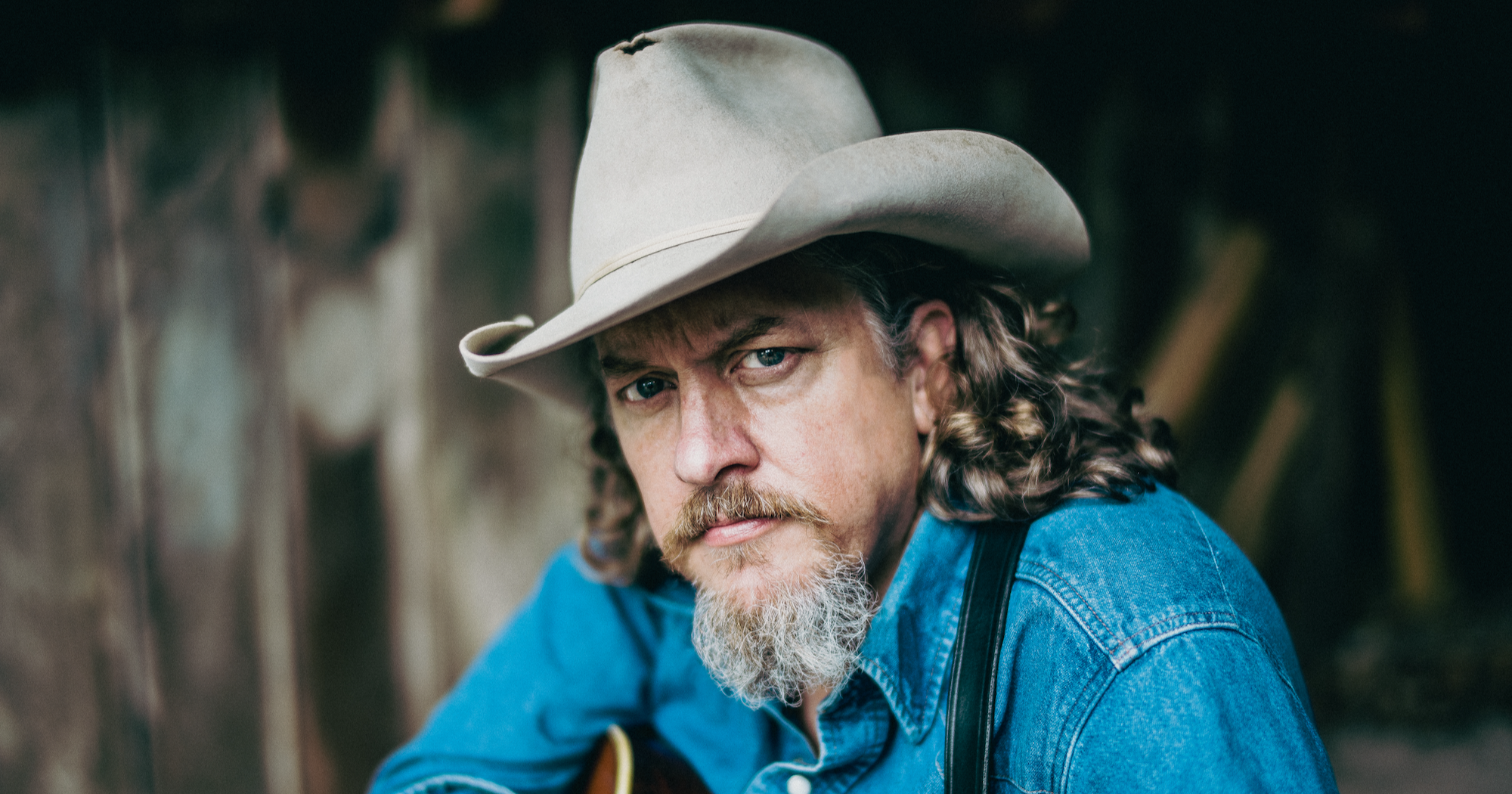

Shawn Camp Pays Homage to A Childhood Hero on The Ghost of Sis Draper

From the half dozen records under his own name to hits co-written for Garth Brooks, Brooks & Dunn, Blake Shelton, and Josh Turner; playing with Jerry Reed, Alan Jackson, Trisha Yearwood and the Earls of Leicester; or his work on Willie Nelson’s GRAMMY winning album, A Beautiful Time, in 2023, Shawn Camp has done just about everything in his 30+ year musical career.

But with his latest project, The Ghost Of Sis Draper, he’s able to cross off another box off his bucket list – making a concept album. According to the Arkansas native, the album’s origins trace back to the late ‘90s with his close friend and longtime collaborator Guy Clark, centering around a larger-than-life figure from Camp’s childhood named Sis Draper.

After laying the project’s foundation with the lead track “Sis Draper” one fateful day, the pair later penned “Magnolia Wind” soon thereafter with other songs slowly trickling out whenever they reconnected in the years that followed. Once the songs were all written, Camp took them to Nashville’s famed Cowboy Arms Hotel and Recording Spa – now the Clement House – where he knocked the entire record out in only one day.

Per Camp, the immediacy of his time in the studio helped to keep its collective sound cohesive – like Willie Nelson’s Red Headed Stranger and other standout thematic country albums that came before it. And, by the sound of it, there’s more like it coming soon.

“I’ve got lots of ideas for concept albums and songs I won’t release until I have a record like that to include them on,” Camp tells BGS. “I’ve got about 14 songs on another that I started recording last year that were inspired by Johnny Cash and Cowboy Jack Clement that’ll likely be out next year as well. It’ll be a lot different from the Sis Draper stuff, because we recorded it like Johnny Cash & The Tennessee Two – stripped down with an electric and upright bass – but in a similar fashion all belong together.”

Ahead of the release of The Ghost of Sis Draper, Camp caught up with BGS to discuss his relationship with Clark, musicals, the album’s old-time ties and more.

When did you first connect with Guy Clark?

Shawn Camp: I had a country label deal with Warner Bros. Records in the early ‘90s and in 1993 the people there asked me if I could write with anyone in Nashville, who would it be? I shot for the moon and said, “How about Guy Clark?” and before I knew it I was sitting across the room from him writing [“Stop, Look And Listen (Cow Catcher Blues)”] from my second album, 1994, that Warner shelved until 2010.

Guy was known at the time for writing songs that in parentheses included a second title he’d refer to them as and that was one of them. When you go to the Country Music Hall Of Fame now his entire writing room and workshop is on display there and it’s exactly the way it was the day he died. You can walk up to the glass and see his writing tables, his ashtrays, his guitars and all of his work tapes that he would record the day he wrote each song. He would spin around and write the title on the spine of a cassette to stick on a rack on the wall behind him. If you look into that room right now you can still see the cassette for “Stop, Look And Listen” about waist-high two or three feet from the wall on the right. It’s just a real treat to see his work environment that I spent so much time in up close again.

Years ago, I remember Guy getting mad at a fiddle he couldn’t get into tune so he smashed it into smithereens and stuck it up in his attic in a fiddle case. He got to telling me about it one time and crawled up there and set it down on his bench and it’s still laying there to this day. It’s been wild to see how they number and photograph everything so they can get it back to exactly how it was – it was a real trip to see.

How did the idea for this Sis Draper album first come about a quarter century ago?

I was just sitting around with Guy trying to write a song, but got stuck. It led to us talking for an hour or so until I eventually got around to telling him about a lady I knew in Arkansas named Sis Draper. She had a big beehive hairdo and a fiddle she carried around in a coffin case that she’d shred these old-time fiddle tunes on. Before I ever saw her, my grandpa and Uncle Cleve built her up as such a superstar that she was a world traveler in my eyes, even though in reality I don’t think she did much traveling at all.

After telling Guy about her I remember him leaning back in his chair, taking a big drag off a cigarette, and saying, “That’s your story right there,” which led to us writing more songs about Sis Draper and my family that together make up this new record.

Were there any differences in how you approached writing or recording this project compared to your other non-conceptual work?

We recorded it all in one day with the same musicians, so when you listen it doesn’t sound like a hodgepodge of different sessions and trying to make them fit together, because it basically happened live. In the past I’ve spent eight or nine months just recording the songs, but with Sis Draper it was easier to streamline because all the songs already sounded similar and fit together.

What motivated you to keep returning to this project through the years?

It’s taken a long time to come to fruition. [Laughs] We first started in the late ‘90s and would work on it anytime we got together and didn’t have other stuff to work on. We’d always thought about it being a musical play too. I even have started writing dialogue to turn these songs into that. It’s always been in the back of my mind, but now that Guy’s gone it felt like I needed to go ahead and get it into this form.

What specifically interests you about a play format?

I’ve always loved acting, even though I haven’t done much of it. I’d love to do it more and a play would be a cool way to accomplish that.

Several of the songs on Sis Draper have roots in old-time music. What made you want to weave those influences through these songs?

We wanted to pull from those old fiddle tunes that I heard Sis and others playing when I was a kid during jam sessions. Like “Lost Indian,” which is what “Big Foot Stomp” was written around. The common thread of it all was always an old fiddle tune melody, so I wanted to reference those songs in any way I could.

You and Guy both collaborated a lot with Verlon Thompson through the years. With that in mind, what did it mean to have him aboard to co-write “Old Hillbilly Hand-Me-Down” with y’all?

Verlon is one of the greatest songwriters around and an even better person. I don’t do a lot of co-writing with him, but we’re the best of friends. I love making music with him because we play off of each other so well.

The only song on the album you weren’t involved in writing was “New Cut Road,” but even so it still ties back to Guy and your childhood?

Yes. Guy wrote the song originally about his grandaddy Coleman Bonner who played fiddle in Kentucky. On the play-version of this album there’s dialogue that ties it all together. But when I was a kid, I started playing fiddle at 15. I remember standing on a ladder holding up a piece of sheet rock to the ceiling in a house my dad and I were remodeling. We had a little Gilligan’s Island radio playing across the room and Bobby Bare’s version of the song featuring Ricky Skaggs came on. It really inspired me to be a fiddler even though I didn’t know Guy wrote it at the time. Six short years later I was in Nashville, so it just felt like it belonged in this Sis Draper suite of songs.

Another tune I wanted to ask you about was “Grandpa’s Rovin’ Ear,” which I understand you originally constructed as a poem?

Guy and I wrote all those lyrics in different places, but for the longest time didn’t have a melody to go with it, so I made one up before going in to record. Similarly, “The Checkered Shirt Band” started as a rap that we played without a melody, almost like a group chant. I put melody to that right before heading into the studio, as well and was inspired by the old-time tune “I Don’t Love Nobody.”

The guy’s names I mention on [“The Checkered Shirt Band”] – Rodney, Chuck, and Rodge – are all band members from my days with the Grand Prairie Boys in Arkansas. We’d dress up like Bill Monroe & the Blue Grass Boys. I recently went back there to receive a Lifetime Achievement Award from the Arkansas Country Music Awards and got those boys together to play for the first time in years. We played that song and a couple others from the album and it was such a treat. It meant a lot to not only do that, but shout them out by name in the song as well.

The end of Sis Draper includes “Hello Dyin’ Day,” the last song you and Guy ever recorded together, sandwiched between “The Death Of Sis Draper” parts 1 and 2. What did it mean to you to include that one here?

It represents the deathbed confessions of Sis Draper. It just felt like The Ghost Of Sis Draper to me, due to the mood of it all. It’s her last words, but when we return to “The Death Of Sis Draper” in the medley it’s like Sis’ funeral, so it all just kind of belonged together in my mind. It’s about 10 minutes of music that all goes together, so hopefully it’ll be listened to that way and not dissected too much.

With that being said, what are your thoughts on song sequencing? It sounds like you designed this Sis Draper record as something intended to be listened to in order?

We’ve really gotten away from the arc of storylines on albums. It’s a two-minute world out there now, so if you can get just one single out that’s all a lot of people shoot for anymore. I miss those records like Red Headed Stranger that take you through all different kinds of moods and serve as an escape from the real world. I enjoy going on those little trips and hope listeners enjoy going on this Sis Draper adventure with us.

What has the process of bringing The Ghost Of Sis Draper taught you about yourself?

It’s taught me not to hesitate and to make the move to record stuff when it crosses your mind because if you don’t it may never happen. It initiated a whole new lease on life for me because I hadn’t put out a solo album since 2006. A lot in the world has changed since then just like it has in my own life, but I’ll never stop wanting to make music.


Photo Credit: Neilson Hubbard

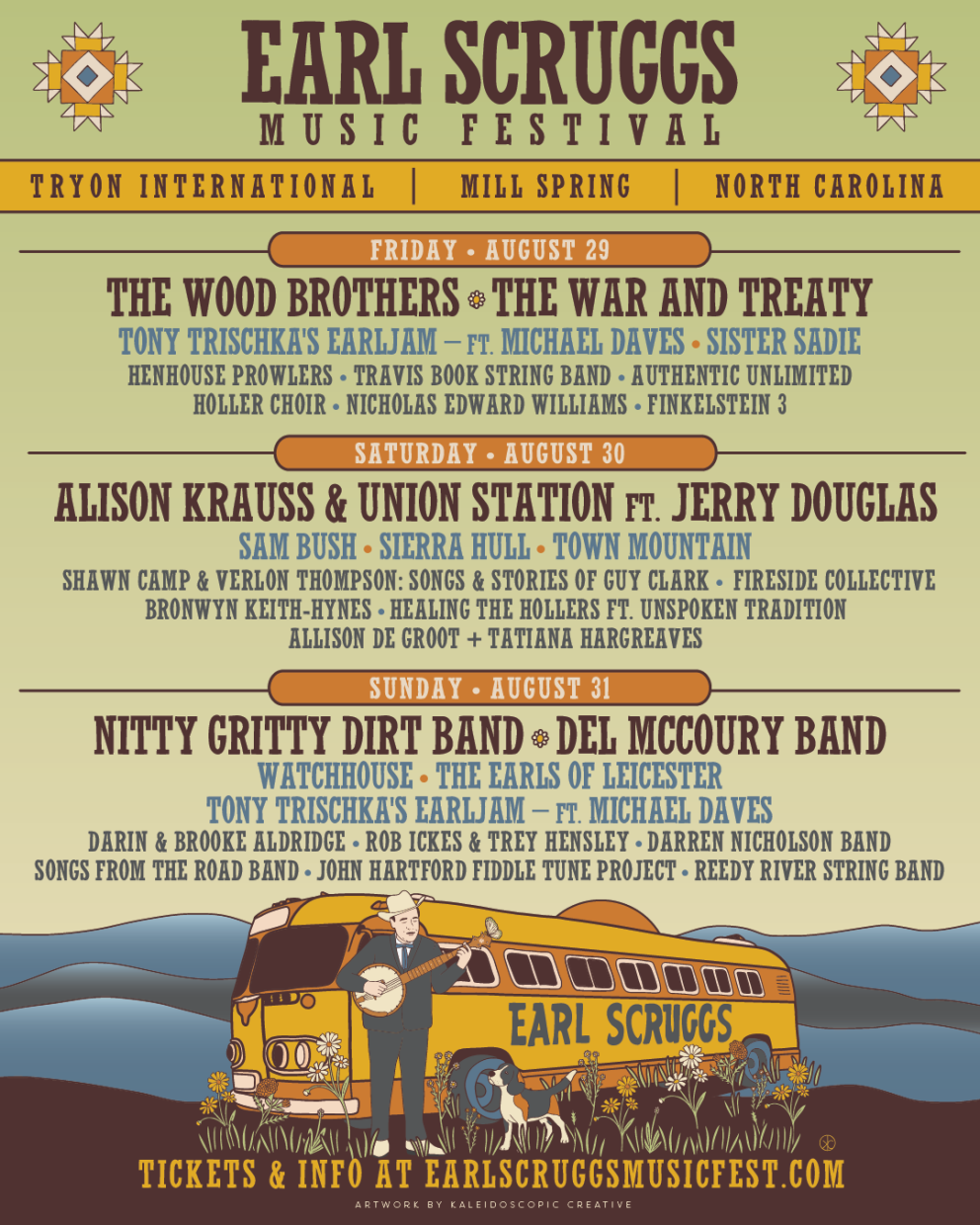
The Must-See Bands and Artists of Earl Scruggs Music Festival 2025

We’ve said it before, we’ll say it again: Earl Scruggs Music Festival is a one-of-a-kind event. BGS is incredibly excited to return for our fourth consecutive year of partnership with ESMF. As we’re packing our bags for Mill Spring, North Carolina, and making our festival plans and short lists we can’t wait to be back in the foothills on Earl Scruggs’ home turf celebrating bluegrass, old-time, country, and Americana of the highest order.

Held each year over Labor Day weekend at the gorgeous and luxurious Tryon International Equestrian Center, ESMF is co-presented by Tryon International, the Earl Scruggs Music Center – located just down the road in Shelby, the county seat near Earl’s hometown of Boiling Springs – and WNCW. This year, headliners include the Wood Brothers, the War and Treaty, Alison Krauss & Union Station, the Del McCoury Band, and a very special performance by the Nitty Gritty Dirt Band to wrap up the stellar weekend. Of course, there’s plenty more amazing music from across the roots music spectrum set for the weekend, too (see the lineup below), plus plenty of great workshops and panels, jam sessions, and more.

The BGS team spends a lot of time attending, programming for, and covering roots music festivals, so it takes a lot for events to stand out from the crowd. With their lovely grounds, thoughtful footprint, excellent vendors, eclectic and traditional lineup, and all of the many connections this event has – with the Scruggs family, the surrounding area, and the artful communities of North Carolina, South Carolina, and the entire Appalachian and Southeastern region – ESMF continues to raise the bar for bluegrass festivals.

Below, check out a quick list of bands, musicians, and artists we can’t wait to catch at Earl Scruggs Music Festival this year. And make plans to join us – whether this year or in the future! – at one of the most enjoyable bluegrass festivals on the scene today.

Shawn Camp & Verlon Thompson: Songs & Stories of Guy Clark 

It’s always a treat when these two longtime collaborators and co-writers get together to pay tribute to their friend, mentor, and hero, the late great Guy Clark. As evidenced by this Suwannee Springfest video from 15 years ago, Camp and Thompson have been performing their Songs & Stories of Guy Clark show in some format for quite a while now, but this feels like a particularly timely chance to catch the pair performing from their repertoire of co-writes with Clark and sharing stories of their times collaborating and creating with the songwriting legend. Camp’s upcoming album, The Ghost of Sis Draper, features songs that he wrote with Clark – including one also penned with Thompson – and revisits the fantastic based-on-a-true-story narrative of a folk hero fiddler by the name of Sis Draper. We can’t wait to catch Camp, Thompson, and as many Sis Draper songs as possible.

Saturday, August 20, Silver Spoon Saloon, 12 pm to 1 pm, “The Silver Spoon Sessions with Craig Havighurst”
Saturday, August 30, Foggy Mountain Stage, 6 pm to 7 pm.


Allison de Groot & Tatiana Hargreaves

These days, sometimes the best bluegrass you can find is old-time. This incredible duo often falls into that category directly, with endless drive, expansive pocket, and a penchant for listening, responding, and following each other that’s nearly familial. We’ve caught de Groot & Hargreaves shows countless times and still never tire of these two instrumentalists, singers, and writers unspooling musical moments together and reweaving them in realtime. Though de Groot hails from Canada and Hargreaves grew up in the Pacific Northwest, this is one of ESMF’s acts whose music, and the traditions that have made it, is most deeply rooted in this lush artistic region of the world – Western North Carolina.

Saturday, August 30, Legends Stage, 9 am to 10:30 am, “Bluegrass Over Easy Breakfast.”
Saturday, August 30, Foggy Mountain Stage, 2 pm to 3 pm. 


Healing the Hollers featuring Unspoken Tradition

Western North Carolina-based bluegrass band Unspoken Tradition will host a special livestream and concert at ESMF on Saturday, August 30, featuring performances by Josh Goforth, Lance Mills, Laura Boosinger, Nest of Singing Birds, Zoe & Cloyd, and more. Healing the Hollers will shine a spotlight on the impacts and devastation of Hurricane Helene and the ongoing efforts of folks in the region – like each of the artists and bands on the show bill – to keep rebuilding their communities, neighborhoods, hollers, and homes. BGS is proud to be promoting Healing the Hollers, as well, and we’ll even be carrying the livestream of the set on our Facebook page. There’s plenty of work still to be done to heal and move forward after Hurricane Helene, but with a roster of artists like these and a community like that which surrounds ESMF, we know we’ll all get it done together. That’s the exact kind of Resilience Unspoken Tradition are talking about on their brand new album – which we hope we’ll hear from during Healing the Hollers, too.

Saturday, August 30, Foggy Mountain Stage, 3:30 pm to 5 pm. Stream live on Facebook.


Bronwyn Keith-Hynes

Oh, the places she’ll go! Award-winning fiddler, singer, and songwriter Bronwyn Keith-Hynes has not slowed down for a moment since her time in Molly Tuttle’s GRAMMY-winning ensemble, Golden Highway, came to a close earlier this summer. She’s got a packed tour schedule of sold-out or nearly sold-out dates across the country, rapidly building an engaged and energetic fan base behind her style of jamgrass built on a trad foundation. It feels like, in many ways, we’ve gotten to watch Keith-Hynes “grow up” as an individual artist so each time we get a chance to catch her band live, we enjoy marking the leaps and bounds she’s taken since the last time. She’s sure to impress and inspire yet again – and who knows what impeccable pickers she’ll have out on the road with her, too!

Saturday, August 30, Foggy Mountain Stage, 7:45 pm to 9 pm. 


Alison Krauss & Union Station Ft. Jerry Douglas

If you haven’t gotten to catch Alison Krauss & Union Station on their most extensive headlining tour in nearly fifteen years, Earl Scruggs Music Festival is your chance! With just over four weeks left in their continent-spanning Arcadia Tour, we’re the lucky ones for being able to catch the iconic band and their iconic songs at Tryon International. Social media videos from the tour show quite a few fan favorite tracks have made the set list alongside the bevy of new material from their brand new album, Arcadia. Veteran bluegrass picker and vocalist Russell Moore, who was just tapped this year to join the group, is certainly holding his own on this gig of a lifetime. We can’t wait for our evening with AKUS in North Carolina!

Saturday, August 30, Flint Hill Stage, 9 pm to 10:30 pm. 

(Alison Krauss & Union Station were our Artist of the Month in April. Explore our exclusive coverage here.)


Nitty Gritty Dirt Band

Heartbroken that the one and only Nitty Gritty Dirt Band are on their farewell tour at the moment? Us too! With only a handful of dates left in their All The Good Times: The Farewell Tour, the existential woe is creeping in fast. The best way to stave off the end-of-an-era scaries is to be there at ESMF for their headlining set, the culmination not only of a superlative festival weekend, but of a decades-spanning career of a seminal string band who took Earl Scruggs’ legacy places it wouldn’t have ever gone without them. There could be no better way to cap the main stage at Earl Scruggs Music Festival this year than with NGDB. Of all the “must-see” happenings at this year’s event, this set is truly top of the list. Once in a lifetime occurrences happen every year at ESMF.

Sunday, August 31, Flint Hill Stage, 7:45 pm to 9:15 pm.


Sister Sadie

You have not one but two chances not to miss this bluegrass supergroup at Earl Scruggs Music Festival this year. Fresh off the release of their new album, All Will Be Well, Sister Sadie are sounding better than ever – and these are IBMA Award-winning veterans, right here. Their new album is full of emotion, contemplation, and redemption while at the same time it’s just… plain fun. They strike a deft balance between heartfelt songwriting, gut-wrenching narratives, hair-raising harmonies, and bluegrass virtuosity that will make you hoot, holler, and dance. We can’t ever get enough of Sister Sadie, so you may catch us on the barricade for both of their ESMF appearances.

Friday, August 29, Flint Hill Stage, 5 pm to 6:30 pm.
Friday, August 29, Foggy Mountain Stage, 10 pm to 11:30 pm.

(Sister Sadie were our Artist of the Month in July. Catch up on our AOTM content here.)


Watchhouse

When you’ve been on the roots music beat like we have for more than 12 years, festival season isn’t just about festivals – it’s like a mobile family reunion. We can’t wait to reunite with our old pals Andrew and Emily – and in North Carolina, too! – for Watchhouse at ESMF. Like Earl Scruggs himself, Watchhouse carefully and intentionally synthesize so many different textures and inspirations from North Carolinian folk music through their own creativity and songcraft, creating something totally brand new that’s still deeply rooted in tradition and the region. That’s just one small reason why they’re a perfect lineup selection for this amazing festival. We’re geared up and ready to hear new music from their new album, Rituals, during the weekend. See you there!

Sunday, August 31, Silver Spoon Saloon, 3:30 pm to 4:30 pm, “The Silver Spoon Sessions with Craig Havighurst”
Sunday, August 31, Flint Hill Stage, 6 pm to 7:15 pm.

(Watchhouse were our Artist of the Month in June of this year. Dive into more on their new album here.)

The Wood Brothers

Blending blues, Southern rock, alt-country, and jam band music, the Wood Brothers have an eclectic and often psychedelic approach to roots music that’s all their own. They pop up along the roots music genre spectrum with ease at every waypoint, from string band folk to grungy, hard rock and roll – like the most exciting game of musical aesthetic whack-a-mole you’ll ever play. There’s something for every kind of listener in the Wood Brothers’ catalog of music and their brand new albumPuff of Smoke, is as entrancing and diverting as ever. We’ll be camped out in the grandstand for this set, for sure!

Friday, August 29, Flint Hill Stage, 9 pm to 10:30 pm. 

Default icon

These bands and artists listed above are truly just the tip of the iceberg for everything that’s going on this year at Earl Scruggs Music Festival. You also won’t want to miss Town Mountain, Sam Bush, Sierra Hull, the John Hartford Fiddle Tune Project, Tony Trischka’s EarlJam, Fireside Collective, the Earls of Leicester, the Del McCoury Band, and still many more.

Check out the full schedule of panels, chats, performances, and acts here on the ESMF website and make plans to join us this year or in the future in Mill Spring, North Carolina, for a lovely weekend of bluegrass and roots music.


Lead image: Tanya Tucker performs on the Flint Hill Stage during ESMF 2024, shot by Jess Maples.

“Not Easy Shoes to Fill” – Russell Moore Gets the Gig of a Lifetime: Alison Krauss & Union Station

Russell Moore has been a professional musician and bandleader for 40 years and, though he wouldn’t describe himself as complacent, he does readily admit he generally knows what he can expect from that job.

“It’s almost like, ‘Okay, I know what this week is going to bring and what next week is going to bring,’” he shares over the phone. “It’s the same thing, even though you try to explore different opportunities … I never would have thought that at this point in my career that this opportunity would arise.”

Back in early December 2024, Alison Krauss & Union Station announced their first headline tour in nearly ten years and, with that announcement, that Moore himself would be joining the band. The bluegrass community responded with an outpouring of love for Moore, his talent, and his iconic, long-running bluegrass band IIIrd Tyme Out while marveling at how perfectly he and his voice would fit into one of the most prominent, best-loved, and best-selling string bands in music history.

Once fears of IIIrd Tyme Out being benched were totally allayed – the band has lasted 34 years so far and has no plans to curtail their efforts with Moore’s new gig – the ‘grass community set their sights on the next announcement from AKUS, which came in January: Arcadia, their first album since 2011’s Paper Airplane, will release March 28.

Arcadia will be the starting pistol for a breakneck six-month tour that will find Alison Krauss & Union Station (and their newest member, Moore) criss-crossing the continent to perform at some of the most notable venues and festivals in the scene. Many of which Moore will find himself checking off his bucket list for the very first time.

To mark the occasion, and as we anxiously count down the weeks to Arcadia and the Arcadia Tour, we sat down with Russell Moore to chat about his career, his plans for IIIrd Tyme Out, and how energized and excited he is by this once-in-a-lifetime chance. As he puts it, he has very big shoes to fill – but perhaps he is the only one concerned about having the chops to fill them.

You’ve been leading your own band for so long and you’ve been the person to “make the call” – hiring a sideman, or hiring someone to fill in, or finding a new band member. So how does it feel at this stage in your career to get this kind of call to join a band like Allison Krauss & Union Station? How does it feel to be on the receiving end for a change?

Russell Moore: What a blessing. It’s definitely the other side of the fence! For 34 years I’ve been running IIIrd Tyme Out and making the decisions or helping make the decisions. That’s a job in itself. You wear many different hats when you’re doing that.

The last time that I was in a situation like I’m going into with AKUS was back when I was with Doyle Lawson & Quicksilver. That was basically, “I’m the guy that plays guitar and I sing” and everything else was pretty much taken care of. Since then, up ‘til now with IIIrd Tyme Out, I’ve been heavily involved with all the decisions and making things happen, which like I said, it requires several different hats to wear day-in and day-out.

This is going back to that time, before IIIrd Tyme Out. And I’m excited about it. It really gives me the opportunity to focus totally on the music and my part in the band, rather than anything else that goes along with running a band. That’s exciting in itself. I will say, it’s going to take some getting used to, because I know that I’m going to be saying, “Oh, what can I do today to help this thing out?” That’s going to be a change of pace for me!

But I’m looking forward to it. Honestly, I’m looking forward to not having to worry about anything else other than my position in AKUS and just doing my job to the best of my ability and that’s it. That’s gonna be pretty cool. I guess you would say a little weight off of my shoulders.

You can set down the CEO hat and pick up the “being an instrumentalist and a vocalist and a technician” hat. Of course it’s got to feel exciting in some ways to get to step back into that role of being an equal part collaborator in a band instead of having to wear so many hats and having to be a lightning rod for everything.

RM: It is. It definitely is. I did experience just a little bit of this a few years ago. Jerry Douglas called and asked if I could go out for a few days with the Earls of Leicester, which I did and it was the same thing. I played mandolin and I sang my harmony parts with Shawn [Camp]. And I didn’t have to do anything else. That was all I had to do. For a few days there, I got to relieve myself of all the responsibilities of running a touring band on the road, and it was cool. I enjoyed it. I really did.

I’m not going to lie, I’m not saying that I don’t enjoy running a band, I’m not saying that whatsoever! But it was nice to step back for a few days and just be that. So I see this, for the six months between April and September, being sort of in the same picture. I wanna focus everything I can, all the time I’ve got, on playing the music, being in the position that I’m in, and doing the best I can. Just focusing on that. That’s going to be cool. I’m not going to have to worry about, “Did the bus get there on time? Is there something wrong with the bus?”

I know I’m not the only one who was super excited to hear this news and also thought immediately, “I never would have connected these dots myself, but who else has a better voice for that gig?” You think of Dan Tyminski, of Adam Steffey, the guys who have been singing vocals in this band, they have that sort of warm, honeyed, Mac Wiseman-like bluegrass voice – less of the high lonesome and piercing, even though you have the range and you can get up there, too.

So many people’s reaction to the announcement was that you have a voice that’s perfect for this gig and for what we all come to expect as the AKUS sound. Did you have that realization too? Did you think, “Oh yeah, this is perfect for my voice”? Or did you feel like, “I’m going to have to work at this.”

What was your general reaction, musically, to coming into this? Not just as a guitarist, but also as a vocalist – and then, I assume you’ll be playing some mandolin too, like you said you were doing with Earls of Leicester. So how are you approaching it musically?

RM: I will be playing a little bit of mandolin, not a whole lot, but my main gig I guess you’d say would be playing guitar and vocals – harmony vocals and some lead vocals as well. I’ll be honest with you, Justin, I was concerned about some of the harmony singing. That’s the biggest thing.

It’s really intricate.

RM: It is very intricate! It’s not in the same breath that I usually sing at. I tend to sing very full throated. For lack of a better term, it’s a male voice trying to sing very high. I do it in a robust way. I do have subtleties that I use as well, but this application of trying to blend with Alison’s voice is a different place to be, for me, for sure.

I do sing harmony and I have for years, here and there, but still my vocal technique has always been full throated and far more harsh, a male vocalist trying to sing very high. This is a different application. I tried to do that on all the songs that I’m going to be singing harmony on with Alison, it would be too abrasive. I’m learning how to make it work with my voice and her voice. That is a really nice combination, [you don’t want] me standing out because of my approach to the harmony.

Of course, I do have songs that I’ll be singing lead on. Those, I’m just back to my old self doing my thing. But when it comes to the harmony stuff, most of the time I’m having to really listen and focus on how to project my voice to make her sound as best as she can and not interfere.

Are you going to be singing lead on some of your own music with AKUS?

RM: No. There might be one song, and I’m not going to give away any of the stuff that she has planned for the set list, but there might be one song that people recognize from IIIrd Tyme Out during the performance. For the most part, this is Union Station. We’re not trying to bring in Russell Moore and IIIrd Tyme Out into the project whatsoever. We’re still around, we’re going to be performing when I’m not on the road with AKUS. There might be a small ode to IIIrd Tyme Out during the show, but it will be very small.

I’m not here to promote IIIrd Tyme Out with Alison Krauss. I’m here to promote Alison Krauss & Union Station and to be a part of that group and promote what this record release is and the stage show. I am a team player and I told them all, “You’ll never find anybody that’s more of a team player than I am, because I understand what that means.”

You’ve seen it on both sides. I’m glad you mentioned IIIrd Tyme Out continuing, because I think a lot of people’s natural reaction to the news was, “What about IIIrd Tyme Out!?” Of course IIIrd Tyme Out’s been going for so long, they’re gonna keep going.

RM: IIIrd Tyme Out is here to stay. When the conversations started about my being a part of Union Station going forward, I had a lot of questions. Can I do this? Should I do this? And that was one of them: “Will my band support me in this decision, or if I say yes, will they support me?”

[I consulted] my family, my wife, and everybody around me – it wasn’t a decision that was made quickly. I had to talk to people. Once I talked to my band members and I got their total support and thumbs-up affirmation – along with my wife, family, and friends – it was just like, “Okay, I have no reason not to do this. Everybody says I should and it’s a great opportunity.” At that point, I said yes.

Hopefully I can fulfill the position, because it’s not easy shoes to fill. I can tell you that right now I’m a huge Dan Tyminski fan. I have been since he came onto the scene way back – we’re talking Lonesome River Band days. He is so unique and his position with Union Station, until recently with his own band, that was the epitome of his career in my opinion.

Then, of course, he gets the head nod for Oh Brother, Where Art Thou? And the Stanley Brothers song, “Man of Constant Sorrow,” it’s still incorporated into his shows. I love the Stanley Brothers’ [version of the] song. I really do. But when I think about that song, I think about Dan Tyminski.

I guess the point is I’m a huge fan of Dan and his work. He is such an intricate part of what Union Station has been up to now. I think that those are big shoes to fill. I just hope I can facilitate that to everybody’s liking. I know there’s going to be some people that say, “No, it’s not Dan, it’s just not the same.” But I do want to say there are [many] eras of Union Station that were awesome, as well. You go back to when other people were in the group. Adam Steffey–

I’m partial to the Alison Brown era, too.

RM: Alison Brown! Oh, gosh, yes. Tim Stafford along that same time. I can’t say there’s been a bad ensemble for AKUS. It’s just evolved. And the fact that Dan was there for so long, that kind of solidifies that is the sound that most people – especially younger people who didn’t really start listening to AKUS until let’s say 20 years ago – are hearing. What they’re hearing is Dan Tyminski on guitar, singing harmony, and singing lead. That’s what they’re used to. That’s what they realize is AKUS music, and here’s this Texas guy coming in here trying to fill those shoes. I just hope I can satisfy everybody. I’ll do the best I can.

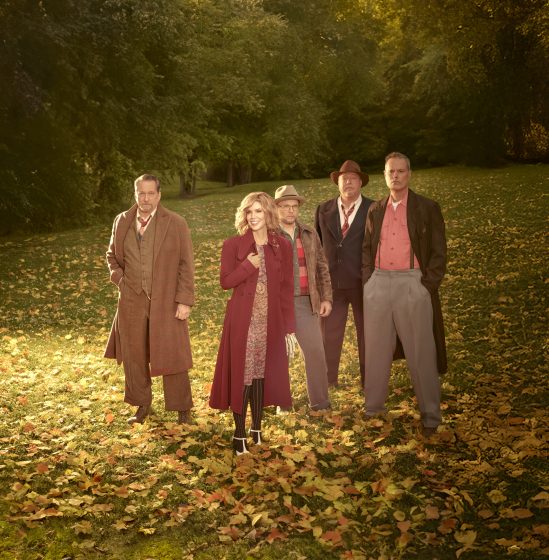
Alison Krauss & Union Station shot by Randee St. Nicholas with Russell Moore second from right.

It’s gotta feel exciting, especially after having done something like this your whole entire life, to have that sort of childlike wonder at it feeling so brand new and so fresh. Even after you have done literally exactly this for so long, there are still things that you’re excited to accomplish and new territory you’re excited to explore. That sounds really energizing and really positive.

RM: It is energizing. I’ll be honest, Justin, I’ve been playing music full time for a good 40 years. That’s awesome. And at this point, after 34 years of IIIrd Tyme Out – I’m not going to say I’ve become complacent, but it’s almost like, “Okay, I know what this week is going to bring and what next week is going to bring.” It’s the same thing, even though you try to explore different opportunities and things that come within that.

But this, I never would have thought that at this point in my career that this opportunity would arise and I’d get to do something like this. Because, like I said, I’m not so much complacent, but I know what’s ahead. When the phone call was made and we talked, I had no idea that I had another option, another fork in the road. This is absolutely surreal, in a lot of ways, for me to get this opportunity and without giving up IIIrd Tyme Out. All the support from everybody that I know, like I said, there was no reason to say no.

Another part of this that I’m really excited about [is being] able to experience some of these places, these venues, these shows that I’ve never been to before. Just being able to experience it – like playing Red Rocks Amphitheatre – and just so many places that I’ve always wanted to go to and perform at. I’m going to get to do that!

Checking them off the bucket list.

RM: There you go. It wouldn’t be possible, I don’t believe, with IIIrd Tyme Out. I was always exploring new opportunities and things like that, but I don’t think it would have been possible to perform at some of these places without being a part of AKUS.

To me, “Looks Like the End of the Road,” the first single from the upcoming album, feels like classic AKUS. The So Long, So Wrong era is what it reminded me of first. You still have those tinges of adult contemporary, you have the pads and the synth-y sound bed underneath it, and it almost feels transatlantic a bit here and there. Overall, it sounds like classic, iconic Allison Krauss & Union Station. What are your thoughts or feelings on the single or what can you tell us about that first track?

RM: I think that the song is a great representation of what is coming out with the full album release, Arcadia. It is a great nod to Alison Krauss & Union Station music over the last several years and the last several recordings.

I think that the song itself is just well written and perfect for Alison to sing. There’s a small part of harmony vocals – and what I love about the way she constructs her arrangements is that it’s not overdone with harmonies. This is Alison Krauss & Union Station, it’s not just Union Station. So the focus is on Alison and her vocals. In my opinion, that’s the way it should be. This song doesn’t come out from the get go with a five-string banjo just blasting off. It’s a great construction of the arrangement and the vocals.I think it was perfect.

The only thing that people have said is that the title itself made them think that this was the end of Allison Krauss & Union Station! Which is so far detached from the truth. It was just the first single that was released. It’s a beautifully constructed song.
I will say, this song is just a piece of the puzzle to the rest of the recording. It just paints a beautiful picture and a wonderful listening experience. When people get to hear the full album, they’ll understand what I’m talking about. It’s just awesome. It’s just, it’s a piece of the puzzle.

You’re going to be blown away. Absolutely blown away, as I was. I had my headphones on. I can’t tell you how many nights before I’d go to sleep, I’d have my headphones on [listening]. I listened to it two, three times a night, just because it was so enjoyable. It was just that good. I know that everybody else is gonna feel the same way when they hear the whole project.


Photo Credit: Matt Morrison

Producer Randall Deaton Makes Impressive Return to Music World

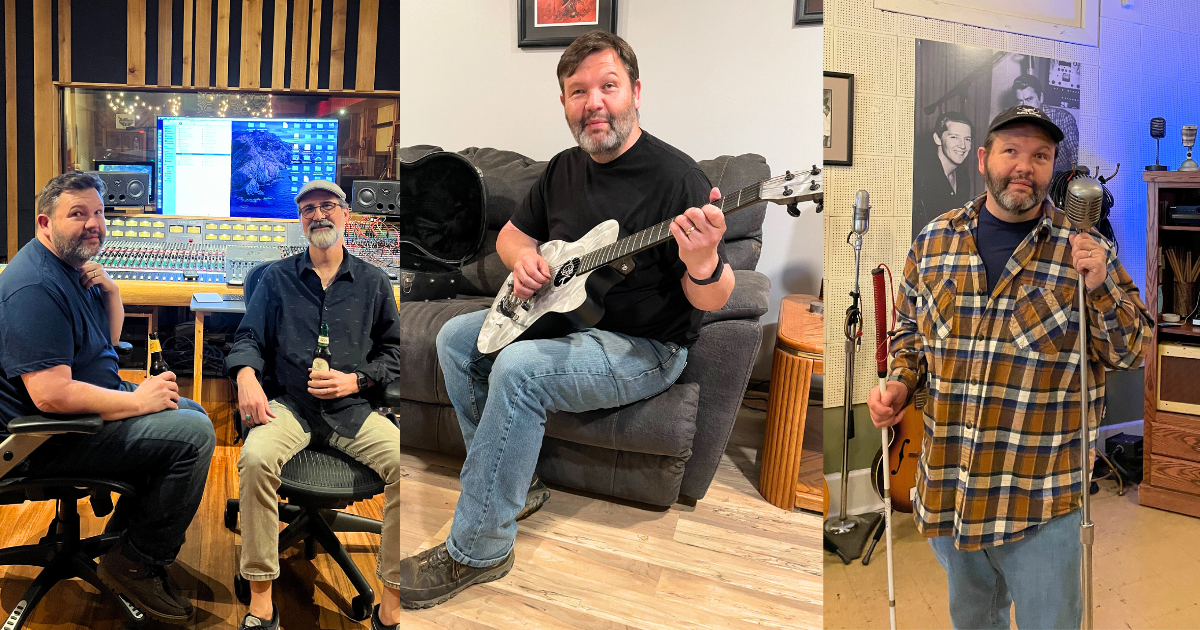
Though Randall Deaton’s excellence as a producer and engineer has been well known for many years in the bluegrass world, he had taken a hiatus from music for nearly nine years before returning in 2024. His latest venture is both a conceptual and musical triumph. The new release, Silver Bullet Bluegrass (Lonesome Day Records), pays tribute to the great rocker Bob Seger with an all-star corps of bluegrass vocalists and instrumentalists performing his tunes reworked, bluegrass style. The lineup of performers includes Gary Nichols, Tim Shelton, Shonna Tucker, Bo Bice, Tim Stafford, Bill Taylor, Larry Cordle, and more.

The project’s origin dates back even further, as Deaton detailed during a recent extensive interview with BGS conducted via email.

“(I got the idea) probably sometime around 2009,” Deaton said. “We released records by the band Blue Moon Rising and Ralph Stanley II in 2008 and each of those records contained songs that were pulled from non-traditional bluegrass sources. Blue Moon Rising did a cover of Bruce Springsteen’s ‘Youngstown’ and Fred Eaglesmith’s ‘Freight Train,’ while Ralph II did Elton John’s ‘Georgia’ and Townes Van Zandt’s ‘Loretta.’ I brought all those songs to the artists and I was really pleased with the way they turned out. They ended up being very legitimate takes on the songs without having any of the ‘pickin’ on’ vibe. I think the first thoughts of a Seger bluegrass record came from the idea of wondering how ‘Hollywood Nights’ would sound in a bluegrass style.”

However, the project took longer to happen than anticipated. “The overall recording process took over 12 years, but that was because I took about an eight year break from music in the middle to pursue other things,” Deaton continued. “The original challenge was to track the songs without the final lead vocalist. Seger is such a great vocalist and can comfortably sing in keys that most other male singers can’t, so I had to consider which keys to track some of the songs in. Some songs I left in the original keys and just knew that those songs needed to stay right there. Other songs we dropped down a step or so in order to have more options when it came to finding the right singer. The actual studio work was pretty easy once we knew who was doing what.”

“A great deal of the tracking band was the same group of musicians that we used on a record by Jeff Parker entitled Go Parker!” Deaton continued. “Mike Bub, Stephen Mougin, Ned Luberecki, and Shawn Brock all had plenty of experience playing and recording traditional bluegrass, but they also had experience outside of that – including Mike playing with Steve Earle on The Mountain record and Stephen touring with Sam Bush. Ned is a very progressive banjo player and Shawn is simply one of the best musicians I know. Other musicians were added based on what I thought the track needed. We used several fiddle players on this record and each of them brought something special and unique.”

When asked about personal favorites from the session Deaton responded: “The first singer to agree to perform on the record was Josh Shilling of the band Mountain Heart. He did “Main Street.” He did such an awesome job on that song that he set a bar for the rest of the record. That song is definitely one of my favorites. I am also partial to that track, because Megan Lynch [Chowning] played my grandfather’s fiddle on that track. It was just an old catalog fiddle from the 1930s, but I was told that he used to sit on the front porch and play it.”

“He passed away before I was born, but somehow I ended up with the fiddle. I think it is really neat that the same fiddle is doing that signature melody on ‘Main Street.’ The last two vocals that we recorded for the record were the Carson Peters and Bill Taylor tracks. Producing those vocals and in Carson’s case the fiddle was the first time I had been in a studio in many years and I wasn’t sure how effective I would be after so much time away. I am very proud of how those tracks turned out because they made me feel like I could do this again in the future if the right situation came up.”

An interesting thing about Deaton is bluegrass wasn’t his initial musical love growing up. “When I was a kid, we listened to country music around the house,” he recalled in his bio. “I knew more about Exile than I did about The Police. I knew a little bit about bluegrass, but I didn’t really get into bluegrass until I started learning how to play guitar. All the people that I could play with around home were mostly playing bluegrass music. That’s how I really got introduced to it.”

From that early start as a guitarist, Deaton converted a church left him by his grandmother in 1999 to a studio and started focusing on engineering. That led to the creation of the Lonesome Day label, which took its name off a Springsteen tune. Their first project was by Eastern Kentucky bluegrass artist Sam Wilson. The label soon became celebrated in bluegrass circles for turning out both hits and classic albums by a host of greats. The list includes Jeff Parker, Lou Reid, Blue Moon Rising, Larry Cordle, Steve Gulley, Ralph Stanley II, Ernie Thacker, Darrell Webb, Richard Bennett, Shotgun Holler, Wildfire, Fred Eaglesmith, and more.

Deaton’s accomplishments aren’t limited solely to the music world. He’s overcome retinitis pigmentosa, a genetic condition that affects nerve cells in the retina that causes functional failure and an inability to transmit information from the eye to the brain. But that hasn’t prevented Deaton from continuing his brilliance in the studio, nor from expanding into other musical areas as a label owner and producer. In 2011, Lonesome Day would release Sweet Nothings by Girls Guns & Glory – now known as Ward Hayden & the Outliers – which was produced by Paul Kolderie and recorded in Boston.

Kolderie would later produce Tim Shelton’s album, Jackson Browne Revisited. In 2014, A second Girls Guns & Glory project titled Good Luck was produced by Eric “Roscoe” Ambel. Prior to taking his break from music, Deaton’s label would also issue three albums by bluegrass guitar master Richard Bennett. But, by 2015, Deaton was both a bit disillusioned by some things happening in the music business and ready to do something else.

“Something else” included converting his music studio into an AirBnb, investing in short-term rentals in Eastern Kentucky, and later buying resorts in two different areas in Michigan, as well as a restaurant. Deaton also did a bit of concert promotion in the meantime. Eventually, he’d return to making music, with the latest result being Silver Bullet Bluegrass.

When asked about his favorite projects over his career, Deaton offers these selections:

“I really like the work I did with the band Blue Moon Rising. Their first record, On The Rise, was very well received and made me feel like I could make records that would find their place in the bluegrass genre. The second record I did with them entitled, One Lonely Shadow, is the record that contained ‘Youngstown’ and to me that is still probably the single best record I have been a part of. The song selection, the performances, and the engineering work of Mike Latterell are all outstanding. I am also very proud of the Ralph Stanley II record entitled, This One Is II. Again, the performances and song selections were outstanding and Mike also tracked and mixed this record.”

“We did both of these records in the same timeframe so they are kind of linked for me,” he continued. “These are consistently the two records that people still bring up to me saying that one of them is their favorite. One of my very first things that I still think guided me was my work on the record entitled Time by Lou Reid & Carolina. This was a band record and most everything on the record was done by Lou’s current band. Lou brought the song ‘Time’ that ended up being the title track to the record and it was clear to me that the song needed more than just what the band could bring.”

“We ended up using some great outside musicians,” he continued, “Such as Ron Stewart, Randy Kohrs, and Harold Nixon to get a track that was more solid. We also ended up getting Vince Gill and Ricky Skaggs to sing on the track. The final track turned out great and it ended up being a #1 song on the Bluegrass Unlimited chart in 2005. The song was also a challenge, because I felt like I was pushing for greatness and the artist was taking into account other things besides the record – such as the feelings of the band (which also included his then wife) and how those considerations would always be there moving forward. I always thought that if you were going to make a record you should do everything that is possible to make it as good as it can be within the means that you have.”

Deaton hesitates to pick personal favorites in terms of artists he’s worked with, but acknowledges a few names. “That is a tough one, because I have worked with so many talented people. Since I am such a proponent for great records, I would have to say that the audio engineers that I have worked with are always very special to me. In the very beginning I worked a lot with a guy named Harold Nixon and Harold introduced me to Ron Stewart.”

“Harold and Ron were very big parts of a lot of the Lonesome Day work from the beginning through when I got out in 2015. I also did a lot of work with Mike Latterell starting in 2005. Mike is one of the best audio engineers that I know and we still keep in touch to this day. I also had the chance to work with Brandon Bell on a couple records. He is also an incredible engineer and just a great guy in the studio. Gary Nichols introduced me to Jimmy Nutt back around 2013 or so, and he has been awesome to work with on this Silver Bullet Bluegrass record. When I got back in the studio in 2023 with Carson Peters, Jimmy made me feel like it was just yesterday that we were in the studio together, not eight years ago. Jimmy and his wife Angie have also become great friends to me and my wife, Shelagh, so if there is music in my future Jimmy will definitely be involved.”

“One musician that I have known for years, but never have worked with is Shawn Camp,” is Deaton’s first response when asked about possible future collaborations. “I think he is so talented and such a nice guy that I would love to work with him sometime in the future. A lot of the singers on Silver Bullet Bluegrass I had worked with in the past. Carson Peters and Bill Taylor were great in the studio and I think they have immense talent and I would like to work with those guys sometime in the future.”

As for possibly adapting other musicians’ tunes to the bluegrass idiom, Deaton immediately cites one name. “I think it would be great to do a Bruce Springsteen record. I am a big Springsteen fan and even named my label after one of his songs. I’ve lost count of the number of [his] concerts I have been to, but it is well over 100 from 1999 to 2024.”

His first response to the final question, regarding what’s next for his label, is “I don’t know.”

“I have been really focused on finally getting Silver Bullet Bluegrass finished and released that I haven’t thought about anything else. The landscape of the music business has changed so much since I started that I am in the middle of a learning curve again. I know that I like making records and I know that I don’t need to make records in order to make money. Whatever I end up doing, if anything, I want it to be fun and I want to at least think that it may matter somehow.”


Photos courtesy of Lonesome Day Records.

You Gotta Hear This: New Music From Ben Sollee, Sideline, and More

This week, BGS readers were graced by two special, Valentine’s Day-themed premieres from jamgrass supergroup The High Hawks and singer-songwriter Caroline Cotter. Plus, our old friend, Kentucky-based cellist Ben Sollee, brought us a gorgeous new performance video of a John Prine cover shot surrounded by verdant houseplants.

Below, catch up on that new music you might have missed from earlier in the week and discover brand new, exclusive premieres from bluegrass group Sideline and indie/Americana duo the Ballroom Thieves. It’s all right here on BGS and… You Gotta Hear This!

Sideline, “The Lives of the Innocent”

Artist: Sideline
Hometown: Raleigh, North Carolina
Song: “The Lives of the Innocent”
Release Date: February 16, 2024
Label: Mountain Home Music Company

In Their Words: “It was great getting back in the studio after over two years. There was a lot of bottled-up magic that came bursting out when we hit the first downbeat. This song fit the very definition of what Sideline is as a sound and the energy we project. It certainly enters the catalog as a blood-pumping, foot stomping, Sideline hit for the ages.” – Skip Cherryholmes, guitar

“‘The Lives of the Innocent’ was a song that was inspired by the Hibriten Guards during the Civil War that mustered in Alexander County, North Carolina. They saw heavy combat during the war, suffering a high casualty rate, and this tune chronicles what potentially could have been one of the soldiers in those ranks. Steve [Dilling] and the guys bumped the tempo a little and captured the essence of the song and the singing is just top-notch!” – Shannon Slaughter, songwriter

Track Credits:
Skip Cherryholmes – Guitar
Steve Dilling – Banjo, harmony vocal
Matt Flake – Fiddle
Nick Goad – Mandolin, harmony vocal
Kyle Windbeck – Bass
Bailey Coe – Lead vocal


The Ballroom Thieves, “Tender”

Artist: The Ballroom Thieves
Hometown: Easton, Massachusetts
Song: “Tender”
Album: Sundust
Release Date: April 12, 2024
Label: Nettwerk Music Group

In Their Words: “We were listening to the band Watchhouse at Newport Folk Festival in 2022 and their sparse instrumentation and fluid melodies inspired us to start writing ‘Tender’ right on the spot. We learn a lot from our peers, and in this case, the lesson was about the importance of creating space for your songs to breathe so you can hear what’s happening between the notes.” – The Ballroom Thieves


Ben Sollee, “Only Love” (John Prine Cover)

Artist: Ben Sollee
Hometown: Louisville, Kentucky
Song: “Only Love”
Release Date: February 13, 2023

In Their Words: “John Prine had a knack for folding mantras in to his songs. This song has a message that resonates deeply with my journey as a creative, father, and husband [and] that is so needed in this fitful world. ‘When love comes your way, you learn to say, I love you!’” – Ben Sollee

More here.


The High Hawks, “This Is What Love Feels Like”

Artist: The High Hawks
Hometown: Boulder, Colorado and All Points Between, USA
Song: “This Is What Love Feels Like”
Album: Mother Nature’s Show
Release Date: February 16, 2024

In Their Words: “This song sits in a slightly different world than the rest of The High Hawks’ new record. It’s a step into the mind of a hopeless romantic at a show, waiting for the band to come on with his love by his side. Sometimes the world just seems to conspire to make everything just right. This is about one of those nights. The song came out of a co-write with Chris Gelbuda, Shawn Camp, and myself one Nashville summer afternoon. I’m glad it found a home with The High Hawks!” — Vince Herman

More here.


Caroline Cotter, “Do You Love Me?”

Artist: Caroline Cotter
Hometown: from Providence, Rhode Island; currently living in Ellsworth, Maine
Song: “Do You Love Me?”
Album: Gently As I Go
Release Date: August 18, 2023

In Their Words: “‘Do You Love Me?’ is a love song, short and sweet and perhaps a bit tongueincheek, echoing desperate and anxious attempts from a hopeless romantic to their new love (and the universe) to get some certainty in very uncertain territory. This anxiety and excitement come together in a fun little package, trading places depending on the day or the moment, and sometimes it’s best to laugh at the silliness of it all, and realize that attempts to know or pretend to know by reading the signs are likely futile, but if nothing else, they’re fun to sing about. I love how Fernando’s illustrations in the video bring out the whimsy, playfulness, and sweetness of the lyrics.” – Caroline Cotter

More here.


Photo Credit: The Ballroom Thieves by Meredith Brockington; Ben Sollee by Jessica Ebelhar.

LISTEN: The High Hawks, “This Is What Love Feels Like”

Artist: The High Hawks
Hometown: Boulder, Colorado and All Points Between, USA
Song: “This Is What Love Feels Like”
Album: Mother Nature’s Show
Release Date: February 16, 2024
Label: LoHi Records

In Their Words: “This song sits in a slightly different world than the rest of The High Hawks’ new record. It’s a step into the mind of a hopeless romantic at a show, waiting for the band to come on with his love by his side. Sometimes the world just seems to conspire to make everything just right. This is about one of those nights. The song came out of a co-write with Chris Gelbuda, Shawn Camp, and myself one Nashville summer afternoon. I’m glad it found a home with The High Hawks!” — Vince Herman

Track Credits: Written by Vince Herman, Shawn Camp, Chris Gelbuda

Vince Herman – lead vocals, acoustic guitar
Adam Greuel – background vocals, acoustic guitar
Tim Carbone – fiddle
Chad Staehly – piano, mellotron
Brian Adams – bass guitar
Will Trask – percussion


Photo Credit: Michael Weintrob

WATCH: The Earls of Leicester Behind the Walls at Newport Folk Festival

(Editor’s Note: Enjoy this exclusive video premiere from the team at Newport Folk Festival and their Behind the Walls series, featuring a performance of Flatt & Scruggs’ version of “Rollin’ in My Sweet Baby’s Arms” by award-winning Flatt & Scruggs bluegrass tribute band, the Earls of Leicester.)

Artist: The Earls of Leicester
Hometown: Nashville, Tennessee
Song: “Rollin’ in My Sweet Baby’s Arms”

In Their Words: “The song ‘Rollin’ in My Sweet Baby’s Arms’ has long been a staple in the bluegrass canon. It’s a good, hard driving song about traveling and returning home to the one you love. Down to the details of some of the family members’ occupations. Also there is a slight Romeo and Juliet effect in the line, “I know your parents don’t like me.” Flatt & Scruggs probably had the best version, but it’s a crowd pleaser and works in any situation.” – Jerry Douglas

“The Earls Of Leicester are living embodiments of the traditions of bluegrass that have graced our stages for over 60 years. We’re grateful that they recorded a backstage Behind The Walls session with us at last year’s Newport Folk Festival. And big thanks to The Bluegrass Situation for sharing it far and wide.” – Christopher Capotosto, producer, Newport Folk Festival


Lead image courtesy of Newport Folk Festival.

BGS10: For Our Birthday Month, Here Are 10 of Our Most Memorable Videos… So Far

As we celebrate a decade of the Bluegrass Situation, we’ve combed through our archive to reminisce and enjoy some of our favorite moments from the world of roots music. In lieu of our usual Artist of the Month feature, we’ve decided to shine the spotlight on our own musical history. Here are 10 picks that capture the road of how far we’ve come over the last decade…


Do You Play the Banjo w/ Della Mae @ MerleFest (2013)

Kimber and Celia of Della Mae wandered the grounds of MerleFest to ask the ever-important question: “Do You Play Banjo?” (Don’t miss a true BGS highlight at 2:30)


Back Porch of America series (2013)

Our first series premiere, The Back Porch of America was like stepping back into history as host Matt Kinman visits with Mark Newberry, a fifth generation chair maker on Jennings Creek, near Red Boiling Springs, Tennessee.


Imogene & Willie Listening Room – Langhorne Slim (2013)

See Langhorne Slim and friends Kristin Weber, Shelby Means, and Kai Welch perform “Countryside Shuffle” at the original Imogene & Willie store in Nashville for The Bluegrass Situation during our first ever AmericanaFest.


Soundcheck – Noam Pikelny (2014)

Soundcheck was a series that sat down with artists before they hit the stage.  In this episode, Noam Pikelny, recipient of the Steve Martin Banjo Prize and founding member of Punch Brothers, hung out with BGS ahead of his Nashville show in support of his 2013 release, Noam Pikelny Plays Kenny Baker Plays Bill Monroe.


Bonnaroo Superjam Finale – Lake Street Dive, Dierks Bentley, The Avett Brothers, Ed Helms, and More (2014)

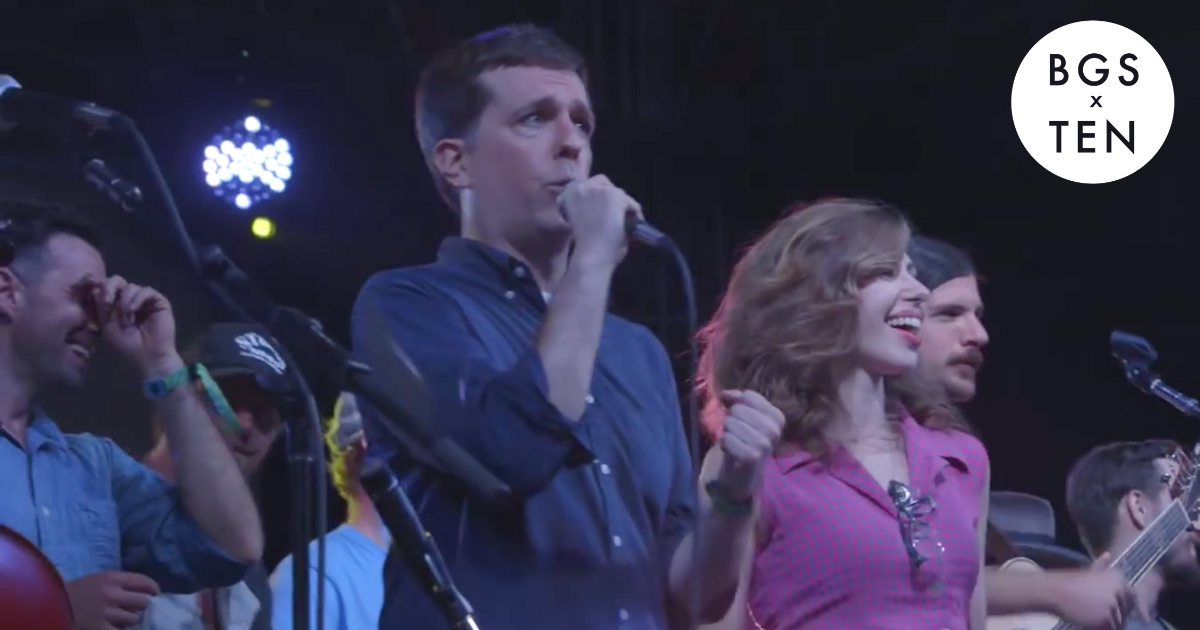
The Bluegrass Situation held court for five years on That Stage at Bonnaroo, curating and hosting a lineup of our favorite musicians that culminated in an epic annual Superjam. we’ll always have a fondness for this particular night, when BGS co-founder Ed Helms lead the final number “I’ve Had the Time of My Life” (yes, the one from Dirty Dancing) alongside Rachel Price from Lake Street Dive, The Lone Bellow, Dierks Bentley, Sarah Jarosz, The Avett Brothers, and many many more of our favorite folks.


Live at Telluride – Chris Thile & Edgar Meyer (2014)

Check out that view! BGS & Mason Jar Music scoured the town of Telluride, Colorado to find this perfect beautiful spot for Edgar Meyer and Chris Thile to play “Why Only One?” during Telluride Bluegrass 2014, one of several jaw droopingly gorgeous videos from the series.


Live from Old Settlers Music Festival – The Earls of Leicester  (2016)

It doesn’t get much more legit than The Earls of Leicester, the bluegrass supergroup organized by dobro-master Jerry Douglas. Here, the guys gather round some Ear Trumpet Mics to bring their traditional flair to a modern audience.  One thing is for sure: those bow ties have never been cooler.


AmericanaFest UK – Birds of Chicago (feat. Allison Russell) (2019)

Folk duo Birds of Chicago (aka Allison Rusell and JT Nero) perform “Try a Little Harder” for BGS-UK’s first video series. This heartfelt performance was filmed at Paper Moon Vintage in Hackney, London, during AmericanaFest UK’s 2019 conference by Wonderscope Cinema.


Shout & Shine Online – Lizzie No (2020)

Harpist, songwriter, and Basic Folk co-host Lizzie No recorded the first of our Shout & Shine Online series, which comprises short-form, intimate video performances by underrepresented artists in Americana, folk, blues, and bluegrass.


Whiskey Sour Happy Hour – “The Weight” (Superjam, feat. Ed Helms) (2020)

Presented by our co-founder Ed Helms and the Bluegrass Situation, the superjam finale of the Whiskey Sour Happy Hour series features an all-star cast performing in their homes for a great cause. Thanks to the Americana Music Association, TX Whiskey, and Allbirds for their support in helping us raise over $75,000 towards pandemic relief

MIXTAPE: Daniel Rodriguez’s Songs of Authenticity

I love all types of music and song. How beautiful a thing to hear the invisible insides of someone shared outwardly. A culmination of dynamic forces, experiences and sensibilities dialed into pulsating, Pythagorean waveforms, giving color to the space in between. The only catch is we have to trust what we’re hearing is authentic. Whether it’s the tonal intention of a singer or the specific touch of an instrumentalist, the song has to move me in some way or else I’m changing the station. Authenticity is subjective to each listener where no authority exists, though goosebumps, tears, movement, lofty notions and inspiration have always been my litmus tests to playing something thrice or more.

Here’s a list of songs that have moved me in some way worthy of mention. Also, if you’re so moved, check out my album Sojourn of Burning Sun out on August 28. — Daniel Rodriguez

Bill Monroe – “Uncle Pen”

From what I hear, this song is Bill giving gratitude and paying tribute to his actual uncle, Pen [James Pendleton Vandiver]. Pen played the fiddle at family gatherings and inspired Bill to join the musical world. The song structure of “Uncle Pen,” though only a few chords, is kind of complex. It’s a jubilant song with a great melody and has those goosebumping, Appalachian harmonies that Bill and his band often showcased. Probably what I like most about the song is that it appears to skip a beat before the head of each verse. It happens during a G run directly after the chorus that impossibly lands at the head of the next section. Simple genius.

Gregory Alan Isakov – “Amsterdam”

I like pretty much all of Gregory’s songs and his recordings. Catching his band live or him solo is a remarkable experience. I’m lucky to call him a longtime friend and I keep my fandom of his music separate from that. Gregory paints imagery that is most times not specific, which leaves you, as a listener, more in an abstract state of mind. Yet he threads a powerful emotion throughout, which his voice and arrangements unavoidably invoke. He uses imagery of a woman often, which comes across as more a mythical character of the sacred feminine, rather than one of a romantic endeavor. This is apparent in “Amsterdam”: “That howling wind, she’s waving hi, her other hand’s in mine.” The song ascends towards the end in some epic way when Greg moves his voice up an octave and sings “Churches and trains, they all look the same to me now / They shoot you some place, while we ache to come home somehow.” Goosebumps to follow.

Bruce Springsteen – “Youngstown”

The Boss has never failed to paint us the pictures of the struggling American working class. Our popular culture seems to only highlight the celebrities and billionaires, and yet The Boss celebrates and sheds light on the untold stories of the common man, the backbone of our culture. His stories are always rich with the American story, full of its hypocrisies and triumphs. “Youngstown” paints a very real picture of the uphill and endless bogging down of industry and war. The arrangement has a suiting Americana feel, stripped down and intimate. The pedal steel and fiddle give an eerie voice to the emotion of the character in the story who sings, “My sweet Jenny, I’m sinking down, here darling in Youngstown.”

John Prine – “Lake Marie”

When John Prine passed on earlier this year I cried constantly for three days. I’ve been lucky enough to catch him live more than a few times at festivals that we both played. The authenticity in his delivery has healing properties that only a few possess. John touches on all the hidden sadnesses and joys of humanity, and gives color to the seemingly opaque hidden corners of the human condition. “Lake Marie” is a special song with all the ingredients: New love, tenured love, relationship struggles and cold-blooded murder. John delivers this story in a very light-hearted and humorous way. He speaks the verses and accentuates certain parts, which become vital to the song’s DNA. The chorus is maybe the best chorus ever written, beautiful and joyous, juxtaposed with a very brutal and tragic story.

Levon Helm – “The Mountain” (written by Steve Earle)

Just like any song that Levon sings of someone else’s, he makes it his own. That is very much the case with “The Mountain” by Steve Earle. Steve recorded a great version of this song with Del McCoury, but my favorite version is the one Levon sings. It’s about the coal industry brutalizing the natural wonder of a homeplace. Removing mountaintops from where once majestic mountains stood. Filling in swimming holes that you once could cool off from the summer’s heat within its cool mountain runoff. Levon brings you there to those mountains, and he takes you to that swimming hole, and then he shows you the pain of it being no more.

Gillian Welch – “Everything is Free”

When speaking of Gillian’s songs it would be prudent to also mention David Rawlings. The line is blurred when trying to understand who wrote what — and it’s fitting that their voices in harmony become an entity of grace and grit that is alive and well. “Everything Is Free” is a song that hits home for the majority of musicians and artists who are at large suffering in an age where the fruits of their labors are taken for granted. This is certainly reflected by our culture, which would ironically feel the worth of music in its absence. In regards to this, Gillian sings: “If there’s something that you wanna hear you can sing it yourself.”

Leon Bridges – “River”

I’m not a religious person, but I am spiritual. Even though Leon uses biblical terminology in this beautiful song of yearning, and being cleansed from your sins — it’s the intention of the song that shines through and transcends all the negative connotations that might come with organized religion. It’s the true Christian values that are evoked here, of actively wanting to become a better person. It sounds like it was recorded live around one mic in a big room and really captures a beautiful moment of music.

Bob Dylan – “Murder Most Foul”

Bob is my favorite artist and songwriter. I love all the phases of his expression. I don’t subscribe to picking a favorite era or compare everything he creates to what he produced in the 1960s. This brings us to “Murder Most Foul,” a recent release of his. It is a nearly seventeen-minute song that talks about the day and days that followed the assassination of John F. Kennedy. Bob beautifully describes this tragic and heightened moment in history, giving us a stream of consciousness of images peripherally and directly happening around the time of the assassination. The production of this song is very minimal which allows the lyrics to be absorbed and breathe.

Mandolin Orange – “Wildfire”

Growing up and residing in the hills of North Carolina, Mandolin Orange has lived and been more than aware of the culture that exists below the Mason-Dixon Line. Not buying into the rhetoric of those holding on to the nostalgia of the Confederacy, Mandolin Orange gives a historical and psychological look at the wildfire that unfortunately still is fueled today. “Wildfire” is a bit of medicine to us all, and carries a hope that some who might need the medicine most. Listen to this song that is served in the musical genre of its commonplace.

The Del McCoury Band – “Hot Wired” (written by Shawn Camp)

This song is a hoot. It’s very well-written, witty and might even spark a belly laugh or two. It talks about all the things the author’s girlfriend is capable of hot-wiring. My favorite lyric is “She might hot wire your Chevy, she might hot wire your Ford / And if she ever gets to Heaven she might hot wire the Lord.” Del breaks the bluegrass rules on this song and introduces an electric guitar after singing about his girlfriend hot-wiring his acoustic guitar to play like the “doggone Rolling Stones.”

Billie Holiday – “Strange Fruit” (written by Abel Meeropol)

This song is so powerful. Billie Holiday recorded it in 1939. The emotion and dynamics of her timing are delivered in a powerful and haunting way. The fruit that hangs from the trees is not fruit at all. [The song’s titular analogy references lynchings of Black folks.] It is perplexing to me that humanity can stoop so low to such an evil as to think one is inferior to another, where murder is rationalized within such a vitriolic mindset. In this specific case it is rationalized within the minds of pale complexion below the Mason-Dixon line. How those trees still stand and the fruit still hangs, though embedded within policy, social structures, the psychology of an unexamined people and history books with whole chapters missing. Music and song throughout time has been utilized to pass stories down and convey emotions. This is a song that passes down and conveys a traumatic truth; its shockwaves still crash on the shores of our everyday.

Josh Ritter – “Girl in the War”

This is one of my favorite songs. I’ve had the fortunate opportunity to play a bunch of shows with Josh and actually back him up on this song with my old band. I’ve heard him say in an interview that this song is about America. I’ll take his word for it. I’m not quite sure what the song is about myself, but I do know it’s a goosebumper. The recording of the song is stunning and I sure do like to play this song around the fire at gatherings.


Photo credit: Jesse Borrell